


 Скачать презентацию HOW THE FEDERAL GOVERNMENT REALLY WORKS East Carolina
5e842f5209c2f342c7859d4df4ca0df1.ppt
- Количество слайдов: 11
 HOW THE FEDERAL GOVERNMENT REALLY WORKS East Carolina University Federal Relations Workshop October 13, 2005
 • The Federal Budget Process – President’s Budget Submission – Congressional Budget Resolution – Congressional Appropriations – Congressional Authorizations – Reconciliation – taxes and entitlements – Agency Grants
 • Key Budgeting Rules and Terms – President’s budget is nonbinding – Congressional budget resolution sets broad spending levels and any revenue/entitlement changes – Discretionary spending decisions made by appropriations committees – “Reconciliation” process implements any revenue and entitlement changes
 • The Appropriations Process – Appropriations Committee allocates amounts to subcommittees for discretionary spending – Subcommittees make own decisions about how to spend that money – Authorization levels not binding – In recent years appropriators have included more earmarks
 • Appropriations v. Grants – Congressional discretion v. Agency discretion – Congress sets global number for grants programs, gives general guidance – Congress earmarks appropriations projects at set amounts, often with little or no explanation – Appropriations more dependent on direct lobbying efforts
 • The Earmarking Process – Typical member receives dozens of requests, and can only meet a few – Appropriations Subcommittees assemble large lists based on individual member requests, then ask for priorities
 • Convincing your members of Congress to make your project a priority – Distinguish on merits and with broad support – Show cost-sharing efforts – Utilize key relationships
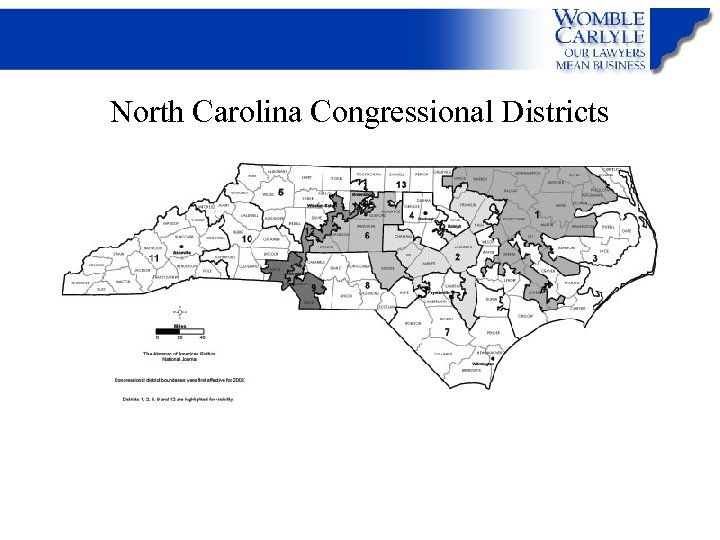 North Carolina Congressional Districts
 North Carolina Members of Congress Sen. Elizabeth Dole (R) Sen. Richard Burr (R) Rep. G. K. Butterfield (D) Rep. Bob Etheridge (D) Rep. Walter B. Jones (R) Rep. David Price (D) Rep. Virginia Foxx (R) Rep. Howard Coble (R) (Dean of Delegation) Rep. Brad Miller (D) Rep. Mike Mc. Intyre (D) Rep. Robin Hayes (R) Rep. Sue Myrick (R) Rep. Patrick Mc. Henry (R) Rep. Charles Taylor (R) Rep. Mel Watt (D) (Chairman, Congressional Black Caucus)
 Facts about our Delegation • • 13 Representatives (up from 11 in 1990) (North Carolina is the 11 th largest state based on population) 7 Republicans, 6 Democrats in the House 2 Members of Appropriations Committee: Taylor and Price Taylor: Chairman, Subcommittee on Interior Price: Member, Subcommittee on Homeland Security Member, Subcommittee on Military Quality of Life and VA and Related Agencies
 Structure of a Congressional Office • • • Administrative Assistant/Chief of Staff Legislative Director (LD) Communications Director Legislative Assistant (LD) Legislative Correspondent (LC) Projects/Caseworker Congressional staff tend to be… • Young • From North Carolina • Overworked and underpaid