 Скачать презентацию How the EPO searches prior art in Biotech
a66b9356d0ef5d1035997157747461cd.ppt
- Количество слайдов: 13



How the EPO searches prior art in Biotech Titus Vogt Patent examiner | European Patent Office Dir. 2. 4. 04 | Biochemistry and Diagnostics Grasserstr. 9 | 80339 Munich | Germany tvogt@epo. org | http: //www. epo. org 3 rd Annual Forum for SMEs Information Workshop on European Bioinformatics Resources Vienna, 3 rd-4 th September 2009
A short C. V. • Study chemistry at the Utrecht University, The Netherlands. • Ph. D at the "Centre for Biomembranes and Lipid Enzymology", of the Utrecht University, The Netherlands. • Post-doc at the lab "Chimie Physique des Macromolécules aux Interfaces" of the Université Libre des Bruxelles, Brussels, Belgium. • Post-doc at the independent junior research group "Fest-Körper NMR Spectroscopie" of the Max-Planck-Institute for Biochemistry, Martinsried, Germany. • Patent examiner at the European Patent Office, Munich, Germany. Dr. TCB VOGT
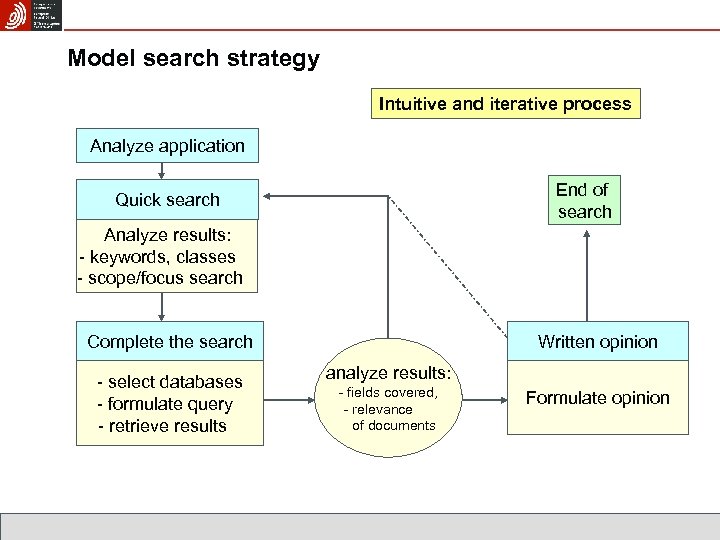
Model search strategy Intuitive and iterative process Analyze application End of search Quick search Analyze results: - keywords, classes - scope/focus search Complete the search - select databases - formulate query - retrieve results Written opinion analyze results: - fields covered, - relevance of documents Formulate opinion
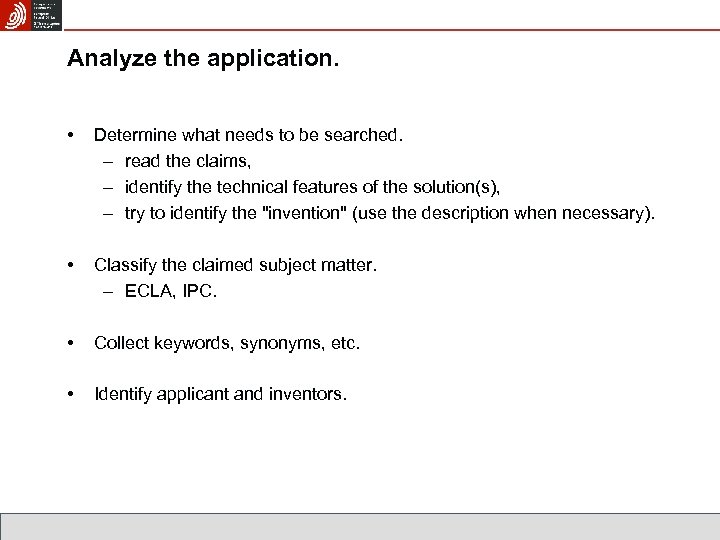
Analyze the application. • Determine what needs to be searched. – read the claims, – identify the technical features of the solution(s), – try to identify the "invention" (use the description when necessary). • Classify the claimed subject matter. – ECLA, IPC. • Collect keywords, synonyms, etc. • Identify applicant and inventors.
Quick search The Aim of the quick search is to get an quick overview of the field. • Keyword search in e. g. Google, Scirus, Pub. Med. • Search for publications from the inventors and applicant. – scientific literature. – patent literature. – applicant web-site. • Search for a recent review on the subject. • Collect more keywords.
Complete the search • Sequence/Structure searches, – large proteins/polynucleotides – small peptides/polynucleotides – structure EBI Chem. Abstr. , Registry CA, Registry, Beilstein • Search patent and non-patent literature (full-text and bibliographic databases), – classification – keywords, synonyms, etc. – inventors/applicant • Chemical Abstracts – keywords – thesaurus
Written opinion. • Analyze the documents. – new keywords? – additional players in the field? – citing/cited documents. – select the closest prior art. • Determine the objective technical problem to be solved. – inventive effect? – which feature(s) is/are responsible? • Everything covered? • Formulate opinion. – any missing links?
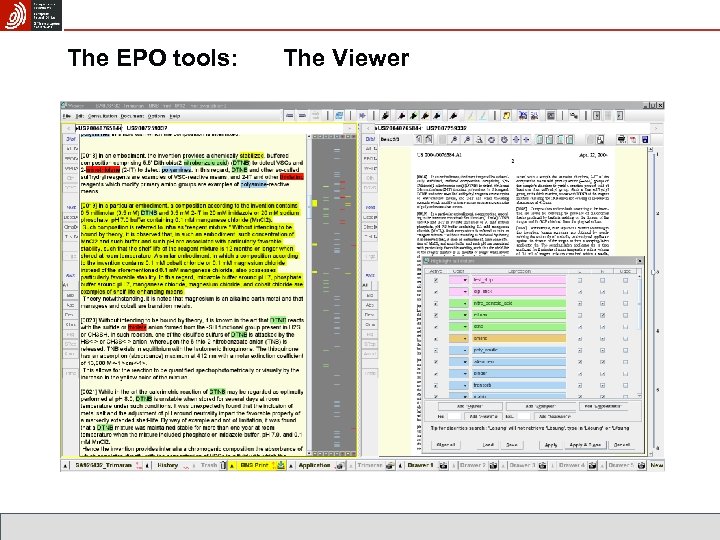
The EPO tools: The Viewer
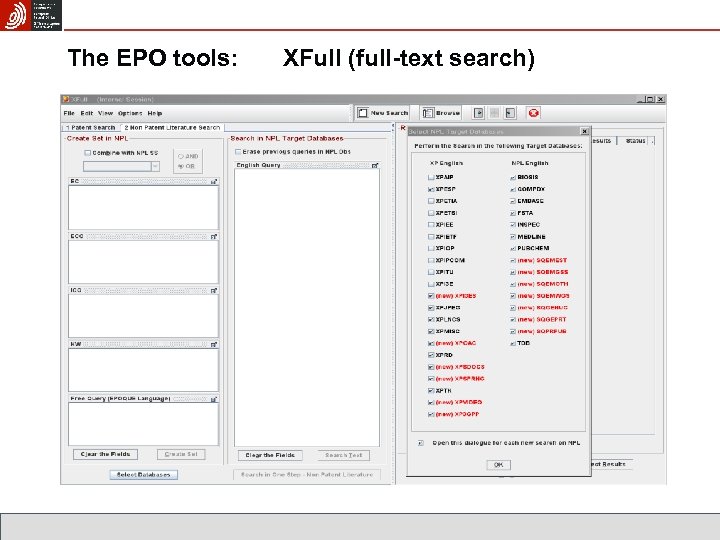
The EPO tools: XFull (full-text search)
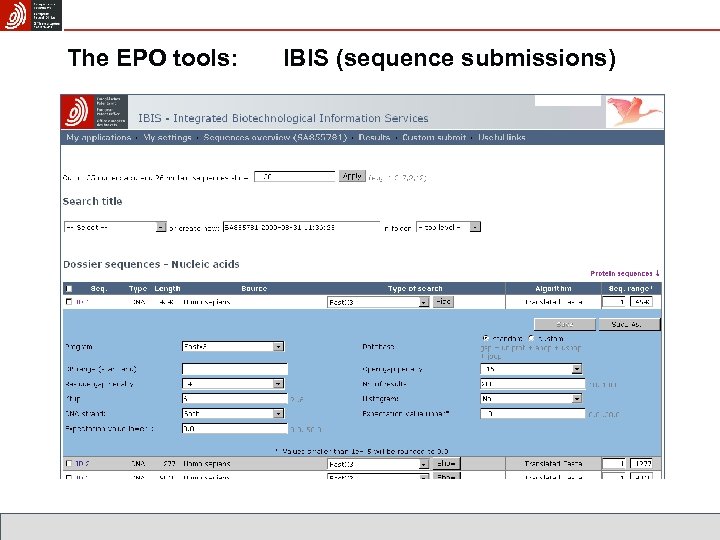
The EPO tools: IBIS (sequence submissions)
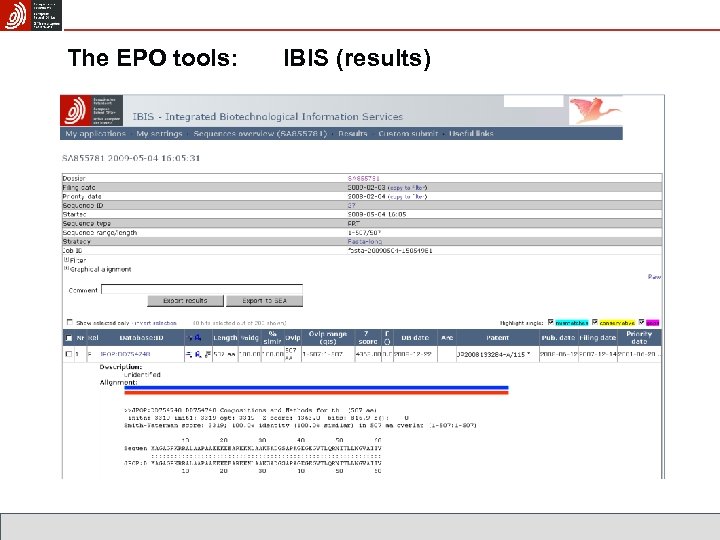
The EPO tools: IBIS (results)
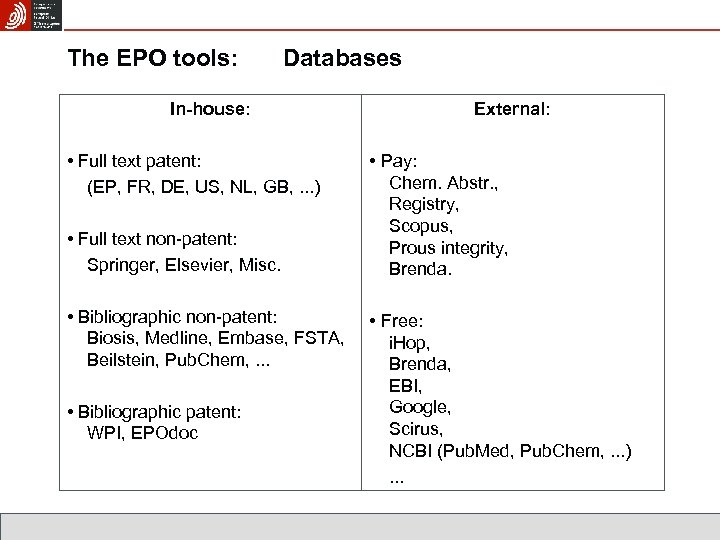
The EPO tools: Databases In-house: • Full text patent: (EP, FR, DE, US, NL, GB, . . . ) • Full text non-patent: Springer, Elsevier, Misc. • Bibliographic non-patent: Biosis, Medline, Embase, FSTA, Beilstein, Pub. Chem, . . . • Bibliographic patent: WPI, EPOdoc External: • Pay: Chem. Abstr. , Registry, Scopus, Prous integrity, Brenda. • Free: i. Hop, Brenda, EBI, Google, Scirus, NCBI (Pub. Med, Pub. Chem, . . . ). . .
Thank you for your attention. Any questions?
Скачать презентацию How the EPO searches prior art in Biotech
a66b9356d0ef5d1035997157747461cd.ppt