 Скачать презентацию How Quality Care-Metrics QCM contribute to Quality and
37cc8503b24dc7594609018211d90358.ppt
- Количество слайдов: 24



How Quality Care-Metrics (QCM) contribute to Quality and Community Nursing Anne Gallen HSE ONMSD National Lead QCM Director of Nursing & Midwifery Planning and Development Doctoral Candidate – IPA & UCD
Overview – Explore the roots of quality and safety – Policy influences driving quality and safety – Methods for judging care quality and safety – Measuring Nursing & Midwifery Care - QCM – Profiling Care Quality – Clinical Dashboards – Clinical Leadership in Community Nursing – Questions
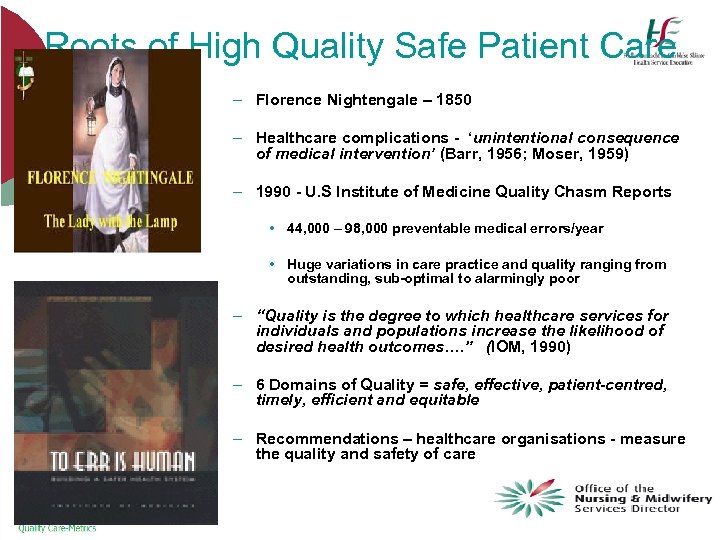
Roots of High Quality Safe Patient Care – Florence Nightengale – 1850 – Healthcare complications - ‘unintentional consequence of medical intervention’ (Barr, 1956; Moser, 1959) – 1990 - U. S Institute of Medicine Quality Chasm Reports • 44, 000 – 98, 000 preventable medical errors/year • Huge variations in care practice and quality ranging from outstanding, sub-optimal to alarmingly poor – “Quality is the degree to which healthcare services for individuals and populations increase the likelihood of desired health outcomes…. ” (IOM, 1990) – 6 Domains of Quality = safe, effective, patient-centred, timely, efficient and equitable – Recommendations – healthcare organisations - measure the quality and safety of care
Key Policy Influences – Building a Culture of Patient Safety: Report of the Commission on Patient Safety and Quality Assurance (Do. H&C, 2008) Lourdes Inquiry – Patient Safety Curriculum Guide; Multiprofessional Edition (WHO, 2011) – US Nursing Research – Linda Aiken Association between nursing and patient outcomes – International Nursing Research • RN 4 CAST (2013) – nurse perceptions of safety and quality of care in acute hospitals
How safe is healthcare in Ireland – Approx 35, 000 medical errors occur annually in Irish Hospitals (Hunter, 2008) – Plethora of HIQA reports outlined suboptimal care in Acute Hospitals, Maternity Services, Older Person Services, Disability Services, Hygiene Standards etc – Research evidence - Practice variation anecdotal (? ? )
HSE corporate support for Quality “Quality…is the delivery of effective care in an environment that is safe for patients, staff and the public. . ” 2015 - Quality Enablement through the Quality Improvement & Quality Assurance Divisions
Making Healthcare Safer: Methods for improving quality and safety – Regulation and inspection – Research & evaluation – Feedback - Patient and staff experience – Gather clinical DATA to measure the Quality of Care
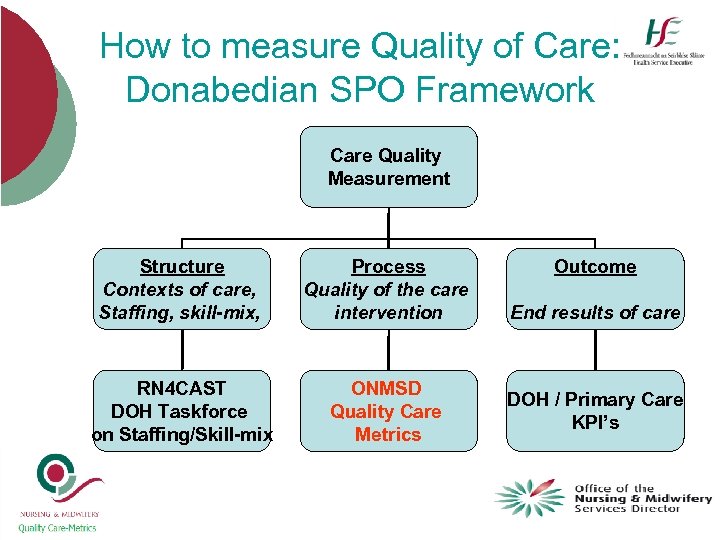
How to measure Quality of Care: Donabedian SPO Framework Care Quality Measurement Structure Contexts of care, Staffing, skill-mix, Process Quality of the care intervention RN 4 CAST DOH Taskforce on Staffing/Skill-mix ONMSD Quality Care Metrics Outcome End results of care DOH / Primary Care KPI’s
Measuring Care Processes Quality Care Metrics – Mandie Sunderland – NHS Foundation Trust – 2011/2012 - NMPD X 3 - North west, North east and Dublin North – Access to web based audit functionality Test Your Care – Contextualised UK Metrics to Irish standards, policies and procedures –
How does QCM work? • Identified auditors enter data monthly for each ward through the web-based system - TYC • Results are immediate - displayed in real-time online – available to CNM/DON • Reports printed monthly by each CNM and displayed on ward/organisation communication boards • Results show areas of good practice and areas in need of improvement • Action plans are drawn up to enable improvement towards the standard –action plans stored online for tracking/trending –
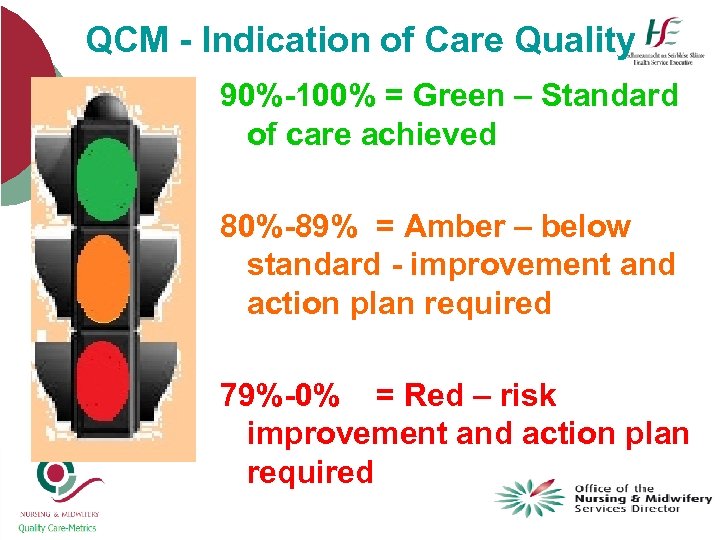
QCM - Indication of Care Quality 90%-100% = Green – Standard of care achieved 80%-89% = Amber – below standard - improvement and action plan required 79%-0% = Red – risk improvement and action plan required
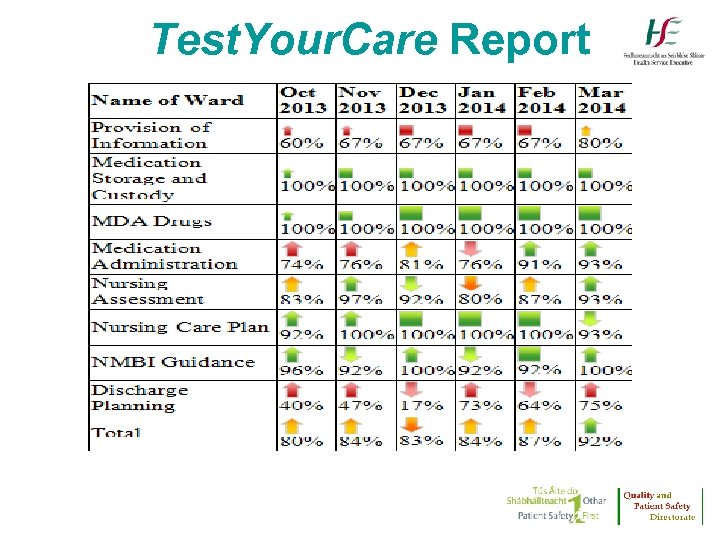
Test. Your. Care Report
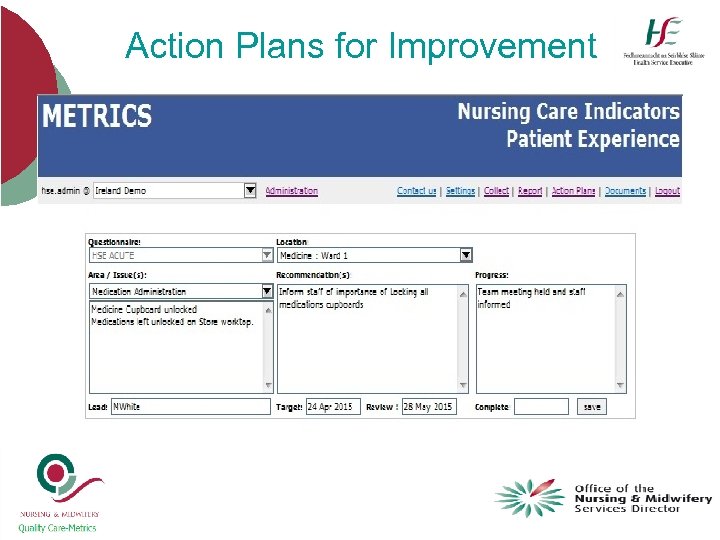
Action Plans for Improvement –
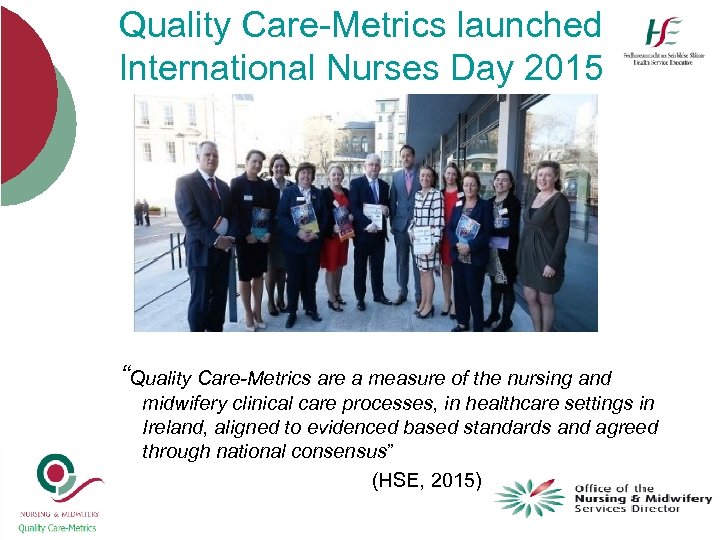
Quality Care-Metrics launched International Nurses Day 2015 “Quality Care-Metrics are a measure of the nursing and midwifery clinical care processes, in healthcare settings in Ireland, aligned to evidenced based standards and agreed through national consensus” (HSE, 2015)
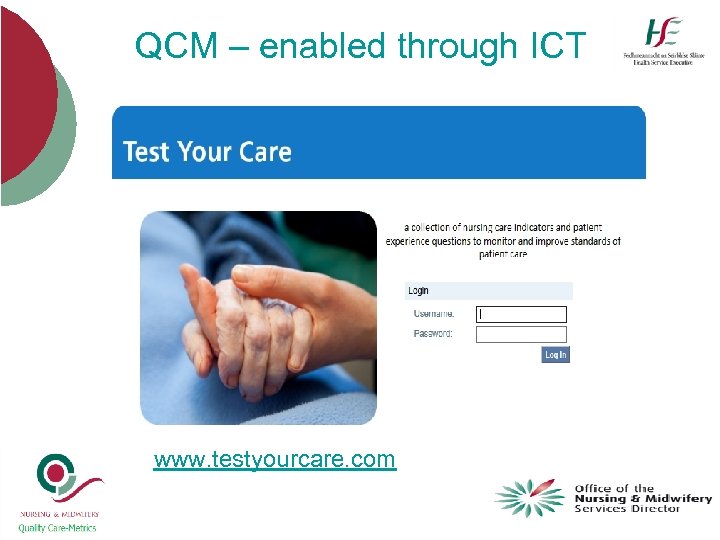
QCM – enabled through ICT www. testyourcare. com

Supporting documentation
QCM’s & Community Nursing – Training delivered to PHN’s in 6 of the 8 NMPD regions – Of the 6 regions trained 4 are currently collecting data
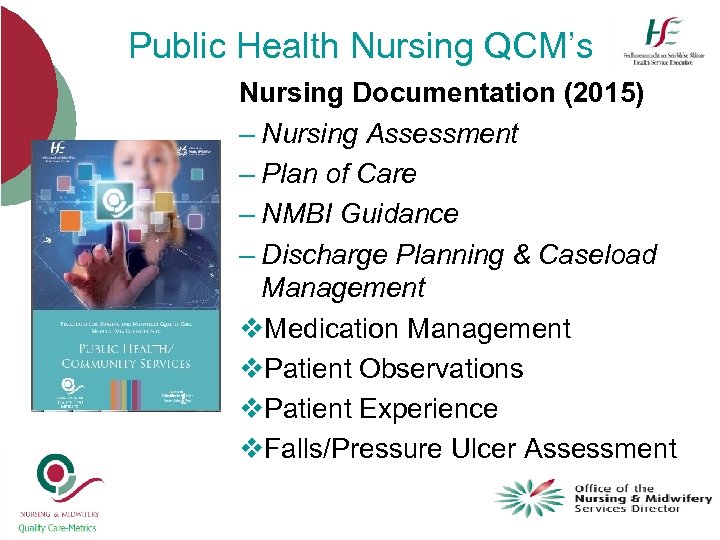
Public Health Nursing QCM’s Nursing Documentation (2015) – Nursing Assessment – Plan of Care – NMBI Guidance – Discharge Planning & Caseload Management v. Medication Management v. Patient Observations v. Patient Experience v. Falls/Pressure Ulcer Assessment
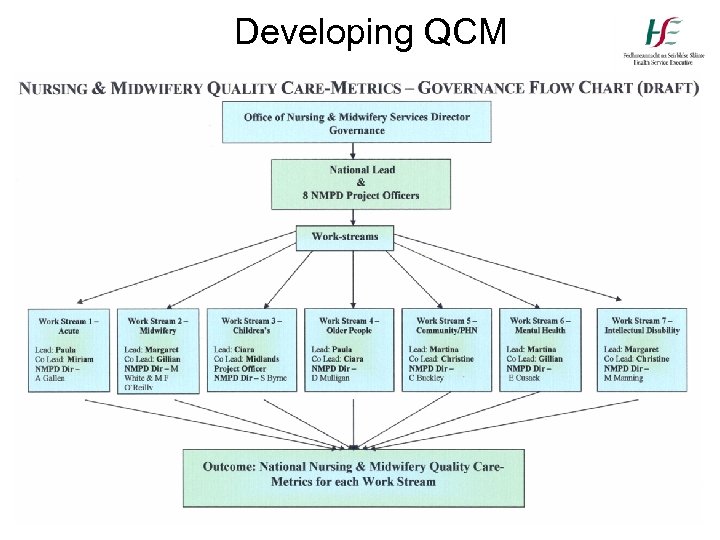
Developing QCM
Developing new QCM for PHN/Community Nursing • Work-stream established • Representation from all regions and wide range of professional grades • Academic support – UCD – Prof Laserina O’Connor • Patient voice nomination • Chairperson – NMPD South – Carmel Buckley • Project Officers – Martina Giltenane & Aoife Lane • Group scheduled to reconvene 30 th June • Aim: – through a robust academic framework and professional consensus, identify and prioritise the suite of QCM and their respective indicators for PHN / Community Nursing.
Next Steps • Hand-held technology – ICT tablets • Enhance reporting functionality • Develop Nursing & Midwifery Clinical Dashboards • Education – focus on undergrad / post grad / and CPD • HSEland
Benefits of Quality Care-Metrics for Community Nursing • Provides the platform to measure, monitor and trend care quality data in a format that is accessible and timely • Provides the evidence that identifies the areas of good nursing practice and also the areas where improvement is required • Embeds awareness of evidenced-based clinical standards, policies and procedures • Places Safety & Quality of Care at the heart of service provision and delivery
A Final Word Clinical Leadership in Community Nursing HSE (2010) “A Clinical Leader is a competent professional involved in providing direct and indirect clinical care, who enables oneself, and influences others to improve patient care” • Effective Clinical Leadership in Community Nursing enables safe patient care and ongoing improvement of care • QCM’s demonstrate the visibility and contribution of your role to safe and effective care
Thank You for Listening
Скачать презентацию How Quality Care-Metrics QCM contribute to Quality and
37cc8503b24dc7594609018211d90358.ppt