


 Скачать презентацию How healthy are Scotland s children A European overview
83f5b4269b1ccec1efb65bc308e8ca69.ppt
- Количество слайдов: 31
 How healthy are Scotland’s children? A European overview KATE LEVIN UNIVERSITY OF EDINBURGH
 Policy developments related to children and young people’s health • National Programme for Improving Mental Health and Well-being (2001) Action Plan (Scottish Executive, 2003) • Schools (Health Promotion and Nutrition) (Scotland) Act 2007 requires education authorities to ensure schools are health-promoting • ‘Creating confident kids’ programme is based on SEAL (Social and Emotional Aspects of Learning programme, in England) • Equally Well: Report of the Ministerial Task Force on Health Inequalities (2008) aims to reduce health inequalities among children and young people • Curriculum for Excellence (2009) to take a holistic approach to health and wellbeing across the school curriculum to improve mental, emotional, social and physical health and to promote resilience, confidence, independent thinking and positive attitudes.
 The Health Behaviour in School-aged Children (HBSC) Study An international study that gathers data from young people about their health and well-being • • Physical activity Consumption of food & drinks/weight control TV & computer use/electronic communication Sexual health Body image/BMI Fighting/bullying/injuries Self-rated health/health complaints/life satisfaction Risk behaviours: tobacco/alcohol/cannabis
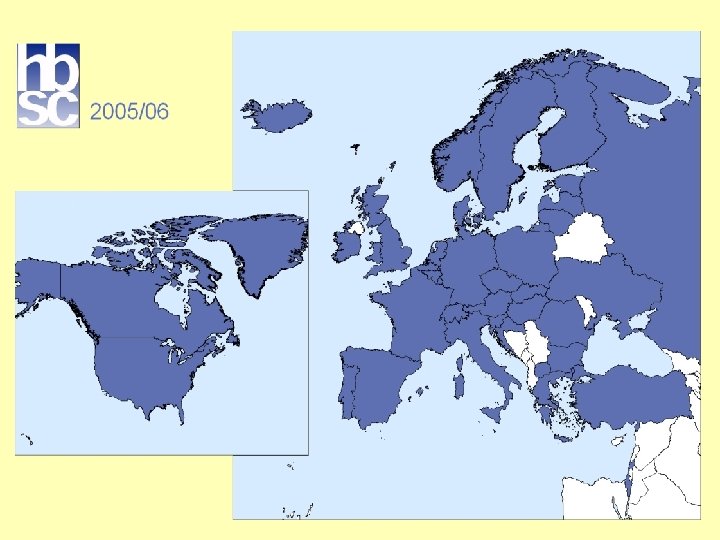
 HBSC: background • Initiated in 1982 by three countries and shortly afterwards became a WHO collaborative study • Now has 43 member countries/regions in Europe and North America • International network of >260 researchers from different disciplines • A collaborative project between national research teams and in partnership with WHO
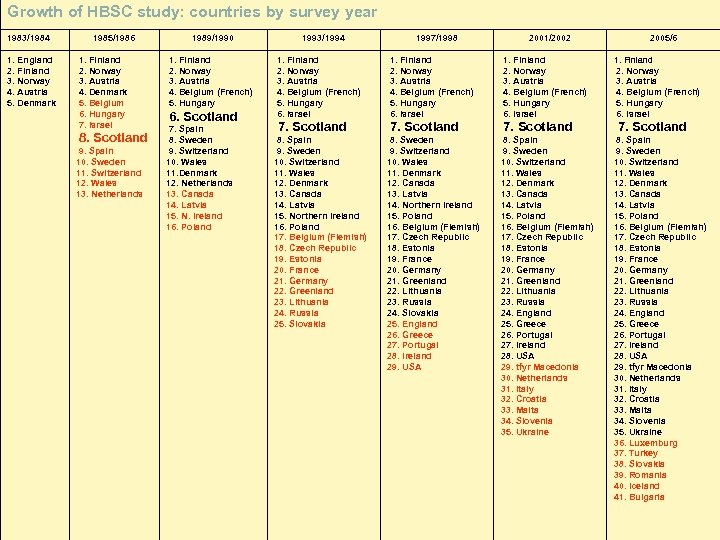 Growth of HBSC study: countries by survey year 1983/1984 1. England 2. Finland 3. Norway 4. Austria 5. Denmark 1985/1986 1. Finland 2. Norway 3. Austria 4. Denmark 5. Belgium 6. Hungary 7. Israel 8. Scotland 9. Spain 10. Sweden 11. Switzerland 12. Wales 13. Netherlands 1989/1990 1. Finland 2. Norway 3. Austria 4. Belgium (French) 5. Hungary 6. Scotland 7. Spain 8. Sweden 9. Switzerland 10. Wales 11. Denmark 12. Netherlands 13. Canada 14. Latvia 15. N. Ireland 16. Poland 1993/1994 1. Finland 2. Norway 3. Austria 4. Belgium (French) 5. Hungary 6. Israel 7. Scotland 8. Spain 9. Sweden 10. Switzerland 11. Wales 12. Denmark 13. Canada 14. Latvia 15. Northern Ireland 16. Poland 17. Belgium (Flemish) 18. Czech Republic 19. Estonia 20. France 21. Germany 22. Greenland 23. Lithuania 24. Russia 25. Slovakia 1997/1998 1. Finland 2. Norway 3. Austria 4. Belgium (French) 5. Hungary 6. Israel 2001/2002 1. Finland 2. Norway 3. Austria 4. Belgium (French) 5. Hungary 6. Israel 7. Scotland 8. Sweden 9. Switzerland 10. Wales 11. Denmark 12. Canada 13. Latvia 14. Northern Ireland 15. Poland 16. Belgium (Flemish) 17. Czech Republic 18. Estonia 19. France 20. Germany 21. Greenland 22. Lithuania 23. Russia 24. Slovakia 25. England 26. Greece 27. Portugal 28. Ireland 29. USA 8. Spain 9. Sweden 10. Switzerland 11. Wales 12. Denmark 13. Canada 14. Latvia 15. Poland 16. Belgium (Flemish) 17. Czech Republic 18. Estonia 19. France 20. Germany 21. Greenland 22. Lithuania 23. Russia 24. England 25. Greece 26. Portugal 27. Ireland 28. USA 29. tfyr Macedonia 30. Netherlands 31. Italy 32. Croatia 33. Malta 34. Slovenia 35. Ukraine 2005/6 1. Finland 2. Norway 3. Austria 4. Belgium (French) 5. Hungary 6. Israel 7. Scotland 8. Spain 9. Sweden 10. Switzerland 11. Wales 12. Denmark 13. Canada 14. Latvia 15. Poland 16. Belgium (Flemish) 17. Czech Republic 18. Estonia 19. France 20. Germany 21. Greenland 22. Lithuania 23. Russia 24. England 25. Greece 26. Portugal 27. Ireland 28. USA 29. tfyr Macedonia 30. Netherlands 31. Italy 32. Croatia 33. Malta 34. Slovenia 35. Ukraine 36. Luxemburg 37. Turkey 38. Slovakia 39. Romania 40. Iceland 41. Bulgaria
 HBSC: methods • Surveys conducted every 4 years using standard international questionnaire in all countries (latest survey 2005– 2006) • School–based, pupil self-complete questionnaire, teacher or researcher administered • Class is sampling unit • Three age groups with mean age 11. 5, 13. 5 and 15. 5 years • Sample size in each country: minimum of 4, 500 (1, 500 per age group)
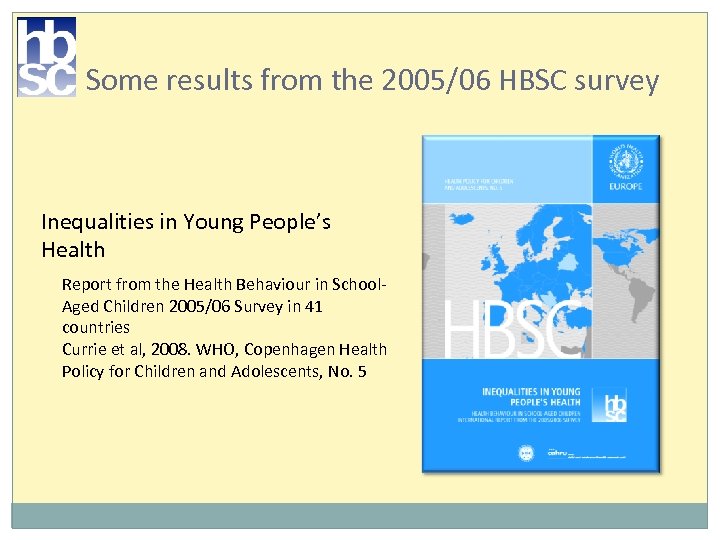 Some results from the 2005/06 HBSC survey Inequalities in Young People’s Health • Report from the Health Behaviour in School. Aged Children 2005/06 Survey in 41 countries • Currie et al, 2008. WHO, Copenhagen Health Policy for Children and Adolescents, No. 5
 Scottish data: Mental health and well-being • • • Happiness Confidence Perception of looks Life satisfaction Multiple Health complaints Self-rated health
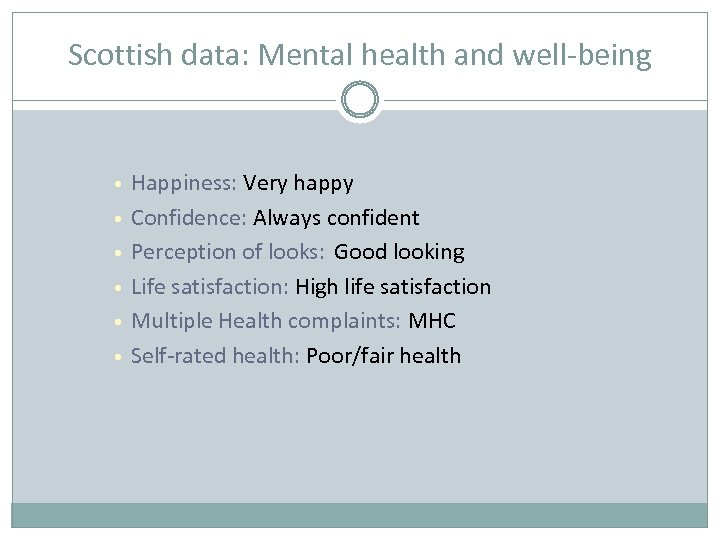 Scottish data: Mental health and well-being • • • Happiness: Very happy Confidence: Always confident Perception of looks: Good looking Life satisfaction: High life satisfaction Multiple Health complaints: MHC Self-rated health: Poor/fair health
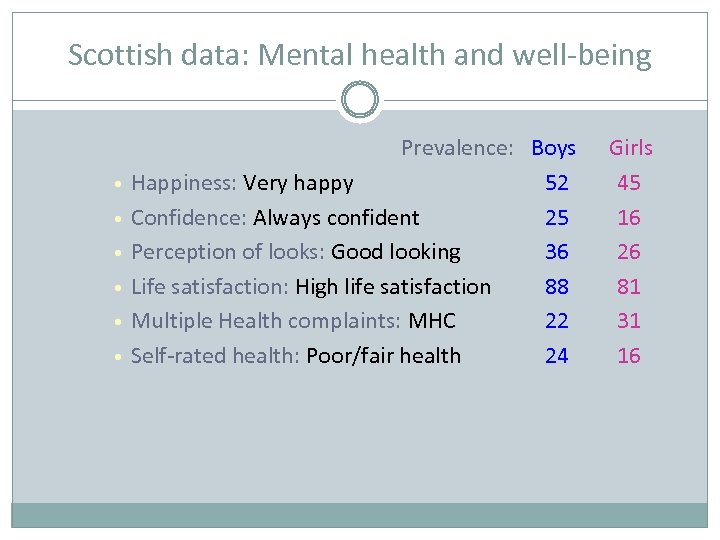 Scottish data: Mental health and well-being • • • Prevalence: Boys Happiness: Very happy 52 Confidence: Always confident 25 Perception of looks: Good looking 36 Life satisfaction: High life satisfaction 88 Multiple Health complaints: MHC 22 Self-rated health: Poor/fair health 24 Girls 45 16 26 81 31 16
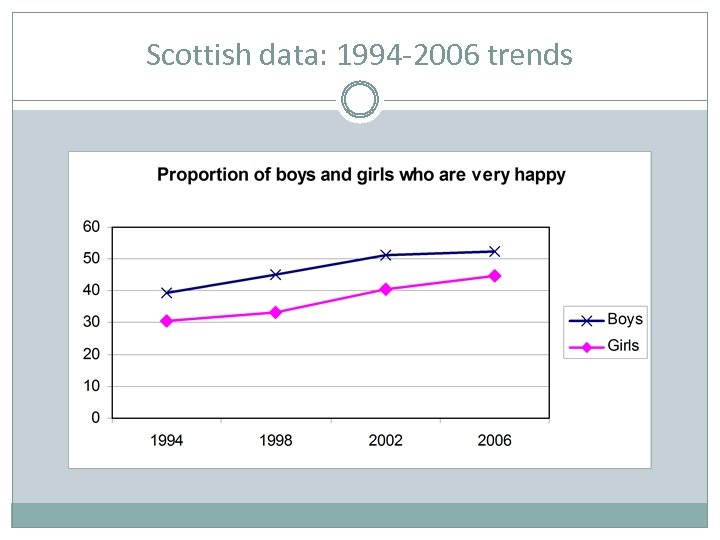 Scottish data: 1994 -2006 trends
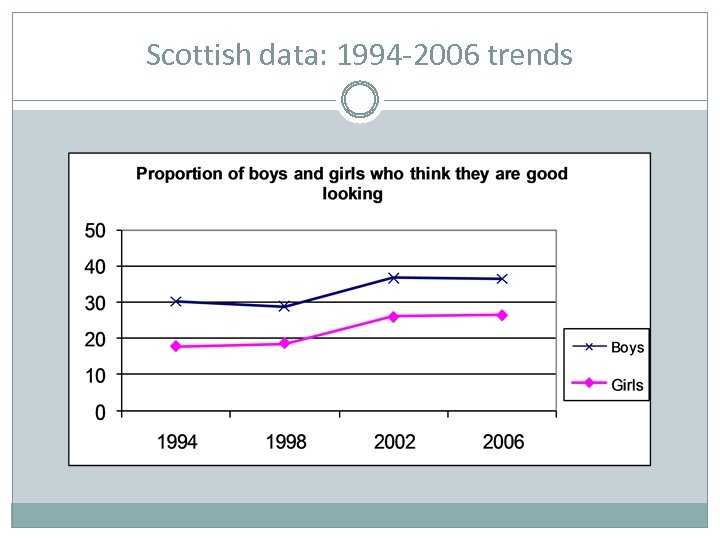 Scottish data: 1994 -2006 trends
 Scottish data: Mental well-being • • • Happiness Confidence Perception of looks Life satisfaction Multiple Health complaints Self-rated health
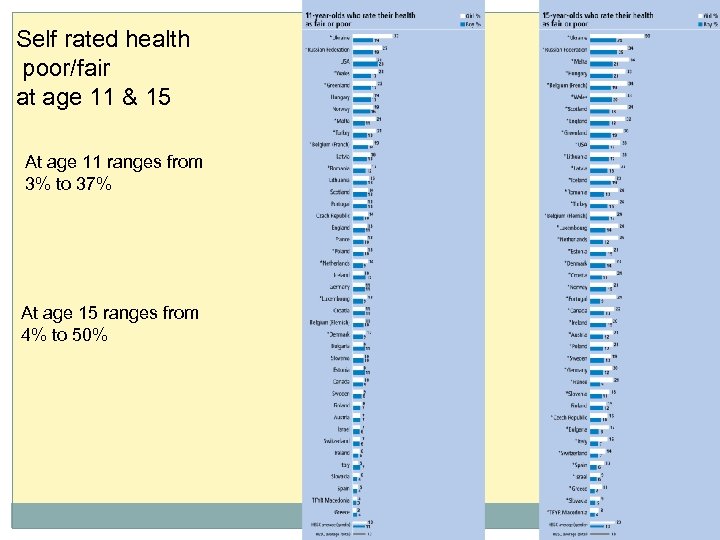 Self rated health poor/fair at age 11 & 15 At age 11 ranges from 3% to 37% At age 15 ranges from 4% to 50%
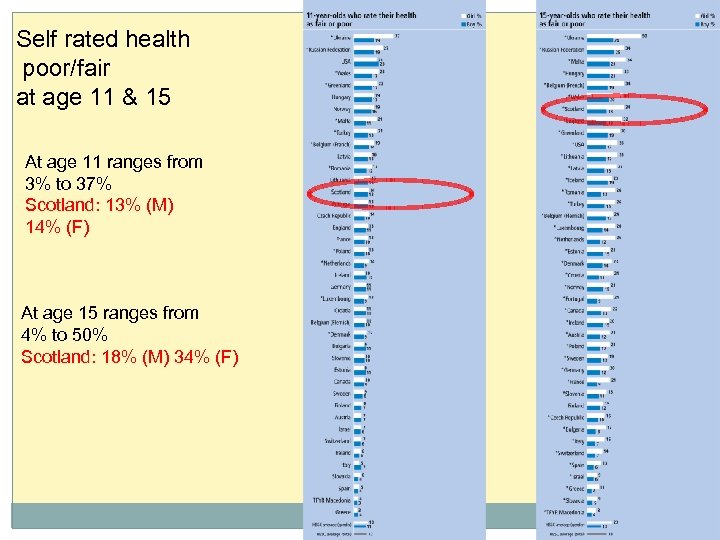 Self rated health poor/fair at age 11 & 15 At age 11 ranges from 3% to 37% Scotland: 13% (M) 14% (F) At age 15 ranges from 4% to 50% Scotland: 18% (M) 34% (F)
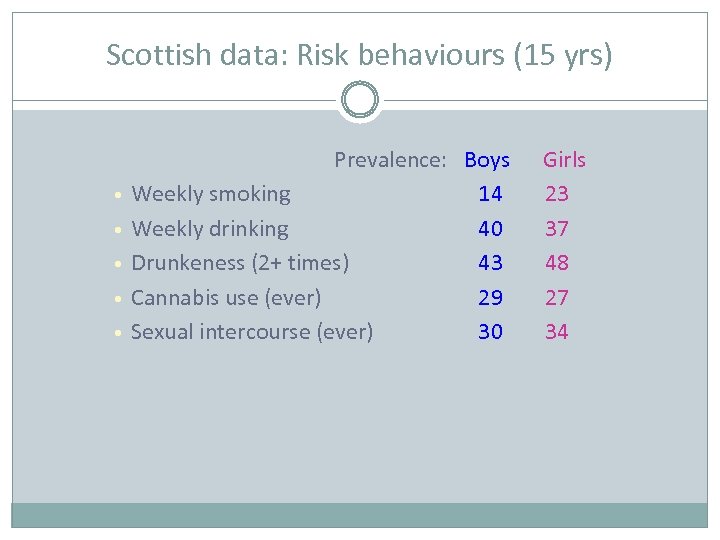 Scottish data: Risk behaviours (15 yrs) • • • Prevalence: Boys Weekly smoking 14 Weekly drinking 40 Drunkeness (2+ times) 43 Cannabis use (ever) 29 Sexual intercourse (ever) 30 Girls 23 37 48 27 34
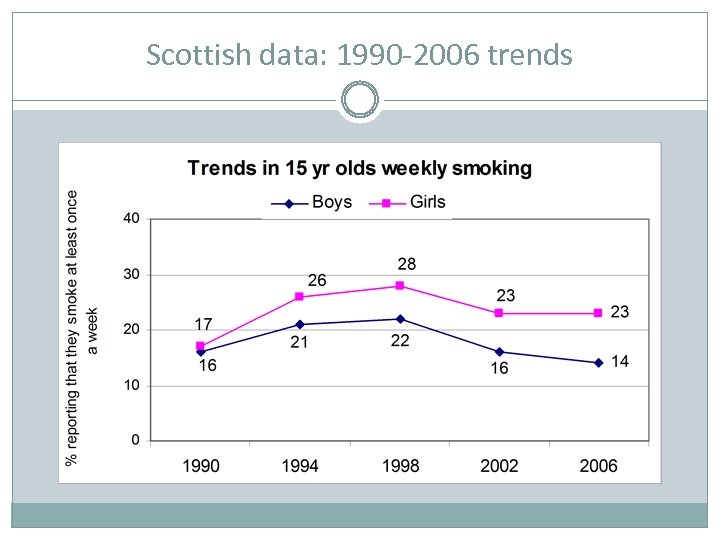 Scottish data: 1990 -2006 trends
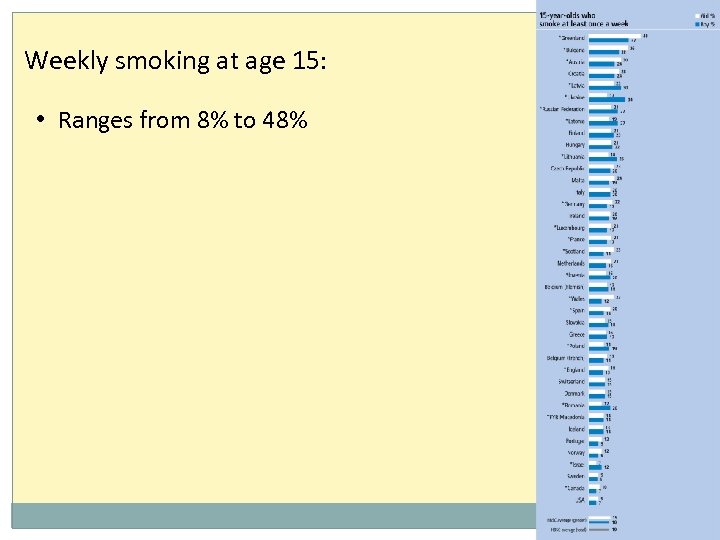 Weekly smoking at age 15: • Ranges from 8% to 48%
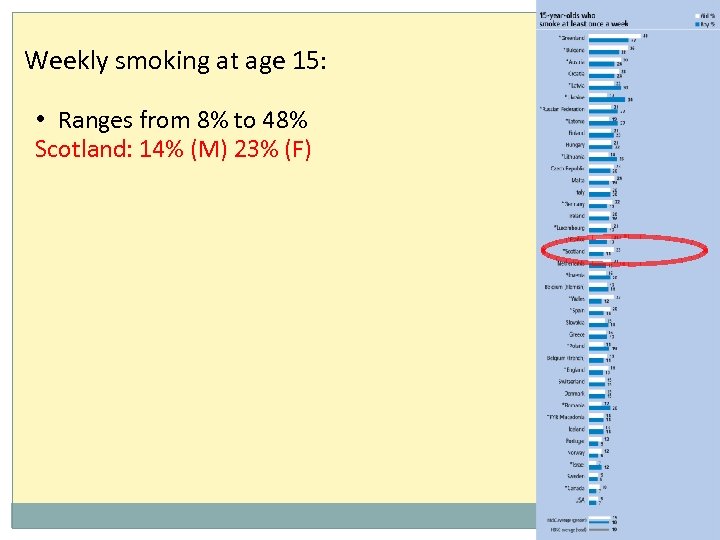 Weekly smoking at age 15: • Ranges from 8% to 48% Scotland: 14% (M) 23% (F)
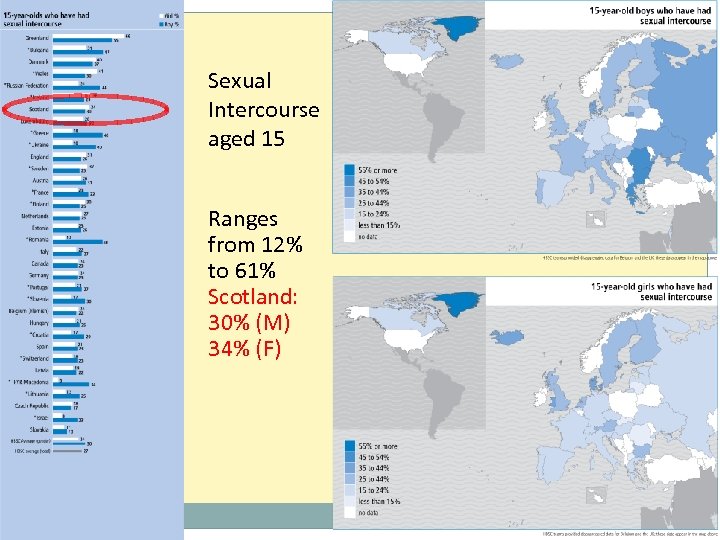 Sexual Intercourse aged 15 Ranges from 12% to 61% Scotland: 30% (M) 34% (F)
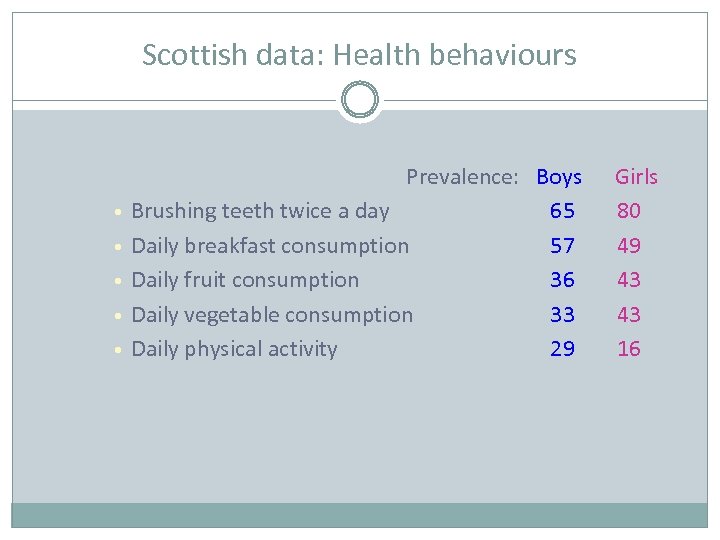 Scottish data: Health behaviours • • • Prevalence: Boys Brushing teeth twice a day 65 Daily breakfast consumption 57 Daily fruit consumption 36 Daily vegetable consumption 33 Daily physical activity 29 Girls 80 49 43 43 16
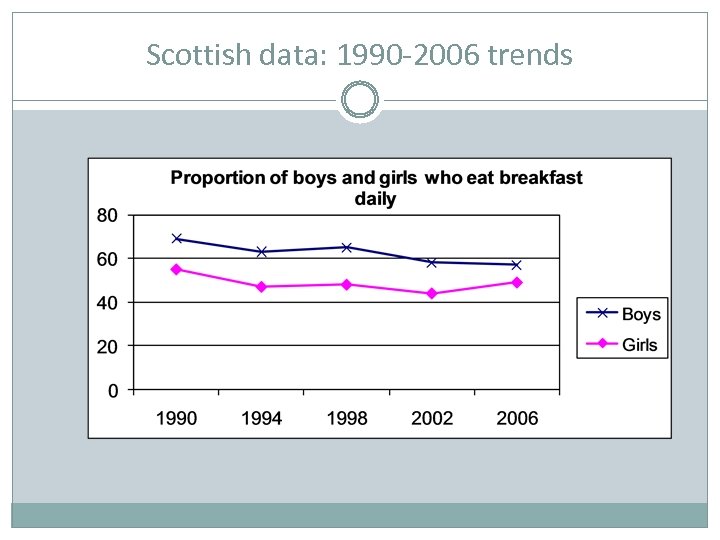 Scottish data: 1990 -2006 trends
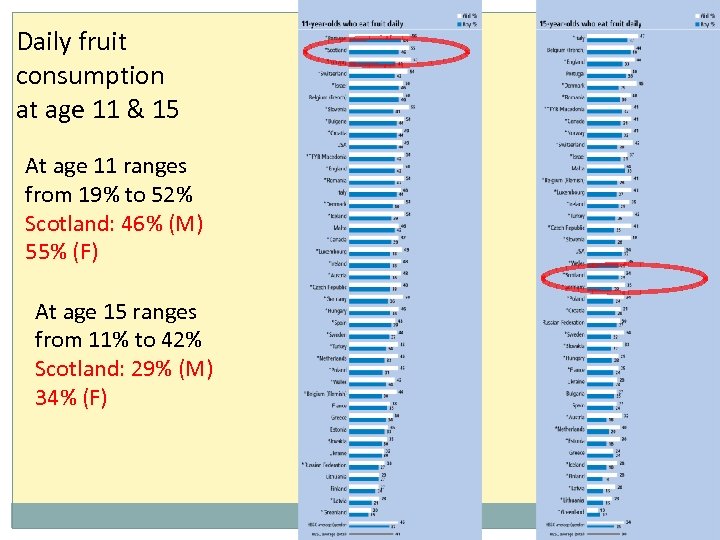 Daily fruit consumption at age 11 & 15 At age 11 ranges from 19% to 52% Scotland: 46% (M) 55% (F) At age 15 ranges from 11% to 42% Scotland: 29% (M) 34% (F)
 Key social contexts for adolescent health highlighted in HBSC Family structure and relationships Family affluence and parental socioeconomic status Relationships with peers School environment
 Economic disadvantage and health: key points Effects of economic disadvantage: Social exclusion and lack of opportunity in activities that promote or support health Psychological effect of perceived low social and economic status Direct effects of material deprivation and poverty on social and living conditions Local and global social and economic conditions impact on aspirations and sense of achievement which affects mental health
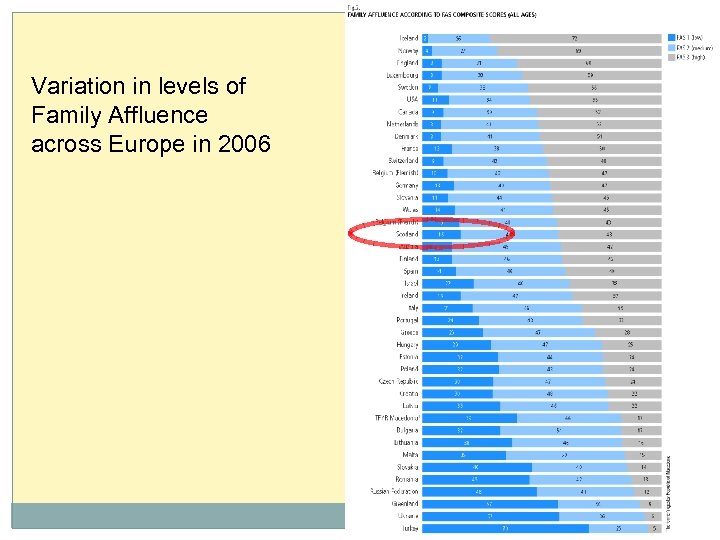 Variation in levels of Family Affluence across Europe in 2006
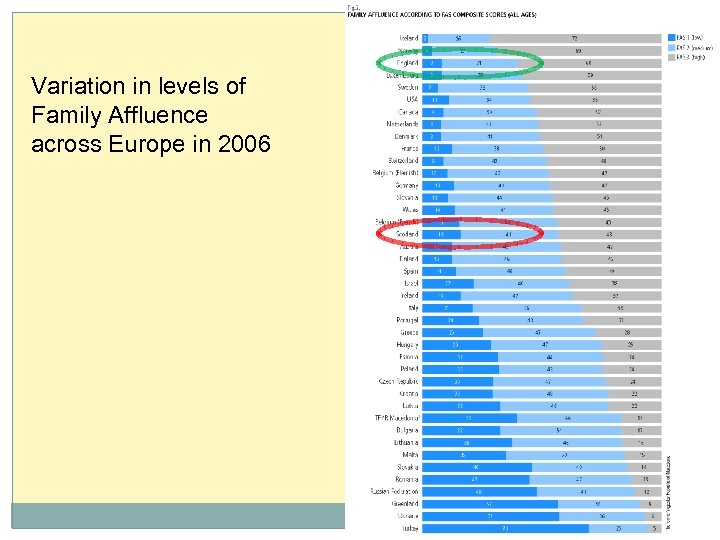 Variation in levels of Family Affluence across Europe in 2006
 Across Europe: key points Injuries are leading cause of death in young people and more prevalent in middle income countries and among lower socioeconomic groups There is an increasing trend in overweight among children and young people Overweight rates are higher among lower socioeconomic groups in richer countries and reverse is true in poorer countries Fruit and vegetable consumption fall below recommended levels; missing breakfast is common; soft drink consumption high Physical activity, mental well-being and eating habits are interconnected aspects of adolescent health
 Scotland: key points Positive long-term trends in emotional well- being and oral health Short-term improvements between 2002 and 2006 in fruit and vegetable consumption, physical activity and condom use Areas of concern: weekly smoking and drinking, particularly among girls Breakfast consumption (at age 15) relatively low compared with the rest of Europe. Sexual experience, alcohol and cannabis use relatively high. MHC and bullying relatively low, fruit consumption (at age 11) relatively high.
 How healthy are Scotland’s children? A European overview FOR MORE INFORMATION, PLEASE VISIT: HTTP: //WWW. EDUCATION. ED. AC. UK/CAHRU/