


 Скачать презентацию How Do STEM EEA 2012 Elementary STEM Day
44e056fc264a943934337243fe6b9100.ppt
- Количество слайдов: 66
 How Do STEM? EEA 2012 Elementary STEM Day 2 You
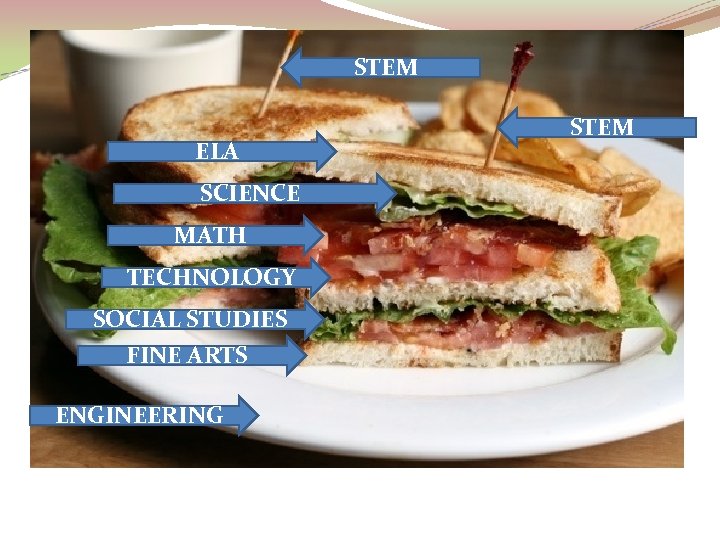 STEM ELA SCIENCE MATH TECHNOLOGY SOCIAL STUDIES FINE ARTS ENGINEERING STEM
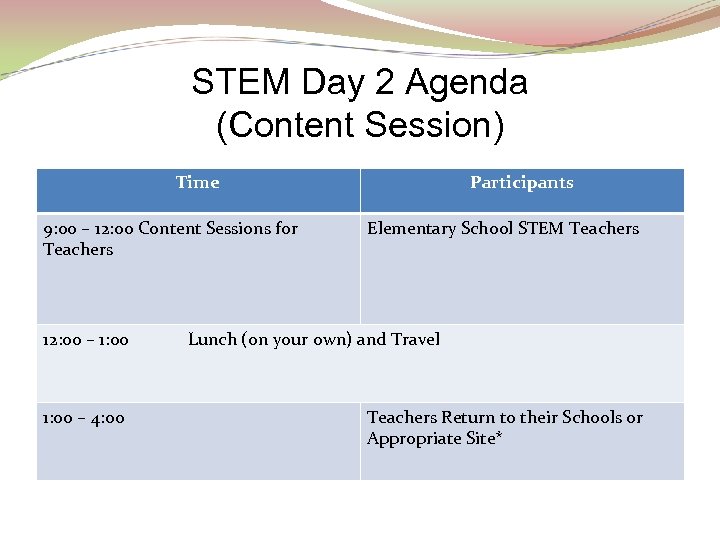 STEM Day 2 Agenda (Content Session) Time 9: 00 – 12: 00 Content Sessions for Teachers 12: 00 – 1: 00 – 4: 00 Participants Elementary School STEM Teachers Lunch (on your own) and Travel Teachers Return to their Schools or Appropriate Site*
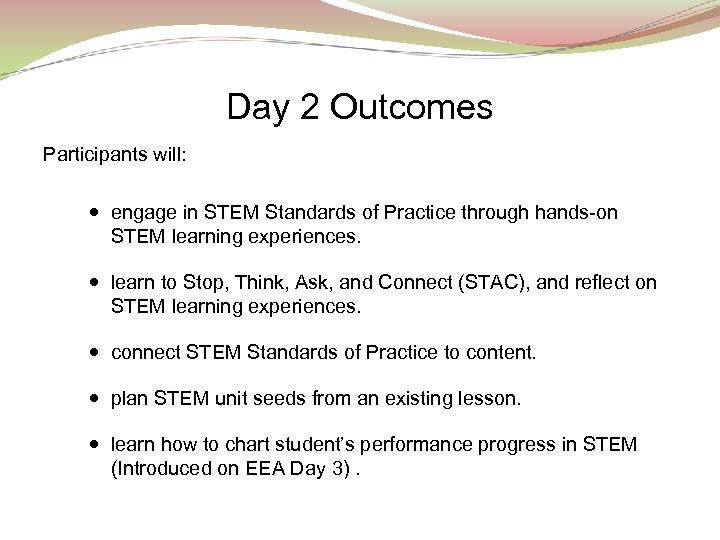 Day 2 Outcomes Participants will: engage in STEM Standards of Practice through hands-on STEM learning experiences. learn to Stop, Think, Ask, and Connect (STAC), and reflect on STEM learning experiences. connect STEM Standards of Practice to content. plan STEM unit seeds from an existing lesson. learn how to chart student’s performance progress in STEM (Introduced on EEA Day 3).
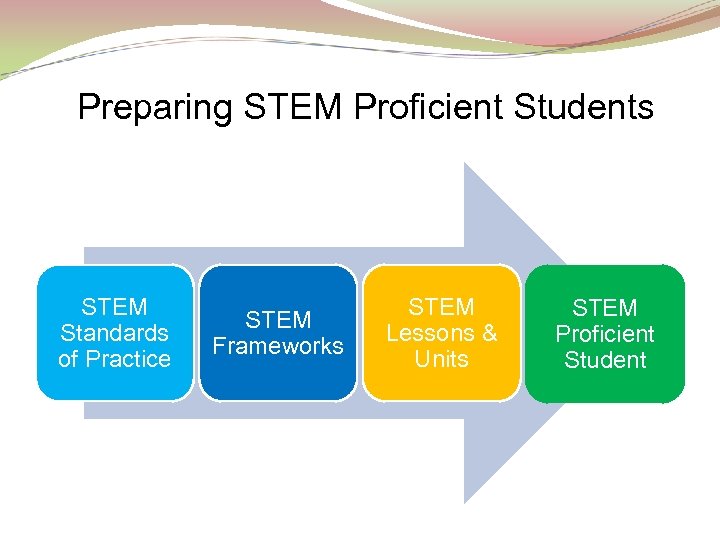 Preparing STEM Proficient Students STEM Standards of Practice STEM Frameworks STEM Lessons & Units STEM Proficient Student
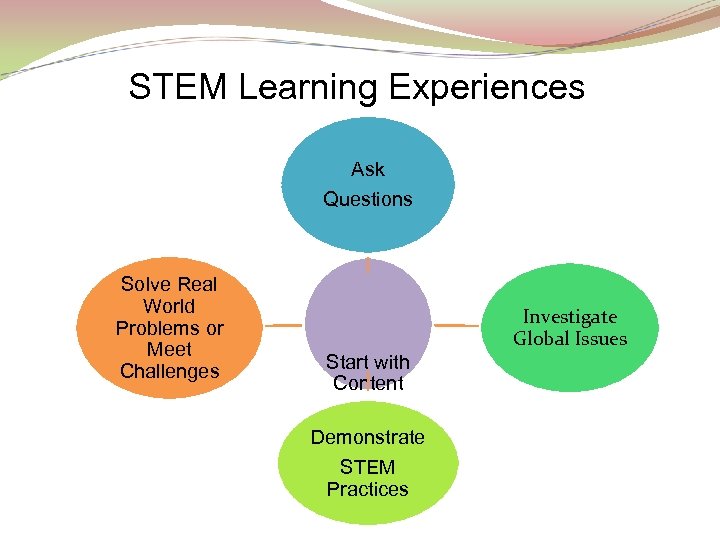 STEM Learning Experiences Ask Questions Solve Real World Problems or Meet Challenges Investigate Global Issues Start with Content Demonstrate STEM Practices
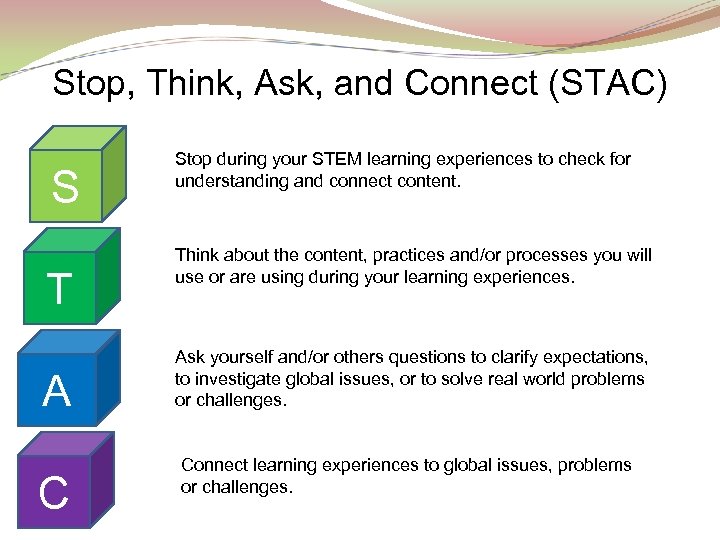 Stop, Think, Ask, and Connect (STAC) S T A C Stop during your STEM learning experiences to check for understanding and connect content. Think about the content, practices and/or processes you will use or are using during your learning experiences. Ask yourself and/or others questions to clarify expectations, to investigate global issues, or to solve real world problems or challenges. Connect learning experiences to global issues, problems or challenges.
 STEM Unit Seed: Clifford The Big Red Dog
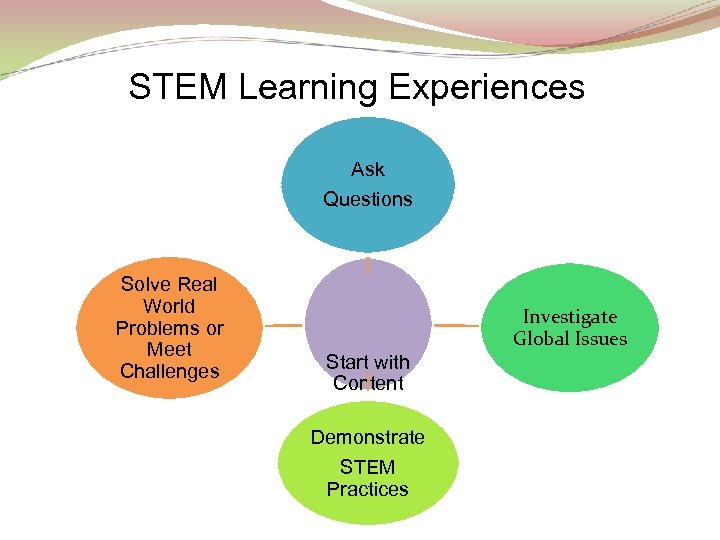 STEM Learning Experiences Ask Questions Solve Real World Problems or Meet Challenges Investigate Global Issues Start with Content Demonstrate STEM Practices
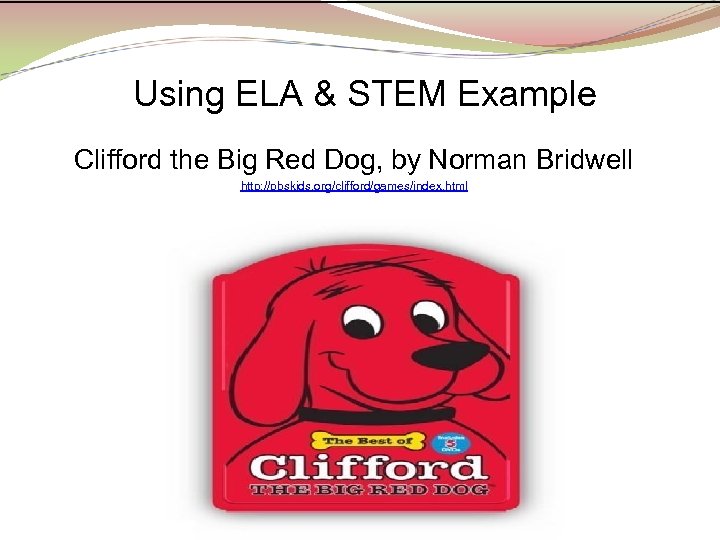
 Connecting ELA & STEM Clifford the Big Red Dog, by Norman Bridwell
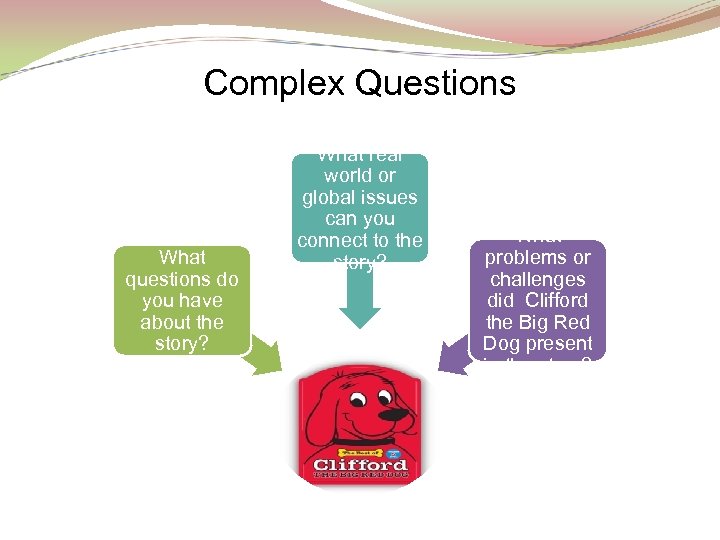 Complex Questions What questions do you have about the story? What real world or global issues can you connect to the story? What problems or challenges did Clifford the Big Red Dog present in the story?
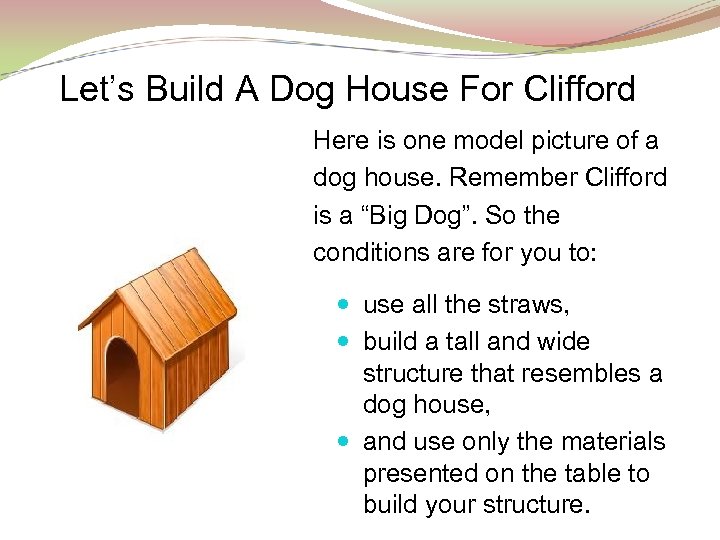 Let’s Build A Dog House For Clifford Here is one model picture of a dog house. Remember Clifford is a “Big Dog”. So the conditions are for you to: use all the straws, build a tall and wide structure that resembles a dog house, and use only the materials presented on the table to build your structure.
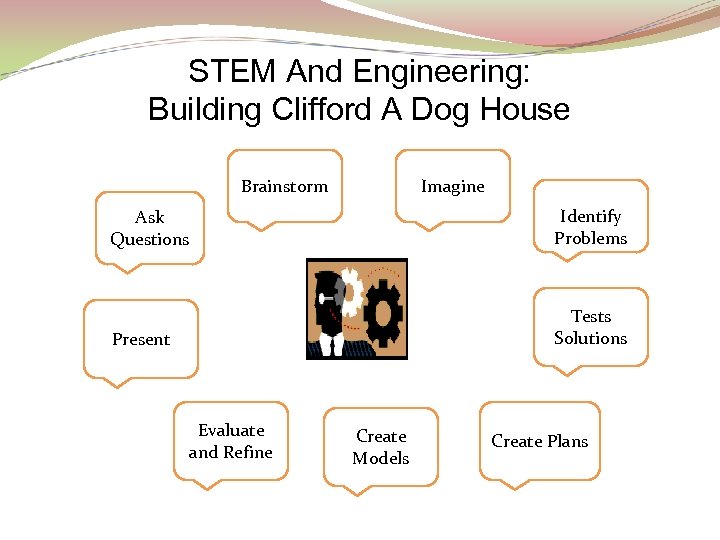 STEM And Engineering: Building Clifford A Dog House Brainstorm Imagine Ask Questions Identify Problems Present Tests Solutions Evaluate and Refine Create Models Create Plans
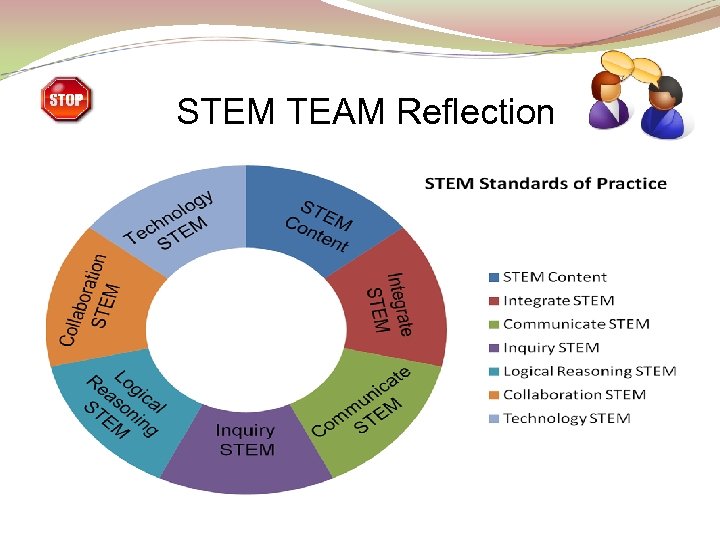 STEM TEAM Reflection
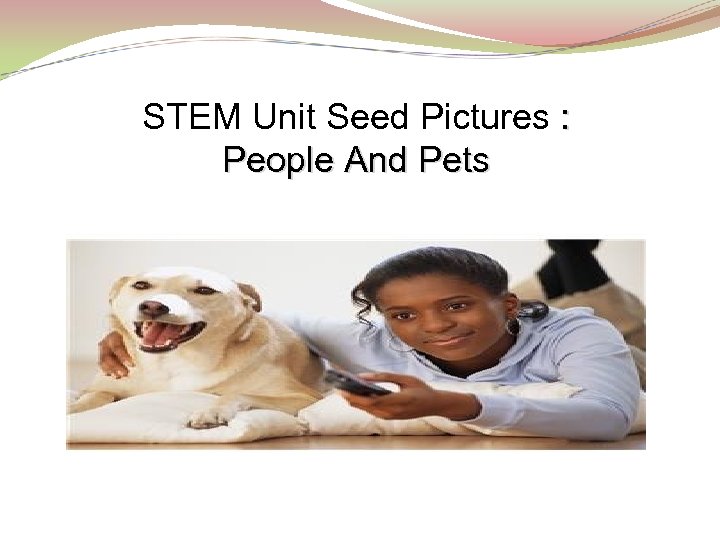 STEM Unit Seed Pictures : People And Pets
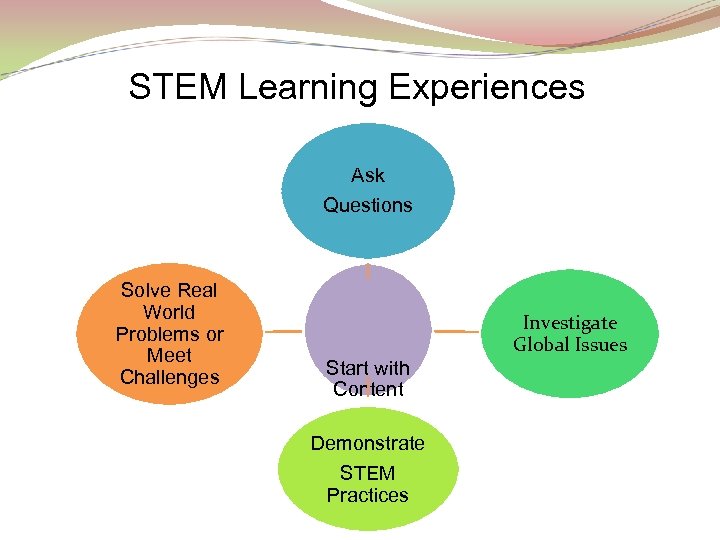 STEM Learning Experiences Ask Questions Solve Real World Problems or Meet Challenges Investigate Global Issues Start with Content Demonstrate STEM Practices
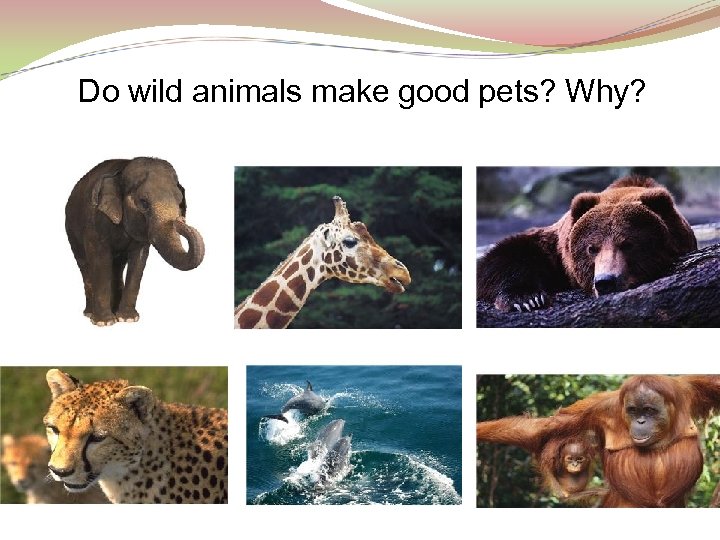 Do wild animals make good pets? Why?
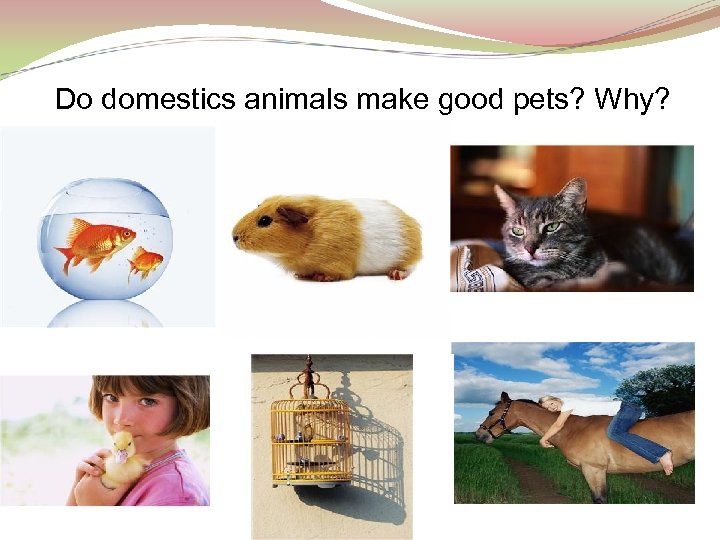
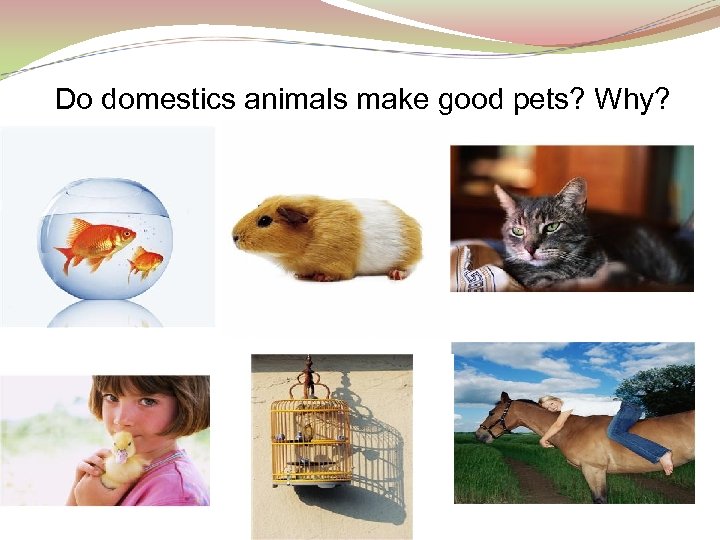 Do domestics animals make good pets? Why?
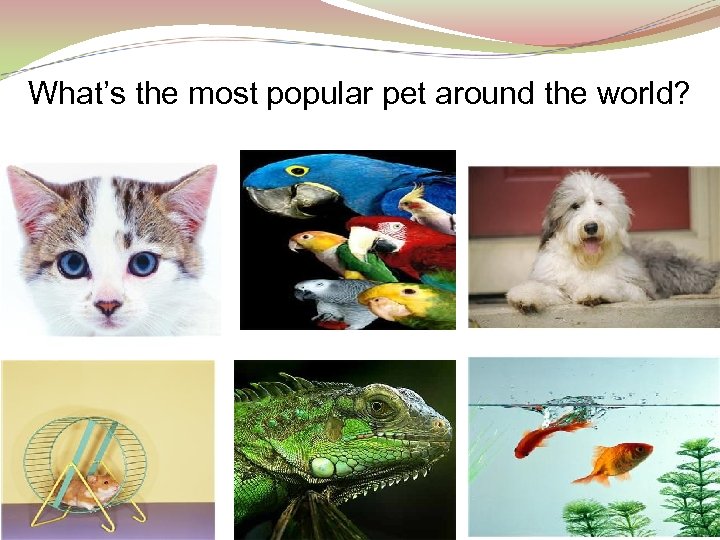 What’s the most popular pet around the world?
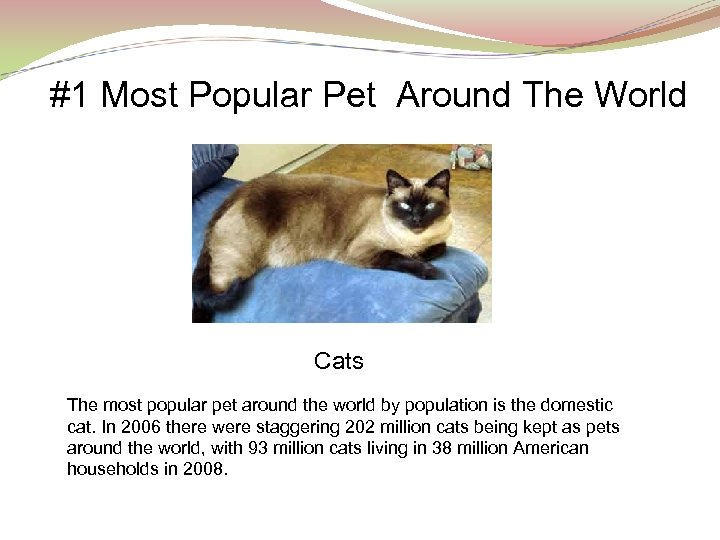 #1 Most Popular Pet Around The World Cats The most popular pet around the world by population is the domestic cat. In 2006 there were staggering 202 million cats being kept as pets around the world, with 93 million cats living in 38 million American households in 2008.
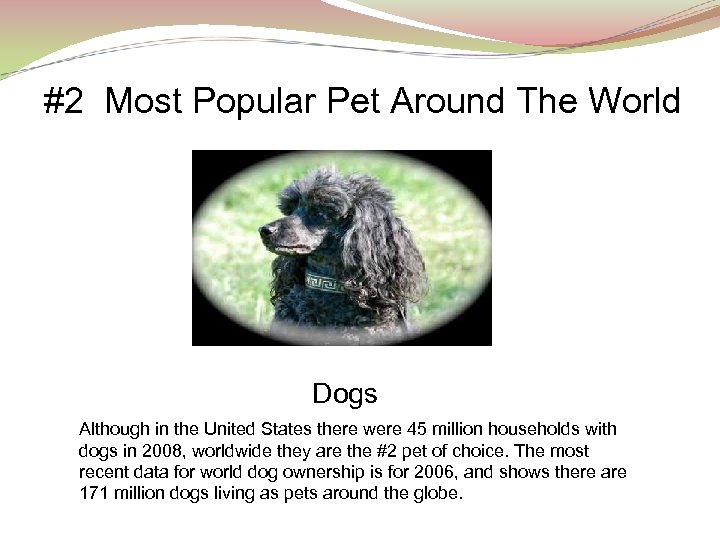 #2 Most Popular Pet Around The World Dogs Although in the United States there were 45 million households with dogs in 2008, worldwide they are the #2 pet of choice. The most recent data for world dog ownership is for 2006, and shows there are 171 million dogs living as pets around the globe.
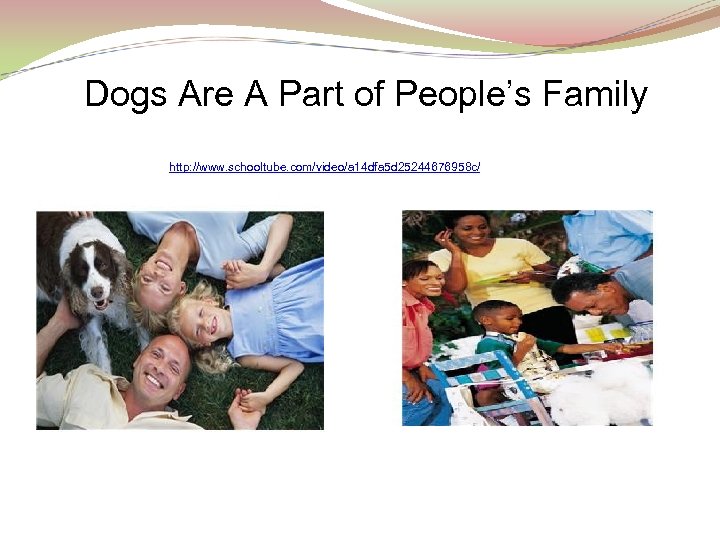 Dogs Are A Part of People’s Family http: //www. schooltube. com/video/a 14 dfa 5 d 25244676958 c/
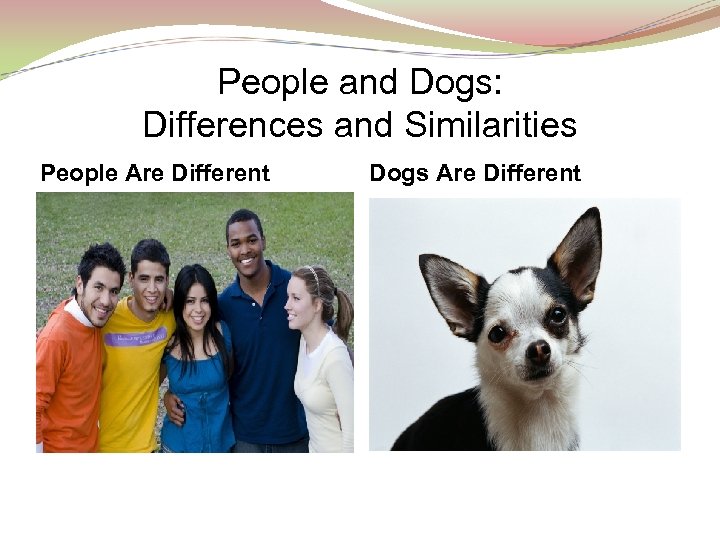 People and Dogs: Differences and Similarities People Are Different Dogs Are Different
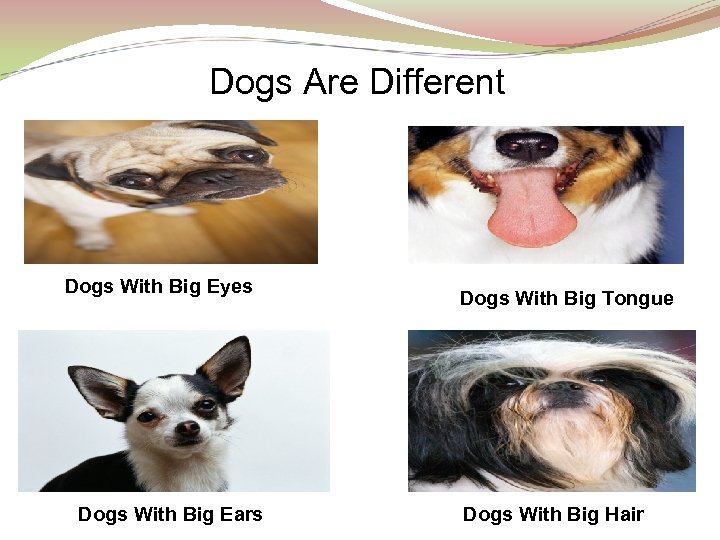 Dogs Are Different Dogs With Big Eyes Dogs With Big Ears Dogs With Big Tongue Dogs With Big Hair
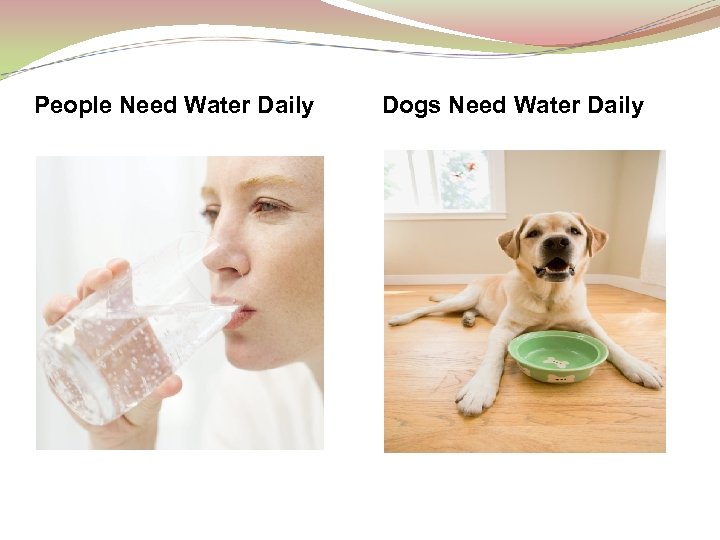 People Need Water Daily Dogs Need Water Daily
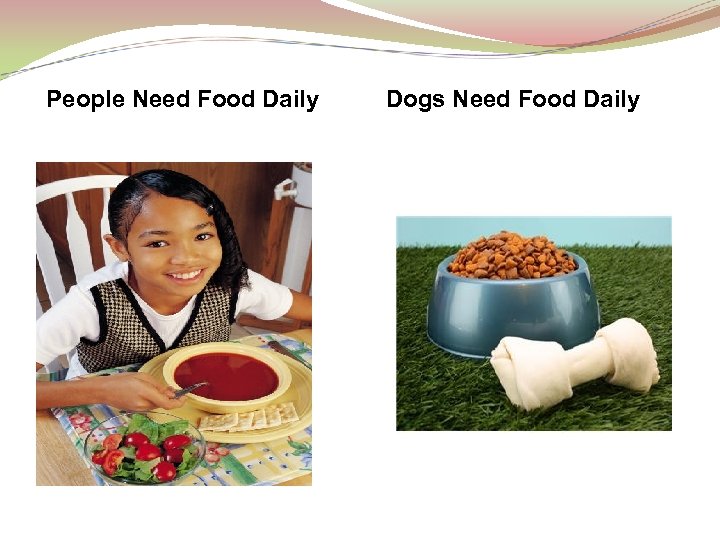 People Need Food Daily Dogs Need Food Daily
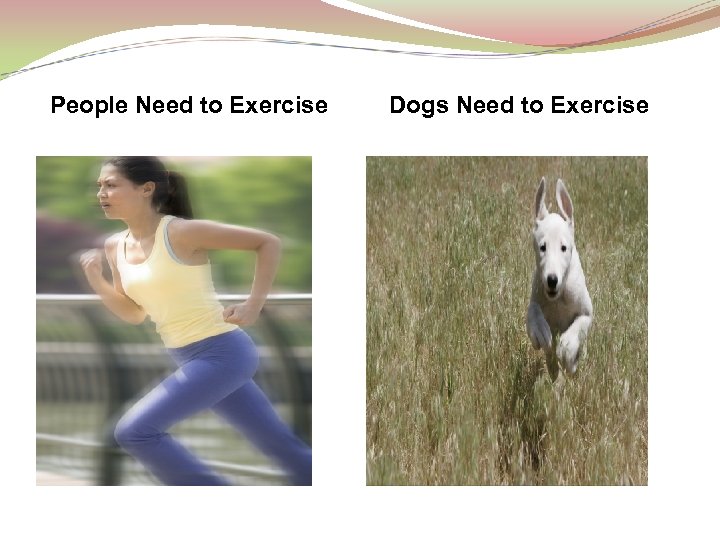 People Need to Exercise Dogs Need to Exercise
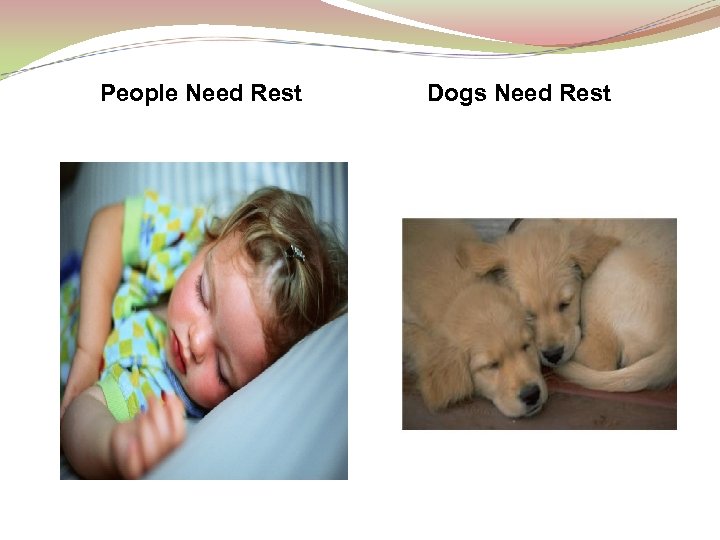 People Need Rest Dogs Need Rest
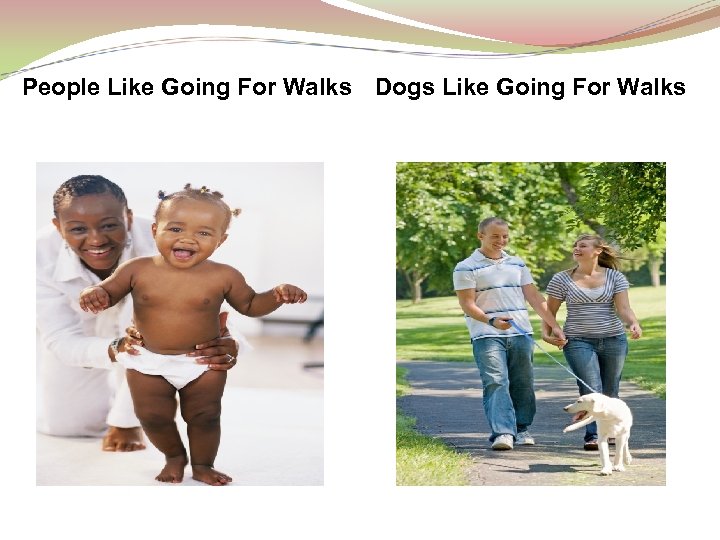 People Like Going For Walks Dogs Like Going For Walks
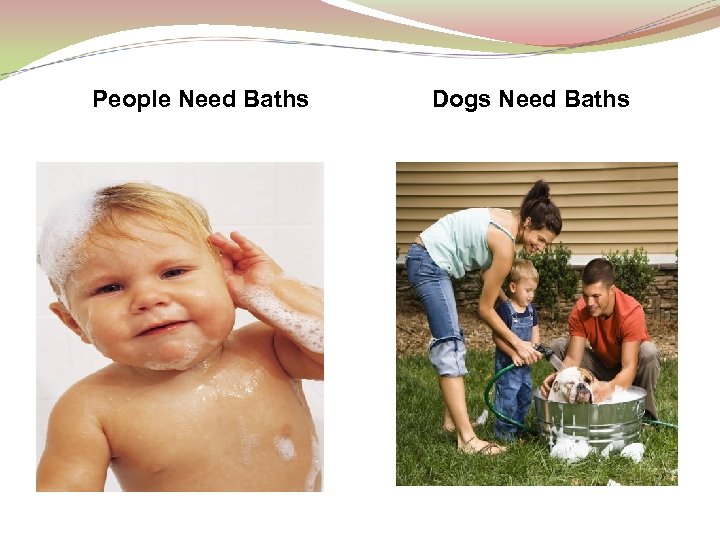 People Need Baths Dogs Need Baths
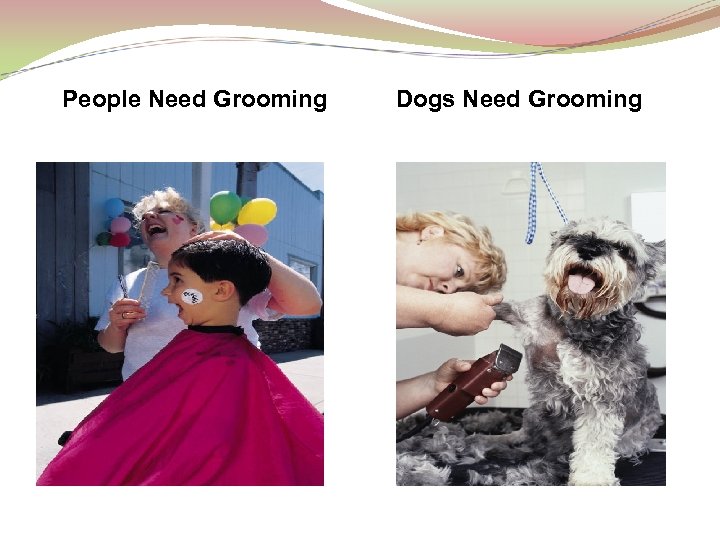 People Need Grooming Dogs Need Grooming
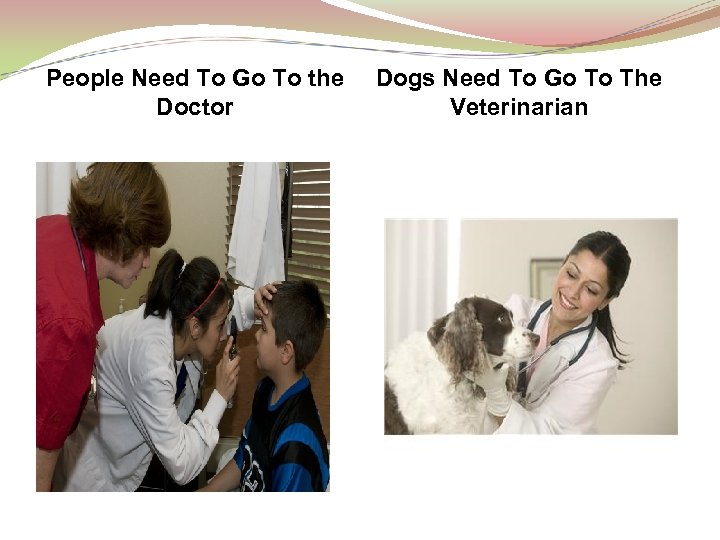 People Need To Go To the Doctor Dogs Need To Go To The Veterinarian
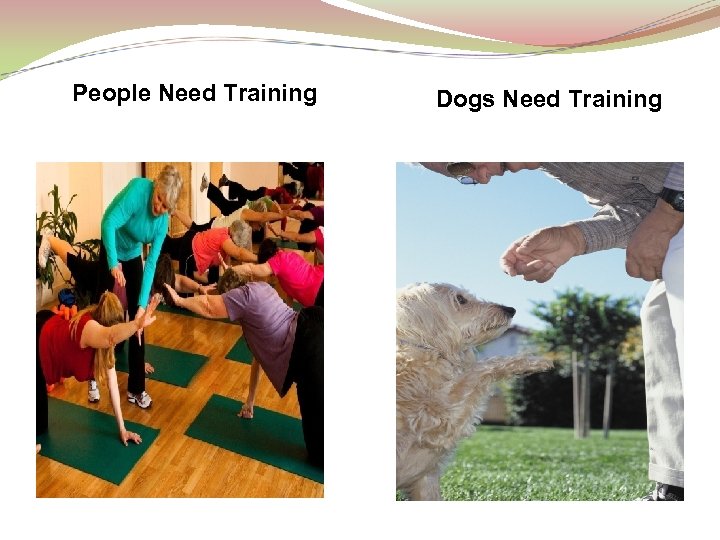 People Need Training Dogs Need Training
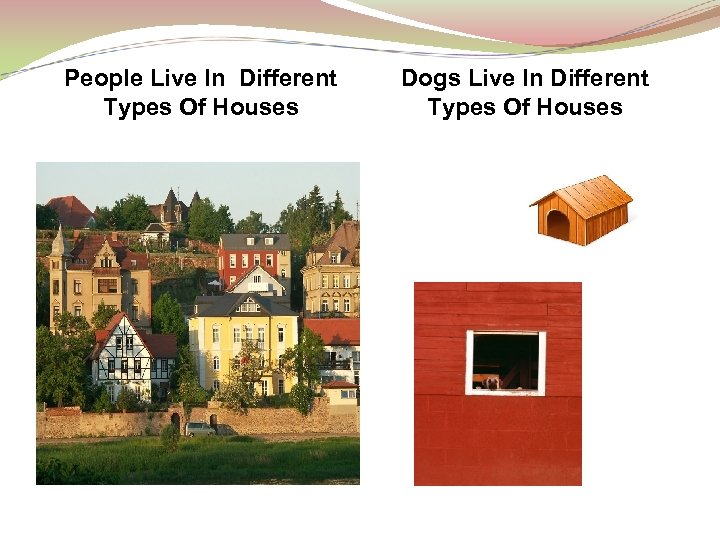 People Live In Different Types Of Houses Dogs Live In Different Types Of Houses
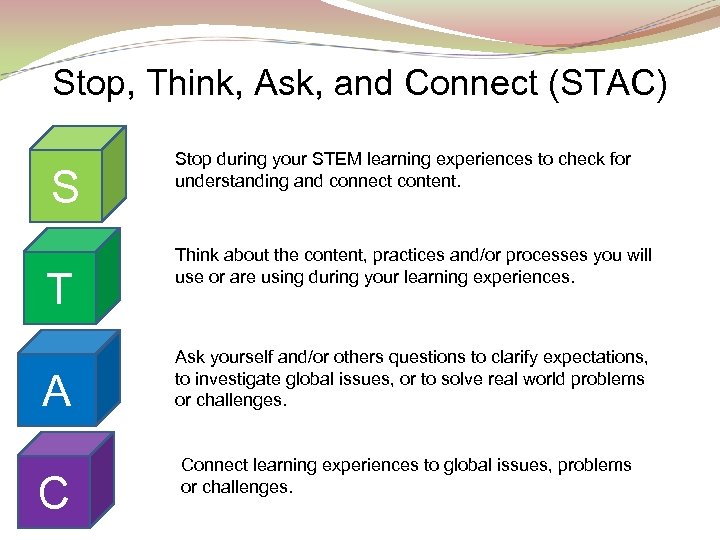 Stop, Think, Ask, and Connect (STAC) S T A C Stop during your STEM learning experiences to check for understanding and connect content. Think about the content, practices and/or processes you will use or are using during your learning experiences. Ask yourself and/or others questions to clarify expectations, to investigate global issues, or to solve real world problems or challenges. Connect learning experiences to global issues, problems or challenges.
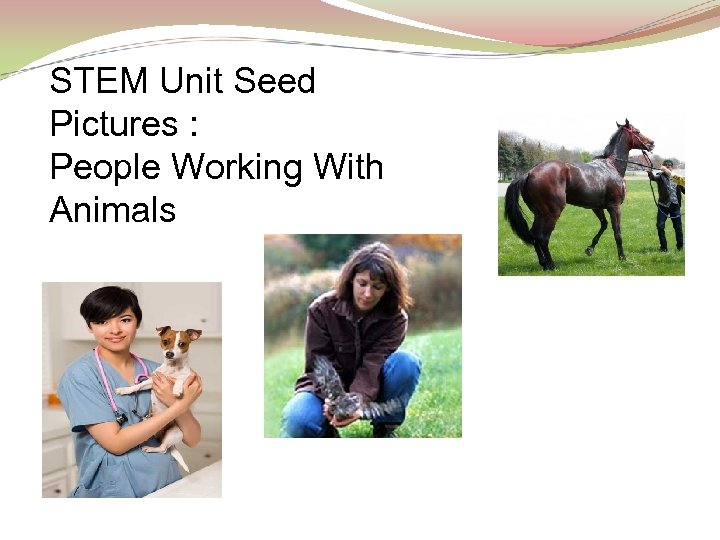 STEM Unit Seed Pictures : People Working With Animals
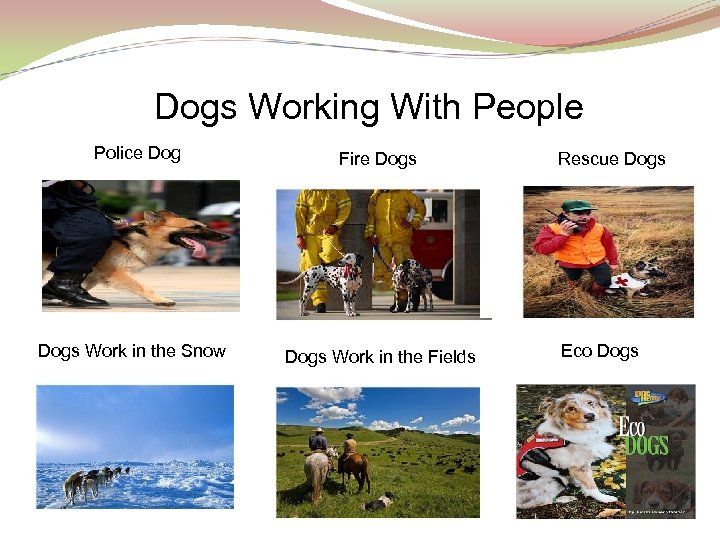
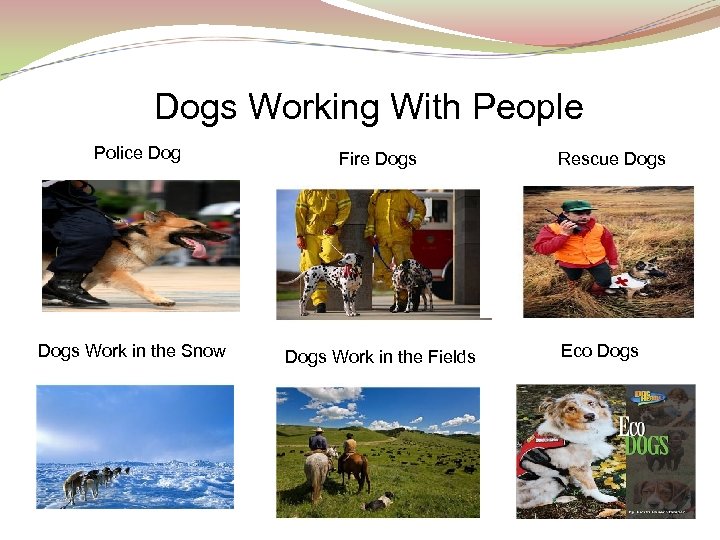 Dogs Working With People Police Dogs Work in the Snow Fire Dogs Work in the Fields Rescue Dogs Eco Dogs
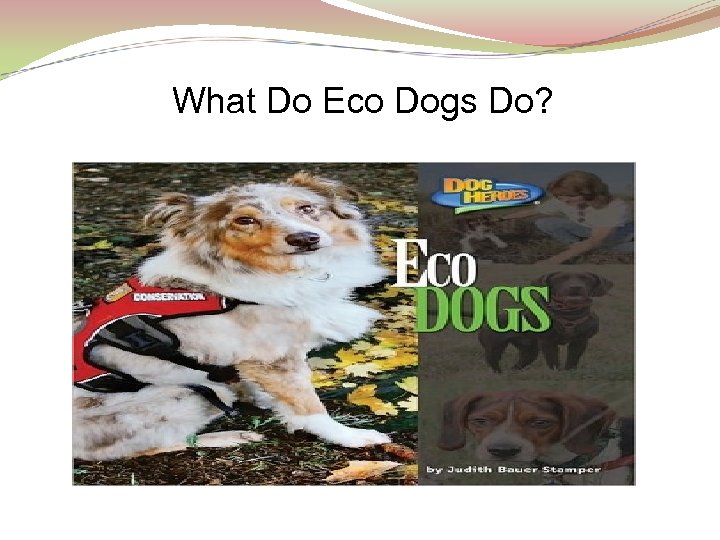 What Do Eco Dogs Do?
 Complex Questions What questions do you have about the story? What real world or global issues can you connect to the story? What problems or challenges did Python Pete solve in the story? How?
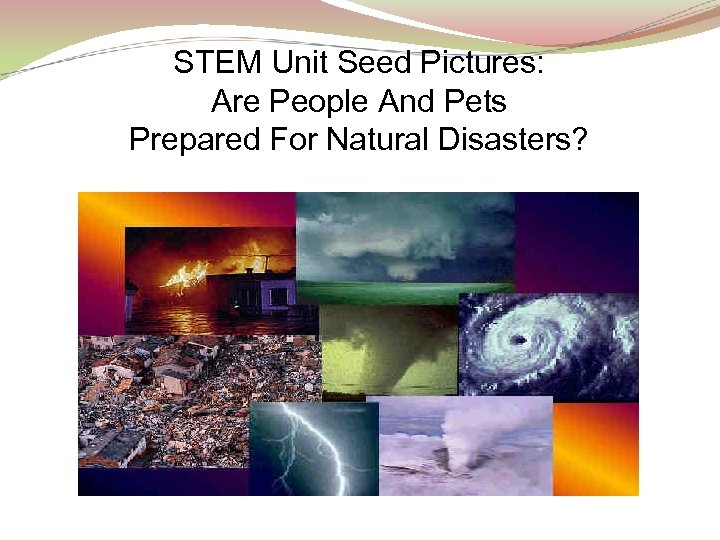 STEM Unit Seed Pictures: Are People And Pets Prepared For Natural Disasters?
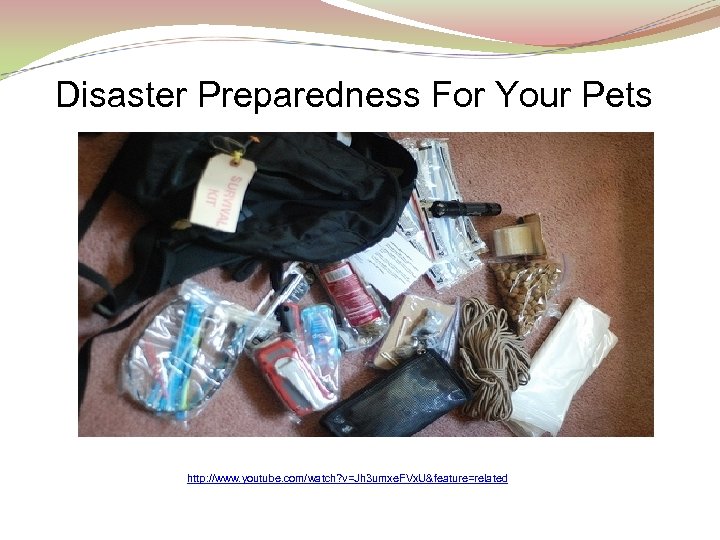 Disaster Preparedness For Your Pets http: //www. youtube. com/watch? v=Jh 3 umxe. FVx. U&feature=related
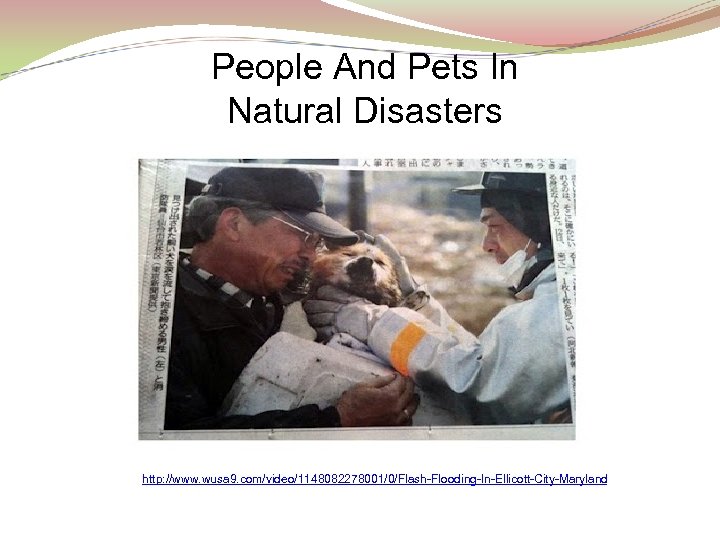
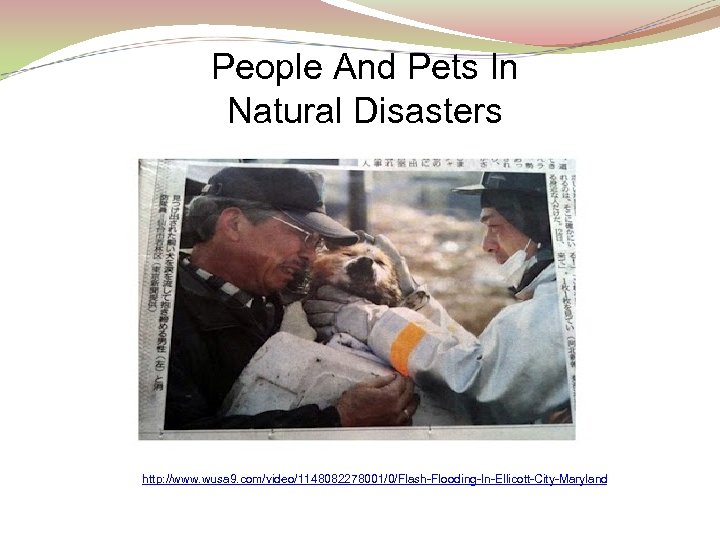 People And Pets In Natural Disasters http: //www. wusa 9. com/video/1148082278001/0/Flash-Flooding-In-Ellicott-City-Maryland
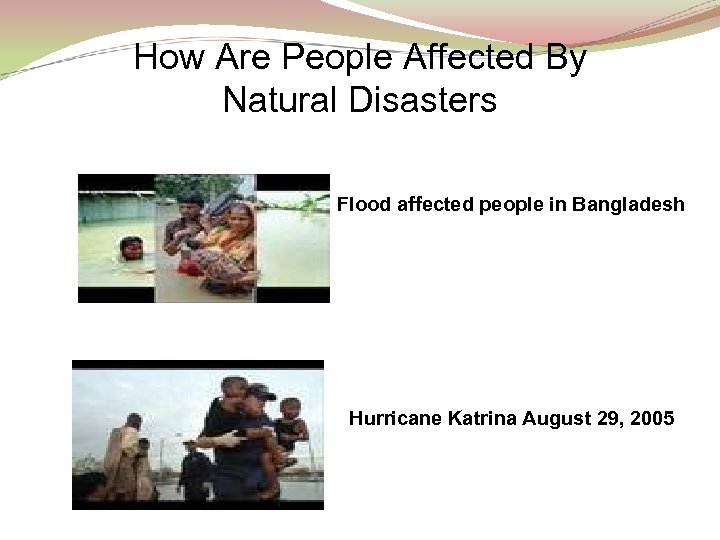 How Are People Affected By Natural Disasters Flood affected people in Bangladesh Hurricane Katrina August 29, 2005
 Don’t Leave Your Pets Behind When Disaster Strikes
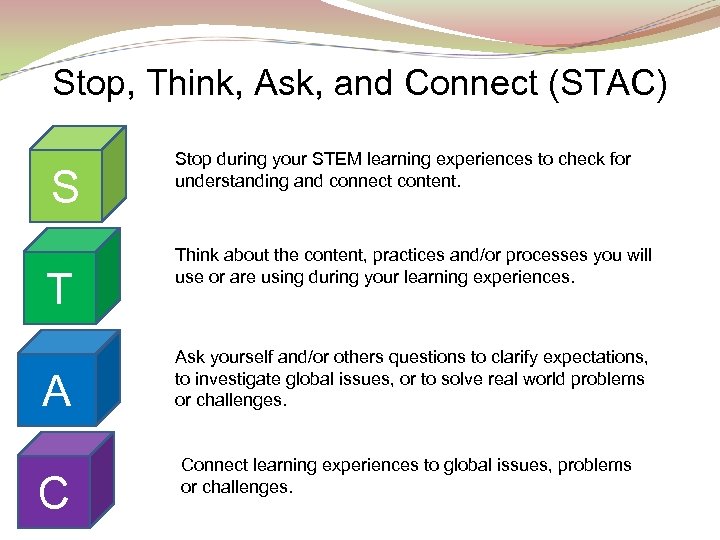 Stop, Think, Ask, and Connect (STAC) S T A C Stop during your STEM learning experiences to check for understanding and connect content. Think about the content, practices and/or processes you will use or are using during your learning experiences. Ask yourself and/or others questions to clarify expectations, to investigate global issues, or to solve real world problems or challenges. Connect learning experiences to global issues, problems or challenges.
 Discussion Time 1. How would you use the information presented in these slides to plan units, lessons or lesson/unit seeds? 2. How can you connect the STEM Standards of Practice to your lesson seeds?
 Activity Part I Unit Seeds With The End In Mind” (USTEM) Pre-Planning Models
 Using ELA & STEM Example Clifford the Big Red Dog, by Norman Bridwell http: //pbskids. org/clifford/games/index. html
 Do domestics animals make good pets? Why?
 Dogs Working With People Police Dogs Work in the Snow Fire Dogs Work in the Fields Rescue Dogs Eco Dogs
 People And Pets In Natural Disasters http: //www. wusa 9. com/video/1148082278001/0/Flash-Flooding-In-Ellicott-City-Maryland
 Activity Part I Unit Seeds With The End In Mind” (USTEM)
 How To Begin How to Begin a STEM Unit or Lesson Unit Seed With The End In Mind (USTEM): Pre-planning Model I & II Pre-Planning Process STEM Unit Components STEM Centric Unit Seed Examples Reminder: STEM Learning Experiences Reminder: Stop, Think, Ask, and Connect (STAC)
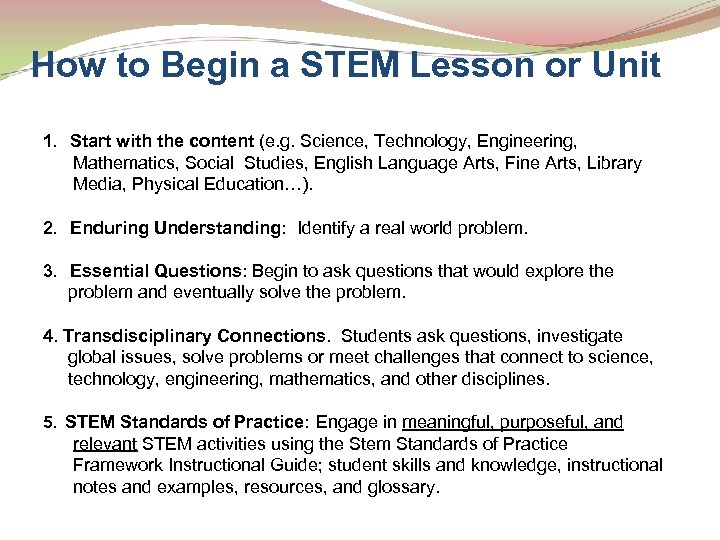 How to Begin a STEM Lesson or Unit 1. Start with the content (e. g. Science, Technology, Engineering, Mathematics, Social Studies, English Language Arts, Fine Arts, Library Media, Physical Education…). 2. Enduring Understanding: Identify a real world problem. 3. Essential Questions: Begin to ask questions that would explore the problem and eventually solve the problem. 4. Transdisciplinary Connections. Students ask questions, investigate global issues, solve problems or meet challenges that connect to science, technology, engineering, mathematics, and other disciplines. 5. STEM Standards of Practice: Engage in meaningful, purposeful, and relevant STEM activities using the Stem Standards of Practice Framework Instructional Guide; student skills and knowledge, instructional notes and examples, resources, and glossary.
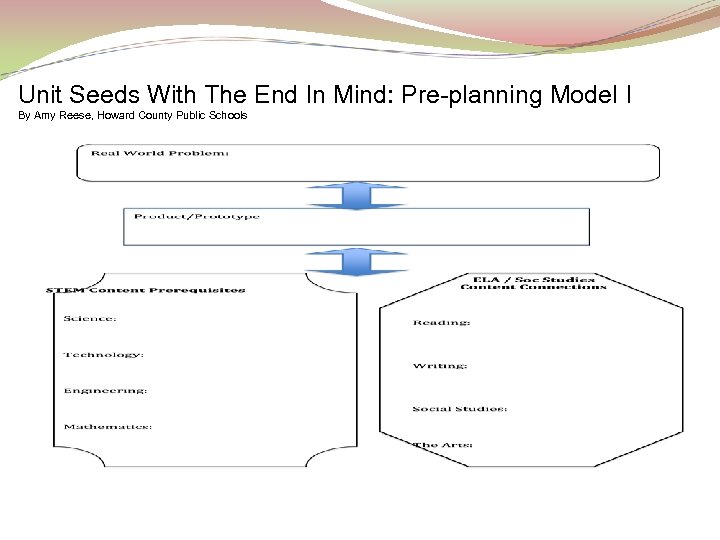 Unit Seeds With The End In Mind: Pre-planning Model I By Amy Reese, Howard County Public Schools
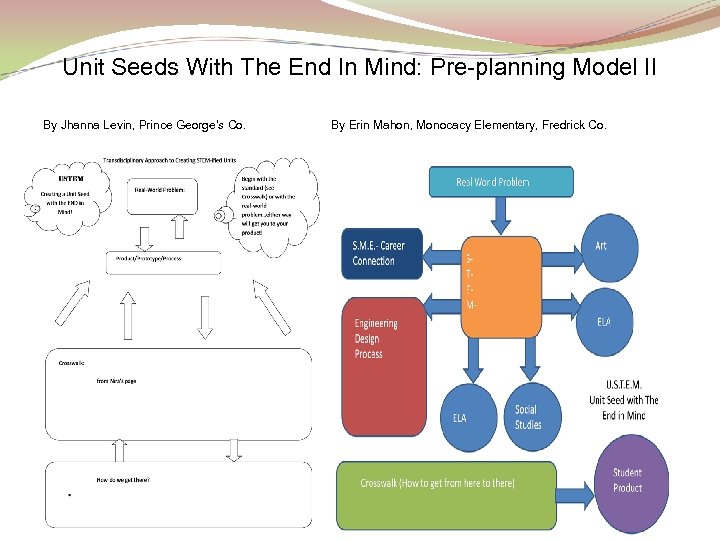 Unit Seeds With The End In Mind: Pre-planning Model II By Jhanna Levin, Prince George’s Co. By Erin Mahon, Monocacy Elementary, Fredrick Co.
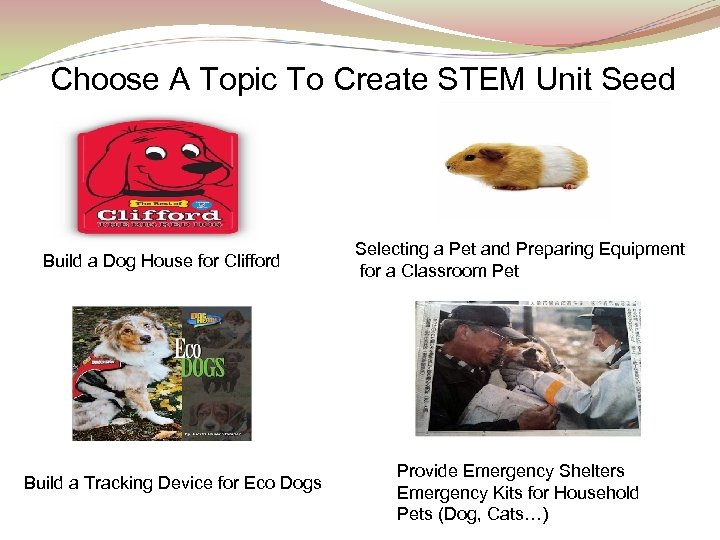 Choose A Topic To Create STEM Unit Seed Build a Dog House for Clifford Build a Tracking Device for Eco Dogs Selecting a Pet and Preparing Equipment for a Classroom Pet Provide Emergency Shelters Emergency Kits for Household Pets (Dog, Cats…)
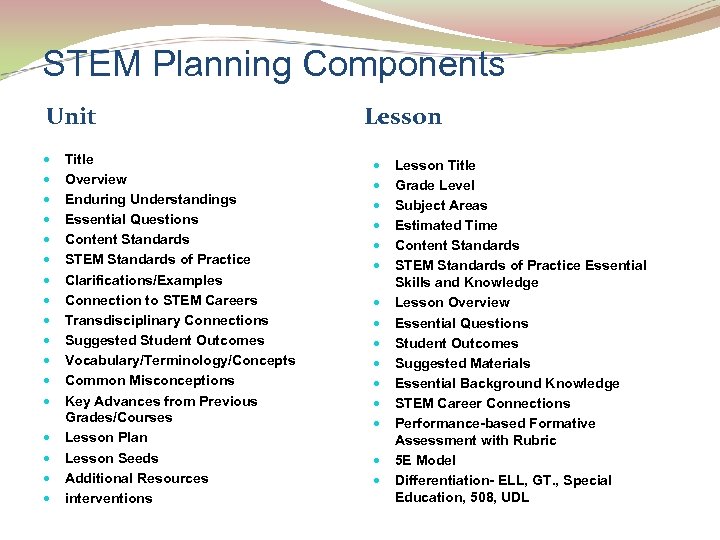 STEM Planning Components Unit Title Overview Enduring Understandings Essential Questions Content Standards STEM Standards of Practice Clarifications/Examples Connection to STEM Careers Transdisciplinary Connections Suggested Student Outcomes Vocabulary/Terminology/Concepts Common Misconceptions Key Advances from Previous Grades/Courses Lesson Plan Lesson Seeds Additional Resources interventions Lesson Lesson Title Grade Level Subject Areas Estimated Time Content Standards STEM Standards of Practice Essential Skills and Knowledge Lesson Overview Essential Questions Student Outcomes Suggested Materials Essential Background Knowledge STEM Career Connections Performance-based Formative Assessment with Rubric 5 E Model Differentiation- ELL, GT. , Special Education, 508, UDL
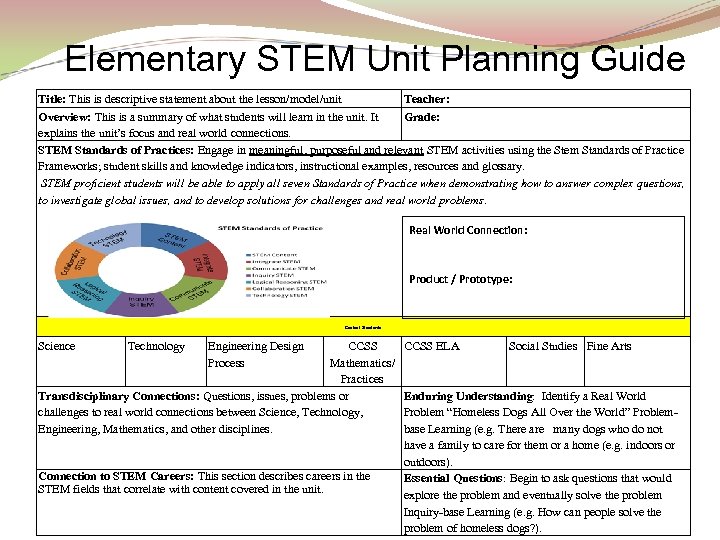 Elementary STEM Unit Planning Guide Title: This is descriptive statement about the lesson/model/unit Teacher: Overview: This is a summary of what students will learn in the unit. It Grade: explains the unit’s focus and real world connections. STEM Standards of Practices: Engage in meaningful, purposeful and relevant STEM activities using the Stem Standards of Practice Frameworks; student skills and knowledge indicators, instructional examples, resources and glossary. STEM proficient students will be able to apply all seven Standards of Practice when demonstrating how to answer complex questions, to investigate global issues, and to develop solutions for challenges and real world problems. Real World Connection: Product / Prototype: Content Standards Science Technology Engineering Design Process CCSS Mathematics/ Practices Transdisciplinary Connections: Questions, issues, problems or challenges to real world connections between Science, Technology, Engineering, Mathematics, and other disciplines. Connection to STEM Careers: This section describes careers in the STEM fields that correlate with content covered in the unit. CCSS ELA Social Studies Fine Arts Enduring Understanding: Identify a Real World Problem “Homeless Dogs All Over the World” Problembase Learning (e. g. There are many dogs who do not have a family to care for them or a home (e. g. indoors or outdoors). Essential Questions: Begin to ask questions that would explore the problem and eventually solve the problem Inquiry-base Learning (e. g. How can people solve the problem of homeless dogs? ).
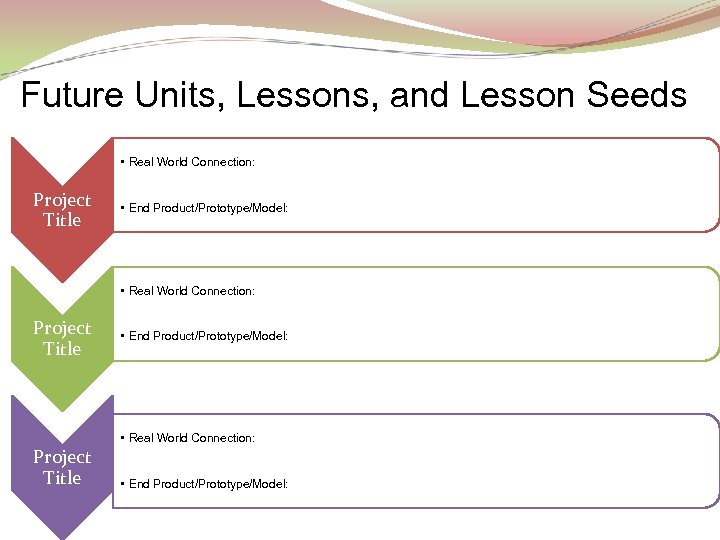 Future Units, Lessons, and Lesson Seeds • Real World Connection: Project Title • End Product/Prototype/Model:
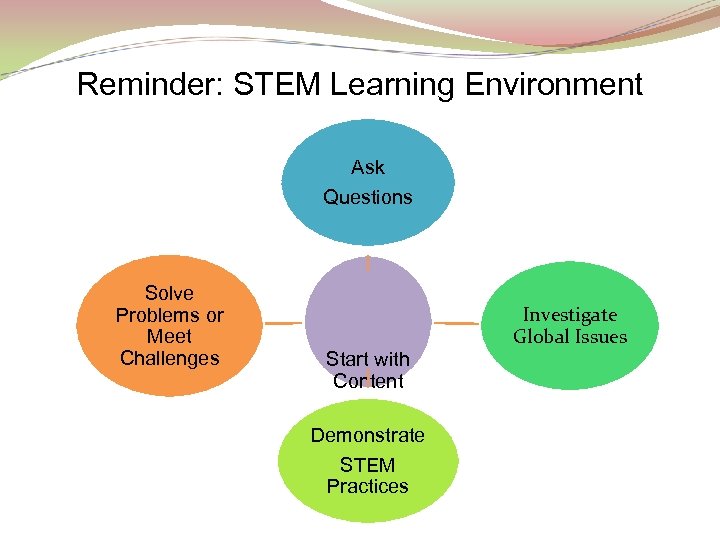 Reminder: STEM Learning Environment Ask Questions Solve Problems or Meet Challenges Investigate Global Issues Start with Content Demonstrate STEM Practices
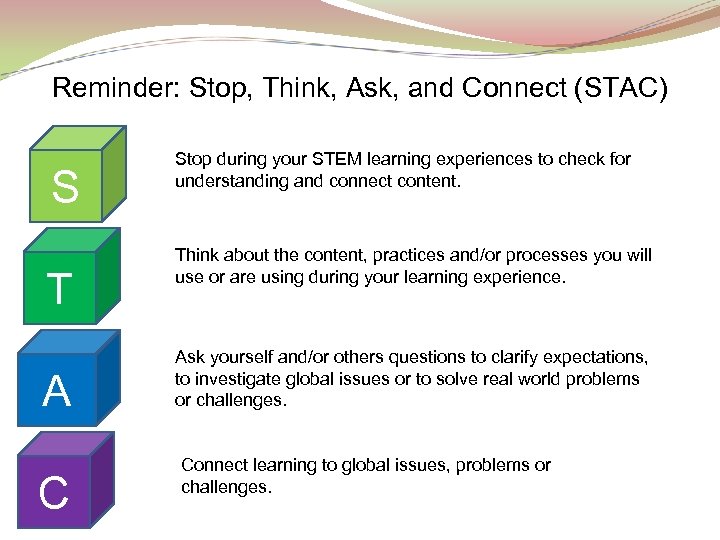 Reminder: Stop, Think, Ask, and Connect (STAC) S T A C Stop during your STEM learning experiences to check for understanding and connect content. Think about the content, practices and/or processes you will use or are using during your learning experience. Ask yourself and/or others questions to clarify expectations, to investigate global issues or to solve real world problems or challenges. Connect learning to global issues, problems or challenges.
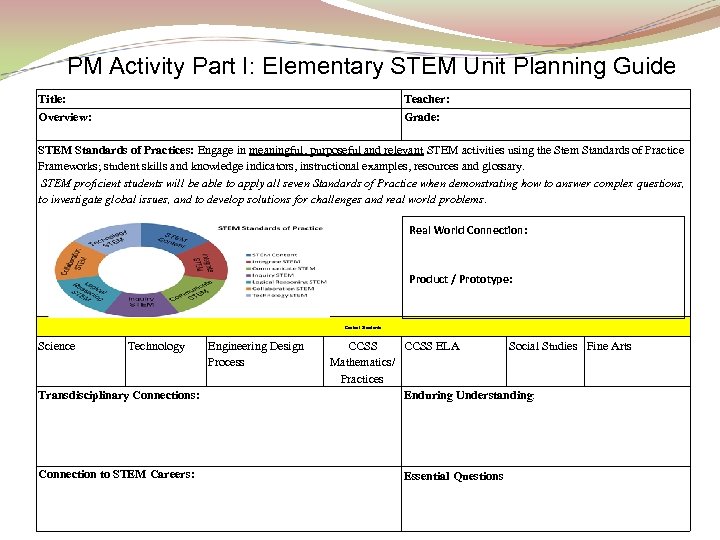 PM Activity Part I: Elementary STEM Unit Planning Guide Title: Teacher: Overview: Grade: STEM Standards of Practices: Engage in meaningful, purposeful and relevant STEM activities using the Stem Standards of Practice Frameworks; student skills and knowledge indicators, instructional examples, resources and glossary. STEM proficient students will be able to apply all seven Standards of Practice when demonstrating how to answer complex questions, to investigate global issues, and to develop solutions for challenges and real world problems. Real World Connection: Product / Prototype: Content Standards Science Technology Transdisciplinary Connections: Connection to STEM Careers: Engineering Design Process CCSS ELA Social Studies Fine Arts Mathematics/ Practices Enduring Understanding: Essential Questions
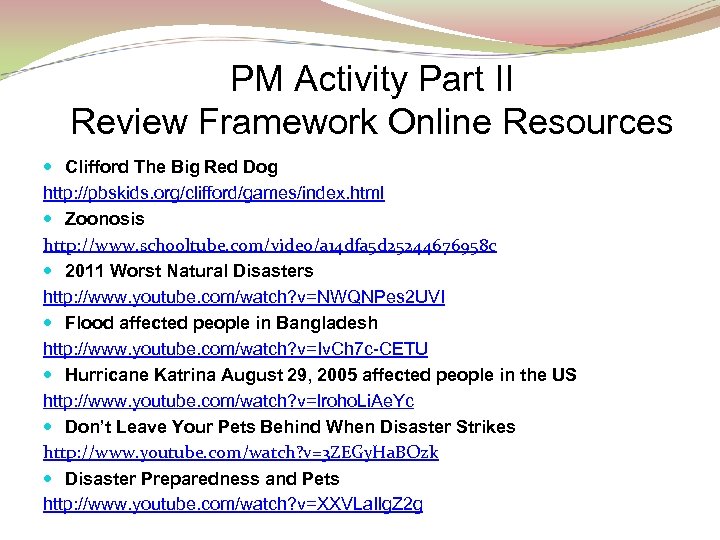 PM Activity Part II Review Framework Online Resources Clifford The Big Red Dog http: //pbskids. org/clifford/games/index. html Zoonosis http: //www. schooltube. com/video/a 14 dfa 5 d 25244676958 c 2011 Worst Natural Disasters http: //www. youtube. com/watch? v=NWQNPes 2 UVI Flood affected people in Bangladesh http: //www. youtube. com/watch? v=Iv. Ch 7 c-CETU Hurricane Katrina August 29, 2005 affected people in the US http: //www. youtube. com/watch? v=lroho. Li. Ae. Yc Don’t Leave Your Pets Behind When Disaster Strikes http: //www. youtube. com/watch? v=3 ZEGy. Ha. BOzk Disaster Preparedness and Pets http: //www. youtube. com/watch? v=XXVLa. Ilg. Z 2 g
 Project Guidelines Everyone is asked to present the following: Unit Seed With The End In Mind Model I or II STEM Centric Planning Guide (Page 1 information only) At least 1 Future Unit, Lesson and/or Lesson Seed On Day 3 of the EEA, participants will orally share to the whole group, for no more than 5 minutes, the three above documents. (No power point or handouts are needed for your presentation. ) The above three items are located in your EEA Elementary STEM notebook and on the Curriculum Management System (CMS). Click a grade level: K, 1 -2 or 3 -5 and look for the following titles: Blank Template STEM Centric Planning Guide Blank Future Units, Lessons and Lesson Seeds Unit Seed With The End In Mind Model I or II Elementary STEM Power Point Presentation Volunteers: If you would like to summit your STEM Unit Seed to MSDE, please email it to Dr. Nira C. Taru at ntaru@msde. state. md. us. (All submission will be posted in an Elementary STEM Library of Resource folder. )
 Q & A Time