


 Скачать презентацию How Congress Works Part I Who s in
c72a3de691dff3182275d8d9322856d2.ppt
- Количество слайдов: 37
 How Congress Works Part I
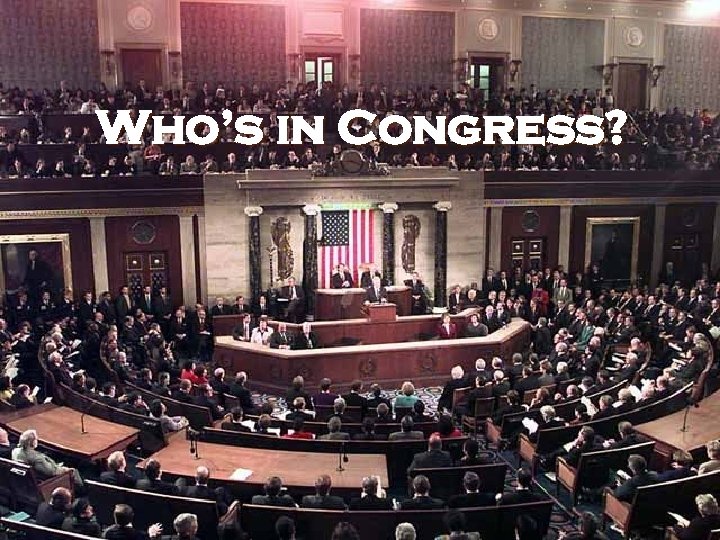 Who’s in Congress?
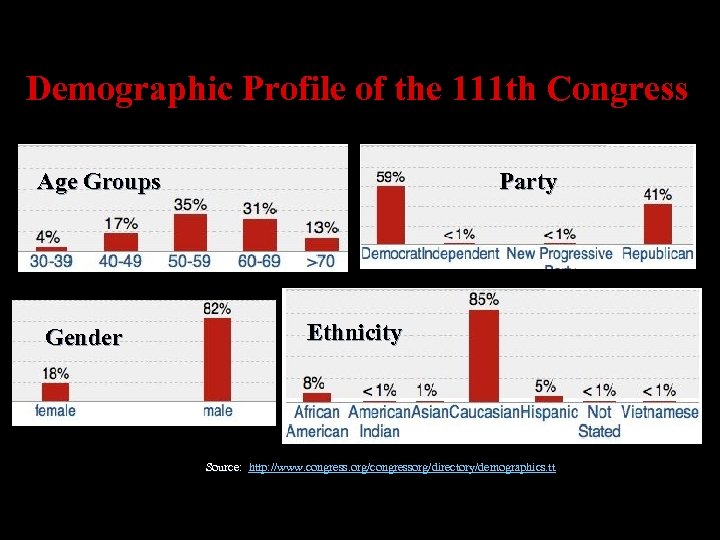 Demographic Profile of the 111 th Congress Age Groups Gender Party Ethnicity Source: http: //www. congress. org/congressorg/directory/demographics. tt Source:
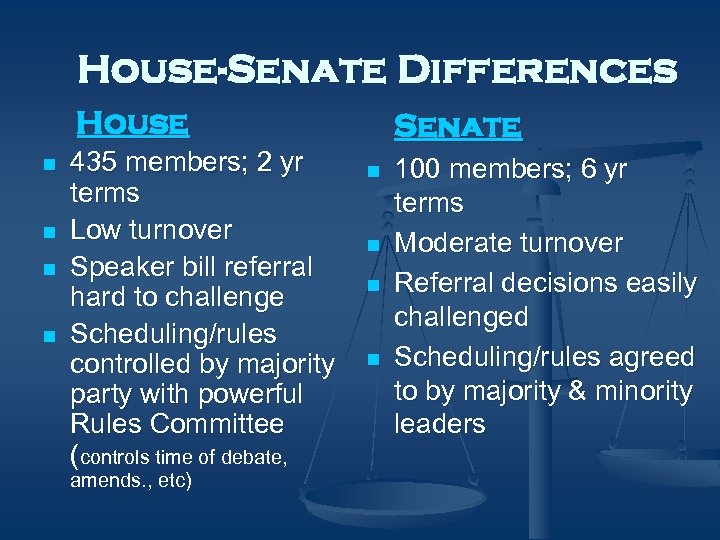 House-Senate Differences House n n 435 members; 2 yr terms Low turnover Speaker bill referral hard to challenge Scheduling/rules controlled by majority party with powerful Rules Committee (controls time of debate, amends. , etc) Senate n n 100 members; 6 yr terms Moderate turnover Referral decisions easily challenged Scheduling/rules agreed to by majority & minority leaders
 House-Senate Differences n n House Debate limited to 1 hour Members policy specialists Emphasizes tax & revenue policy More formal & impersonal n n Senate Unlimited debate unless cloture invoked Members policy generalists Emphasizes foreign policy More informal & personal
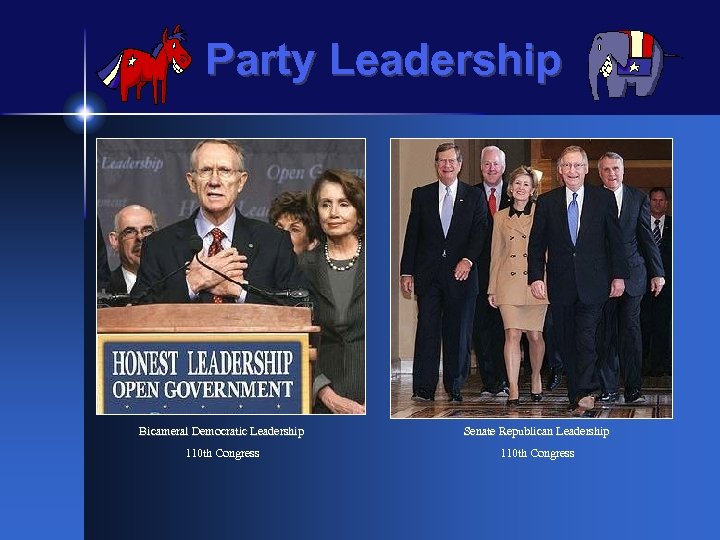 Party Leadership Bicameral Democratic Leadership Senate Republican Leadership 110 th Congress
 SPEAKER OF THE HOUSE • Chosen by majority party • Chief presiding officer (constitutionally) of the House • Decides whom to recognize to speak on the floor • Rules on germaneness of motions • Decides to which committee bills go • Schedules bills for action • Appoints members of special and select committees • Has some patronage power
 HOUSE MAJORITY LEADER • • • Chosen by majority party Assists Speaker Plans party’s legislative program Steers important bills through the House Party leader
 HOUSE MAJORITY WHIP • Party floor leader • Keeps close watch on how majority members intend to vote • Attempts to influence voting
 HOUSE MINORITY LEADER • Party leader • Performs similar tasks to House Majority Leader • Has no power over scheduling work in the House
 HOUSE MINORITY WHIP • Assists party minority leader • Keeps close watch on how minority members intend to vote • Attempts to influence voting
 President of the Senate • Vice-President of the United States • Elected in general presidential election • Chief presiding officer (constitutionally) of the Senate • Cannot participate in floor debate • Casts vote only in case of tie
 President Pro-Tempore • Chosen by majority party; often most senior member • Presides over Senate in absence of vicepresident
 Senate Majority Leader • • Chosen by majority party Majority. party leader in Senate Steers party’s bills through Senate Plans Senate’s work schedule in consultation with Minority Leader • Makes sure majority members attend important sessions
 Senate Majority Whip • • Chosen by majority party Assists Majority Leader Rounds up members for key votes Heads group of deputy whips
 Senate Minority Leader • Chosen by minority party • Minority party leader in Senate • Develops criticisms of bills from majority party • Consults with Majority Leader re: Senate’s work schedule • Tries to keep members working together
 Senate Minority Whip • • • Chosen by minority party Assists Minority Leader Rounds up members for key votes Heads group of deputy whips
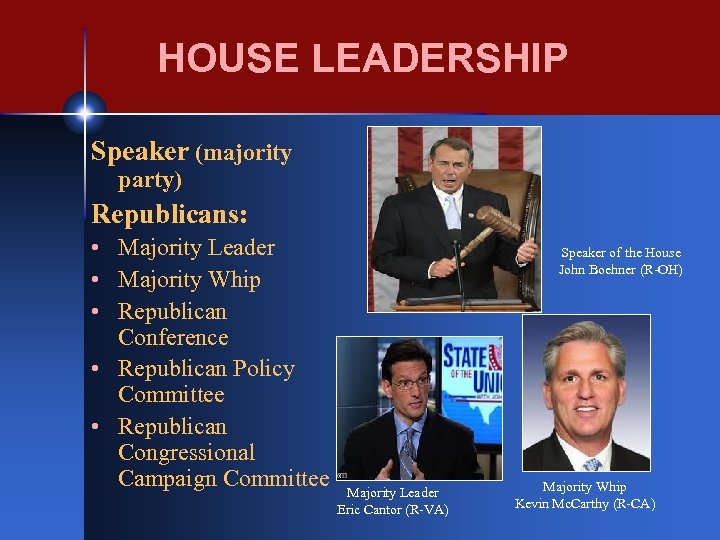 HOUSE LEADERSHIP Speaker (majority party) Republicans: • Majority Leader • Majority Whip • Republican Conference • Republican Policy Committee • Republican Congressional Campaign Committee Speaker of the House John Boehner (R-OH) Majority Leader Eric Cantor (R-VA) Majority Whip Kevin Mc. Carthy (R-CA)
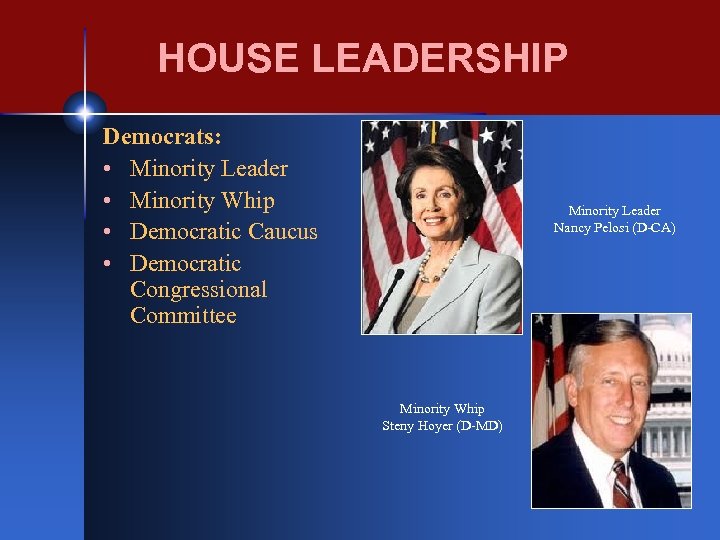 HOUSE LEADERSHIP Democrats: • Minority Leader • Minority Whip • Democratic Caucus • Democratic Congressional Committee Minority Leader Nancy Pelosi (D-CA) Minority Whip Steny Hoyer (D-MD)
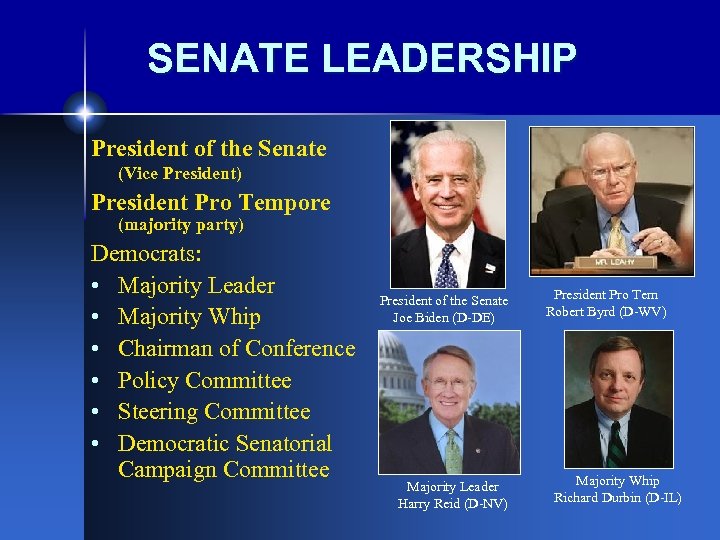 SENATE LEADERSHIP President of the Senate (Vice President) President Pro Tempore (majority party) Democrats: • Majority Leader • Majority Whip • Chairman of Conference • Policy Committee • Steering Committee • Democratic Senatorial Campaign Committee President of the Senate Joe Biden (D-DE) Majority Leader Harry Reid (D-NV) President Pro Tem Robert Byrd (D-WV) Majority Whip Richard Durbin (D-IL)
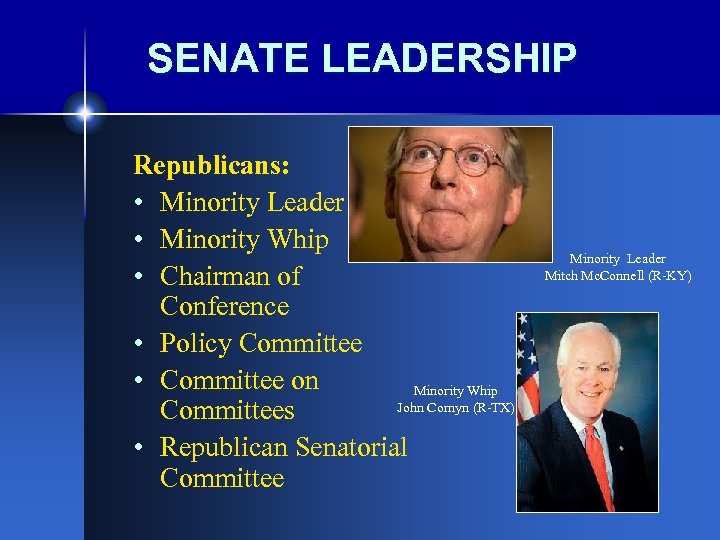 SENATE LEADERSHIP Republicans: • Minority Leader • Minority Whip • Chairman of Conference • Policy Committee • Committee on Minority Whip John Cornyn (R-TX) Committees • Republican Senatorial Committee Minority Leader Mitch Mc. Connell (R-KY)
 Strength of Party Structure? • Measure of party strength: 1. Ability of leaders to control party rules and organization 2. Extent to which party members vote together in the House and Senate • Senate: less party-centered and leader oriented
 Party Unity • Lower today than 100 years ago, but…. . • Ideology important variable explaining party voting (members vote with their party 80% of the time) • Party polarization - vote in which majority of democrats oppose majority of republicans • Polarization trends: o 1976 HR = 36%; S = 37% o 1995 HR = 73%; S = 69% o 2000 HR = 43%; S = 49%
 CAUCUSES • Groups (may be bipartisan) meeting to pursue common legislative objectives • Rivals to parties in policy formulation • Examples: Democratic Study Group, Congressional Black Caucus, Tuesday Lunch Bunch, Human Rights, Congressional Caucus for Women’s Issues, Out of Iraq Caucus, Rural Caucus, Travel & Tourism Caucus, House Caucus on Missing and Exploited Children
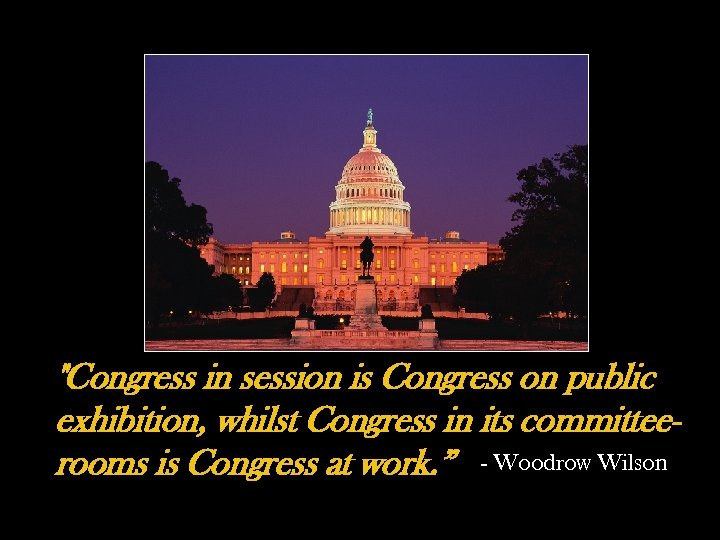 "Congress in session is Congress on public exhibition, whilst Congress in its committeerooms is Congress at work. ” - Woodrow Wilson
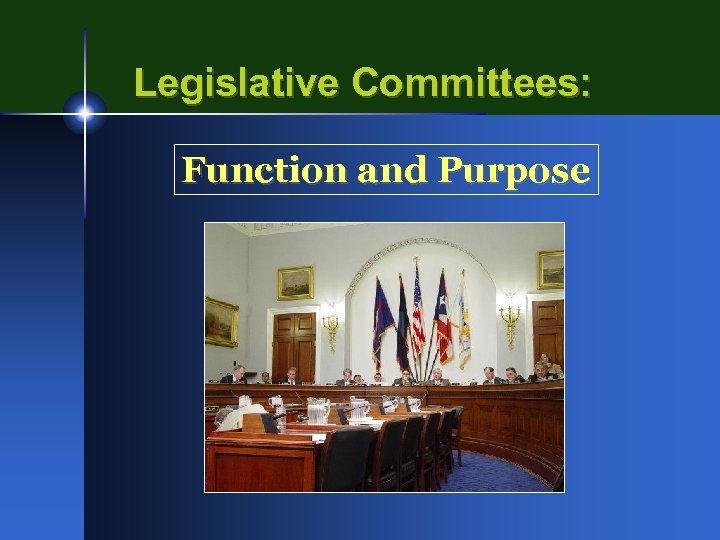 Legislative Committees: Function and Purpose
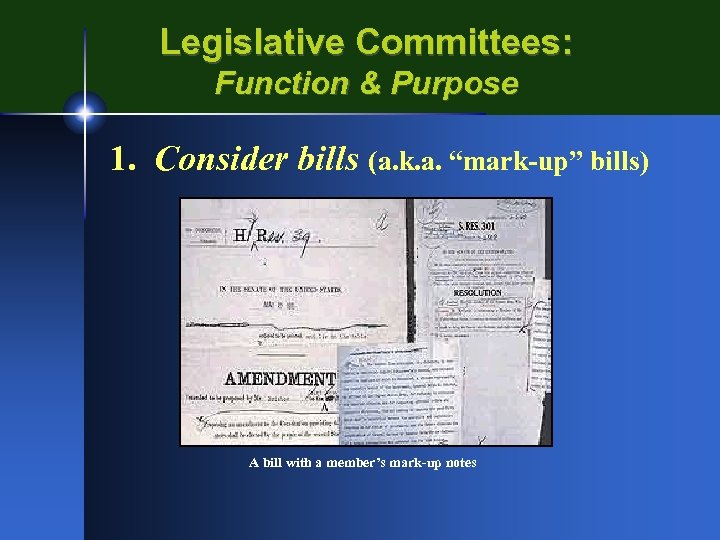 Legislative Committees: Function & Purpose 1. Consider bills (a. k. a. “mark-up” bills) A bill with a member’s mark-up notes
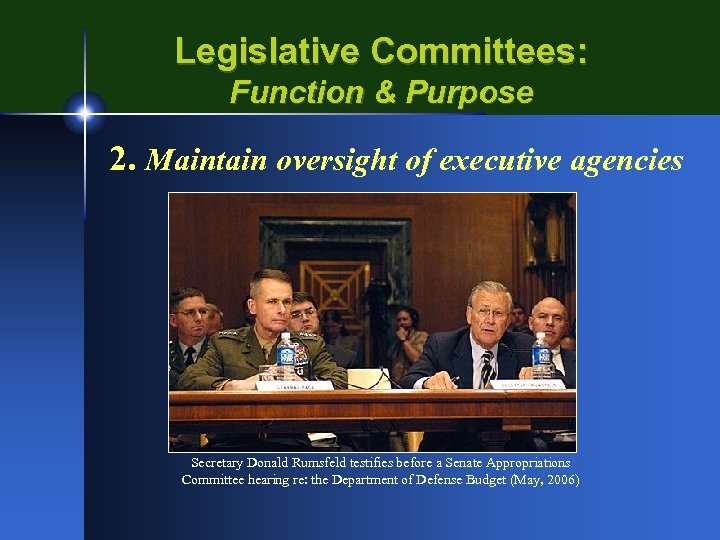 Legislative Committees: Function & Purpose 2. Maintain oversight of executive agencies Secretary Donald Rumsfeld testifies before a Senate Appropriations Committee hearing re: the Department of Defense Budget (May, 2006)
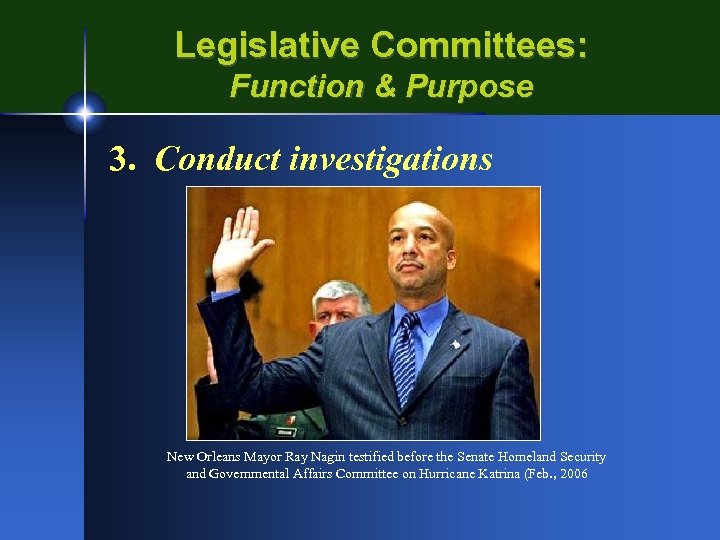 Legislative Committees: Function & Purpose 3. Conduct investigations New Orleans Mayor Ray Nagin testified before the Senate Homeland Security and Governmental Affairs Committee on Hurricane Katrina (Feb. , 2006
 Types of Committees Ø Standing Committees - permanent panel with full legislative functions and oversight responsibilities • Subcommittees – formed to tackle very specific tasks within the jurisdiction of the full committees Ø Select or Special Committees - groups appointed for a limited purpose and limited duration Ø Joint Committees - includes members of both chambers to conduct studies or perform housekeeping tasks Ø Conference Committee - includes members of House & Senate to work out differences between similar bills
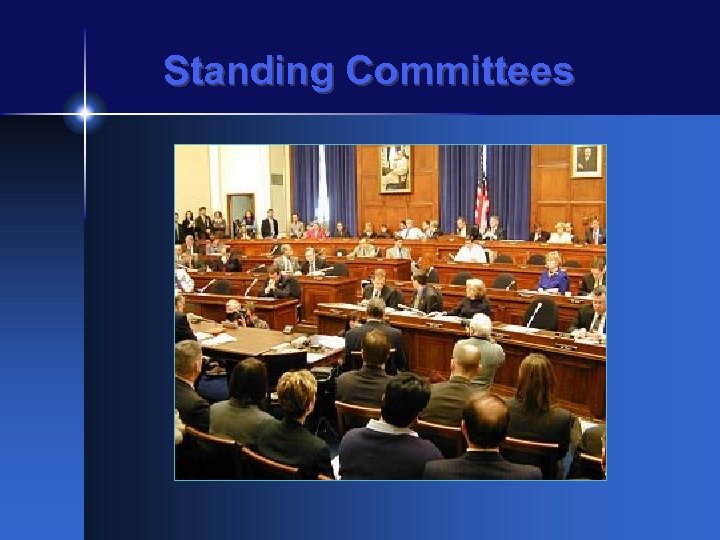 Standing Committees
 House Standing Committees Agriculture Appropriations Armed Services Budget Education & Workforce Energy & Commerce Financial Services Government Reform House Admin. International Relations Judiciary Resources Rules Science Small Business Standards of Official Conduct Transportation & Infrastructure Veterans Affairs Ways & Means
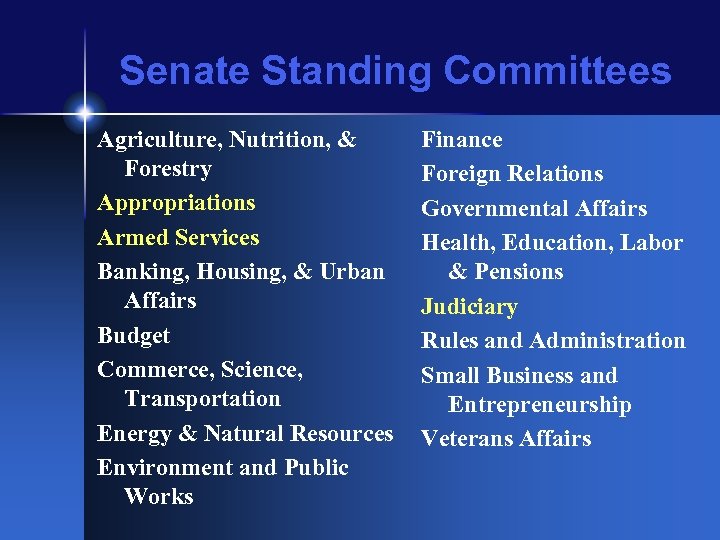 Senate Standing Committees Agriculture, Nutrition, & Forestry Appropriations Armed Services Banking, Housing, & Urban Affairs Budget Commerce, Science, Transportation Energy & Natural Resources Environment and Public Works Finance Foreign Relations Governmental Affairs Health, Education, Labor & Pensions Judiciary Rules and Administration Small Business and Entrepreneurship Veterans Affairs
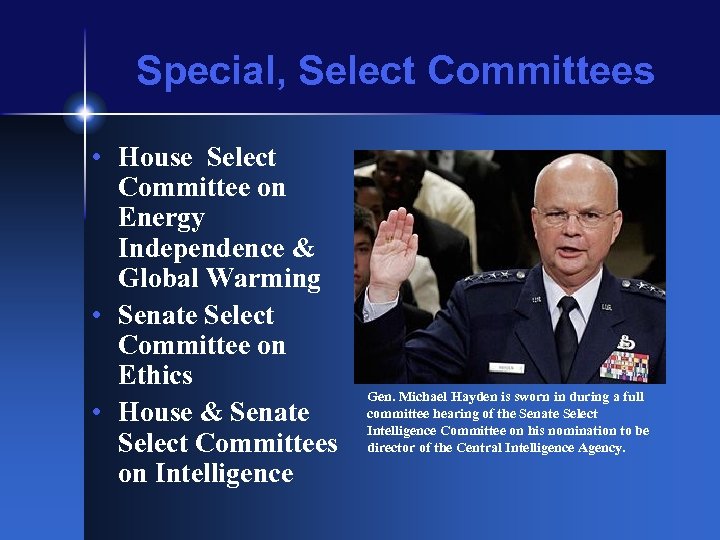 Special, Select Committees • House Select Committee on Energy Independence & Global Warming • Senate Select Committee on Ethics • House & Senate Select Committees on Intelligence Gen. Michael Hayden is sworn in during a full committee hearing of the Senate Select Intelligence Committee on his nomination to be director of the Central Intelligence Agency.
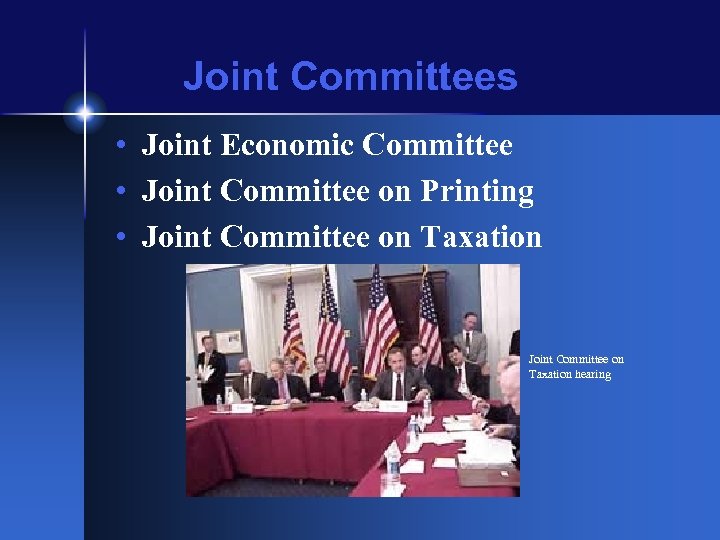 Joint Committees • Joint Economic Committee • Joint Committee on Printing • Joint Committee on Taxation hearing
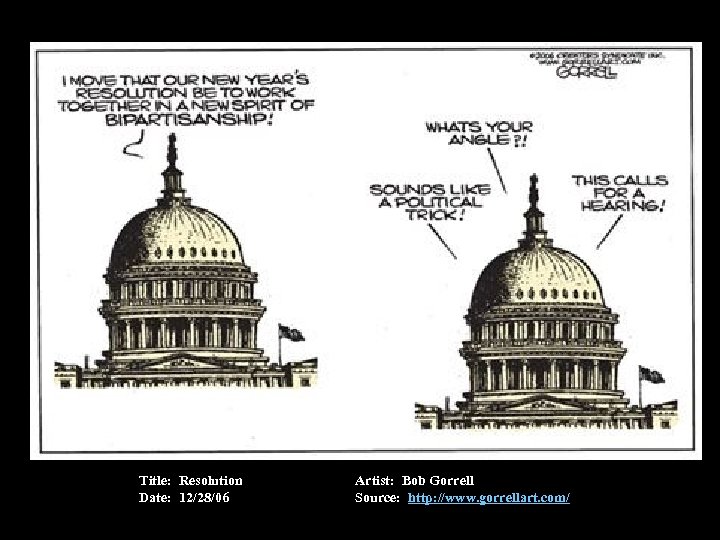 Title: Resolution Date: 12/28/06 Artist: Bob Gorrell Source: http: //www. gorrellart. com/
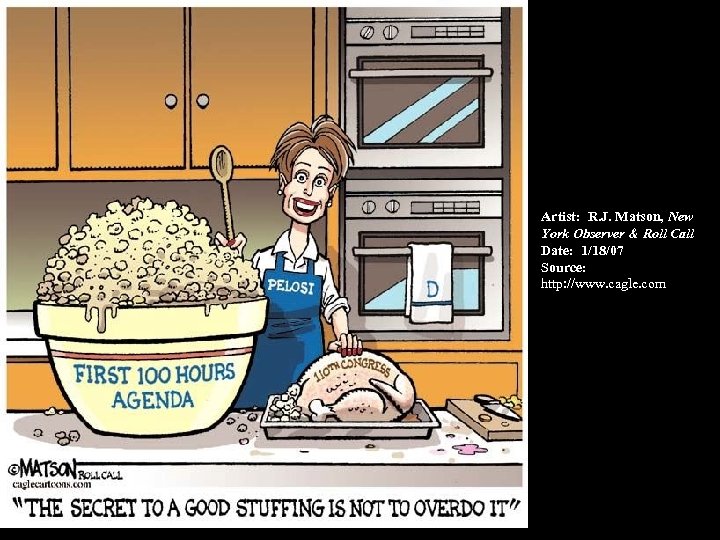 Artist: R. J. Matson, New York Observer & Roll Call Date: 1/18/07 Source: http: //www. cagle. com