


 Скачать презентацию How can Visual Merchandising Display impact consumers
dc9ddddbc5b7256d548c5c03df13d759.ppt
- Количество слайдов: 16
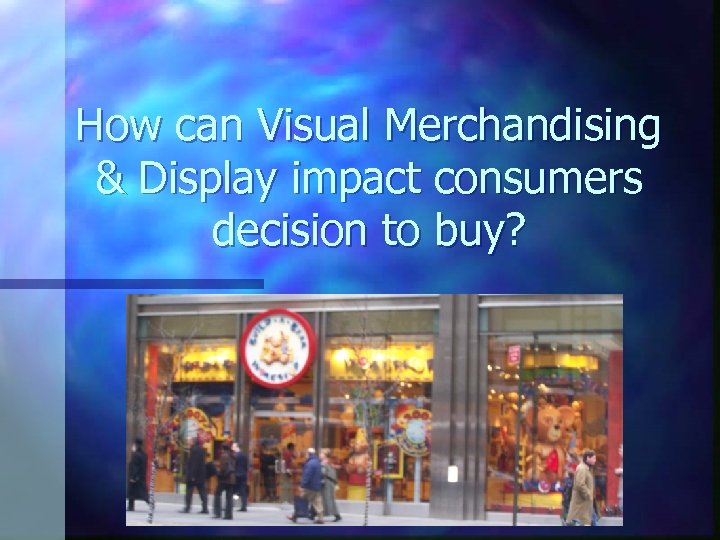 How can Visual Merchandising & Display impact consumers decision to buy?
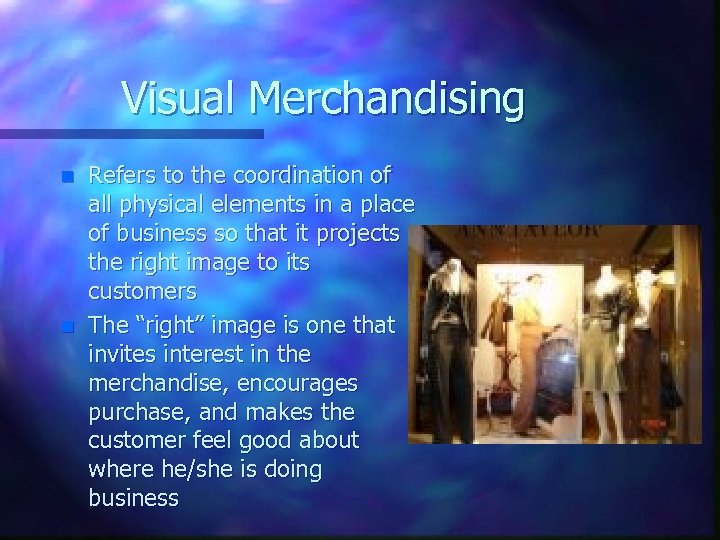 Visual Merchandising n n Refers to the coordination of all physical elements in a place of business so that it projects the right image to its customers The “right” image is one that invites interest in the merchandise, encourages purchase, and makes the customer feel good about where he/she is doing business
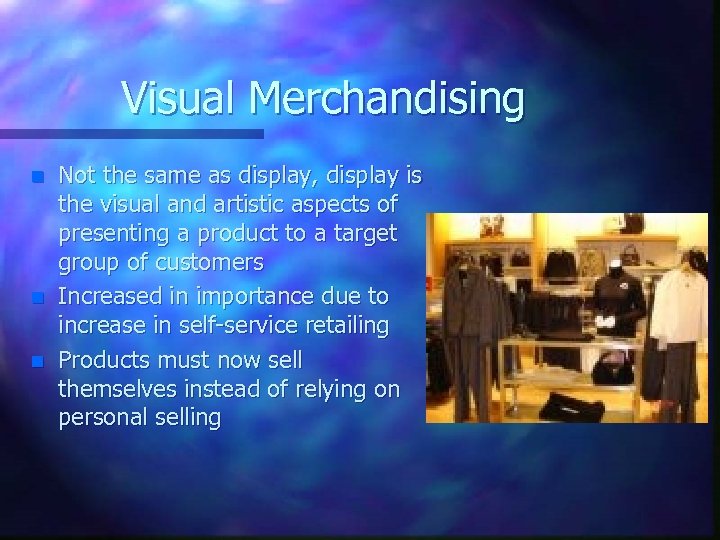 Visual Merchandising n n n Not the same as display, display is the visual and artistic aspects of presenting a product to a target group of customers Increased in importance due to increase in self-service retailing Products must now sell themselves instead of relying on personal selling
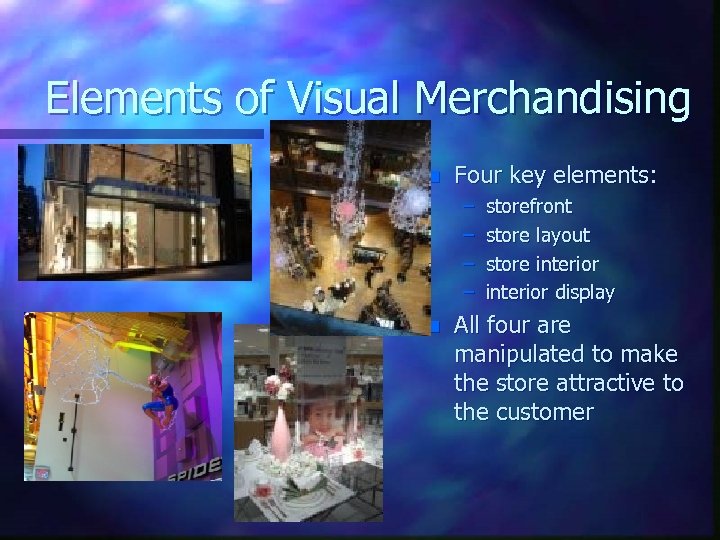 Elements of Visual Merchandising n Four key elements: – – n storefront store layout store interior display All four are manipulated to make the store attractive to the customer
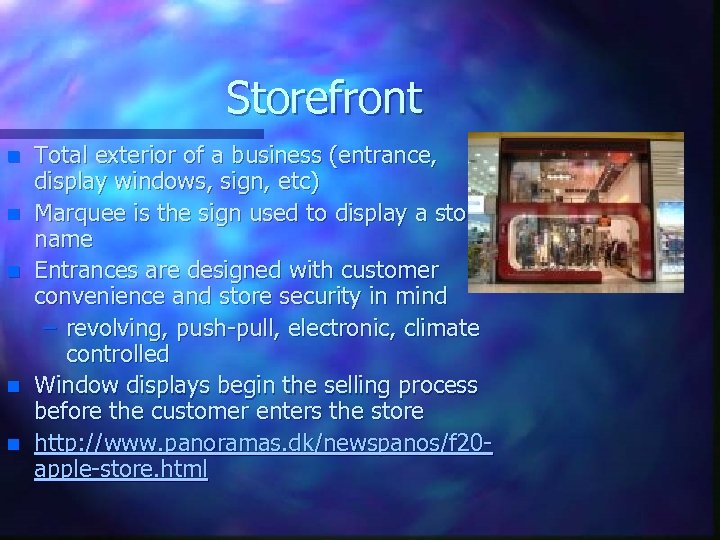 Storefront n n n Total exterior of a business (entrance, display windows, sign, etc) Marquee is the sign used to display a store’s name Entrances are designed with customer convenience and store security in mind – revolving, push-pull, electronic, climate controlled Window displays begin the selling process before the customer enters the store http: //www. panoramas. dk/newspanos/f 20 apple-store. html
 Store Layout n n The way floor space is allocated to facilitate sales and serve the customer Four different kinds of space: – selling space-assigned for interior displays, sales demonstrations, & sales transactions – merchandise space-inventory – personnel space-assigned to store employees for lockers, lunch breaks, & restrooms – customer space-assigned for the comfort & convenience of the customer. (dressing rooms)
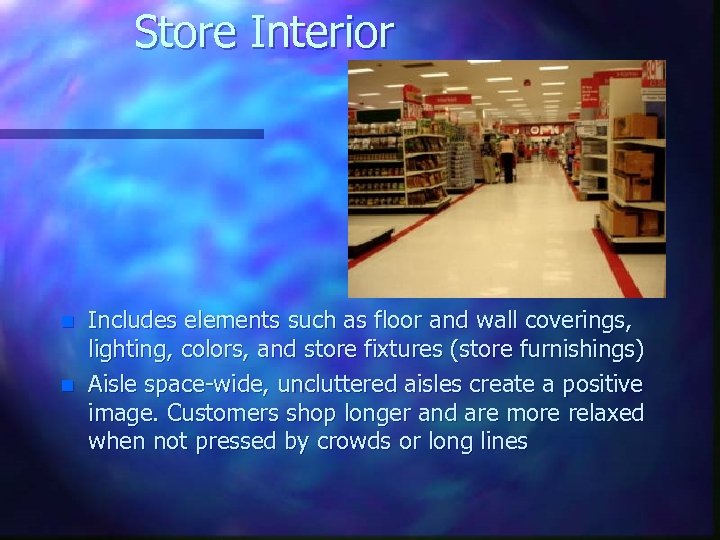 Store Interior n n Includes elements such as floor and wall coverings, lighting, colors, and store fixtures (store furnishings) Aisle space-wide, uncluttered aisles create a positive image. Customers shop longer and are more relaxed when not pressed by crowds or long lines
 Interior Displays These displays generate one out of every four sales n Five types: n – Open-allow customers to handle merchandise – closed-allow customers to see but not touch – Point-of-purchase-promote impulse purchases, more effective at supporting new products but not established ones – Architectural-model rooms – Store decorations-specific seasons or holidays
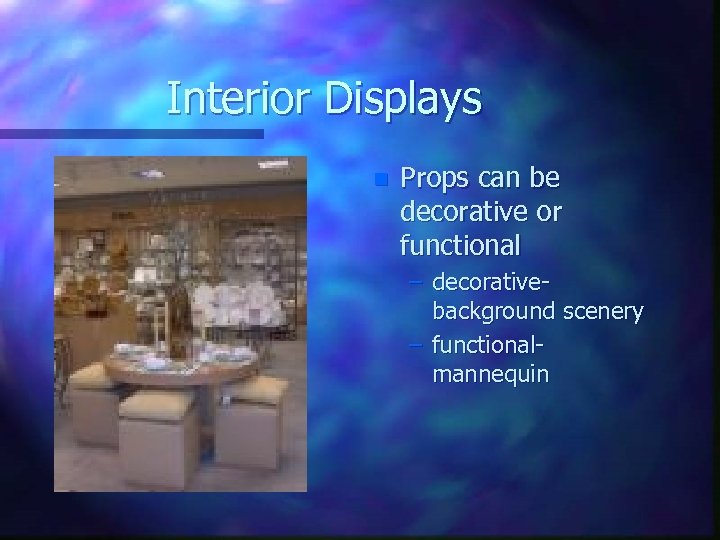 Interior Displays n Props can be decorative or functional – decorativebackground scenery – functionalmannequin
 Design & Preparation 3 -8 seconds to attract attention n Five step process to building and designing displays n
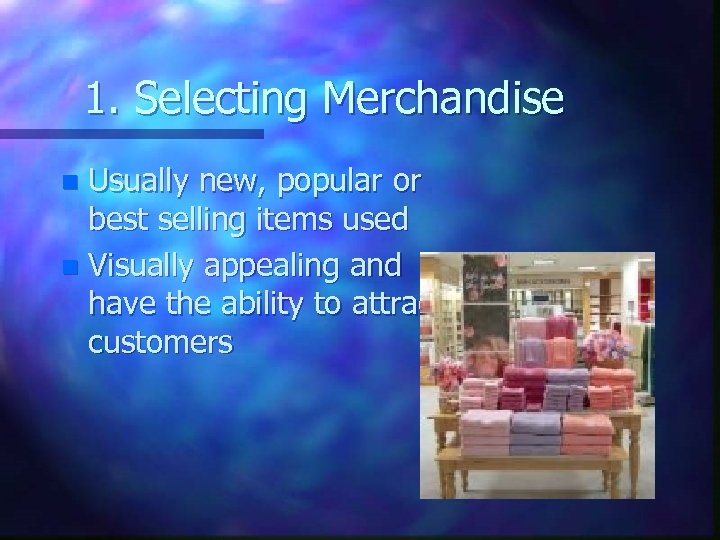 1. Selecting Merchandise Usually new, popular or best selling items used n Visually appealing and have the ability to attract customers n
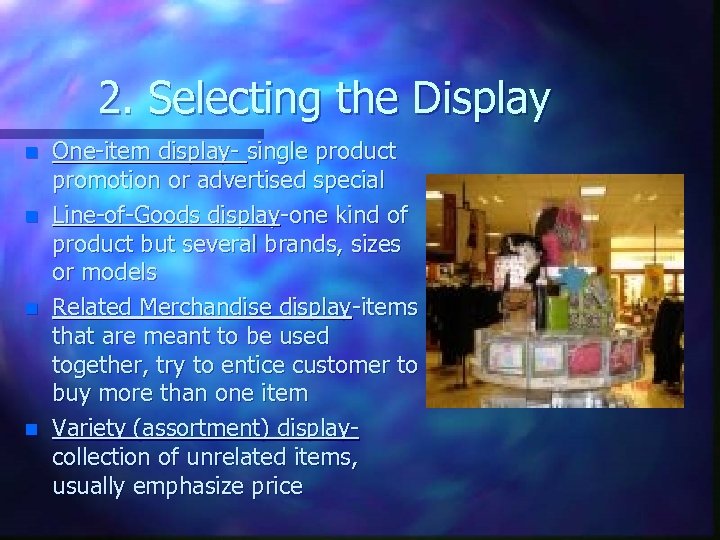 2. Selecting the Display n n One-item display- single product promotion or advertised special Line-of-Goods display-one kind of product but several brands, sizes or models Related Merchandise display-items that are meant to be used together, try to entice customer to buy more than one item Variety (assortment) displaycollection of unrelated items, usually emphasize price
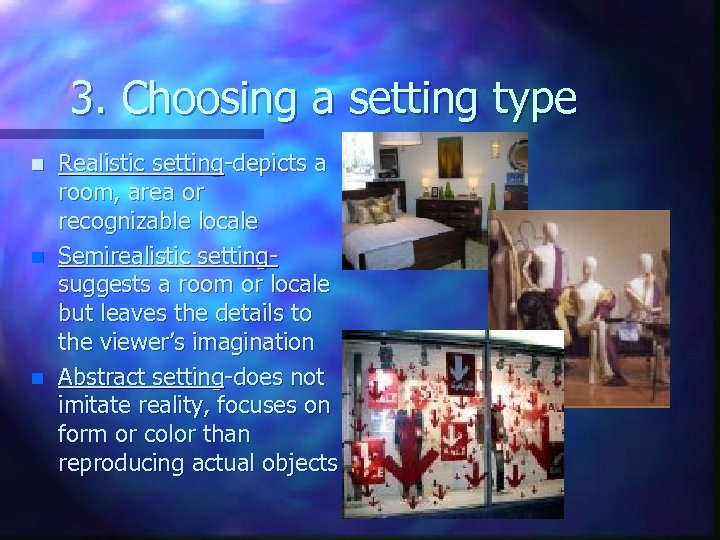 3. Choosing a setting type n n n Realistic setting-depicts a room, area or recognizable locale Semirealistic settingsuggests a room or locale but leaves the details to the viewer’s imagination Abstract setting-does not imitate reality, focuses on form or color than reproducing actual objects
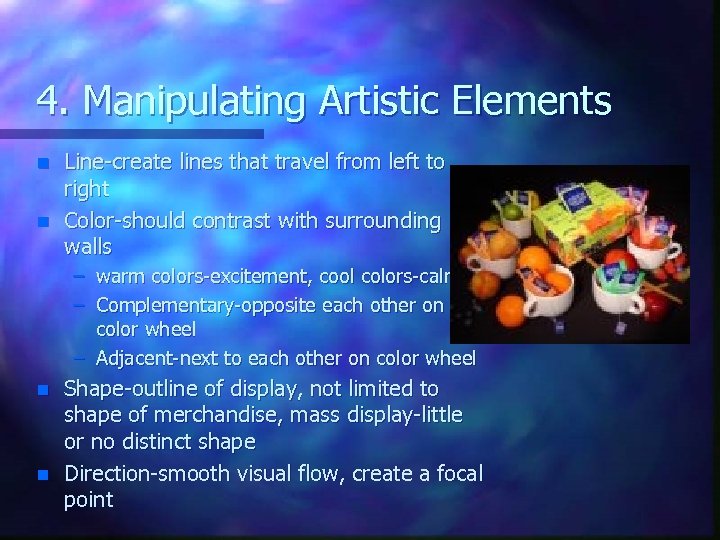 4. Manipulating Artistic Elements n n Line-create lines that travel from left to right Color-should contrast with surrounding walls – – warm colors-excitement, cool colors-calm Complementary-opposite each other on color wheel – Adjacent-next to each other on color wheel n n Shape-outline of display, not limited to shape of merchandise, mass display-little or no distinct shape Direction-smooth visual flow, create a focal point
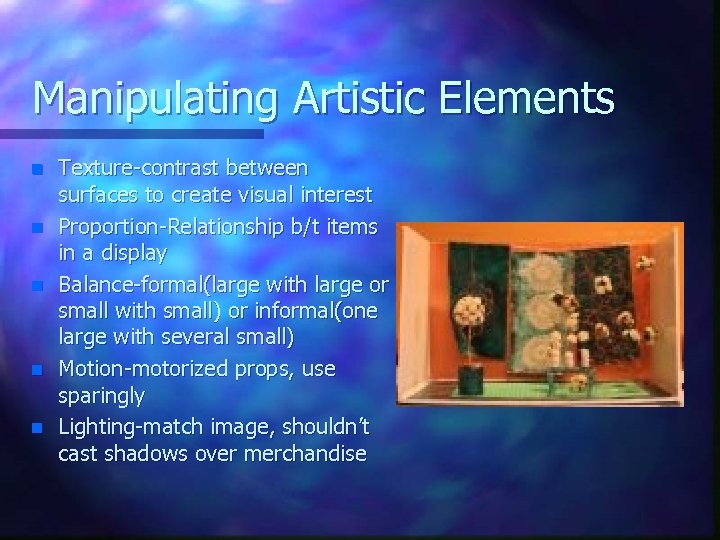 Manipulating Artistic Elements n n n Texture-contrast between surfaces to create visual interest Proportion-Relationship b/t items in a display Balance-formal(large with large or small with small) or informal(one large with several small) Motion-motorized props, use sparingly Lighting-match image, shouldn’t cast shadows over merchandise
 5. Evaluation n n n n Emphasize store image? Appeal to store’s customers? Attention grabbing? Emphasize timeliness? Use a creative, appropriate theme? Use color effectively? Proper design principles followed? Artistically pleasing? Easy to read? Clean and orderly?