 Скачать презентацию How A Bill Becomes Law Federal Level
d174ea4af5ec556bdf7674a447c32ead.ppt
- Количество слайдов: 29



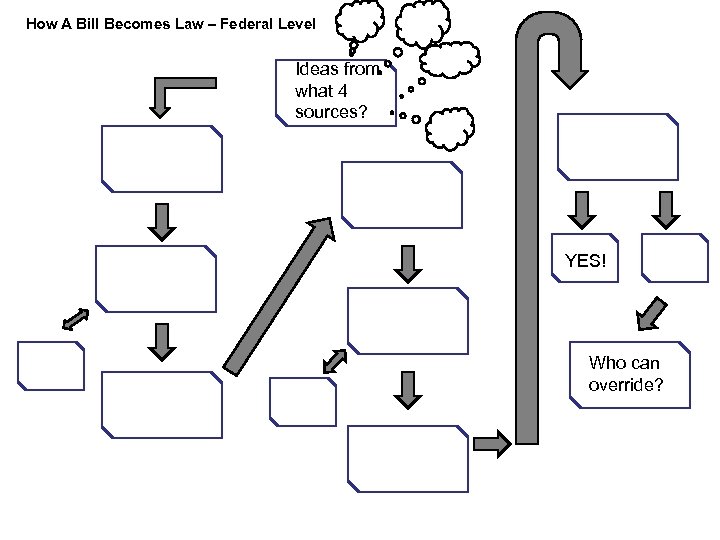
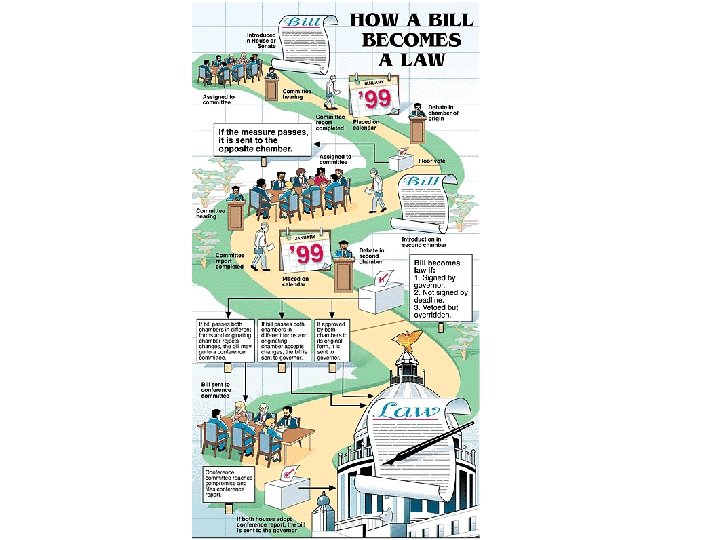
How A Bill Becomes Law – Federal Level Ideas from what 4 sources? YES! Who can override?
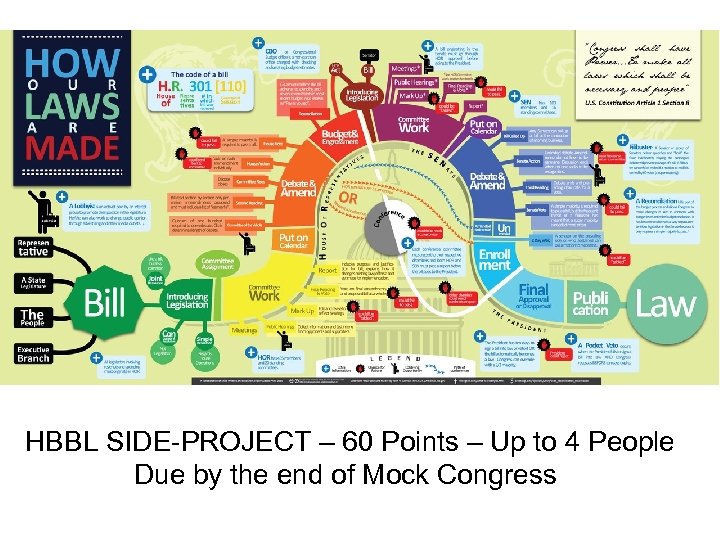
HBBL SIDE-PROJECT – 60 Points – Up to 4 People Due by the end of Mock Congress
How Do Bills Become Laws? “It is very easy to defeat a bill in Congress. It is much more difficult to pass one. ” —John F. Kennedy (1962)
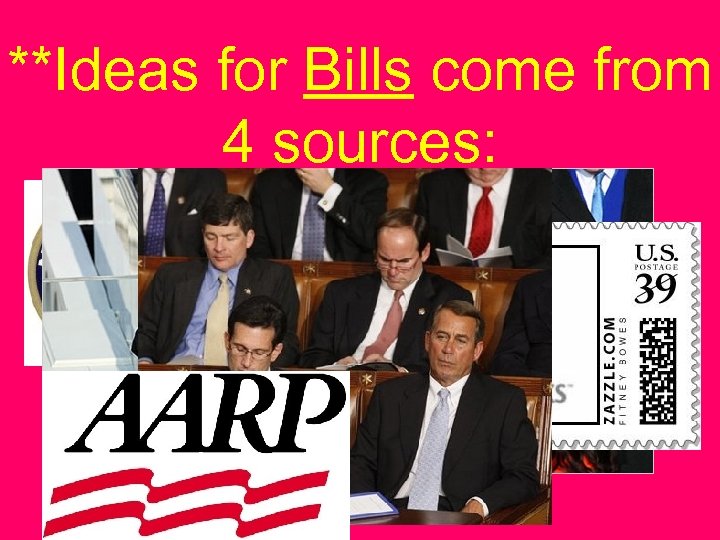
**Ideas for Bills come from 4 sources:
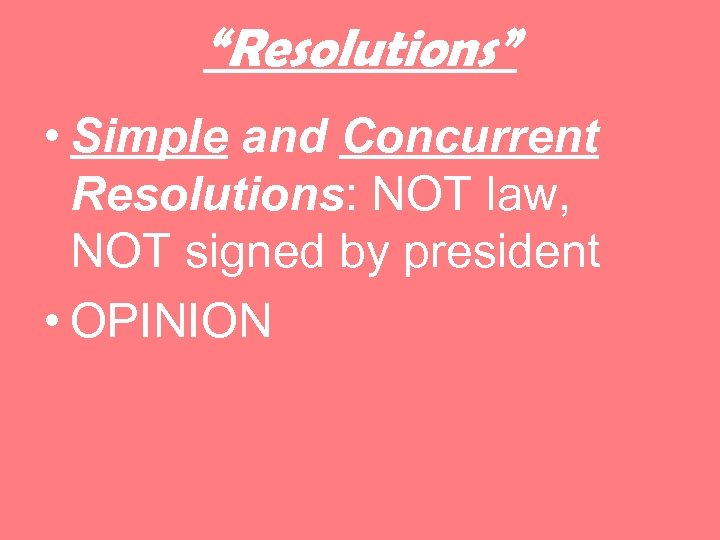
“Resolutions” • Simple and Concurrent Resolutions: NOT law, NOT signed by president • OPINION
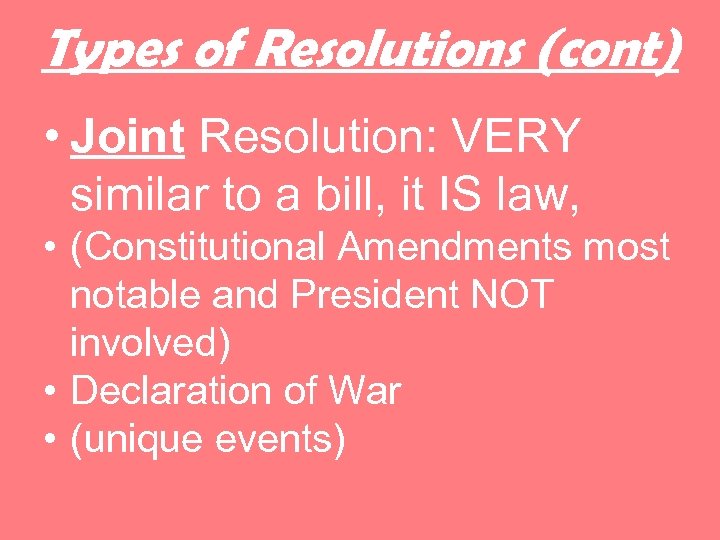
Types of Resolutions (cont) • Joint Resolution: VERY similar to a bill, it IS law, • (Constitutional Amendments most notable and President NOT involved) • Declaration of War • (unique events)
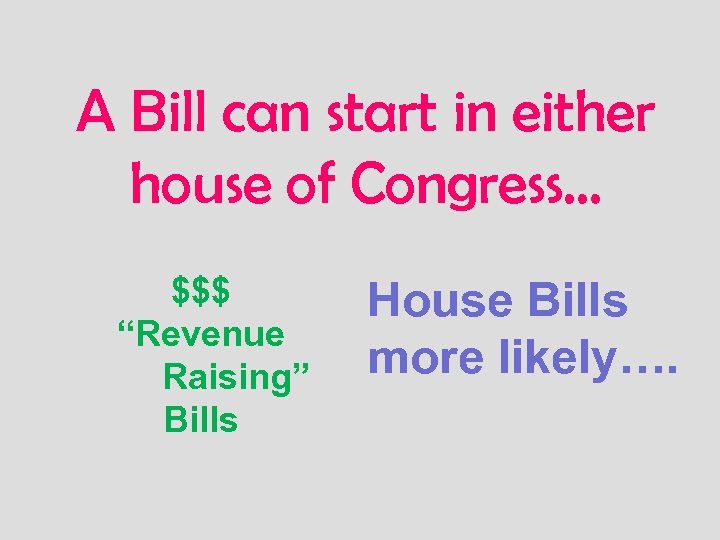
A Bill can start in either house of Congress… $$$ “Revenue Raising” Bills House Bills more likely….
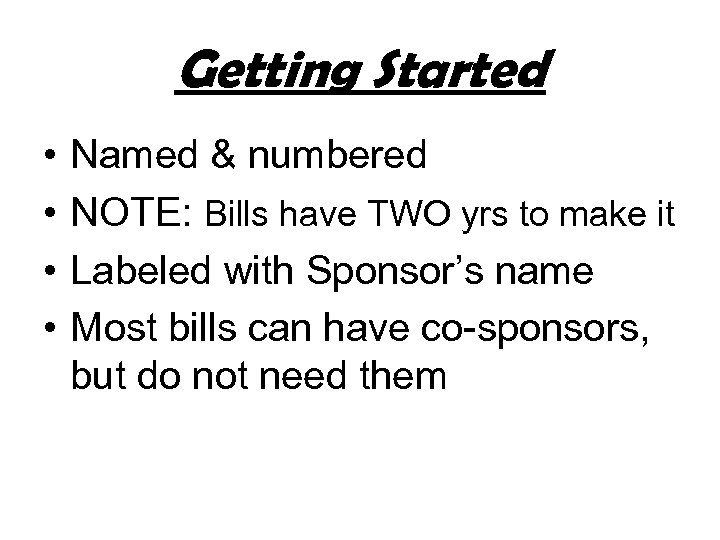
Getting Started • • Named & numbered NOTE: Bills have TWO yrs to make it Labeled with Sponsor’s name Most bills can have co-sponsors, but do not need them
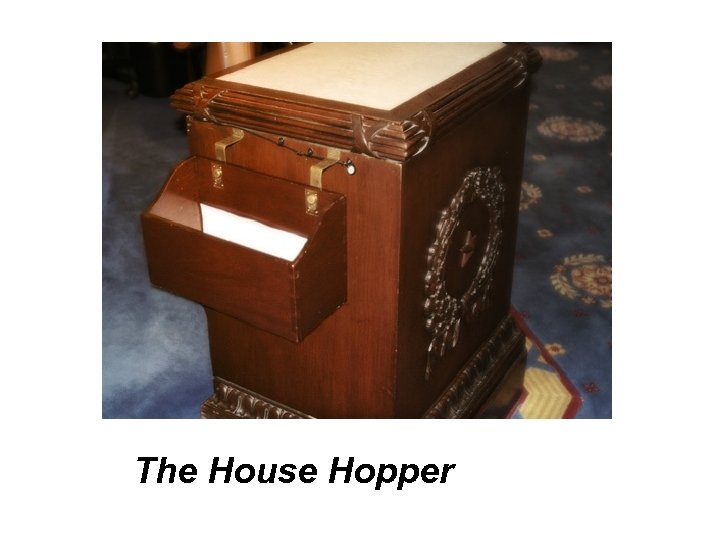
The House Hopper
Google: “Thomas” (Library of Congress) http: //thomas. loc. gov/home/thomas. php
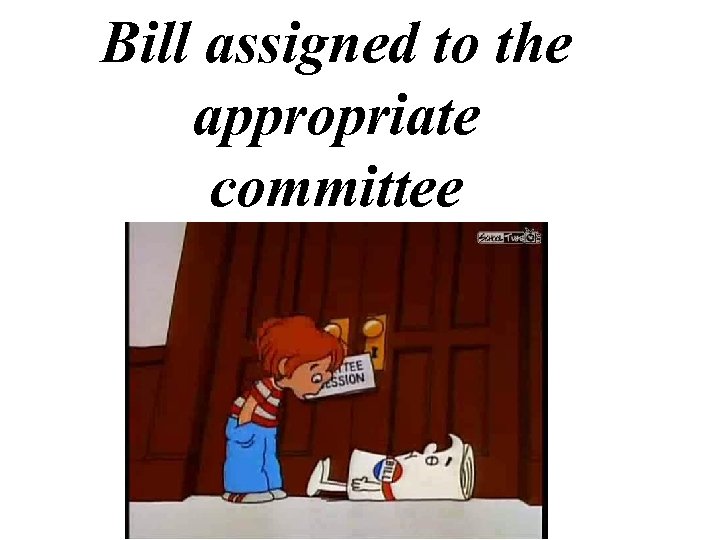
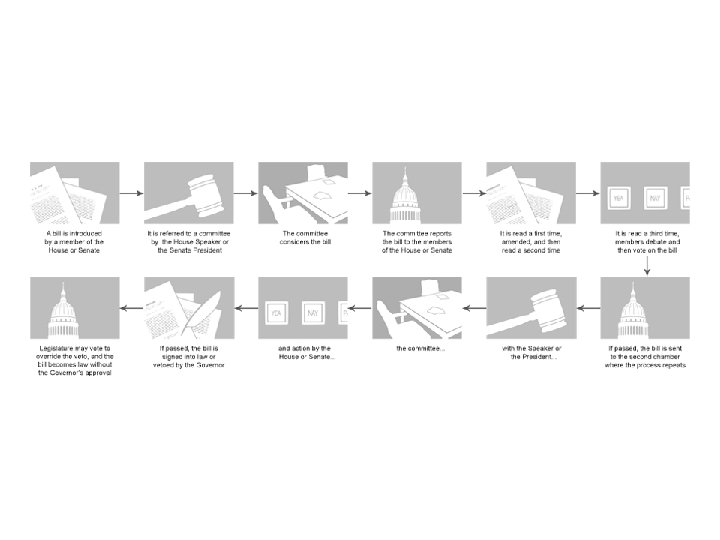
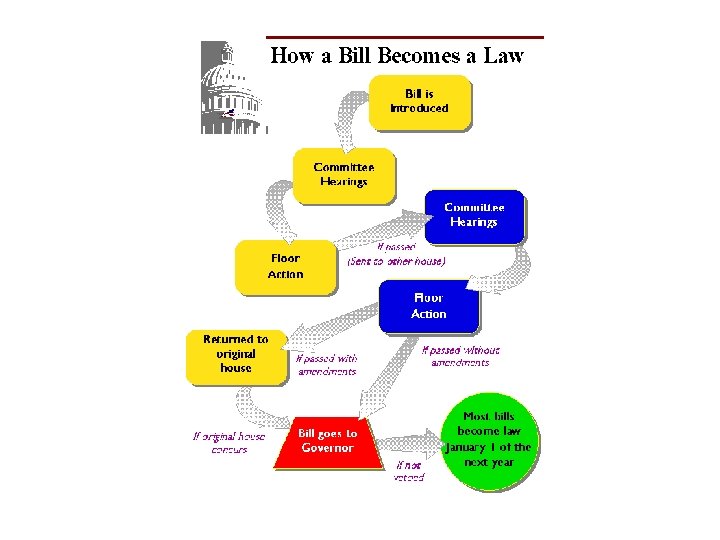
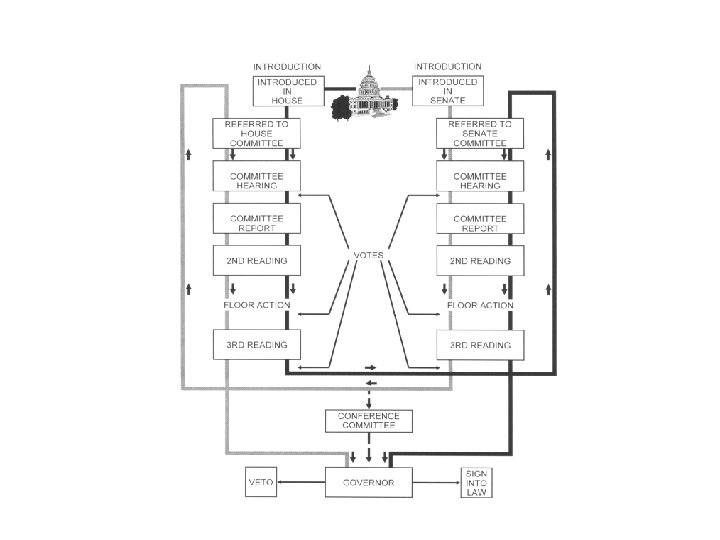
Bill assigned to the appropriate committee
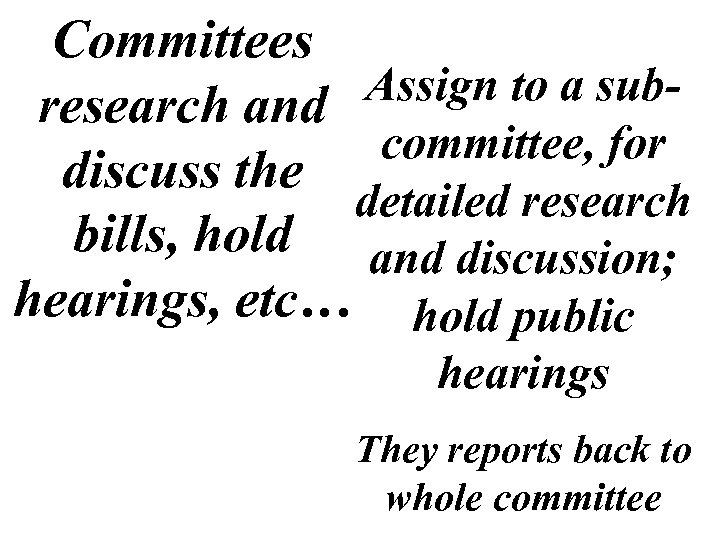
Committees Assign to a subresearch and committee, for discuss the detailed research bills, hold and discussion; hearings, etc… hold public hearings They reports back to whole committee
The Committees do one of five things….
• Kill the Bill (no vote) • Pigeonhole the Bill* • Pass the Bill (yes vote) • Amend the Bill • Re-write a new bill
Discharge Petition • The only way to remove a bill from Committee without Committee action (Technically HOUSE ONLY but allowed in MC) • 218 (majority) approval
Motion to Table Passage means placing the current issue on the “back burner. ” Same as defeating. (pigeonholing in full house)
Full House Debate • usually a Speaker Pro Temp (Presiding Officer) • Timed debate (Rules Committee) • Bills must be “Germane” “Riders” & “Earmarks” all “Pork” • “Motion to Recommit” (back to committee)
If a bill actually passes one house, it goes to the other house where it repeats the exact same process When a bill fails at any point in one house, it is all over.
Debate in the Senate… • Debate is unlimited • The Dreaded Filibuster! • Cloture Rule - 3/5 vote • The “Nuclear Option” (Federal Appointees –minus Supreme Court Justices) • Usually the THREAT of a filibuster is enough to make changes…
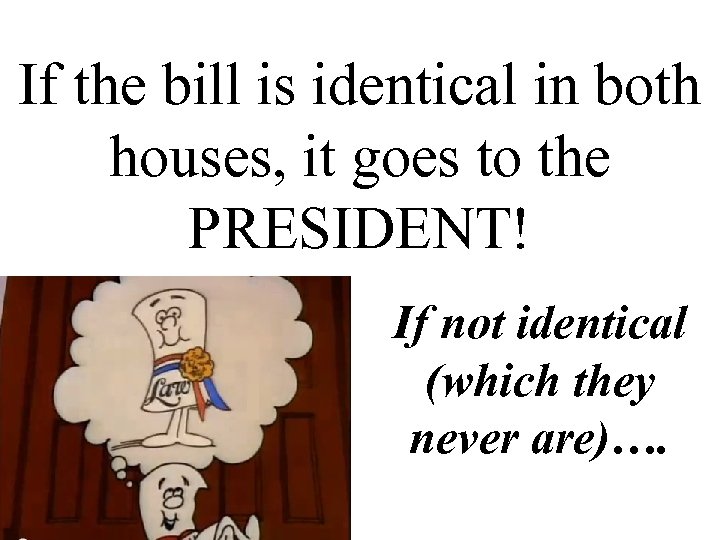
If the bill is identical in both houses, it goes to the PRESIDENT! If not identical (which they never are)….
Conference Committee! Both houses agree on an identical bill, then it goes back to each house for a vote
The President has the power to do one of THREE things with the bill!
• #1 Sign: It’s Law! • #2 Ignore for 10 days: (a) It’s Law! - if Congress is in session (b) It’s NOT Law! if Congress is NOT in session (Pocket Veto)
President and Bills…. • #3 Veto: It’s NOT Law! Back to Congress? ? ? Usually the THREAT of a veto is enough to kill a bill…
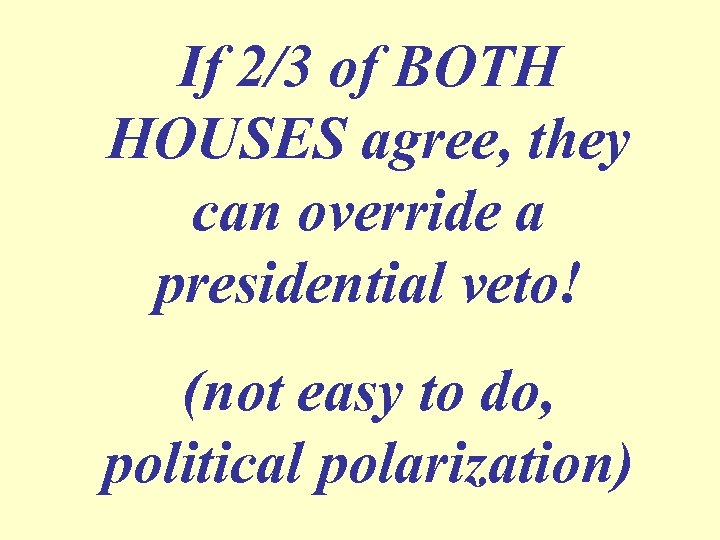
If 2/3 of BOTH HOUSES agree, they can override a presidential veto! (not easy to do, political polarization)
Скачать презентацию How A Bill Becomes Law Federal Level
d174ea4af5ec556bdf7674a447c32ead.ppt