


 Скачать презентацию Housing Density Design Density A means to
73c6f2a7db069eafa8fd2a11355b8d9e.ppt
- Количество слайдов: 34
 Housing Density & Design Density: A means to the end Accessibility, Population thresholds, Vibrancy Debra Just General Manager City Strategy Adelaide City Council
 Key Messages § Density [eg TODs, apartments, mixed use) contribute to achieving; è Accessibility è Population thresholds for goods & services è Vibrancy for residents, businesses and visitors § Achieving density has cultural and market challenges § Quality design is important
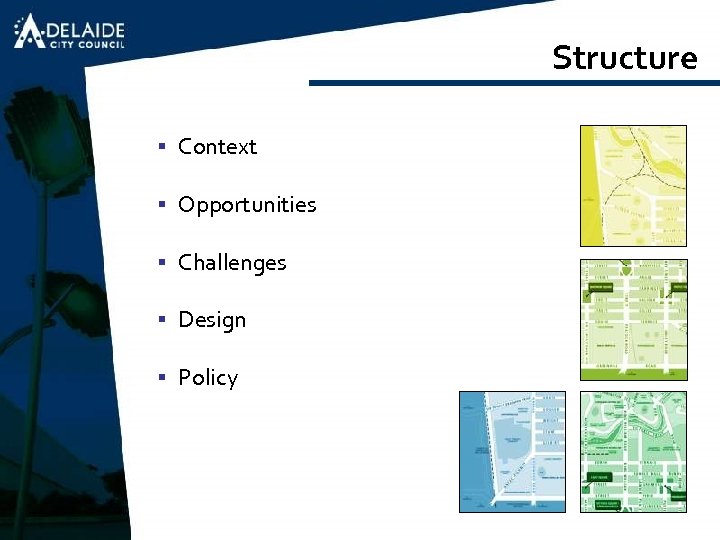 Structure § Context § Opportunities § Challenges § Design § Policy
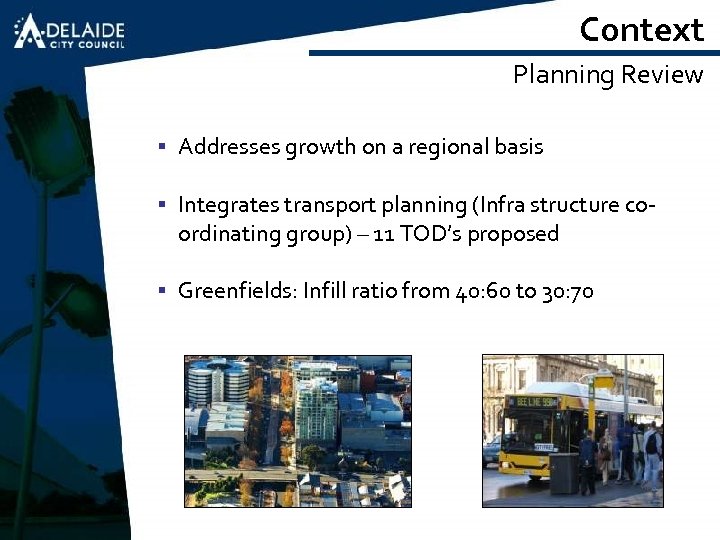 Context Planning Review § Addresses growth on a regional basis § Integrates transport planning (Infra structure co- ordinating group) – 11 TOD’s proposed § Greenfields: Infill ratio from 40: 60 to 30: 70
 Context Pro-drivers Drivers for density § Energy/cost/time in transport and building operations è Rising Fuel Costs è Peak Oil è Climate Change Contra drivers: § Housing Affordability § Lifestyle choices § Decreasing Household Size/Ageing population?
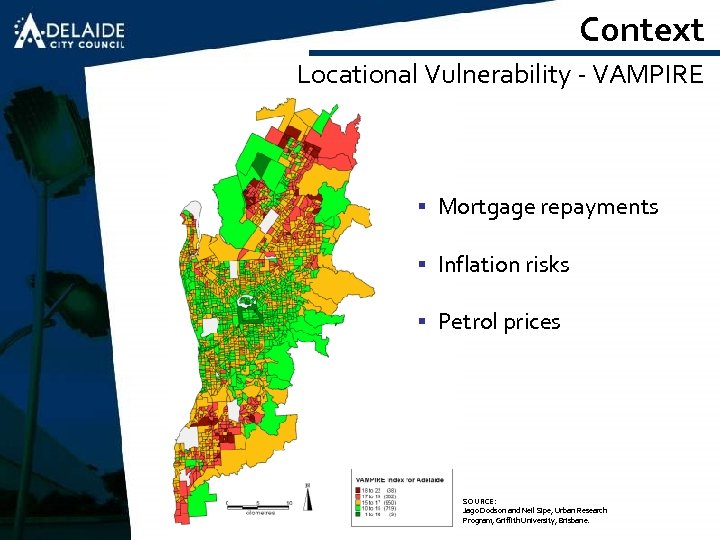 Context Locational Vulnerability - VAMPIRE § Mortgage repayments § Inflation risks § Petrol prices SOURCE: Jago Dodson and Neil Sipe, Urban Research Program, Griffith University, Brisbane.
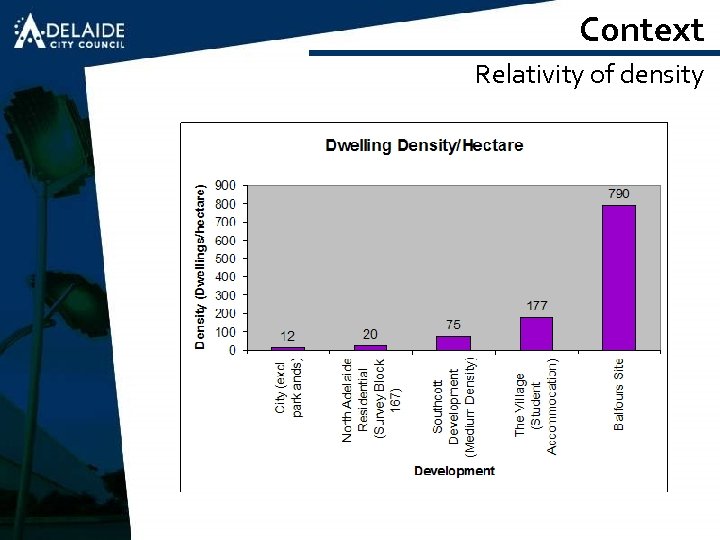 Context Relativity of density
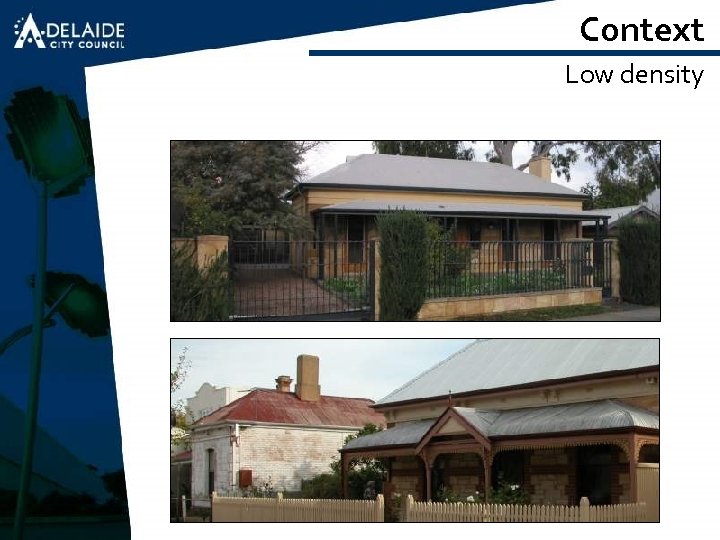 Context Low density
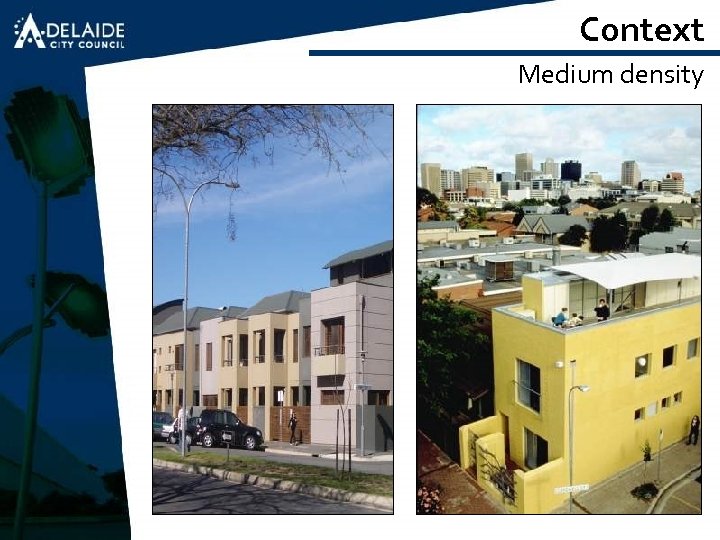 Context Medium density
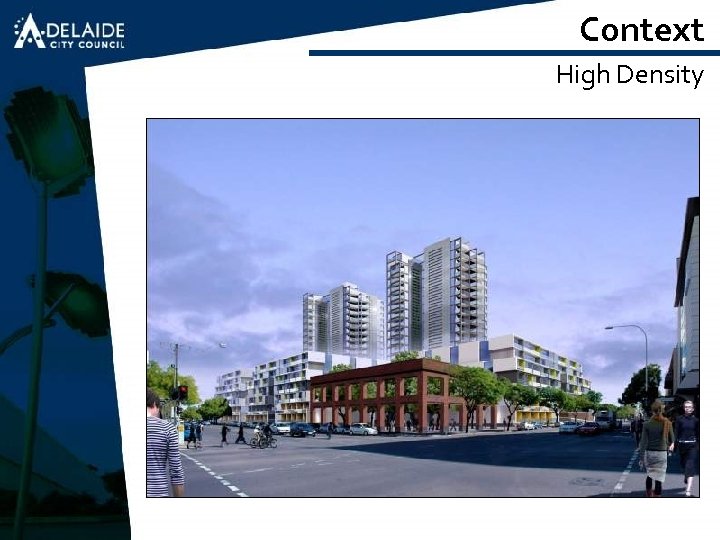 Context High Density
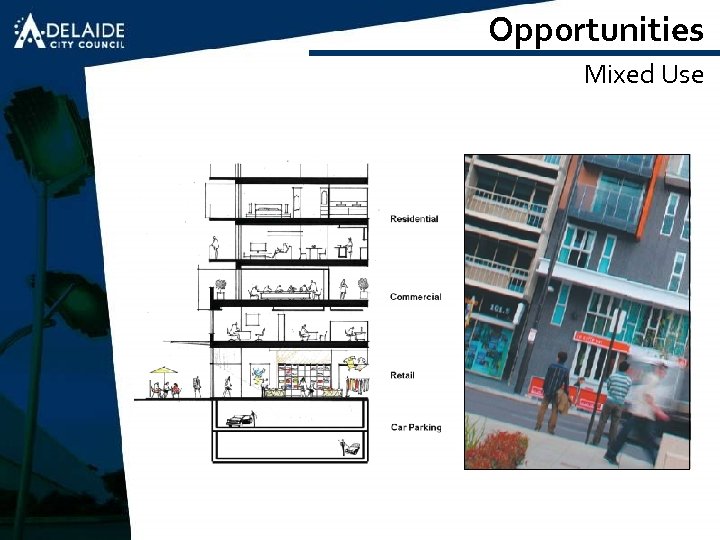 Opportunities Mixed Use
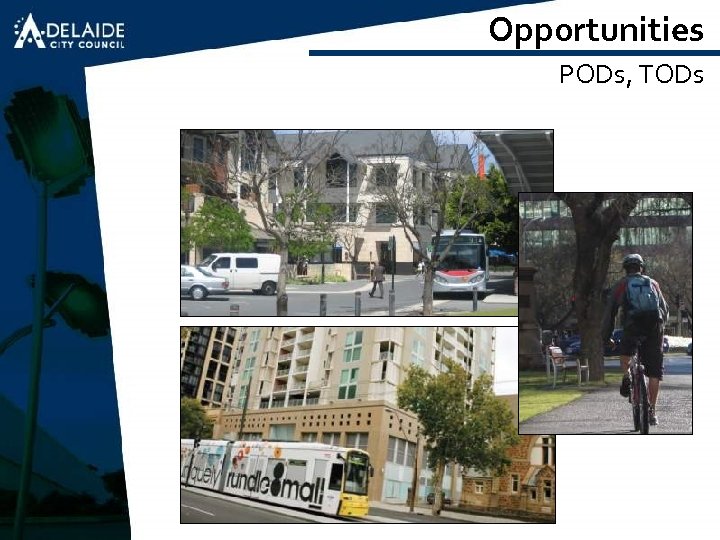 Opportunities PODs, TODs
 Opportunities Attractive proposition § Economic: Reduced travel time & cost, synergies with other businesses. § Environmental: Reduced travel and operational energy (ghg savings) and water consumption. § Social: Improved access to services and facilities, improved health (walking and cycling), lifestyle.
 Sustainable living Water § City residents use 21% less water than metro Adelaide (detached, semi-detached) § Average for residential property § Metro – 246 k. L § City – detached & semi detached – 194 k. L § City – home units – 164 k. L
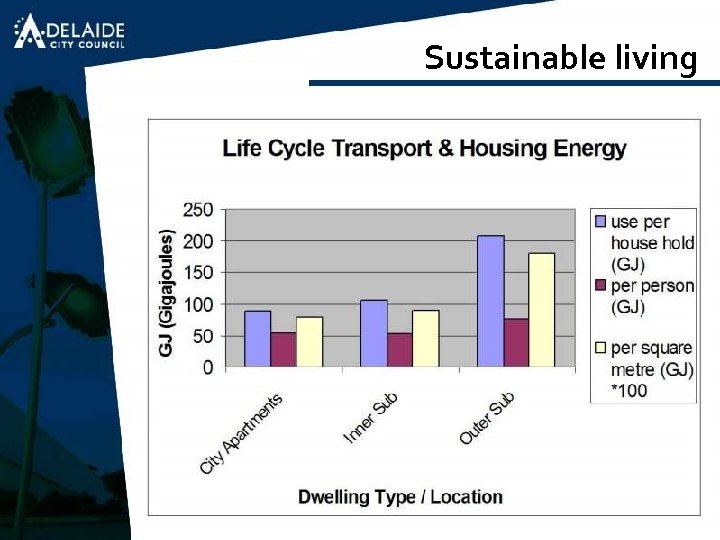 Sustainable living
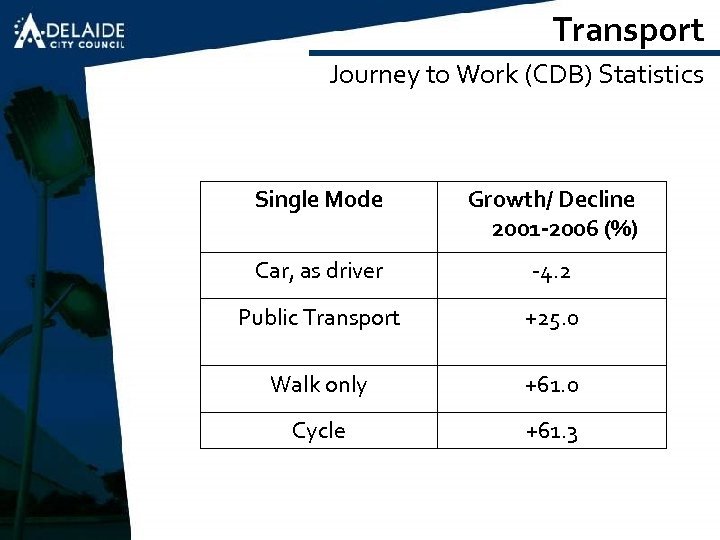 Transport Journey to Work (CDB) Statistics Single Mode Growth/ Decline 2001 -2006 (%) Car, as driver -4. 2 Public Transport +25. 0 Walk only +61. 0 Cycle +61. 3
 Transport Journey to Work Statistics Journey to work data from the 2006 Census reveals that for single mode of travel to work in the City: § 53. 2% of Adelaide City residents walk to work compared to 4. 6% of metro residents § 26. 4% of Adelaide City residents drive to work (as driver) compared to 52. 1% of metro residents § 4. 6% of Adelaide City residents bicycle to work compared to 2. 8% of metro residents
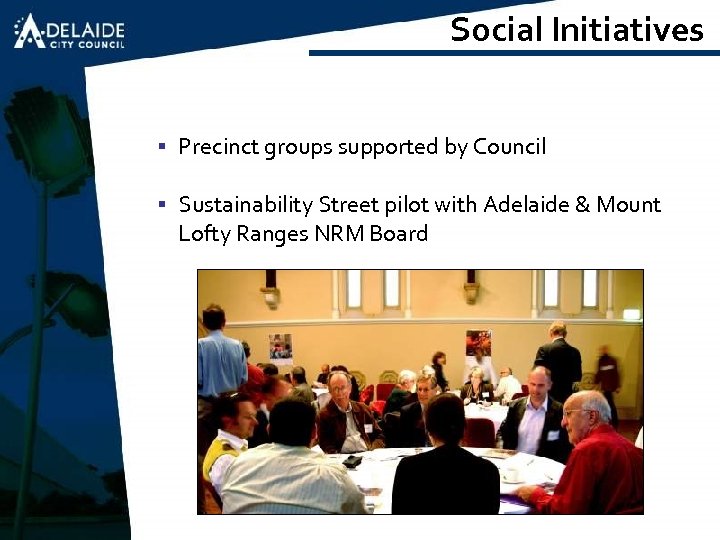 Social Initiatives § Precinct groups supported by Council § Sustainability Street pilot with Adelaide & Mount Lofty Ranges NRM Board
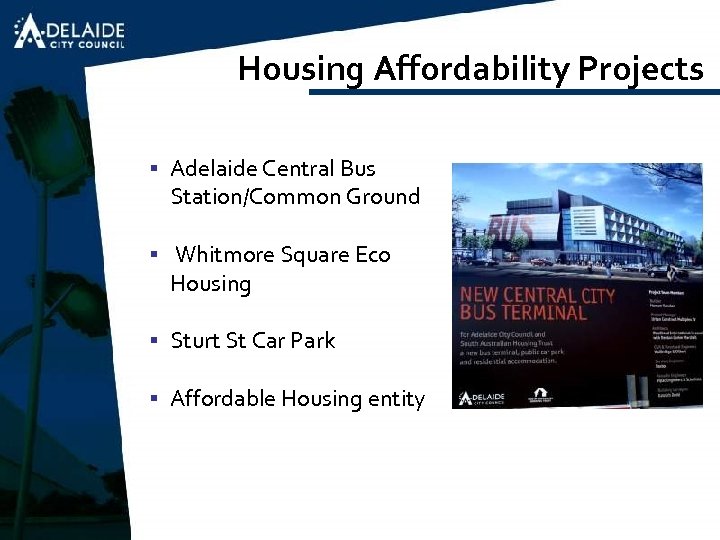 Housing Affordability Projects § Adelaide Central Bus Station/Common Ground § Whitmore Square Eco Housing § Sturt St Car Park § Affordable Housing entity
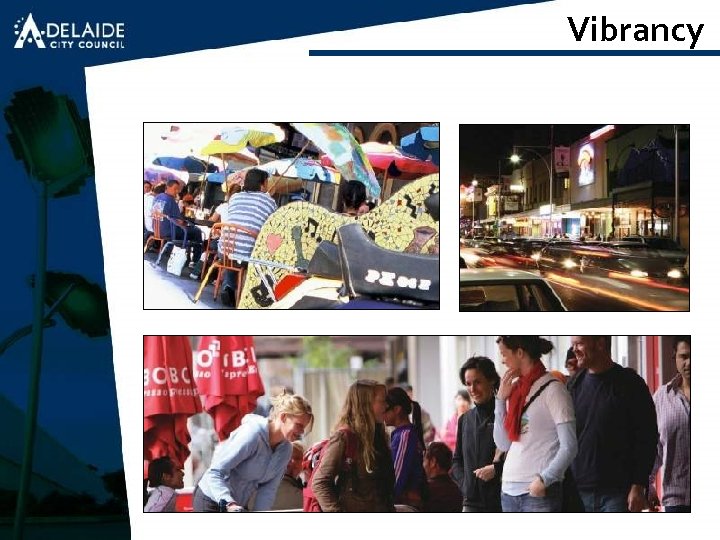 Vibrancy
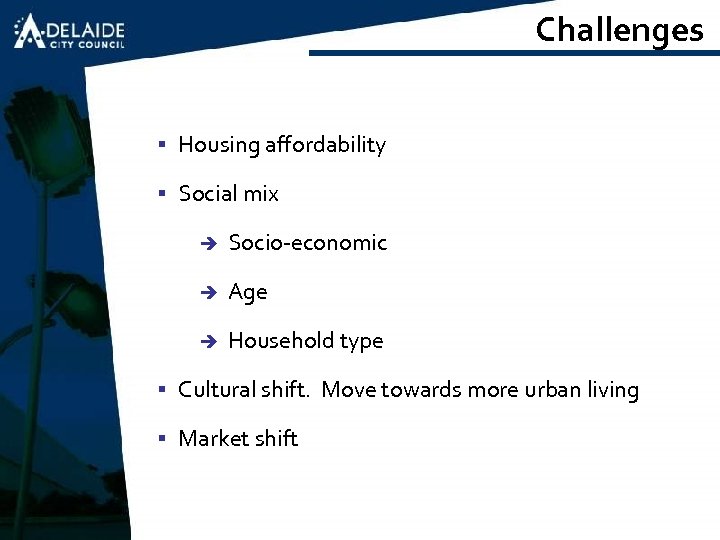 Challenges § Housing affordability § Social mix è Socio-economic è Age è Household type § Cultural shift. Move towards more urban living § Market shift
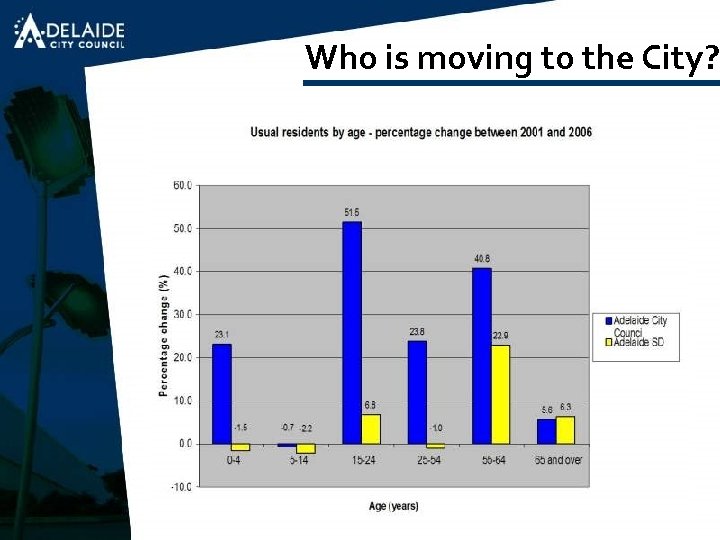 Who is moving to the City?
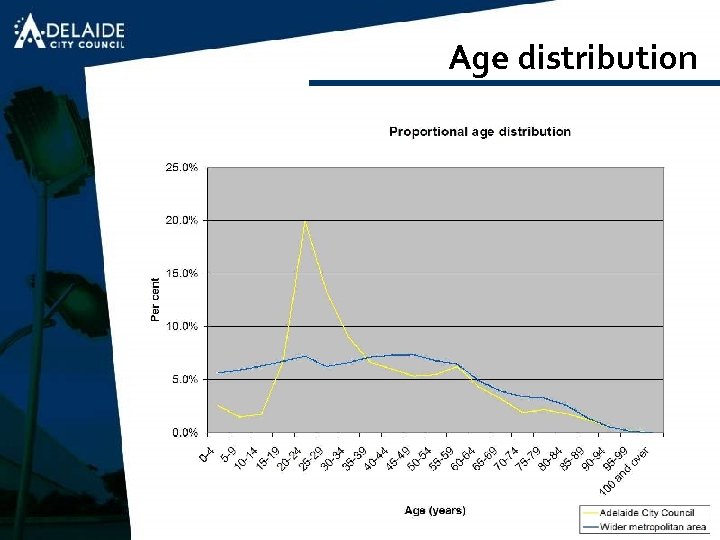 Age distribution
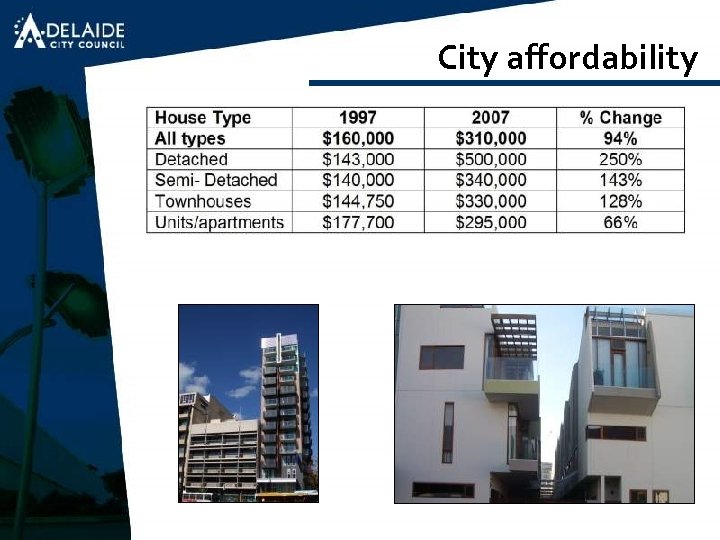 City affordability
 Challenges § Market intelligence: sites available, policy support, knowledgeable market § Market for high density dwellings § Cost of high density product (above 4 storeys) § Duties and levies: Stamp Duty, Open Space Levy, Electrical augmentation
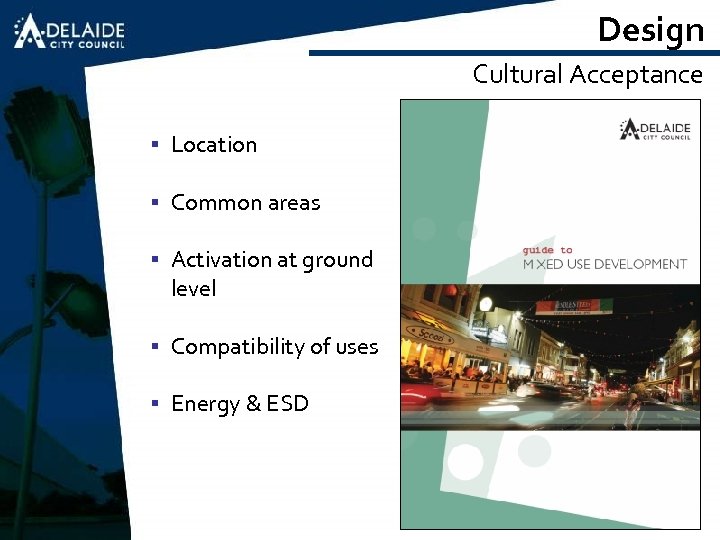 Design Cultural Acceptance § Location § Common areas § Activation at ground level § Compatibility of uses § Energy & ESD
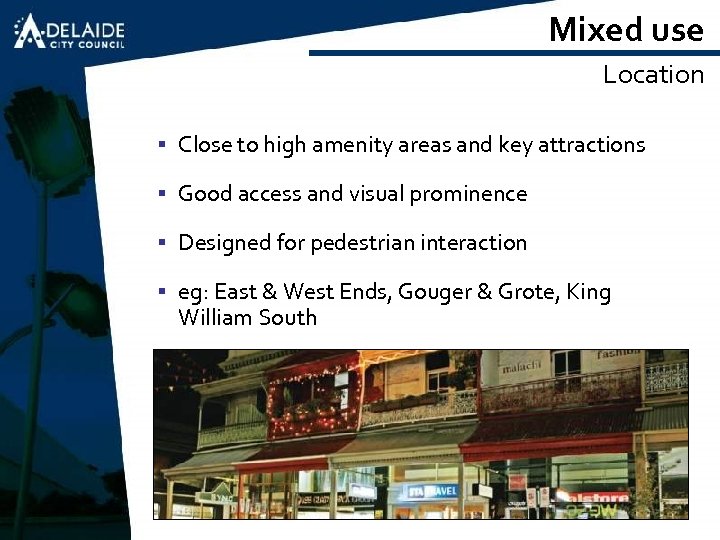 Mixed use Location § Close to high amenity areas and key attractions § Good access and visual prominence § Designed for pedestrian interaction § eg: East & West Ends, Gouger & Grote, King William South
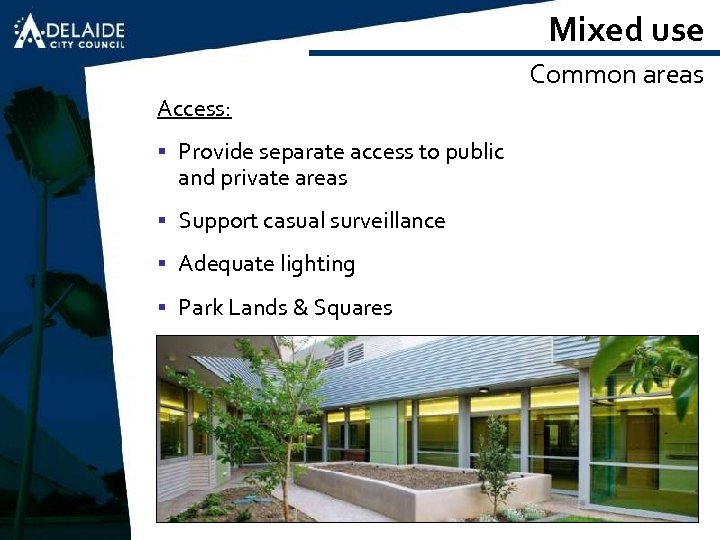 Mixed use Common areas Access: § Provide separate access to public and private areas § Support casual surveillance § Adequate lighting § Park Lands & Squares
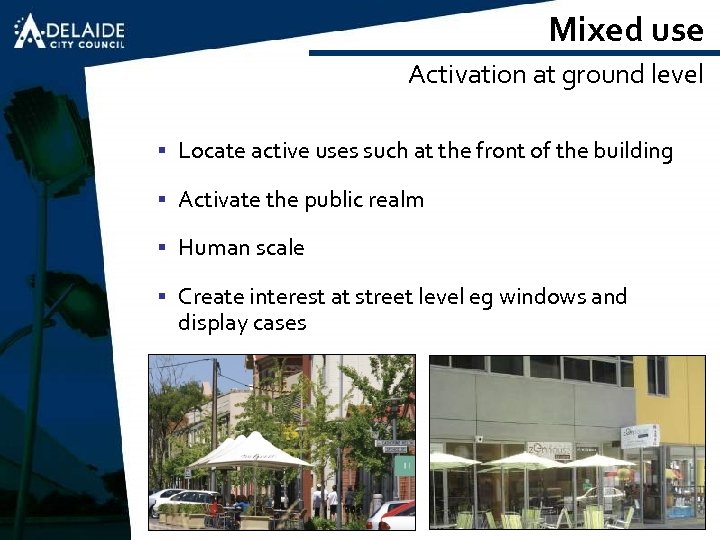 Mixed use Activation at ground level § Locate active uses such at the front of the building § Activate the public realm § Human scale § Create interest at street level eg windows and display cases
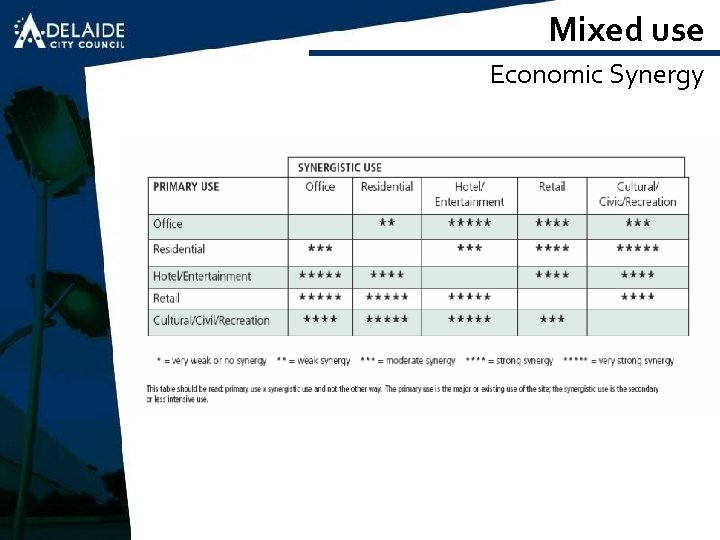 Mixed use Economic Synergy
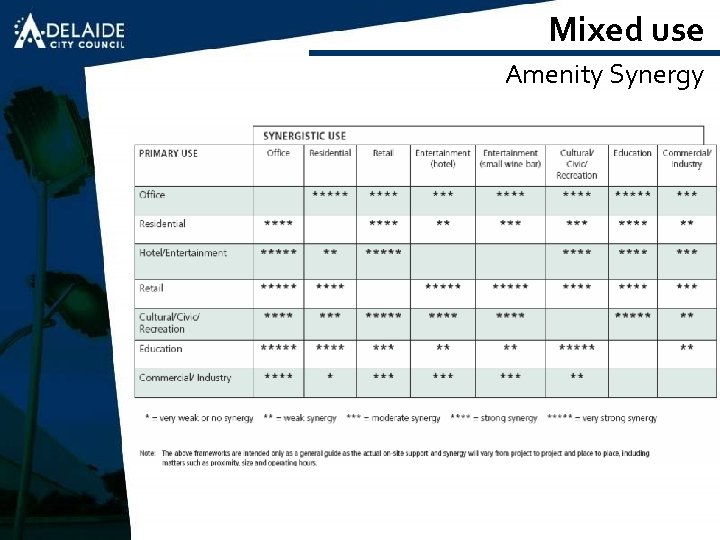 Mixed use Amenity Synergy
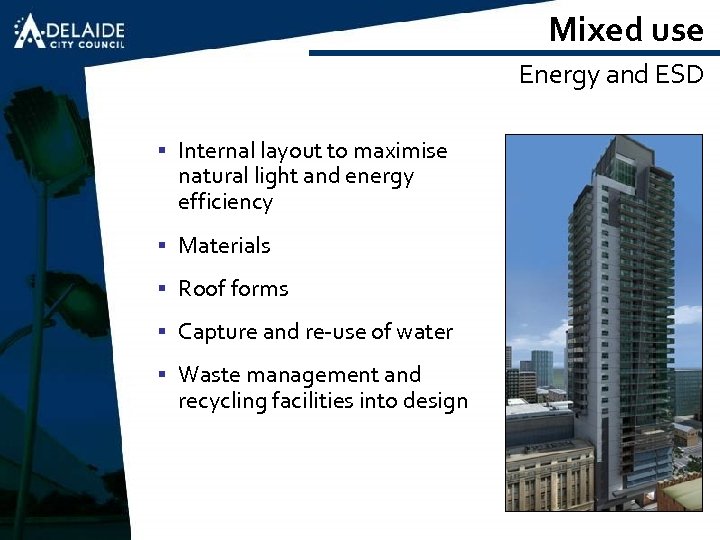 Mixed use Energy and ESD § Internal layout to maximise natural light and energy efficiency § Materials § Roof forms § Capture and re-use of water § Waste management and recycling facilities into design
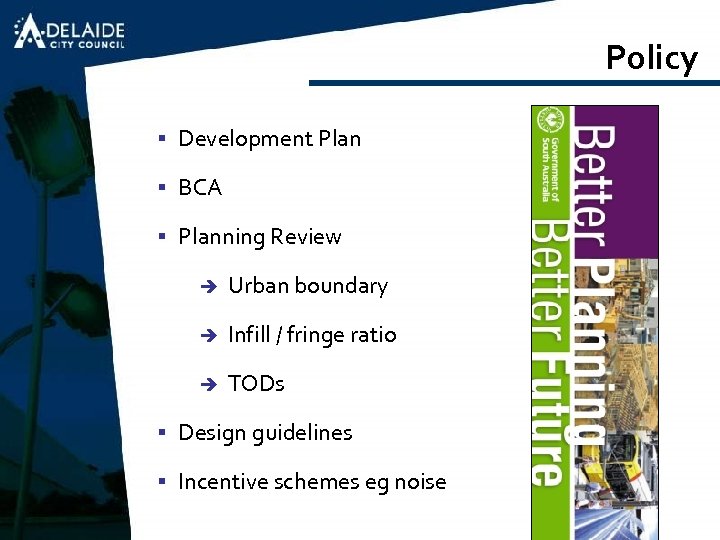 Policy § Development Plan § BCA § Planning Review è Urban boundary è Infill / fringe ratio è TODs § Design guidelines § Incentive schemes eg noise
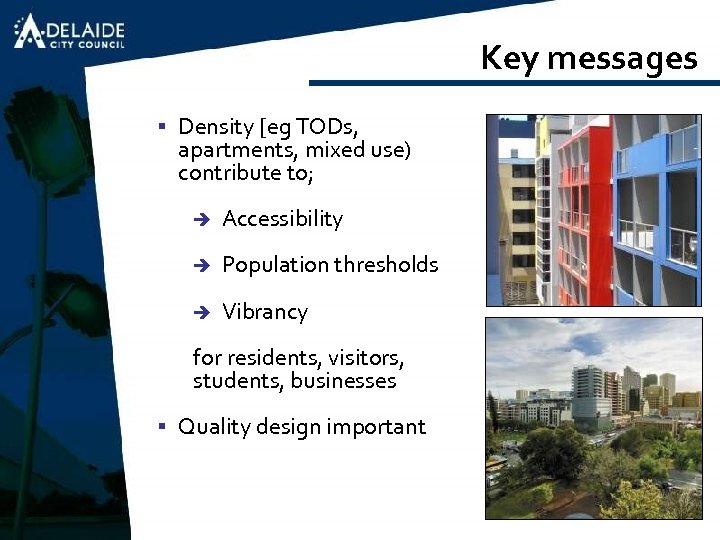 Key messages § Density [eg TODs, apartments, mixed use) contribute to; è Accessibility è Population thresholds è Vibrancy for residents, visitors, students, businesses § Quality design important