 Скачать презентацию Household Flies Biology Behavior and Control Dr Richard
4ebc148777677d92813881a100f55cd0.ppt
- Количество слайдов: 52



Household Flies: Biology, Behavior, and Control Dr. Richard M. Houseman Department of Entomology University of Missouri
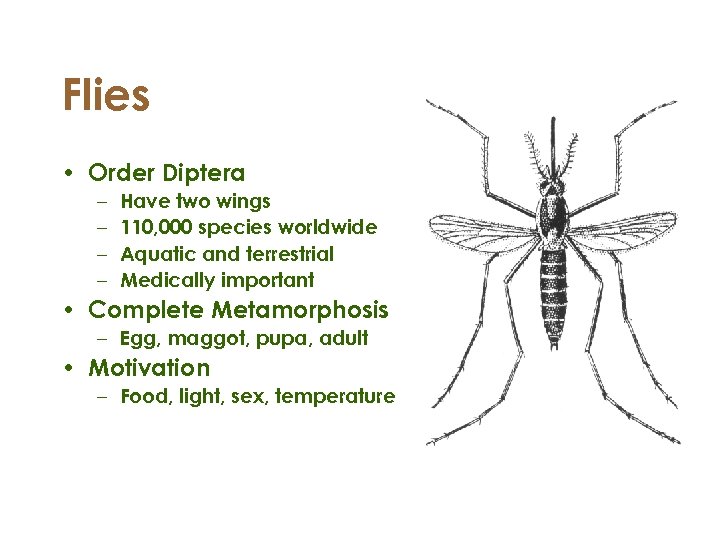
Flies • Order Diptera – – Have two wings 110, 000 species worldwide Aquatic and terrestrial Medically important • Complete Metamorphosis – Egg, maggot, pupa, adult • Motivation – Food, light, sex, temperature
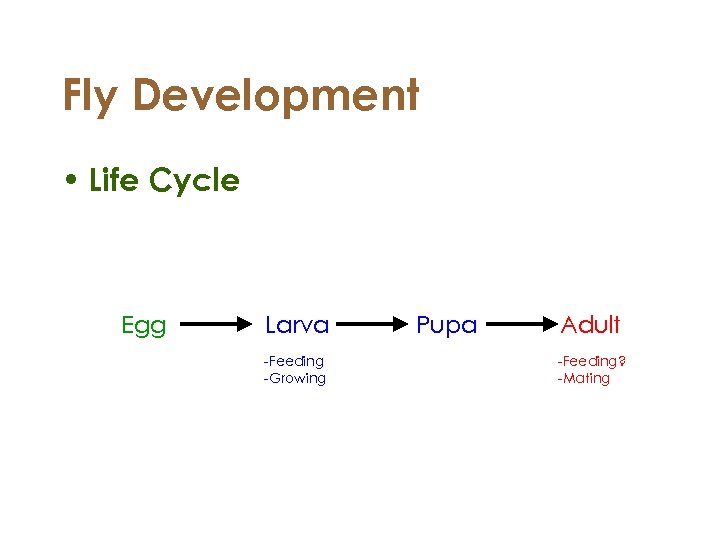
Fly Development • Life Cycle Egg Larva -Feeding -Growing Pupa Adult -Feeding? -Mating
Fly IPM • Inspection • Identification • Mechanical (exclusion, traps) • Cultural (sanitation) • Chemical (baits, aerosols)
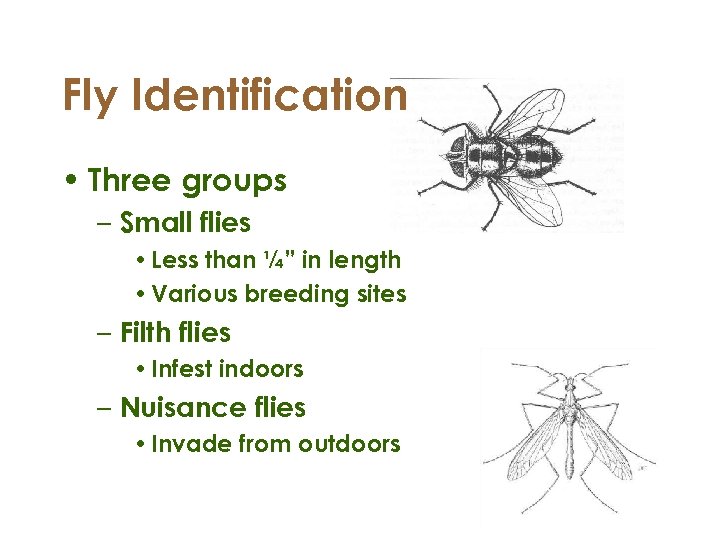
Fly Identification • Three groups – Small flies • Less than ¼” in length • Various breeding sites – Filth flies • Infest indoors – Nuisance flies • Invade from outdoors

Small Flies
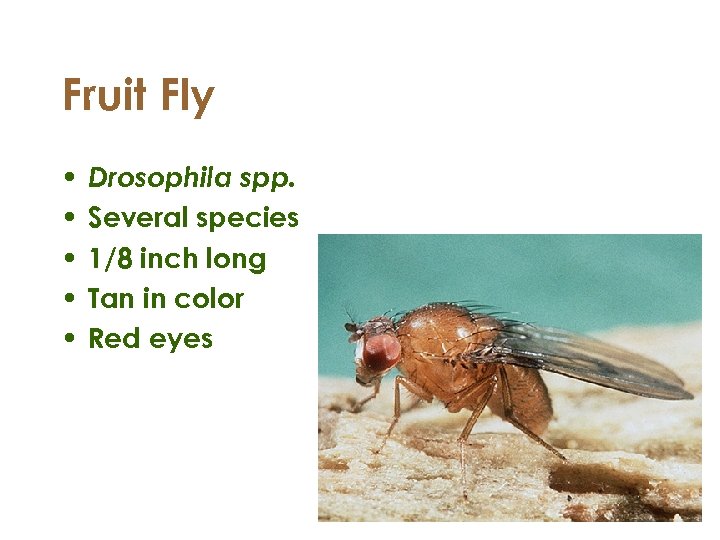
Fruit Fly • • • Drosophila spp. Several species 1/8 inch long Tan in color Red eyes
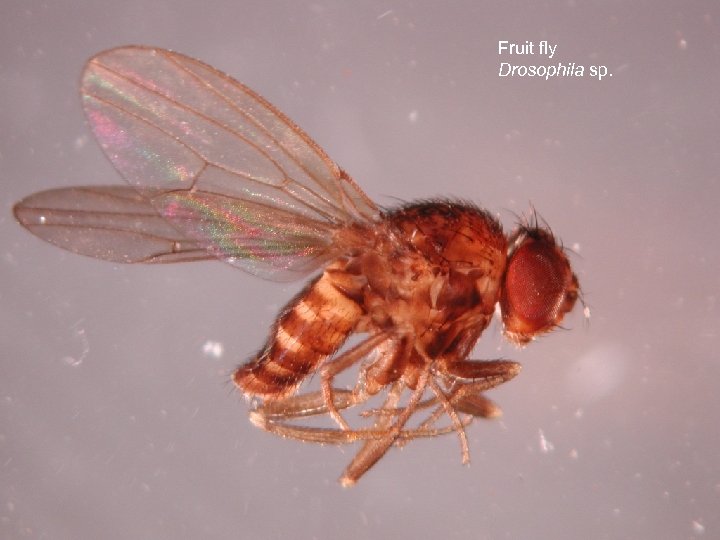
Fruit fly Drosophila sp.
Fruit Fly • Life Cycle • 7 -10 days • Eggs laid on fruit – About 500 eggs per female – Hatch after 24 -30 hrs • Larvae feed on fermenting sugars – 5 -6 days • Pupate in drier areas near food
Fruit Fly • Breeding sites • Ripened fruits and vegetables • Moist organic matter in cracks, crevices • Mops, Drains • Garbage • Inspection • Often multiple breeding sites • Adults not always near breeding sites
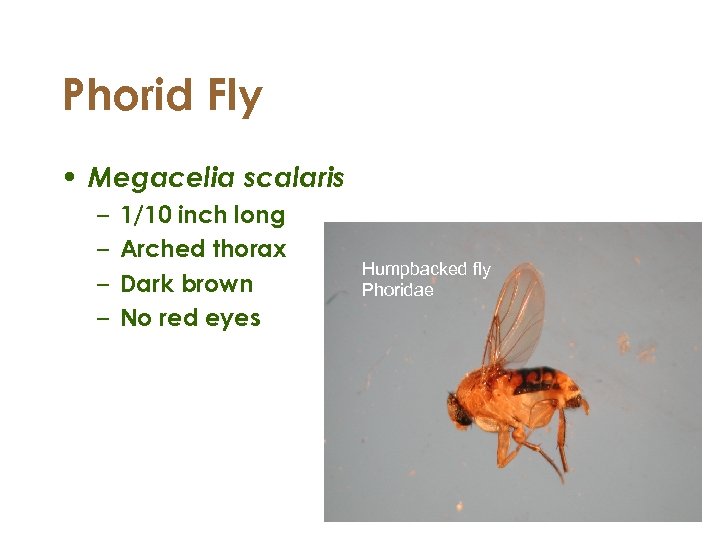
Phorid Fly • Megacelia scalaris – – 1/10 inch long Arched thorax Dark brown No red eyes Humpbacked fly Phoridae
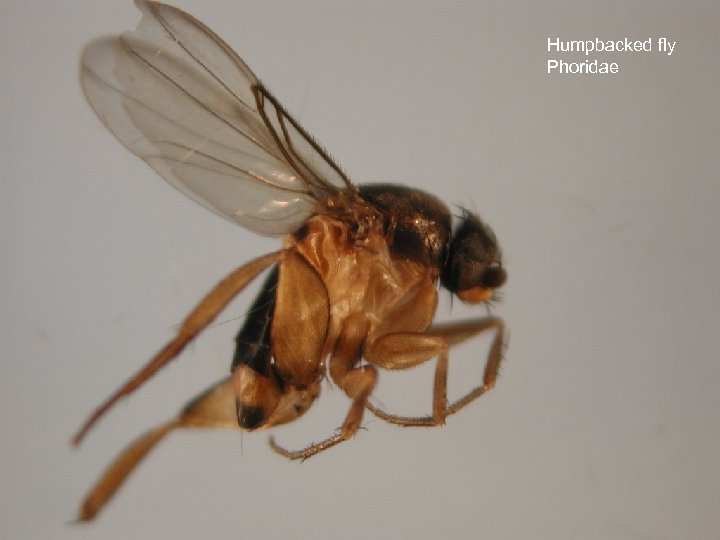
Humpbacked fly Phoridae
Phorid Fly • Life Cycle • 14 -37 days • Eggs laid on surface of DOM – 40 eggs over 12 hr period – Hatch after 24 hrs • Larvae feed on moist DOM – 9 -16 days • Pupate in dry areas close to food
Phorid Flies • Various Breeding Sites • Decomposing plants or animals • Organically enriched soil under slab • Dirty floor drains, disposals, drip pans • Trash containers • Crevices at base of kitchen equipment • Potted plants, terrariums • Feces • Cadavers
Phorid Flies • Inspections • Need to be very thorough • Often multiple breeding sites • Masking tape method for drains and slabs
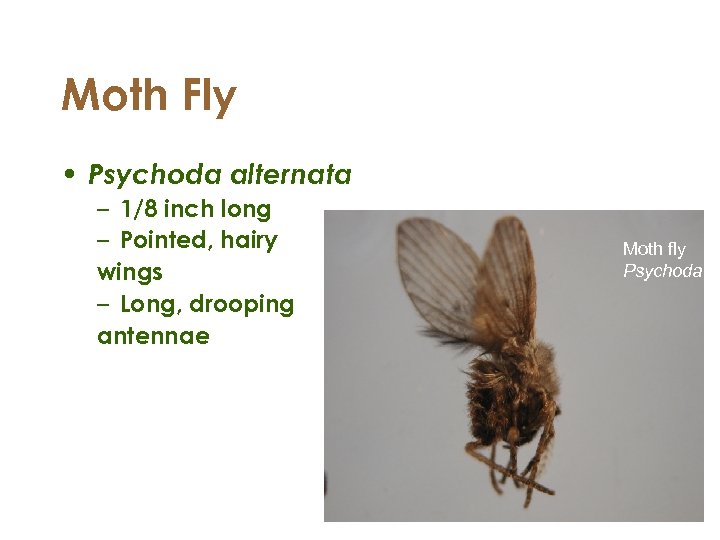
Moth Fly • Psychoda alternata – 1/8 inch long – Pointed, hairy wings – Long, drooping antennae Moth fly Psychoda sp
Moth Fly • Life Cycle • 8 -24 days • Eggs laid on gelatinous lining or moist DOM – 30 -100 eggs per female – Hatch after 48 hrs • Larvae feed on algae, bacteria, sludge in gelatinous film – Utilize breathing tube – 10 -15 days • Pupate for short period
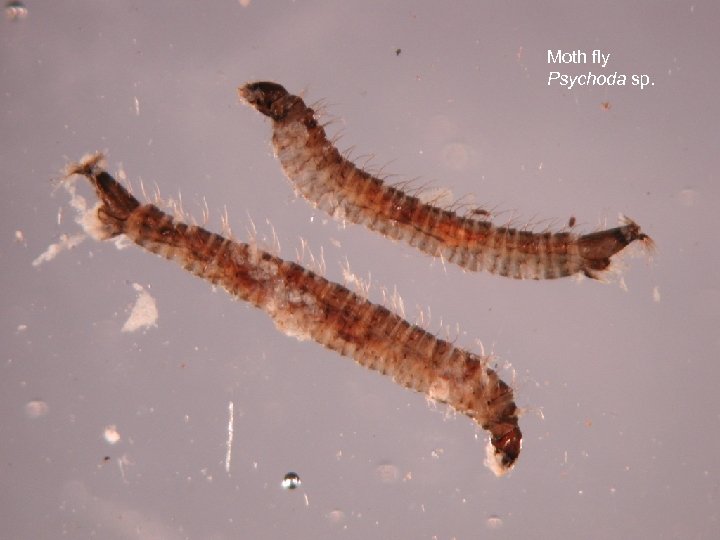
Moth fly Psychoda sp.
Moth Fly • Breeding sites • Gelatinous organic matter • Sink/sewer drains, sump pumps • Shower pans • Porta potties • Mops, brooms • Crawlspaces • Sewers/sewage treatment nearby
Moth Fly • Inspections • Strongly attracted to light • Masking tape method for drains • Check spider webs in crawlspaces • Drill holes in wall behind shower pan (light)
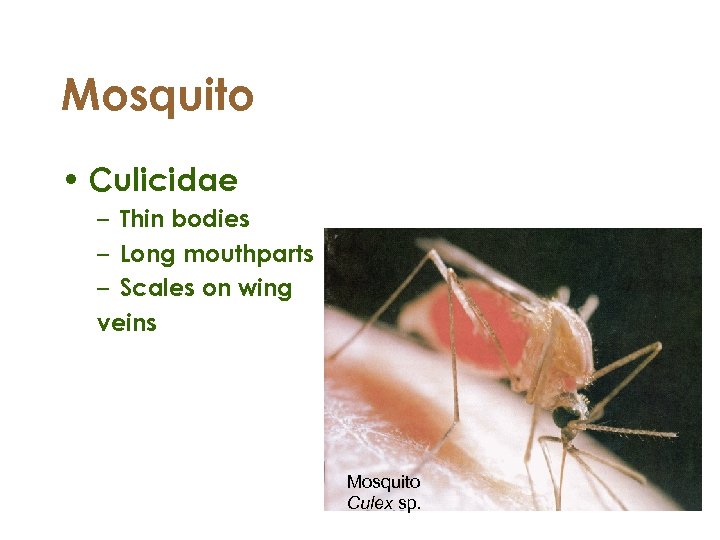
Mosquito • Culicidae – Thin bodies – Long mouthparts – Scales on wing veins Mosquito Culex sp.
Mosquito • Life Cycle • Eggs laid singly or in rafts – Hundreds of eggs per female – Female generally needs blood to make eggs • Larvae live suspended from water surface – Breathe through air tube on rear end – Move about by wiggling – Feed on algae, bacteria, organic debris • Pupae breathe through horns on head
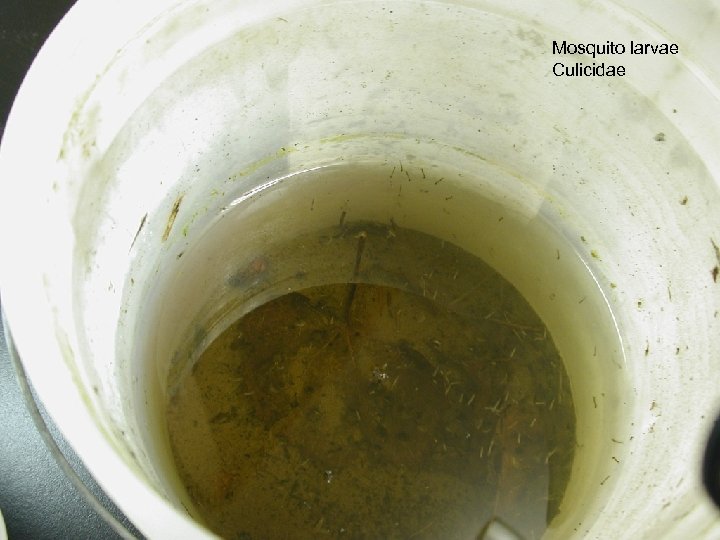
Mosquito larvae Culicidae
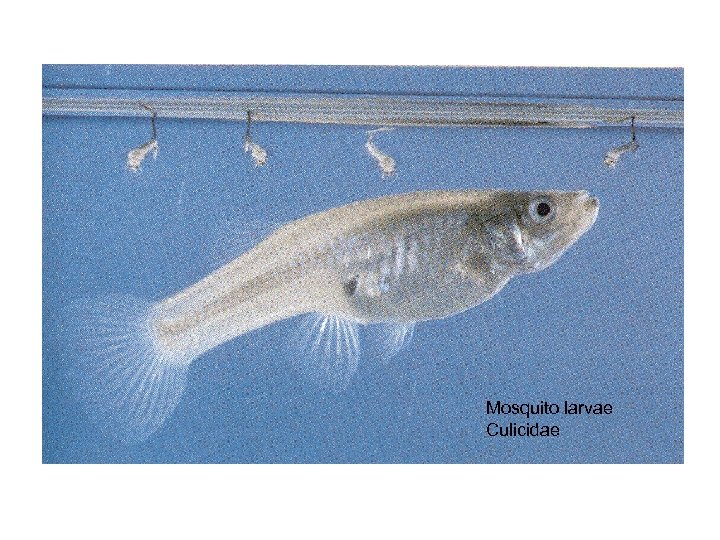
Mosquito larvae Culicidae
Mosquito • Breeding Sites • Ponds, lakes, ditches • Culverts, manholes • Bird baths, gutters • Pots, cans, buckets, other containers • Old tires • Inspections • Breeding sites for larvae • Vegetation around structure for adults

Filth Flies
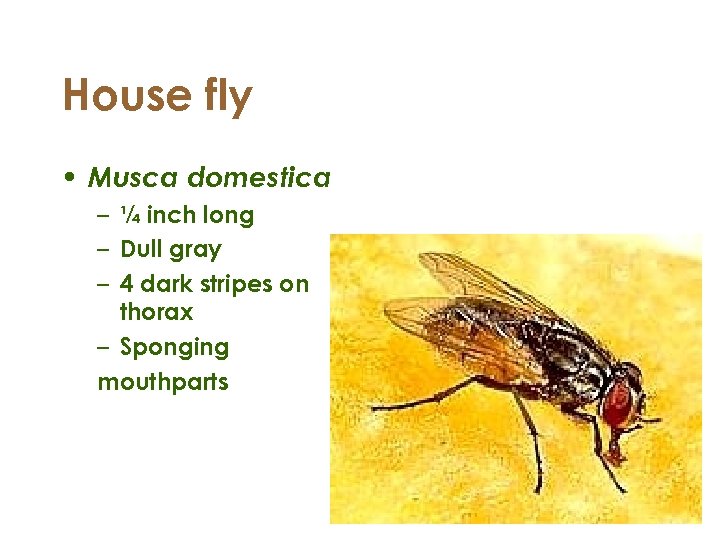
House fly • Musca domestica – ¼ inch long – Dull gray – 4 dark stripes on thorax – Sponging mouthparts
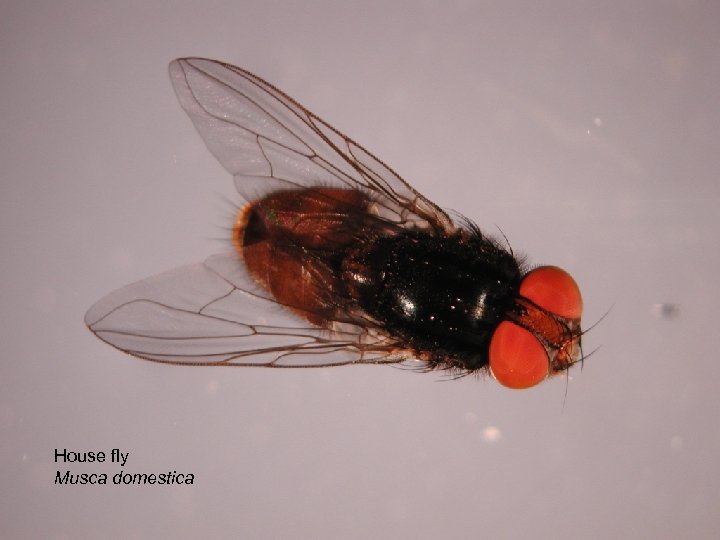
House fly Musca domestica
House Fly • Life Cycle • 6 -10 days • Eggs laid on fresh feces or garbage – 750 -900 eggs per female • Larvae burrow into food material to feed – 6 -8 days – May migrate several hundred feet from feeding site • Pupate for short period
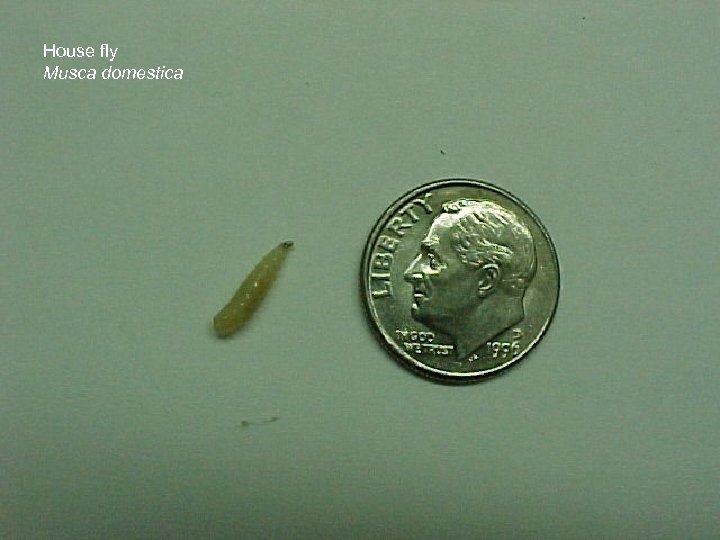
House fly Musca domestica
House fly • Breeding sites • Wet garbage • Manure • Rotting grains • Inspections • Focus outdoors primarily • Pet manure areas • Trash bins, decaying fruits/vegetables
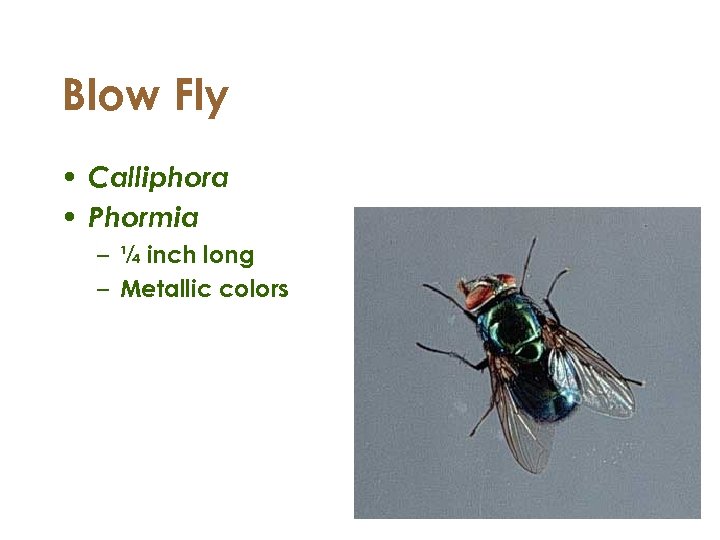
Blow Fly • Calliphora • Phormia – ¼ inch long – Metallic colors
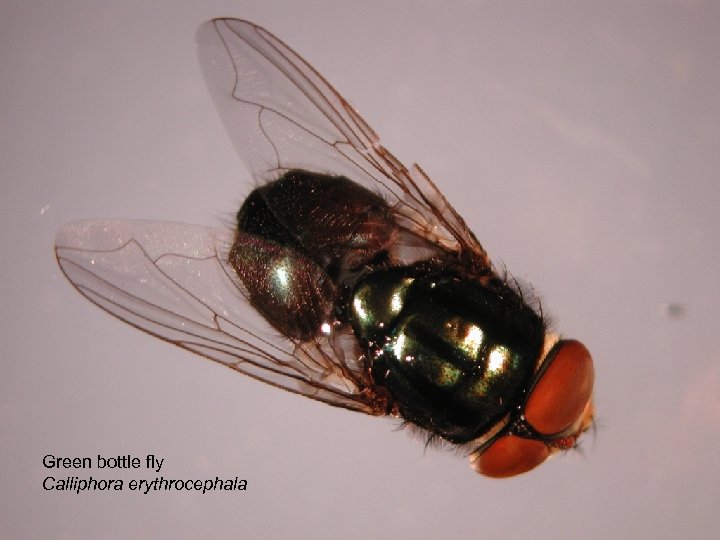
Green bottle fly Calliphora erythrocephala
Blow Fly • Life Cycle • 4 -12 days • Eggs laid on carcasses, feces, garbage – 180 eggs per time (2400 total) – Hatch after 8 hrs • Larvae burrow into food material – Feed for 2 -7 days – Crawl short distance from food – Burrow into soil to pupate • Pupate for 2 -5 days
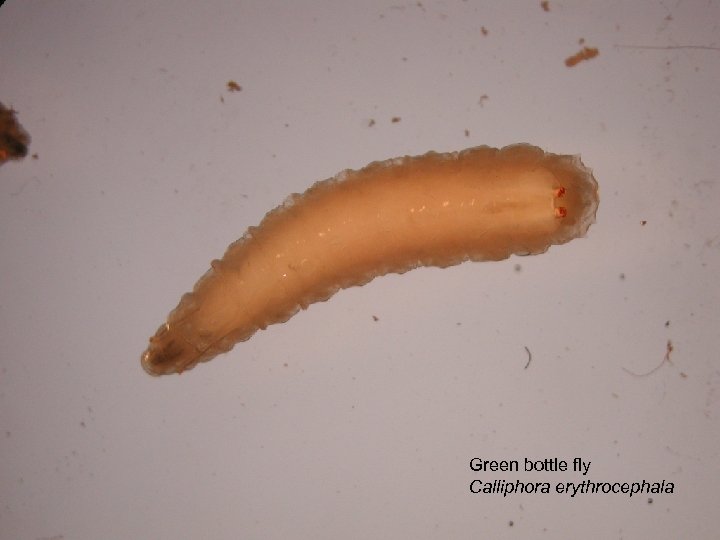
Green bottle fly Calliphora erythrocephala
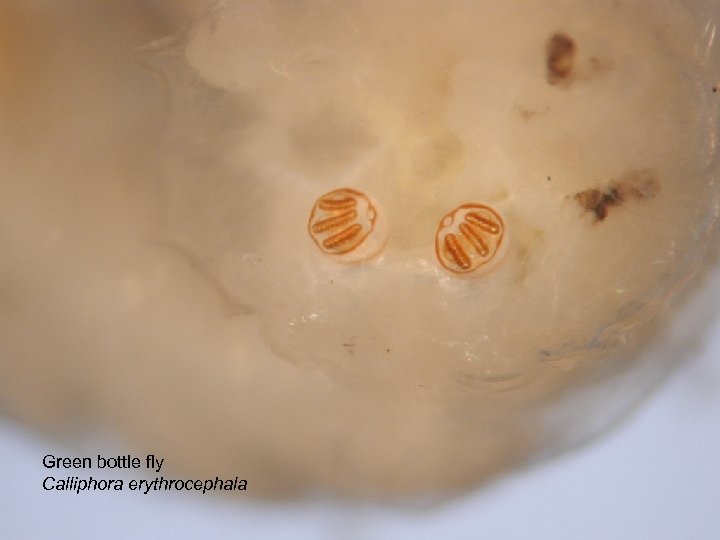
Green bottle fly Calliphora erythrocephala
Blow Fly • Breeding Sites • Dead animals • Feces • Garbage • Inspections • Focus outdoors primarily • Dead animals, trash, feces • Indoors usually result of dead rodent – 180+ flies from a single dead mouse

Nuisance Flies
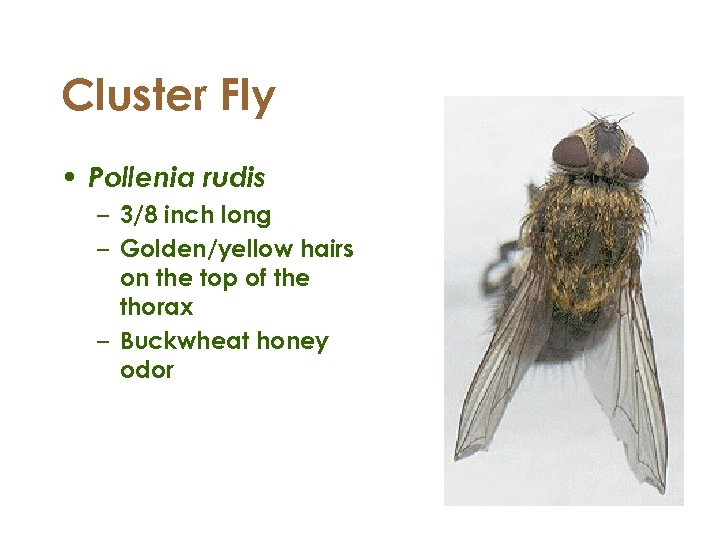
Cluster Fly • Pollenia rudis – 3/8 inch long – Golden/yellow hairs on the top of the thorax – Buckwheat honey odor
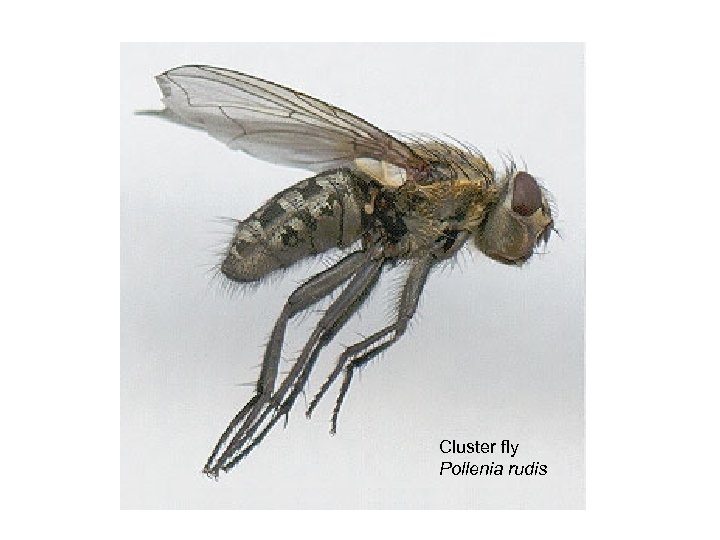
Cluster fly Pollenia rudis
Cluster Fly • Life Cycle • 25 -36 days (Four generations) • Eggs laid in cracks in soil surface – One egg at a time • Larvae locate earthworm – Burrow into worm – Feed for 14 -22 days – Exit earthworm to pupate • Pupate for 11 -14 days
Cluster Fly • Breeding Sites • Lawns and pastures • Inspections • Locate exterior cracks/crevices • South/west surfaces best • Inspect attics/wall voids
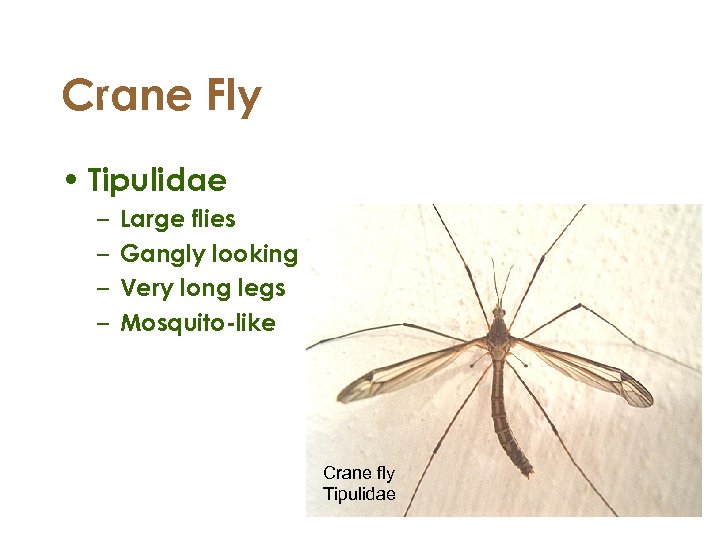
Crane Fly • Tipulidae – – Large flies Gangly looking Very long legs Mosquito-like Crane fly Tipulidae
Crane Fly • Breeding Sites • Damp habitats with abundant vegetation • Inspections • Usually considered occasional invaders • Open doors/windows likely source • Pose no threat indoors • No treatment recommended
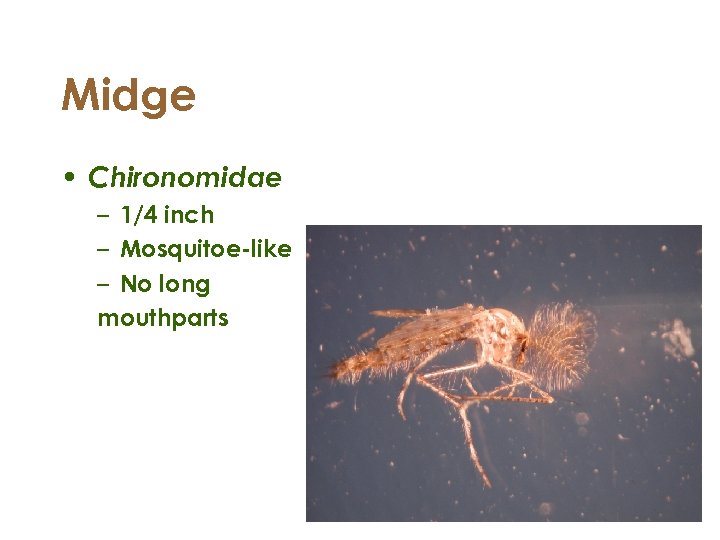
Midge • Chironomidae – 1/4 inch – Mosquitoe-like – No long mouthparts
Midge • Life Cycle • Larvae live in bottom of still water • Breeding sites • Pools, puddles, ponds • Inspections • Strongly attracted to lights • Look inside light fixtures, windowsills
Fly Control • Sanitation – Breeding site elimination • Exclusion – Reduce ability to gain entry • Baits – Food-based – Sex-based
Flies • Feeding – Food is the MOST important motivation • Odors very attractive • Detect over large distances • Locate mates at feeding sites • FEEDING and BREEDING sites
Flies • Sanitation critical • Regularly empty/wash trash cans • Use tightly sealed trash cans • Regularly clean drains • Regular rotation of fresh fruits/veggies
Flies • Temperature – Important attractant at short distances – Prefer low 80’s • Enter from outside during hot days • Attracted to warm walls when cold comes – Exclusion critical
Flies • Light – Many flies are diurnal – UV Usually used to lure into a trap – Not all species attracted equally to UV light • Invaders very attracted • Infesters not attracted as much – Placement is critical • Sex – Males to female pheromones – Used to lure into traps

Contact Info: Dr. Richard M. Houseman Department of Entomology 1 -87 Agriculture Bldg University of Missouri Columbia, MO 65211 housemanr@missouri. edu
Скачать презентацию Household Flies Biology Behavior and Control Dr Richard
4ebc148777677d92813881a100f55cd0.ppt