 Скачать презентацию HONESTY IS THE FIRST CHAPTER OF THE BOOK
3956ceb2ec6aea842b4ef212e7a26cb7.ppt
- Количество слайдов: 28



HONESTY IS THE FIRST CHAPTER OF THE BOOK OF WISDOM. THOMAS JEFFERSON
BUDAPESTI GAZDASÁGI FŐISKOLA INTERNATIONAL MARKETING LECTURE- 6 In English 6 th April 2012 – FRIDAY 0940 hr – 1110 hr (E. F. 13 -15) Miklós (Nicholas) SOÓS 0630 265 9638 miklosoos@hotmail. com somi
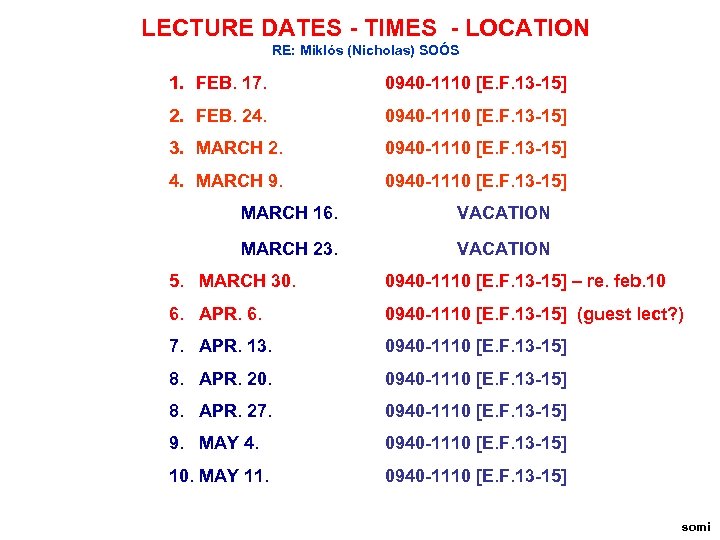
LECTURE DATES - TIMES - LOCATION RE: Miklós (Nicholas) SOÓS 1. FEB. 17. 0940 -1110 [E. F. 13 -15] 2. FEB. 24. 0940 -1110 [E. F. 13 -15] 3. MARCH 2. 0940 -1110 [E. F. 13 -15] 4. MARCH 9. 0940 -1110 [E. F. 13 -15] MARCH 16. VACATION MARCH 23. VACATION 5. MARCH 30. 0940 -1110 [E. F. 13 -15] – re. feb. 10 6. APR. 6. 0940 -1110 [E. F. 13 -15] (guest lect? ) 7. APR. 13. 0940 -1110 [E. F. 13 -15] 8. APR. 20. 0940 -1110 [E. F. 13 -15] 8. APR. 27. 0940 -1110 [E. F. 13 -15] 9. MAY 4. 0940 -1110 [E. F. 13 -15] 10. MAY 11. 0940 -1110 [E. F. 13 -15] somi
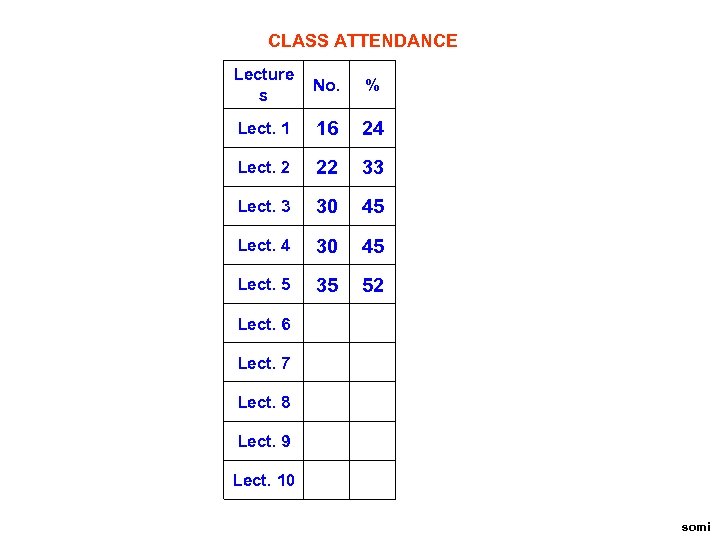
CLASS ATTENDANCE Lecture s No. % Lect. 1 16 24 Lect. 2 22 33 Lect. 3 30 45 Lect. 4 30 45 Lect. 5 35 52 Lect. 6 Lect. 7 Lect. 8 Lect. 9 Lect. 10 somi
Please ensure that you personally sign the attendance sheet every time you attend a lecture. somi
The visual contents of lectures will be available internally on the following site: K: HallgatokANGOLSoós tanár úr (available internally only) somi
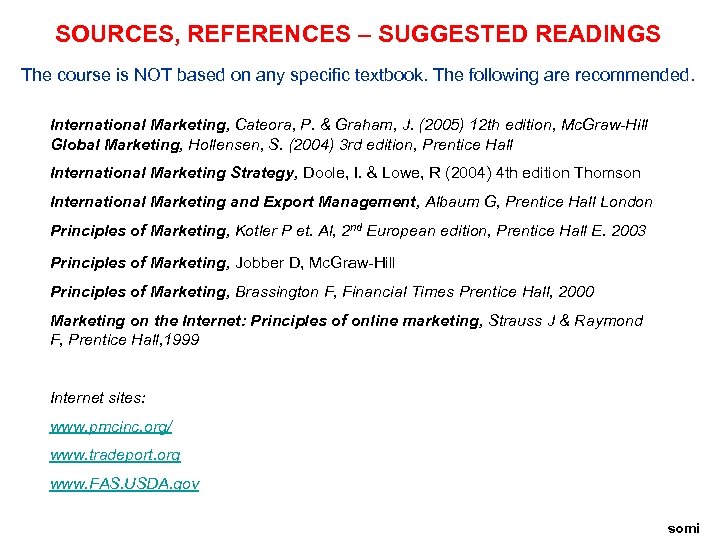
SOURCES, REFERENCES – SUGGESTED READINGS The course is NOT based on any specific textbook. The following are recommended. International Marketing, Cateora, P. & Graham, J. (2005) 12 th edition, Mc. Graw-Hill Global Marketing, Hollensen, S. (2004) 3 rd edition, Prentice Hall International Marketing Strategy, Doole, I. & Lowe, R (2004) 4 th edition Thomson International Marketing and Export Management, Albaum G, Prentice Hall London Principles of Marketing, Kotler P et. Al, 2 nd European edition, Prentice Hall E. 2003 Principles of Marketing, Jobber D, Mc. Graw-Hill Principles of Marketing, Brassington F, Financial Times Prentice Hall, 2000 Marketing on the Internet: Principles of online marketing, Strauss J & Raymond F, Prentice Hall, 1999 Internet sites: www. pmcinc. org/ www. tradeport. org www. FAS. USDA. gov somi
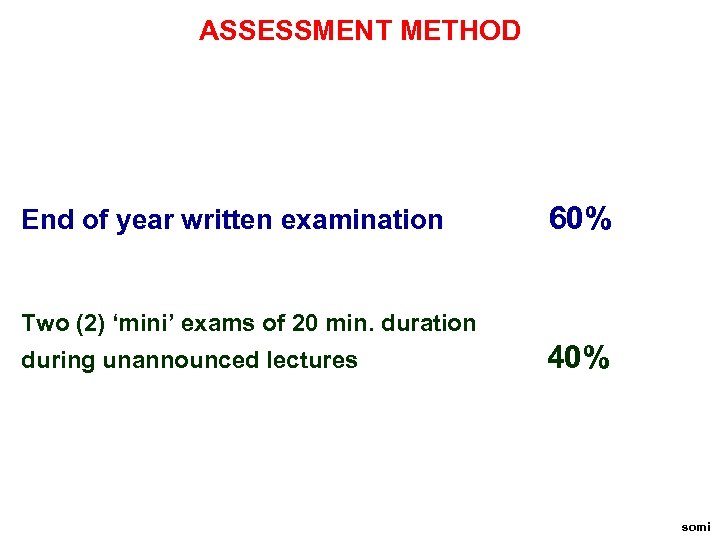
ASSESSMENT METHOD End of year written examination 60% Two (2) ‘mini’ exams of 20 min. duration during unannounced lectures 40% somi
Where we finished last week. somi
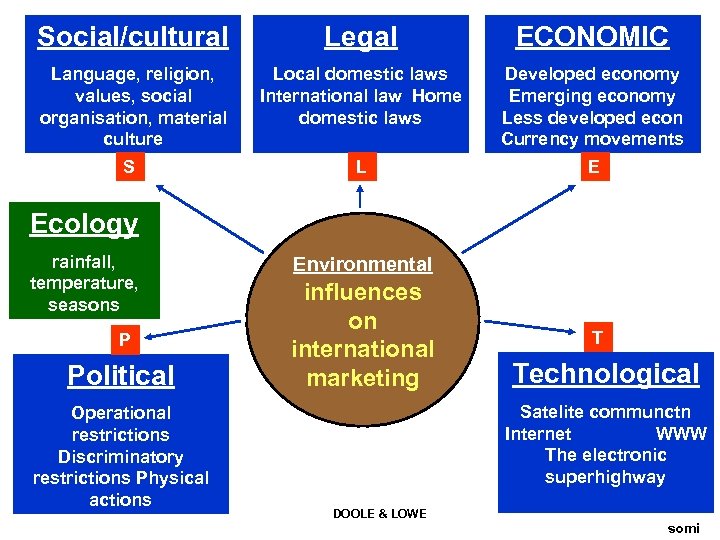
Social/cultural Legal ECONOMIC Language, religion, values, social organisation, material culture Local domestic laws International law Home domestic laws Developed economy Emerging economy Less developed econ Currency movements L E S Ecology rainfall, temperature, seasons P Political Operational restrictions Discriminatory restrictions Physical actions Environmental influences on international marketing T Technological Satelite communctn Internet WWW The electronic superhighway DOOLE & LOWE somi
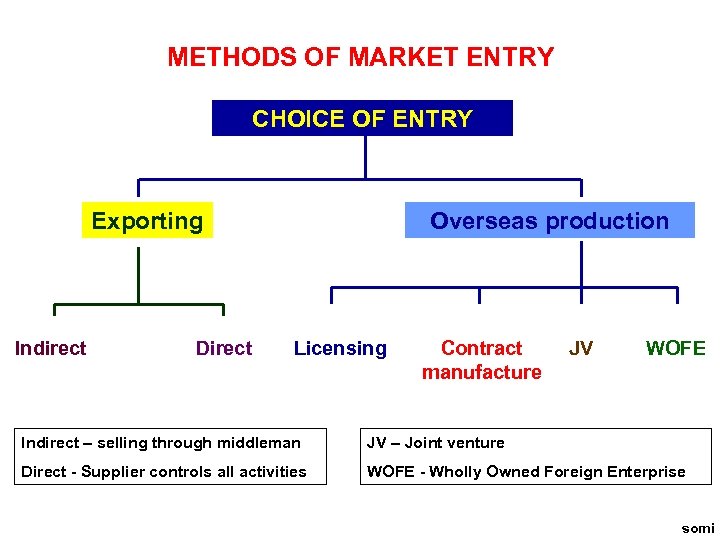
METHODS OF MARKET ENTRY CHOICE OF ENTRY Exporting Indirect Direct Overseas production Licensing Contract manufacture JV WOFE Indirect – selling through middleman JV – Joint venture Direct - Supplier controls all activities WOFE - Wholly Owned Foreign Enterprise somi
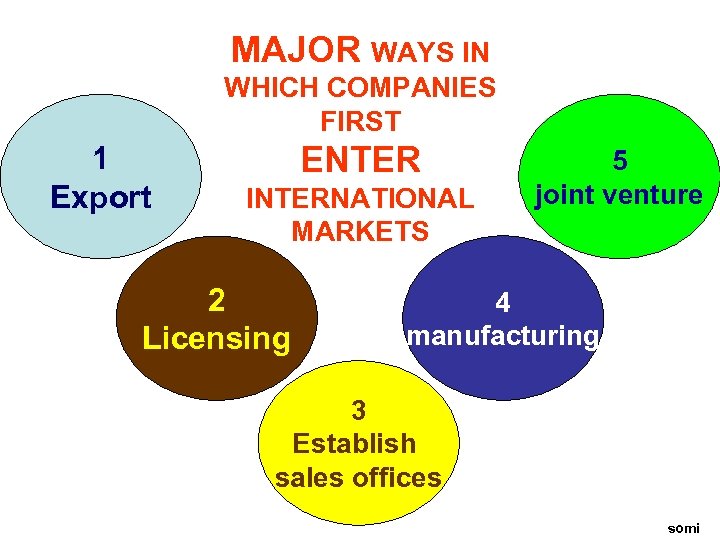
MAJOR WAYS IN WHICH COMPANIES FIRST 1 Export ENTER INTERNATIONAL MARKETS 2 Licensing 5 joint venture 4 manufacturing 3 Establish sales offices somi
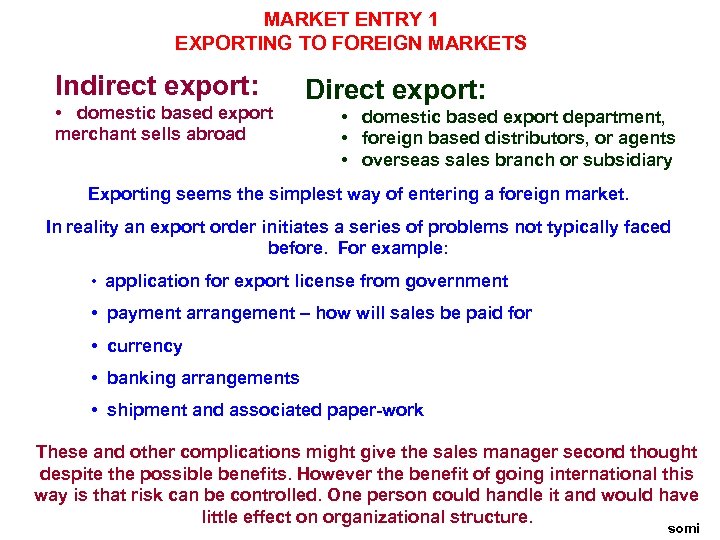
MARKET ENTRY 1 EXPORTING TO FOREIGN MARKETS Indirect export: • domestic based export merchant sells abroad Direct export: • domestic based export department, • foreign based distributors, or agents • overseas sales branch or subsidiary Exporting seems the simplest way of entering a foreign market. In reality an export order initiates a series of problems not typically faced before. For example: • application for export license from government • payment arrangement – how will sales be paid for • currency • banking arrangements • shipment and associated paper-work These and other complications might give the sales manager second thought despite the possible benefits. However the benefit of going international this way is that risk can be controlled. One person could handle it and would have little effect on organizational structure. somi
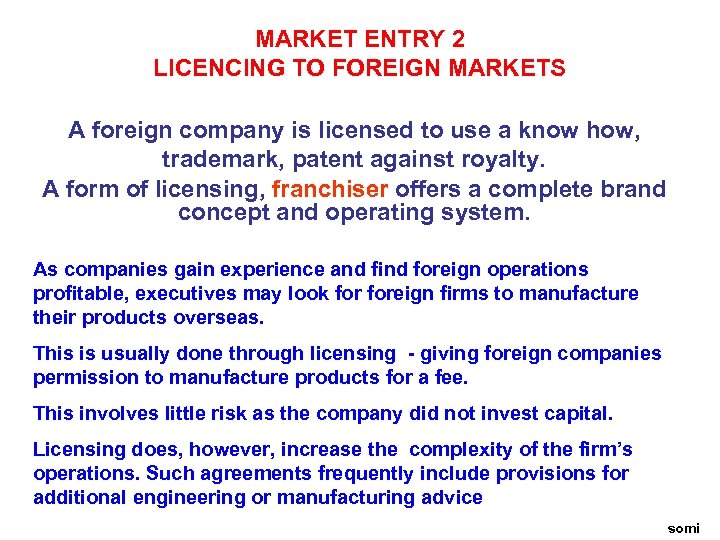
MARKET ENTRY 2 LICENCING TO FOREIGN MARKETS A foreign company is licensed to use a know how, trademark, patent against royalty. A form of licensing, franchiser offers a complete brand concept and operating system. As companies gain experience and find foreign operations profitable, executives may look foreign firms to manufacture their products overseas. This is usually done through licensing - giving foreign companies permission to manufacture products for a fee. This involves little risk as the company did not invest capital. Licensing does, however, increase the complexity of the firm’s operations. Such agreements frequently include provisions for additional engineering or manufacturing advice somi
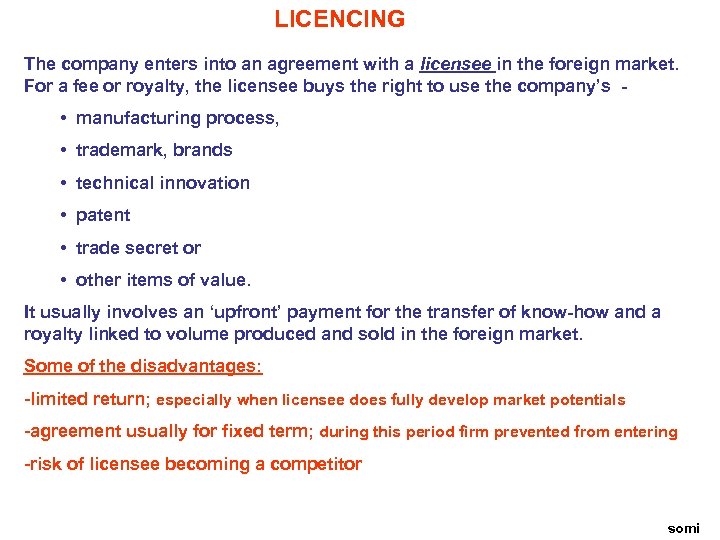
LICENCING The company enters into an agreement with a licensee in the foreign market. For a fee or royalty, the licensee buys the right to use the company’s - • manufacturing process, • trademark, brands • technical innovation • patent • trade secret or • other items of value. It usually involves an ‘upfront’ payment for the transfer of know-how and a royalty linked to volume produced and sold in the foreign market. Some of the disadvantages: -limited return; especially when licensee does fully develop market potentials -agreement usually for fixed term; during this period firm prevented from entering -risk of licensee becoming a competitor somi
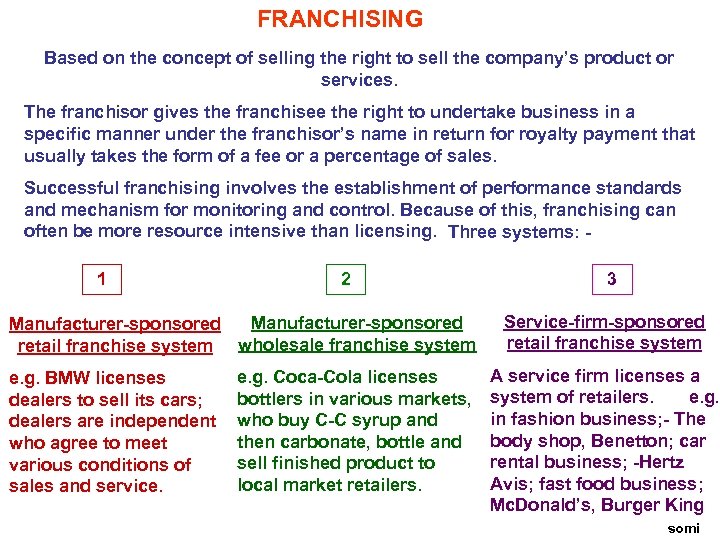
FRANCHISING Based on the concept of selling the right to sell the company’s product or services. The franchisor gives the franchisee the right to undertake business in a specific manner under the franchisor’s name in return for royalty payment that usually takes the form of a fee or a percentage of sales. Successful franchising involves the establishment of performance standards and mechanism for monitoring and control. Because of this, franchising can often be more resource intensive than licensing. Three systems: - 1 2 Manufacturer-sponsored retail franchise system wholesale franchise system e. g. BMW licenses dealers to sell its cars; dealers are independent who agree to meet various conditions of sales and service. e. g. Coca-Cola licenses bottlers in various markets, who buy C-C syrup and then carbonate, bottle and sell finished product to local market retailers. 3 Service-firm-sponsored retail franchise system A service firm licenses a system of retailers. e. g. in fashion business; - The body shop, Benetton; car rental business; -Hertz Avis; fast food business; Mc. Donald’s, Burger King somi
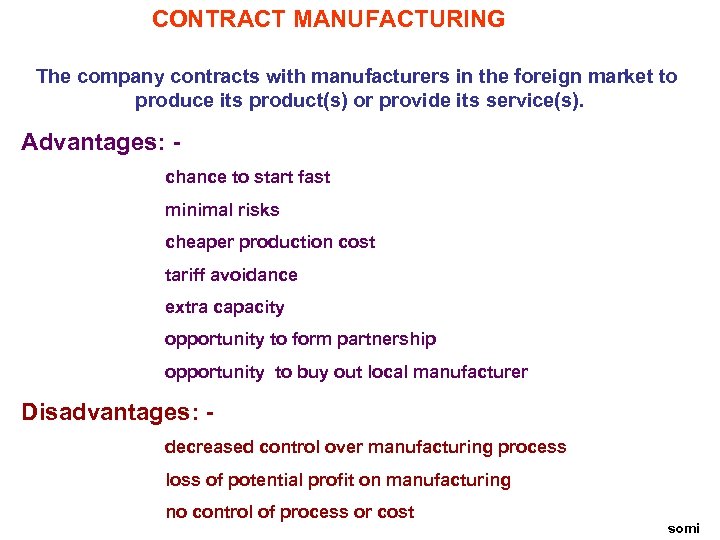
CONTRACT MANUFACTURING The company contracts with manufacturers in the foreign market to produce its product(s) or provide its service(s). Advantages: - chance to start fast minimal risks cheaper production cost tariff avoidance extra capacity opportunity to form partnership opportunity to buy out local manufacturer Disadvantages: decreased control over manufacturing process loss of potential profit on manufacturing no control of process or cost somi
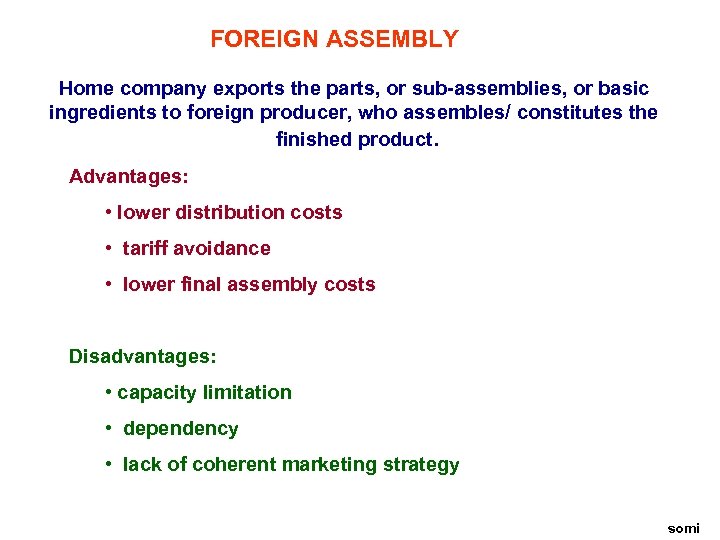
FOREIGN ASSEMBLY Home company exports the parts, or sub-assemblies, or basic ingredients to foreign producer, who assembles/ constitutes the finished product. Advantages: • lower distribution costs • tariff avoidance • lower final assembly costs Disadvantages: • capacity limitation • dependency • lack of coherent marketing strategy somi
MANAGEMENT CONTRACTING The firm supplies management knowhow to a foreign company that supplies the capital. The domestic firm exports management rather than products. It is a low risk method of getting into a foreign market, and yields income from the beginning. somi
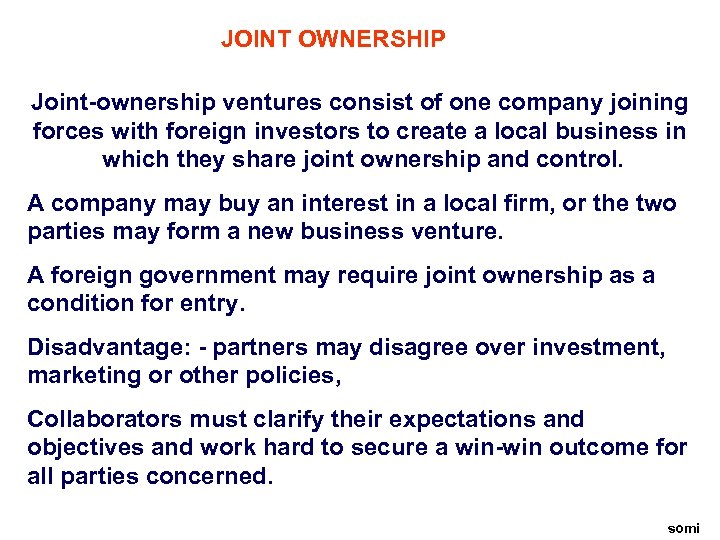
JOINT OWNERSHIP Joint-ownership ventures consist of one company joining forces with foreign investors to create a local business in which they share joint ownership and control. A company may buy an interest in a local firm, or the two parties may form a new business venture. A foreign government may require joint ownership as a condition for entry. Disadvantage: - partners may disagree over investment, marketing or other policies, Collaborators must clarify their expectations and objectives and work hard to secure a win-win outcome for all parties concerned. somi
FULL OWNERSHIP Home company acquires a foreign company or develops a new company in a foreign market on a “green-field” basis. Advantages of total control; Disadvantages of “foreign” perception, increased risk. Acquisition is usually a better alternative. somi
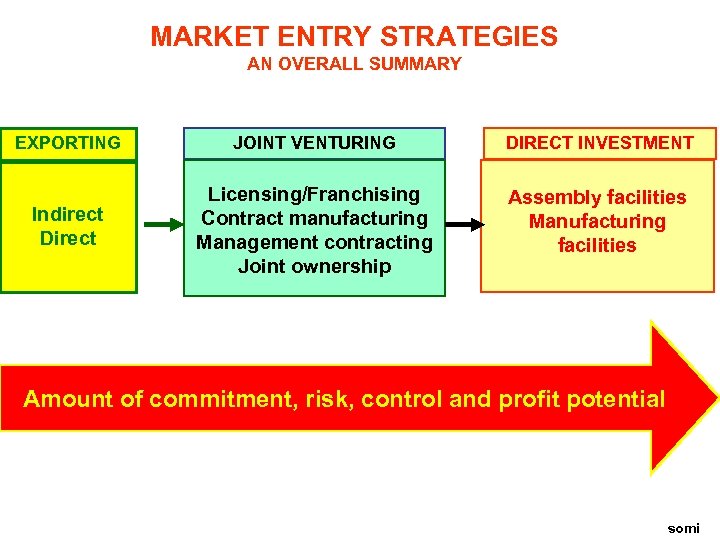
MARKET ENTRY STRATEGIES AN OVERALL SUMMARY EXPORTING Indirect Direct JOINT VENTURING DIRECT INVESTMENT Licensing/Franchising Assembly facilities Contract manufacturing Management contracting facilities Joint ownership Amount of commitment, risk, control and profit potential somi
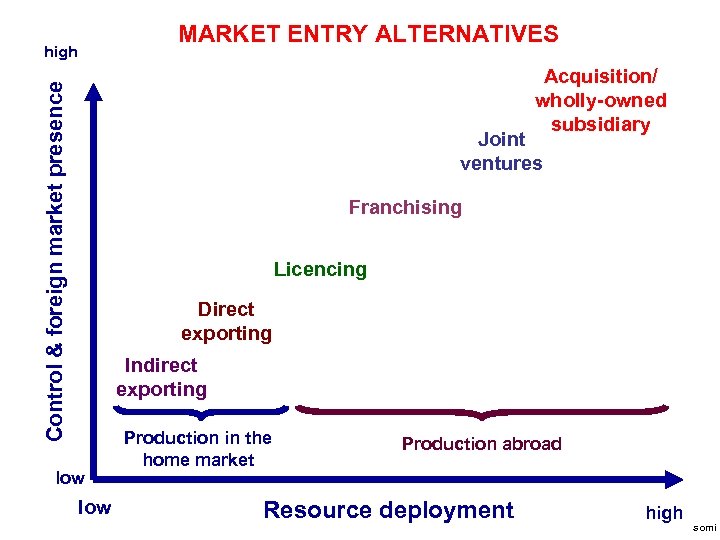
MARKET ENTRY ALTERNATIVES high Control & foreign market presence Acquisition/ wholly-owned subsidiary Joint ventures Franchising Licencing Direct exporting Indirect exporting low Production in the home market Production abroad Resource deployment high somi
THE REALITY OF INTERNATIONAL MARKETING - TO RE-ENFORCE THE BACKGROUND - Since foreign market entry is often quite accidental, firms frequently lack experienced international managers, and decisions are made haphazardly. IMPORTANT QUESTIONS: Who in the organization should have responsibility for international operation? Where within the organization should this individual be placed? As the company gains experience & international sales increase, decisions are continually reviewed and revised. The basic objective of these alterations is to allow for adjustments to the need of the marketplace & at the same time keeping international activities coordinated with the company’s other activities. somi
ISSUES RELATING TO THE DESIGN OF INTERNATIONAL ORGANISATION 1. Where in the domestic or head office operations should responsibility foreign activities be placed? 2. What are the legal requirements for operating in the selected foreign market? 3. What relationship should exist between foreign and domestic operations, and what organizational arrangements need to be made to assure that this relationship is maintained? somi
COMPLEXITY FACTORS THAT ADD TO INTERNATIONAL OPERATIONS • Much wider differences in cultures exist between countries than within even diverse nations such as USA or Australia. • Physical distances between countries can make communications and corporate control more difficult. • Obvious language differences • Business practices and customs vary in unfamiliar ways among countries. • Differences between currency (money) increases financial risk for international companies, demanding more care. • Many companies lack experience in dealing with foreign customers and firms. somi
STEPS AND STRATEGIES OF GOING INTERNATIONAL Most often, there are no rigid organizational patterns or guidelines that guarantee success on the international market. Businesses, even those in same line of activities, differ in their approach to organization. The organizational structure of a company evolves as its interest and experience broaden and especially as the volume, significance, and complexity of international operations increase. Firms with major international divisions usually arrive at this stage of development through a process of trail and error or through gradual growth. Managers want to benefit from international opportunities BUT at the same time they want to have foreign operations tightly coordinated with the domestic side. Most companies go through certain stages as they evolve in international business – moving from simplest to more complex patterns of involvement. somi
CHOOSE A JOB YOU LOVE AND YOU WILL NEVER HAVE TO WORK IN YOUR LIFE. CONFUCIUS Somi
Скачать презентацию HONESTY IS THE FIRST CHAPTER OF THE BOOK
3956ceb2ec6aea842b4ef212e7a26cb7.ppt