


 Скачать презентацию Homelessness and Health Stephen Hwang MD MPH email
454acd2a73564d98359a00dec6f03c0a.ppt
- Количество слайдов: 31
 Homelessness and Health Stephen Hwang, MD, MPH email: hwangs@smh. ca Centre for Research on Inner City Health, St. Michael’s Hospital, Toronto, Canada Division of General Internal Medicine, University of Toronto 2010 1
 Homelessness: A Case Study • • • 53 year old man – “Micah” Came to Canada on a visitor’s visa 18 years ago & never left Worked full-time as a cook at restaurant, lived in basement apt. Drank alcohol Never used illicit drugs No mental illness 2
 Case Study: Micah • • • Diabetes – treated with oral meds No health insurance – self-pay for doctor’s visits and meds Stopped getting regular medical care, went off meds June – Gangrene in left foot July – Admitted to hospital – Left foot amputated 3
 Case Study: Micah • • Lost his basement apartment because unable to work, not eligible for benefits, no money to pay rent, no wheelchair access to apartment Discharged from hospital to homeless shelter No home care arranged “Follow-up with Dr. C. after insurance issues are settled” 4
 Case Study: Micah • • Seen at shelter clinic 6 days later – amputation site infected Admitted to hospital for 12 days for intravenous antibiotics With close follow-up, wound eventually healed 4 years later, Micah still lives at a shelter 5
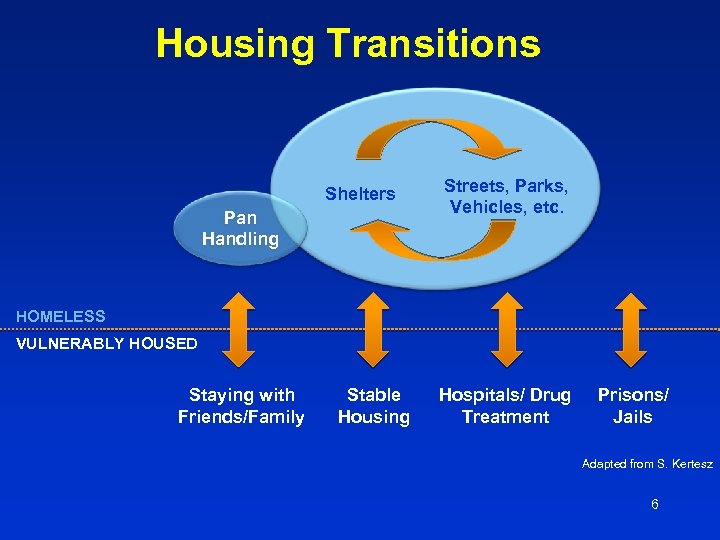 Housing Transitions Shelters Pan Handling Streets, Parks, Vehicles, etc. HOMELESS VULNERABLY HOUSED Staying with Friends/Family Stable Housing Hospitals/ Drug Treatment Prisons/ Jails Adapted from S. Kertesz 6
 Homelessness in the U. S. • • More than 800, 000 individuals currently homeless About 5 -8 million Americans have experienced homelessness within the last five years 7
 Homelessness in Canada • • 2002 Telephone survey 7. 5% homeless in their lifetime 2% homeless in the last 5 years Extrapolates to 500, 000 Canadians homeless over last 5 years 8
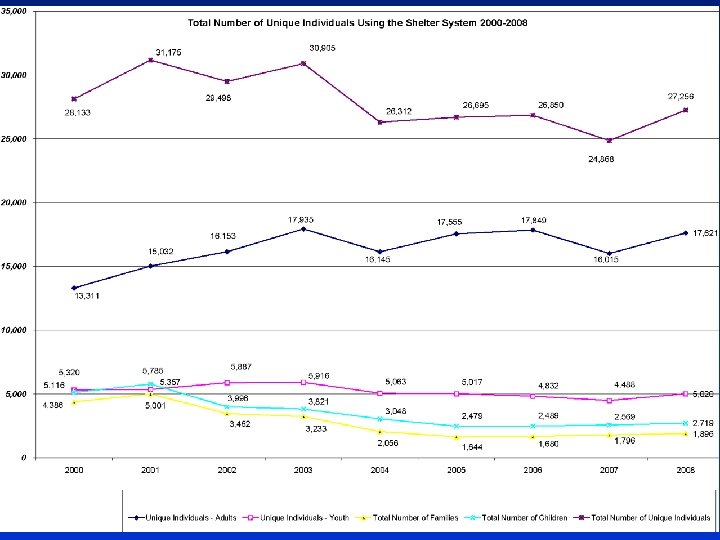
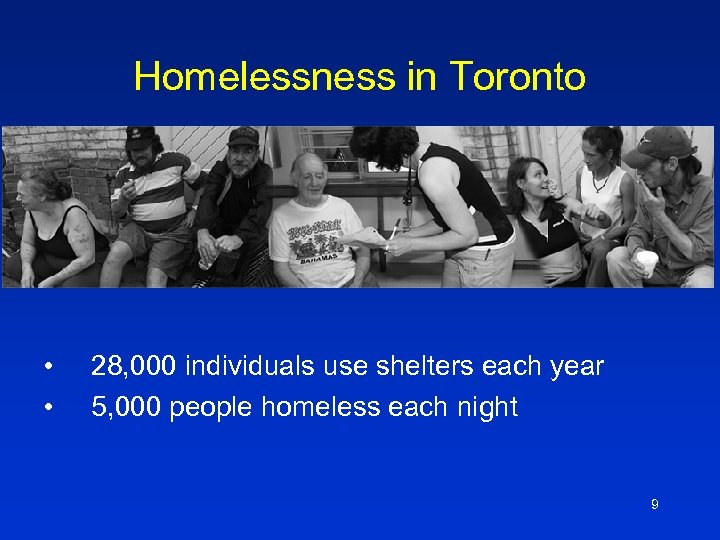 Homelessness in Toronto • • 28, 000 individuals use shelters each year 5, 000 people homeless each night 9
 10
10
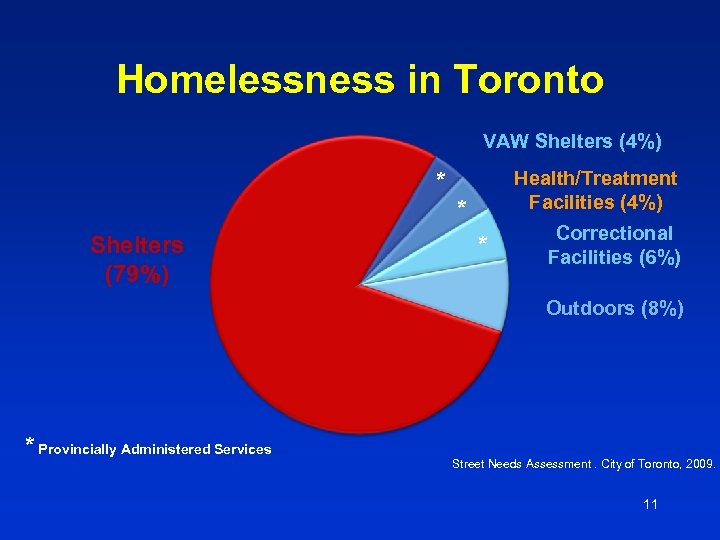 Homelessness in Toronto VAW Shelters (4%) Health/Treatment Facilities (4%) * * Shelters (79%) * Correctional Facilities (6%) Outdoors (8%) * Provincially Administered Services Street Needs Assessment. City of Toronto, 2009. 11
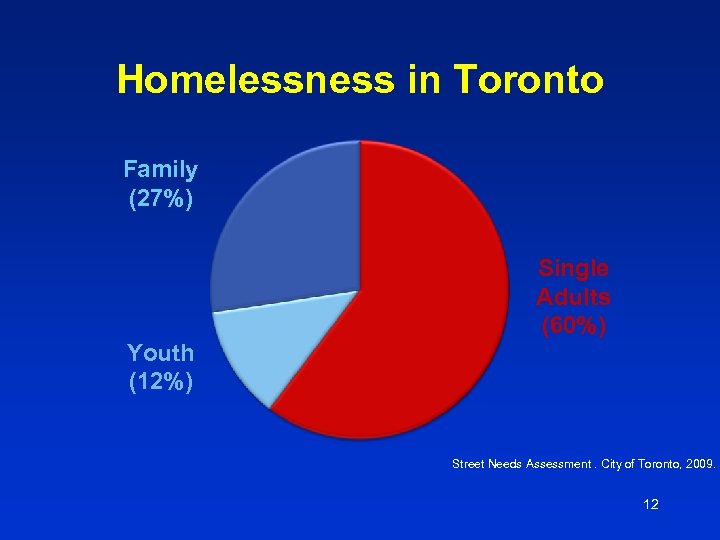 Homelessness in Toronto Family (27%) Single Adults (60%) Youth (12%) Street Needs Assessment. City of Toronto, 2009. 12
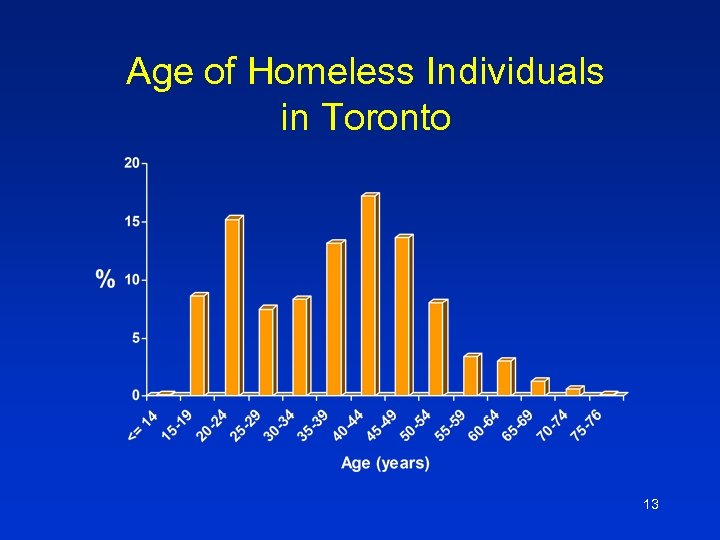 Age of Homeless Individuals in Toronto 13
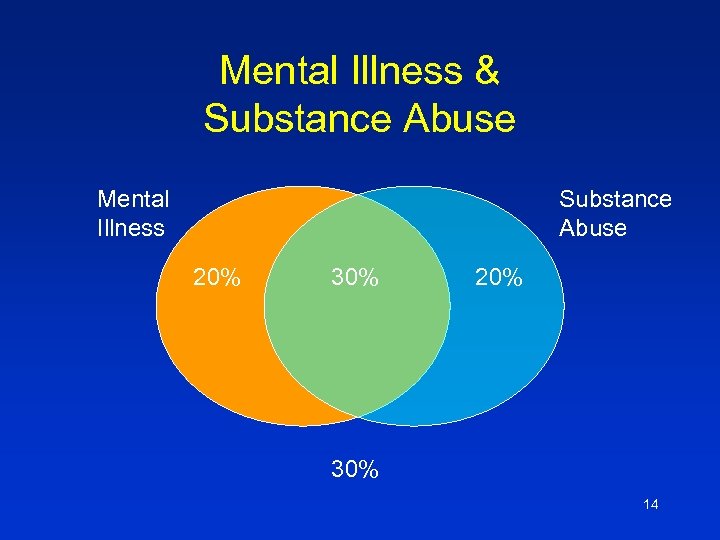 Mental Illness & Substance Abuse Mental Illness Substance Abuse 20% 30% 14
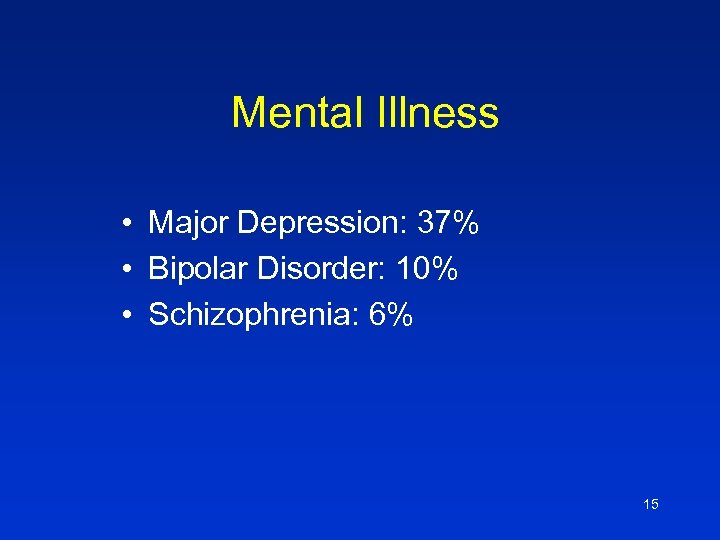 Mental Illness • Major Depression: 37% • Bipolar Disorder: 10% • Schizophrenia: 6% 15
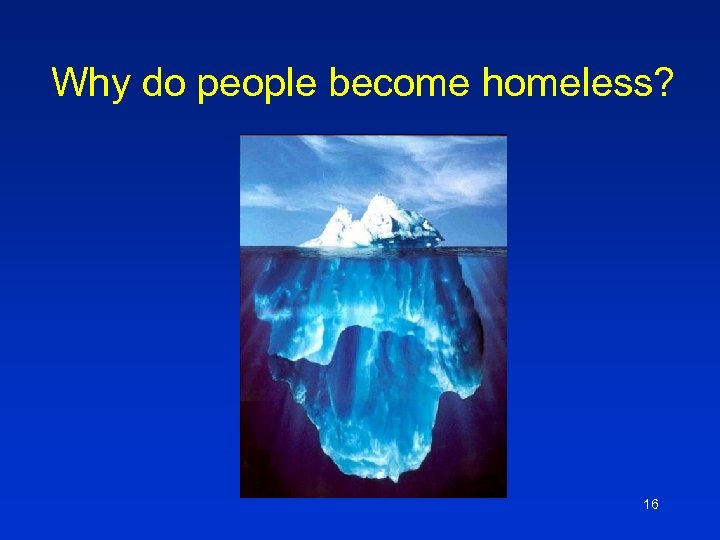 Why do people become homeless? 16
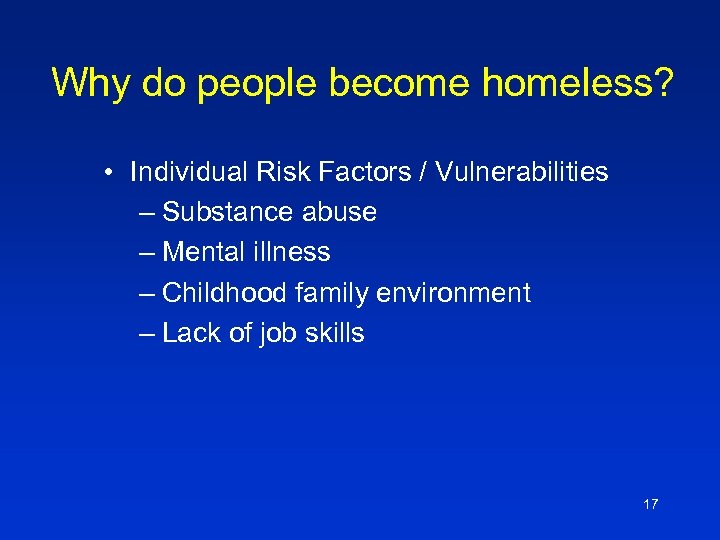 Why do people become homeless? • Individual Risk Factors / Vulnerabilities – Substance abuse – Mental illness – Childhood family environment – Lack of job skills 17
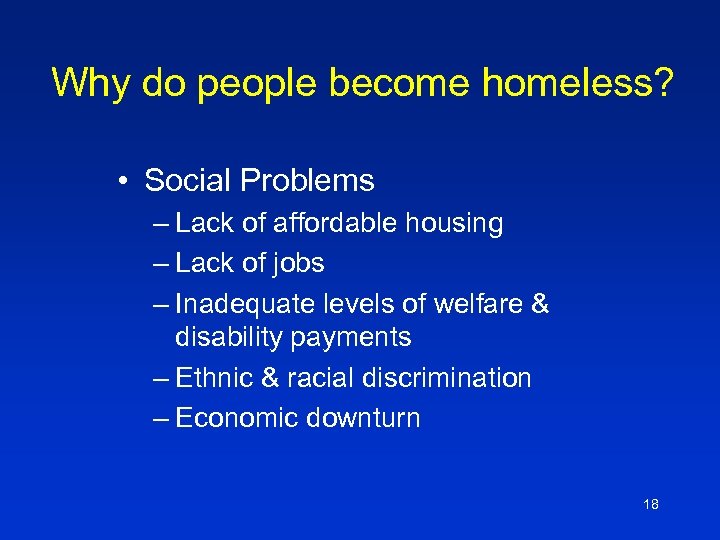 Why do people become homeless? • Social Problems – Lack of affordable housing – Lack of jobs – Inadequate levels of welfare & disability payments – Ethnic & racial discrimination – Economic downturn 18
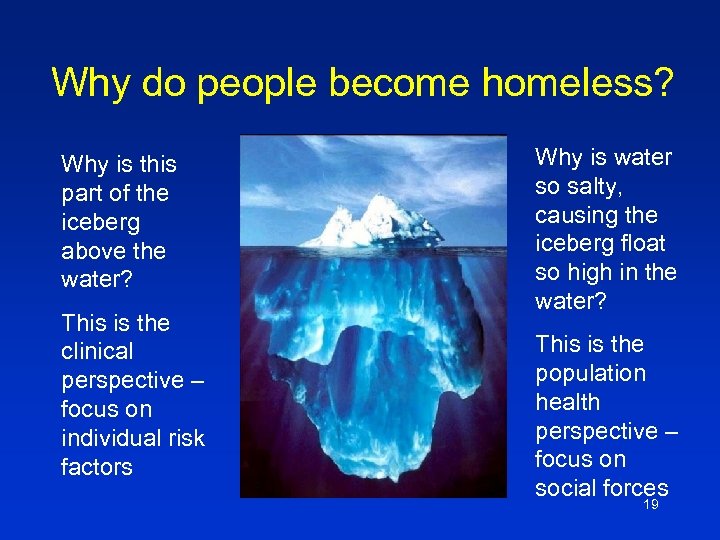 Why do people become homeless? Why is this part of the iceberg above the water? This is the clinical perspective – focus on individual risk factors Why is water so salty, causing the iceberg float so high in the water? This is the population health perspective – focus on social forces 19
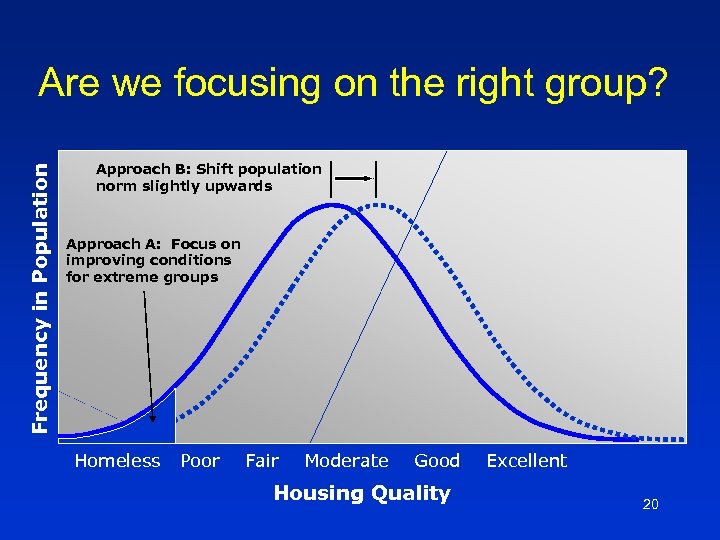 Frequency in Population Are we focusing on the right group? Approach B: Shift population norm slightly upwards Approach A: Focus on improving conditions for extreme groups Homeless Poor Fair Moderate Good Housing Quality Excellent 20
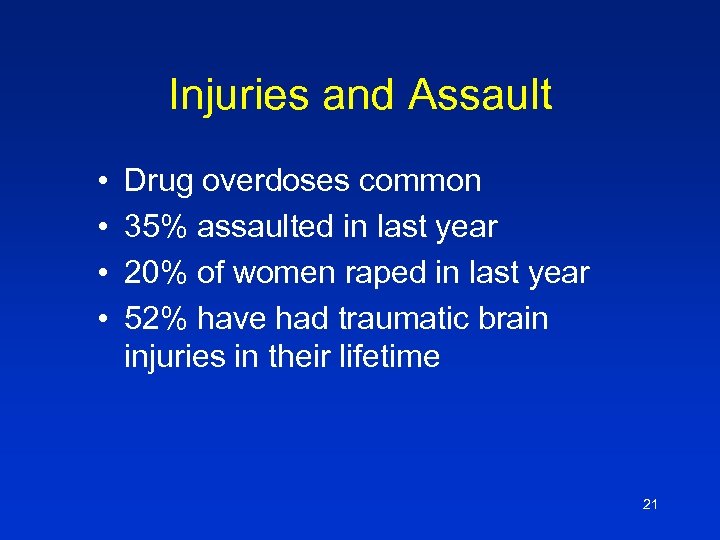 Injuries and Assault • • Drug overdoses common 35% assaulted in last year 20% of women raped in last year 52% have had traumatic brain injuries in their lifetime 21
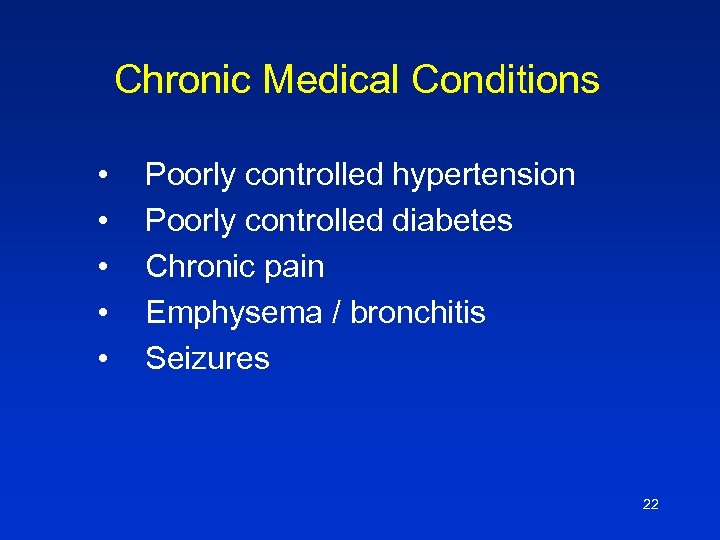 Chronic Medical Conditions • • • Poorly controlled hypertension Poorly controlled diabetes Chronic pain Emphysema / bronchitis Seizures 22
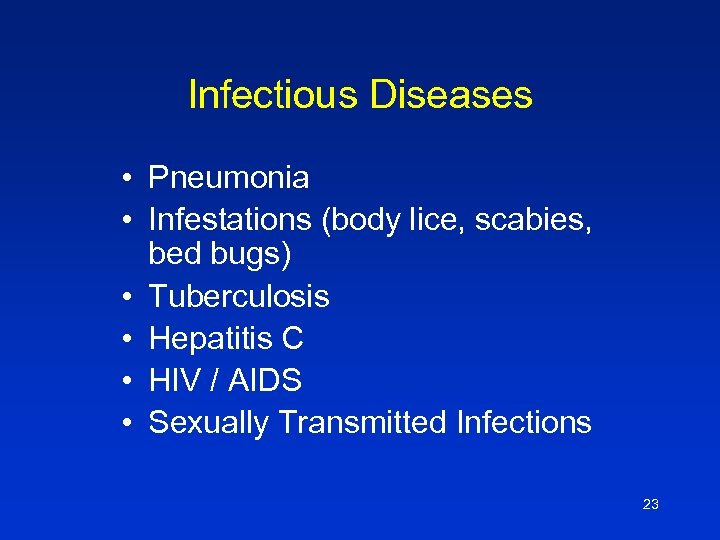 Infectious Diseases • Pneumonia • Infestations (body lice, scabies, bed bugs) • Tuberculosis • Hepatitis C • HIV / AIDS • Sexually Transmitted Infections 23
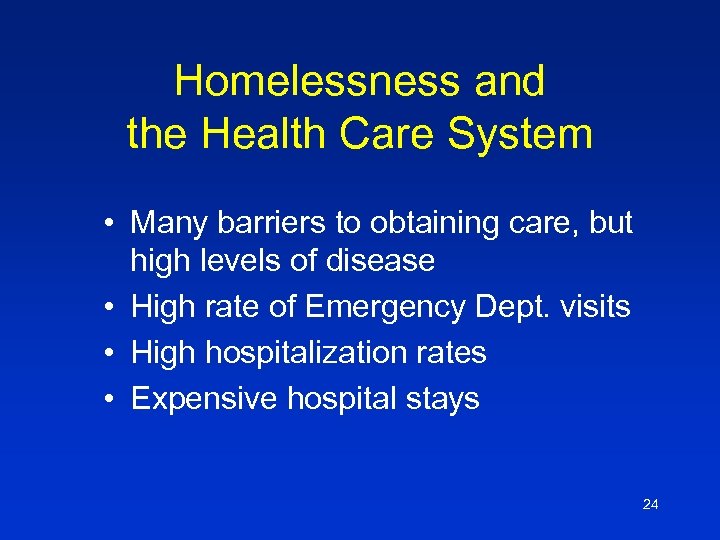 Homelessness and the Health Care System • Many barriers to obtaining care, but high levels of disease • High rate of Emergency Dept. visits • High hospitalization rates • Expensive hospital stays 24
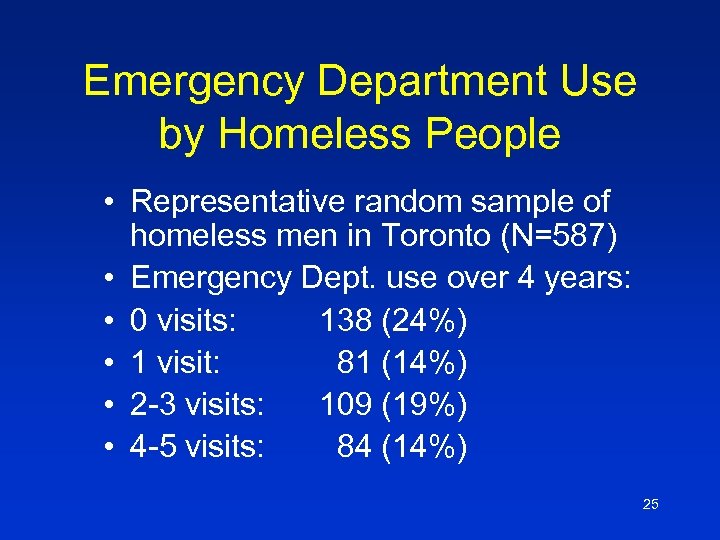 Emergency Department Use by Homeless People • Representative random sample of homeless men in Toronto (N=587) • Emergency Dept. use over 4 years: • 0 visits: 138 (24%) • 1 visit: 81 (14%) • 2 -3 visits: 109 (19%) • 4 -5 visits: 84 (14%) 25
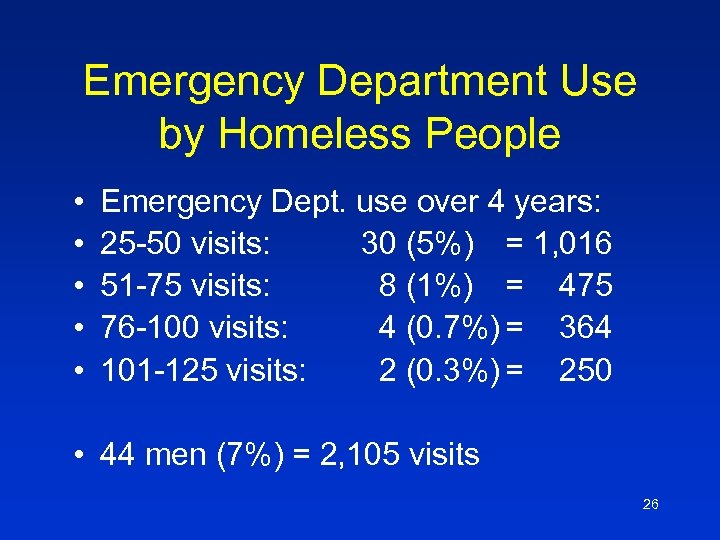 Emergency Department Use by Homeless People • • • Emergency Dept. use over 4 years: 25 -50 visits: 30 (5%) = 1, 016 51 -75 visits: 8 (1%) = 475 76 -100 visits: 4 (0. 7%) = 364 101 -125 visits: 2 (0. 3%) = 250 • 44 men (7%) = 2, 105 visits 26
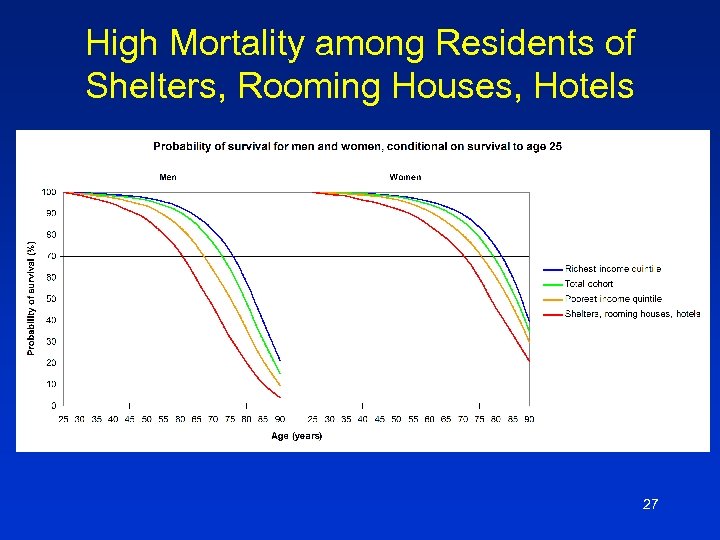 High Mortality among Residents of Shelters, Rooming Houses, Hotels 27
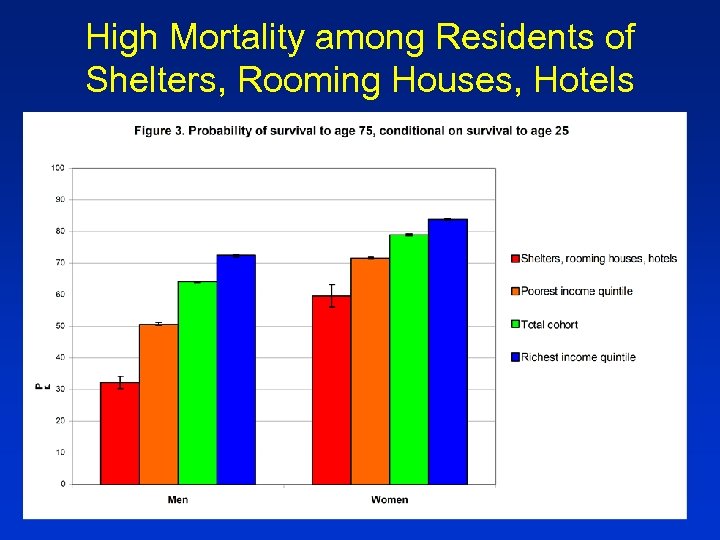 High Mortality among Residents of Shelters, Rooming Houses, Hotels 28
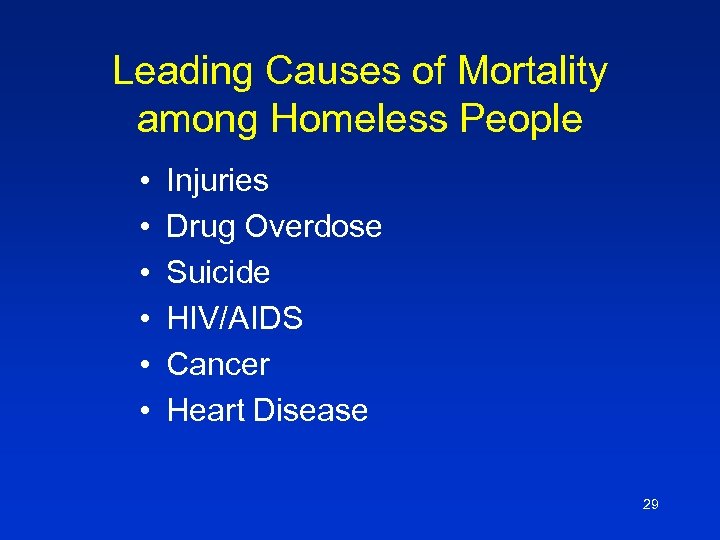 Leading Causes of Mortality among Homeless People • • • Injuries Drug Overdose Suicide HIV/AIDS Cancer Heart Disease 29
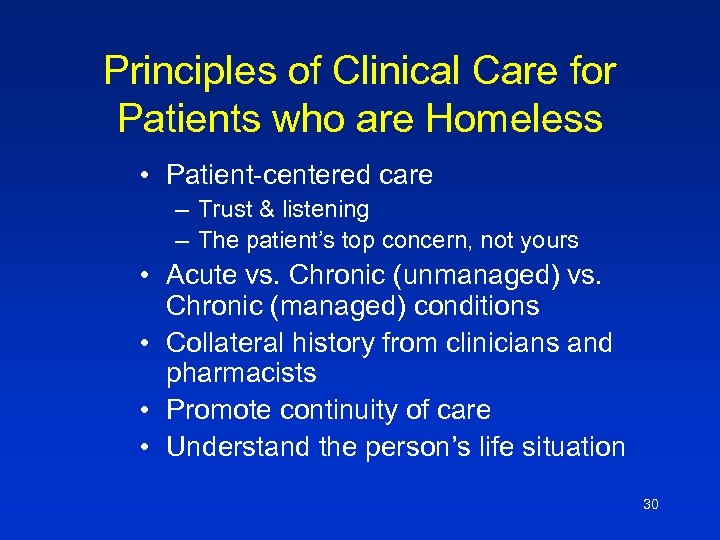 Principles of Clinical Care for Patients who are Homeless • Patient-centered care – Trust & listening – The patient’s top concern, not yours • Acute vs. Chronic (unmanaged) vs. Chronic (managed) conditions • Collateral history from clinicians and pharmacists • Promote continuity of care • Understand the person’s life situation 30
 Bibliography • • • • Hwang SW. Homelessness and health. Canadian Medical Association Journal. January 23, 2001; 164: 229 -33. Fitzpatrick-Lewis D, Ganann R, Krishnaratne S, Ciliska D, Kouyoumdjian F, Hwang SW. Effectiveness of interventions to improve the health and housing status of homeless people: A rapid systematic review. BMC Public Health. 2011; 11: 638. Khandor E, Mason K, Chambers C, Rossiter K, Cowan L, Hwang SW. Access to primary health care among homeless adults in Toronto, Canada: Results from the Street Health survey. Open Medicine. 2011; 5(2): 94103. Hwang SW, Ueng JJM, Chiu S, Kiss A, Tolomiczenko G, Cowan L, Levinson W, Redelmeier DA. Universal health insurance and health care access for homeless people. American Journal of Public Health. Aug 2010; 100: 1454 -1461. Khan K, Rea E, Mc. Dermaid C, Stuart R, Chambers C, Chan A, Gardam M, Jamieson F, Yang J, Hwang SW. Trends in Active Tuberculosis among Homeless People in Toronto, Canada, 1998 -2007. Emerging Infectious Diseases. March 2011; 17(3): 357 -65. Hwang SW, Colantonio A, Chiu S, Tolomiczenko G, Kiss A, Cowan L, Redelmeier DA, Levinson W. The Effect of Traumatic Brain Injury on the Health of Homeless People. Canadian Medical Association Journal. Oct 2008; 179(8): 779 -84. Grinman MN, Chiu S, Redelmeier DA, Levinson W, Kiss A, Tolomiczenko G, Cowan L, Hwang SW. Drug problems among homeless individuals in Toronto, Canada: Prevalence, drugs of choice, and relation to health status. BMC Public Health. 2010; 10: 94. Hwang SW, Weaver J, Aubry T, Hoch JS. Hospital Costs and Length of Stay among Homeless Patients Admitted to Medical, Surgical, and Psychiatric Services. Medical Care. April 2011; 49(4): 350 -4. Hwang SW, Wilkins R, Tjepkema M, O’Campo PJ, Dunn JR. Mortality among residents of shelters, rooming houses, and hotels in Canada: An 11 -year follow-up study. BMJ. 2009; 339: b 4036. Cheung AM, Hwang SW. Risk of death among homeless women: a cohort study and review of the literature. Canadian Medical Association Journal. April 2004; 170: 1243 -1247. Hwang SW. Mortality among men using homeless shelters in Toronto, Ontario. JAMA. April 26, 2000; 283: 2152 -57. Wen CK, Hudak P, Hwang SW. Homeless Persons’ Perceptions of Welcomeness and Unwelcomeness in Healthcare Encounters. Journal of General Internal Medicine. July 2007; 22: 1011 -1017. Hwang SW. After Insurance Issues are Settled. Annals of Internal Medicine. July 2006; 145(2): 150 -1. 31