 Скачать презентацию Home Pesticide Use Risks Benefits n Gary
8c3f3e83322b04f7afe80911e9c7b7b5.ppt
- Количество слайдов: 152



Home Pesticide Use Risks & Benefits n Gary Fish Maine Board of Pesticides Control 28 State House Station Augusta ME 04333 0028 (207)287 2731 gary. fish@maine. gov
Which type of gardener are you? 1. 2. 3. 4. 5. Black thumb Novice Intermediate Experienced Greenest thumb
Have you ever heard of the Board of Pesticides Control (BPC)? 1. 2. Yes No
What is your opinion of the BPC? 1. 2. 3. 4. 5. Strongly favorable Favorable Neutral Unfavorable Strongly unfavorable
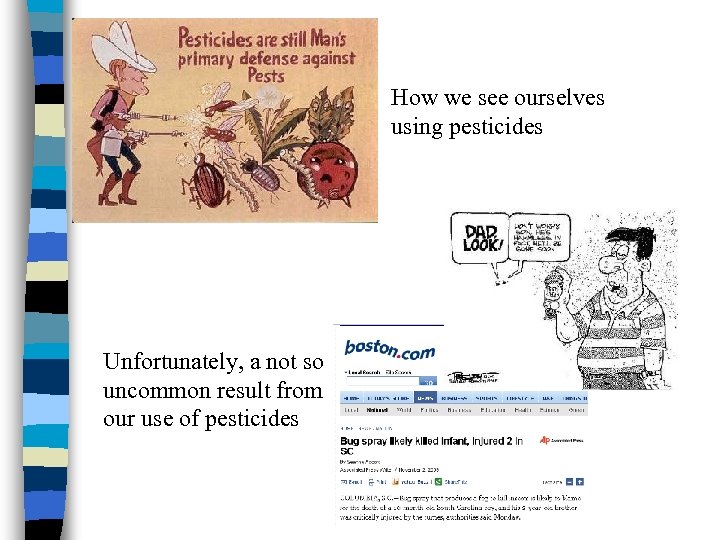
How we see ourselves using pesticides Unfortunately, a not so uncommon result from our use of pesticides
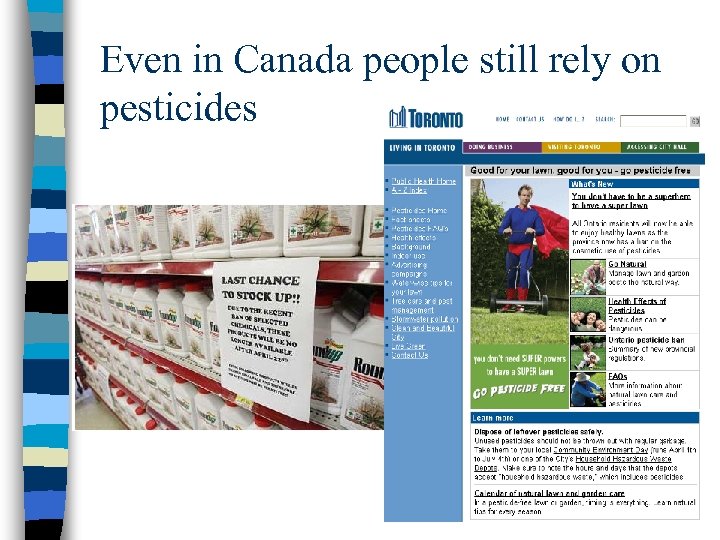
Even in Canada people still rely on pesticides
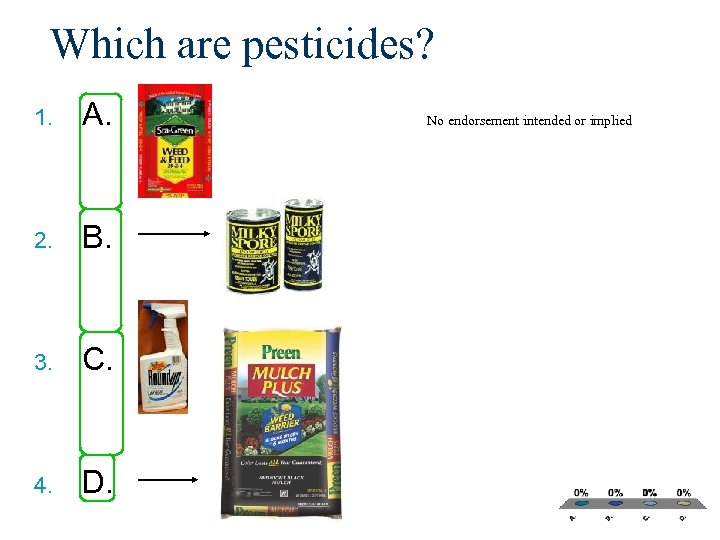
Which are pesticides? 1. A. 2. B. 3. C. 4. D. No endorsement intended or implied
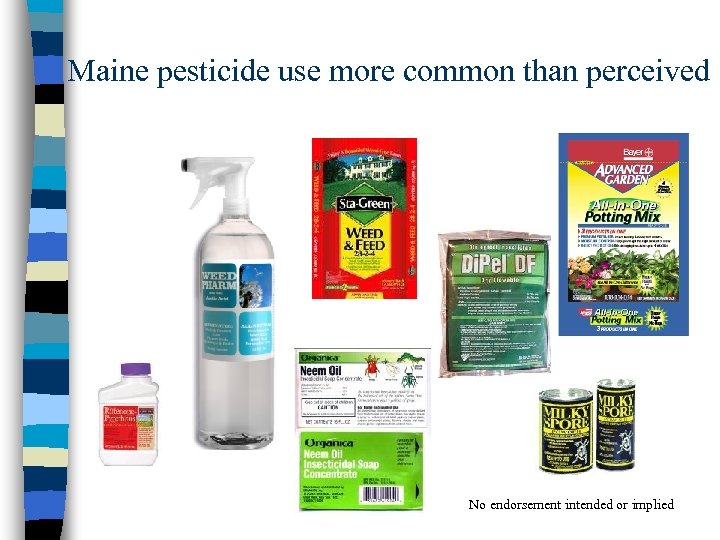
Maine pesticide use more common than perceived No endorsement intended or implied
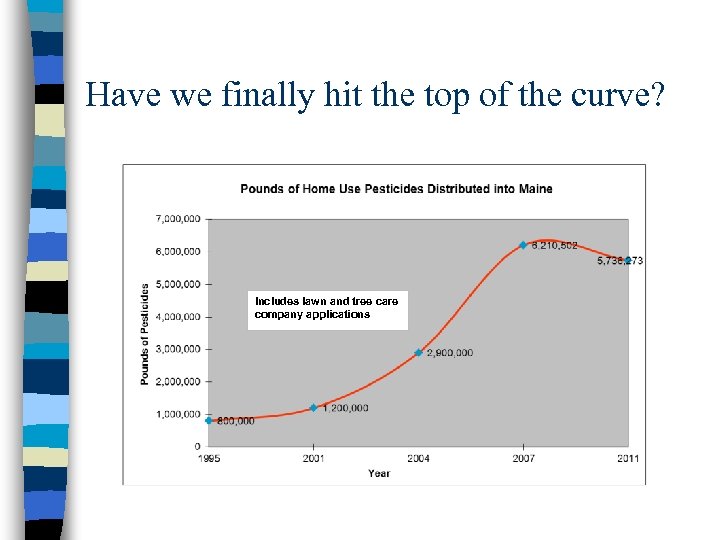
Have we finally hit the top of the curve? Includes lawn and tree care company applications
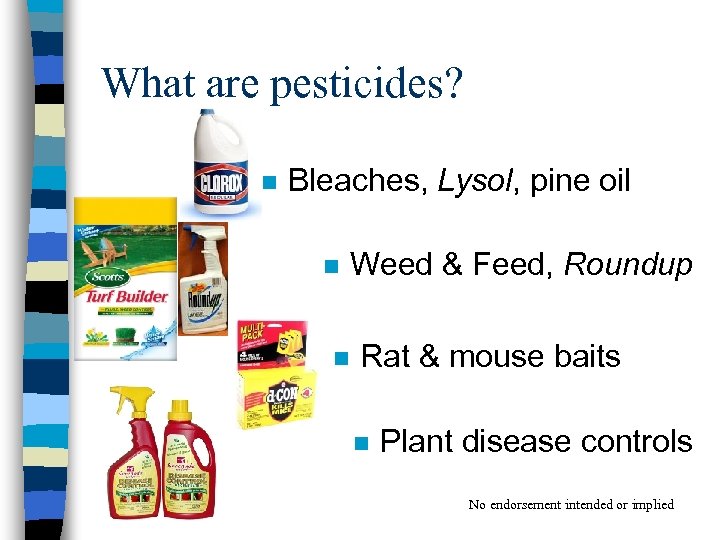
What are pesticides? n Bleaches, Lysol, pine oil n Weed & Feed, Roundup n Rat & mouse baits n Plant disease controls No endorsement intended or implied
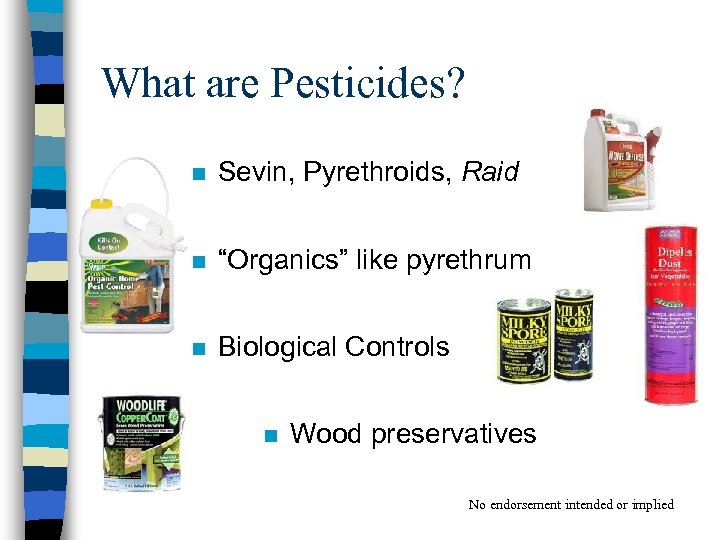
What are Pesticides? n Sevin, Pyrethroids, Raid n “Organics” like pyrethrum n Biological Controls n Wood preservatives No endorsement intended or implied
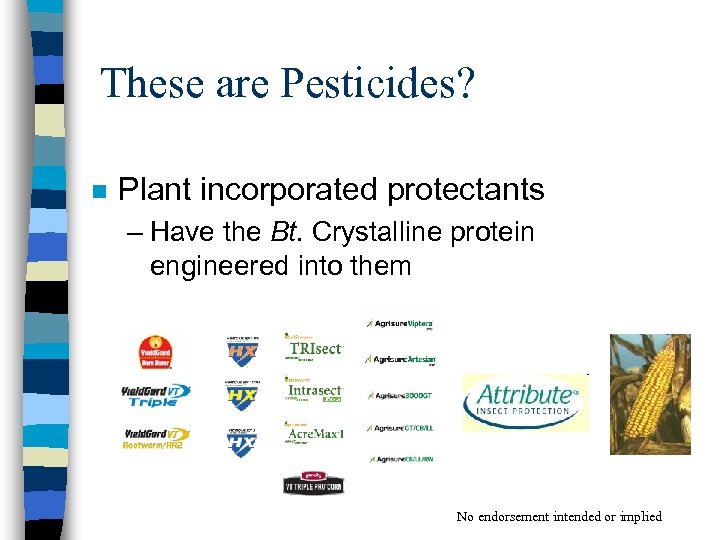
These are Pesticides? n Plant incorporated protectants – Have the Bt. Crystalline protein engineered into them No endorsement intended or implied
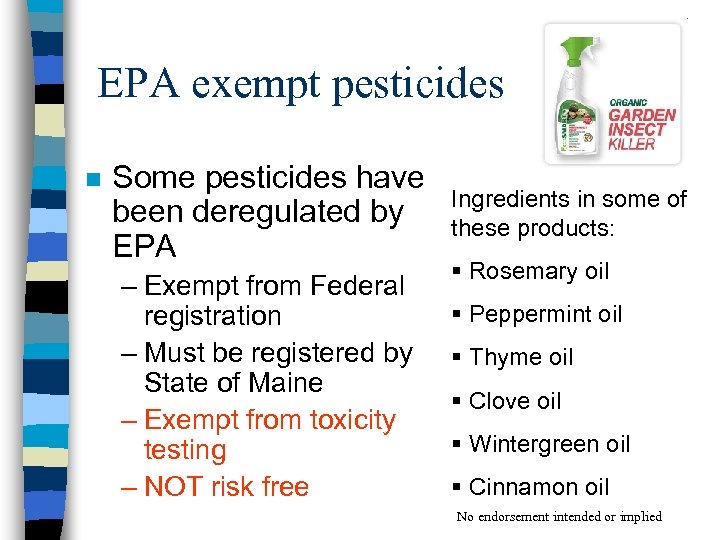
EPA exempt pesticides n Some pesticides have been deregulated by EPA – Exempt from Federal registration – Must be registered by State of Maine – Exempt from toxicity testing – NOT risk free Ingredients in some of these products: § Rosemary oil § Peppermint oil § Thyme oil § Clove oil § Wintergreen oil § Cinnamon oil No endorsement intended or implied
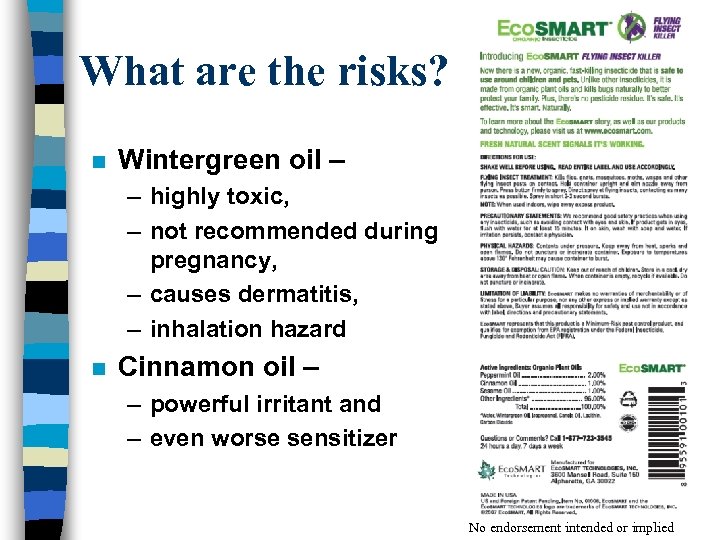
What are the risks? n Wintergreen oil – – highly toxic, – not recommended during pregnancy, – causes dermatitis, – inhalation hazard n Cinnamon oil – – powerful irritant and – even worse sensitizer No endorsement intended or implied
What about home remedies n n Home chemistry is not recommended by the BPC Many of the materials used seem “safe” because we eat them or use them on our skin n Exposure routes may be different n What we eat may not be safe to breathe Example 6. Eucalyptus oil A great natural pesticide for flies, bees and wasps. Simply sprinkle a few drops of eucalyptus oil where the insects are found. They will all be gone before you know it
From Medline Plus – NLM NIH http: //www. nlm. nih. gov/medlineplus/druginfo/natural/700. html n Eucalyptus oil is UNSAFE when it is either taken by mouth or applied directly to the skin without first being diluted. Taking 3. 5 m. L of undiluted oil can be fatal. Signs of eucalyptus poisoning might include stomach pain and burning, dizziness, muscle weakness, small eye pupils, feelings of suffocation, and some others. Eucalyptus oil can also cause nausea, vomiting, and diarrhea. Pregnancy and breast-feeding: Eucalyptus seems to be safe for pregnant and breast feeding women when used in food amounts. But don’t use eucalyptus oil. Not enough is known about safety during pregnancy or breast feeding. Children: Eucalyptus oil is UNSAFE for children. It should not be taken by mouth or applied to the skin. Not much is known about the safety of using eucalyptus leaves in children. It’s best to avoid use in amounts larger than food amounts.
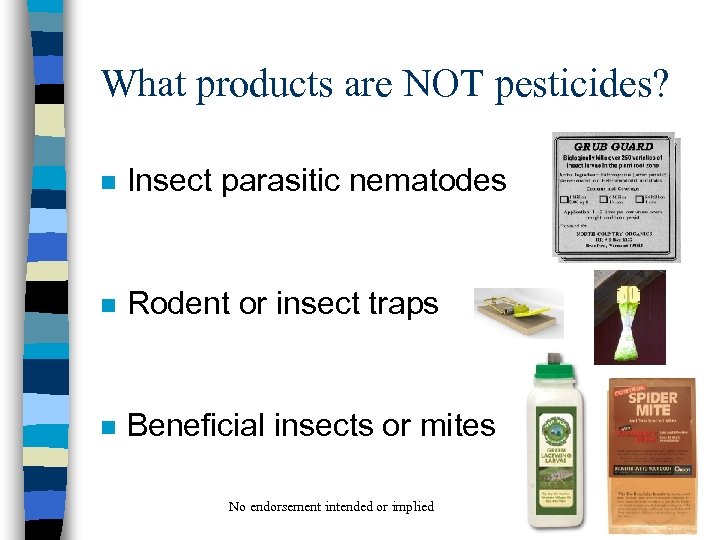
What products are NOT pesticides? n Insect parasitic nematodes n Rodent or insect traps n Beneficial insects or mites No endorsement intended or implied
What does registration mean? n n n Not a safety guarantee Reasonable certainty of no harm, but NOT risk free Must read and follow the label to manage the risk
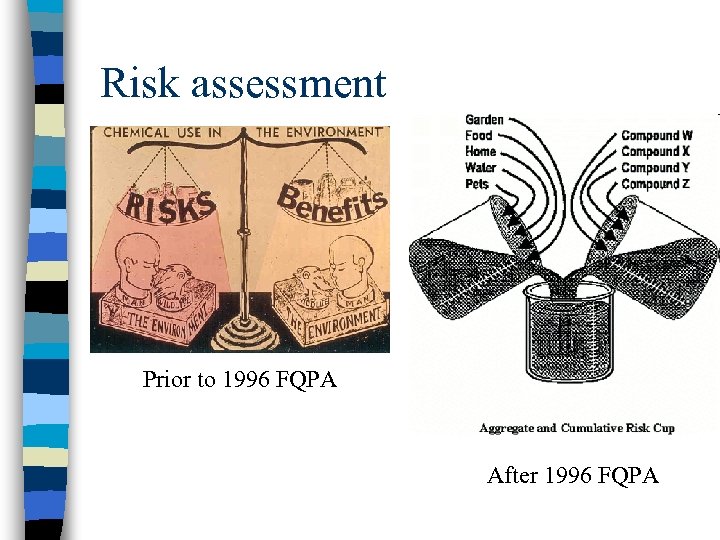
Risk assessment Prior to 1996 FQPA After 1996 FQPA
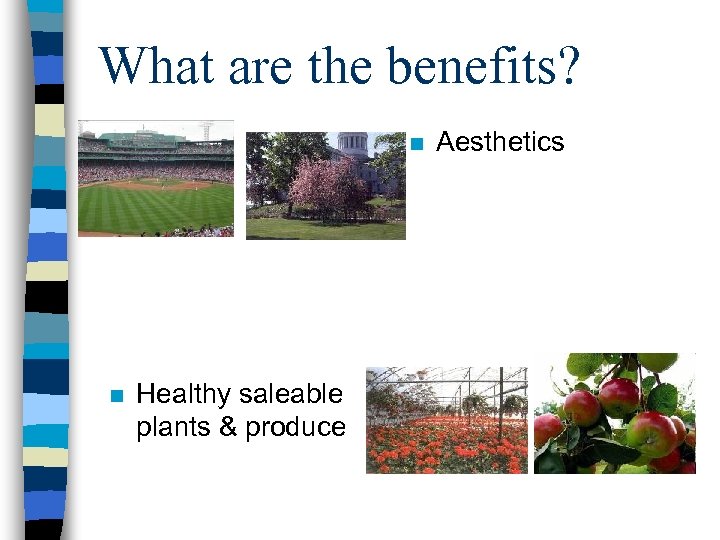
What are the benefits? n n Healthy saleable plants & produce Aesthetics
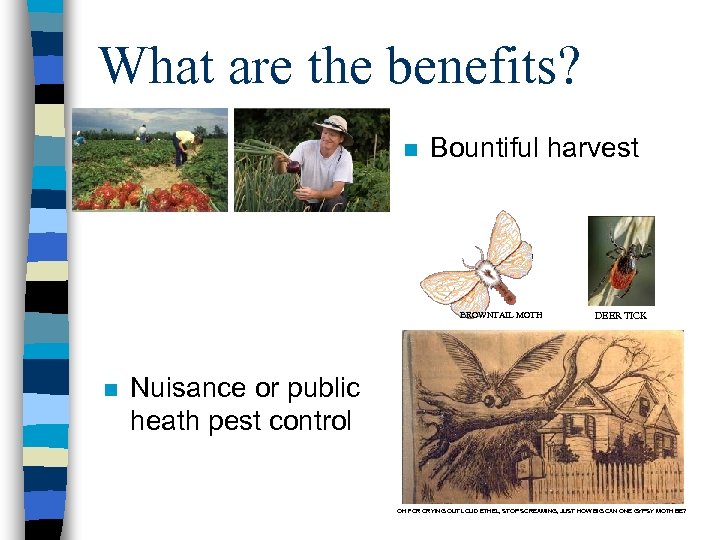
What are the benefits? n Bountiful harvest BROWNTAIL MOTH n DEER TICK Nuisance or public heath pest control OH FOR CRYING OUT LOUD ETHEL, STOP SCREAMING, JUST HOW BIG CAN ONE GYPSY MOTH BE?
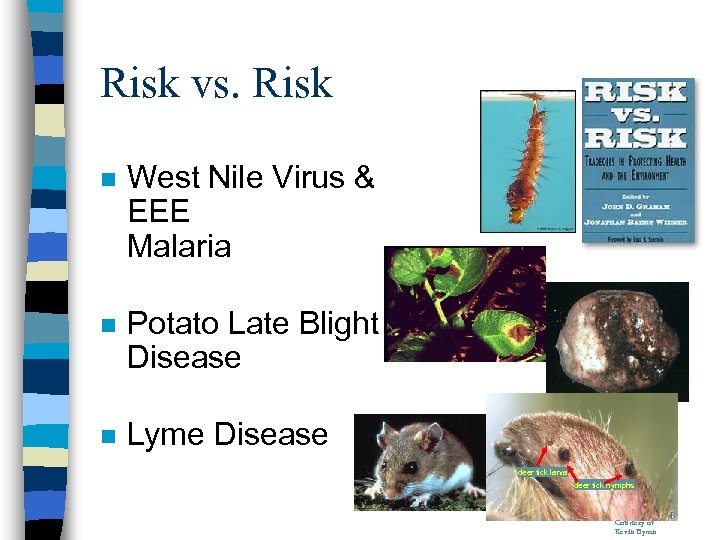
Risk vs. Risk n West Nile Virus & EEE Malaria n Potato Late Blight Disease n Lyme Disease deer tick larva deer tick nymphs Courtesy of Kevin Byron
What are the human risks? n Acute – Rash – Nausea – Eye ticks – Stomach cramps – Death n Chronic – Cancer – Birth defects – Allergies – Organ damage – Endocrine effects
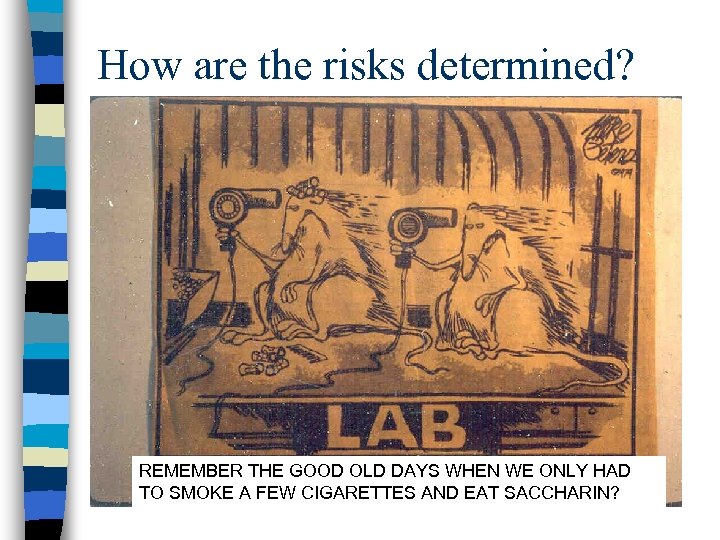
How are the risks determined? REMEMBER THE GOOD OLD DAYS WHEN WE ONLY HAD TO SMOKE A FEW CIGARETTES AND EAT SACCHARIN?
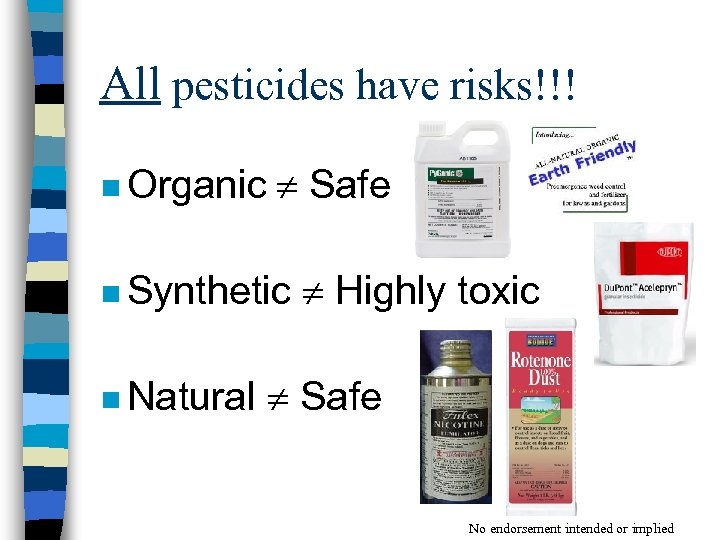
All pesticides have risks!!! n Organic Safe n Synthetic Highly toxic n Natural Safe No endorsement intended or implied
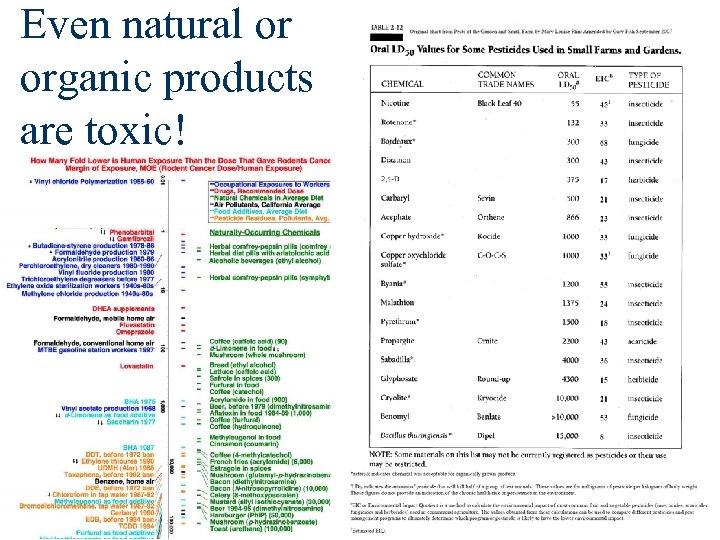
Even natural or organic products are toxic!
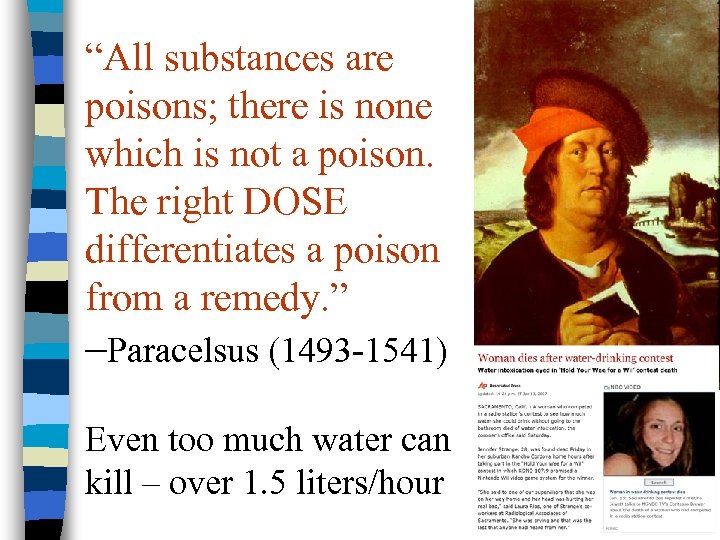
“All substances are poisons; there is none which is not a poison. The right DOSE differentiates a poison from a remedy. ” –Paracelsus (1493 -1541) Even too much water can kill – over 1. 5 liters/hour
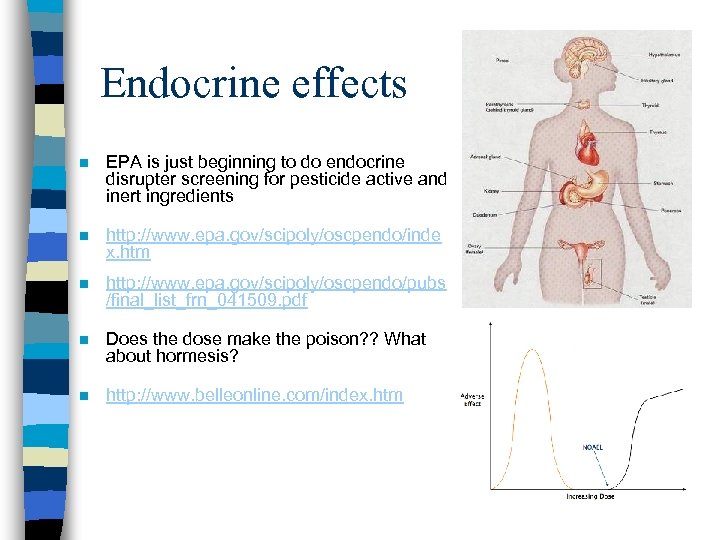
Endocrine effects n EPA is just beginning to do endocrine disrupter screening for pesticide active and inert ingredients n http: //www. epa. gov/scipoly/oscpendo/inde x. htm n http: //www. epa. gov/scipoly/oscpendo/pubs /final_list_frn_041509. pdf n Does the dose make the poison? ? What about hormesis? n http: //www. belleonline. com/index. htm
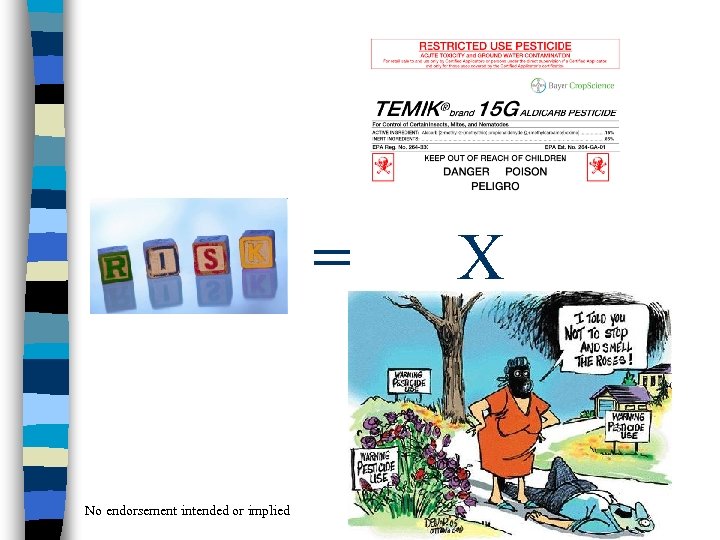
= No endorsement intended or implied X
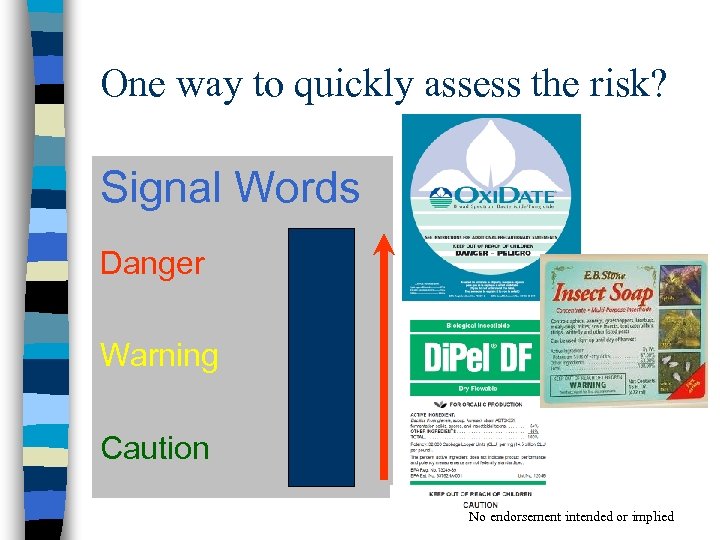
One way to quickly assess the risk? Signal Words Danger Warning Caution No endorsement intended or implied
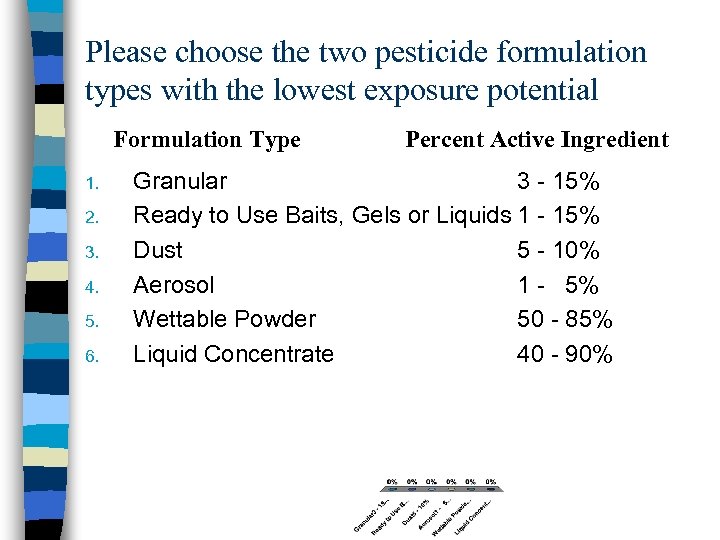
Please choose the two pesticide formulation types with the lowest exposure potential Formulation Type 1. 2. 3. 4. 5. 6. Percent Active Ingredient Granular 3 15% Ready to Use Baits, Gels or Liquids 1 15% Dust 5 10% Aerosol 1 5% Wettable Powder 50 85% Liquid Concentrate 40 90%
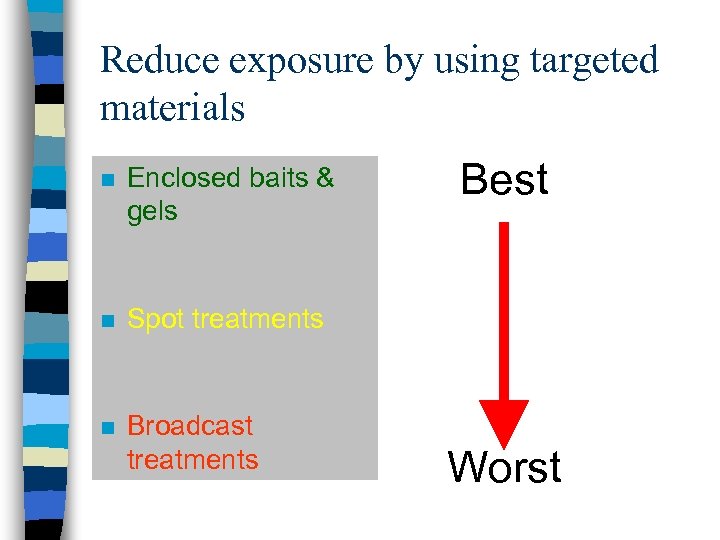
Reduce exposure by using targeted materials n Enclosed baits & gels n Spot treatments n Broadcast treatments Best Worst
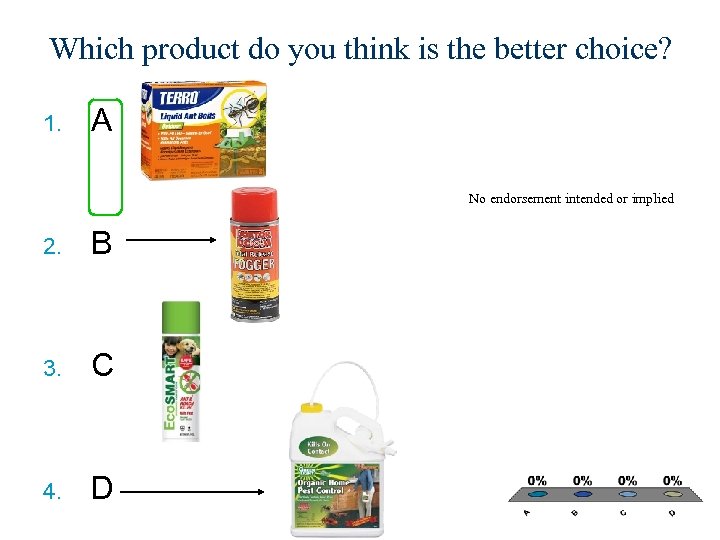
Which product do you think is the better choice? 1. A No endorsement intended or implied 2. B 3. C 4. D
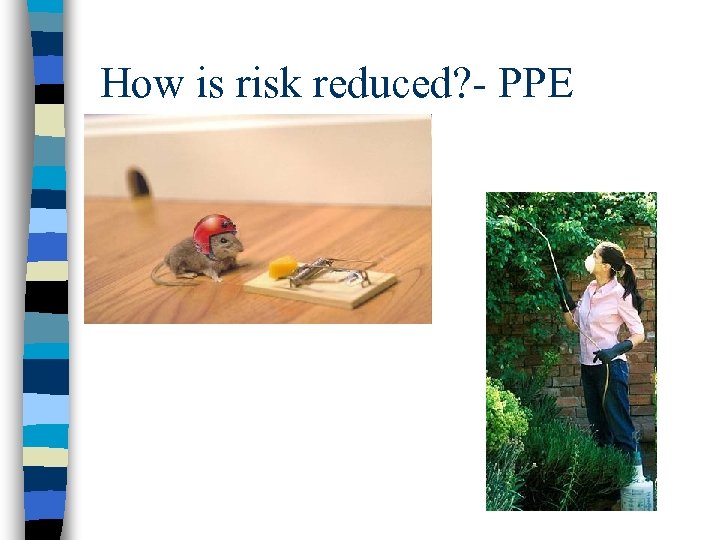
How is risk reduced? - PPE
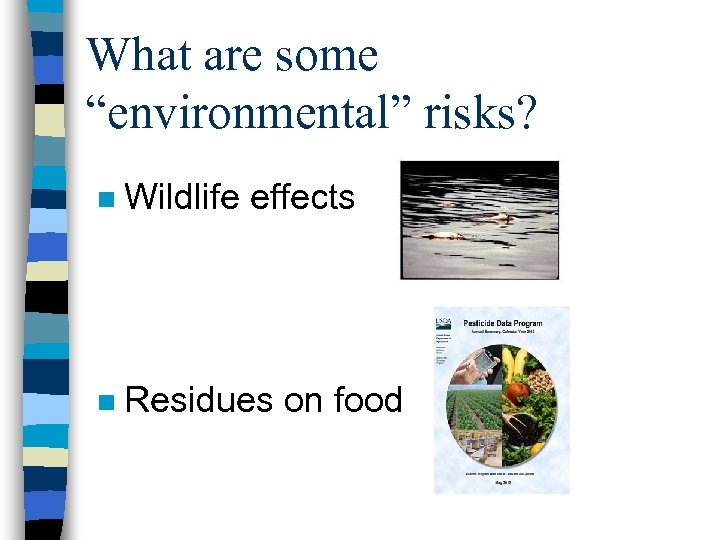
What are some “environmental” risks? n Wildlife effects n Residues on food
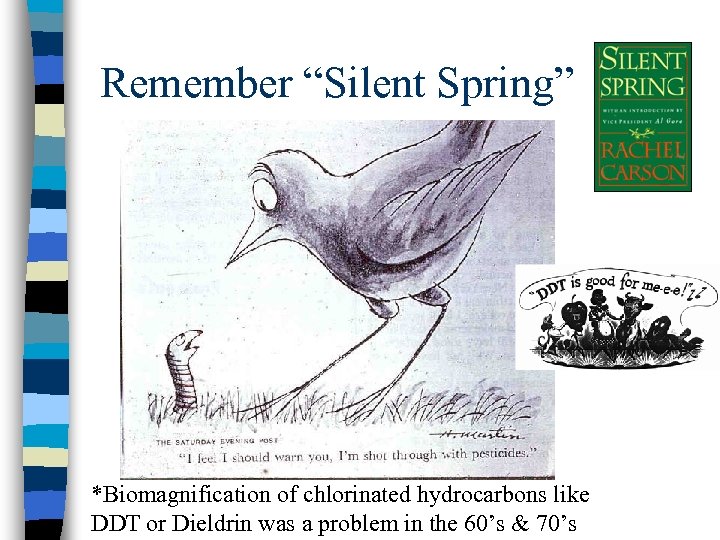
Remember “Silent Spring” *Biomagnification of chlorinated hydrocarbons like DDT or Dieldrin was a problem in the 60’s & 70’s
Today’s wildlife concerns n Biomagnification is not a big issue any more – the old persistent products were cancelled n Pollinators are now a focus area http: //www. extension. org/pages/24315/managed-pollinator-cap: -coordinated-agricultural-project
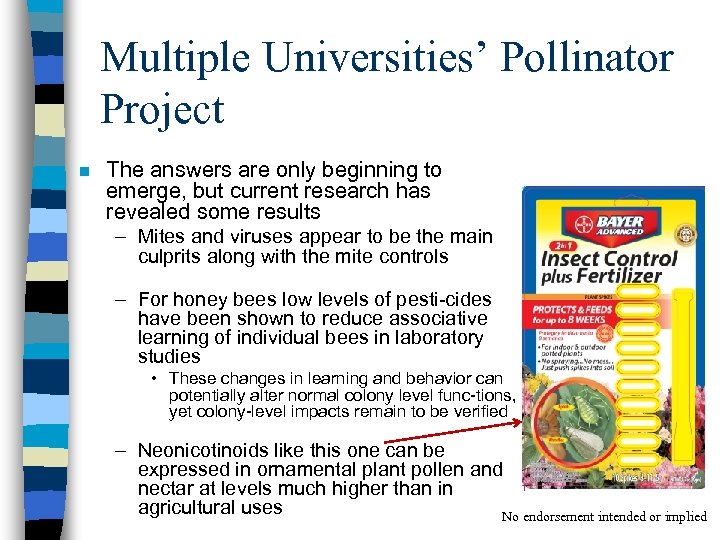
Multiple Universities’ Pollinator Project n The answers are only beginning to emerge, but current research has revealed some results – Mites and viruses appear to be the main culprits along with the mite controls – For honey bees low levels of pesti cides have been shown to reduce associative learning of individual bees in laboratory studies • These changes in learning and behavior can potentially alter normal colony level func tions, yet colony level impacts remain to be verified – Neonicotinoids like this one can be expressed in ornamental plant pollen and nectar at levels much higher than in agricultural uses No endorsement intended or implied
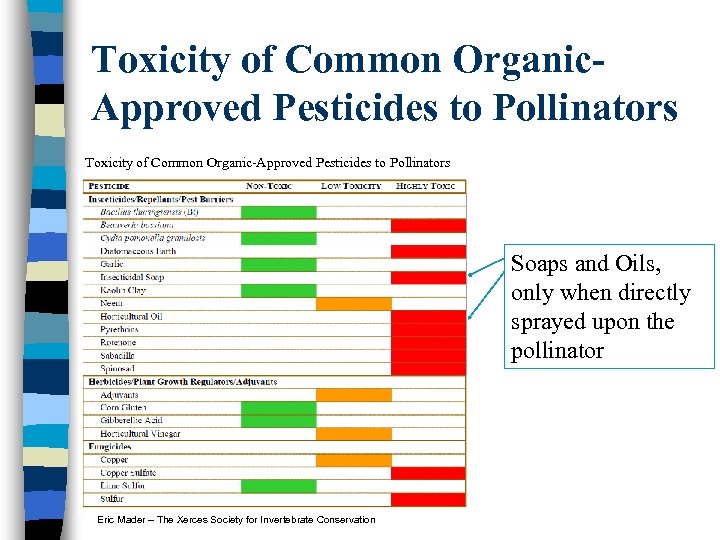
Toxicity of Common Organic. Approved Pesticides to Pollinators Toxicity of Common Organic-Approved Pesticides to Pollinators Soaps and Oils, only when directly sprayed upon the pollinator Eric Mader – The Xerces Society for Invertebrate Conservation
Pesticide residues are found on all types of food n n n Samples are randomly chosen near the point of consumption, and reflect what is typically available to the consumer throughout the year Samples are selected without regard to country of origin, variety, or organic labeling
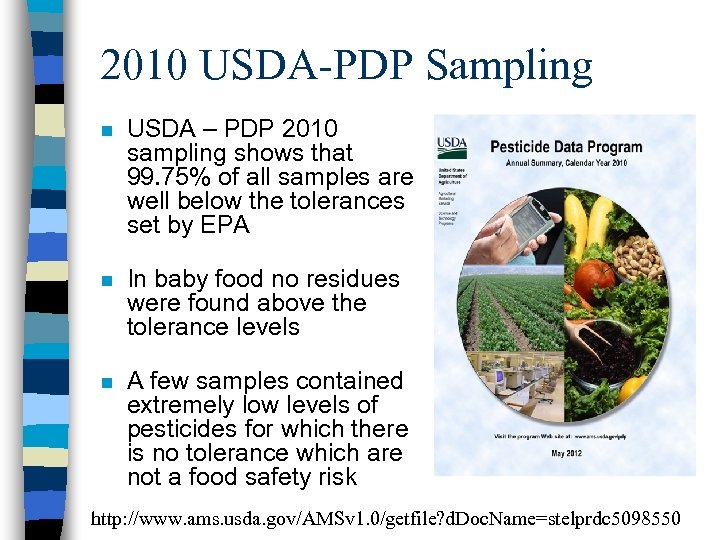
2010 USDA-PDP Sampling n USDA – PDP 2010 sampling shows that 99. 75% of all samples are well below the tolerances set by EPA n In baby food no residues were found above the tolerance levels n A few samples contained extremely low levels of pesticides for which there is no tolerance which are not a food safety risk http: //www. ams. usda. gov/AMSv 1. 0/getfile? d. Doc. Name=stelprdc 5098550
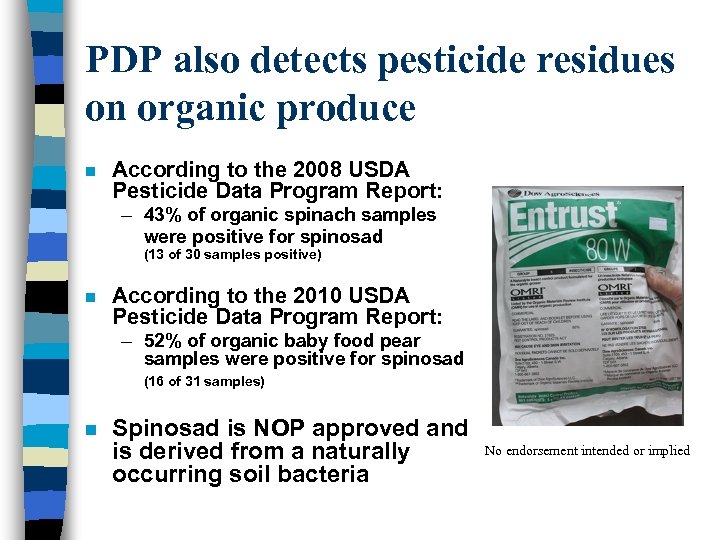
PDP also detects pesticide residues on organic produce n According to the 2008 USDA Pesticide Data Program Report: – 43% of organic spinach samples were positive for spinosad (13 of 30 samples positive) n According to the 2010 USDA Pesticide Data Program Report: – 52% of organic baby food pear samples were positive for spinosad (16 of 31 samples) n Spinosad is NOP approved and is derived from a naturally occurring soil bacteria No endorsement intended or implied
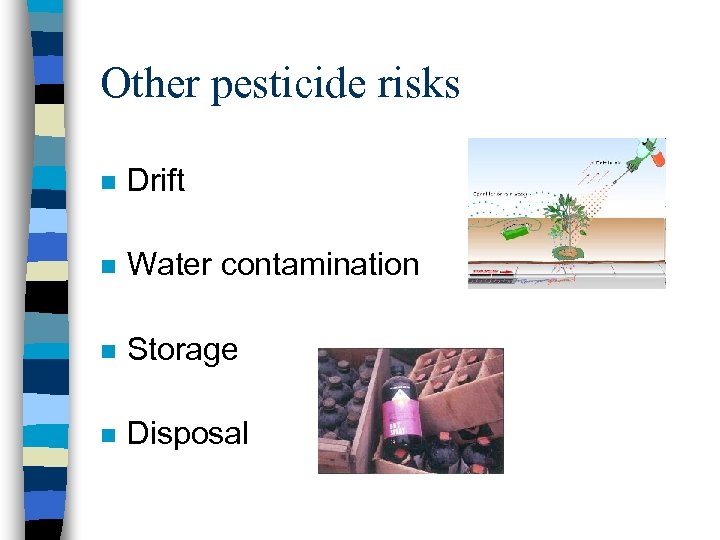
Other pesticide risks n Drift n Water contamination n Storage n Disposal
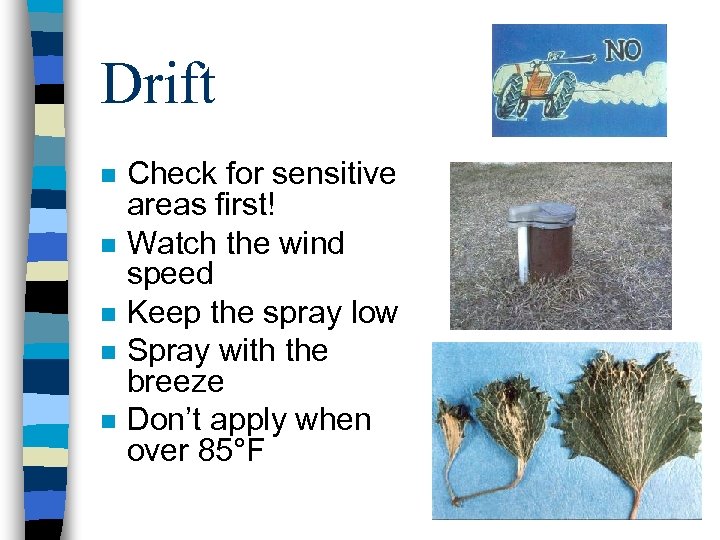
Drift n n n Check for sensitive areas first! Watch the wind speed Keep the spray low Spray with the breeze Don’t apply when over 85°F
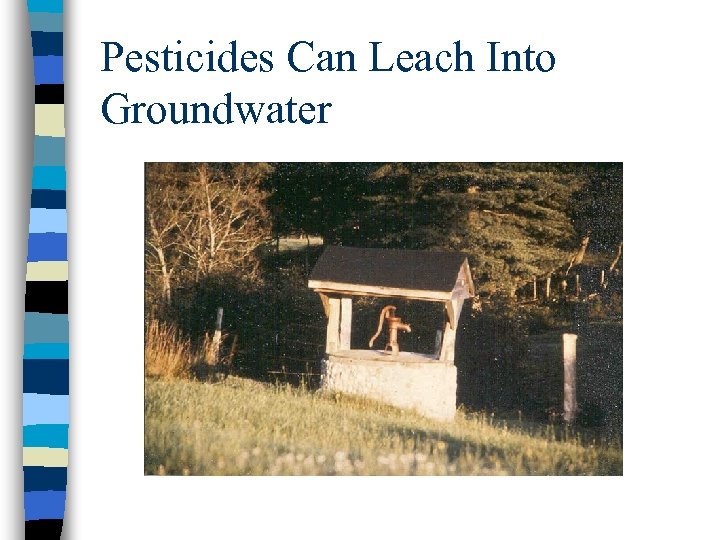
Pesticides Can Leach Into Groundwater
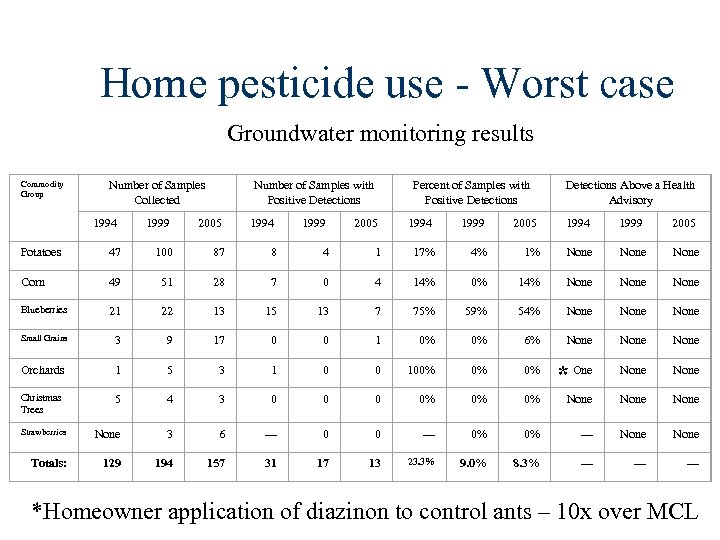
Home pesticide use - Worst case Groundwater monitoring results Commodity Group Number of Samples Collected Number of Samples with Positive Detections Percent of Samples with Positive Detections 1994 1999 2005 Potatoes 47 100 87 8 4 1 Corn 49 51 28 7 0 Blueberries 21 22 13 15 Small Grains 3 9 17 Orchards 1 5 Christmas Trees 5 Strawberries Totals: 1994 Detections Above a Health Advisory 1999 2005 1994 1999 2005 17% 4% 1% None 4 14% 0% 14% None 13 7 75% 59% 54% None 0 0 1 0% 0% 6% None 3 1 0 0 100% 0% 0% * One None 4 3 0 0% 0% 0% None 3 6 --- 0 0 --- 0% 0% --- None 129 194 157 31 17 13 23. 3% 9. 0% 8. 3% --- --- *Homeowner application of diazinon to control ants – 10 x over MCL
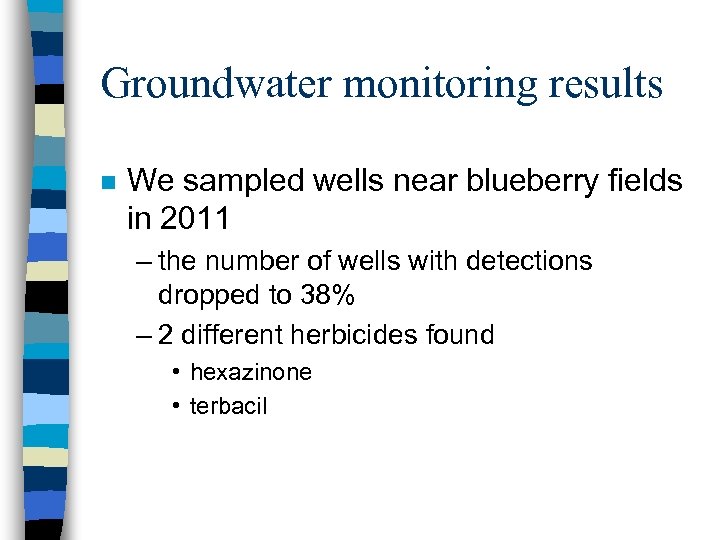
Groundwater monitoring results n We sampled wells near blueberry fields in 2011 – the number of wells with detections dropped to 38% – 2 different herbicides found • hexazinone • terbacil
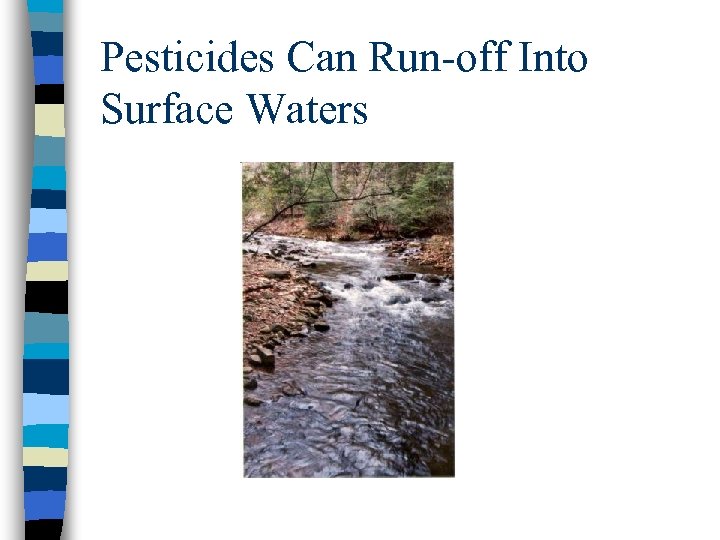
Pesticides Can Run-off Into Surface Waters
Bay. Scaping Project n Friends Of Casco Bay did some detective work in 2001, 2002, 2003, 2005, 2006, 2008 and 2009 n Sampled runoff water from intensive lawn care areas in Cumberland, S Portland, Westbrook, Falmouth, Yarmouth, Brunswick, Freeport, Portland Cape Elizabeth & Back Cove area
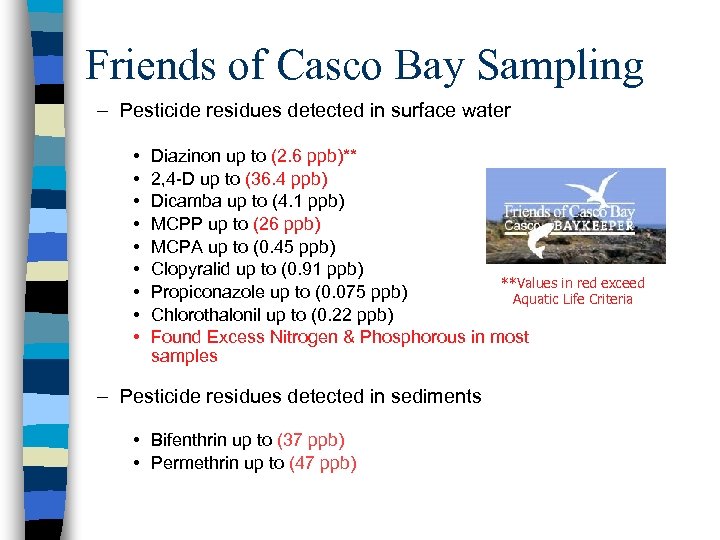
Friends of Casco Bay Sampling – Pesticide residues detected in surface water • • • Diazinon up to (2. 6 ppb)** 2, 4 D up to (36. 4 ppb) Dicamba up to (4. 1 ppb) MCPP up to (26 ppb) MCPA up to (0. 45 ppb) Clopyralid up to (0. 91 ppb) **Values in red exceed Propiconazole up to (0. 075 ppb) Aquatic Life Criteria Chlorothalonil up to (0. 22 ppb) Found Excess Nitrogen & Phosphorous in most samples – Pesticide residues detected in sediments • Bifenthrin up to (37 ppb) • Permethrin up to (47 ppb)
USGS National Water Quality Assessment n Sampled urban streams – Insecticides occurred more frequently in urban streams than they did in agricultural area streams – Herbicides detected in 99% of Urban stream samples – Phosphorous found at same levels as in agricultural streams • 70% of those samples exceeded the EPA desired goal for reducing nuisance plant growth (algae)
Prevent water contamination n n n Locate & stay away from wells Stay away from ledge Stay away from wetlands & water Do not apply to slopes near water Do not apply before heavy rains Spot applications Vegetative buffers
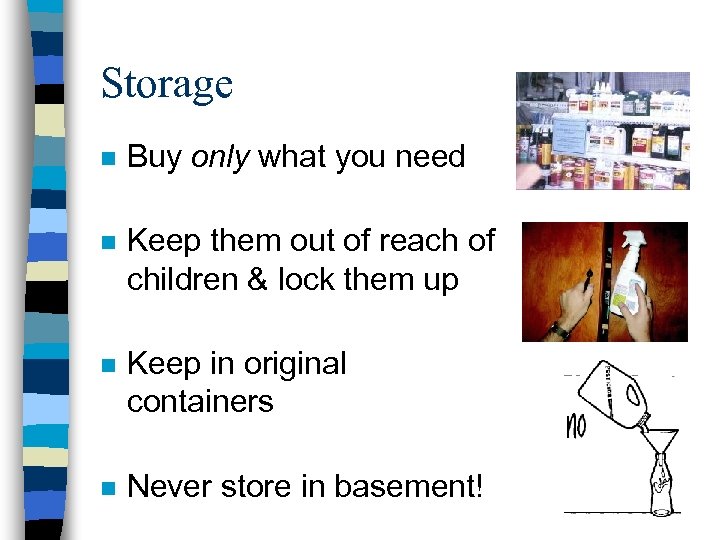
Storage n Buy only what you need n Keep them out of reach of children & lock them up n Keep in original containers n Never store in basement!
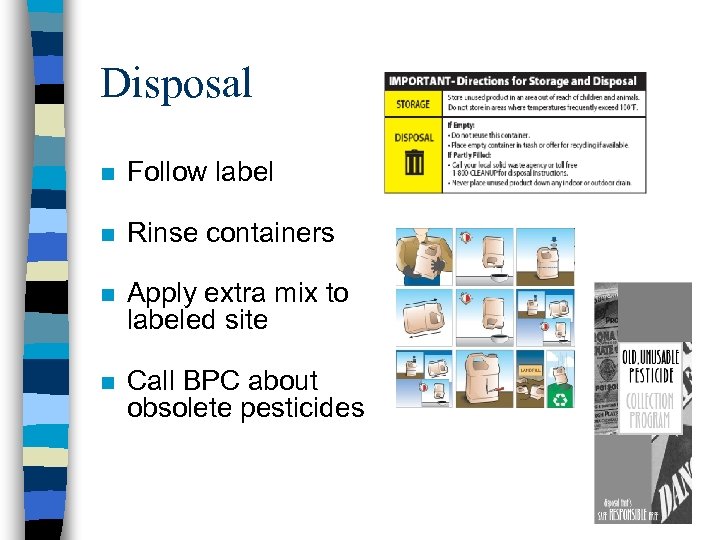
Disposal n Follow label n Rinse containers n Apply extra mix to labeled site n Call BPC about obsolete pesticides
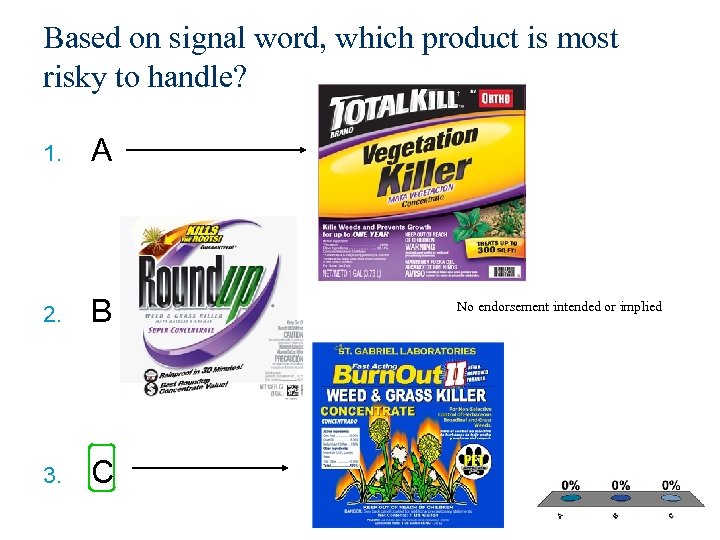
Based on signal word, which product is most risky to handle? 1. A 2. B 3. C No endorsement intended or implied
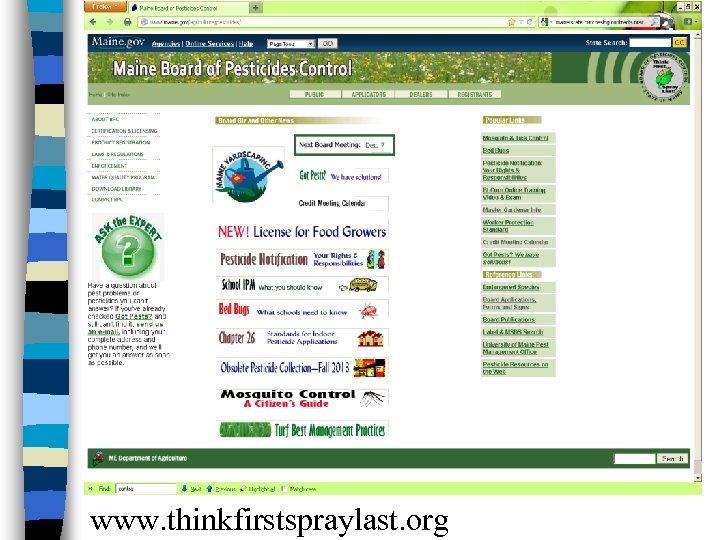
Think First…. Spray Last n “The quick fix is neither”! Make the benefits Outweigh the risks
1997 Legislative Mandate n It is the policy of the State to Minimize reliance on pesticides!
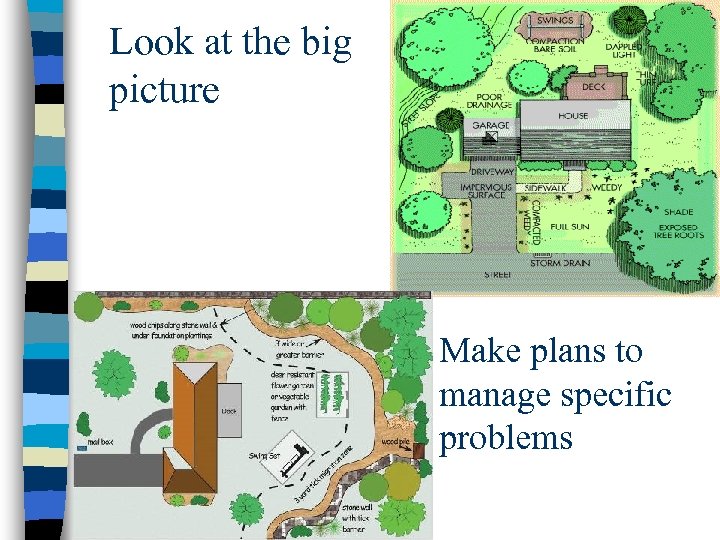
Look at the big picture Make plans to manage specific problems
Do you need a pesticide? n First identify the pest n Is it really a problem n Try cultural or sanitary controls n Encourage the “Good bugs” n Replace with resistant varieties
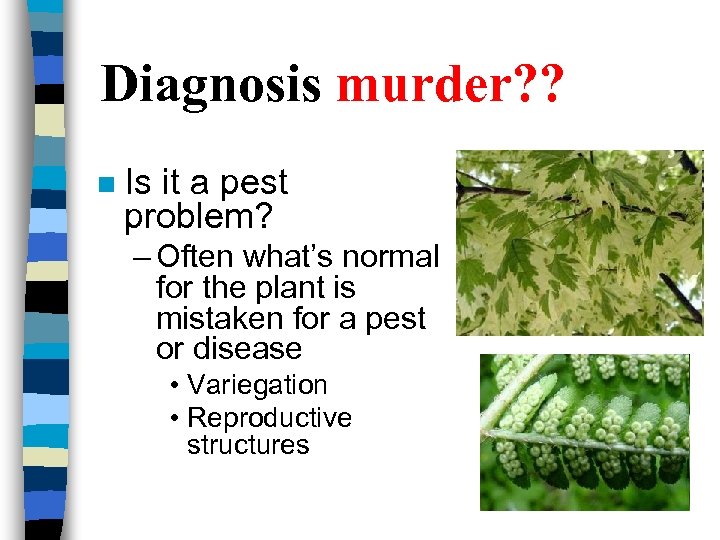
Diagnosis murder? ? n Is it a pest problem? – Often what’s normal for the plant is mistaken for a pest or disease • Variegation • Reproductive structures
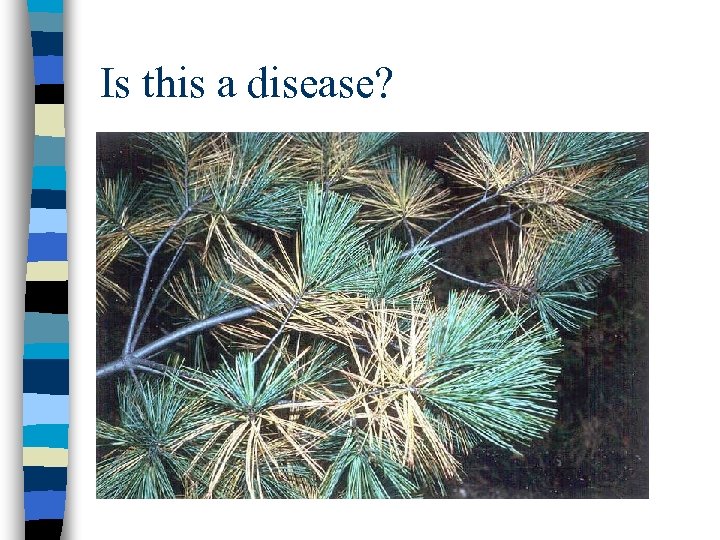
Is this a disease?
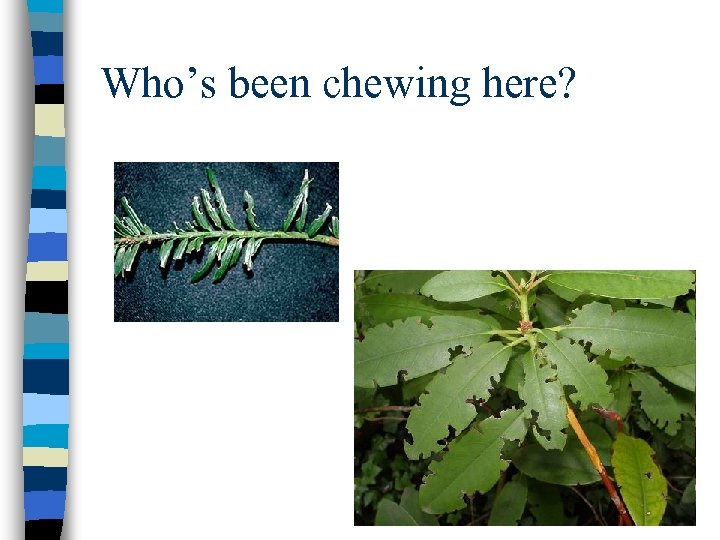
Who’s been chewing here?
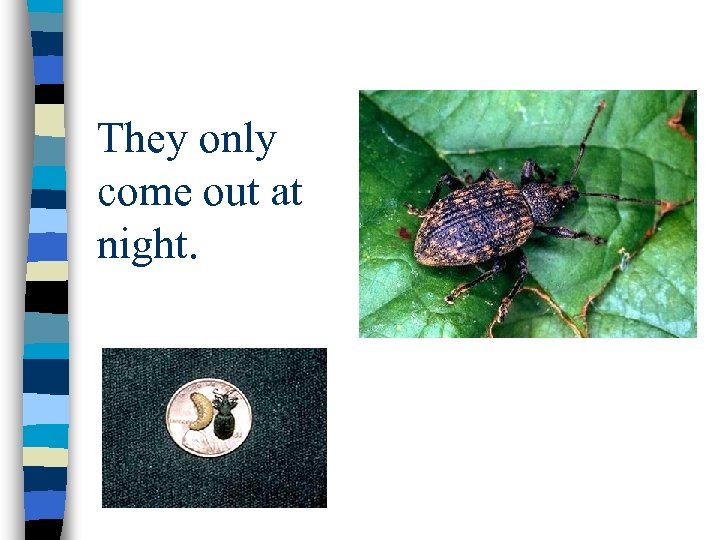
They only come out at night.
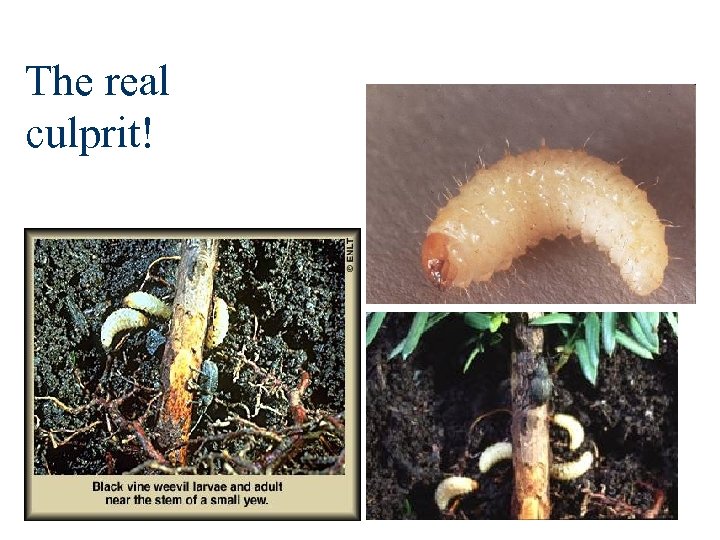
The real culprit! Ucal Pub. 3359
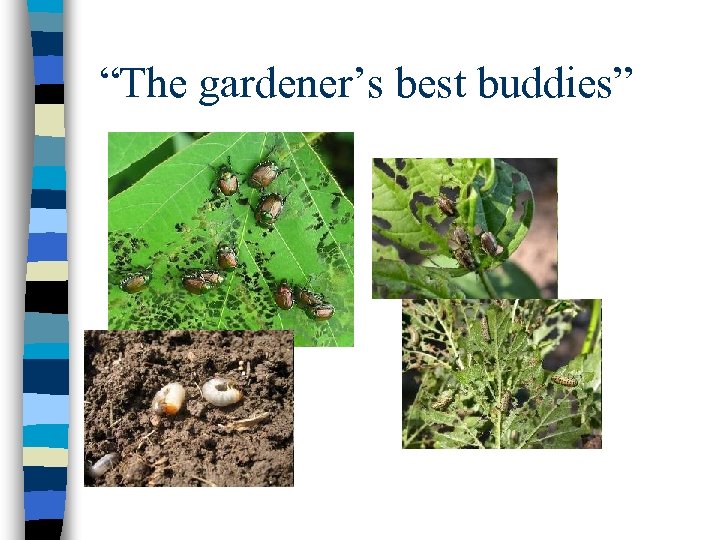
“The gardener’s best buddies”
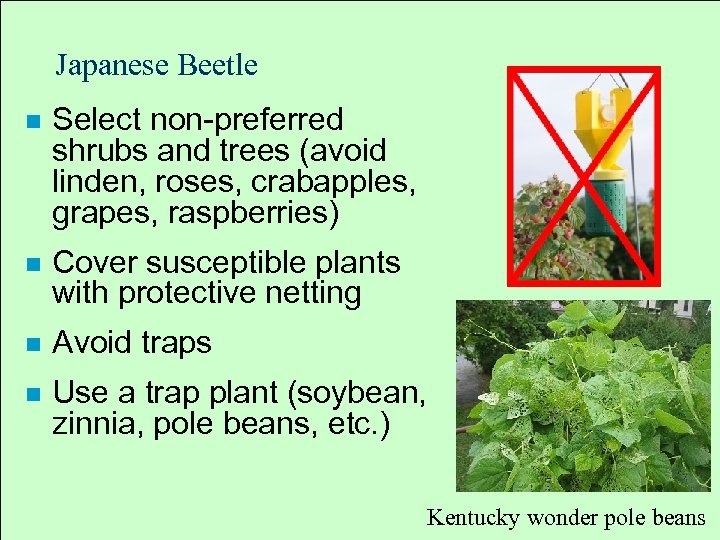
Japanese Beetle n Select non preferred shrubs and trees (avoid linden, roses, crabapples, grapes, raspberries) n Cover susceptible plants with protective netting n Avoid traps n Use a trap plant (soybean, zinnia, pole beans, etc. ) Kentucky wonder pole beans
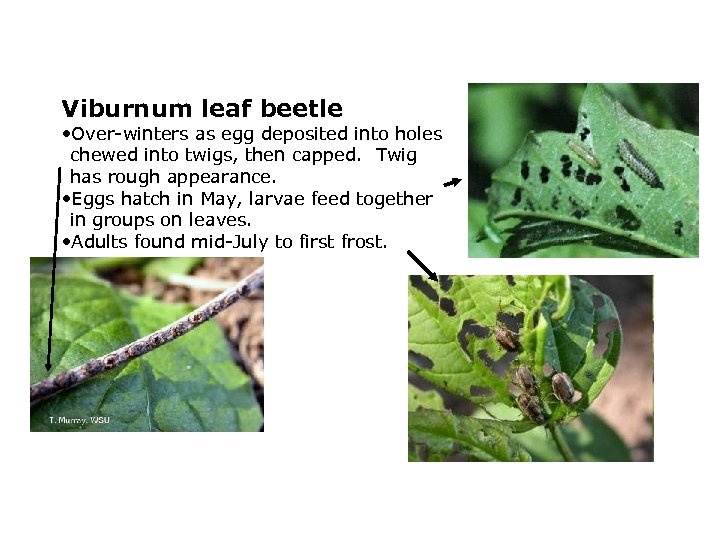
Viburnum leaf beetle • Over-winters as egg deposited into holes chewed into twigs, then capped. Twig has rough appearance. • Eggs hatch in May, larvae feed together in groups on leaves. • Adults found mid-July to first frost.
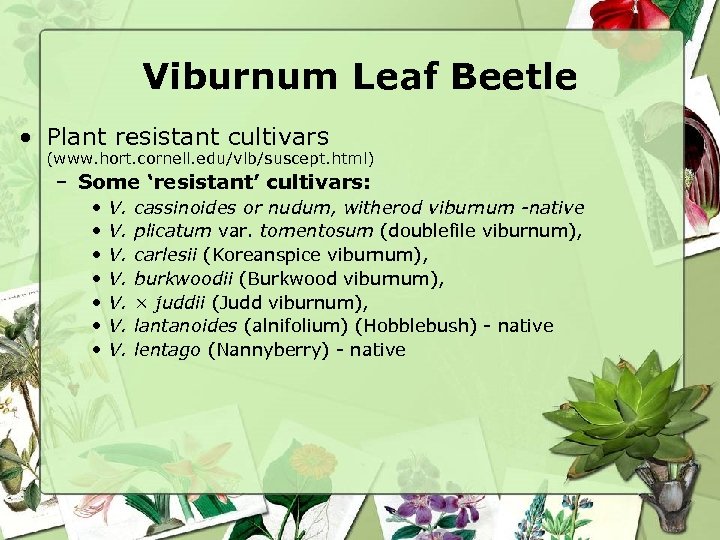
Viburnum Leaf Beetle • Plant resistant cultivars (www. hort. cornell. edu/vlb/suscept. html) – Some ‘resistant’ cultivars: • • V. V. cassinoides or nudum, witherod viburnum -native plicatum var. tomentosum (doublefile viburnum), carlesii (Koreanspice viburnum), burkwoodii (Burkwood viburnum), × juddii (Judd viburnum), lantanoides (alnifolium) (Hobblebush) - native lentago (Nannyberry) - native
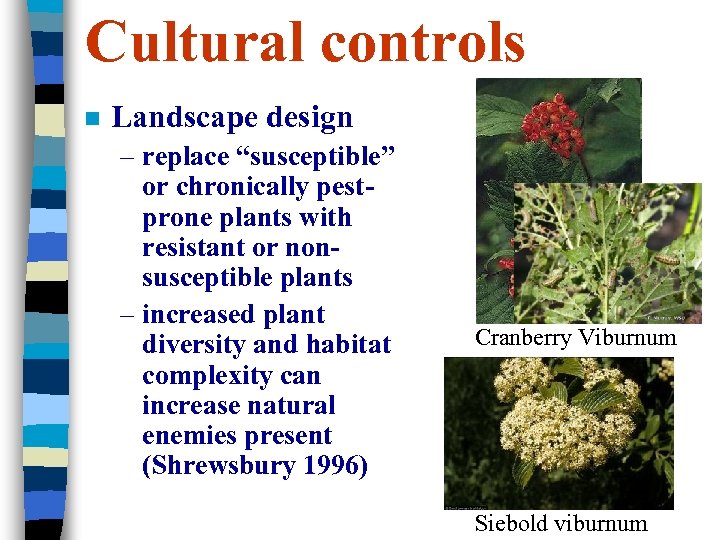
Cultural controls n Landscape design – replace “susceptible” or chronically pestprone plants with resistant or nonsusceptible plants – increased plant diversity and habitat complexity can increase natural enemies present (Shrewsbury 1996) Cranberry Viburnum Siebold viburnum
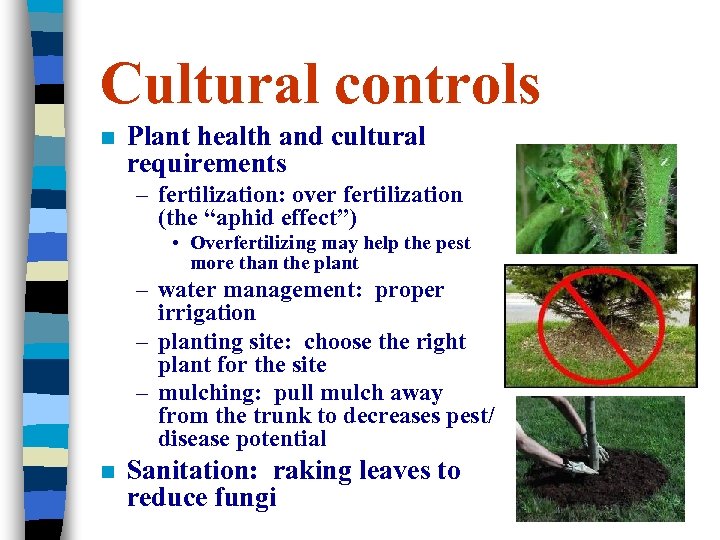
Cultural controls n Plant health and cultural requirements – fertilization: over fertilization (the “aphid effect”) • Overfertilizing may help the pest more than the plant – water management: proper irrigation – planting site: choose the right plant for the site – mulching: pull mulch away from the trunk to decreases pest/ disease potential n Sanitation: raking leaves to reduce fungi
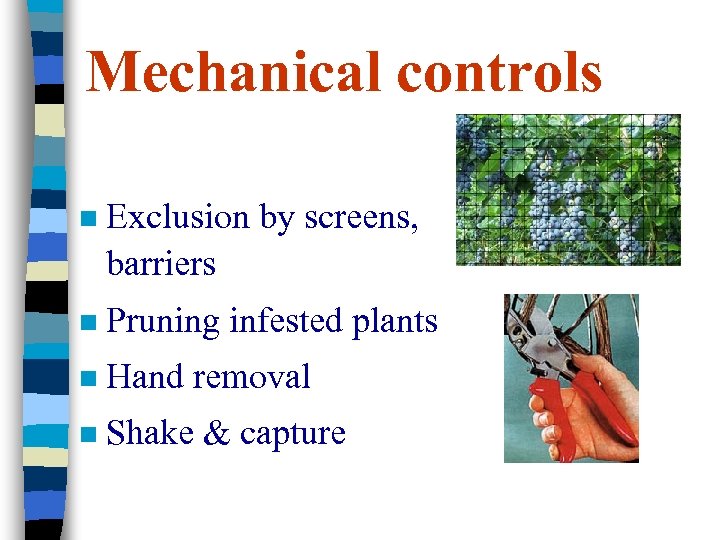
Mechanical controls n Exclusion by screens, barriers n Pruning infested plants n Hand removal n Shake & capture
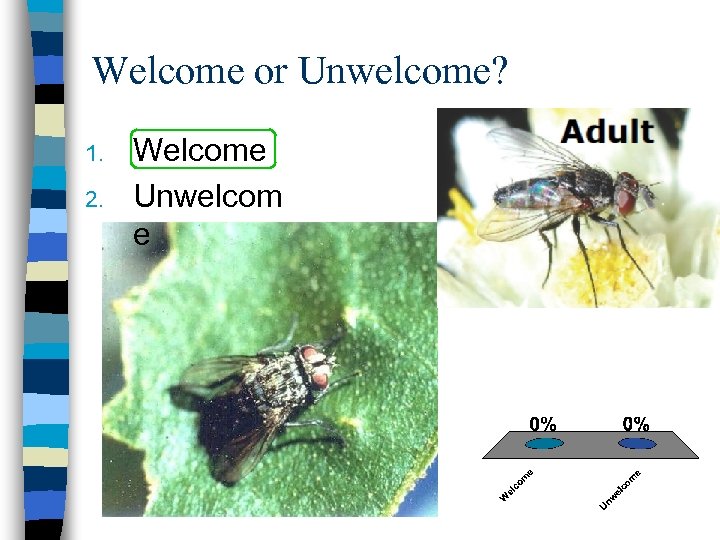
Welcome or Unwelcome? 1. 2. Welcome Unwelcom e
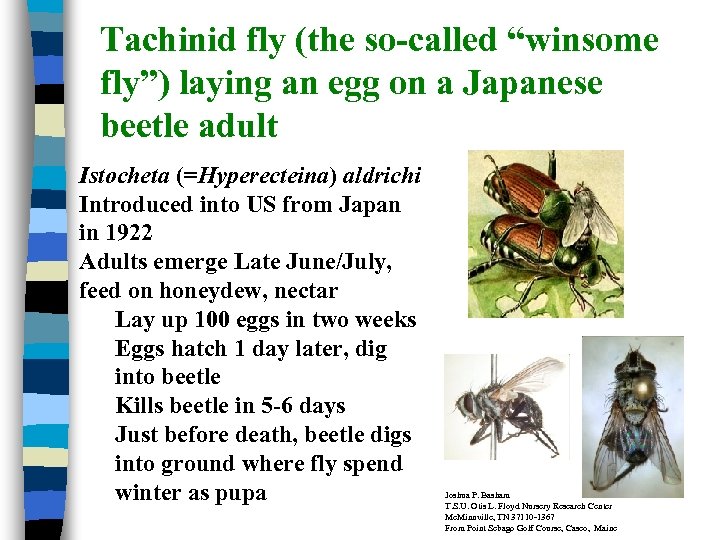
Tachinid fly (the so-called “winsome fly”) laying an egg on a Japanese beetle adult Istocheta (=Hyperecteina) aldrichi Introduced into US from Japan in 1922 Adults emerge Late June/July, feed on honeydew, nectar Lay up 100 eggs in two weeks Eggs hatch 1 day later, dig into beetle Kills beetle in 5 -6 days Just before death, beetle digs into ground where fly spend winter as pupa Joshua P. Basham T. S. U. Otis L. Floyd Nursery Research Center Mc. Minnville, TN 37110 -1367 From Point Sebago Golf Course, Casco, Maine
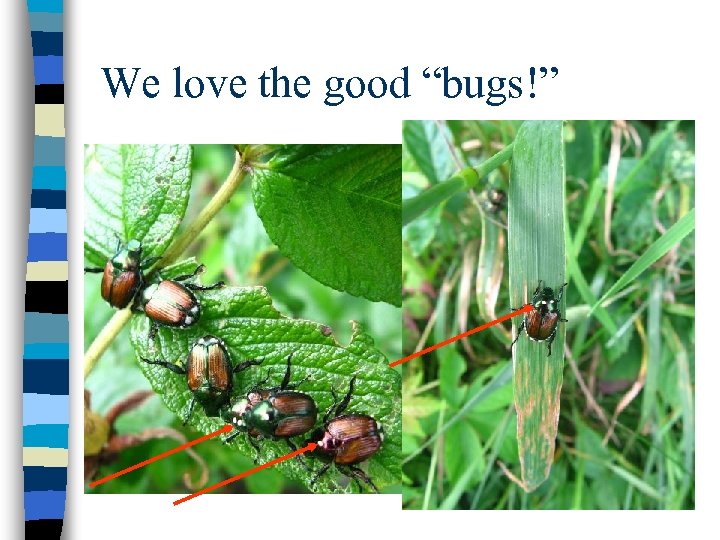
We love the good “bugs!” Photo Courtesy Vincent Hickey
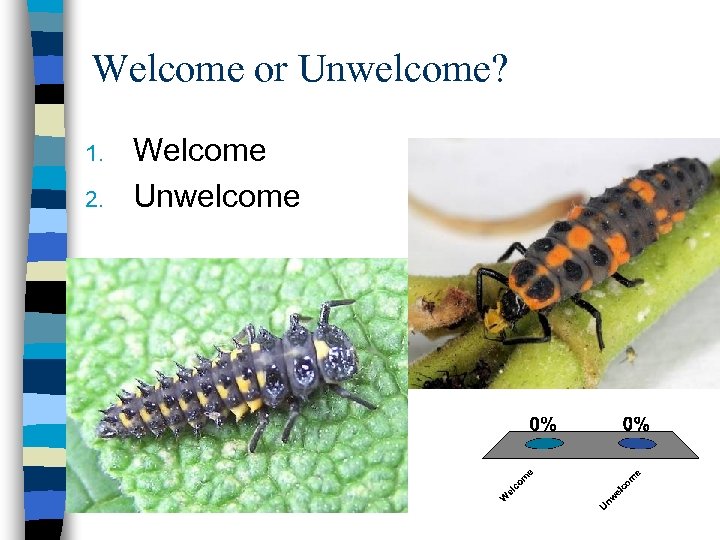
Welcome or Unwelcome? 1. 2. Welcome Unwelcome
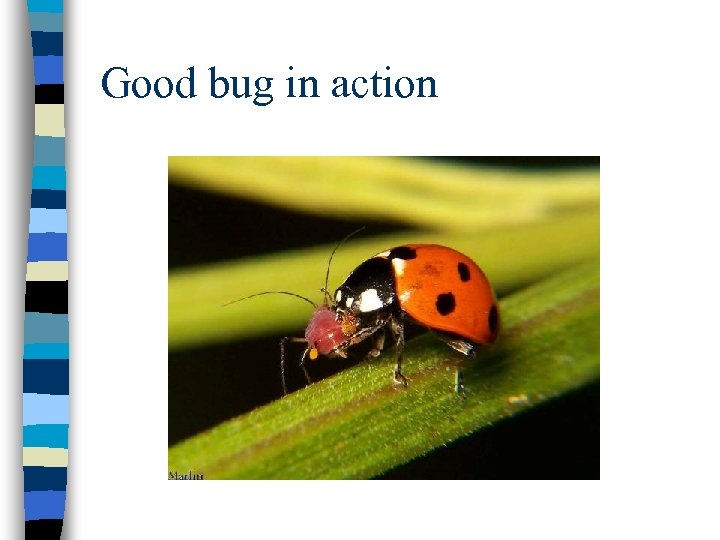
Good bug in action
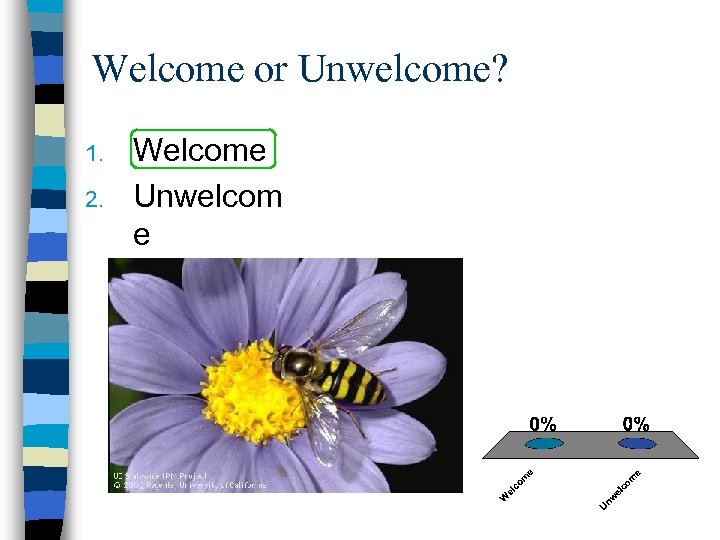
Welcome or Unwelcome? 1. 2. Welcome Unwelcom e
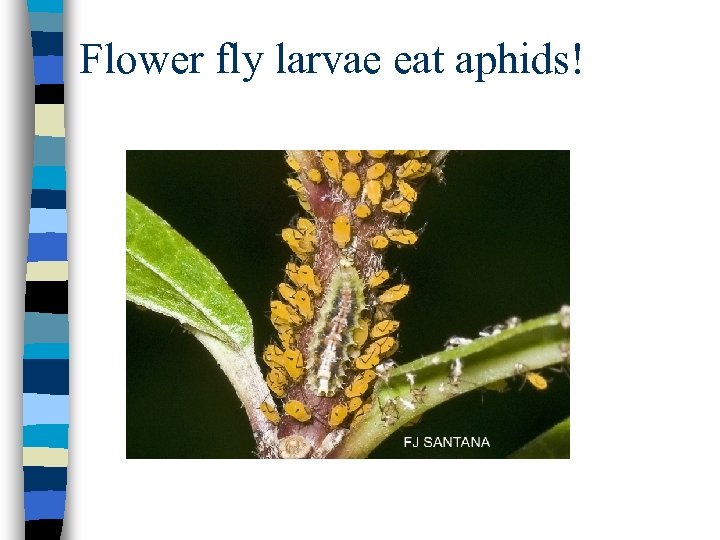
Flower fly larvae eat aphids!
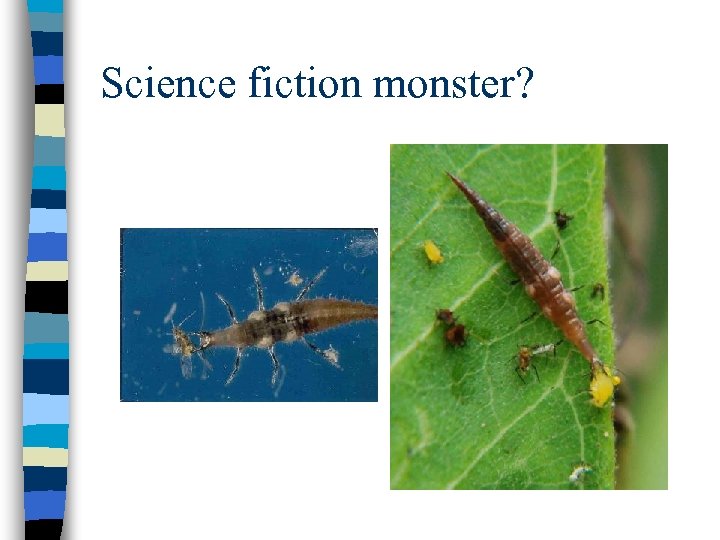
Science fiction monster?
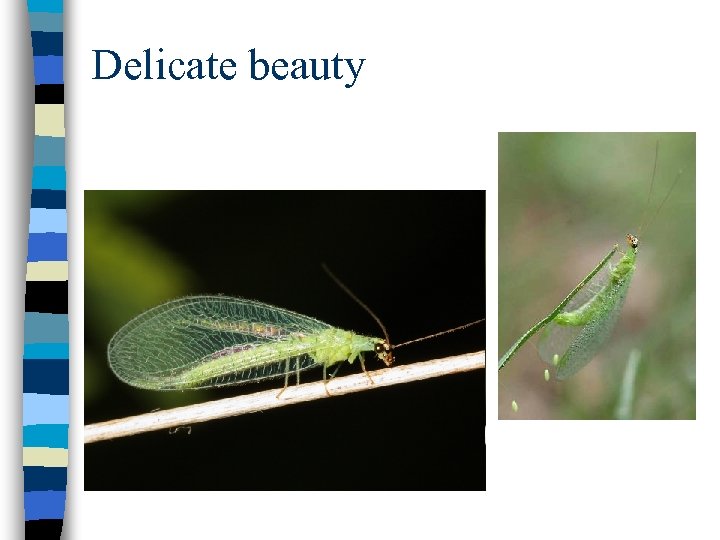
Delicate beauty
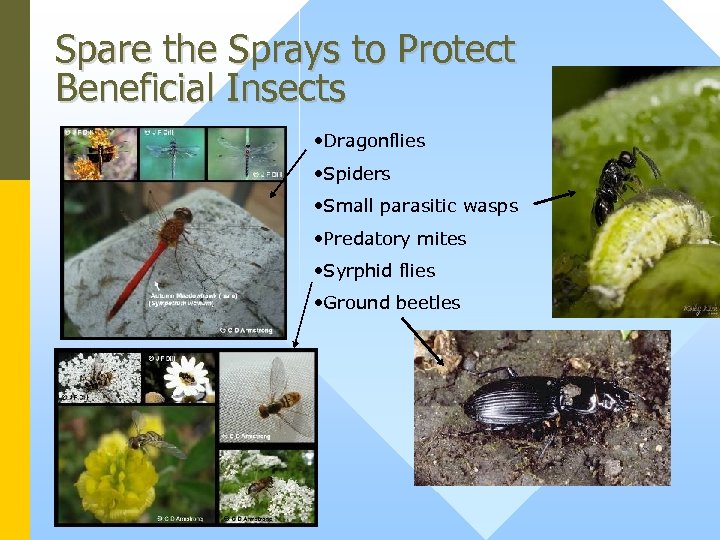
Spare the Sprays to Protect Beneficial Insects • Dragonflies • Spiders • Small parasitic wasps • Predatory mites • Syrphid flies • Ground beetles
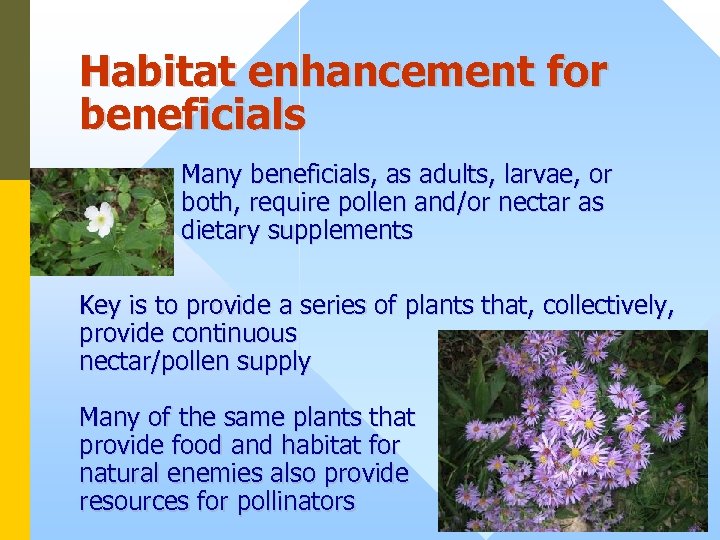
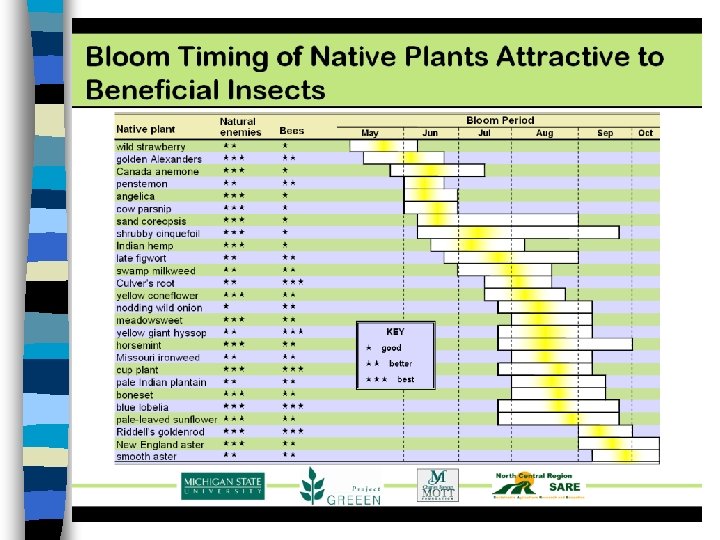
Habitat enhancement for beneficials Many beneficials, as adults, larvae, or both, require pollen and/or nectar as dietary supplements Key is to provide a series of plants that, collectively, provide continuous nectar/pollen supply Many of the same plants that provide food and habitat for natural enemies also provide resources for pollinators
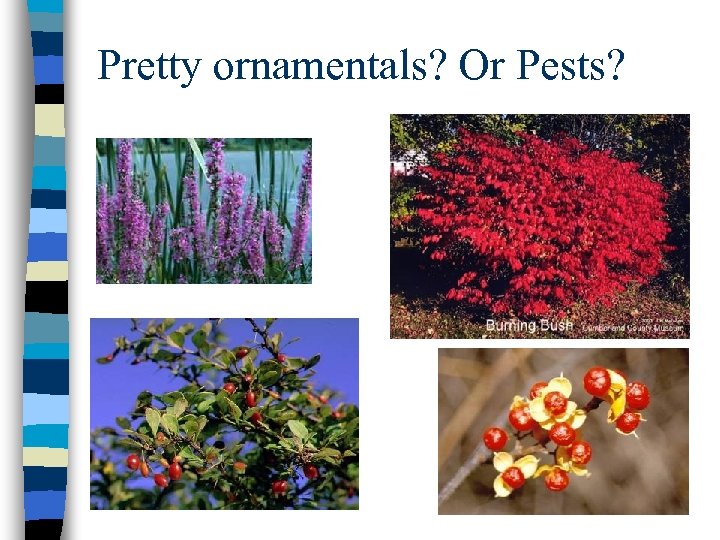
Pretty ornamentals? Or Pests?
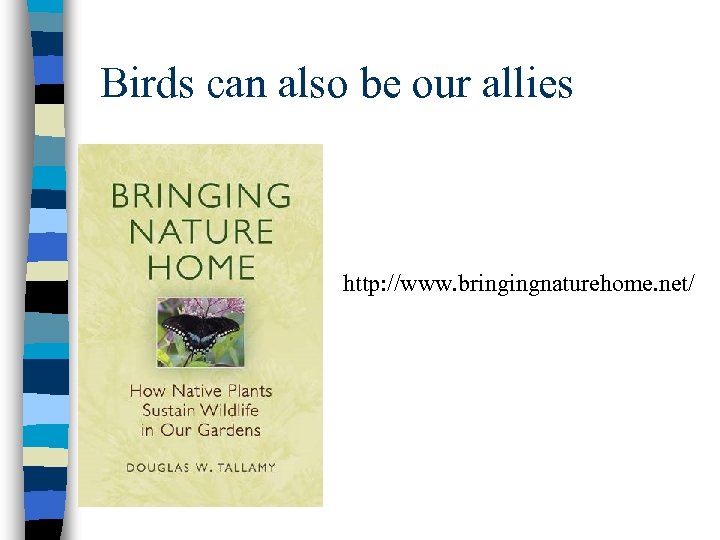
Birds can also be our allies http: //www. bringingnaturehome. net/
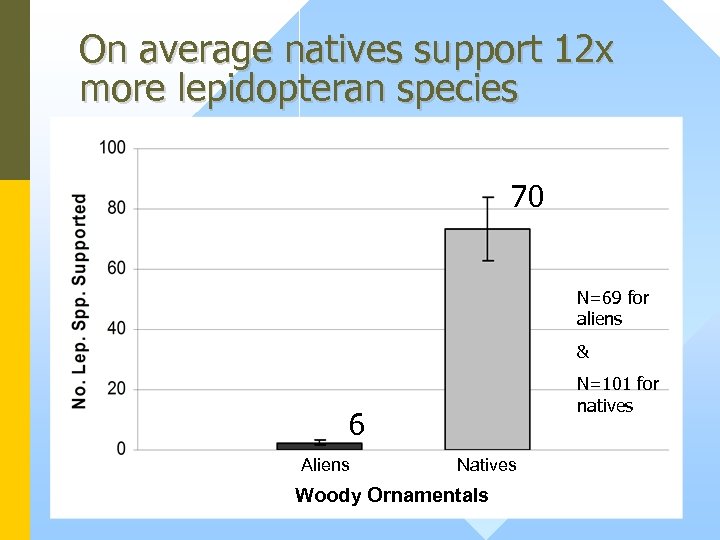
On average natives support 12 x more lepidopteran species 70 N=69 for aliens & N=101 for natives 6 Aliens Natives Woody Ornamentals
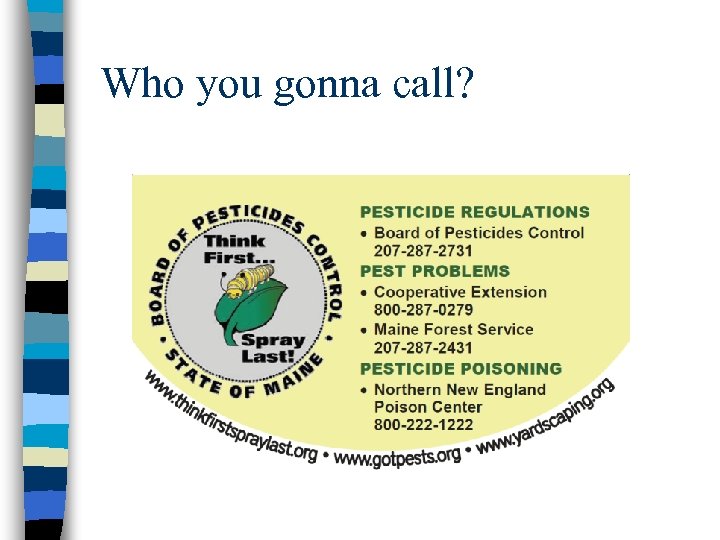
Who you gonna call?
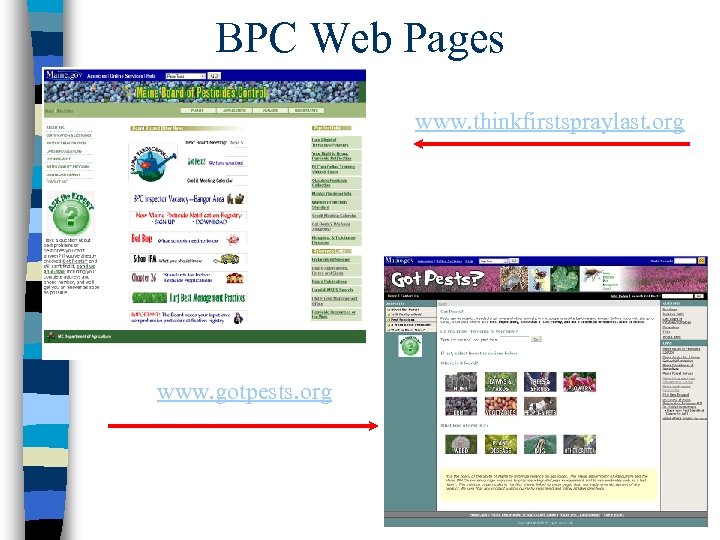
BPC Web Pages www. thinkfirstspraylast. org www. gotpests. org
Do you need a pesticide? n Is the pest in a susceptible stage? n Application timing is critical n Is the pest still present?
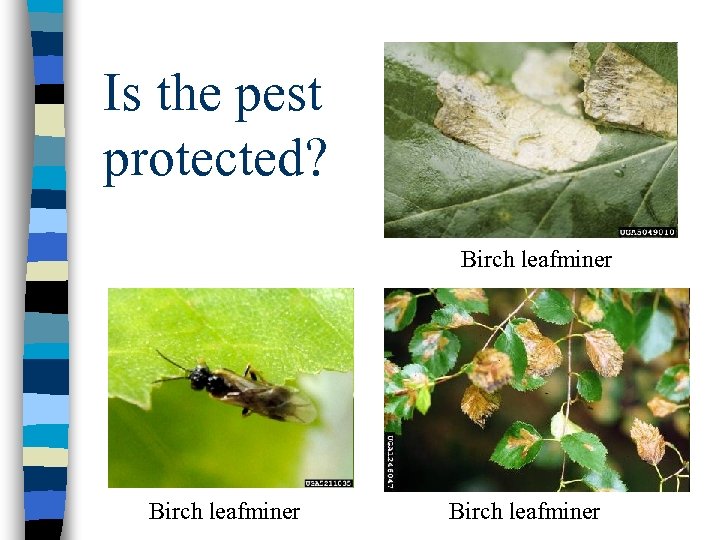
Is the pest protected? Birch leafminer
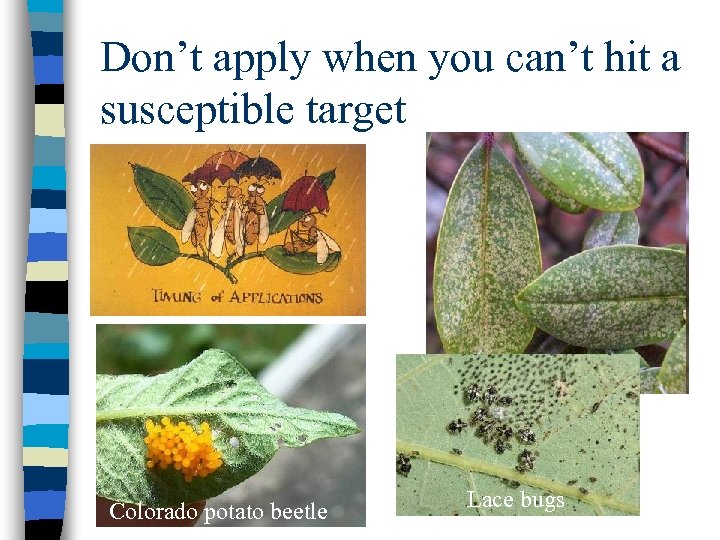
Don’t apply when you can’t hit a susceptible target Colorado potato beetle Lace bugs
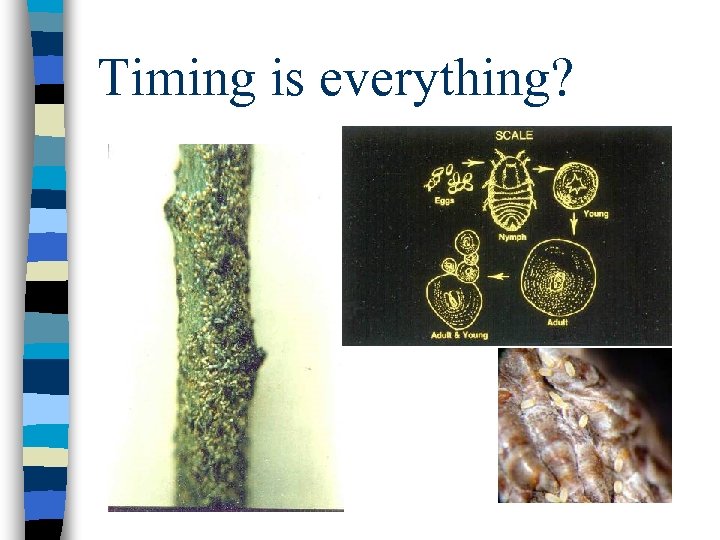
Timing is everything?
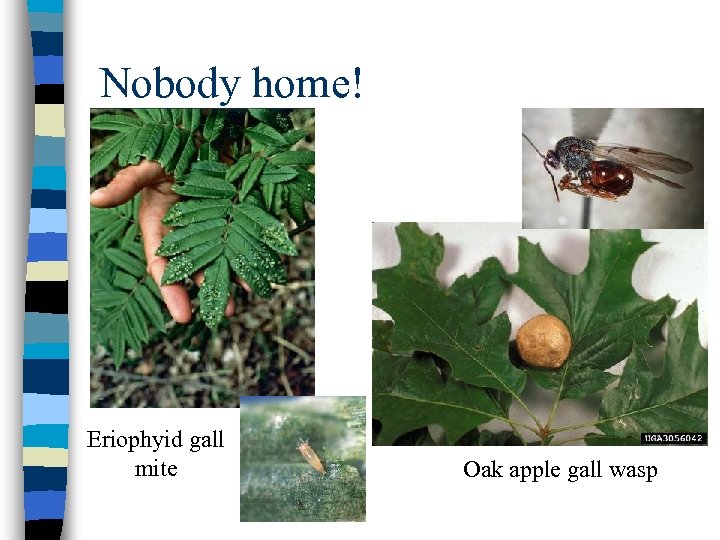
Nobody home! Eriophyid gall mite Oak apple gall wasp
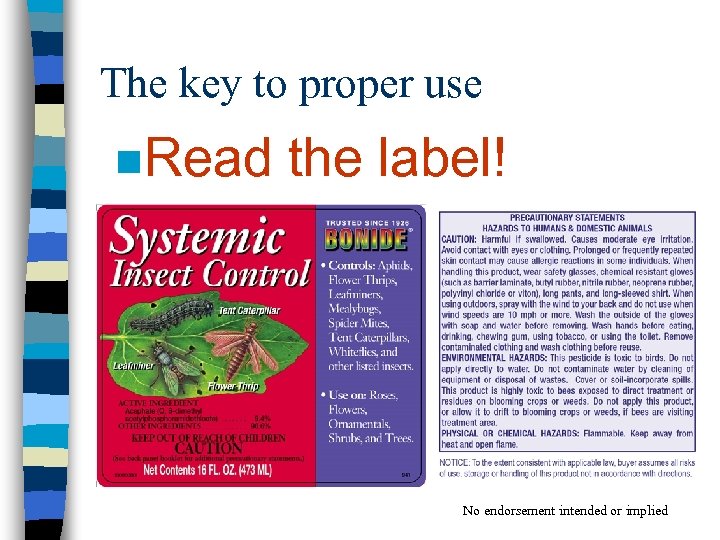
The key to proper use n. Read the label! No endorsement intended or implied
Weed-B-Gon Max is a slightly hazardous pesticide. 1. 2. True False
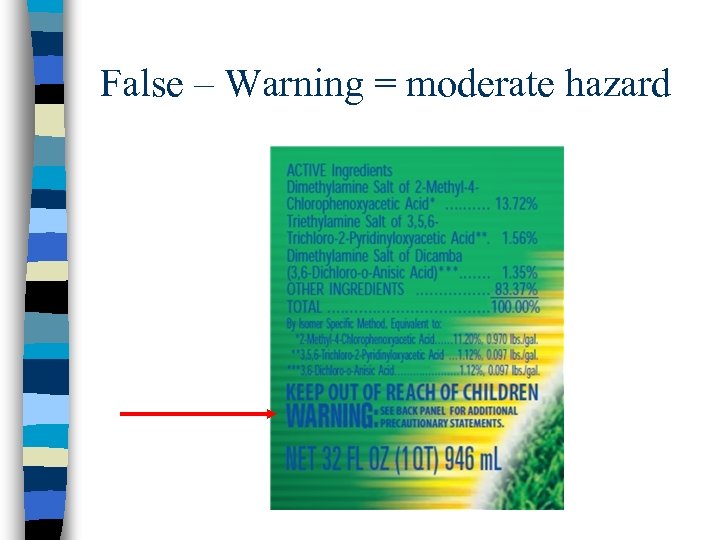
False – Warning = moderate hazard
Weed-B-Gon Max should be applied right after mowing. 1. 2. True False
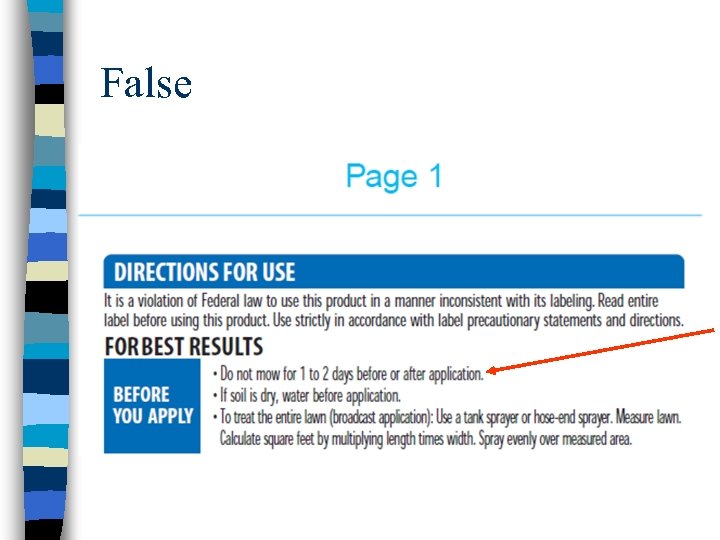
False
Weed-B-Gon Max can be applied under trees without risk of harm to the trees. 1. 2. True False
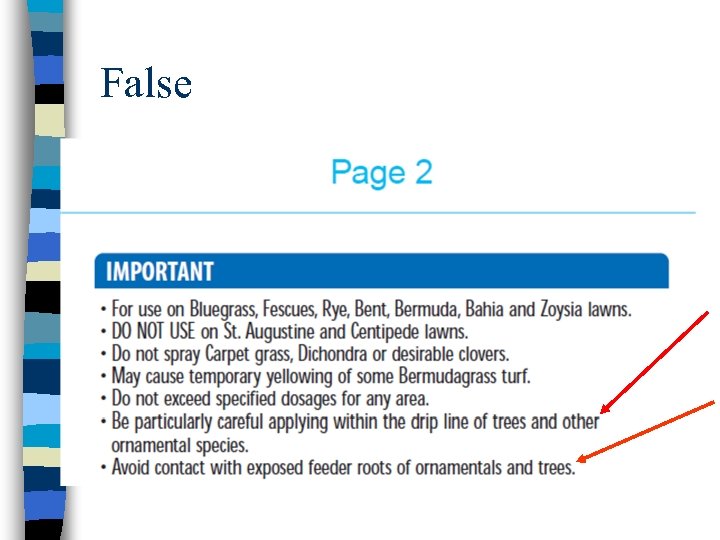
False
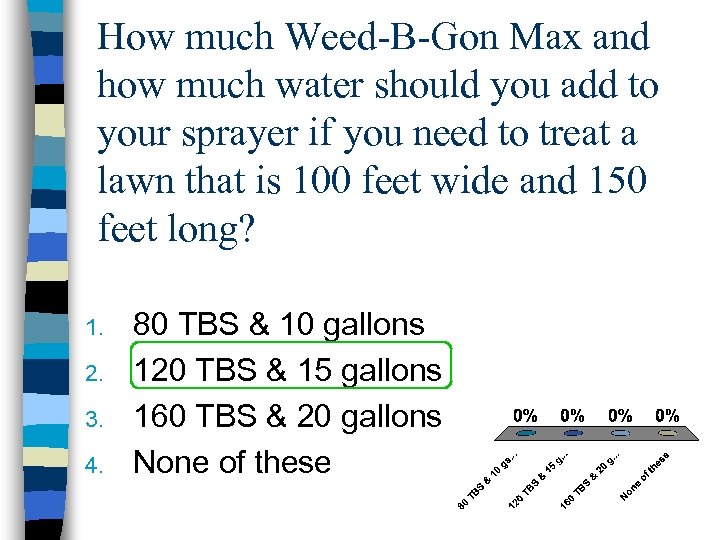
How much Weed-B-Gon Max and how much water should you add to your sprayer if you need to treat a lawn that is 100 feet wide and 150 feet long? 1. 2. 3. 4. 80 TBS & 10 gallons 120 TBS & 15 gallons 160 TBS & 20 gallons None of these
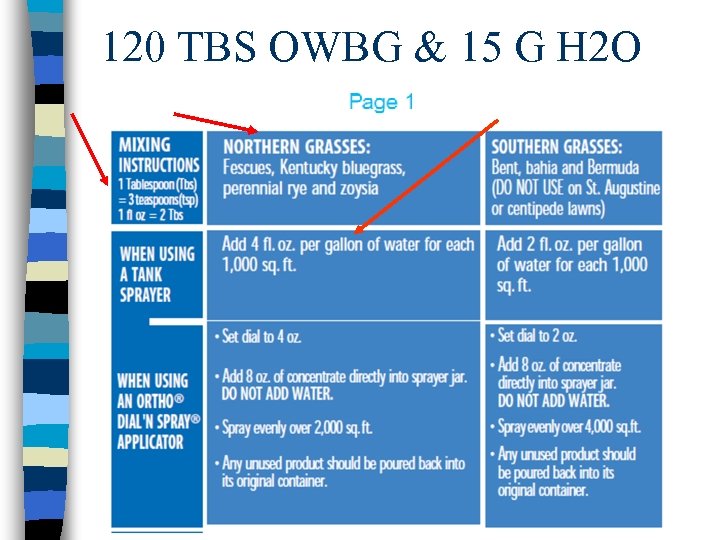
120 TBS OWBG & 15 G H 2 O
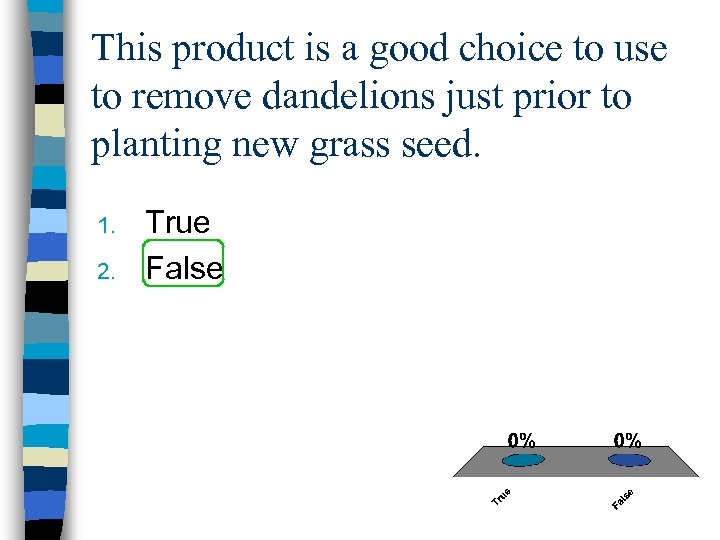
This product is a good choice to use to remove dandelions just prior to planting new grass seed. 1. 2. True False
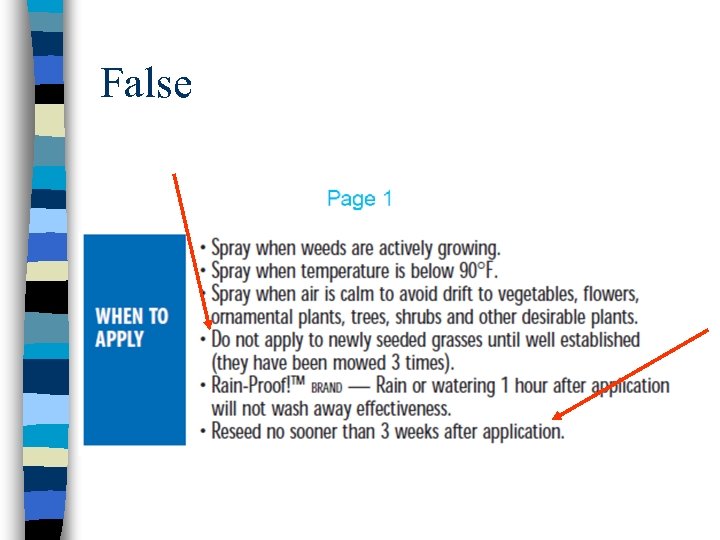
False
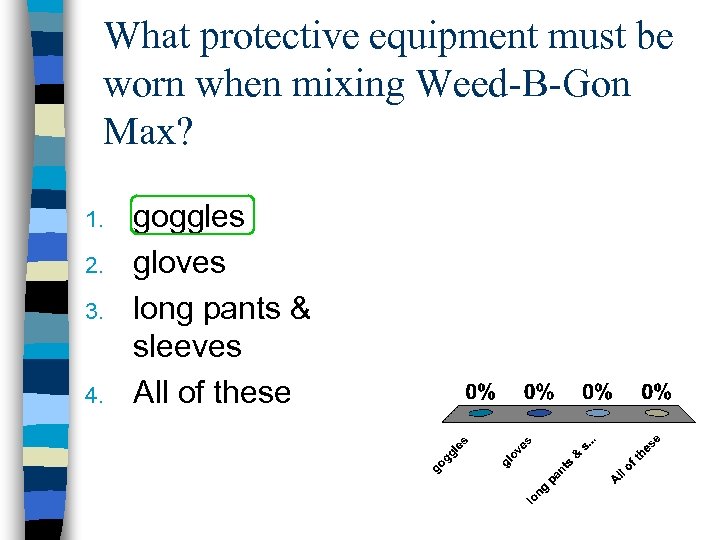
What protective equipment must be worn when mixing Weed-B-Gon Max? 1. 2. 3. 4. goggles gloves long pants & sleeves All of these
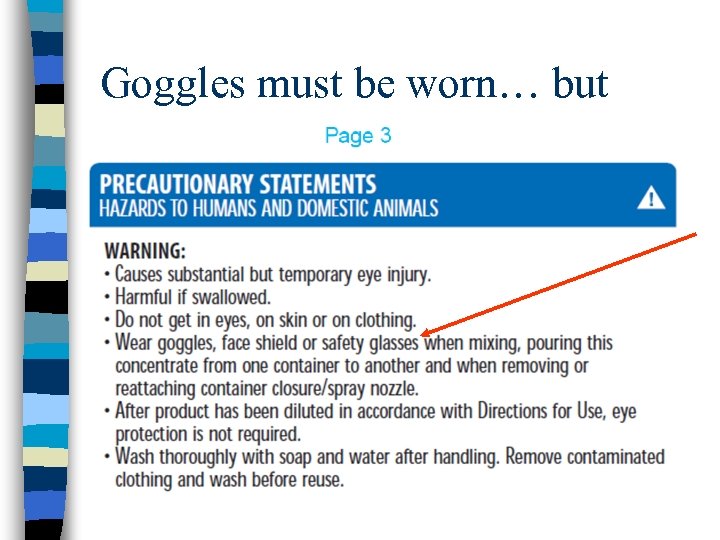
Goggles must be worn… but
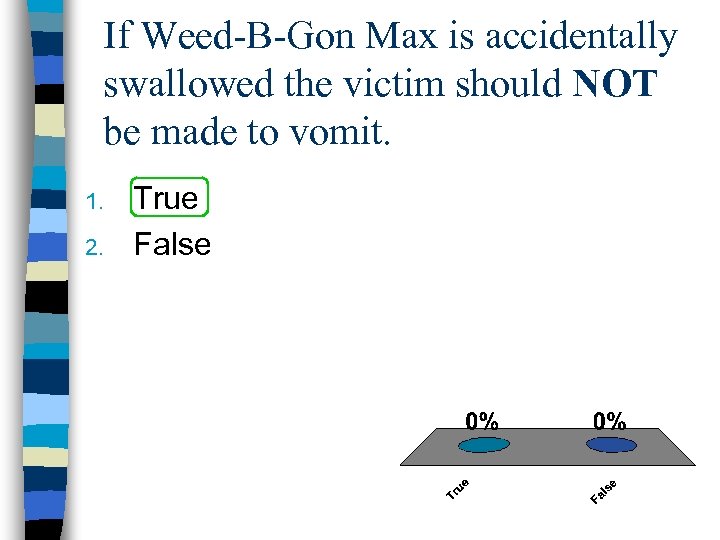
If Weed-B-Gon Max is accidentally swallowed the victim should NOT be made to vomit. 1. 2. True False
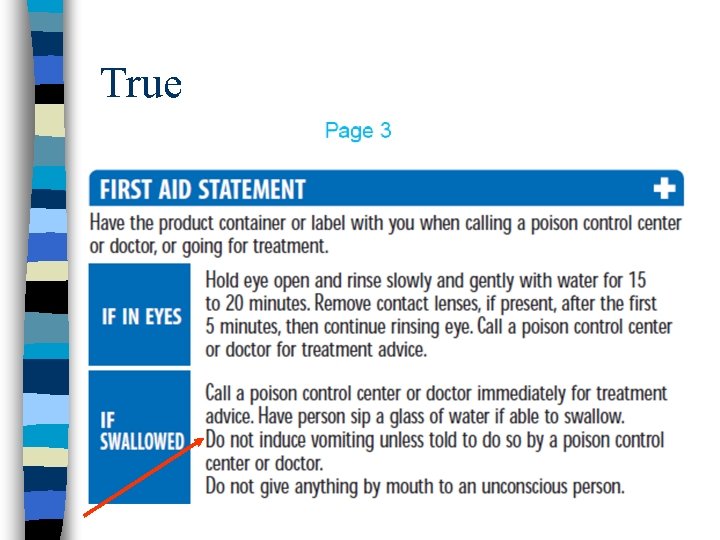
True
Weed-B-Gon Max can be used on any type of lawn. 1. 2. True False
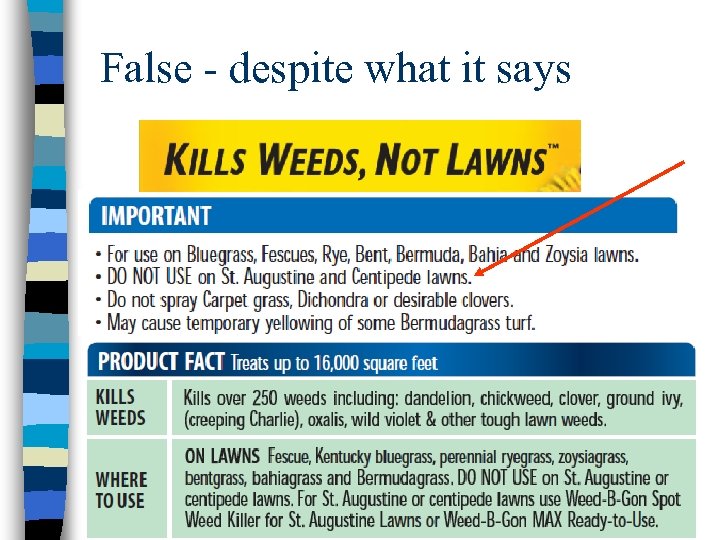
False - despite what it says
People and pets can re-enter the treated area after the spray has dried. 1. 2. True False
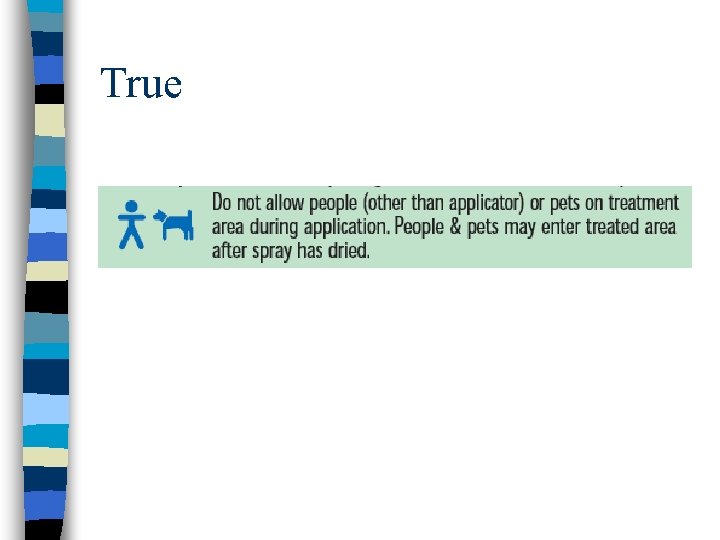
True
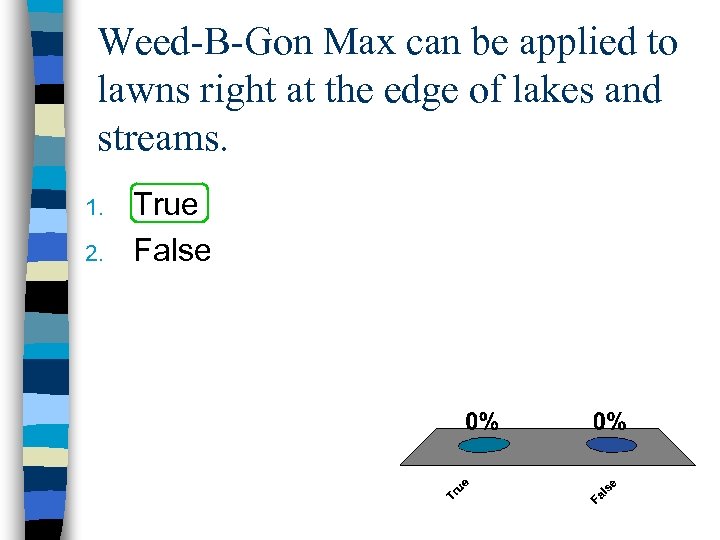
Weed-B-Gon Max can be applied to lawns right at the edge of lakes and streams. 1. 2. True False
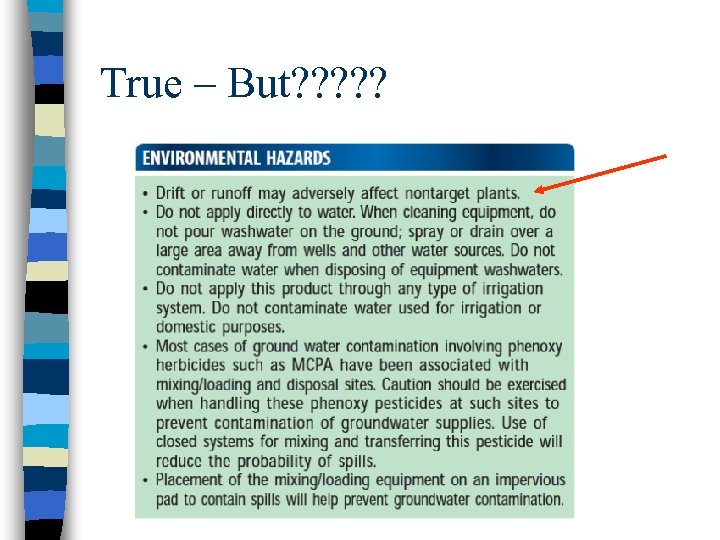
True – But? ? ?
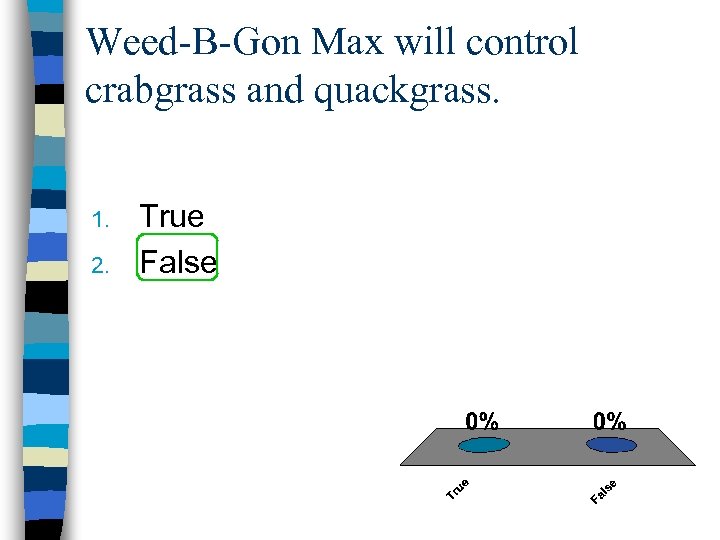
Weed-B-Gon Max will control crabgrass and quackgrass. 1. 2. True False
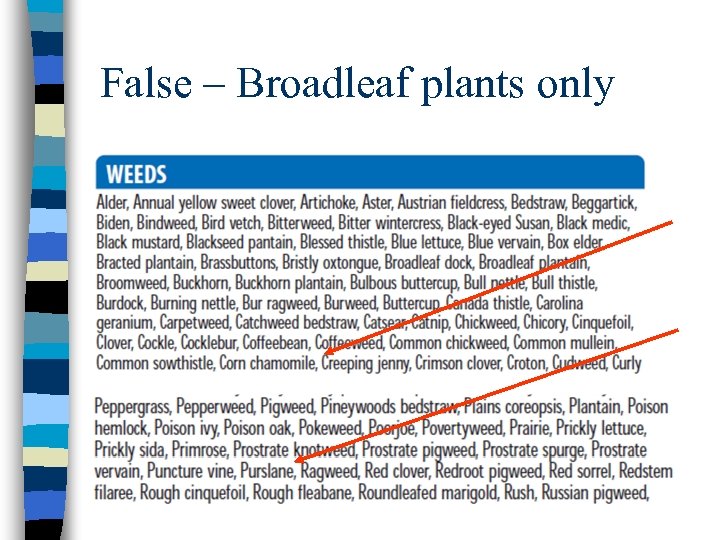
False – Broadleaf plants only
Weed-B-Gon Max works best on hot summer days when the weeds are dry and dying. 1. 2. True False
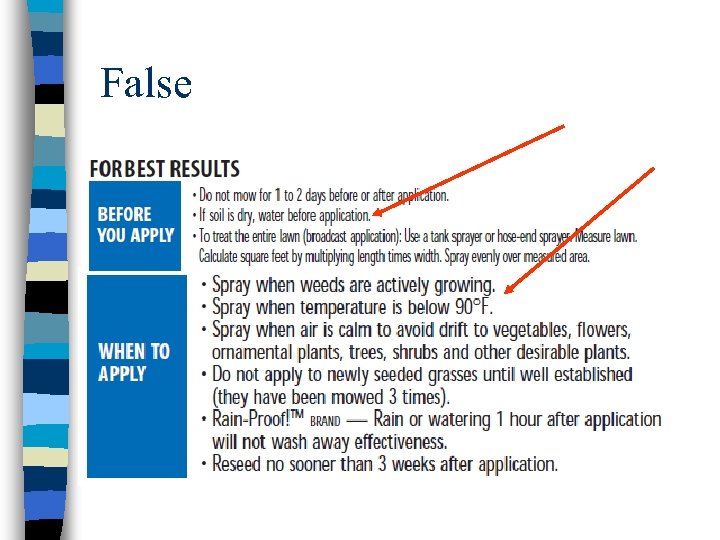
False
Weed-B-Gon Max can be applied right next to vegetable gardens. 1. 2. True False
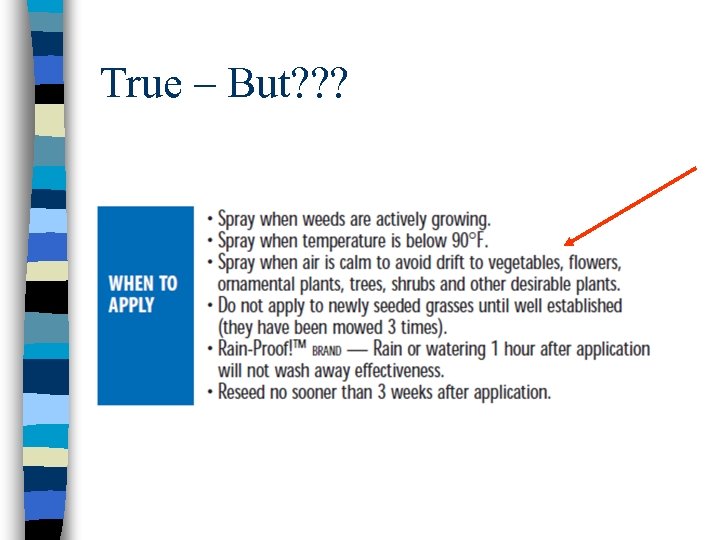
True – But? ? ?
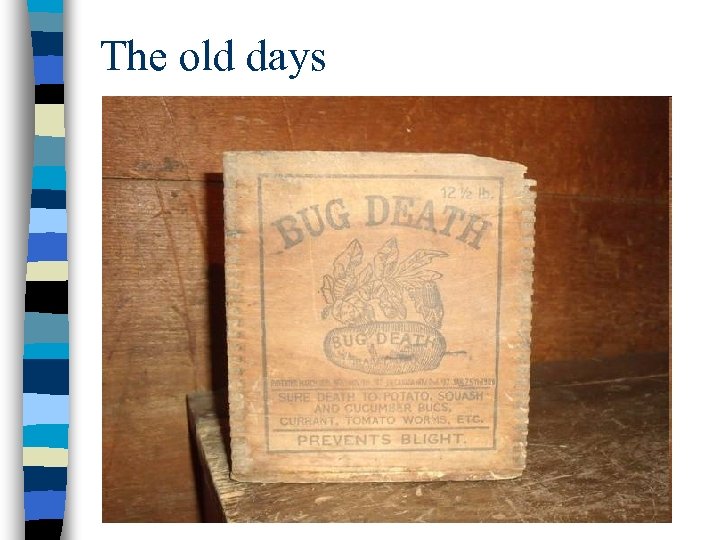
The old days
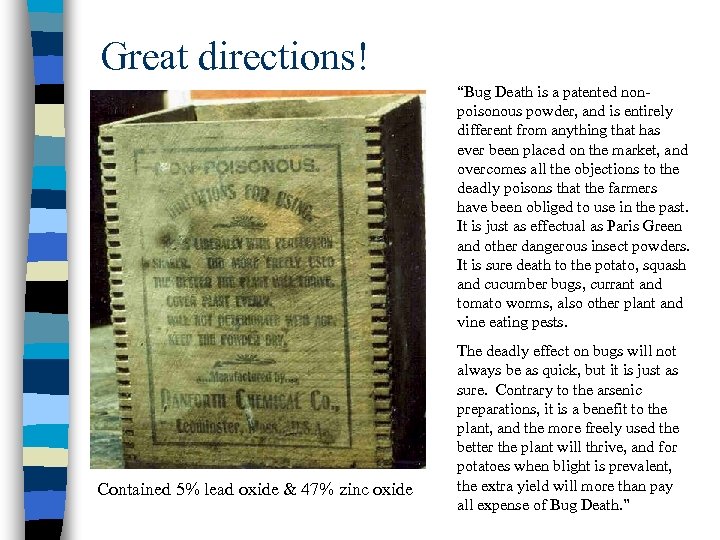
Great directions! “Bug Death is a patented nonpoisonous powder, and is entirely different from anything that has ever been placed on the market, and overcomes all the objections to the deadly poisons that the farmers have been obliged to use in the past. It is just as effectual as Paris Green and other dangerous insect powders. It is sure death to the potato, squash and cucumber bugs, currant and tomato worms, also other plant and vine eating pests. Contained 5% lead oxide & 47% zinc oxide The deadly effect on bugs will not always be as quick, but it is just as sure. Contrary to the arsenic preparations, it is a benefit to the plant, and the more freely used the better the plant will thrive, and for potatoes when blight is prevalent, the extra yield will more than pay all expense of Bug Death. ”
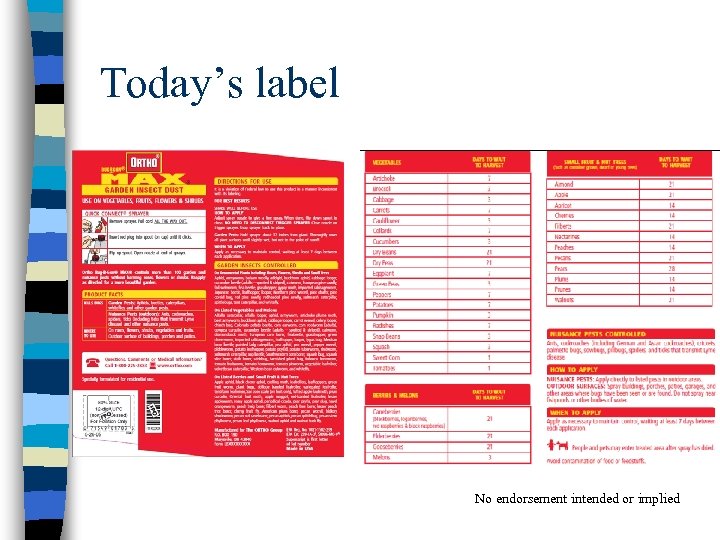
Today’s label No endorsement intended or implied
Purchase wisely n Measure the area needing treatment n Only purchase what you need “right now” n Check the label for: – re entry – site & pest – days to harvest – personal protective equipment needs
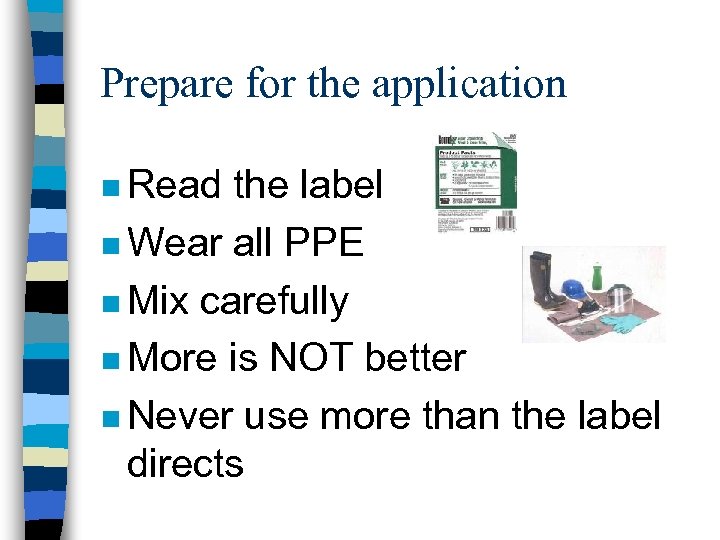
Prepare for the application n Read the label n Wear all PPE n Mix carefully n More is NOT better n Never use more than the label directs
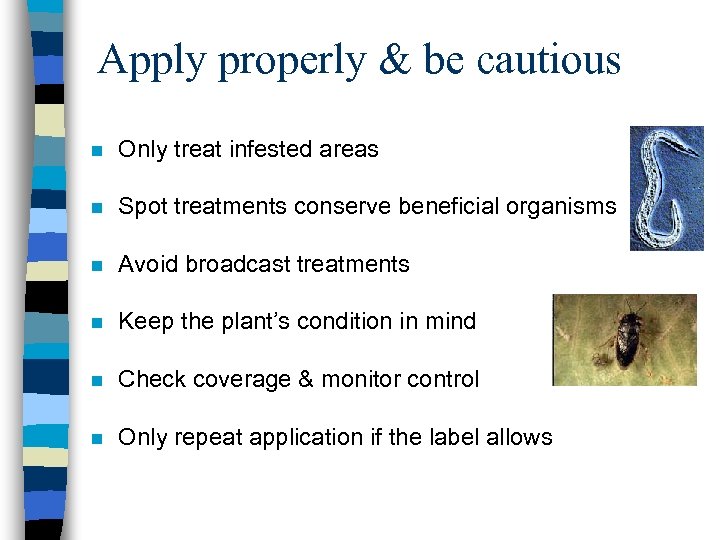
Apply properly & be cautious n Only treat infested areas n Spot treatments conserve beneficial organisms n Avoid broadcast treatments n Keep the plant’s condition in mind n Check coverage & monitor control n Only repeat application if the label allows
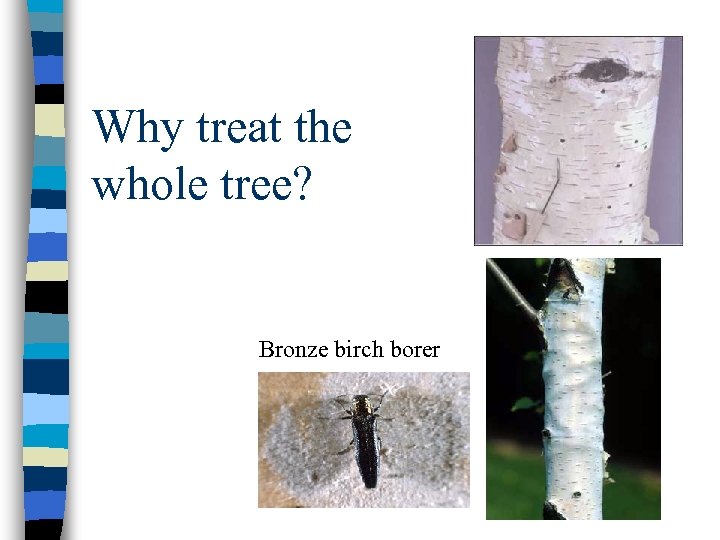
Why treat the whole tree? Bronze birch borer
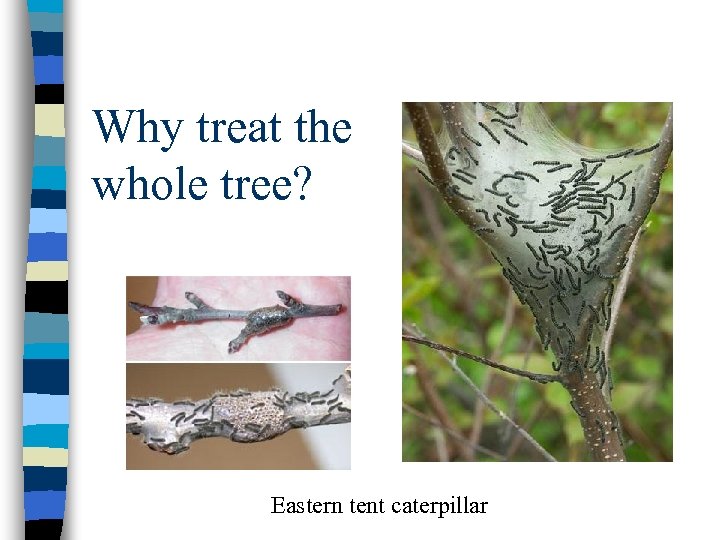
Why treat the whole tree? Eastern tent caterpillar
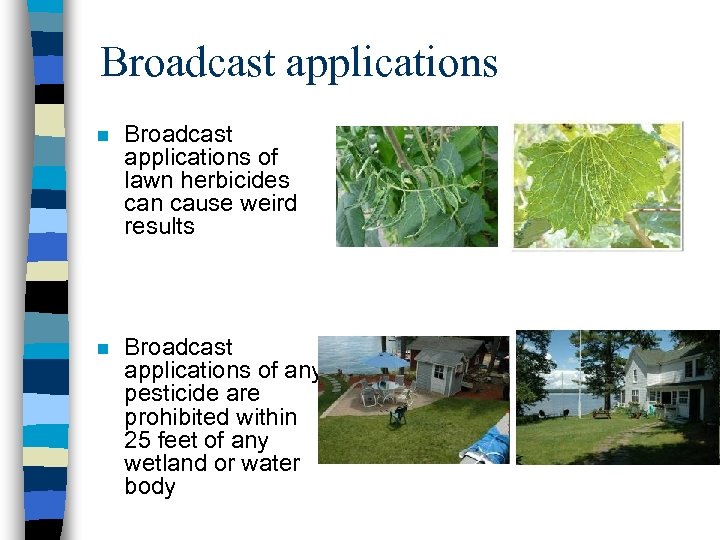
Broadcast applications n Broadcast applications of lawn herbicides can cause weird results n Broadcast applications of any pesticide are prohibited within 25 feet of any wetland or water body
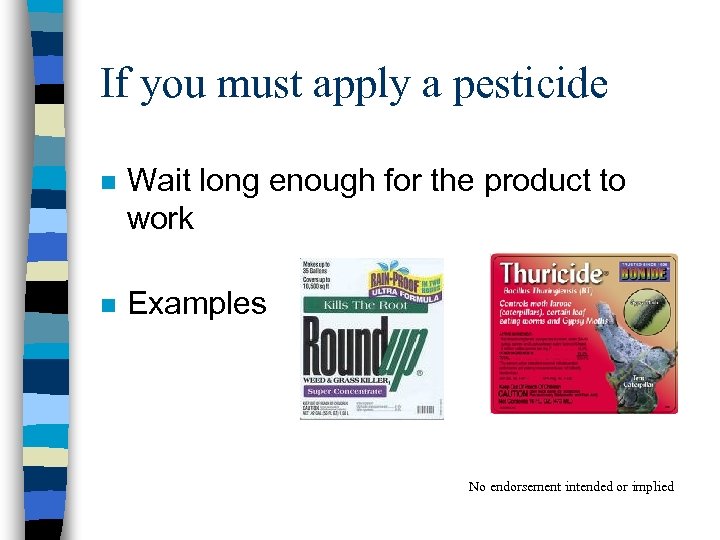
If you must apply a pesticide n Wait long enough for the product to work n Examples No endorsement intended or implied
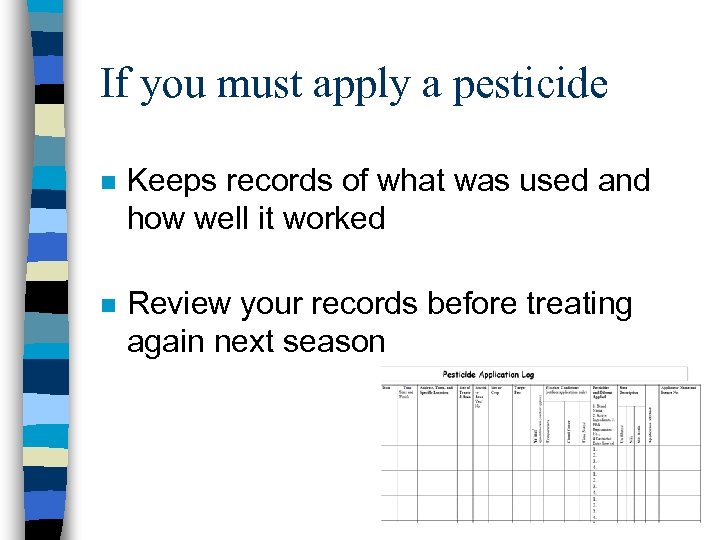
If you must apply a pesticide n Keeps records of what was used and how well it worked n Review your records before treating again next season
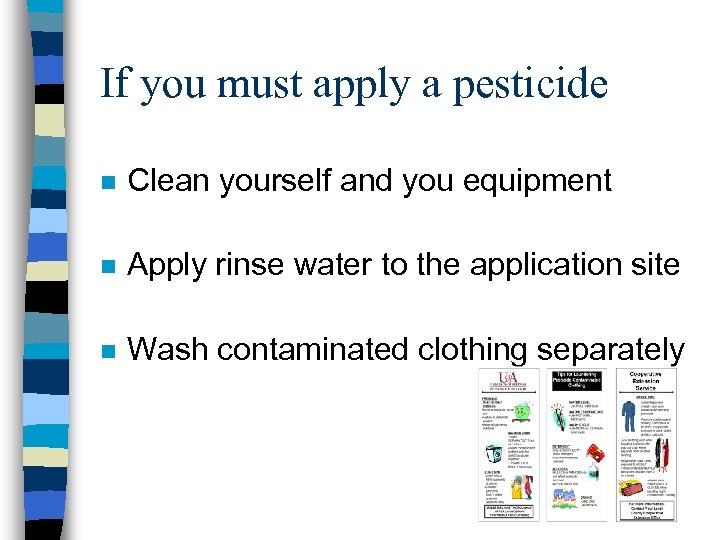
If you must apply a pesticide n Clean yourself and you equipment n Apply rinse water to the application site n Wash contaminated clothing separately
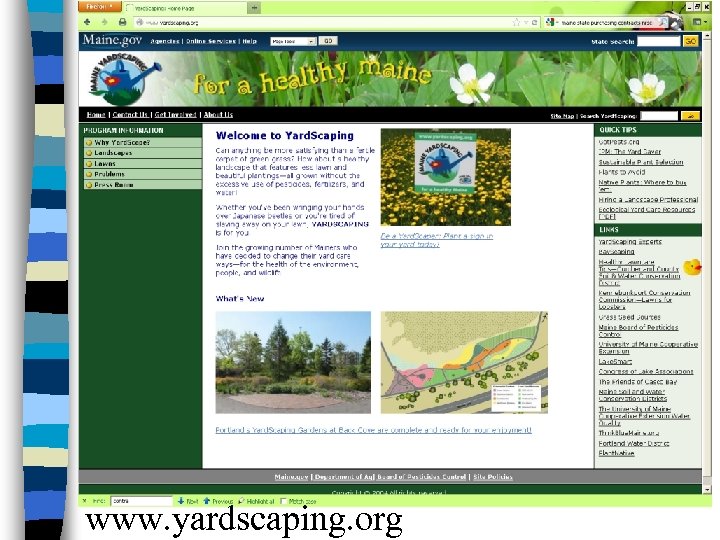
Yard. Scaping… for a healthy Maine
The Yard. Scaping Partnership • Allen, Sterling & Lothrop • Maine Landscape & Nursery • Bar Mills Ecological Association • Breakwater School • Maine Organic Farmers & Gardeners Association • Carroll Associates, Landscape • Maine Soil & Water Conservation Architects Districts • Casco Bay Estuary Partnership • Maine State Planning Office • City of Portland • Maine Volunteer Lake Monitoring • Congress of Lake Associations Program • Friends of Casco Bay • Natural Resources Conservation • Friends of Scarborough Marsh Service • Gnome Landscapes, Design & • New England Organics Masonry • O'Donal's Nurseries • Jacobs Edwards and Kelcey • PJC & Company Ecological Land • Kennebunkport Conservation Care Commission • Portland Trails • Lake. Smart Program • Shaw Brothers Construction • Libby’s Landscaping and • Skillin's Greenhouse • Lisa Cowan, studioverde landscape • Southern Maine Community College architecture + design • Maine Board of Pesticides Control • Think Blue Maine Program • Maine Department of Agriculture • Town of Brunswick • University of Maine Cooperative • Maine Department of Extension Environmental Protection The Partnership is very diverse!
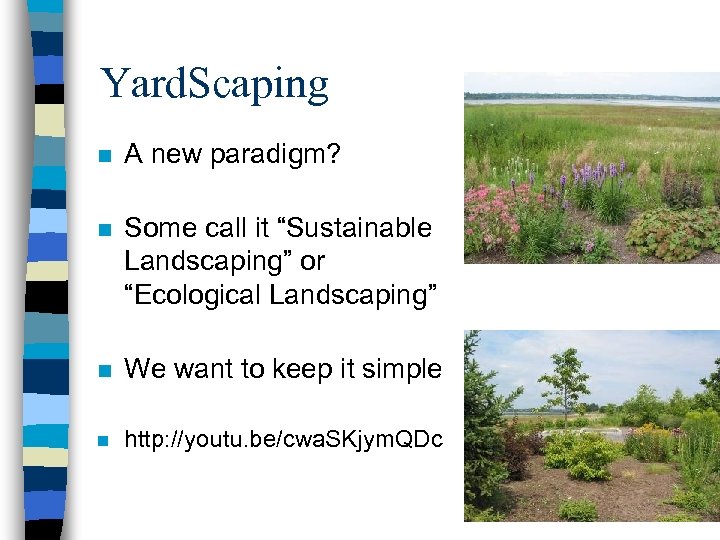
Yard. Scaping n A new paradigm? n Some call it “Sustainable Landscaping” or “Ecological Landscaping” n We want to keep it simple n http: //youtu. be/cwa. SKjym. QDc
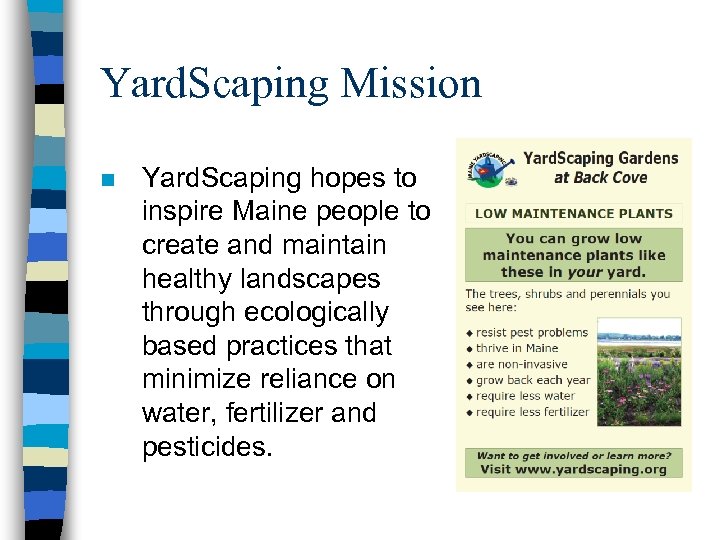
Yard. Scaping Mission n Yard. Scaping hopes to inspire Maine people to create and maintain healthy landscapes through ecologically based practices that minimize reliance on water, fertilizer and pesticides.
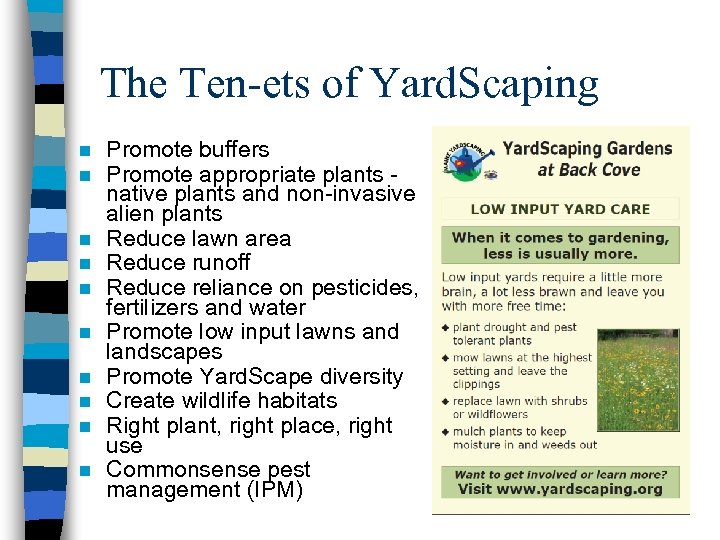
The Ten-ets of Yard. Scaping n n n n n Promote buffers Promote appropriate plants native plants and non invasive alien plants Reduce lawn area Reduce runoff Reduce reliance on pesticides, fertilizers and water Promote low input lawns and landscapes Promote Yard. Scape diversity Create wildlife habitats Right plant, right place, right use Commonsense pest management (IPM)
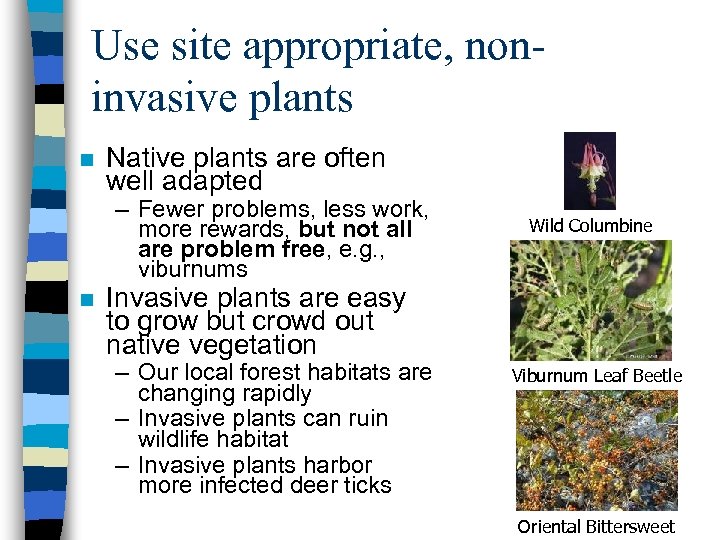
Use site appropriate, noninvasive plants n Native plants are often well adapted – Fewer problems, less work, more rewards, but not all are problem free, e. g. , viburnums n Wild Columbine Invasive plants are easy to grow but crowd out native vegetation – Our local forest habitats are changing rapidly – Invasive plants can ruin wildlife habitat – Invasive plants harbor more infected deer ticks Viburnum Leaf Beetle Oriental Bittersweet
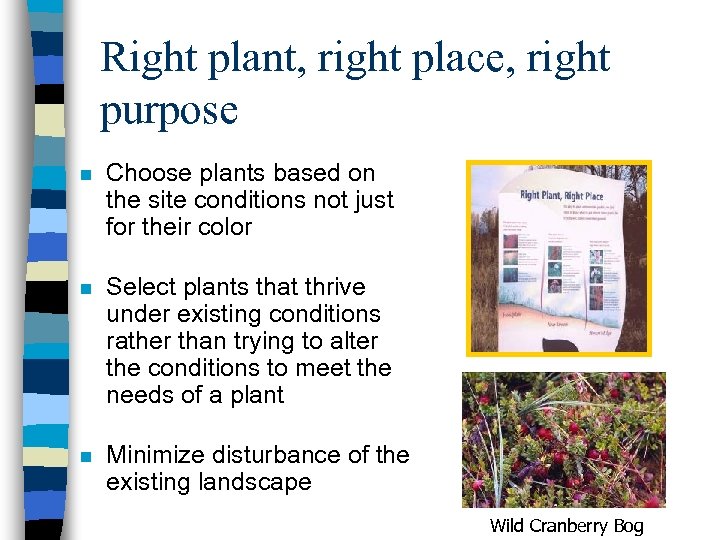
Right plant, right place, right purpose n Choose plants based on the site conditions not just for their color n Select plants that thrive under existing conditions rather than trying to alter the conditions to meet the needs of a plant n Minimize disturbance of the existing landscape Wild Cranberry Bog
Where to learn more www. yardscaping. org/plants/index. htm
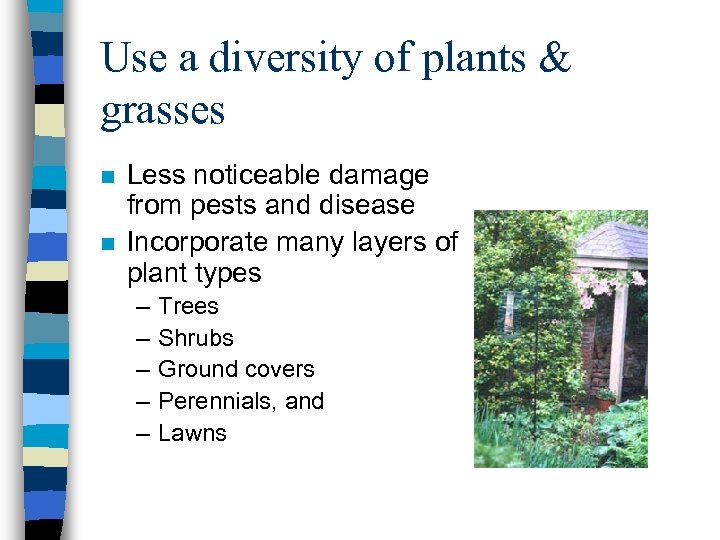
Use a diversity of plants & grasses n n Less noticeable damage from pests and disease Incorporate many layers of plant types – – – Trees Shrubs Ground covers Perennials, and Lawns
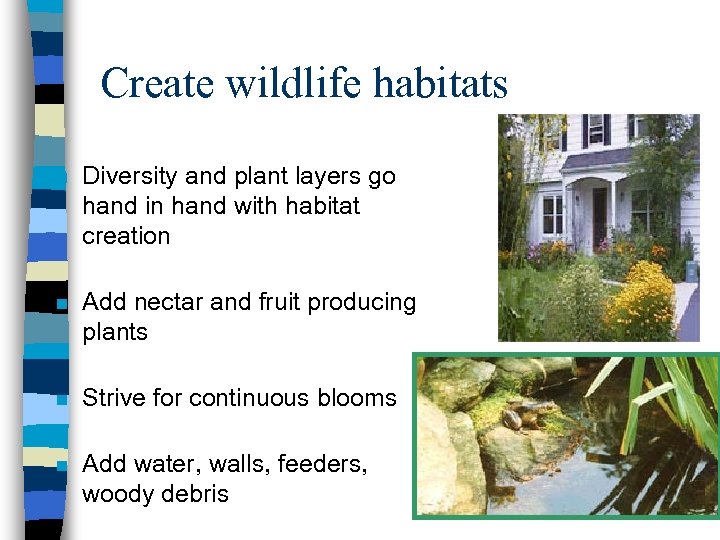
Create wildlife habitats n Diversity and plant layers go hand in hand with habitat creation n Add nectar and fruit producing plants n Strive for continuous blooms n Add water, walls, feeders, woody debris
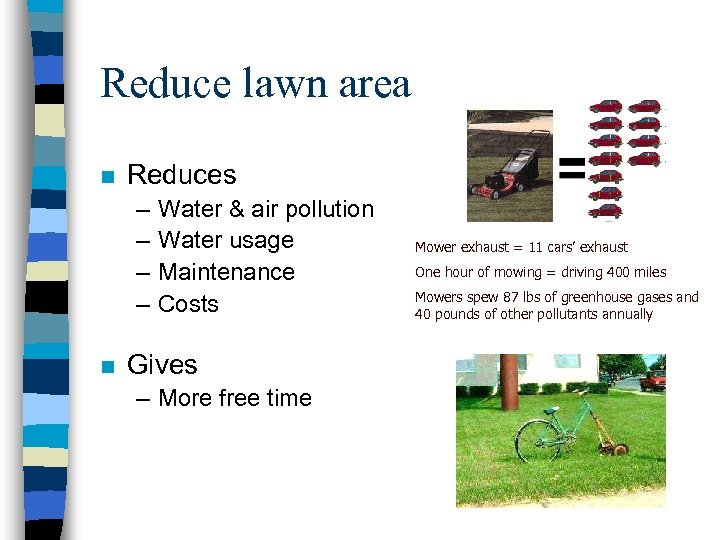
Reduce lawn area n Reduces – – n Water & air pollution Water usage Maintenance Costs Gives – More free time Mower exhaust = 11 cars’ exhaust One hour of mowing = driving 400 miles Mowers spew 87 lbs of greenhouse gases and 40 pounds of other pollutants annually
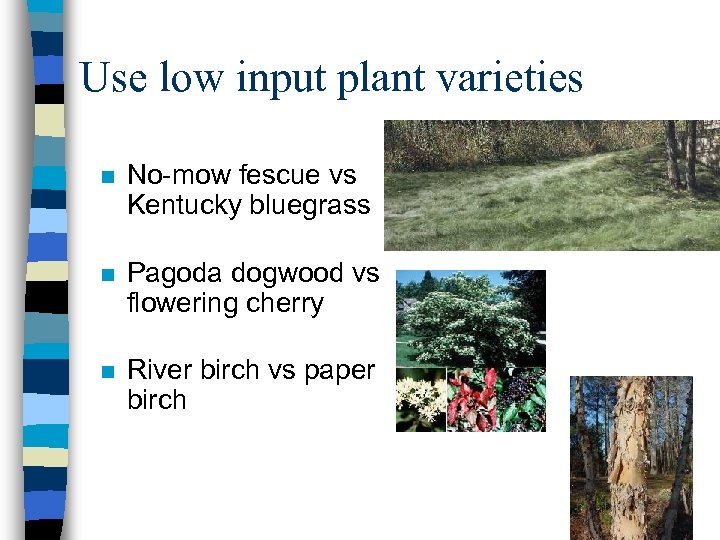
Use low input plant varieties n No mow fescue vs Kentucky bluegrass n Pagoda dogwood vs flowering cherry n River birch vs paper birch
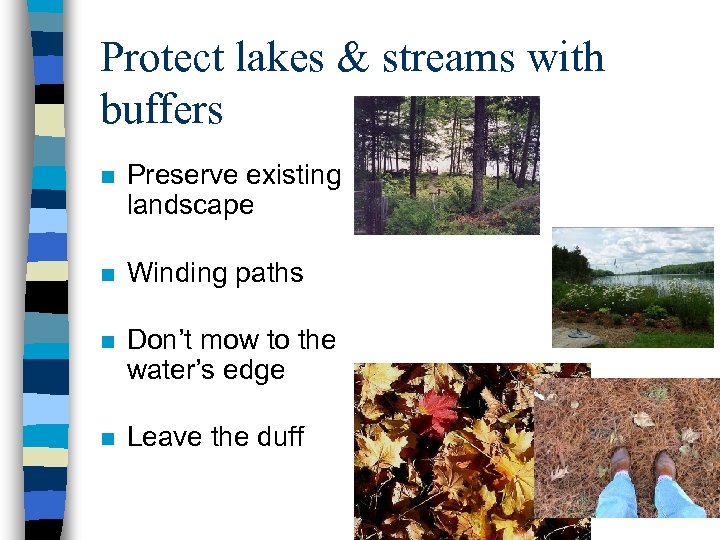
Protect lakes & streams with buffers n Preserve existing landscape n Winding paths n Don’t mow to the water’s edge n Leave the duff
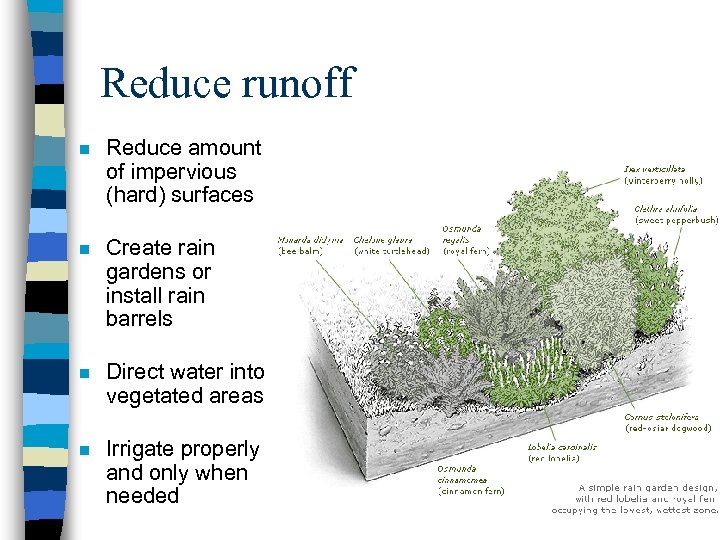
Reduce runoff n Reduce amount of impervious (hard) surfaces n Create rain gardens or install rain barrels n Direct water into vegetated areas n Irrigate properly and only when needed
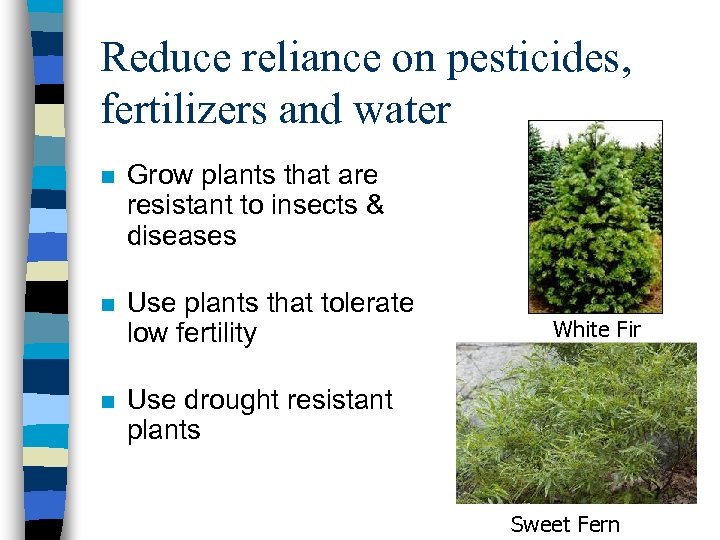
Reduce reliance on pesticides, fertilizers and water n Grow plants that are resistant to insects & diseases n Use plants that tolerate low fertility n Use drought resistant plants White Fir Sweet Fern
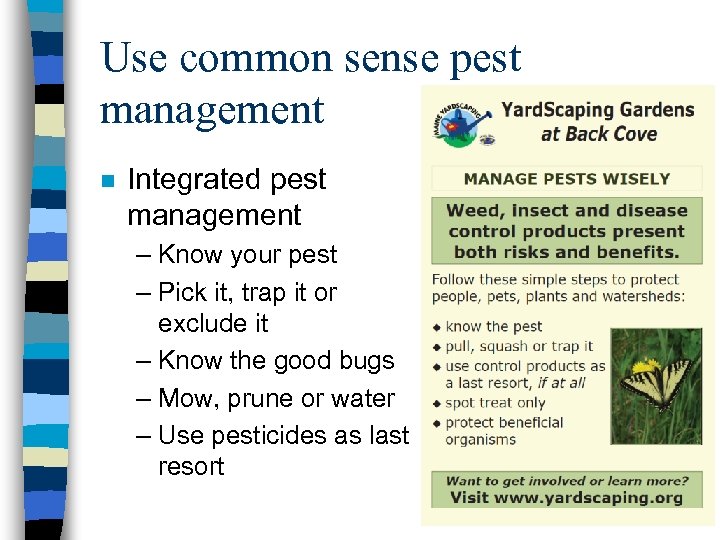
Use common sense pest management n Integrated pest management – Know your pest – Pick it, trap it or exclude it – Know the good bugs – Mow, prune or water – Use pesticides as last resort
www. thinkfirstspraylast. org
www. yardscaping. org
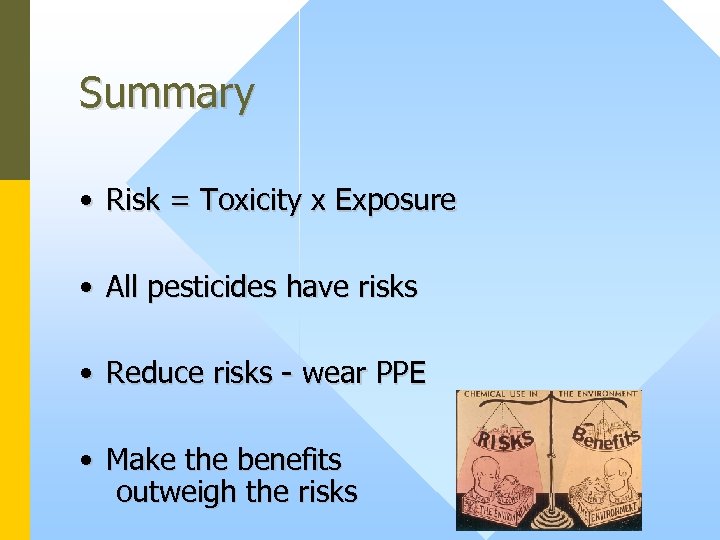
Summary • Risk = Toxicity x Exposure • All pesticides have risks • Reduce risks - wear PPE • Make the benefits outweigh the risks
Please rate this presentation 1. Wow 2. Helpful 3. Ho Hum 4. Crap 5. Bull Crap
Скачать презентацию Home Pesticide Use Risks Benefits n Gary
8c3f3e83322b04f7afe80911e9c7b7b5.ppt