


 Скачать презентацию Home Energy Assessments and Energy Efficiency Upgrades Dane
6a3e309c8e8e4efa4126248426e7a625.ppt
- Количество слайдов: 23
 Home Energy Assessments and Energy Efficiency Upgrades Dane George
 Home Energy Assessments Energy Advisors Service Organizations Program Authority Maintain Computer Modeling Software Administers Rebate Program
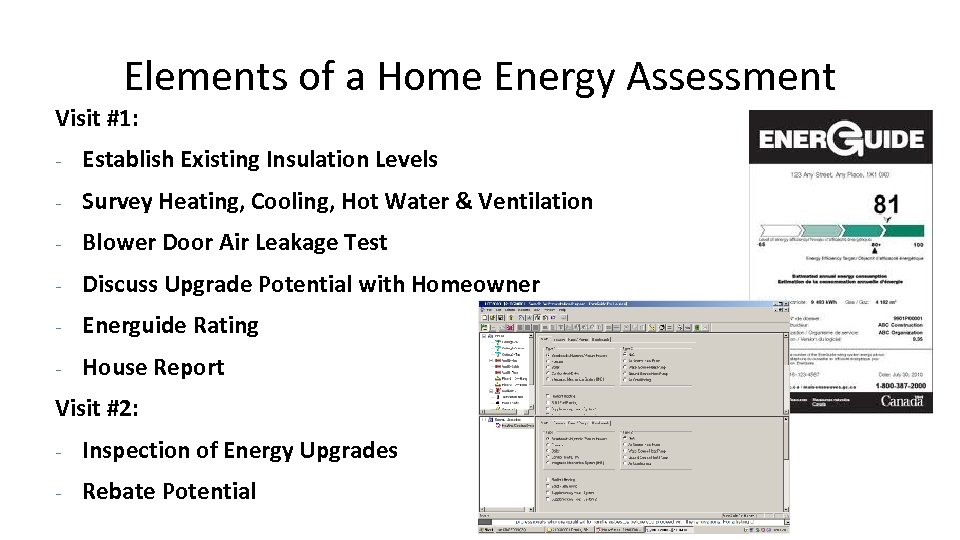 Elements of a Home Energy Assessment Visit #1: - Establish Existing Insulation Levels - Survey Heating, Cooling, Hot Water & Ventilation - Blower Door Air Leakage Test - Discuss Upgrade Potential with Homeowner - Energuide Rating - House Report Visit #2: - Inspection of Energy Upgrades - Rebate Potential
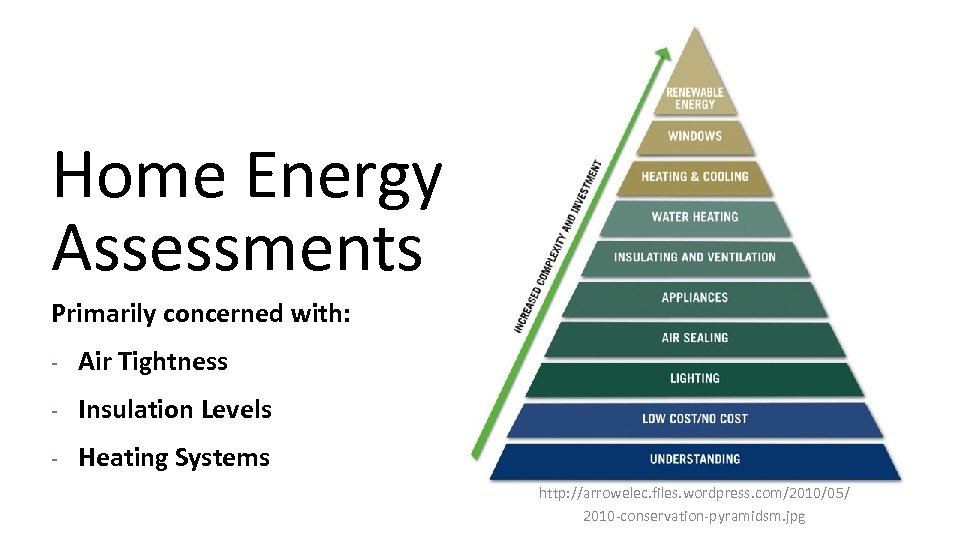 Home Energy Assessments Primarily concerned with: - Air Tightness - Insulation Levels - Heating Systems http: //arrowelec. files. wordpress. com/2010/05/ 2010 -conservation-pyramidsm. jpg
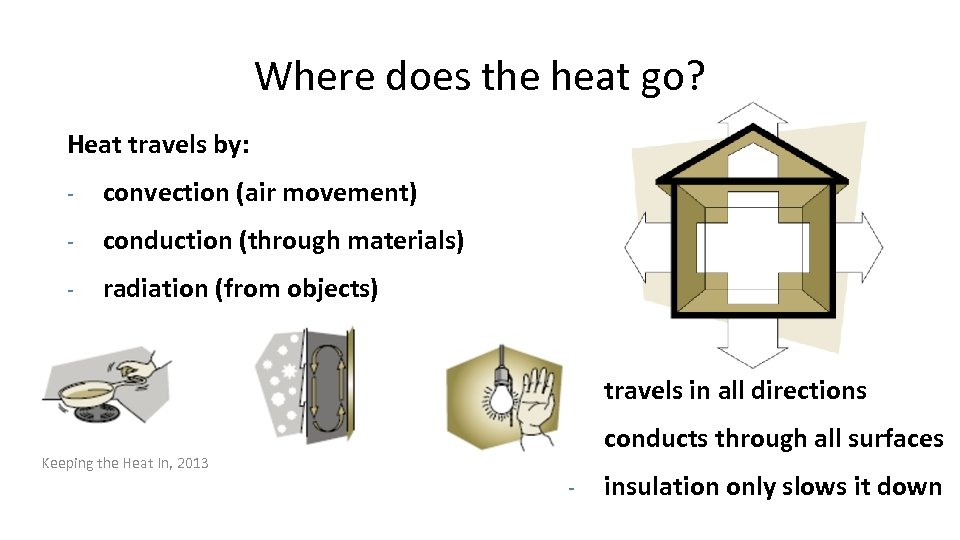 Where does the heat go? Heat travels by: - convection (air movement) - conduction (through materials) - radiation (from objects) Keeping the Heat In, 2013 travels in all directions - conducts through all surfaces - insulation only slows it down
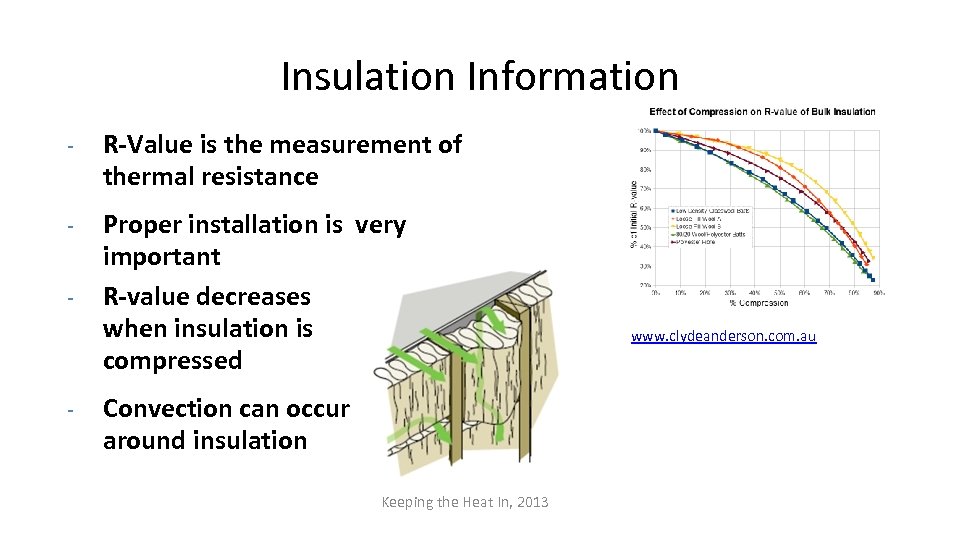 Insulation Information - R-Value is the measurement of thermal resistance - Proper installation is very important R-value decreases when insulation is compressed - - Convection can occur around insulation Keeping the Heat In, 2013 www. clydeanderson. com. au
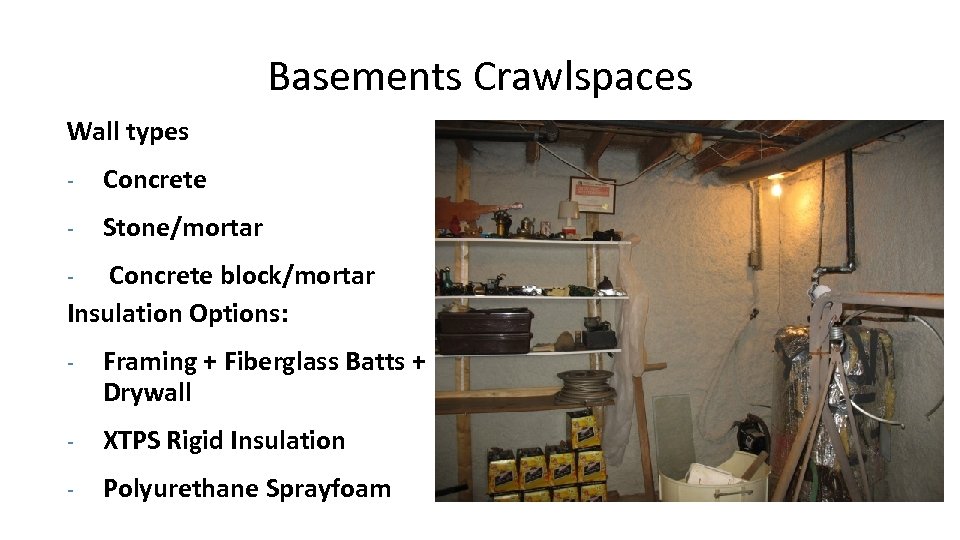 Basements Crawlspaces Wall types - Concrete - Stone/mortar Concrete block/mortar Insulation Options: - - Framing + Fiberglass Batts + Drywall - XTPS Rigid Insulation - Polyurethane Sprayfoam
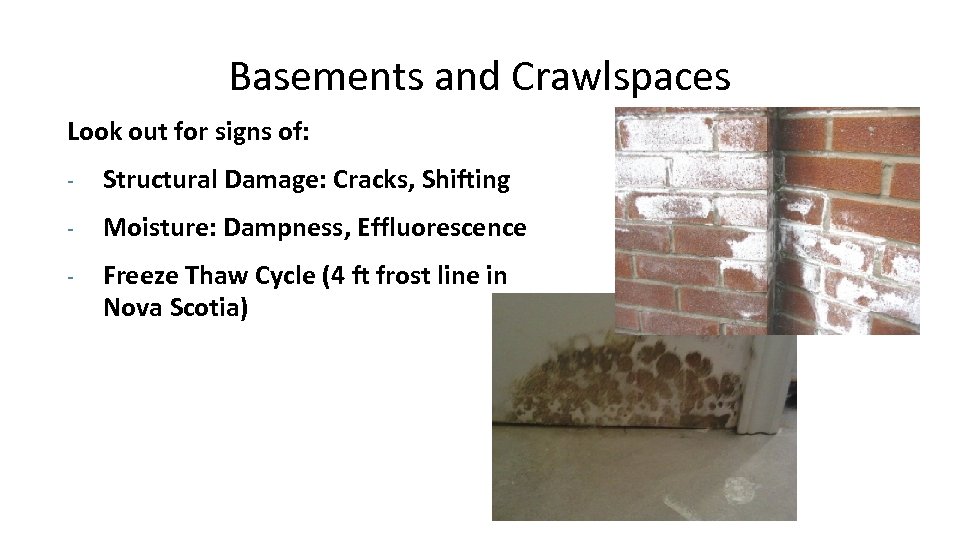 Basements and Crawlspaces Look out for signs of: - Structural Damage: Cracks, Shifting - Moisture: Dampness, Effluorescence - Freeze Thaw Cycle (4 ft frost line in Nova Scotia)
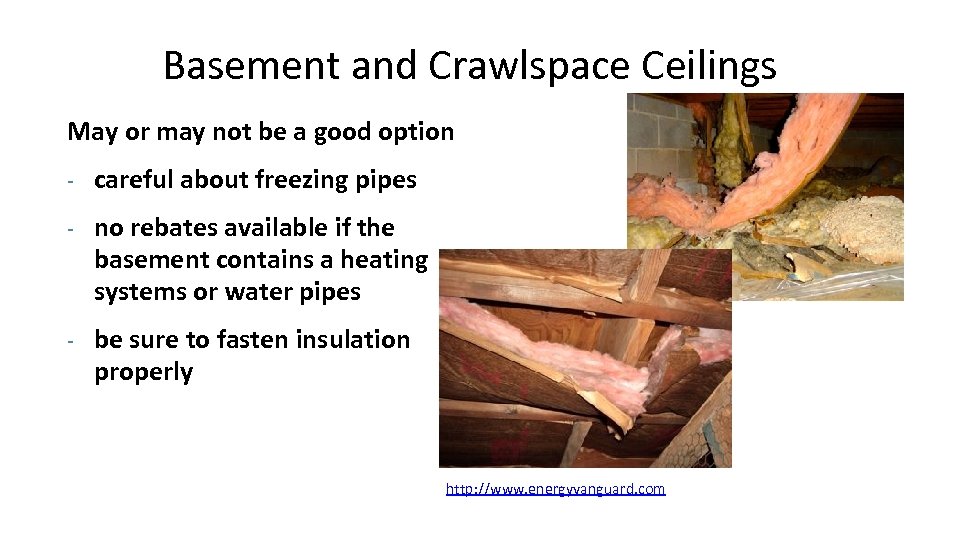 Basement and Crawlspace Ceilings May or may not be a good option - careful about freezing pipes - no rebates available if the basement contains a heating systems or water pipes - be sure to fasten insulation properly http: //www. energyvanguard. com
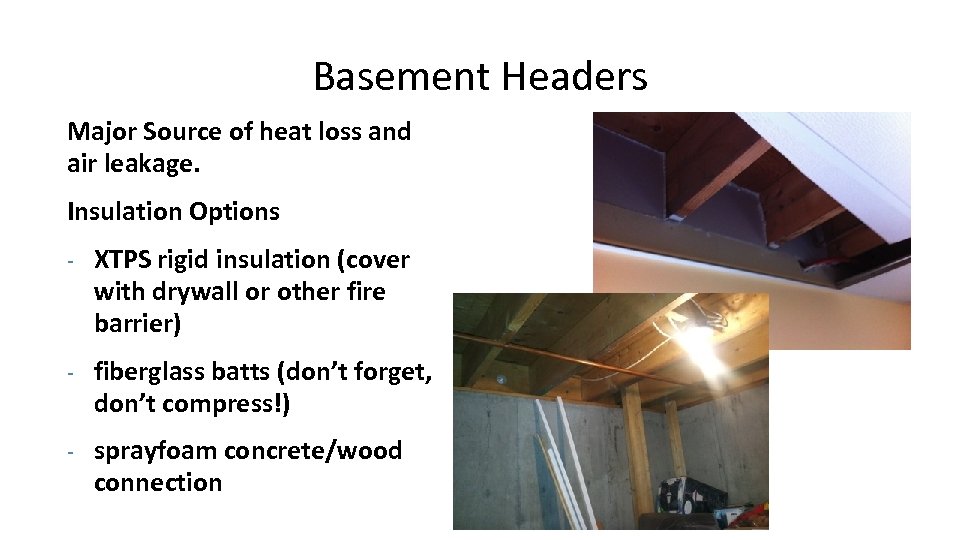 Basement Headers Major Source of heat loss and air leakage. Insulation Options - XTPS rigid insulation (cover with drywall or other fire barrier) - fiberglass batts (don’t forget, don’t compress!) - sprayfoam concrete/wood connection
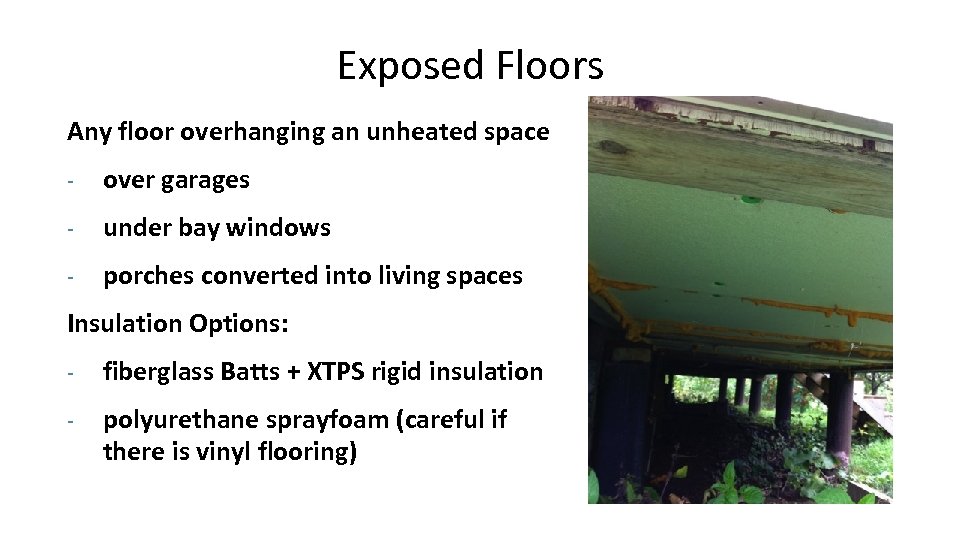 Exposed Floors Any floor overhanging an unheated space - over garages - under bay windows - porches converted into living spaces Insulation Options: - fiberglass Batts + XTPS rigid insulation - polyurethane sprayfoam (careful if there is vinyl flooring)
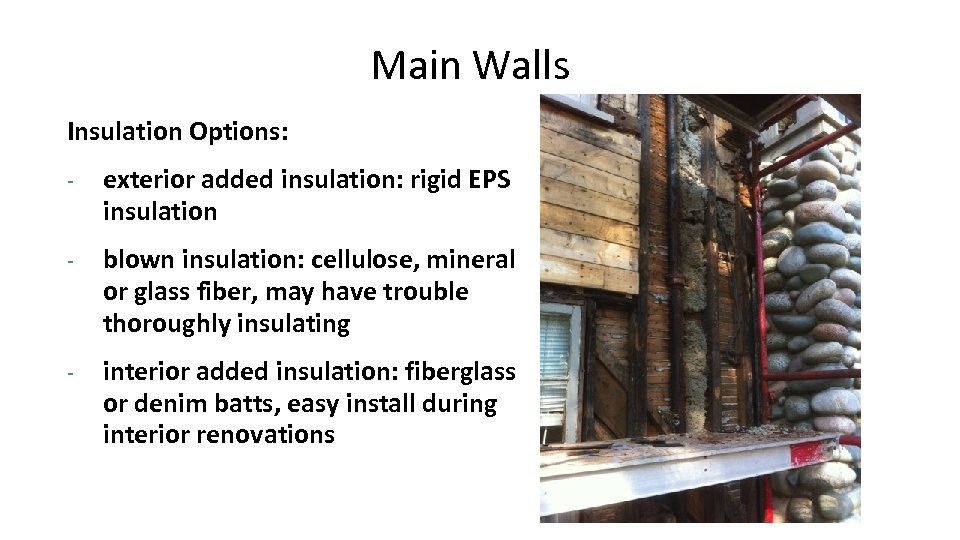 Main Walls Insulation Options: - exterior added insulation: rigid EPS insulation - blown insulation: cellulose, mineral or glass fiber, may have trouble thoroughly insulating - interior added insulation: fiberglass or denim batts, easy install during interior renovations
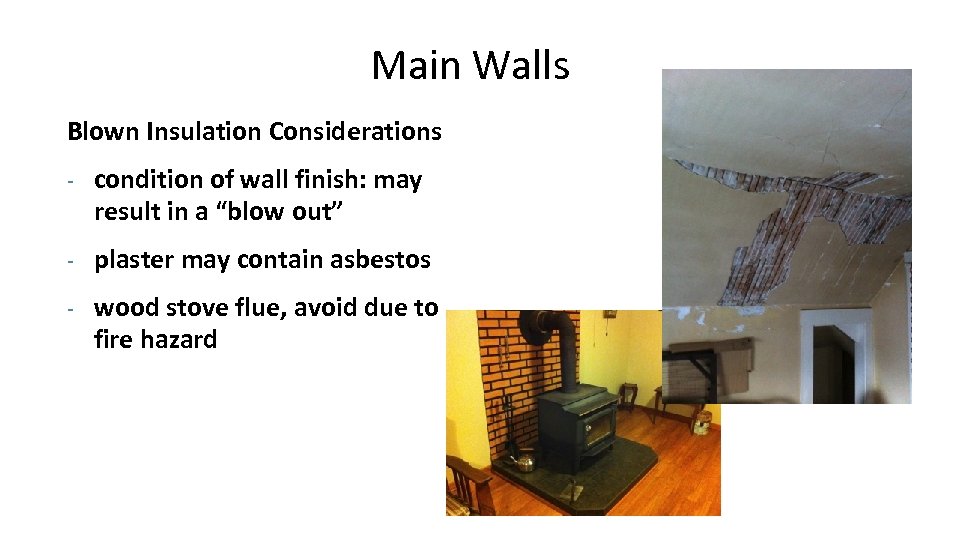 Main Walls Blown Insulation Considerations - condition of wall finish: may result in a “blow out” - plaster may contain asbestos - wood stove flue, avoid due to fire hazard
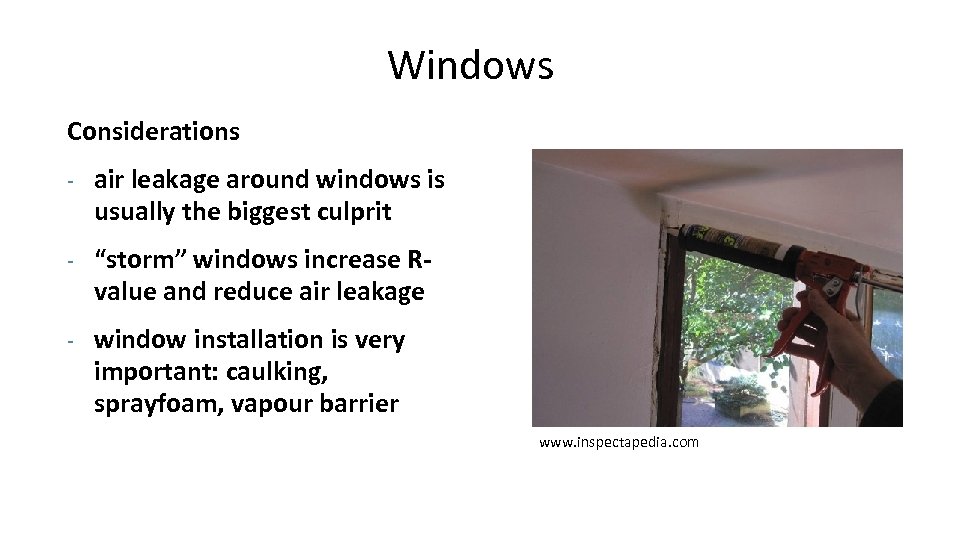 Windows Considerations - air leakage around windows is usually the biggest culprit - “storm” windows increase Rvalue and reduce air leakage - window installation is very important: caulking, sprayfoam, vapour barrier www. inspectapedia. com
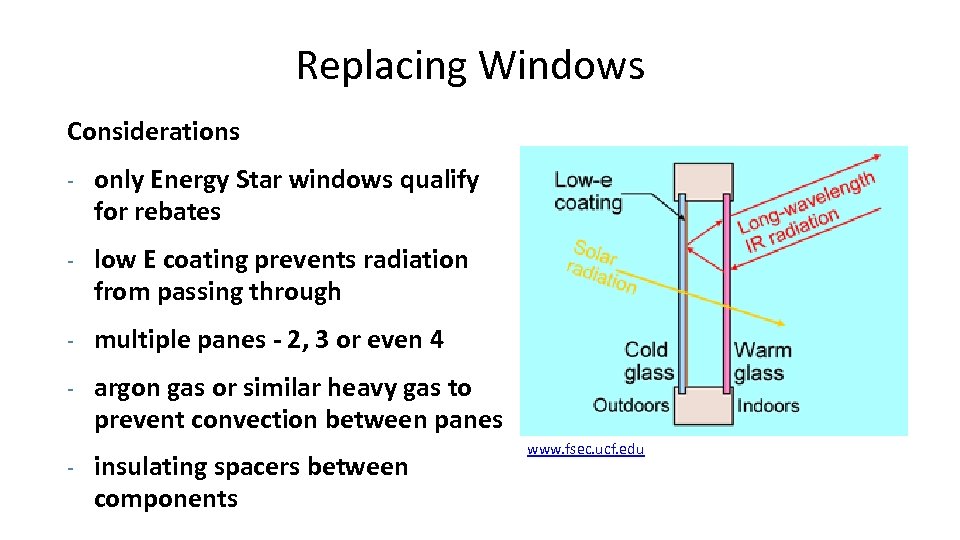 Replacing Windows Considerations - only Energy Star windows qualify for rebates - low E coating prevents radiation from passing through - multiple panes - 2, 3 or even 4 - argon gas or similar heavy gas to prevent convection between panes - insulating spacers between components www. fsec. ucf. edu
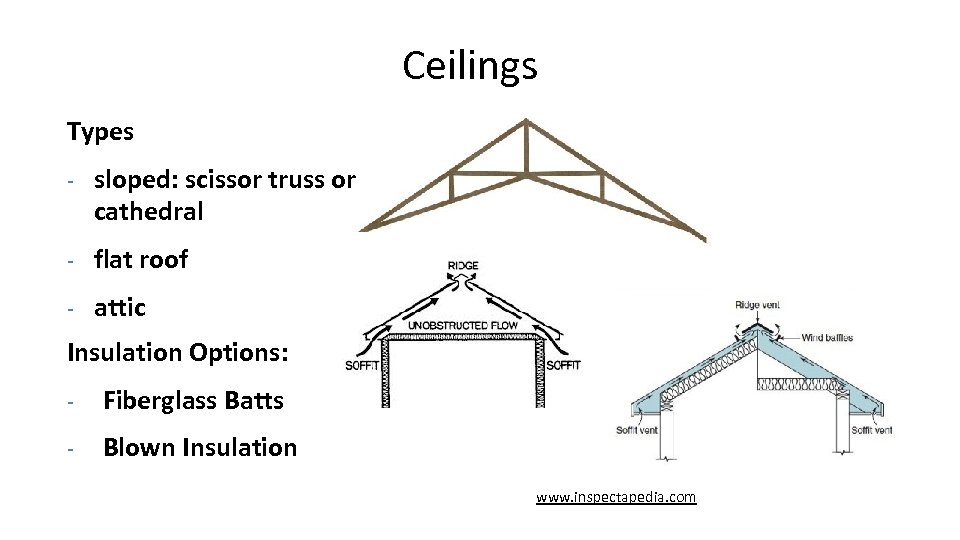 Ceilings Types - sloped: scissor truss or cathedral - flat roof - attic Insulation Options: - Fiberglass Batts - Blown Insulation www. inspectapedia. com
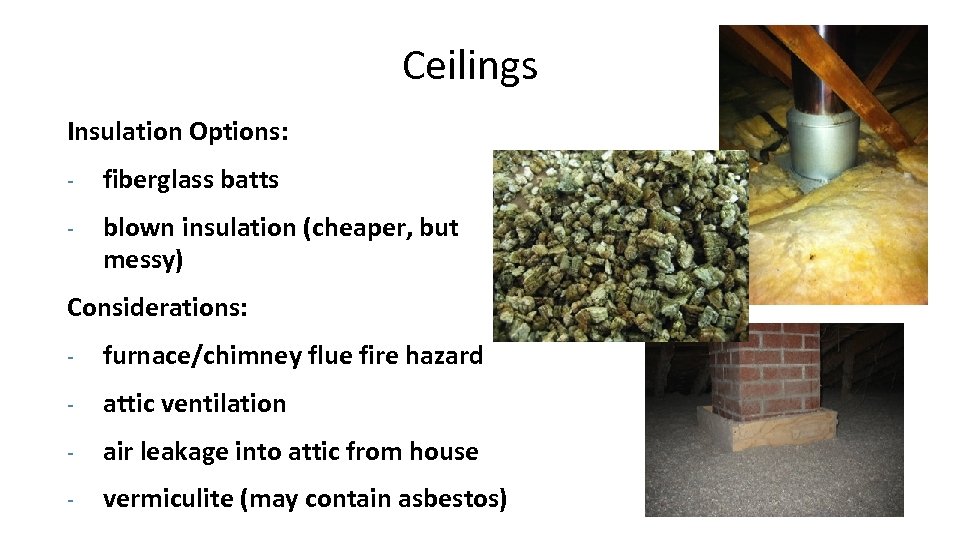 Ceilings Insulation Options: - fiberglass batts - blown insulation (cheaper, but messy) Considerations: - furnace/chimney flue fire hazard - attic ventilation - air leakage into attic from house - vermiculite (may contain asbestos)
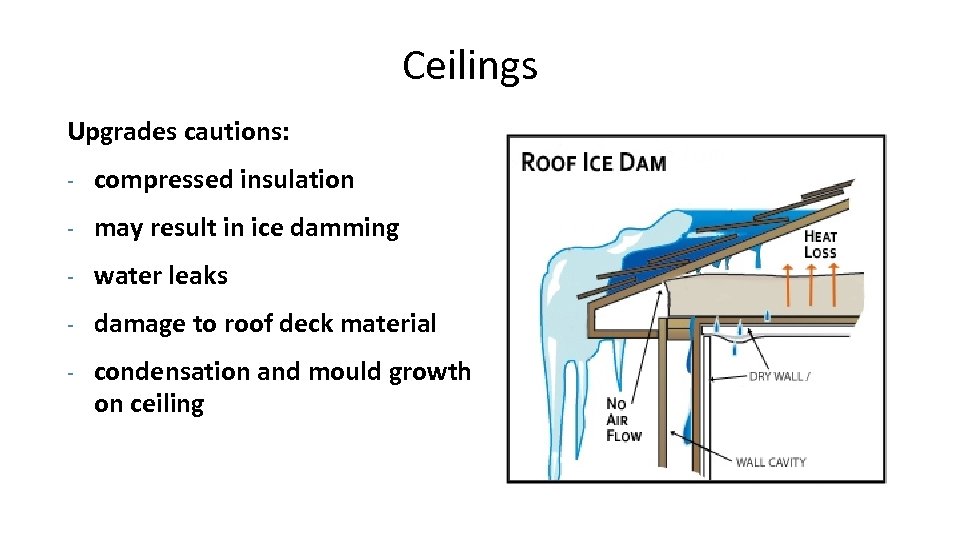 Ceilings Upgrades cautions: - compressed insulation - may result in ice damming - water leaks - damage to roof deck material - condensation and mould growth on ceiling
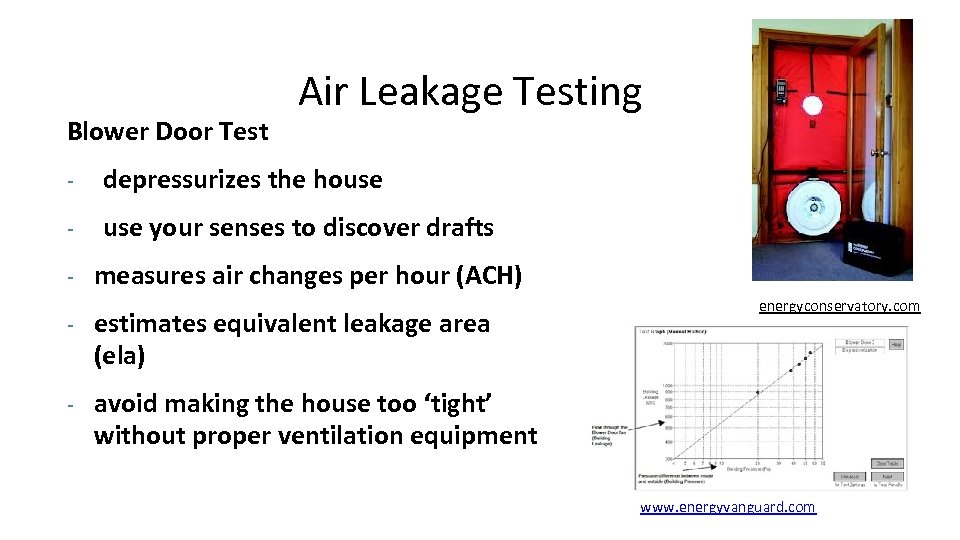 Blower Door Test Air Leakage Testing - depressurizes the house - use your senses to discover drafts - measures air changes per hour (ACH) - estimates equivalent leakage area (ela) - energyconservatory. com avoid making the house too ‘tight’ without proper ventilation equipment www. energyvanguard. com
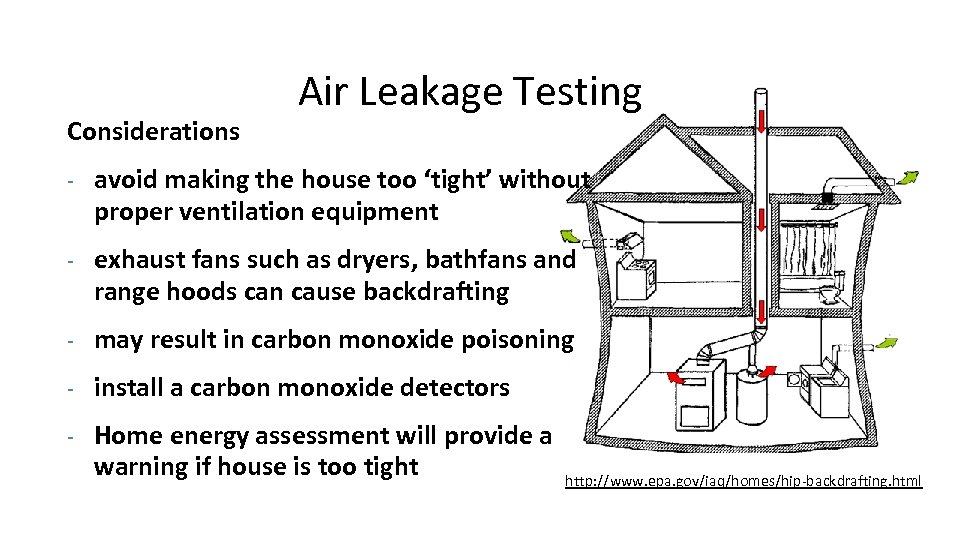 Considerations Air Leakage Testing - avoid making the house too ‘tight’ without proper ventilation equipment - exhaust fans such as dryers, bathfans and range hoods can cause backdrafting - may result in carbon monoxide poisoning - install a carbon monoxide detectors - Home energy assessment will provide a warning if house is too tight http: //www. epa. gov/iaq/homes/hip-backdrafting. html
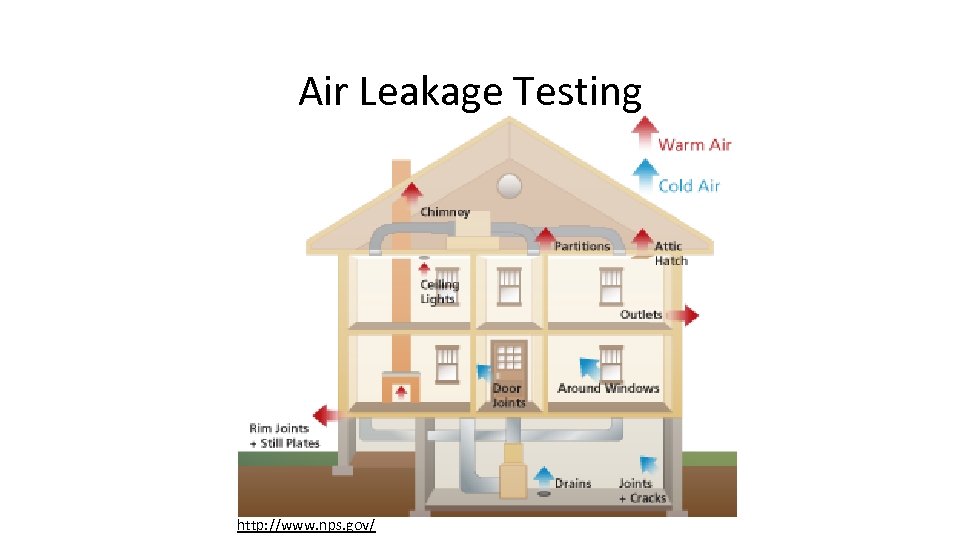 Air Leakage Testing http: //www. nps. gov/
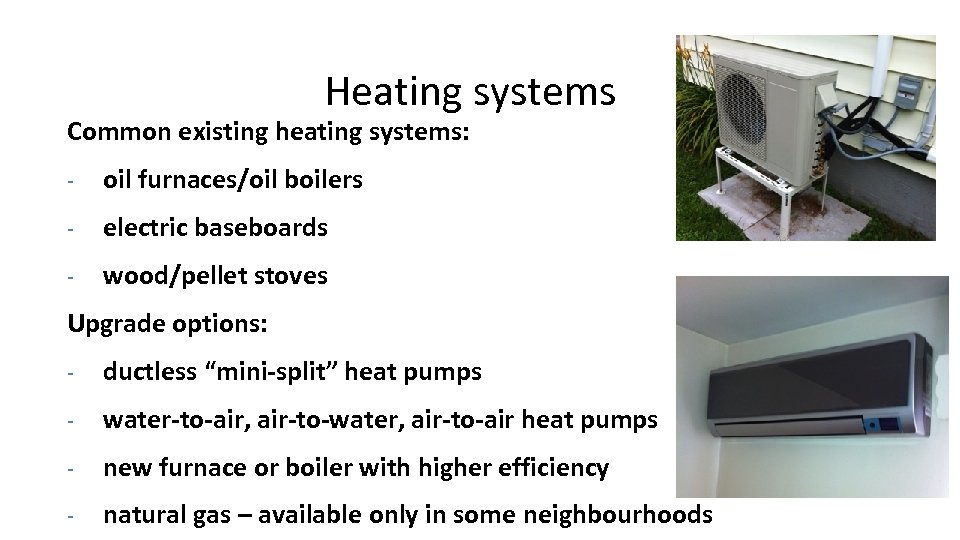 Heating systems Common existing heating systems: - oil furnaces/oil boilers - electric baseboards - wood/pellet stoves Upgrade options: - ductless “mini-split” heat pumps - water-to-air, air-to-water, air-to-air heat pumps - new furnace or boiler with higher efficiency - natural gas – available only in some neighbourhoods
 Resources Efficiency Nova Scotia Programs for Home Owners Product Installation (light bulbs, tank wrap, pipe insulation, etc. ) - Home Energy Assessment - Canada Mortgage and Housing - Home Energy Report Corporation (CMHC) - Keeping the Heat In - Home Energy Assessments - Greenbuildingadvisor. com - Appliance Retirement (do you have an old fridge or freezer? ) - Home Heating Solutions (Green Heat) -