


 Скачать презентацию Holt Call to Freedom Chapter 6 Conflicts in
17a413080eea859eec6ecd43b1979966.ppt
- Количество слайдов: 80
 Holt Call to Freedom Chapter 6 Conflicts in the Colonies
 6. 1 Trouble on the Frontier Objectives: Describe how the English colonists and American Indians viewed each other. Identify wars that the English colonists fought against other European colonies. Explain how the French and Indian War affected British colonists. © Holt Call to Freedom Lecture Notes 2
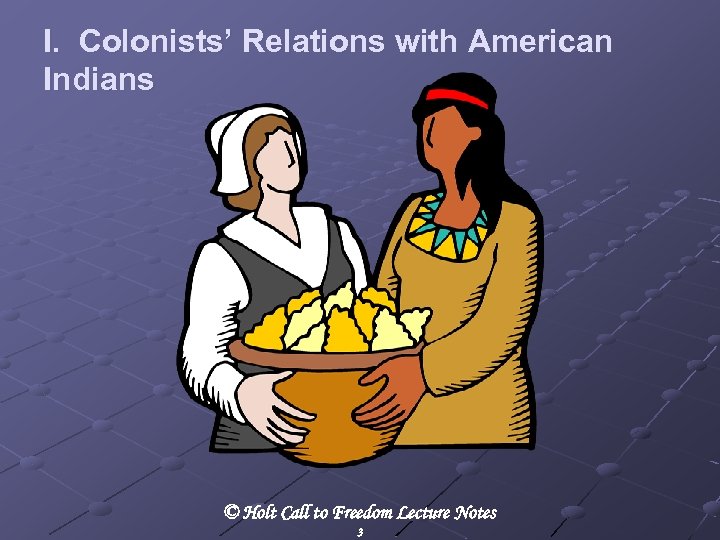 I. Colonists’ Relations with American Indians © Holt Call to Freedom Lecture Notes 3
 A. King Philip’s War 1. Colonists called Metacomet, leader of the Wampanoag Indians, King Philip 2. Metacomet believed that colonists treated his people badly. 3. War broke out in 1675, as the colonial militia – civilians serving as soldiers – fought American Indians. © Holt Call to Freedom Lecture Notes 4
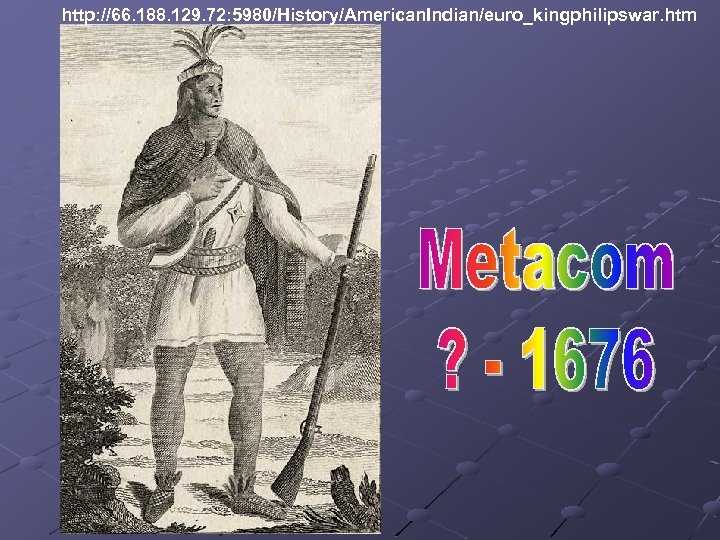 http: //66. 188. 129. 72: 5980/History/American. Indian/euro_kingphilipswar. htm
 A. King Philip’s War 4. Ended in 1676, with 600 colonists and some 3, 000 Indians, including Metacomet, killed © Holt Call to Freedom Lecture Notes 6
 B. Alliances 1. American Indians traded furs for European goods such as tools and weapons 2. French allied with the Algonquian and Huron. 3. English allied with the Iroquois League. © Holt Call to Freedom Lecture Notes 7
 B. Alliances 4. Many American Indians preferred the French, whose small settlements were less threatening. © Holt Call to Freedom Lecture Notes 8
 II. Conflicts with France © Holt Call to Freedom Lecture Notes 9
 A. Series of Wars between France and England 1. King William’s War (1689 -97): no effect on North American colonial boundaries 2. Queen Anne’s War (1702 -13): Great Britain acquired Hudson Bay, Newfoundland, and Nova Scotia from France. 3. King George’s War (1740 s): little effect on the colonies © Holt Call to Freedom Lecture Notes 10
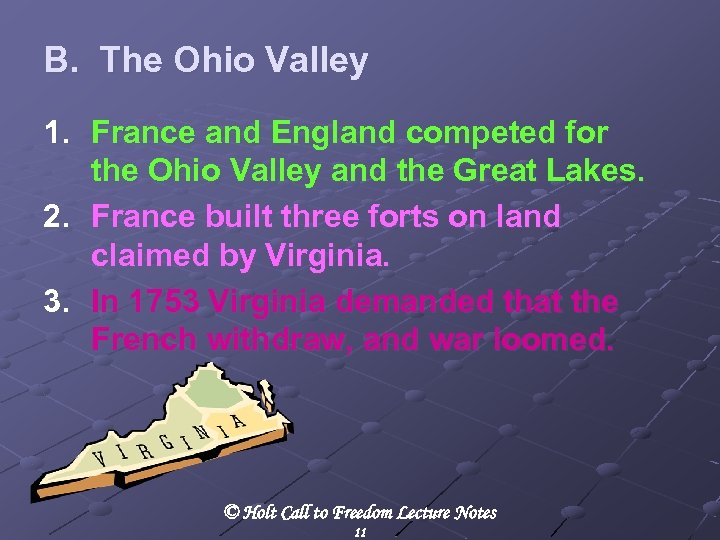 B. The Ohio Valley 1. France and England competed for the Ohio Valley and the Great Lakes. 2. France built three forts on land claimed by Virginia. 3. In 1753 Virginia demanded that the French withdraw, and war loomed. © Holt Call to Freedom Lecture Notes 11
 C. The Albany Plan of Union 1. Fearing war, British colonial leaders decided to organize. 2. Delegates from seven colonies met in Albany, New York, in 1754. 3. The Albany Plan of Union called for all the colonies except Georgia to unite. 4. Colonial governments and Parliament rejected the plan. © Holt Call to Freedom Lecture Notes 12
 III. The French and Indian War © Holt Call to Freedom Lecture Notes 13
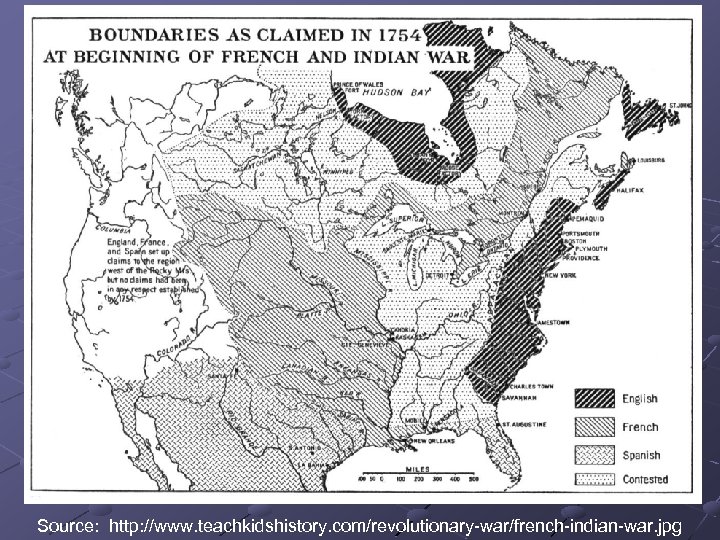 Source: http: //www. teachkidshistory. com/revolutionary-war/french-indian-war. jpg
 A. Struggles for Control 1. The French built Fort Duquesne along the Ohio River. 2. Virginian George Washington and soldiers built a simple fort nearby. 3. French defeated Washington’s force, causing many casualties – killed, injured or captured soldiers. © Holt Call to Freedom Lecture Notes 15
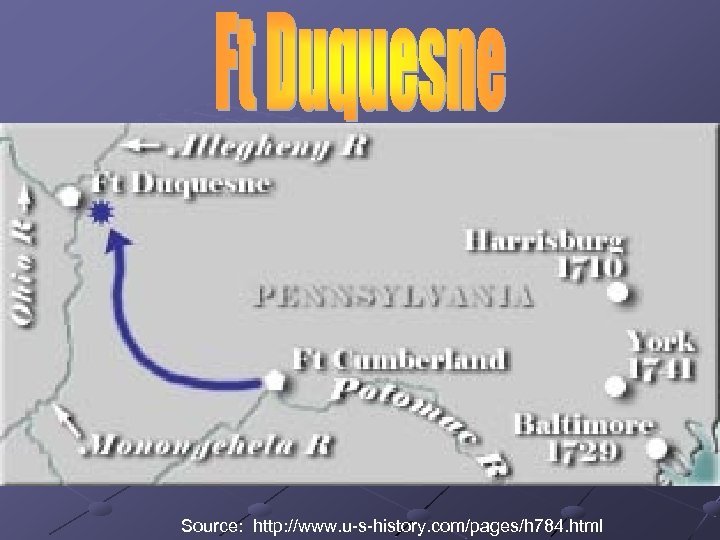 Source: http: //www. u-s-history. com/pages/h 784. html
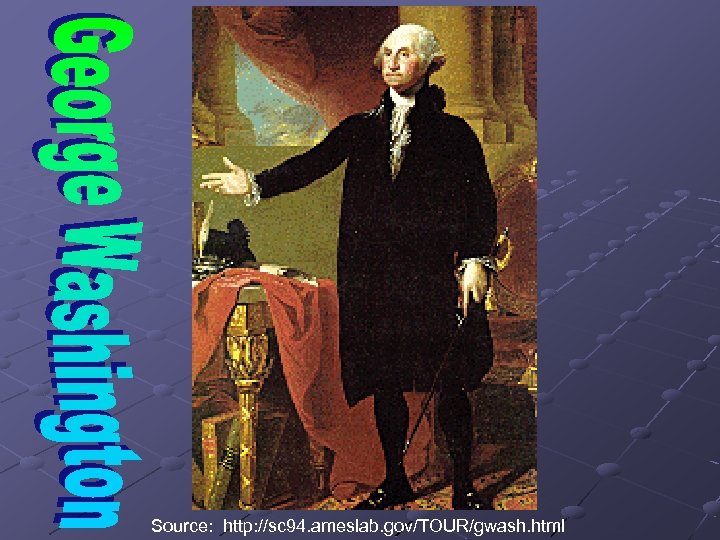 Source: http: //sc 94. ameslab. gov/TOUR/gwash. html
 B. War 1. General Edward Braddock commanded British forces in North America. 2. Braddock’s forces ambushed; general killed in 1755 3. The turning point in the war was with the British capture of Quebec in 1759. 4. British defeat the French and Indians. © Holt Call to Freedom Lecture Notes 18
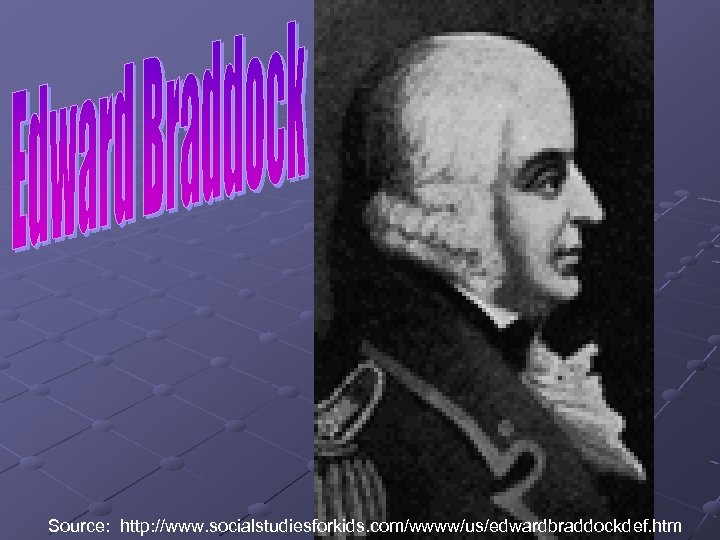 Source: http: //www. socialstudiesforkids. com/wwww/us/edwardbraddockdef. htm
 IV. The Treaty of Paris © Holt Call to Freedom Lecture Notes 20
 IV. The Treaty of Paris A. War ended with signing of Treaty of Paris in 1763. B. Britain received Canada and all French lands east of the Mississippi River except the city of New Orleans. C. Spain, which had allied with France in 1762, gave Florida to Britain. © Holt Call to Freedom Lecture Notes 21
 6. 2 Consequences of the French and Indian War Objectives: Explain why many colonists moved to the frontier. Identify the factors leading to Pontiac’s Rebellion. Describe the Proclamation of 1763, and analyze its effectiveness. © Holt Call to Freedom Lecture Notes 22
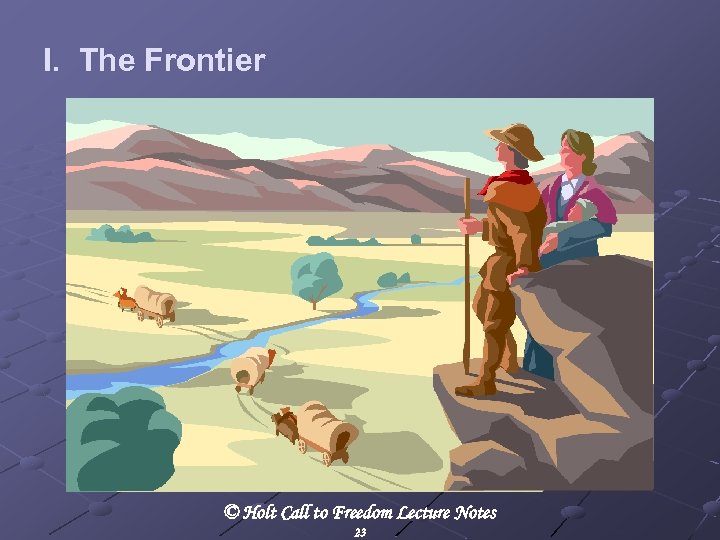 I. The Frontier © Holt Call to Freedom Lecture Notes 23
 A. Settlement Patterns 1. Most early settlements located along the east coast and major rivers 2. Backcountry – thinly populated frontier area between coastal settlements and Appalachian Mountains 3. Pioneers – first Europeans to settle backcountry © Holt Call to Freedom Lecture Notes 24
 B. Frontier Settlement 1. Little colonial settlement in what is now Tennessee and Kentucky until 1770 s 2. Pioneers first moved into the Ohio Valley in the 1750 s. 3. More settlers crossed the Appalachians after Britain won the French and Indian War. © Holt Call to Freedom Lecture Notes 25
 II. Conflict in the Ohio River Valley © Holt Call to Freedom Lecture Notes 26
 A. British Policy 1. Expand settlement of the Ohio River Valley after victory over France 2. Lacked treaties with American Indian leaders in the area 3. American Indians saw no reason to give up their lands because of the French defeat. © Holt Call to Freedom Lecture Notes 27
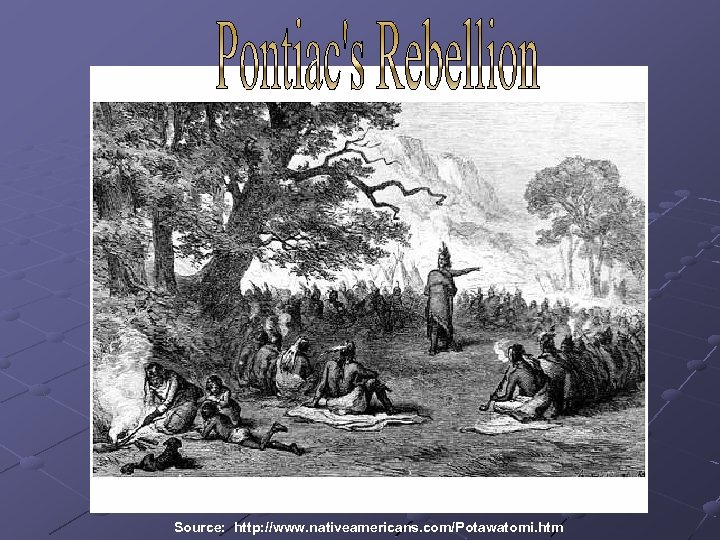
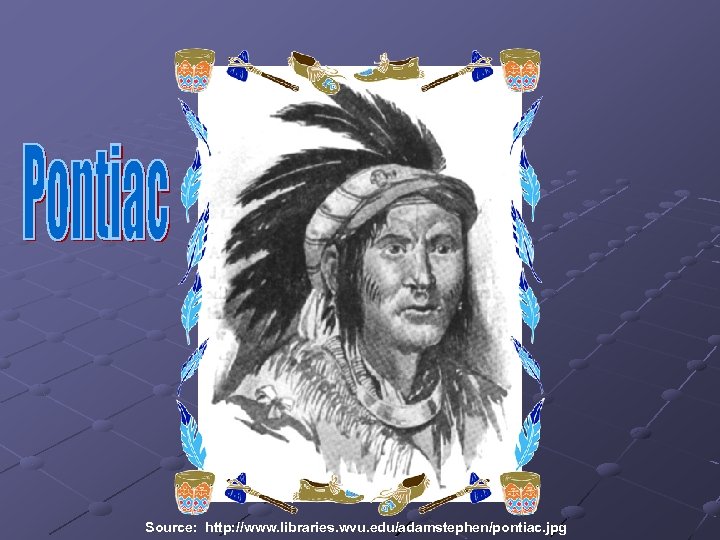
 B. War 1. Chief Pontiac of the Ottawa organized tribes against the British in the early 1760 s. 2. Followed ideas of the Delaware Prophet, who called upon Indians to drive out white settlers and give up European ways 3. Pontiac’s Rebellion began in May 1763. © Holt Call to Freedom Lecture Notes 28
 Source: http: //www. nativeamericans. com/Potawatomi. htm
 B. War 4. Pontiac surrendered in 1766 after he lost many Indian allies. © Holt Call to Freedom Lecture Notes 30
 Source: http: //www. libraries. wvu. edu/adamstephen/pontiac. jpg
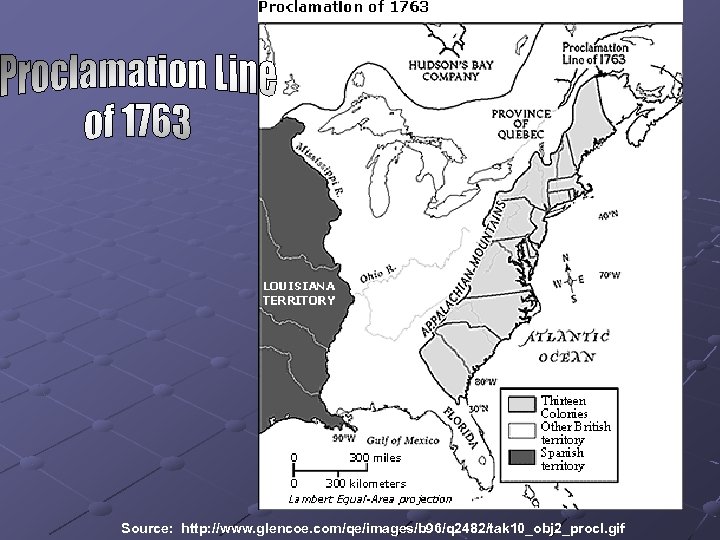
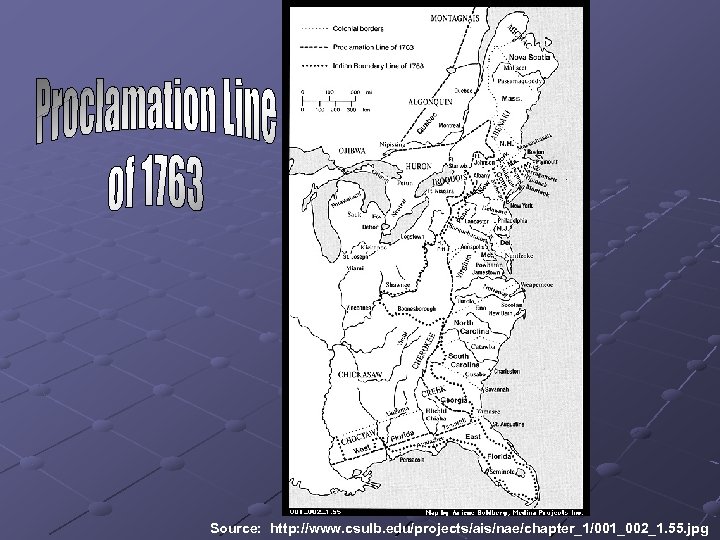
 III. The Proclamation of 1763 © Holt Call to Freedom Lecture Notes 32
 Source: http: //www. glencoe. com/qe/images/b 96/q 2482/tak 10_obj 2_procl. gif
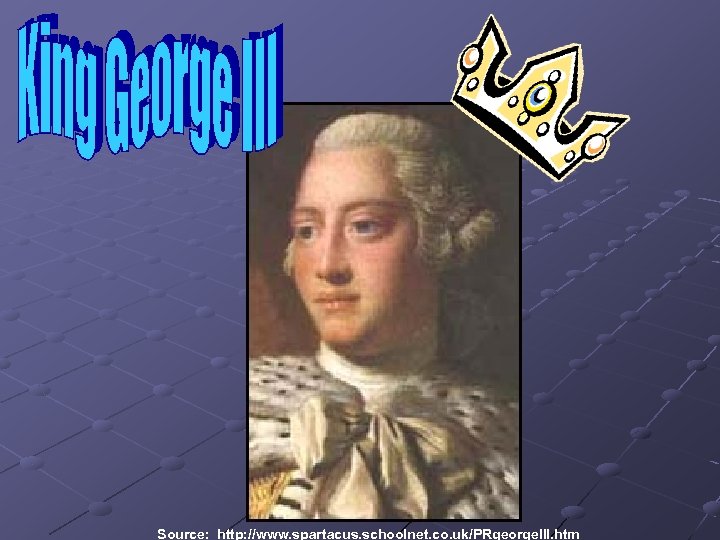
 A. A New Policy 1. British feared continued conflicts with American Indians would be costly and would hurt trade. 2. King George III issued the Proclamation of 1763, which created a boundary line between colonial and American Indian lands. 3. Also required colonists living west of boundary to abandon settlements © Holt Call to Freedom Lecture Notes 34
 Source: http: //www. spartacus. schoolnet. co. uk/PRgeorge. III. htm
 Source: http: //www. csulb. edu/projects/ais/nae/chapter_1/001_002_1. 55. jpg
 B. Colonial Response 1. 2. 3. Proclamation difficult to enforce Defied by many colonists Showed colonists’ unhappiness with British control © Holt Call to Freedom Lecture Notes 37
 6. 3 Trouble over Colonists’ Rights Objectives: Explain why Great Britain created new taxes for the colonies. Explore the reasons colonists disliked the new tax laws. Analyze the ways that colonists challenged the new taxes. © Holt Call to Freedom Lecture Notes 38
 I. Raising Taxes © Holt Call to Freedom Lecture Notes 39
 A. New Taxes 1. Britain had to pay for the cost of the French and Indian War and for protecting colonists from American Indian attacks. 2. British prime minister George Grenville asked Parliament for new taxes. 3. In 1764 Parliament approved the Sugar Act, which set duties on molasses and sugar. © Holt Call to Freedom Lecture Notes 40
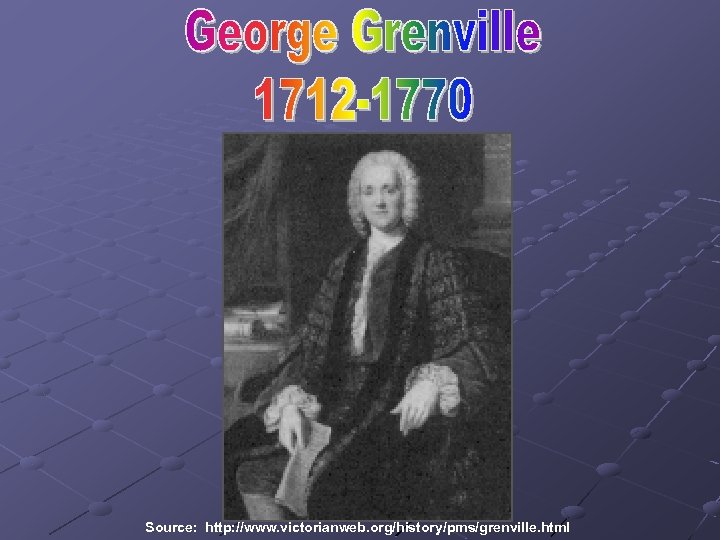 Source: http: //www. victorianweb. org/history/pms/grenville. html
 A. New Taxes 4. Was first act passed to raise money rather than regulate colonial trade © Holt Call to Freedom Lecture Notes 42
 B. Additional Rules 1. Colonies were not allowed to print their own money. 2. Smugglers were to be tried by viceadmiralty courts, which had no juries and presumed guilt rather than innocence. © Holt Call to Freedom Lecture Notes 43
 II. Taxation without Representation © Holt Call to Freedom Lecture Notes 44
 A. Colonial Reactions 1. Many colonists were angry over Parliament’s new taxes and policies. 2. James Otis, lawyer from Boston, one of the first critics 3. Claimed Parliament could not tax colonists because colonists had no representatives in Parliament © Holt Call to Freedom Lecture Notes 45
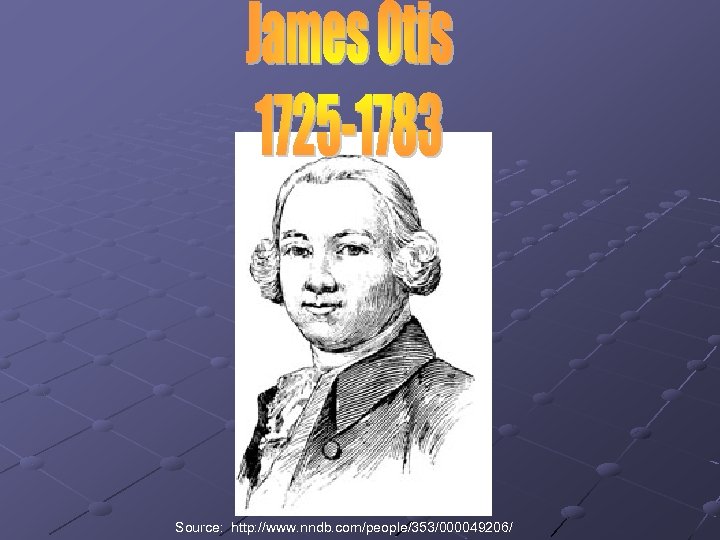 Source: http: //www. nndb. com/people/353/000049206/
 B. Colonists Organize 1. Samuel Adams of Boston agreed with James Otis. 2. Helped to organize Committees of Correspondence, groups that contacted other towns and colonies 3. Colonists protested by holding a boycott – a refusal to buy certain goods – of British products. © Holt Call to Freedom Lecture Notes 47
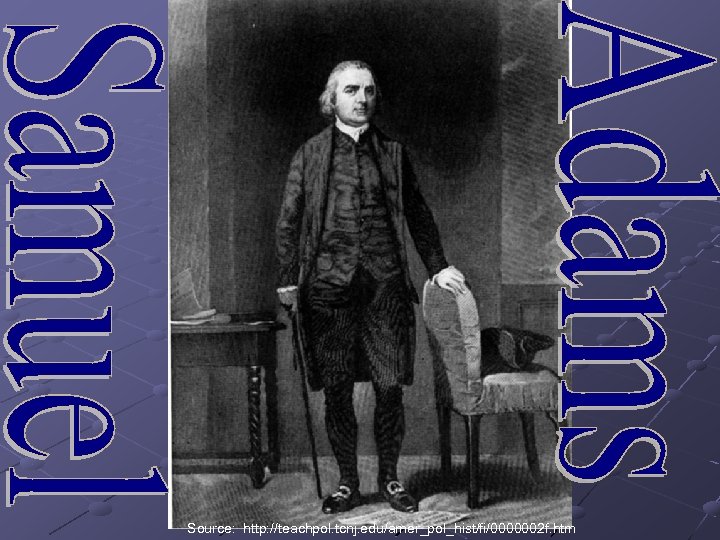 Source: http: //teachpol. tcnj. edu/amer_pol_hist/fi/0000002 f. htm
 III. The Stamp Act © Holt Call to Freedom Lecture Notes 49
 Stamps required by Stamp Act, 1765
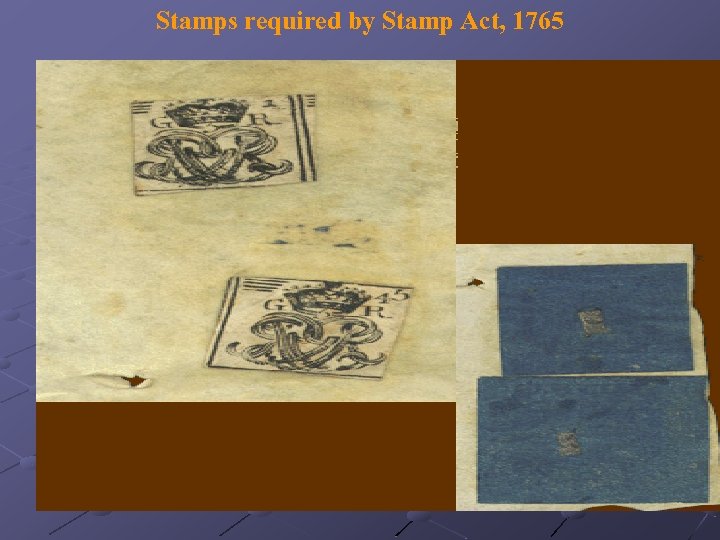
 A. Another Tax 1. In 1765 Parliament passed the Stamp Act. 2. Required colonists to buy an official stamp whenever they bought paper items 3. First effort by Parliament to tax the colonists directly © Holt Call to Freedom Lecture Notes 51
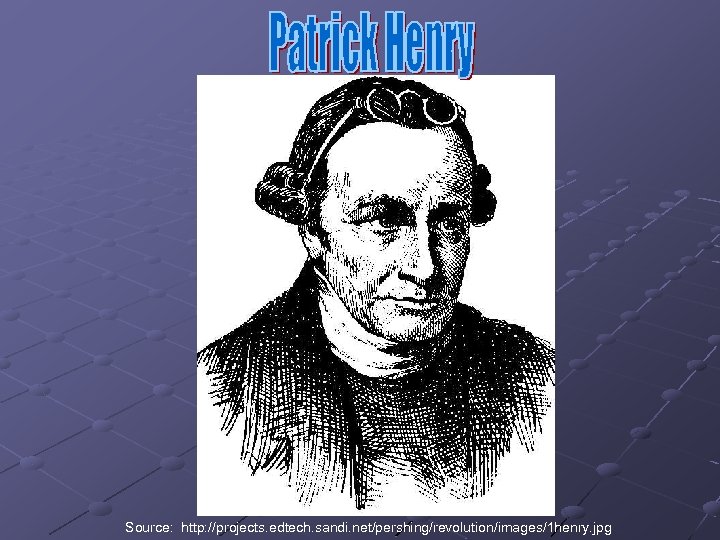
 B. Colonial Protests 1. The Sons of Liberty sometimes used violence to threaten tax collectors. 2. Some merchants ignored the law, and many people refused to buy the stamps. 3. Patrick Henry introduced resolutions to the Virginia House of Burgesses declaring that the Stamp Act violated colonists’ Holt Call to Freedom Lecture Notes rights. © 52
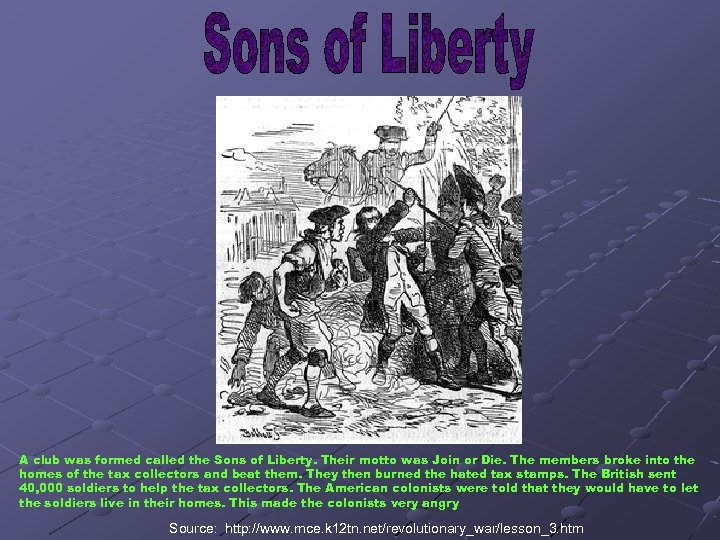 A club was formed called the Sons of Liberty. Their motto was Join or Die. The members broke into the homes of the tax collectors and beat them. They then burned the hated tax stamps. The British sent 40, 000 soldiers to help the tax collectors. The American colonists were told that they would have to let the soldiers live in their homes. This made the colonists very angry Source: http: //www. mce. k 12 tn. net/revolutionary_war/lesson_3. htm
 Source: http: //projects. edtech. sandi. net/pershing/revolution/images/1 henry. jpg
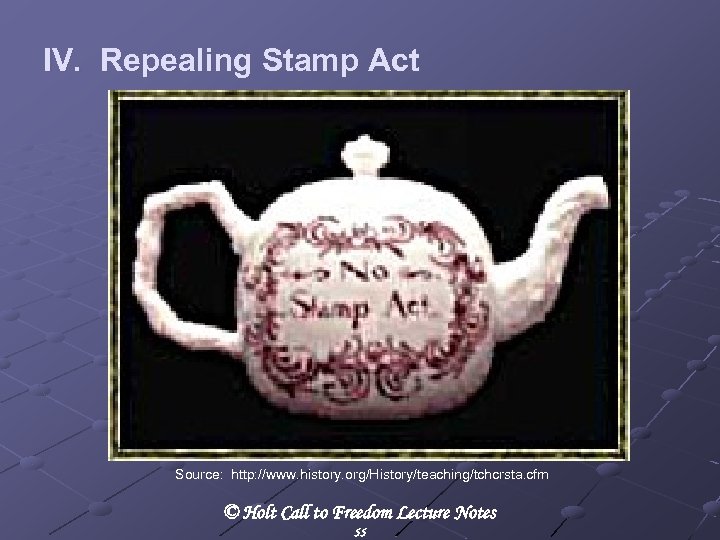 IV. Repealing Stamp Act Source: http: //www. history. org/History/teaching/tchcrsta. cfm © Holt Call to Freedom Lecture Notes 55
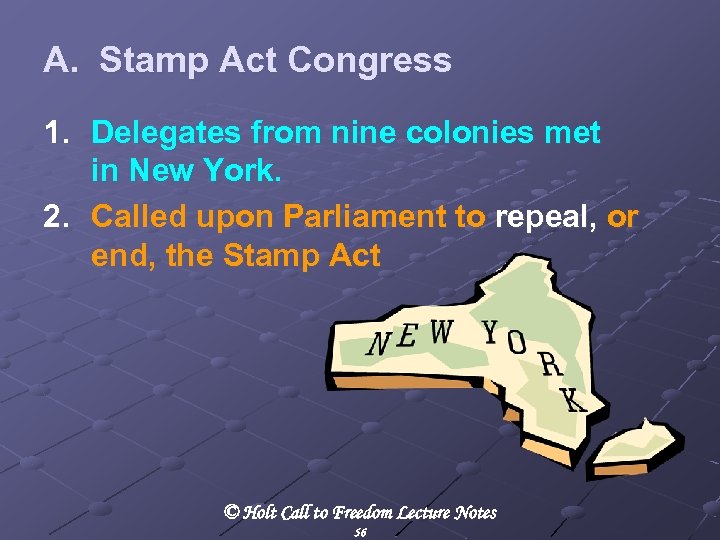 A. Stamp Act Congress 1. Delegates from nine colonies met in New York. 2. Called upon Parliament to repeal, or end, the Stamp Act © Holt Call to Freedom Lecture Notes 56
 B. Parliament’s Decision 1. British merchants, hurt by a boycott, urged repeal. 2. Parliament repealed the Stamp Act but issued the Declatory Act declaring that they still had the right to tax the colonists. © Holt Call to Freedom Lecture Notes 57
 6. 4 New Taxes and Tensions Objectives: Describe colonists’ reactions to the Townshend Acts. Analyze how the Boston Massacre and the Boston Tea Party were significant events. Explain the purpose of the Intolerable Acts. © Holt Call to Freedom Lecture Notes 58
 I. The Townshend Acts © Holt Call to Freedom Lecture Notes 59
 A. Parliament Tries to Raise Revenue 1. In 1767 Parliament passed the Townshend Acts. 2. Placed duties on imported glass, lead, paint, paper and tea 3. The British used writs of assistance – special forms allowing tax collectors to search for smuggled goods – to enforce the acts. © Holt Call to Freedom Lecture Notes 60
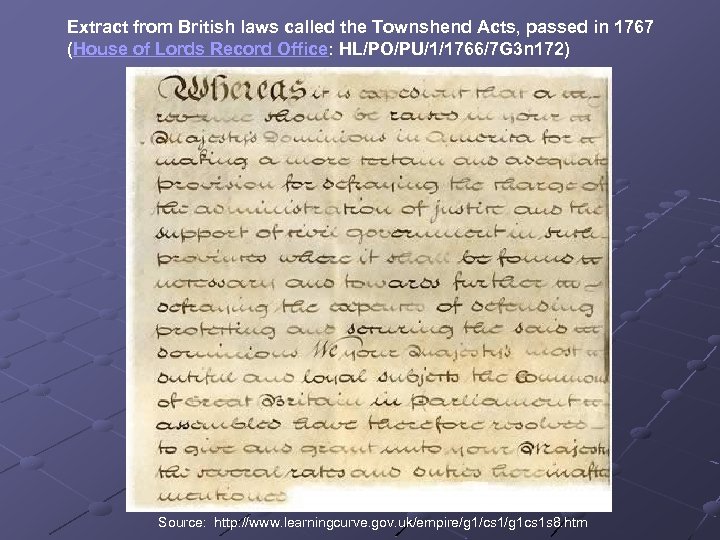 Extract from British laws called the Townshend Acts, passed in 1767 (House of Lords Record Office: HL/PO/PU/1/1766/7 G 3 n 172) Source: http: //www. learningcurve. gov. uk/empire/g 1/cs 1/g 1 cs 1 s 8. htm
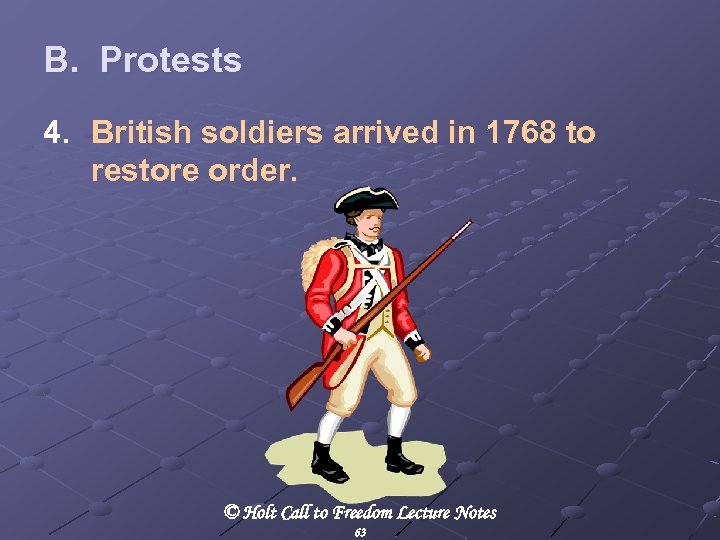
 B. Protests 1. Colonists boycotted British goods, a move supported by women’s groups called the Daughters of Liberty. 2. The Massachusetts legislature sent a letter to other colonies protesting the acts. 3. When the British seized the ship Liberty on suspicion of smuggling, colonists in Boston attacked the houses of British officials. © Holt Call to Freedom Lecture Notes 62
 B. Protests 4. British soldiers arrived in 1768 to restore order. © Holt Call to Freedom Lecture Notes 63
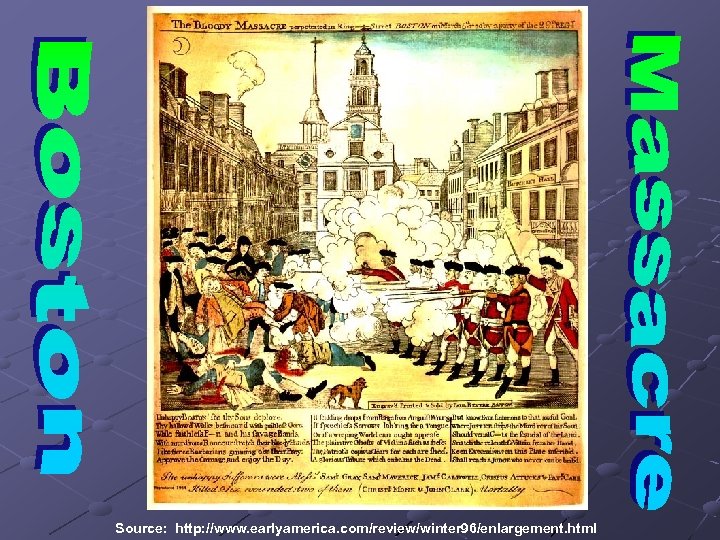
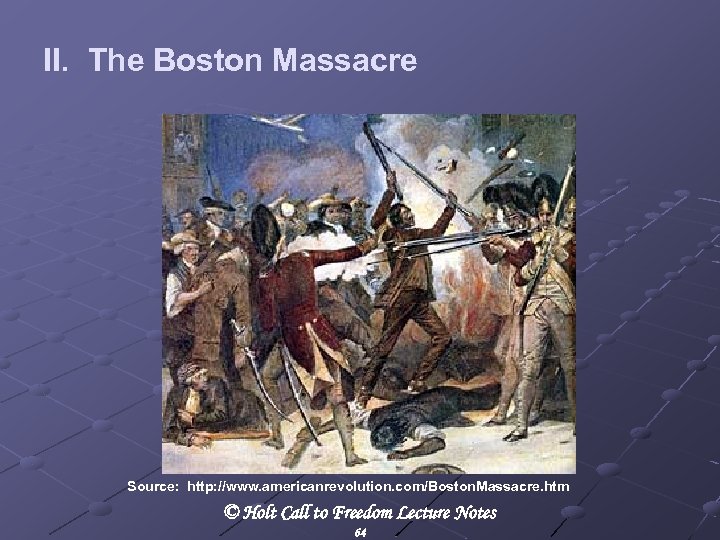 II. The Boston Massacre Source: http: //www. americanrevolution. com/Boston. Massacre. htm © Holt Call to Freedom Lecture Notes 64
 A. Rising Tensions 1. Colonists believed that British soldiers were sent to silence colonial critics. 2. Tensions resulted in a March 1770 fight in which troops killed several colonists. © Holt Call to Freedom Lecture Notes 65
 B. The Trial 1. Some colonists used incident as propaganda – information giving only one side of an argument. 2. Called the incident the Boston Massacre 3. Boston jury found two soldiers guilty of accidentally killing people. © Holt Call to Freedom Lecture Notes 66
 Source: http: //www. earlyamerica. com/review/winter 96/enlargement. html
 III. A Tax on Tea © Holt Call to Freedom Lecture Notes 68
 A. Repeal of the Townshend Acts 1. Parliament repealed all the Townshend Acts except for the tax on tea. 2. Many colonists smuggled tea and paid no duty on it. 3. British East India Company offered to sell tea directly to colonists at low price to reduce smuggling. © Holt Call to Freedom Lecture Notes 69
 A. Repeal of the Townshend Acts 4. Parliament agreed and in 1773 passed the Tea Act. © Holt Call to Freedom Lecture Notes 70
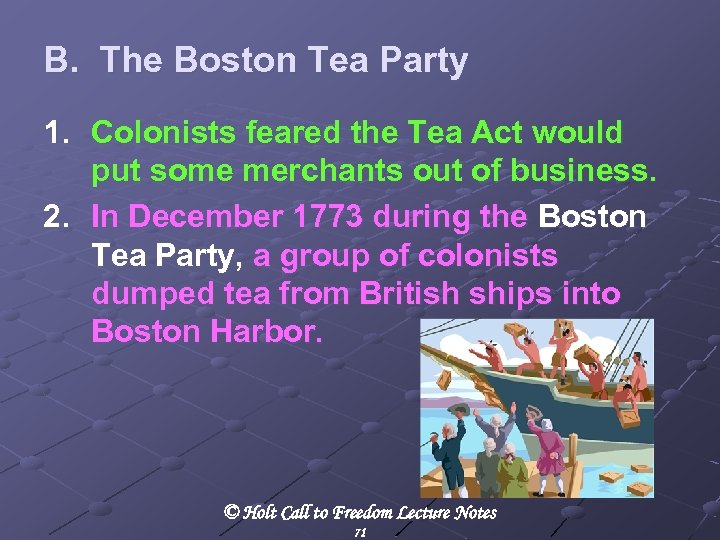 B. The Boston Tea Party 1. Colonists feared the Tea Act would put some merchants out of business. 2. In December 1773 during the Boston Tea Party, a group of colonists dumped tea from British ships into Boston Harbor. © Holt Call to Freedom Lecture Notes 71
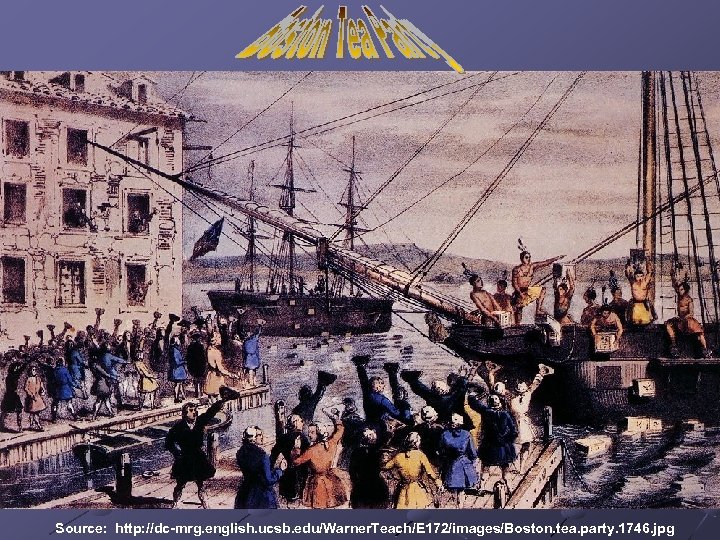 Source: http: //dc-mrg. english. ucsb. edu/Warner. Teach/E 172/images/Boston. tea. party. 1746. jpg
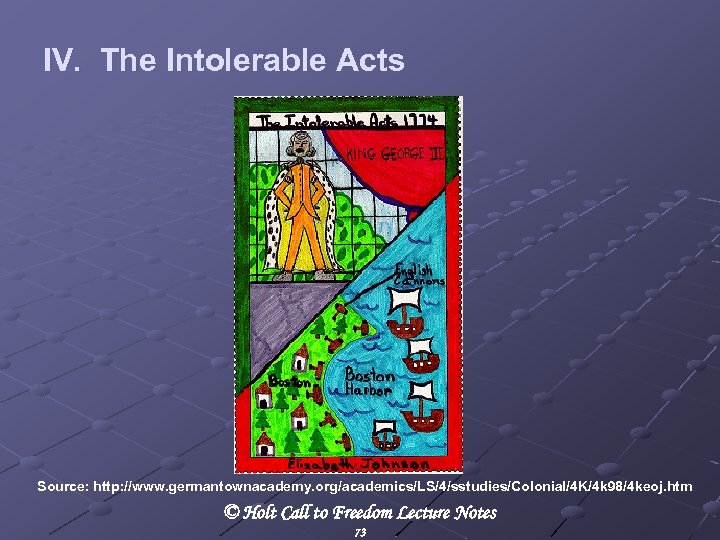 IV. The Intolerable Acts Source: http: //www. germantownacademy. org/academics/LS/4/sstudies/Colonial/4 K/4 k 98/4 keoj. htm © Holt Call to Freedom Lecture Notes 73
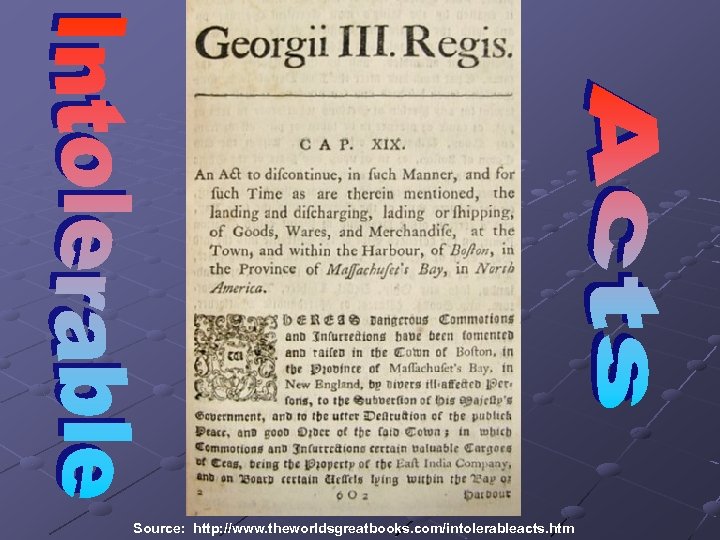
 IV. The Intolerable Acts A. Parliament passed the Coercive Acts, known in the colonies as the Intolerable Acts, to restore order in the colonies. © Holt Call to Freedom Lecture Notes 74
 Source: http: //www. theworldsgreatbooks. com/intolerableacts. htm
 B. The Intolerable Acts 1. Boston Harbor closed until Boston paid for lost tea. 2. Massachusetts charter was canceled, and governor decided if and when legislature should meet. 3. Royal officials accused of crimes were to be tried in Britain. © Holt Call to Freedom Lecture Notes 76
 B. The Intolerable Acts 4. Quartering Act forced colonists to quarter, or house and supply, British soldiers. 5. General Thomas Gage became the new governor of Massachusetts. © Holt Call to Freedom Lecture Notes 77
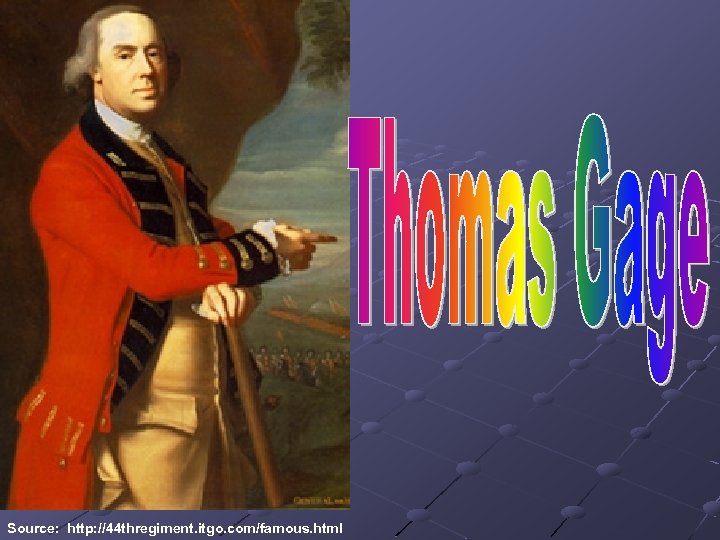 Source: http: //44 thregiment. itgo. com/famous. html
 C. Intolerable Acts further angered the colonists. 1. Mercy Otis Warren wrote plays making fun of the British. 2. Boston leaders tried to bring other colonies together to respond to the Intolerable Acts. © Holt Call to Freedom Lecture Notes 79
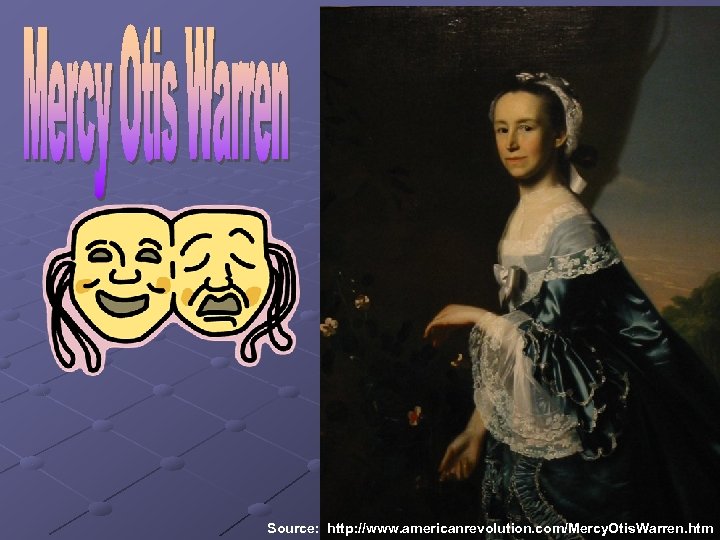 Source: http: //www. americanrevolution. com/Mercy. Otis. Warren. htm