

Holidays and traditions in Great



 Скачать презентацию Holidays and traditions in Great
Моисеенко. Водопьянова.pptx
- Количество слайдов: 20
Holidays and traditions in Great Britain Work performed: students of the 12 th group Moiseenko Nastya and Vodopyanova Christina. Сhecked: Erusheva Olesya Nikolaevna.
Choose a holiday Christmas Day of mother Independence Day of Scotland
Christmas
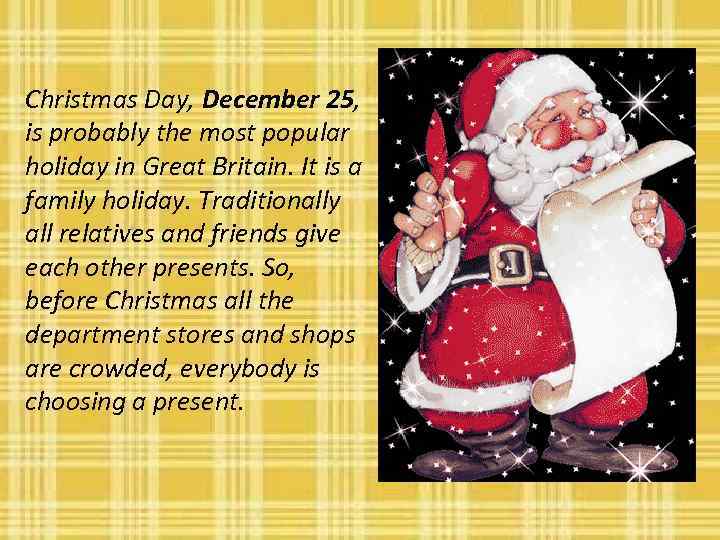
Christmas Day, December 25, is probably the most popular holiday in Great Britain. It is a family holiday. Traditionally all relatives and friends give each other presents. So, before Christmas all the department stores and shops are crowded, everybody is choosing a present.
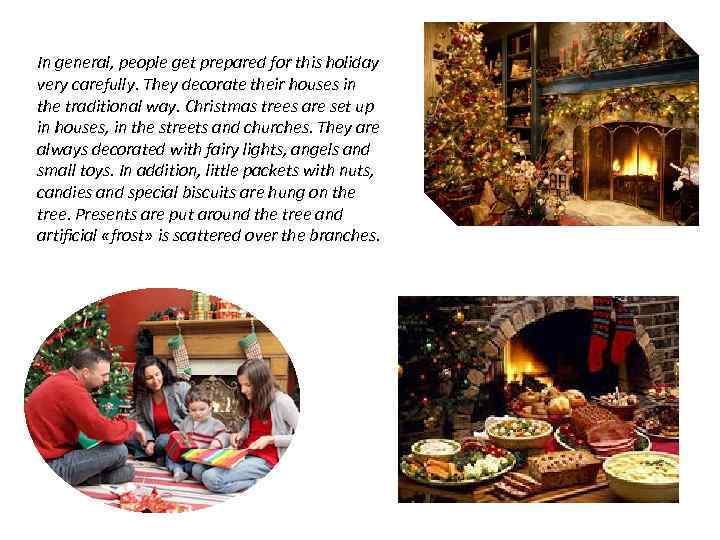
In general, people get prepared for this holiday very carefully. They decorate their houses in the traditional way. Christmas trees are set up in houses, in the streets and churches. They are always decorated with fairy lights, angels and small toys. In addition, little packets with nuts, candies and special biscuits are hung on the tree. Presents are put around the tree and artificial «frost» is scattered over the branches.
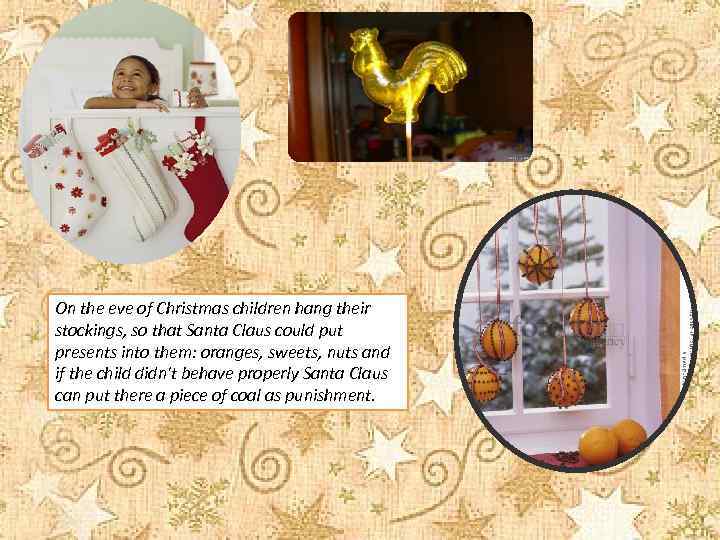
On the eve of Christmas children hang their stockings, so that Santa Claus could put presents into them: oranges, sweets, nuts and if the child didn't behave properly Santa Claus can put there a piece of coal as punishment.
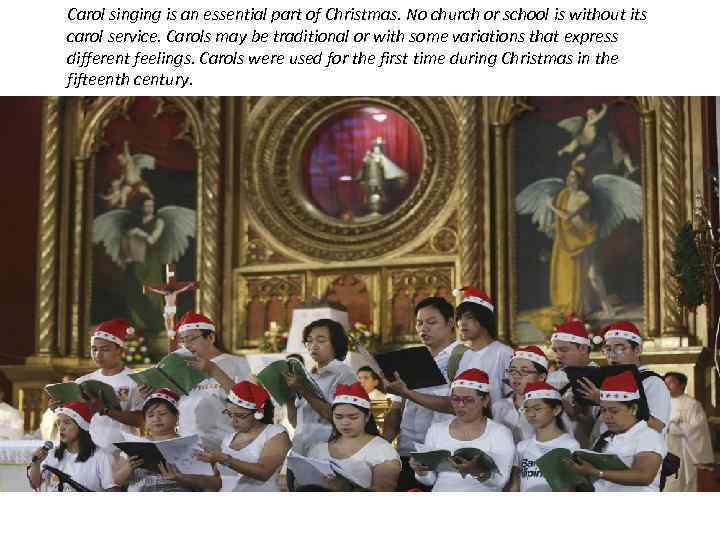
Carol singing is an essential part of Christmas. No church or school is without its carol service. Carols may be traditional or with some variations that express different feelings. Carols were used for the first time during Christmas in the fifteenth century.
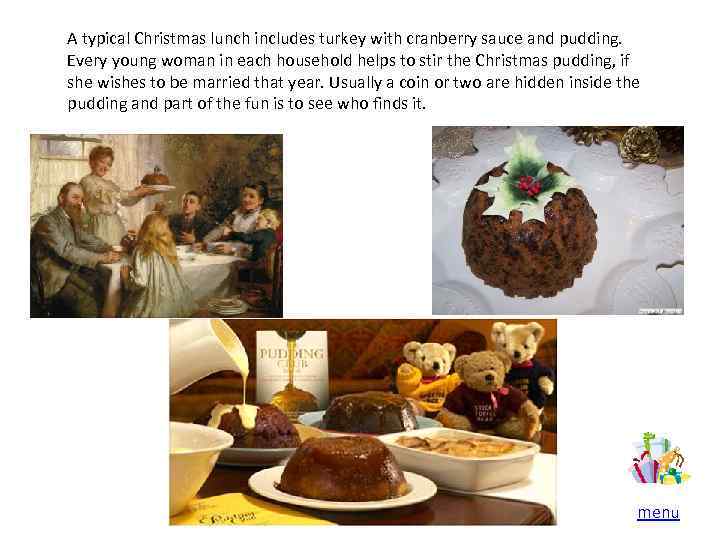
A typical Christmas lunch includes turkey with cranberry sauce and pudding. Every young woman in each household helps to stir the Christmas pudding, if she wishes to be married that year. Usually a coin or two are hidden inside the pudding and part of the fun is to see who finds it. menu
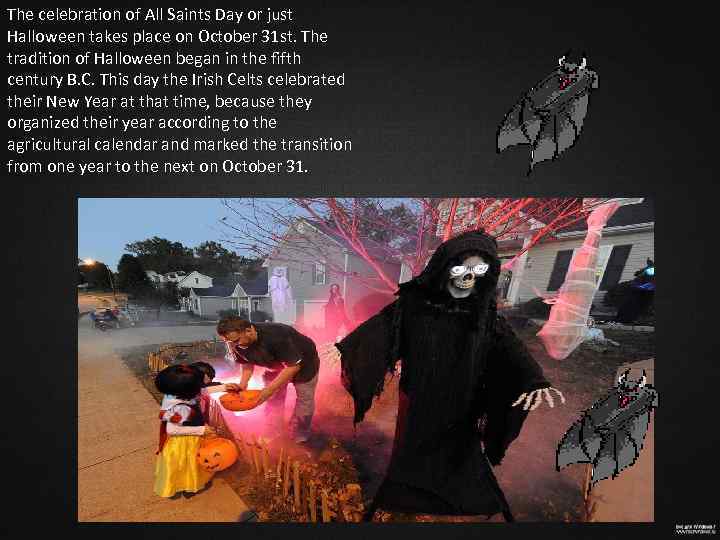
The celebration of All Saints Day or just Halloween takes place on October 31 st. The tradition of Halloween began in the fifth century B. C. This day the Irish Celts celebrated their New Year at that time, because they organized their year according to the agricultural calendar and marked the transition from one year to the next on October 31.
On Halloween, when it was believed that ghosts came back to the earthly world, people thought that they would encounter ghosts if they left their homes. To avoid being recognized by these ghosts, people would wear masks when they left their homes after dark so that the ghosts would mistake them for fellow spirits. On Halloween, people placed bowls of food outside their homes to appease the ghosts and prevent them from attempting to enter their home.
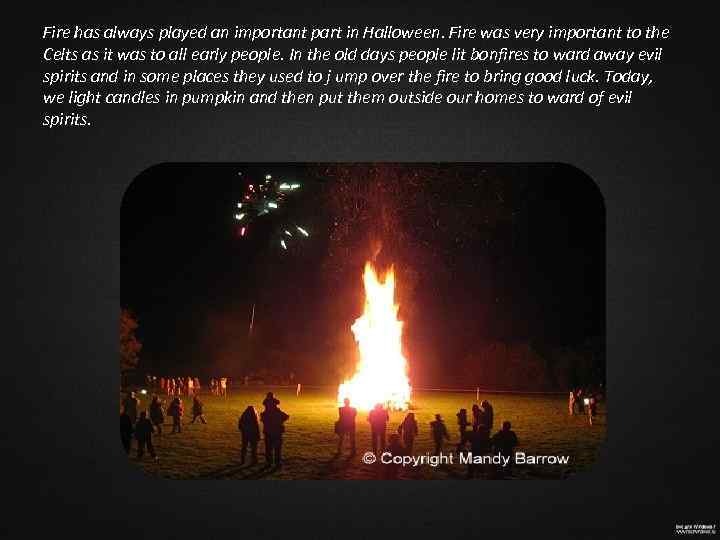
Fire has always played an important part in Halloween. Fire was very important to the Celts as it was to all early people. In the old days people lit bonfires to ward away evil spirits and in some places they used to j ump over the fire to bring good luck. Today, we light candles in pumpkin and then put them outside our homes to ward of evil spirits.
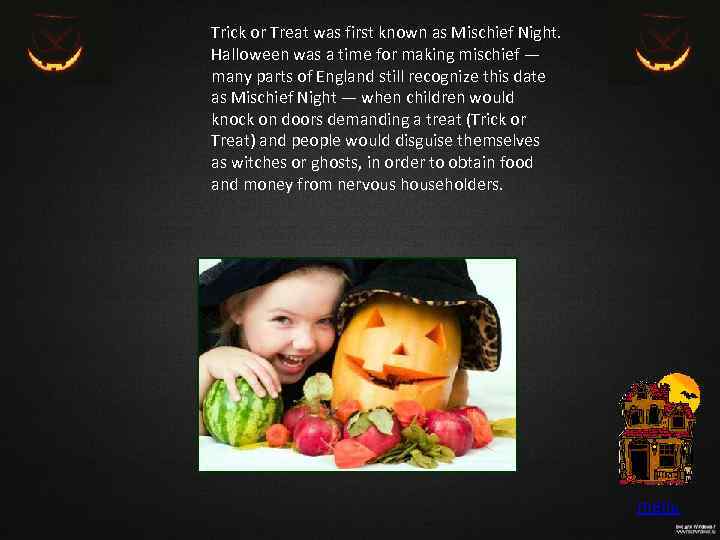
Trick or Treat was first known as Mischief Night. Halloween was a time for making mischief — many parts of England still recognize this date as Mischief Night — when children would knock on doors demanding a treat (Trick or Treat) and people would disguise themselves as witches or ghosts, in order to obtain food and money from nervous householders. menu
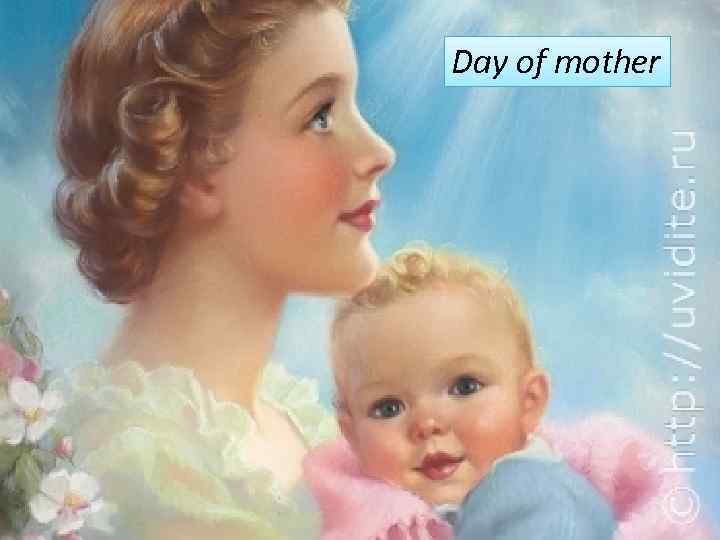
Day of mother
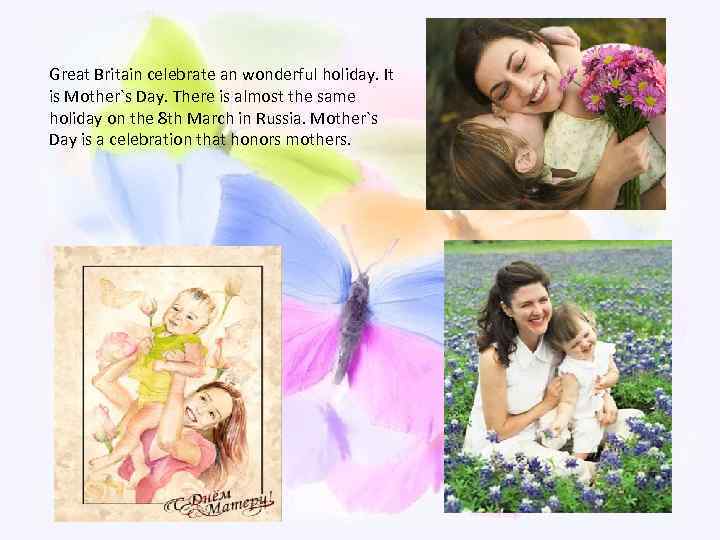
Great Britain celebrate an wonderful holiday. It is Mother`s Day. There is almost the same holiday on the 8 th March in Russia. Mother`s Day is a celebration that honors mothers.
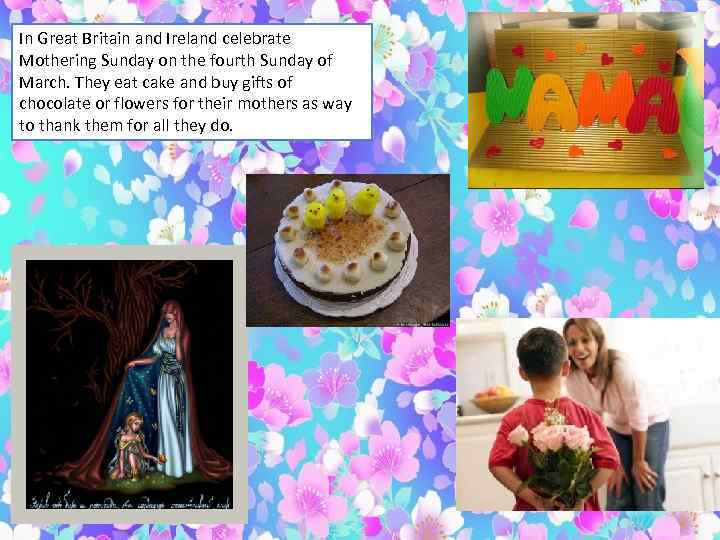
In Great Britain and Ireland celebrate Mothering Sunday on the fourth Sunday of March. They eat cake and buy gifts of chocolate or flowers for their mothers as way to thank them for all they do.
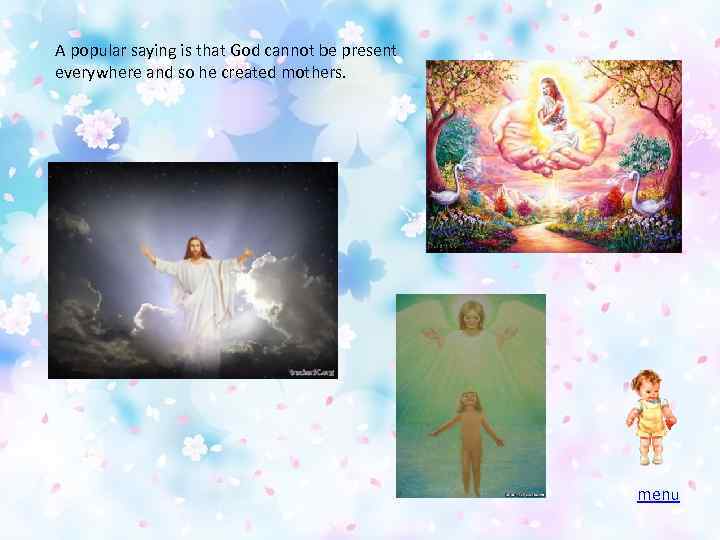
A popular saying is that God cannot be present everywhere and so he created mothers. menu
Independence Day of Scotland
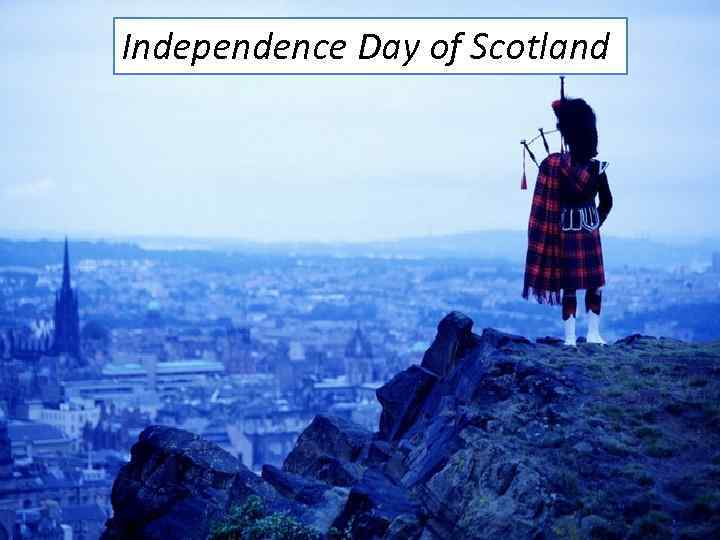
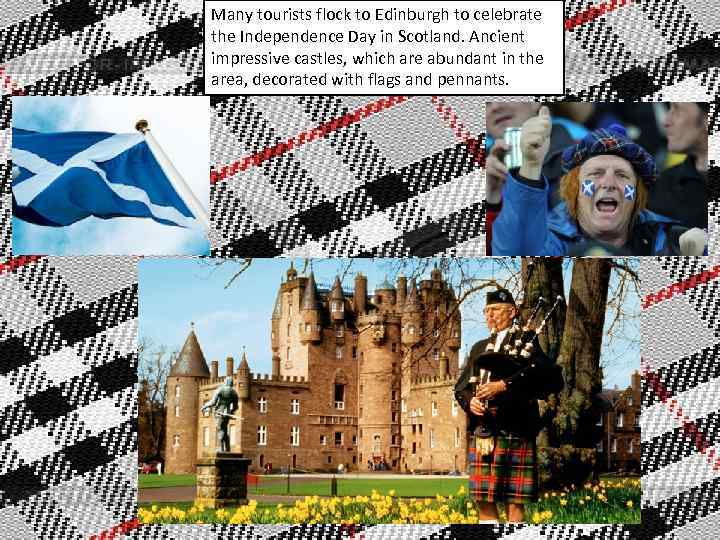
Scotland - ancient amazing country, part of the United Kingdom. State retained its independence and unconditional identity. Interesting men's national dress Scots - checkered kilt and, of course, the inimitable bagpipes.
Many tourists flock to Edinburgh to celebrate the Independence Day in Scotland. Ancient impressive castles, which are abundant in the area, decorated with flags and pennants.
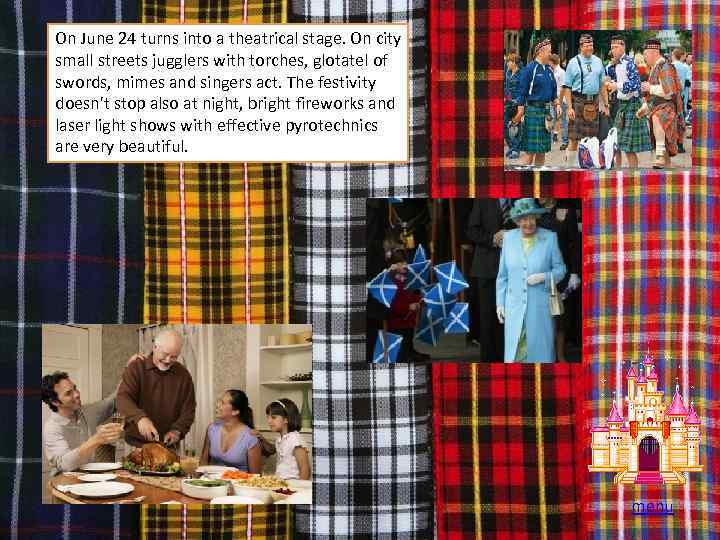
On June 24 turns into a theatrical stage. On city small streets jugglers with torches, glotatel of swords, mimes and singers act. The festivity doesn't stop also at night, bright fireworks and laser light shows with effective pyrotechnics are very beautiful. menu