


 Скачать презентацию HIV and younger women Women for Positive Action
9c989a66c37011a89e24c4e2b3ccde74.ppt
- Количество слайдов: 65
 HIV and younger women Women for Positive Action is an educational program funded by Abb. Vie
 Contents Introduction Transition of care Treatment considerations in younger women Emotional health Stigma and disclosure Sexual and reproductive health issues Examples of initiatives for younger women
 Introduction Women for Positive Action is an educational program funded by Abb. Vie
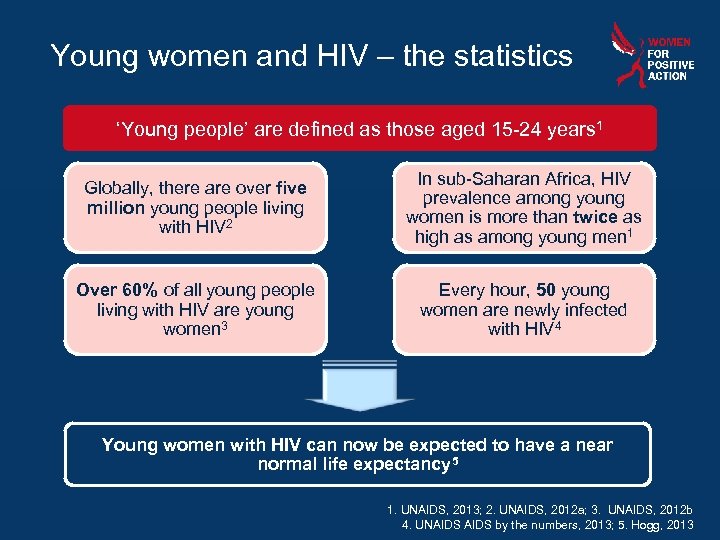 Young women and HIV – the statistics ‘Young people’ are defined as those aged 15 -24 years 1 Globally, there are over five million young people living with HIV 2 In sub-Saharan Africa, HIV prevalence among young women is more than twice as high as among young men 1 Over 60% of all young people living with HIV are young women 3 Every hour, 50 young women are newly infected with HIV 4 Young women with HIV can now be expected to have a near normal life expectancy 5 1. UNAIDS, 2013; 2. UNAIDS, 2012 a; 3. UNAIDS, 2012 b 4. UNAIDS by the numbers, 2013; 5. Hogg, 2013
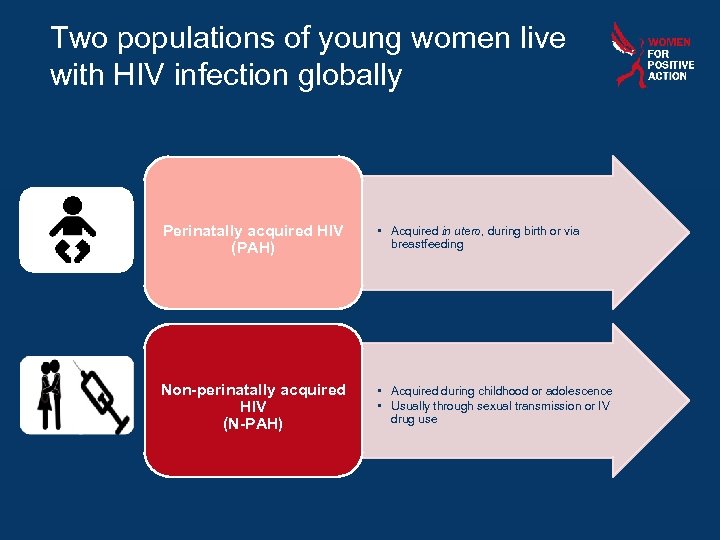 Two populations of young women live with HIV infection globally Perinatally acquired HIV (PAH) • Acquired in utero, during birth or via breastfeeding Non-perinatally acquired HIV (N-PAH) • Acquired during childhood or adolescence • Usually through sexual transmission or IV drug use
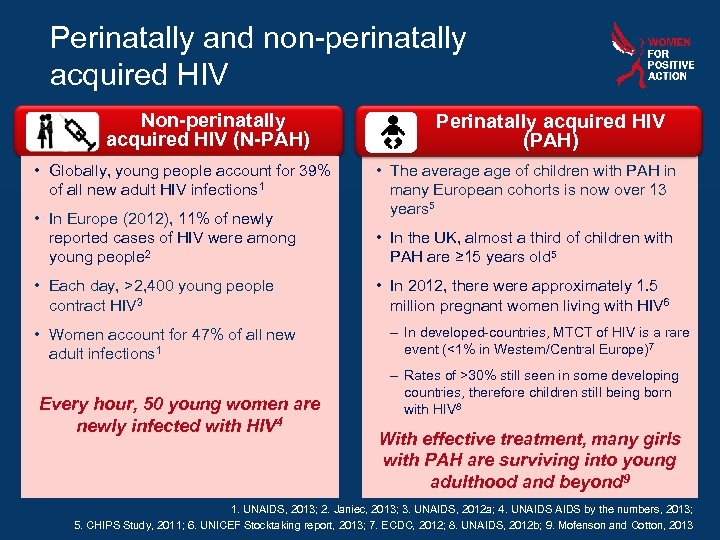 Perinatally and non-perinatally acquired HIV Non-perinatally acquired HIV (N-PAH) • Globally, young people account for 39% of all new adult HIV infections 1 • In Europe (2012), 11% of newly reported cases of HIV were among young people 2 • Each day, >2, 400 young people contract HIV 3 • Women account for 47% of all new adult infections 1 Every hour, 50 young women are newly infected with HIV 4 Perinatally acquired HIV (PAH) • The average of children with PAH in many European cohorts is now over 13 years 5 • In the UK, almost a third of children with PAH are ≥ 15 years old 5 • In 2012, there were approximately 1. 5 million pregnant women living with HIV 6 ‒ In developed-countries, MTCT of HIV is a rare event (<1% in Western/Central Europe)7 ‒ Rates of >30% still seen in some developing countries, therefore children still being born with HIV 8 With effective treatment, many girls with PAH are surviving into young adulthood and beyond 9 1. UNAIDS, 2013; 2. Janiec, 2013; 3. UNAIDS, 2012 a; 4. UNAIDS by the numbers, 2013; 5. CHIPS Study, 2011; 6. UNICEF Stocktaking report, 2013; 7. ECDC, 2012; 8. UNAIDS, 2012 b; 9. Mofenson and Cotton, 2013
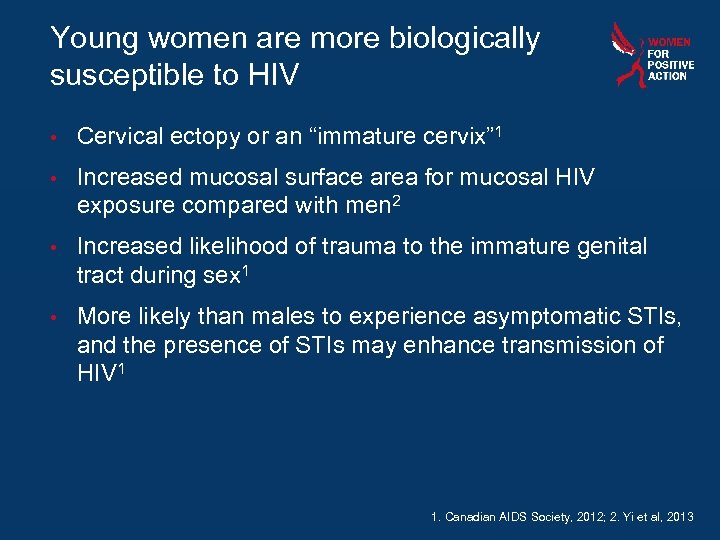 Young women are more biologically susceptible to HIV • Cervical ectopy or an “immature cervix” 1 • Increased mucosal surface area for mucosal HIV exposure compared with men 2 • Increased likelihood of trauma to the immature genital tract during sex 1 • More likely than males to experience asymptomatic STIs, and the presence of STIs may enhance transmission of HIV 1 1. Canadian AIDS Society, 2012; 2. Yi et al, 2013
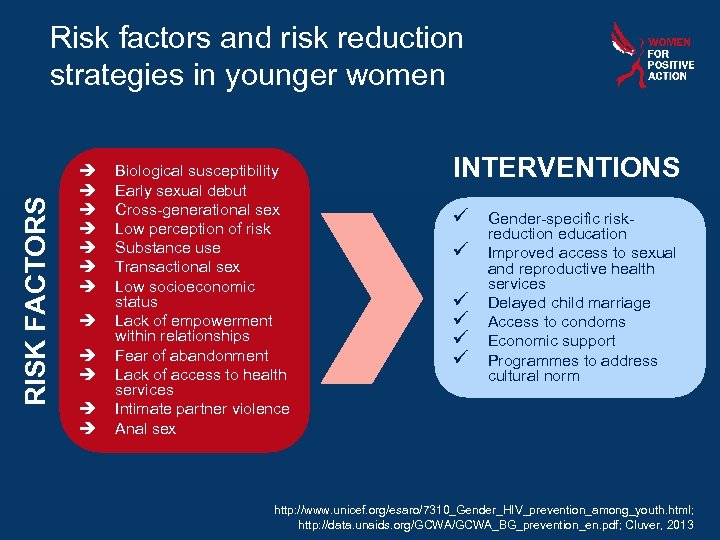 RISK FACTORS Risk factors and risk reduction strategies in younger women Biological susceptibility Early sexual debut Cross-generational sex Low perception of risk Substance use Transactional sex Low socioeconomic status Lack of empowerment within relationships Fear of abandonment Lack of access to health services Intimate partner violence Anal sex INTERVENTIONS ü ü ü Gender-specific riskreduction education Improved access to sexual and reproductive health services Delayed child marriage Access to condoms Economic support Programmes to address cultural norm http: //www. unicef. org/esaro/7310_Gender_HIV_prevention_among_youth. html; http: //data. unaids. org/GCWA_BG_prevention_en. pdf; Cluver, 2013
 Transition of care Women for Positive Action is an educational program funded by Abb. Vie
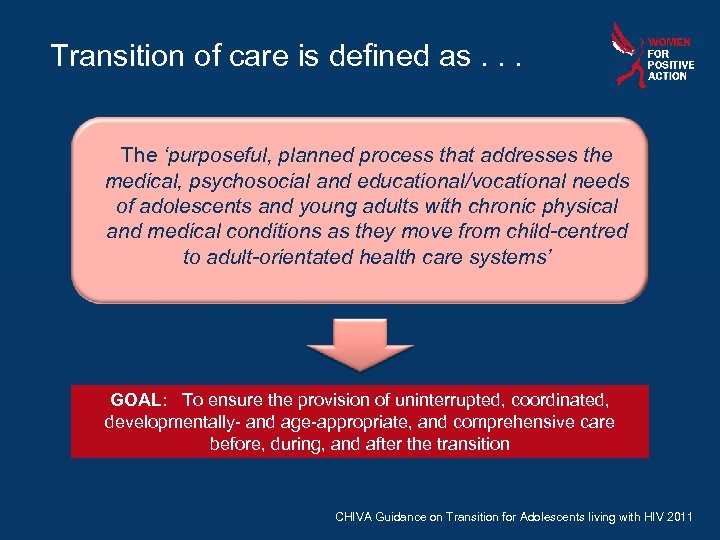 Transition of care is defined as. . . The ‘purposeful, planned process that addresses the medical, psychosocial and educational/vocational needs of adolescents and young adults with chronic physical and medical conditions as they move from child-centred to adult-orientated health care systems’ GOAL: To ensure the provision of uninterrupted, coordinated, developmentally- and age-appropriate, and comprehensive care before, during, and after the transition CHIVA Guidance on Transition for Adolescents living with HIV 2011
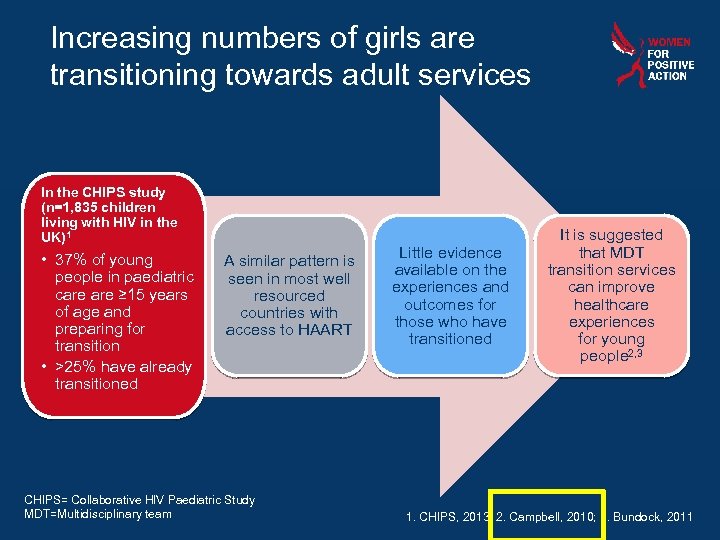 Increasing numbers of girls are transitioning towards adult services In the CHIPS study (n=1, 835 children living with HIV in the UK)1 • 37% of young people in paediatric care ≥ 15 years of age and preparing for transition • >25% have already transitioned A similar pattern is seen in most well resourced countries with access to HAART CHIPS= Collaborative HIV Paediatric Study MDT=Multidisciplinary team Little evidence available on the experiences and outcomes for those who have transitioned It is suggested that MDT transition services can improve healthcare experiences for young people 2, 3 1. CHIPS, 2013; 2. Campbell, 2010; 3. Bundock, 2011
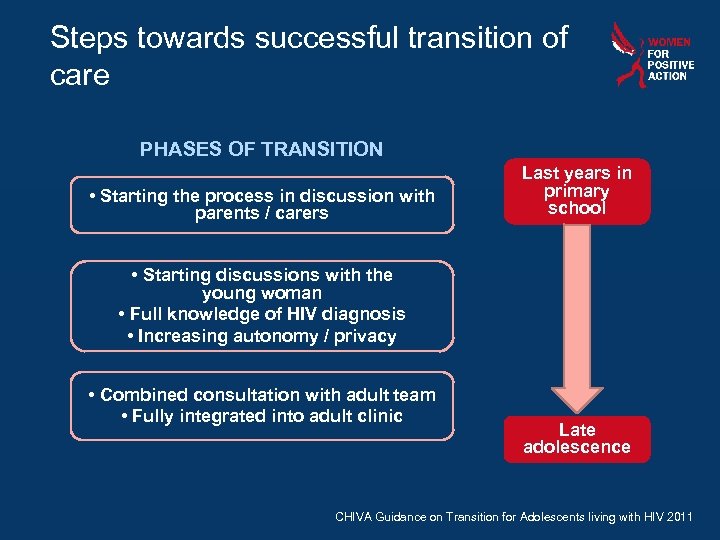 Steps towards successful transition of care PHASES OF TRANSITION • Starting the process in discussion with parents / carers Last years in primary school • Starting discussions with the young woman • Full knowledge of HIV diagnosis • Increasing autonomy / privacy • Combined consultation with adult team • Fully integrated into adult clinic Late adolescence CHIVA Guidance on Transition for Adolescents living with HIV 2011
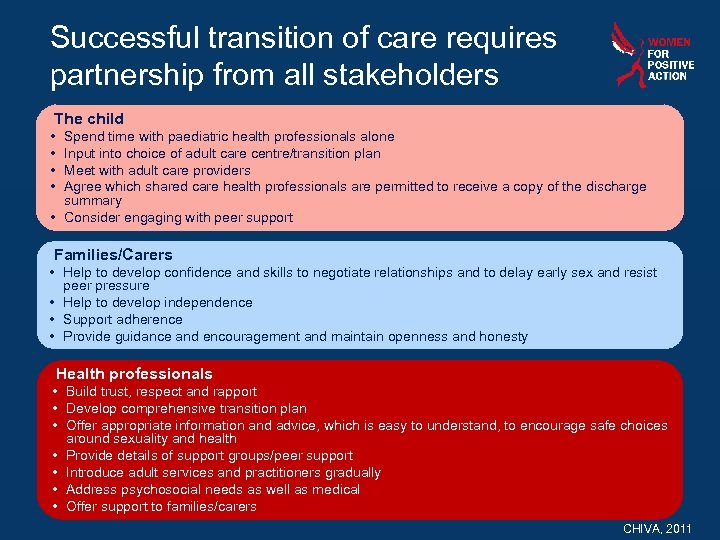 Successful transition of care requires partnership from all stakeholders The child • • Spend time with paediatric health professionals alone Input into choice of adult care centre/transition plan Meet with adult care providers Agree which shared care health professionals are permitted to receive a copy of the discharge summary • Consider engaging with peer support Families/Carers • Help to develop confidence and skills to negotiate relationships and to delay early sex and resist peer pressure • Help to develop independence • Support adherence • Provide guidance and encouragement and maintain openness and honesty Health professionals • Build trust, respect and rapport • Develop comprehensive transition plan • Offer appropriate information and advice, which is easy to understand, to encourage safe choices around sexuality and health • Provide details of support groups/peer support • Introduce adult services and practitioners gradually • Address psychosocial needs as well as medical • Offer support to families/carers CHIVA, 2011
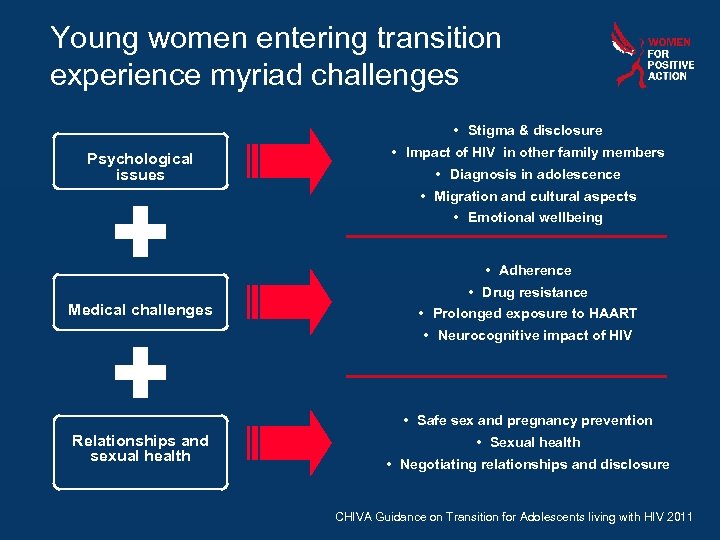 Young women entering transition experience myriad challenges • Stigma & disclosure Psychological issues • Impact of HIV in other family members • Diagnosis in adolescence • Migration and cultural aspects • Emotional wellbeing • Adherence • Drug resistance Medical challenges • Prolonged exposure to HAART • Neurocognitive impact of HIV • Safe sex and pregnancy prevention Relationships and sexual health • Sexual health • Negotiating relationships and disclosure CHIVA Guidance on Transition for Adolescents living with HIV 2011
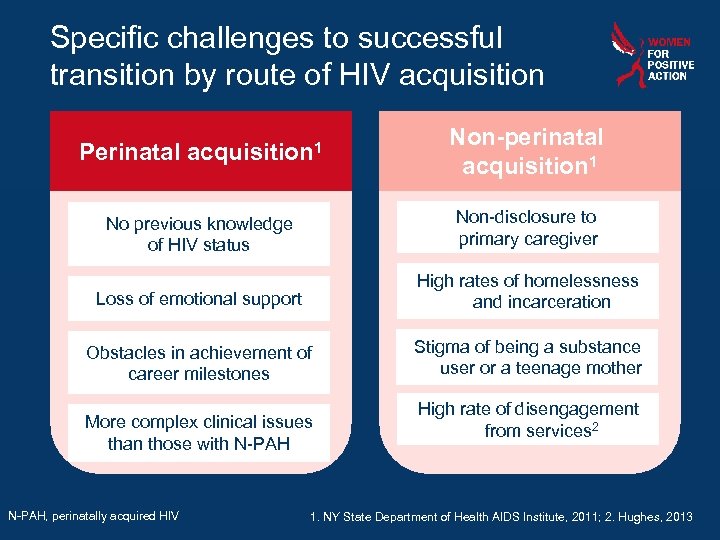 Specific challenges to successful transition by route of HIV acquisition Perinatal acquisition 1 Non-perinatal acquisition 1 No previous knowledge of HIV status Non-disclosure to primary caregiver Loss of emotional support High rates of homelessness and incarceration Obstacles in achievement of career milestones Stigma of being a substance user or a teenage mother More complex clinical issues than those with N-PAH, perinatally acquired HIV High rate of disengagement from services 2 1. NY State Department of Health AIDS Institute, 2011; 2. Hughes, 2013
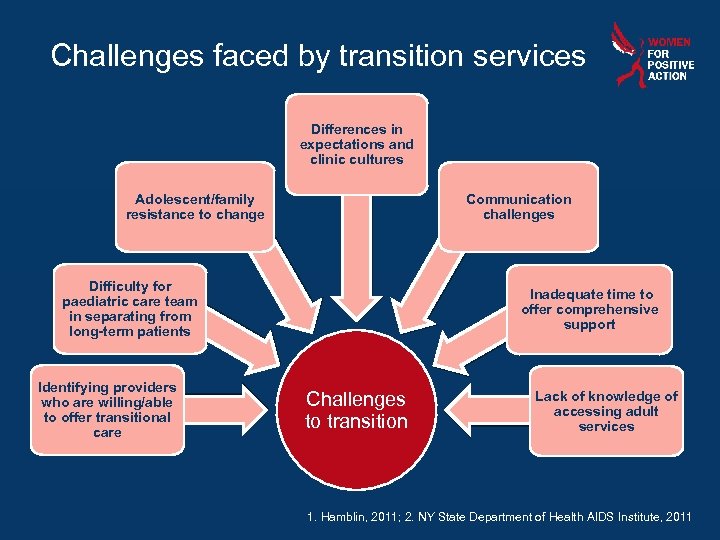 Challenges faced by transition services Differences in expectations and clinic cultures Adolescent/family resistance to change Communication challenges Difficulty for paediatric care team in separating from long-term patients Identifying providers who are willing/able to offer transitional care Inadequate time to offer comprehensive support Challenges to transition Lack of knowledge of accessing adult services 1. Hamblin, 2011; 2. NY State Department of Health AIDS Institute, 2011
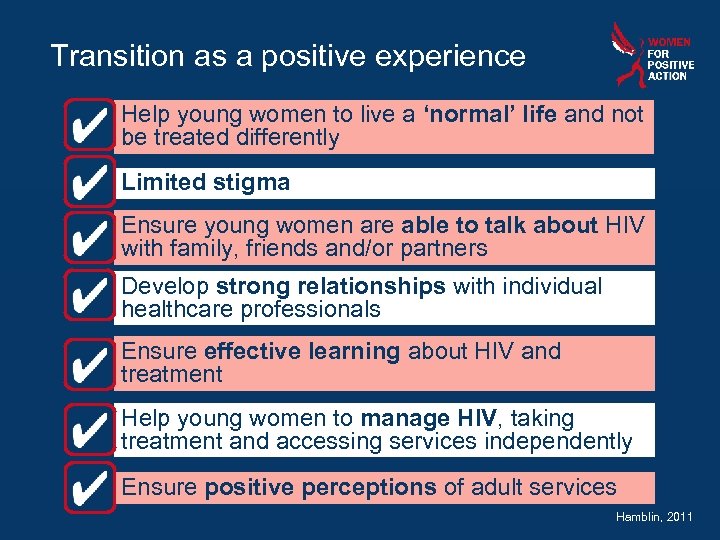 Transition as a positive experience Help young women to live a ‘normal’ life and not be treated differently Limited stigma Ensure young women are able to talk about HIV with family, friends and/or partners Develop strong relationships with individual healthcare professionals Ensure effective learning about HIV and treatment Help young women to manage HIV, taking treatment and accessing services independently Ensure positive perceptions of adult services Hamblin, 2011
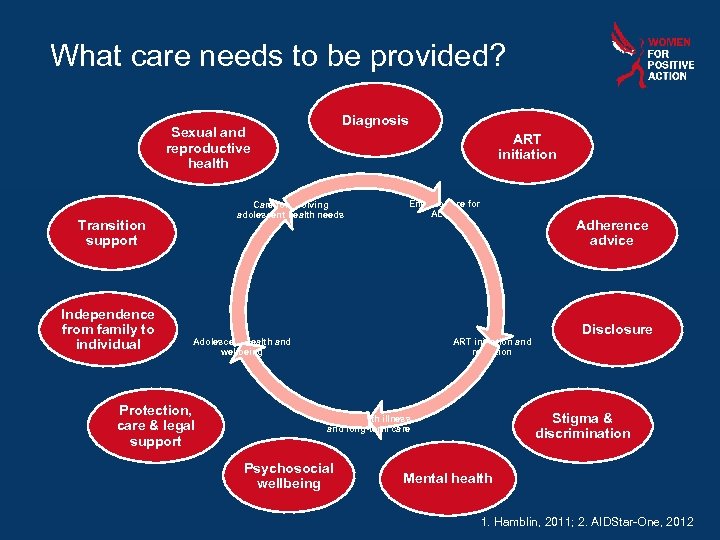 What care needs to be provided? Diagnosis Sexual and reproductive health Care for evolving adolescent health needs Transition support Independence from family to individual ART initiation Entry to care for ALHIV Adolescent health and wellbeing Protection, care & legal support Adherence advice ART initiation and retention Stigma & discrimination Coping with illness and long-term care Psychosocial wellbeing Disclosure Mental health 1. Hamblin, 2011; 2. AIDStar-One, 2012
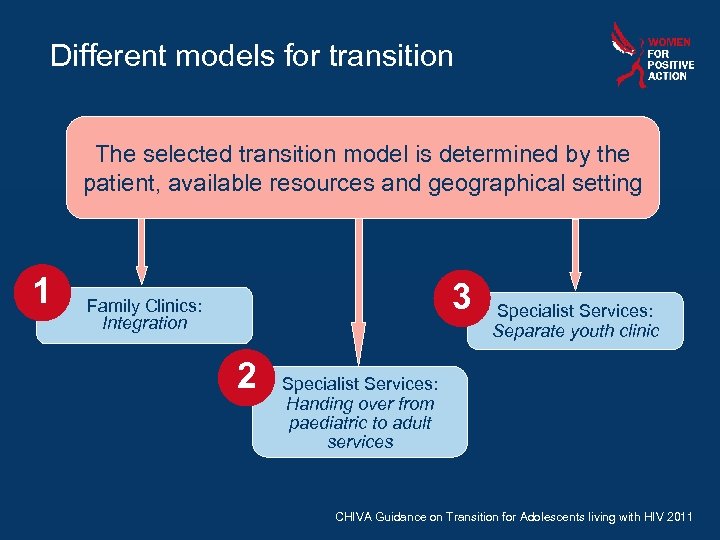 Different models for transition The selected transition model is determined by the patient, available resources and geographical setting 1 3 Family Clinics: Integration 2 Specialist Services: Separate youth clinic Specialist Services: Handing over from paediatric to adult services CHIVA Guidance on Transition for Adolescents living with HIV 2011
 Treatment considerations in younger women Women for Positive Action is an educational program funded by Abb. Vie
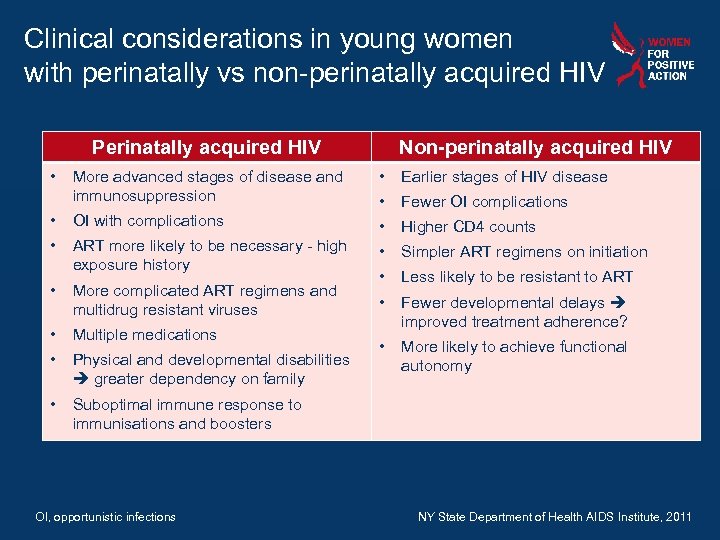 Clinical considerations in young women with perinatally vs non-perinatally acquired HIV Perinatally acquired HIV • Non-perinatally acquired HIV More advanced stages of disease and immunosuppression • Earlier stages of HIV disease • Fewer OI complications • OI with complications • Higher CD 4 counts • ART more likely to be necessary - high exposure history • Simpler ART regimens on initiation • More complicated ART regimens and multidrug resistant viruses • Less likely to be resistant to ART • • Multiple medications Fewer developmental delays improved treatment adherence? • Physical and developmental disabilities greater dependency on family • More likely to achieve functional autonomy • Suboptimal immune response to immunisations and boosters OI, opportunistic infections NY State Department of Health AIDS Institute, 2011
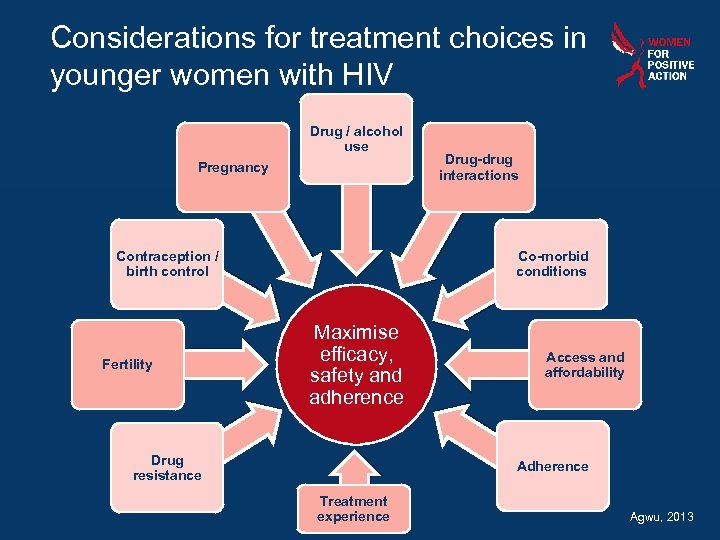 Considerations for treatment choices in younger women with HIV Drug / alcohol use Pregnancy Contraception / birth control Fertility Drug-drug interactions Co-morbid conditions Maximise efficacy, safety and adherence Drug resistance Access and affordability Adherence Treatment experience Agwu, 2013
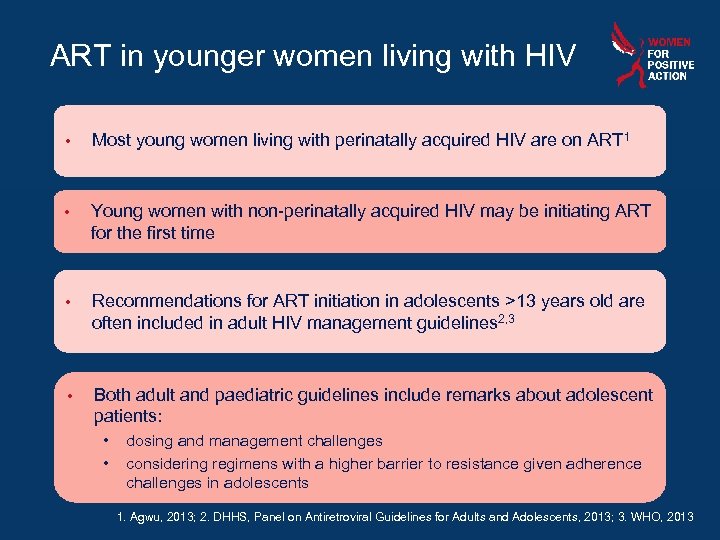 ART in younger women living with HIV • Most young women living with perinatally acquired HIV are on ART 1 • Young women with non-perinatally acquired HIV may be initiating ART for the first time • Recommendations for ART initiation in adolescents >13 years old are often included in adult HIV management guidelines 2, 3 • Both adult and paediatric guidelines include remarks about adolescent patients: • • dosing and management challenges considering regimens with a higher barrier to resistance given adherence challenges in adolescents 1. Agwu, 2013; 2. DHHS, Panel on Antiretroviral Guidelines for Adults and Adolescents, 2013; 3. WHO, 2013
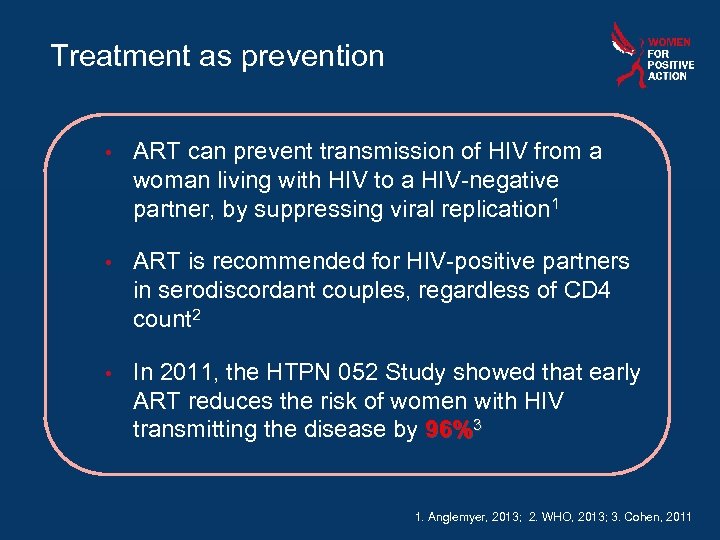 Treatment as prevention • ART can prevent transmission of HIV from a woman living with HIV to a HIV-negative partner, by suppressing viral replication 1 • ART is recommended for HIV-positive partners in serodiscordant couples, regardless of CD 4 count 2 • In 2011, the HTPN 052 Study showed that early ART reduces the risk of women with HIV transmitting the disease by 96%3 1. Anglemyer, 2013; 2. WHO, 2013; 3. Cohen, 2011
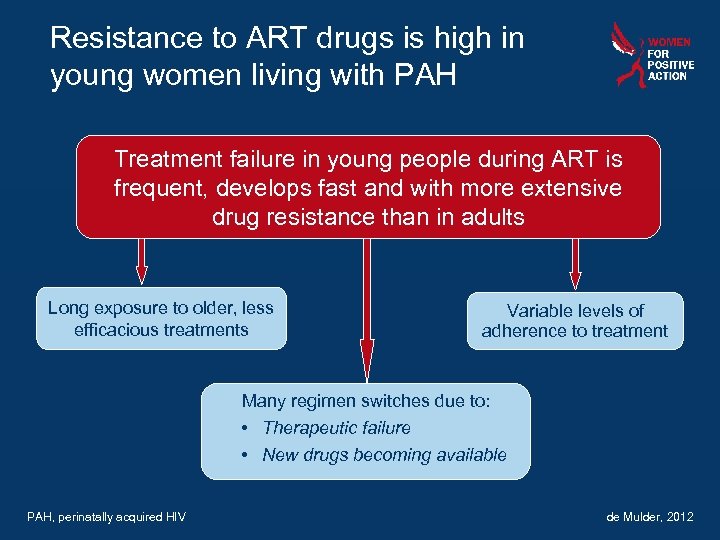 Resistance to ART drugs is high in young women living with PAH Treatment failure in young people during ART is frequent, develops fast and with more extensive drug resistance than in adults Long exposure to older, less efficacious treatments Variable levels of adherence to treatment Many regimen switches due to: • Therapeutic failure • New drugs becoming available PAH, perinatally acquired HIV de Mulder, 2012
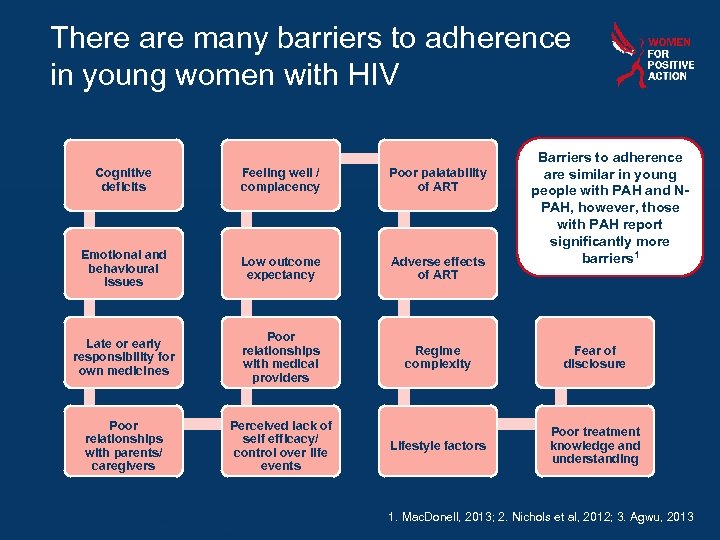 There are many barriers to adherence in young women with HIV Barriers to adherence are similar in young people with PAH and NPAH, however, those with PAH report significantly more barriers 1 Cognitive deficits Feeling well / complacency Poor palatability of ART Emotional and behavioural issues Low outcome expectancy Adverse effects of ART Late or early responsibility for own medicines Poor relationships with medical providers Regime complexity Fear of disclosure Poor relationships with parents/ caregivers Perceived lack of self efficacy/ control over life events Lifestyle factors Poor treatment knowledge and understanding Feeling well / complacency 1. Mac. Donell, 2013; 2. Nichols et al, 2012; 3. Agwu, 2013
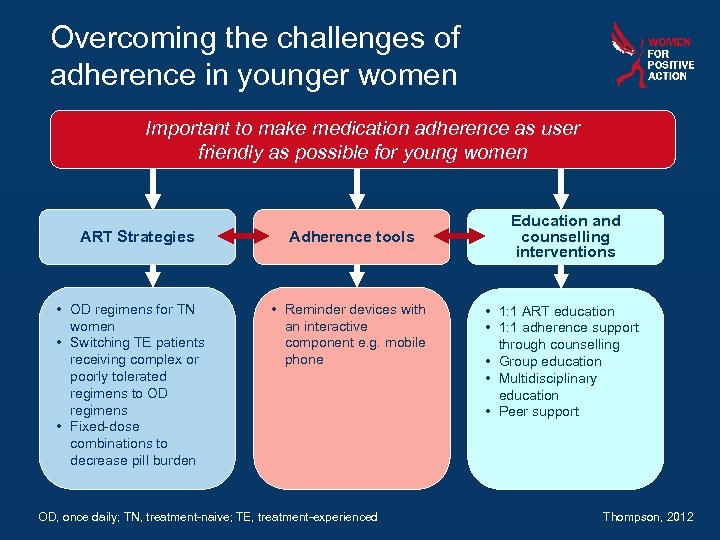 Overcoming the challenges of adherence in younger women Important to make medication adherence as user friendly as possible for young women ART Strategies • OD regimens for TN women • Switching TE patients receiving complex or poorly tolerated regimens to OD regimens • Fixed-dose combinations to decrease pill burden Adherence tools • Reminder devices with an interactive component e. g. mobile phone OD, once daily; TN, treatment-naive; TE, treatment-experienced Education and counselling interventions • 1: 1 ART education • 1: 1 adherence support through counselling • Group education • Multidisciplinary education • Peer support Thompson, 2012
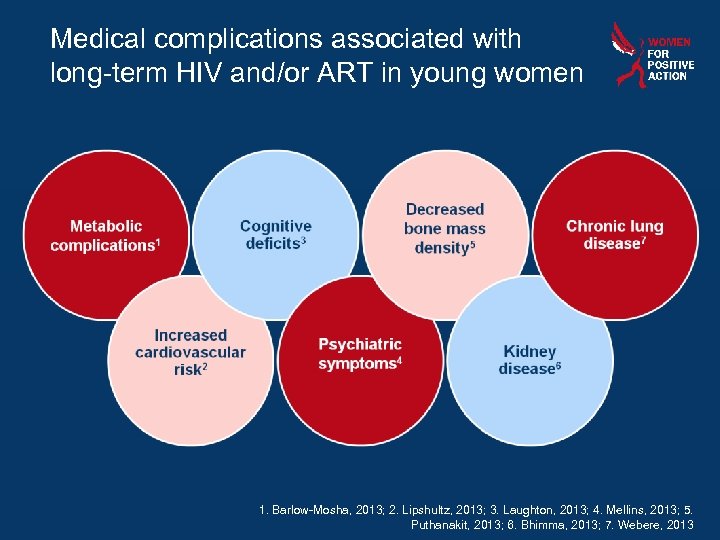 Medical complications associated with long-term HIV and/or ART in young women 1. Barlow-Mosha, 2013; 2. Lipshultz, 2013; 3. Laughton, 2013; 4. Mellins, 2013; 5. Puthanakit, 2013; 6. Bhimma, 2013; 7. Webere, 2013
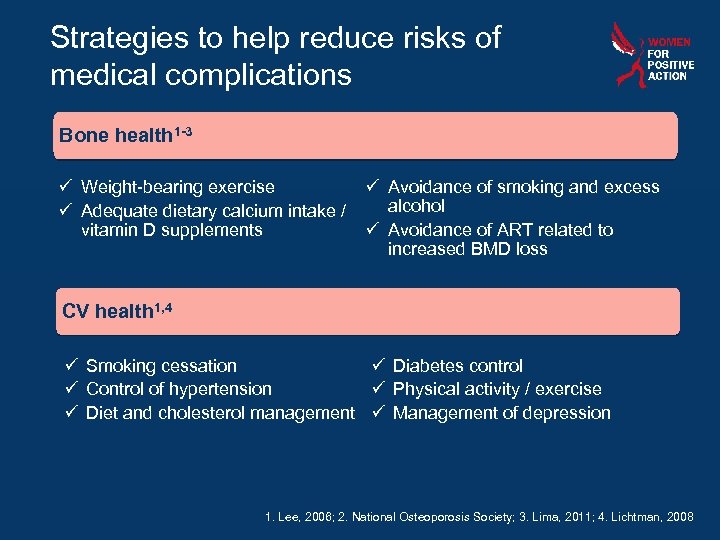 Strategies to help reduce risks of medical complications Bone health 1 -3 ü Weight-bearing exercise ü Adequate dietary calcium intake / vitamin D supplements ü Avoidance of smoking and excess alcohol ü Avoidance of ART related to increased BMD loss CV health 1, 4 ü Diabetes control ü Smoking cessation ü Control of hypertension ü Physical activity / exercise ü Diet and cholesterol management ü Management of depression 1. Lee, 2006; 2. National Osteoporosis Society; 3. Lima, 2011; 4. Lichtman, 2008
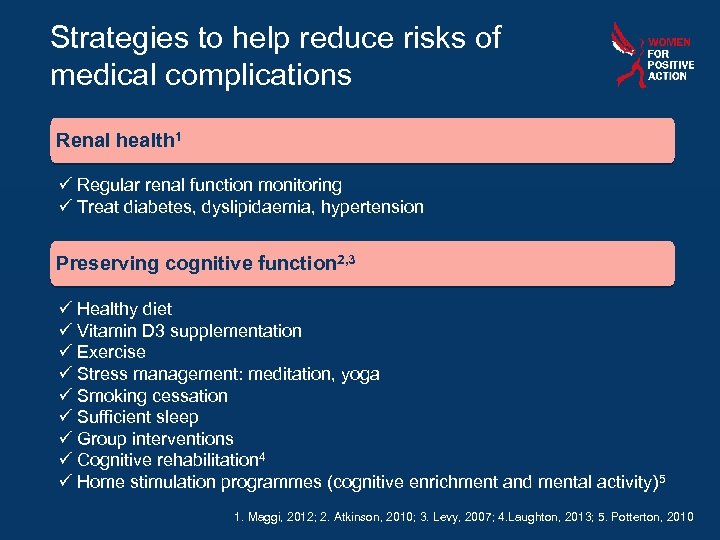 Strategies to help reduce risks of medical complications Renal health 1 ü Regular renal function monitoring ü Treat diabetes, dyslipidaemia, hypertension Preserving cognitive function 2, 3 ü Healthy diet ü Vitamin D 3 supplementation ü Exercise ü Stress management: meditation, yoga ü Smoking cessation ü Sufficient sleep ü Group interventions ü Cognitive rehabilitation 4 ü Home stimulation programmes (cognitive enrichment and mental activity)5 1. Maggi, 2012; 2. Atkinson, 2010; 3. Levy, 2007; 4. Laughton, 2013; 5. Potterton, 2010
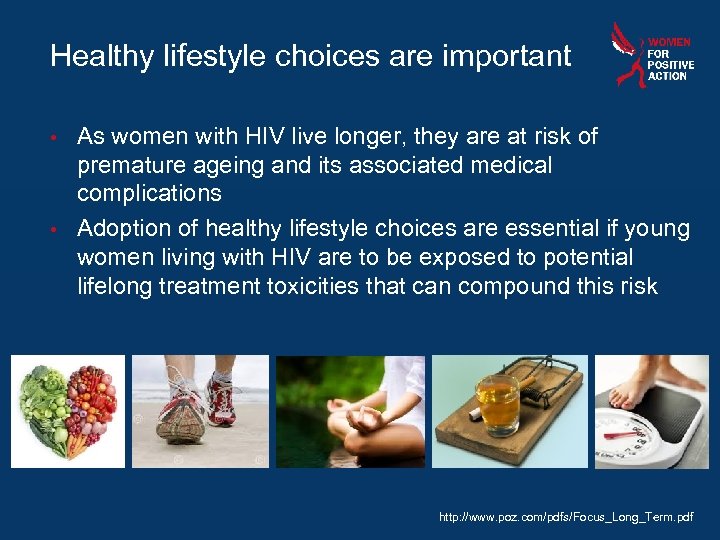 Healthy lifestyle choices are important As women with HIV live longer, they are at risk of premature ageing and its associated medical complications • Adoption of healthy lifestyle choices are essential if young women living with HIV are to be exposed to potential lifelong treatment toxicities that can compound this risk • http: //www. poz. com/pdfs/Focus_Long_Term. pdf
 Emotional health Women for Positive Action is an educational program funded by Abb. Vie
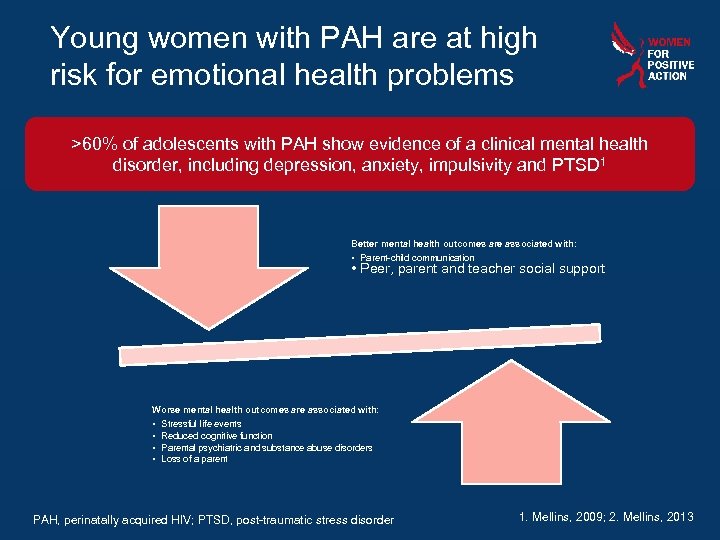 Young women with PAH are at high risk for emotional health problems >60% of adolescents with PAH show evidence of a clinical mental health disorder, including depression, anxiety, impulsivity and PTSD 1 Better mental health outcomes are associated with: • Parent-child communication • Peer, parent and teacher social support Worse mental health outcomes are associated with: • Stressful life events • Reduced cognitive function • Parental psychiatric and substance abuse disorders • Loss of a parent PAH, perinatally acquired HIV; PTSD, post-traumatic stress disorder 1. Mellins, 2009; 2. Mellins, 2013
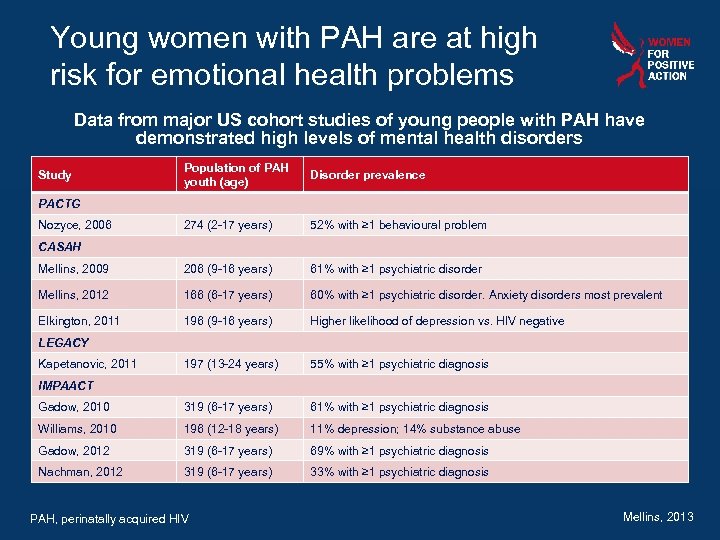 Young women with PAH are at high risk for emotional health problems Data from major US cohort studies of young people with PAH have demonstrated high levels of mental health disorders Population of PAH youth (age) Disorder prevalence 274 (2 -17 years) 52% with ≥ 1 behavioural problem Mellins, 2009 206 (9 -16 years) 61% with ≥ 1 psychiatric disorder Mellins, 2012 166 (6 -17 years) 60% with ≥ 1 psychiatric disorder. Anxiety disorders most prevalent Elkington, 2011 196 (9 -16 years) Higher likelihood of depression vs. HIV negative 197 (13 -24 years) 55% with ≥ 1 psychiatric diagnosis Gadow, 2010 319 (6 -17 years) 61% with ≥ 1 psychiatric diagnosis Williams, 2010 196 (12 -18 years) 11% depression; 14% substance abuse Gadow, 2012 319 (6 -17 years) 69% with ≥ 1 psychiatric diagnosis Nachman, 2012 319 (6 -17 years) 33% with ≥ 1 psychiatric diagnosis Study PACTG Nozyce, 2006 CASAH LEGACY Kapetanovic, 2011 IMPAACT PAH, perinatally acquired HIV Mellins, 2013
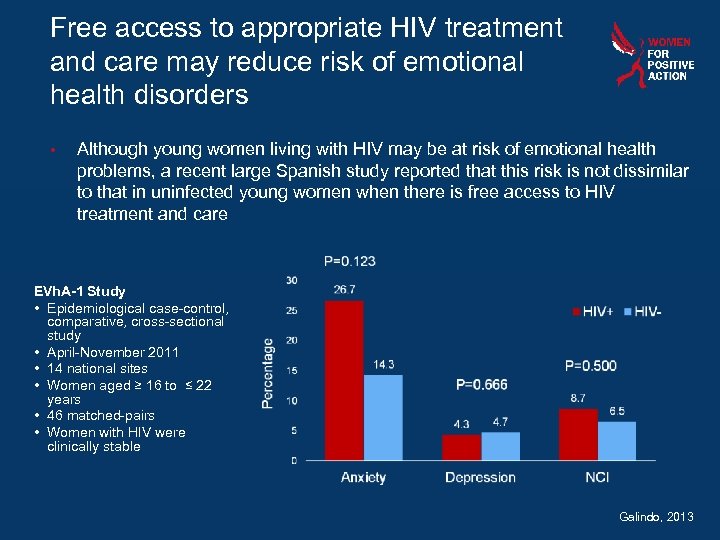 Free access to appropriate HIV treatment and care may reduce risk of emotional health disorders • Although young women living with HIV may be at risk of emotional health problems, a recent large Spanish study reported that this risk is not dissimilar to that in uninfected young women when there is free access to HIV treatment and care EVh. A-1 Study • Epidemiological case-control, comparative, cross-sectional study • April-November 2011 • 14 national sites • Women aged ≥ 16 to ≤ 22 years • 46 matched-pairs • Women with HIV were clinically stable Galindo, 2013
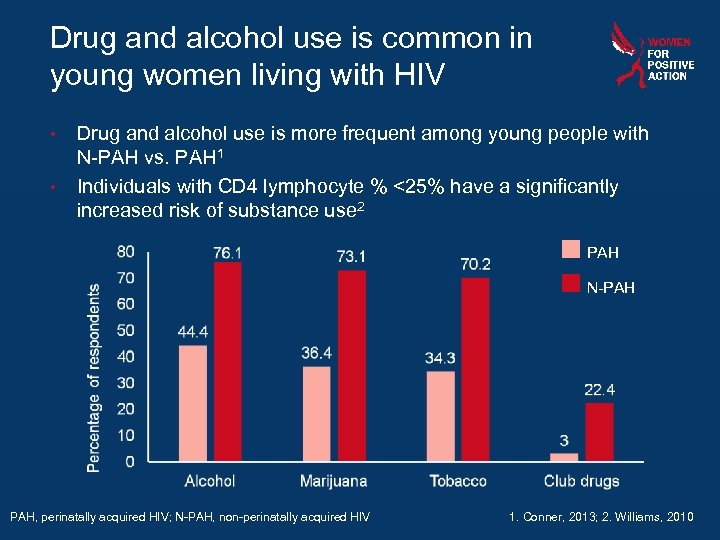 Drug and alcohol use is common in young women living with HIV • • Drug and alcohol use is more frequent among young people with N-PAH vs. PAH 1 Individuals with CD 4 lymphocyte % <25% have a significantly increased risk of substance use 2 PAH N-PAH PAH, perinatally acquired HIV; N-PAH, non-perinatally acquired HIV 1. Conner, 2013; 2. Williams, 2010
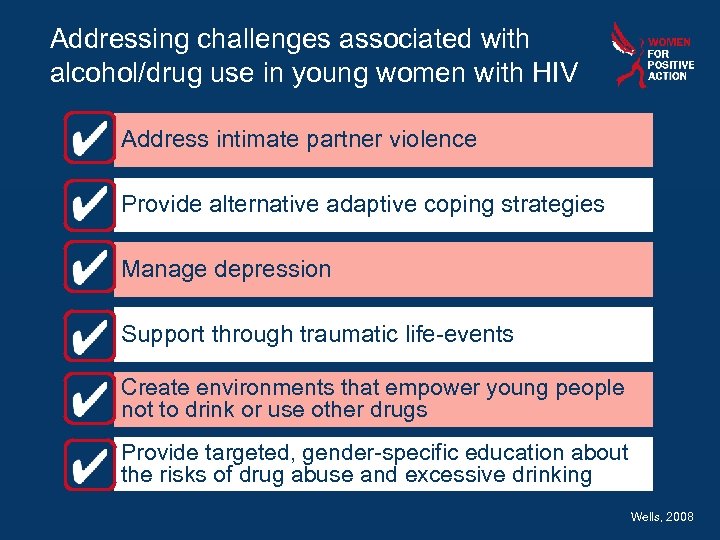 Addressing challenges associated with alcohol/drug use in young women with HIV Address intimate partner violence Provide alternative adaptive coping strategies Manage depression Support through traumatic life-events Create environments that empower young people not to drink or use other drugs Provide targeted, gender-specific education about the risks of drug abuse and excessive drinking Wells, 2008
 Stigma and disclosure Women for Positive Action is an educational program funded by Abb. Vie
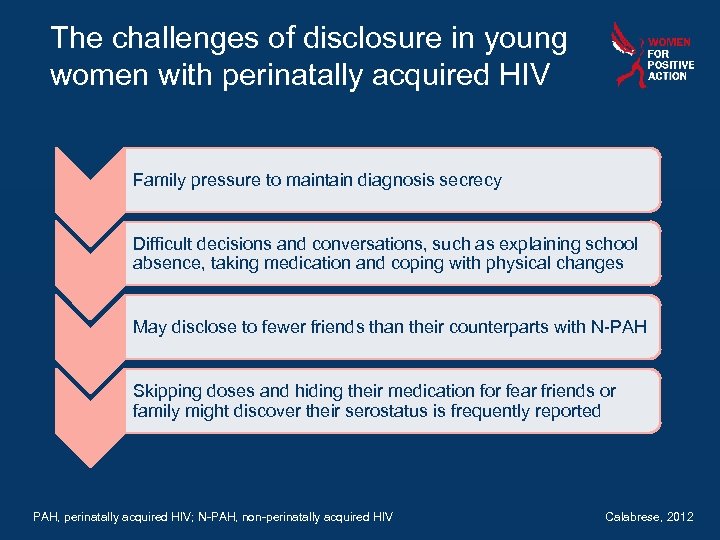 The challenges of disclosure in young women with perinatally acquired HIV Family pressure to maintain diagnosis secrecy Difficult decisions and conversations, such as explaining school absence, taking medication and coping with physical changes May disclose to fewer friends than their counterparts with N-PAH Skipping doses and hiding their medication for fear friends or family might discover their serostatus is frequently reported PAH, perinatally acquired HIV; N-PAH, non-perinatally acquired HIV Calabrese, 2012
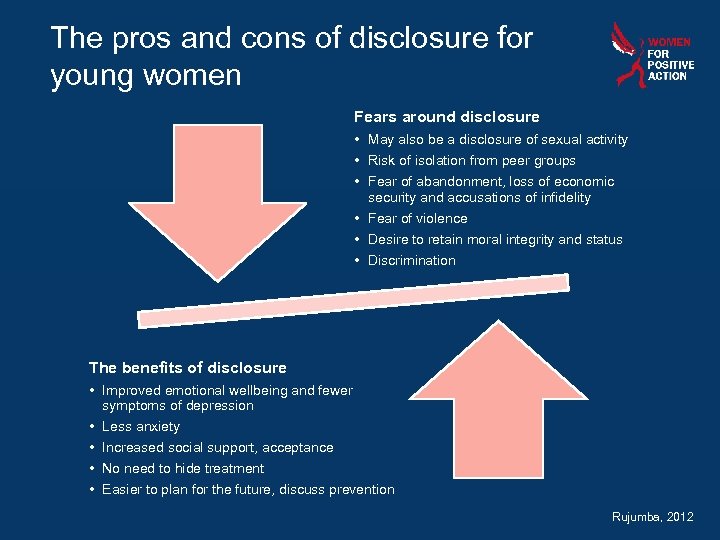 The pros and cons of disclosure for young women Fears around disclosure • May also be a disclosure of sexual activity • Risk of isolation from peer groups • Fear of abandonment, loss of economic security and accusations of infidelity • Fear of violence • Desire to retain moral integrity and status • Discrimination The benefits of disclosure • Improved emotional wellbeing and fewer symptoms of depression • Less anxiety • Increased social support, acceptance • No need to hide treatment • Easier to plan for the future, discuss prevention Rujumba, 2012
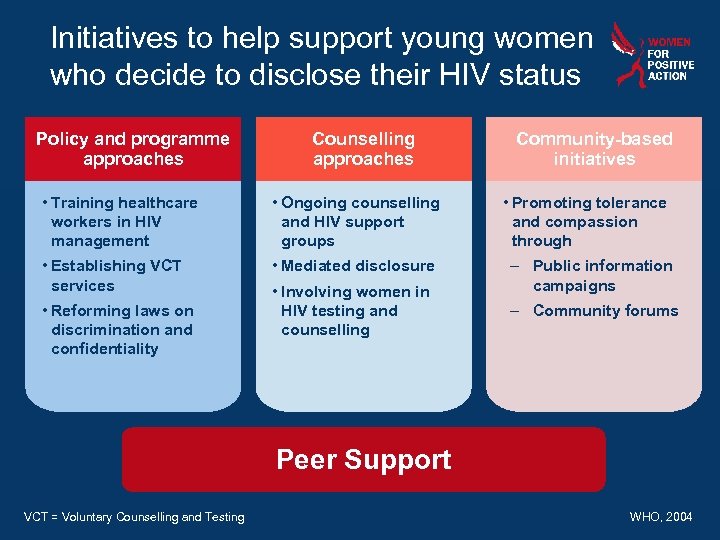 Initiatives to help support young women who decide to disclose their HIV status Policy and programme approaches Counselling approaches • Training healthcare workers in HIV management • Ongoing counselling and HIV support groups • Establishing VCT services • Mediated disclosure • Reforming laws on discrimination and confidentiality • Involving women in HIV testing and counselling Community-based initiatives • Promoting tolerance and compassion through ‒ Public information campaigns ‒ Community forums Peer Support VCT = Voluntary Counselling and Testing WHO, 2004
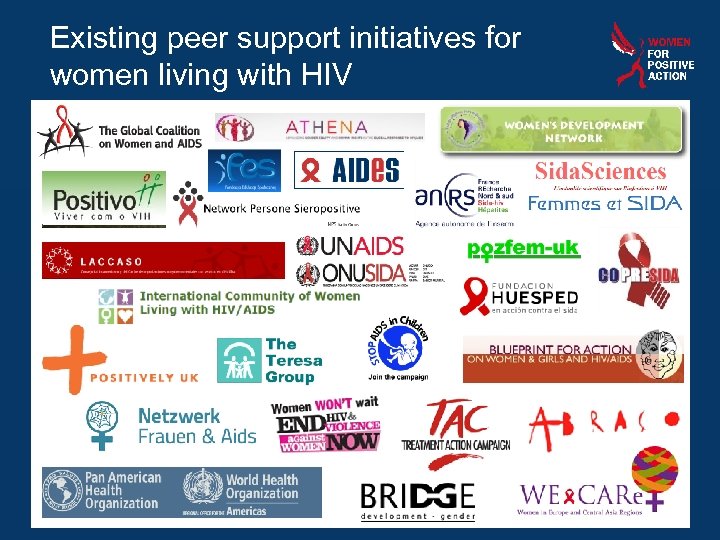 Existing peer support initiatives for women living with HIV
 Sexual and reproductive health issues Women for Positive Action is an educational program funded by Abb. Vie
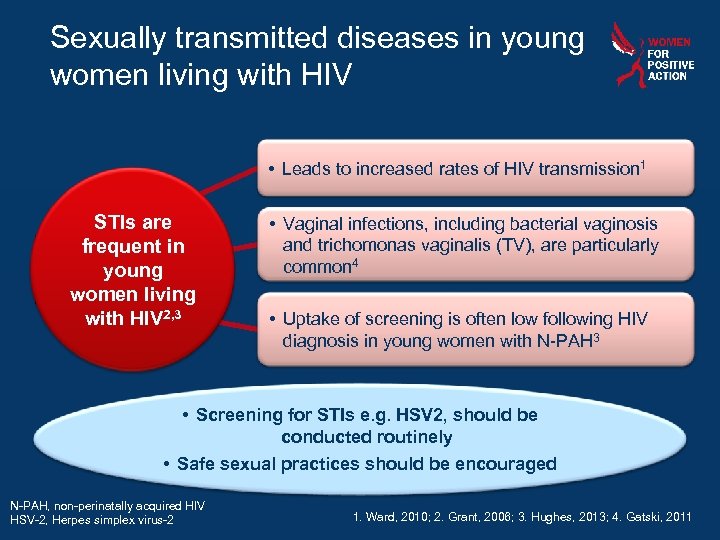 Sexually transmitted diseases in young women living with HIV • Leads to increased rates of HIV transmission 1 STIs are frequent in young women living with HIV 2, 3 • Vaginal infections, including bacterial vaginosis and trichomonas vaginalis (TV), are particularly common 4 • Uptake of screening is often low following HIV diagnosis in young women with N-PAH 3 • Screening for STIs e. g. HSV 2, should be conducted routinely • Safe sexual practices should be encouraged N-PAH, non-perinatally acquired HIV HSV-2, Herpes simplex virus-2 1. Ward, 2010; 2. Grant, 2006; 3. Hughes, 2013; 4. Gatski, 2011
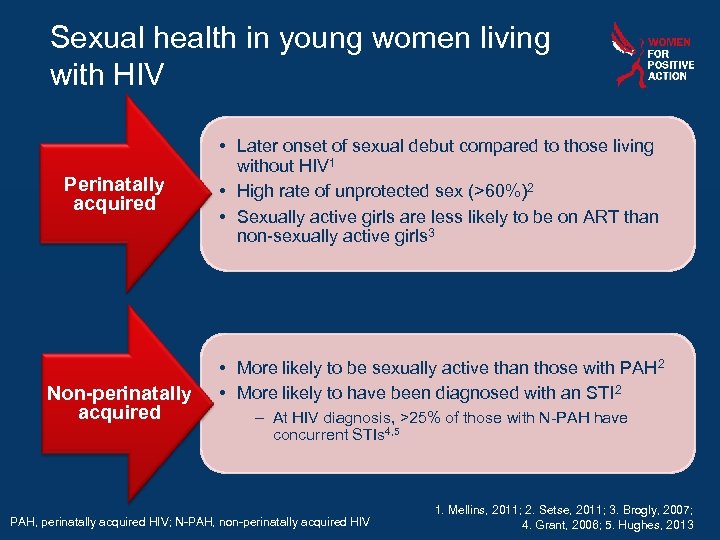 Sexual health in young women living with HIV Perinatally acquired Non-perinatally acquired • Later onset of sexual debut compared to those living without HIV 1 • High rate of unprotected sex (>60%)2 • Sexually active girls are less likely to be on ART than non-sexually active girls 3 • More likely to be sexually active than those with PAH 2 • More likely to have been diagnosed with an STI 2 – At HIV diagnosis, >25% of those with N-PAH have concurrent STIs 4, 5 PAH, perinatally acquired HIV; N-PAH, non-perinatally acquired HIV 1. Mellins, 2011; 2. Setse, 2011; 3. Brogly, 2007; 4. Grant, 2006; 5. Hughes, 2013
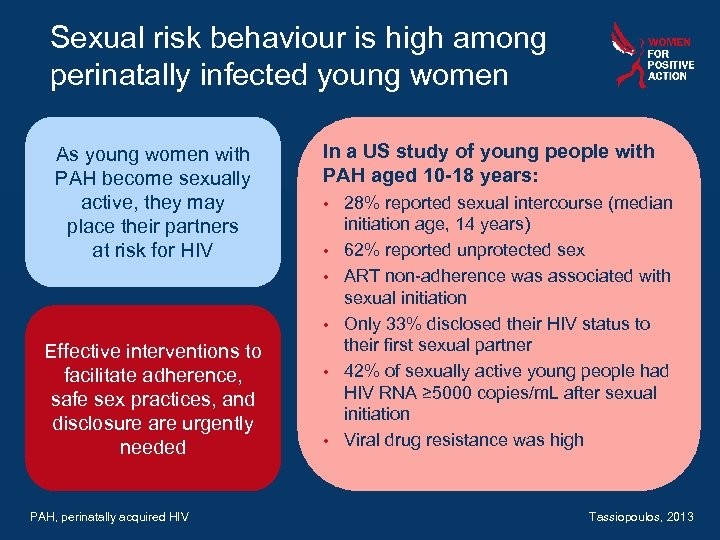 Sexual risk behaviour is high among perinatally infected young women As young women with PAH become sexually active, they may place their partners at risk for HIV In a US study of young people with PAH aged 10 -18 years: • • Effective interventions to facilitate adherence, safe sex practices, and disclosure are urgently needed PAH, perinatally acquired HIV • • 28% reported sexual intercourse (median initiation age, 14 years) 62% reported unprotected sex ART non-adherence was associated with sexual initiation Only 33% disclosed their HIV status to their first sexual partner 42% of sexually active young people had HIV RNA ≥ 5000 copies/m. L after sexual initiation Viral drug resistance was high Tassiopoulos, 2013
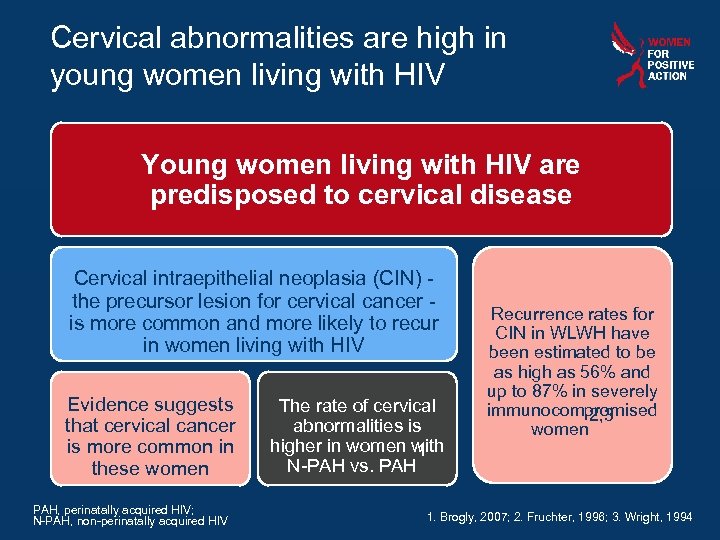 Cervical abnormalities are high in young women living with HIV Young women living with HIV are predisposed to cervical disease Cervical intraepithelial neoplasia (CIN) the precursor lesion for cervical cancer is more common and more likely to recur in women living with HIV Evidence suggests that cervical cancer is more common in these women PAH, perinatally acquired HIV; N-PAH, non-perinatally acquired HIV The rate of cervical abnormalities is higher in women with 1 N-PAH vs. PAH Recurrence rates for CIN in WLWH have been estimated to be as high as 56% and up to 87% in severely immunocompromised 2, 3 women 1. Brogly, 2007; 2. Fruchter, 1996; 3. Wright, 1994
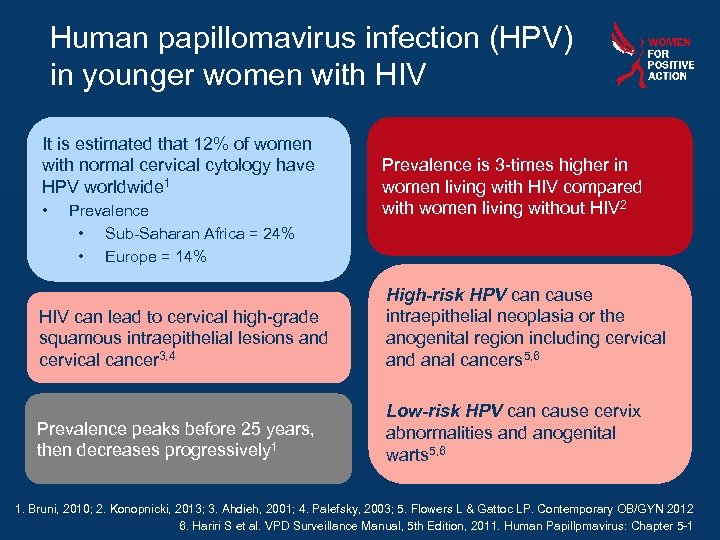 Human papillomavirus infection (HPV) in younger women with HIV It is estimated that 12% of women with normal cervical cytology have HPV worldwide 1 • Prevalence • Sub-Saharan Africa = 24% • Europe = 14% Prevalence is 3 -times higher in women living with HIV compared with women living without HIV 2 HIV can lead to cervical high-grade squamous intraepithelial lesions and cervical cancer 3, 4 High-risk HPV can cause intraepithelial neoplasia or the anogenital region including cervical and anal cancers 5, 6 Prevalence peaks before 25 years, then decreases progressively 1 Low-risk HPV can cause cervix abnormalities and anogenital warts 5, 6 1. Bruni, 2010; 2. Konopnicki, 2013; 3. Ahdieh, 2001; 4. Palefsky, 2003; 5. Flowers L & Gattoc LP. Contemporary OB/GYN 2012 6. Hariri S et al. VPD Surveillance Manual, 5 th Edition, 2011. Human Papillpmavirus: Chapter 5 -1
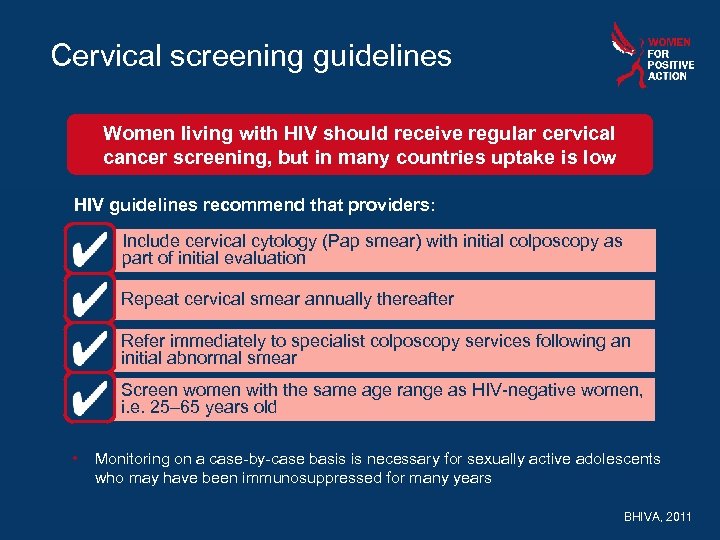 Cervical screening guidelines Women living with HIV should receive regular cervical cancer screening, but in many countries uptake is low HIV guidelines recommend that providers: Include cervical cytology (Pap smear) with initial colposcopy as part of initial evaluation Repeat cervical smear annually thereafter Refer immediately to specialist colposcopy services following an initial abnormal smear Screen women with the same age range as HIV-negative women, i. e. 25– 65 years old • Monitoring on a case-by-case basis is necessary for sexually active adolescents who may have been immunosuppressed for many years BHIVA, 2011
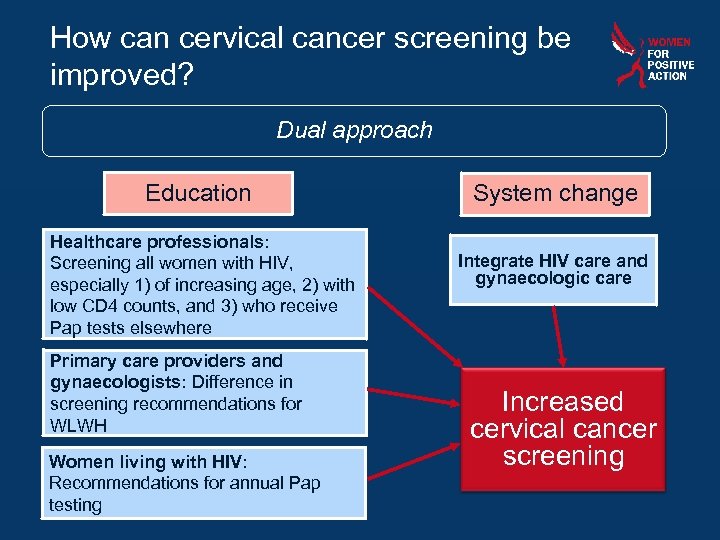 How can cervical cancer screening be improved? Dual approach Education Healthcare professionals: Screening all women with HIV, especially 1) of increasing age, 2) with low CD 4 counts, and 3) who receive Pap tests elsewhere Primary care providers and gynaecologists: Difference in screening recommendations for WLWH Women living with HIV: Recommendations for annual Pap testing System change Integrate HIV care and gynaecologic care Increased cervical cancer screening
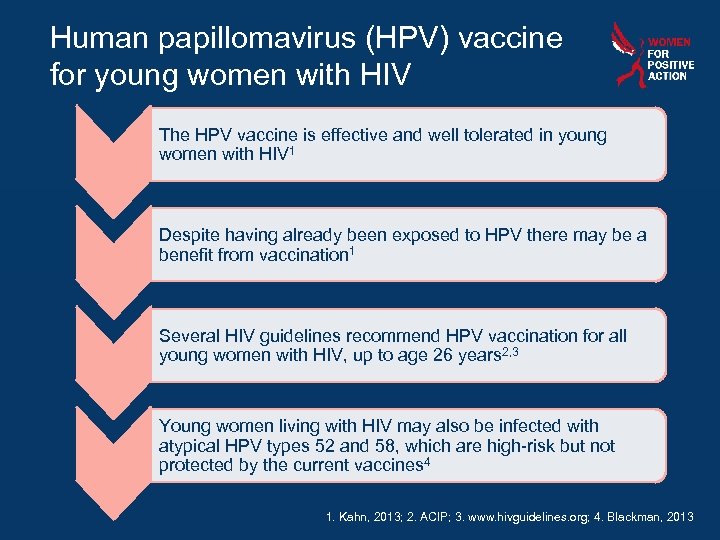 Human papillomavirus (HPV) vaccine for young women with HIV The HPV vaccine is effective and well tolerated in young women with HIV 1 Despite having already been exposed to HPV there may be a benefit from vaccination 1 Several HIV guidelines recommend HPV vaccination for all young women with HIV, up to age 26 years 2, 3 Young women living with HIV may also be infected with atypical HPV types 52 and 58, which are high-risk but not protected by the current vaccines 4 1. Kahn, 2013; 2. ACIP; 3. www. hivguidelines. org; 4. Blackman, 2013
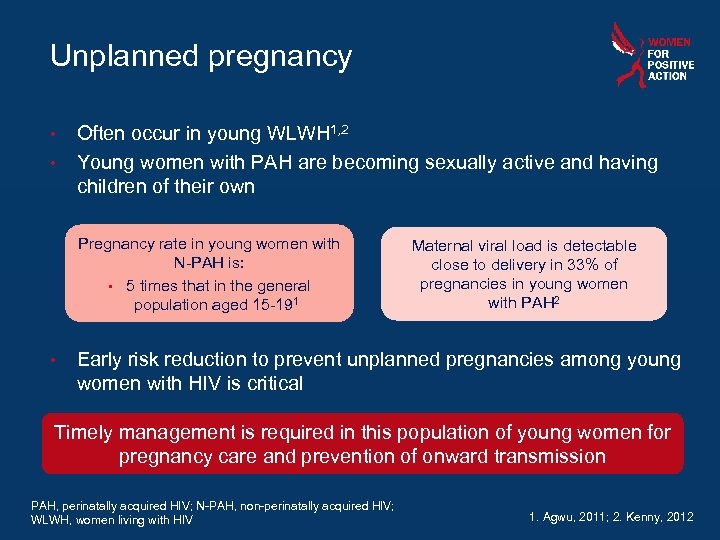 Unplanned pregnancy • • Often occur in young WLWH 1, 2 Young women with PAH are becoming sexually active and having children of their own Pregnancy rate in young women with N-PAH is: • 5 times that in the general population aged 15 -191 • Maternal viral load is detectable close to delivery in 33% of pregnancies in young women with PAH 2 Early risk reduction to prevent unplanned pregnancies among young women with HIV is critical Timely management is required in this population of young women for pregnancy care and prevention of onward transmission PAH, perinatally acquired HIV; N-PAH, non-perinatally acquired HIV; WLWH, women living with HIV 1. Agwu, 2011; 2. Kenny, 2012
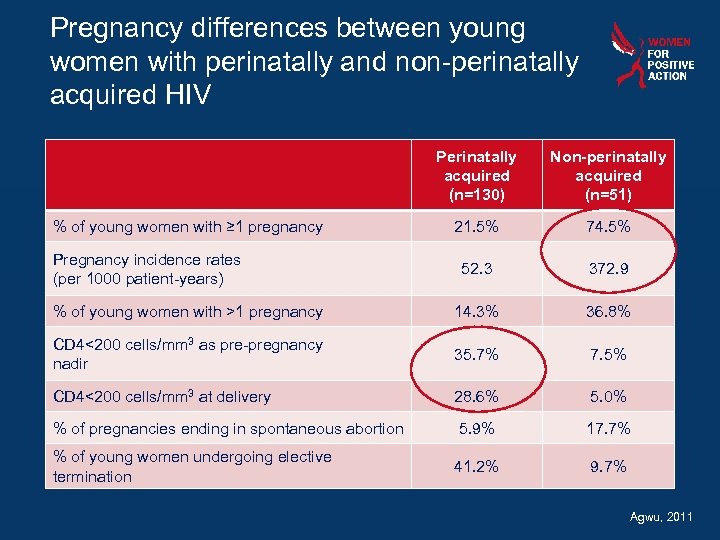 Pregnancy differences between young women with perinatally and non-perinatally acquired HIV Perinatally acquired (n=130) Non-perinatally acquired (n=51) 21. 5% 74. 5% 52. 3 372. 9 % of young women with >1 pregnancy 14. 3% 36. 8% CD 4<200 cells/mm 3 as pre-pregnancy nadir 35. 7% 7. 5% CD 4<200 cells/mm 3 at delivery 28. 6% 5. 0% % of pregnancies ending in spontaneous abortion 5. 9% 17. 7% % of young women undergoing elective termination 41. 2% 9. 7% % of young women with ≥ 1 pregnancy Pregnancy incidence rates (per 1000 patient-years) Agwu, 2011
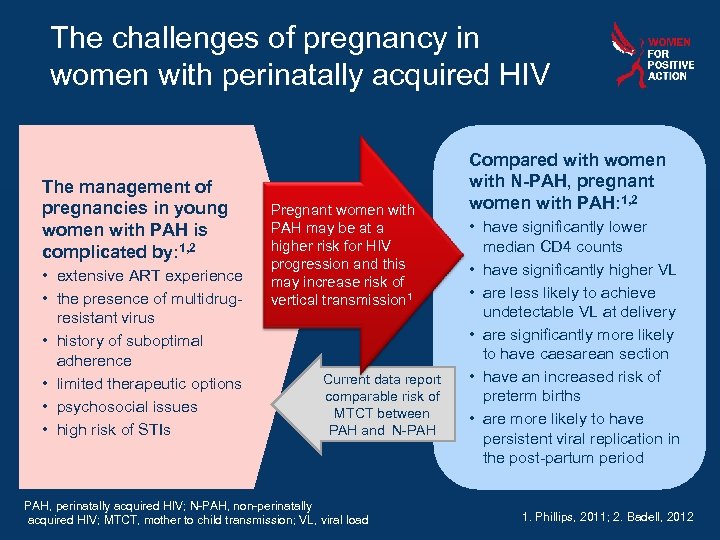 The challenges of pregnancy in women with perinatally acquired HIV The management of pregnancies in young women with PAH is complicated by: 1, 2 • extensive ART experience • the presence of multidrugresistant virus • history of suboptimal adherence • limited therapeutic options • psychosocial issues • high risk of STIs Pregnant women with PAH may be at a higher risk for HIV progression and this may increase risk of vertical transmission 1 Current data report comparable risk of MTCT between PAH and N-PAH PAH, perinatally acquired HIV; N-PAH, non-perinatally acquired HIV; MTCT, mother to child transmission; VL, viral load Compared with women with N-PAH, pregnant women with PAH: 1, 2 • have significantly lower median CD 4 counts • have significantly higher VL • are less likely to achieve undetectable VL at delivery • are significantly more likely to have caesarean section • have an increased risk of preterm births • are more likely to have persistent viral replication in the post-partum period 1. Phillips, 2011; 2. Badell, 2012
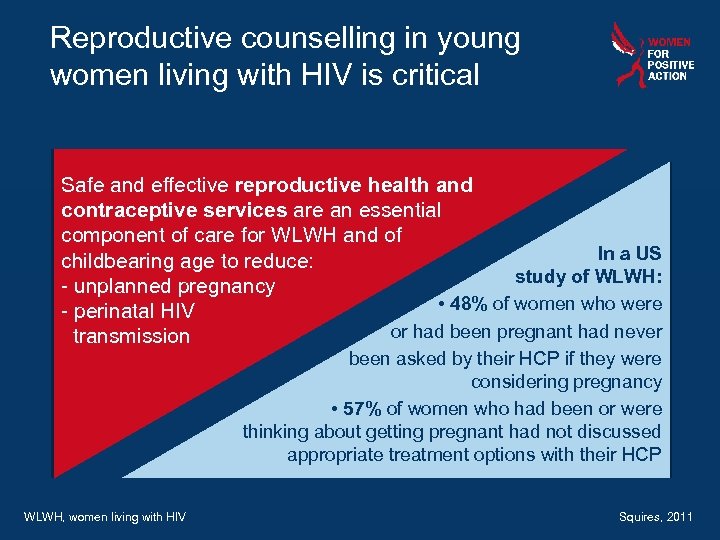 Reproductive counselling in young women living with HIV is critical Safe and effective reproductive health and contraceptive services are an essential component of care for WLWH and of In a US childbearing age to reduce: study of WLWH: - unplanned pregnancy • 48% of women who were - perinatal HIV or had been pregnant had never transmission been asked by their HCP if they were considering pregnancy • 57% of women who had been or were thinking about getting pregnant had not discussed appropriate treatment options with their HCP WLWH, women living with HIV Squires, 2011
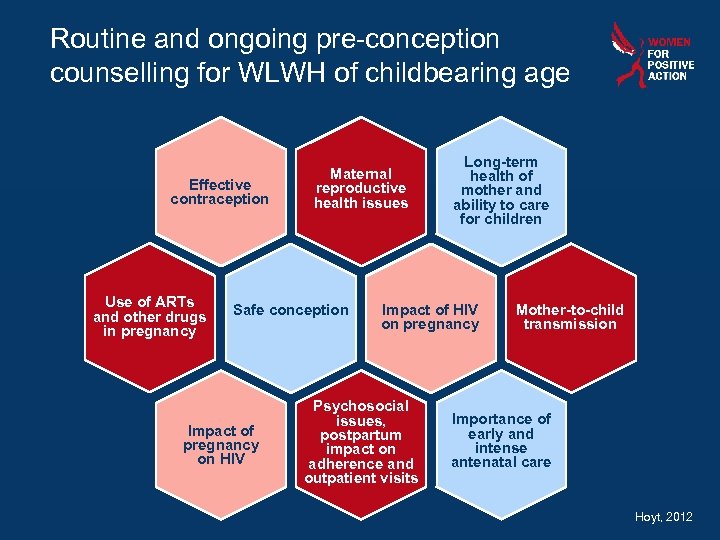 Routine and ongoing pre-conception counselling for WLWH of childbearing age Effective contraception Use of ARTs and other drugs in pregnancy Maternal reproductive health issues Safe conception Impact of pregnancy on HIV Long-term health of mother and ability to care for children Impact of HIV on pregnancy Psychosocial issues, postpartum impact on adherence and outpatient visits Mother-to-child transmission Importance of early and intense antenatal care Hoyt, 2012
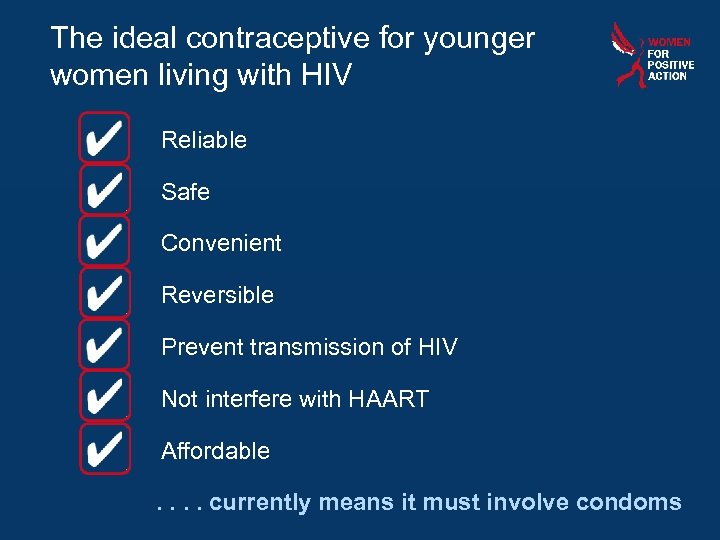 The ideal contraceptive for younger women living with HIV Reliable Safe Convenient Reversible Prevent transmission of HIV Not interfere with HAART Affordable. . currently means it must involve condoms
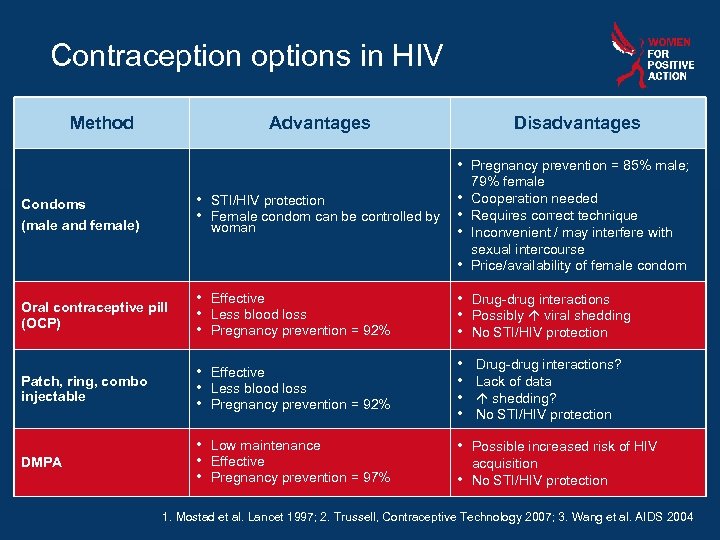 Contraception options in HIV Method Advantages Disadvantages • Pregnancy prevention = 85% male; • • STI/HIV protection • Female condom can be controlled by • woman • Condoms (male and female) • 79% female Cooperation needed Requires correct technique Inconvenient / may interfere with sexual intercourse Price/availability of female condom Oral contraceptive pill (OCP) • Effective • Less blood loss • Pregnancy prevention = 92% • Drug-drug interactions • Possibly viral shedding • No STI/HIV protection Patch, ring, combo injectable • Effective • Less blood loss • Pregnancy prevention = 92% • • DMPA • Low maintenance • Effective • Pregnancy prevention = 97% • Possible increased risk of HIV • Drug-drug interactions? Lack of data shedding? No STI/HIV protection acquisition No STI/HIV protection 1. Mostad et al. Lancet 1997; 2. Trussell, Contraceptive Technology 2007; 3. Wang et al. AIDS 2004
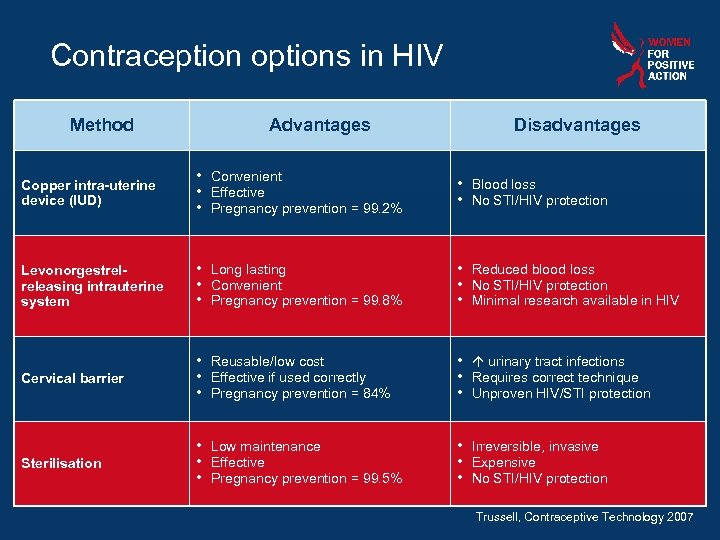 Contraception options in HIV Method Advantages Disadvantages Copper intra-uterine device (IUD) • Convenient • Effective • Pregnancy prevention = 99. 2% • Blood loss • No STI/HIV protection Levonorgestrelreleasing intrauterine system • Long lasting • Convenient • Pregnancy prevention = 99. 8% • Reduced blood loss • No STI/HIV protection • Minimal research available in HIV Cervical barrier • Reusable/low cost • Effective if used correctly • Pregnancy prevention = 84% • urinary tract infections • Requires correct technique • Unproven HIV/STI protection Sterilisation • Low maintenance • Effective • Pregnancy prevention = 99. 5% • Irreversible, invasive • Expensive • No STI/HIV protection Trussell, Contraceptive Technology 2007
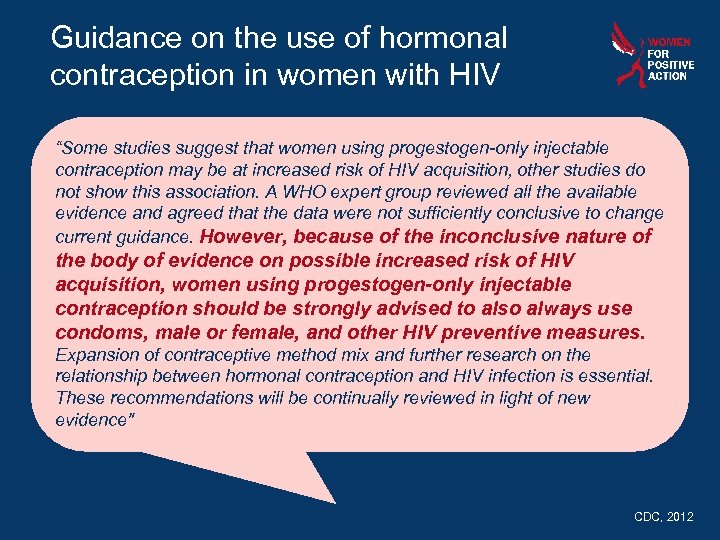 Guidance on the use of hormonal contraception in women with HIV “Some studies suggest that women using progestogen-only injectable contraception may be at increased risk of HIV acquisition, other studies do not show this association. A WHO expert group reviewed all the available evidence and agreed that the data were not sufficiently conclusive to change current guidance. However, because of the inconclusive nature of the body of evidence on possible increased risk of HIV acquisition, women using progestogen-only injectable contraception should be strongly advised to also always use condoms, male or female, and other HIV preventive measures. Expansion of contraceptive method mix and further research on the relationship between hormonal contraception and HIV infection is essential. These recommendations will be continually reviewed in light of new evidence" CDC, 2012
 Examples of initiatives for younger women Women for Positive Action is an educational program funded by Abb. Vie
 AIMS Young Women’s Leadership Initiative Developing the leadership of young women around HIV, women’s rights and gender equality Increasing visibility and advocacy of young women International skills-building and advocacy activities designed to strengthen the engagement, capacity and skills of young women in the HIV response http: //www. womeneurope. net/resources/Young. Womens. Leadership. Initiative. Rome. IAS 2011 FINAL. pdf
 AIMS Bring on the Change To bring community groups, advocates, activists, networks and other stakeholders together To achieve a more inclusive and comprehensive HIV response that takes into account the voices of young women A regional advocacy platform to amplify the voices of young women affected by drug use and HIV in Eastern Europe and Central Asia http: //www. hivyoungleadersfund. org/wp-content/uploads/2013/06/IHRC-Call-to-Action_English. pdf
 National initiatives for younger women living with HIV UK France Young People Led by young people living with HIV • Topics covered include: Created in 2003 by and for families affected by HIV / AIDS • Provides a network of information, meetings, support and campaigning for equal rights against the disease • ‘Big Sisters’ project provides support for women who learn their HIV status during pregnancy • http: //www. comitedesfamilles. net/ http: //positivelyuk. org/young-people/#support • • • HIV diagnosis Sexual health Relationships Starting a family Social Services HIV treatment and adherence Disclosure Finance and benefits Immigration Housing
 Thank you for your attention Any questions? Women for Positive Action is an educational program funded by Abb. Vie