


 Скачать презентацию History of the English Medieval Period History
2da37ef65d7aadb197d265a0089c055e.ppt
- Количество слайдов: 180
 History of the English Medieval Period
 History of the English Medieval Period
 History of the English Medieval Period and History of the English Language From Old English to Middle English
 History of the English Medieval Period and History of the English Language From Old English to Middle English From 1066 Hastings to 1485 Bosworth Field
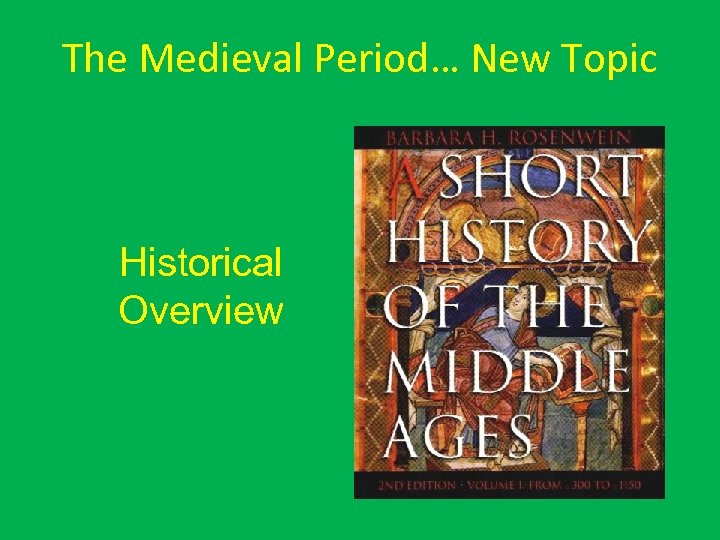 The Medieval Period… New Topic Historical Overview
 Remember our three part concept of History BEGINNING * MIDDLE * END _________500 AD_______1500 AD _______ ANCIENT MIDDLE AGES MODERN
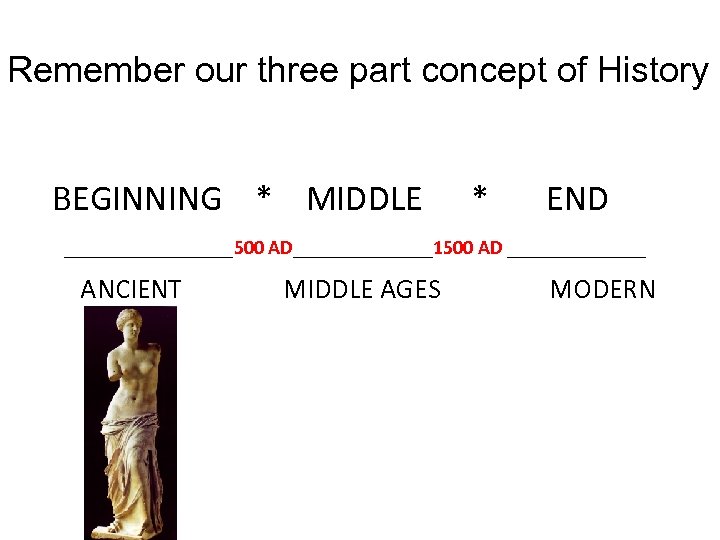 Remember our three part concept of History BEGINNING * MIDDLE * END _________500 AD_______1500 AD _______ ANCIENT MIDDLE AGES MODERN
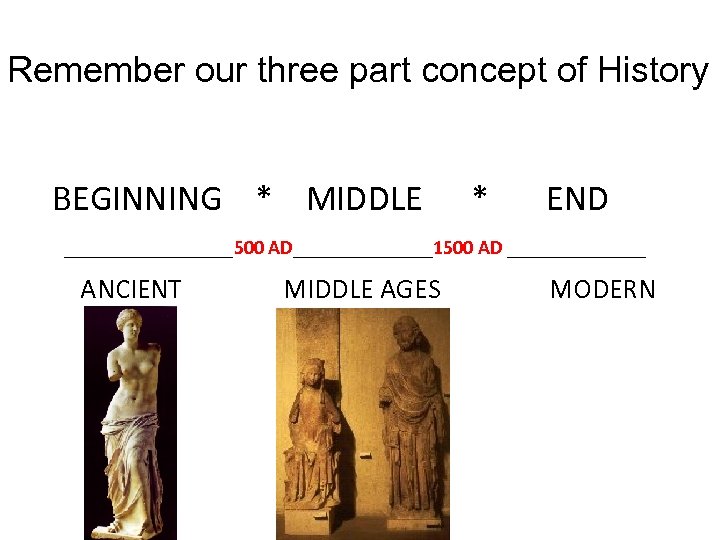 Remember our three part concept of History BEGINNING * MIDDLE * END _________500 AD_______1500 AD _______ ANCIENT MIDDLE AGES MODERN
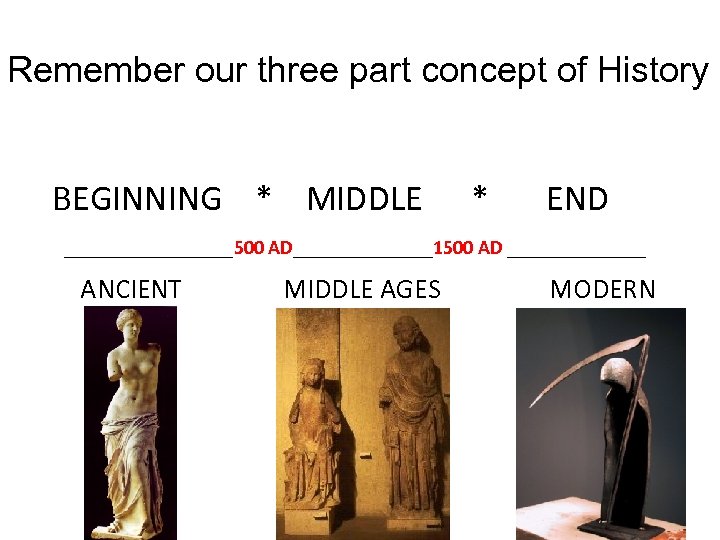 Remember our three part concept of History BEGINNING * MIDDLE * END _________500 AD_______1500 AD _______ ANCIENT MIDDLE AGES MODERN
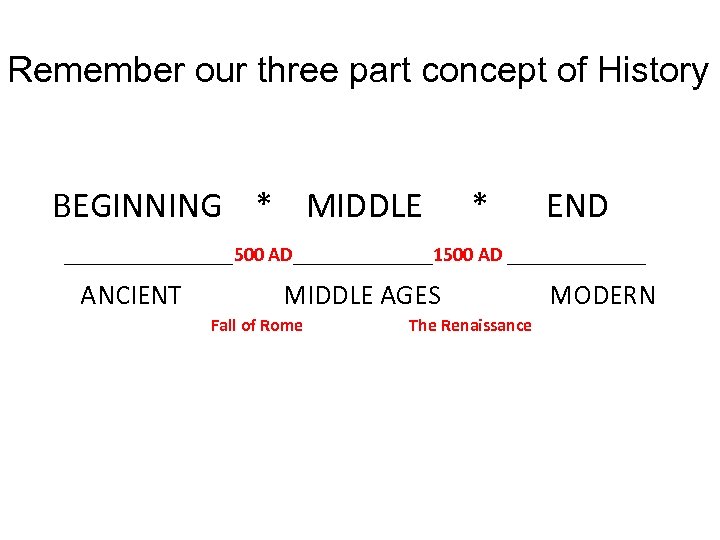 Remember our three part concept of History BEGINNING * MIDDLE * END _________500 AD_______1500 AD _______ ANCIENT MIDDLE AGES MODERN Fall of Rome The Renaissance
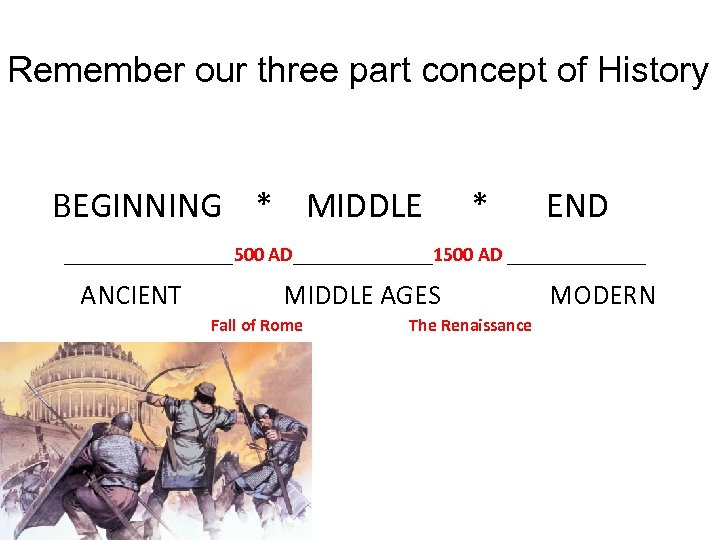 Remember our three part concept of History BEGINNING * MIDDLE * END _________500 AD_______1500 AD _______ ANCIENT MIDDLE AGES MODERN Fall of Rome The Renaissance
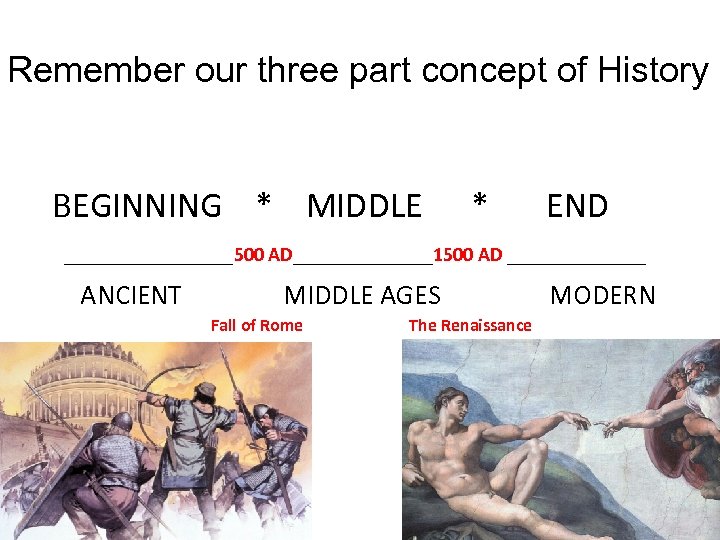 Remember our three part concept of History BEGINNING * MIDDLE * END _________500 AD_______1500 AD _______ ANCIENT MIDDLE AGES MODERN Fall of Rome The Renaissance
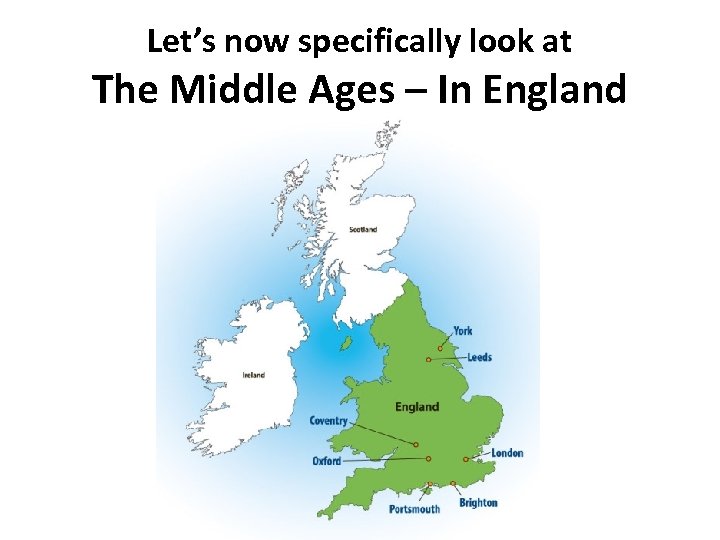 Let’s now specifically look at The Middle Ages – In England
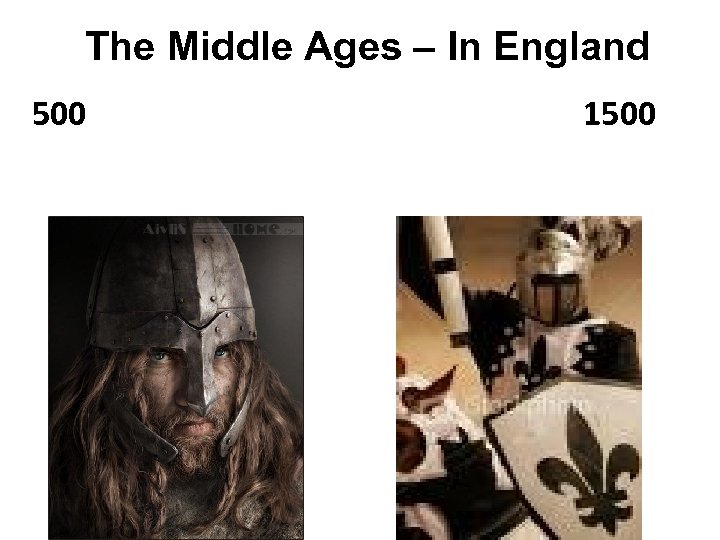 The Middle Ages – In England 500 1500
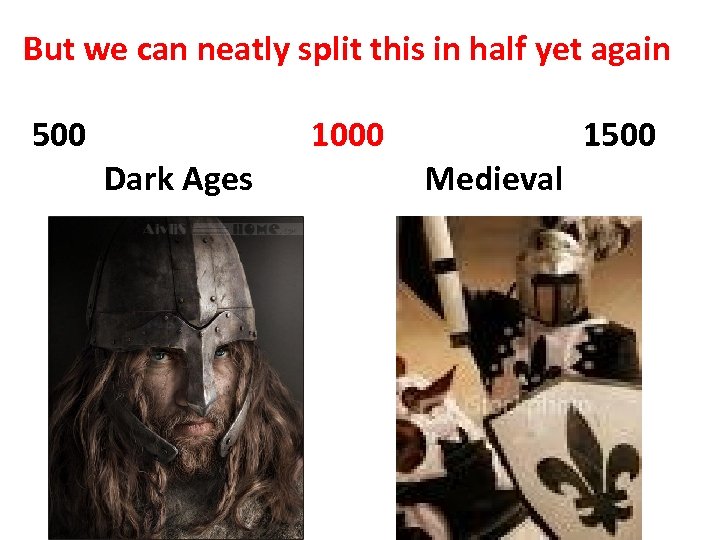 But we can neatly split this in half yet again 500 Dark Ages 1000 Medieval 1500
 But we can neatly split this in half yet again 500 . 1000 Dark Ages / English Anglo Saxon Period
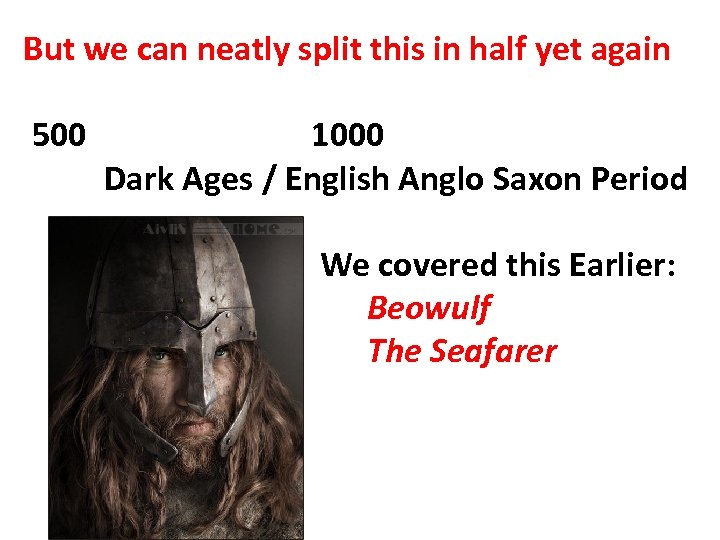 But we can neatly split this in half yet again 500 1000 Dark Ages / English Anglo Saxon Period We covered this Earlier: Beowulf The Seafarer
 But we can neatly split this in half yet again 1000 Our Study of late has been on the… Later Middle Ages Medieval 1500
 But we can neatly split this in half yet again 1000 Our Study of late has been on the… Later Middle Ages The High Middle Ages Medieval 1500
 But we can neatly split this in half yet again 1000 Our Study of late has been on the… Later Middle Ages The High Middle Ages The Medieval Period Medieval 1500
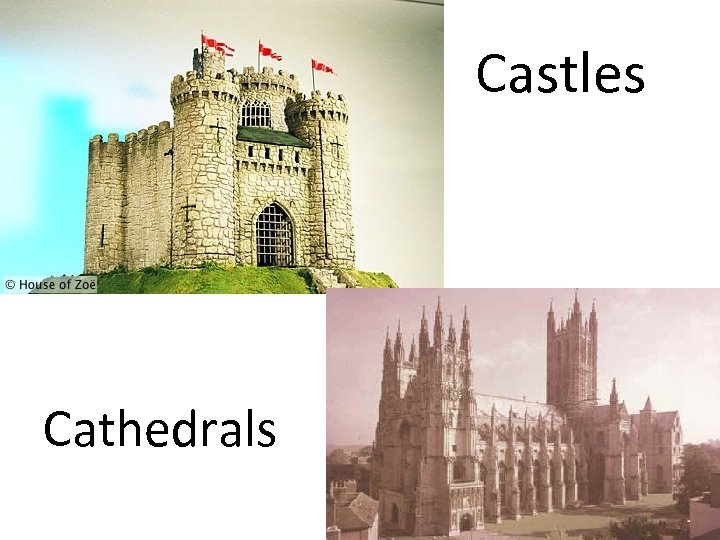 Castles Cathedrals
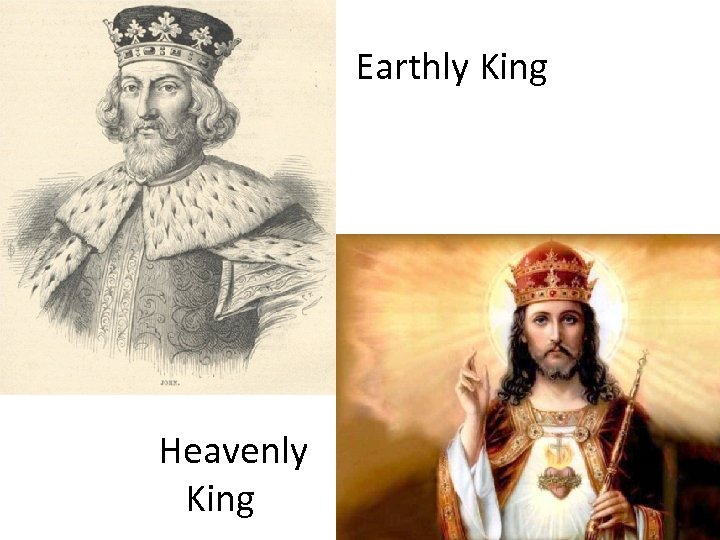 Earthly King Heavenly King
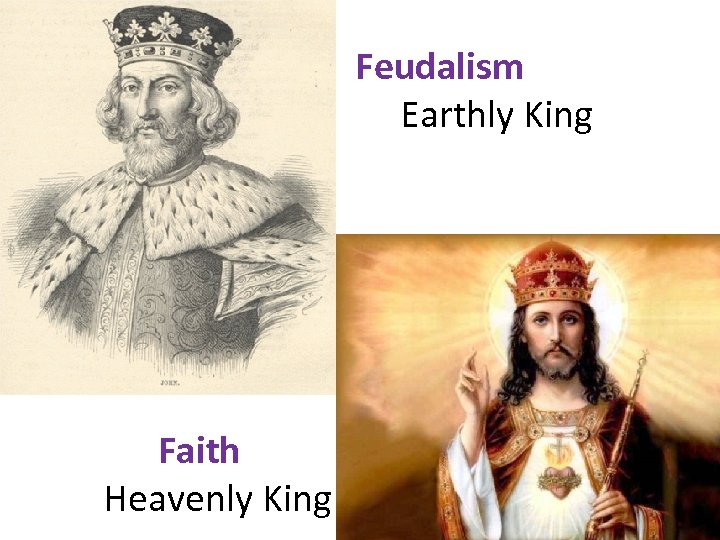 Feudalism Earthly King Faith Heavenly King King
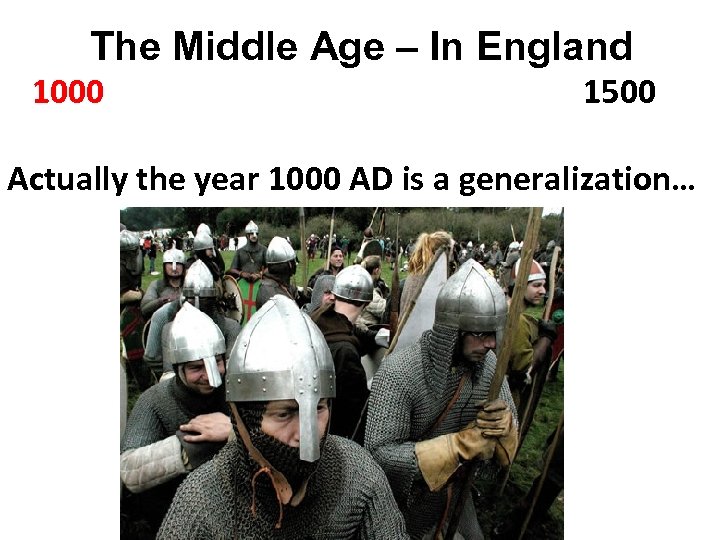 The Middle Age – In England 1000 1500 Actually the year 1000 AD is a generalization…
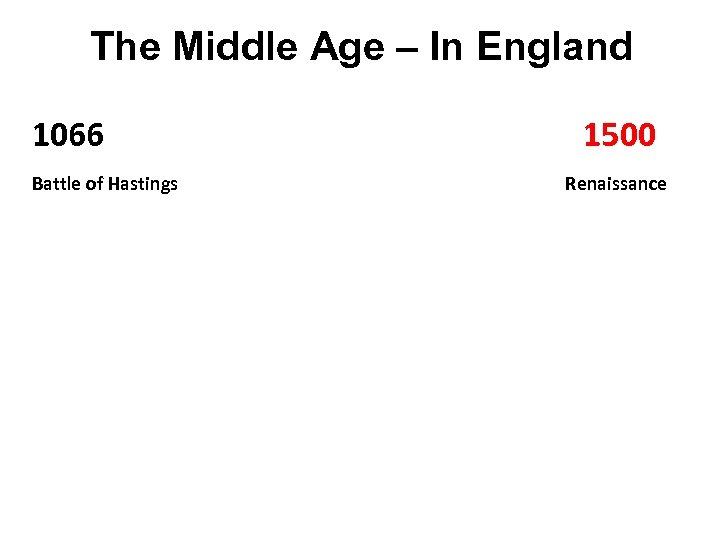
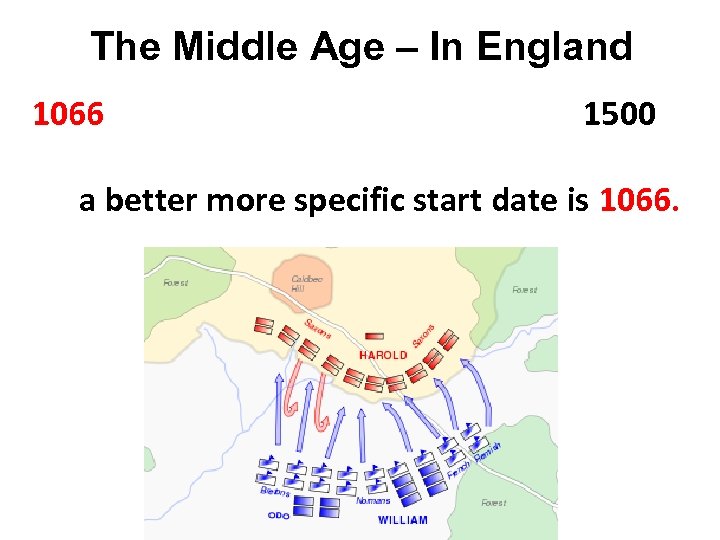 The Middle Age – In England 1066 1500 a better more specific start date is 1066.
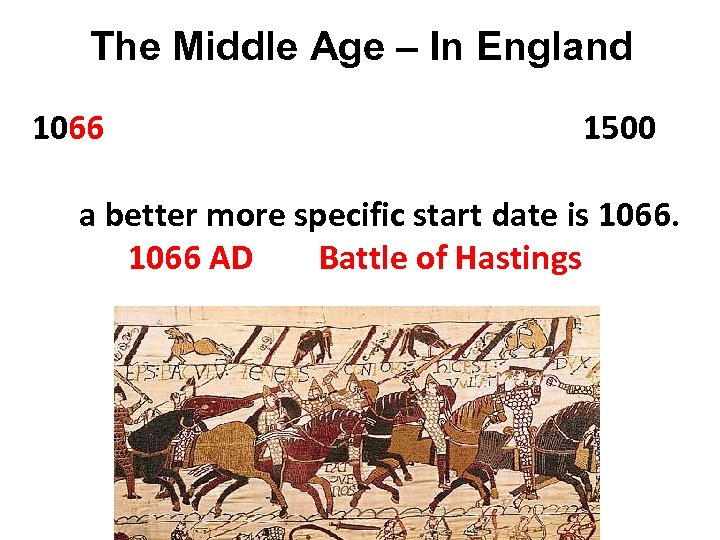 The Middle Age – In England 1066 1500 a better more specific start date is 1066 AD Battle of Hastings
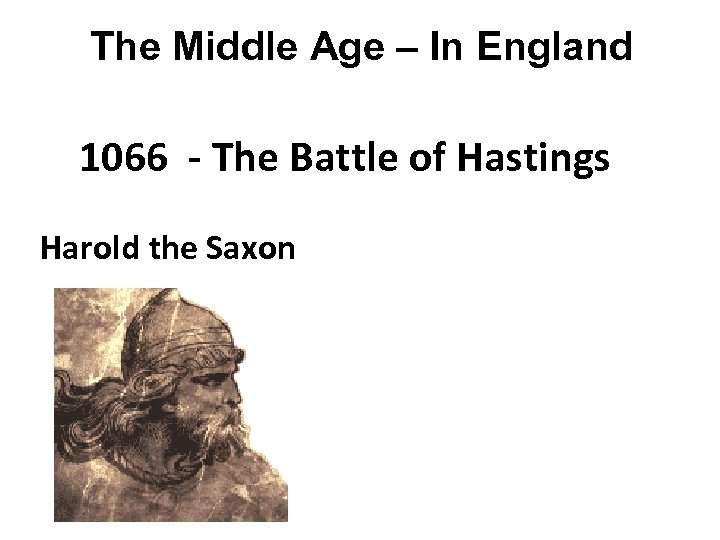 The Middle Age – In England 1066 - The Battle of Hastings Harold the Saxon
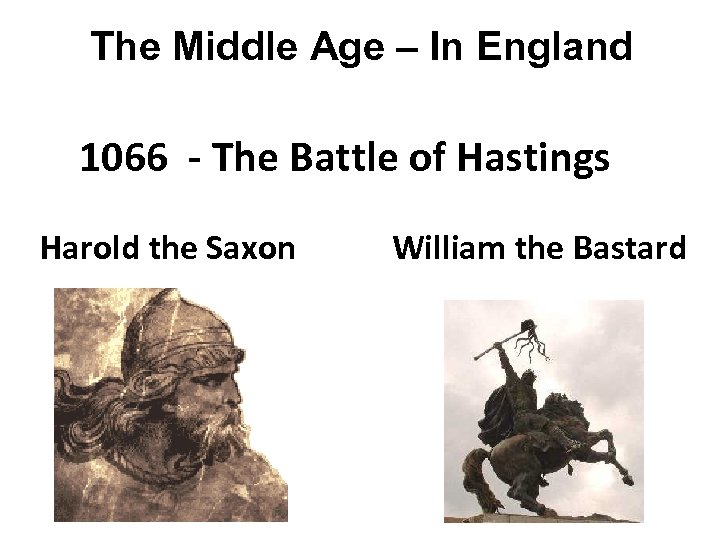 The Middle Age – In England 1066 - The Battle of Hastings Harold the Saxon William the Bastard
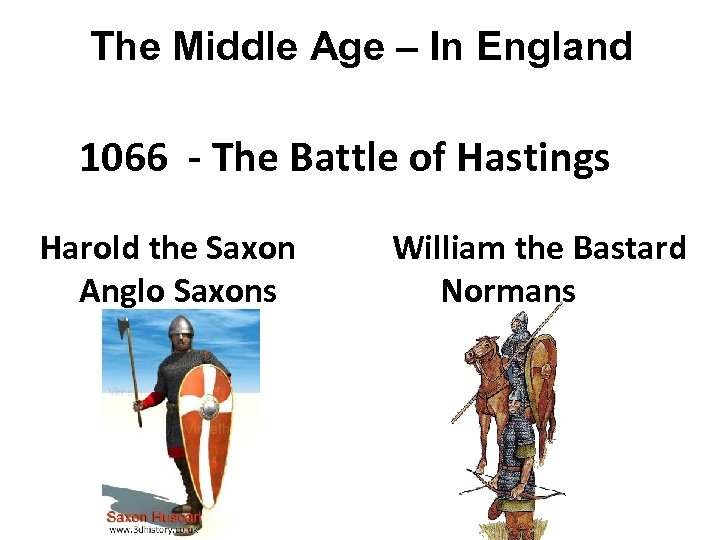 The Middle Age – In England 1066 - The Battle of Hastings Harold the Saxon Anglo Saxons William the Bastard Normans
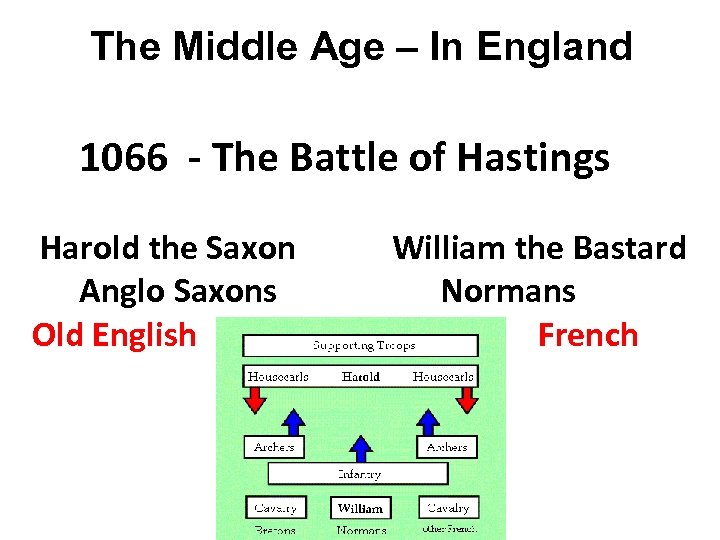 The Middle Age – In England 1066 - The Battle of Hastings Harold the Saxon Anglo Saxons Old English William the Bastard Normans French
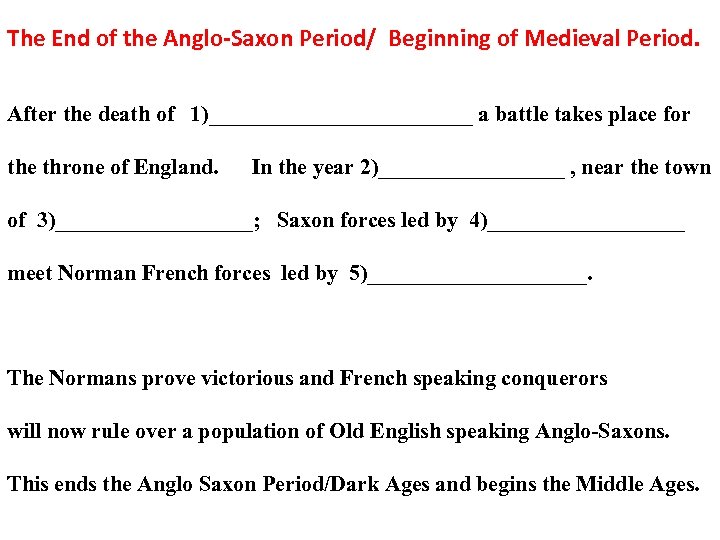 The End of the Anglo-Saxon Period/ Beginning of Medieval Period. After the death of 1)____________ a battle takes place for the throne of England. In the year 2)_________ , near the town of 3)_________; Saxon forces led by 4)_________ meet Norman French forces led by 5)__________. The Normans prove victorious and French speaking conquerors will now rule over a population of Old English speaking Anglo-Saxons. This ends the Anglo Saxon Period/Dark Ages and begins the Middle Ages.
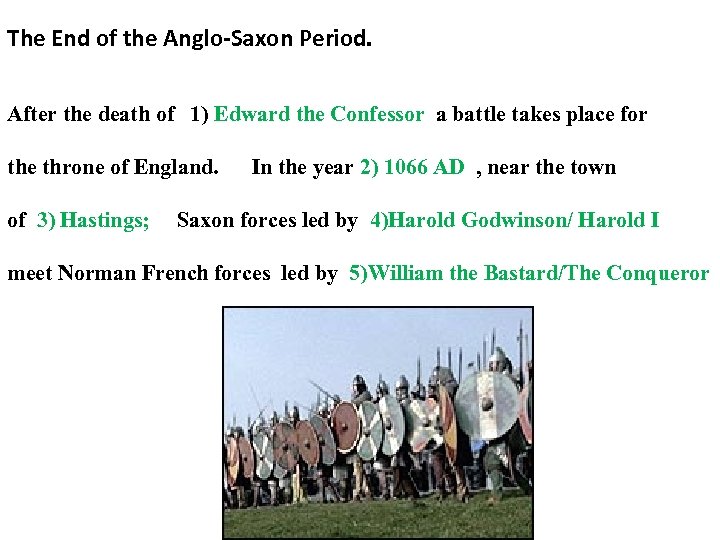 The End of the Anglo-Saxon Period. After the death of 1) Edward the Confessor a battle takes place for the throne of England. In the year 2) 1066 AD , near the town of 3) Hastings; Saxon forces led by 4)Harold Godwinson/ Harold I meet Norman French forces led by 5)William the Bastard/The Conqueror
 The End of the Anglo-Saxon Period. After the death of 1) Edward the Confessor a battle takes place for the throne of England. In the year 2) 1066 AD , near the town of 3) Hastings; Saxon forces led by 4)Harold Godwinson/ Harold I meet Norman French forces led by 5)William the Bastard/The Conqueror The Normans prove victorious and French speaking conquerors will now rule over a population of Old English speaking Anglo-Saxons.
 The End of the Anglo-Saxon Period. After the death of 1) Edward the Confessor a battle takes place for the throne of England. In the year 2) 1066 AD , near the town of 3) Hastings; Saxon forces led by 4)Harold Godwinson/ Harold I meet Norman French forces led by 5)William the Bastard/The Conqueror The Normans prove victorious and French speaking conquerors will now rule over a population of Old English speaking Anglo-Saxons. This ends the Anglo Saxon Period/Dark Ages and begins the Middle Ages.
 The Middle Age – In England 1066 Battle of Hastings 1500 Renaissance
 The Middle Age – In England 1066 Battle of Hastings 1485 Renaissance Now… Let’s memorize 1485 AD as end of Medieval Period in England rather than the generalized 1500.
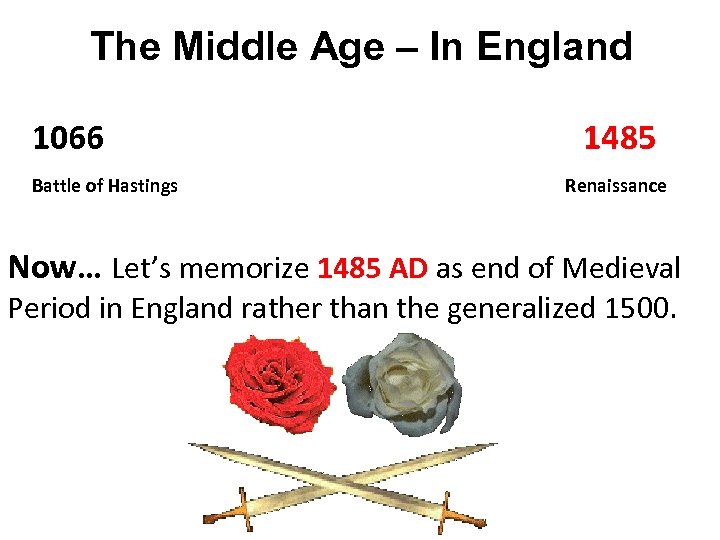
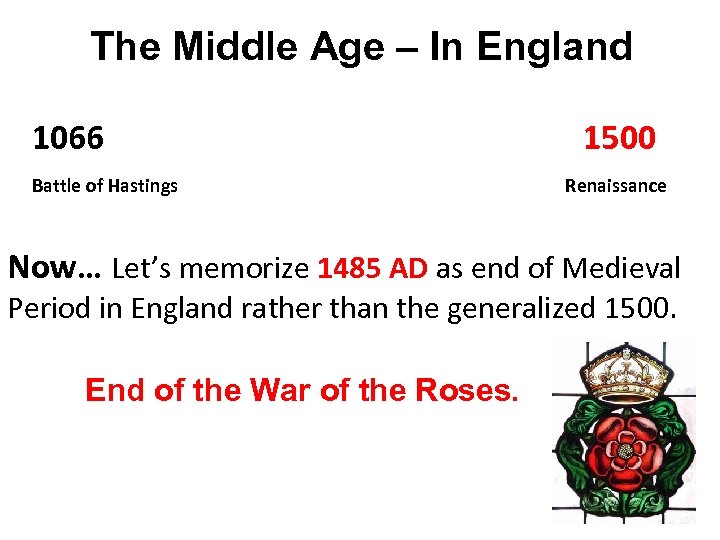 The Middle Age – In England 1066 Battle of Hastings 1500 Renaissance Now… Let’s memorize 1485 AD as end of Medieval Period in England rather than the generalized 1500. End of the War of the Roses.
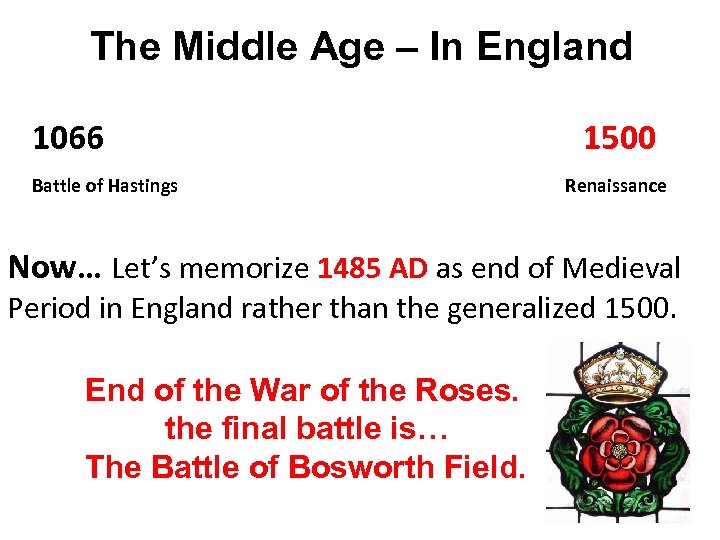 The Middle Age – In England 1066 Battle of Hastings 1500 Renaissance Now… Let’s memorize 1485 AD as end of Medieval Period in England rather than the generalized 1500. End of the War of the Roses. the final battle is… The Battle of Bosworth Field.
 Update Guided Notes from your Running Notes
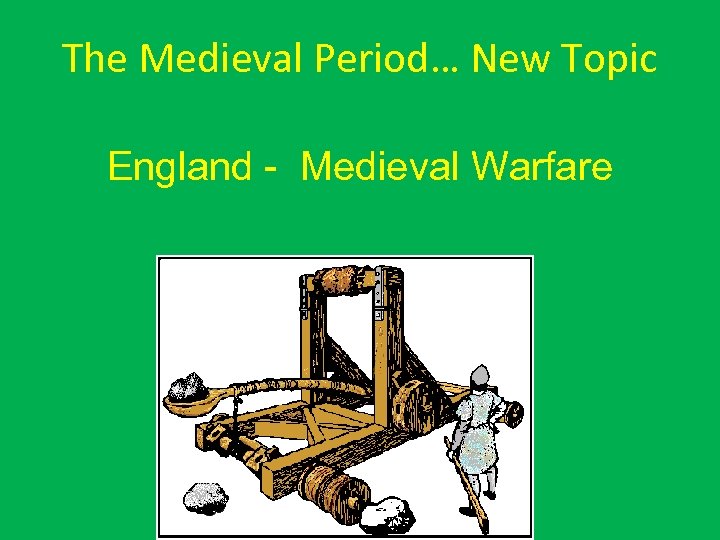 The Medieval Period… New Topic England - Medieval Warfare
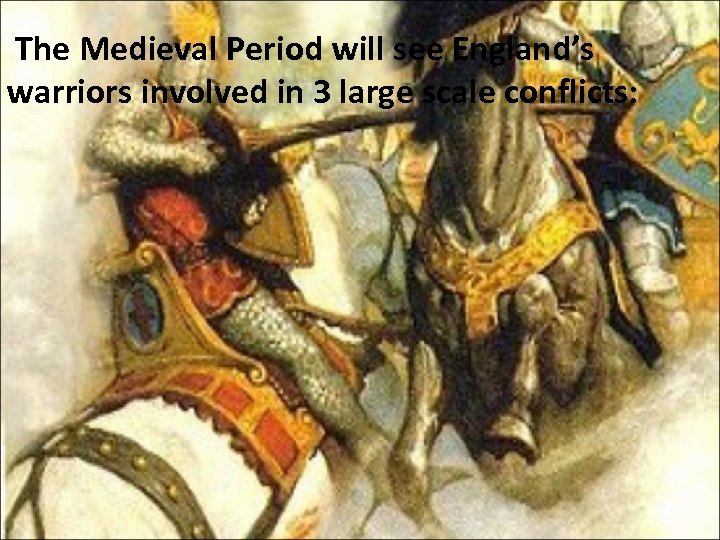 The Medieval Period will see England’s warriors involved in 3 large scale conflicts:
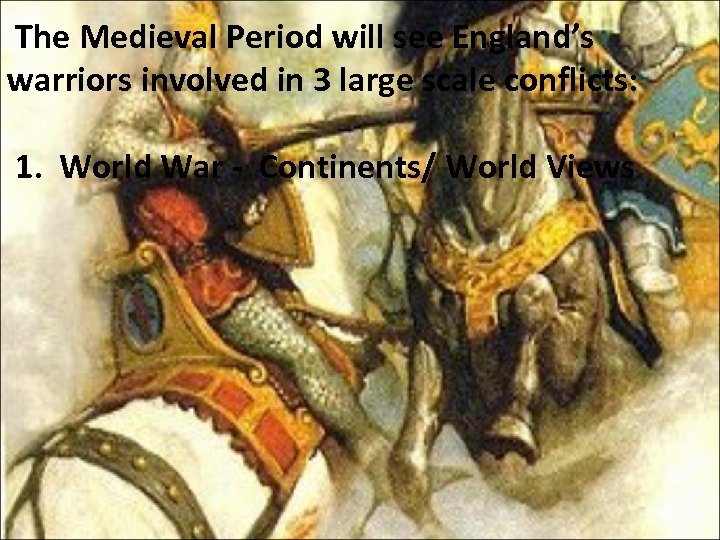 The Medieval Period will see England’s warriors involved in 3 large scale conflicts: 1. World War - Continents/ World Views
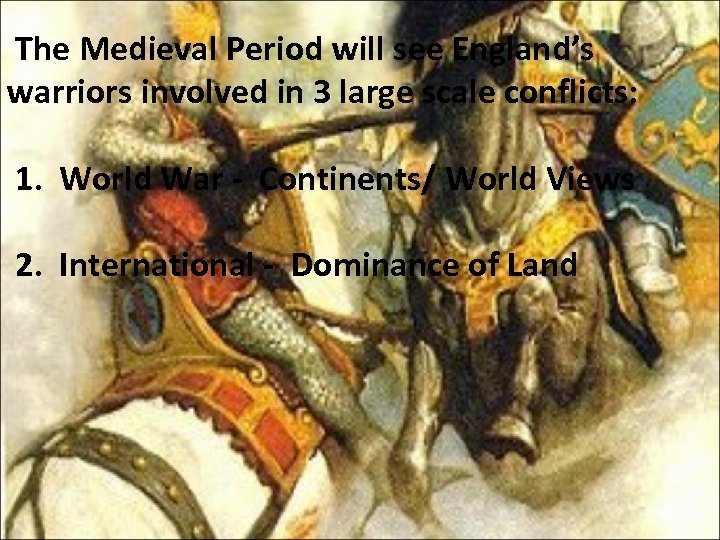 The Medieval Period will see England’s warriors involved in 3 large scale conflicts: 1. World War - Continents/ World Views 2. International - Dominance of Land
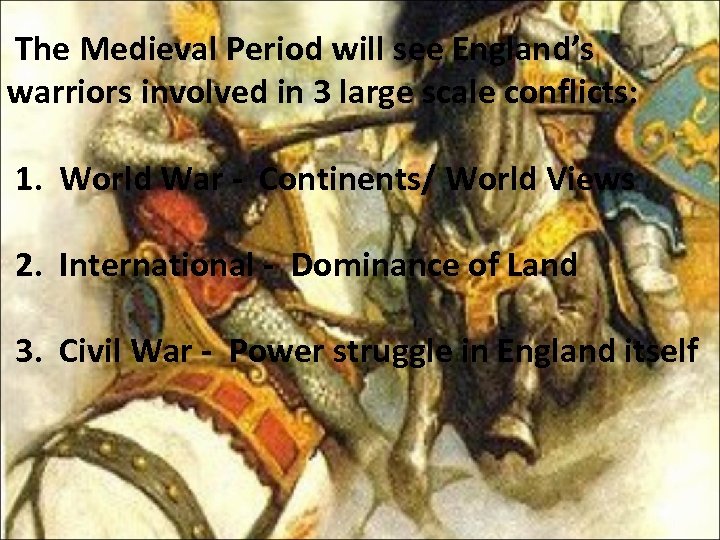 The Medieval Period will see England’s warriors involved in 3 large scale conflicts: 1. World War - Continents/ World Views 2. International - Dominance of Land 3. Civil War - Power struggle in England itself
 Time line • World War - Crusades
 Time line • World War • International - Crusades - 100 Years War
 Time line • World War - Crusades • International - 100 Years War • Civil War -War of the Roses (aka The 30 Years War)
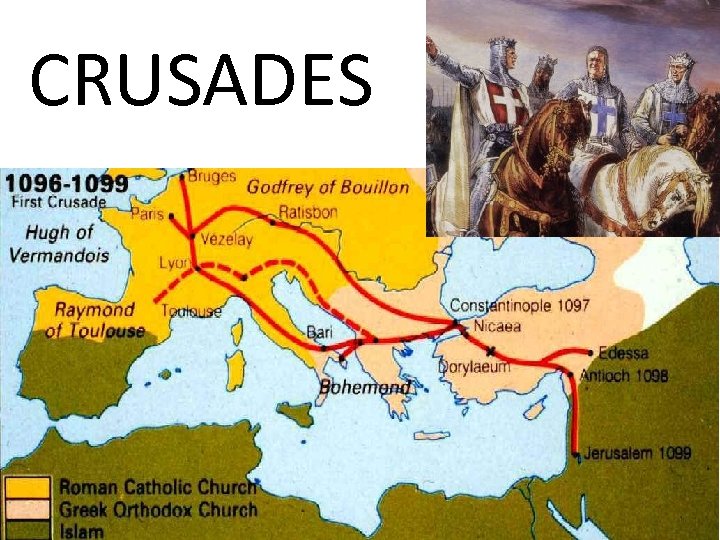
 THE CRUSADES Between 1095 and 1291
 THE CRUSADES Between 1095 and 1291 Think roughly 1100 to 1300
 THE CRUSADES Between 1095 and 1291 Roughly 1100 to 1300 Roughly two centuries
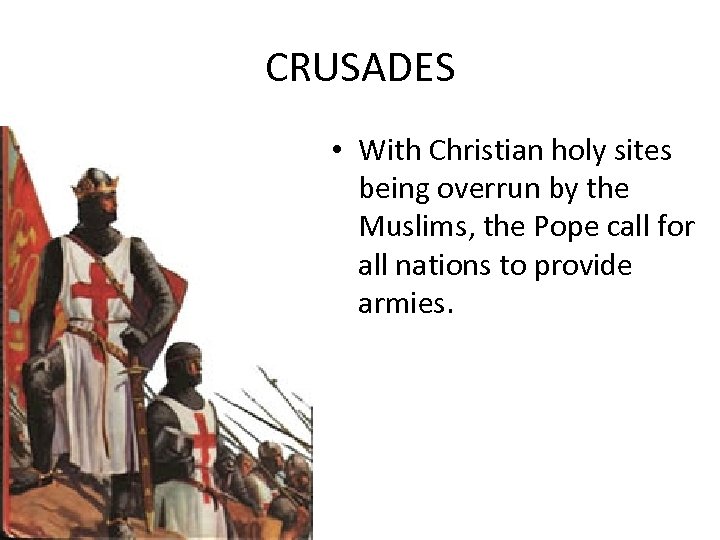 CRUSADES • With Christian holy sites being overrun by the Muslims, the Pope call for all nations to provide armies.
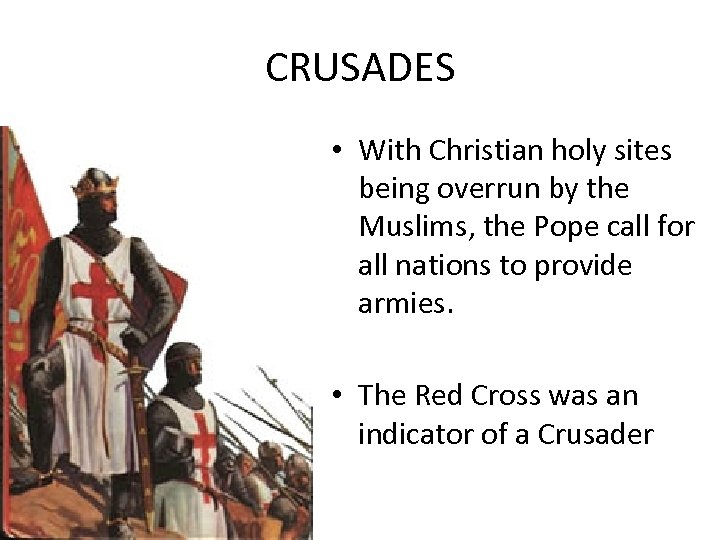 CRUSADES • With Christian holy sites being overrun by the Muslims, the Pope call for all nations to provide armies. • The Red Cross was an indicator of a Crusader
 CRUSADES
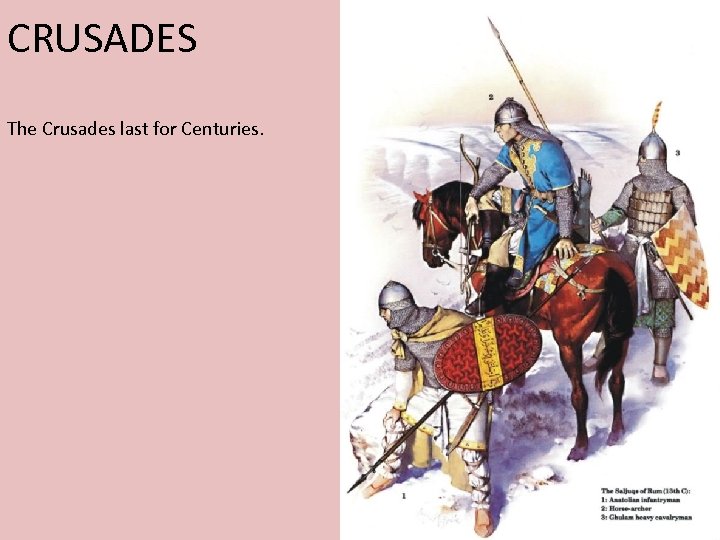 CRUSADES The Crusades last for Centuries.
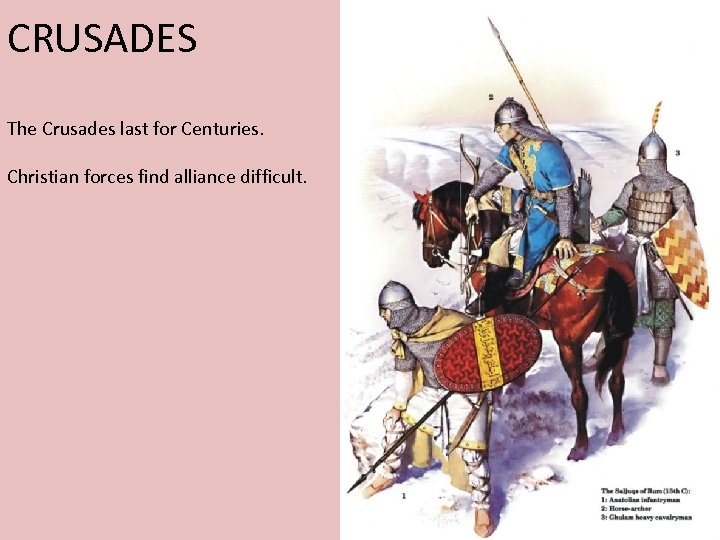 CRUSADES The Crusades last for Centuries. Christian forces find alliance difficult.
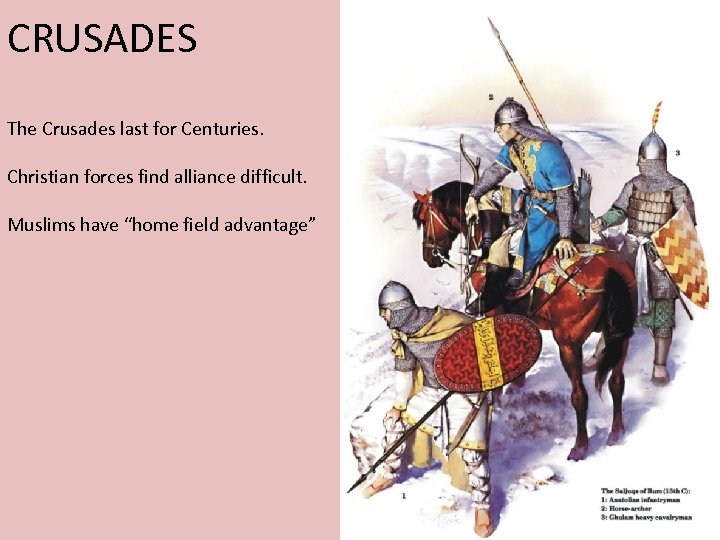 CRUSADES The Crusades last for Centuries. Christian forces find alliance difficult. Muslims have “home field advantage”
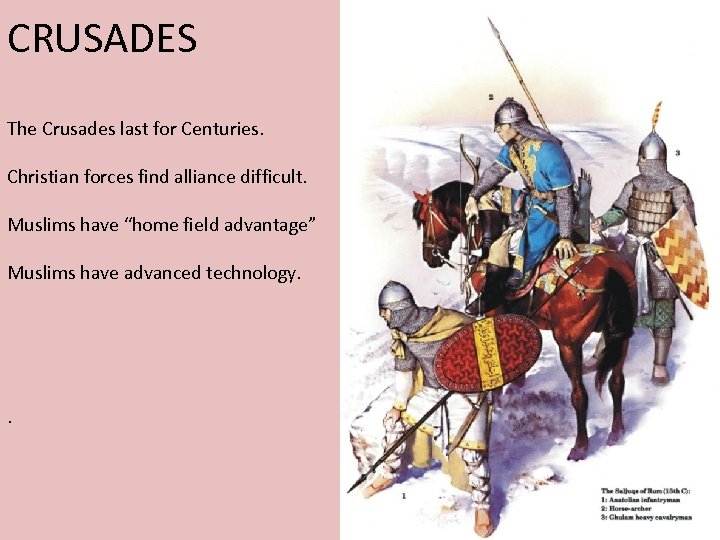 CRUSADES The Crusades last for Centuries. Christian forces find alliance difficult. Muslims have “home field advantage” Muslims have advanced technology. .
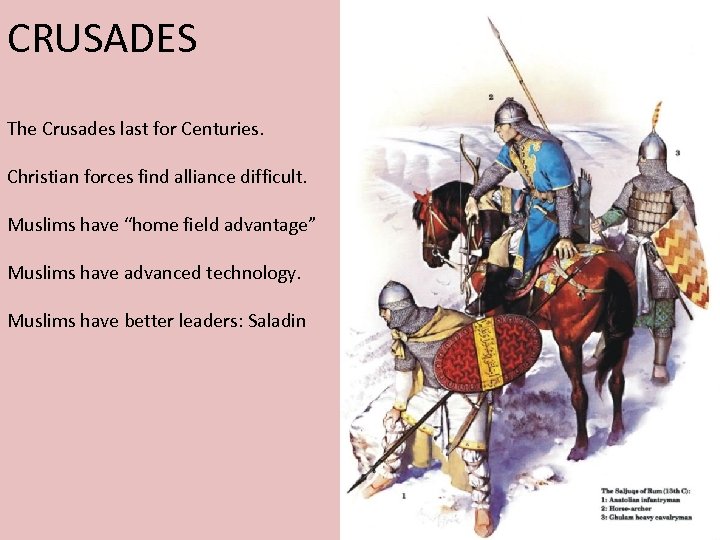 CRUSADES The Crusades last for Centuries. Christian forces find alliance difficult. Muslims have “home field advantage” Muslims have advanced technology. Muslims have better leaders: Saladin
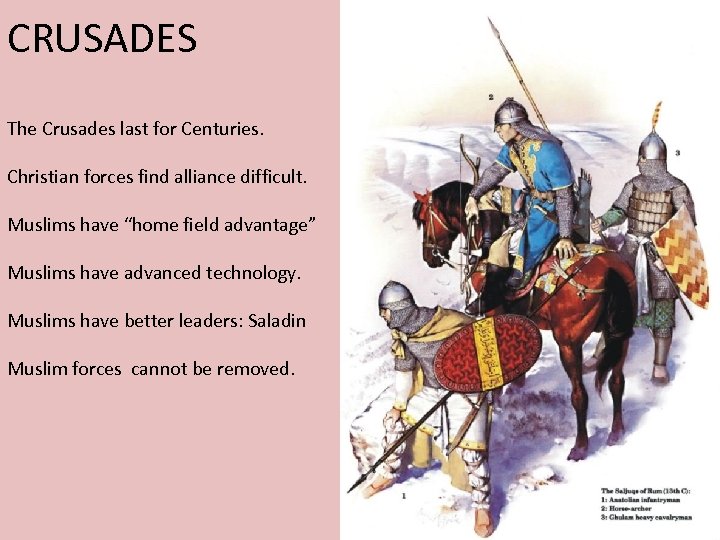 CRUSADES The Crusades last for Centuries. Christian forces find alliance difficult. Muslims have “home field advantage” Muslims have advanced technology. Muslims have better leaders: Saladin Muslim forces cannot be removed.
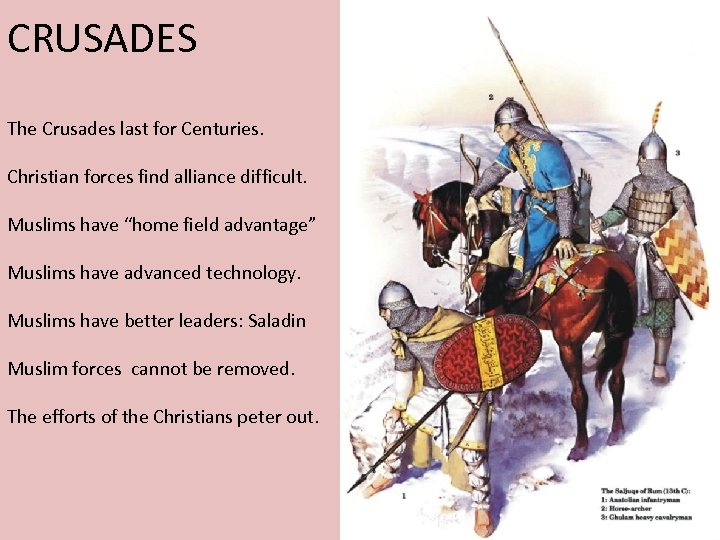 CRUSADES The Crusades last for Centuries. Christian forces find alliance difficult. Muslims have “home field advantage” Muslims have advanced technology. Muslims have better leaders: Saladin Muslim forces cannot be removed. The efforts of the Christians peter out.
 100 YEARS WAR 1337 to 1453
 100 YEARS WAR 1337 to 1453 ENGLAND FRANCE
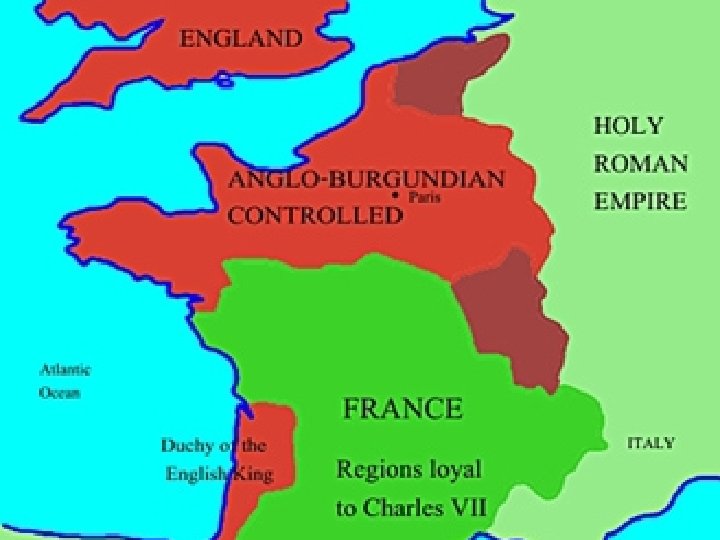 100 Years War
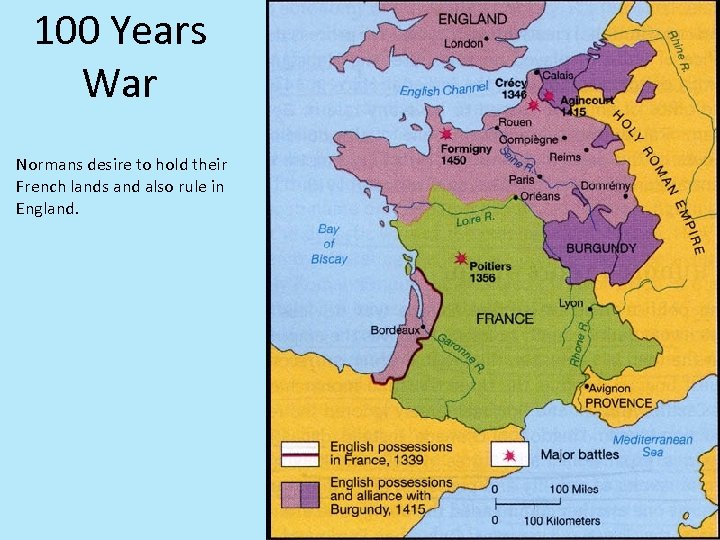 100 Years War Normans desire to hold their French lands and also rule in England.
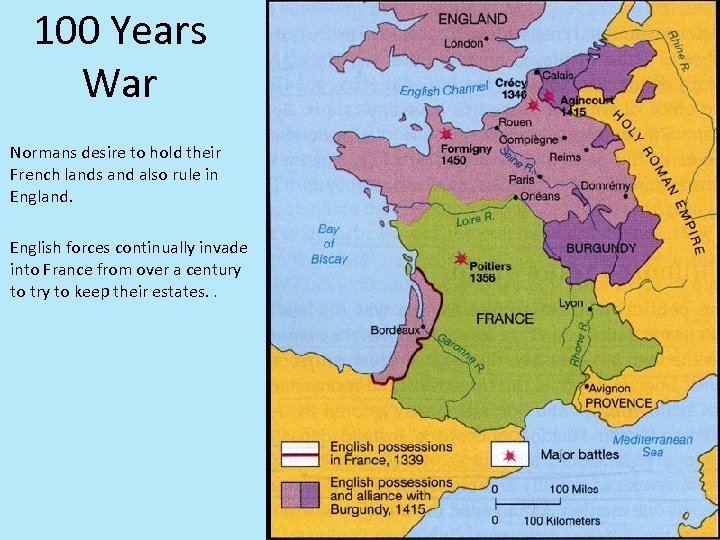 100 Years War Normans desire to hold their French lands and also rule in England. English forces continually invade into France from over a century to try to keep their estates. .
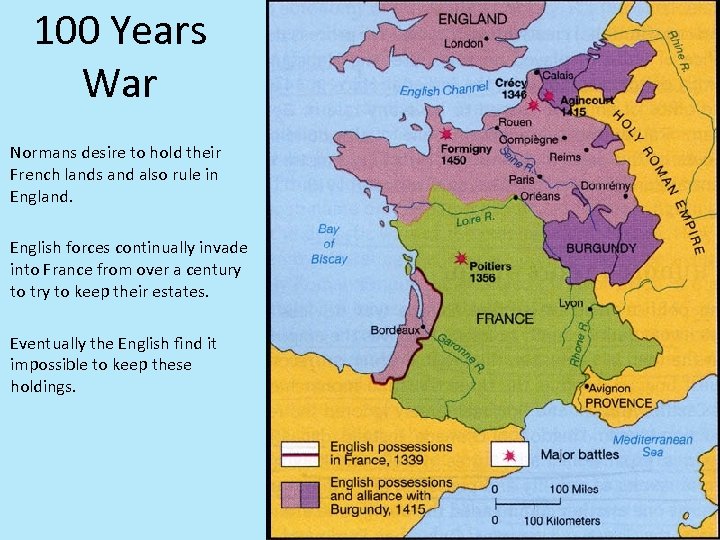 100 Years War Normans desire to hold their French lands and also rule in England. English forces continually invade into France from over a century to try to keep their estates. Eventually the English find it impossible to keep these holdings.
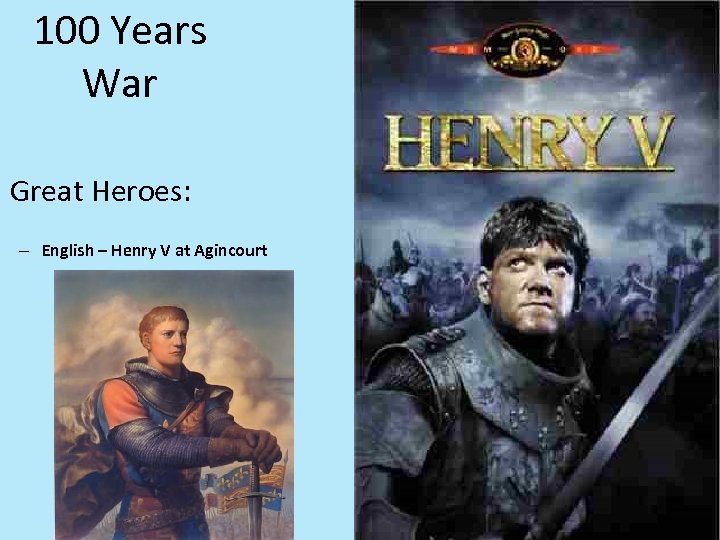 100 Years War Great Heroes: – English – Henry V at Agincourt
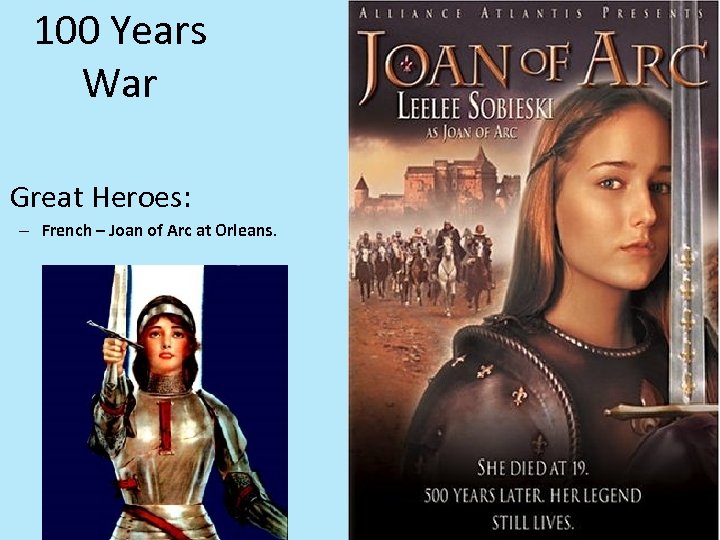 100 Years War Great Heroes: – French – Joan of Arc at Orleans.
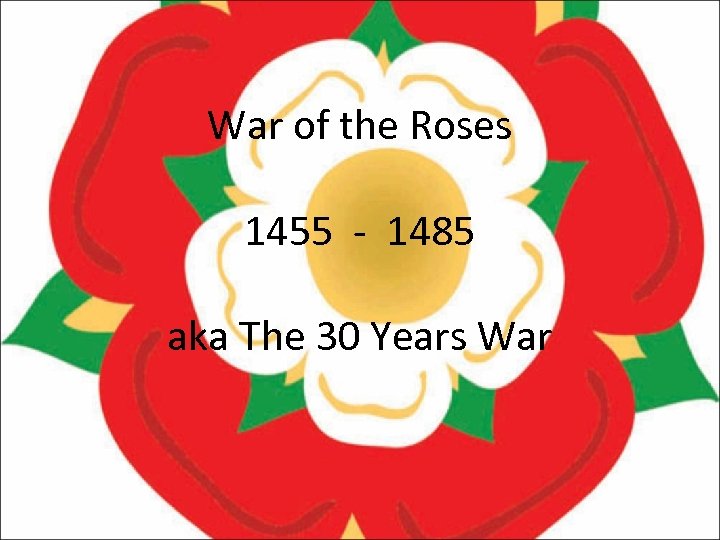
 War of the Roses 1455 - 1485 aka The 30 Years War
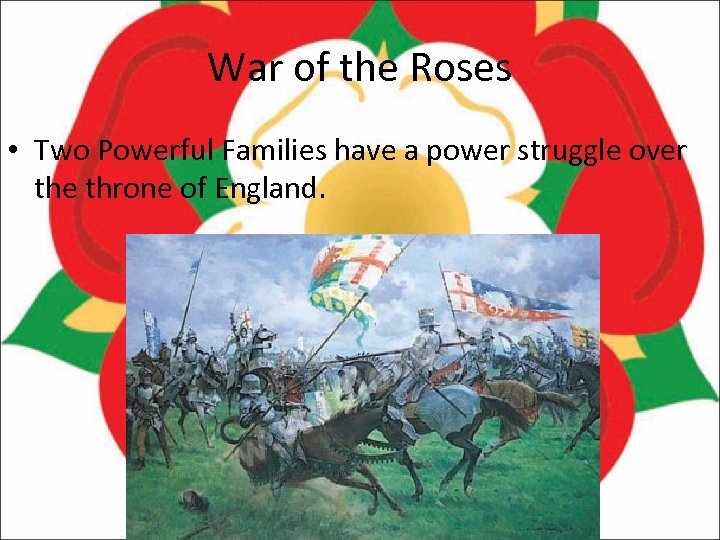 War of the Roses • Two Powerful Families have a power struggle over the throne of England.
 War of the Roses • Two Powerful Families have a power struggle over the throne of England. • House of Lancaster – symbolized by a red rose
 War of the Roses • Two Powerful Families have a power struggle over the throne of England. • House of Lancaster – symbolized by a red rose • House of York - symbolized by a white rose
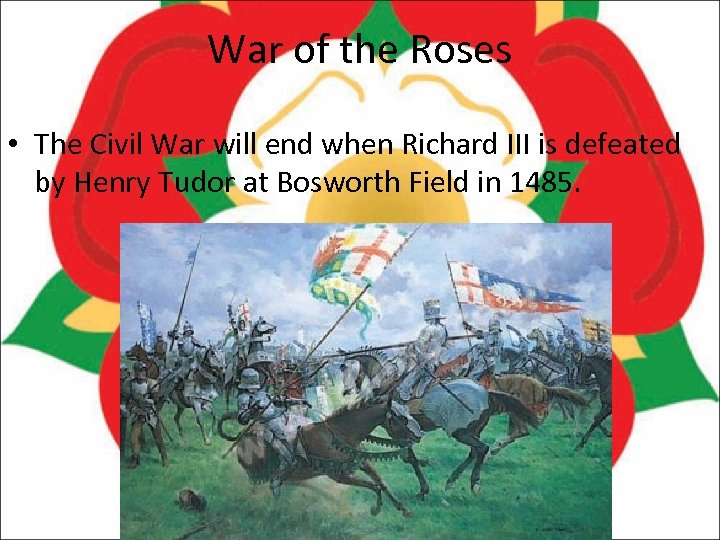 War of the Roses • The Civil War will end when Richard III is defeated by Henry Tudor at Bosworth Field in 1485.
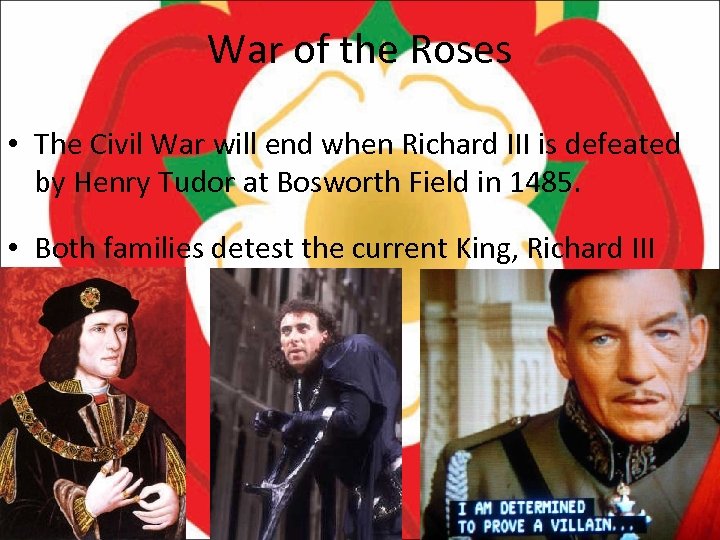 War of the Roses • The Civil War will end when Richard III is defeated by Henry Tudor at Bosworth Field in 1485. • Both families detest the current King, Richard III
 War of the Roses • The Civil War will end when Richard III is defeated by Henry Tudor at Bosworth Field in 1485. • Both families detest Richard III • Henry Tudor who has with ties to the House of Lancaster marries Elizabeth of the House of York, uniting the households.
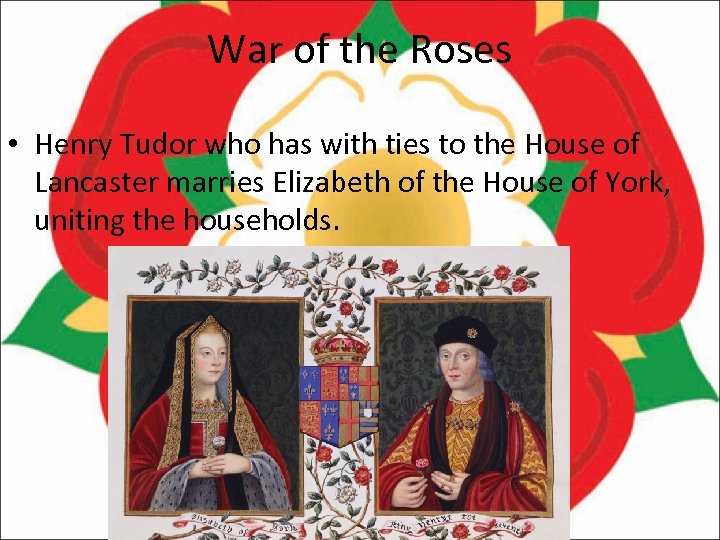 War of the Roses • Henry Tudor who has with ties to the House of Lancaster marries Elizabeth of the House of York, uniting the households.
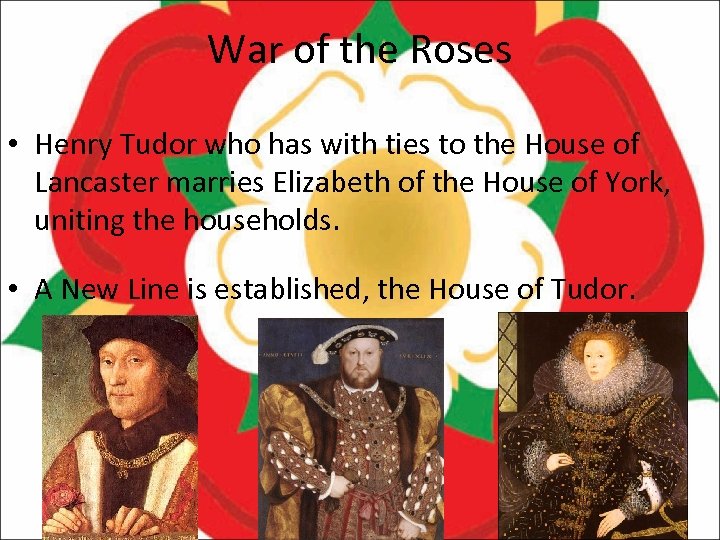 War of the Roses • Henry Tudor who has with ties to the House of Lancaster marries Elizabeth of the House of York, uniting the households. • A New Line is established, the House of Tudor.
 Update Guided Notes from your Running Notes
 The Medieval Period… New Topic A Chronology – Medieval England …with Wars in Mind
 The Medieval Period… New Topic A Chronology – Medieval England …with Wars in Mind As if we were time travelers rushing through the decades
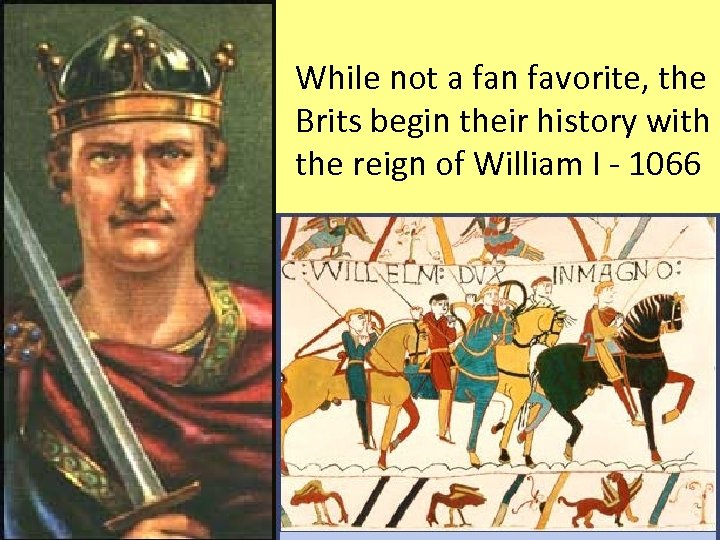 While not a fan favorite, the Brits begin their history with the reign of William I - 1066
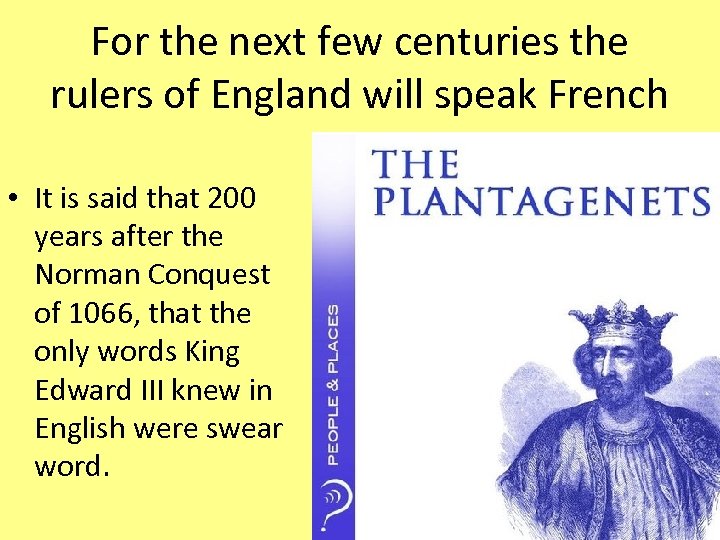 For the next few centuries the rulers of England will speak French • It is said that 200 years after the Norman Conquest of 1066, that the only words King Edward III knew in English were swear word.
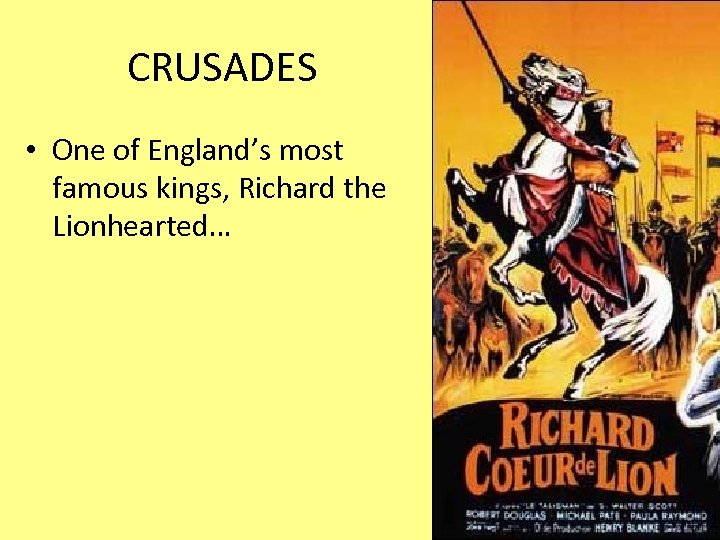 CRUSADES • One of England’s most famous kings, Richard the Lionhearted…
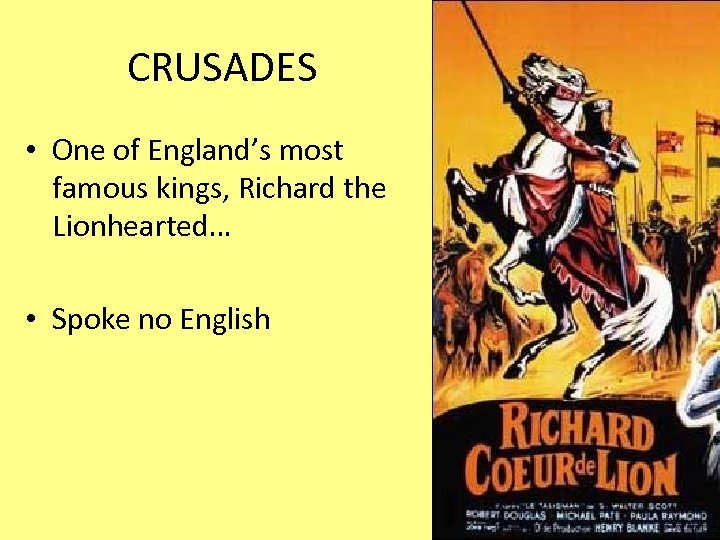 CRUSADES • One of England’s most famous kings, Richard the Lionhearted… • Spoke no English
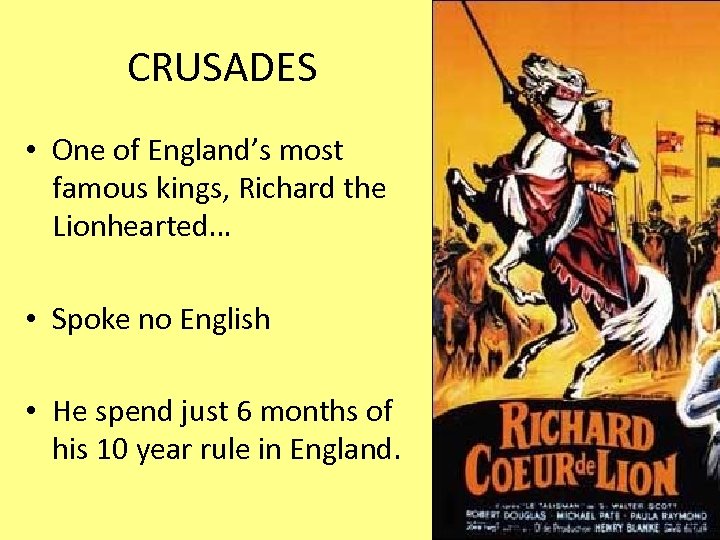 CRUSADES • One of England’s most famous kings, Richard the Lionhearted… • Spoke no English • He spend just 6 months of his 10 year rule in England.
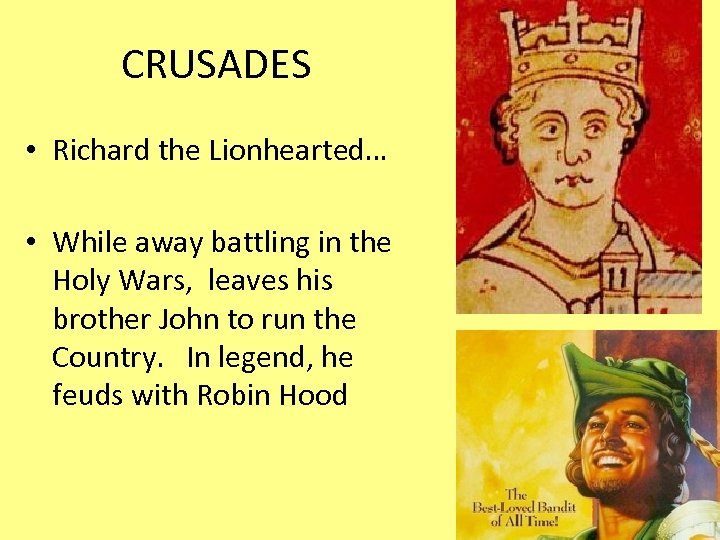 CRUSADES • Richard the Lionhearted… • While away battling in the Holy Wars, leaves his brother John to run the Country. In legend, he feuds with Robin Hood
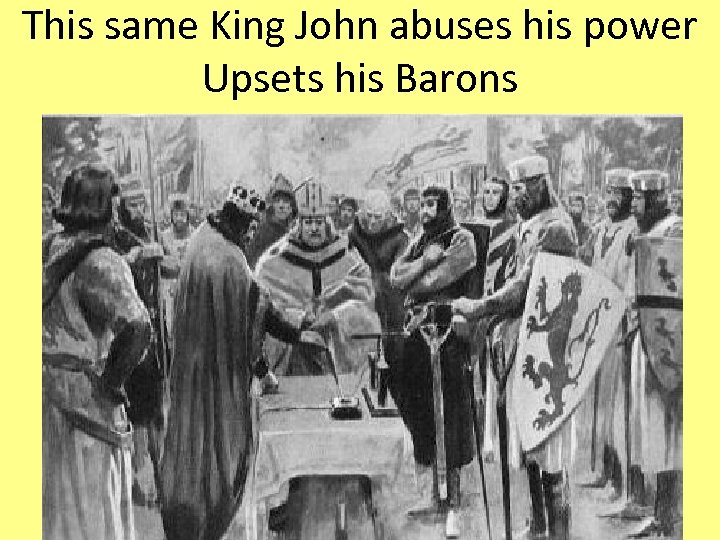 This same King John abuses his power Upsets his Barons
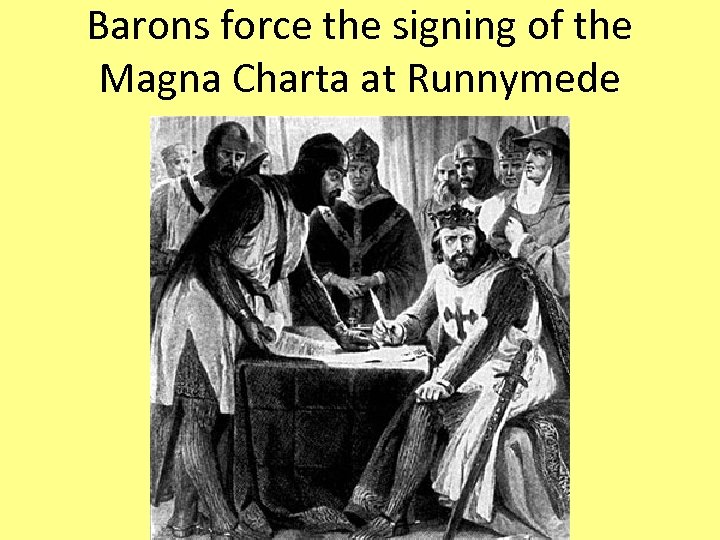 Barons force the signing of the Magna Charta at Runnymede
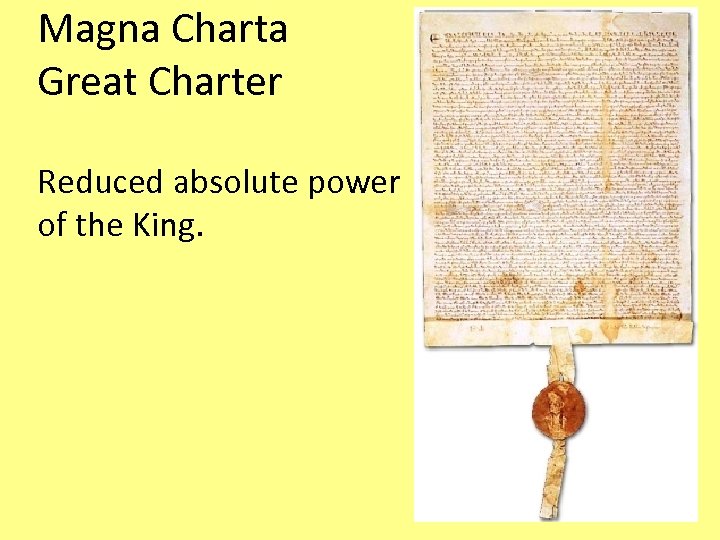 Magna Charta Great Charter Reduced absolute power of the King.
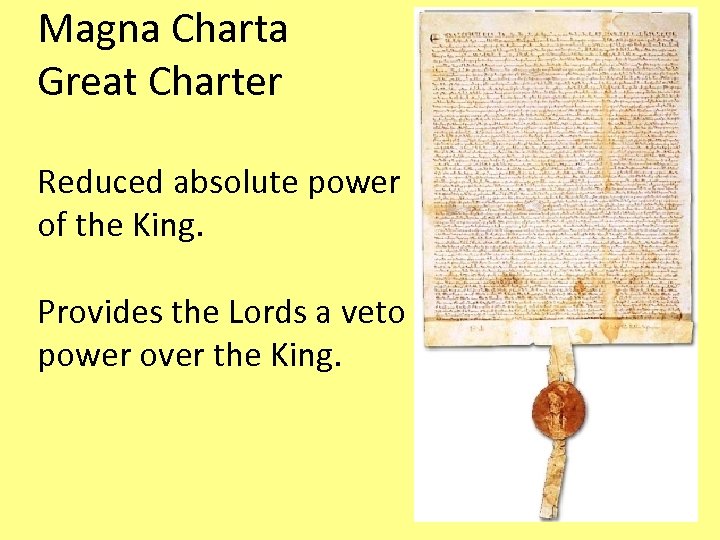 Magna Charta Great Charter Reduced absolute power of the King. Provides the Lords a veto power over the King.
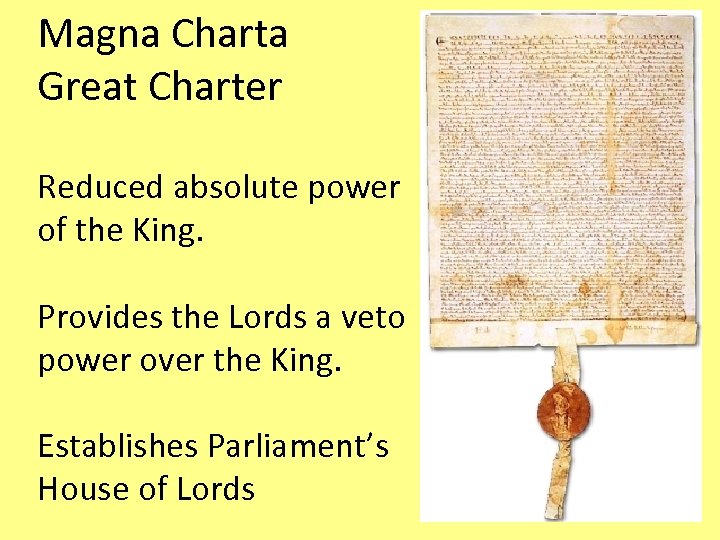 Magna Charta Great Charter Reduced absolute power of the King. Provides the Lords a veto power over the King. Establishes Parliament’s House of Lords
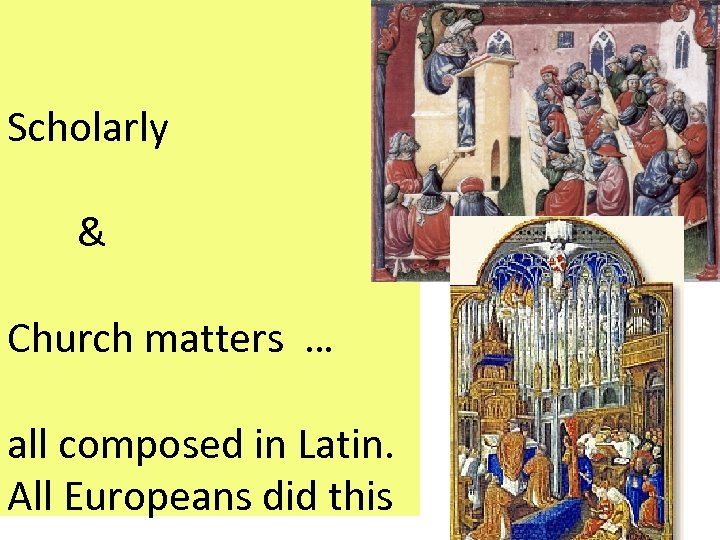
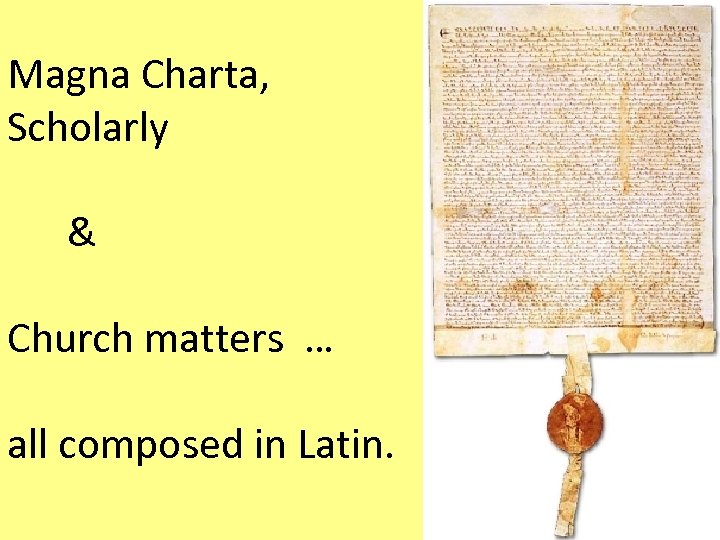 Magna Charta, Scholarly & Church matters … all composed in Latin.
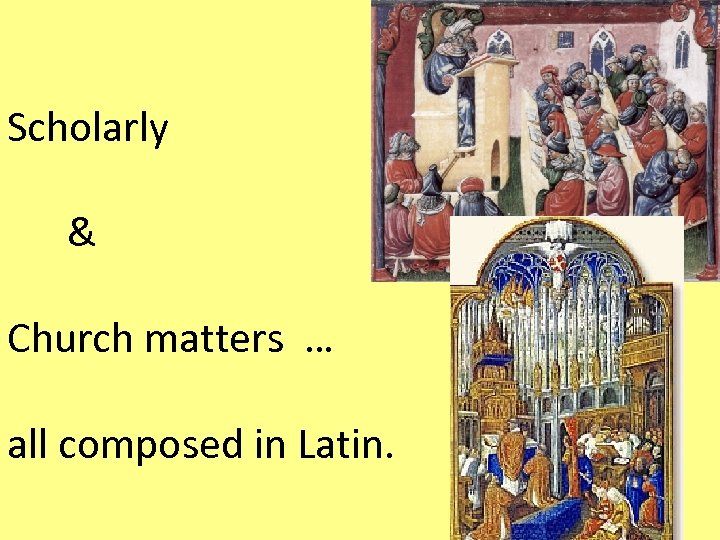 Scholarly & Church matters … all composed in Latin.
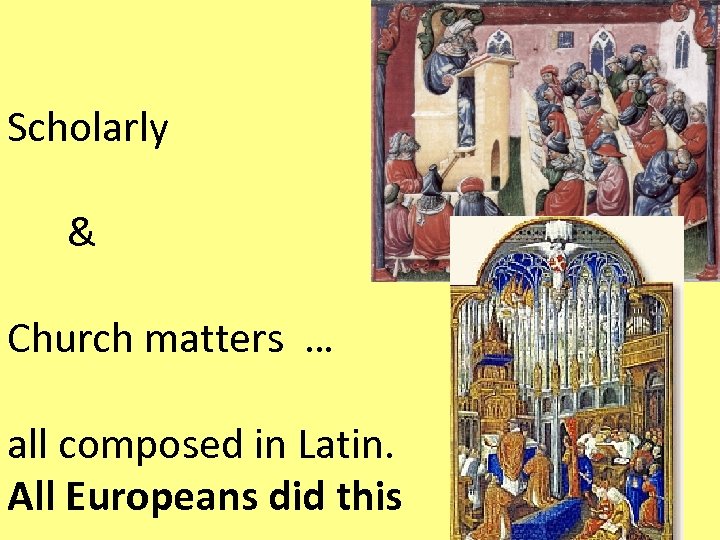 Scholarly & Church matters … all composed in Latin. All Europeans did this
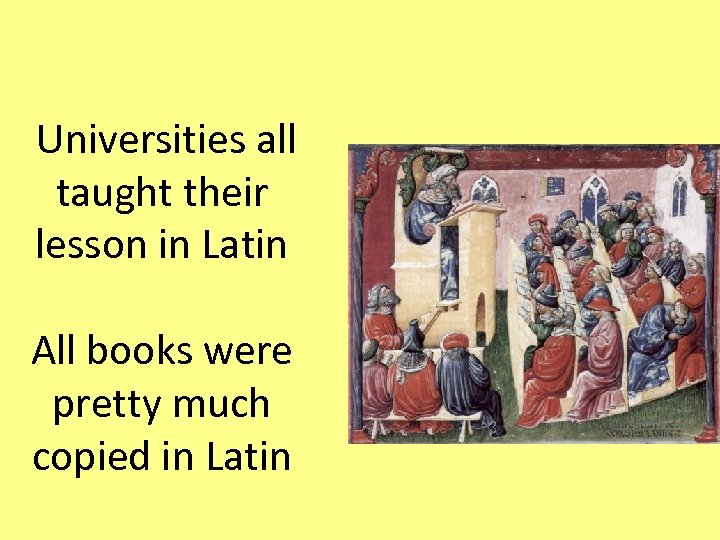 Universities all taught their lesson in Latin All books were pretty much copied in Latin
 In England, Government and Legal Matters are still all officially in French in 1300 AD
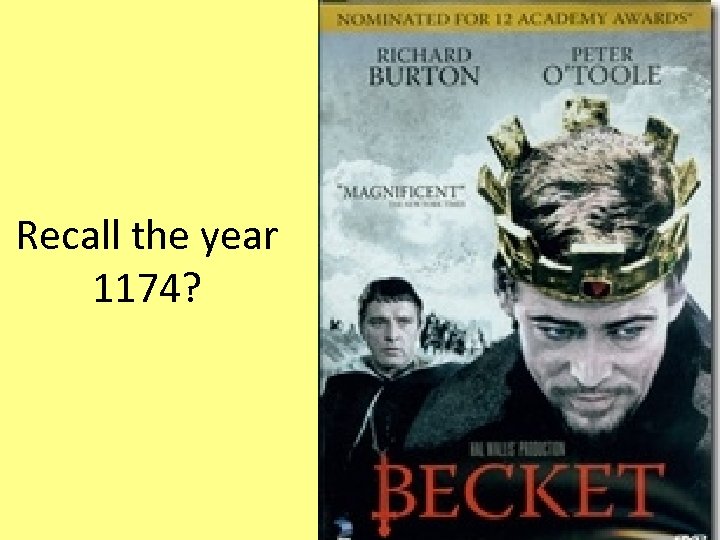 Recall the year 1174?
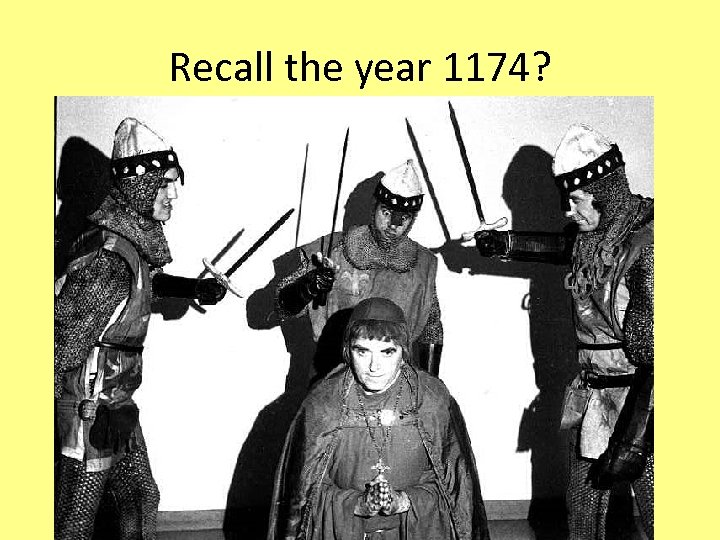 Recall the year 1174?
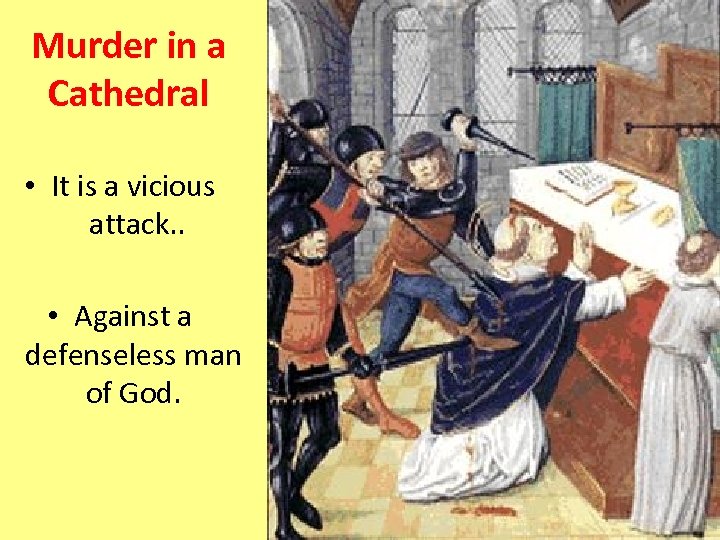 Murder in a Cathedral • It is a vicious attack. . • Against a defenseless man of God.
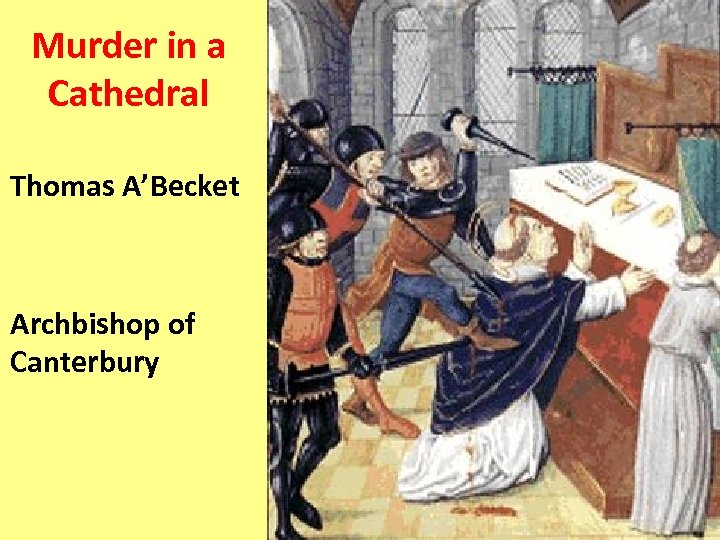 Murder in a Cathedral Thomas A’Becket Archbishop of Canterbury
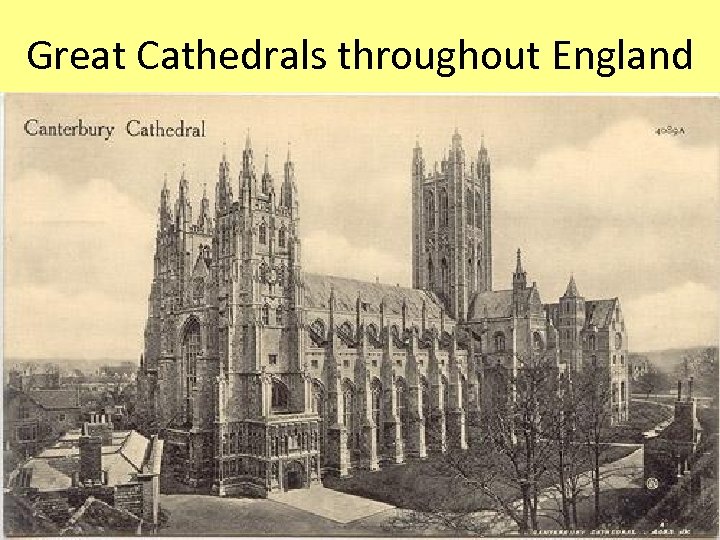 Great Cathedrals throughout England
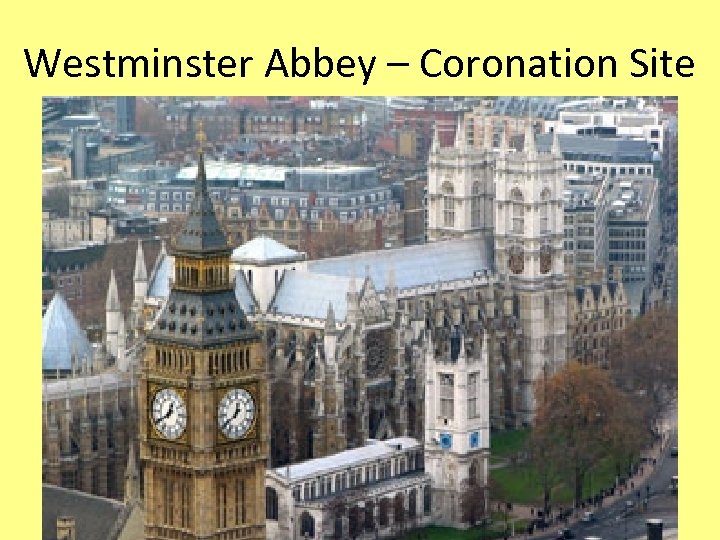 Westminster Abbey – Coronation Site
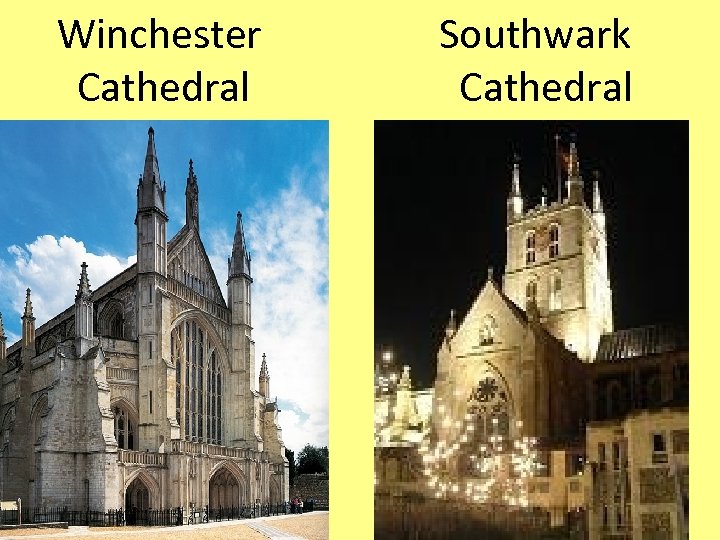 Winchester Cathedral Southwark Cathedral
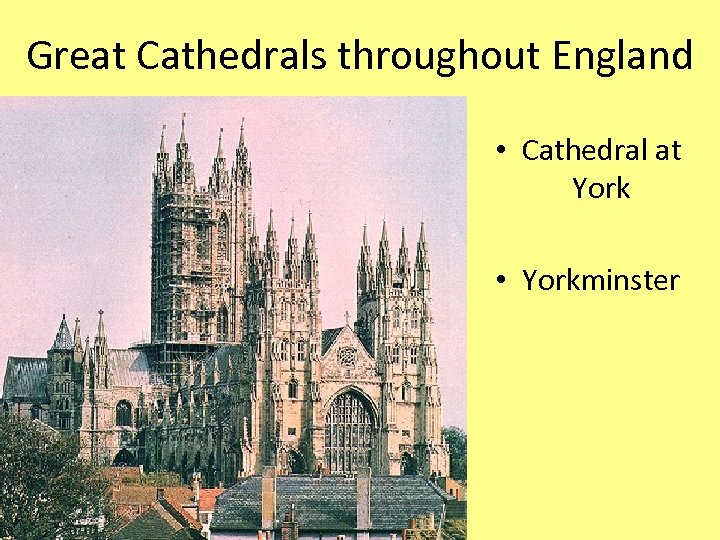 Great Cathedrals throughout England • Cathedral at York • Yorkminster
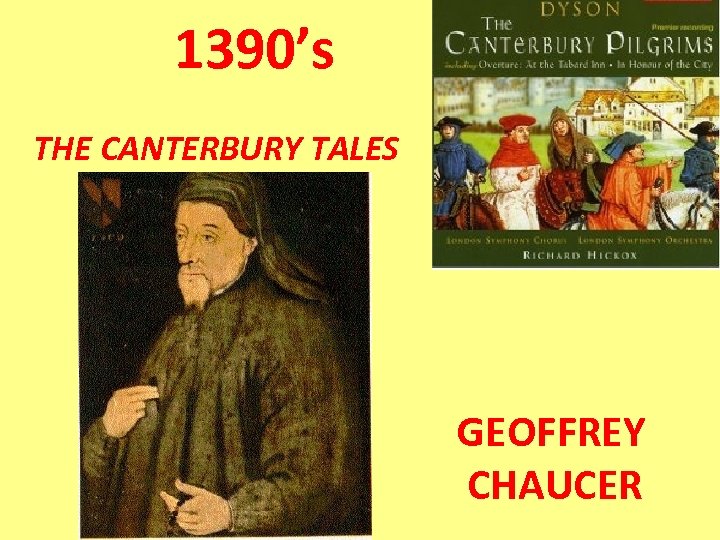 1390’s THE CANTERBURY TALES GEOFFREY CHAUCER
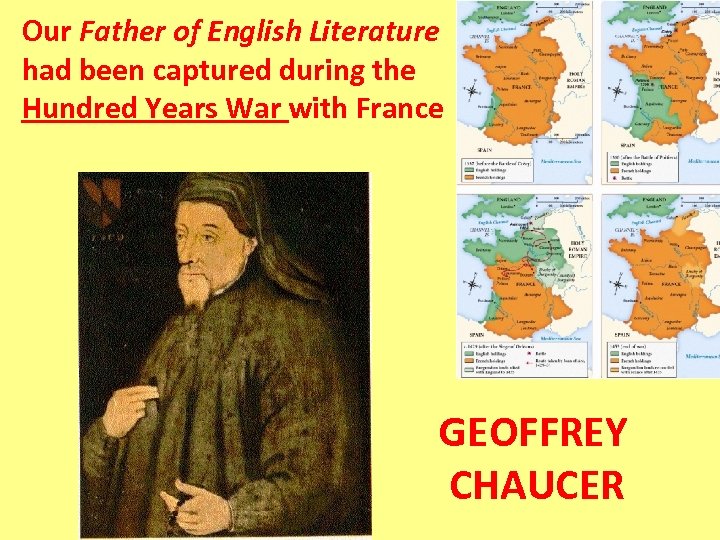 Our Father of English Literature had been captured during the Hundred Years War with France GEOFFREY CHAUCER
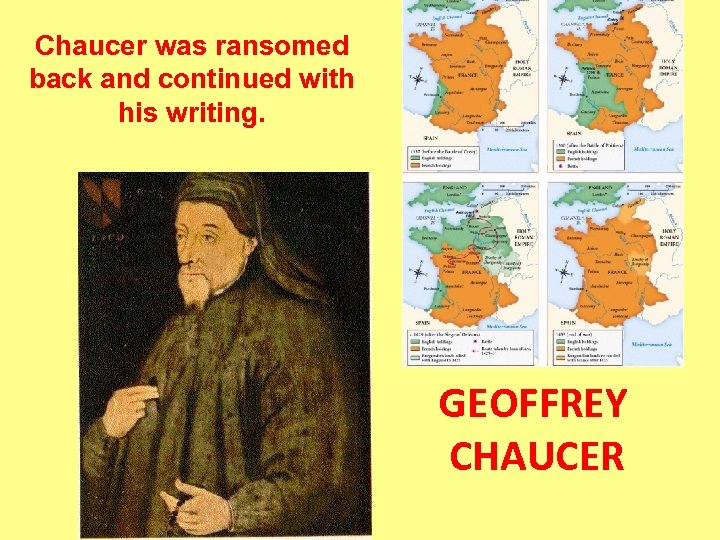 Chaucer was ransomed back and continued with his writing. GEOFFREY CHAUCER
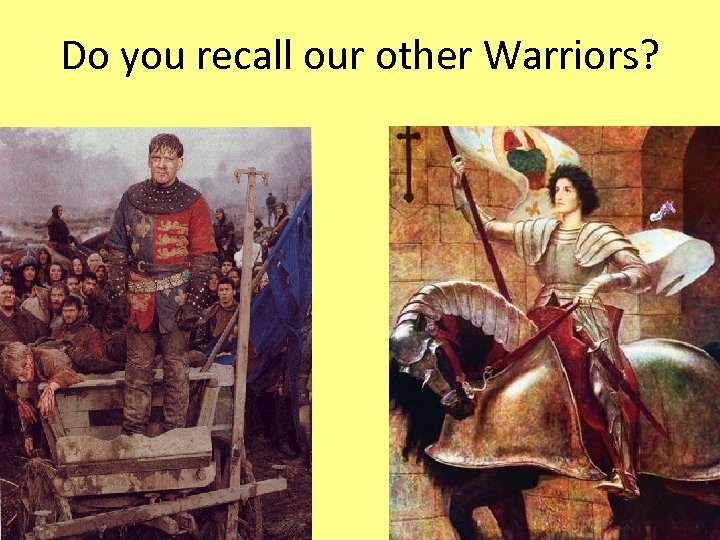 Do you recall our other Warriors?
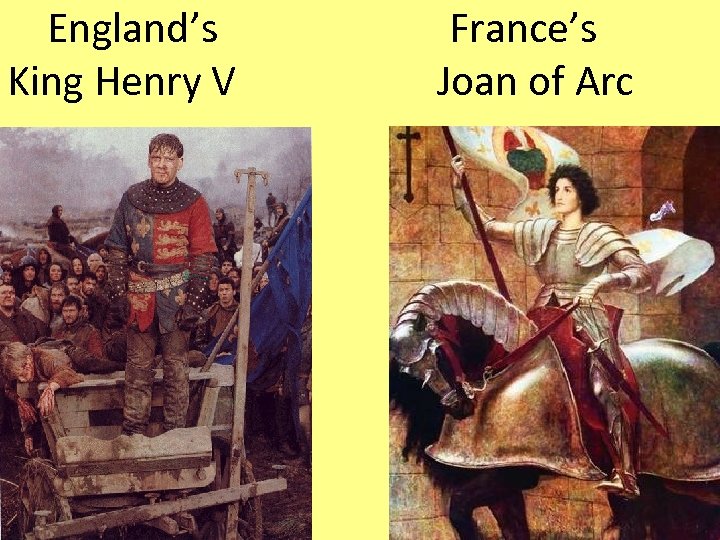 England’s King Henry V France’s Joan of Arc
 War of the Roses 1455 - 1485 aka The 30 Years War
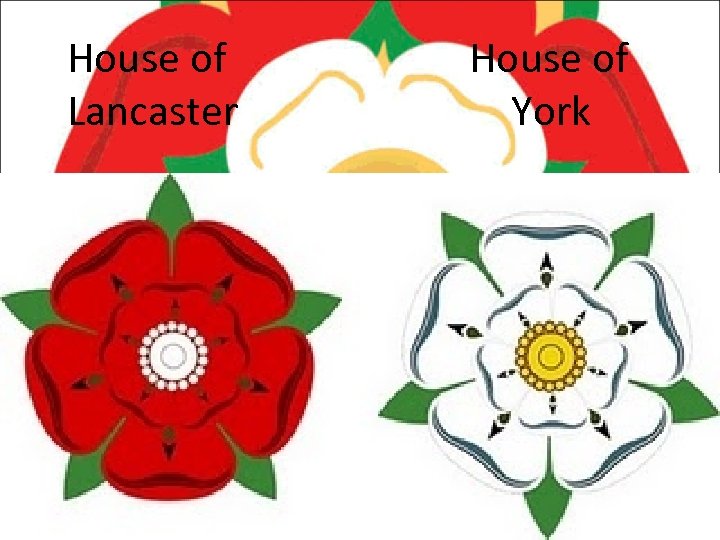 House of Lancaster House of York
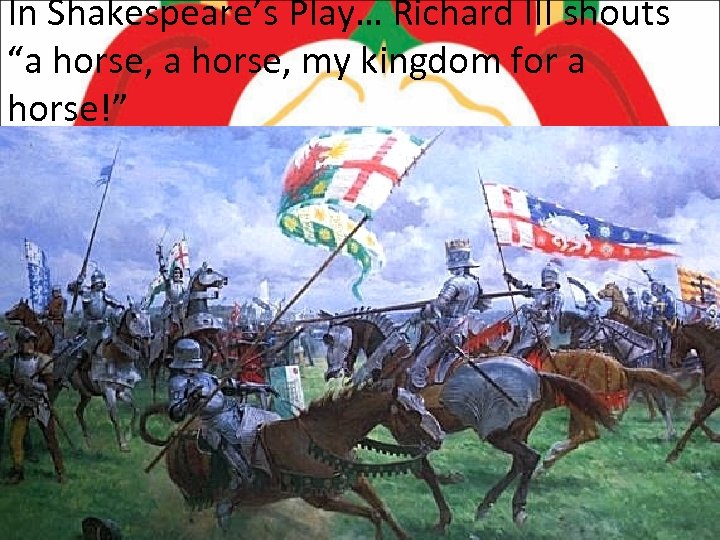 In Shakespeare’s Play… Richard III shouts “a horse, my kingdom for a horse!”
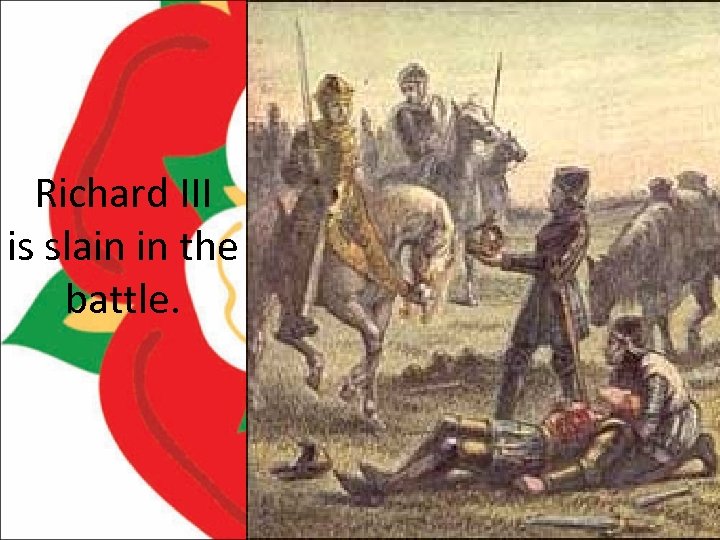 Richard III is slain in the battle.
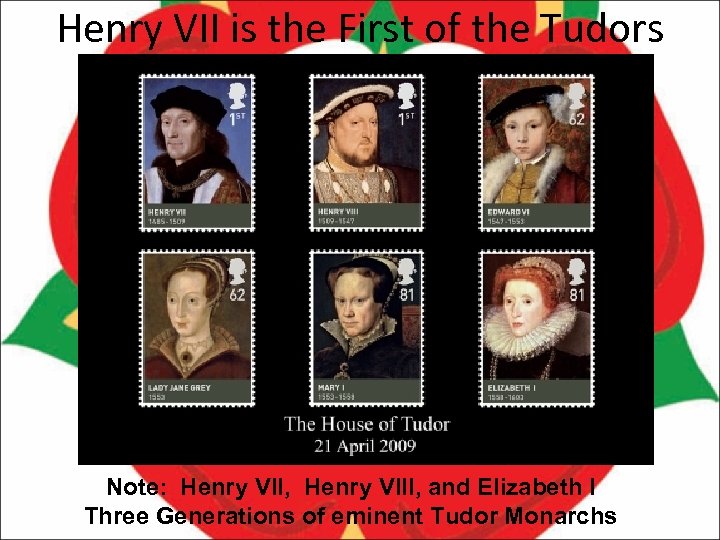 Henry VII is the First of the Tudors Note: Henry VII, Henry VIII, and Elizabeth I Three Generations of eminent Tudor Monarchs
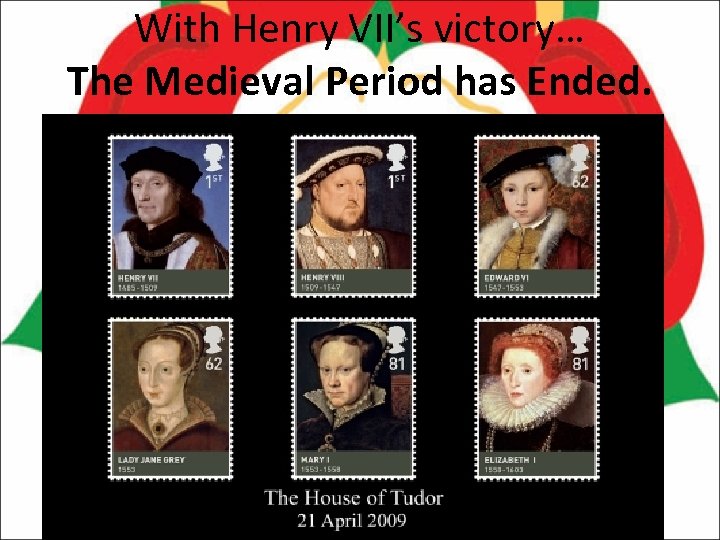 With Henry VII’s victory… The Medieval Period has Ended.
 Update Guided Notes from your Running Notes
 The Medieval Period… New Topic Medieval English Literature
 Medieval English Literature: –Tales of Arthur / Romances –Ballads –Drama –Chaucer
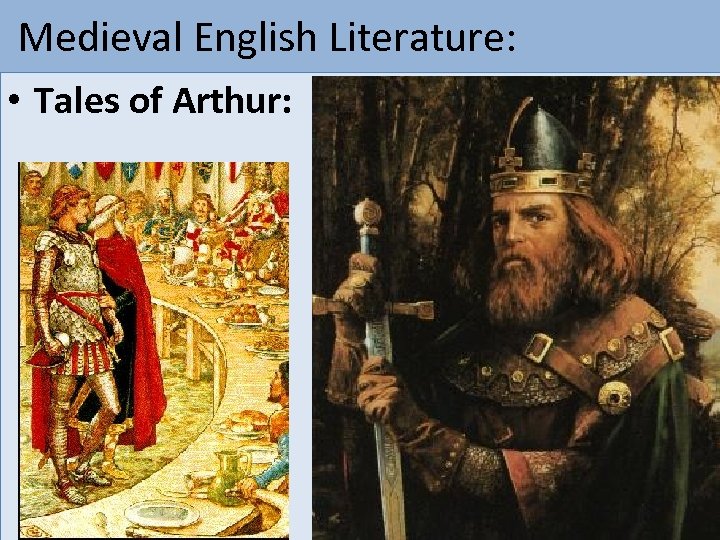 Medieval English Literature: • Tales of Arthur:
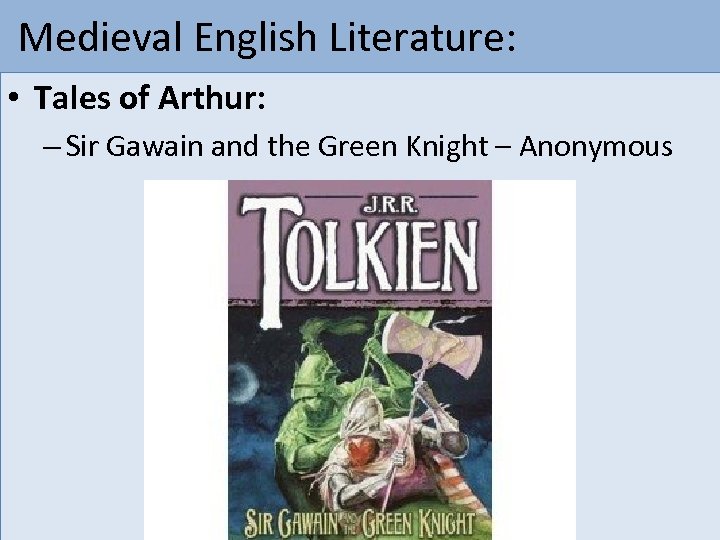 Medieval English Literature: • Tales of Arthur: – Sir Gawain and the Green Knight – Anonymous
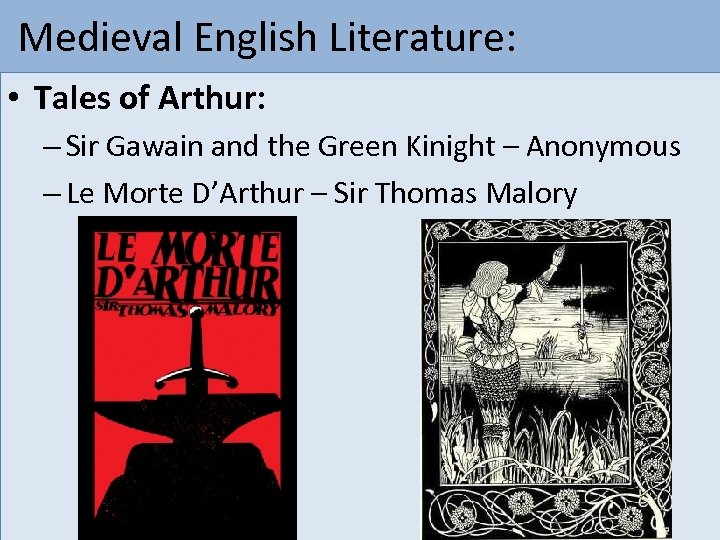 Medieval English Literature: • Tales of Arthur: – Sir Gawain and the Green Kinight – Anonymous – Le Morte D’Arthur – Sir Thomas Malory
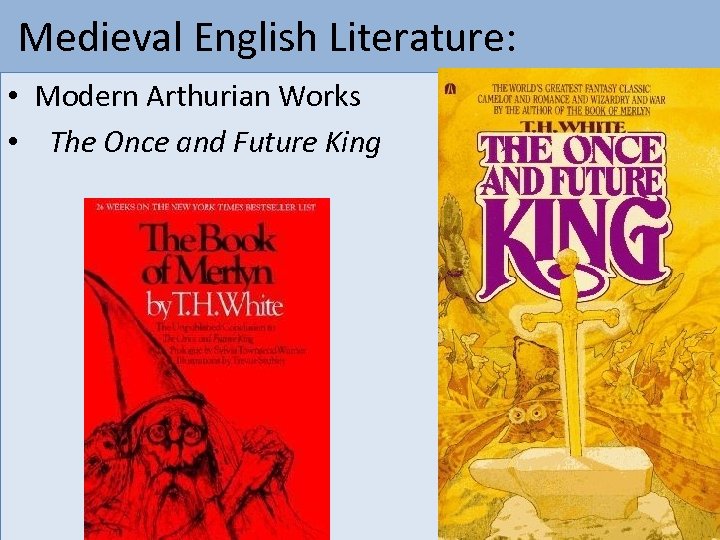 Medieval English Literature: • Modern Arthurian Works • The Once and Future King
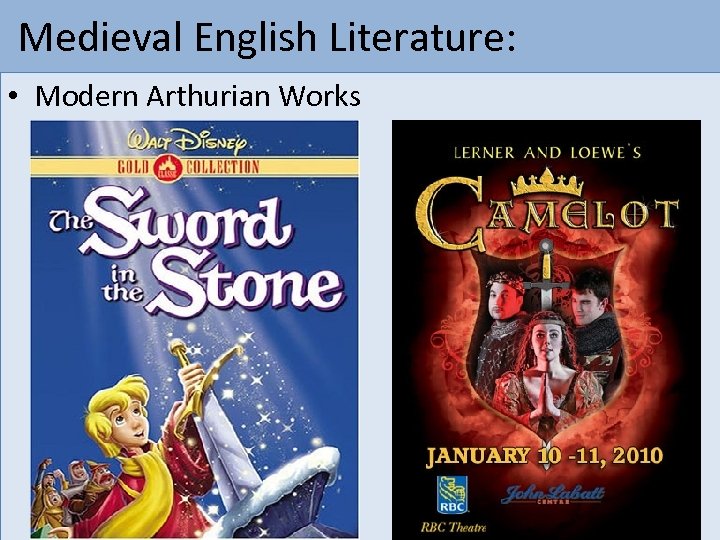 Medieval English Literature: • Modern Arthurian Works
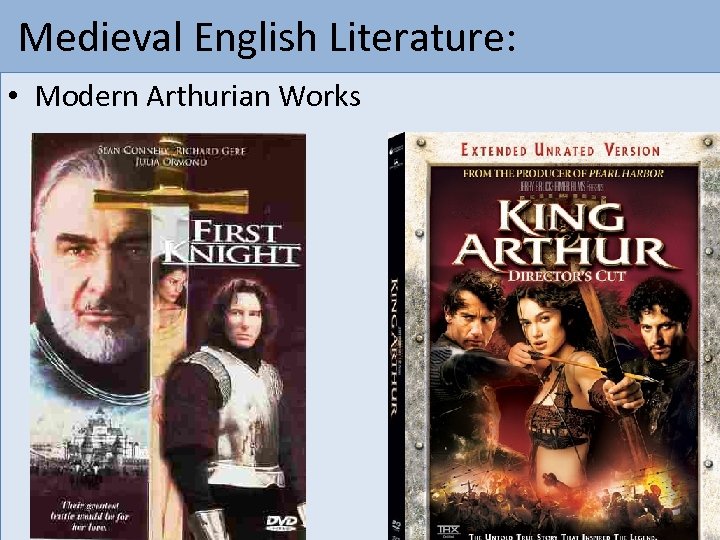 Medieval English Literature: • Modern Arthurian Works
 Medieval English Literature: • Ballads:
 Medieval English Literature: • Ballads: • Narrative Songs
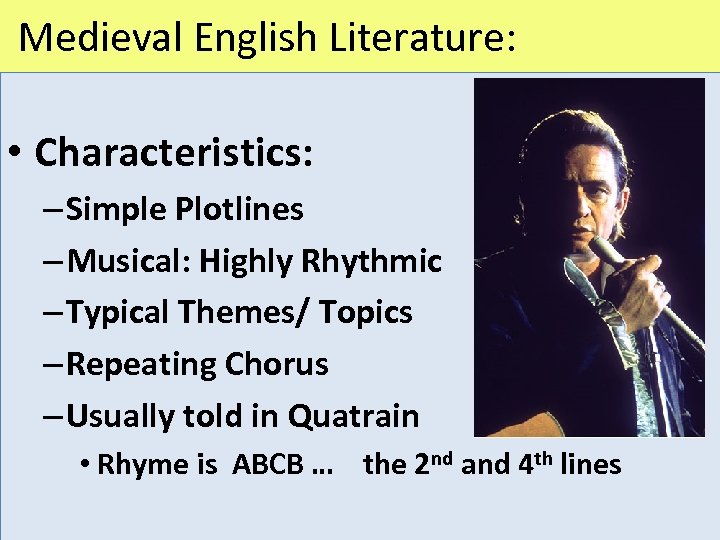 Medieval English Literature: • Characteristics: – Simple Plotlines – Musical: Highly Rhythmic – Typical Themes/ Topics – Repeating Chorus – Usually told in Quatrain • Rhyme is ABCB … the 2 nd and 4 th lines
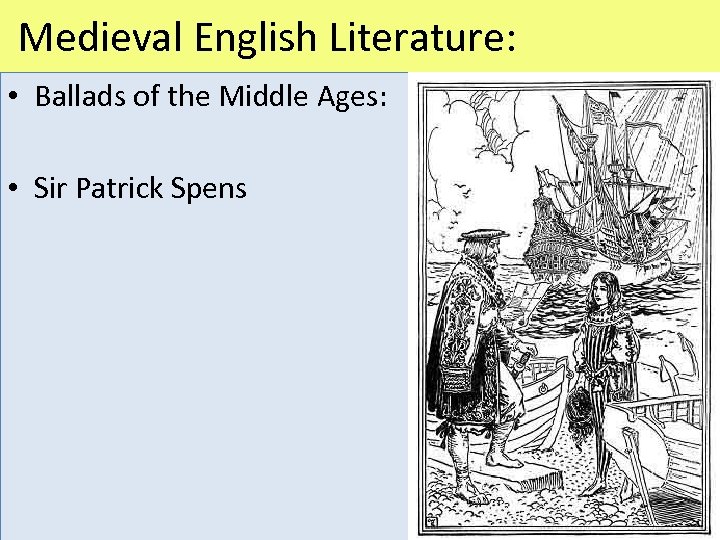 Medieval English Literature: • Ballads of the Middle Ages: • Sir Patrick Spens
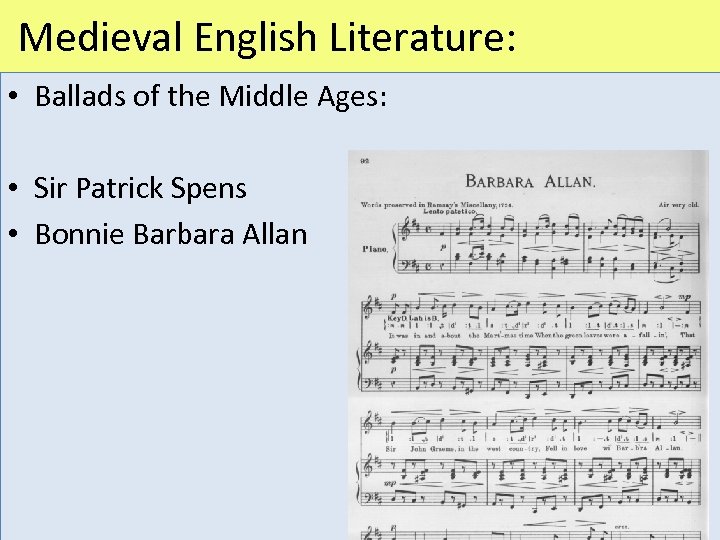 Medieval English Literature: • Ballads of the Middle Ages: • Sir Patrick Spens • Bonnie Barbara Allan
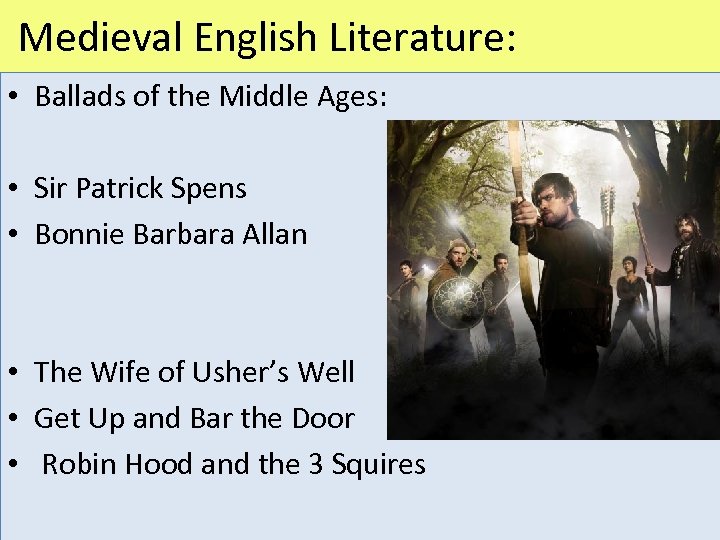 Medieval English Literature: • Ballads of the Middle Ages: • Sir Patrick Spens • Bonnie Barbara Allan • The Wife of Usher’s Well • Get Up and Bar the Door • Robin Hood and the 3 Squires
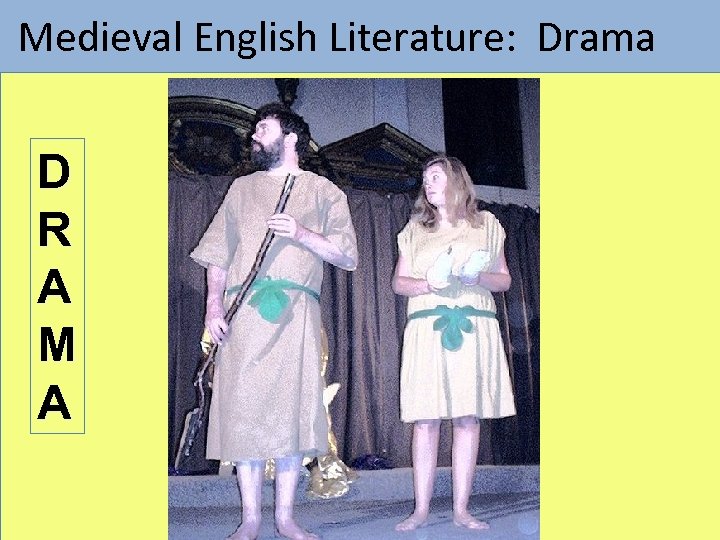 Medieval English Literature: Drama D R A M A
 Medieval English Literature: Drama • Miracle Plays
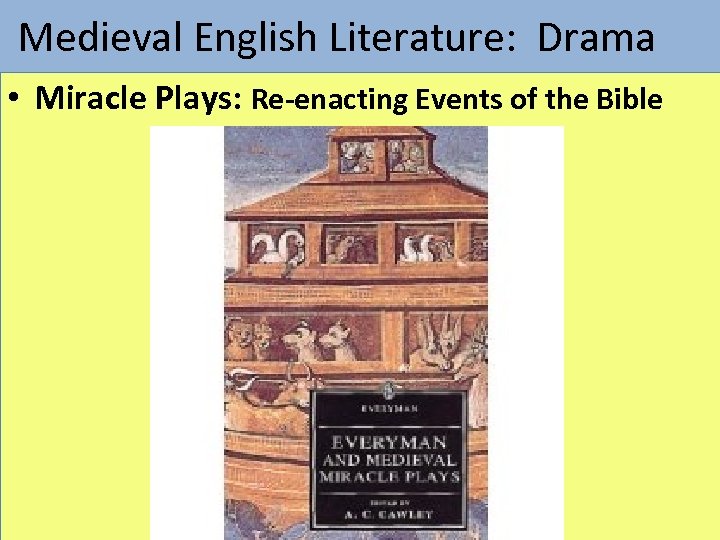 Medieval English Literature: Drama • Miracle Plays: Re-enacting Events of the Bible
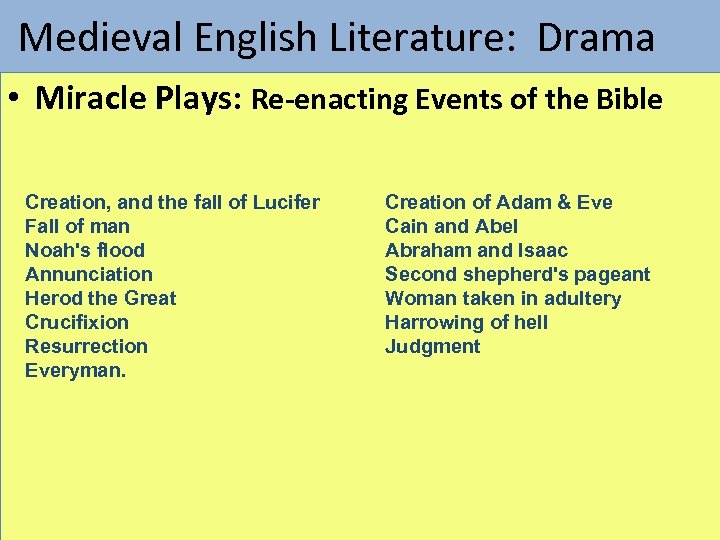 Medieval English Literature: Drama • Miracle Plays: Re-enacting Events of the Bible Creation, and the fall of Lucifer Fall of man Noah's flood Annunciation Herod the Great Crucifixion Resurrection Everyman. Creation of Adam & Eve Cain and Abel Abraham and Isaac Second shepherd's pageant Woman taken in adultery Harrowing of hell Judgment
 Medieval English Literature: Drama • Miracle Plays – Re-enacting Events of the Bible • Morality Plays
 Medieval English Literature: Drama • Miracle Plays – Re-enacting Events of the Bible • Morality Plays - Allegorical Drama / Good vs. Evil
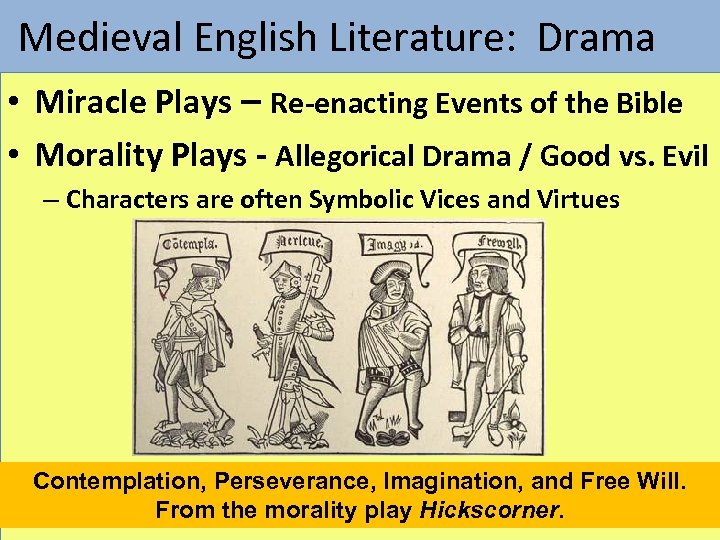 Medieval English Literature: Drama • Miracle Plays – Re-enacting Events of the Bible • Morality Plays - Allegorical Drama / Good vs. Evil – Characters are often Symbolic Vices and Virtues Contemplation, Perseverance, Imagination, and Free Will. From the morality play Hickscorner.
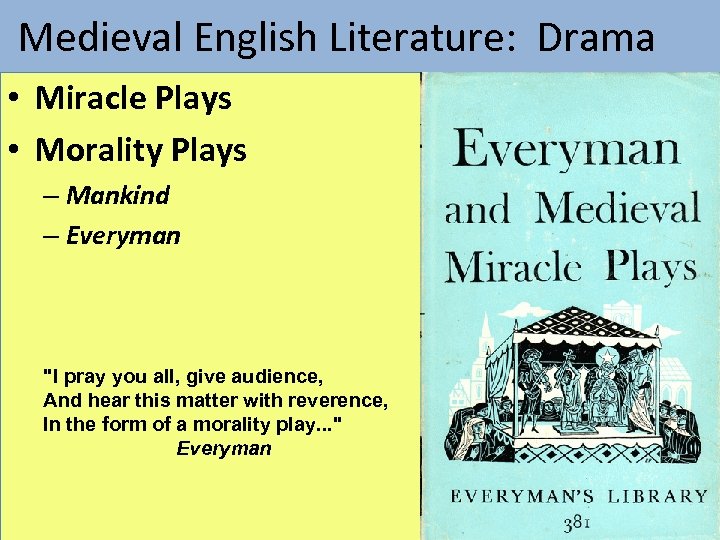 Medieval English Literature: Drama • Miracle Plays • Morality Plays – Mankind – Everyman "I pray you all, give audience, And hear this matter with reverence, In the form of a morality play. . . " Everyman
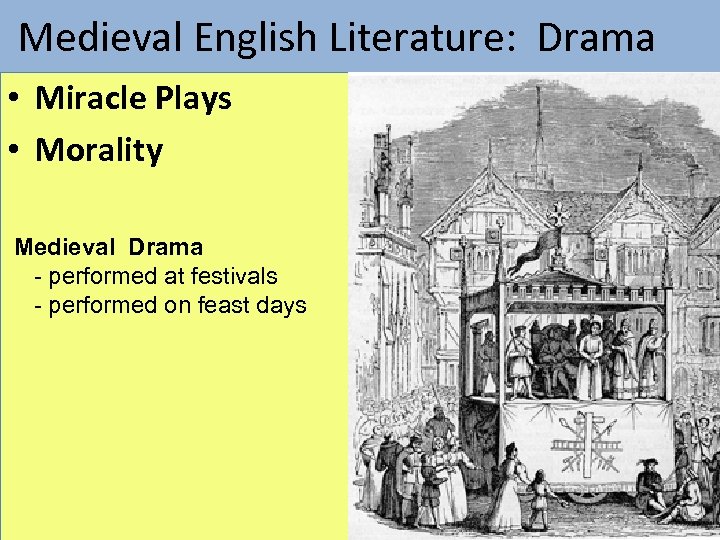 Medieval English Literature: Drama • Miracle Plays • Morality Medieval Drama - performed at festivals - performed on feast days
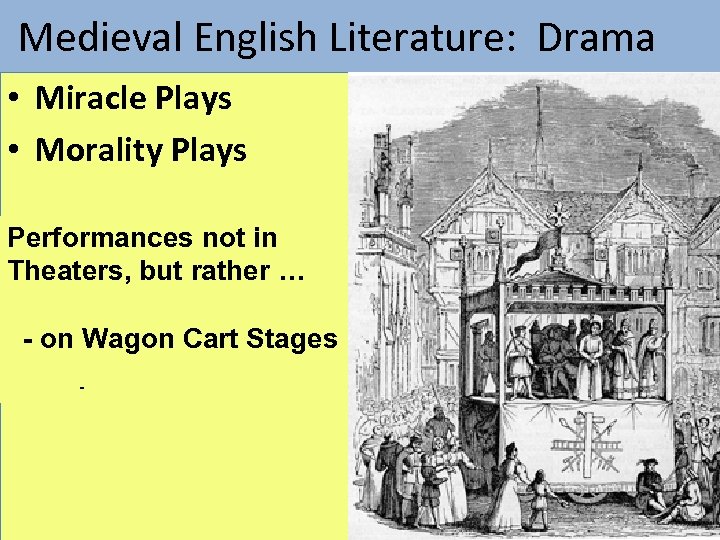 Medieval English Literature: Drama • Miracle Plays • Morality Plays Performances not in Theaters, but rather … - on Wagon Cart Stages -
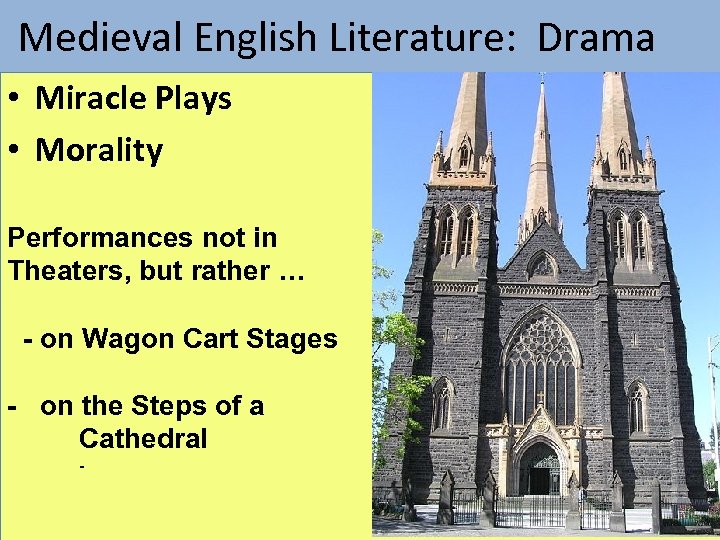 Medieval English Literature: Drama • Miracle Plays • Morality Performances not in Theaters, but rather … - on Wagon Cart Stages - on the Steps of a Cathedral -
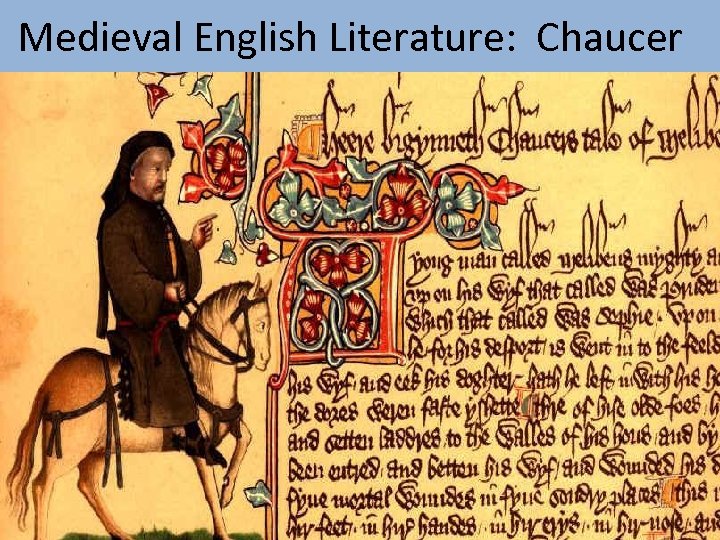 Medieval English Literature: Chaucer • Geoffrey Chaucer – The Canterbury Tales
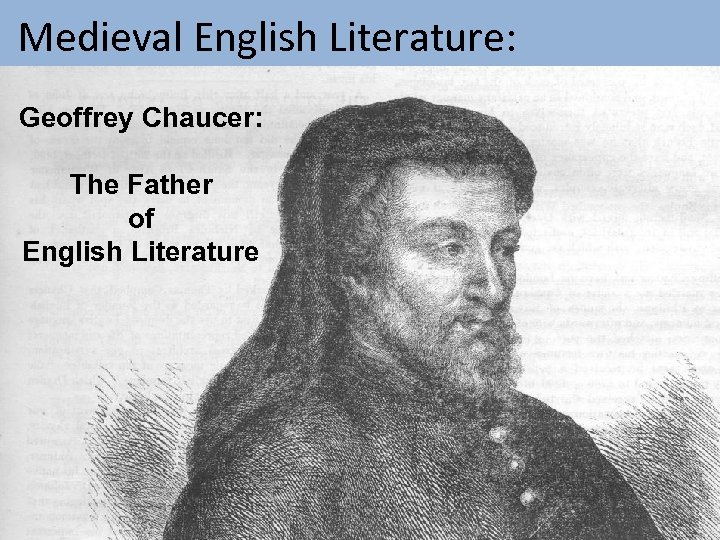 Medieval English Literature: Geoffrey Chaucer: The Father of English Literature
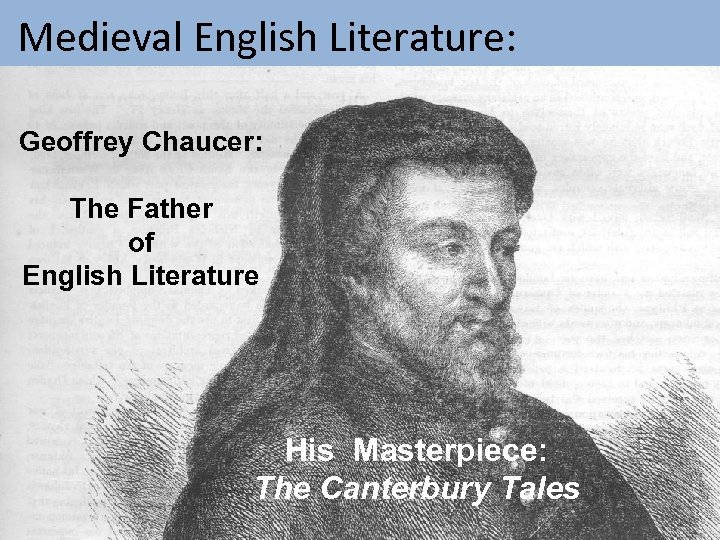 Medieval English Literature: Geoffrey Chaucer: The Father of English Literature His Masterpiece: The Canterbury Tales
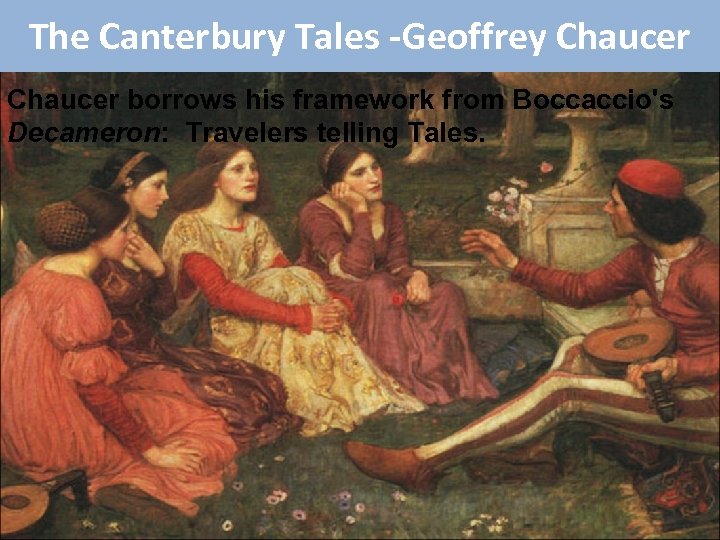 The Canterbury Tales -Geoffrey Chaucer borrows his framework from Boccaccio's Decameron: Travelers telling Tales.
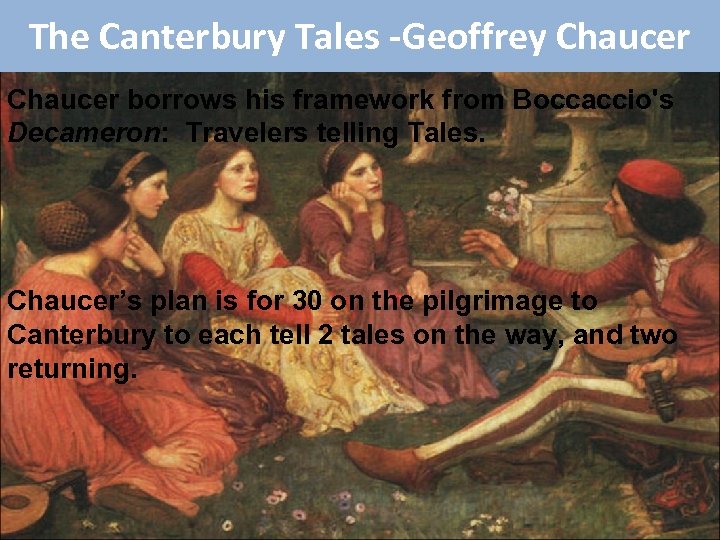 The Canterbury Tales -Geoffrey Chaucer borrows his framework from Boccaccio's Decameron: Travelers telling Tales. Chaucer’s plan is for 30 on the pilgrimage to Canterbury to each tell 2 tales on the way, and two returning.
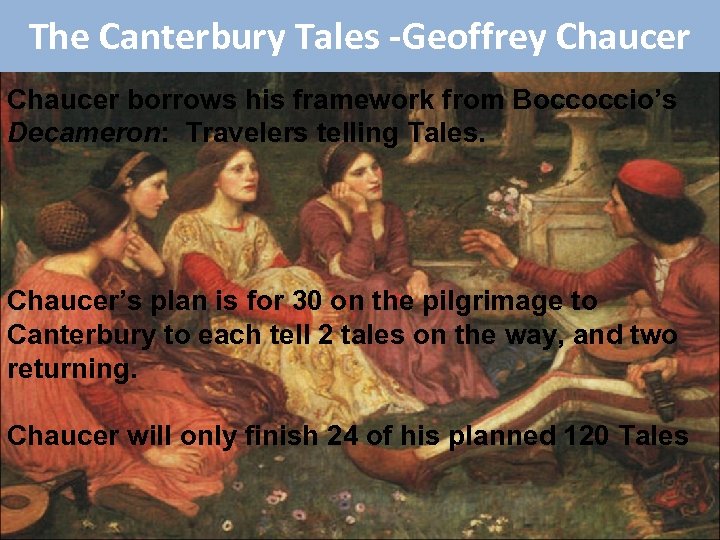 The Canterbury Tales -Geoffrey Chaucer borrows his framework from Boccoccio’s Decameron: Travelers telling Tales. Chaucer’s plan is for 30 on the pilgrimage to Canterbury to each tell 2 tales on the way, and two returning. Chaucer will only finish 24 of his planned 120 Tales
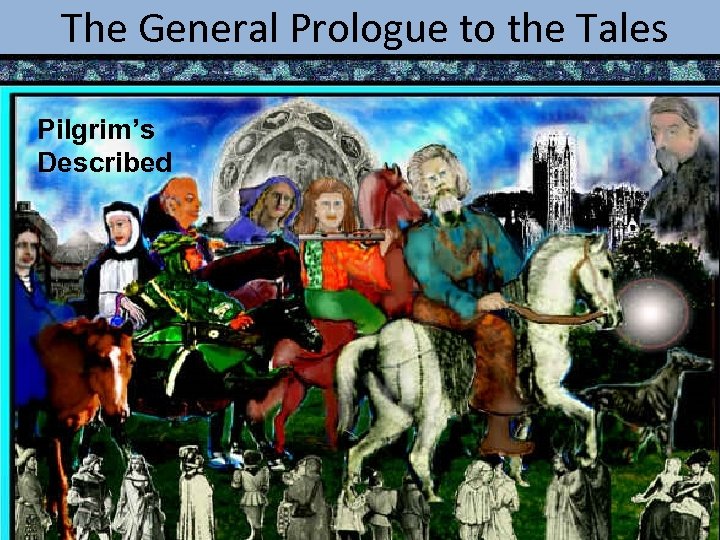 The General Prologue to the Tales Geoffrey Chaucer: Pilgrim’s The Father Described of English Literature
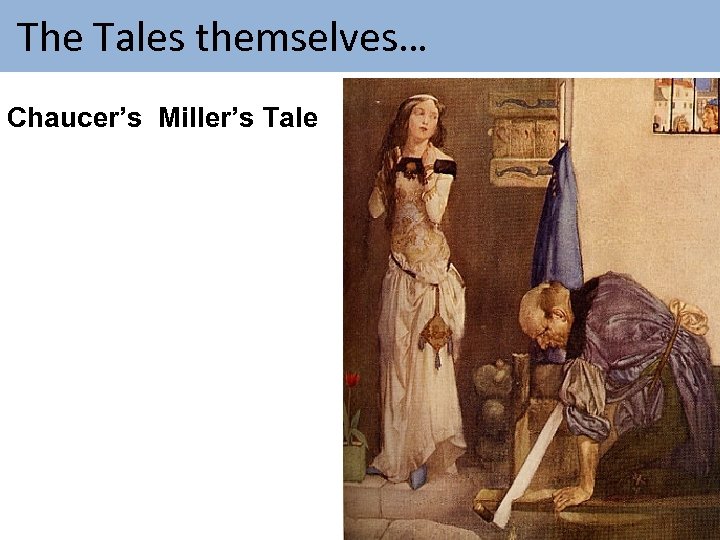 The Tales themselves… Chaucer’s Miller’s Tale
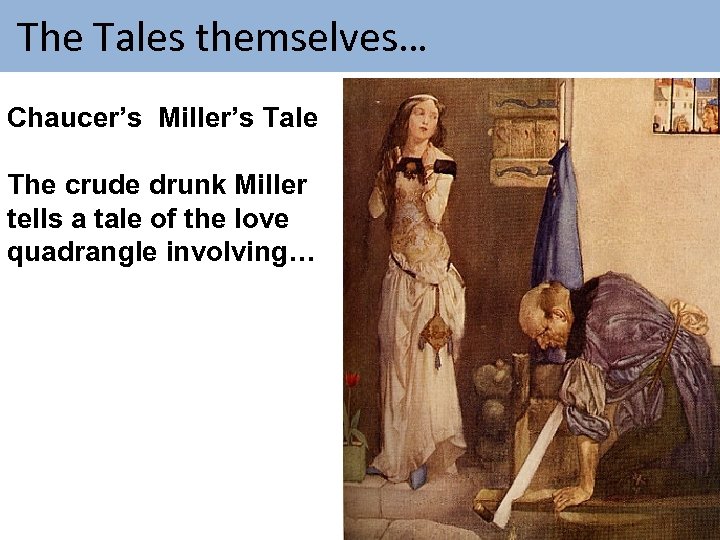 The Tales themselves… Chaucer’s Miller’s Tale The crude drunk Miller tells a tale of the love quadrangle involving…
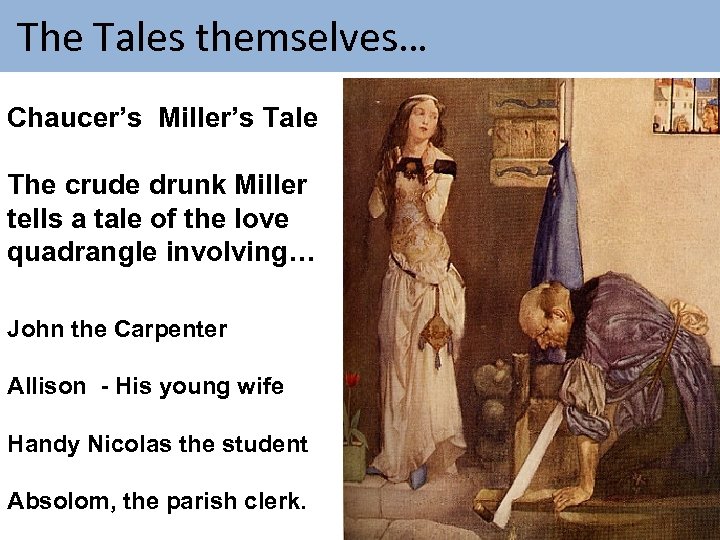 The Tales themselves… Chaucer’s Miller’s Tale The crude drunk Miller tells a tale of the love quadrangle involving… John the Carpenter Allison - His young wife Handy Nicolas the student Absolom, the parish clerk.
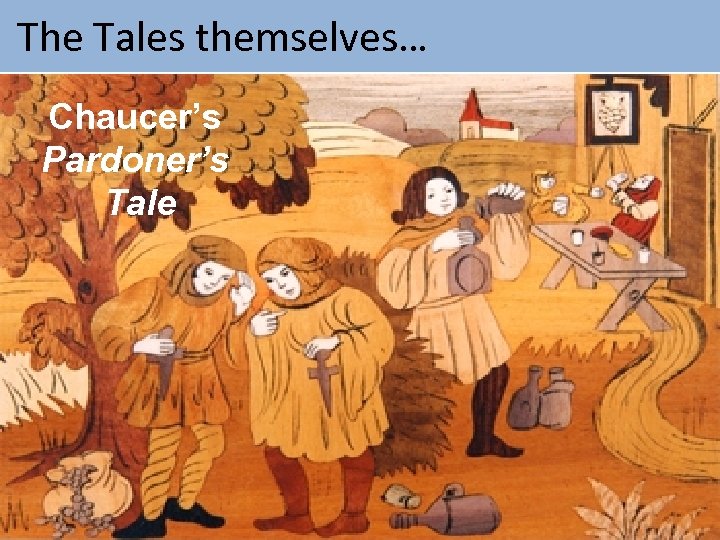 The Tales themselves… Chaucer’s Pardoner’s Tale
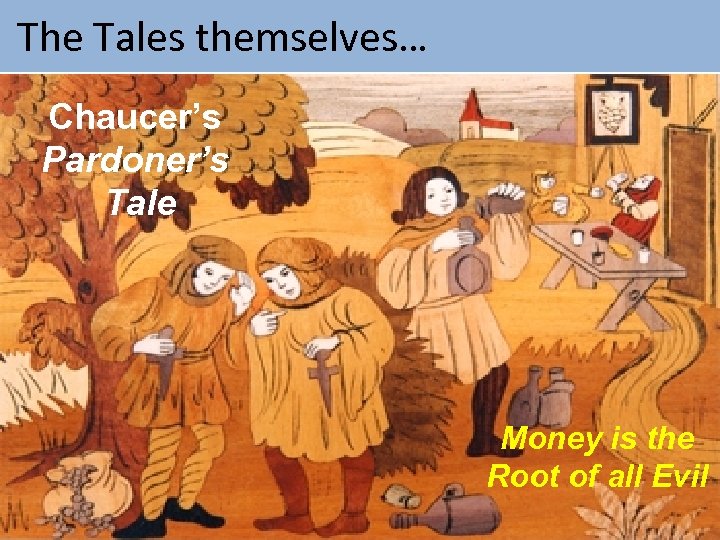 The Tales themselves… Chaucer’s Pardoner’s Tale Money is the Root of all Evil
 Update Guided Notes from your Running Notes
 The Medieval Period… New Topic Evolution of the English Language From Old English to Middle English
 We still need a little chronology of the History of our Language so that our study of Medieval Literature make more sense.
 • 1066 A little past the millennium year of 1000, Anglo-Saxon England is conquered by French speakers from just across the English Channel.
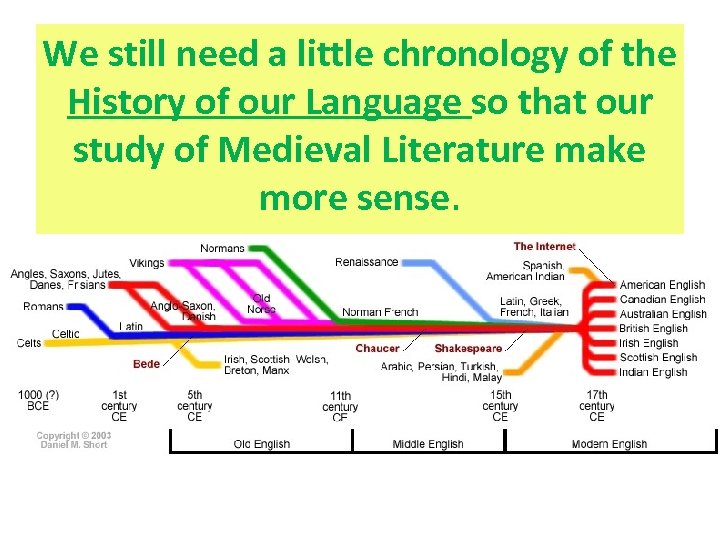
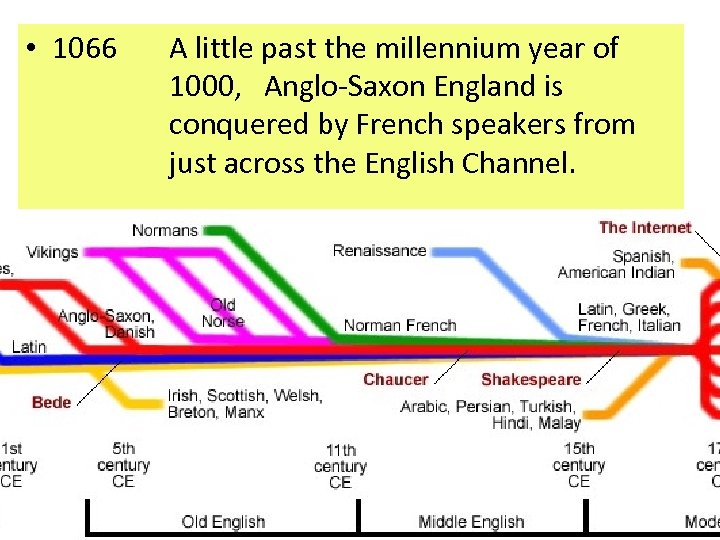
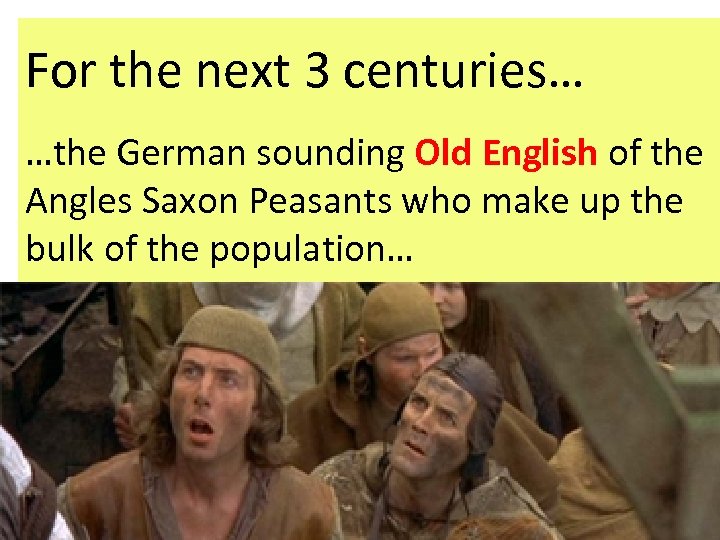 For the next 3 centuries… …the German sounding Old English of the Angles Saxon Peasants who make up the bulk of the population… … will blend with the French of the new Ruling Class.
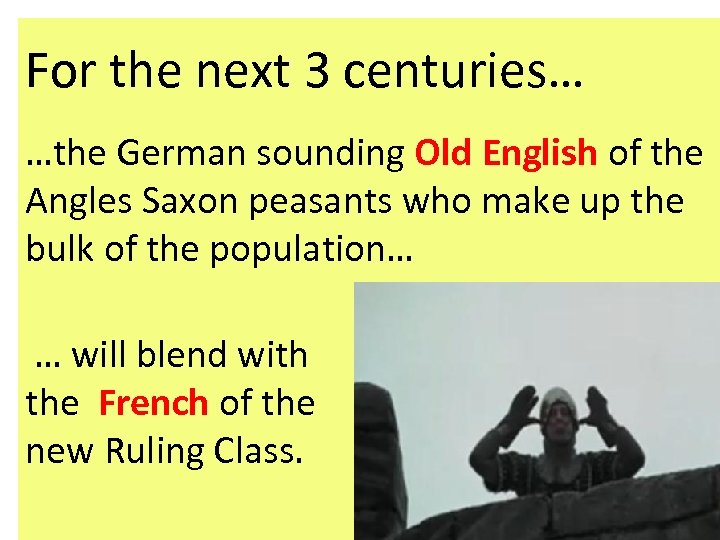 For the next 3 centuries… …the German sounding Old English of the Angles Saxon peasants who make up the bulk of the population… … will blend with the French of the new Ruling Class.
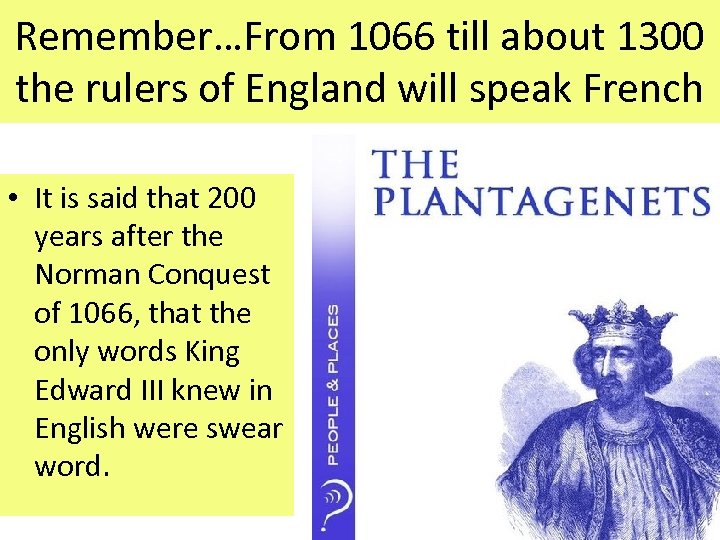 Remember…From 1066 till about 1300 the rulers of England will speak French • It is said that 200 years after the Norman Conquest of 1066, that the only words King Edward III knew in English were swear word.
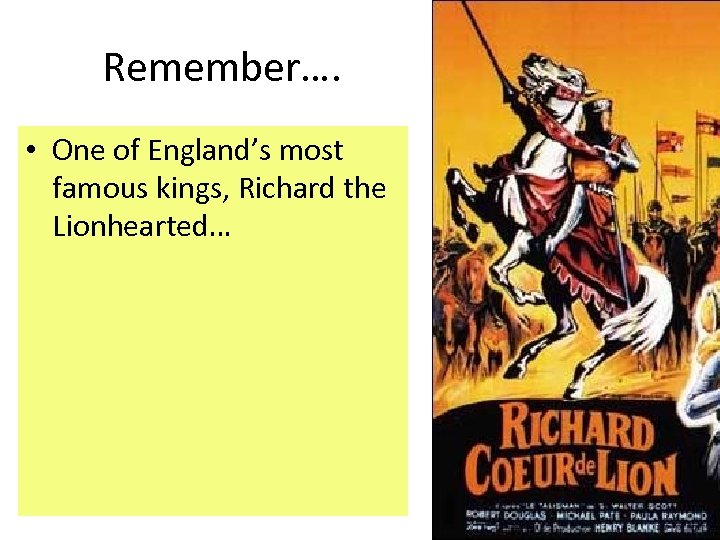 Remember…. • One of England’s most famous kings, Richard the Lionhearted…
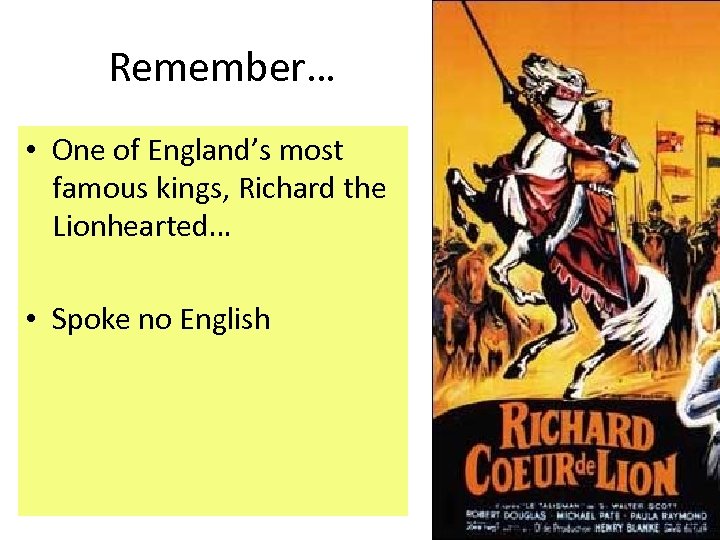 Remember… • One of England’s most famous kings, Richard the Lionhearted… • Spoke no English
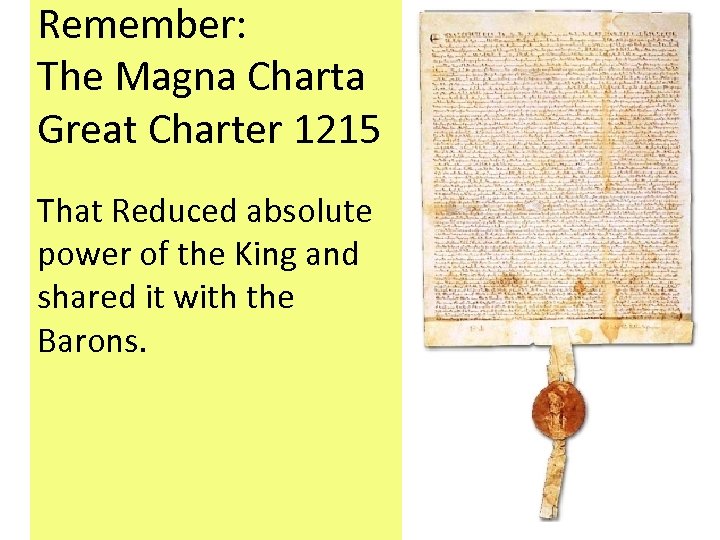 Remember: The Magna Charta Great Charter 1215 That Reduced absolute power of the King and shared it with the Barons.
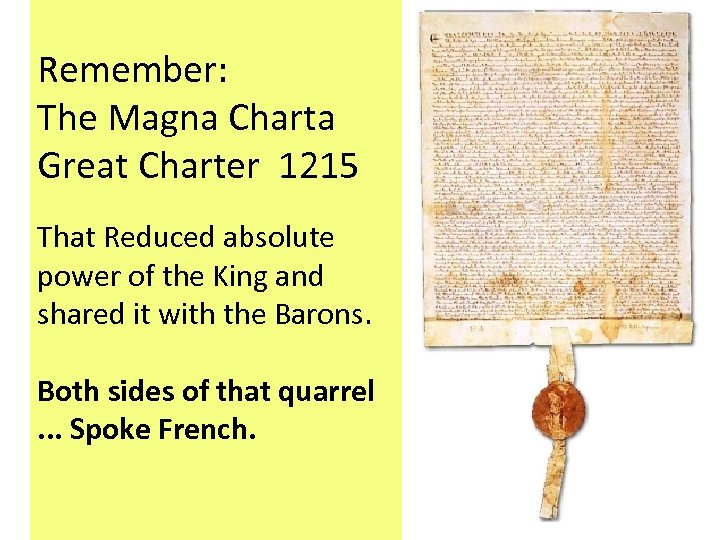 Remember: The Magna Charta Great Charter 1215 That Reduced absolute power of the King and shared it with the Barons. Both sides of that quarrel. . . Spoke French.
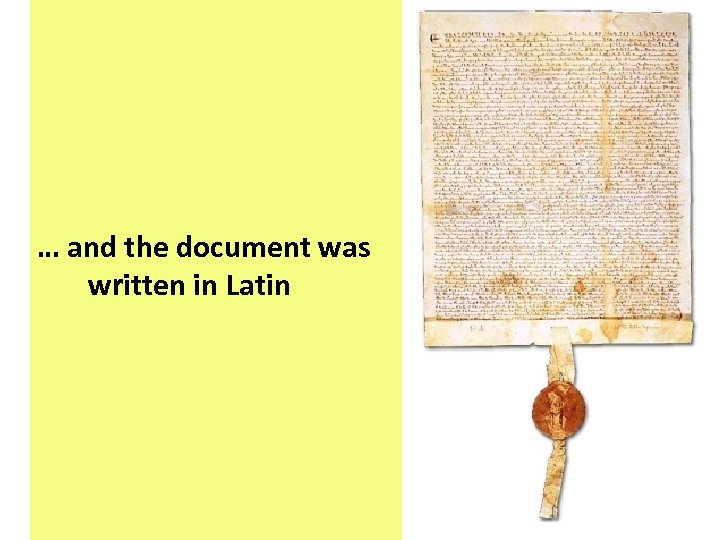 … and the document was written in Latin
 Scholarly & Church matters … all composed in Latin. All Europeans did this
 Government and Legal Matters are still all officially in French at 1300 AD
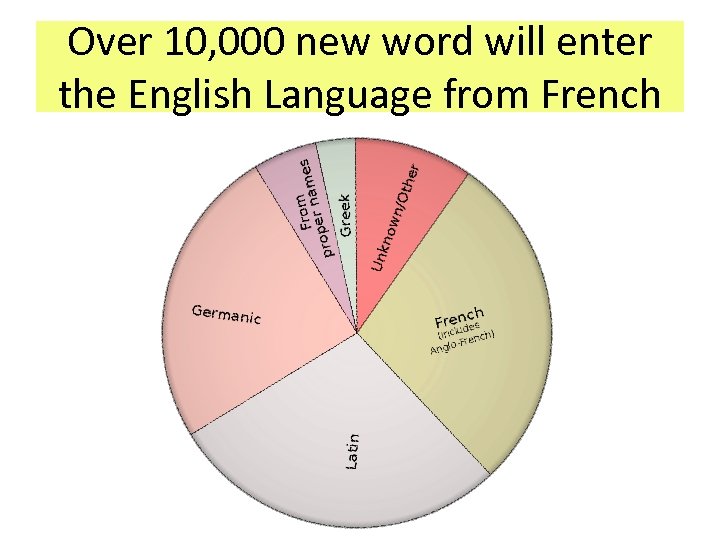 Over 10, 000 new word will enter the English Language from French
 There will also be many Grammar compromises Areas of differences will be simplified
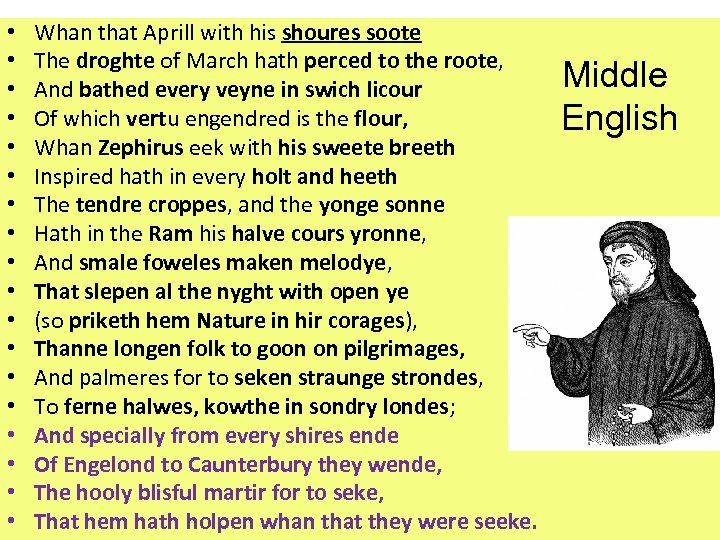
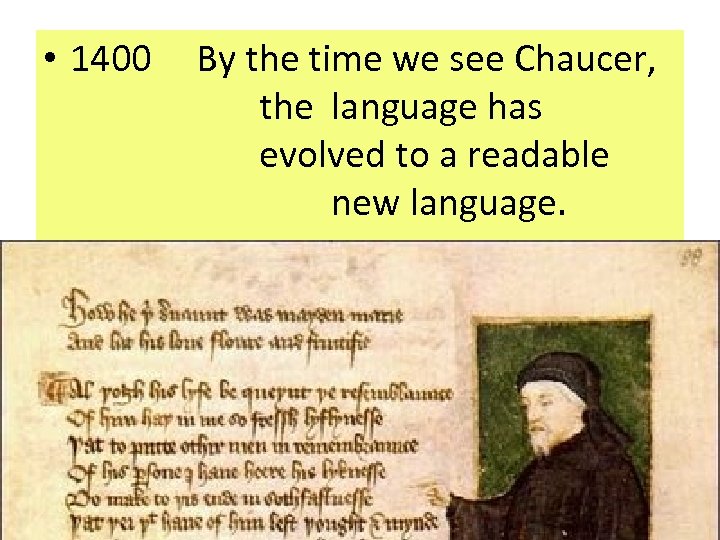 • 1400 By the time we see Chaucer, the language has evolved to a readable new language.
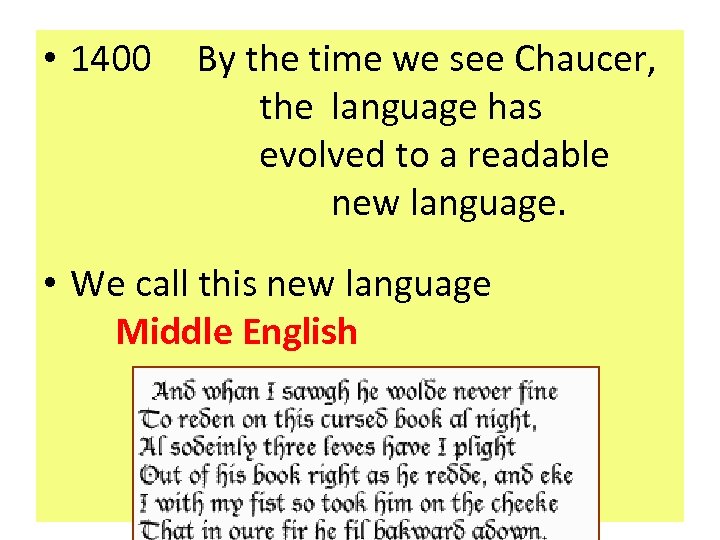 • 1400 By the time we see Chaucer, the language has evolved to a readable new language. • We call this new language Middle English
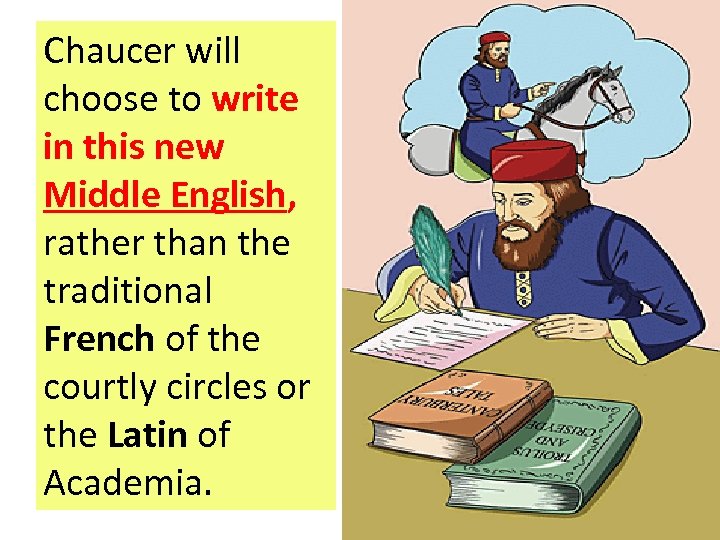 Chaucer will choose to write in this new Middle English, rather than the traditional French of the courtly circles or the Latin of Academia.
 Chaucer will choose to write in this new Middle English, rather than the traditional French of the courtly circles. England other countries of Europe will see a turn as writers begin to write in their own vernacular.
 • • • • • Whan that Aprill with his shoures soote The droghte of March hath perced to the roote, And bathed every veyne in swich licour Of which vertu engendred is the flour, Whan Zephirus eek with his sweete breeth Inspired hath in every holt and heeth The tendre croppes, and the yonge sonne Hath in the Ram his halve cours yronne, And smale foweles maken melodye, That slepen al the nyght with open ye (so priketh hem Nature in hir corages), Thanne longen folk to goon on pilgrimages, And palmeres for to seken straunge strondes, To ferne halwes, kowthe in sondry londes; And specially from every shires ende Of Engelond to Caunterbury they wende, The hooly blisful martir for to seke, That hem hath holpen whan that they were seeke. Middle English
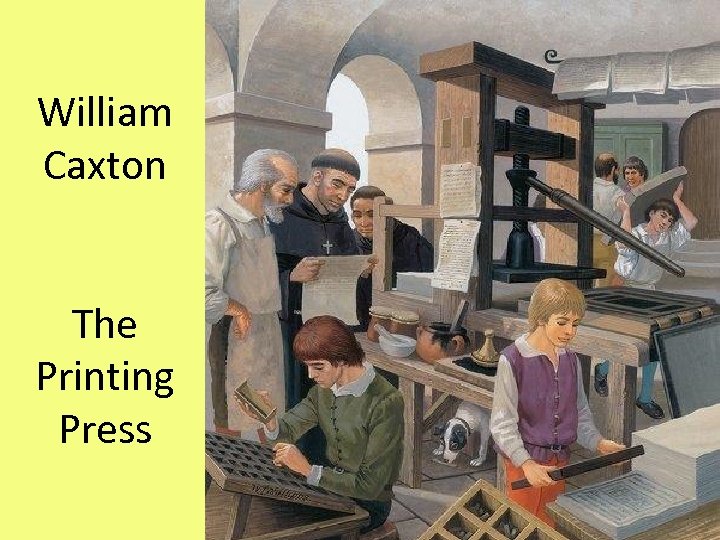 William Caxton The Printing Press
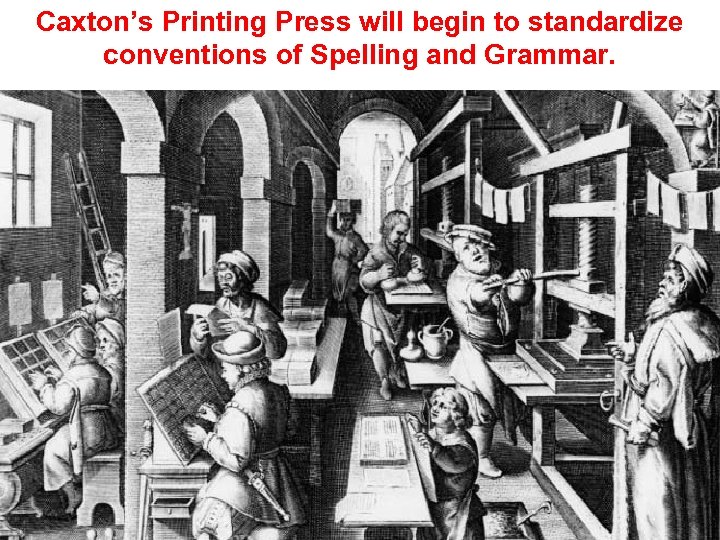 Caxton’s Printing Press will begin to standardize conventions of Spelling and Grammar.
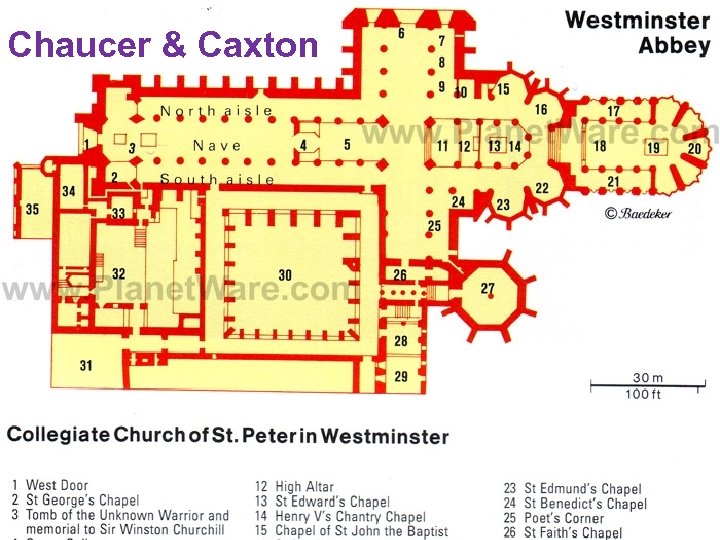 Chaucer & Caxton
 We’re fast approaching Shakespeare and Modern English
 Update Guided Notes from your Running Notes
 The End