


 Скачать презентацию History of Leadership Thought And origins of your
History of Leadership Thought.pptx
- Количество слайдов: 23
 History of Leadership Thought: And origins of your own thoughts? October, 2014 Associate Professor Paul Aitken PSNRU - Faculty of Philosophy and Sociology
 The Human Touch • ‘Historical perspective argues the problems central to effective leadership; motivation, inspiration, sensitivity and communication • have changed little in 3000 years. • focus on the human side is important’ (Clemens and Mayer, 1999) ©Mastering Leadership Agility Ltd. ® All Rights reserved evaluate · facilitate · educate
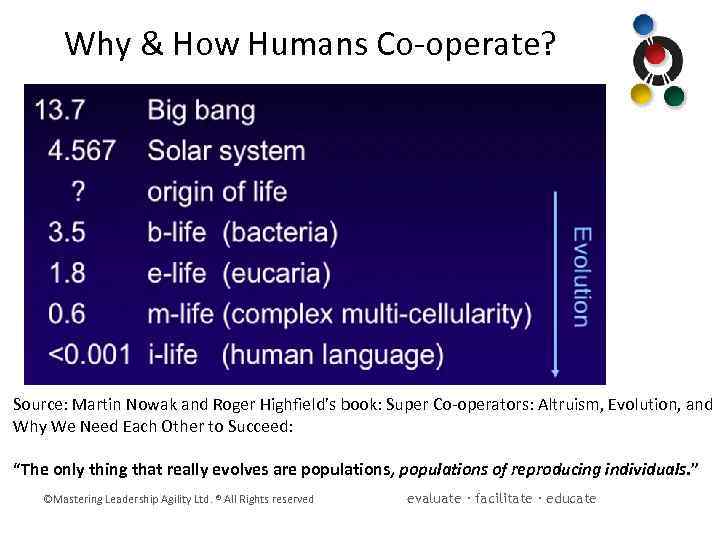 Why & How Humans Co-operate? Source: Martin Nowak and Roger Highfield’s book: Super Co-operators: Altruism, Evolution, and Why We Need Each Other to Succeed: “The only thing that really evolves are populations, populations of reproducing individuals. ” ©Mastering Leadership Agility Ltd. ® All Rights reserved evaluate · facilitate · educate
 The ‘Ascent of Man’ – Jacob Bronowski • Lower than the Angels: Evolution of man from proto-ape to the modern form 400, 000 years ago. • The Harvest of the Seasons: early human migration, agriculture and the first settlements, and war. • The Grain in the Stone: Tools, and the development of architecture and sculpture. • The Hidden Structure: Fire, metals and alchemy. • Music of the Spheres: The language of numbers and mathematics. • The Starry Messenger: Galileo's universe and the implications of his trial on the shift to "northern" science. • The Majestic Clockwork: Explores Newton and Einstein's laws. • The Drive for Power: the Industrial Revolution and the (continuing) effect on everyday life. ©Mastering Leadership Agility Ltd. ® All Rights reserved evaluate · facilitate · educate
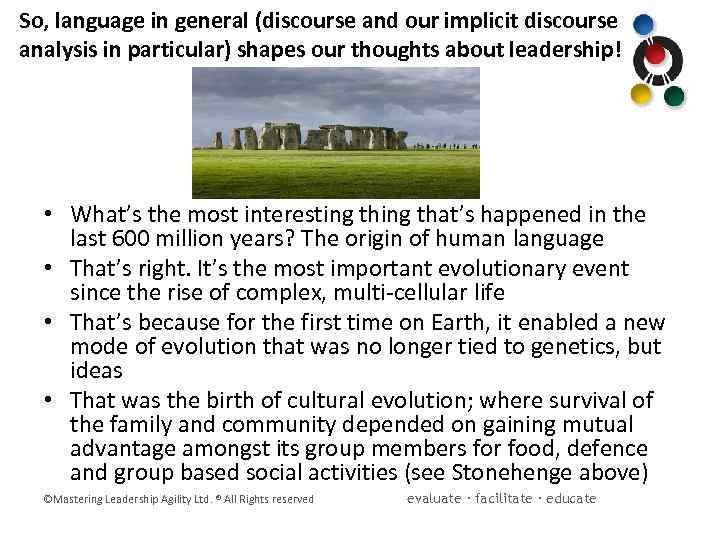 So, language in general (discourse and our implicit discourse analysis in particular) shapes our thoughts about leadership! • What’s the most interesting that’s happened in the last 600 million years? The origin of human language • That’s right. It’s the most important evolutionary event since the rise of complex, multi-cellular life • That’s because for the first time on Earth, it enabled a new mode of evolution that was no longer tied to genetics, but ideas • That was the birth of cultural evolution; where survival of the family and community depended on gaining mutual advantage amongst its group members for food, defence and group based social activities (see Stonehenge above) ©Mastering Leadership Agility Ltd. ® All Rights reserved evaluate · facilitate · educate
 Discourse & Social Construction of Reality HOWEVER, “In all my subsequent work on the evolution of cooperation, it’s the same story. Cooperation is never here to stay. Cooperation is there for some time. Then the system breaks down and you have to rebuild it. ” (Nowak) • The sociologist Keller developed his widely recognised 'Sociology of Knowledge Approach to Discourse’ (SKAD) • Following Berger & Luckmann, Keller argues our sense of reality in everyday life and the meaning of every objects, actions and events (such as LEADERSHIP) are the product of a permanent, routinised interaction • SKAD has been developed as a scientific perspective enabling understand of the processes within 'The Social Construction of Reality' from all aspects of social life; by combining Foucault's theories of discourse and power, with Berger/Luckmann’s theory of knowledge. ©Mastering Leadership Agility Ltd. ® All Rights reserved evaluate · facilitate · educate
 Arriving at our own Meaning of Leadership? Shaped by the stories we still hear about, or are told about, from the lives of (mainly male): • philosophers • military heroes • national or community heroes • high profile industrialists • religious/spiritual sages And, most recently, contemporary business MEDIA messages (mainly from stock market quoted) descriptions of; what successful leadership looks like and is measured by? ©Mastering Leadership Agility Ltd. ® All Rights reserved evaluate · facilitate · educate
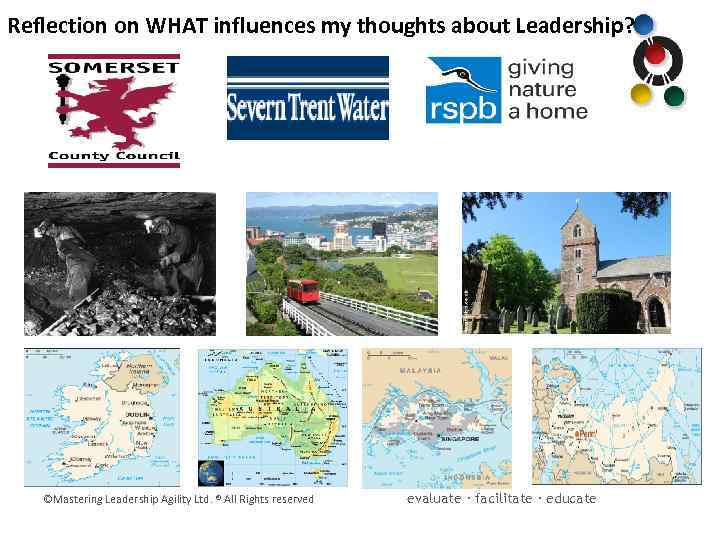 Reflection on WHAT influences my thoughts about Leadership? ©Mastering Leadership Agility Ltd. ® All Rights reserved evaluate · facilitate · educate
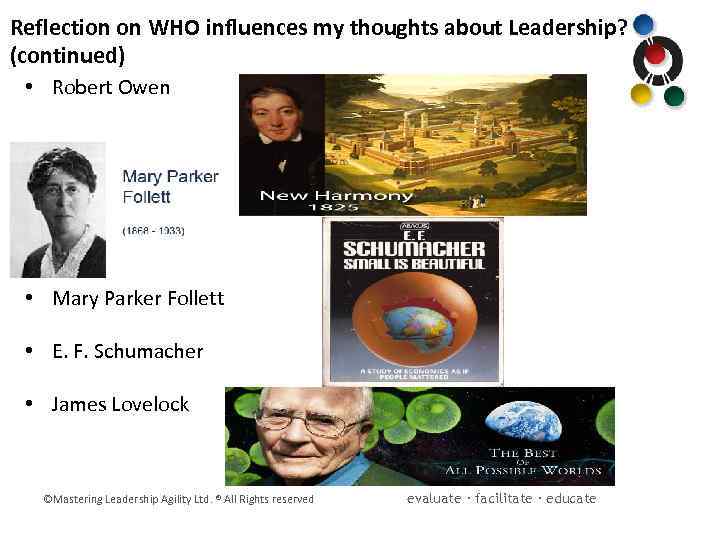 Reflection on WHO influences my thoughts about Leadership? (continued) • Robert Owen • Mary Parker Follett • E. F. Schumacher • James Lovelock ©Mastering Leadership Agility Ltd. ® All Rights reserved evaluate · facilitate · educate
 “Values are a silent power for understanding interpersonal and organisational life. Because they are at the core of people’s personality, values influence the choices they make, people they trust, the appeals they respond to, and the way they invest their time and energy. In turbulent times values give a sense of direction amid conflicting views and demands”. Posner and Schmidt (1994) ©Mastering Leadership Agility Ltd. ® All Rights reserved evaluate · facilitate · educate
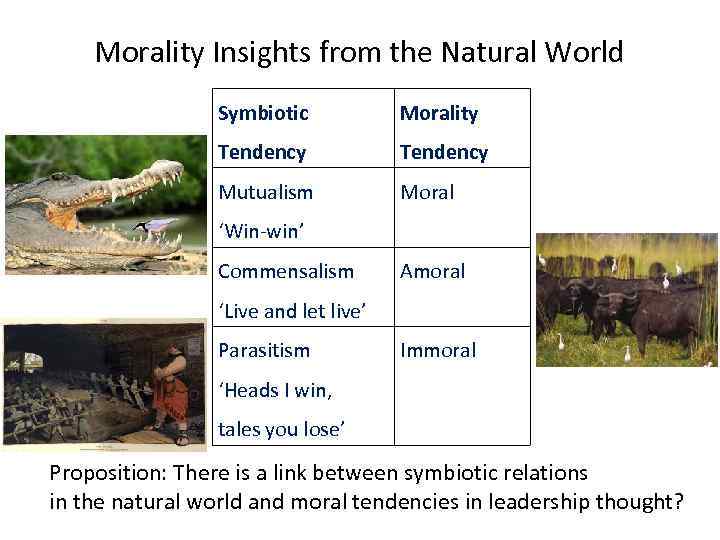 Morality Insights from the Natural World Symbiotic Morality Tendency Mutualism Moral ‘Win-win’ Commensalism Amoral ‘Live and let live’ Parasitism Immoral ‘Heads I win, tales you lose’ Proposition: There is a link between symbiotic relations in the natural world and moral tendencies in leadership thought?
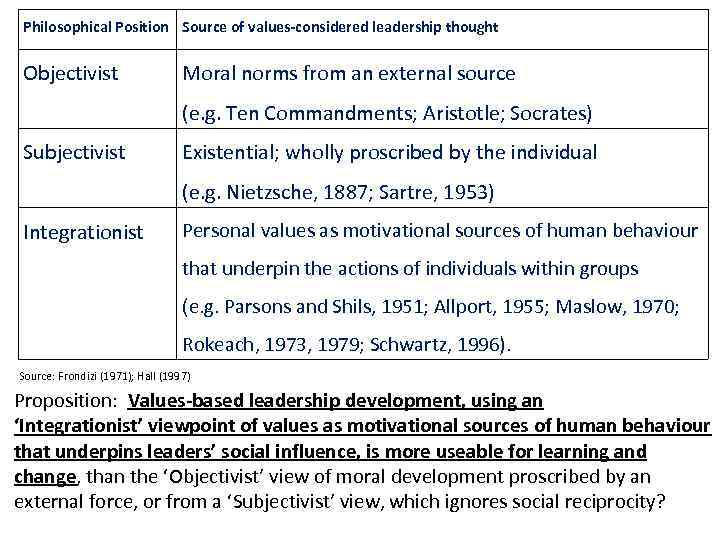 Philosophical Position Source of values-considered leadership thought Objectivist Moral norms from an external source (e. g. Ten Commandments; Aristotle; Socrates) Subjectivist Existential; wholly proscribed by the individual (e. g. Nietzsche, 1887; Sartre, 1953) Integrationist Personal values as motivational sources of human behaviour that underpin the actions of individuals within groups (e. g. Parsons and Shils, 1951; Allport, 1955; Maslow, 1970; Rokeach, 1973, 1979; Schwartz, 1996). Source: Frondizi (1971); Hall (1997) Proposition: Values-based leadership development, using an ‘Integrationist’ viewpoint of values as motivational sources of human behaviour that underpins leaders’ social influence, is more useable for learning and change, than the ‘Objectivist’ view of moral development proscribed by an external force, or from a ‘Subjectivist’ view, which ignores social reciprocity?
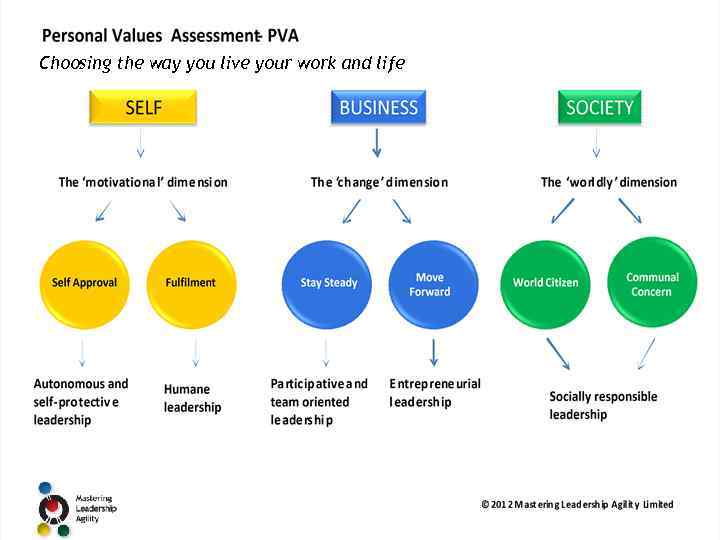 Choosing the way you live your work and life
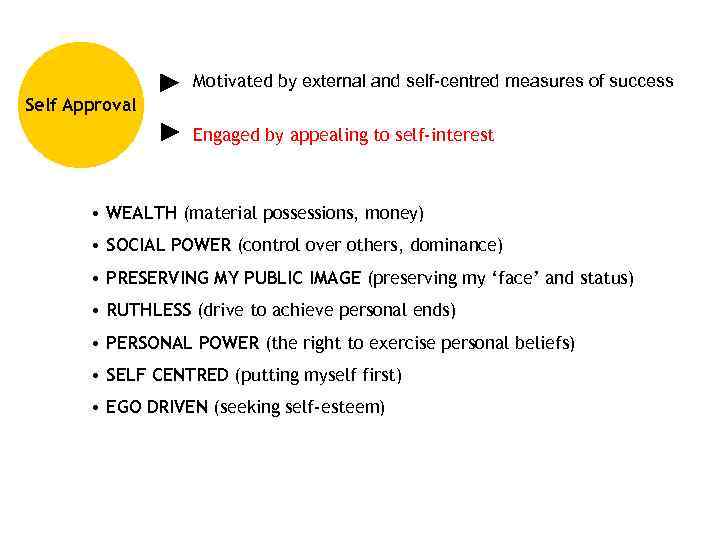 Motivated by external and self-centred measures of success Self Approval Engaged by appealing to self-interest • WEALTH (material possessions, money) • SOCIAL POWER (control over others, dominance) • PRESERVING MY PUBLIC IMAGE (preserving my ‘face’ and status) • RUTHLESS (drive to achieve personal ends) • PERSONAL POWER (the right to exercise personal beliefs) • SELF CENTRED (putting myself first) • EGO DRIVEN (seeking self-esteem)
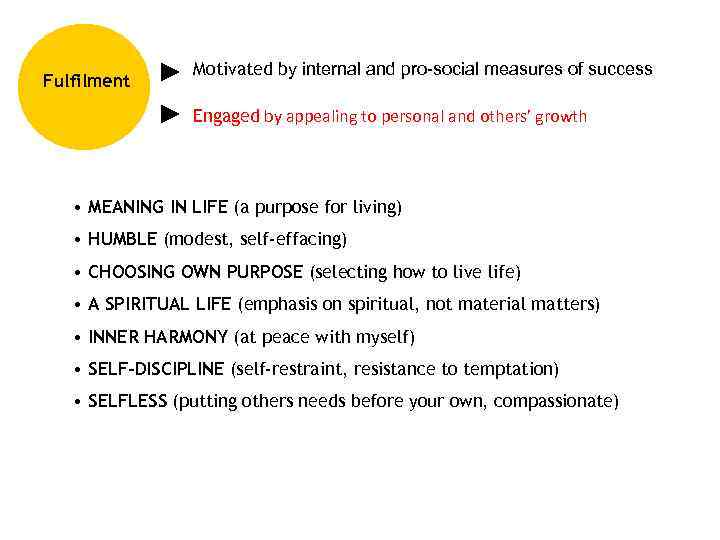 Fulfilment Motivated by internal and pro-social measures of success Engaged by appealing to personal and others’ growth • MEANING IN LIFE (a purpose for living) • HUMBLE (modest, self-effacing) • CHOOSING OWN PURPOSE (selecting how to live life) • A SPIRITUAL LIFE (emphasis on spiritual, not material matters) • INNER HARMONY (at peace with myself) • SELF-DISCIPLINE (self-restraint, resistance to temptation) • SELFLESS (putting others needs before your own, compassionate)
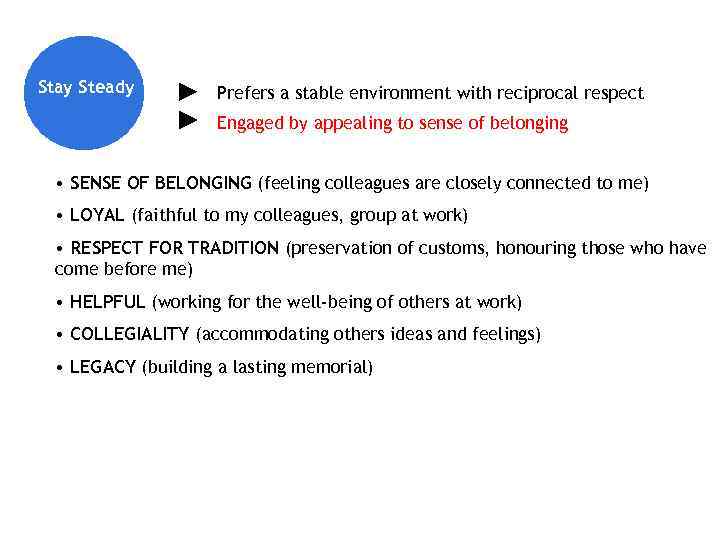 Stay Steady Prefers a stable environment with reciprocal respect Engaged by appealing to sense of belonging • SENSE OF BELONGING (feeling colleagues are closely connected to me) • LOYAL (faithful to my colleagues, group at work) • RESPECT FOR TRADITION (preservation of customs, honouring those who have come before me) • HELPFUL (working for the well-being of others at work) • COLLEGIALITY (accommodating others ideas and feelings) • LEGACY (building a lasting memorial)
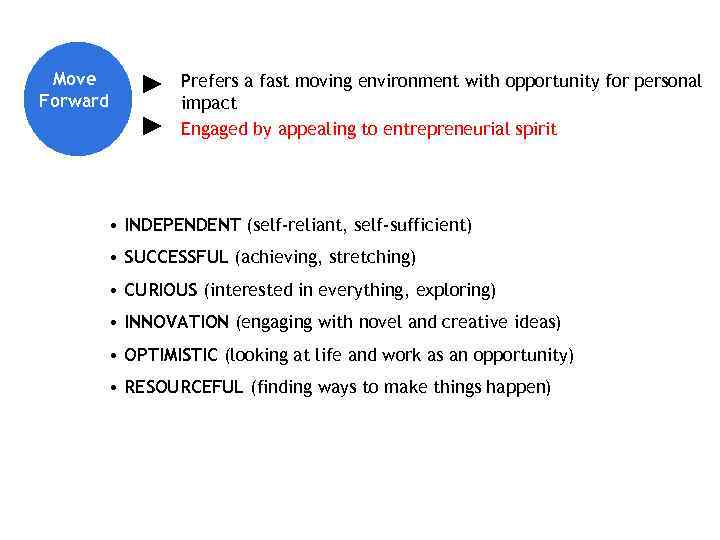 Move Forward Prefers a fast moving environment with opportunity for personal impact Engaged by appealing to entrepreneurial spirit • INDEPENDENT (self-reliant, self-sufficient) • SUCCESSFUL (achieving, stretching) • CURIOUS (interested in everything, exploring) • INNOVATION (engaging with novel and creative ideas) • OPTIMISTIC (looking at life and work as an opportunity) • RESOURCEFUL (finding ways to make things happen)
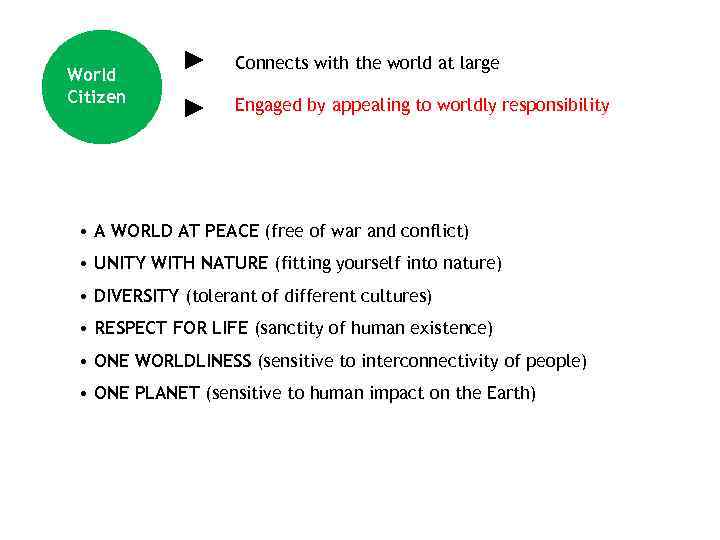 World Citizen Connects with the world at large Engaged by appealing to worldly responsibility • A WORLD AT PEACE (free of war and conflict) • UNITY WITH NATURE (fitting yourself into nature) • DIVERSITY (tolerant of different cultures) • RESPECT FOR LIFE (sanctity of human existence) • ONE WORLDLINESS (sensitive to interconnectivity of people) • ONE PLANET (sensitive to human impact on the Earth)
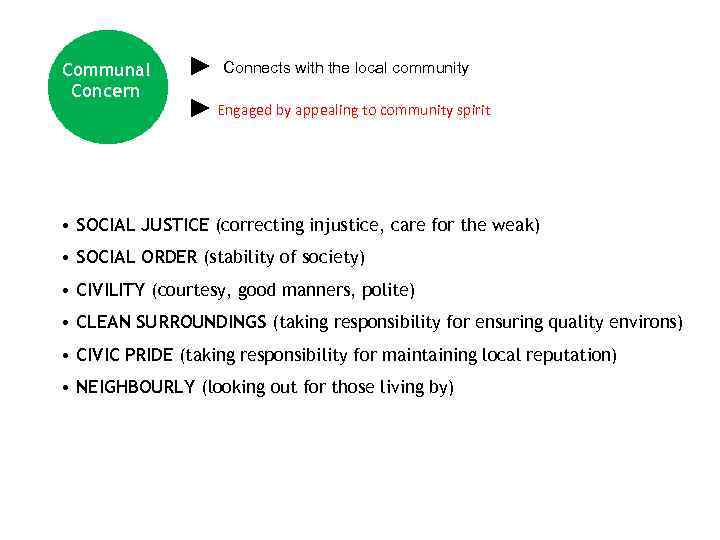 Communal Concern Connects with the local community Engaged by appealing to community spirit • SOCIAL JUSTICE (correcting injustice, care for the weak) • SOCIAL ORDER (stability of society) • CIVILITY (courtesy, good manners, polite) • CLEAN SURROUNDINGS (taking responsibility for ensuring quality environs) • CIVIC PRIDE (taking responsibility for maintaining local reputation) • NEIGHBOURLY (looking out for those living by)
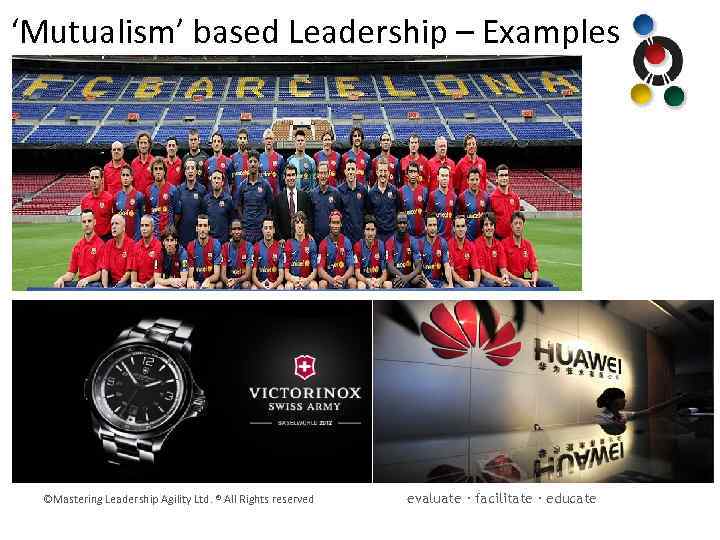 ‘Mutualism’ based Leadership – Examples ©Mastering Leadership Agility Ltd. ® All Rights reserved evaluate · facilitate · educate
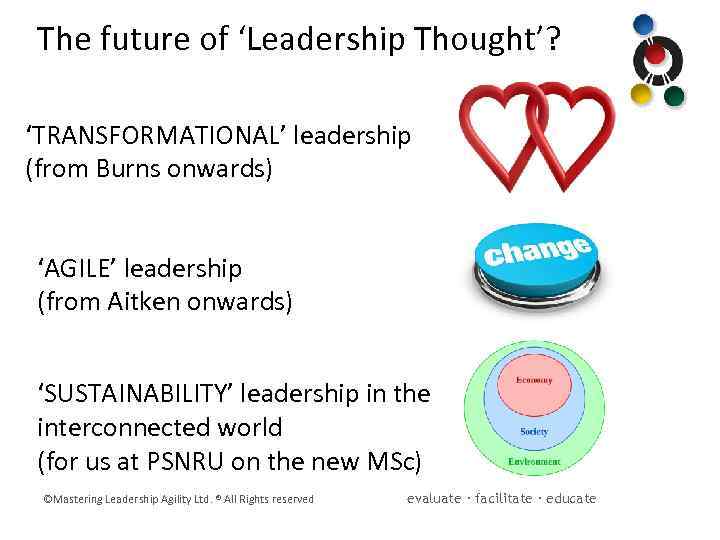 The future of ‘Leadership Thought’? ‘TRANSFORMATIONAL’ leadership (from Burns onwards) ‘AGILE’ leadership (from Aitken onwards) ‘SUSTAINABILITY’ leadership in the interconnected world (for us at PSNRU on the new MSc) ©Mastering Leadership Agility Ltd. ® All Rights reserved evaluate · facilitate · educate
 The Role of Education and Knowledge Generation-Exchange in Developing ‘Leadership for the Interconnected World’ • Critical Thinking (beyond the dominant 1980’s Business School’s ‘economic man’ view) • Multi-Disciplinary Thinking (history, philosophy, psychology, sociology, economics, ecology; we’ve forgotten how ideas join up in the study of human nature within the natural world) • Multi-Cultural Thinking (our discourse is already shaped by the media, our local context and ‘indirect’ world view) • Systems Thinking (all living things are connected and need to support each other, for both sustainable enterprise and life in general) • Values Thinking (understanding our unconscious drivers and prejudices, which influence our thoughts about leadership) • Reflective Thinking (about all of the above, and on the potential impacts of our leadership decisions and actions on all living matter, including us) ©Mastering Leadership Agility Ltd. ® All Rights reserved evaluate · facilitate · educate
 Any questions pazhalsta? ©Mastering Leadership Agility Ltd. ® All Rights reserved evaluate · facilitate · educate