 Скачать презентацию HISTORY OF GREAT BRITAIN Zotov A Narkhov I
History of Great Britain.ppt
- Количество слайдов: 9



HISTORY OF GREAT BRITAIN Zotov A. Narkhov I. Form 10”A”
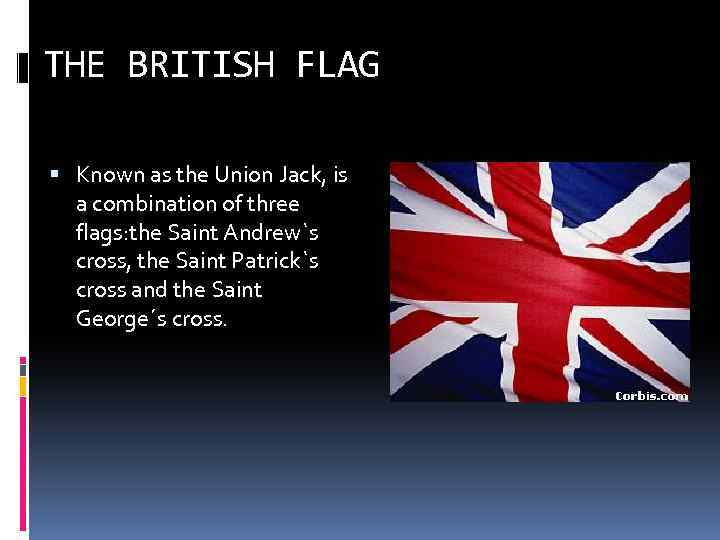
THE BRITISH FLAG Known as the Union Jack, is a combination of three flags: the Saint Andrew`s cross, the Saint Patrick`s cross and the Saint George´s cross.
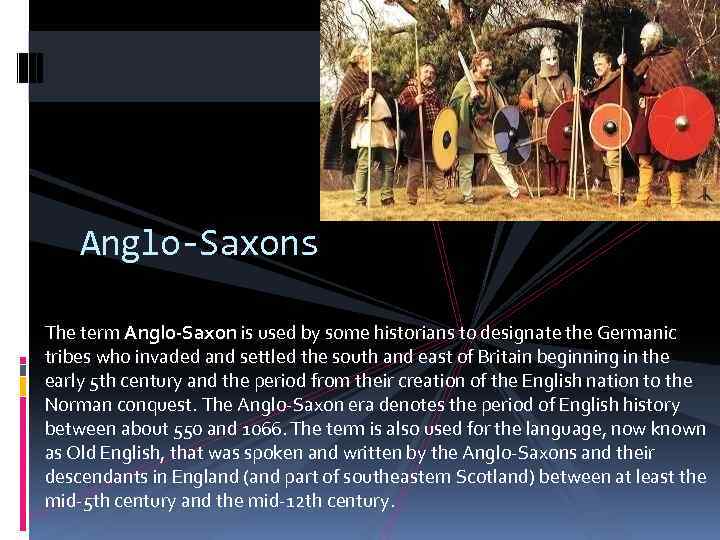
Anglo-Saxons The term Anglo-Saxon is used by some historians to designate the Germanic tribes who invaded and settled the south and east of Britain beginning in the early 5 th century and the period from their creation of the English nation to the Norman conquest. The Anglo-Saxon era denotes the period of English history between about 550 and 1066. The term is also used for the language, now known as Old English, that was spoken and written by the Anglo-Saxons and their descendants in England (and part of southeastern Scotland) between at least the mid-5 th century and the mid-12 th century.
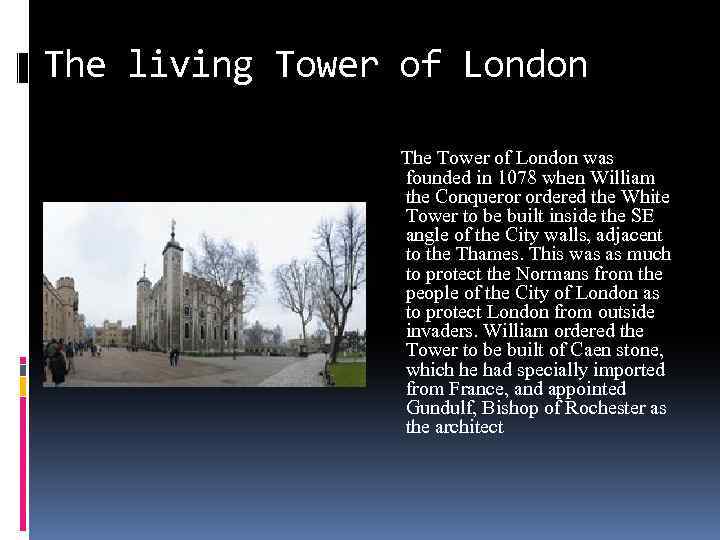
The living Tower of London The Tower of London was founded in 1078 when William the Conqueror ordered the White Tower to be built inside the SE angle of the City walls, adjacent to the Thames. This was as much to protect the Normans from the people of the City of London as to protect London from outside invaders. William ordered the Tower to be built of Caen stone, which he had specially imported from France, and appointed Gundulf, Bishop of Rochester as the architect
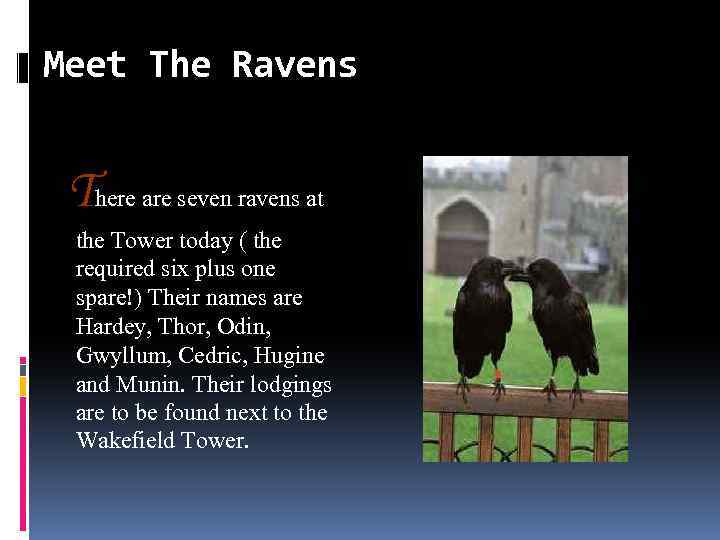
Meet The Ravens There are seven ravens at the Tower today ( the required six plus one spare!) Their names are Hardey, Thor, Odin, Gwyllum, Cedric, Hugine and Munin. Their lodgings are to be found next to the Wakefield Tower.
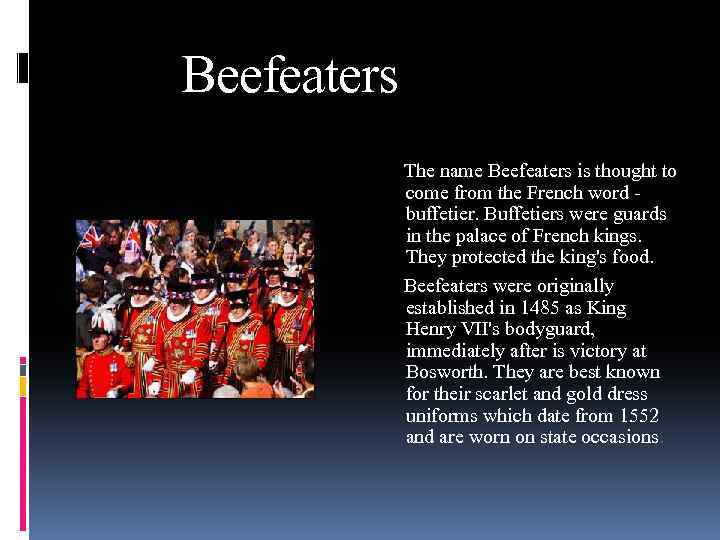
Beefeaters The name Beefeaters is thought to come from the French word buffetier. Buffetiers were guards in the palace of French kings. They protected the king's food. Beefeaters were originally established in 1485 as King Henry VII's bodyguard, immediately after is victory at Bosworth. They are best known for their scarlet and gold dress uniforms which date from 1552 and are worn on state occasions.
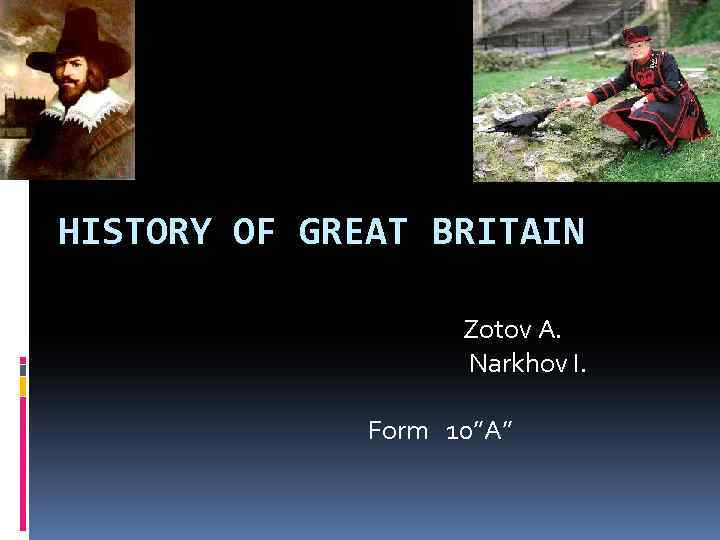
Gunpowder plot, November 5 th, T 1605 he object of The Gunpowder Plot was to blow up English Parliament along with the ruling monarch, King James I. It was hoped that such a disaster would initiate a great uprising of English Catholics, who were distressed by the increased severity of penal laws against the practice of their religion.
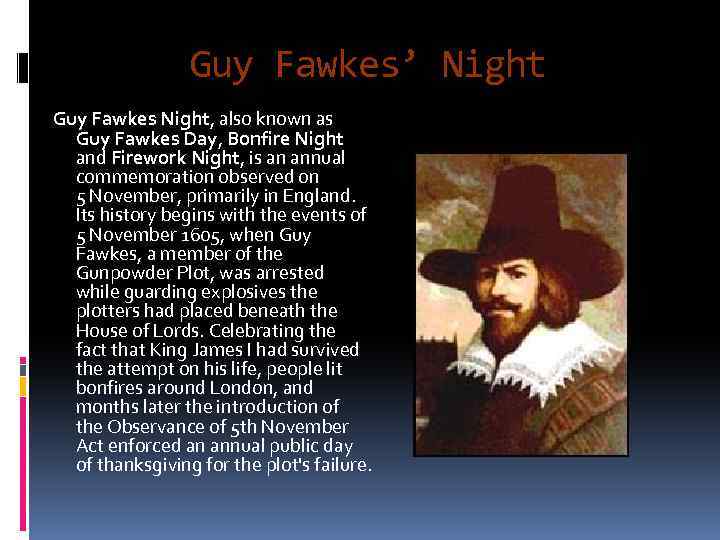
Guy Fawkes’ Night Guy Fawkes Night, also known as Guy Fawkes Day, Bonfire Night and Firework Night, is an annual commemoration observed on 5 November, primarily in England. Its history begins with the events of 5 November 1605, when Guy Fawkes, a member of the Gunpowder Plot, was arrested while guarding explosives the plotters had placed beneath the House of Lords. Celebrating the fact that King James I had survived the attempt on his life, people lit bonfires around London, and months later the introduction of the Observance of 5 th November Act enforced an annual public day of thanksgiving for the plot's failure.

Thanks for being patient and attentive
Скачать презентацию HISTORY OF GREAT BRITAIN Zotov A Narkhov I
History of Great Britain.ppt