 Скачать презентацию History of American Agriculture Objectives Students will
2f56d5e752c745944eab5af2b8e3c564.ppt
- Количество слайдов: 35



History of American Agriculture
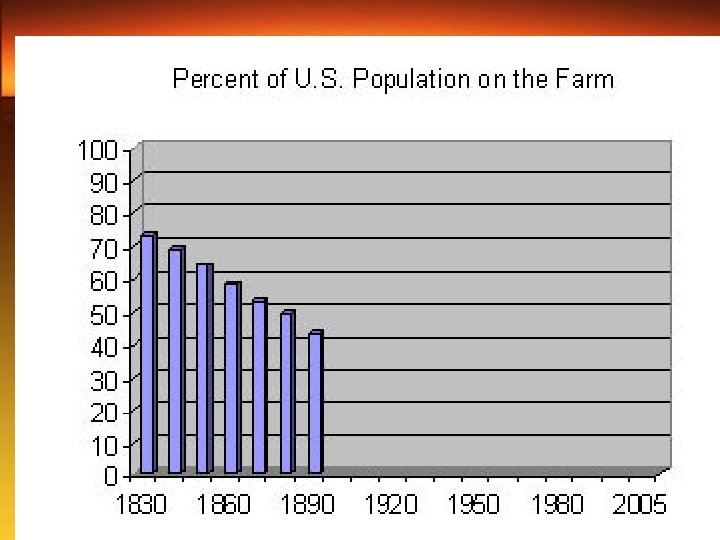
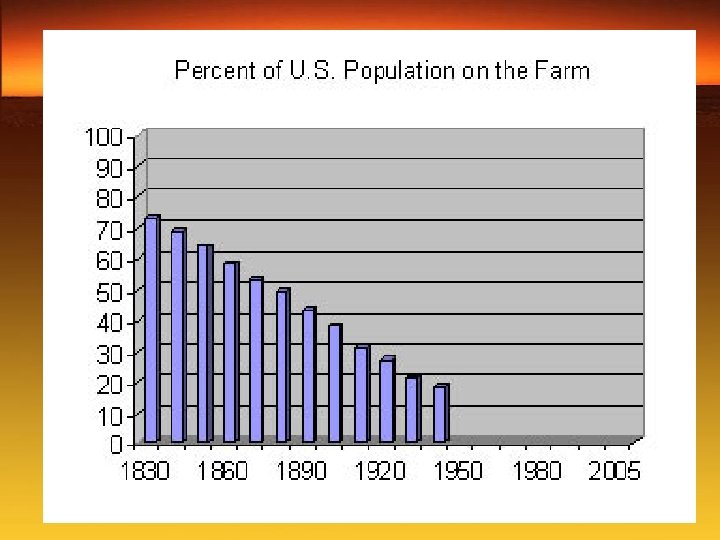
Objectives Students will be able to: • Outline the food-dollar spending patterns of Americans. • Explain historical achievements of agriculturists. • Identify key people in Agriculture’s history. • Describe the percentages of the U. S. population that live on the farm. • Identify key elements of futuristic agriculture.

“I believe in the future of agriculture…. . ” Source: FFA Creed
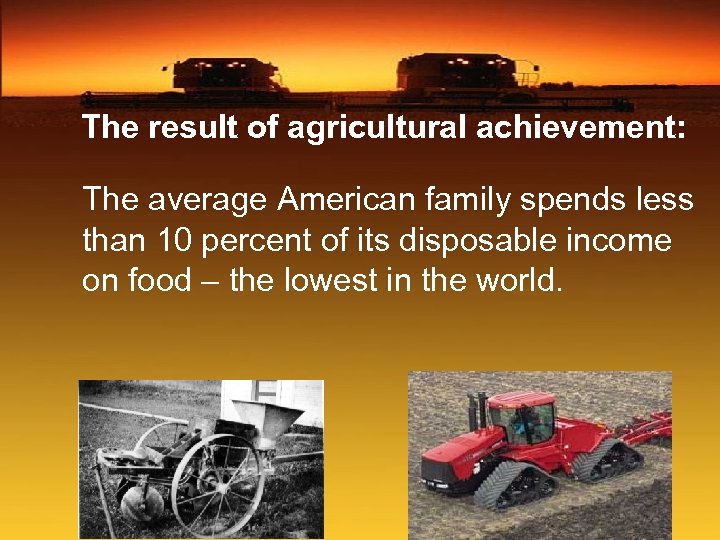
The result of agricultural achievement: The average American family spends less than 10 percent of its disposable income on food – the lowest in the world.
Historical achievements of “progressive agriculturists” • Mechanical inventions • Scientific discoveries • Educational improvements • Wise governance
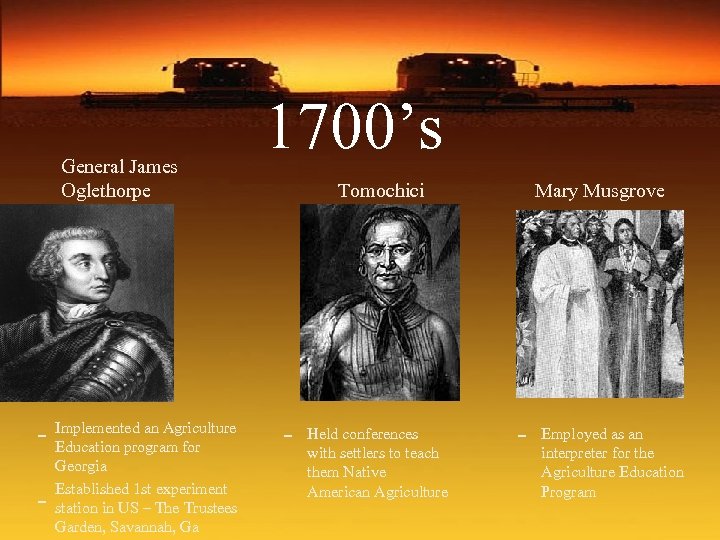
General James Oglethorpe - Implemented an Agriculture Education program for - Georgia Established 1 st experiment station in US – The Trustees Garden, Savannah, Ga 1700’s Tomochici - Held conferences with settlers to teach them Native American Agriculture Mary Musgrove - Employed as an interpreter for the Agriculture Education Program
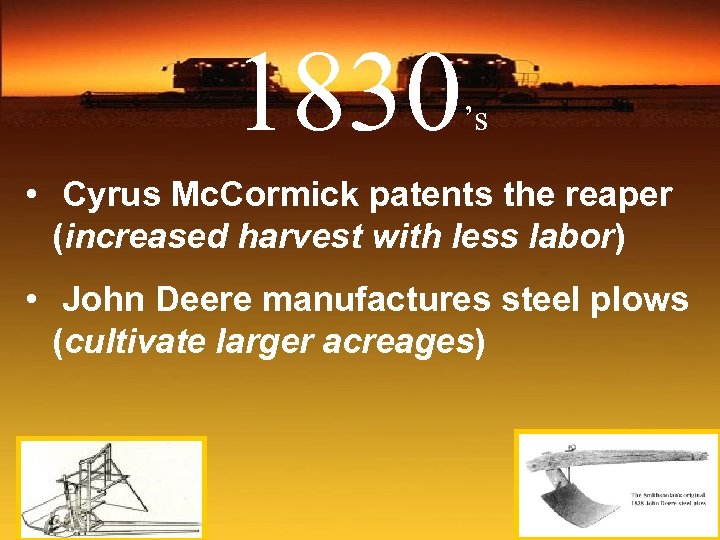
1830 ’s • Cyrus Mc. Cormick patents the reaper (increased harvest with less labor) • John Deere manufactures steel plows (cultivate larger acreages)
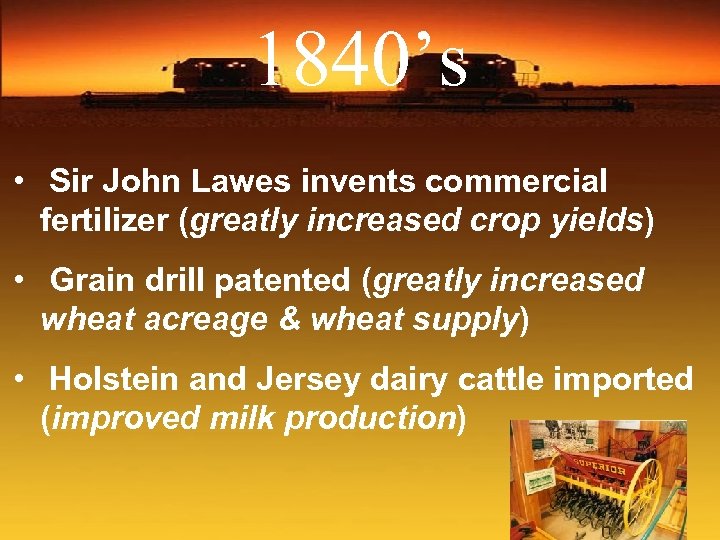
1840’s • Sir John Lawes invents commercial fertilizer (greatly increased crop yields) • Grain drill patented (greatly increased wheat acreage & wheat supply) • Holstein and Jersey dairy cattle imported (improved milk production)
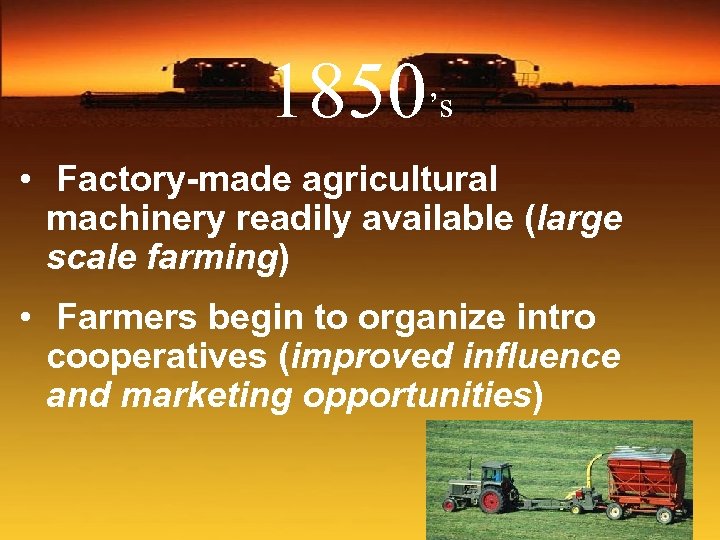
1850’s • Factory-made agricultural machinery readily available (large scale farming) • Farmers begin to organize intro cooperatives (improved influence and marketing opportunities)
1860’s • Morrill Land Grant Act (established land grant colleges for agricultural research to improve food production methods) • U. S. Department of Agriculture established (government support for & control of agriculture)
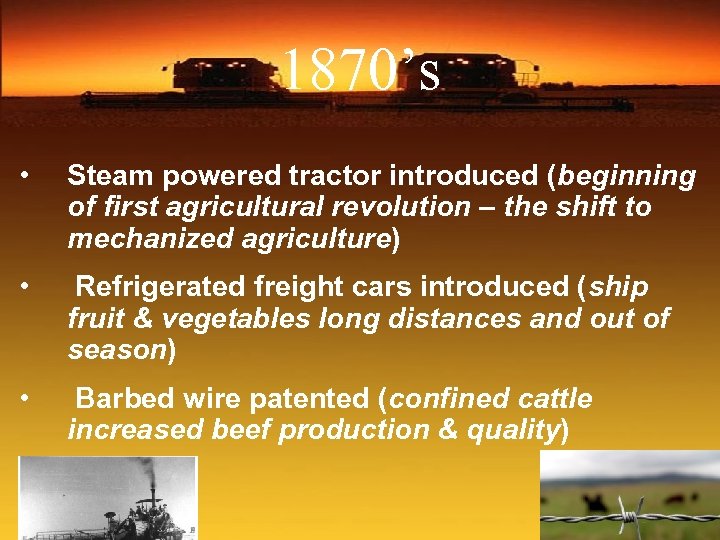
1870’s • Steam powered tractor introduced (beginning of first agricultural revolution – the shift to mechanized agriculture) • Refrigerated freight cars introduced (ship fruit & vegetables long distances and out of season) • Barbed wire patented (confined cattle increased beef production & quality)
1880’s • First hybrid crop developed – corn (greatly increased yield and quality) • First pesticide discovered (Bordeaux mixture increased crop yield & quality) • Federal Hatch Act (established agricultural experiment stations nationwide)
1890’s • First gasoline tractor built (agriculture’s greatest achievement) • Boll weevil invades U. S. cotton (forced farmers to diversify & improve land management) • Rural Free Delivery (mail service to farmers improved communication)
1900’s • George Washington Carver found new uses for peanuts (agricultural expansion and diversification) • Hog cholera serum developed (first commercial animal health product) • First agricultural extension agent hired (dispersed agricultural research) • 4 -H Clubs established (first effort to educate rural youth in agriculture)
1910’s • Disease resistant plants developed (improved crop yield and quality) • Mechanical combine developed (threshed crops on the move to harvest more acres faster) • American Farm Bureau organized (national farmer organization) • Smith-Lever & Hughes Act (established cooperative and classroom HS education)
1920’s • Small tractors developed (mechanized agriculture on small acreages) • Future Farmers of American founded (agricultural youth leadership organization) • Agricultural research lays groundwork for second agricultural revolution
1930’s • Artificial insemination of dairy cattle became commercially feasible due to development of liquid nitrogen (improved animal genetics) • Rural Electrification Association founded (made electricity available to rural America and began the move to electrical equipment) • Farm Credit Act passed (provided money for lending to farmers)
1940’s • Agricultural pesticide use becomes commercially feasible (improves crop production and efficiency) • Mechanized cotton picker developed (reduced need for manual labor) • End of the “sharecropper” era – agriculture becomes a business
1950’s • Anhydrous ammonia becomes available (greatly increased crop yields) • Screw worm eradicated by release of sterile male flies (first application of biotechnology in agriculture)
1960’s • Improved quality of life for Rural America • 83% of farms have telephones • 98% of farms have electricity • 98% of farms have automobiles • American farmers experience great prosperity
1970’s • High-yielding wheat varieties developed (increased ag exports & wheat acreage expansion) • Hog cholera eradicated (first successful elimination of disease in livestock)
1980’s • Computer use in agriculture (decisionmaking, equipment control, marketing, communication) • Boll weevil eradicated (first successful use of scientific research and biotechnology to eliminate a crop pest) • Embryo transfer in cattle perfected (permitted rapid genetic improvement in livestock)
1990’s • Genetic engineering developed (used in crops in livestock to improve production and decrease pesticide use) • Precision agriculture using GPS technology (more efficient use of fertilizer and pesticides to reduce cost and pollution)
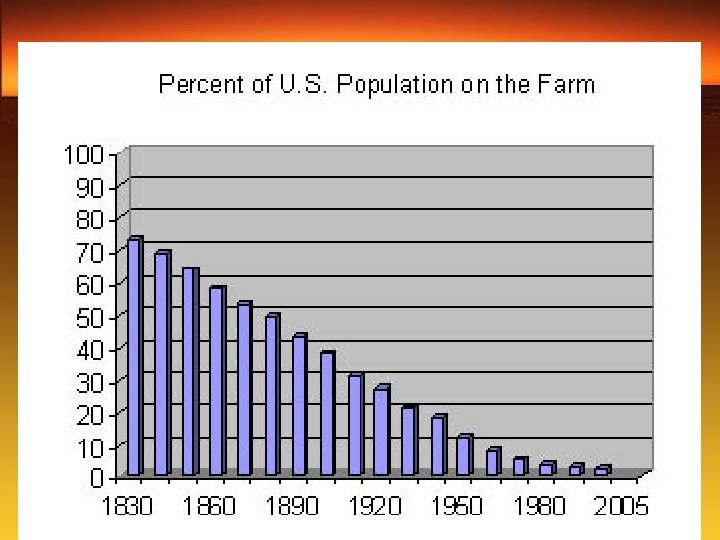
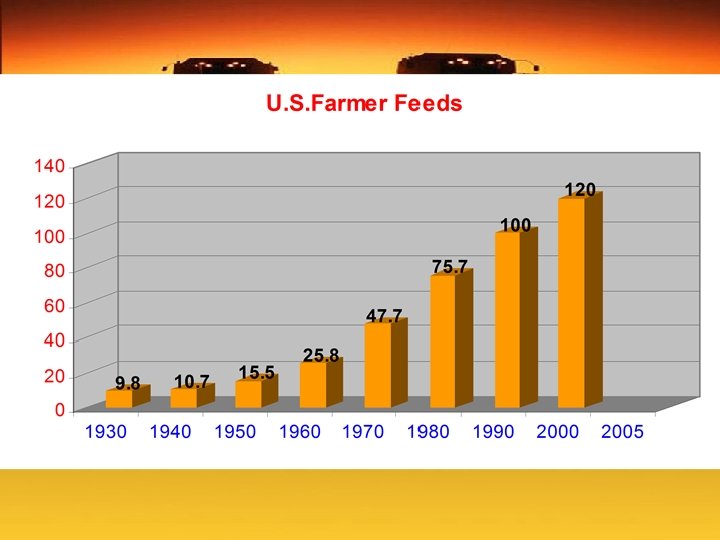
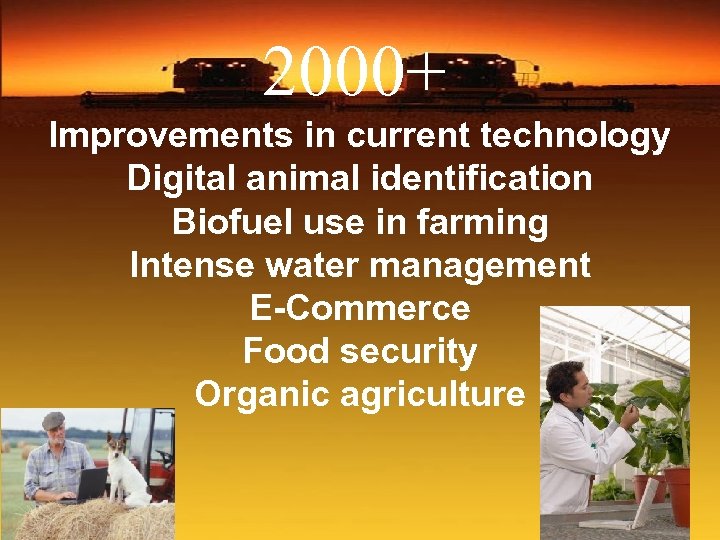
2000+ Improvements in current technology Digital animal identification Biofuel use in farming Intense water management E-Commerce Food security Organic agriculture
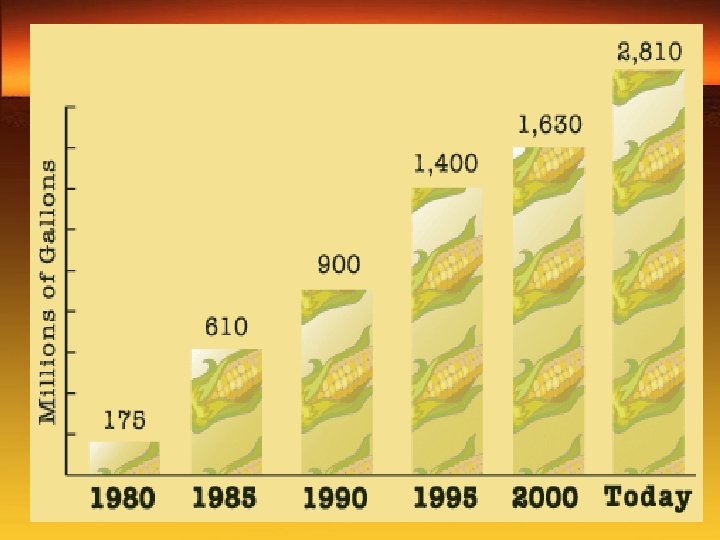
Ethanol With a record production of 2. 92 billion gallons of ethanol in 2013, 1+ billion bushels of corn and 18 percent of the grain sorghum crop were used to produce fuel for our vehicles. In 2013, 103, ethanol plants were in operation in the United States, with 8 new plants under construction.

Variable Rate Irrigation • VRI is a way to control the amount of water that is applied to a field. http: //www. nespal. org/irreff/howitworks. html
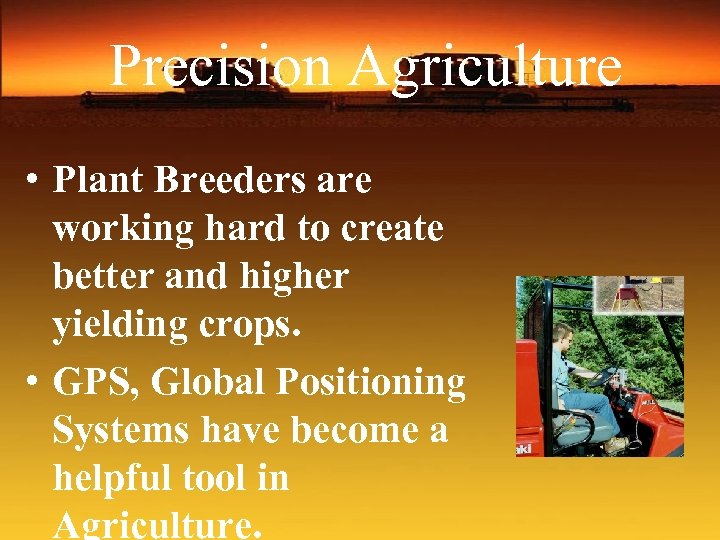
Precision Agriculture • Plant Breeders are working hard to create better and higher yielding crops. • GPS, Global Positioning Systems have become a helpful tool in Agriculture.
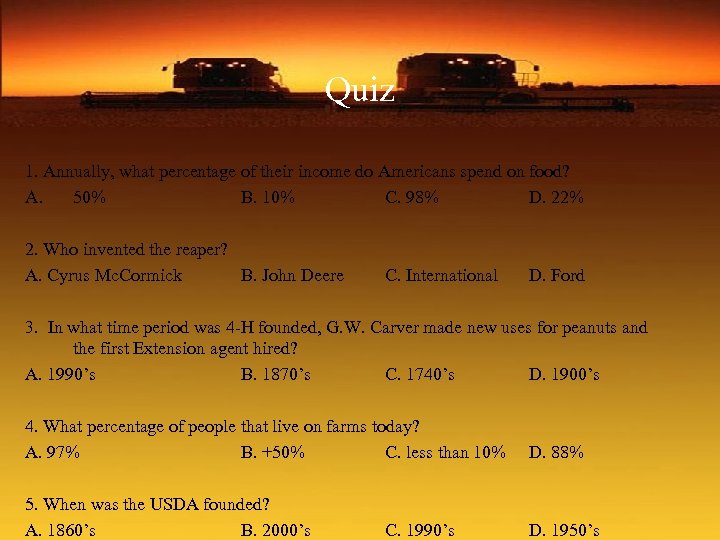
Quiz 1. Annually, what percentage of their income do Americans spend on food? A. 50% B. 10% C. 98% D. 22% 2. Who invented the reaper? A. Cyrus Mc. Cormick B. John Deere C. International D. Ford 3. In what time period was 4 -H founded, G. W. Carver made new uses for peanuts and the first Extension agent hired? A. 1990’s B. 1870’s C. 1740’s D. 1900’s 4. What percentage of people that live on farms today? A. 97% B. +50% C. less than 10% D. 88% 5. When was the USDA founded? A. 1860’s B. 2000’s D. 1950’s C. 1990’s
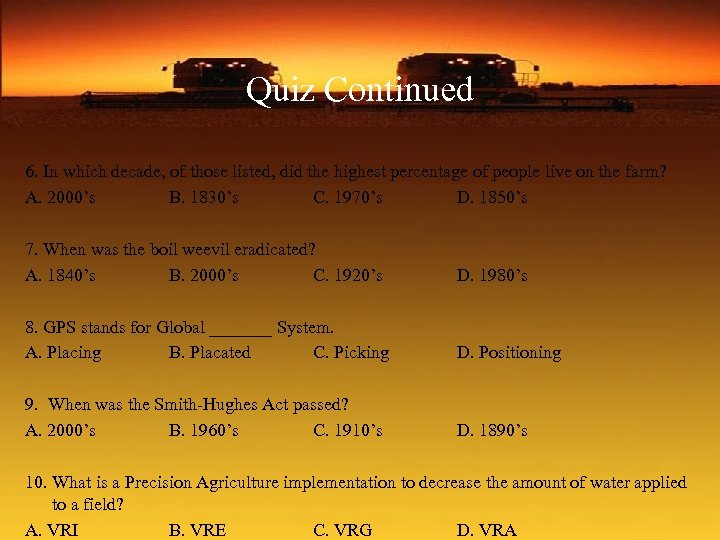
Quiz Continued 6. In which decade, of those listed, did the highest percentage of people live on the farm? A. 2000’s B. 1830’s C. 1970’s D. 1850’s 7. When was the boil weevil eradicated? A. 1840’s B. 2000’s C. 1920’s D. 1980’s 8. GPS stands for Global _______ System. A. Placing B. Placated C. Picking D. Positioning 9. When was the Smith-Hughes Act passed? A. 2000’s B. 1960’s C. 1910’s D. 1890’s 10. What is a Precision Agriculture implementation to decrease the amount of water applied to a field? A. VRI B. VRE C. VRG D. VRA

Answers 1. 2. 3. 4. 5. 6. 7. 8. 9. 10. B A D C A B D D C A
Скачать презентацию History of American Agriculture Objectives Students will
2f56d5e752c745944eab5af2b8e3c564.ppt