


 Скачать презентацию History and Tradition The Fort Sam Houston Cemetery
6cb6931043e5be700c13f6fc349d61c1.ppt
- Количество слайдов: 13
 “History and Tradition: The Fort Sam Houston Cemetery” Unit Ministry Team Training: 15 March 2007 Part 4
 Welcome to Fort Sam Houston National Cemetery
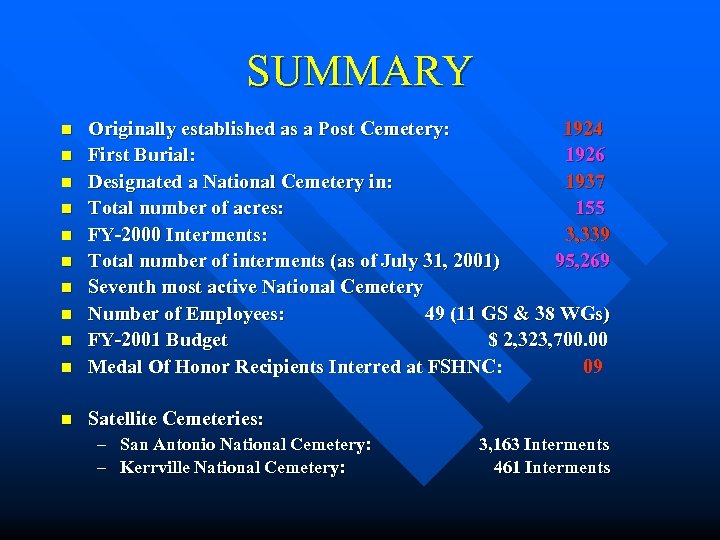 SUMMARY n Originally established as a Post Cemetery: 1924 First Burial: 1926 Designated a National Cemetery in: 1937 Total number of acres: 155 FY-2000 Interments: 3, 339 Total number of interments (as of July 31, 2001) 95, 269 Seventh most active National Cemetery Number of Employees: 49 (11 GS & 38 WGs) FY-2001 Budget $ 2, 323, 700. 00 Medal Of Honor Recipients Interred at FSHNC: 09 n Satellite Cemeteries: n n n n n – San Antonio National Cemetery: 3, 163 Interments – Kerrville National Cemetery: 461 Interments
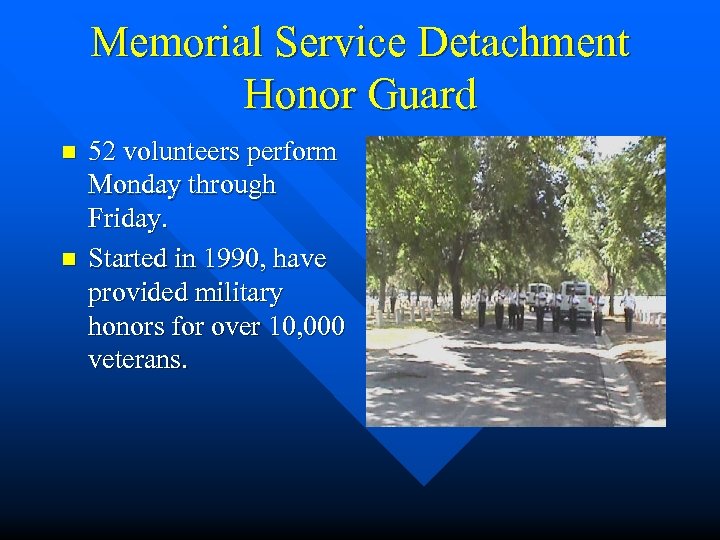 Memorial Service Detachment Honor Guard n n 52 volunteers perform Monday through Friday. Started in 1990, have provided military honors for over 10, 000 veterans.
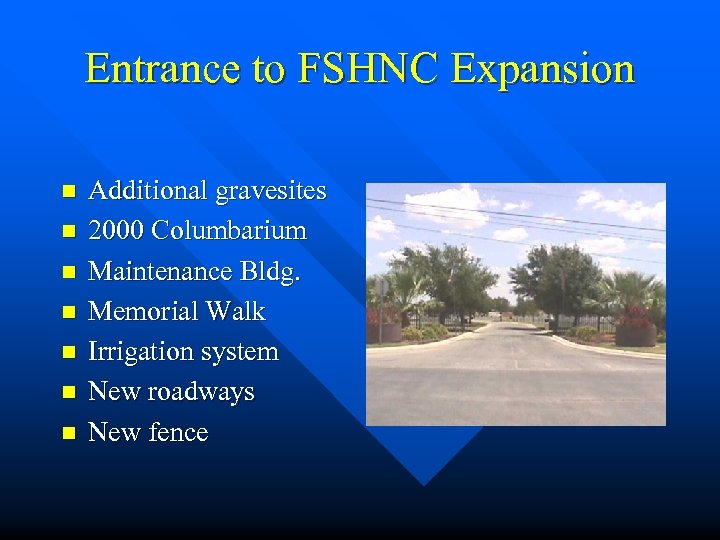 Entrance to FSHNC Expansion n n n Additional gravesites 2000 Columbarium Maintenance Bldg. Memorial Walk Irrigation system New roadways New fence
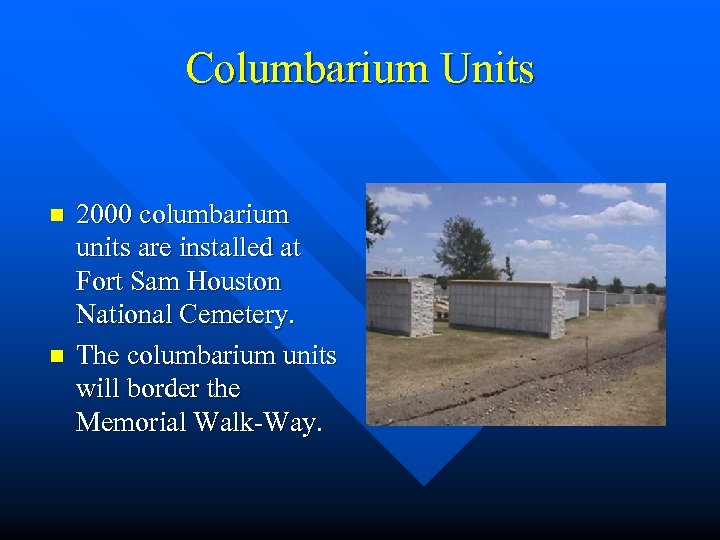 Columbarium Units n n 2000 columbarium units are installed at Fort Sam Houston National Cemetery. The columbarium units will border the Memorial Walk-Way.
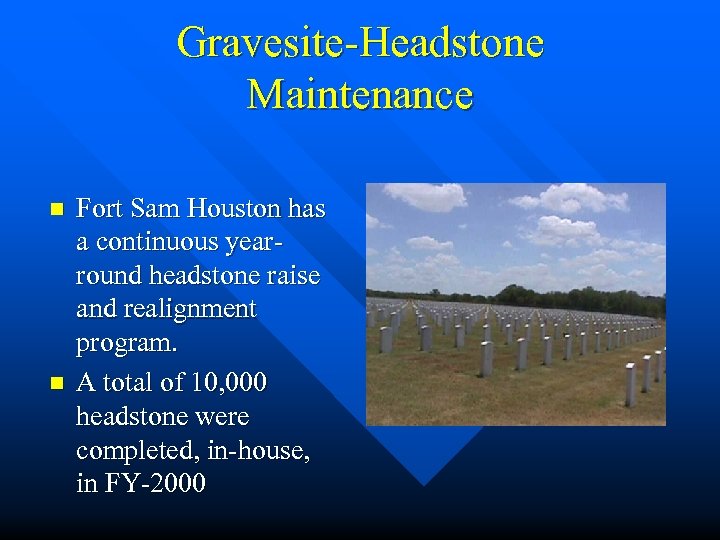 Gravesite-Headstone Maintenance n n Fort Sam Houston has a continuous year- round headstone raise and realignment program. A total of 10, 000 headstone were completed, in-house, in FY-2000
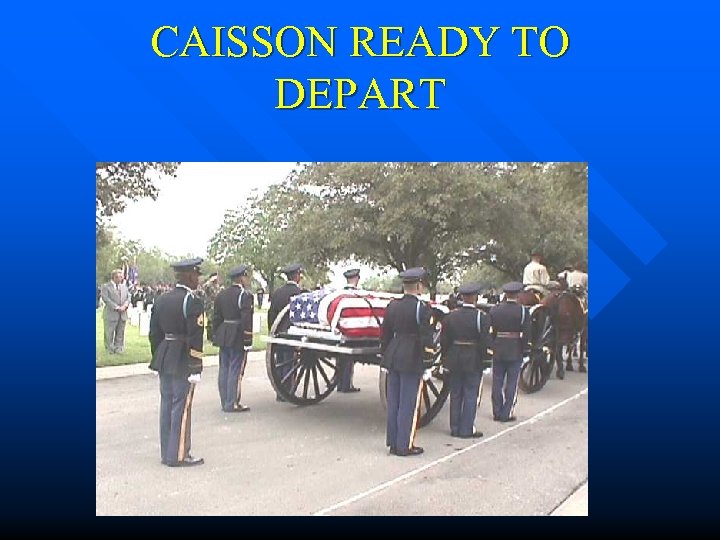 CAISSON READY TO DEPART
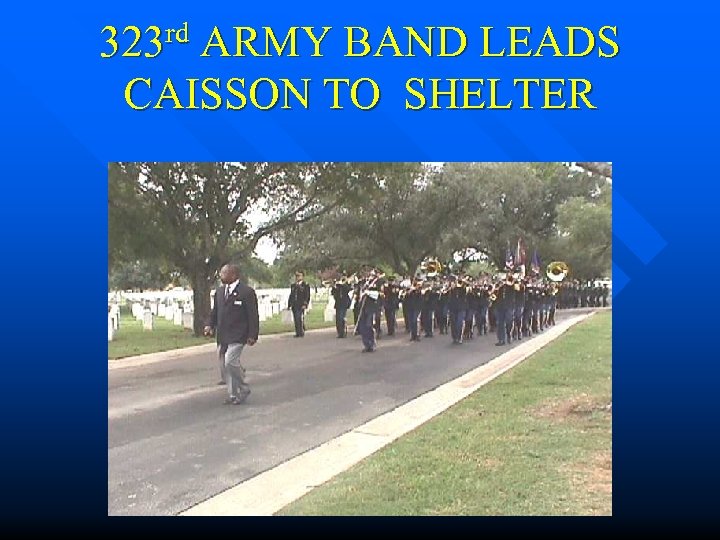 323 rd ARMY BAND LEADS CAISSON TO SHELTER
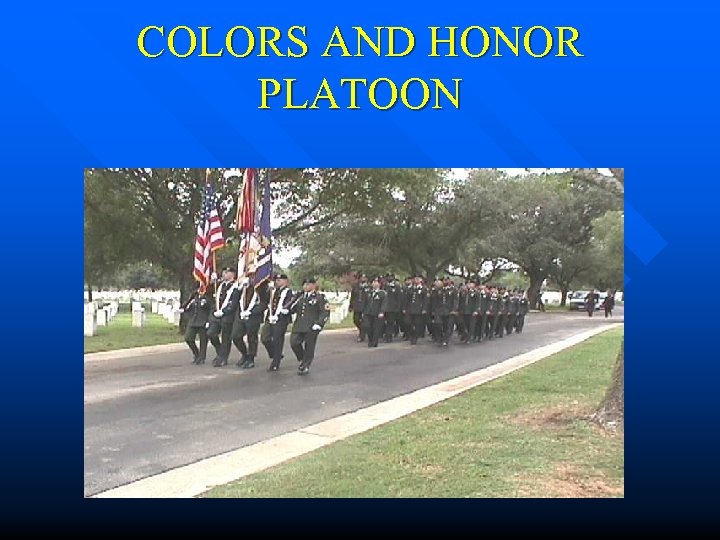 COLORS AND HONOR PLATOON
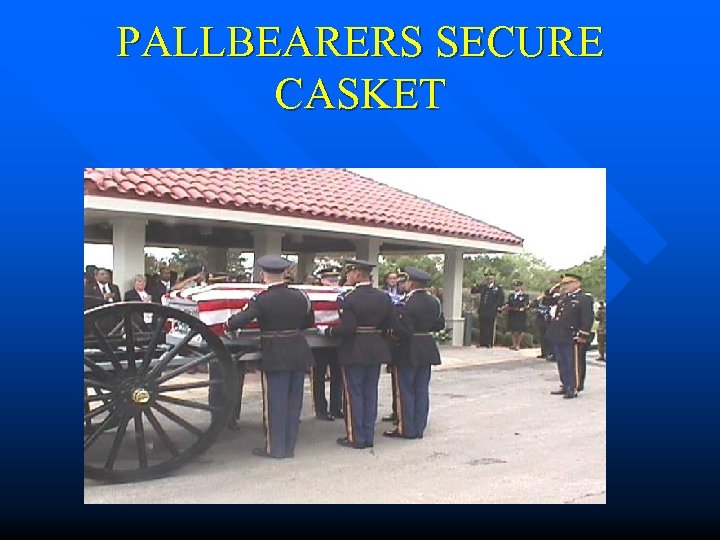 PALLBEARERS SECURE CASKET
 The History of Fort Sam Houston National Cemetery was originally a post cemetery in 1924. In 1937, it was designated a National Cemetery spanning 75 acres with a grave site capacity of 48, 000. Today the cemetery encompasses 155 acres with 95, 269 burials. Many of the early burials at the cemetery were re-interments from other Texas cemeteries that had been disbanded. Because of these interments, there are veterans of the Civil War, Spanish War and Indian Wars buried at the cemetery. Section ZA is the final resting place for 140 World War II prisoners of war who died while imprisoned in the United States. Most of the German prisoners were captured in Africa during the Allied battle with Field Marshall Erwin Rommel and are buried far from their native lands. Fort Sam Houston National Cemetery is the final resting place for nine veterans who were awarded the Medal of Honor. Cecil H. Bolton, William G. Harrell, Lloyd H. Hughes, James E. Robinson, Cleto L. Rodriguez and William J. Borderlon were awarded the Medal for gallantry during World War II; Seth L. Weld, was recognized for valor in the Philippine Insurrection; and Milton A. Lee and Roy Benavidez were awarded the Medal for gallantry during the Vietnam Conflict. There are many other heroes interred at this National Cemetery. More than 1, 500 graves hold the remains of those who made the supreme sacrifice for their country - 1, 365 World War II dead, 135 killed in action in Korea and 360 Vietnam casualties. Four of the Southeast Asia burials are the remains of men missing in action who were returned home many years after the war ended. Lieutenant Colonel Richard Castillo, U. S. Air Force, missing in action in 1972, was returned to his final resting place on October 29, 1986. In 1991, Second Lieutenant Lo Holloway Jr. ’s World War II remains were brought home from Belgium after friends at a reunion discovered him listed as missing in action instead of killed in action. Their search led them to the foxhole that had been his grave for 47 years.
 History Continued One of the most notable veterans buried at the cemetery is Captain William Randolph for whom Randolph Air Force Base is named. Captain Randolph died in a plane crash in 1928 and was interred in Section Q, gravesite 133. More recently, Congressman Frank Tejeda, who served as a major in the United States Marine Corps in Vietnam, was laid to rest at the cemetery in 1997. In May 1937, the remains of 19 black soldiers were moved to the Fort Sam Houston National Cemetery. 17 were executed for their participation in the 1917 Houston Riot. They were members of the 3 rd Battalion, 24 th Infantry Regiment. They were tried by General Court Martial, sentenced and executed by hanging. They were originally interred near the bank of Salado Creek. Their remains are in Section PA, gravesites 20 to 36. Two, Corporal L. J. Brown and Private Joseph Smith, were disinterred and buried in family plots. Another notable veteran is Raymond Hatfield Gardner, otherwise known as “Arizona Bill”. He was an Indian scout during the Indian Wars and served with the 5 th Regiment Cavalry, Company A and C. Arizona Bill is interred in Section AC, gravesite 287 -B. Other notables include 27 Buffalo Soldiers from the 9 th and 10 th Cavalry, who served during the Indian Wars era. Their remains were initially buried in the frontier forts where they were assigned, such as Fort Clark, Fort Mc. Kintosh and Fort Ringold. As these frontier posts were closed, the remains were disinterred and brought to Fort Sam Houston National Cemetery. Their remains are now laid to rest in Section PE. Today Fort Sam Houston National Cemetery’s richly landscaped grounds serve as a final resting place for many of America’s brave and beloved men and women. They served so that they might bring peace and security to their country. Although they are all heroes, some stories remain untold.