


 Скачать презентацию HIS 401 Foundation History Week 9 RISE OF
ccbffdb5c2cd91e612f980b456fa990c.ppt
- Количество слайдов: 97
 HIS 401: Foundation History Week 9 RISE OF CAPITALISM IN THE PACIFIC: SLAVERY AND ECONOMY Edited by Dr. Sakul Kundra
 OBJECTIVES By the end of this lesson, you should be able to: • Identify the relationship between colonialism and the slave and labour trade; • Understand the origin of this trade and its affects upon Pacific Islands; and • Relate this aspect of Pacific Island history to the Pacific region today.
 INTRODUCTION • Defining Colonialism; • Defining Slavery; • Defining Capitalism.
 What is colonialism?
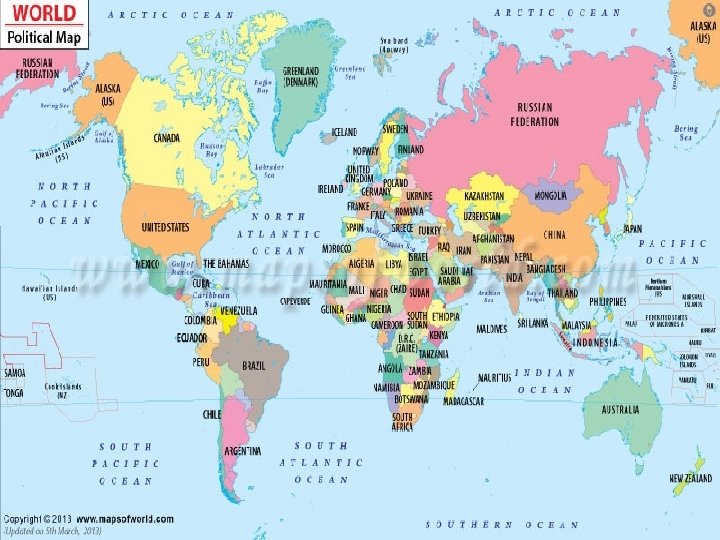
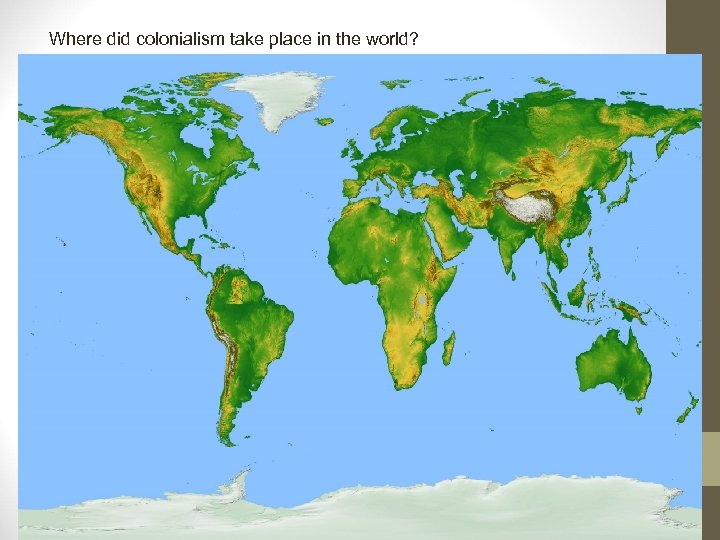 Where did colonialism take place in the world? 1 - The United States and the Soviet Union fight for superiority; 2 - both countries extend their control over other countries.
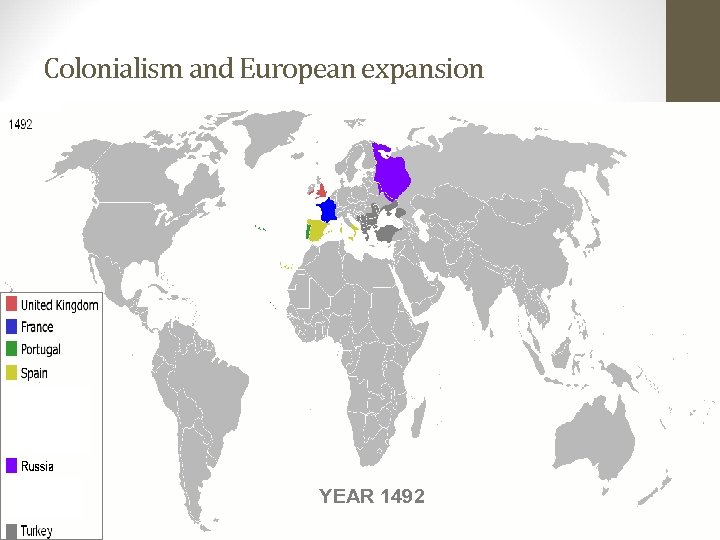 Colonialism and European expansion YEAR 1492
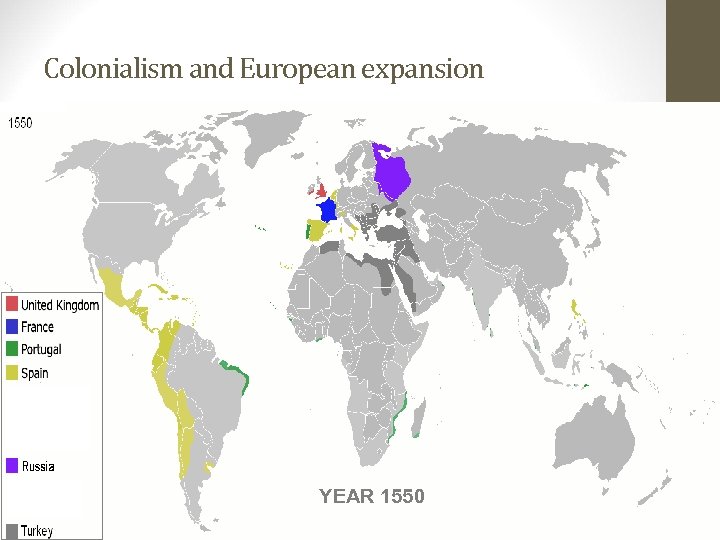 Colonialism and European expansion YEAR 1550
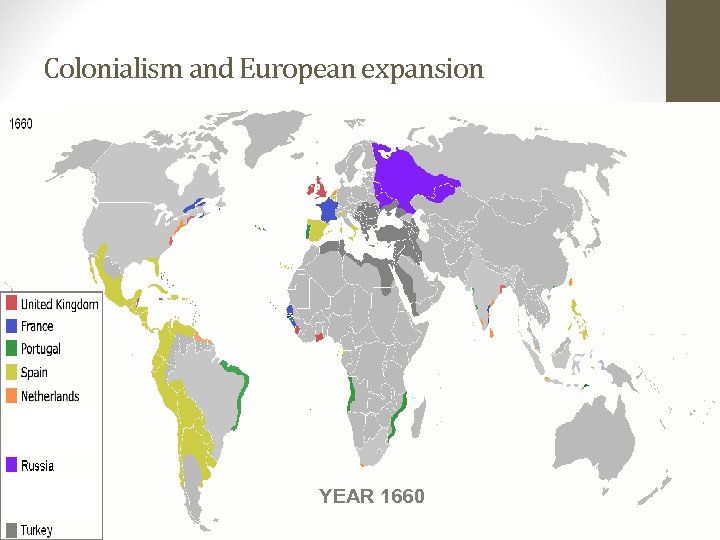 Colonialism and European expansion YEAR 1660
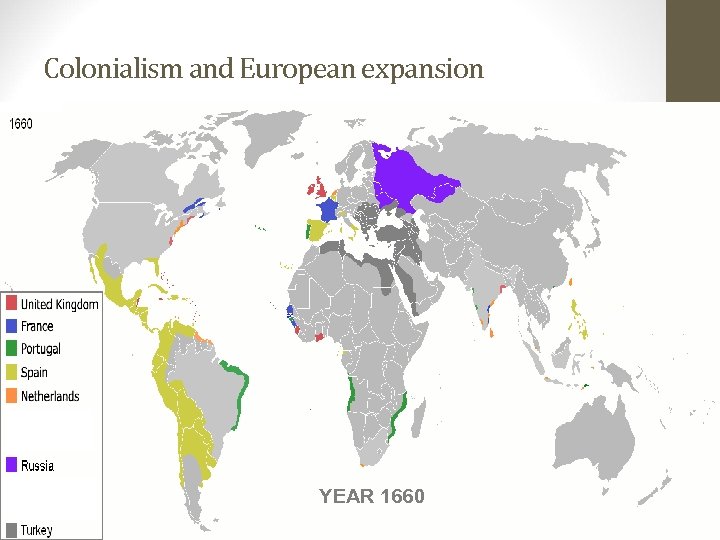 Colonialism and European expansion YEAR 1660
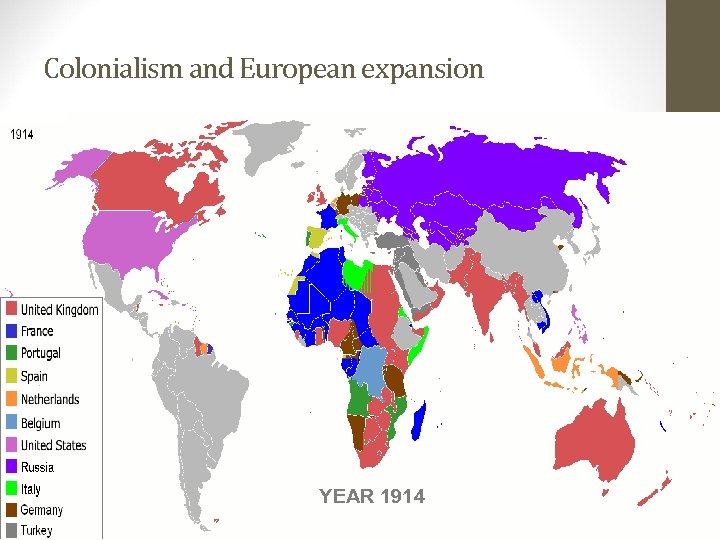 Colonialism and European expansion YEAR 1914
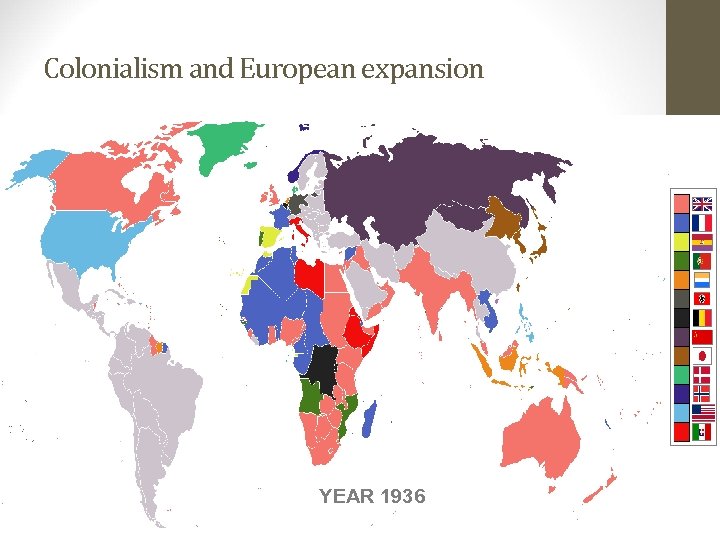 Colonialism and European expansion YEAR 1936
 What is colonialism? “Colonialism is a practice of domination, which involves the subjugation of one people to another. One of the difficulties in defining colonialism is that it is hard to distinguish it from imperialism. Frequently the two concepts are treated as synonyms. Like colonialism, imperialism also involves political and economic control over a dependent territory. The etymology of the two terms, however, provides some clues about how they differ. The term “colony” comes from the Latin word “colonus”, meaning farmer. This root reminds us that the practice of colonialism usually involved the transfer of population to a new territory, where the arrivals lived as permanent settlers while maintaining political allegiance to their country of origin. Imperialism, on the other hand, comes from the Latin term imperium, meaning to command. Thus, the term imperialism draws attention to the way that one country exercises power over another, whether through settlement, sovereignty, or indirect mechanisms of control”. http: //plato. stanford. edu/entries/colonialism/
 • What is colonialism? • Colonialism is the establishment, exploitation, maintenance, acquisition, and expansion of colonies in one territory by people from another territory. It is a set of unequal relationships between the colonial power and the colony and often between the colonists and the indigenous population. • Collins English Dictionary defines colonialism as “ • “the policy and practice of a power in extending control over weaker people or areas. ” • Colonialism is not a modern phenomenon. • Colonialism and Imperialism were forms of conquest that were expected to benefit Europe economically and strategically
 • The term “colony” comes from the Latin word “colonia”, derived from the term ‘Colonus’ means colonist but also implies a farmer. • This root reminds us that the practice of colonialism usually involved the transfer of population to a new territory, where the arrivals lived as permanent settlers while maintaining political allegiance to their country of origin. • Imperialism, on the other hand, comes from the Latin term imperium, meaning to command. Thus, the term imperialism draws attention to the way that one country exercises power over another, whether through settlement, sovereignty, or indirect mechanisms of control”.
 • Definition of Imperialism : “an unequal human and territorial relationship, usually in the form of an empire, based on ideas of superiority and practices of dominance, and involving the extension of authority and control of one state or people over another. ” • A national policy of conquest of other regions or peoples for the purpose of extending political and economic control and of exploiting the resources of other regions or people. • The term as such primarily has been applied to Western political and economic dominance in the 19 th and 20 th centuries.
 • Historically, countries participated in colonialism for several reasons, including: • 1. Nationalism - They felt their country was the best and should spread throughout the world. • 2. Economic Profits - Colonies gave them access to all new natural resources and workers. It also provided them with new markets to buy and sell goods. • 3. Military Strength - With territories throughout the world, countries could establish many military bases and have a worldwide presence.
 Economic reasons for colonialism: 1 - Colony is normally part of an empire; 2 - Competition among European Empires; 3 - Empires need to buy larger amounts of . raw materials. 4 - Need to sell overproduction to new markets;
 Social reasons for colonialism: 1 - Racism: racial scientific theories- scientific techniques and hypotheses to support or justify the belief in racism, racial inferiority, or racial superiority, or alternatively the practice of classifying individuals of different phenotypes into discrete races. . 2 - Religion: Christians versus pagans- Ø Pagan- those who worship of or belief in multiple deities usually assembled into a pantheon of gods and goddesses, along with their own religions and rituals. 3 - Civilization versus “savagery” -
 • Motives for Colonization- 3 G • Motives for Colonization In general, strong countries dominated weaker ones to promote their own national self-interest, out of economic, religious, cultural, or other reasons. • It has been said that the three primary motives for establishing colonies were • Gold, • God, and • Glory.
 What is slavery? !
 SLAVERY • Slavery is an old practice that allows a person to own, dominate and exploit the labour of another human being. • when a person is defined as the property of another person
 SLAVERY • therefore, the slave (like any other property) can be bought or sold • slave is not allowed to change his/her situation, escape and must work for the owner forever. • A slave had few rights and could be bought or sold and made to work for the owner without any choice or pay.
 Slavery • Slavery was a legally recognized system in which humans were legally considered the property or chattel of another. A slave had few rights and could be bought or sold and made to work for the owner without any choice or pay. • Slavery can be traced back to the earliest records, such as the Code of Hammurabi (c. 1760 BC), which refers to it as an established institution.
 Slavery • Slavery is rare among hunter-gatherer populations, as it is developed as a system of social stratification. Slavery was known in civilizations as old as Sumer, as well as almost every other ancient civilization. The Byzantine-Ottoman wars and the Ottoman wars in Europe resulted in the taking of large numbers of Christian slaves. • Similarly, Christians sold Muslim slaves captured in war and also the Islamic World was engaged in slavery. Slavery became common within the British Isles during the Middle Ages. Britain played a prominent role in the Atlantic slave trade, especially after 1600. Slavery was a legal institution in all of the 13 American colonies and Canada (acquired by Britain in 1763). Slavery was endemic in Africa and part of the structure of everyday life
 • A slave owner usually requires a slave to perform work or other services without pay. • The owner can make these demands virtually without restriction and can take away the slave’s freedom to act or move about as s/he chooses.
 • Owners are responsible only for providing minimal food, shelter and clothing. • The owner may separate members of a slave family and may permit or refuse to allow marriages between slaves.
 Where was slavery created? • Evidence of slavery predates written records, the practice of slavery would have proliferated after the development of agriculture during the Neolithic Revolution about 12000 years ago. • Slavery was known in civilizations as old as Sumer, as well as almost every other ancient civilization, including Ancient Egypt, Ancient China, the Akkadian Empire, Assyria, Ancient India, Ancient Greece, the Roman Empire, the Islamic Caliphate, and the pre-Columbian civilizations of the Americas. • Such institutions were a mixture of debt-slavery, punishment for crime, the enslavement of prisoners of war, child abandonment, and the birth of slave children to slaves
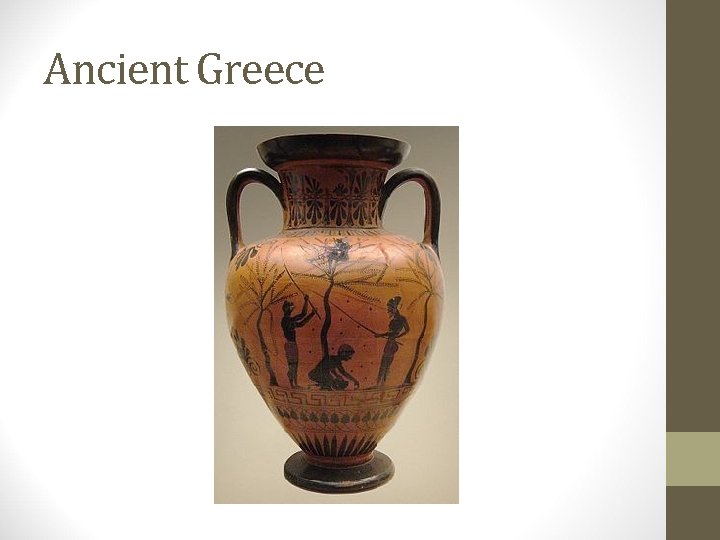 Ancient Greece
 Ancient Greece • slavery became an important part of the economy and society only after the establishment of cities in Ancient Greece. • Slavery was common practice and an integral component of ancient Greece, as it was in other societies of the time, including ancient Israel and early Christian societies. • It is estimated that in Athens, the majority of citizens owned at least one slave
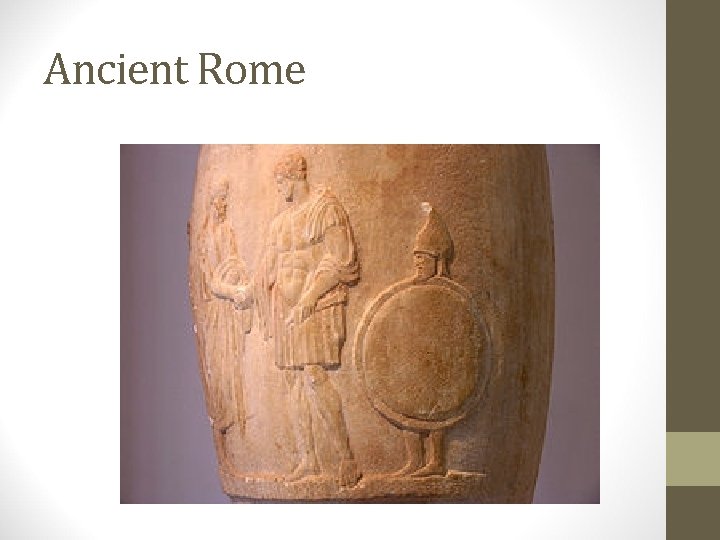 Ancient Rome
 Slavery in Rome • Romans inherited the institution of slavery from the Greeks. As the Roman Republic expanded outward, it enslaved entire populations, thus ensuring an ample supply of laborers to work in Rome's farms and households. The people subjected to Roman slavery came from all over Europe and the Mediterranean. Such oppression by an elite minority eventually led to slave revolts. If a slave ran away, they were liable to be crucified.

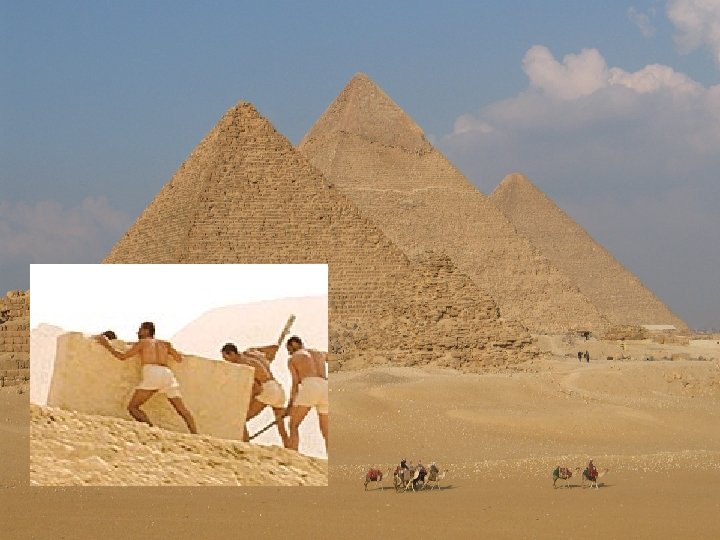
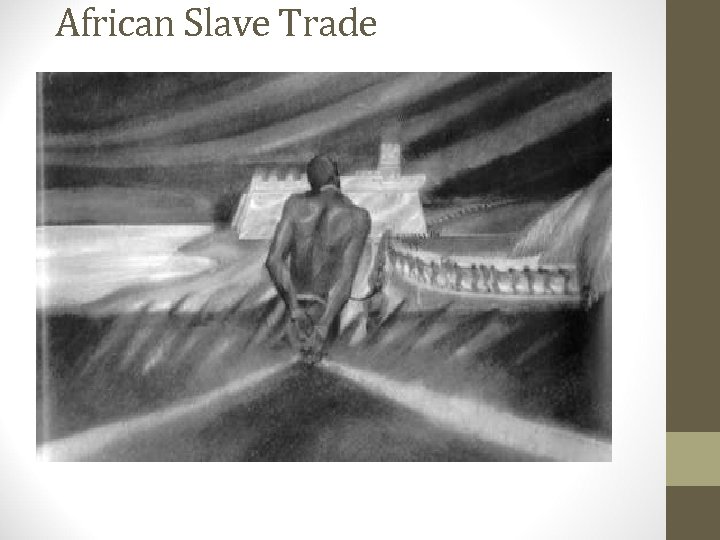 African Slave Trade
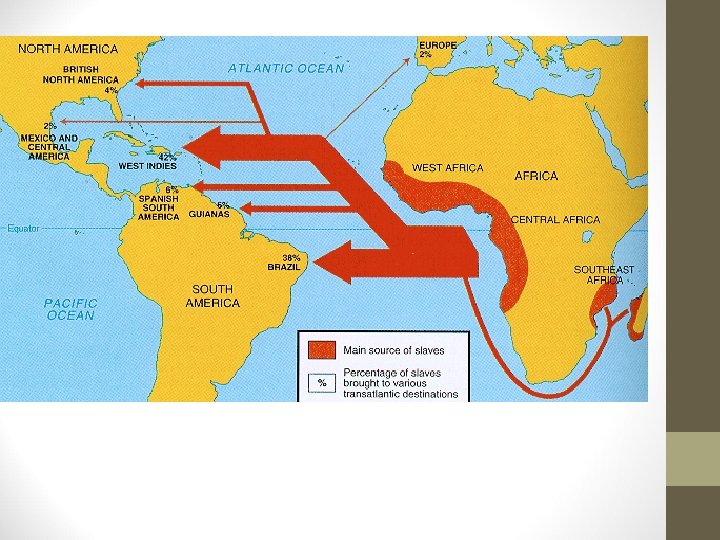
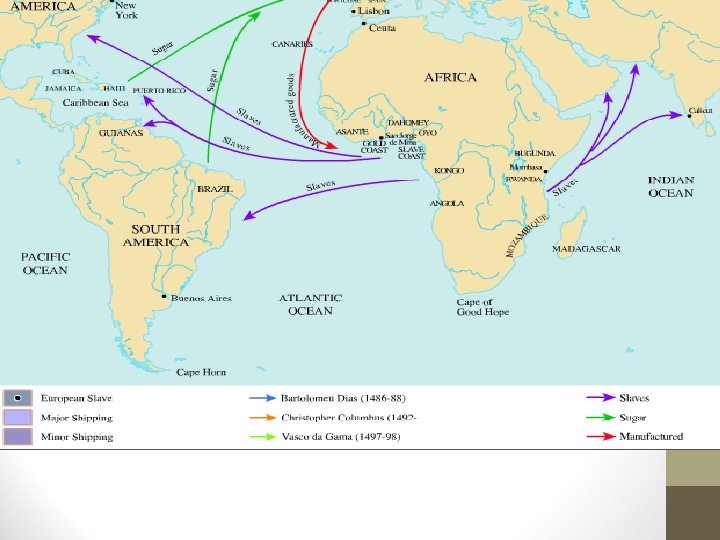
 • The Spanish and Portuguese had enslaved Africans to work in the sugar plantations on the islands off the coast of Africa • As the rich lands of the Americas fell into their hands they extended the practice westward by transporting slaves across the Atlantic. • France, England the Netherlands followed the example later
 • As the major European powers, Portugal, Britain, France and the Netherlands looked for ways to exploit the fertile lands of the New World. They looked to Africa for a steady supply of labor. Soon enslaved Africans had become absolutely vital to the Cultivation of sugar, tobacco, cotton, and rice plantations. • As European demand for sugar began to increase plantations Began to spring up throughout Brazil and the Caribbean. Sugar Cultivation created a huge demand for slave labor from Africa Many plantations produced additional crops such as indigo, Rice, tobacco and coffee.
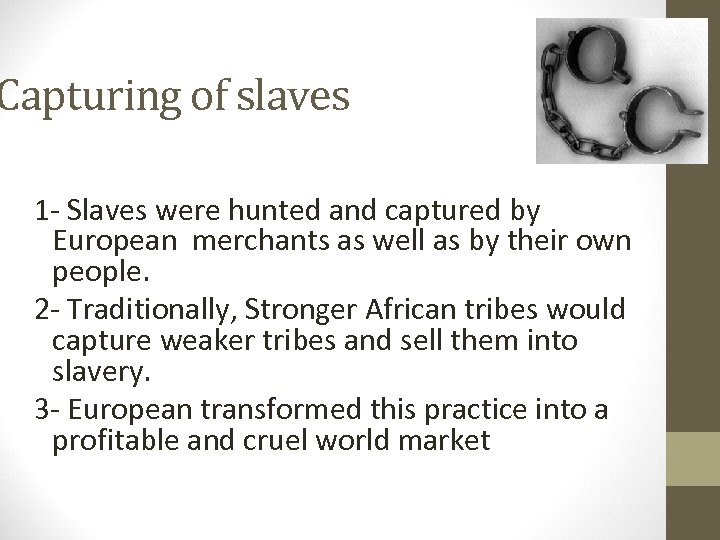 Capturing of slaves 1 - Slaves were hunted and captured by European merchants as well as by their own people. 2 - Traditionally, Stronger African tribes would capture weaker tribes and sell them into slavery. 3 - European transformed this practice into a profitable and cruel world market
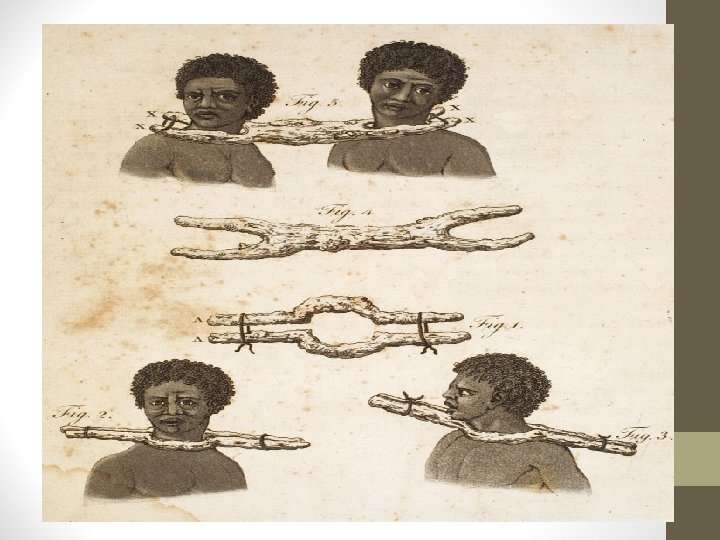
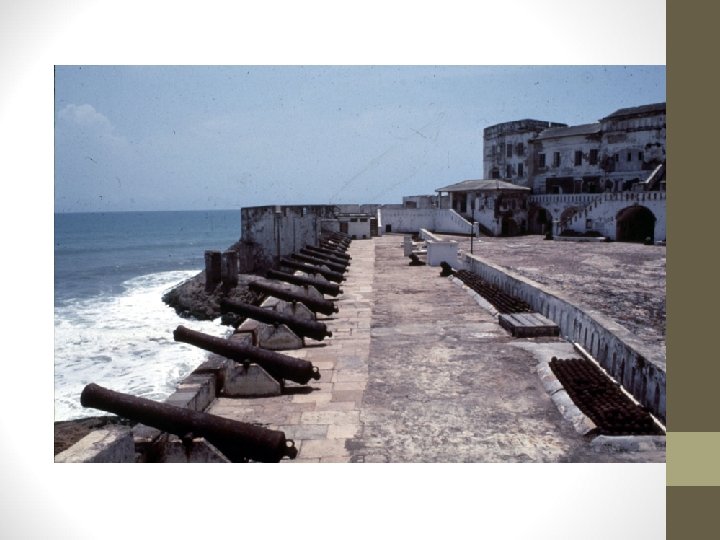
 • Slaves would be captured and put into makeshift jails called Barracoons. Once enough slaves were captured they would be marched to permanent jails called factories located along the coast. • The journey from the interior to the factories might be as far as 1, 000 miles. Shackled and underfed, only half the people survived These death marches. Those too sick to make it were killed or left for dead. Those who reached the factories were put in jails for as long as a year before they were boarded on ships.
 • A slave boat captain could buy a slave for around $20. 00 and could be sold for up to $125. 00 depending on the physical appearance. • Men, women, and children were all captured and sold into slavery. • The Factor, or owner of the factory would sell the African to Slave ship captains. In order to get a better price, the ship’s Captain would often offer a dash or bribe to the factor. • The factor would try anything to get a better price for slaves. • Slaves heads were shaved, bodies oiled, and even drugs were given to make their bodies bloat. A healthier slave would bring a better price.
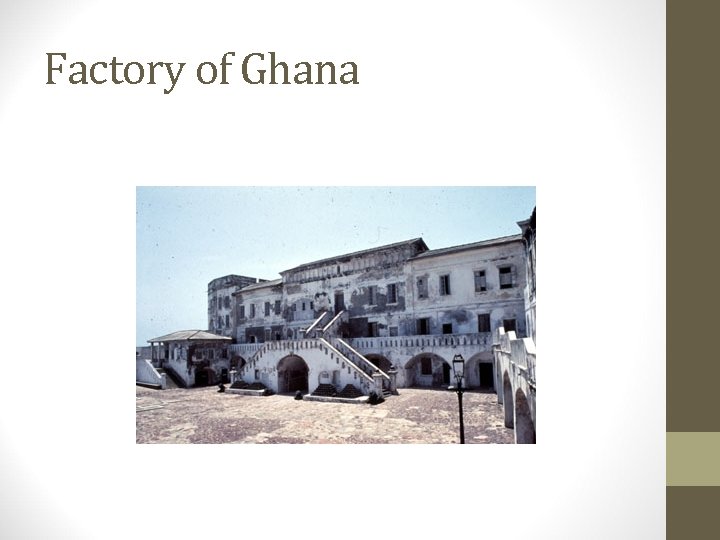 Factory of Ghana
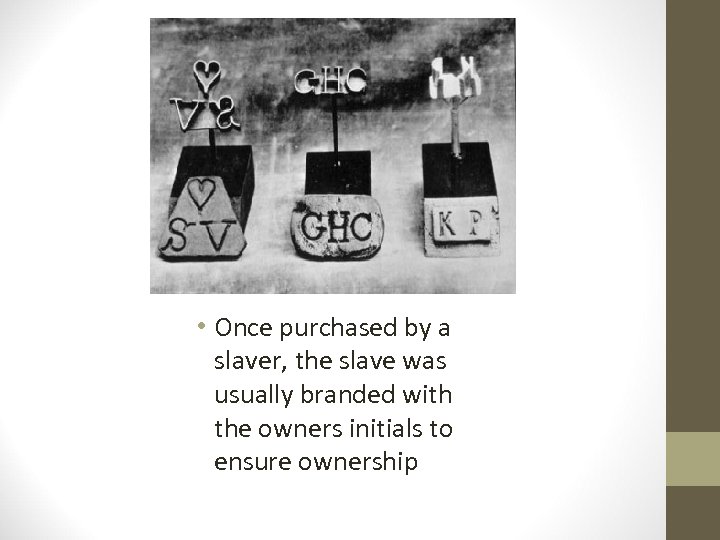 • Once purchased by a slaver, the slave was usually branded with the owners initials to ensure ownership
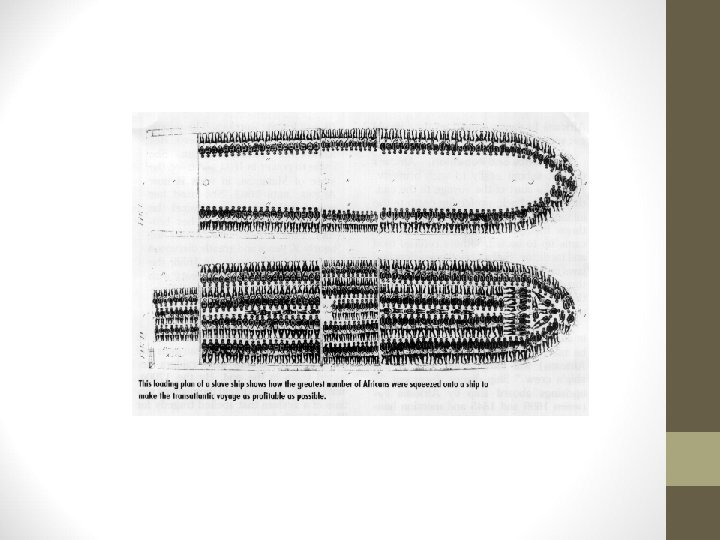
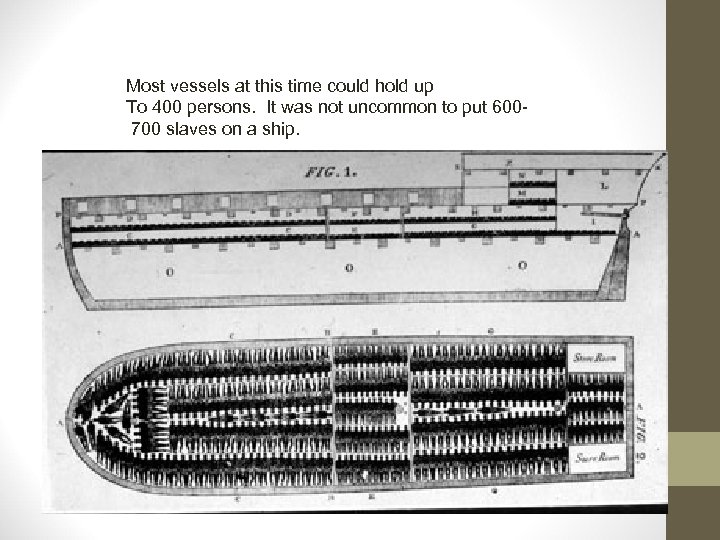 Most vessels at this time could hold up To 400 persons. It was not uncommon to put 600700 slaves on a ship.
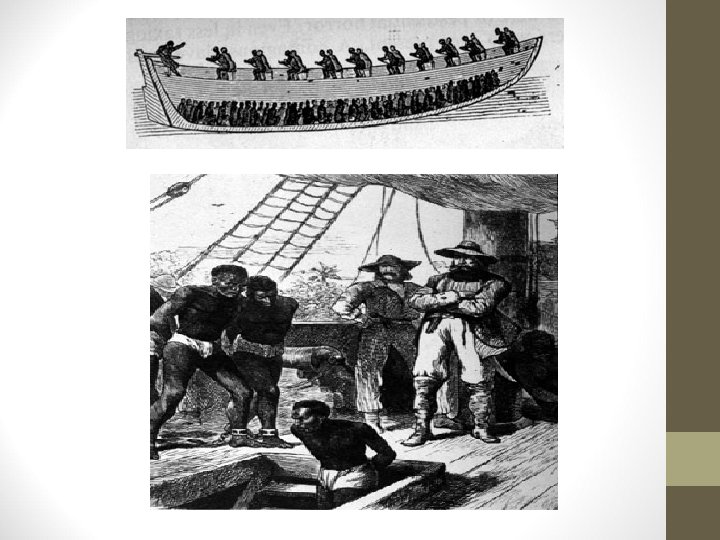
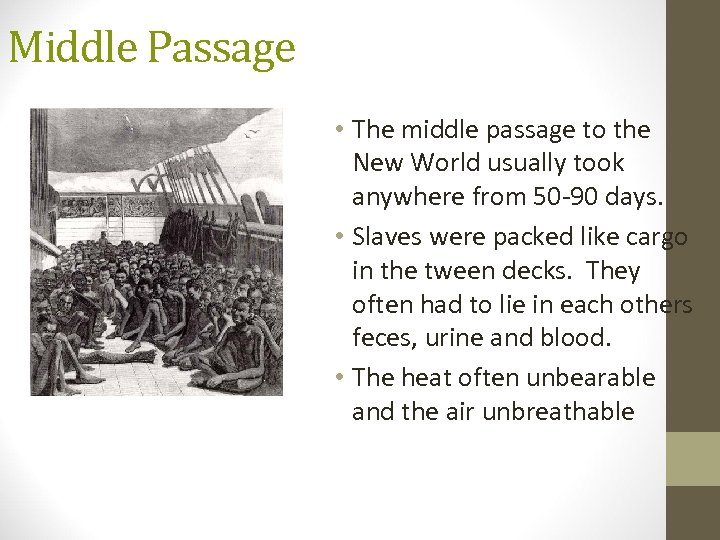 Middle Passage • The middle passage to the New World usually took anywhere from 50 -90 days. • Slaves were packed like cargo in the tween decks. They often had to lie in each others feces, urine and blood. • The heat often unbearable and the air unbreathable
 • During periods of good weather, the slaves would be brought up on the deck in the morning. At this time the men would be shackled together with iron chains, while the women and children roamed free. At about 9: 00 am they were given their first meal, usually some type of beans in a sauce. Sometimes a few lumps of raw meat would be added to their food to keep them healthy. It was also at this time the slaves would be given their ration of a half-pint of water in a small pan called a pannikin. • The slavers needed to keep the slaves in acceptable physical shape so each morning after breakfast they were “danced” on the deck for exercise. Still shackled together, the men were forced to jump up and down until often the flesh of their ankles were raw and bleeding. • The slaves were otherwise kept miserably in the tween decks. The slaves were often beaten or whipped with a device
 • Men were often chained in pairs, shackled wrist to wrist or ankle to ankle. In such cramped quarters, disease such as smallpox and yellow fever spread like wildfire. The diseased were usually thrown overboard to prevent the entire “cargo” from getting the disease. • Trouble making slaves were often placed in an iron muzzle. • Slaves were often whipped and beaten, sometimes to the death. The conditions were so poor that it was not uncommon for a slave to try to escape by jumping overboard. Many would risk a watery death or being eaten by sharks rather than endure the passage.
 • Eventually, after a 3, 700 mile voyage, the slave ship would reach North America. In order to strengthen them before sale, the slaves were normally fed better in the days directly before their arrival. • Before they could be sold, the slaves would be oiled again, and any imperfections, such as scars from whipping, would be filled with hot tar in order to improve appearance and get the best market price. • The buying and selling of slaves was made illegal in the late 1800’s. It was enforced by military ships patrolling the waters. This didn’t end slavery. Because slaves were much harder to come by, the price for a slave sky-rocketed and made slave ship captains more willing to take a chance on the voyage
 The practice of slavery is no longer permitted anywhere in the world. 1761 Portugal abolishes slavery 1807 England abolishes slavery 1888 Brazil abolishes slavery Mauritania abolished only in 1981
 What is capitalism?
 Capitalism • Its an economic and political system in which a country's trade and industry are controlled by private owners for profit, rather than by the state. • Capitalism is an economic system in which trade, industry, and the means of production are privately owned and operated via profit and loss calculation (price signals) through the price system. Central characteristics of capitalism include private property, capital accumulation, wage labour and, in some situations, fully competitive markets. In a capitalist economy, the parties to a transaction typically determine the prices at which they exchange assets, goods, and services. • An economic system. Money: everything has a value. Economy involved the exchange of goods and services. One wants to make a profit for one’s self. Success is usually measured by the amount of money one earns and accumulates.
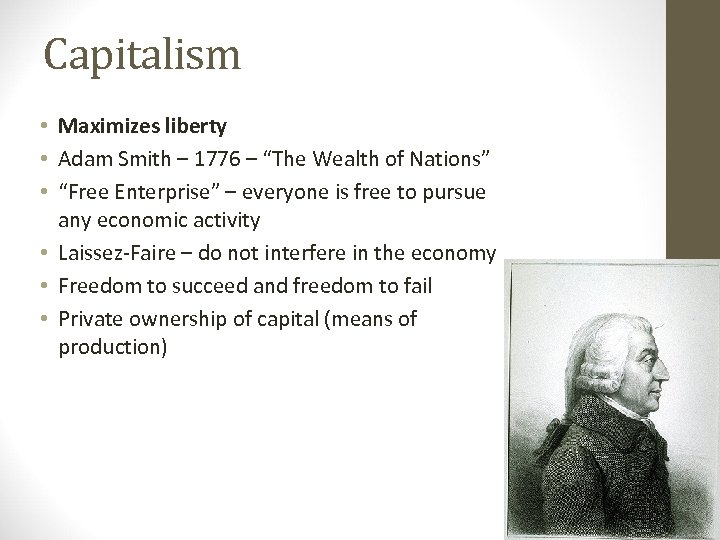 Capitalism • Maximizes liberty • Adam Smith – 1776 – “The Wealth of Nations” • “Free Enterprise” – everyone is free to pursue any economic activity • Laissez-Faire – do not interfere in the economy • Freedom to succeed and freedom to fail • Private ownership of capital (means of production)
 • Laissez-Faire: • laissez-faire is French and literally means ‘let them do as they will’, or ‘leave it alone’. • It is an economic environment in which transactions between private parties are free from government restrictions, tariffs, and subsidies, with only enough regulations to protect property rights. • Fundamentals of laissez-faire i. iii. The individual is the basic unit in society. The individual has a natural right to freedom. The physical order of nature is a harmonious and self-regulating system.
 Capitalism • Profit is the motivator, competition is the regulator (not government) • Under pure capitalism, almost all goods would be provided by the private sector (small government) – police, courts, military (even schools and the fire department could be private goods)
 What is capitalism? ! an economic system based on “economic individualism (…) Economic individualism’s basic premise is that the pursuit of self-interest and the right to own private property are morally defensible and legally legitimate. Its major corollary is that the state exists to protect individual rights. Subject to certain restrictions, individuals (alone or with others) are free to decide where to invest, what to produce or sell, and what prices to charge. There is no natural limit to the range of their efforts in terms of assets, sales, and profits; or the number of customers, employees, and investors; or whether they operate in local, regional, national, or international markets. ” http: //www. econlib. org/library/Enc/Capitalism. html
 INTRODUCTION Colonialism, Slavery and Capitalism were part of the European Expansion
 INTRODUCTION • There are more Polynesian people (Samoan, Cook Islands, Tokelau, Niue, Rotuma, Wallis and Futuna) and Micronesian people overseas than at home. Why? • Such migration can be traced historically back to colonialism, the beginning of capitalism and the trade in human labour. • Capitalism and slavery were driving forces behind colonialism.
 Why Imperialism Started in the Pacific Islands? • Demand for tropical products drive Western imperialists to seek possession of Pacific lands. • Later: Pacific becomes a strategic territory for WWI and WWII powers.
 Colonial Impact of Imperialism • Cons: 1 - Modernization mainly helps European businesses; 2 - creation colonial economies dependant on European powers; 3 - destruction of local culture and religions; 4 - decline of local population. • Pros: 1 - Educational, technologial, health, sanitation improvements in colonised areas.
 • Europeans want to control most aspects of their colonies: • Influence political, religious and social lives of locals; • Shape economies to benefit Europe;
 • Forms of European control • 1 - Colony-governed by a foreign power • 2 - Protectorate-governs itself, but under outside control • 3 - Sphere of influence-outside power controls investment, trading – private European business interests assert control over Pacific Islanders’ economies
 Methods of Management: • Direct control • 1 - Paternalism- Europeans provide for local people, but grant no rights • 2 - Assimilation-adaptation of local people to ruling culture. • Indirect Control • 1 - Limited self-rule for local governments • 2 - Legislative body includes colonial, local officials.
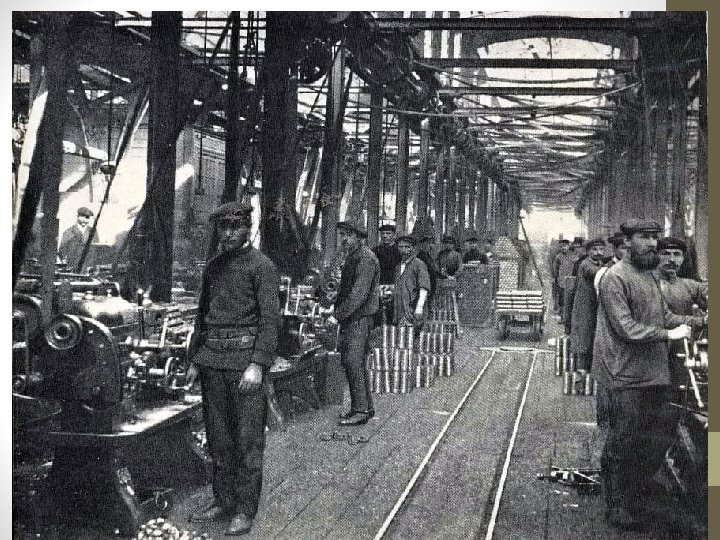
 • 19 th century capitalism gained its power from the Industrial Revolution in Britain and Europe and very few places escaped its effects. • The Islands too felt the impact of growing industrialisation, because the new industries required labour in great quantities.
 ORIGINS OF THE HUMAN TRADE • Commerce: Produce and sell more. • Europeans recognised that their industries could not prosper unless they have cheap or slave labour. • So, they would have access to cheap raw materials;
 • Human trade became an essential component of Western capitalism around the world. • Wherever the Europeans went with their profit-making ventures, they created a huge demand for cheap/forced labour.
 Economy in the Pacific • Subsistence economy: one lives off the land the ocean. Gathering and cultivating. • Money did not exist, except for Melanesian shell money.
 • Reciprocity: helping each other. ‘communalism’ • Repaying debts: done in different forms. If A repairs B’s house; B gives A a fish.
 SLAVE TRADE IN THE PACIFIC • Europeans did not see the Pacific Islands as an area to recruit slaves from (such as the African continent); • instead, their view was that the Islands were an alternative area for developing plantations.
 Cash Crops • Cotton • Coffee • Sugar cane • Cocoa • Copra
 • Early European settlers began cultivating in the Islands for the European market, and their home governments took a keen interest in the Islands for what they could get from the settlers living in the Islands. • By establishing colonial rule, the European powers could exploit such commercial opportunities more easily and profitably.
 PERUVIAN SLAVERY, 18621863 • Polynesian and Kiribati slaves for Peru and Chile. • Why did Peruvians seek Pacific labourers? • Peru’s agricultural exports were mainly grown in large plantations or haciendas (South American ranches).
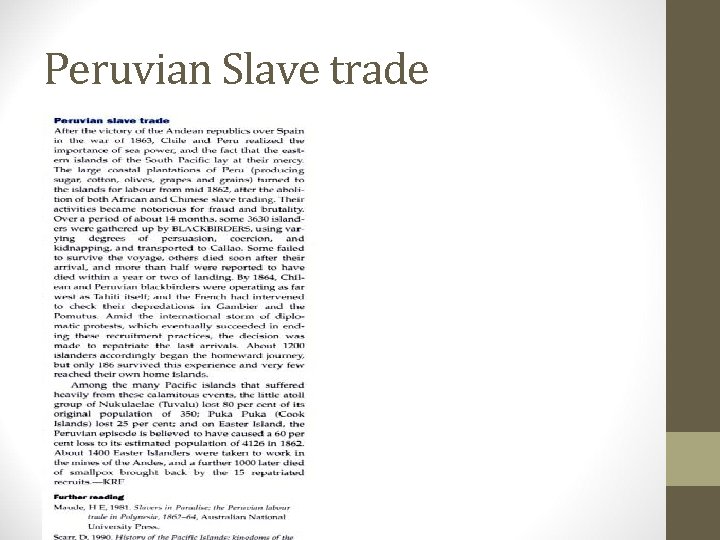 Peruvian Slave trade
 Blackbirding • Peruvian hacenderos (plantation owners) used African slaves, Chinese and South American indigenous peoples. • 1854: President Ramón Castilla abolished slavery. • 1856: Chinese migration ended. • South American indigenous people: refused to work for money.
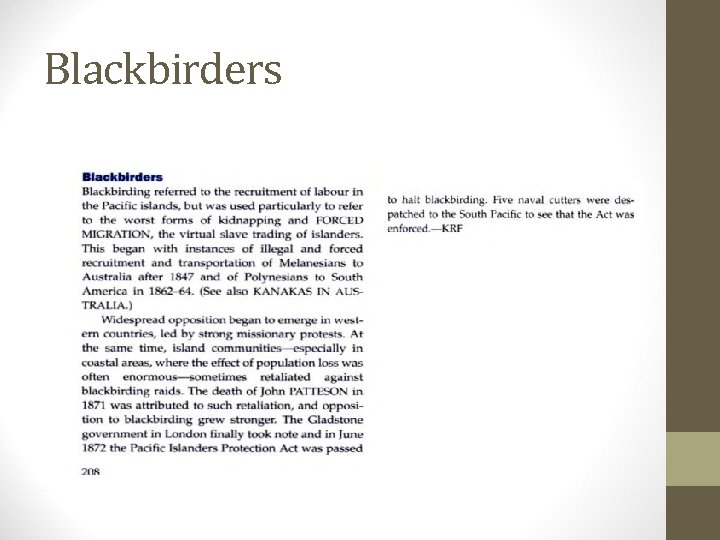 Blackbirders
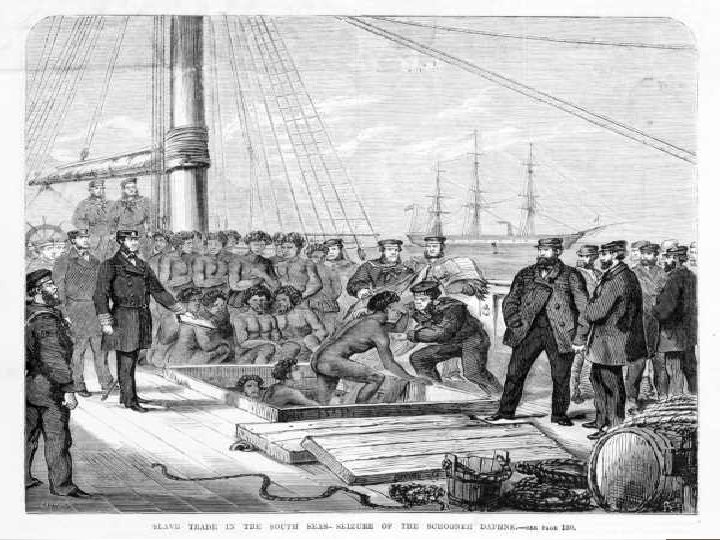
 • 1862: Joseph Byrne and B. D. Clark pressured Peruvian government to allow Vanuatu workers to come to Peru. • At Tongareva Island (Northern Cook Islands), he met Beni – a beachcomber – and recruited 130 Tongarevan workers to shift to Tahiti. • Tongarevans ‘eager’ to work. Coconut trees diseased; people starving; missionary-taught labour ethic.
 • Byrne shipped the Islanders to Peru. • What was life like for those ‘workers’? • Sold at big markups; disease; loneliness.
 THE MELANESIAN LABOUR TRADE (1883 -1942) • German New Guinea - plantations in the New Guinea Islands and Samoa. • Solomon Islands and Vanuatu - cotton plantations in Queensland Fiji, and later sugar plantations in Fiji and for Samoan copra plantations.
 “MAN-STEALING SHIPS” • Kidnapping common. Why? • Public awareness of inhumane treatment, and as public pressure against slavery increased. • The trade came under more official scrutiny and recruiters had to act more carefully.
 • Melanesian recruits: took advantage of antislavery conditions in the 1880 s. • They gained skills in negotiating and bargaining with recruiters for better deals.
 Solomon Islands • 30, 000 Solomon Island Melanesian workers recruited for plantations in Queensland, Fiji and Samoa. • Most young men from the mountainous and heavily populated island of Malaita.
 • Employers favoured this form of labour as it was CHEAP and RELIABLE. • Labourers were in foreign lands. Isolated: without relatives and families, did not speak the local languages. • Bondage: Labourers could not leave their employer.
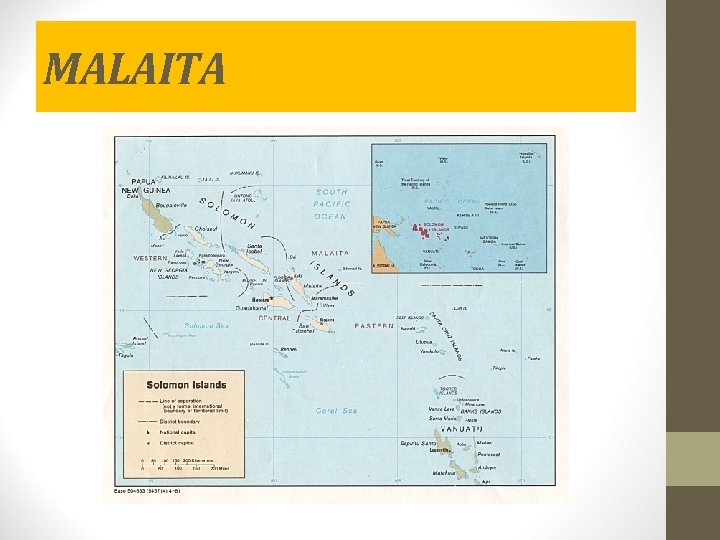 MALAITA
 Why Leave? • Excitement: escape from boredom/dullness • Relief from village restrictions • Escape from tribal fighting • Food shortages • Attraction to Western material culture
 NEGATIVE EFFECTS ON ISLANDERS • Diseases: no immunity or antibodies. • Psychological distress: depression. • High mortality rates. (1: 7) • The rise of a new class of ‘big-men’ empowered by new technologies and firearms. Coastal big-men rose very quickly in influence and power over large areas.
 EFFECTS OF LABOUR TRADE • Resettlement patterns • Language development
 MOVEMENT TO THE PACIFIC RIM • 1800 s – colonialism and capitalism were the most important factors causing changes in settlement patterns in Island regions. • Many labourers chose to remain in their new home countries. They have descendants. • This period set the pattern for the present migrations of Islanders to metropolitan cities.
 POLYNESIAN DISPERSION • More than 3 times as many American Samoans on the US mainland than at home. • More Samoans in NZ, Australia and the US than at home. • 4 times more Niueans overseas than in Niue. • 3 times as many Tokelauans overseas than in Tokelau. • Twice as many Cook Islanders living in NZ, Australia and US than at home.
 • Twice as many Norfolk Islanders in Sydney than on Norfolk Island. • More Marshall Islanders and Palauans live overseas than at home. • Pacific Islanders depend on financial support from overseas. Remittances can be the biggest income earner for an Island government e. g. in 1997, US $33 million was remitted to Samoa. • Home visits: boost the tourist industry.
 LANGUAGE • Development of ‘Pidgin’ or other plantation languages as an outcome of labour movement. • Tok Pisin. • Simplified vocabulary and grammar, a mixture of languages. • Mi wok nau. 'I'm working now. ' Mi wok asde. 'I worked yesterday. '
 • Tutorial Questions: • Identify the relationship between colonialism and the slave and labour trade. • What do understand about the origin of labour trade and its affects upon Pacific Islands? • what is colonialism? • What is Salivary?