


 Скачать презентацию Highly Pathogenic Avian Influenza Control Programme The Principles
081ceae06455e57c8b1a3500b5dcedd0.ppt
- Количество слайдов: 44
 Highly Pathogenic Avian Influenza Control Programme The Principles of Decontamination in Poultry Market Chain cleaning and disinfection training Technical support provided by:
 Why we do Cleaning and Disinfection in Live Poultry Market Chain? • To destroy or to reduce the number of virus in the market environment, collection yards and poultry slaughter houses : • • H 5 N 1 are found in chicken’s faeces, blood and mucus 2009 – 2012 surveillance results: on average, 25% of poultry market in JABODETABEK are contaminated by AI virus To prevent virus contamination to consumers / market goers: • Indonesia has the highest human H 5 N 1 cases : 191 cases with 159 fatalities (WHO Data August 2012) To maintain the cleanliness and comfort of the poultry market environment 2
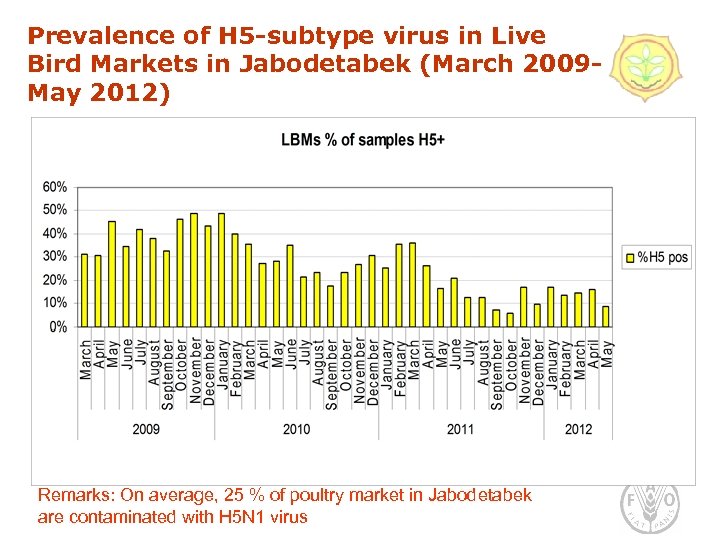 Prevalence of H 5 -subtype virus in Live Bird Markets in Jabodetabek (March 2009 May 2012) Remarks: On average, 25 % of poultry market in Jabodetabek are contaminated with H 5 N 1 virus
 Where was H 5 N 1 virus born and where do they multiply?
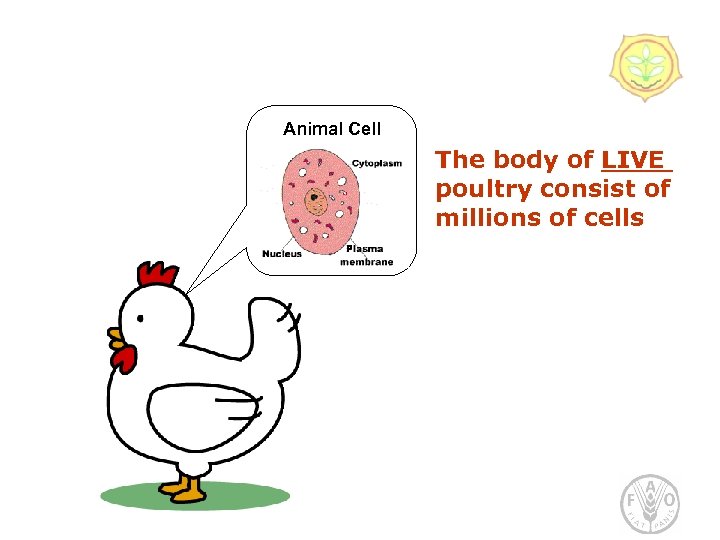 Animal Cell The body of LIVE poultry consist of millions of cells
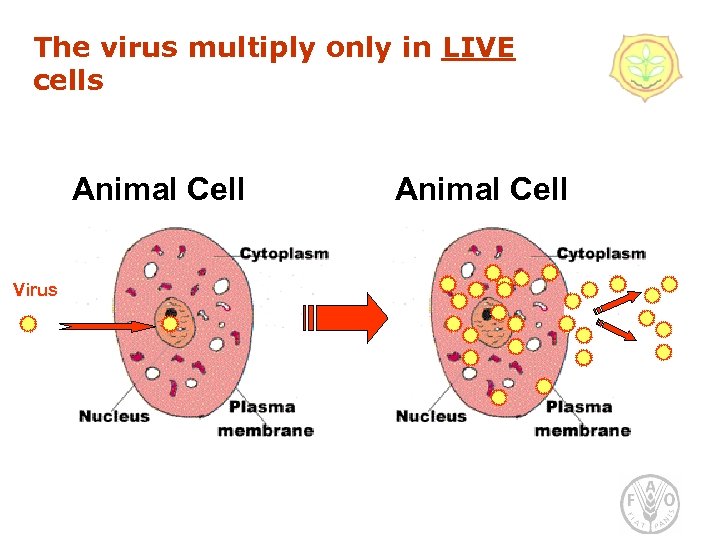 The virus multiply only in LIVE cells Animal Cell Virus Animal Cell
 Where were all H 5 N 1 virus born? In the body of LIVE poultry infected by the virus
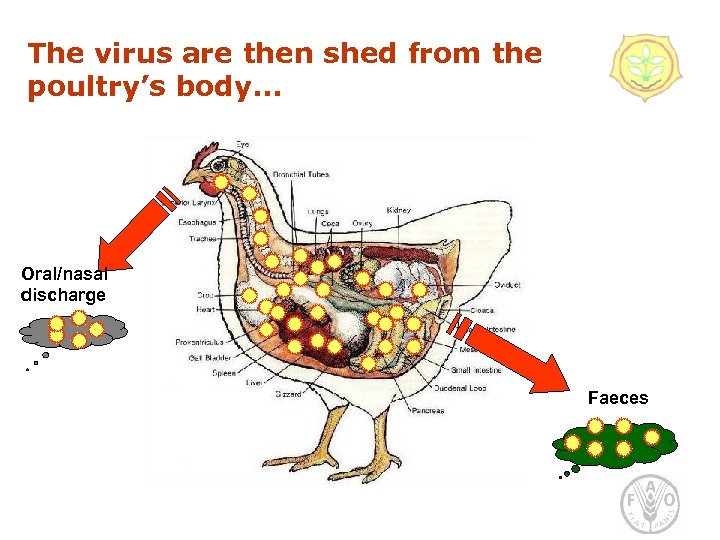 The virus are then shed from the poultry’s body. . . Oral/nasal discharge Faeces
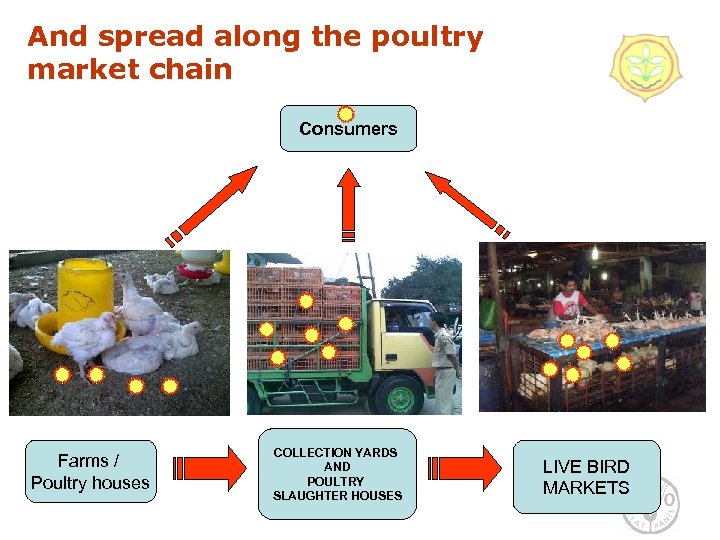 And spread along the poultry market chain Consumers Farms / Poultry houses COLLECTION YARDS AND POULTRY SLAUGHTER HOUSES LIVE BIRD MARKETS
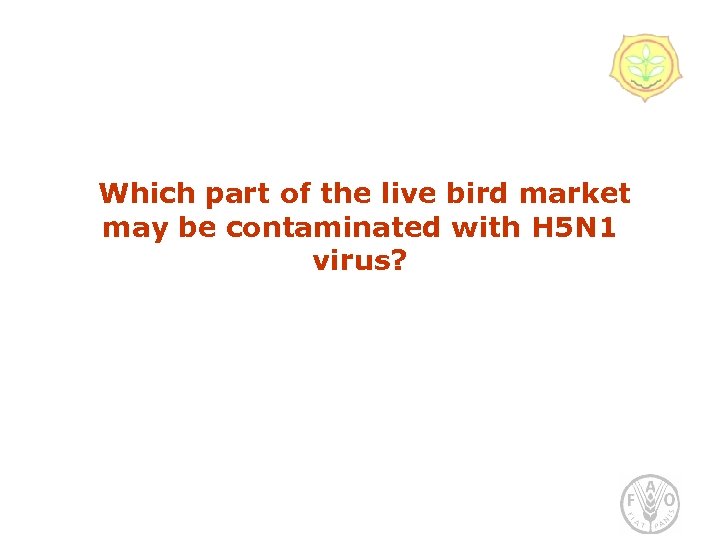 Which part of the live bird market may be contaminated with H 5 N 1 virus?
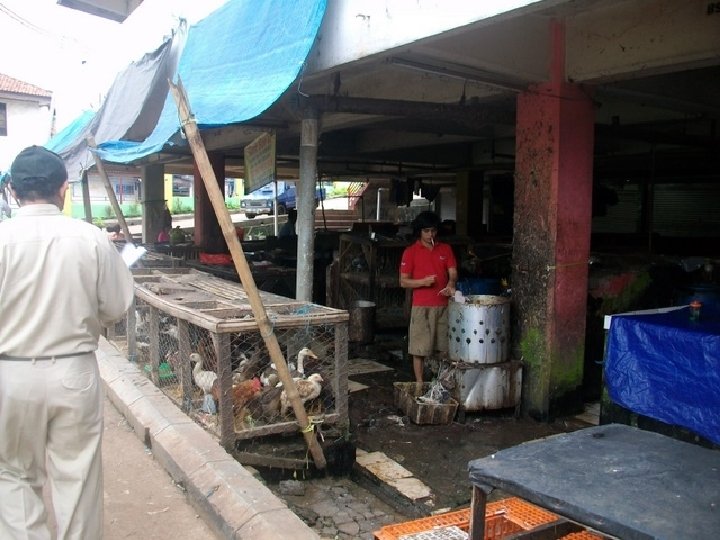
 Which part of the live bird market may be contaminated with H 5 N 1 virus? Everywhere!
 How do we reduce the virus contamination level? 1. Cleaning ! 2. Disinfection !
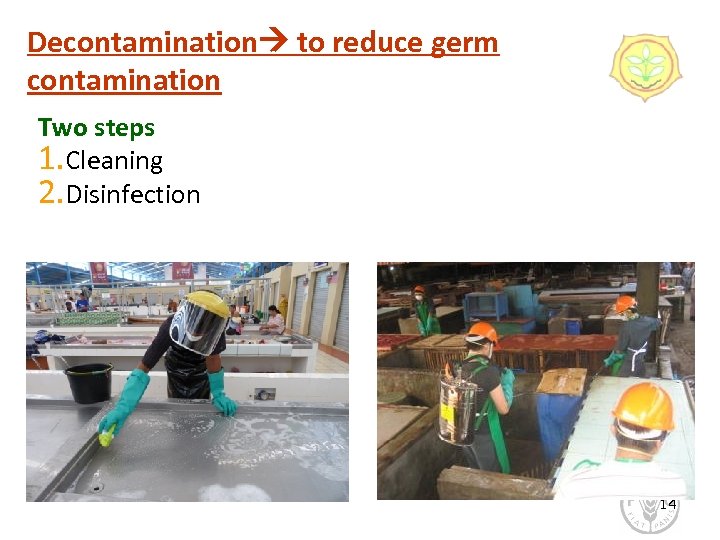 Decontamination to reduce germ contamination Two steps 1. Cleaning 2. Disinfection 14
 Decontamination= Cleaning + Disinfection 1. Cleaning • • • The most important step Eliminates 80% of pathogens Physical disposal of organic materials (Faeces, Blood, waste) 2. Disinfection • • • Unreliable without effective cleaning Eliminate the remaining 20% Kills pathogens chemically
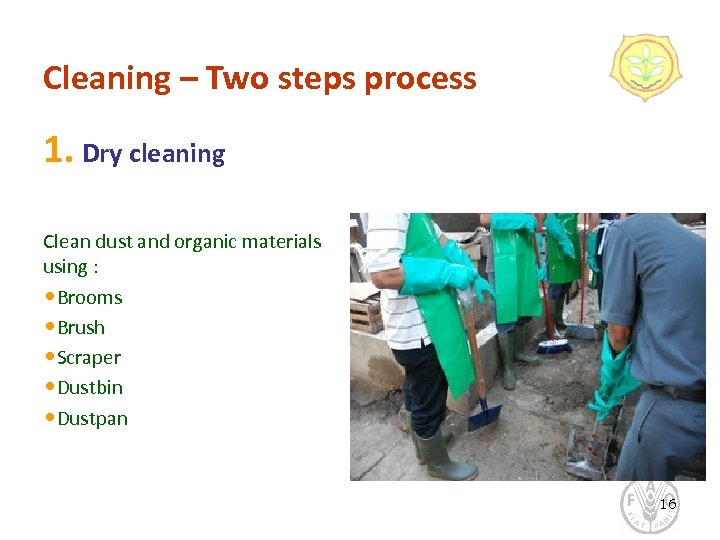 Cleaning – Two steps process 1. Dry cleaning Clean dust and organic materials using : • Brooms • Brush • Scraper • Dustbin • Dustpan 16
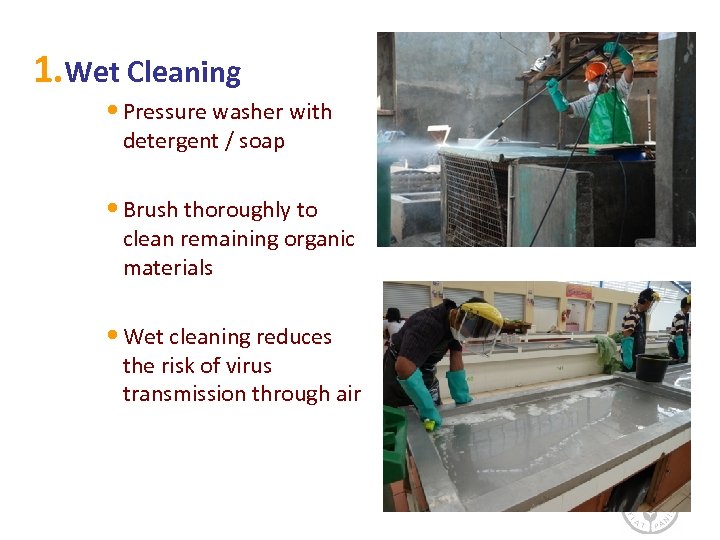 1. Wet Cleaning • Pressure washer with detergent / soap • Brush thoroughly to clean remaining organic materials • Wet cleaning reduces the risk of virus transmission through air 17
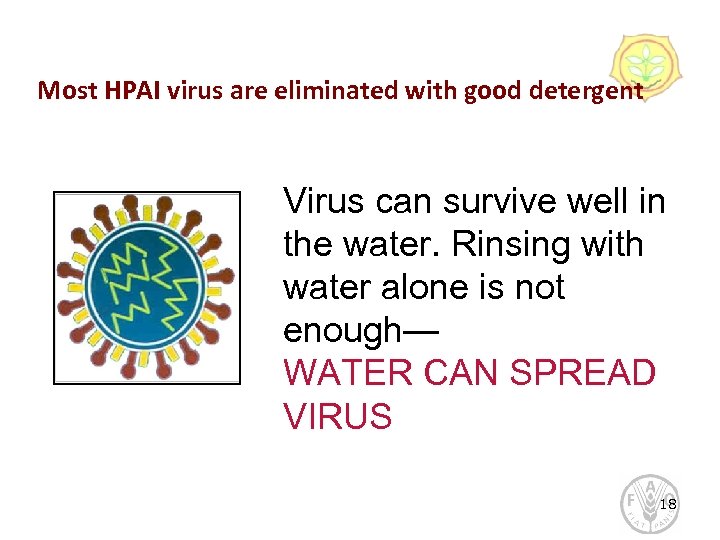 Most HPAI virus are eliminated with good detergent Virus can survive well in the water. Rinsing with water alone is not enough— WATER CAN SPREAD VIRUS 18
 Materials that can kill H 5 N 1 virus • • Soap with water Detergent Chemical disinfectant Sunlight Heat – steam or temperature above 40ºC. Acid and alkali Heat and fire
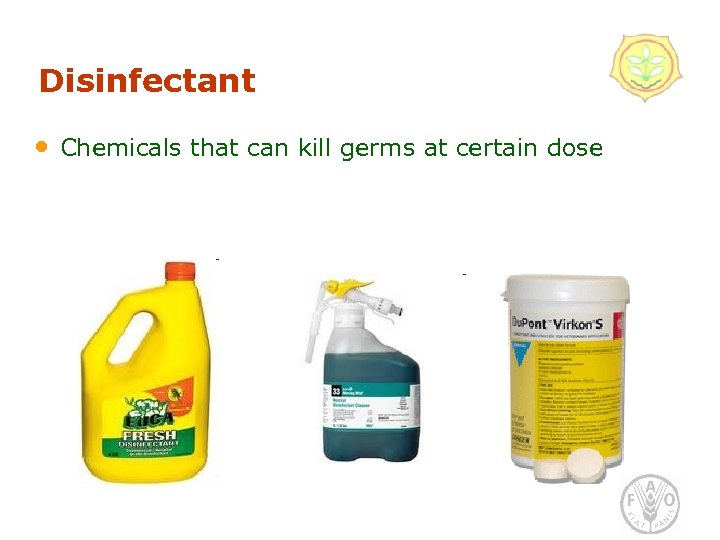 Disinfectant • Chemicals that can kill germs at certain dose
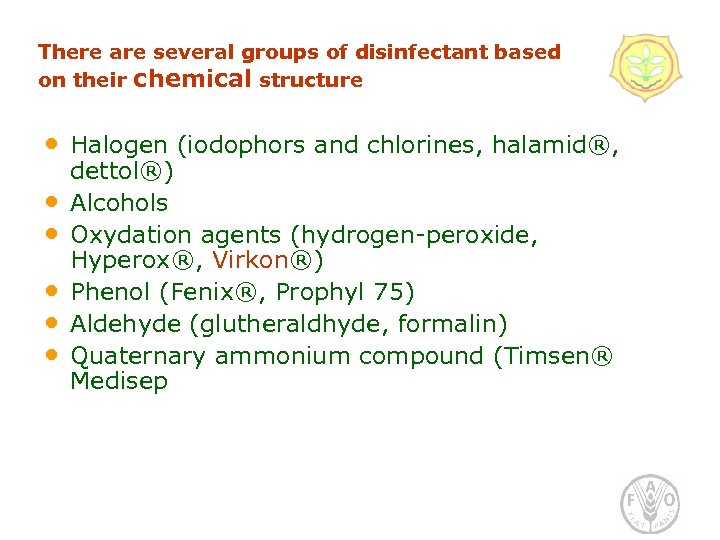 There are several groups of disinfectant based on their chemical structure • • • Halogen (iodophors and chlorines, halamid®, dettol®) Alcohols Oxydation agents (hydrogen-peroxide, Hyperox®, Virkon®) Phenol (Fenix®, Prophyl 75) Aldehyde (glutheraldhyde, formalin) Quaternary ammonium compound (Timsen® Medisep
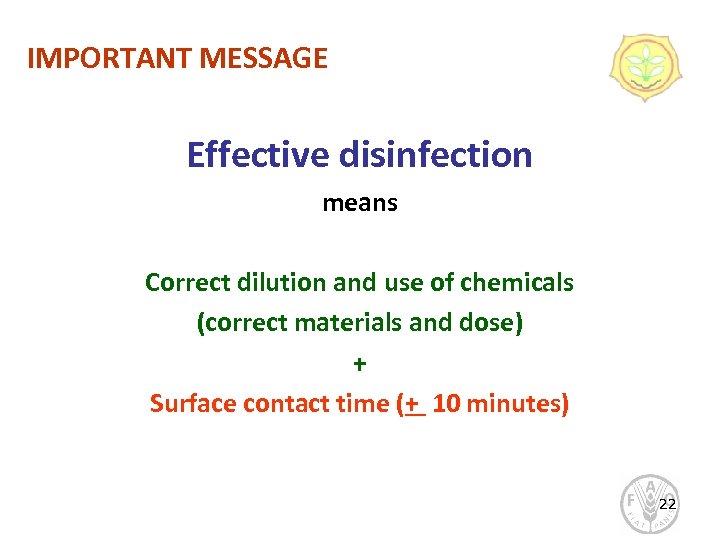 IMPORTANT MESSAGE Effective disinfection means Correct dilution and use of chemicals (correct materials and dose) + Surface contact time (+ 10 minutes) 22
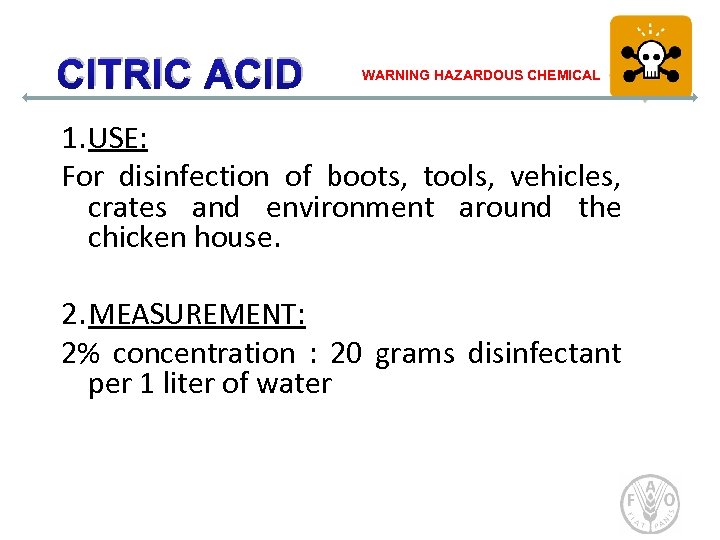 CITRIC ACID WARNING HAZARDOUS CHEMICAL 1. USE: For disinfection of boots, tools, vehicles, crates and environment around the chicken house. 2. MEASUREMENT: 2% concentration : 20 grams disinfectant per 1 liter of water
 3. STORAGE • Store in closed container in a cool and dry place • Close after use • Do not mix with other chemicals 4. WARNING: • KEEP AWAY FROM CHILDREN • HAZARDOUS IF SWALLOWED OR INHALED • CAUSE IRRITATION ON SKIN AND EYE 24
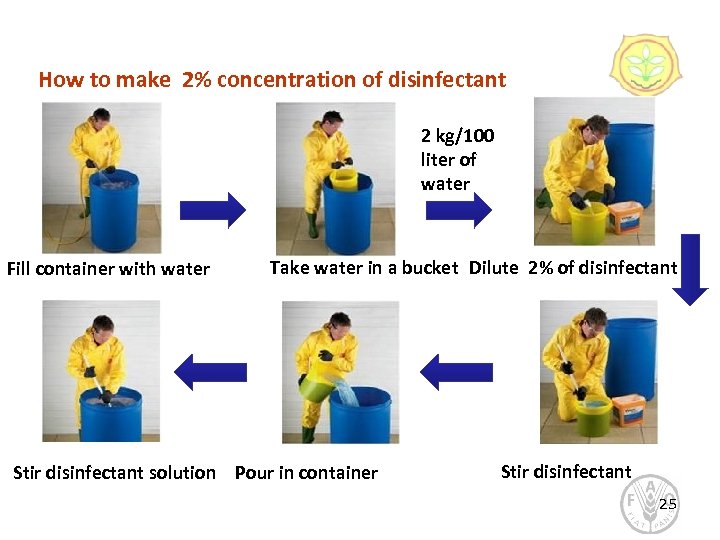 How to make 2% concentration of disinfectant 2 kg/100 liter of water Fill container with water Take water in a bucket Dilute 2% of disinfectant Stir disinfectant solution Pour in container Stir disinfectant 25
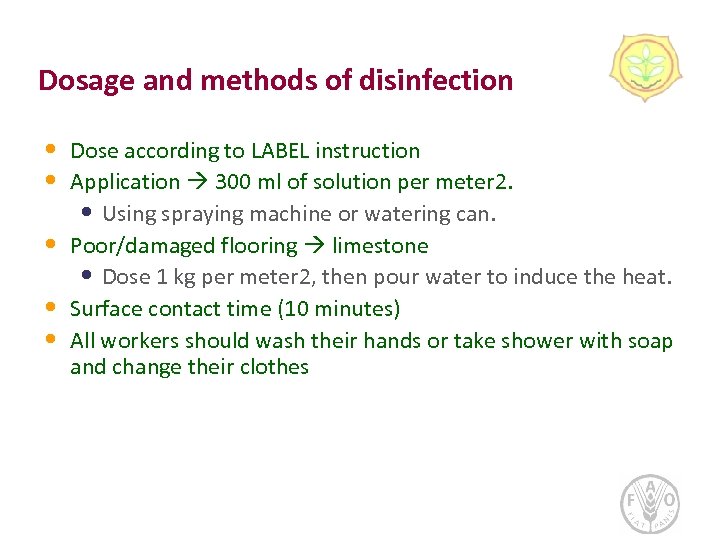 Dosage and methods of disinfection • • • Dose according to LABEL instruction Application 300 ml of solution per meter 2. • Using spraying machine or watering can. Poor/damaged flooring limestone • Dose 1 kg per meter 2, then pour water to induce the heat. Surface contact time (10 minutes) All workers should wash their hands or take shower with soap and change their clothes
 Decontamination activities are the responsibilities of: • Vendors • Market paravets • Cleaning officers • Market management companies • Livestock service • Health service • etc
 Cleaning and Disinfection Activities (Decontamination) at Poultry Market
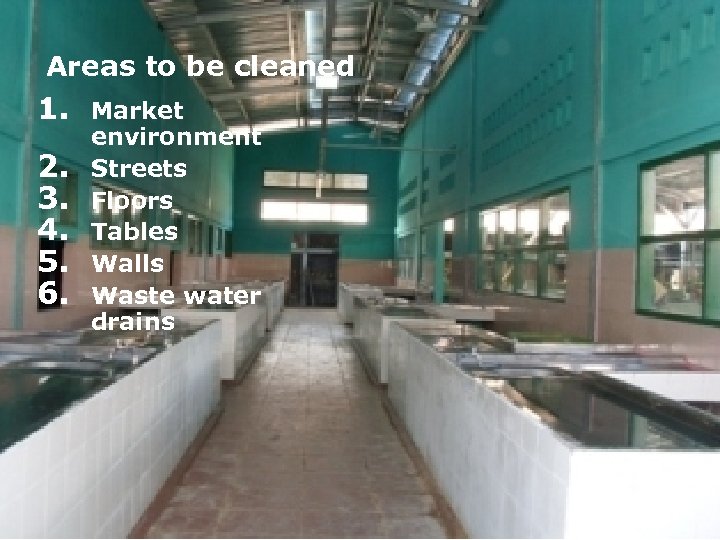 Areas to be cleaned 1. 2. 3. 4. 5. 6. Market environment Streets Floors Tables Walls Waste water drains
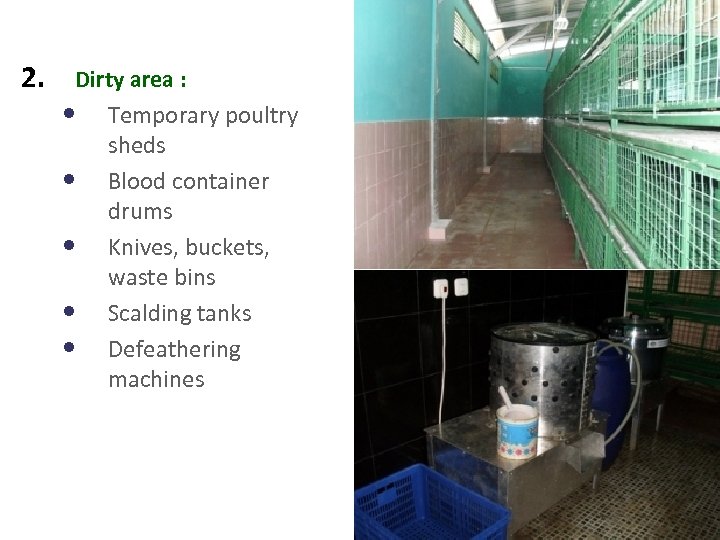 2. Dirty area : • Temporary poultry sheds • Blood container drums • Knives, buckets, waste bins • • Scalding tanks Defeathering machines
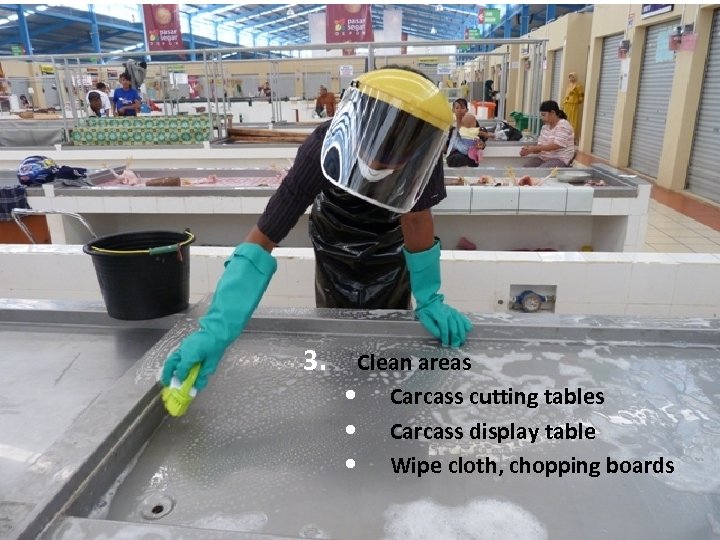 3. Clean areas • Carcass cutting tables • Carcass display table • Wipe cloth, chopping boards
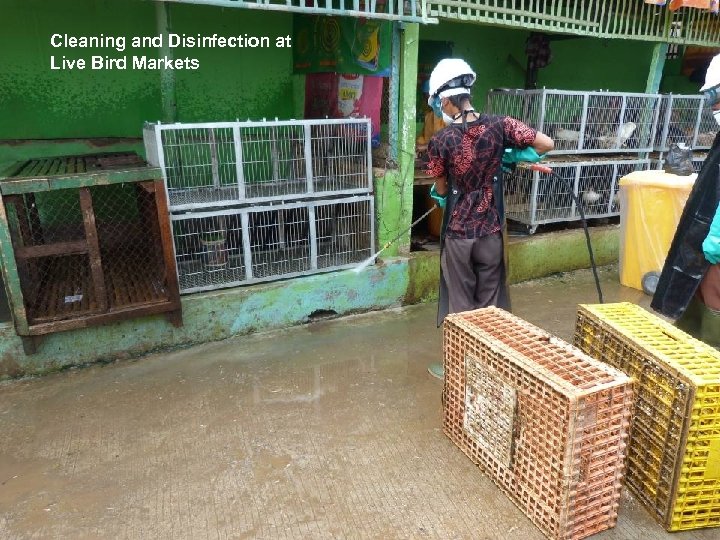 Cleaning and Disinfection at Live Bird Markets
 Cleaning and Disinfection Activities (Decontamination) at Collector Yards and Poultry Slaughter Houses
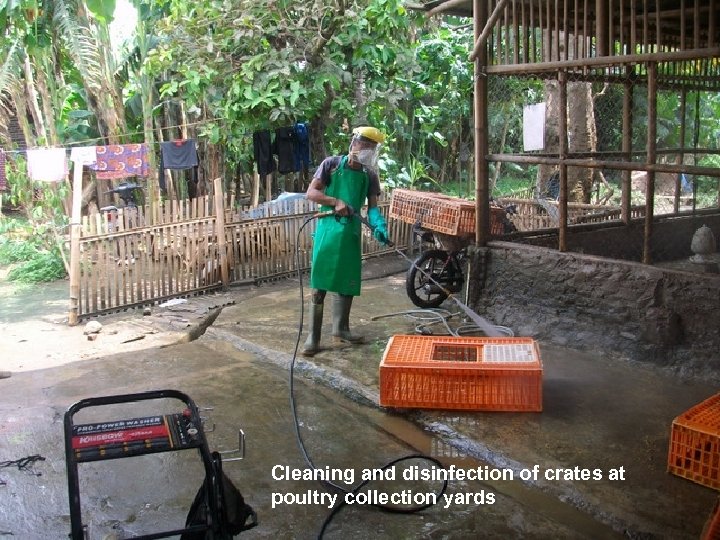 Cleaning and disinfection of crates at poultry collection yards
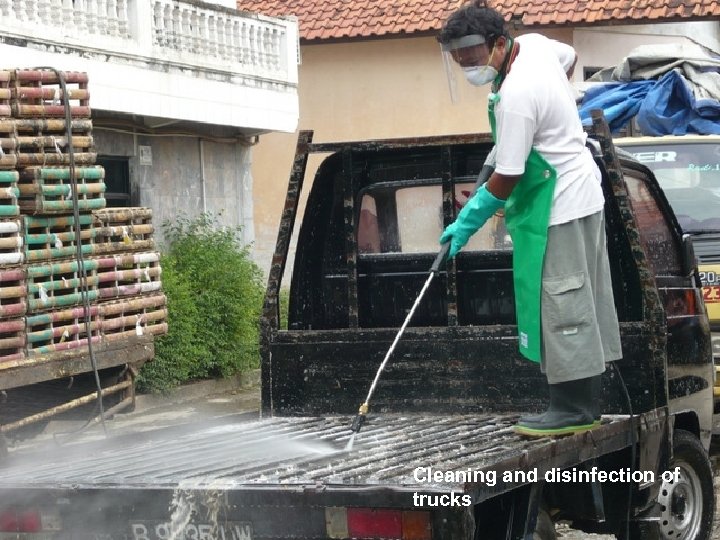 Cleaning and disinfection of trucks
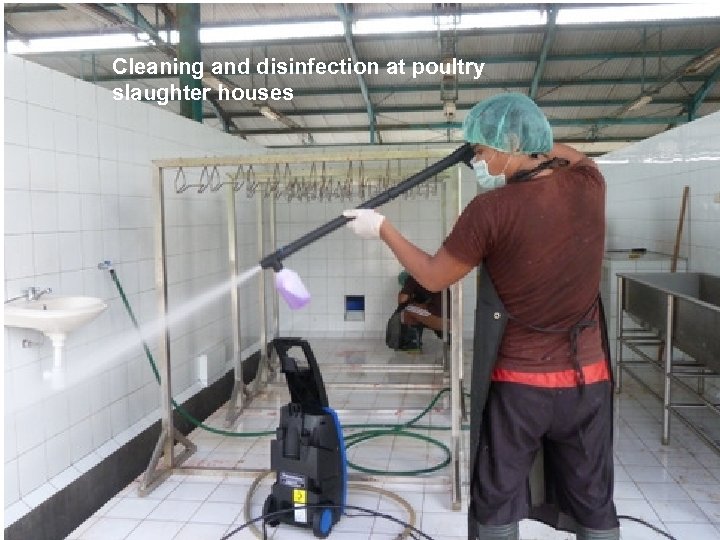 Cleaning and disinfection at poultry slaughter houses
 Important! • Disinfectant’s effectiveness decreases during contact with microbes (organic materials). • Organic materials (faeces or manure) absorp disinfectant and make it less effective. So: Cleaning prior to disinfection! 37
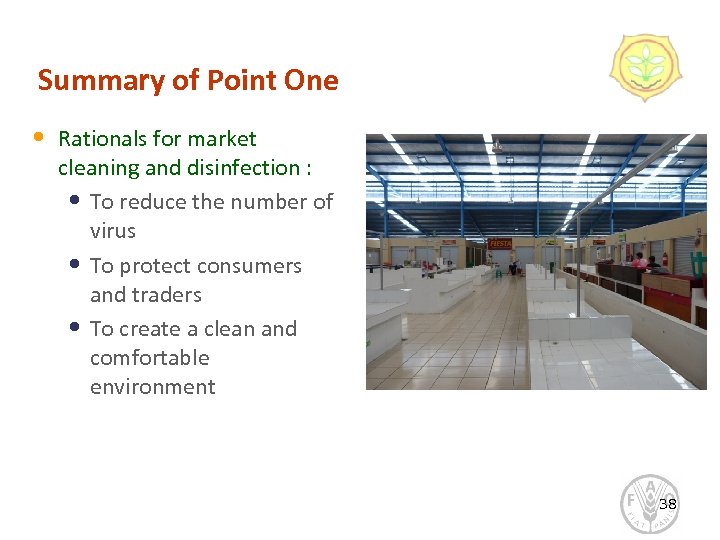 Summary of Point One • Rationals for market cleaning and disinfection : • To reduce the number of virus • To protect consumers and traders • To create a clean and comfortable environment 38
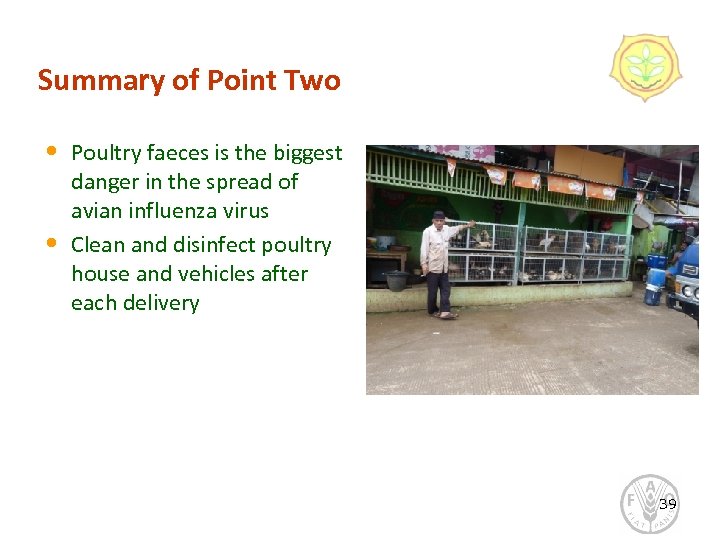 Summary of Point Two • • Poultry faeces is the biggest danger in the spread of avian influenza virus Clean and disinfect poultry house and vehicles after each delivery 39
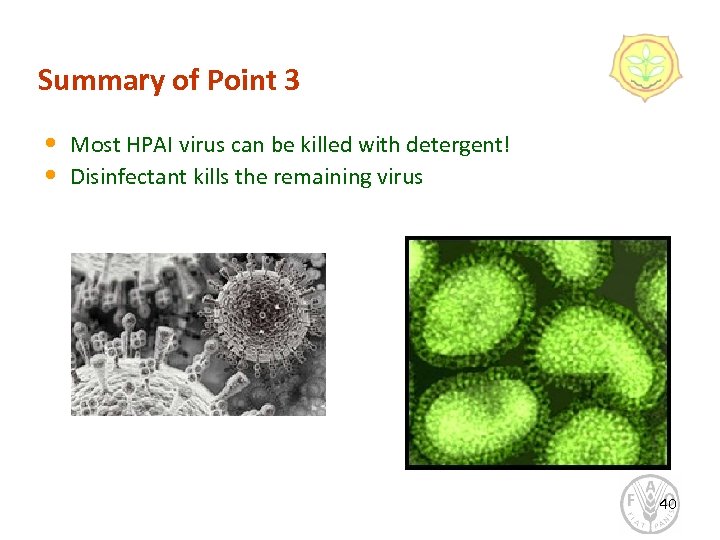 Summary of Point 3 • • Most HPAI virus can be killed with detergent! Disinfectant kills the remaining virus 40
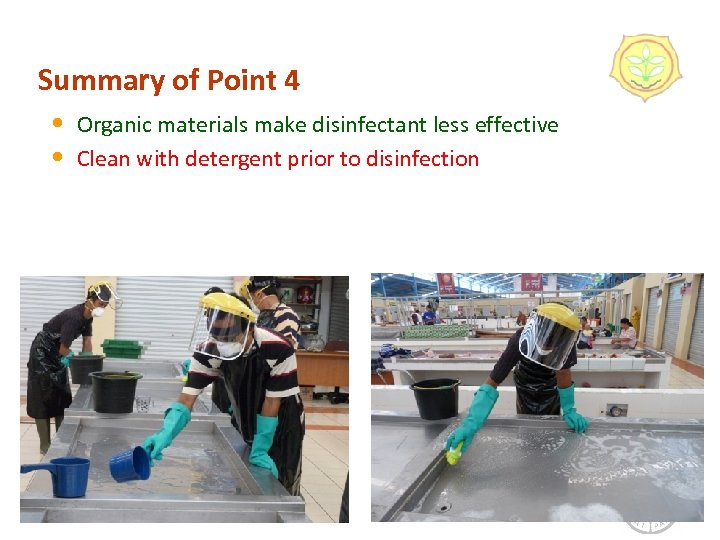 Summary of Point 4 • Organic materials make disinfectant less effective • Clean with detergent prior to disinfection 41
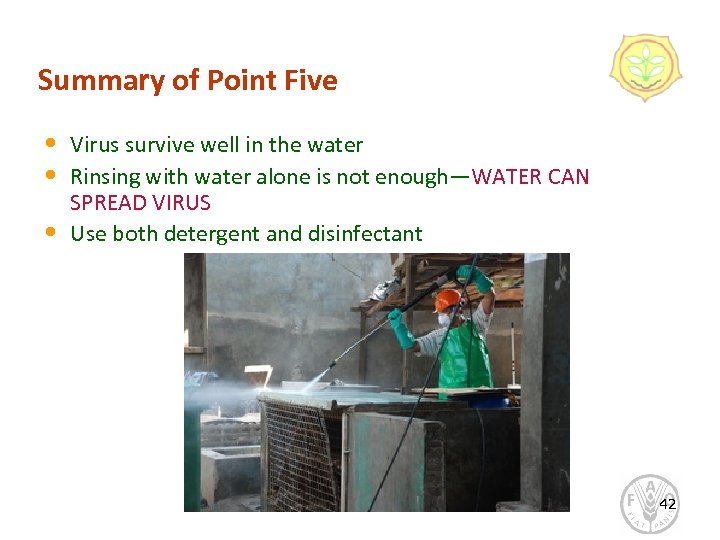 Summary of Point Five • • • Virus survive well in the water Rinsing with water alone is not enough—WATER CAN SPREAD VIRUS Use both detergent and disinfectant 42
 Summary of Point Six A. Use more soap/detergent!! • • > 80% of microbes decontamination are done with soap/detergent alone Proper cleaning of vehicles, crates, tools and environment around collection yards, poultry slaughter houses and live bird markets B. Disinfection on cleansed surfaces • Disinfection works best if applied on clean surfaces! • Dead poultries are the main source of virus contamination C. Dispose carcass immediately and safely D. Encourage traders / vendors to play a more active role in maintaining market cleanliness • A clean market is more attractive to consumers!
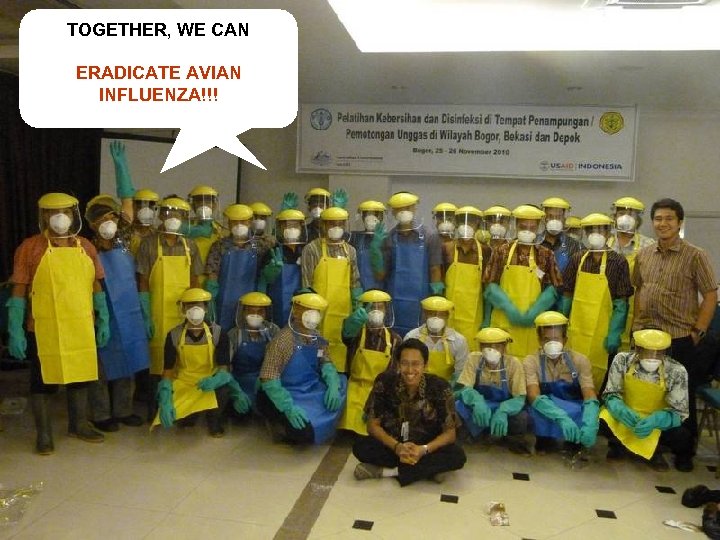 TOGETHER, WE CAN ERADICATE AVIAN INFLUENZA!!!