


 Скачать презентацию Hereditary cancer syndromes in Russia research diagnosis and
Наследствнный рак в России.pptx
- Количество слайдов: 31
 Hereditary cancer syndromes in Russia: research, diagnosis and clinical issues Evgeny N. Imyanitov N. N. Petrov Institute of Oncology St. -Petersburg Pediatric Medical University I. I. Mechnikov North-Western Medical University St. -Petersburg 1
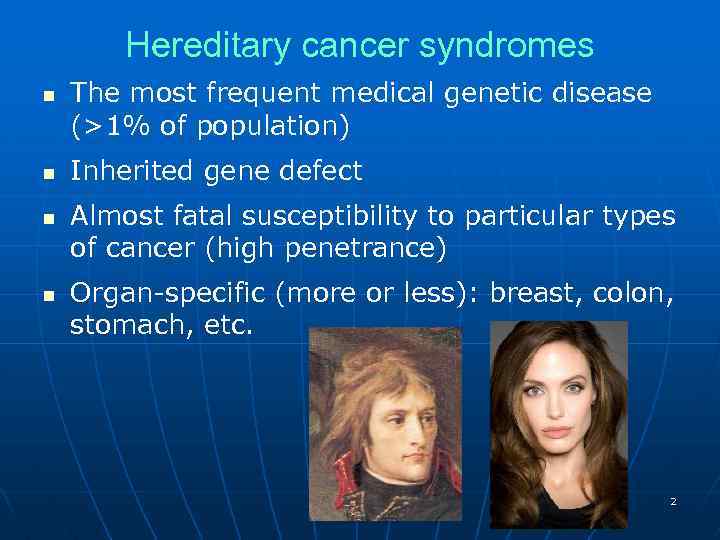 Hereditary cancer syndromes n n The most frequent medical genetic disease (>1% of population) Inherited gene defect Almost fatal susceptibility to particular types of cancer (high penetrance) Organ-specific (more or less): breast, colon, stomach, etc. 2
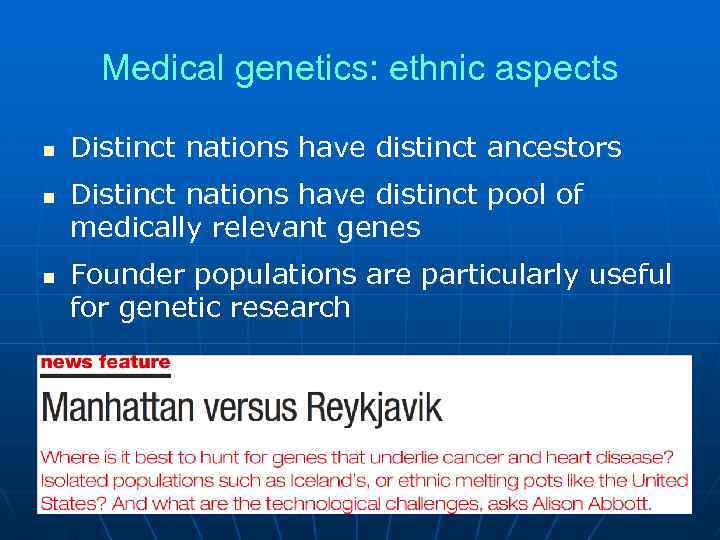 Medical genetics: ethnic aspects n n n Distinct nations have distinct ancestors Distinct nations have distinct pool of medically relevant genes Founder populations are particularly useful for genetic research 3
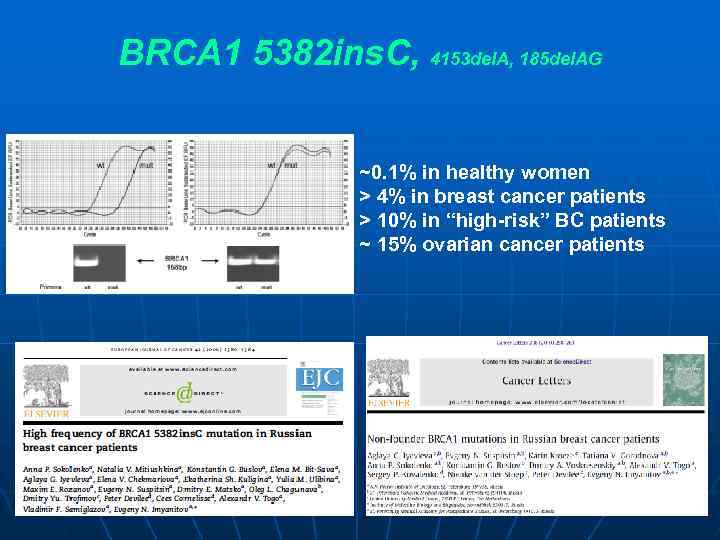 BRCA 1 5382 ins. C, 4153 del. A, 185 del. AG ~0. 1% in healthy women > 4% in breast cancer patients > 10% in “high-risk” BC patients ~ 15% ovarian cancer patients 4
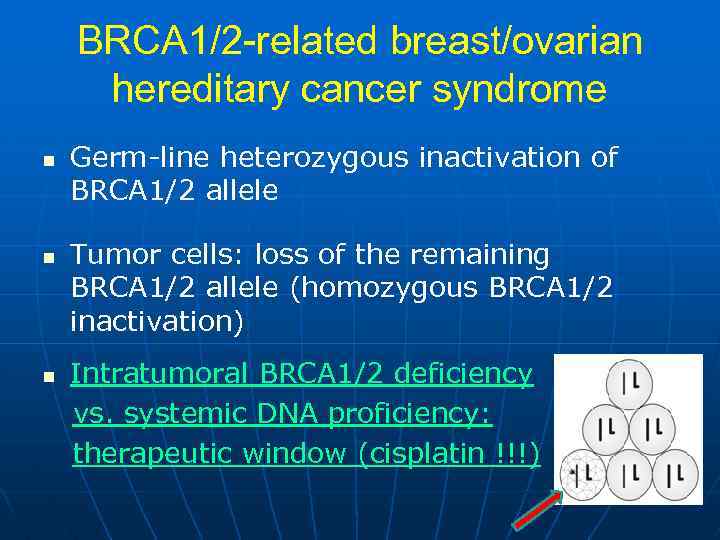 BRCA 1/2 -related breast/ovarian hereditary cancer syndrome n n n Germ-line heterozygous inactivation of BRCA 1/2 allele Tumor cells: loss of the remaining BRCA 1/2 allele (homozygous BRCA 1/2 inactivation) Intratumoral BRCA 1/2 deficiency vs. systemic DNA proficiency: therapeutic window (cisplatin !!!) 5
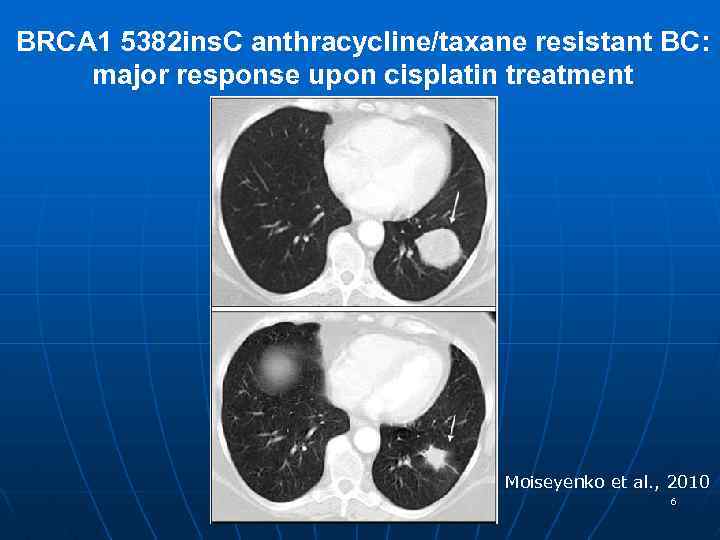 BRCA 1 5382 ins. C anthracycline/taxane resistant BC: major response upon cisplatin treatment Moiseyenko et al. , 2010 6
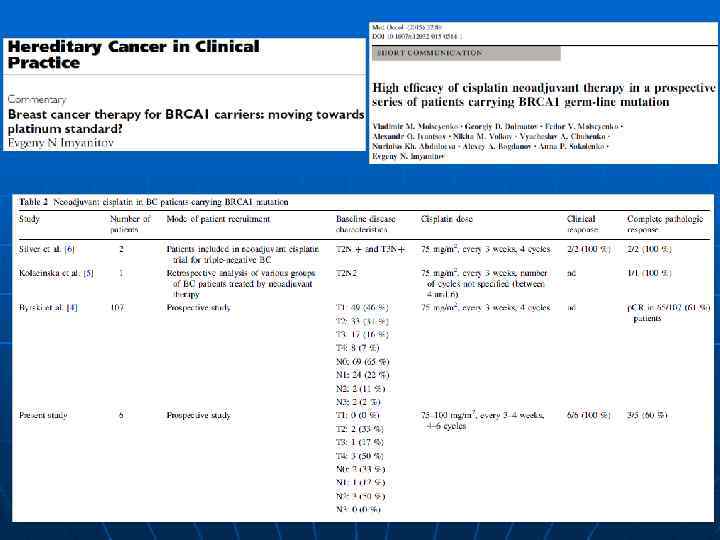
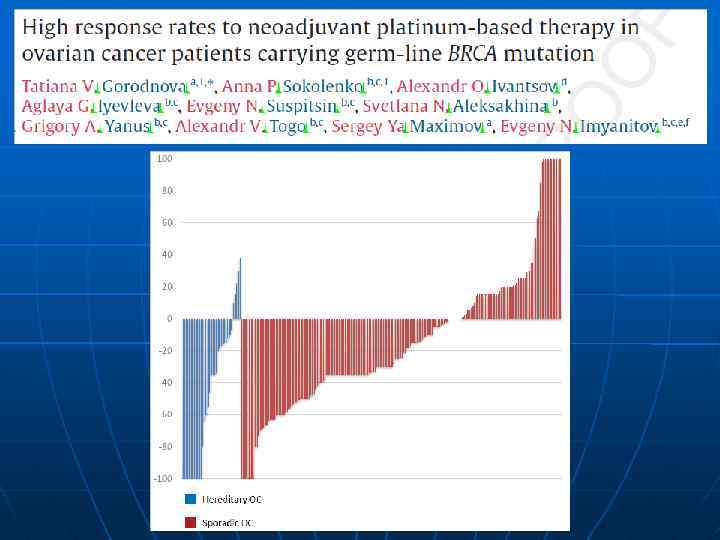
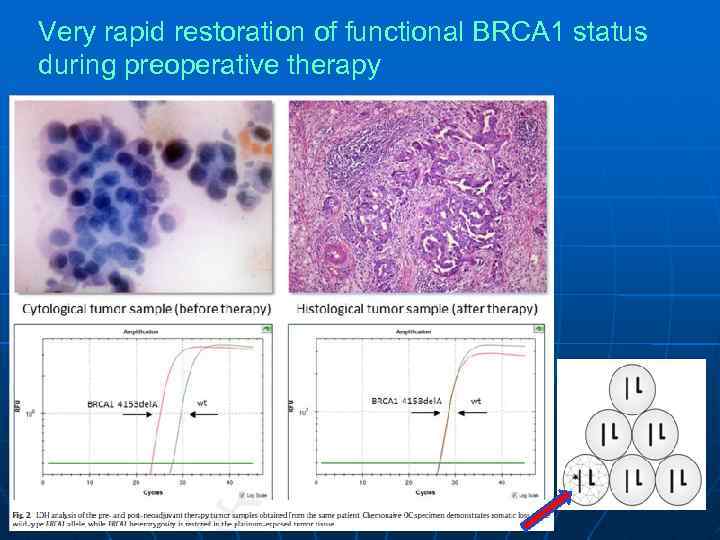 Very rapid restoration of functional BRCA 1 status during preoperative therapy
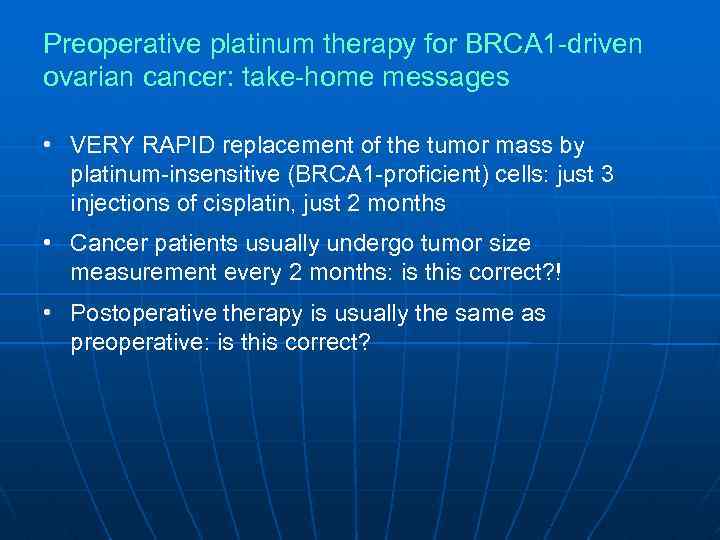 Preoperative platinum therapy for BRCA 1 -driven ovarian cancer: take-home messages • VERY RAPID replacement of the tumor mass by platinum-insensitive (BRCA 1 -proficient) cells: just 3 injections of cisplatin, just 2 months • Cancer patients usually undergo tumor size measurement every 2 months: is this correct? ! • Postoperative therapy is usually the same as preoperative: is this correct?
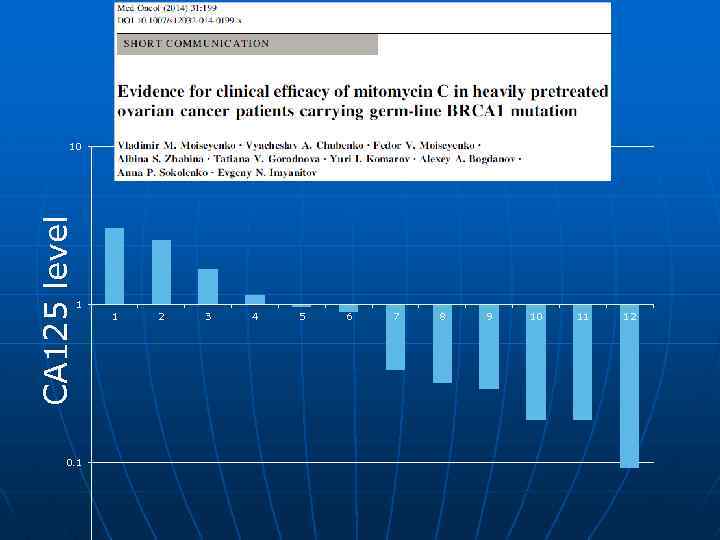 CA 125 level 10 1 0. 1 1 2 3 4 5 6 7 8 9 10 11 12
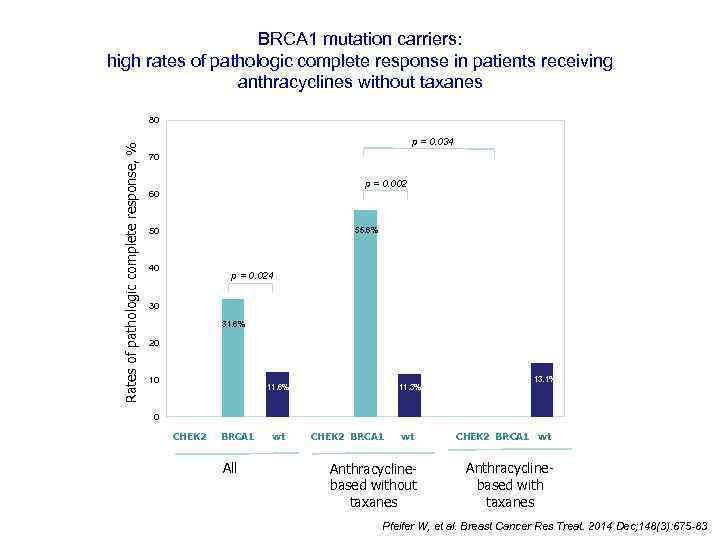 BRCA 1 mutation carriers: high rates of pathologic complete response in patients receiving anthracyclines without taxanes Rates of pathologic complete response, % 80 p = 0. 034 70 p = 0. 002 60 55. 6% 50 40 p = 0. 024 30 31. 6% 20 10 11. 6% 11. 3% 13. 1% 0 CHEK 2 BRCA 1 All wt CHEK 2 BRCA 1 wt Anthracyclinebased without taxanes Anthracyclinebased with taxanes Pfeifer W, et al. Breast Cancer Res Treat. 2014 Dec; 148(3): 675 -83
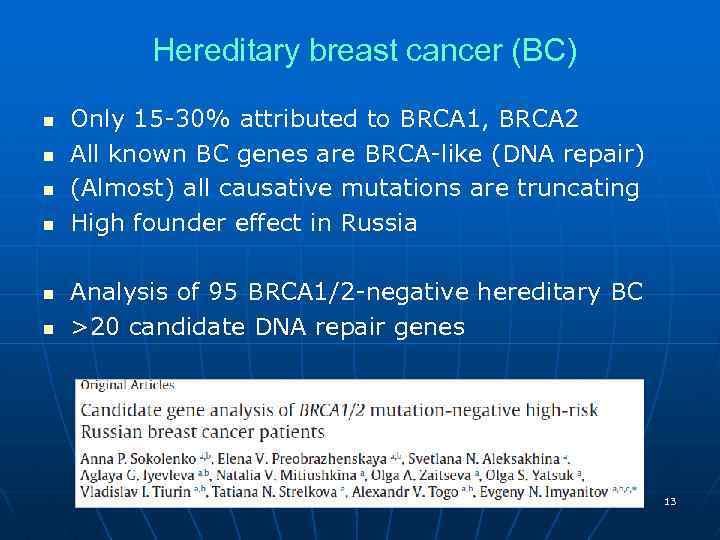 Hereditary breast cancer (BC) n n n Only 15 -30% attributed to BRCA 1, BRCA 2 All known BC genes are BRCA-like (DNA repair) (Almost) all causative mutations are truncating High founder effect in Russia Analysis of 95 BRCA 1/2 -negative hereditary BC >20 candidate DNA repair genes 13
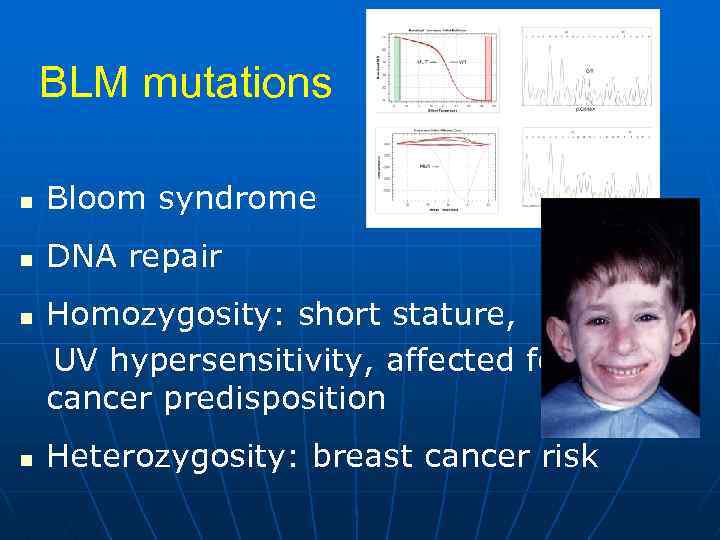 BLM mutations n Bloom syndrome n DNA repair n n Homozygosity: short stature, UV hypersensitivity, affected fertility, cancer predisposition Heterozygosity: breast cancer risk
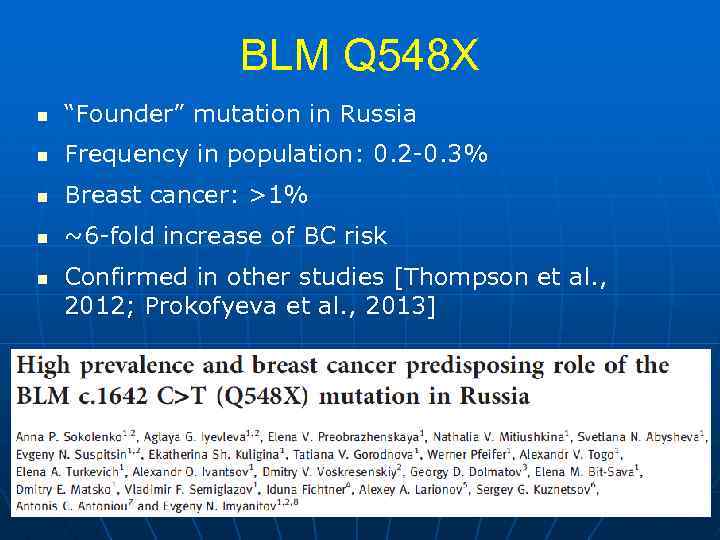 BLM Q 548 X n “Founder” mutation in Russia n Frequency in population: 0. 2 -0. 3% n Breast cancer: >1% n ~6 -fold increase of BC risk n Confirmed in other studies [Thompson et al. , 2012; Prokofyeva et al. , 2013]
 Founder population (Russians) n n 95 BRCA 1/2 -negative hereditary BC, ~20 candidate genes: 1 new gene (BLM) Exome sequencing: >20 thousands genes (incl. ~1000 BRCA-related/like), hence just a few cases needed to find another new gene? n ~95 x ~20 = ~1000 x ~2 n “True” gene: recurrent, frequent mutation n Exome sequencing, then testing of promising mutations in ~BRCA 1/2 -negative hereditary BC 16
 Proof-of-concept: whole exome sequencing in founder populations 17
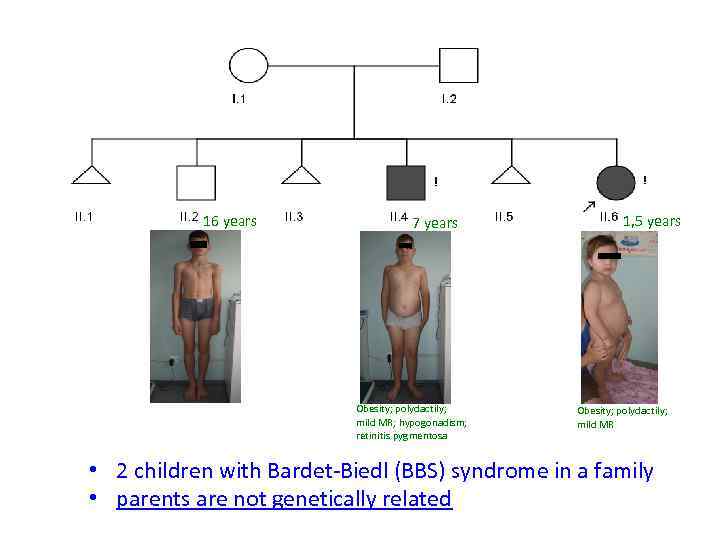 16 years 7 years Obesity; polydactily; mild MR; hypogonadism; retinitis pygmentosa 1, 5 years Obesity; polydactily; mild MR • 2 children with Bardet-Biedl (BBS) syndrome in a family • parents are not genetically related
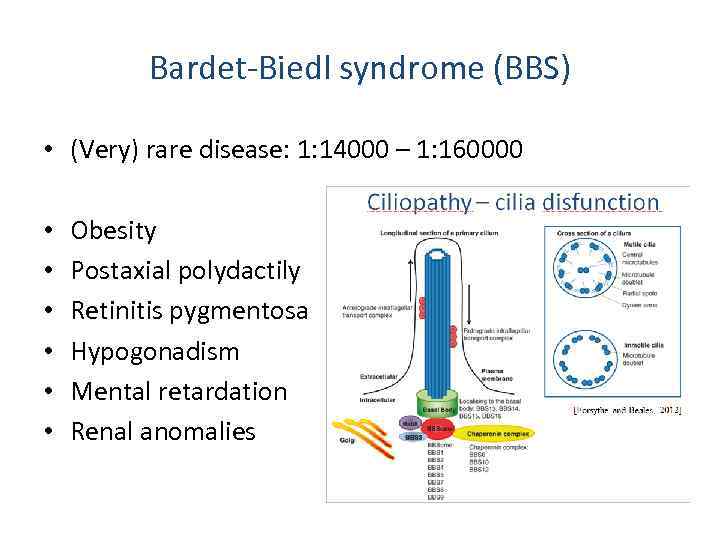 Bardet-Biedl syndrome (BBS) • (Very) rare disease: 1: 14000 – 1: 160000 • • • Obesity Postaxial polydactily Retinitis pygmentosa Hypogonadism Mental retardation Renal anomalies
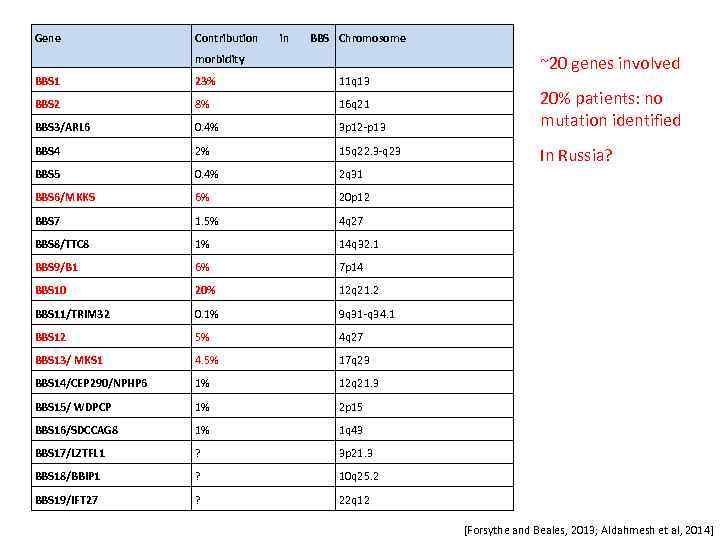 Gene Contribution in BBS Chromosome morbidity BBS 1 23% 11 q 13 BBS 2 8% 16 q 21 BBS 3/ARL 6 0. 4% 3 p 12 -p 13 BBS 4 2% 15 q 22. 3 -q 23 BBS 5 0. 4% 2 q 31 BBS 6/MKKS 6% 20 p 12 BBS 7 1. 5% 4 q 27 BBS 8/TTC 8 1% 14 q 32. 1 BBS 9/B 1 6% 7 p 14 BBS 10 20% 12 q 21. 2 BBS 11/TRIM 32 0. 1% 9 q 31 -q 34. 1 BBS 12 5% 4 q 27 BBS 13/ MKS 1 4. 5% 17 q 23 BBS 14/CEP 290/NPHP 6 1% 12 q 21. 3 BBS 15/ WDPCP 1% 2 p 15 BBS 16/SDCCAG 8 1% 1 q 43 BBS 17/LZTFL 1 ? 3 p 21. 3 BBS 18/BBIP 1 ? 10 q 25. 2 BBS 19/IFT 27 ? ~20 genes involved 22 q 12 20% patients: no mutation identified In Russia? [Forsythe and Beales, 2013; Aldahmesh et al, 2014]
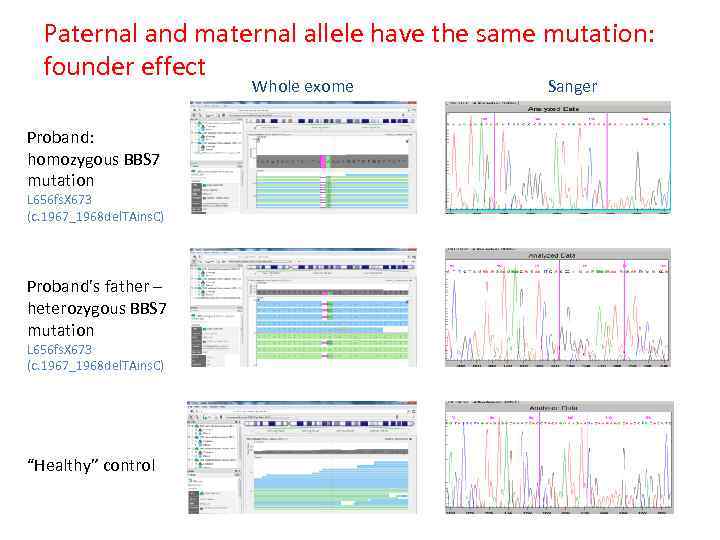 Paternal and maternal allele have the same mutation: founder effect Whole exome Proband: homozygous BBS 7 mutation L 656 fs. X 673 (c. 1967_1968 del. TAins. C) Proband’s father – heterozygous BBS 7 mutation L 656 fs. X 673 (c. 1967_1968 del. TAins. C) “Healthy” control Sanger
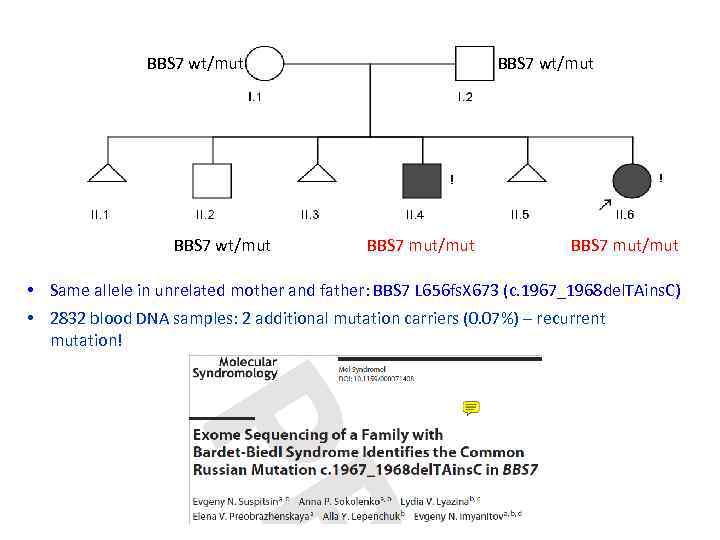 BBS 7 wt/mut BBS 7 mut/mut • Same allele in unrelated mother and father: BBS 7 L 656 fs. X 673 (c. 1967_1968 del. TAins. C) • 2832 blood DNA samples: 2 additional mutation carriers (0. 07%) – recurrent mutation!
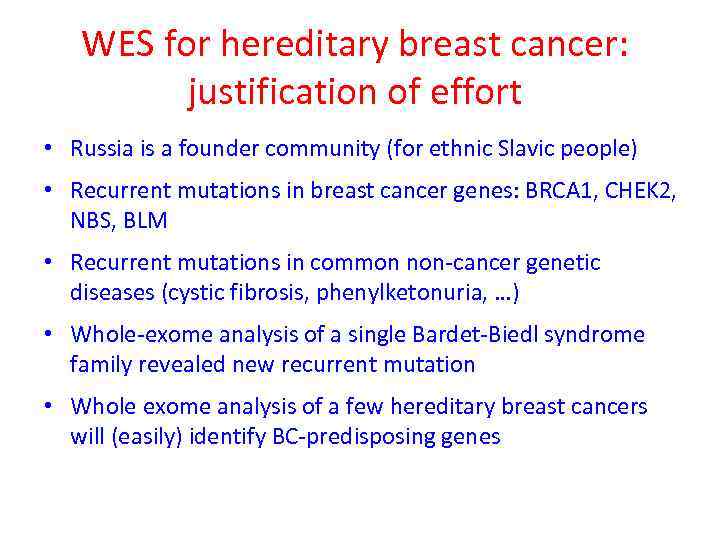 WES for hereditary breast cancer: justification of effort • Russia is a founder community (for ethnic Slavic people) • Recurrent mutations in breast cancer genes: BRCA 1, CHEK 2, NBS, BLM • Recurrent mutations in common non-cancer genetic diseases (cystic fibrosis, phenylketonuria, …) • Whole-exome analysis of a single Bardet-Biedl syndrome family revealed new recurrent mutation • Whole exome analysis of a few hereditary breast cancers will (easily) identify BC-predisposing genes
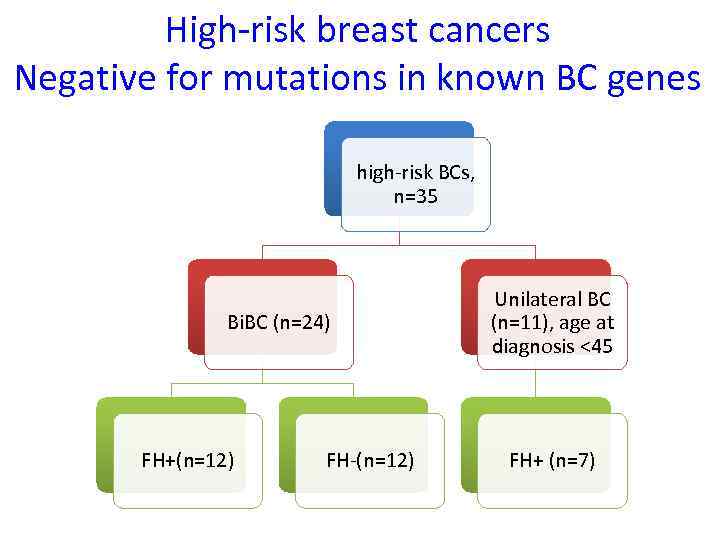 High-risk breast cancers Negative for mutations in known BC genes high-risk BCs, n=35 Bi. BC (n=24) FH+(n=12) FH-(n=12) Unilateral BC (n=11), age at diagnosis <45 FH+ (n=7)
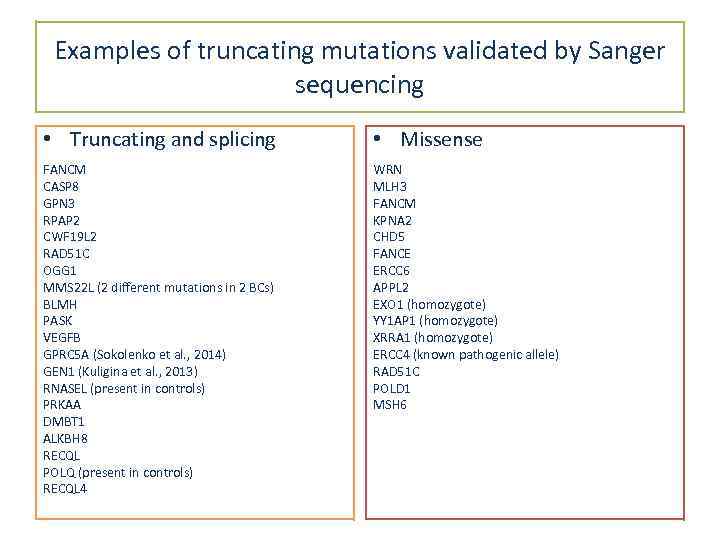 Examples of truncating mutations validated by Sanger sequencing • Truncating and splicing • Missense FANCM CASP 8 GPN 3 RPAP 2 CWF 19 L 2 RAD 51 C OGG 1 MMS 22 L (2 different mutations in 2 BCs) BLMH PASK VEGFB GPRC 5 A (Sokolenko et al. , 2014) GEN 1 (Kuligina et al. , 2013) RNASEL (present in controls) PRKAA DMBT 1 ALKBH 8 RECQL POLQ (present in controls) RECQL 4 WRN MLH 3 FANCM KPNA 2 CHD 5 FANCE ERCC 6 APPL 2 EXO 1 (homozygote) YY 1 AP 1 (homozygote) XRRA 1 (homozygote) ERCC 4 (known pathogenic allele) RAD 51 C POLD 1 MSH 6
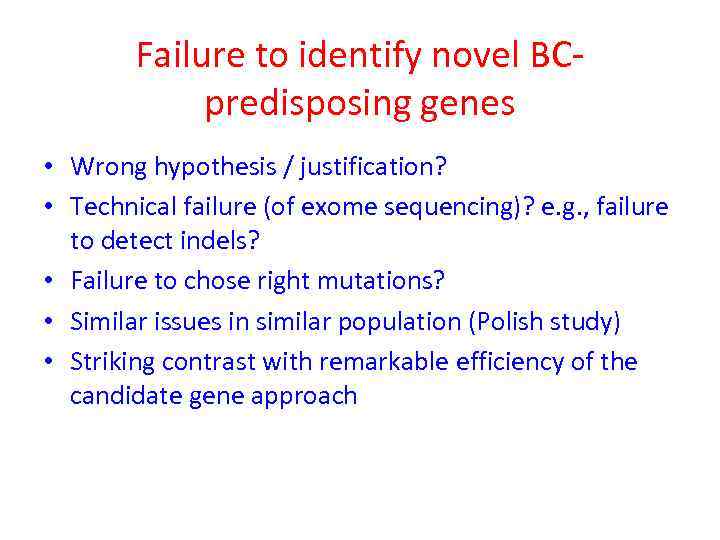 Failure to identify novel BCpredisposing genes • Wrong hypothesis / justification? • Technical failure (of exome sequencing)? e. g. , failure to detect indels? • Failure to chose right mutations? • Similar issues in similar population (Polish study) • Striking contrast with remarkable efficiency of the candidate gene approach
 Limited success in identifying new BCpredisposing genes, but promising side -effects of the effort… 27
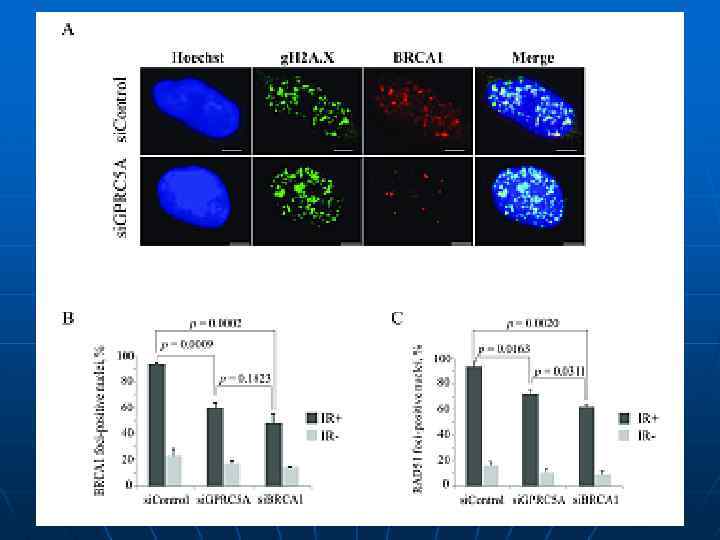
![High prevalence of GPRC 5 A c. 183 del. G [p. Arg 61 fs]](https://present5.com/presentation/-66678504_419792209/image-28.jpg "High prevalence of GPRC 5 A c. 183 del. G [p. Arg 61 fs]") High prevalence of GPRC 5 A c. 183 del. G [p. Arg 61 fs] germ-line mutations in BRCA 1 -mutant breast cancer patients n n GPRC 5 A is an orphan G protein-coupled receptor Strong evidence for a modifying role in BRCA 1 penetrance 28
High prevalence of GPRC 5 A c. 183 del. G [p. Arg 61 fs] germ-line mutations in BRCA 1 -mutant breast cancer patients n n GPRC 5 A is an orphan G protein-coupled receptor Strong evidence for a modifying role in BRCA 1 penetrance 28
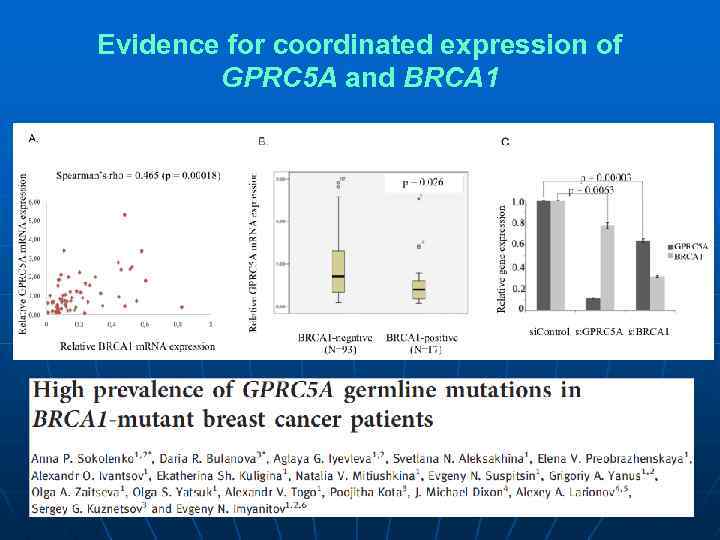 Evidence for coordinated expression of GPRC 5 A and BRCA 1 29
 30
30
 Molecular analysis Mammology Anna Sokolenko Aglaya Iyevleva Elena Preobrazhenskaya Nathalia Mitiushkina Tatyana Gorodnova Grigoriy Yanus Olga Zaitseva Olga Yatsuk Ekatherina Kuligina Evgeny Suspitsin Alexandr Togo Evgeny Imyanitov Dmitry Voskresenkiy Eelena Bit-Sava Vladimir Semiglazov Gynecology Oksana Lobeyko Nadezhda Krylova Sergey Maximov Colorectal cancer Alexandr Kornilov Morphology Oleg Ivantsov Kseniya Shelehova Dmitry Matsko Cancer therapy Svetlana Procenko Vladimir Moiseyenko 31