 Скачать презентацию Hepatic Failure intoxication and Hemofiltration Timothy E Bunchman
b309095654c9bdf04a713df8af2c73c2.ppt
- Количество слайдов: 46



Hepatic Failure, intoxication and Hemofiltration Timothy E Bunchman Professor Pediatric Nephrology & Transplantation
Outline n n Hepatic Failure-definition(s) Indications-when do we use them? What are hepatic support therapies Recent Literature
Hepatic Failure n n Definition: Loss of functional liver cell mass below a critical level results in liver failure (acute or complicating a chronic liver disease) Results in: hepatic encephalopathy & Coma, Jaundice, cholestasis, ascites, bleeding, renal failure, death
Hepatic Failure n Production of Endogenous Toxins & Drug metabolic Failure n n n Bile Acids, Bilirubin, Prostacyclins, NO, Toxic fatty acids, Thiols, Indol-phenol metabolites These toxins cause further necrosis/apoptosis and a vicious cycle Detrimental to renal, brain and bone marrow function; results in poor vascular tone
Indications n n n Bridge to liver transplantation Bridge to allow sufficient time for hepatic regeneration Improve clinical stability of patient
Non-Biological Filtration Techniques n Hemofiltration: n n First attempt (hemodialysis) 1956 Kiley et al (Proc. Soc. Exp. Biol. Medical 1956) Noted Hemodialysis improved clinical (4/5 patients) neurological function, didn’t change outcome though
Non-Biological Filtration Techniques n n Hemofiltration: CRRT support can buy time, help prevent further deterioration/complication and allow n n n Potential recovery of functional critical cell mass Management of precipitating events that lead to decompensated disease Bridge to liver transplantation
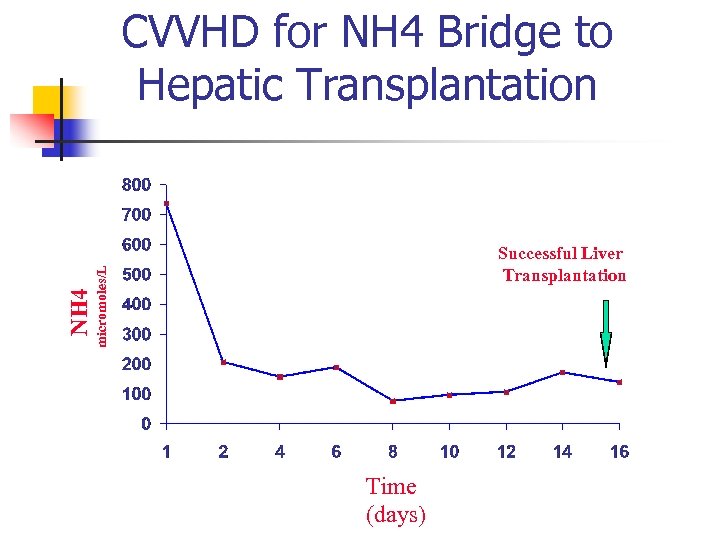
Successful Liver Transplantation micromoles/L NH 4 CVVHD for NH 4 Bridge to Hepatic Transplantation Time (days)
Non-Biological Filtration Techniques n n n Hemofiltration: CRRT may not improve overall outcome of liver failure- provide stability and prolongs life in the setting of hepatic failure Primary applications include use in control of elevated ICP in fulminant hepatic failure (Davenport Lancet 1991: 2: 1604) n Management of Cerebral Edema through middle molecule removal- reversal of Coma (Matsubara et. al. Crit Care Med 1990: 8: 1331)
Hepatic Failure-Role of CRRT n Others: n n n Fluid Balance Nutritional support Uremic Clearance
Non-Biological Filtration Techniques n Hemoperfusion: n n Historically Charcoal gave rise to current cartridge chambers in use today Poly. Acrylo. Nitrile-Initially noted to remove substances up to 15000 Da (initial study) found clinical but not statistical survival improvement n Issues: n n Non-specific removal of growth factors Reactivity with the membranes
Non-Biological Filtration Techniques n Hemoperfusion: n Development of Resin Exchange Columns: n n Amberlite- removal of cytokines, bilirubin, bile acids Polymixin-endotoxin removal Hydrophilic Membranes- for removal NH 4, phenols and fatty acids Downside- also effective at removing leucocytes and platelets
Non-Biological Filtration Techniques n Plasma Exchange: n n n Allows removal of hepatic toxins with replacement with equivalent volume of Fresh Frozen Plasma Improved clinical response but no significant increase in survival rates In general- get limited toxin removal and high FFP replacement volumes are required over time- costly
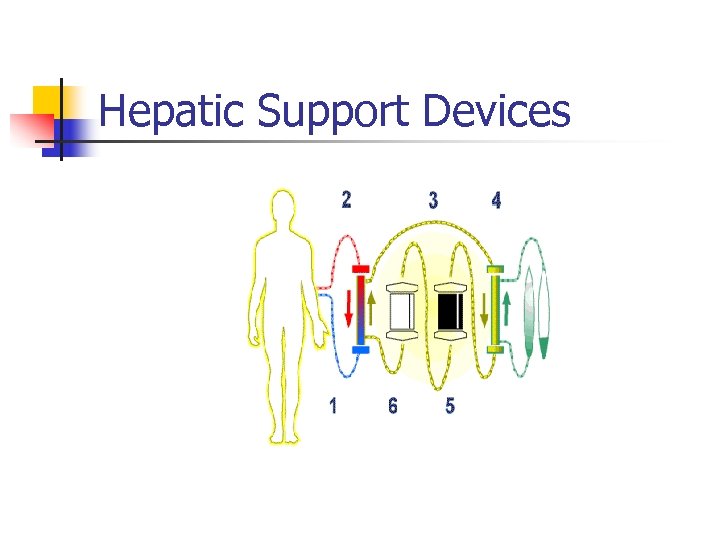
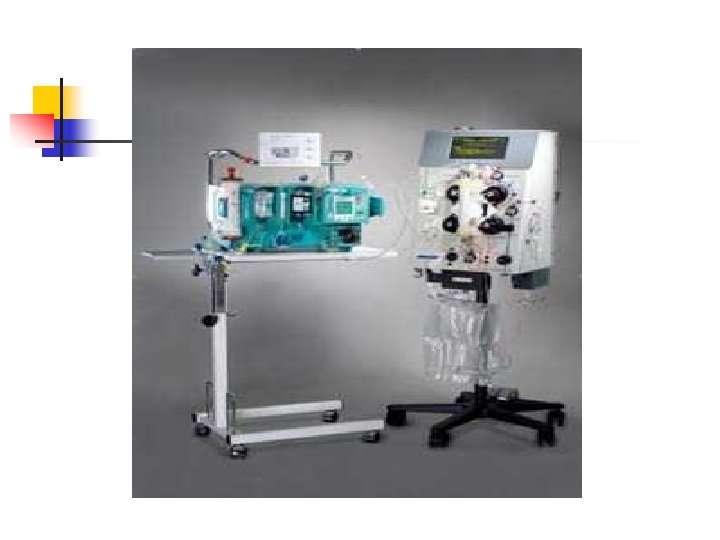
Non-Biological Filtration Techniques n Molecular Adsorbents Recycling System (MARS) n n n Commercially available-premise based on filtering out albumin bound toxins Uses albumin-enriched dialysate combined with a charcoal filter and an ion exchange resin Utilizes existing Renal Dialysis Machinery along with the MARS device
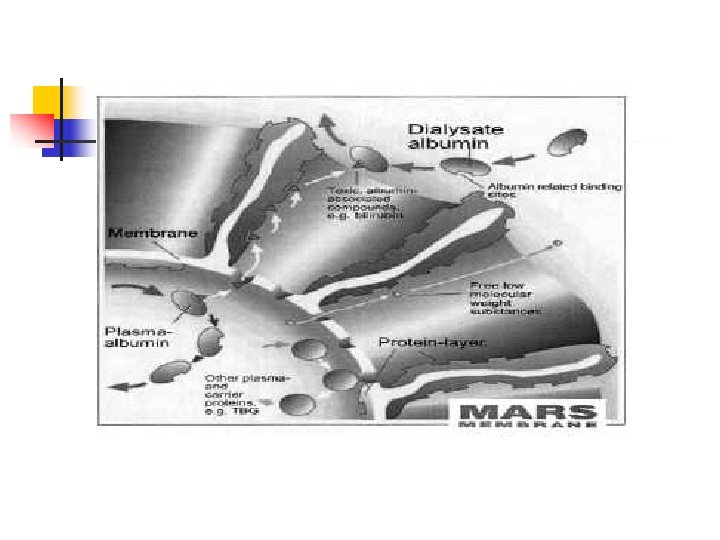
Non-Biological Filtration Techniques n n Albumin dialysis pumps the blood out of the body and into a plastic tube filled with hollow fibers made of a membrane that has been coated with albumin. On one side of the fiber's membrane is the blood; on the other, a dialysis solution containing more albumin.
Non-Biological Filtration Techniques n n The toxins on the albumin in the patient's blood are attracted to the albumin on the membrane, which is "stickier" because it has more room for molecules to attach. Then, the albumin on the membrane passes the toxins along to the albumin in the solution as it flows by.
Non-Biological Filtration Techniques n n Meanwhile, smaller toxin molecules that don't stick to albumin flow through the membrane's tiny pores into the lessconcentrated dialysis solution. The patient's own albumin, too large to fit through the membrane's pores, returns to the body with the blood.
Hepatic Support Devices
Hybrid Biological artificial support n Extracorporeal Bioartificial Liver Support Devices: n Types: n n n Hepat. Assist 2000 ELAD (extracorporeal liver assist device) BLSS (bioartificial liver support system) MELS (Modular extracorporeal liver system) Liver. X 2000 system AMC-BAL (academic medical centre) Chamuleau
Hybrid Biological artificial support n n n All of these therapies combine replacement hepatocytes (human, porcine, immortalized, inducible) within a structured meshwork fiber Each has a different cell mass and nourishment system for the cells Several provide charcoal columns for toxin removal, and/or albumin dialysate along with the ability to add in a dialysis unit
Hybrid Biological artificial support n n n Most are in Phase I/II clinical trials Initial studies have been mixed with respect to outcomes (end points differ between studies) Data just starting to emerge on these devices
What is the recent literature?
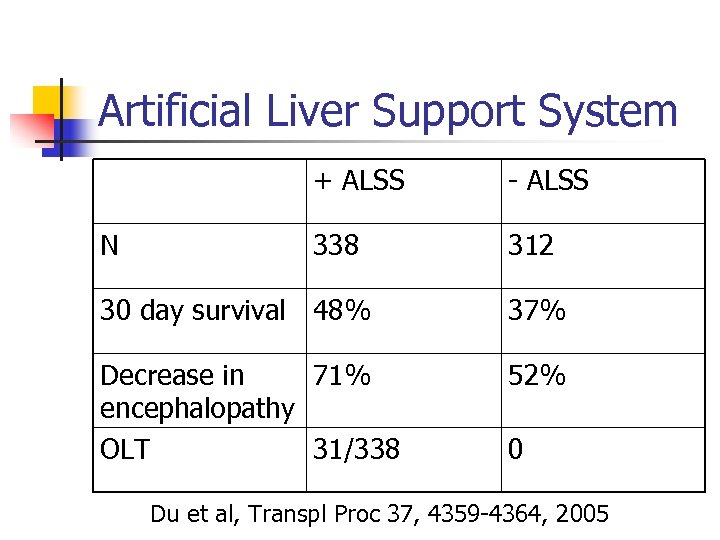
Artificial Liver Support System + ALSS N - ALSS 338 312 30 day survival 48% 37% Decrease in 71% encephalopathy OLT 31/338 52% 0 Du et al, Transpl Proc 37, 4359 -4364, 2005
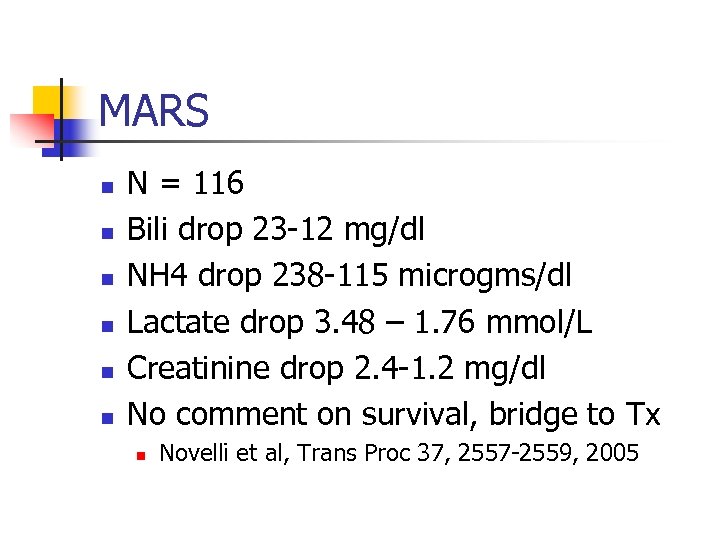
MARS n n n N = 116 Bili drop 23 -12 mg/dl NH 4 drop 238 -115 microgms/dl Lactate drop 3. 48 – 1. 76 mmol/L Creatinine drop 2. 4 -1. 2 mg/dl No comment on survival, bridge to Tx n Novelli et al, Trans Proc 37, 2557 -2559, 2005
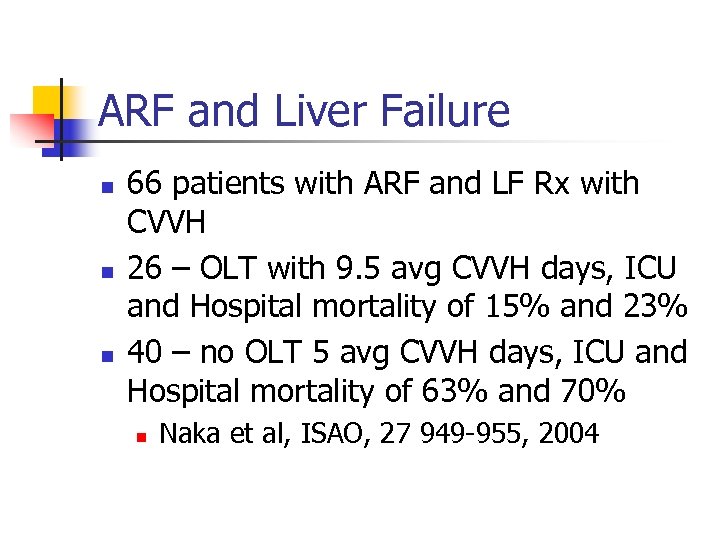
ARF and Liver Failure n n n 66 patients with ARF and LF Rx with CVVH 26 – OLT with 9. 5 avg CVVH days, ICU and Hospital mortality of 15% and 23% 40 – no OLT 5 avg CVVH days, ICU and Hospital mortality of 63% and 70% n Naka et al, ISAO, 27 949 -955, 2004
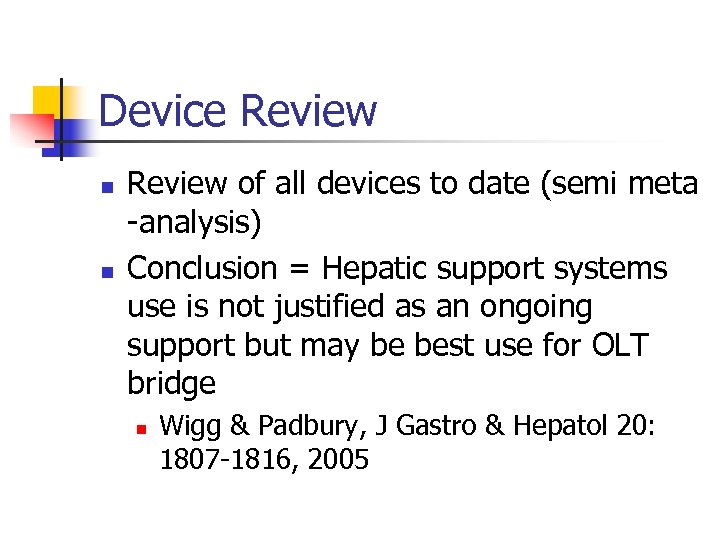
Device Review n n Review of all devices to date (semi meta -analysis) Conclusion = Hepatic support systems use is not justified as an ongoing support but may be best use for OLT bridge n Wigg & Padbury, J Gastro & Hepatol 20: 1807 -1816, 2005
PCRRT 4 Abstract n Ringe et al n n n 8 children Rx with Single Pass albumin hemofiltration (SPAD) Improvement in Hepatic Encephalopathy Stable hemodynamics
Intoxication n INTRODUCTION • • • 2. 2 million reported poisonings (1998) 67% in pediatrics Approximately 0. 05% required extracorporeal elimination Primary prevention strategies for acute ingestions have been designed and implemented (primarily with legislative effort) with a subsequent decrease in poisoning fatalities
n Poison Management n DECONTAMINATION/TREATMENT OPTIONS FOR OVERDOSE n Standard Airway, Breathing and Circulatory measures take precedent n Oral Charcoal n Bowel Cleansing Regimens n Antidotes IV or PO when applicable n IV Hydration
n Extracorporeal Methods n n n Peritoneal Dialysis Hemodialysis Hemofiltration Charcoal hemoperfusion Considerations n n Volume of Distribution (Vd)/compartments molecular size protein/lipid binding solubility
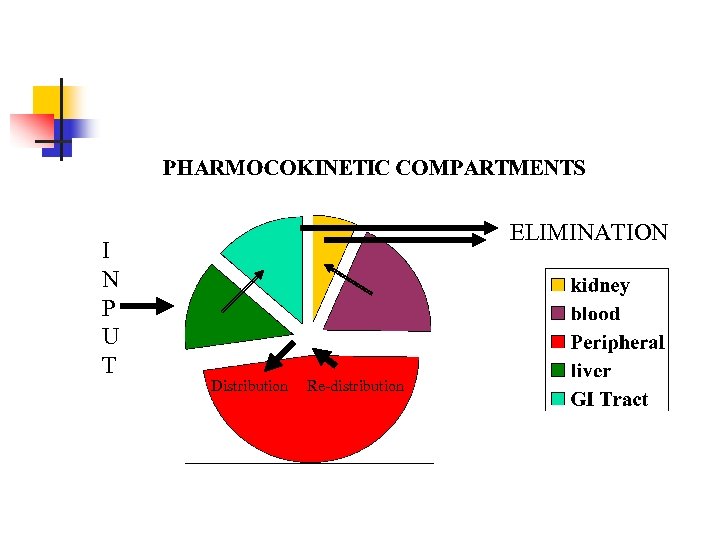
I N P U T ELIMINATION Distribution Re-distribution
n GENERAL PRINCIPLES n n kinetics of drugs are based on therapeutic not toxic levels (therefore kinetics may change) choice of extracorporeal modality is based on availability, expertise of people & the properties of the intoxicant in general Each Modality has drawbacks It may be necessary to switch modalities during therapy (combined therapies inc: endogenous excretion/detoxification methods)
n INDICATIONS n >48 hrs on vent n ARF n Impaired metabolism n high probability of significant morbidity/mortality n progressive clinical deterioration n INDICATIONS n severe intoxication with abnormal vital signs n complications of coma n prolonged coma n intoxication with an extractable drug
n PERITONEAL DIALYSIS n n n 1 st done in 1934 for 2 anuric patients after sublimate poisoning (Balzs et al; Wien Klin Wschr 1934; 47: 851 ) Allows diffusion of toxins across peritoneal membrane from mesenteric capillaries into dialysis solution within the peritoneal cavity limited use in poisoning (clears drugs with low Mwt. , Small Vd, minimal protein binding & those that are water soluble) n alcohols, Na. Cl intoxications, salicylates
n HEMODIALYSIS n optimal drug characteristics for removal: n n n relative molecular mass < 500 water soluble small Vd (< 1 L/Kg) minimal plasma protein binding single compartment kinetics low endogenous clearance (< 4 ml/Kg/min) n (Pond, SM - Med J Australia 1991; 154: 617 -622)
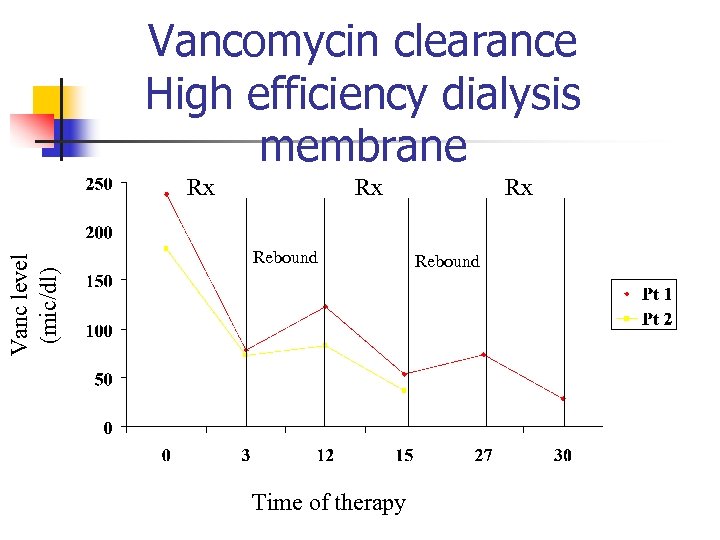
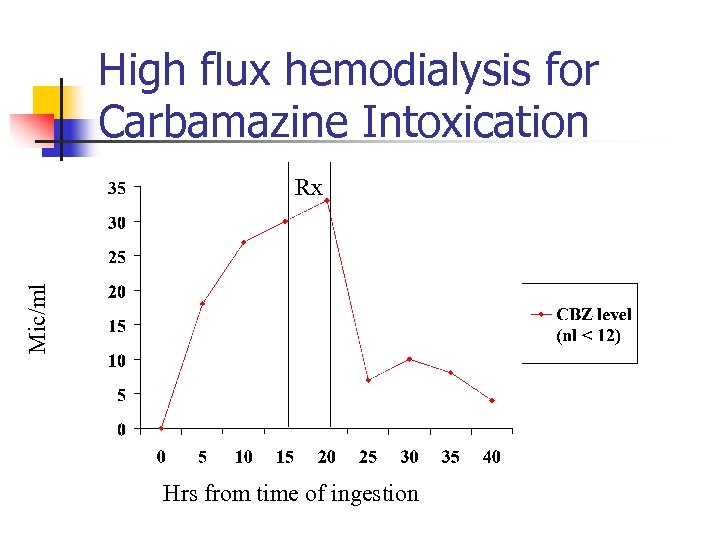
n Intoxicants amenable to Hemodialysis n n vancomycin (high flux) alcohols n n diethylene glycol methanol lithium salicylates
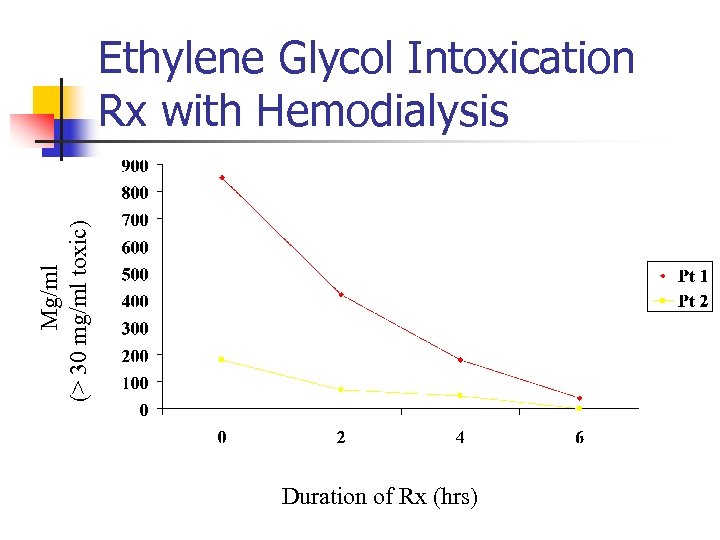
Mg/ml (> 30 mg/ml toxic) Ethylene Glycol Intoxication Rx with Hemodialysis Duration of Rx (hrs)
Vancomycin clearance High efficiency dialysis membrane Vanc level (mic/dl) Rx Rx Rebound Time of therapy Rx Rebound
High flux hemodialysis for Carbamazine Intoxication Mic/ml Rx Hrs from time of ingestion
Albumin Hemofiltration n Serum half-life (hr) Valproic Acid Total Unbound Total n Baseline 10. 3 n CVVHD 7. 7 4. 5 0. 12 CVVHD +Albumin 4. 0 3. 0 0. 32 n 10. 0 Sieving. Coefficient*
Carbamazine Clearance with Albumin Dialysis Askenazi et al, Pediatrics 2004 Natural Decay
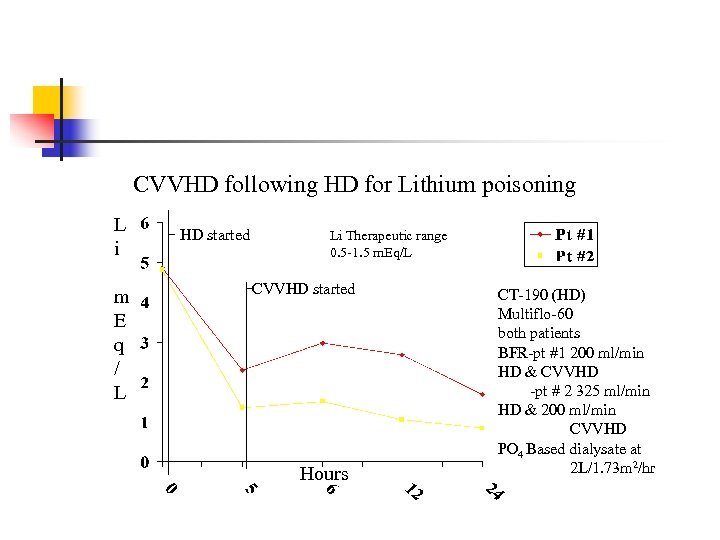
CVVHD following HD for Lithium poisoning L i m E q / L HD started Li Therapeutic range 0. 5 -1. 5 m. Eq/L CVVHD started Hours CT-190 (HD) Multiflo-60 both patients BFR-pt #1 200 ml/min HD & CVVHD -pt # 2 325 ml/min HD & 200 ml/min CVVHD PO 4 Based dialysate at 2 L/1. 73 m 2/hr
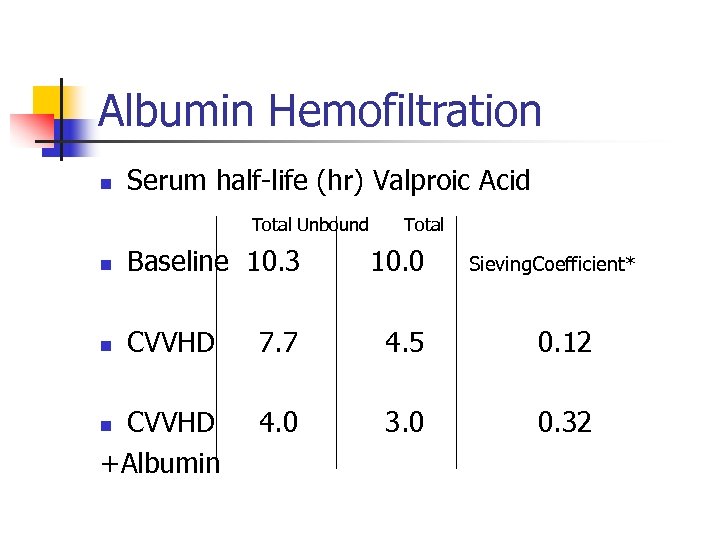
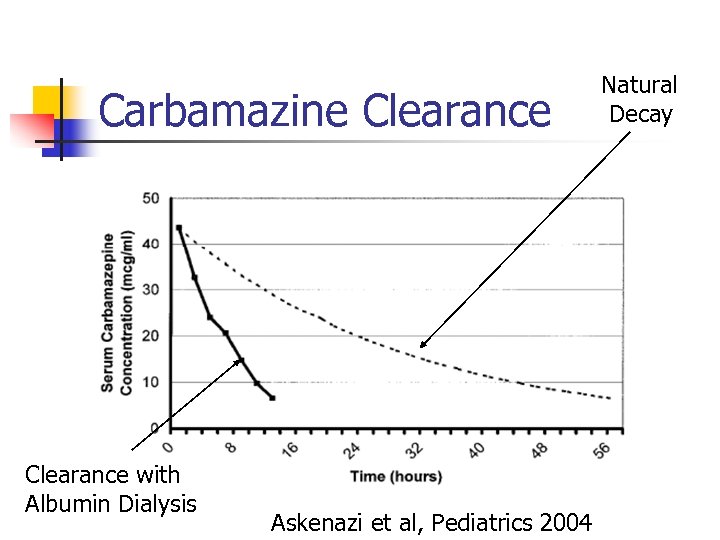
Conclusion n n Hepatic Support Devices are still in their infancy Use of CVVH with or without albumin may be “equally” effective for hepatic support or for intoxications Future research in this area is on going OLT only definitive Rx of ALF
Скачать презентацию Hepatic Failure intoxication and Hemofiltration Timothy E Bunchman
b309095654c9bdf04a713df8af2c73c2.ppt