


 Скачать презентацию Hemiplegic Shoulder Pain Approach to Diagnosis Management
John Vasudevan Hemiplegic Shoulder Pain (2015).pptx
- Количество слайдов: 40
 Hemiplegic Shoulder Pain: Approach to Diagnosis & Management John Vasudevan, MD University of Pennsylvania 2015 AAPM&R Assembly
 Disclosures • None
 Objectives 1. Identify the neurogenic and mechanical factors which contribute to HSP 2. Prescribe appropriate treatments for the identified factors in each patient with HSP 3. Understand the level of evidence supporting treatments for HSP
 Outline 1. Basics • Definition, Incidence, Prognosis 2. Anatomy 3. Factors • • Neurogenic Mechanical 4. Diagnosis 5. Management • Suggested Treatment Algorithm
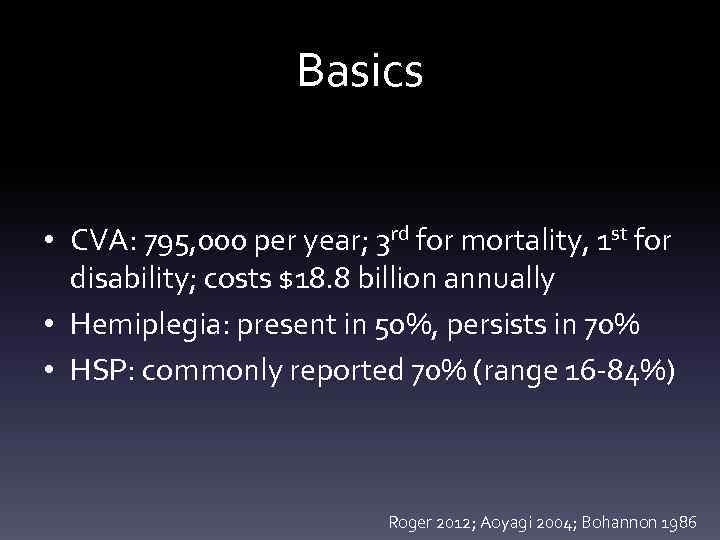 Basics • CVA: 795, 000 per year; 3 rd for mortality, 1 st for disability; costs $18. 8 billion annually • Hemiplegia: present in 50%, persists in 70% • HSP: commonly reported 70% (range 16 -84%) Roger 2012; Aoyagi 2004; Bohannon 1986
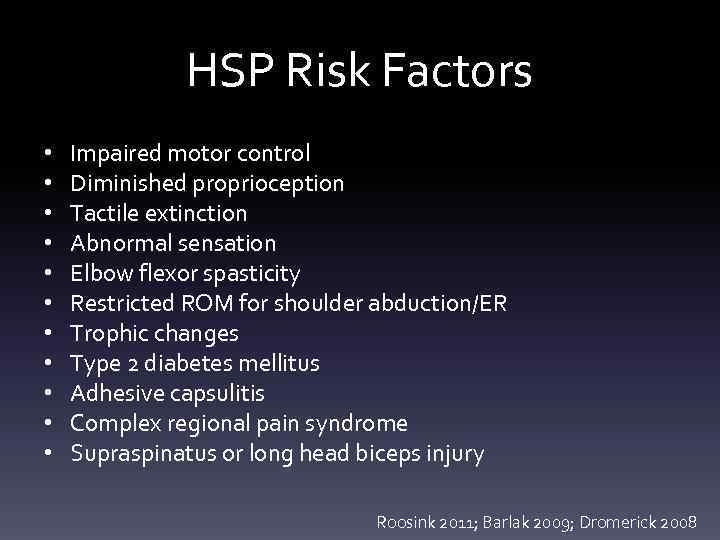 HSP Risk Factors • • • Impaired motor control Diminished proprioception Tactile extinction Abnormal sensation Elbow flexor spasticity Restricted ROM for shoulder abduction/ER Trophic changes Type 2 diabetes mellitus Adhesive capsulitis Complex regional pain syndrome Supraspinatus or long head biceps injury Roosink 2011; Barlak 2009; Dromerick 2008
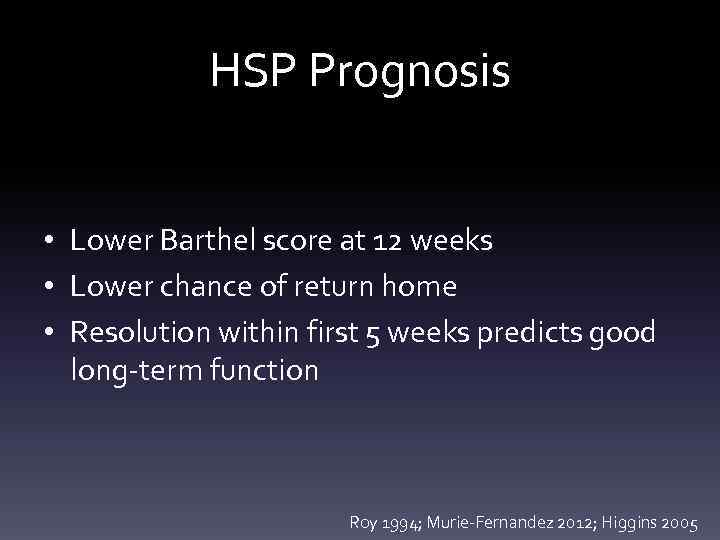 HSP Prognosis • Lower Barthel score at 12 weeks • Lower chance of return home • Resolution within first 5 weeks predicts good long-term function Roy 1994; Murie-Fernandez 2012; Higgins 2005
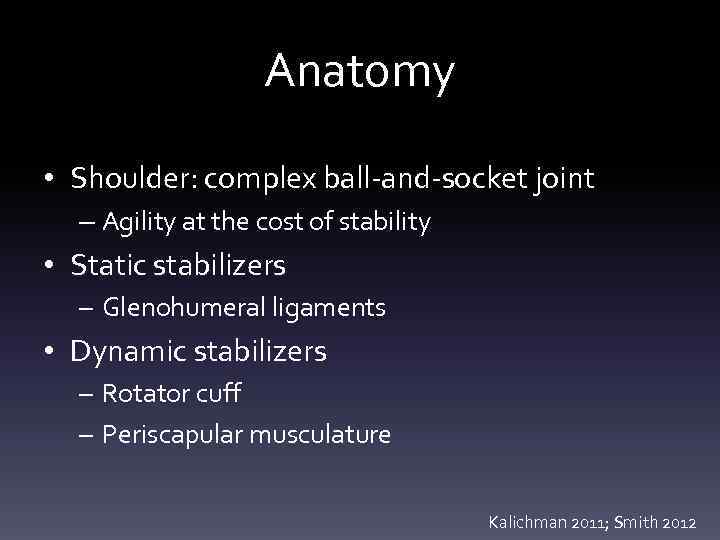 Anatomy • Shoulder: complex ball-and-socket joint – Agility at the cost of stability • Static stabilizers – Glenohumeral ligaments • Dynamic stabilizers – Rotator cuff – Periscapular musculature Kalichman 2011; Smith 2012
 Mechanisms of Injury • Cause is likely multifactorial – Weakness, spasticity, sensory loss, instability • Classification – Better by etiology than symptoms
 Neurogenic Factors • Upper Motor Neuron (UMN) injury – Paralysis, spasticity, central post-stroke pain, central sensitization • Lower Motor Neuron (LMN) injury – Peripheral neuropathy, brachial plexus injury, complex regional pain syndrome
 UMN Disorders • Weakness • Disrupts cervicothoraic posture, shoulder stability • Spasticity • Overactive pectorals, subscapularis, biceps • 85% with spasticity had HSP (vs. 18% without) • Subscapular nerve block can reduce pain • Brachial plexus injury • Traction injury suspected • Suprascapular and axillary nerves most affected Van Ouwenaller 1986; Hecht 1992; Kaplan 1977; Moskowitz 1963; Chino 1980
 UMN Disorders • Complex Regional Pain Syndrome (CRPS) • Type 1 (previously RSD), Type 2 (causalgia) • Incidence up to 23% of all HSP cases • Central post-stroke pain (CPSP) • Also termed thalamic pain syndrome, thought due to lesion in spinothalamic tract • Alterations in serotonin and norepinephrine Van Ouwenaller 1986
 Mechanical Factors • • • Shoulder subluxation Rotator cuff injury Glenohumeral joint disorders Adhesive capsulitis Myofascial pain Direct trauma
 Diagnosis • History, physical examination, special tests/maneuvers • Imaging (XR, MRI, US) • Electrodiagnosis • Diagnostic injections (nerve, muscle, joint)
 Diagnosis: Exam • Observation • ROM – AROM, then PROM • Palpation – Assess for bulk, focal tenderness • Sensation – Dermatomes, peripheral nerves (e. g. , axillary) • Reflexes – C 5 -C 8, UMN signs, spasticity • Strength
 Diagnosis: Exam • Special tests – Neer, Hawkins, Jobe, O’Brien, HBB/HBN – Instability: Apprehension, Sulcus • Diagnostic Injections – Nerve blocks (stellate ganglion, peripheral nerve) – Joint/tendon injections (GHJ, SA/SD bursa, etc) – Trigger point injections
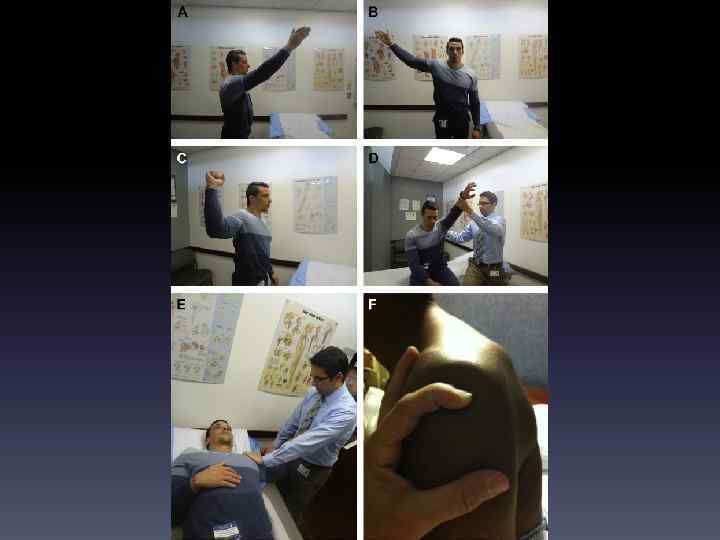
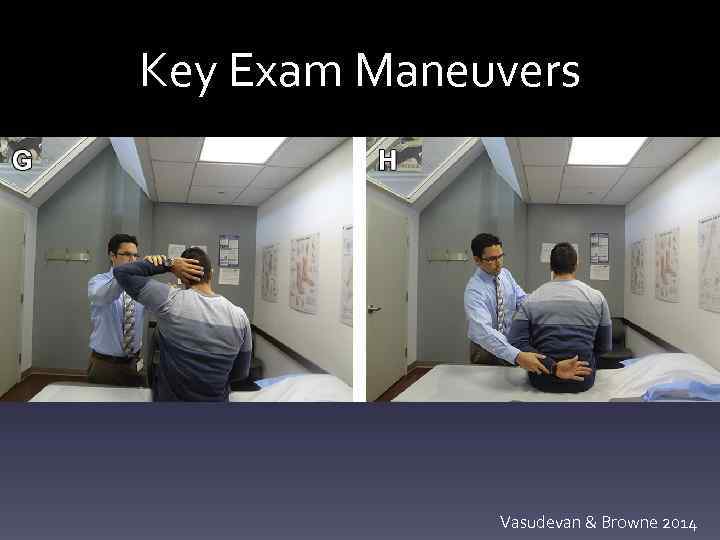 Key Exam Maneuvers Vasudevan & Browne 2014
 Diagnosis: Imaging • Radiography – AP: assess for fracture, subluxation • ER: calcific tendinopathy; IR: Hill-Sachs lesion – Scapular Y: acromial impingement – Axillary: shoulder instability • Magnetic Resonance Imaging – Arthrography: labral tear, adhesive capsulitis • Ultrasonography – May help assess for adhesive capsulitis – Advantage of serial assessments at low cost – More injuries noted for those admitted at Brunnstrom I-III vs IV-VI Pong 2009; Huang 2010; Lee 2009
 Diagnosis: Imaging • Relationship of imaging and HSP – Lo et al study: • HSP cohort: 50% adhesive capsulitis, 44% shoulder subluxation, 22% rotator cuff tears, 16% CRPS Type 1 • Arthrography helpful to detect adhesive capsulitis – Most cases within 2 months from CVA onset – MRI findings in chronic stroke: synovial capsule thickening/enhancement, rotator cuff enhancement • No difference in cuff tendinopathy, joint effusion, subacromial bursal fluid, ACJ arthrosis, muscle atrophy Lo 2003; Tavora 2010
 Management • Prevention through positioning – Flaccid stage: risk for injury – Suggested: abduction, ER, flexion • But no consensus, none proven superior • Strapping and slings – Tape perpendicular to inhibit, parallel to promote • Only small studies to support vs. sham taping – Slings and arm troughs help minimize shoulder subluxation • Improvements in HR, gait speed, decreased O 2 rate with sling use in a cross-over study Wanklyn 1996, Braus 1994, Murie-Fernandez 2012; Thelan 2008; Han 2011
 Physical Therapy • Mechanical Factors – PROM exercises within pain-free range can reduce reports of shoulder pain by 43% – Overhead pulley exercises increase cuff injury risk – Neither Bobath nor Brunnstrom superior – CPM: increased shoulder stability but no change to motor impairment, pain, tone, disability – Robotic devices: improved function at 8 months Caldwell 1969; Kumar 1990; Walsh 2001; Lynch 2005; Masiero 2007
 Physical Therapy • Neurogenic Factors – TENS: high intensity > low intensity or placebo – FES: to reduce shoulder subluxation/instability • More effective in acute vs chronic HSP after 6 wks Tx • FES + PT is superior to PT alone (RCT, n=50) • Cochrane: improves pain-free ROM and reduces subluxation, does not affect pain or impairment • Intramuscular FES: reduced pain at 1 year, but no change to strength/sensation Leandri 1990; Walsh 2001; Want 2000; Koyuncu 2010; Price 2001; Chae 2005; David 2010
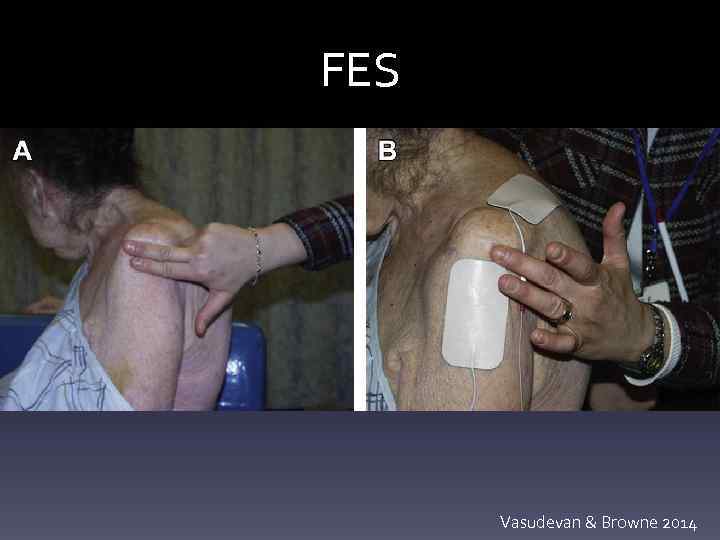 FES Vasudevan & Browne 2014
 Physical Therapy • Neurogenic Factors – EMG biofeedback and relaxation: 150 min x 5 days biofeedback or 30 min x 2 days relaxation exercises led to improved ROM, tone, reduced pain at 2 weeks Williams 1982
 Interventional • Neurogenic Factors – Botulinum toxin (presynaptic Ach inhibitor) • Several small studies show favorable results for both ROM and pain; others do not – One study vs corticosteroid • Some studies include intraarticular toxin – Nocioceptive effect? – Sympathetic blocks (for CRPS) • Central pain covered later in this talk • Rehab considerations: pain/edema control, isometric and stress-loading exercises, concurrent psychotherapy Yelnik 2007; Kong 2007; De Boer 2008; Lim 2008; Castiglione 2011
 Pharmacotherapy • NSAIDs, topical lidocaine, antiepileptic agents, TCAs, SSRIs, antispasmodics – The problem: not a single good trial • Corticosteroid injection – Glenohumeral joint or subacromial bursa • Can reduce pain and increase pain-free ROM • Suprascapular nerve block – Potentially superior to corticosteroid at 1 month Lakse 2009; Chae 2009; Dekker 1997; Snels 2000; Yasar 2011, Allen 2010
 Complementary and alternative medicine • Acupuncture – Works via neurohormonal mechanism: βendorphin dynorphin A/B, substance P, noradrenaline – Benefit in addition to standard PT • Aromatherapy: limited study Shin 2007; Lee 2012; Shin 2007
 Surgery • Typically for adhesive capsulitis (release of capsular adhesions, manipulation under anesthesia) or rotator cuff tendinopathy (acromioplasty, repair) – HSP relieved in all 13 patients after contracture release in one small study Braun 1971
 Suggested Protocol • Step 1: Identify neurogenic factors • • Step 2: Identify mechanical factors Step 3: Prevention through positioning Step 4: Symptom control and rehabilitation Step 5: pathology based intervention
 Suggested Protocol • Strapping/Taping: perpendicular to inhibit, parallel to promote • Slings: – Flaccid: sitting, ambulating, transferring – Spastic: avoid prolonged use – Avoid axillary supports
 Suggested Protocol • Physical Therapy and Modalities – Strive for maximal pain-free ROM – Avoid overhead pulley exercises – TENS: best at high intensity – FES: apply to deltoid and supraspinatus for temporary reduction in shoulder subluxation – EMG biofeedback: to encourage early and active participation, maximize psychological control
 Suggested Protocol • Pharmacotherapy – Neurogenic: • Neuropathic pain: AEDs, TCAs, SSRIs • Spasticity: antispasmodics – Mechanical • NSAIDs and acetaminophen • Rare opioids or oral steroids
 Suggested Protocol • Injection therapy – Neurogenic: • Botulinum Toxin: IM, possibly even IA • Stellate Ganglion Block – Mechanical • Corticosteroid to GHJ or subacromial bursa • Suprascapular nerve block • Trigger point injections
 Suggested Protocol • Complementary and alternative medicine – Acupuncture may be superior in combination with standard PT than PT alone – Aromatherapy has limited positive support
 Suggested Protocol • Surgery (after 6 mos failed conservative Tx) – Neurogenic: release of contractures – Mechanical: capsular release, acromioplasty, rotator cuff repair
 Summary 1. HSP is a common complication of CVA which is known to be associated with poor outcomes 2. HSP is a multifactorial process often encompassing a combination of neurogenic and mechanical factors 3. They key to management is prevention as able, and concurrent treatment of all contributing factors
 Objectives 1. Identify the neurogenic and mechanical factors which contribute to HSP 2. Prescribe appropriate treatments for the identified factors in each patient with HSP 3. Understand the level of evidence supporting treatments for HSP
 References • Contact me for a list – john. vasudevan@uphs. upenn. edu • Or see: Vasudevan J, Browne B. Hemiplegic shoulder pain: An approach to diagnosis and management. Phys Med Rehab Clin N Am. 2014; 25(2): 411 -437.
 THANK YOU!