 Скачать презентацию HELPFUL APPROACHES TO THE EVOLVING DISTRIBUTOR LANDSCAPE I
4edb7c7fd7fc1f5c06400c72c7286323.ppt
- Количество слайдов: 34



HELPFUL APPROACHES TO THE EVOLVING DISTRIBUTOR LANDSCAPE I. Pace II. “Value Bubble” ? III. Evolving Distributor Landscape. IV. Unique Approaches V. Conclusion / Questions

I. PACE
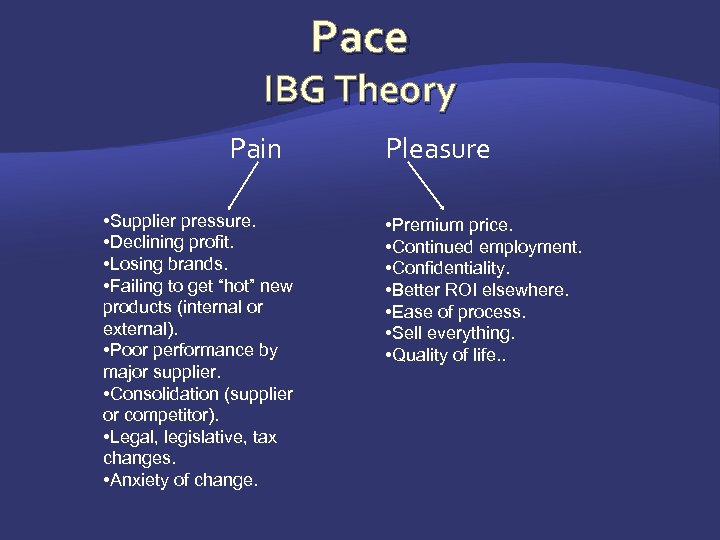
Pace IBG Theory Pain • Supplier pressure. • Declining profit. • Losing brands. • Failing to get “hot” new products (internal or external). • Poor performance by major supplier. • Consolidation (supplier or competitor). • Legal, legislative, tax changes. • Anxiety of change. Pleasure • Premium price. • Continued employment. • Confidentiality. • Better ROI elsewhere. • Ease of process. • Sell everything. • Quality of life. .
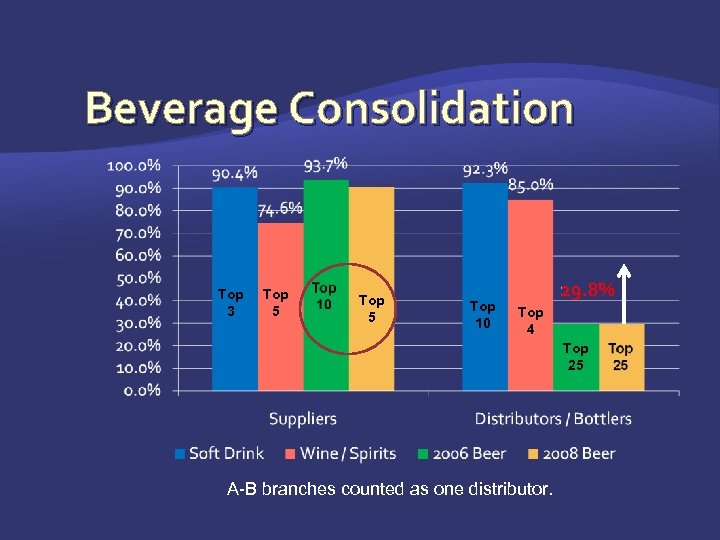
Beverage Consolidation Top 3 Top 5 Top 10 Top 4 Top 25 A-B branches counted as one distributor.
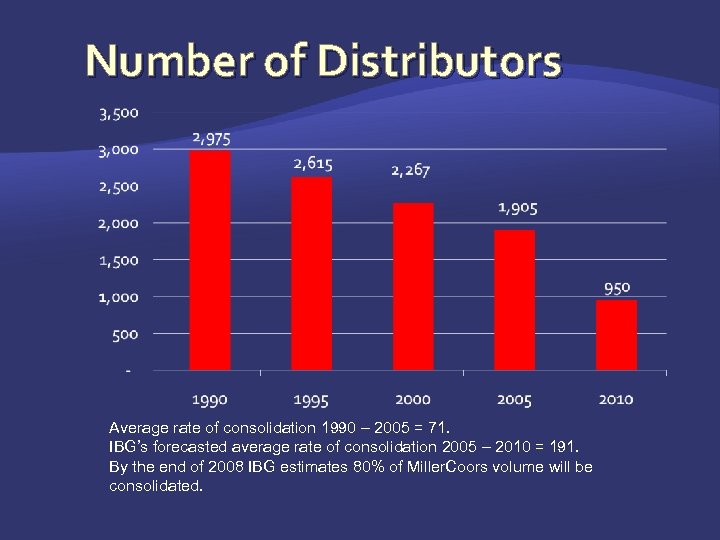
Number of Distributors Average rate of consolidation 1990 – 2005 = 71. IBG’s forecasted average rate of consolidation 2005 – 2010 = 191. By the end of 2008 IBG estimates 80% of Miller. Coors volume will be consolidated.
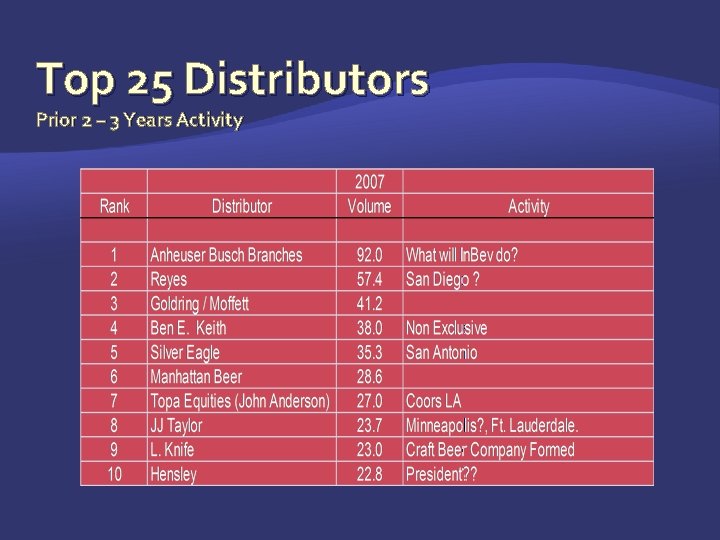
Top 25 Distributors Prior 2 – 3 Years Activity
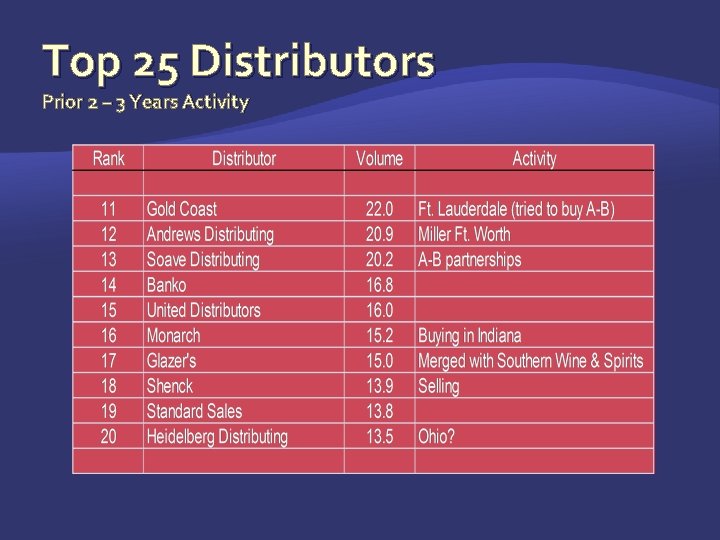
Top 25 Distributors Prior 2 – 3 Years Activity
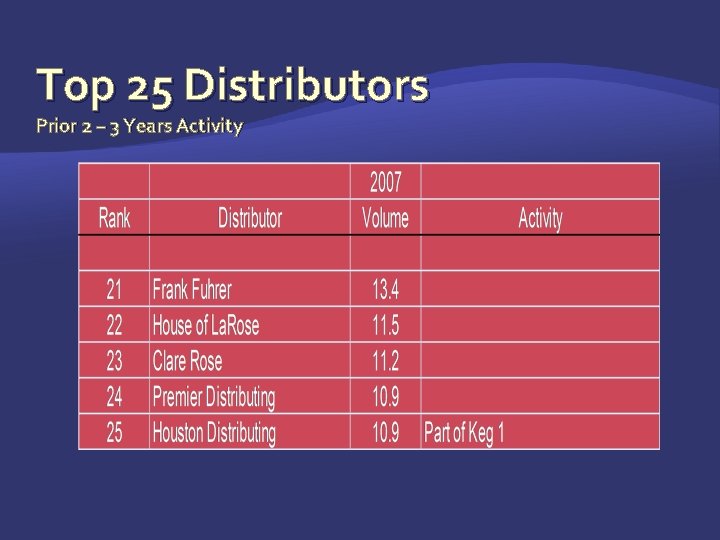
Top 25 Distributors Prior 2 – 3 Years Activity
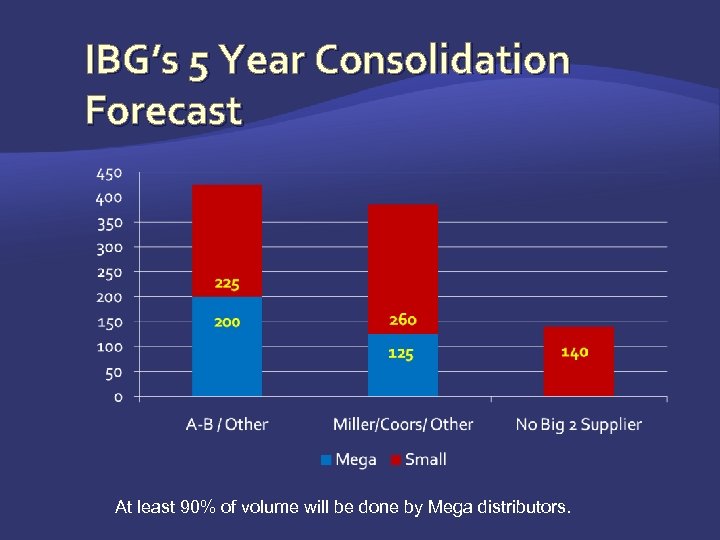
IBG’s 5 Year Consolidation Forecast At least 90% of volume will be done by Mega distributors.
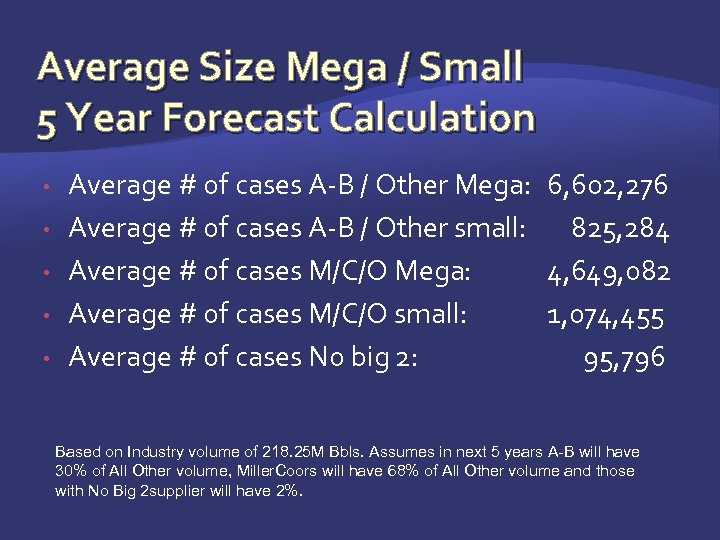
Average Size Mega / Small 5 Year Forecast Calculation • • • Average # of cases A-B / Other Mega: 6, 602, 276 Average # of cases A-B / Other small: 825, 284 Average # of cases M/C/O Mega: 4, 649, 082 Average # of cases M/C/O small: 1, 074, 455 Average # of cases No big 2: 95, 796 Based on Industry volume of 218. 25 M Bbls. Assumes in next 5 years A-B will have 30% of All Other volume, Miller. Coors will have 68% of All Other volume and those with No Big 2 supplier will have 2%.
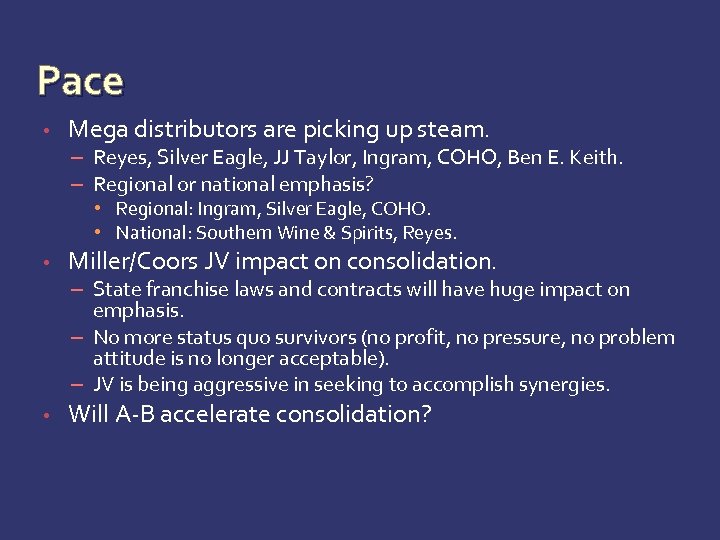
Pace • Mega distributors are picking up steam. – Reyes, Silver Eagle, JJ Taylor, Ingram, COHO, Ben E. Keith. – Regional or national emphasis? • Regional: Ingram, Silver Eagle, COHO. • National: Southern Wine & Spirits, Reyes. • Miller/Coors JV impact on consolidation. – State franchise laws and contracts will have huge impact on emphasis. – No more status quo survivors (no profit, no pressure, no problem attitude is no longer acceptable). – JV is being aggressive in seeking to accomplish synergies. • Will A-B accelerate consolidation?
II. “VALUE BUBBLE”?
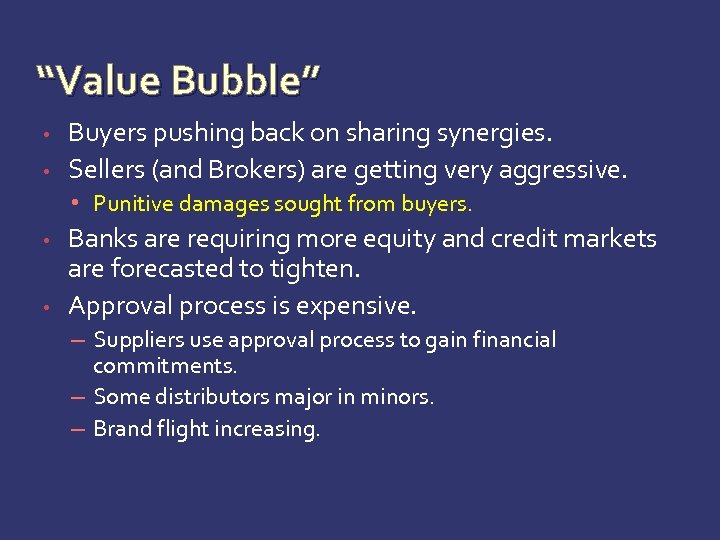
“Value Bubble” • • Buyers pushing back on sharing synergies. Sellers (and Brokers) are getting very aggressive. • Punitive damages sought from buyers. • • Banks are requiring more equity and credit markets are forecasted to tighten. Approval process is expensive. – Suppliers use approval process to gain financial commitments. – Some distributors major in minors. – Brand flight increasing.
“Value Bubble” • Different types of Valuation Methods: – Stand Alone: Outside party purchases your business. No synergies exist and the value is determined by the ability of the company to generate future cash flows. – Horizontal Value – Some synergies can be expected when a wholesaler purchases his neighbor. – Vertical Value – One wholesaler buying another in the same market. Savings are created through closing of warehouse(s), number of people and equipment needed. The value of any business is determined by its ability to generate cash flow. NOT Gross Profit Multiple and NOT Per Case!!
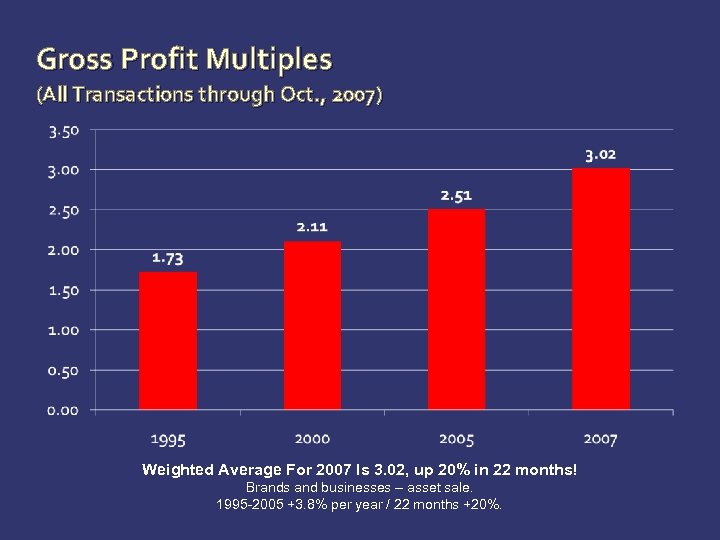
Gross Profit Multiples (All Transactions through Oct. , 2007) Weighted Average For 2007 Is 3. 02, up 20% in 22 months! Brands and businesses – asset sale. 1995 -2005 +3. 8% per year / 22 months +20%.
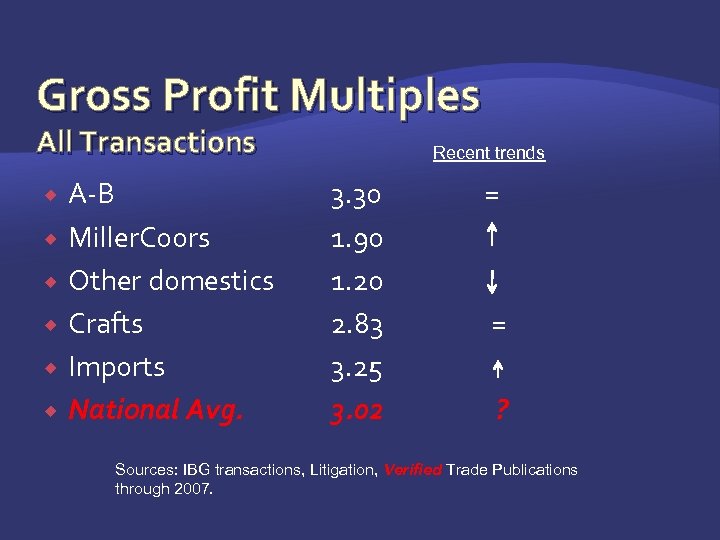
Gross Profit Multiples All Transactions A-B Miller. Coors Other domestics Crafts Imports National Avg. Recent trends 3. 30 1. 90 1. 20 2. 83 3. 25 3. 02 = = ? Sources: IBG transactions, Litigation, Verified Trade Publications through 2007.
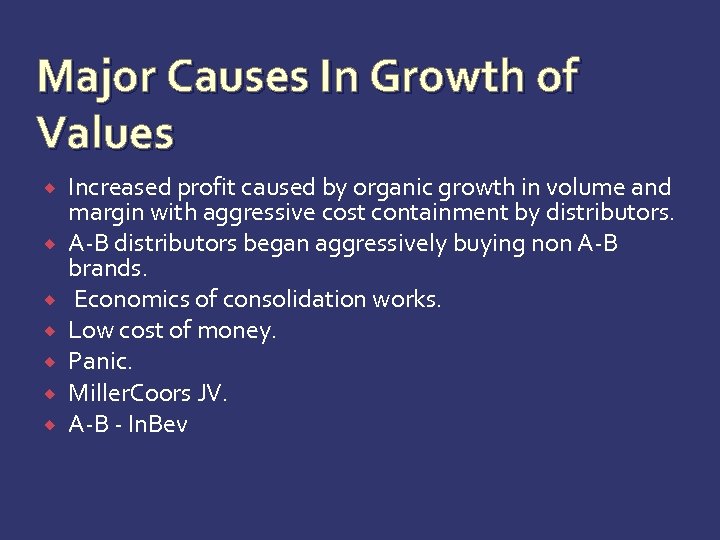
Major Causes In Growth of Values Increased profit caused by organic growth in volume and margin with aggressive cost containment by distributors. A-B distributors began aggressively buying non A-B brands. Economics of consolidation works. Low cost of money. Panic. Miller. Coors JV. A-B - In. Bev
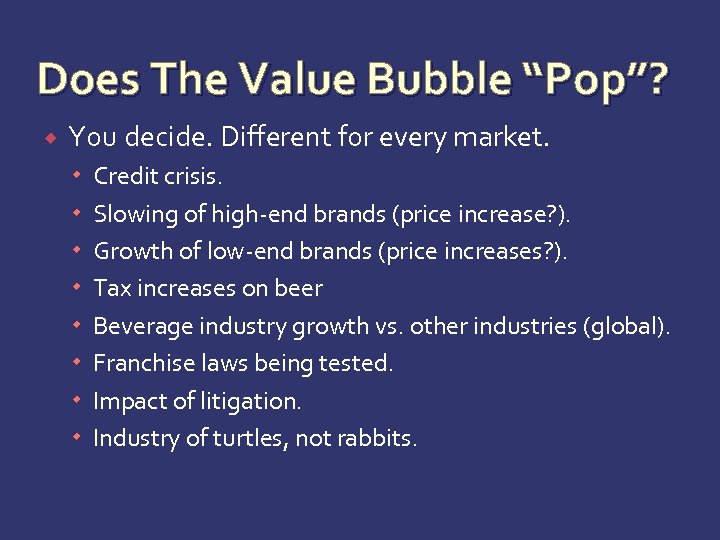
Does The Value Bubble “Pop”? You decide. Different for every market. Credit crisis. Slowing of high-end brands (price increase? ). Growth of low-end brands (price increases? ). Tax increases on beer Beverage industry growth vs. other industries (global). Franchise laws being tested. Impact of litigation. Industry of turtles, not rabbits.
III. EVOLVING DISTRIBUTOR LANDSCAPE
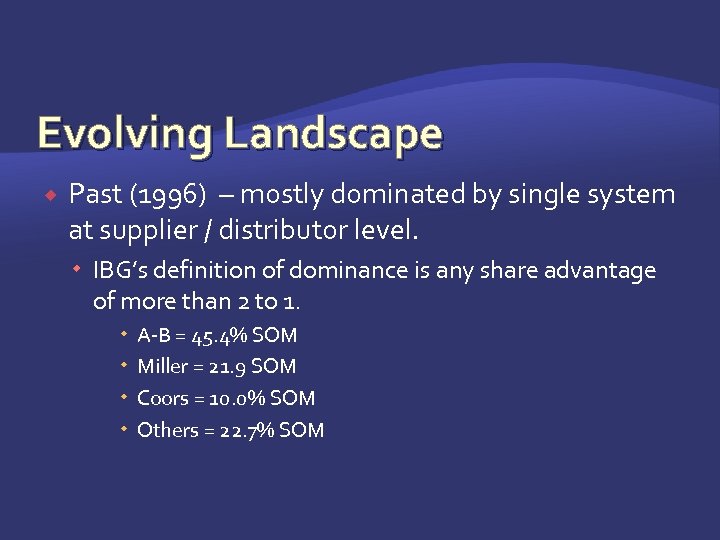
Evolving Landscape Past (1996) – mostly dominated by single system at supplier / distributor level. IBG’s definition of dominance is any share advantage of more than 2 to 1. A-B = 45. 4% SOM Miller = 21. 9 SOM Coors = 10. 0% SOM Others = 22. 7% SOM
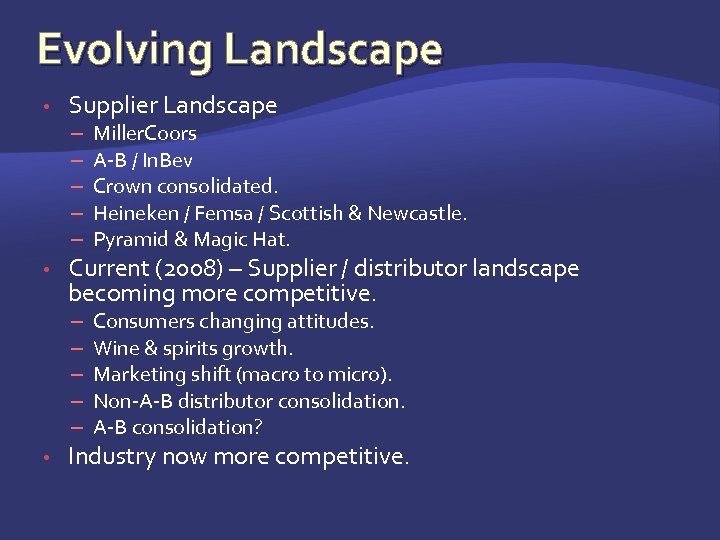
Evolving Landscape • Supplier Landscape – – – • Current (2008) – Supplier / distributor landscape becoming more competitive. – – – • Miller. Coors A-B / In. Bev Crown consolidated. Heineken / Femsa / Scottish & Newcastle. Pyramid & Magic Hat. Consumers changing attitudes. Wine & spirits growth. Marketing shift (macro to micro). Non-A-B distributor consolidation. A-B consolidation? Industry now more competitive.
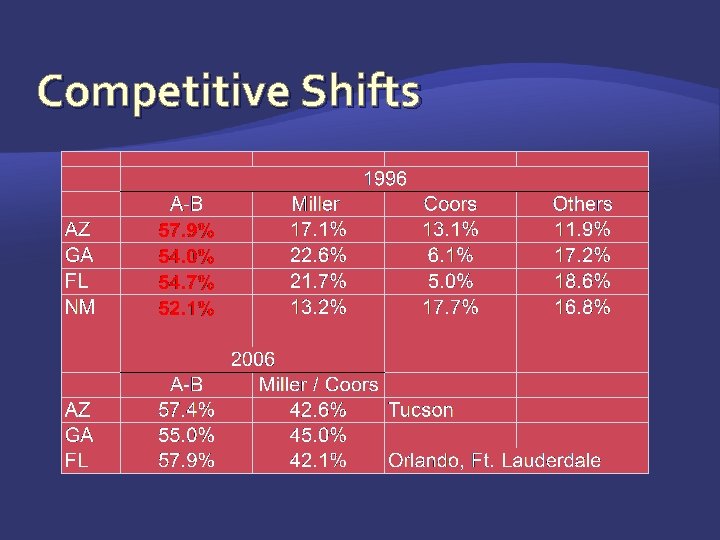
Competitive Shifts
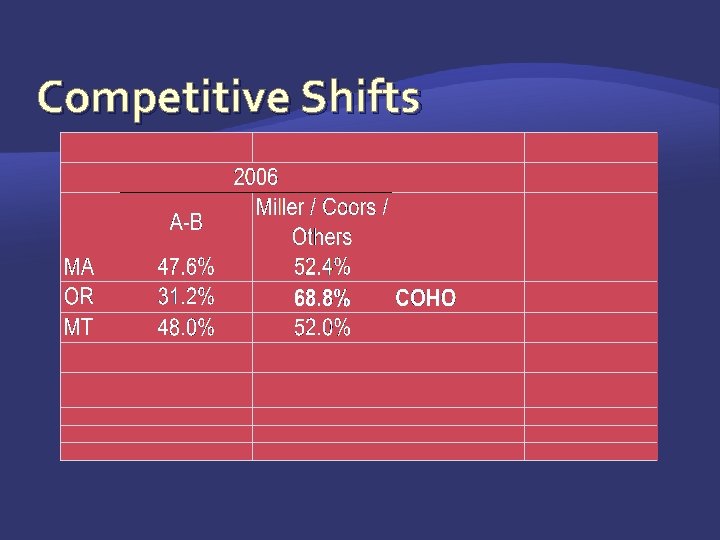
Competitive Shifts
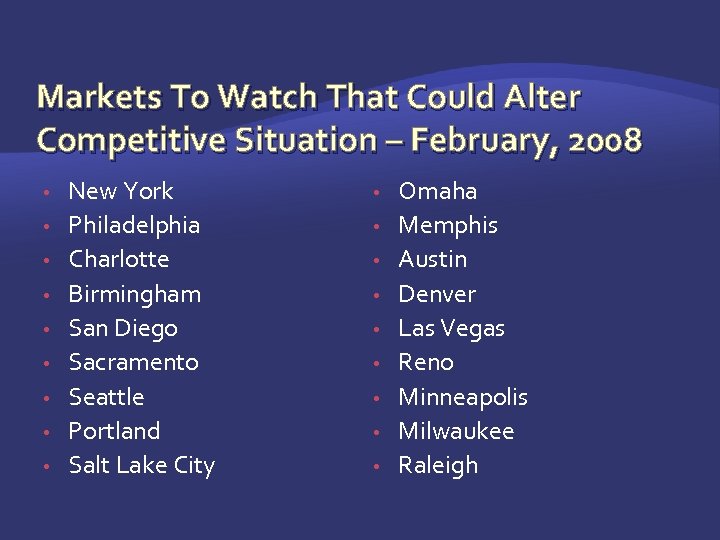
Markets To Watch That Could Alter Competitive Situation – February, 2008 • • • New York Philadelphia Charlotte Birmingham San Diego Sacramento Seattle Portland Salt Lake City • • • Omaha Memphis Austin Denver Las Vegas Reno Minneapolis Milwaukee Raleigh
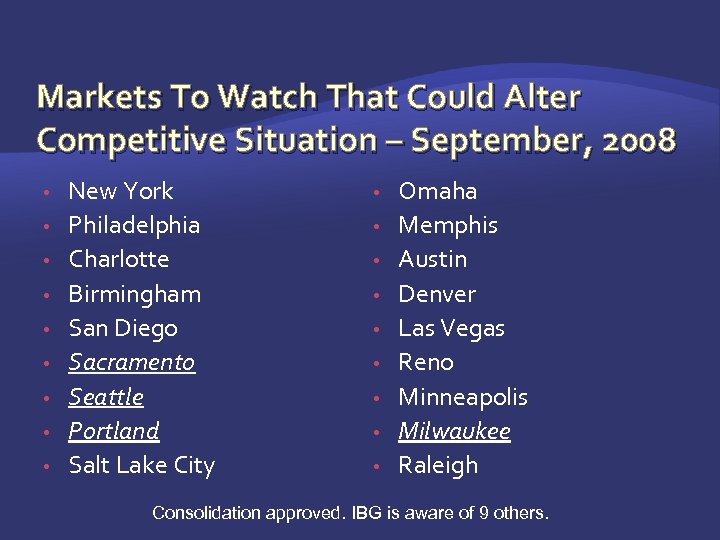
Markets To Watch That Could Alter Competitive Situation – September, 2008 • • • New York Philadelphia Charlotte Birmingham San Diego Sacramento Seattle Portland Salt Lake City • • • Omaha Memphis Austin Denver Las Vegas Reno Minneapolis Milwaukee Raleigh Consolidation approved. IBG is aware of 9 others.

IV. UNIQUE APPROACHES
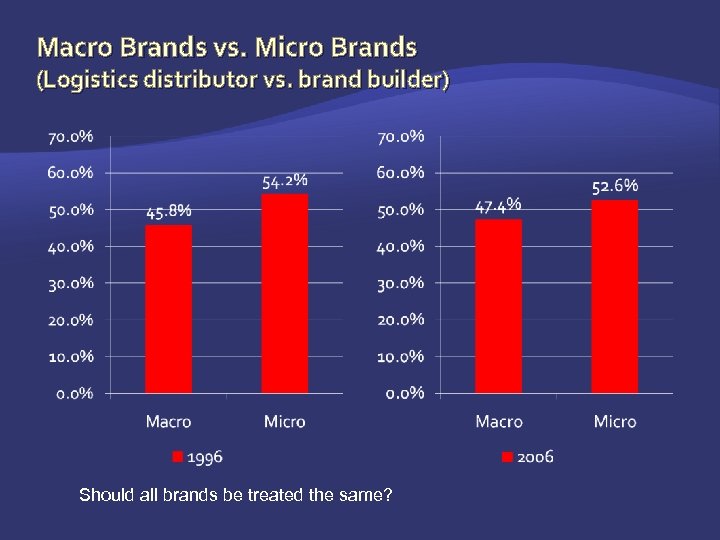
Macro Brands vs. Micro Brands (Logistics distributor vs. brand builder) Should all brands be treated the same?
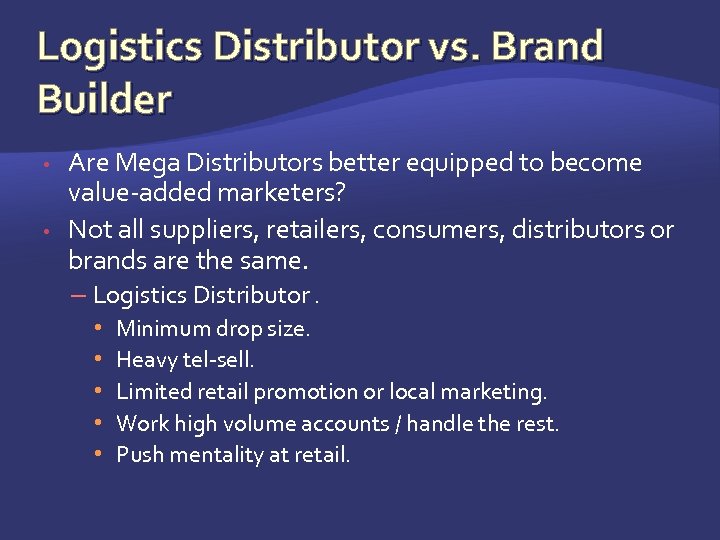
Logistics Distributor vs. Brand Builder • • Are Mega Distributors better equipped to become value-added marketers? Not all suppliers, retailers, consumers, distributors or brands are the same. – Logistics Distributor. • • • Minimum drop size. Heavy tel-sell. Limited retail promotion or local marketing. Work high volume accounts / handle the rest. Push mentality at retail.
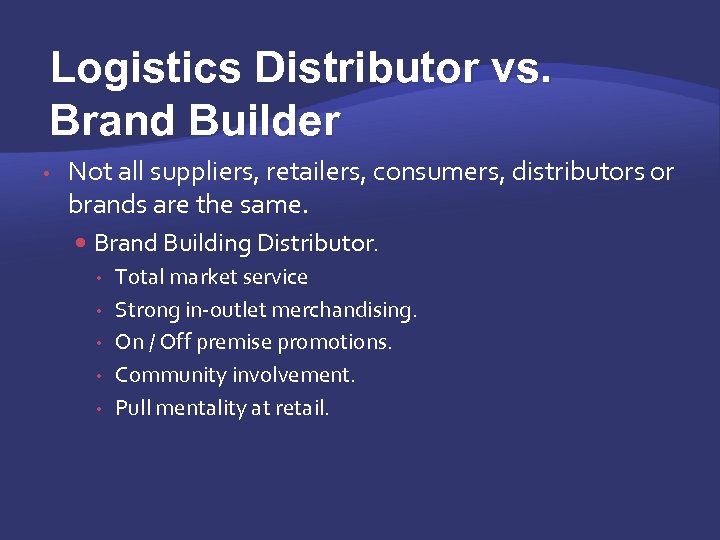
Logistics Distributor vs. Brand Builder • Not all suppliers, retailers, consumers, distributors or brands are the same. Brand Building Distributor. • Total market service • Strong in-outlet merchandising. • On / Off premise promotions. • Community involvement. • Pull mentality at retail.
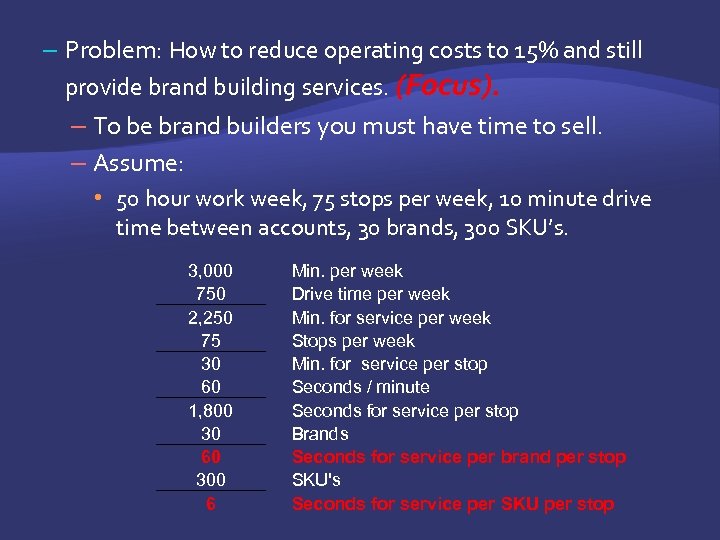
– Problem: How to reduce operating costs to 15% and still provide brand building services. (Focus). – To be brand builders you must have time to sell. – Assume: • 50 hour work week, 75 stops per week, 10 minute drive time between accounts, 30 brands, 300 SKU’s. 3, 000 750 2, 250 75 30 60 1, 800 30 60 300 6 Min. per week Drive time per week Min. for service per week Stops per week Min. for service per stop Seconds / minute Seconds for service per stop Brands Seconds for service per brand per stop SKU's Seconds for service per SKU per stop
IS SHARED SERVICES A NEW SOLUTION? • • • Emotions of one distributor per market will never fly! Eliminates redundant cost thus allowing more focus on selling functions (15% operating cost target). Distributor retains intangible value. Vertical and horizontal potential. One major supplier is 0 for 17. IBG is 1 forever.

V. CONCLUSION / QUESTIONS
CONCLUSION • • • Status quo is gone Biggest change moving forward will be A-B’s reaction to new Miller. Coors configuration. Economics begin to overtake emotions. Overall pace has picked up. Mega distributors are gaining steam. Are prices of brands and businesses peaking? Are distributors logistics providers , brand builders, or both ? Shared Services is a way to reallocate focus and reduce cost! – but… Landscape has changed at all levels. • Consumer, retailer, distributor, supplier.
INDEPENDENT BEVERAGE GROUP
Скачать презентацию HELPFUL APPROACHES TO THE EVOLVING DISTRIBUTOR LANDSCAPE I
4edb7c7fd7fc1f5c06400c72c7286323.ppt