


 Скачать презентацию Helioseismic f-mode precursors 1 -2 days prior to
85ae2ca19c7c2551b3cd700fa9affff1.ppt
- Количество слайдов: 36
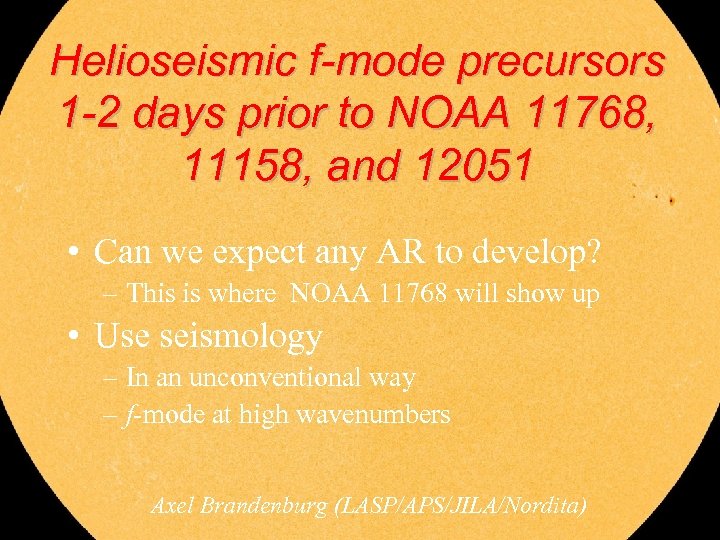 Helioseismic f-mode precursors 1 -2 days prior to NOAA 11768, 11158, and 12051 • Can we expect any AR to develop? – This is where NOAA 11768 will show up • Use seismology – In an unconventional way – f-mode at high wavenumbers Axel Brandenburg (LASP/APS/JILA/Nordita)
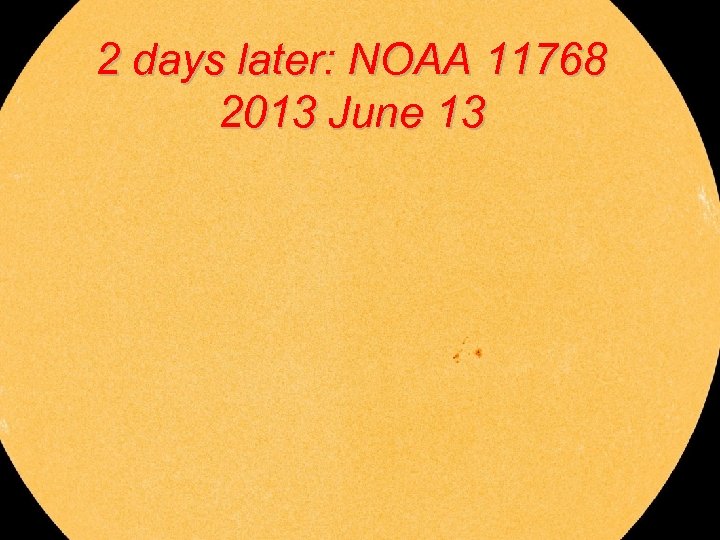 2 days later: NOAA 11768 2013 June 13
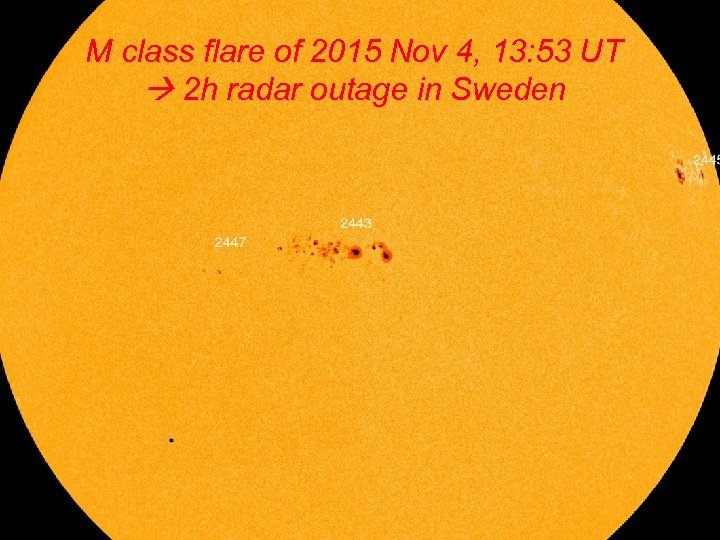 M class flare of 2015 Nov 4, 13: 53 UT 2 h radar outage in Sweden
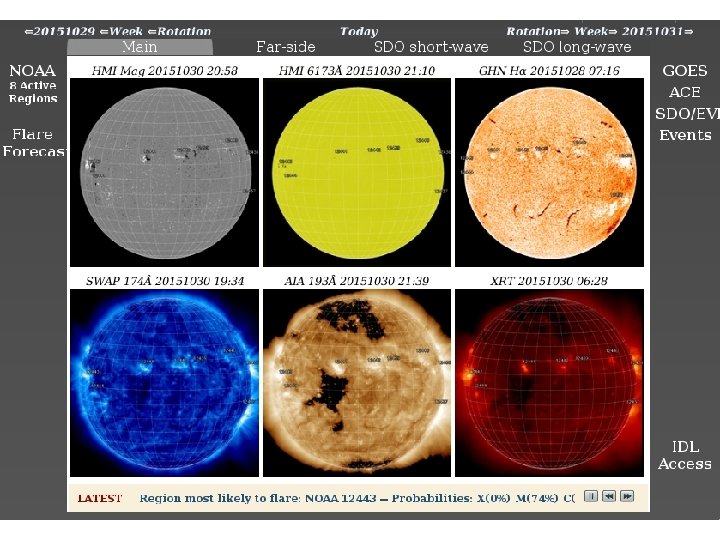 M class flare of 2015 Nov 4, 13: 53 UT
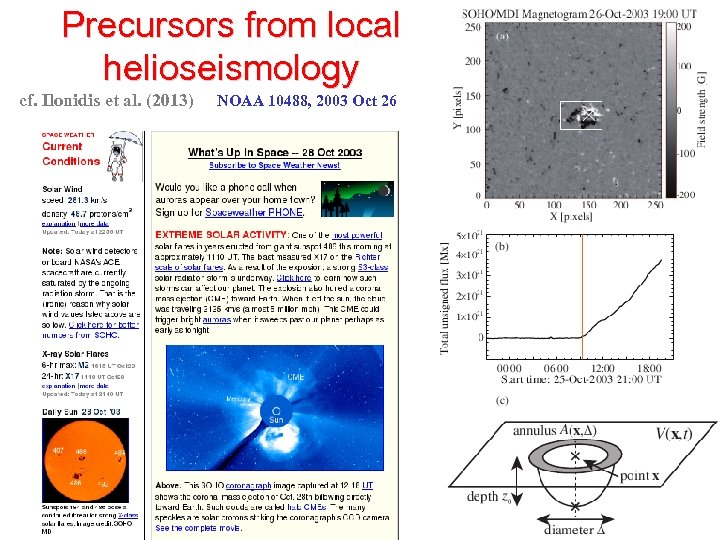 Precursors from local helioseismology cf. Ilonidis et al. (2013) NOAA 10488, 2003 Oct 26 5
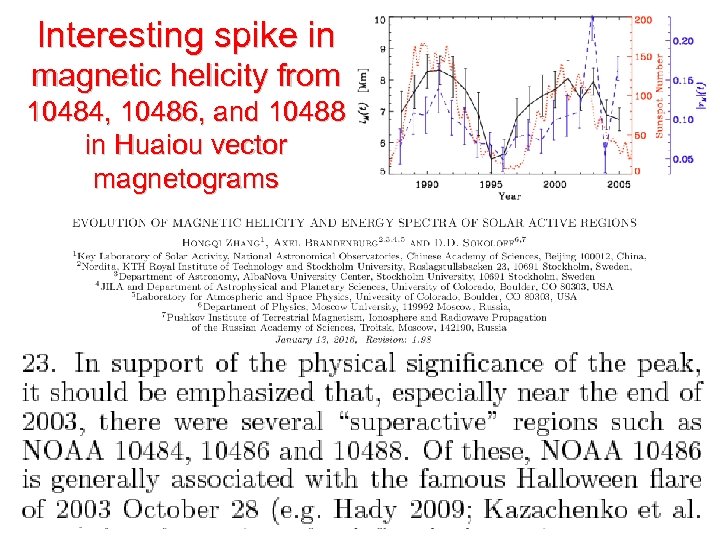 Interesting spike in magnetic helicity from 10484, 10486, and 10488 in Huaiou vector magnetograms 6
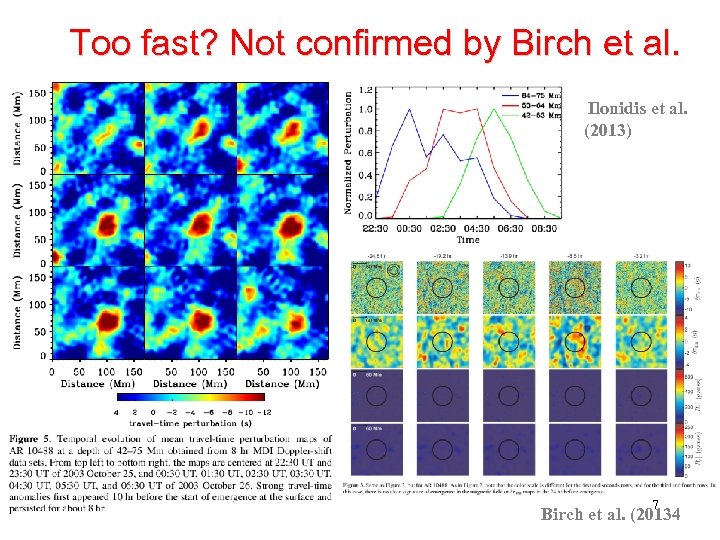 Too fast? Not confirmed by Birch et al. Ilonidis et al. (2013) 7 Birch et al. (20134
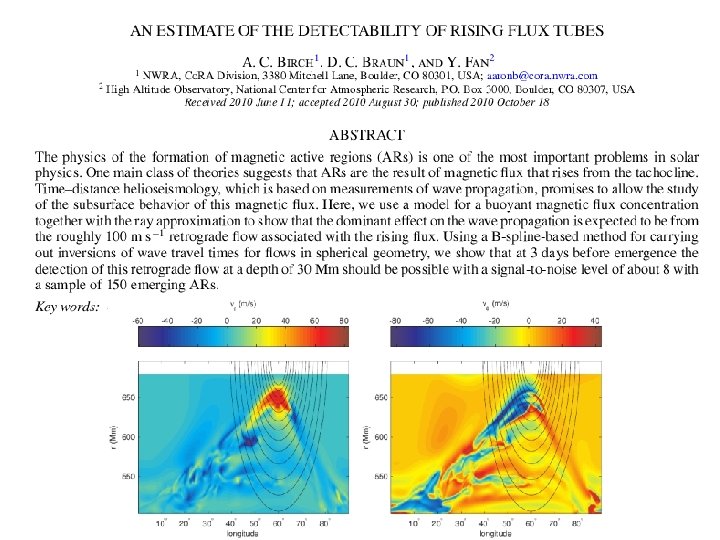 Flux tube picture in principle visible
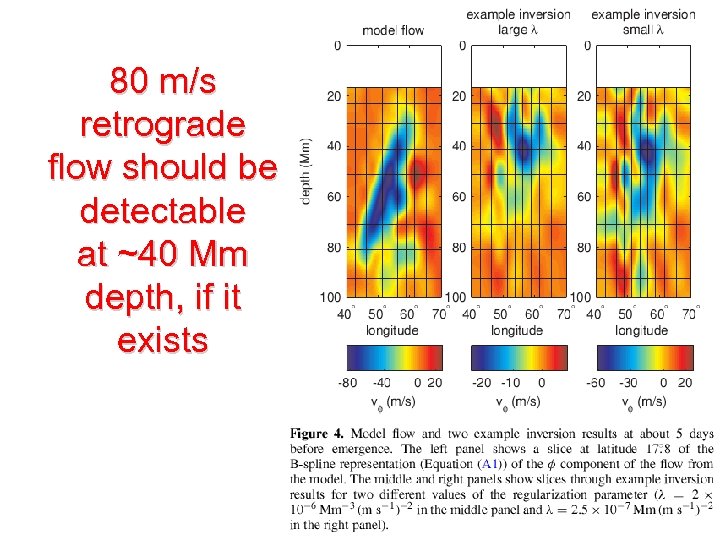 80 m/s retrograde flow should be detectable at ~40 Mm depth, if it exists
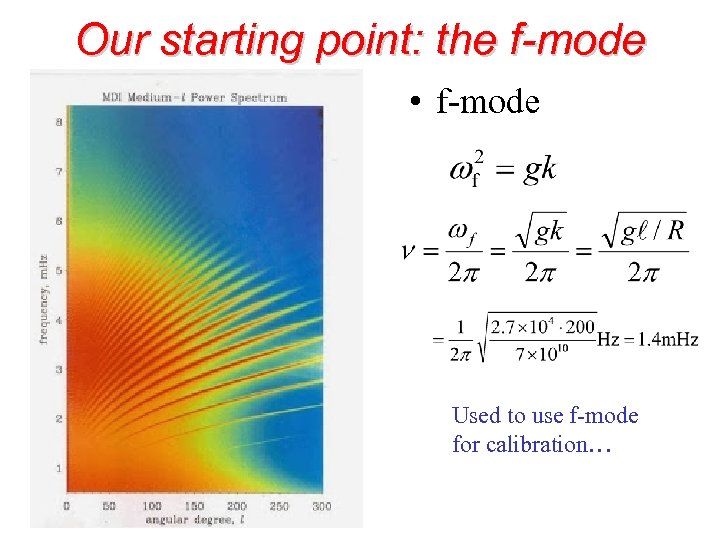 Our starting point: the f-mode • f-mode Used to use f-mode for calibration…
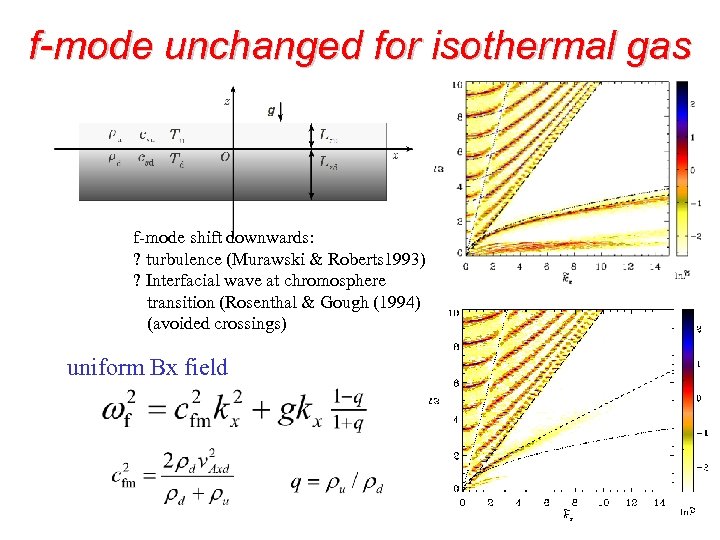 f-mode unchanged for isothermal gas f-mode shift downwards: ? turbulence (Murawski & Roberts 1993) ? Interfacial wave at chromosphere transition (Rosenthal & Gough (1994) (avoided crossings) uniform Bx field
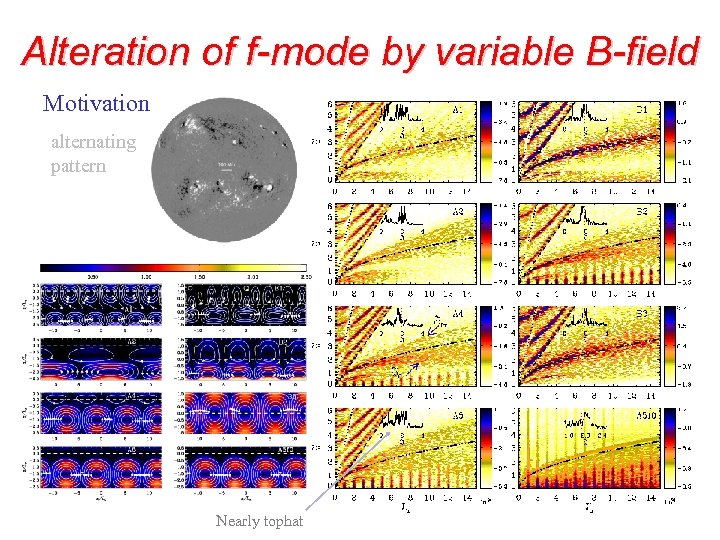 Alteration of f-mode by variable B-field Motivation alternating pattern Nearly tophat
 Any trace of this in the Sun? • The mode was just isothermal – Now use real solar data • Important to use short time intervals – Use 8 h intervals • Large wavenumbers – Smaller length scales 13
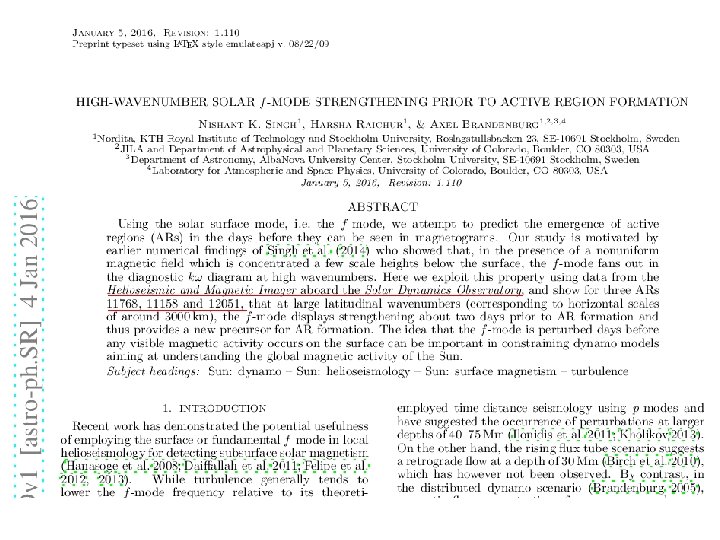 Our paper
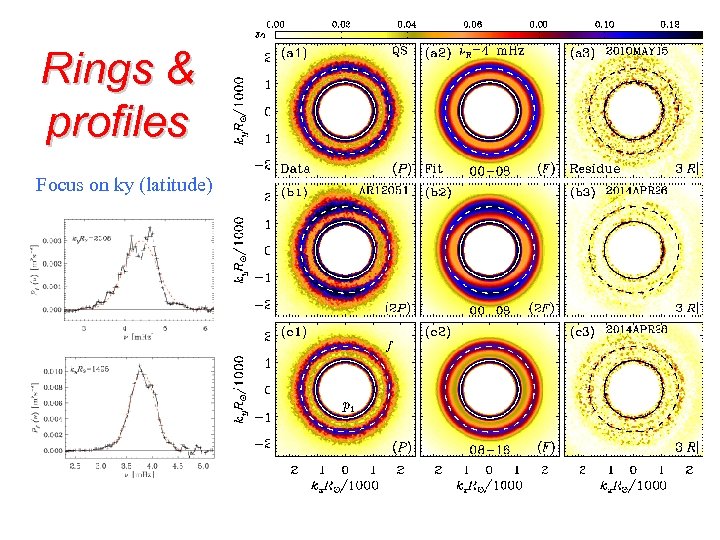 Rings & profiles Focus on ky (latitude)
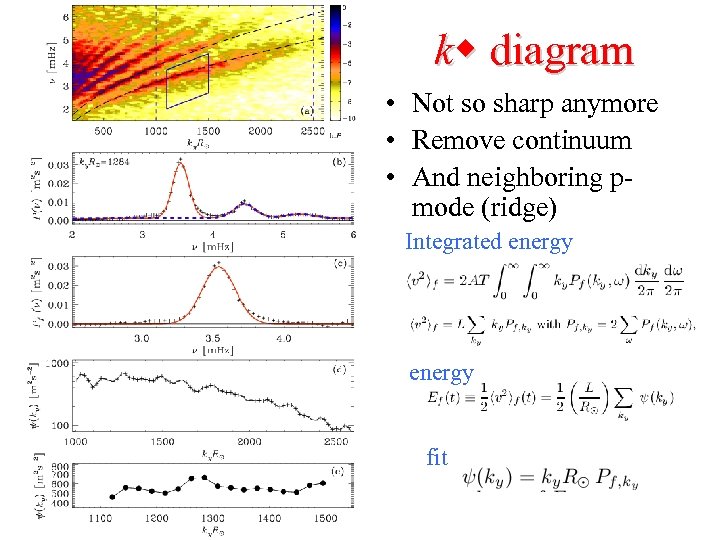 kw diagram • Not so sharp anymore • Remove continuum • And neighboring pmode (ridge) Integrated energy fit
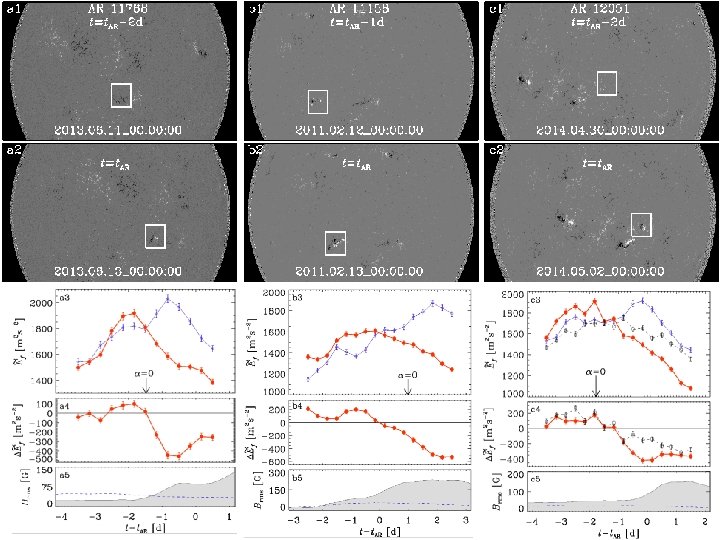 Alteration of f-mode by variable B-field
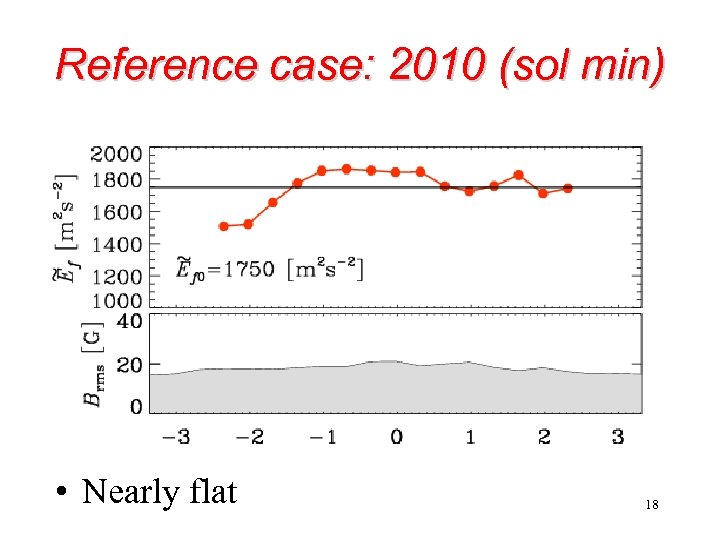 Reference case: 2010 (sol min) • Nearly flat 18
 Implications • The f-mode is confined to top few Mm • Magnetic field cannot just hover there for too long • Cheung et al. (2010) simulations give rise times of <10 h over 8 Mm. 19
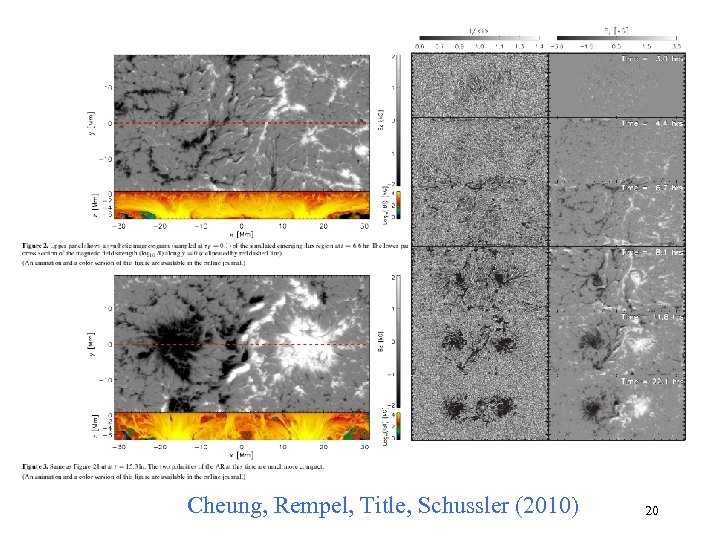 Cheung simulations • The f-mode is confined to top few Mm • Magnetic field cannot just hover there for too long • Cheung et al. (2010) simulations give rise times of <10 h over 8 Mm. Cheung, Rempel, Title, Schussler (2010) 20
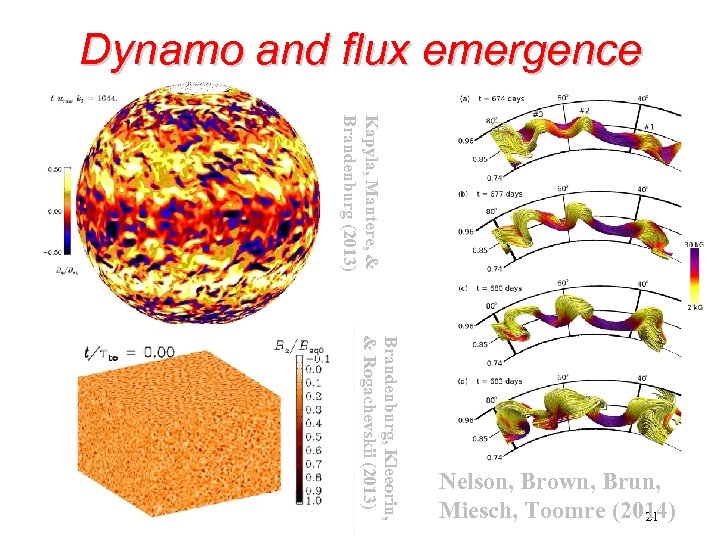 Dynamo and flux emergence Kapyla, Mantere, & Brandenburg (2013) Brandenburg, Kleeorin, & Rogachevskii (2013) Nelson, Brown, Brun, Miesch, Toomre (2014) 21
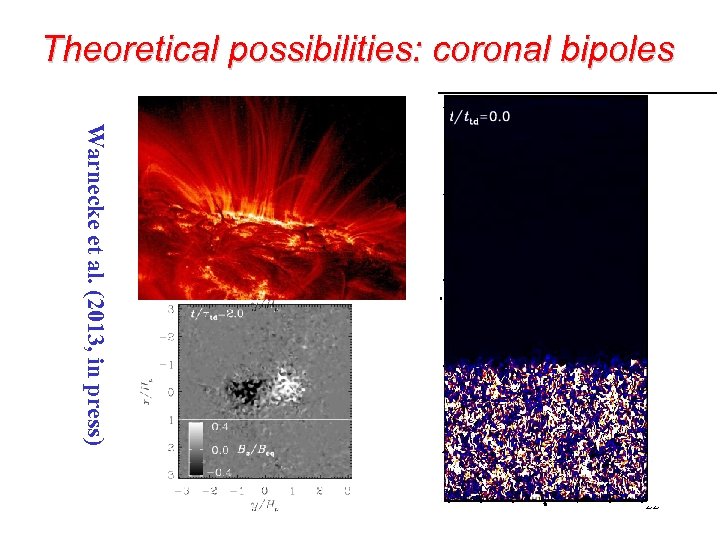 Theoretical possibilities: coronal bipoles Warnecke et al. (2013, in press) 22
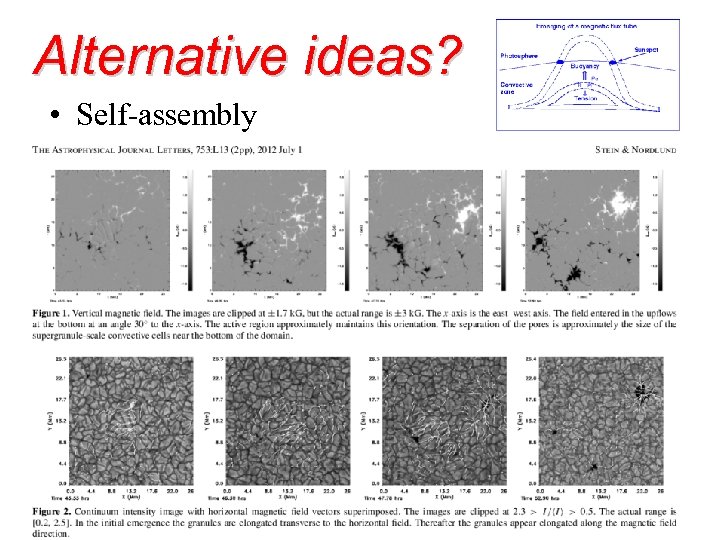 Alternative ideas? • Self-assembly
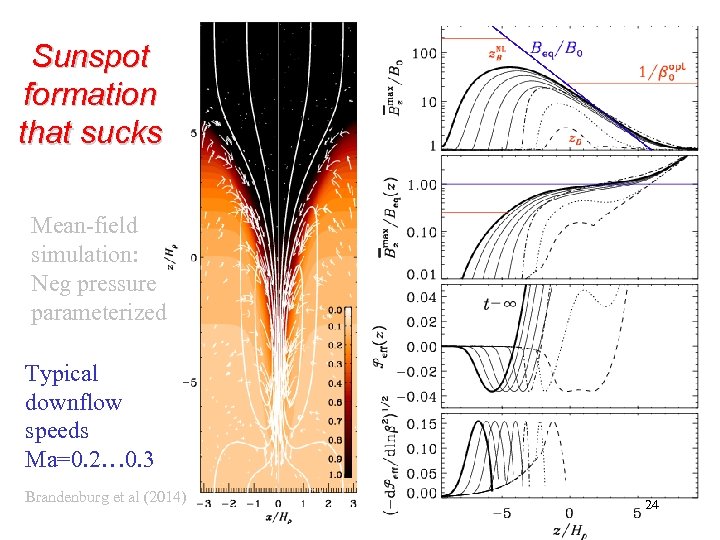 Sunspot formation that sucks Mean-field simulation: Neg pressure parameterized Typical downflow speeds Ma=0. 2… 0. 3 Brandenburg et al (2014) 24
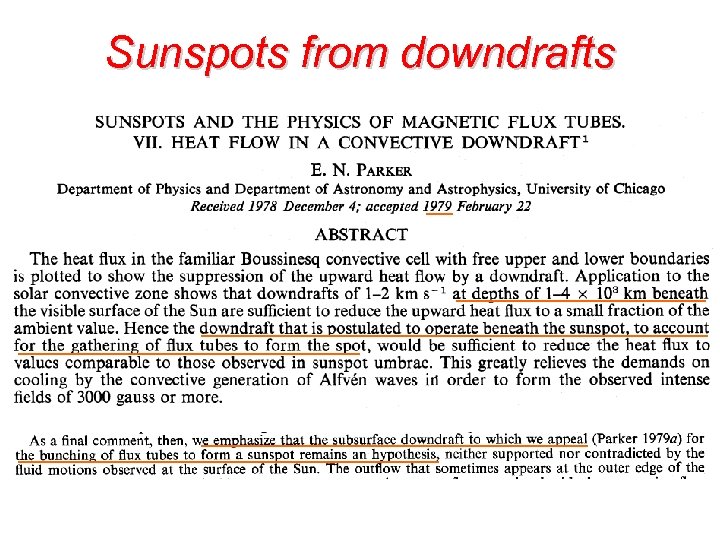 Sunspots from downdrafts 25
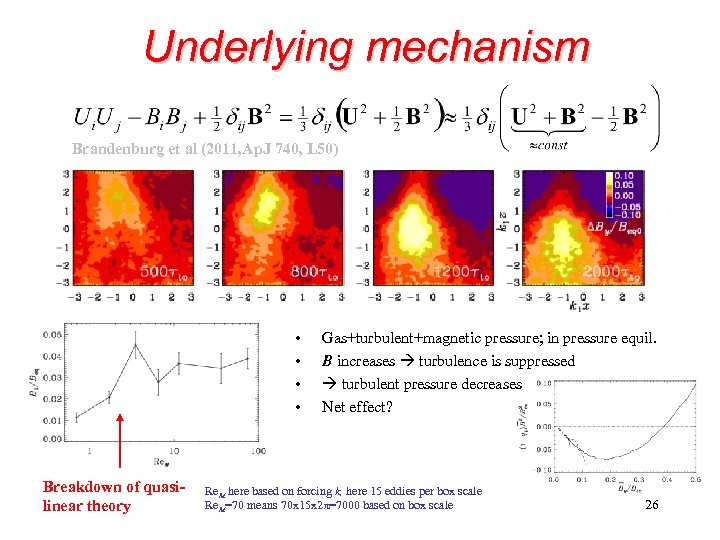 Underlying mechanism Brandenburg et al (2011, Ap. J 740, L 50) • • Breakdown of quasilinear theory Gas+turbulent+magnetic pressure; in pressure equil. B increases turbulence is suppressed turbulent pressure decreases Net effect? Re. M here based on forcing k, here 15 eddies per box scale Re. M=70 means 70 x 15 x 2 p=7000 based on box scale 26
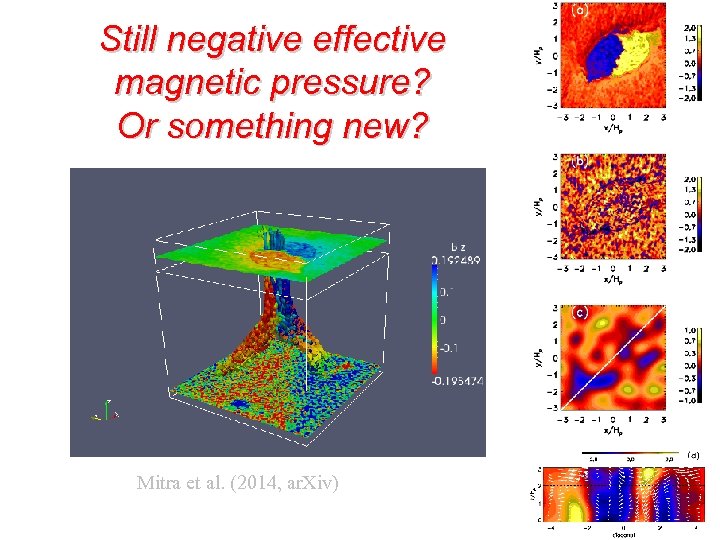 Still negative effective magnetic pressure? Or something new? Mitra et al. (2014, ar. Xiv) 27
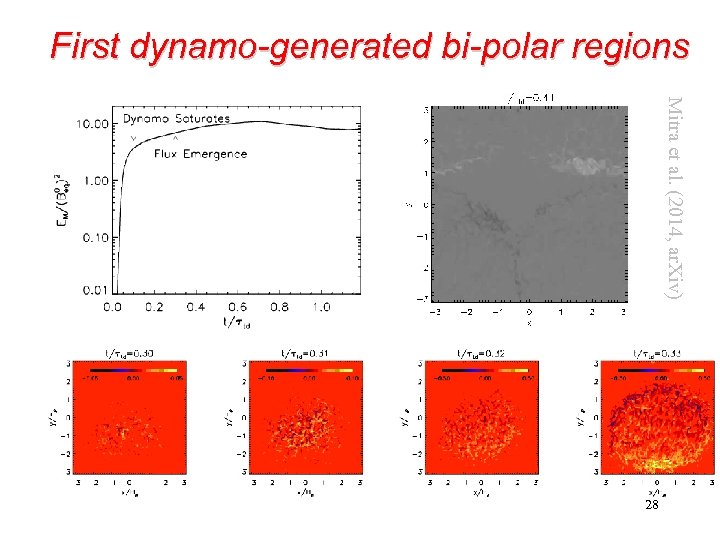 First dynamo-generated bi-polar regions Mitra et al. (2014, ar. Xiv) 28
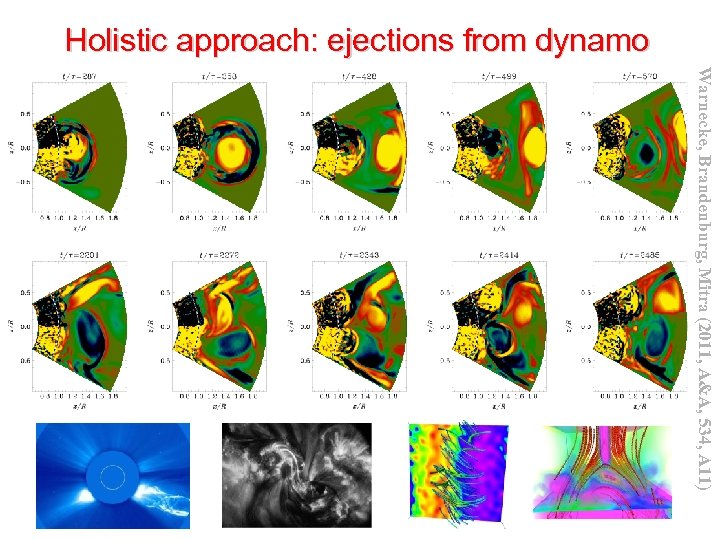 Holistic approach: ejections from dynamo Warnecke, Brandenburg, Mitra (2011, A&A, 534, A 11) 29
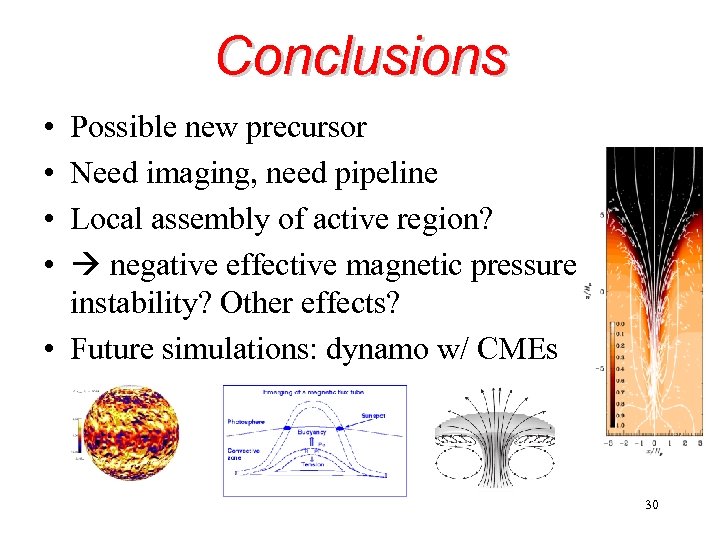 Conclusions • • Possible new precursor Need imaging, need pipeline Local assembly of active region? negative effective magnetic pressure instability? Other effects? • Future simulations: dynamo w/ CMEs 30
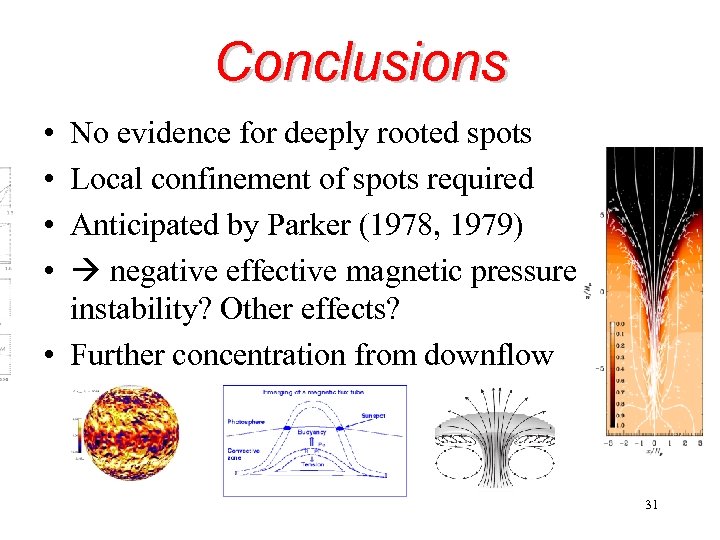 Conclusions • • No evidence for deeply rooted spots Local confinement of spots required Anticipated by Parker (1978, 1979) negative effective magnetic pressure instability? Other effects? • Further concentration from downflow 31
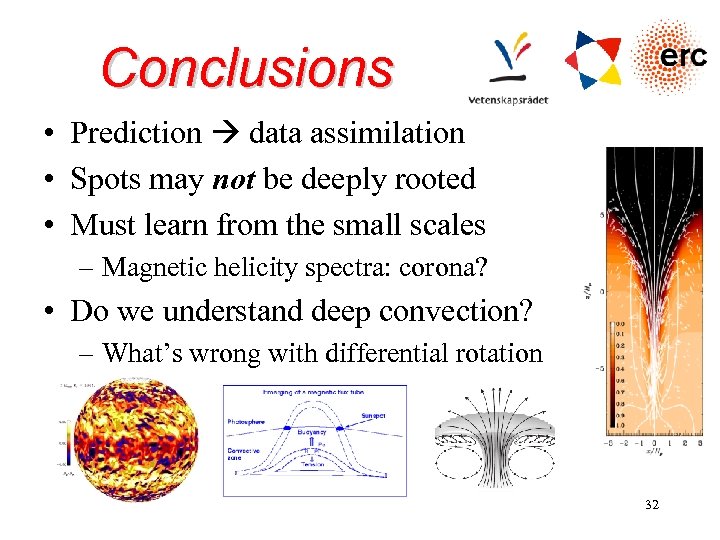 Conclusions • Prediction data assimilation • Spots may not be deeply rooted • Must learn from the small scales – Magnetic helicity spectra: corona? • Do we understand deep convection? – What’s wrong with differential rotation wrong? 32
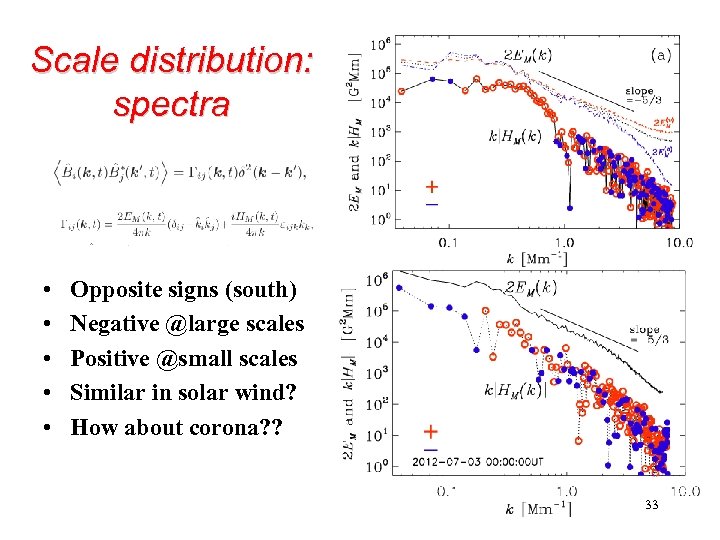 Scale distribution: spectra • • • Opposite signs (south) Negative @large scales Positive @small scales Similar in solar wind? How about corona? ? 33
 Matching needs: NSO in Boulder • Fresh minds (Hale fellowships) – Links via CU, also NOAA and HAO • Scientific cross-links – Connection with radio, microwave, infrared • Keep eye on our “customers” – Through SWPC @ NOAA 34
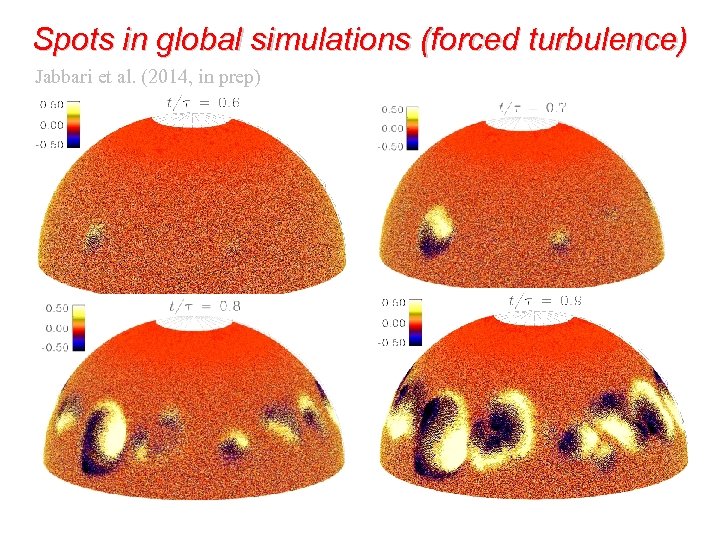 Spots in global simulations (forced turbulence) Jabbari et al. (2014, in prep) 35
 Prediction goals • When & where next active region (AR) – Need model of dynamo with flux emergence – Helioseismology; p- and f-modes p- and f-ridges • AR: flare, coronal mass ejection (CME), how strong? – – Couple to corona, holistic approach New ideas from hi-res observations Respond to alerts (impacts), provide alerts Q & U with JVLA and ALMA • Directed toward Earth? – Couple to solar wind – Match detailed signatures (e. g. magn helicity) to in-situ measurements 36