


 Скачать презентацию Heavy Water Reactors 2 R D Activities for Design
91b1ea60a9ffe5a2746f0eef4125e8e7.ppt
- Количество слайдов: 54
 Heavy Water Reactors 2. R&D Activities for Design and Safety Analysis Blair P. Bromley Reactor and Radiation Physics Branch AECL – Chalk River Laboratories Joint ICTP-IAEA Workshop on Nuclear Reaction Data for Advanced Reactor Technologies Tuesday, May 27, 2008 UNRESTRICTED
 Outline • Types of Measurements/Testing • Heavy Water Research Reactors – Critical Facilities ( < 1 k. W) – High-power Facilities – International Participation § Historical § Present Day • Present R&D Efforts and Needs for HWR’s – Canada (CANDU, ACR) – International (Gen-IV, GNEP) UNRESTRICTED 2
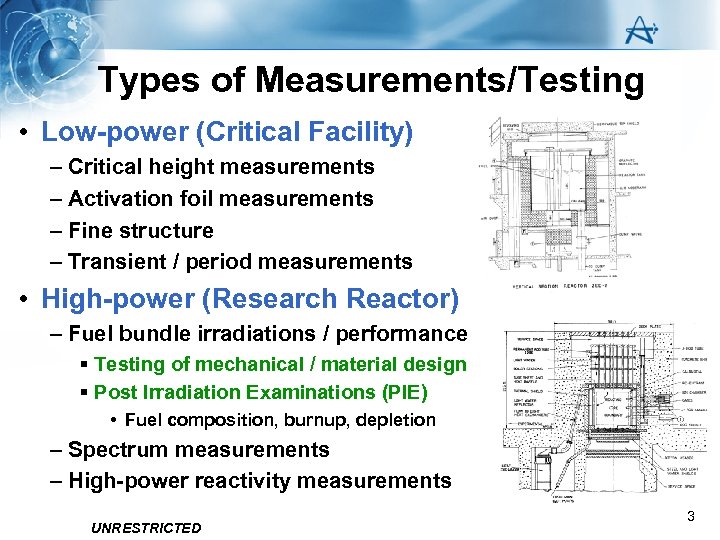 Types of Measurements/Testing • Low-power (Critical Facility) – Critical height measurements – Activation foil measurements – Fine structure – Transient / period measurements • High-power (Research Reactor) – Fuel bundle irradiations / performance § Testing of mechanical / material design § Post Irradiation Examinations (PIE) • Fuel composition, burnup, depletion – Spectrum measurements – High-power reactivity measurements UNRESTRICTED 3
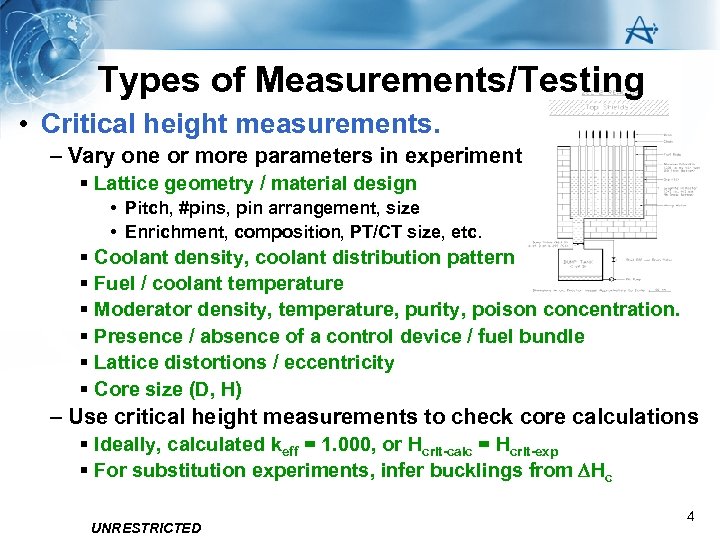 Types of Measurements/Testing • Critical height measurements. – Vary one or more parameters in experiment § Lattice geometry / material design • Pitch, #pins, pin arrangement, size • Enrichment, composition, PT/CT size, etc. § Coolant density, coolant distribution pattern § Fuel / coolant temperature § Moderator density, temperature, purity, poison concentration. § Presence / absence of a control device / fuel bundle § Lattice distortions / eccentricity § Core size (D, H) – Use critical height measurements to check core calculations § Ideally, calculated keff = 1. 000, or Hcrit-calc = Hcrit-exp § For substitution experiments, infer bucklings from Hc UNRESTRICTED 4
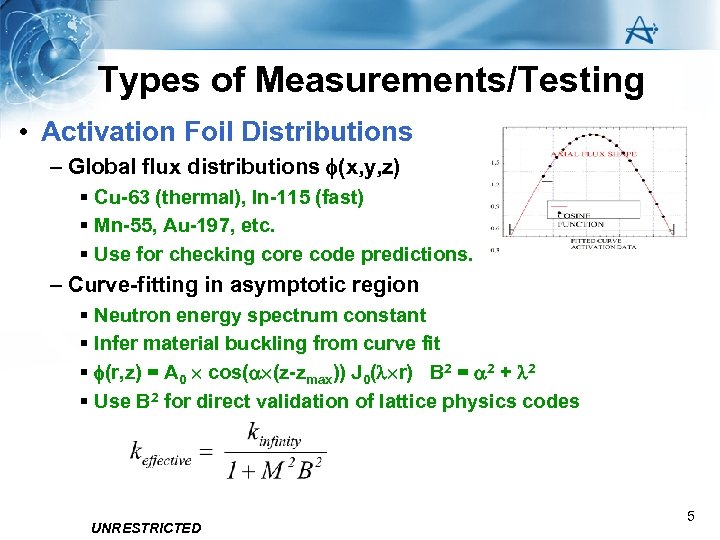 Types of Measurements/Testing • Activation Foil Distributions – Global flux distributions (x, y, z) § Cu-63 (thermal), In-115 (fast) § Mn-55, Au-197, etc. § Use for checking core code predictions. – Curve-fitting in asymptotic region § Neutron energy spectrum constant § Infer material buckling from curve fit § (r, z) = A 0 cos( (z-zmax)) J 0( r) B 2 = 2 + 2 § Use B 2 for direct validation of lattice physics codes UNRESTRICTED 5
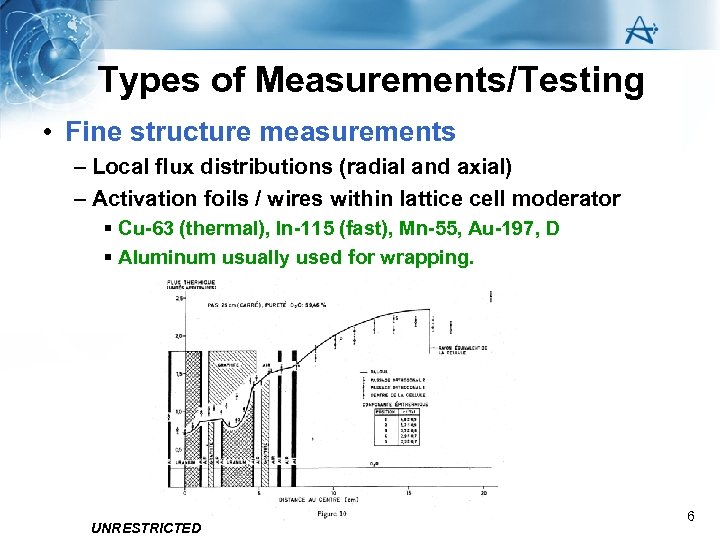 Types of Measurements/Testing • Fine structure measurements – Local flux distributions (radial and axial) – Activation foils / wires within lattice cell moderator § Cu-63 (thermal), In-115 (fast), Mn-55, Au-197, D § Aluminum usually used for wrapping. UNRESTRICTED 6
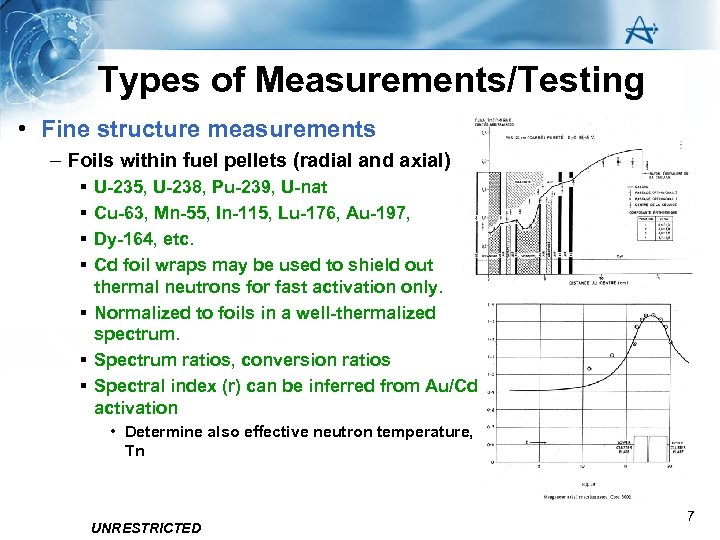 Types of Measurements/Testing • Fine structure measurements – Foils within fuel pellets (radial and axial) § § U-235, U-238, Pu-239, U-nat Cu-63, Mn-55, In-115, Lu-176, Au-197, Dy-164, etc. Cd foil wraps may be used to shield out thermal neutrons for fast activation only. § Normalized to foils in a well-thermalized spectrum. § Spectrum ratios, conversion ratios § Spectral index (r) can be inferred from Au/Cd activation • Determine also effective neutron temperature, Tn UNRESTRICTED 7
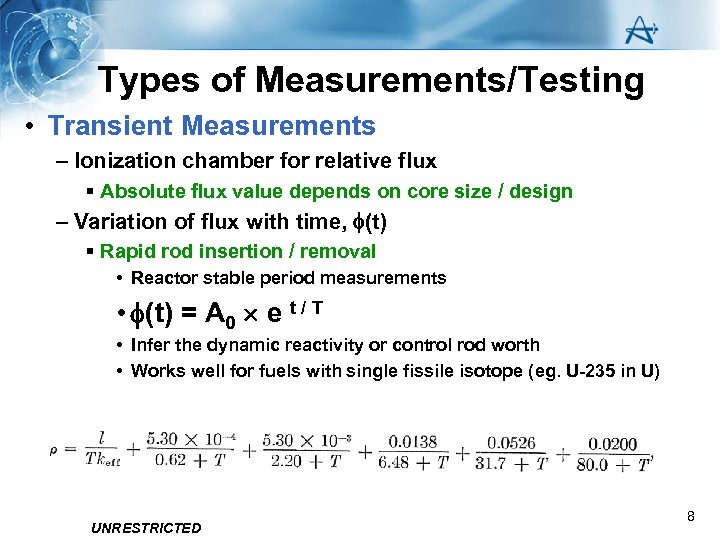 Types of Measurements/Testing • Transient Measurements – Ionization chamber for relative flux § Absolute flux value depends on core size / design – Variation of flux with time, (t) § Rapid rod insertion / removal • Reactor stable period measurements • (t) = A 0 e t / T • Infer the dynamic reactivity or control rod worth • Works well for fuels with single fissile isotope (eg. U-235 in U) UNRESTRICTED 8
 Types of Measurements/Testing • Fuel bundle irradiations / fuel performance – Testing of mechanical and material design – Post Irradiation Examinations (PIE) for fuel composition § Burnup, depletion • Direct neutron spectrum measurements § Velocity selectors / choppers. • “Pile oscillator” method – total absorption cross section measurements UNRESTRICTED 9
 Heavy Water Critical Facilities • Canada: – ZEEP (1945), ZED-2 (1960) – Operating today • U. S. A. : – PDP (1 k. W, 1953), Pawling (1958) • France: – Aquilon (1956) • Belgium: – VENUS (1964) • U. K. : – DIMPLE (1954), DAPHNE (1962), JUNO (1964) • Norway: – NORA (1961) • Sweden: – R-O (1959) UNRESTRICTED 10
 HW Critical Facilities • Italy: – ECO (1965), RB-3 (1971) – support for HWOCR • Czech Republic: – TR-0 (1972) • Yugoslavia: – RB (1958) – Operating today • Japan: – DCA (1969) – support for FUGEN design UNRESTRICTED 11
 HW Critical Facilities • India: – Zerlina (1961) – BARC (2003) – new for PHWR, AHWR work • Iran: – ENTC HWZPR (1995) • South Africa: – Pelinduna Zero (1967) UNRESTRICTED 12
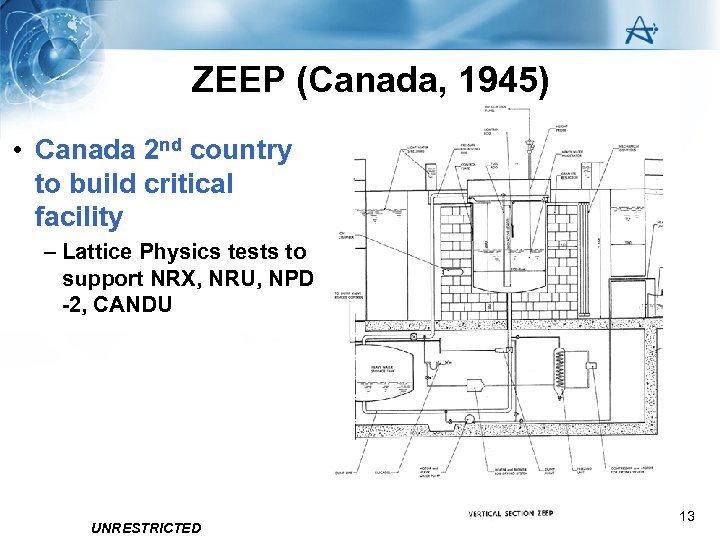 ZEEP (Canada, 1945) • Canada 2 nd country to build critical facility – Lattice Physics tests to support NRX, NRU, NPD -2, CANDU UNRESTRICTED 13
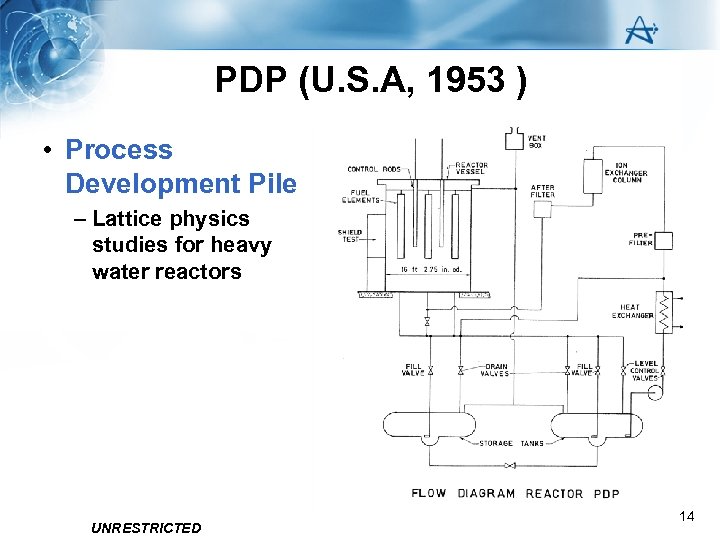 PDP (U. S. A, 1953 ) • Process Development Pile – Lattice physics studies for heavy water reactors UNRESTRICTED 14
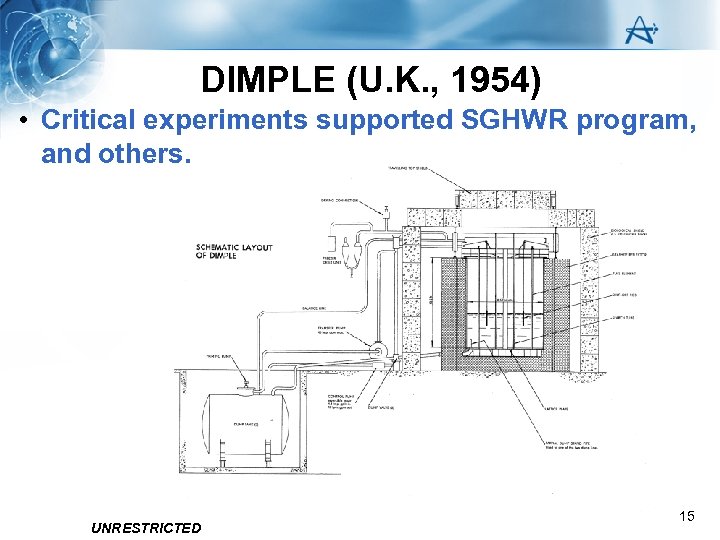 DIMPLE (U. K. , 1954) • Critical experiments supported SGHWR program, and others. UNRESTRICTED 15
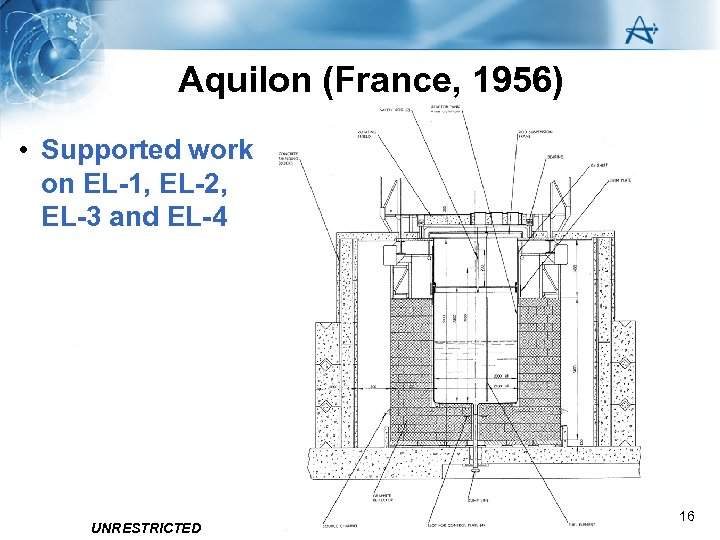 Aquilon (France, 1956) • Supported work on EL-1, EL-2, EL-3 and EL-4 UNRESTRICTED 16
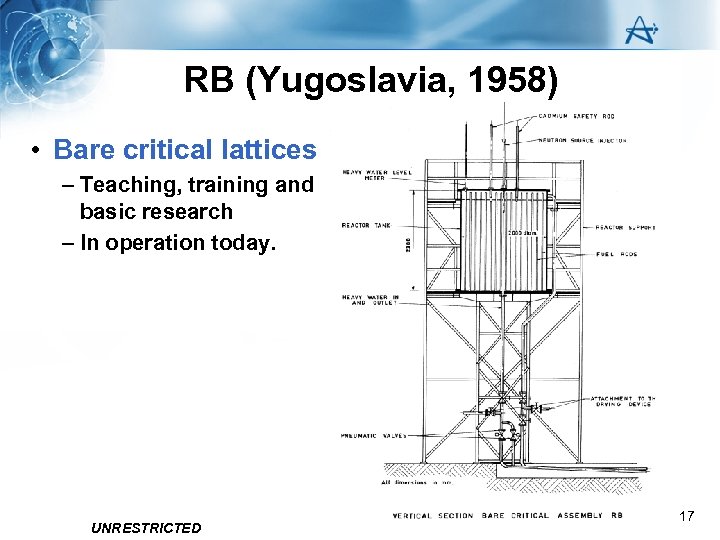 RB (Yugoslavia, 1958) • Bare critical lattices – Teaching, training and basic research – In operation today. UNRESTRICTED 17
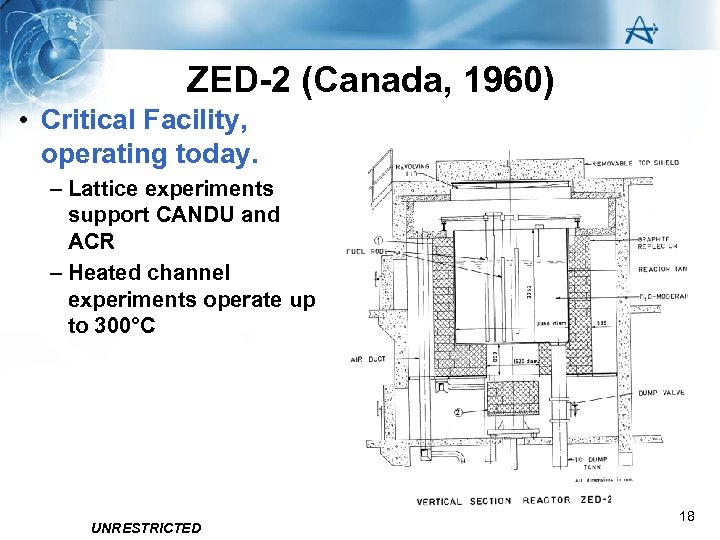 ZED-2 (Canada, 1960) • Critical Facility, operating today. – Lattice experiments support CANDU and ACR – Heated channel experiments operate up to 300°C UNRESTRICTED 18
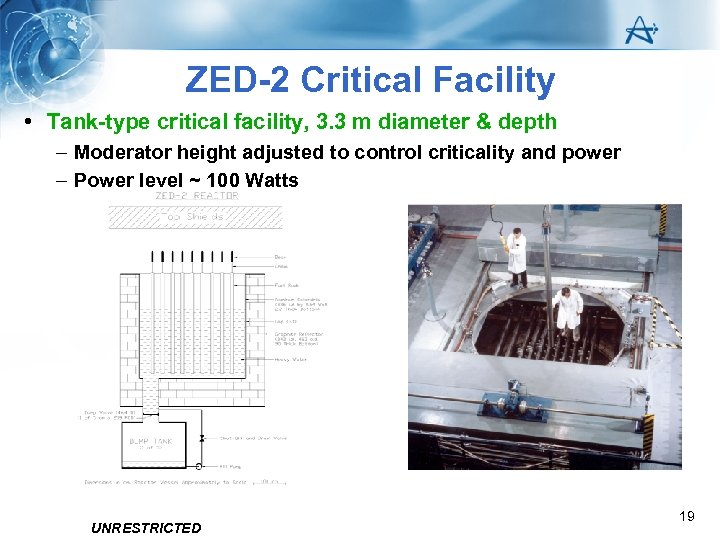 ZED-2 Critical Facility • Tank-type critical facility, 3. 3 m diameter & depth – Moderator height adjusted to control criticality and power – Power level ~ 100 Watts UNRESTRICTED 19
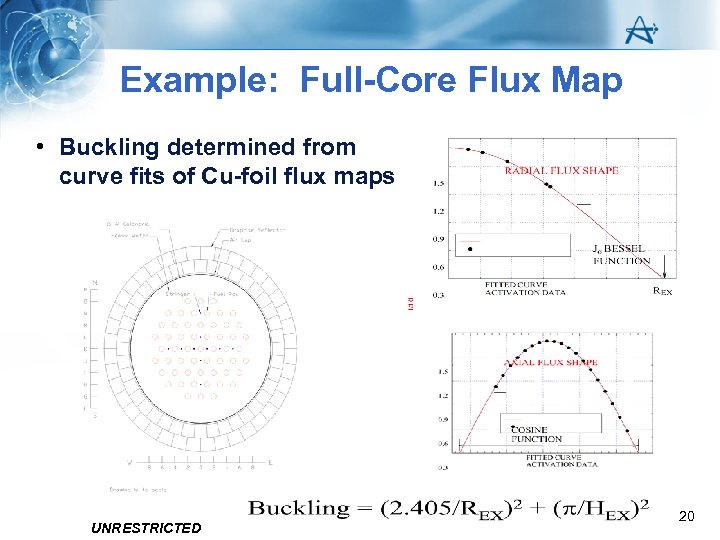 Example: Full-Core Flux Map • Buckling determined from curve fits of Cu-foil flux maps UNRESTRICTED 20
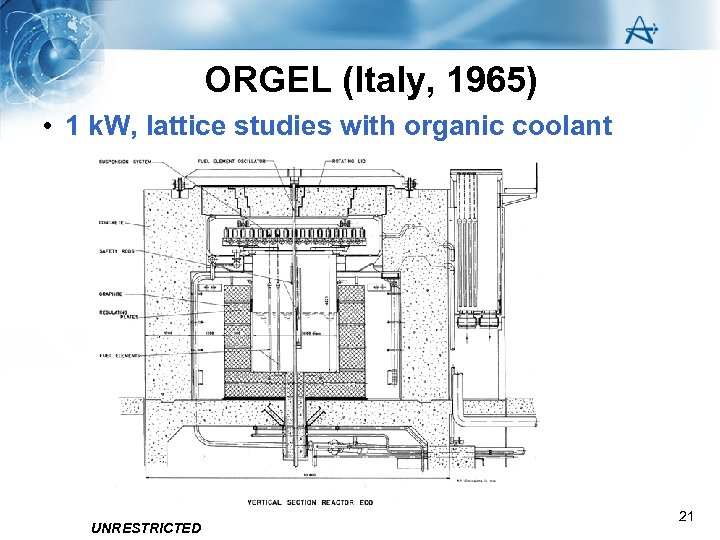 ORGEL (Italy, 1965) • 1 k. W, lattice studies with organic coolant UNRESTRICTED 21
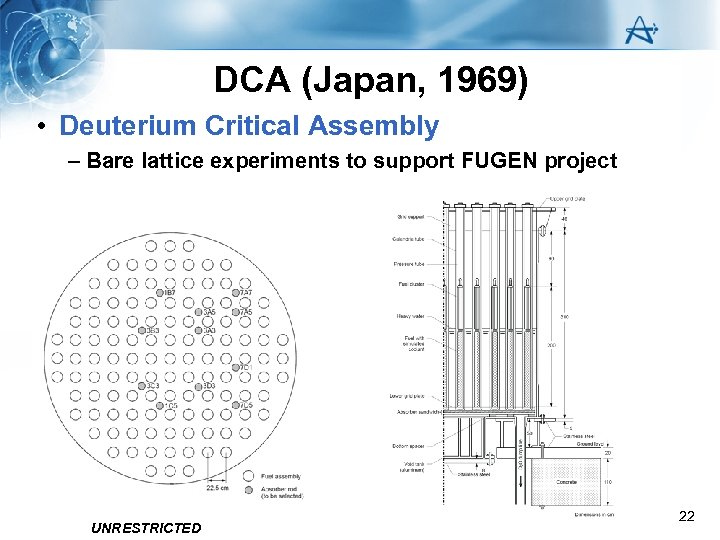 DCA (Japan, 1969) • Deuterium Critical Assembly – Bare lattice experiments to support FUGEN project UNRESTRICTED 22
 HW Research Reactors • Canada: – NRX (40 MW, 1947) – NRU (110 MW, 1957) § First to demonstrate on-line re-fuelling. § Operating today – >60% World’s supplier of radioisotopes – WR-1 (40 MW, 1961) – organically cooled. • Australia: – HIFAR (10 MW, 1958) • U. K. : – DIDO (15 MW, 1956), PLUTO (22 MW, 1957) – Dounreay MTR (22 MW, 1958) UNRESTRICTED 23
 HW Research Reactors • U. S. A. : Strong interest in HW for research – CP-3 (300 k. W, 1944) – World’s first HW reactor. – CP-5 (5 MW, 1954) – MITR (5 MW, 1958) – Operating today. – PRTR (85 MW, 1960) – demonstrate Pu recycling. – HWCTR (61 MW, 1962) – GTRR (1 MW, 1964) – Ames Laboratory (5 MW, 1965) – HFBR (BNL – 40 MW, 1965) – NBSR (10 MW, 1967) – Operating today UNRESTRICTED 24
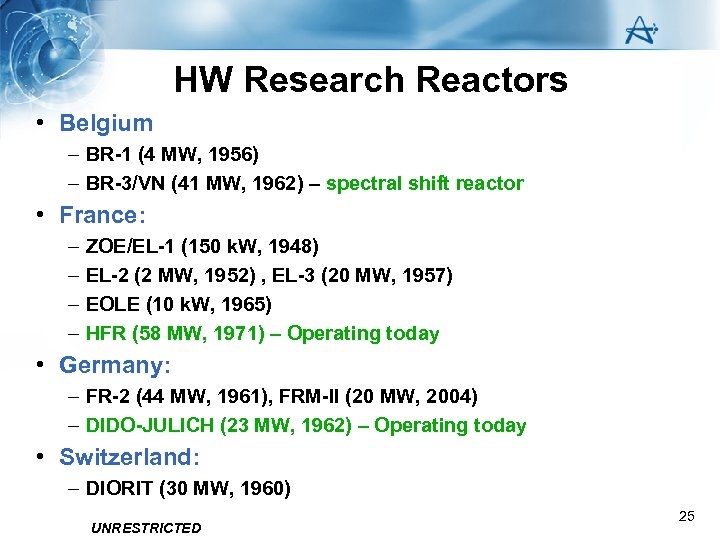 HW Research Reactors • Belgium – BR-1 (4 MW, 1956) – BR-3/VN (41 MW, 1962) – spectral shift reactor • France: – – ZOE/EL-1 (150 k. W, 1948) EL-2 (2 MW, 1952) , EL-3 (20 MW, 1957) EOLE (10 k. W, 1965) HFR (58 MW, 1971) – Operating today • Germany: – FR-2 (44 MW, 1961), FRM-II (20 MW, 2004) – DIDO-JULICH (23 MW, 1962) – Operating today • Switzerland: – DIORIT (30 MW, 1960) UNRESTRICTED 25
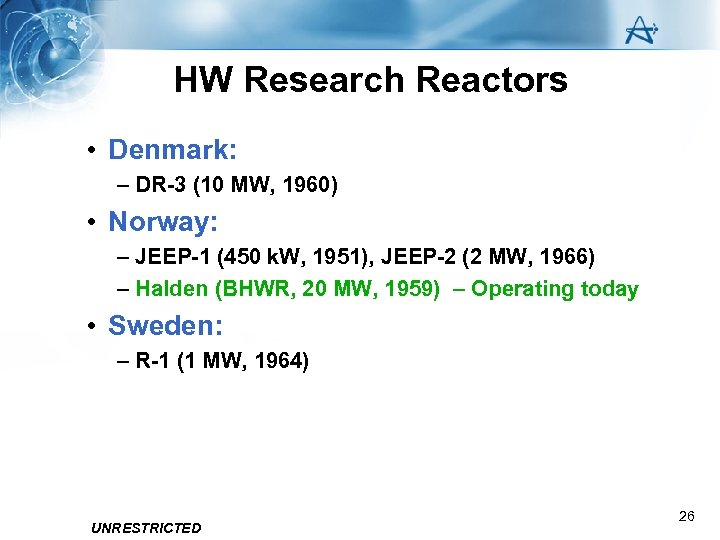 HW Research Reactors • Denmark: – DR-3 (10 MW, 1960) • Norway: – JEEP-1 (450 k. W, 1951), JEEP-2 (2 MW, 1966) – Halden (BHWR, 20 MW, 1959) – Operating today • Sweden: – R-1 (1 MW, 1964) UNRESTRICTED 26
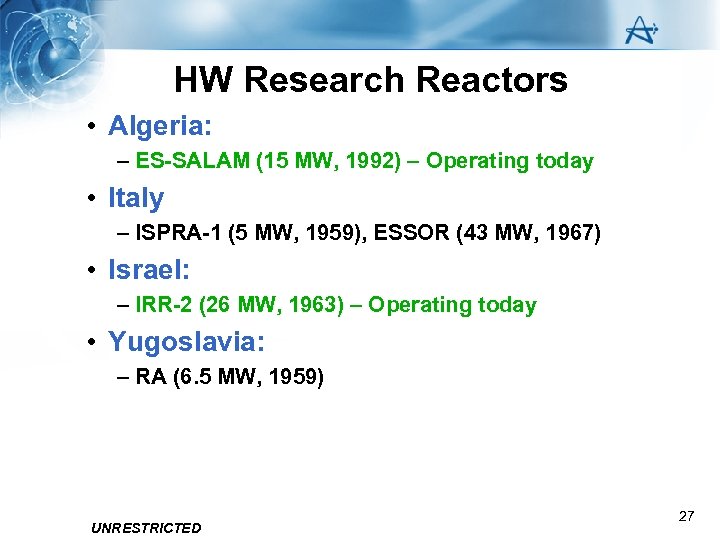 HW Research Reactors • Algeria: – ES-SALAM (15 MW, 1992) – Operating today • Italy – ISPRA-1 (5 MW, 1959), ESSOR (43 MW, 1967) • Israel: – IRR-2 (26 MW, 1963) – Operating today • Yugoslavia: – RA (6. 5 MW, 1959) UNRESTRICTED 27
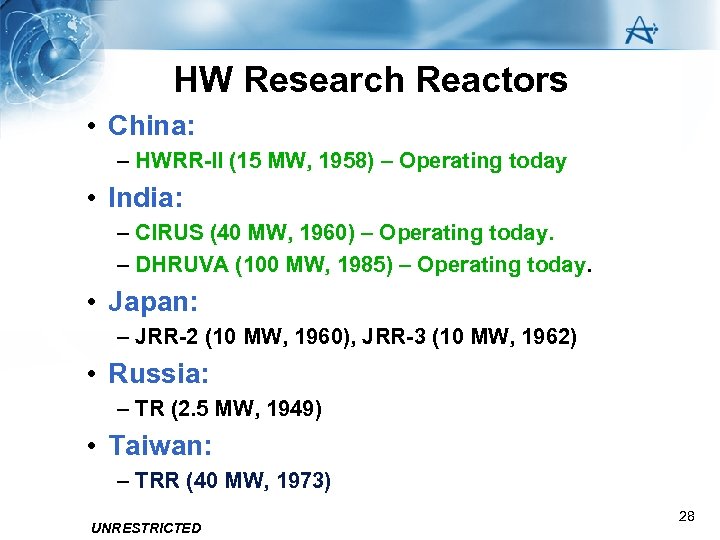 HW Research Reactors • China: – HWRR-II (15 MW, 1958) – Operating today • India: – CIRUS (40 MW, 1960) – Operating today. – DHRUVA (100 MW, 1985) – Operating today. • Japan: – JRR-2 (10 MW, 1960), JRR-3 (10 MW, 1962) • Russia: – TR (2. 5 MW, 1949) • Taiwan: – TRR (40 MW, 1973) UNRESTRICTED 28
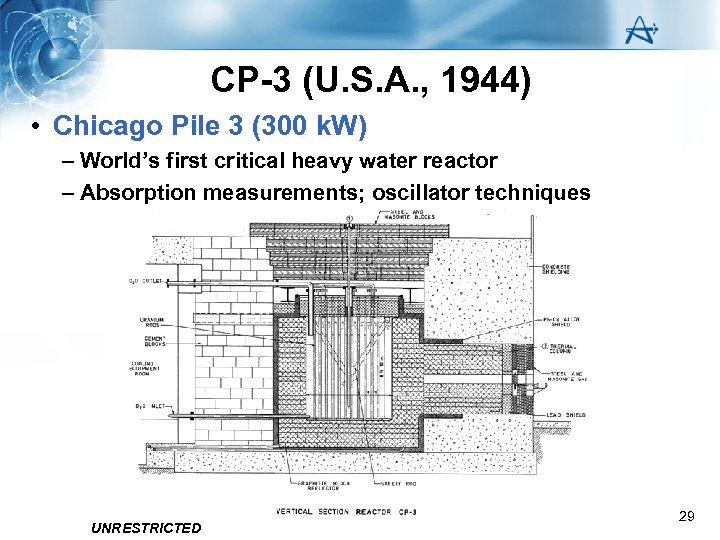 CP-3 (U. S. A. , 1944) • Chicago Pile 3 (300 k. W) – World’s first critical heavy water reactor – Absorption measurements; oscillator techniques UNRESTRICTED 29
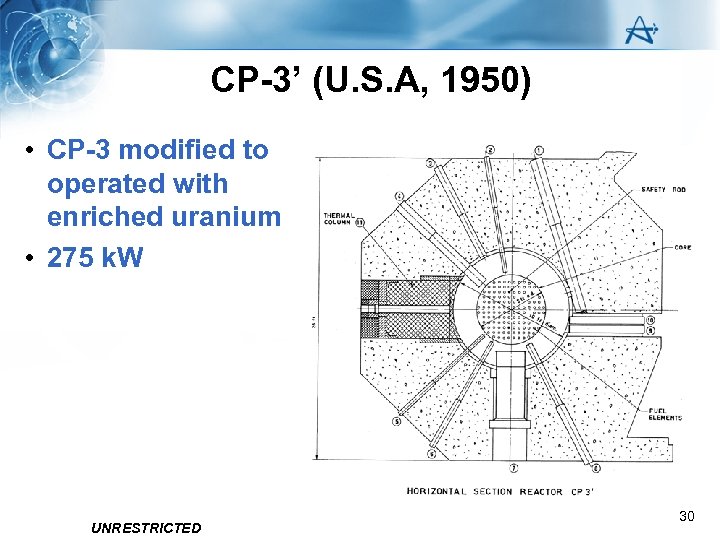 CP-3’ (U. S. A, 1950) • CP-3 modified to operated with enriched uranium • 275 k. W UNRESTRICTED 30
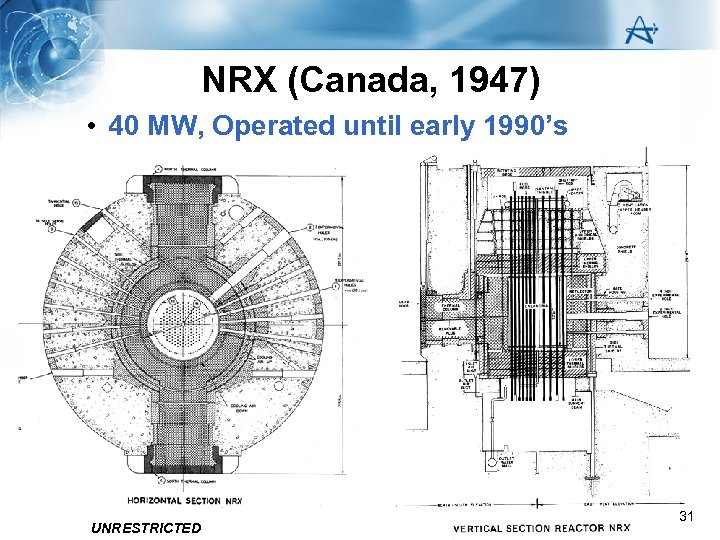 NRX (Canada, 1947) • 40 MW, Operated until early 1990’s UNRESTRICTED 31
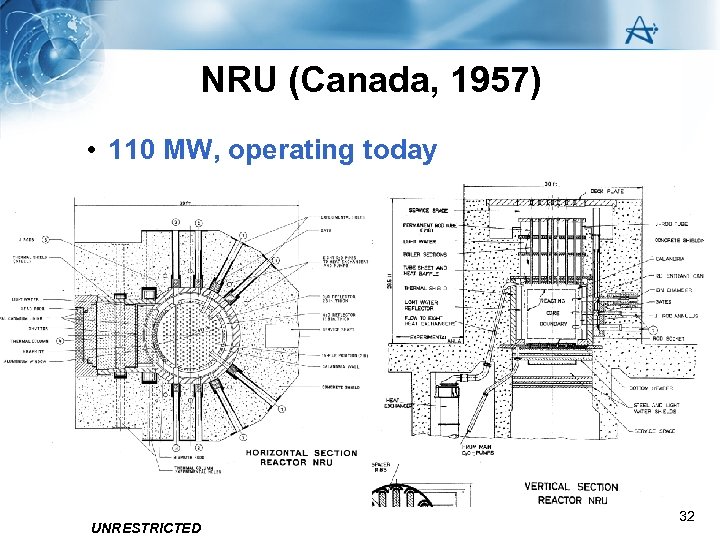 NRU (Canada, 1957) • 110 MW, operating today UNRESTRICTED 32
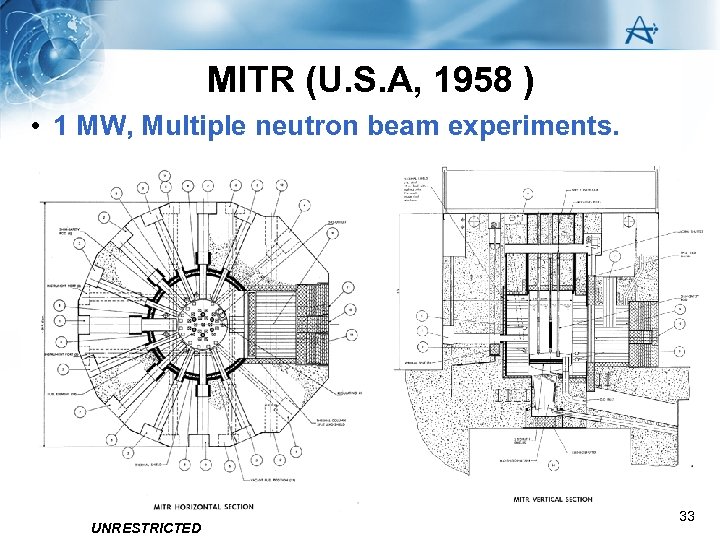 MITR (U. S. A, 1958 ) • 1 MW, Multiple neutron beam experiments. UNRESTRICTED 33
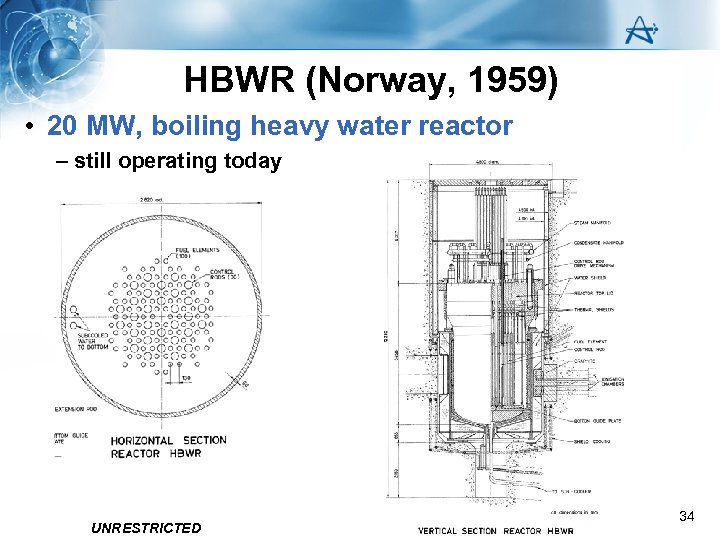 HBWR (Norway, 1959) • 20 MW, boiling heavy water reactor – still operating today UNRESTRICTED 34
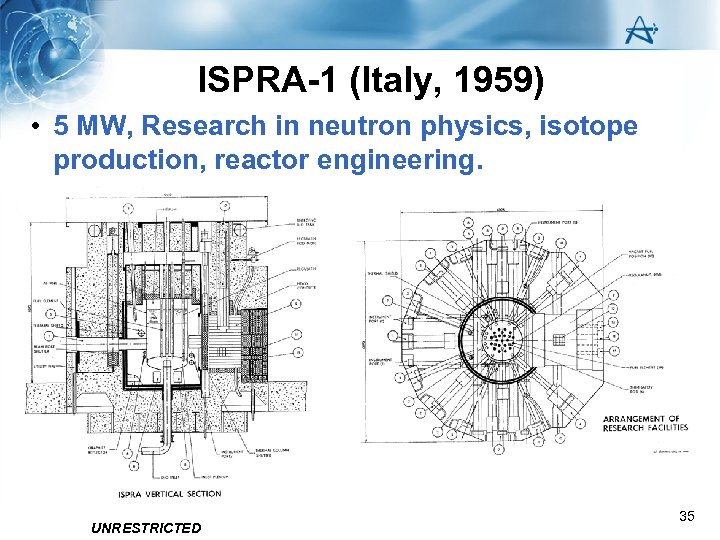 ISPRA-1 (Italy, 1959) • 5 MW, Research in neutron physics, isotope production, reactor engineering. UNRESTRICTED 35
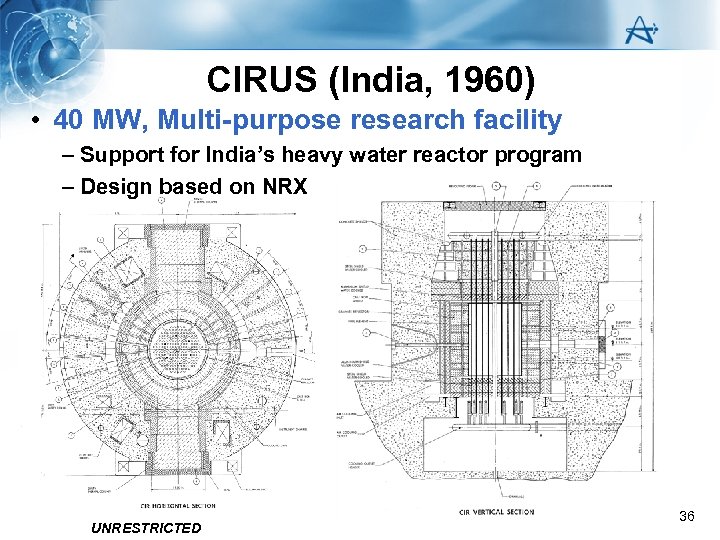 CIRUS (India, 1960) • 40 MW, Multi-purpose research facility – Support for India’s heavy water reactor program – Design based on NRX UNRESTRICTED 36
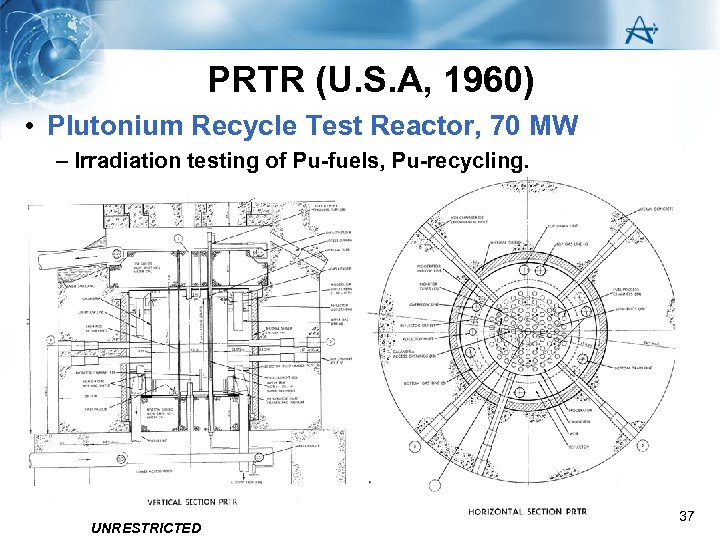 PRTR (U. S. A, 1960) • Plutonium Recycle Test Reactor, 70 MW – Irradiation testing of Pu-fuels, Pu-recycling. UNRESTRICTED 37
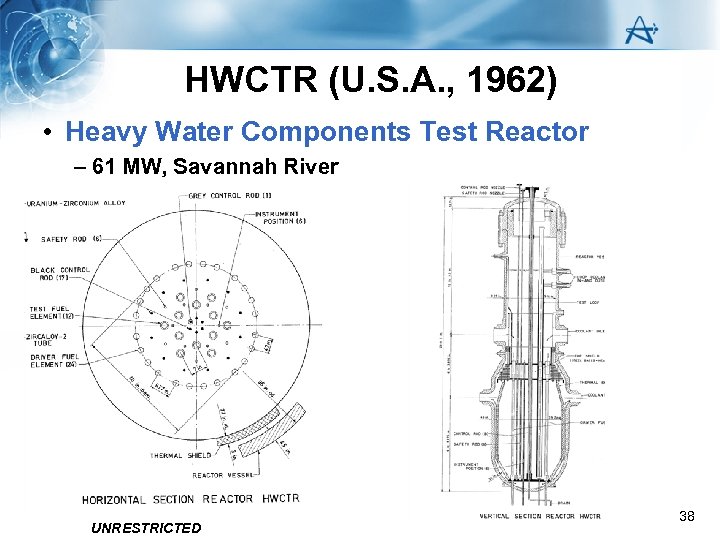 HWCTR (U. S. A. , 1962) • Heavy Water Components Test Reactor – 61 MW, Savannah River UNRESTRICTED 38
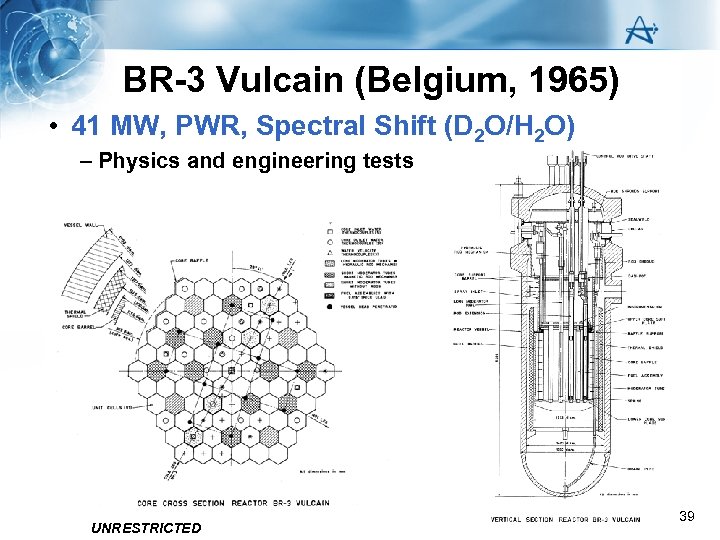 BR-3 Vulcain (Belgium, 1965) • 41 MW, PWR, Spectral Shift (D 2 O/H 2 O) – Physics and engineering tests UNRESTRICTED 39
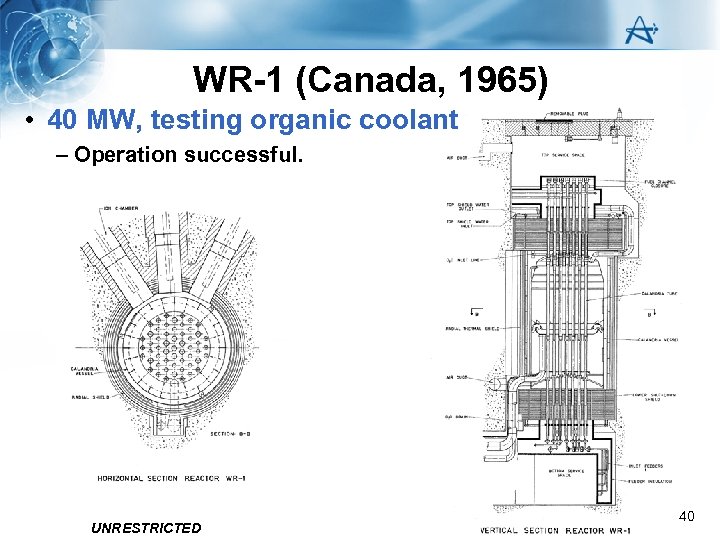 WR-1 (Canada, 1965) • 40 MW, testing organic coolant – Operation successful. UNRESTRICTED 40
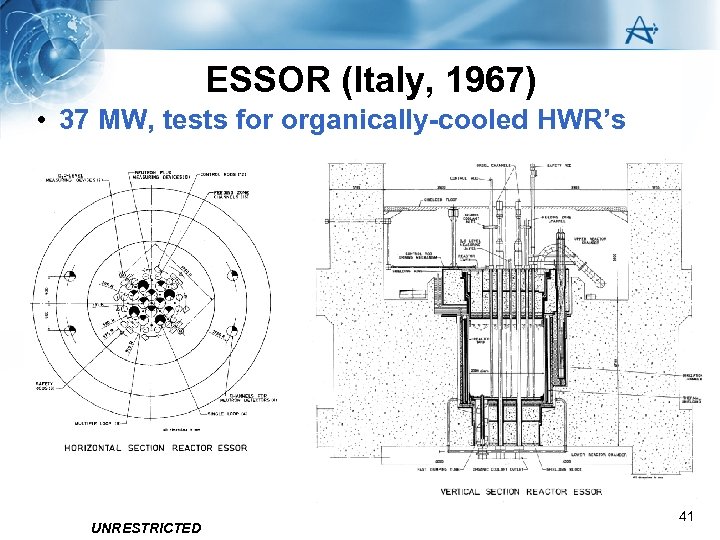 ESSOR (Italy, 1967) • 37 MW, tests for organically-cooled HWR’s UNRESTRICTED 41
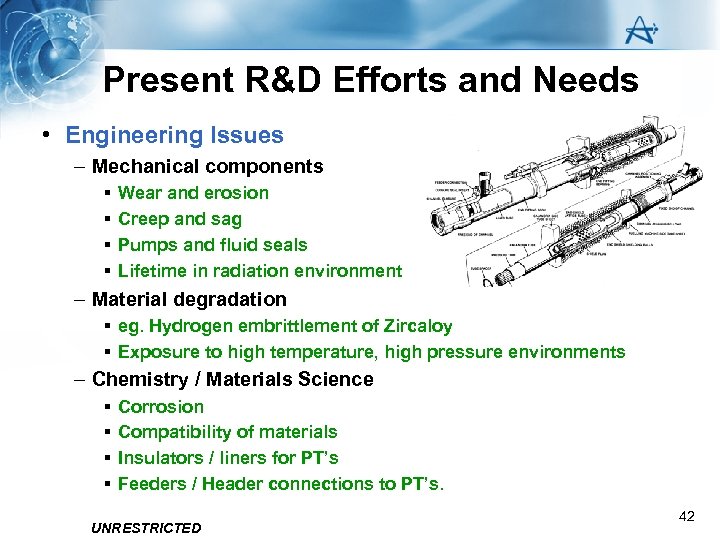 Present R&D Efforts and Needs • Engineering Issues – Mechanical components § § Wear and erosion Creep and sag Pumps and fluid seals Lifetime in radiation environment – Material degradation § eg. Hydrogen embrittlement of Zircaloy § Exposure to high temperature, high pressure environments – Chemistry / Materials Science § § Corrosion Compatibility of materials Insulators / liners for PT’s Feeders / Header connections to PT’s. UNRESTRICTED 42
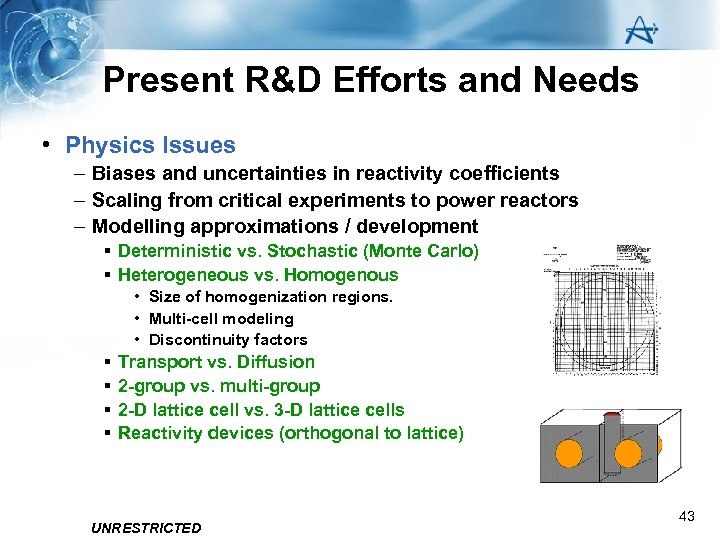 Present R&D Efforts and Needs • Physics Issues – Biases and uncertainties in reactivity coefficients – Scaling from critical experiments to power reactors – Modelling approximations / development § Deterministic vs. Stochastic (Monte Carlo) § Heterogeneous vs. Homogenous • Size of homogenization regions. • Multi-cell modeling • Discontinuity factors § § Transport vs. Diffusion 2 -group vs. multi-group 2 -D lattice cell vs. 3 -D lattice cells Reactivity devices (orthogonal to lattice) UNRESTRICTED 43
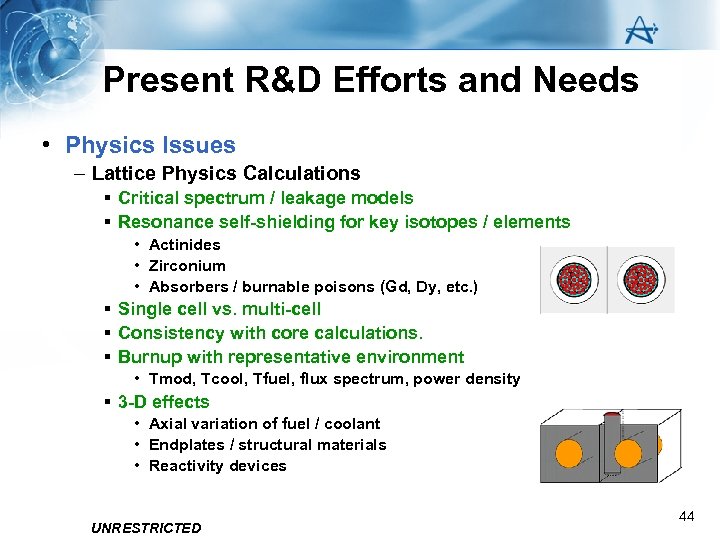 Present R&D Efforts and Needs • Physics Issues – Lattice Physics Calculations § Critical spectrum / leakage models § Resonance self-shielding for key isotopes / elements • Actinides • Zirconium • Absorbers / burnable poisons (Gd, Dy, etc. ) § Single cell vs. multi-cell § Consistency with core calculations. § Burnup with representative environment • Tmod, Tcool, Tfuel, flux spectrum, power density § 3 -D effects • Axial variation of fuel / coolant • Endplates / structural materials • Reactivity devices UNRESTRICTED 44
 Present R&D Efforts and Needs • Physics Issues § Nuclear Data • Accuracy and uncertainty estimates • Co-variance data • Thermal scattering data , S( , ) – D 2 O, H 2 O, O in UO 2, C (graphite), Be, 7 Li – Temperature corrections • Absorption / Resonance data – – – U-238, U-235, Pu-239, higher actinides Th-232, U-233 (for thorium cycle) Zr, Hf (impurity) Gd, Dy, other neutron absorbers Structural materials • Fission product yields – Delayed neutron precursors UNRESTRICTED 45
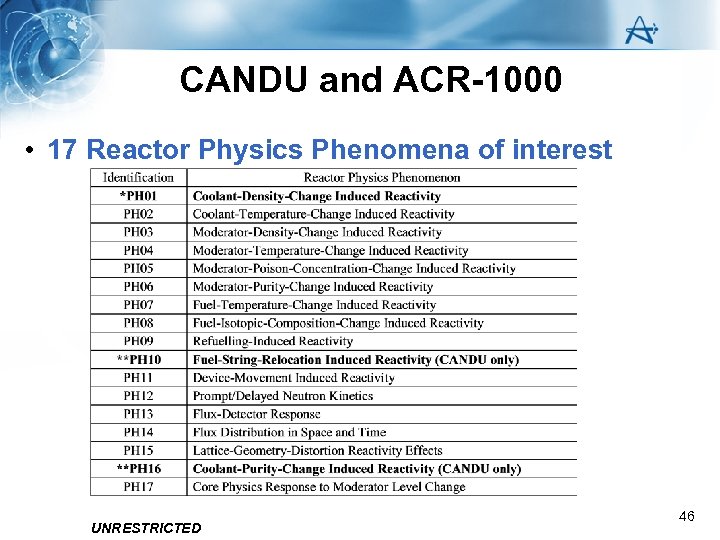 CANDU and ACR-1000 • 17 Reactor Physics Phenomena of interest UNRESTRICTED 46
 CANDU and ACR-1000 • Codes used to predict physics behavior – WIMS-AECL (lattice physics – multi-group transport) – DRAGON (incremental xsec’s for reactivity devices) – RFSP (core physics, refuelling, transients) – MCNP (stochastic / benchmark comparisons) • Biases, , and uncertainties, are quantified. – Prediction of keff, dkeff/dx (x= cool, Tfuel, Tmod, etc. ) – Prediction of flux / power distributions (x, y, z) • Scaling issues – Extending results from critical experiments, research reactors to larger power reactors (S/U analyses) UNRESTRICTED 47
 Gen-IV / GNEP • Supercritical Water – Materials, mechanical design – Reactor physics • Advanced Fuel Cycles – Recycling Pu and Actinides in HWR’s – Thorium-based fuel cycles – Alternative fuel matrices § UC, cermets, Si-based matrices – Reactivity and burnup calculations – Reactivity coefficients – Fuel management UNRESTRICTED 48
 Conclusions • Critical facilities provide key information for lattice physics – Critical height, activation foils, period measurements • Research reactors provide engineering and fuel burnup data. – Test bed for technologies • Heavy water research reactors in use today – Engineering, fuel testing, neutron beams, isotope production UNRESTRICTED 49
 Conclusions • International participation broad based – Use of heavy water reactors for research wide-spread. – Many countries today maintain at least one heavy water reactor. • Present day efforts – – Critical experiments for code validation Nuclear data being re-evaluated for improved agreement. Code development and validation ongoing. Canada, India are leading the way in HW research § Support for CANDU, ACR-1000, AHWR, etc. UNRESTRICTED 50
 A Few References • More recent: – IAEA, Nuclear Research Reactors in the World, reference data series #3, Sept. (2000). – http: //www. iaea. org/worldatom/rrdb/ – NEA/NSC/DOC (2006)1 : International Handbook of Evaluated Reactor Physics Benchmark Experiments, March (2006). • Older, but good: – IAEA, Heavy Water Lattices: 1 st Panel Report, Vienna, 4 Sept. , (1959). – IAEA, Heavy Water Lattices: 2 nd Panel Report, Technical Series No. 20, Vienna, 18 -22 Feb. (1963). – IAEA, Exponential and Critical Series, Volume 2, Vienna, (1964). – IAEA, Directory of Nuclear Reactors, Vols. 2, 3, 5, 6, 8, Vienna, (1959 -1970). – United Nations, Proceedings of International Conference on the Peaceful Uses of Atomic Energy, 2 nd and 3 rd Conferences, Geneva, (1958, 1964). UNRESTRICTED 51
 Acknowledgements • Gary Dyck (Advanced Fuels and Fuel Cycles) • Jim Sullivan, Michele Kubota (AECL) • Peter Boczar, Diane Heideman (AECL) UNRESTRICTED 52
 November 3, 2007 50 th Anniversary of NRU • 50 years of science and technology. • Millions of patients treated from medical radioisotopes. • Test bed for CANDU technology. • Neutron scattering experiments. • Materials testing – Space Shuttle Challenger SRB casing / welds. • Thousands of visiting researchers. • www. aecl. ca/nru 50 UNRESTRICTED 53
 UNRESTRICTED 54