


 Скачать презентацию Heart-Walk a reinforcement activity Presenter D Kacher
5c07005165c227a801304a9f15ffeaae.ppt
- Количество слайдов: 17
 Heart-Walk a reinforcement activity Presenter: D. Kacher
 • Students will reinforce their knowledge of the heart by walking on a large floor-drawing of a heart and naming its parts. • As they “walk through” the heart, they will follow the pathway of blood through the heart.
 Objectives • identify right and left heart • name the chambers, valves, and great vessels associated with both rt. & lf. heart • demonstrate how blood flows through the heart
 Teacher materials • 2 strips white butcher paper (approximately 9’ long • clear vinyl tape • pencil with eraser • drawing of the inside of heart (coronal plane) • blue, red, & yellow Sharpie markers • scissors • access to laminating machine • 2 sheets of blank printing paper
 Teacher preparation 1. 2. 3. 4. 5. Cut two large strips of white butcher paper (approximately 9’ in length) Tape strips lengthwise with clear vinyl tape (you should have a large sheet of paper approx 9’ x 6’ —depends on width of butcher paper) Using a pencil, draw a large heart (outline & inside– see template side) Do NOT label Outline right heart in blue, left heart in red, & valves in yellow
 Teacher preparation cont. 6. Cut drawing into lengthwise strips so that they will go through a lamination machine. 7. Using template, draw a large drop of blood on each sheet of print paper. 8. Color one drop blue & one red. 9. Laminate and re-tape heart drawing with clear vinyl tape 10. put sheets of paper with blue & red blood back-to -back and laminate
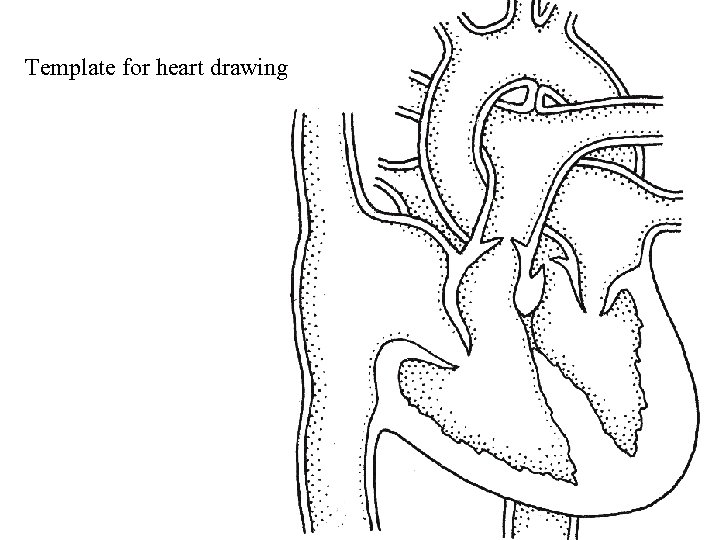 Template for heart drawing
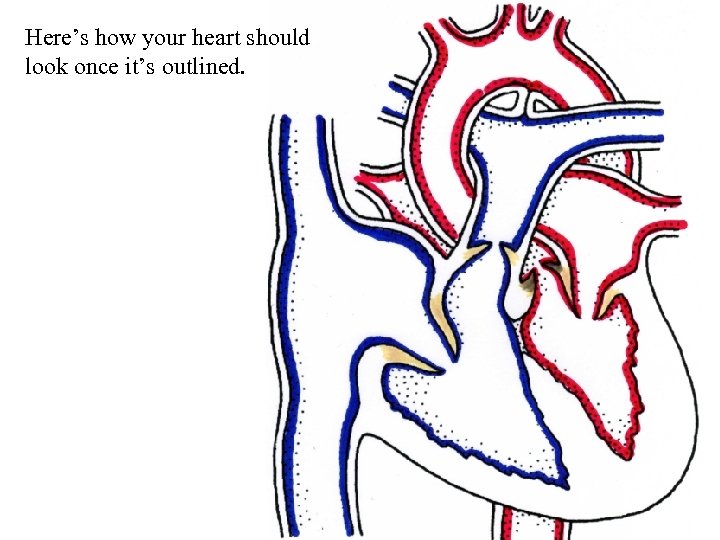 Here’s how your heart should look once it’s outlined.
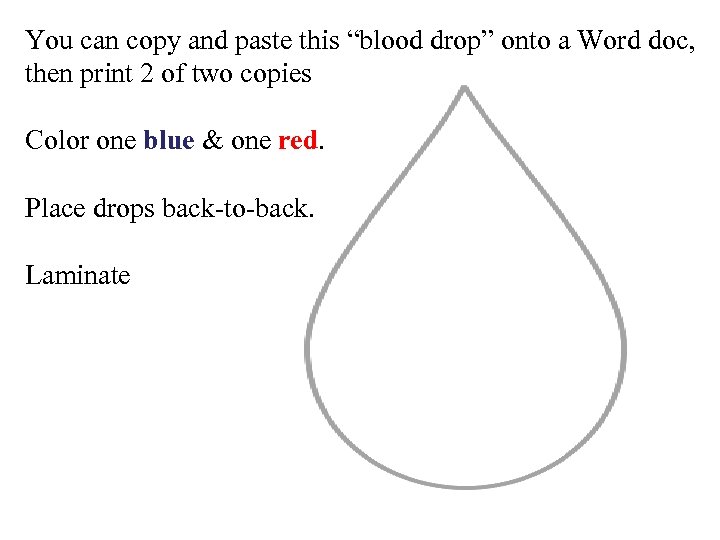 You can copy and paste this “blood drop” onto a Word doc, then print 2 of two copies Color one blue & one red. Place drops back-to-back. Laminate
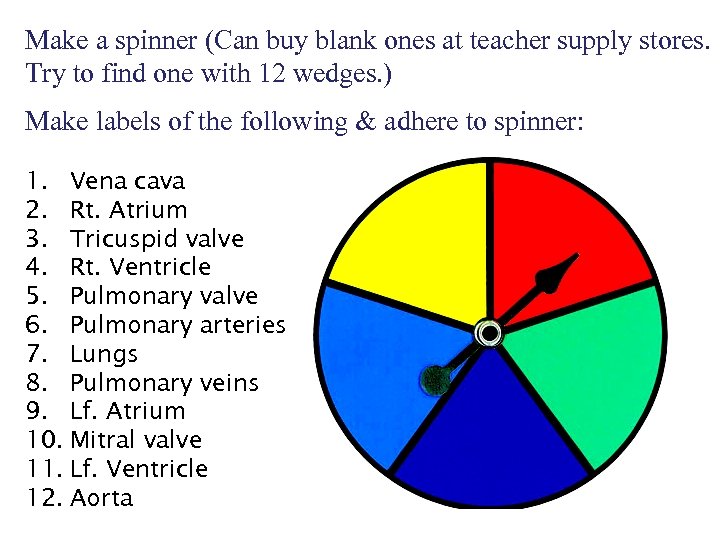 Make a spinner (Can buy blank ones at teacher supply stores. Try to find one with 12 wedges. ) Make labels of the following & adhere to spinner: 1. Vena cava 2. Rt. Atrium 3. Tricuspid valve 4. Rt. Ventricle 5. Pulmonary valve 6. Pulmonary arteries 7. Lungs 8. Pulmonary veins 9. Lf. Atrium 10. Mitral valve 11. Lf. Ventricle 12. Aorta
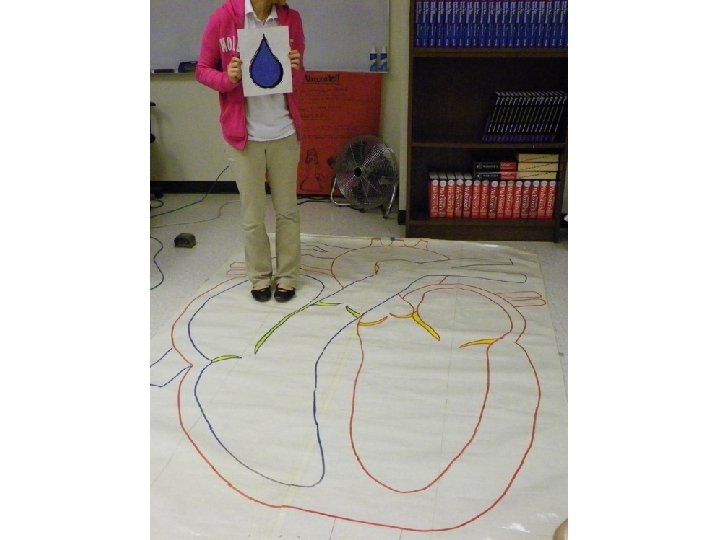
 How to begin …and end • Tape Heart-Walk drawing to floor. • Demonstrate how to walk through heart beginning at the superior vena cava • Be sure and have the blue drop of blood facing outwards. • Once you get to the pulmonary artery, step out of the Heart-Walk into the “lungs”. • Turn drop of blood to red side and return to the heart via pulmonary veins. • You are finished when you end up at the SVC.
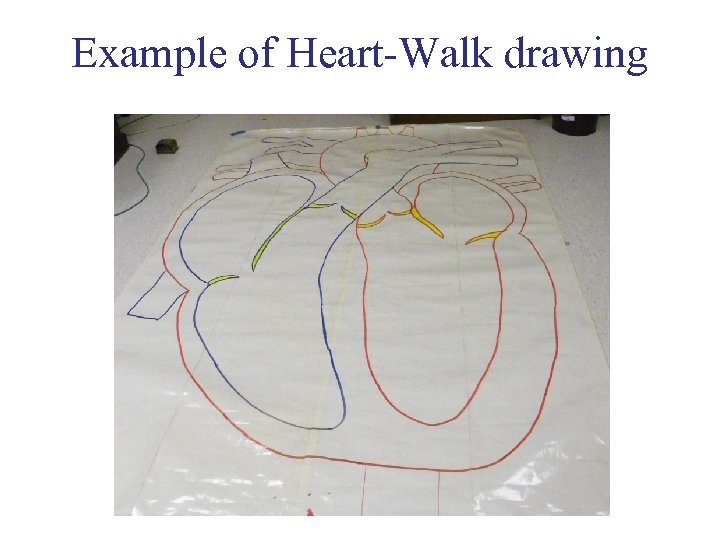 Example of Heart-Walk drawing
 What comes next? • Coronary arteries • Electrical conduction in heart
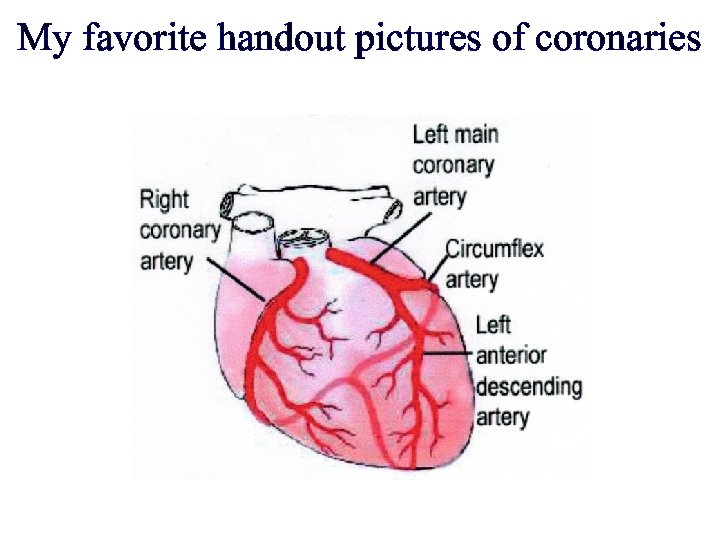 My favorite handout pictures of coronaries
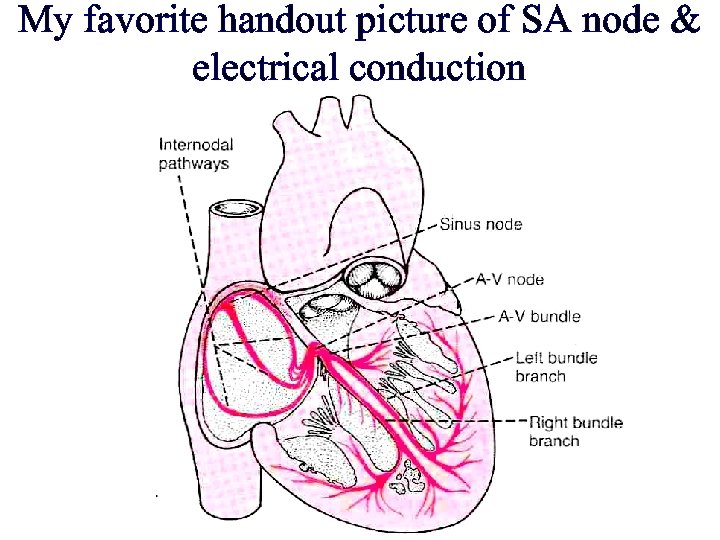 My favorite handout picture of SA node & electrical conduction
 Biomedical engineering & biotechnology as it relates to the cardiovascular system: • Screening technologies –stethoscope, BP, serum cholesterol levels • Diagnostic technologies – EKG, blood enzymes, cardiac catheterization • Interventional technologies – medications, angioplasty, stents • Therapeutic technologies – meds, surgery