


 Скачать презентацию Healthy Home Solutions Lesson 3 Protecting private drinking
00cdf5847f22df65ce41db2c4aa690e9.ppt
- Количество слайдов: 64
 Healthy Home Solutions Lesson 3: Protecting private drinking water wells and managing on-site waste systems
 Part 1. Test and protect your private drinking water well
 Knowledge: Access information on well water testing including what to test for, when to test, and where to test. Increase awareness of typical on-site septic systems. Learning objectives Comprehension: Describe the importance of annual well water testing and daily management of septic system. Application: Identify where to get information on what to test and where to have tests performed. Identify additional actions that protect private drinking water wells
 In the dark about drinking water testing and protection? Groundwater and wells Well construction and maintenance Private well testing Home water treatment Protection techniques
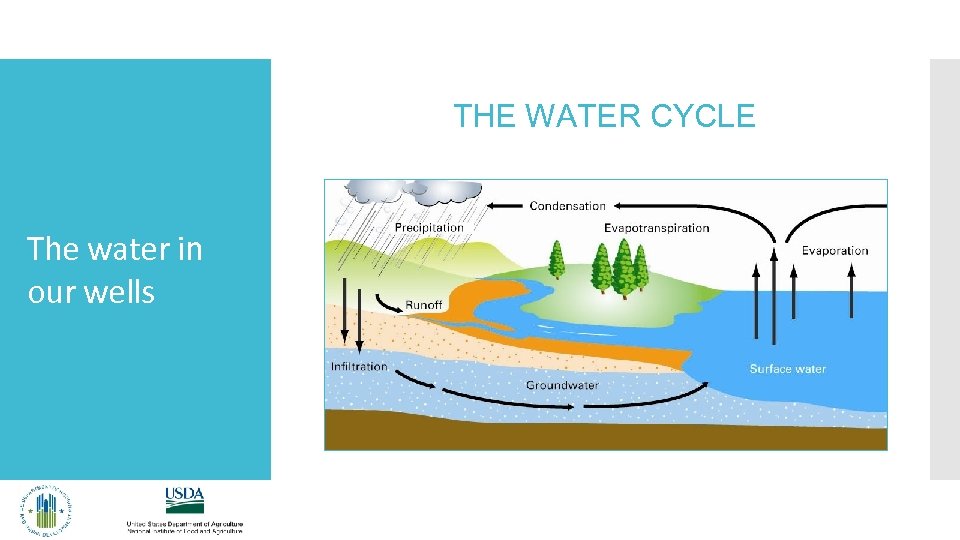 THE WATER CYCLE The water in our wells
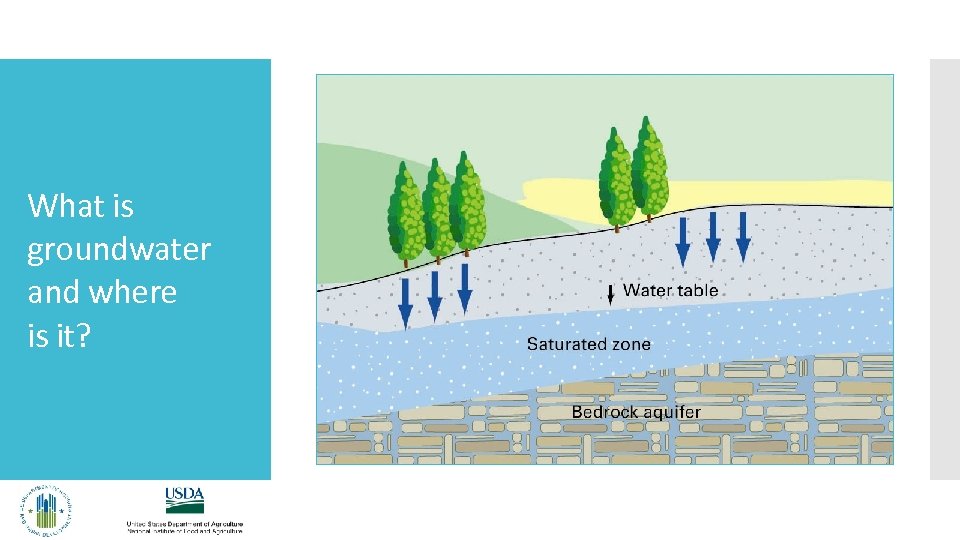 What is groundwater and where is it?
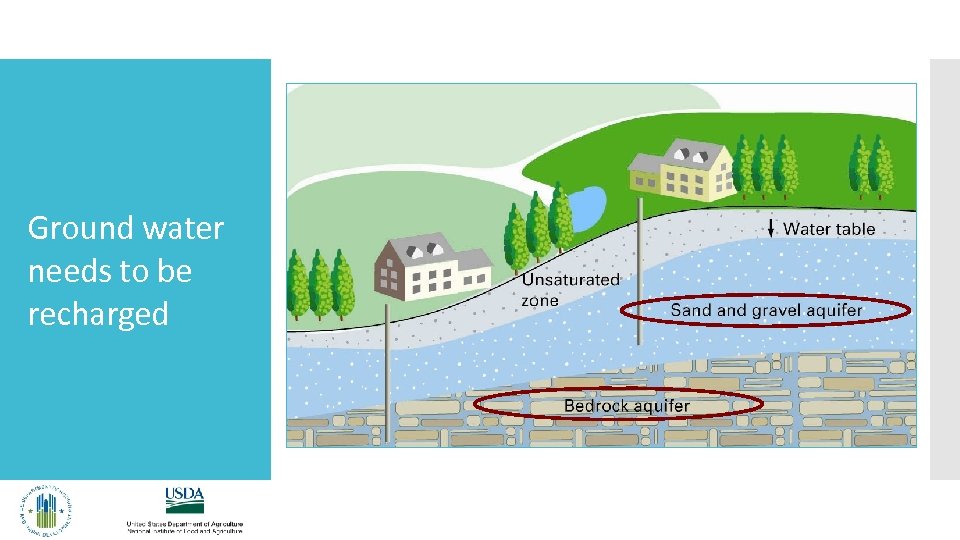 Ground water needs to be recharged
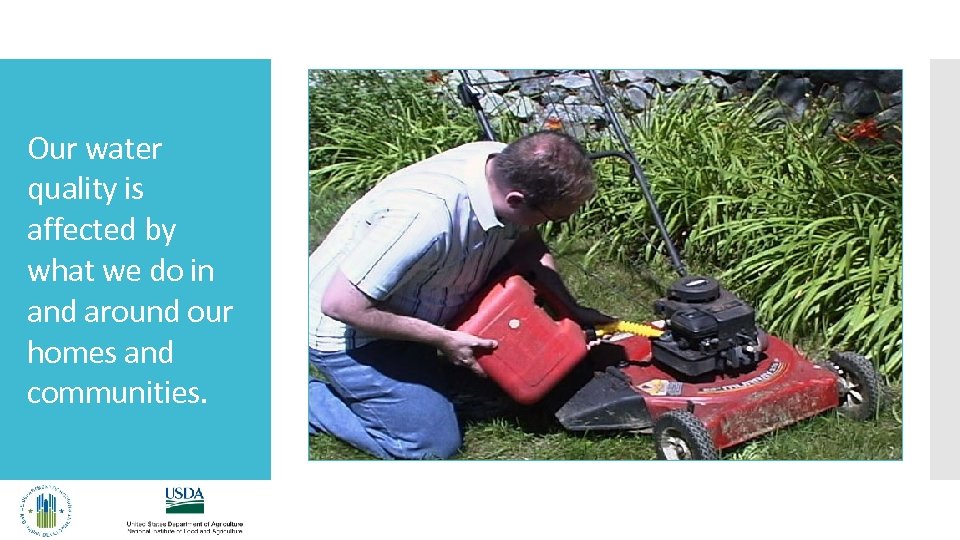 Our water quality is affected by what we do in and around our homes and communities.
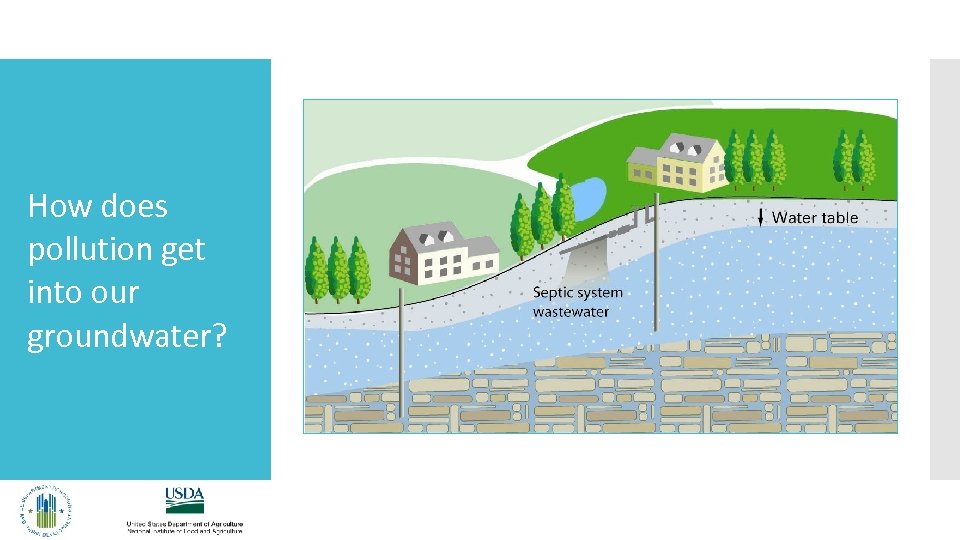 How does pollution get into our groundwater?
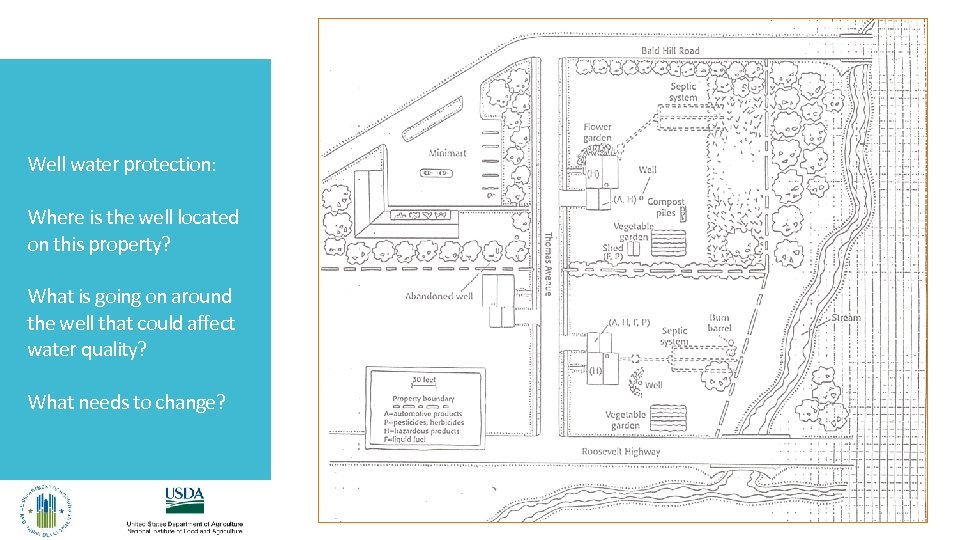 Well water protection: Where is the well located on this property? What is going on around the well that could affect water quality? What needs to change? Insert home a syst property map here
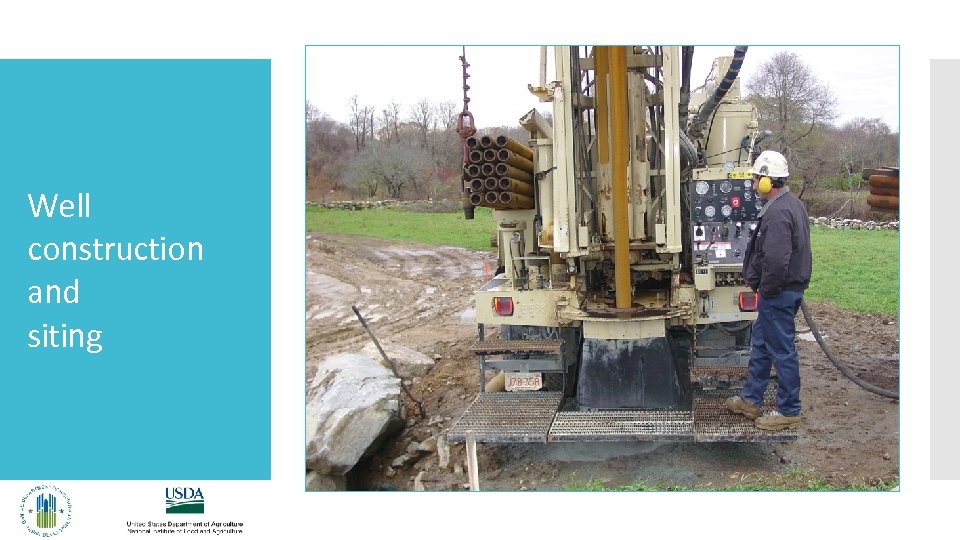 Well construction and siting
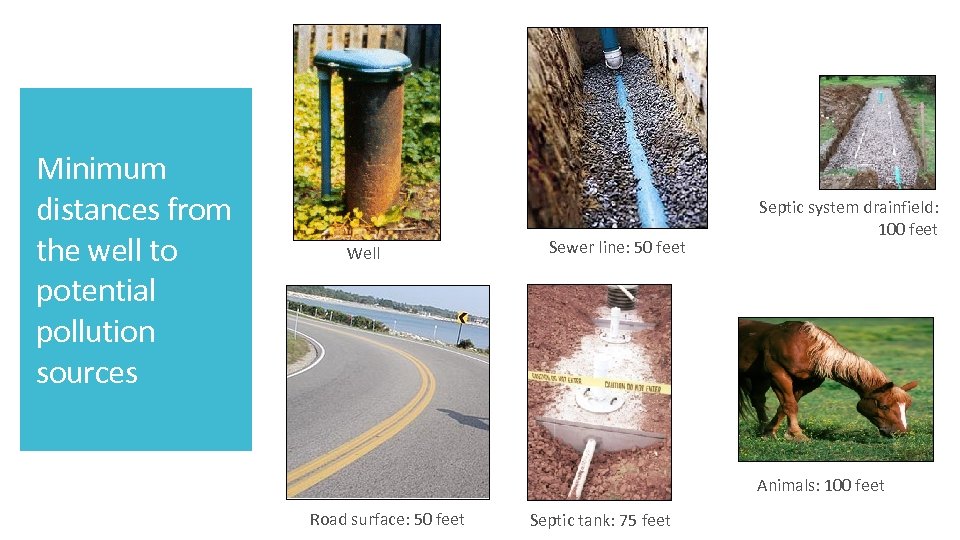 Minimum distances from the well to potential pollution sources Well Sewer line: 50 feet Septic system drainfield: 100 feet Animals: 100 feet Road surface: 50 feet Septic tank: 75 feet
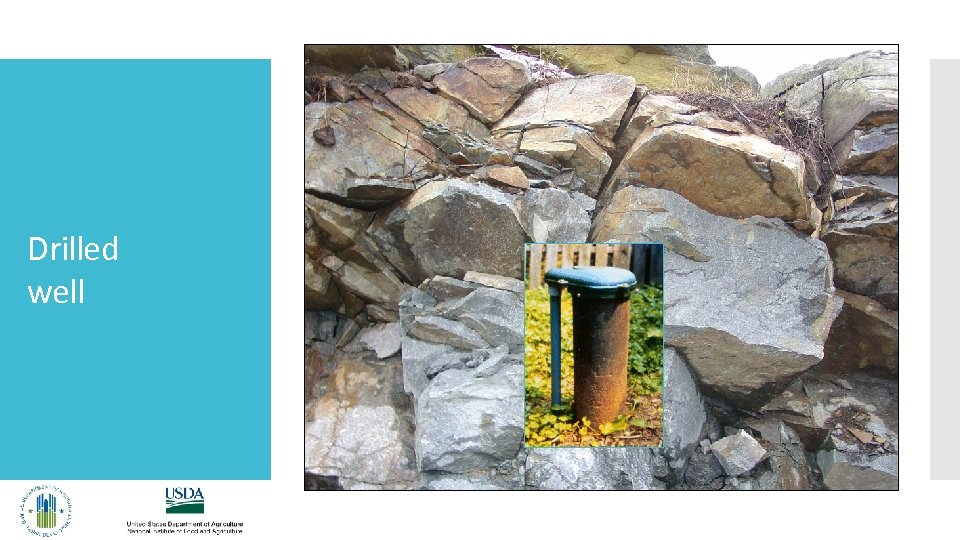 Drilled well
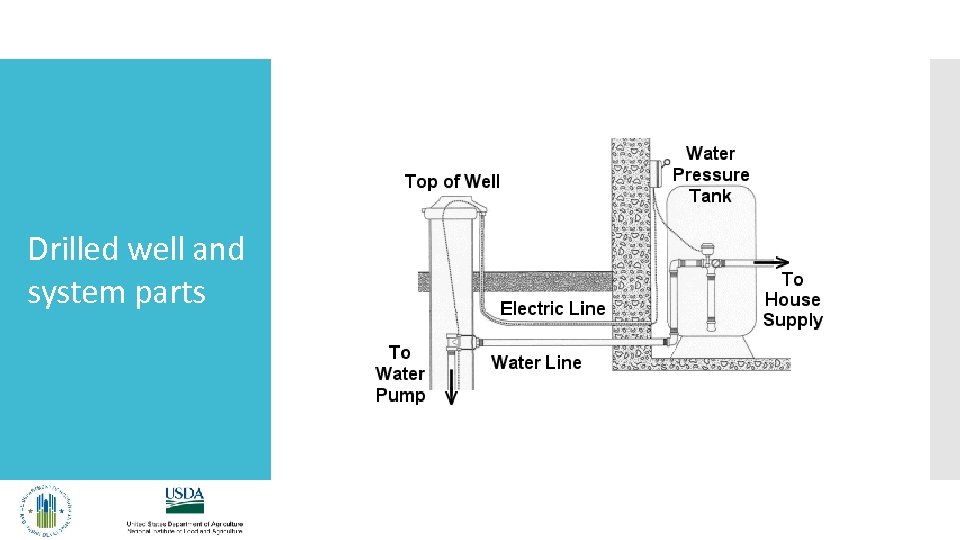 Drilled well and system parts
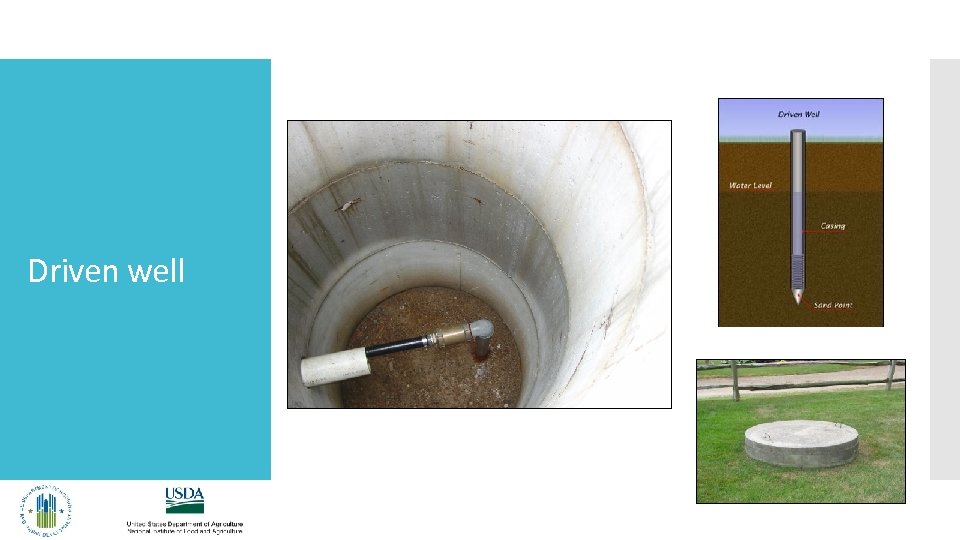 Driven well
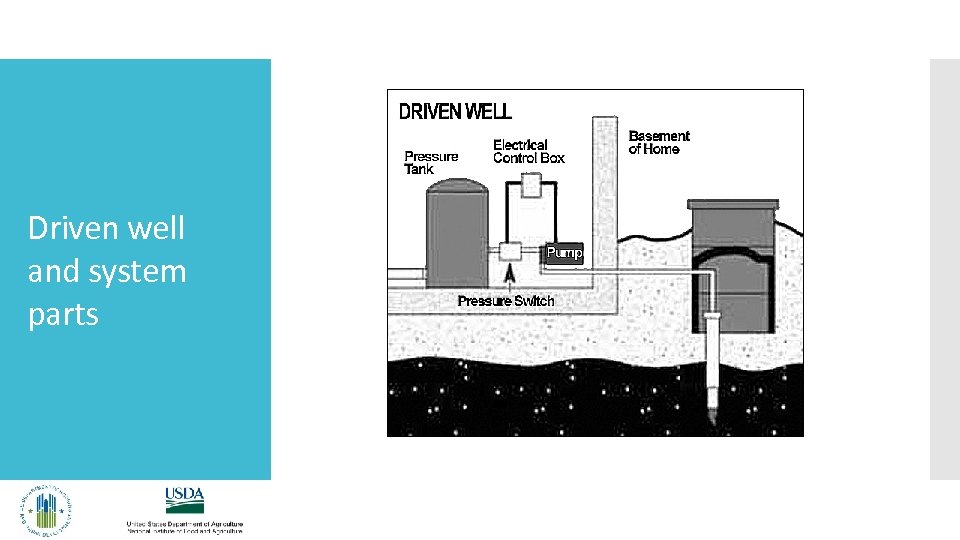 Driven well and system parts
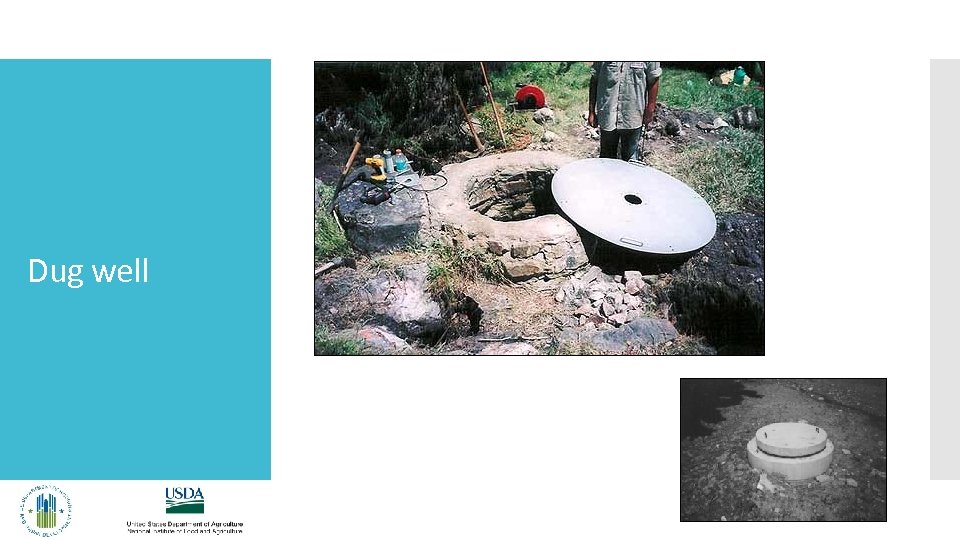 Dug well
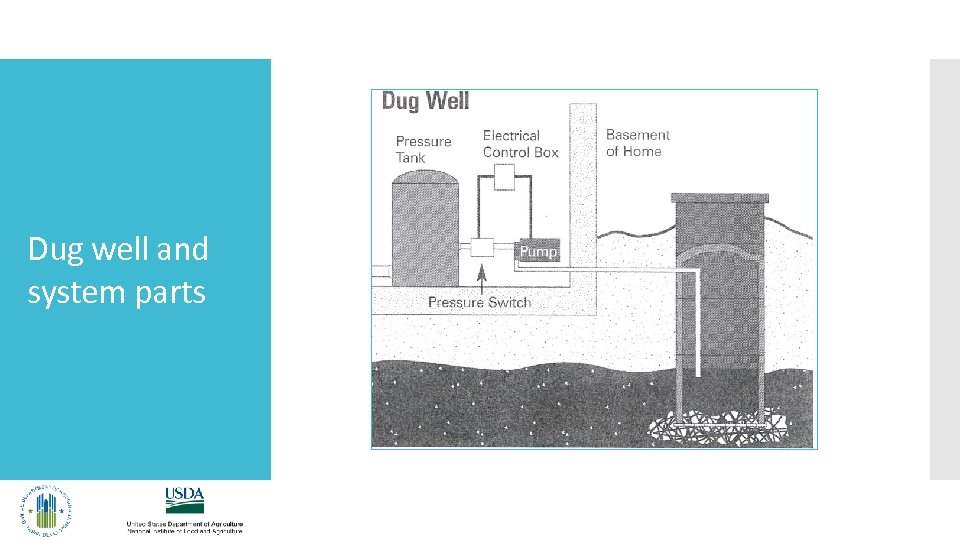 Dug well and system parts
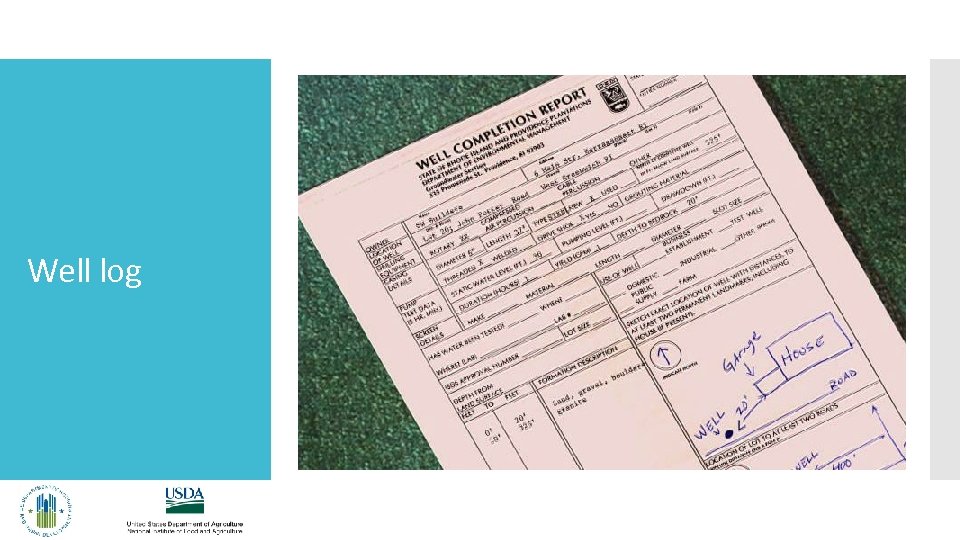 Well log
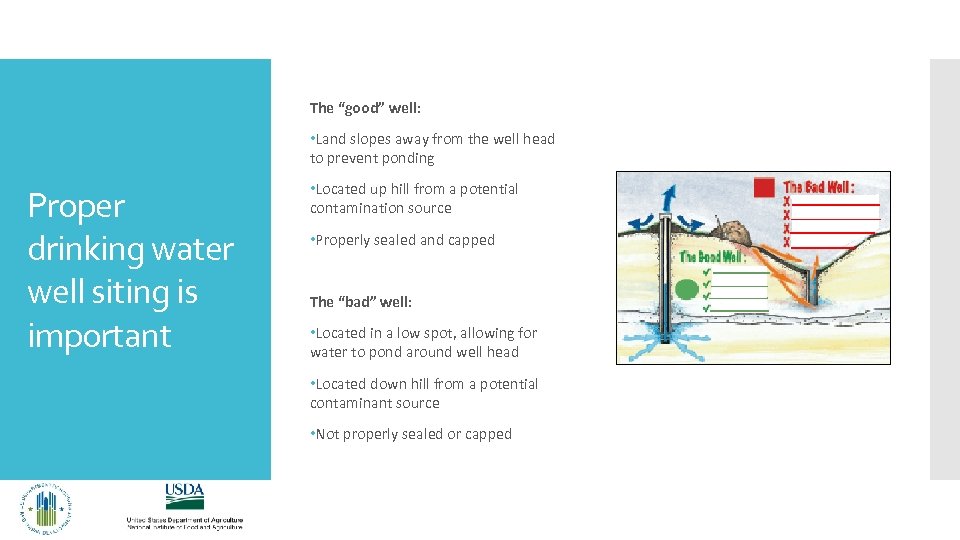 The “good” well: • Land slopes away from the well head to prevent ponding Proper drinking water well siting is important • Located up hill from a potential contamination source • Properly sealed and capped The “bad” well: • Located in a low spot, allowing for water to pond around well head • Located down hill from a potential contaminant source • Not properly sealed or capped
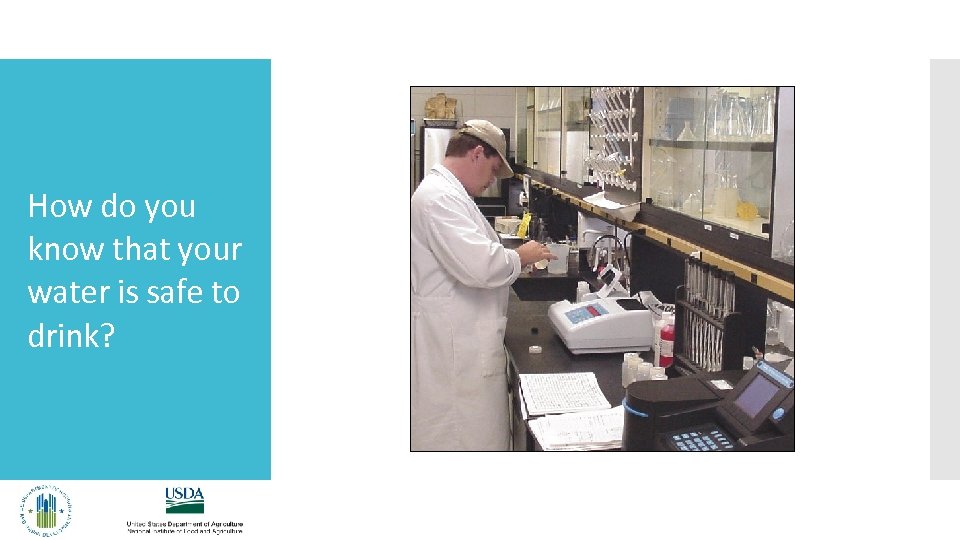 How do you know that your water is safe to drink?
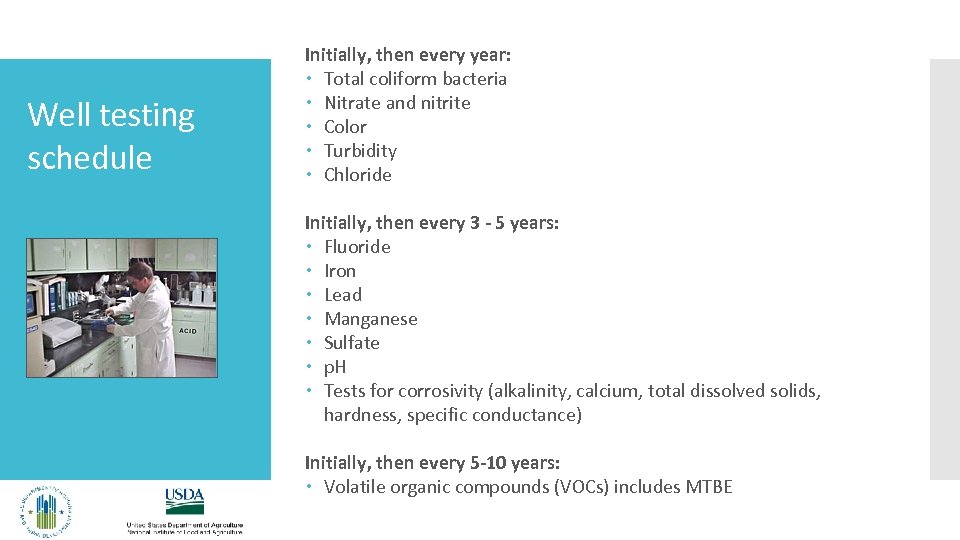 Well testing schedule Initially, then every year: Total coliform bacteria Nitrate and nitrite Color Turbidity Chloride Initially, then every 3 - 5 years: Fluoride Iron Lead Manganese Sulfate p. H Tests for corrosivity (alkalinity, calcium, total dissolved solids, hardness, specific conductance) Initially, then every 5 -10 years: Volatile organic compounds (VOCs) includes MTBE
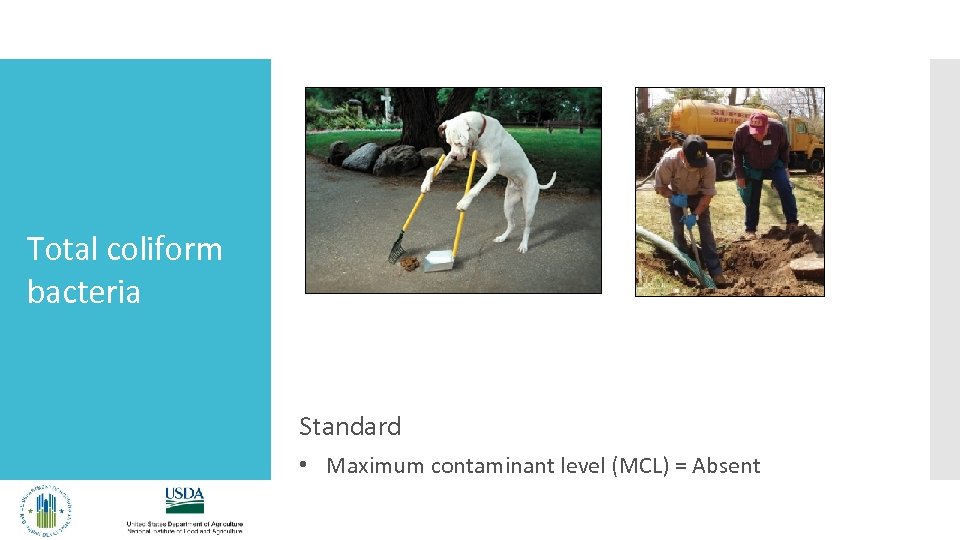 Total coliform bacteria Standard • Maximum contaminant level (MCL) = Absent
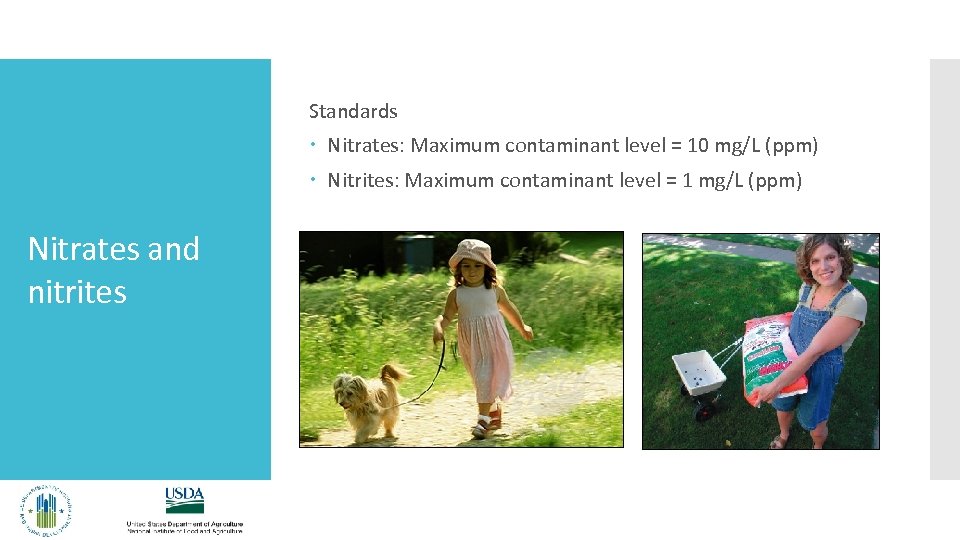 Standards Nitrates: Maximum contaminant level = 10 mg/L (ppm) Nitrites: Maximum contaminant level = 1 mg/L (ppm) Nitrates and nitrites
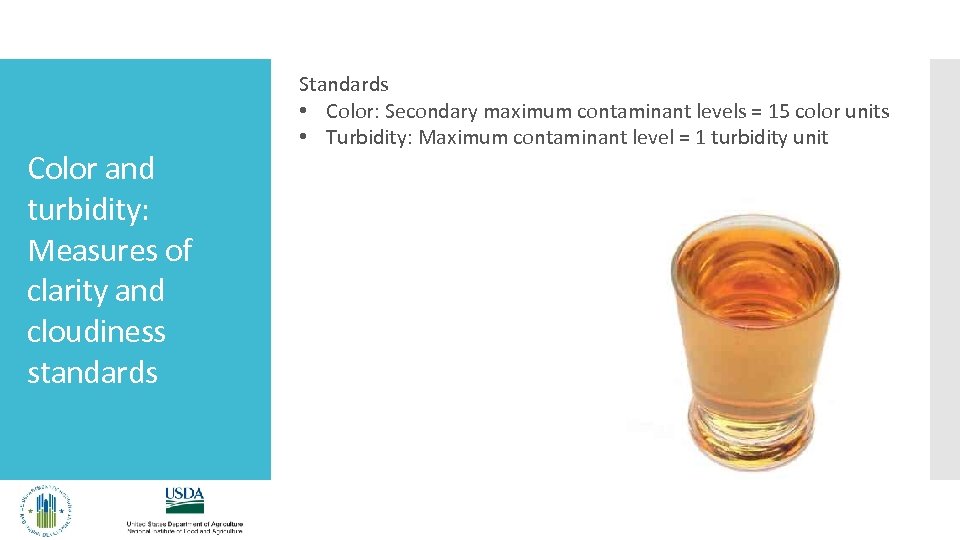 Color and turbidity: Measures of clarity and cloudiness standards Standards • Color: Secondary maximum contaminant levels = 15 color units • Turbidity: Maximum contaminant level = 1 turbidity unit
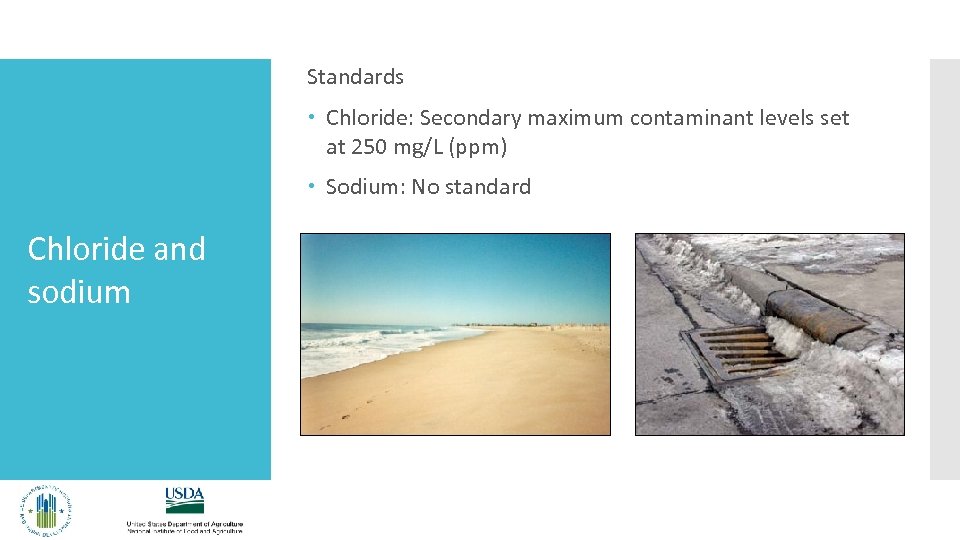 Standards Chloride: Secondary maximum contaminant levels set at 250 mg/L (ppm) Sodium: No standard Chloride and sodium
 Fluoride Standards • Maximum contaminant level = 4. 0 mg/L (ppm) • Desired range = 0. 7 – 1. 3 mg/L (ppm)
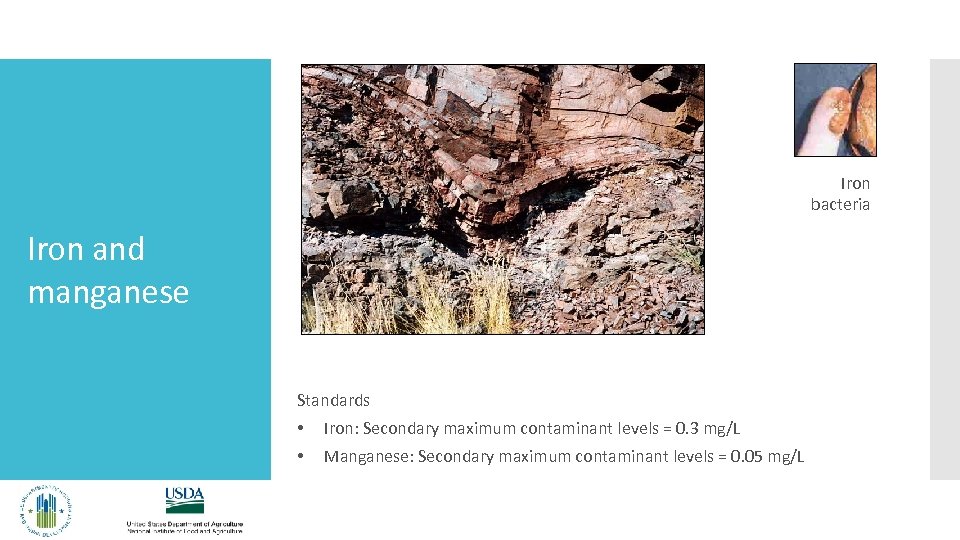 Iron bacteria Iron and manganese Standards • Iron: Secondary maximum contaminant levels = 0. 3 mg/L • Manganese: Secondary maximum contaminant levels = 0. 05 mg/L
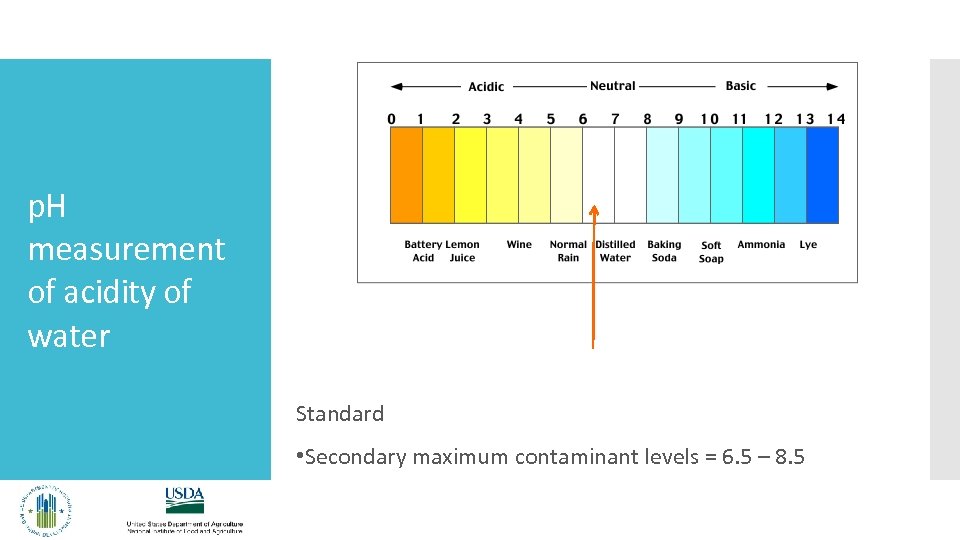 p. H measurement of acidity of water Standard • Secondary maximum contaminant levels = 6. 5 – 8. 5
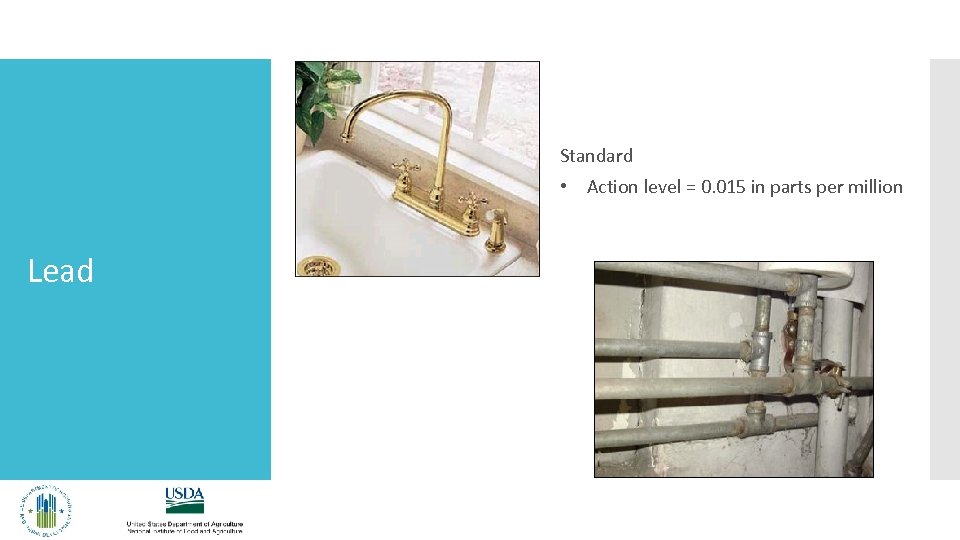 Standard • Action level = 0. 015 in parts per million Lead
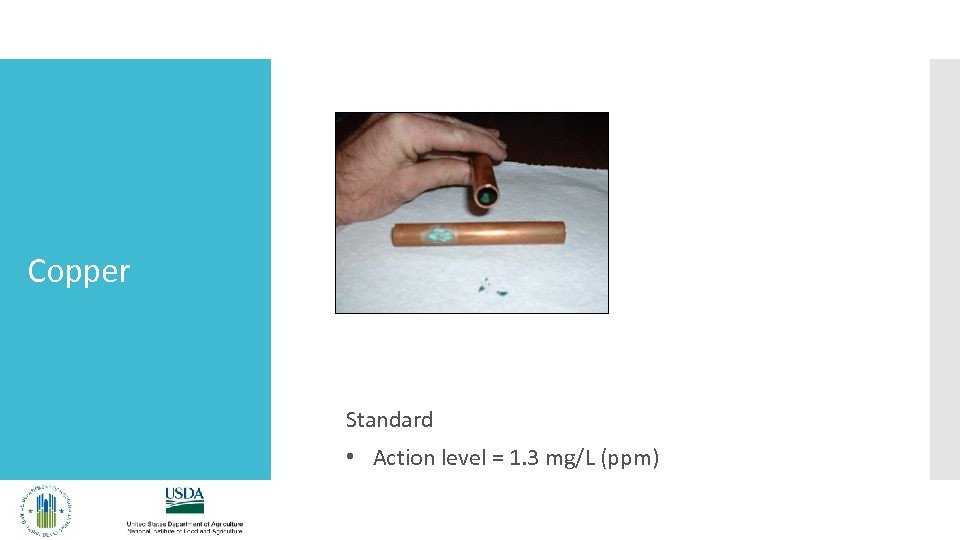 Copper Standard • Action level = 1. 3 mg/L (ppm)
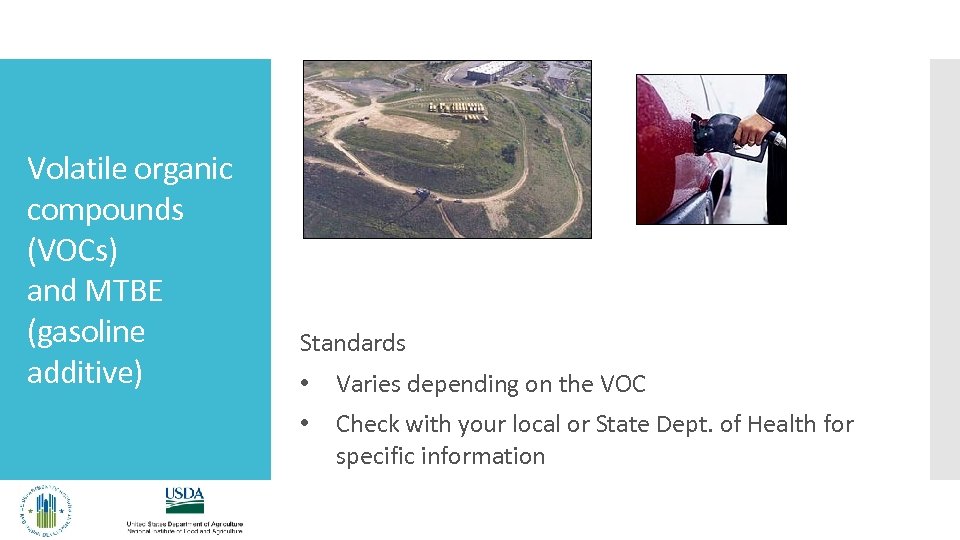 Volatile organic compounds (VOCs) and MTBE (gasoline additive) Standards • Varies depending on the VOC • Check with your local or State Dept. of Health for specific information
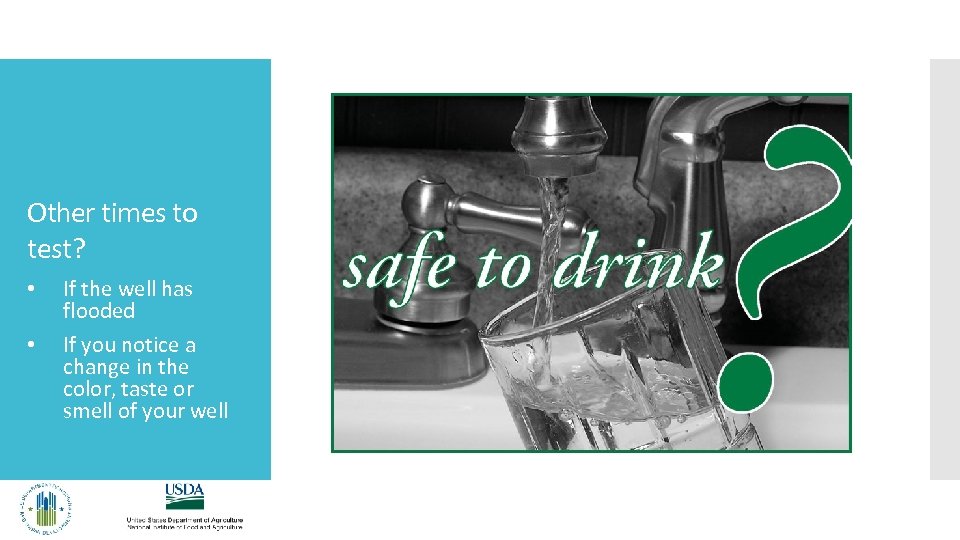 Other times to test? • • If the well has flooded If you notice a change in the color, taste or smell of your well
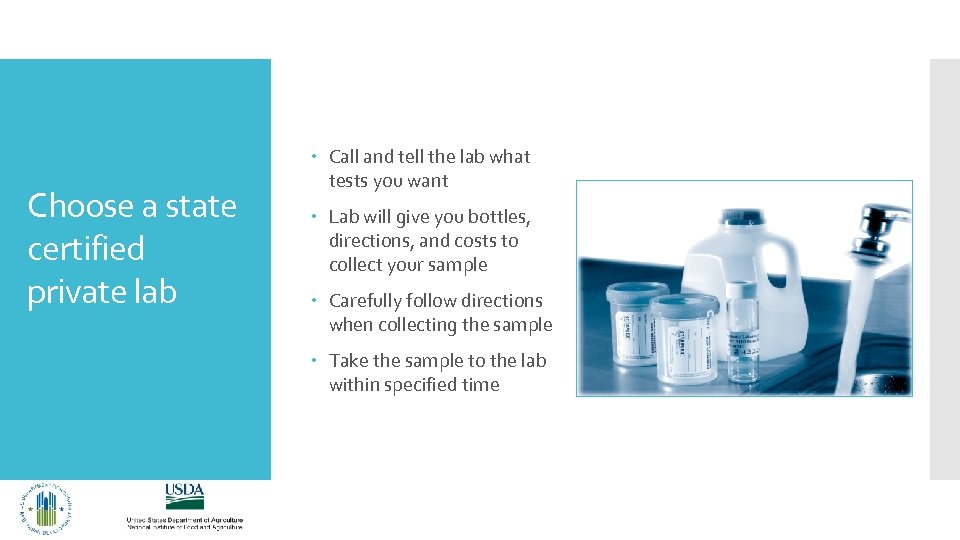 Choose a state certified private lab Call and tell the lab what tests you want Lab will give you bottles, directions, and costs to collect your sample Carefully follow directions when collecting the sample Take the sample to the lab within specified time
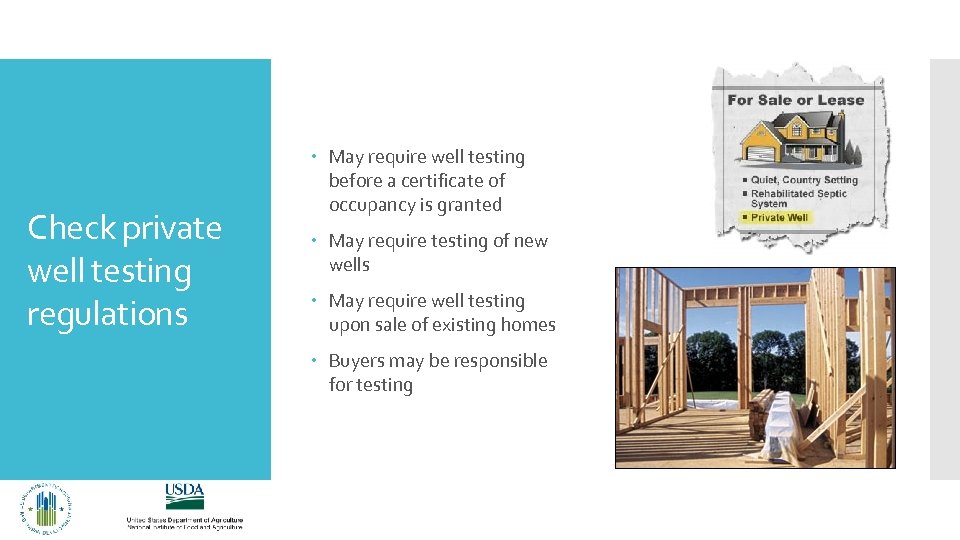 Check private well testing regulations May require well testing before a certificate of occupancy is granted May require testing of new wells May require well testing upon sale of existing homes Buyers may be responsible for testing
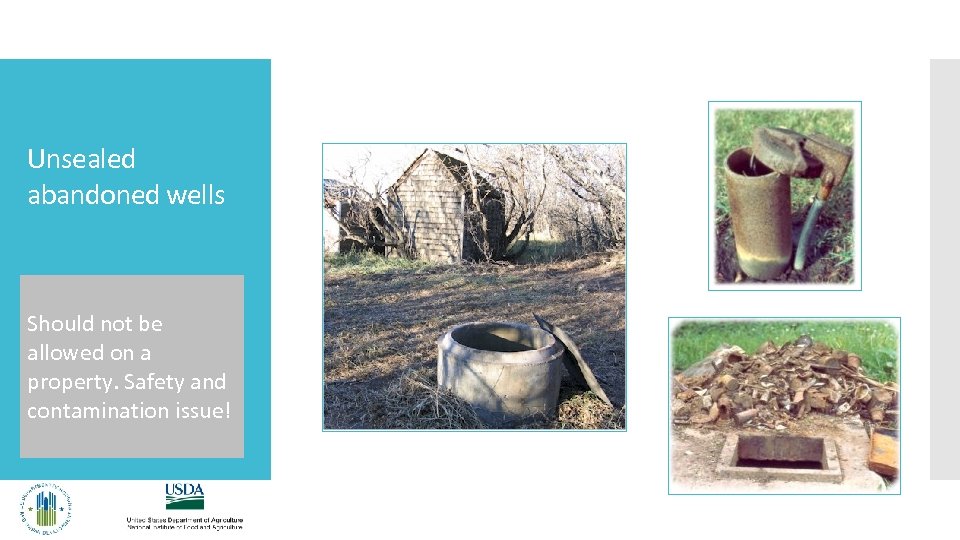 Unsealed abandoned wells Should not be allowed on a property. Safety and contamination issue!
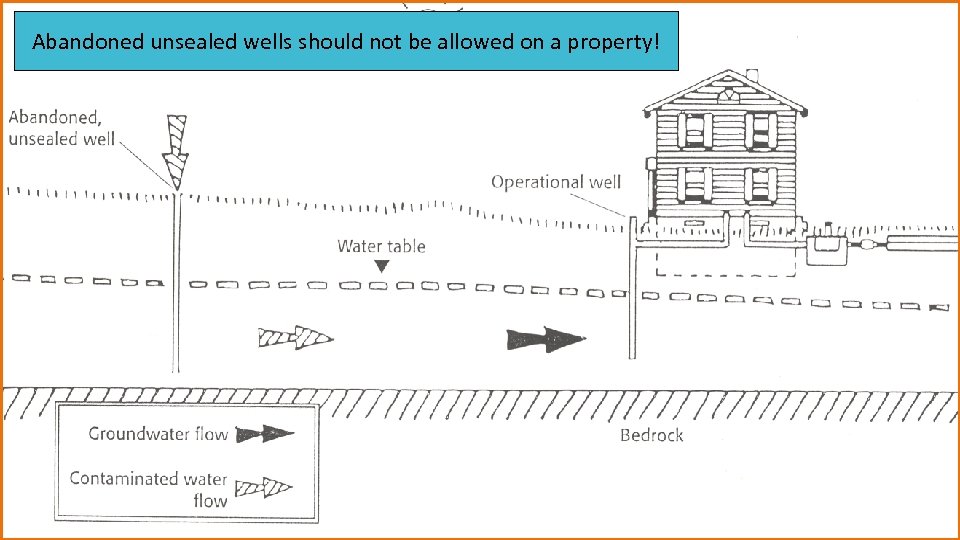 Abandoned unsealed wells should not be allowed on a property!
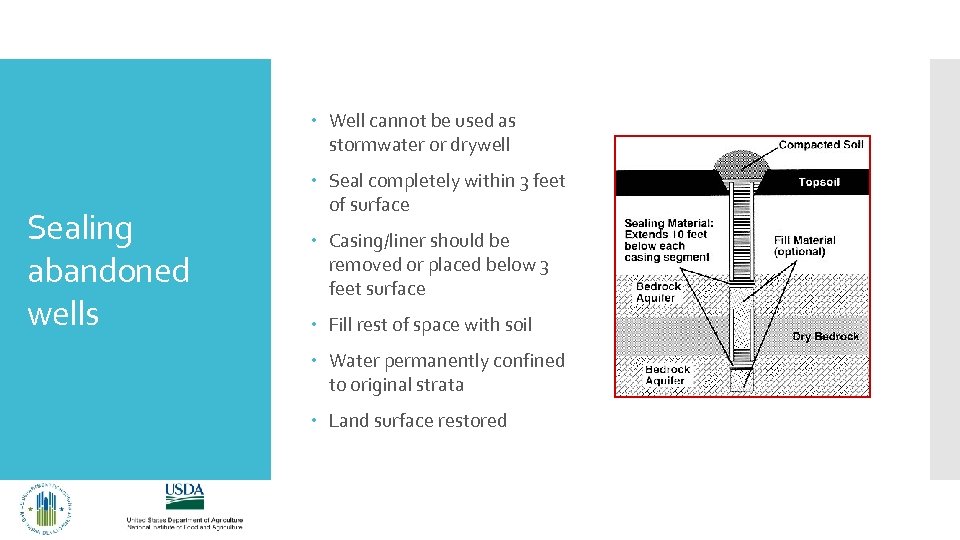 Well cannot be used as stormwater or drywell Sealing abandoned wells Seal completely within 3 feet of surface Casing/liner should be removed or placed below 3 feet surface Fill rest of space with soil Water permanently confined to original strata Land surface restored
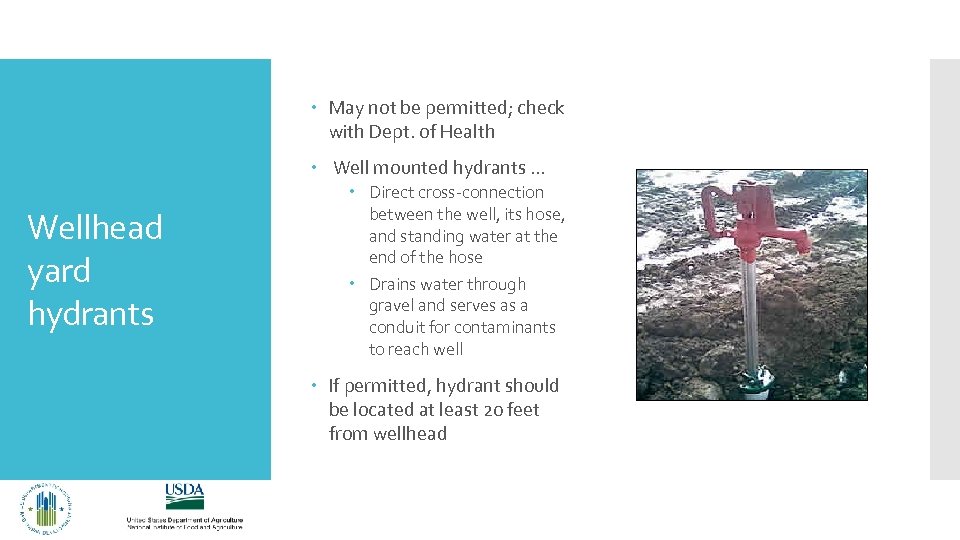 May not be permitted; check with Dept. of Health Well mounted hydrants … Wellhead yard hydrants Direct cross-connection between the well, its hose, and standing water at the end of the hose Drains water through gravel and serves as a conduit for contaminants to reach well If permitted, hydrant should be located at least 20 feet from wellhead
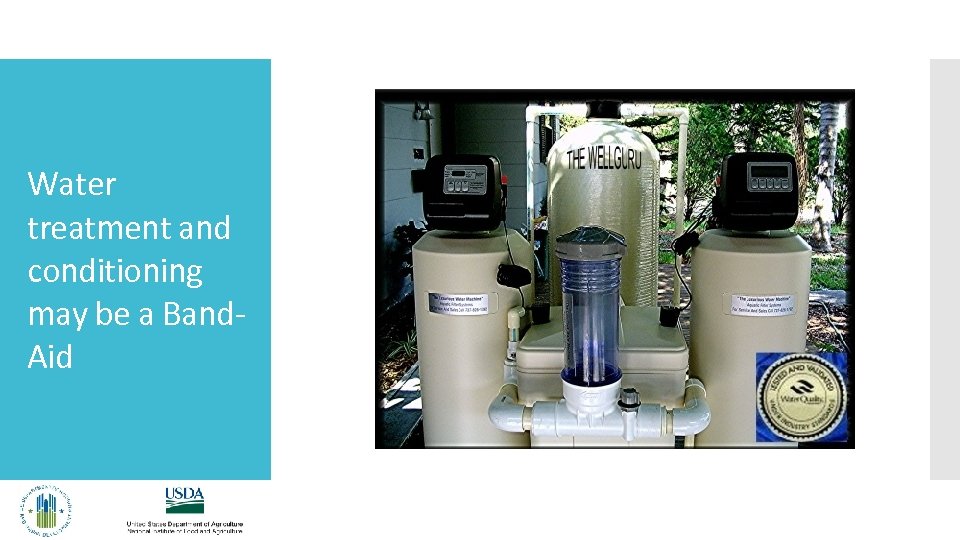 Water treatment and conditioning may be a Band. Aid
 Test to determine need for treatment Before treating your drinking water… Find and fix source of problem before treating Treatment is expense to purchase, install and maintain Deal with reputable distributor Have system professionally installed If possible - treat at the point of use REGULARLY maintain the system
 Does the water test show a problem? Home water treatment – questions to ask What are the levels of the contaminant in the water? Are more tests needed? Is there a health risk or a nuisance problem? Do I need to treat all the water in the house do I need to treat for drinking and cooking only? Are there any potential secondary effects to treatment? What are the long-term maintenance needs and costs?
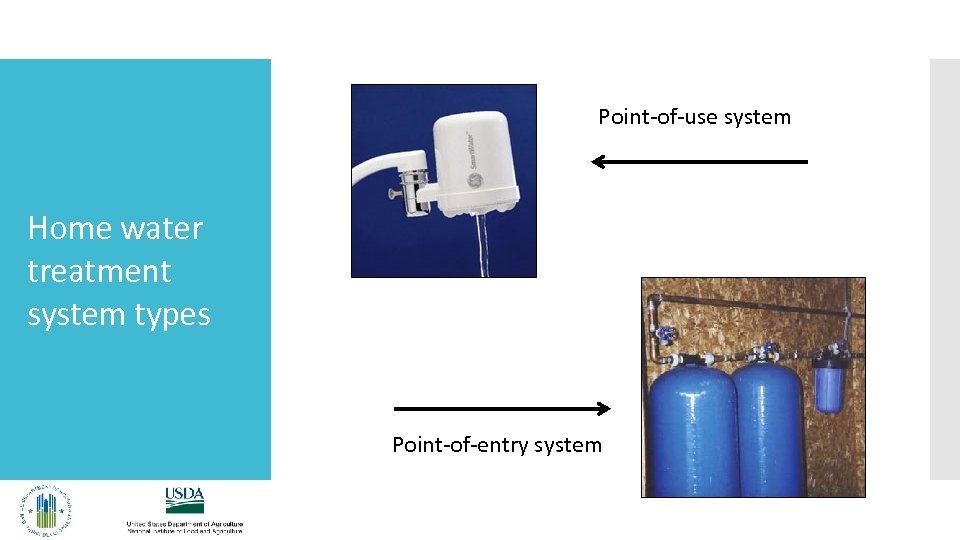 Point-of-use system Home water treatment system types Point-of-entry system
 Test your drinking water well. Follow the well testing schedule Make sure the area around the well is clean and fee of animal waste and other pollution Drinking water action list Check for cracks in the well casing and repair promptly Don’t let water pond around the well Install backflow prevention on outdoor faucets and in -ground sprinkler systems Maintain water treatment system on a regular basis
 Protecting private drinking water wells and managing onsite waste systems End of Part 1 Test and protect your private drinking water well
 Part 2 On-site waste water management (septic systems)
 On-site waste water treatment Many rural home-sites with drinking water well, often have an on-site waste-water (sewage) treatment system. On-site home waste-water systems (type and design) are usually regulated by the local health department with guidance from the state System design is based on soil types
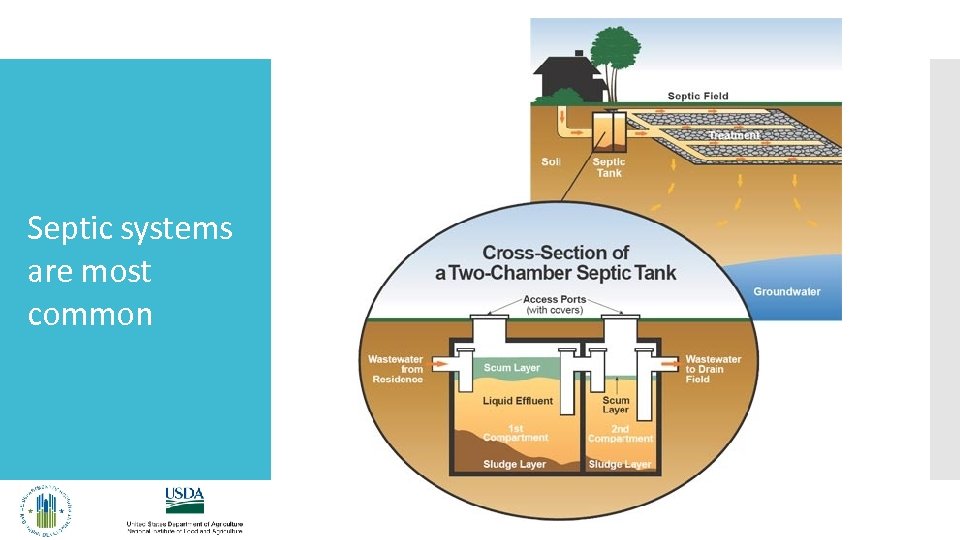 Septic systems are most common
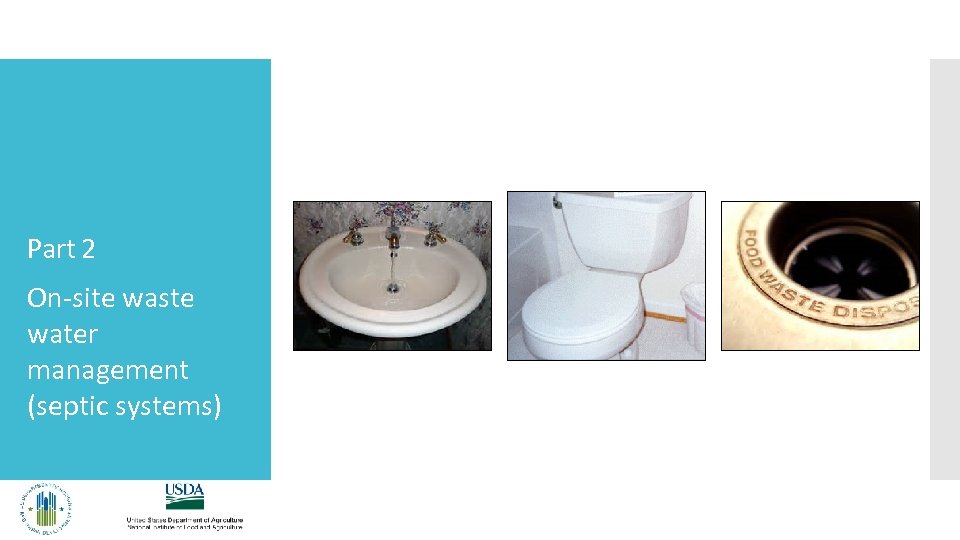
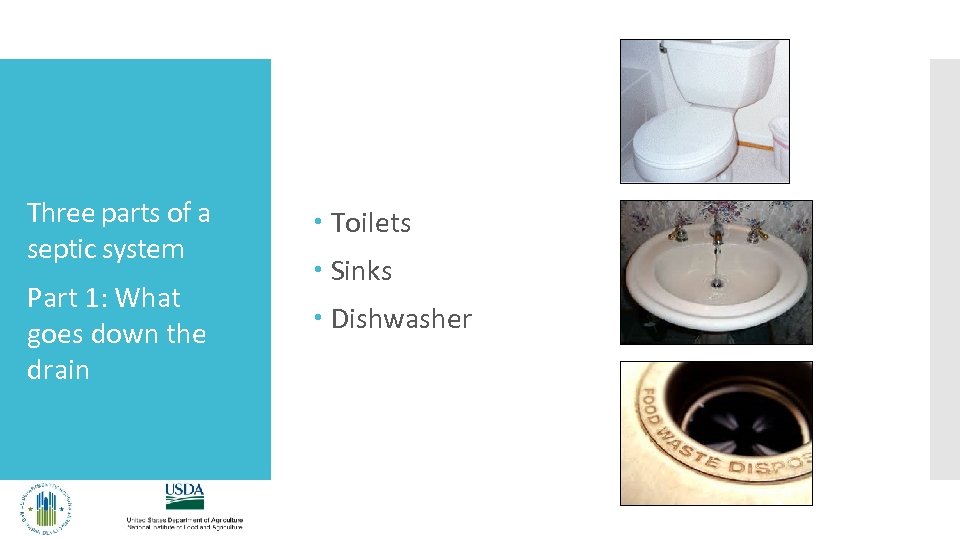 Three parts of a septic system Toilets Part 1: What goes down the drain Dishwasher Sinks
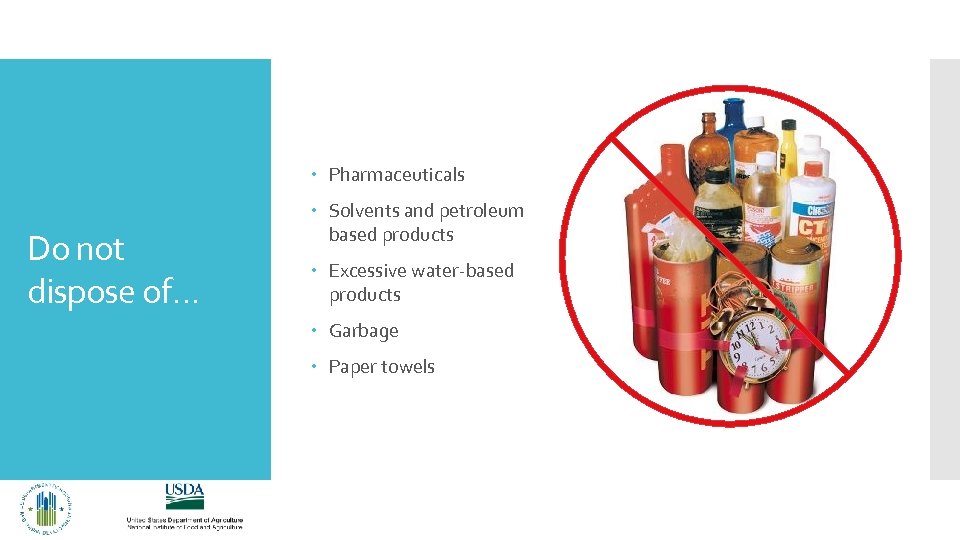 Pharmaceuticals Do not dispose of… Solvents and petroleum based products Excessive water-based products Garbage Paper towels
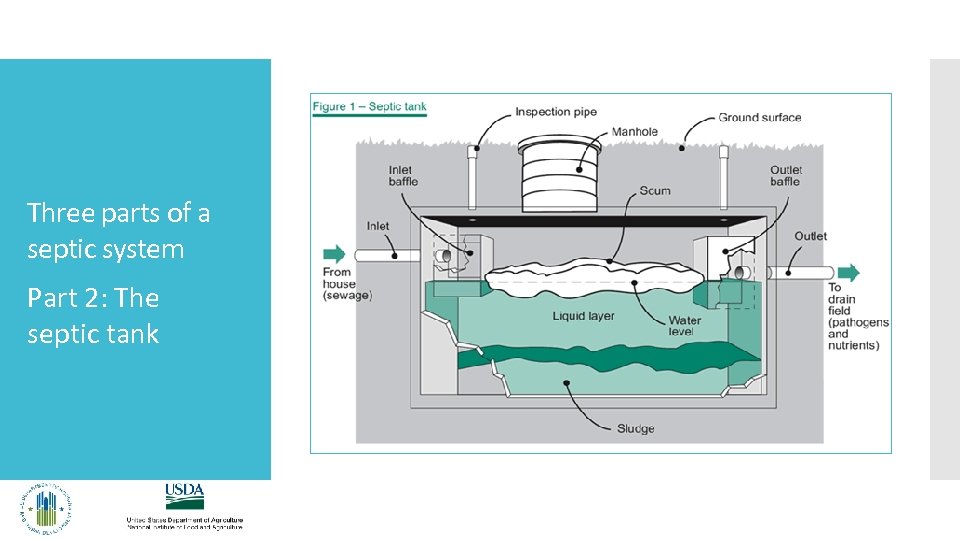 Three parts of a septic system Part 2: The septic tank
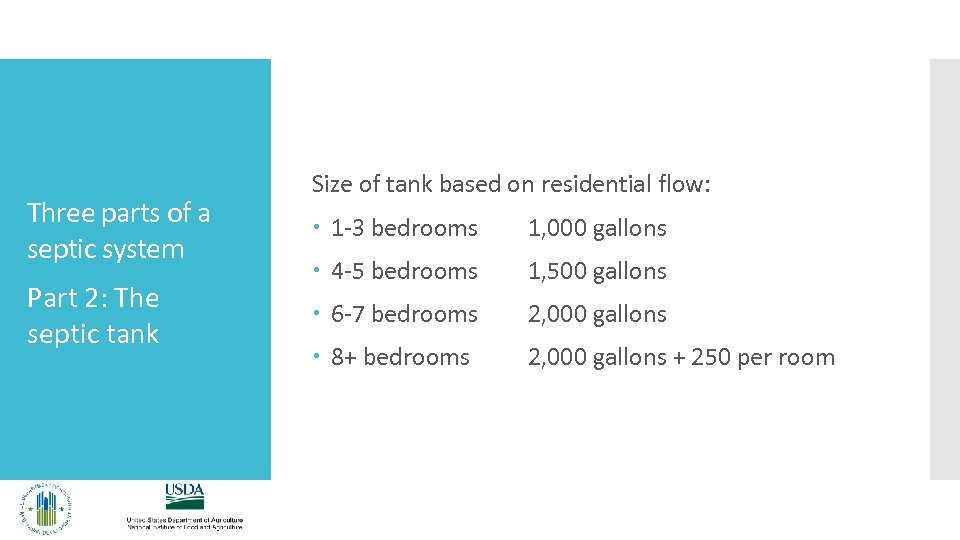 Three parts of a septic system Part 2: The septic tank Size of tank based on residential flow: 1 -3 bedrooms 1, 000 gallons 4 -5 bedrooms 1, 500 gallons 6 -7 bedrooms 2, 000 gallons 8+ bedrooms 2, 000 gallons + 250 per room
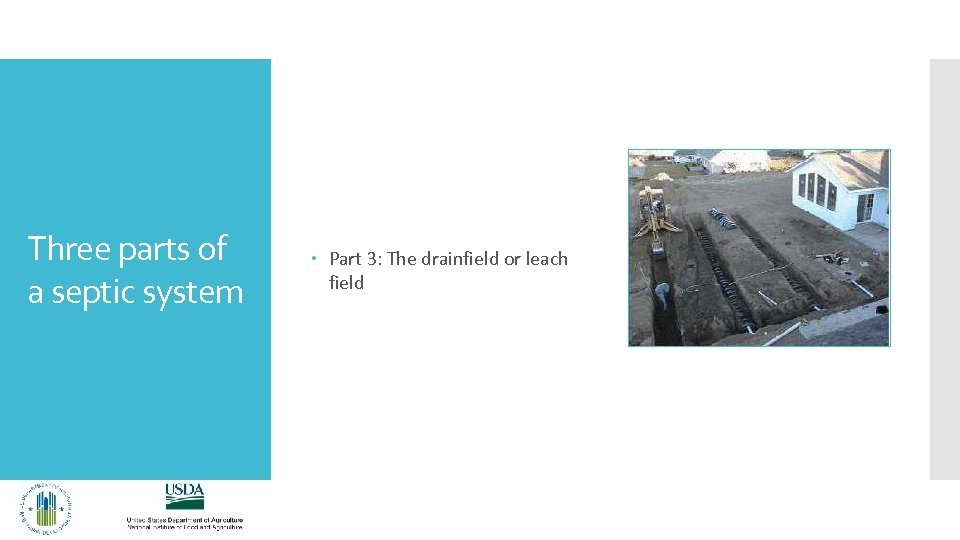 Three parts of a septic system Part 3: The drainfield or leach field
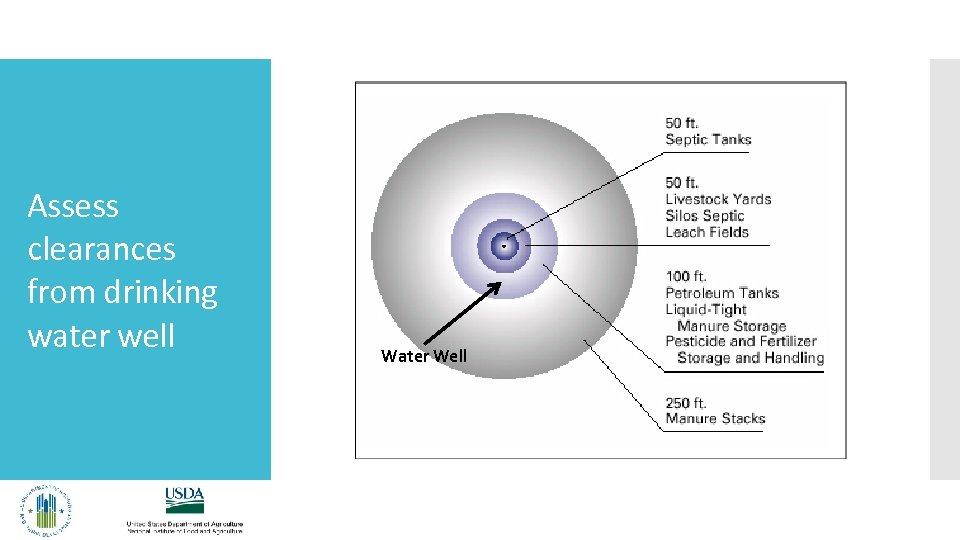 Assess clearances from drinking water well Water Well
 All domestic use wastewater must discharge into the septic tank Septic system management Roof, footing, garage, surface water drainage and cooling water must be excluded Backwash from water softener may be discharged into septic tank if … Regenerates using a demand-initiated regeneration control device, AND connected to interior potable water only
 Use of garbage disposal Septic system management Use of powder detergents, disinfectants, and grease Sewage back-ups in the house Slow draining toilets or drains Disposal of meth wastes
 Septic system management Do not plan trees and other deep root plants over drainfield Do drive or park over drainfield
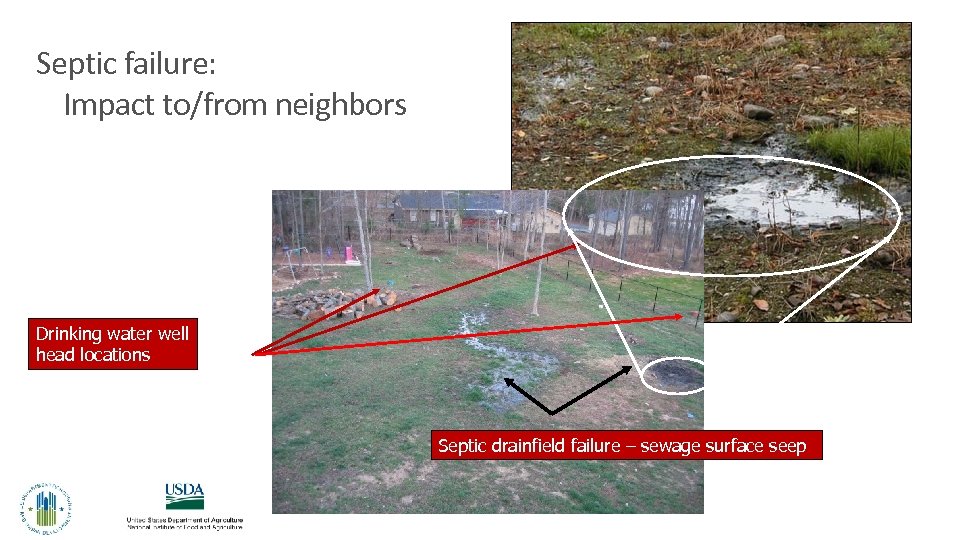 Septic failure: Impact to/from neighbors Drinking water well head locations Septic drainfield failure – sewage surface seep
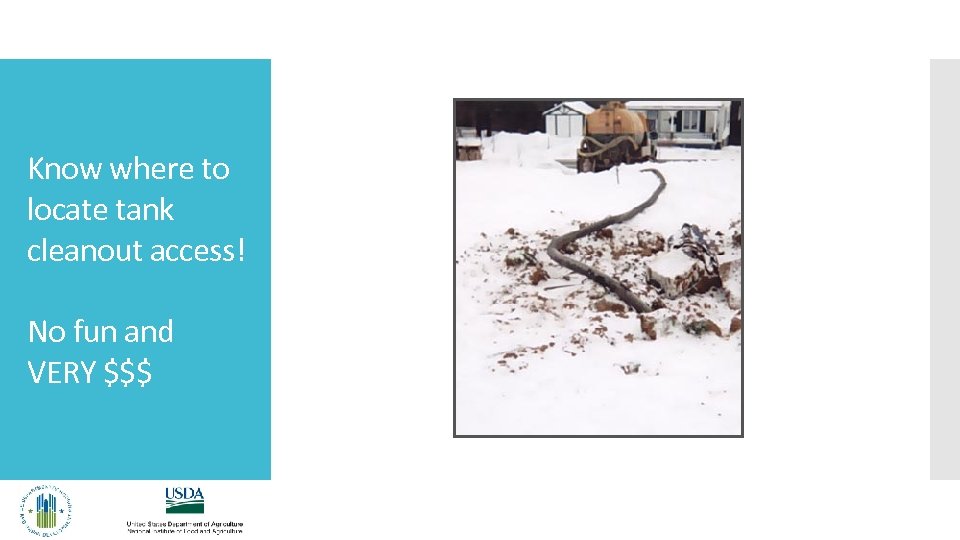 Know where to locate tank cleanout access! No fun and VERY $$$
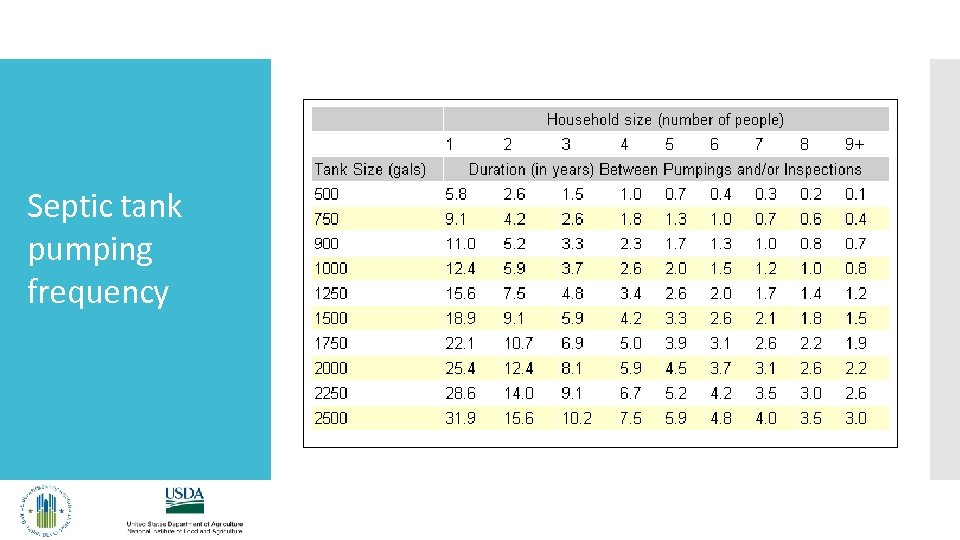 Septic tank pumping frequency
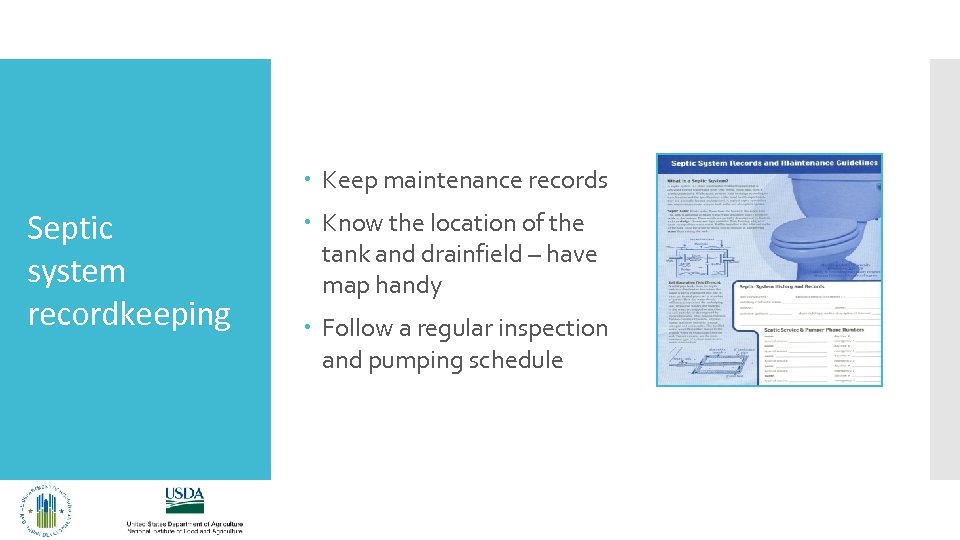 Keep maintenance records Septic system recordkeeping Know the location of the tank and drainfield – have map handy Follow a regular inspection and pumping schedule
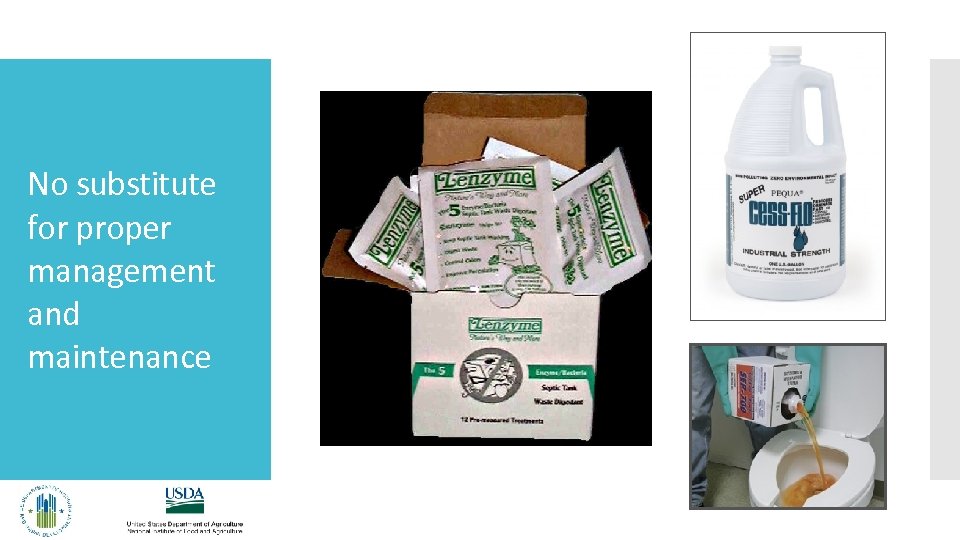 No substitute for proper management and maintenance
 Protecting private drinking water wells and managing onsite waste systems End of Part 2 On-site Waste Management (Septic Systems)
 Protecting private drinking water wells and managing on-site waste systems