Скачать презентацию Health Service Delivery in Fragile States Lessons from
45166960f67f82417c1757fe909957b4.ppt
- Количество слайдов: 55
 Health Service Delivery in Fragile States: Lessons from the Field Emmanuel d’Harcourt International Rescue Committee Woodrow Wilson Center for Scholars September 12, 2006
 Outline 1. 2. 3. 4. Population and fragility Fragility and health Health and fragility Missions, health, and fragility
 Outline 1. 2. 3. 4. Population and fragility Fragility and health Health and fragility Missions, health, and fragility
![… The [demographic]](https://present5.com/presentation/45166960f67f82417c1757fe909957b4/image-5.jpg "… The [demographic]") … The [demographic] "wolf" is present and very busy indeed—in Rwanda. … When its population had reached 7. 6 million in 1994, observers there were expecting disaster any day in the form of random violence or famine … Rwanda is demographically trapped in that it has exceeded its carrying capacity … Meanwhile, slaughter is ascribed to human rights violations, and the even more disturbing population pressure of demographic entrapment is conveniently forgotten. Demographic entrapment is so … disturbing that orthodox demography, public health, and UN agencies, particularly UNICEF, maintain a political correctness so correct that the entrapment is never mentioned… Maurice King, MD. From AJPH, July 1996
… The [demographic] "wolf" is present and very busy indeed—in Rwanda. … When its population had reached 7. 6 million in 1994, observers there were expecting disaster any day in the form of random violence or famine … Rwanda is demographically trapped in that it has exceeded its carrying capacity … Meanwhile, slaughter is ascribed to human rights violations, and the even more disturbing population pressure of demographic entrapment is conveniently forgotten. Demographic entrapment is so … disturbing that orthodox demography, public health, and UN agencies, particularly UNICEF, maintain a political correctness so correct that the entrapment is never mentioned… Maurice King, MD. From AJPH, July 1996
 Factors associated with the genocide • Related to resource scarcity • Not related to resource scarcity
 Related to Resource Scarcity • • Popular discontent due to food scarcity Gain from previous Tutsi “pogroms” Fear of losing land to invading army Joblessness
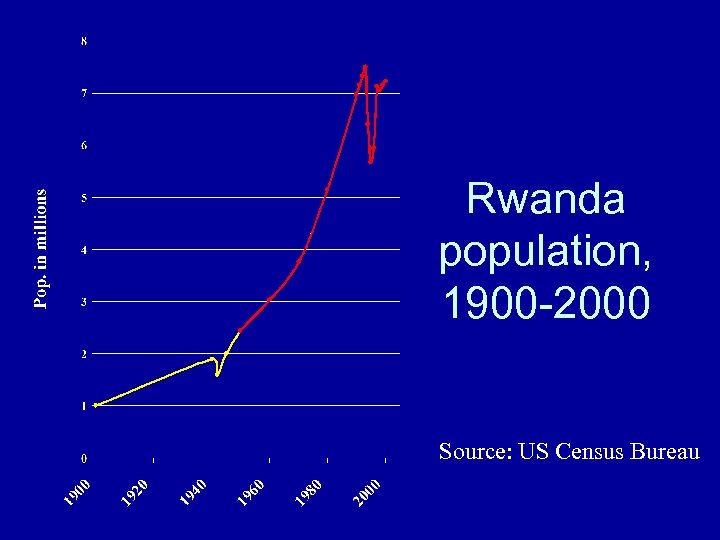 Rwanda population, 1900 -2000 Source: US Census Bureau
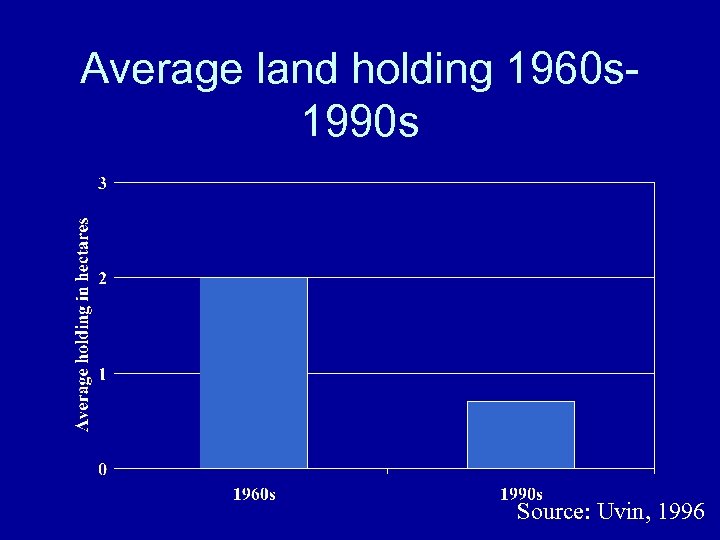 Average land holding 1960 s 1990 s Source: Uvin, 1996
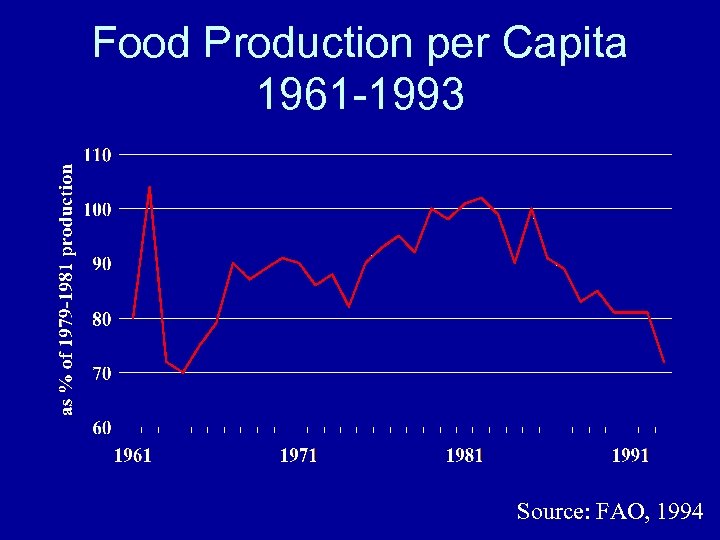 Food Production per Capita 1961 -1993 Source: FAO, 1994
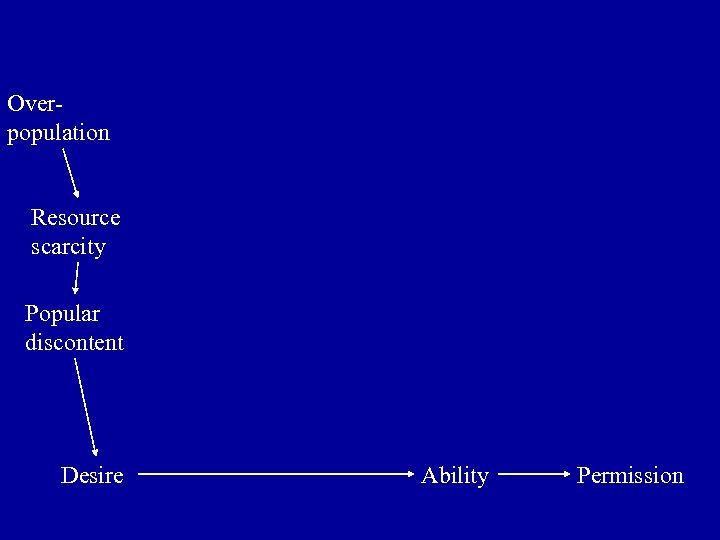 Overpopulation Resource scarcity Popular discontent Desire Ability Permission
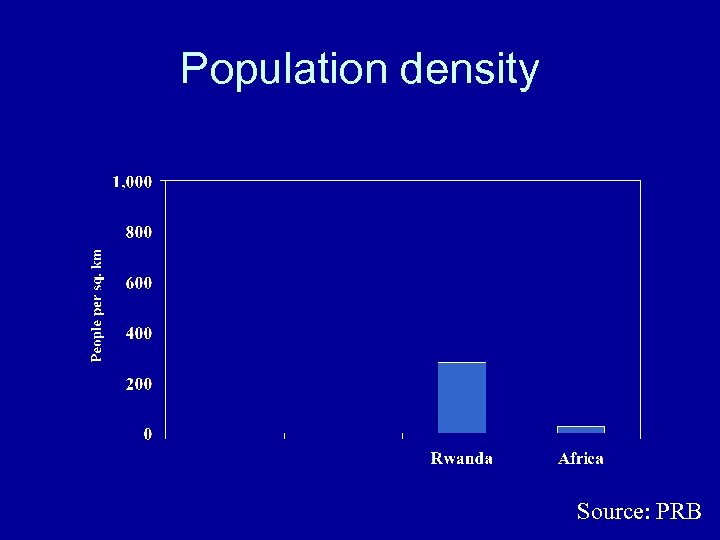 Population density Source: PRB
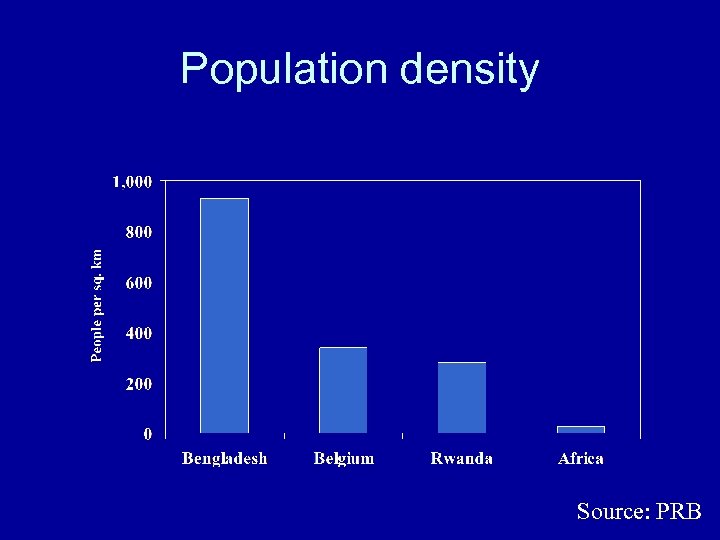 Population density Source: PRB
 Not Related to Resource Scarcity • • • Falling commodity prices Popular discontent due to mismanagement Elite worried about losing power Long tradition of social division Genocidal ideology Effective propaganda and media Highly disciplined state machinery Lack of filial bonds: state vs. tribe International inaction
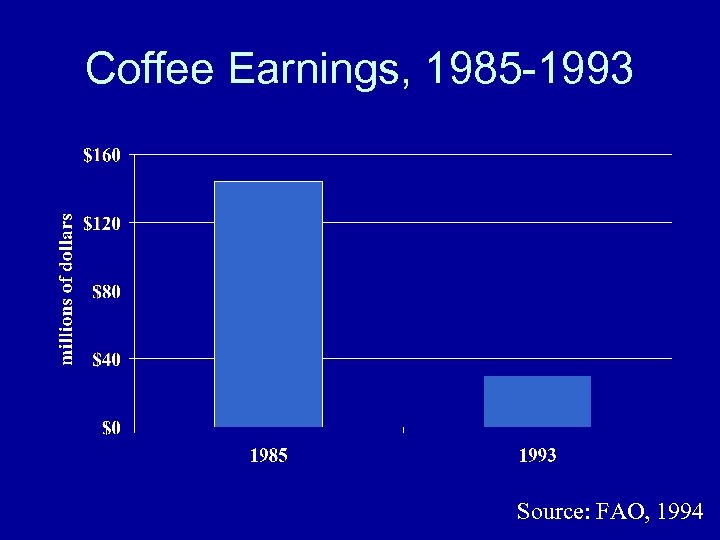 Coffee Earnings, 1985 -1993 Source: FAO, 1994
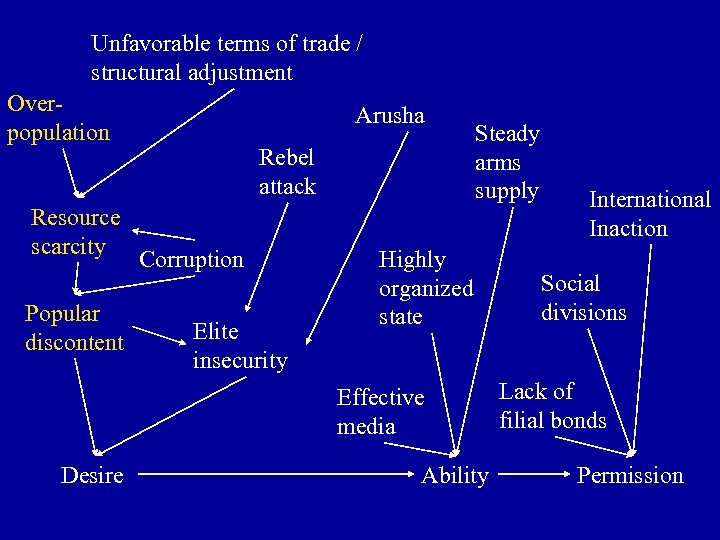 Unfavorable terms of trade / structural adjustment Overpopulation Resource scarcity Popular discontent Arusha Rebel attack Corruption Elite insecurity Steady arms supply Highly organized state Effective media Desire Ability International Inaction Social divisions Lack of filial bonds Permission
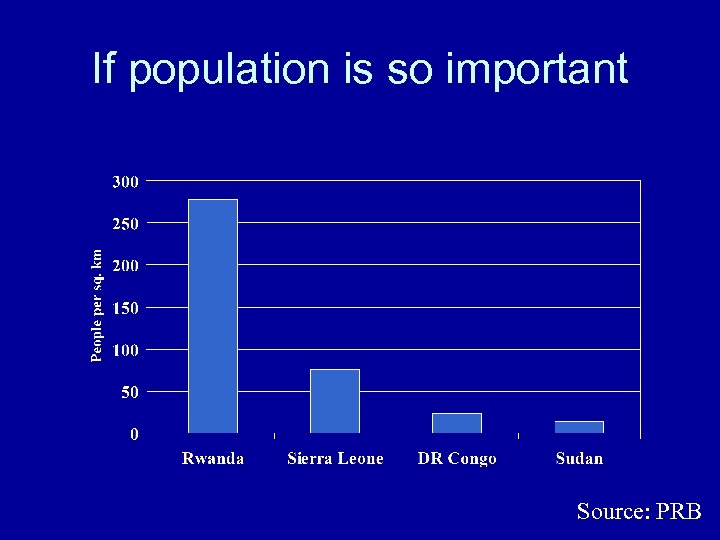 If population is so important Source: PRB
 Outline 1. 2. 3. 4. Population and fragility Fragility and health Health and fragility Missions, health, and fragility
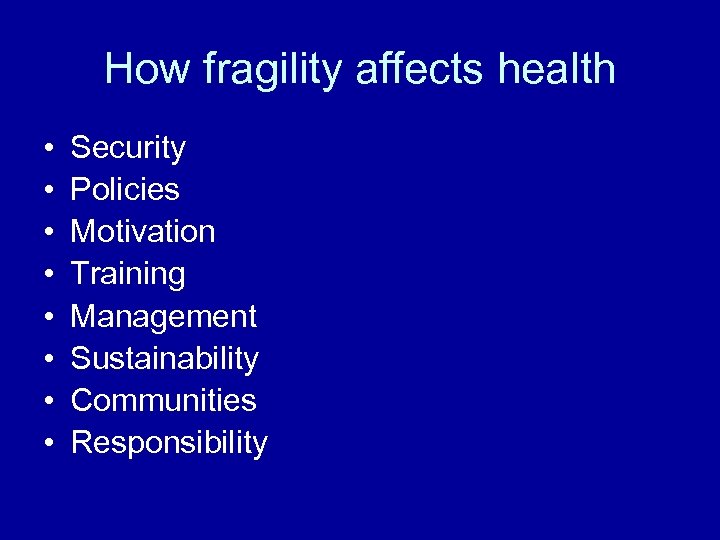 How fragility affects health • • Security Policies Motivation Training Management Sustainability Communities Responsibility
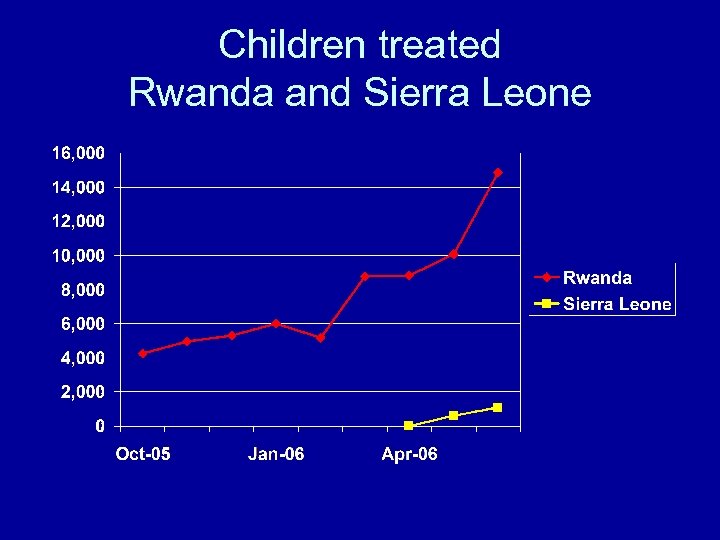 Children treated Rwanda and Sierra Leone
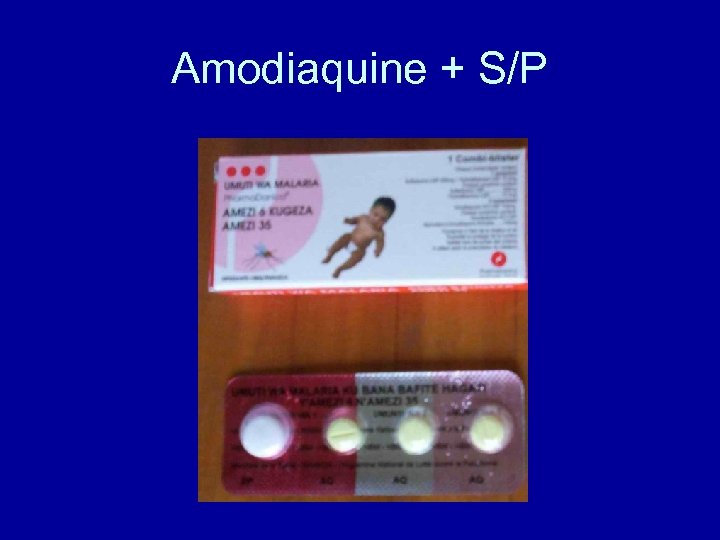 Amodiaquine + S/P
 Outline 1. 2. 3. 4. Population and fragility Fragility and health Health and fragility Missions, health, and fragility
 How health affects fragility • No services is a big part of fragility
 How health affects fragility • No services is a big part of fragility • Good services legitimize governments
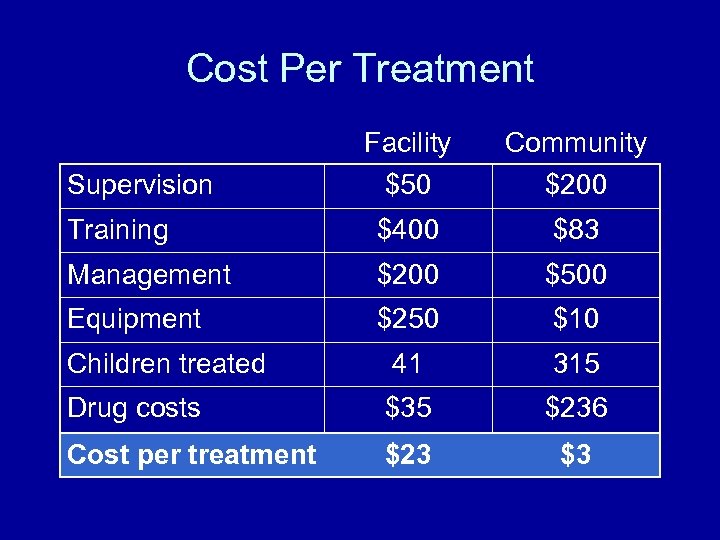 Cost Per Treatment Facility $50 Community $200 Training $400 $83 Management $200 $500 Equipment $250 $10 Children treated 41 315 Drug costs $35 $236 Cost per treatment $23 $3 Supervision
 How health affects fragility • No services is a big part of fragility • Good services legitimize governments • Health is entry point for building systems
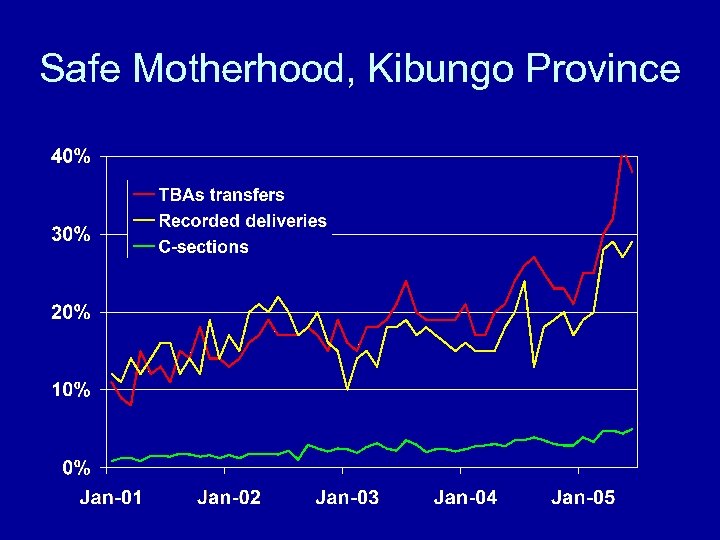 Safe Motherhood, Kibungo Province
 Children treated South Sudan and Sierra Leone
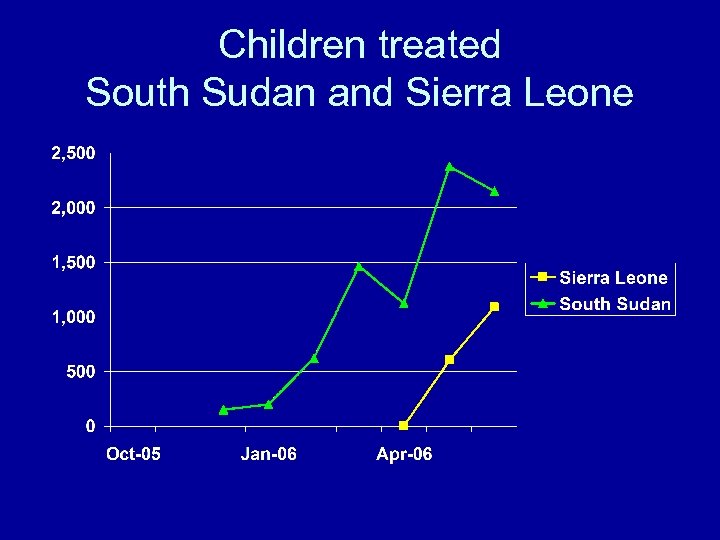 Children treated South Sudan and Sierra Leone
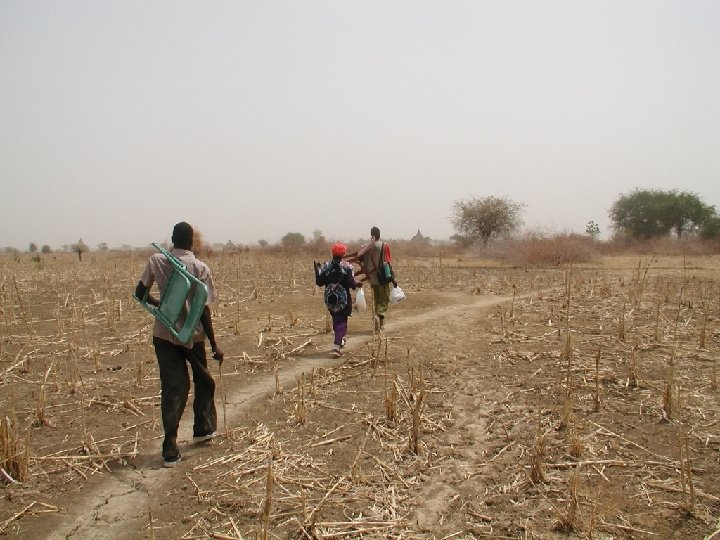
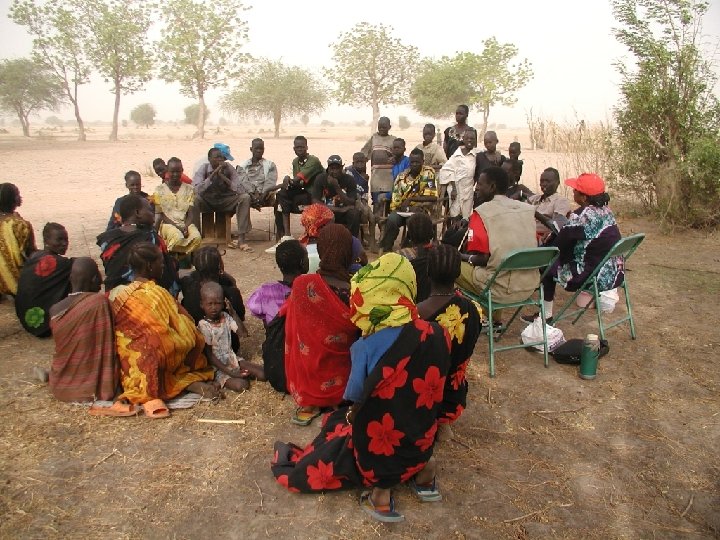
 South Sudan example • • • Good human resource management Good information system Simple tools Scaleable Adapted to local environment
 How health affects fragility • • No services is a big part of fragility Good services legitimize governments Health is entry point for building systems Systems may induce more responsibility
 How health affects fragility • • • No services is a big part of fragility Good services legitimize governments Health is entry point for building systems Systems may induce more responsibility Community work strengthens communities
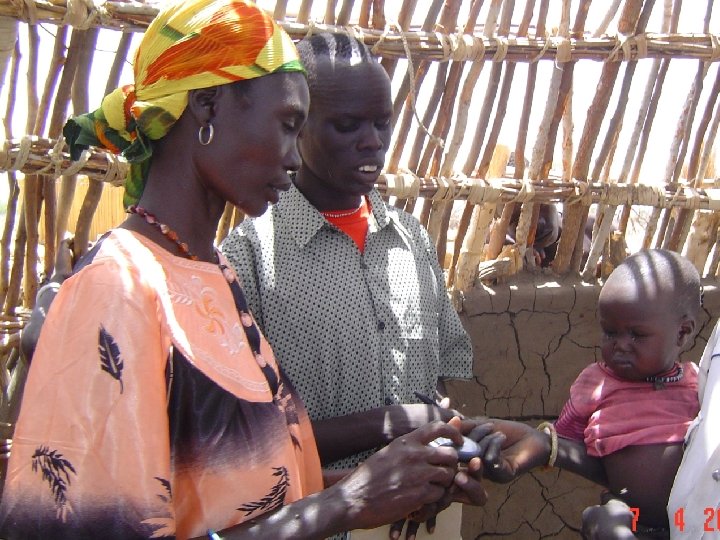
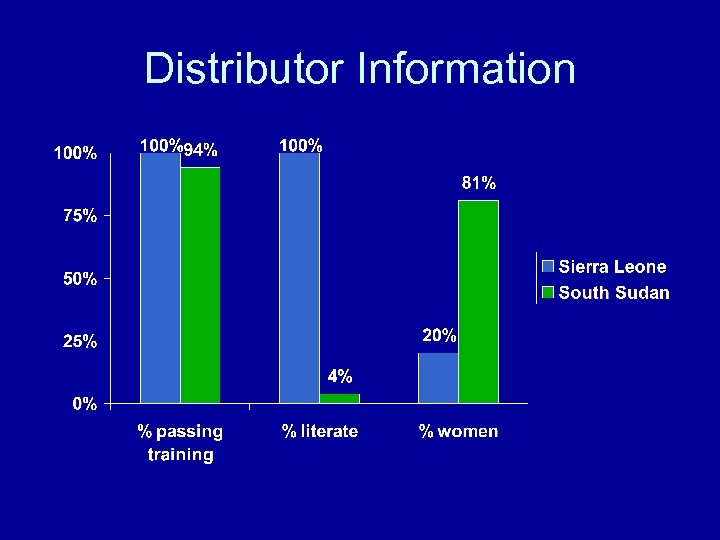 Distributor Information
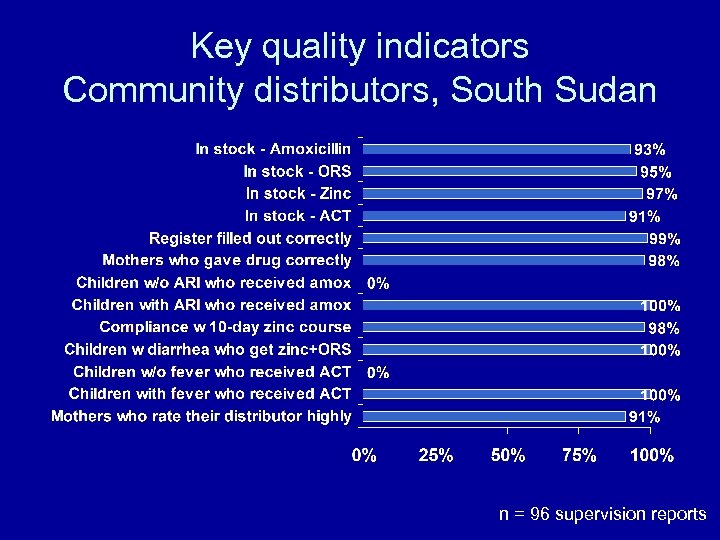 Key quality indicators Community distributors, South Sudan n = 96 supervision reports
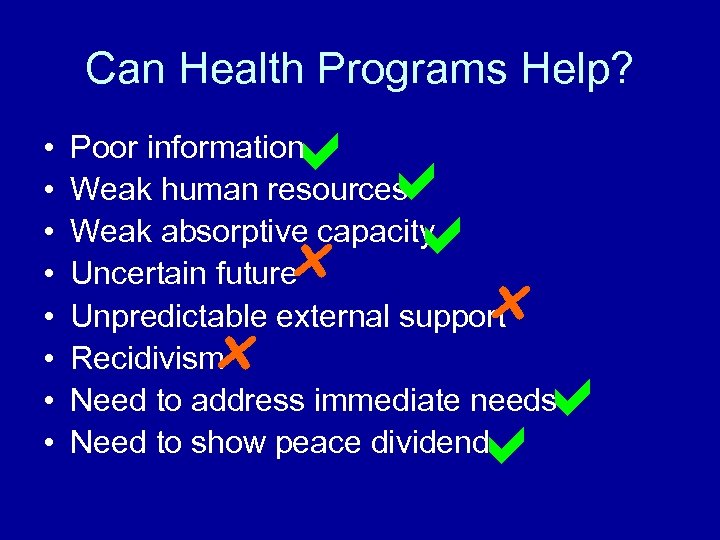 Can Health Programs Help? • • aa x a Poor information Weak human resources Weak absorptive capacity Uncertain future Unpredictable external support Recidivism Need to address immediate needs Need to show peace dividend x x a a
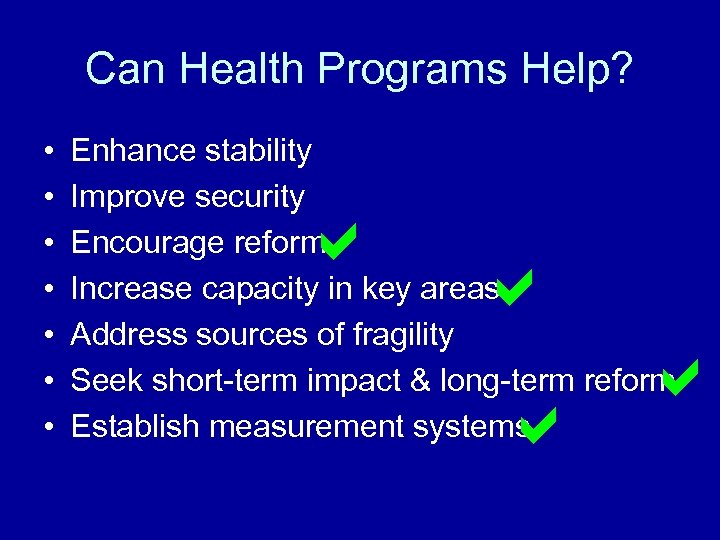 Can Health Programs Help? • • Enhance stability Improve security Encourage reform Increase capacity in key areas Address sources of fragility Seek short-term impact & long-term reform Establish measurement systems a a
 Institutional Indicators from Health • • Utilization rate Reported supervisions / health area / month % community workers reporting % stock out for key drugs
 Outline 1. 2. 3. 4. Population and fragility Fragility and health Health and fragility Missions, health, and fragility
 Health, Fragility, and Missions • • Missions are concerned about fragility Missions care about health status What do missions do that helps? What do missions do that doesn’t help?
 Health, Fragility, and NGOs • • • Field-based Innovative Collaborative Coordinated Think of scale-up • • Expensive Short term Small scale Not audited
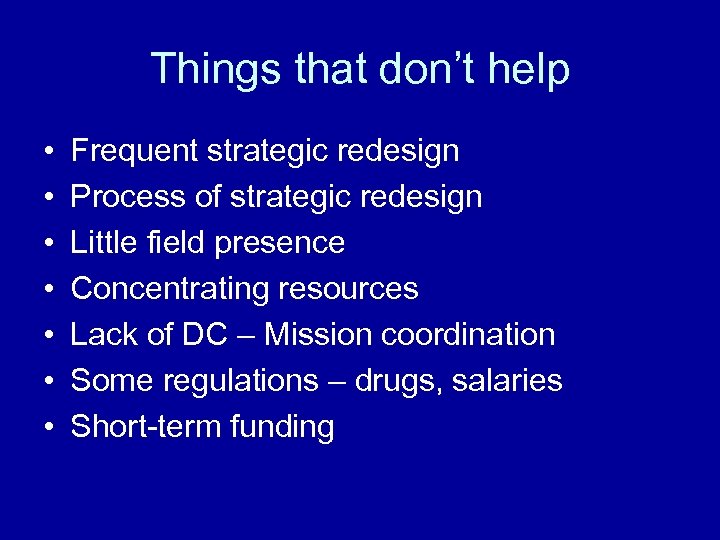 Things that don’t help • • Frequent strategic redesign Process of strategic redesign Little field presence Concentrating resources Lack of DC – Mission coordination Some regulations – drugs, salaries Short-term funding
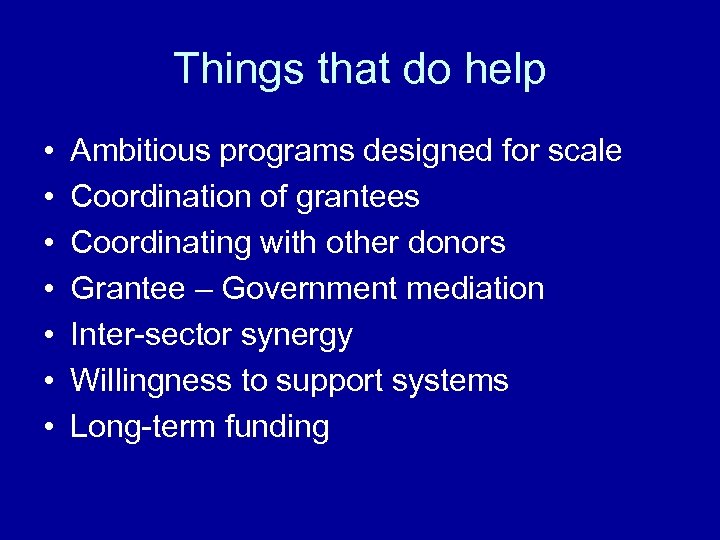 Things that do help • • Ambitious programs designed for scale Coordination of grantees Coordinating with other donors Grantee – Government mediation Inter-sector synergy Willingness to support systems Long-term funding
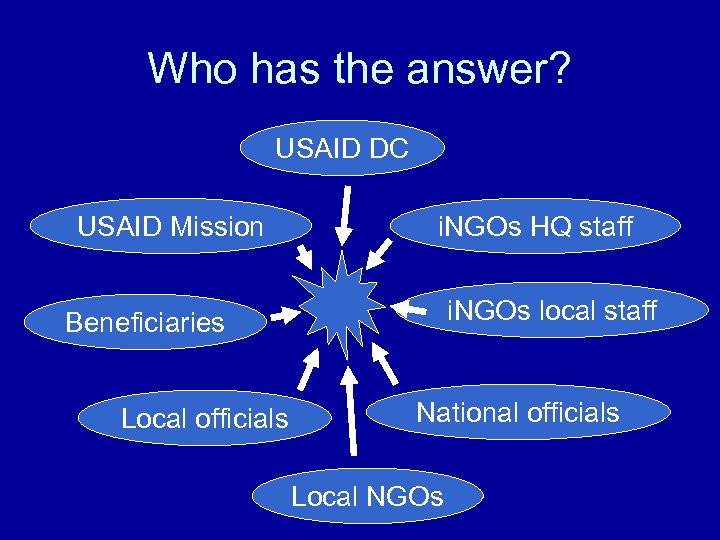 Who has the answer? USAID DC USAID Mission i. NGOs HQ staff i. NGOs local staff Beneficiaries Local officials National officials Local NGOs
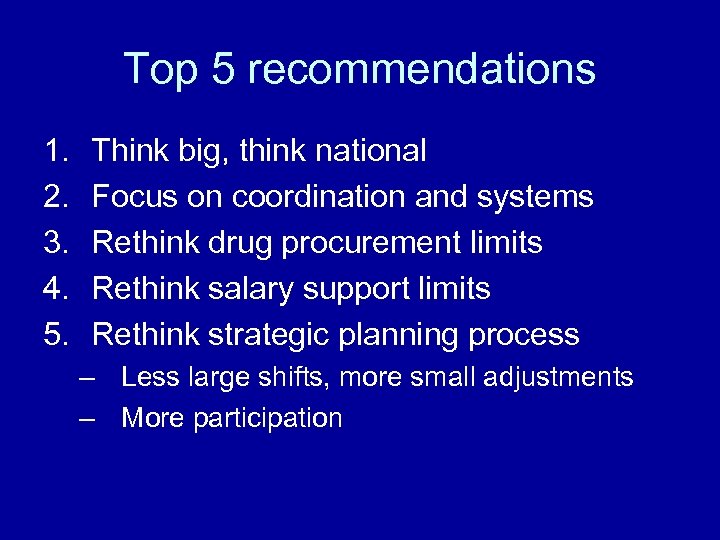 Top 5 recommendations 1. 2. 3. 4. 5. Think big, think national Focus on coordination and systems Rethink drug procurement limits Rethink salary support limits Rethink strategic planning process – Less large shifts, more small adjustments – More participation
 OFDA Recommendations • Switch to long-term funding ASAP • Increase monitoring of costs, results • Continue focus on inputs
 Bottom Line • Fragility affects health – a lot • Health programs can reduce fragility – some – Systems – Measurement • Health programs can reduce suffering – a lot • Missions help, could help even more – Stable strategy, stable funding – Coordinate