


 Скачать презентацию HEALTH REFORM PROPOSALS Market-Oriented Proposals Mandate
5d4594f32ff8a7a097fe09dfceeae6ab.ppt
- Количество слайдов: 16

 HEALTH REFORM PROPOSALS • Market-Oriented Proposals • Mandate Proposals • Public Option Proposals • Single Payer (Medicare-for-All) • National Health Service
 WHAT’S WRONG WITH THE MARKET-ORIENTED APPROACH • Americans already pay the highest out-of-pocket payments for health care without impacting costs • Selling health insurance to individuals, leads to market segmentation • Result will be the health insurance death spiral • HSAs benefit banks; HDHPs expand private HI
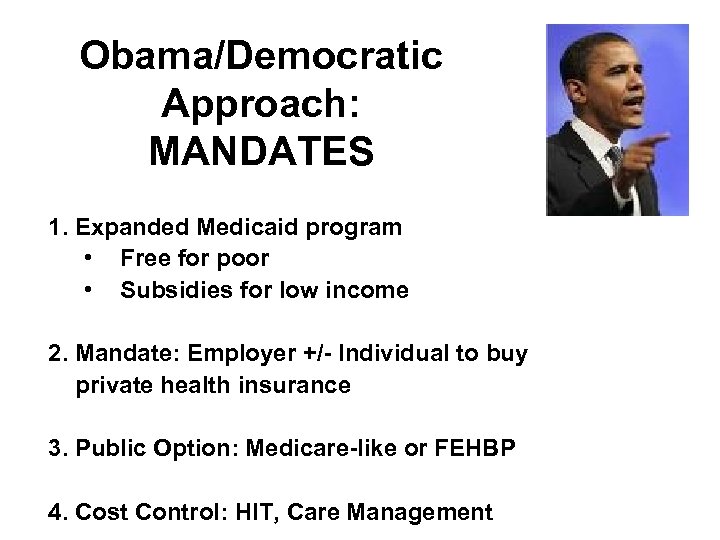 Obama/Democratic Approach: MANDATES 1. Expanded Medicaid program • Free for poor • Subsidies for low income 2. Mandate: Employer +/- Individual to buy private health insurance 3. Public Option: Medicare-like or FEHBP 4. Cost Control: HIT, Care Management
 PUBLIC OPTION SPECTRUM • FEHBP (Federal Employee Health Benefit Plan) “the same insurance as members of Congress” • Medicare-like Program
 FEHBP • Covers federal government employees • Functions like a Health Insurance Exchange • Menu of private health insurance plans • Standard benefit package • Employer contributes 72%; Employee 28%
 PROBLEMS WITH FEHBP • Cost: Premiums rising 11%/year on average (Individual = $4, 500; Family=$12, 500) • Premiums not scaled to income • Services covered the same, but deductibles and co-pays variable • Choices declining: number of plans decreased by 50% in last 5 years
 PUBLIC PLAN LIKE MEDICARE • Rationale: A public plan that has lower administrative costs and does not need to make a profit will cost less than private health insurance • Will it be limited to the individual market and prohibited from competing with employer-based HI? • Will employers be able to offer it along side private health insurance? • Will there be automatic enrollment?
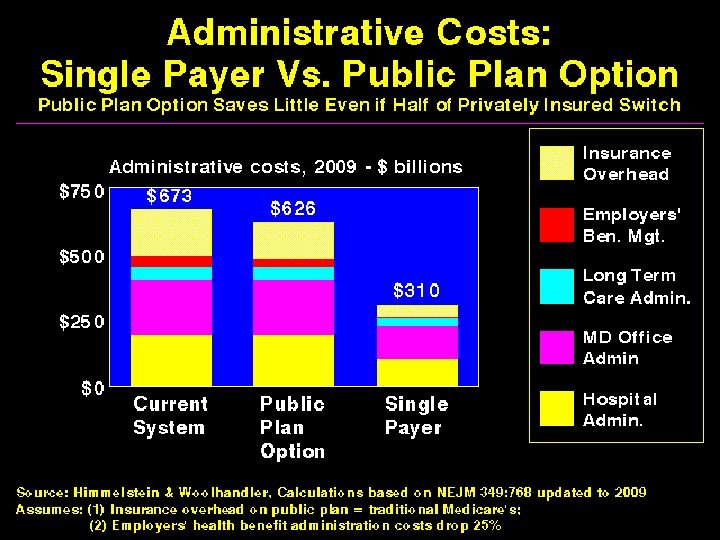
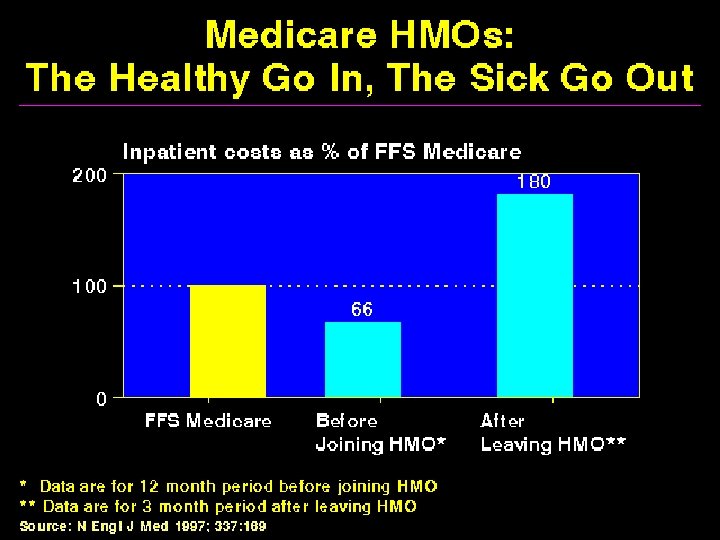
 CAN THE PUBLIC PLAN OPTION SOLVE THE COST PROBLEM? • Achieves 1/7 th of the administrative savings possible through single payer. • Medicare Care HMOs cost 11 -19% more than Traditional Medicare • Medicare Care HMOs recruit the healthy and avoid the sick • The public plan option ends up subsidizing private insurers by taking on high cost patients
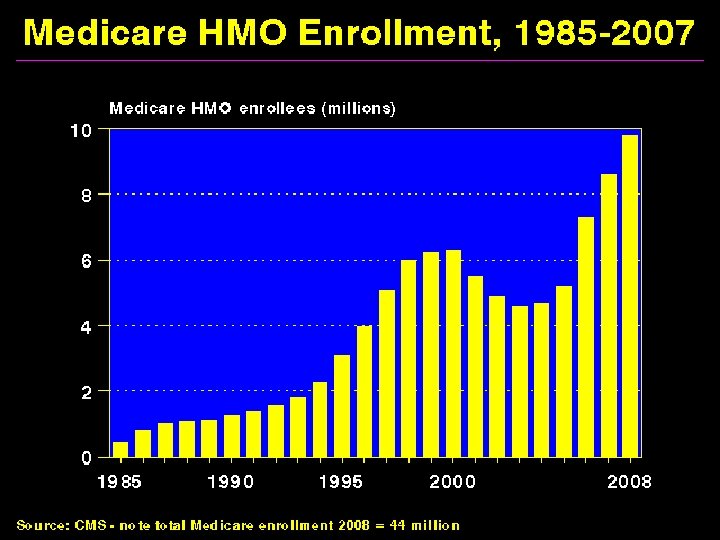
 Despite Medicare’s Lower Overhead, Enrollment of Medicare Patients in Private Plans Has Grown
 Private Medicare Plans Have Prospered by Cherry Picking
 WHY IS SINGLE PAYER POSSIBLE TODAY? • The economic crisis calls for government stimulus of the economy • Everyone benefits: the uninsured, the underinsured, and everyone else who is insecurely insured • Employers will be relieved of the burden of rising health care costs/retiree benefits and unfair competition from employers who don’t offer HI • Every other industrialized country has done it • It is morally the right thing to do!
 CONTACTS AND REFERENCES • PNHP-NY Metro: www. pnhpnymetro. org • PNHP National: www. pnhp. org • Bodenheimer TS, Grumbach K, Understanding Health Policy: A Clinical Approach. Mc. Graw-Hill, 2005 • Fein O, Birn AE. (editors), Comparative Health Systems. Am Jour Public Health 2003; 93: 1 -176 • O’Brien ME, Livingston M (editors), 10 Excellent Reasons for National Health Care. New Press, 2008 • Geyman J, Do Not Resuscitate: Why the Health Insurance Industry is Dying and How We Must Replace It. Common Courage Press, 2008