


 Скачать презентацию Health Promotion Development The Case of Kazakhstan Altyn
33ea8b148b4de5627235be48cfbdd1a7.ppt
- Количество слайдов: 37
 Health Promotion Development: The Case of Kazakhstan Altyn Aringazina, Med. Sci. D, Ph. D Head, Department of Population Health & Social Sciences Kazakhstan School of Public Health Member of the WHO Expert Advisory Panel on Health Promotion Kermanshah, May 19 -21, 2015
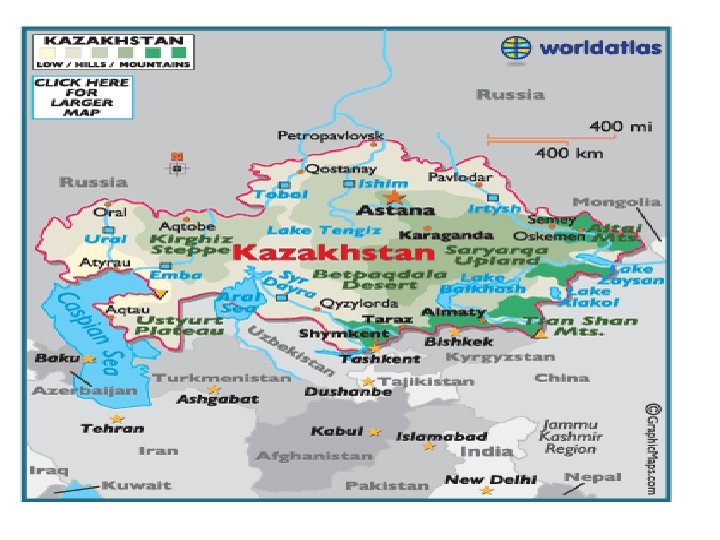
 Overview l l l The capital, formerly Almaty (previously Alma-Ata, the birthplace of Primary Health Care) from December 1997 moved to Astana in the North The population was estimated at 17, 458 million in March 2015. As well as geographic diversity, the country is ethnically diverse. The main groups are Kazakhs (65, 5%), Russians ( 21, 47%), Uzbeks (3, 04%), Ukrainians (1, 76%), Uyghurs(1, 44%), Tatars (1, 18%), Germans (1, 06%), and others (4, 55%) The level of literacy of the population is 99. 6 % (Source: The World Fact, 2013) l Kazakhstan is a secular state. The majority of the population are said to be atheists while the main religions are Sunni Muslim(70, 18%), Russian Orthodox (24, 8%), Protestant (2%), other (3, 02%)
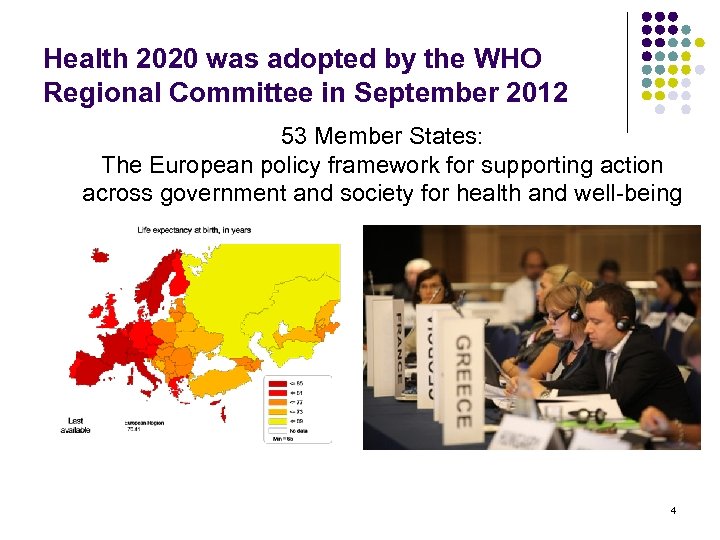 Health 2020 was adopted by the WHO Regional Committee in September 2012 53 Member States: The European policy framework for supporting action across government and society for health and well-being VI Astana Economic Forum, Kazakhstan Astana, 24 May 2013 4
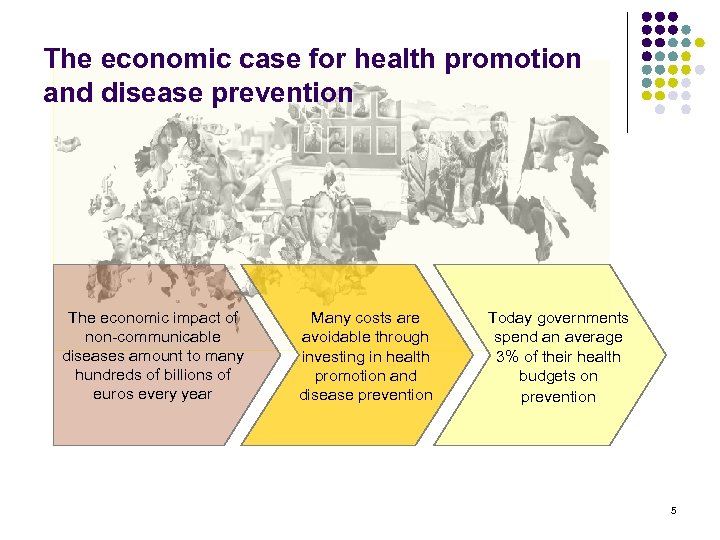 The economic case for health promotion and disease prevention The economic impact of non-communicable diseases amount to many hundreds of billions of euros every year Many costs are avoidable through investing in health promotion and disease prevention Today governments spend an average 3% of their health budgets on prevention VI Astana Economic Forum, Kazakhstan Astana, 24 May 2013 5
 Health 2020 documents & Kazakhstan strategies l l l Health 2020 - A European policy framework supporting action across government and society for health and wellbeing Health 2020 – European policy framework and strategy document & Kazakhstan 2050 & Health Code of Kazakhstan (2009) ”Salamatty Kazakhstan”: Healthy Kazakhstan 2011– 2015 20 steps to social modernization of Kazakhstan (2012) VI Astana Economic Forum, Kazakhstan Astana, 24 May 2013 6
 Health 2020 in Kazakhstan l l Strengthen public health functions Review all determinants of health including social and environmental determinants (intersectoral mechanism in place ) Review link between health, employment and welfare/social policy Improve health literacy and empower people through life course approach
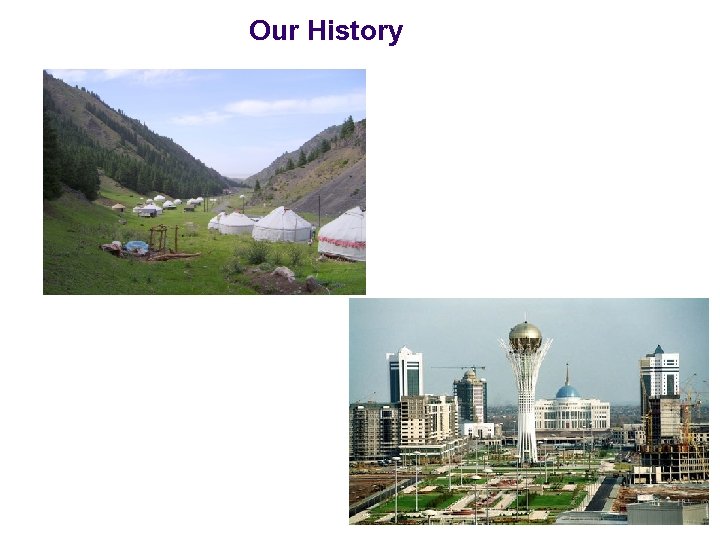 Our History
 Our History
 Prevention of Diseases “…Effective chronic disease programs are highly dependent on well-functioning national health systems, chronic diseases should be a litmus test for health-systems strengthening. ” Source: B. Samb, N. Desai et al. The Lancet, Volume 376, Issue 9754, Pages 1785 - 1797, November 2010
 WHO Capacity Mapping Initiative (CMI) l l l To synthesize key social and economic trends Map the current capacity of health promotion systems, with particular emphasis on responsiveness to the broader determinants of health Highlight the implications for health promotion policy and infrastructure development (WHO, 2005; Mittelmark et al, 2006)
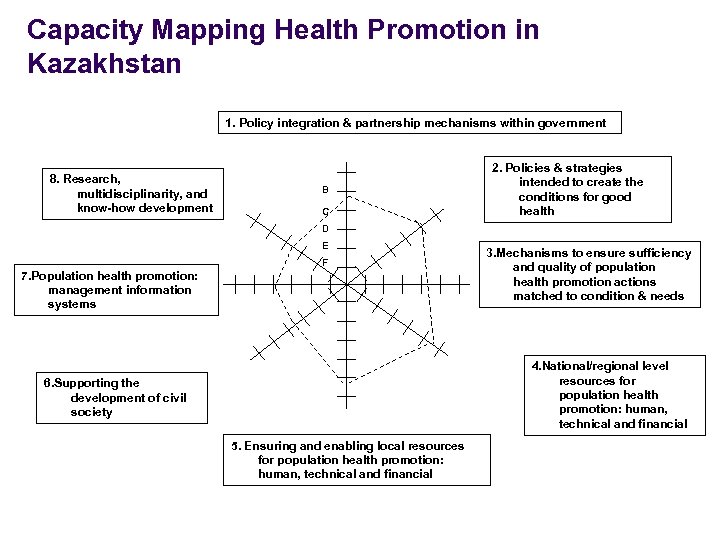 Capacity Mapping Health Promotion in Kazakhstan 1. Policy integration & partnership mechanisms within government 8. Research, multidisciplinarity, and know-how development В С 2. Policies & strategies intended to create the conditions for good health D E F 7. Population health promotion: management information systems 3. Mechanisms to ensure sufficiency and quality of population health promotion actions matched to condition & needs 4. National/regional level resources for population health promotion: human, technical and financial 6. Supporting the development of civil society 5. Ensuring and enabling local resources for population health promotion: human, technical and financial
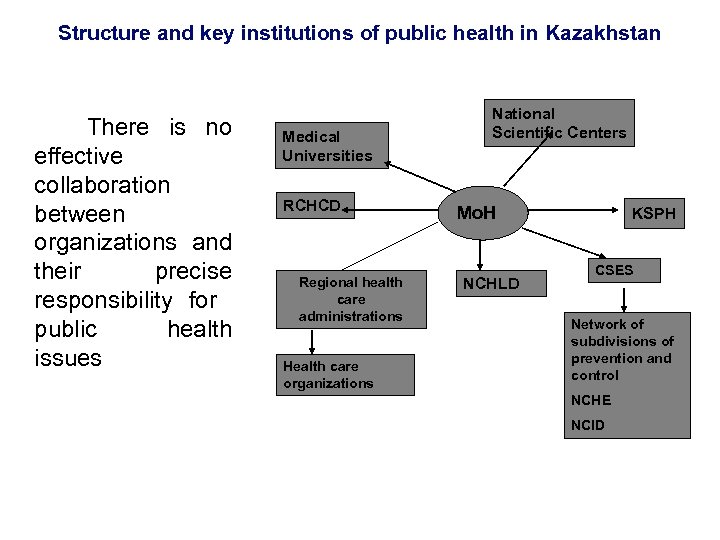 Structure and key institutions of public health in Kazakhstan There is no effective collaboration between organizations and their precise responsibility for public health issues Medical Universities RCHCD Regional health care administrations Health care organizations National Scientific Centers Mo. H NCHLD KSPH CSES Network of subdivisions of prevention and control NCHE NCID
 Policy integration and partnership The aim of the National Coordination Council, governed by the Minister of Health: l maintenance of interaction b/w central and local executive bodies, international and other organizations for conducting activities according to state programmes l The objectives: 1. maintenance of performance of actions, assigned by the programmes 2. improvement of the state policy, legislative documents 3. coordination of central and local bodies’ work 4. definition of main guidelines on health protection l
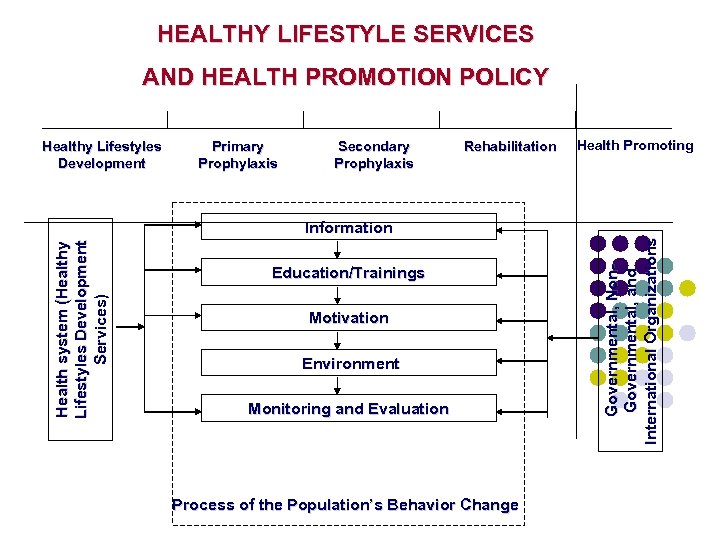 HEALTHY LIFESTYLE SERVICES AND HEALTH PROMOTION POLICY Primary Prophylaxis Secondary Prophylaxis Rehabilitation Health Promoting Information Education/Trainings Motivation Environment Monitoring and Evaluation Process of the Population’s Behavior Change Governmental, Non. Governmental, and International Organizations Health system (Healthy Lifestyles Development Services) Healthy Lifestyles Development
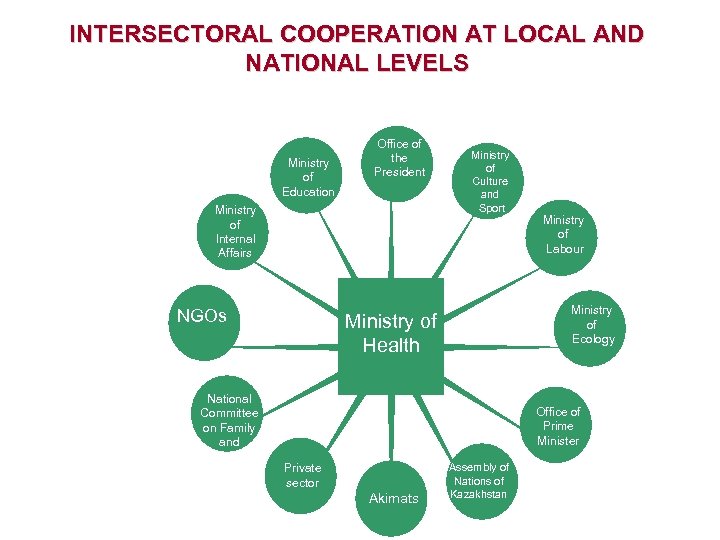 INTERSECTORAL COOPERATION AT LOCAL AND NATIONAL LEVELS Ministry of Education Office of the President Ministry of Internal Affairs NGOs National Committee on Family and Women’s Affairs Ministry of Culture and Sport Ministry of Labour Ministry of Ecology Ministry of Health Office of Prime Minister Private sector Akimats Assembly of Nations of Kazakhstan
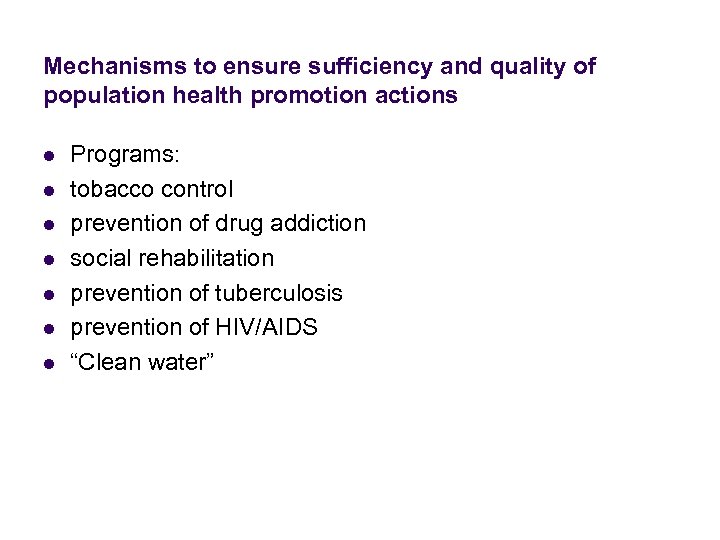 Mechanisms to ensure sufficiency and quality of population health promotion actions l l l l Programs: tobacco control prevention of drug addiction social rehabilitation prevention of tuberculosis prevention of HIV/AIDS “Clean water”
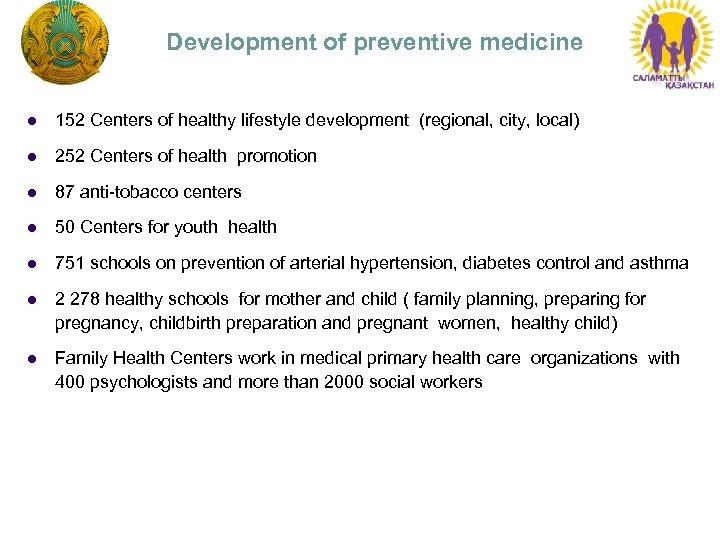 Development of preventive medicine l 152 Centers of healthy lifestyle development (regional, city, local) l 252 Centers of health promotion l 87 anti-tobacco centers l 50 Centers for youth health l 751 schools on prevention of arterial hypertension, diabetes control and asthma l 2 278 healthy schools for mother and child ( family planning, preparing for pregnancy, childbirth preparation and pregnant women, healthy child) l Family Health Centers work in medical primary health care organizations with 400 psychologists and more than 2000 social workers 18
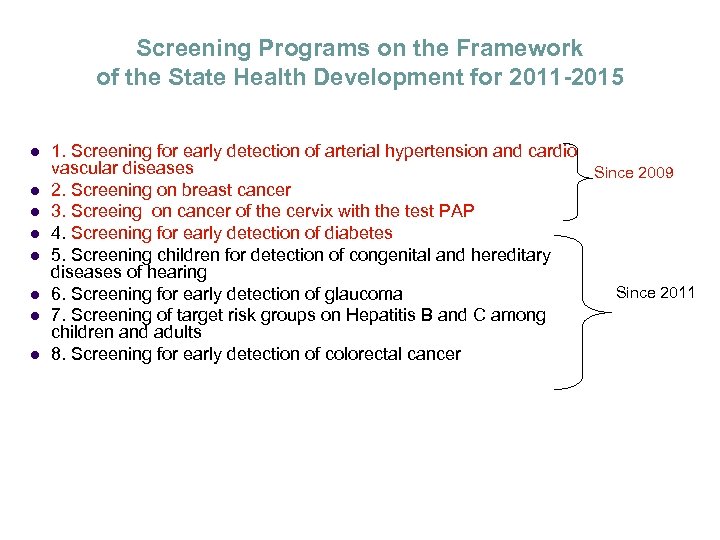 Screening Programs on the Framework of the State Health Development for 2011 -2015 l l l l 1. Screening for early detection of arterial hypertension and cardio vascular diseases Since 2009 2. Screening on breast cancer 3. Screeing on cancer of the cervix with the test PAP 4. Screening for early detection of diabetes 5. Screening children for detection of congenital and hereditary diseases of hearing Since 2011 6. Screening for early detection of glaucoma 7. Screening of target risk groups on Hepatitis B and C among children and adults 8. Screening for early detection of colorectal cancer
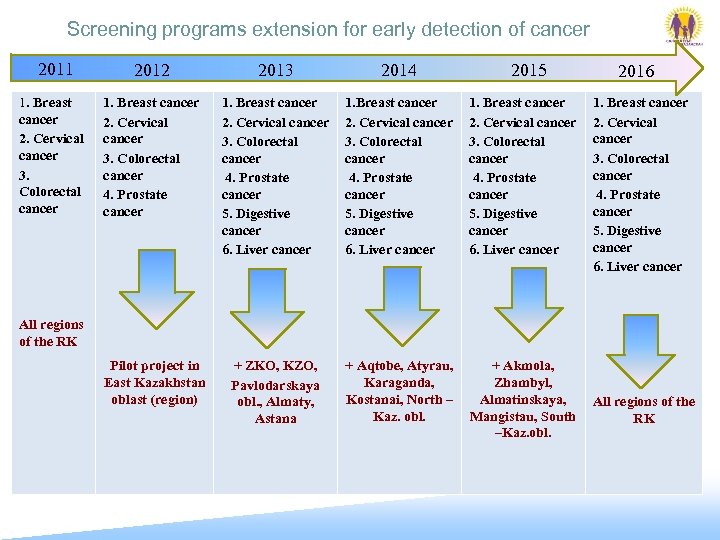 Screening programs extension for early detection of cancer 2011 1. Breast cancer 2. Cervical cancer 3. Colorectal cancer 2012 2013 2014 2015 1. Breast cancer 2. Cervical cancer 3. Colorectal cancer 4. Prostate cancer 5. Digestive cancer 6. Liver cancer Pilot project in East Kazakhstan oblast (region) + ZKO, KZO, Pavlodarskaya obl. , Almaty, Astana + Aqtobe, Atyrau, Karaganda, Kostanai, North – Kaz. obl. + Аkmola, Zhambyl, Almatinskaya, Mangistau, South –Kaz. obl. 2016 1. Breast cancer 2. Cervical cancer 3. Colorectal cancer 4. Prostate cancer 5. Digestive cancer 6. Liver cancer All regions of the RK
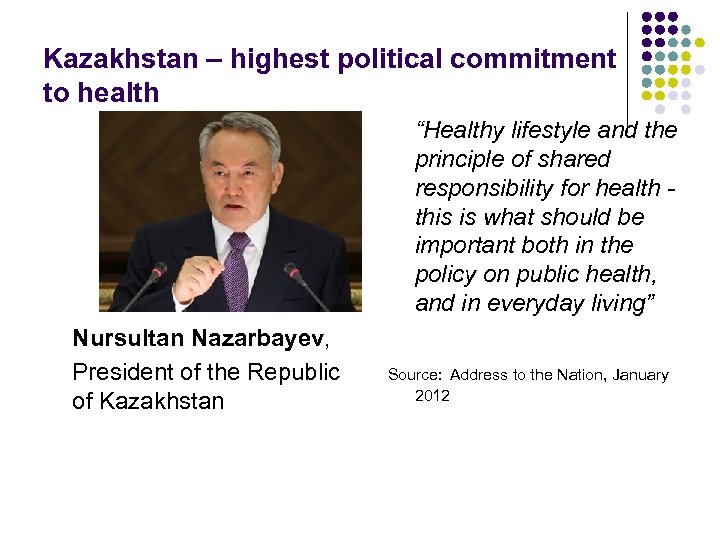 Kazakhstan – highest political commitment to health “Healthy lifestyle and the principle of shared responsibility for health this is what should be important both in the policy on public health, and in everyday living” Nursultan Nazarbayev, President of the Republic of Kazakhstan Source: Address to the Nation, January 2012 VI Astana Economic Forum, Kazakhstan Astana, 24 May 2013
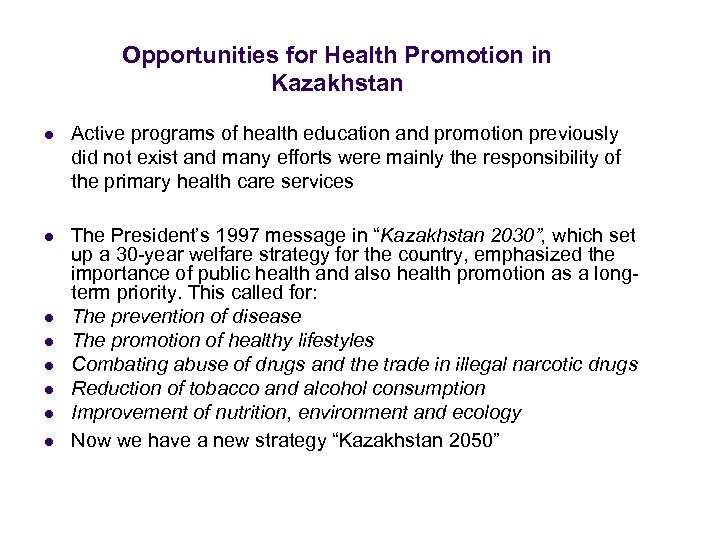 Opportunities for Health Promotion in Kazakhstan l Active programs of health education and promotion previously did not exist and many efforts were mainly the responsibility of the primary health care services l The President’s 1997 message in “Kazakhstan 2030”, which set up a 30 -year welfare strategy for the country, emphasized the importance of public health and also health promotion as a longterm priority. This called for: The prevention of disease The promotion of healthy lifestyles Combating abuse of drugs and the trade in illegal narcotic drugs Reduction of tobacco and alcohol consumption Improvement of nutrition, environment and ecology Now we have a new strategy “Kazakhstan 2050” l l l
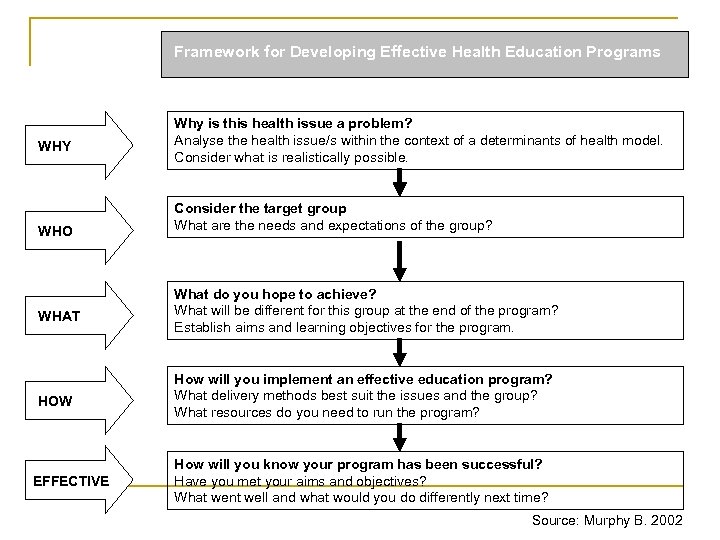 Framework for Developing Effective Health Education Programs WHY WHO Why is this health issue a problem? Analyse the health issue/s within the context of a determinants of health model. Consider what is realistically possible. Consider the target group What are the needs and expectations of the group? WHAT What do you hope to achieve? What will be different for this group at the end of the program? Establish aims and learning objectives for the program. HOW How will you implement an effective education program? What delivery methods best suit the issues and the group? What resources do you need to run the program? EFFECTIVE How will you know your program has been successful? Have you met your aims and objectives? What went well and what would you do differently next time? Source: Murphy B. 2002
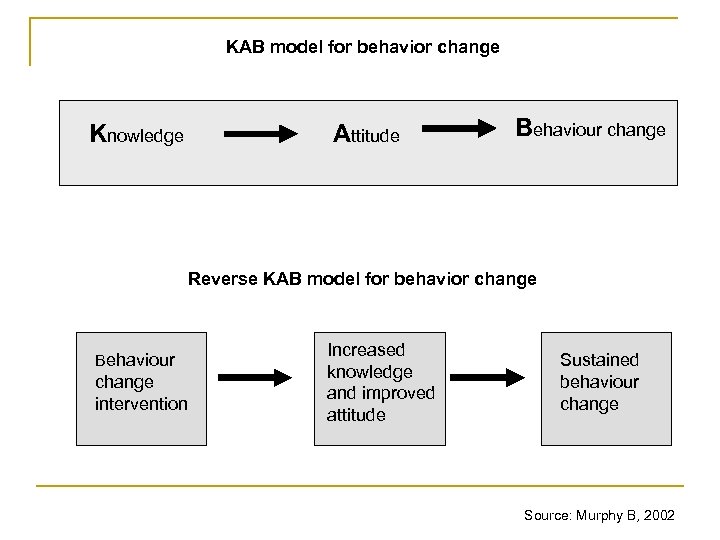 KAB model for behavior change Knowledge Attitude Behaviour change Reverse KAB model for behavior change Behaviour change intervention Increased knowledge and improved attitude Sustained behaviour change Source: Murphy B, 2002
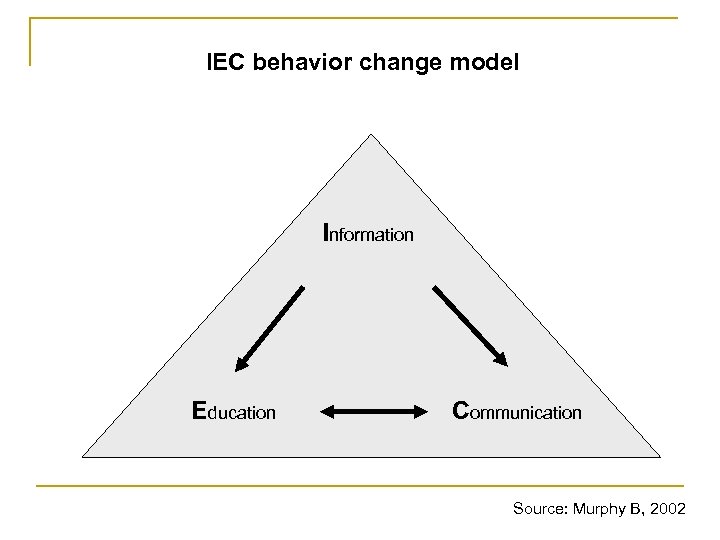 IEC behavior change model Information Education Communication Source: Murphy B, 2002
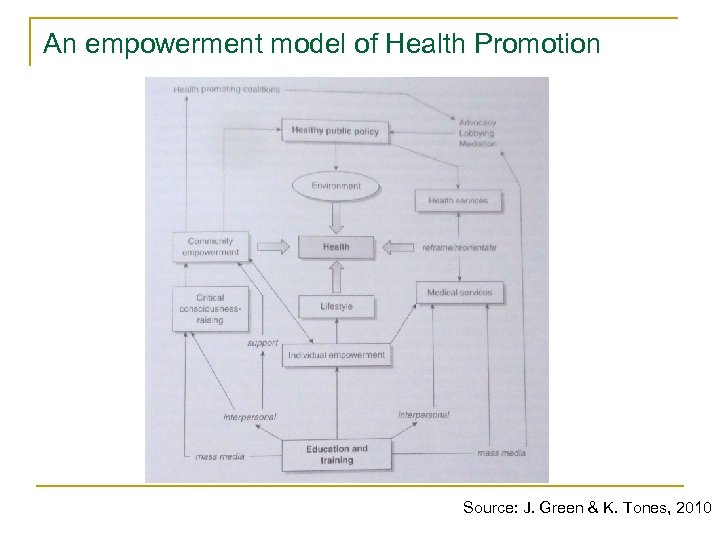 An empowerment model of Health Promotion Source: J. Green & K. Tones, 2010
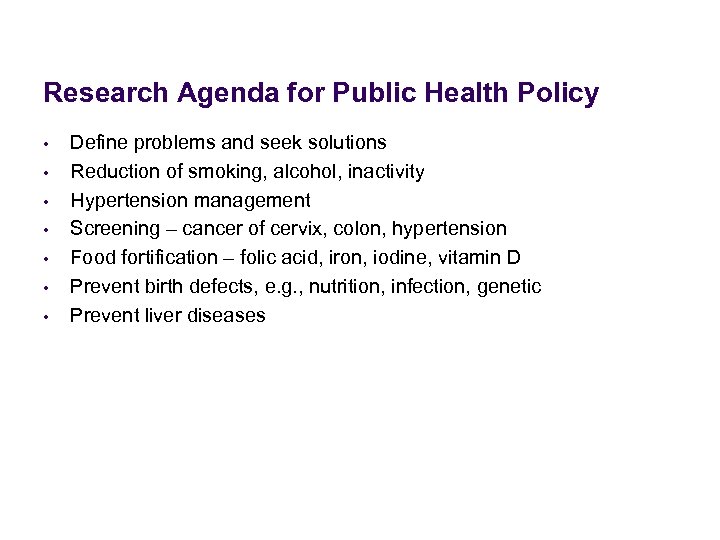 Research Agenda for Public Health Policy • • Define problems and seek solutions Reduction of smoking, alcohol, inactivity Hypertension management Screening – cancer of cervix, colon, hypertension Food fortification – folic acid, iron, iodine, vitamin D Prevent birth defects, e. g. , nutrition, infection, genetic Prevent liver diseases
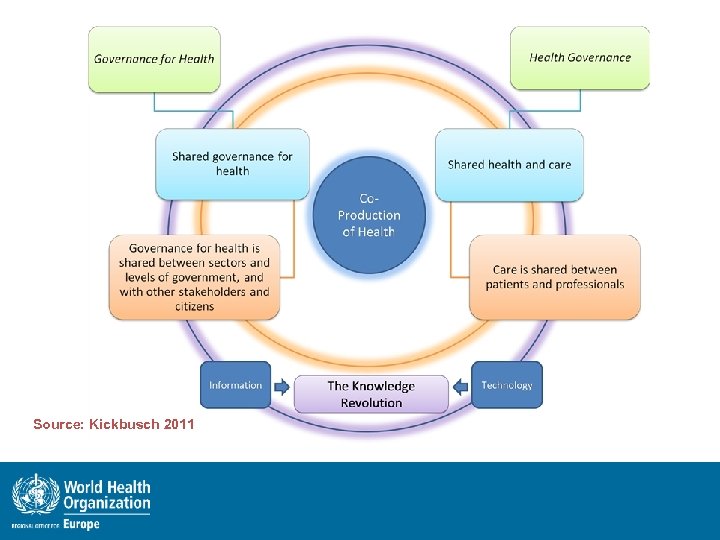 Source: Kickbusch 2011
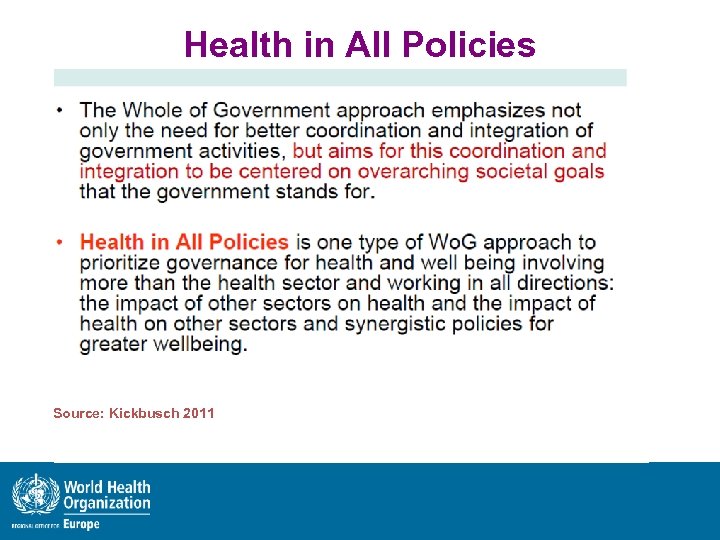 Health in All Policies Source: Kickbusch 2011
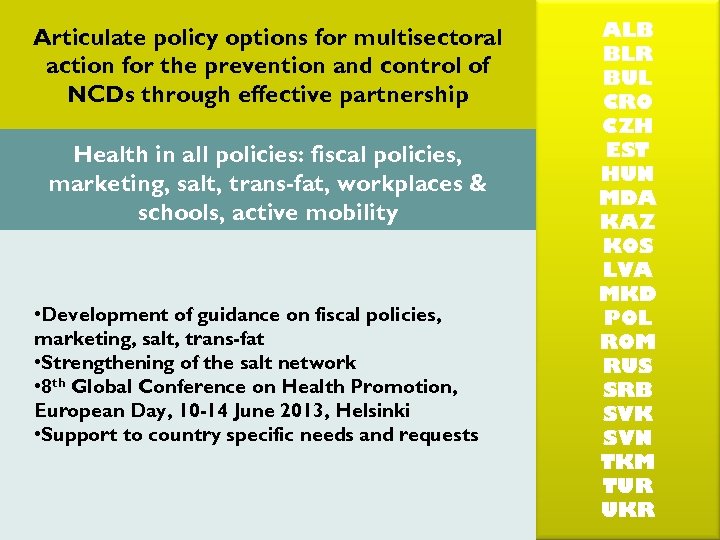 Articulate policy options for multisectoral action for the prevention and control of NCDs through effective partnership Health in all policies: fiscal policies, marketing, salt, trans-fat, workplaces & schools, active mobility • Development of guidance on fiscal policies, marketing, salt, trans-fat • Strengthening of the salt network • 8 th Global Conference on Health Promotion, European Day, 10 -14 June 2013, Helsinki • Support to country specific needs and requests ALB BLR BUL CRO CZH EST HUN MDA KAZ KOS LVA MKD POL ROM RUS SRB SVK SVN TKM TUR UKR
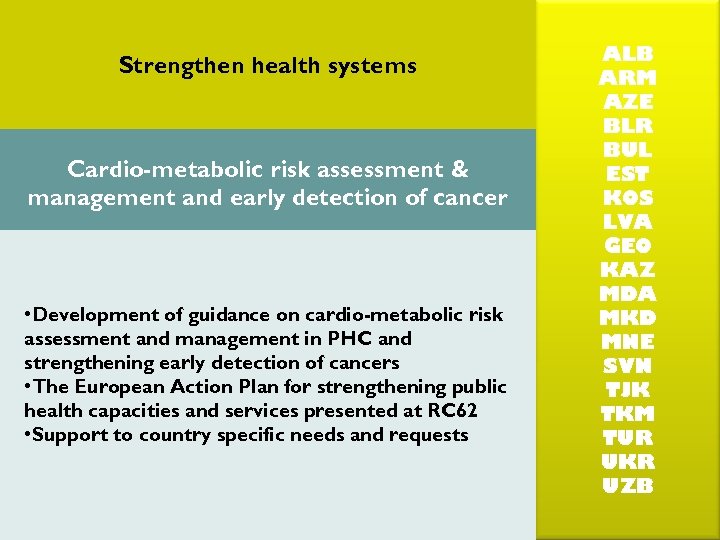 Strengthen health systems Cardio-metabolic risk assessment & management and early detection of cancer • Development of guidance on cardio-metabolic risk assessment and management in PHC and strengthening early detection of cancers • The European Action Plan for strengthening public health capacities and services presented at RC 62 • Support to country specific needs and requests ALB ARM AZE BLR BUL EST KOS LVA GEO KAZ MDA MKD MNE SVN TJK TKM TUR UKR UZB
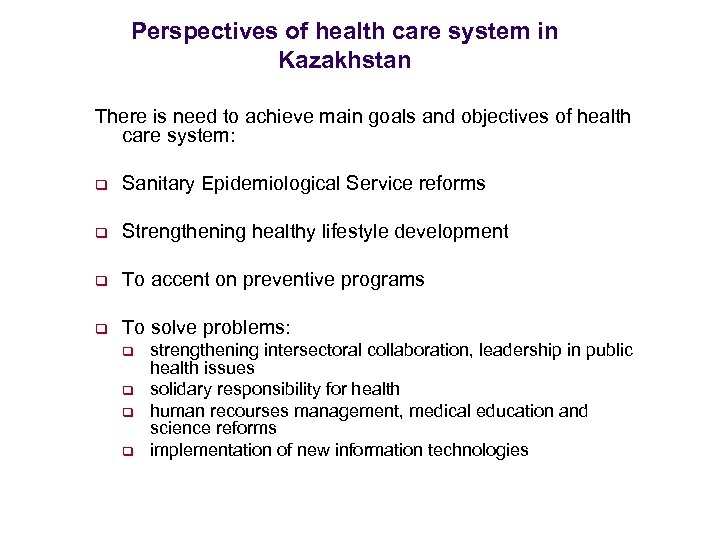 Perspectives of health care system in Kazakhstan There is need to achieve main goals and objectives of health care system: q Sanitary Epidemiological Service reforms q Strengthening healthy lifestyle development q To accent on preventive programs q To solve problems: q q strengthening intersectoral collaboration, leadership in public health issues solidary responsibility for health human recourses management, medical education and science reforms implementation of new information technologies
 cont l l The health care system is based on the paradigm of public health care, with consideration the role of social determinants of health, needs and demands of population, social responsibility for health, and intersectoral approach The new public health model for Kazakhstan must move beyond its current medical orientation and embrace a social-determinants model of health, if gains in population-wide health status are to be achieved Special attention is to be paid to diversity in socio-economic standing, geography, culture as well as other key determinants (Aringazina A. et al, 2011)
 Kazakhstan School of Public Health History: KSPH was established in July 1997 according to an Agreement between the WHO/ European Office and the Ministry of Health of Kazakhstan Mission: Improvement of health of the population of Kazakhstan through strengthening of functions of public health
 Goals of KSPH l l l l Postgraduate training of experts in the field of public health: short - term courses (two-four weeks) training the specialists on Public Health Two years Master’s program in Public Health, One and half years Master’s MBA program Three years Ph. D. program in Public Health field Training scientific and pedagogic personnel of higher qualification 10 months program on specialty “Health Care Manager” Research activity Expert-consultative activity
 Expert-Consultative Work, WHO Technical Meeting
 Thank you very much for your attention!