


 Скачать презентацию Health Professional Monitoring Programs in Kentucky CAPTASA Lexington
82a5fe67a4043741e5ff68827fb777c4.ppt
- Количество слайдов: 32
 Health Professional Monitoring Programs in Kentucky CAPTASA Lexington, KY January 26, 2013
 Health Professional Monitoring Programs in KY KPHF KYPRN KARE for Nurses
 There is a unique disconnect between the scientific facts and the public’s perception about drug abuse and addiction
 “The 12 -step model of recovery is the core technology in the short and long term treatment of alcoholism and addiction… the standard of care” Garrett O’Connor, MD CAPTASA 2005
 Pamela Fleck MSN Case Manger Kentucky Alternative Recovery Effort KARE
 KYPRN Brian Fingerson, RPh, Inc. KY Professionals Recovery Network KYPRN 202 Bellemeade Road Louisville, KY 40222 O/H: 502 -749 -8385, F: 502 -749 -8389 kyprn@att. net
 Greg L Jones, MD Kentucky Physicians Health Foundation 9000 Wessex Place, Suite 305 Louisville, KY 40222 gregj@kyrecovery. org (502)425 -7761
 Wow! Fifteen Percent of U. S. Workers Report Workplace Alcohol Use or Impairment in Past Year February 15, 2006 An estimated 19. 2 million U. S. workers (15. 3%) reported using or being impaired by alcohol at work at least once in the past year, according to recently released data from the National Survey of Workplace Health and Safety.
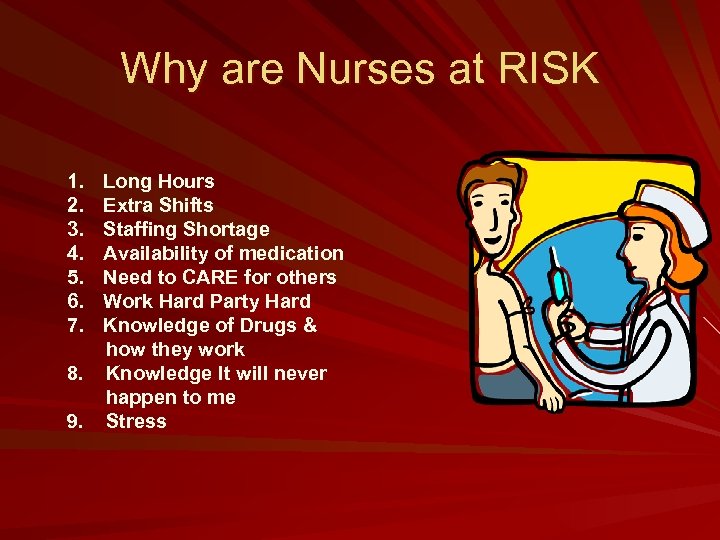 Why are Nurses at RISK 1. 2. 3. 4. 5. 6. 7. Long Hours Extra Shifts Staffing Shortage Availability of medication Need to CARE for others Work Hard Party Hard Knowledge of Drugs & how they work 8. Knowledge It will never happen to me 9. Stress
 Profile of a Chemically Dependent Nurse Is demanding of self; denies stress, depression, unhappiness Expresses more guilt/shame about drug usage Usually graduated in upper portion of nursing program Have demanding and responsible jobs Are highly respected for excellent work
 Intervention and Assistance for Nurses Refer to Employee Assistance Program Encourage nurse to contact KARE for Nurses Program at time of meeting Inform nurse that information will be submitted to KBN as required by KRS 314. 031
 Warning Signs 1. Changes in personality and mood swings 2. Defensiveness when confronted about chemical use – excuses, promises, lying, denying, blaming 3. Changes in lifestyle to one more centered on chemical use 4. Trouble at home, school and/or work 5. Withdrawal from family, friends, colleagues and activities
 Signs and Symptoms – Job Performance Too many medication errors Too many controlled drugs spilled or broken Illogical or sloppy charting Absence of charting Frequently absent from unit Frequent bathroom breaks Comes to work early and stays late Uses sick leave lavishly
 Forms of Diversion MD, pharmacist diversion Doctor shoppers in ER Stolen script pads and forged prescriptions Patient’s family Unauthorized drug cabinet access (ie, unit secretary) Handlers of sharps containers
 Common Methods of Diversion For Health Professionals Removal of duplicate dose Removal of fentanyl patches Removal too frequently (range order issues) Ordered q 4 hrs, removed q 2 hrs Removal of medication without order Medication override Falsification of “verbal order” Handlers of sharp containers
 Mandatory Reporting n n Kentucky is a Mandatory Reporting Jurisdiction -- KRS 314. 031(4) Who? -- Any nurse -- Employer of nurses -- Any person having knowledge of a violation
 KARE for Nurses Program …Identify and assist nurses whose abilities to practice nursing are compromised by dependency on drugs or alcohol. Allow these nurses to get treatment and recovery so they may return to competent and safe nursing practice.
 Admission Requirements Current license in KY or have applied for licensure in KY Request participation in KARE for Nurses Program in writing Submit to Chemical Dependency Evaluation Admit to misuse/abuse of ETOH or drugs Agree not to practice until approved to do so by KARE for Nurses Program staff
 Drug abuse is a preventable behavior Drug addiction is a treatable disease Partnership for a Drug-Free America http: //www. drugfree. org/
 What do we do with them then? Assessment Treatment Monitoring Contractual Relationship 5 Yrs of aftercare & monitoring Help them get ready for return to “life”
 Health issues Impairing Professionals Substance Use Disorders Mood Disorders Personality Disorders Sexual Acting Out Behaviors Dementia & Medical Disabilities Burnout-Anger & Fatigue
 How can you tell if someone has this Disease Use of Alcohol or some other Addictive substance (Opiates, Sedatives, Amphetamines, Cocaine, Marijuana) Problems occurring while using these or as a result of using Continued Use of any Addictive substance after problems begin
 TREATMENT Inpatient Time enough and Gender specific Outpatient Self-Help and 12 -Step Groups Therapy- Individual and Group Abstinence Contract
 PRN contracts typically include: Specific number of AA/NA or other 12 step meetings Who is their primary care physician? What medications are they taking? No additional medications without notification to the PRN (including OTC) Urine drug screens Notification of where they live and work to PRN October 2003 February 2006
 KBML Obligations KBML Policy Regarding The Required Reporting Of Impaired Physicians By Other Physicians And Hospitals Adopted: March 27, 2003 Reporting impaired physicians directly to the Kentucky Physicians Health Foundation’s Impaired Physicians Program is not sufficient to satisfy the statutory reporting requirements.
 Self-Reporting is still the best bet This policy revision makes no change regarding the procedures followed in those instances where an affected individual voluntarily self-reports to the Foundation.
 Response House Bill 1
 What is a relapse? What does it “cost” you?
 Aftercare • What is done? • How much and how long?
 Drug and Alcohol testing • What tests? • How often? • Random? • For cause?
 RESULTS Ø 80% Recovery Rate at 5 Yrs with our oversight for those with a substance Dx
 How can we help and support? • Let’s take care of each other • Confidential reporting • Recovering Professionals are hard working • They are monitored closely