


 Скачать презентацию Health Literacy Awareness One day workshop Welcome 28
4c2c956ea2bbcb0fa7f06396acf8af75.ppt
- Количество слайдов: 56
 Health Literacy Awareness One day workshop Welcome! 28 th September 2016 Helen Carter Head of Networking and Development Melissa Frater Delivery Manager Community Health and Learning Foundation
 Workshop Programme Time What 10. 00 – 10. 15 Welcome, introductions and setting the scene 10. 15 – 11 am Impacts of Health Literacy 11 am - 11. 30 The Policy Context 11. 30 – 11. 45 BREAK 11. 45 - 12. 15 Group Discussion 1 - How has Health Literacy impacted on your everyday practice? Discussion and Feedback 12. 15 – 1 pm Group Discussion 2 - What can we do about it? Discussion and Feedback 1 pm – 1. 45 LUNCH 1. 45 – 2. 15 Activity 1 – Simplifying Information 2. 15 - 2. 30 Tips for making it easy 2. 30 – 2. 50 Activity 2 – Using teach back 2. 50 – 3 pm Resources available 3 pm-3. 10 What will you do now? 3. 10 – 3. 15 Close
 Workshop aims and objectives • To increase knowledge of what health literacy is and why it is important; • To raise awareness of how having low health literacy impacts on individuals’ everyday lives and the services that the support them; • To increase awareness of the tools and techniques that can support people with low health literacy and promote health literacy in practice; • To raise awareness of the resources and information available to support you in promoting health literacy.
 What is Health Literacy? “The personal characteristics and social resources needed for individuals and communities to access, understand, appraise and use information and services to make decisions about health” World Health Organisation 2015
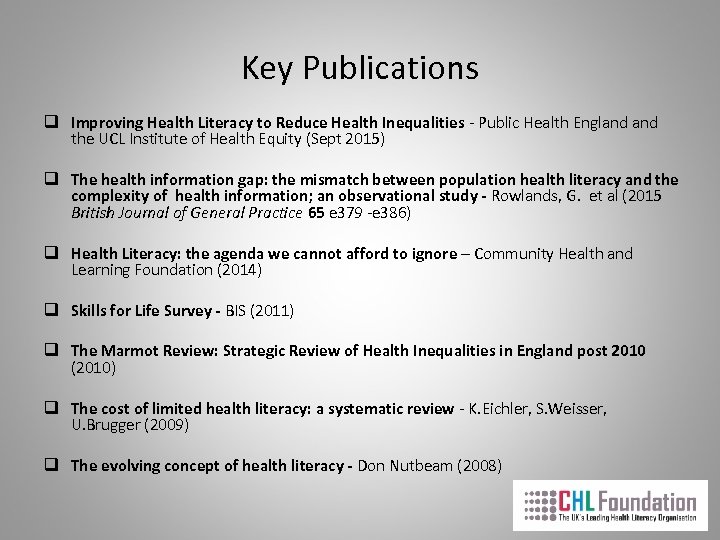 Key Publications q Improving Health Literacy to Reduce Health Inequalities - Public Health England the UCL Institute of Health Equity (Sept 2015) q The health information gap: the mismatch between population health literacy and the complexity of health information; an observational study - Rowlands, G. et al (2015 British Journal of General Practice 65 e 379 -e 386) q Health Literacy: the agenda we cannot afford to ignore – Community Health and Learning Foundation (2014) q Skills for Life Survey - BIS (2011) q The Marmot Review: Strategic Review of Health Inequalities in England post 2010 (2010) q The cost of limited health literacy: a systematic review - K. Eichler, S. Weisser, U. Brugger (2009) q The evolving concept of health literacy - Don Nutbeam (2008)
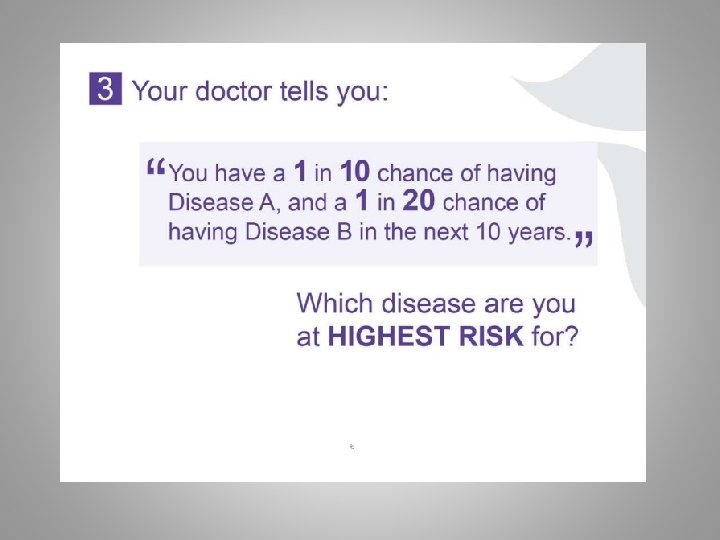
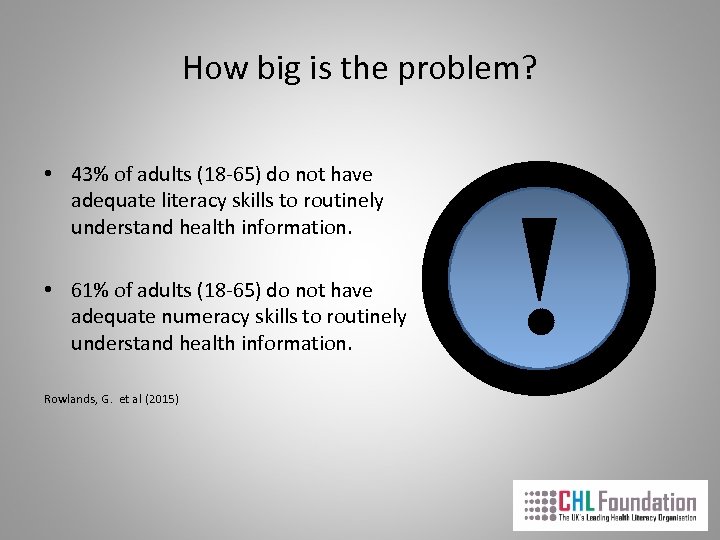 How big is the problem? • 43% of adults (18 -65) do not have adequate literacy skills to routinely understand health information. • 61% of adults (18 -65) do not have adequate numeracy skills to routinely understand health information. Rowlands, G. et al (2015)
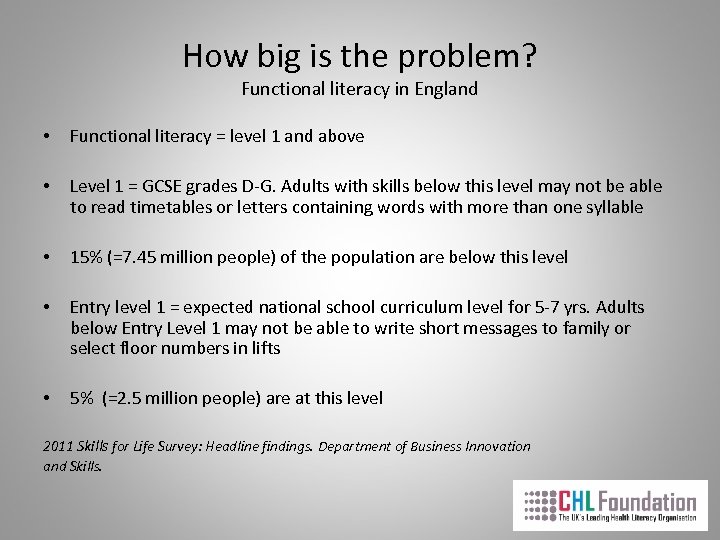 How big is the problem? Functional literacy in England • Functional literacy = level 1 and above • Level 1 = GCSE grades D-G. Adults with skills below this level may not be able to read timetables or letters containing words with more than one syllable • 15% (=7. 45 million people) of the population are below this level • Entry level 1 = expected national school curriculum level for 5 -7 yrs. Adults below Entry Level 1 may not be able to write short messages to family or select floor numbers in lifts • 5% (=2. 5 million people) are at this level 2011 Skills for Life Survey: Headline findings. Department of Business Innovation and Skills.
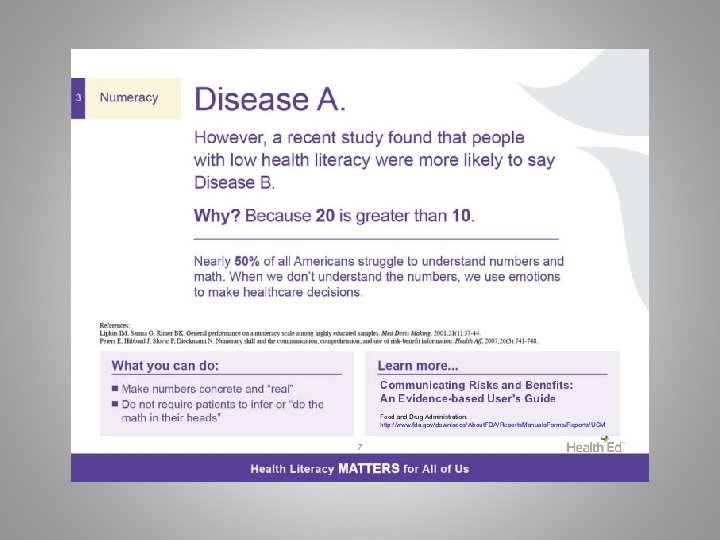
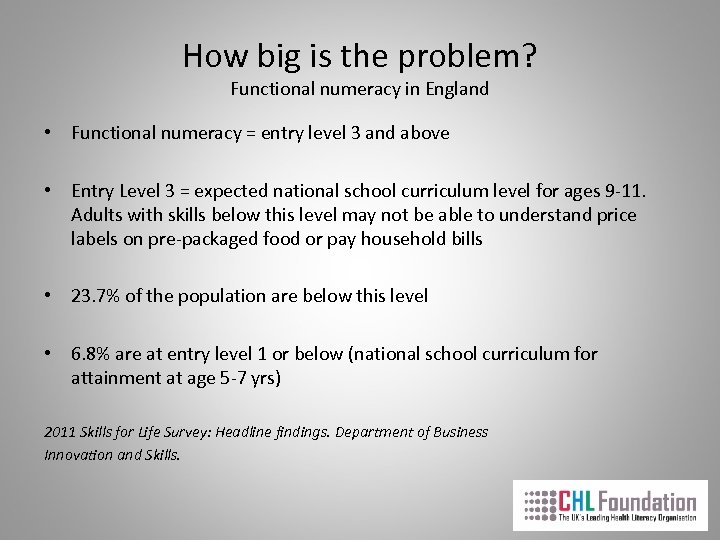 How big is the problem? Functional numeracy in England • Functional numeracy = entry level 3 and above • Entry Level 3 = expected national school curriculum level for ages 9 -11. Adults with skills below this level may not be able to understand price labels on pre-packaged food or pay household bills • 23. 7% of the population are below this level • 6. 8% are at entry level 1 or below (national school curriculum for attainment at age 5 -7 yrs) 2011 Skills for Life Survey: Headline findings. Department of Business Innovation and Skills.
 What does it feel like? A practical exercise Image reproduced with kind permission from wpclipart. com
 The evidence shows… • • • When comparing, at age 33, those who were disengaged at school and had no GCSE level equivalents with those who did, the odds of: smoking are 4. 7 times higher for women and 3. 5 times higher for men; drinking heavily at age 33 are 1. 5 times higher; taking exercise less than once a week 1. 5 times higher; having depression 2. 4 times higher for women and 2. 0 times higher for men; having back pain 1. 3 times higher in men; having migraines 1. 3 times higher for women. Report by the Centre for the Study of the Wider Benefits of Learning 2006
 Health Literacy matters because… Adults who have low language, literacy and numeracy skills, and their children and families, suffer the worst health outcomes in society.
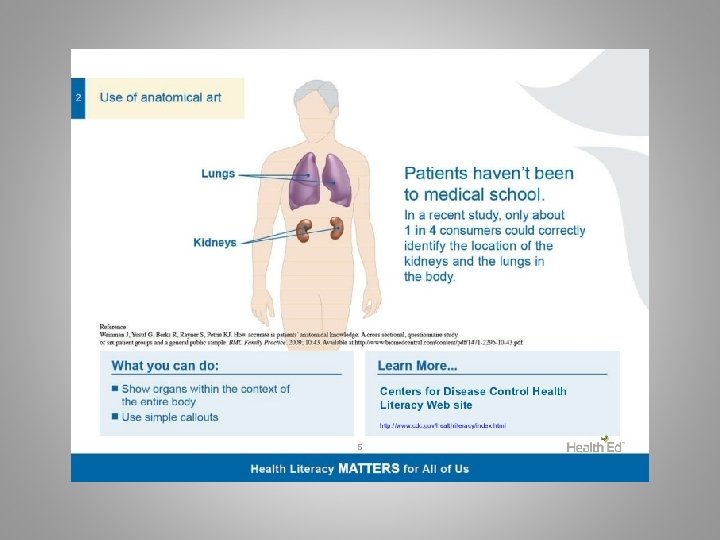
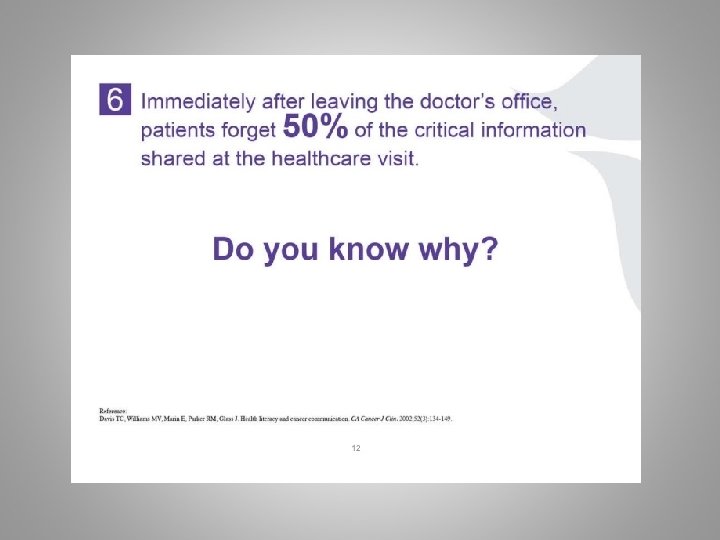
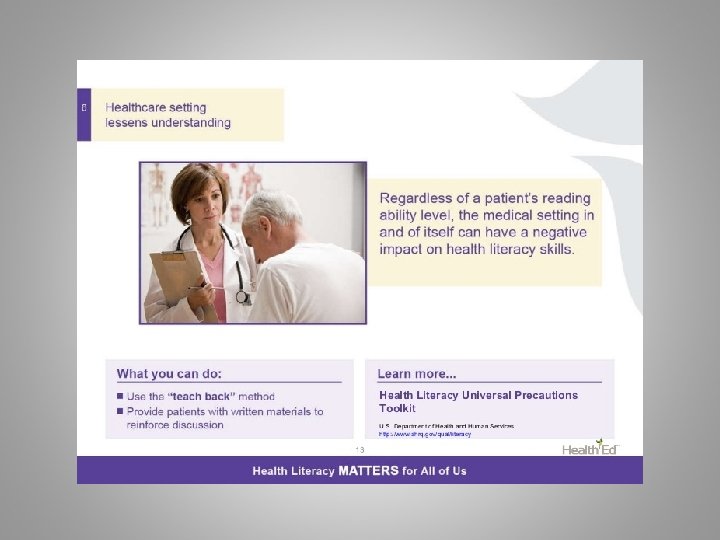
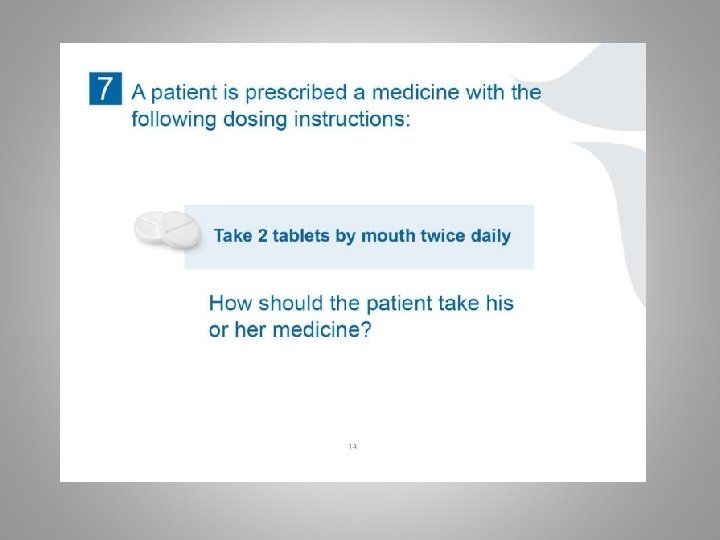
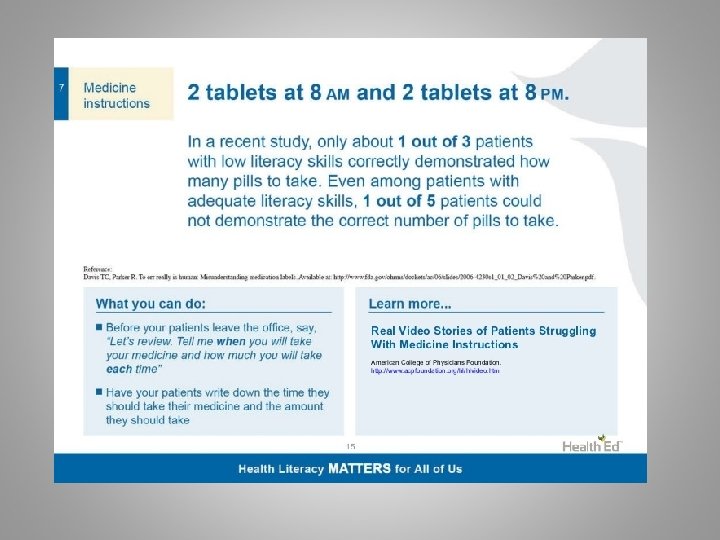
 Having limited Health Literacy means that… • People don’t turn up for appointments • People don’t follow medication instructions correctly • People are unable to interpret diet and nutrition messages and package labelling • People are unable to explain their symptoms in detail • People don’t understand how to use services appropriately
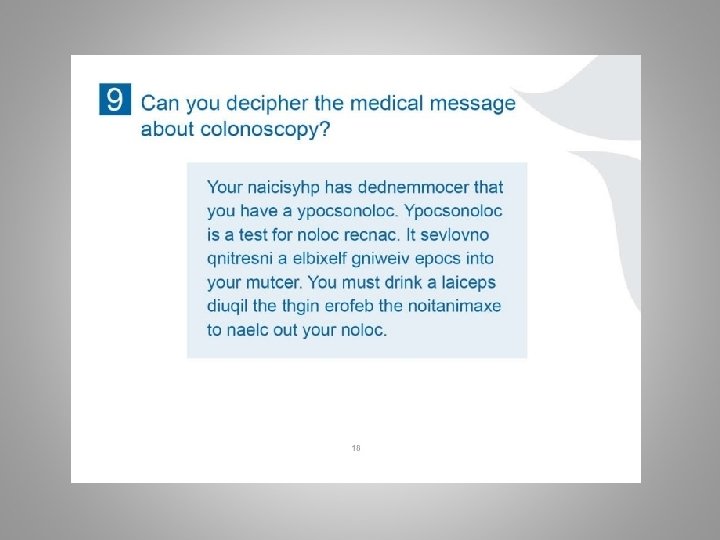
 Case Study Examples • • • Who has a prostate? Prostate cancer is transmissible; Checking up to the collarbone; One partner; The waist; Positive; Chemotherapy; 5 a day; Which department?
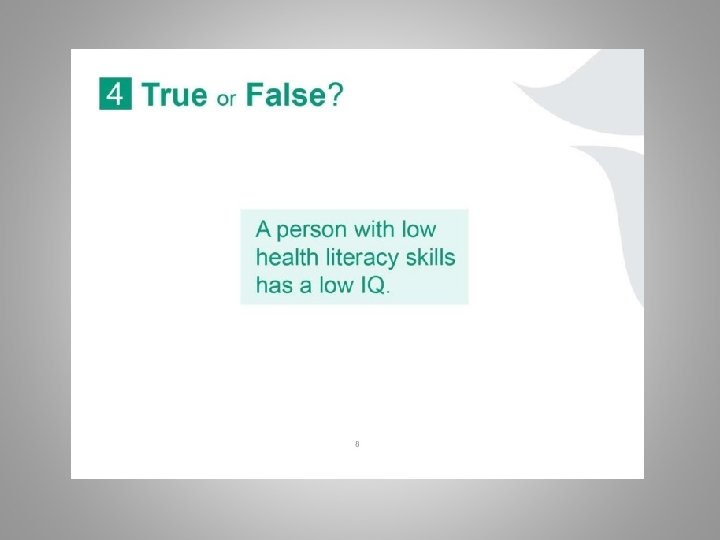
 Who are they? • “Heartsink”; • Patients who do not attend appointments (DNA); • The ones who don’t “comply”; • Regulars. BUT NOT STUPID • “Spiky Profiles”; • Complex Strategies. Image reproduced with kind permission from wpclipart. com
 Health Literacy cuts across key domains • Patient–centred care - E. g. informed consent, shared decision making • Public Health/Health Inequalities - E. g. healthy eating, physical activity messages • Treatment and Adherence - E. g. how to explain symptoms and risks, taking medication • Personal and Public Involvement (PPI) - E. g. responding to service reconfiguration Image reproduced with kind permission from wpclipart. com
 Cost of low Health Literacy to NHS According to K Eichler, S Wieser, & U Brugger; The costs of limited health literacy: a systematic review; International Journal of Public Health 2009; 54: 313 -324… “…at the health system level, the additional costs of limited Health Literacy range from 3 to 5% of the total health care cost per year. ” Based on this, the total cost of low health literacy in the UK in 2016/17 will be £ 3. 6 bn – £ 6. 0 bn Image reproduced with kind permission from wpclipart. com
 How has it impacted on your practice? Group Discussion 1 1. Think of examples of when you may have encountered or have had to take into account low health literacy issues within your role. Image reproduced with kind permission from wpclipart. com 2. What impact does low Health Literacy have on your area of responsibility?
 What can we do about it? Group Discussion 2 1. What do you need to do to make sure that people and communities with low health literacy are considered within your area of responsibility? 2. What is your role in that? 3. Who else could help? Image reproduced with kind permission from wpclipart. com
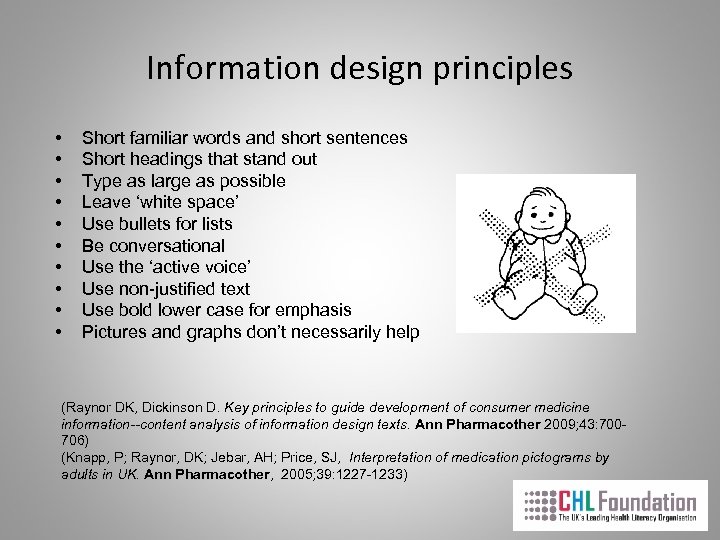 Information design principles • • • Short familiar words and short sentences Short headings that stand out Type as large as possible Leave ‘white space’ Use bullets for lists Be conversational Use the ‘active voice’ Use non-justified text Use bold lower case for emphasis Pictures and graphs don’t necessarily help (Raynor DK, Dickinson D. Key principles to guide development of consumer medicine information--content analysis of information design texts. Ann Pharmacother 2009; 43: 700706) (Knapp, P; Raynor, DK; Jebar, AH; Price, SJ, Interpretation of medication pictograms by adults in UK. Ann Pharmacother, 2005; 39: 1227 -1233)
 Simplifying information Activity 1 Image reproduced with kind permission from wpclipart. com
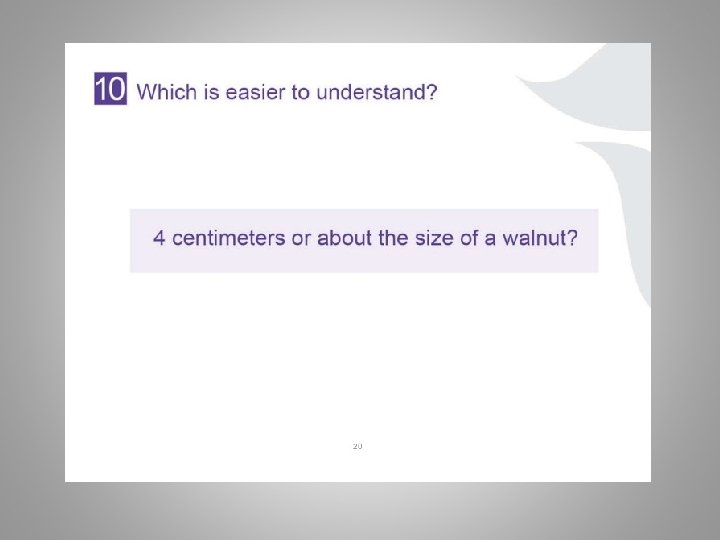
 Five tips for making it easy 1. Teach-back 2. Chunk and check 3. Use pictures Image reproduced with kind permission from wpclipart. com 4. Use simple language 5. Routinely ask people if they would like help
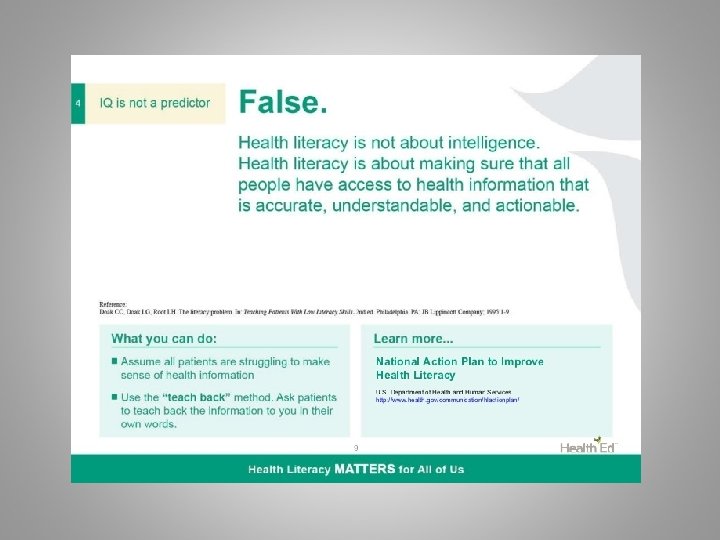
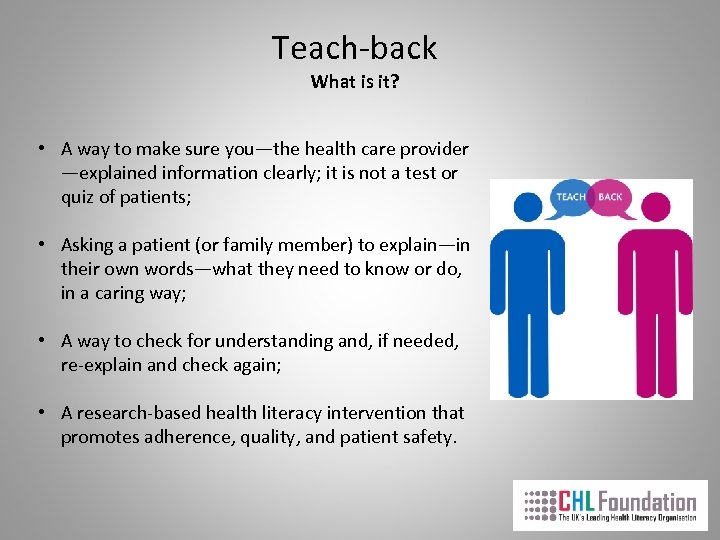 Teach-back What is it? • A way to make sure you—the health care provider —explained information clearly; it is not a test or quiz of patients; • Asking a patient (or family member) to explain—in their own words—what they need to know or do, in a caring way; • A way to check for understanding and, if needed, re-explain and check again; • A research-based health literacy intervention that promotes adherence, quality, and patient safety.
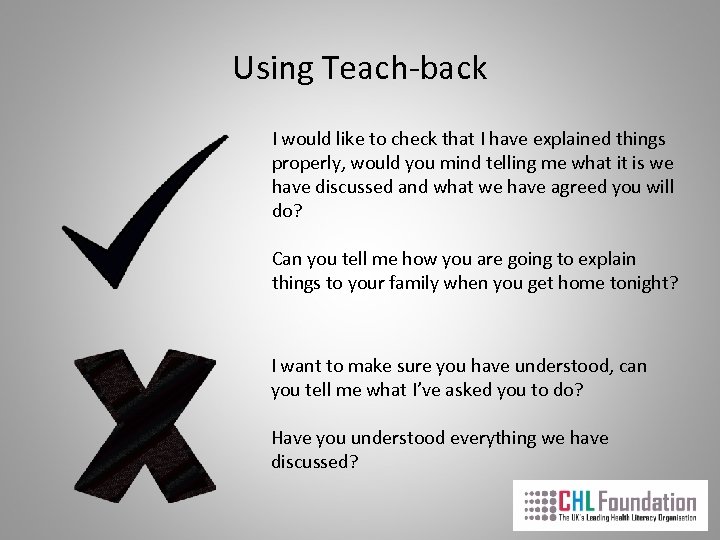 Using Teach-back I would like to check that I have explained things properly, would you mind telling me what it is we have discussed and what we have agreed you will do? Can you tell me how you are going to explain things to your family when you get home tonight? I want to make sure you have understood, can you tell me what I’ve asked you to do? Have you understood everything we have discussed?
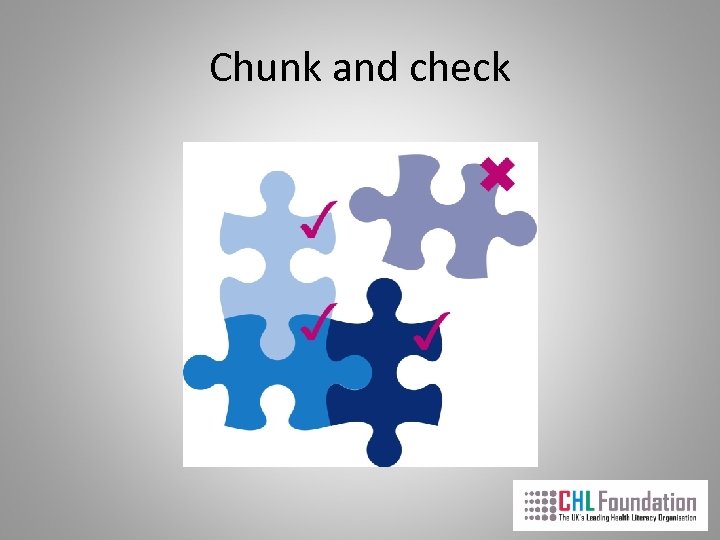 Chunk and check
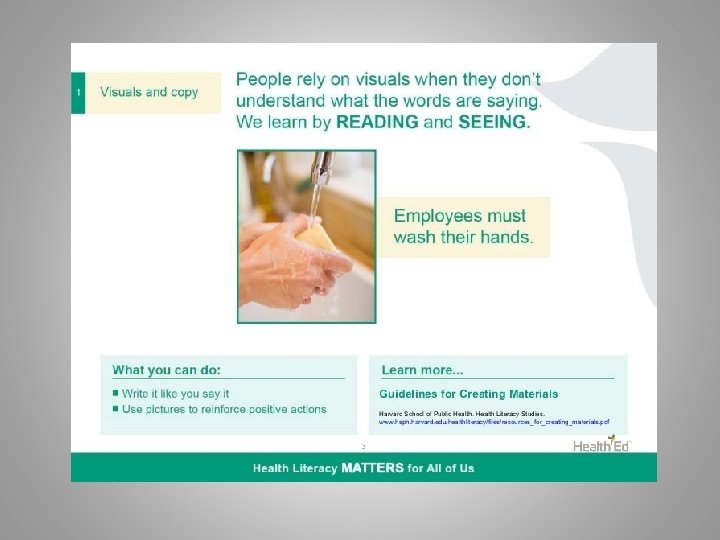
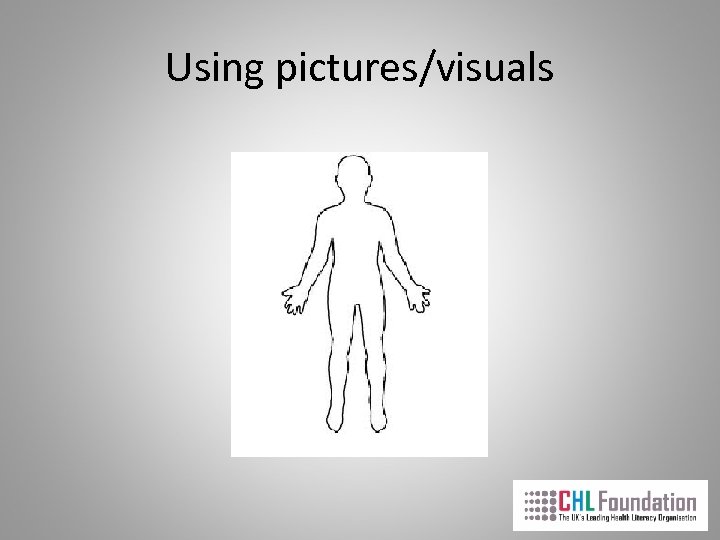 Using pictures/visuals
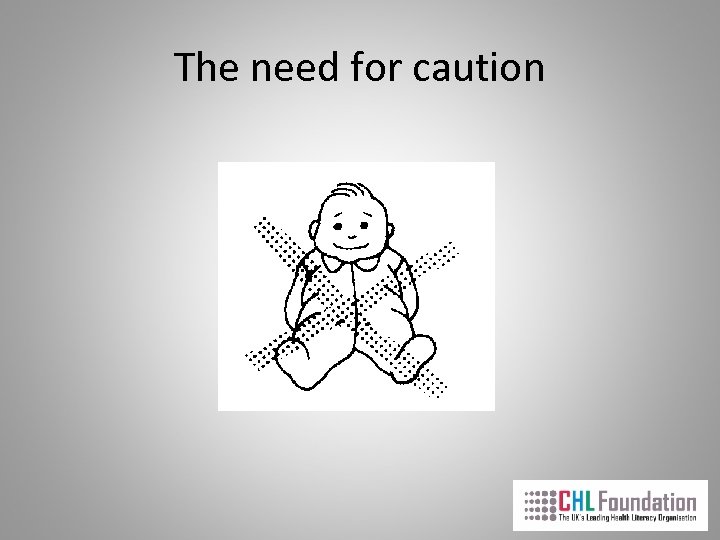 The need for caution
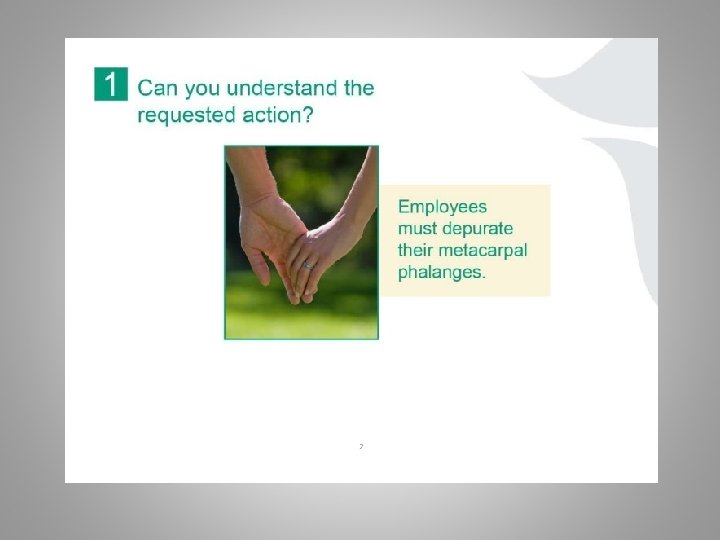
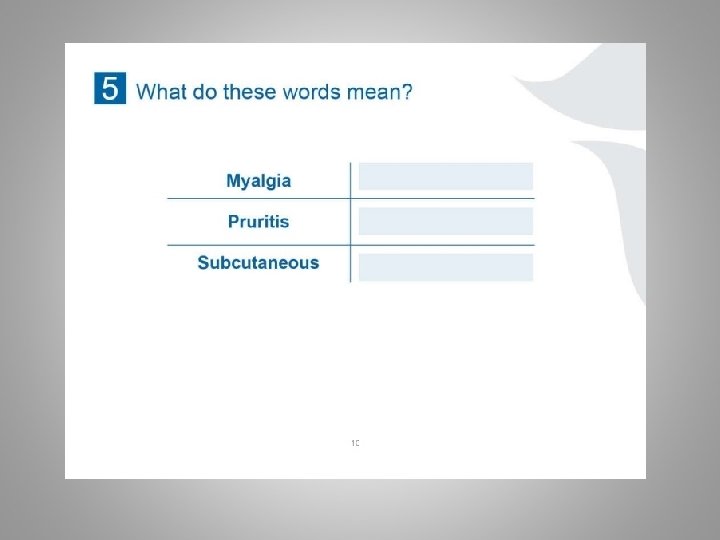
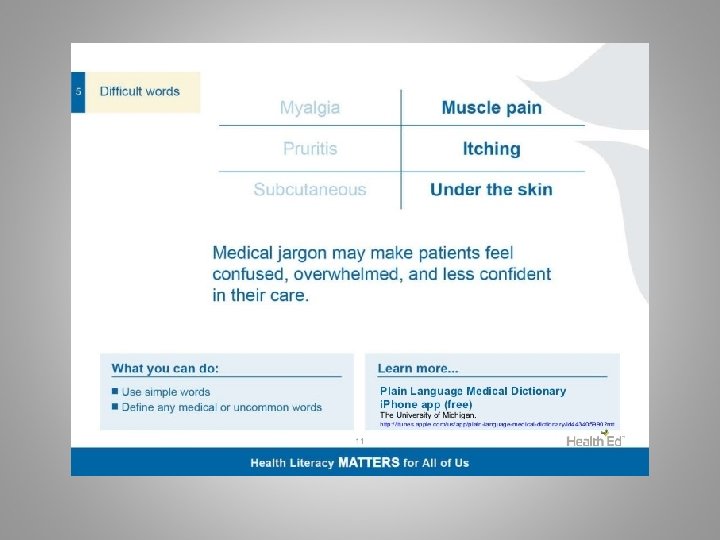
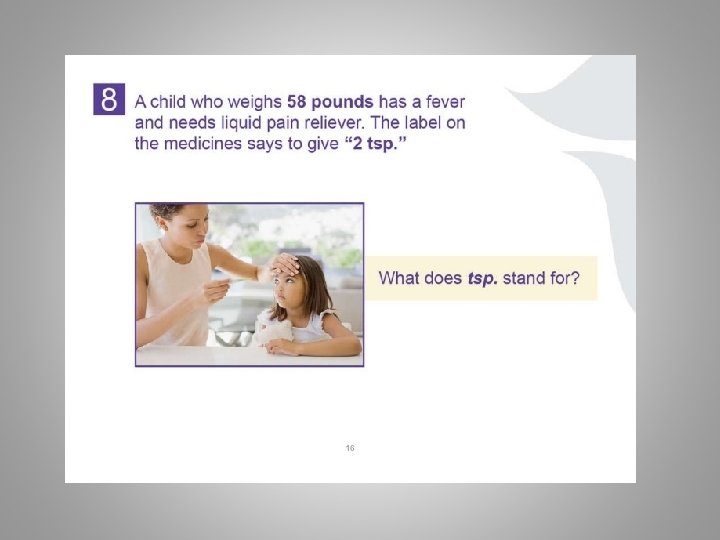
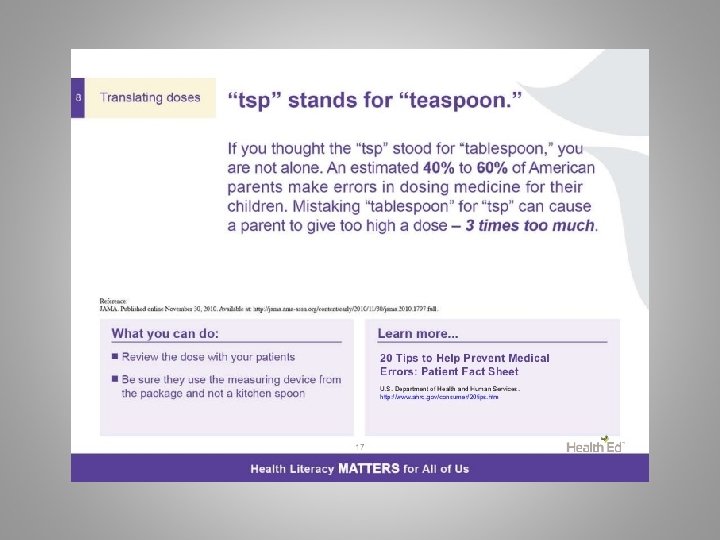
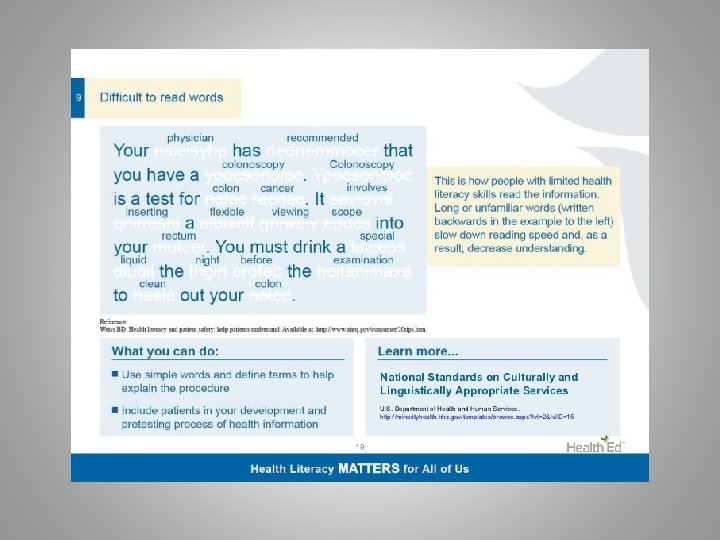
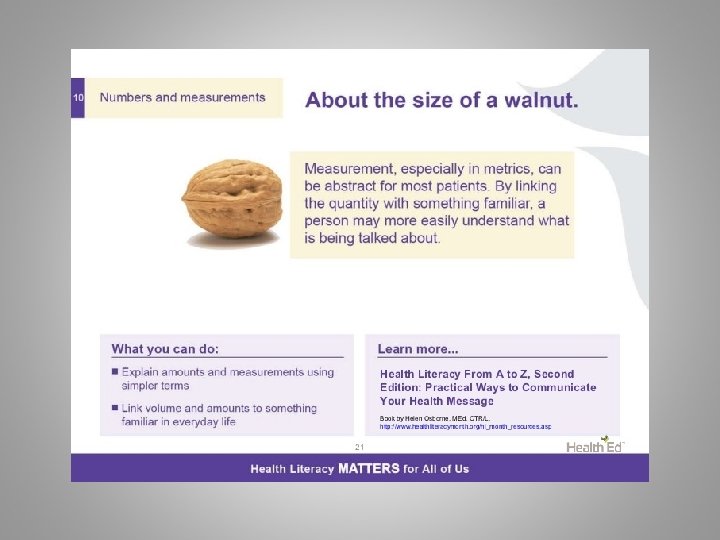
 Use simple language There a wide range of terms we use everyday that could be confusing for others e. g… • Radiology – X-ray • Smoking Cessation – stop smoking • Diet – what you eat • Phlebotomist – person who takes blood!
 Routinely offer help
 Using Teach-back Activity 4 Image reproduced with kind permission from wpclipart. com
 Resources Measures of Health Literacy levels • TOFHLA – Test of Functional Health Literacy in Adults; • REALM – Rapid Estimate of Adult Literacy in Medicine; • NVS - Newest Vital Sign;
 Resources Readability and producing information • SMOG – Simple Measure of Gobbledygook; • Drivel Defence
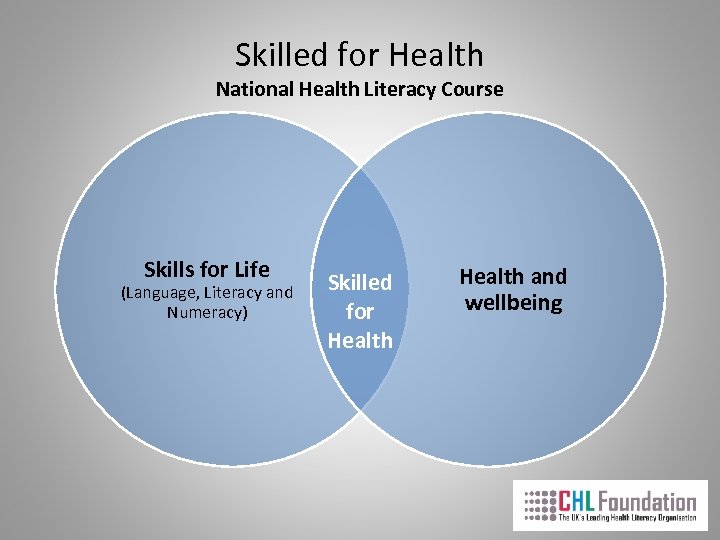 Skilled for Health National Health Literacy Course Skills for Life (Language, Literacy and Numeracy) Skilled for Health and wellbeing
 Useful websites • www. healthliteracy. org. uk • www. chlfoundation. org. uk Image reproduced with kind permission from wpclipart. com • www. healthliteracyplace. org. uk (Scotland)
 What next? What are you going to do after today – one thing you will change? Image reproduced with kind permission from wpclipart. com
 For more information… Community Health & Learning Foundation www. chlfoundation. org. uk Helen Carter – Programme Manager 07821 602468 01509 768081 helen. carter@chlfoundation. org. uk