


 Скачать презентацию Health Economics Or What to do where
0d76dde744a2dfdf7a9237d77e8ea5e9.ppt
- Количество слайдов: 30
 Health Economics Or : What to do where there is insufficient money to satisfy our health demands Davide Casalvolone Rhodes University September 2011 1

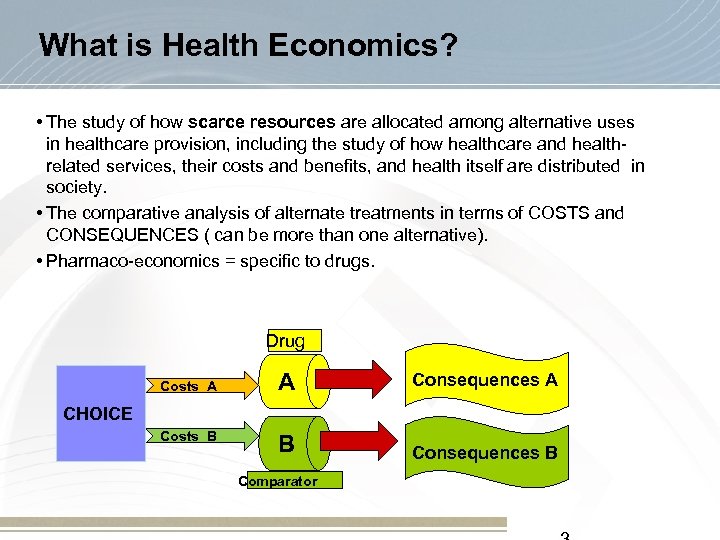 What is Health Economics? • The study of how scarce resources are allocated among alternative uses in healthcare provision, including the study of how healthcare and healthrelated services, their costs and benefits, and health itself are distributed in society. • The comparative analysis of alternate treatments in terms of COSTS and CONSEQUENCES ( can be more than one alternative). • Pharmaco-economics = specific to drugs. Drug Costs A A Consequences A B Consequences B CHOICE Costs B Comparator
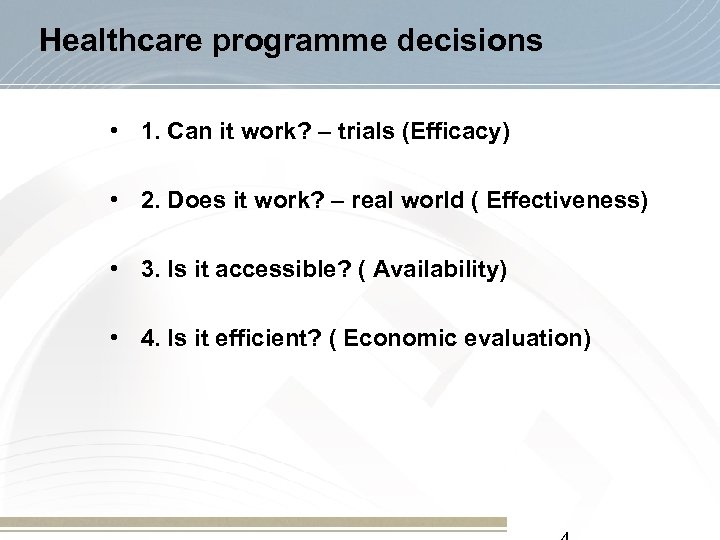 Healthcare programme decisions • 1. Can it work? – trials (Efficacy) • 2. Does it work? – real world ( Effectiveness) • 3. Is it accessible? ( Availability) • 4. Is it efficient? ( Economic evaluation)
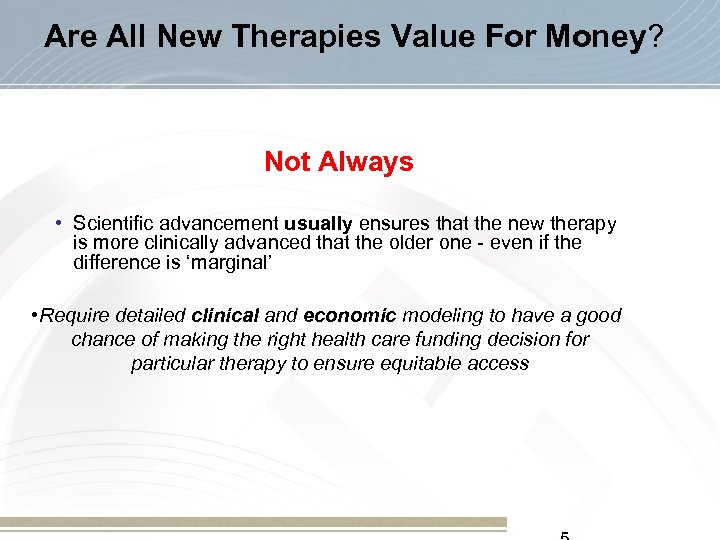 Are All New Therapies Value For Money? Not Always • Scientific advancement usually ensures that the new therapy is more clinically advanced that the older one - even if the difference is ‘marginal’ • Require detailed clinical and economic modeling to have a good chance of making the right health care funding decision for particular therapy to ensure equitable access
 Cost Effectiveness in Grocery Shopping • I have R 50 in my wallet. • I have already bought eggs, milk, bread = R 30 • I still need cornflakes and have a choice between brand A ( R 2 /100 g) or brand B (R 3 /100 g) • I also want change for the newspaper! • Which cornflakes should I buy?
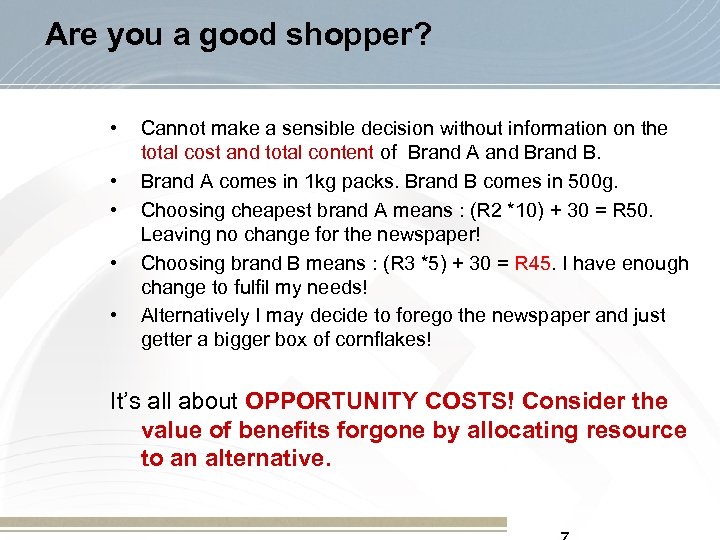 Are you a good shopper? • • • Cannot make a sensible decision without information on the total cost and total content of Brand A and Brand B. Brand A comes in 1 kg packs. Brand B comes in 500 g. Choosing cheapest brand A means : (R 2 *10) + 30 = R 50. Leaving no change for the newspaper! Choosing brand B means : (R 3 *5) + 30 = R 45. I have enough change to fulfil my needs! Alternatively I may decide to forego the newspaper and just getter a bigger box of cornflakes! It’s all about OPPORTUNITY COSTS! Consider the value of benefits forgone by allocating resource to an alternative.
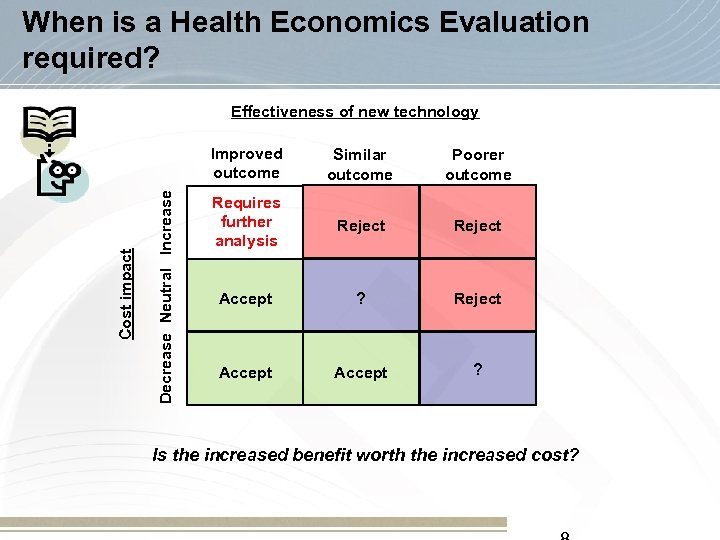 When is a Health Economics Evaluation required? Effectiveness of new technology Decrease Neutral Increase Cost impact Improved outcome Similar outcome Poorer outcome Requires further analysis Reject Accept ? Is the increased benefit worth the increased cost?
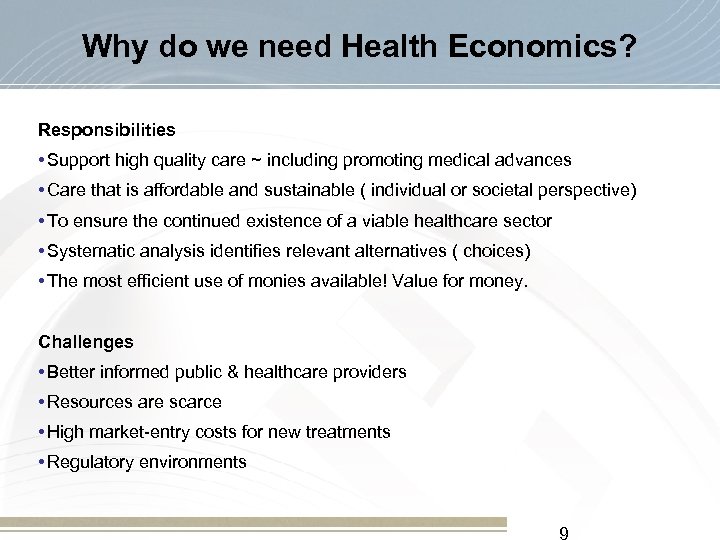 Why do we need Health Economics? Responsibilities • Support high quality care ~ including promoting medical advances • Care that is affordable and sustainable ( individual or societal perspective) • To ensure the continued existence of a viable healthcare sector • Systematic analysis identifies relevant alternatives ( choices) • The most efficient use of monies available! Value for money. Challenges • Better informed public & healthcare providers • Resources are scarce • High market-entry costs for new treatments • Regulatory environments
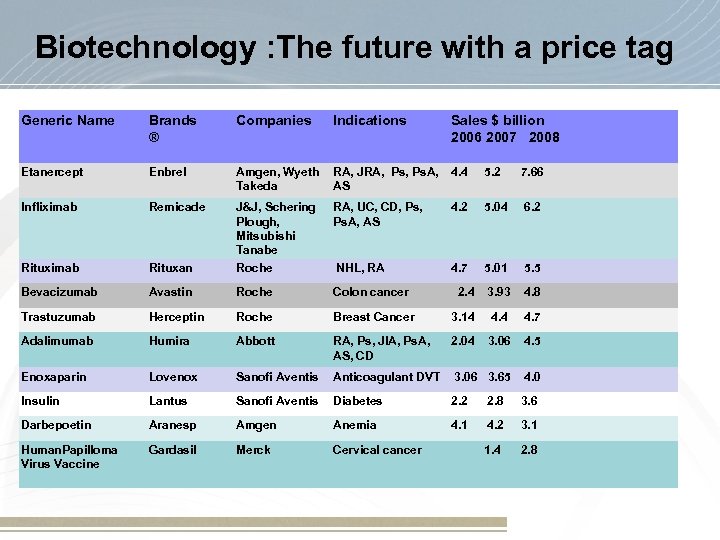 Biotechnology : The future with a price tag Generic Name Brands ® Companies Indications Sales $ billion 2006 2007 2008 Etanercept Enbrel Amgen, Wyeth RA, JRA, Ps, Ps. A, 4. 4 5. 2 7. 66 Takeda AS Infliximab Remicade RA, UC, CD, Ps, Ps. A, AS 4. 2 5. 04 6. 2 Rituximab Rituxan J&J, Schering Plough, Mitsubishi Tanabe Roche NHL, RA 4. 7 5. 01 5. 5 Bevacizumab Avastin Roche Colon cancer 2. 4 3. 93 4. 8 Trastuzumab Herceptin Roche Breast Cancer 3. 14 4. 7 Adalimumab Humira Abbott RA, Ps, JIA, Ps. A, AS, CD 2. 04 3. 06 4. 5 Enoxaparin Lovenox Sanofi Aventis Anticoagulant DVT 3. 06 3. 65 4. 0 Insulin Lantus Sanofi Aventis Diabetes 2. 2 2. 8 3. 6 Darbepoetin Aranesp Amgen Anemia 4. 1 4. 2 3. 1 Human. Papilloma Virus Vaccine Gardasil Merck Cervical cancer 1. 4 2. 8
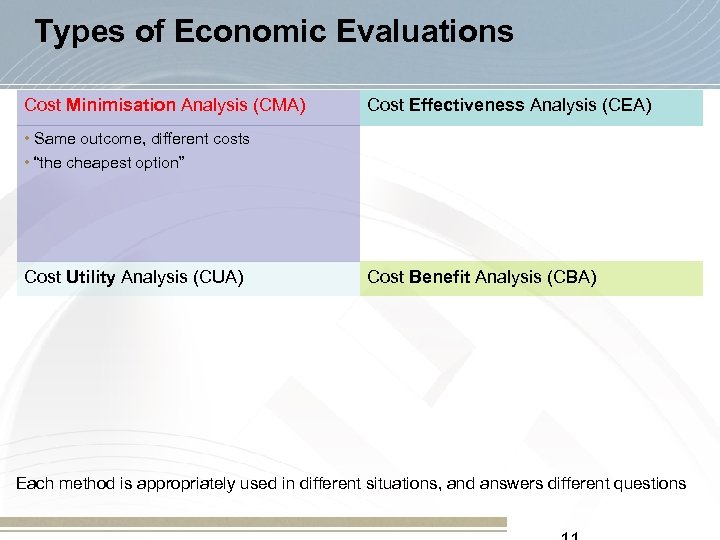 Types of Economic Evaluations Cost Minimisation Analysis (CMA) Cost Effectiveness Analysis (CEA) • Same outcome, different costs • “the cheapest option” Cost Utility Analysis (CUA) Cost Benefit Analysis (CBA) Each method is appropriately used in different situations, and answers different questions
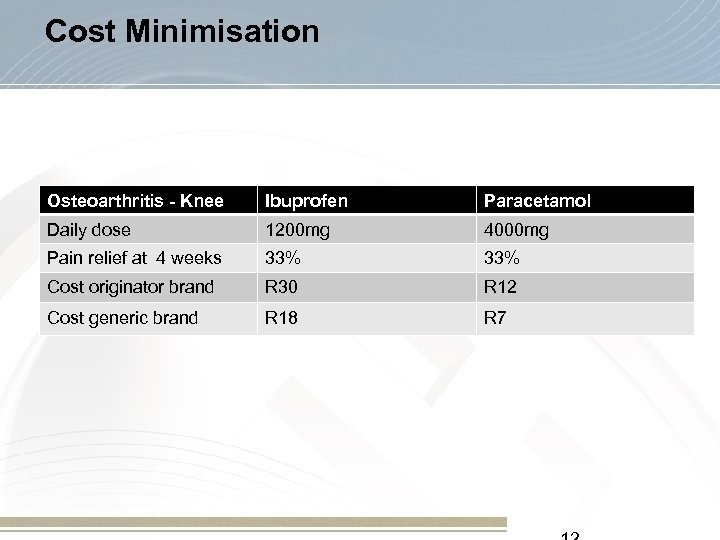 Cost Minimisation Osteoarthritis - Knee Ibuprofen Paracetamol Daily dose 1200 mg 4000 mg Pain relief at 4 weeks 33% Cost originator brand R 30 R 12 Cost generic brand R 18 R 7
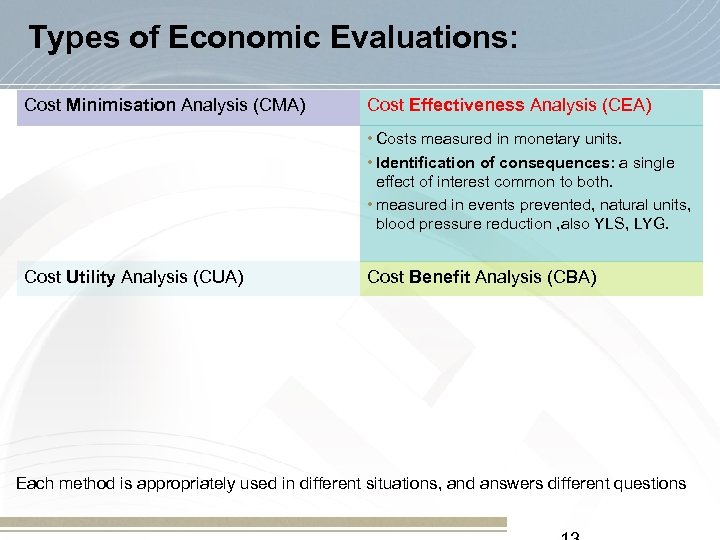 Types of Economic Evaluations: Cost Minimisation Analysis (CMA) Cost Effectiveness Analysis (CEA) • Costs measured in monetary units. • Identification of consequences: a single effect of interest common to both. • measured in events prevented, natural units, blood pressure reduction , also YLS, LYG. Cost Utility Analysis (CUA) Cost Benefit Analysis (CBA) Each method is appropriately used in different situations, and answers different questions
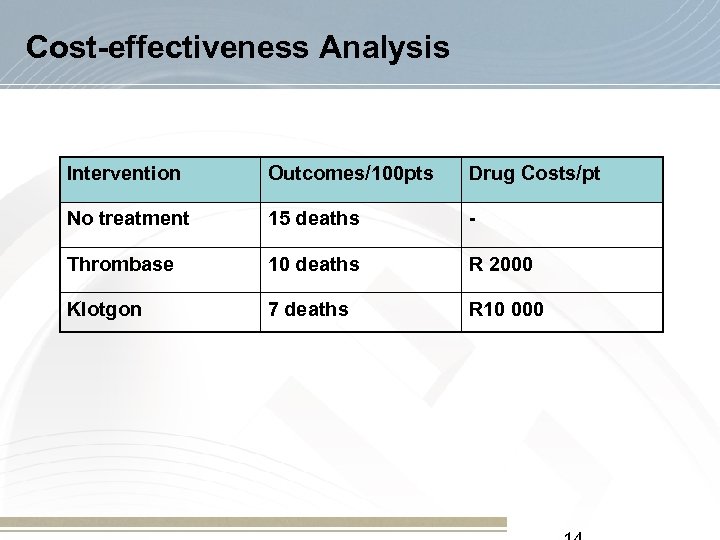 Cost-effectiveness Analysis Intervention Outcomes/100 pts Drug Costs/pt No treatment 15 deaths - Thrombase 10 deaths R 2000 Klotgon 7 deaths R 10 000
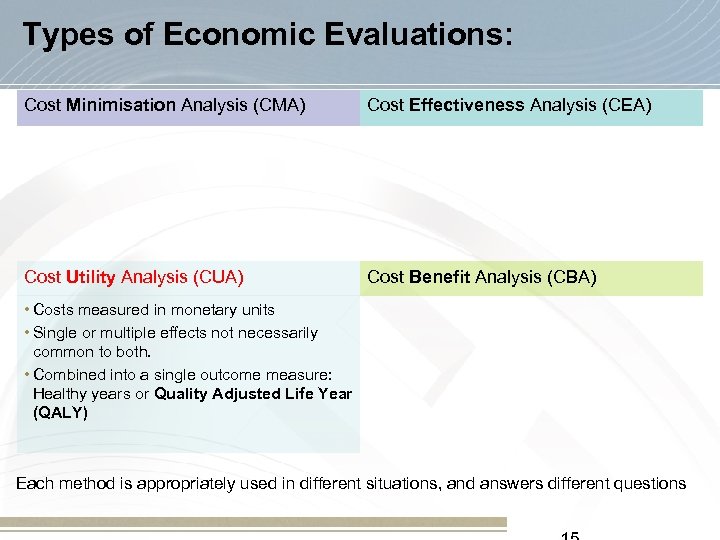 Types of Economic Evaluations: Cost Minimisation Analysis (CMA) Cost Effectiveness Analysis (CEA) Cost Utility Analysis (CUA) Cost Benefit Analysis (CBA) • Costs measured in monetary units • Single or multiple effects not necessarily common to both. • Combined into a single outcome measure: Healthy years or Quality Adjusted Life Year (QALY) Each method is appropriately used in different situations, and answers different questions
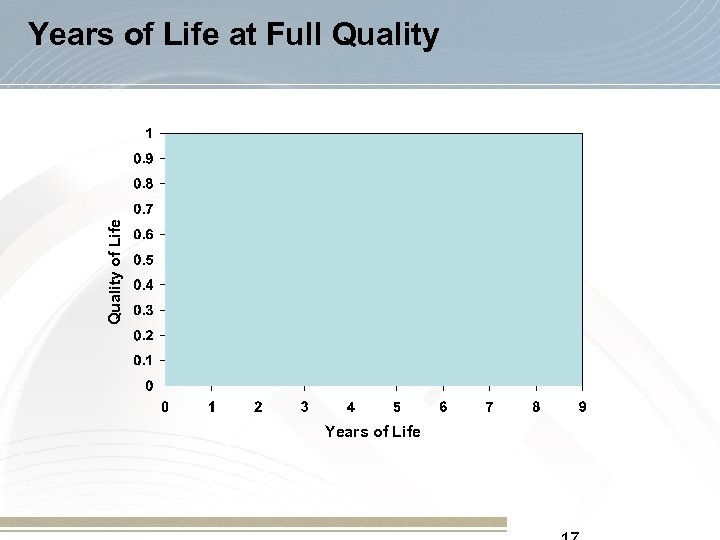
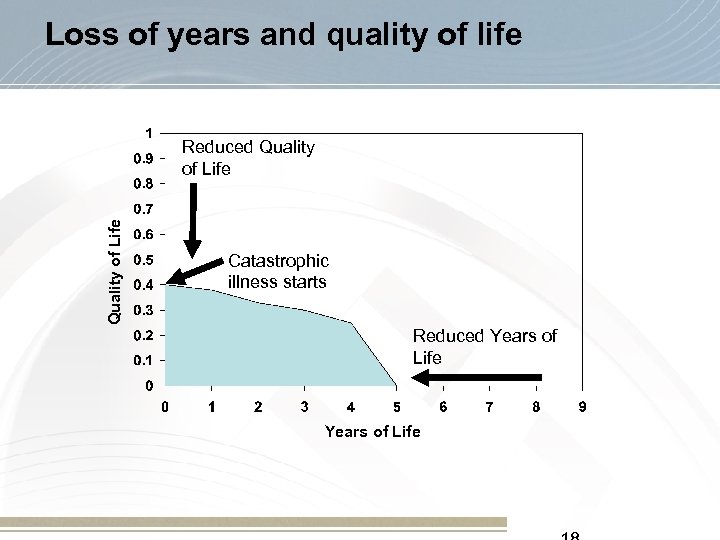
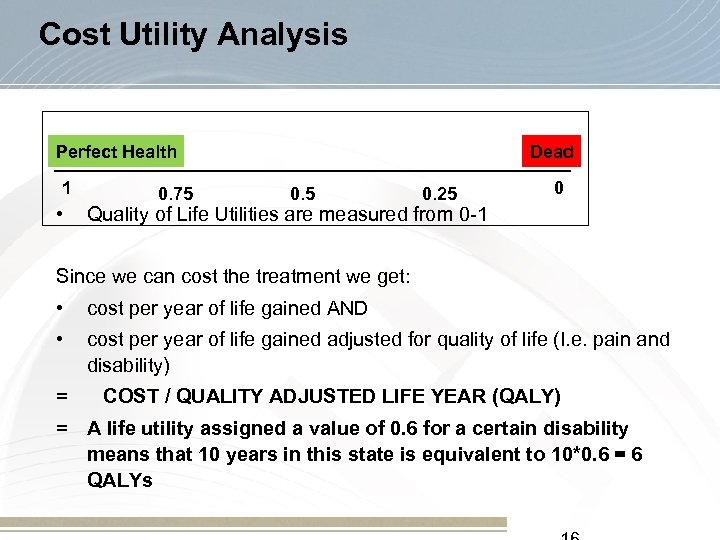 Cost Utility Analysis Perfect Health 1 • 0. 75 Dead 0. 5 0. 25 0 Quality of Life Utilities are measured from 0 -1 Since we can cost the treatment we get: • cost per year of life gained AND • cost per year of life gained adjusted for quality of life (I. e. pain and disability) = COST / QUALITY ADJUSTED LIFE YEAR (QALY) = A life utility assigned a value of 0. 6 for a certain disability means that 10 years in this state is equivalent to 10*0. 6 = 6 QALYs
 Quality of Life Years of Life at Full Quality Years of Life
 Loss of years and quality of life Quality of Life Reduced Quality of Life Catastrophic illness starts Reduced Years of Life
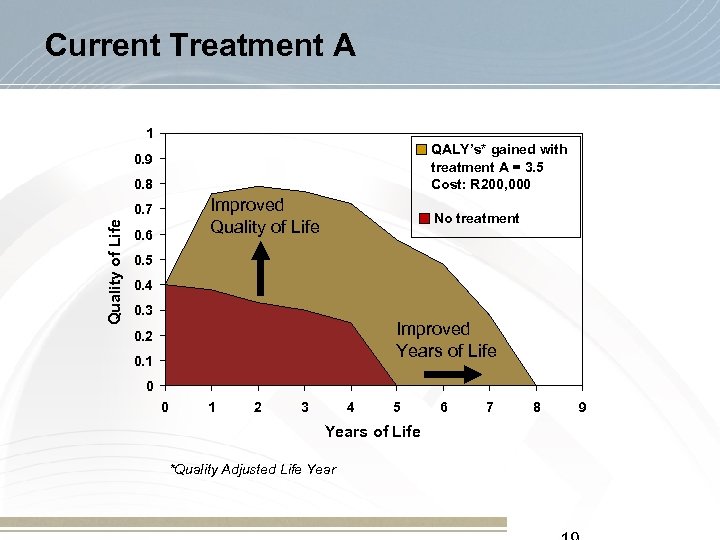 Current Treatment A 1 QALY’s* gained with treatment A = 3. 5 Cost: R 200, 000 0. 9 0. 8 Improved Quality of Life 0. 7 0. 6 No treatment 0. 5 0. 4 0. 3 Improved Years of Life 0. 2 0. 1 0 0 1 2 3 4 5 Years of Life *Quality Adjusted Life Year 6 7 8 9
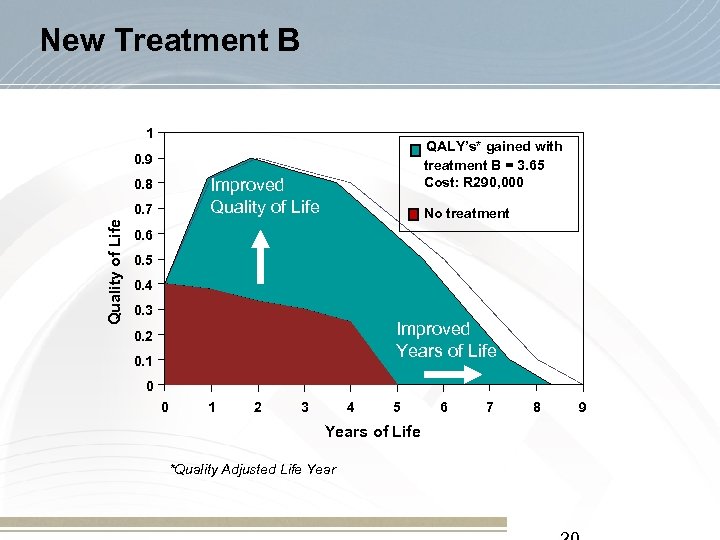 New Treatment B 1 QALY’s* gained with treatment B = 3. 65 Cost: R 290, 000 0. 9 Improved Quality of Life 0. 8 Quality of Life 0. 7 No treatment 0. 6 0. 5 0. 4 0. 3 Improved Years of Life 0. 2 0. 1 0 0 1 2 3 4 5 Years of Life *Quality Adjusted Life Year 6 7 8 9
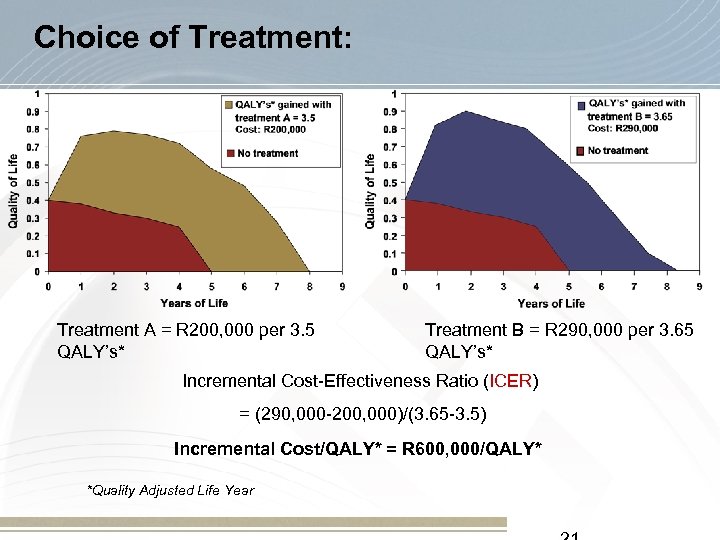 Choice of Treatment: Treatment A = R 200, 000 per 3. 5 QALY’s* Treatment B = R 290, 000 per 3. 65 QALY’s* Incremental Cost-Effectiveness Ratio (ICER) = (290, 000 -200, 000)/(3. 65 -3. 5) Incremental Cost/QALY* = R 600, 000/QALY* *Quality Adjusted Life Year
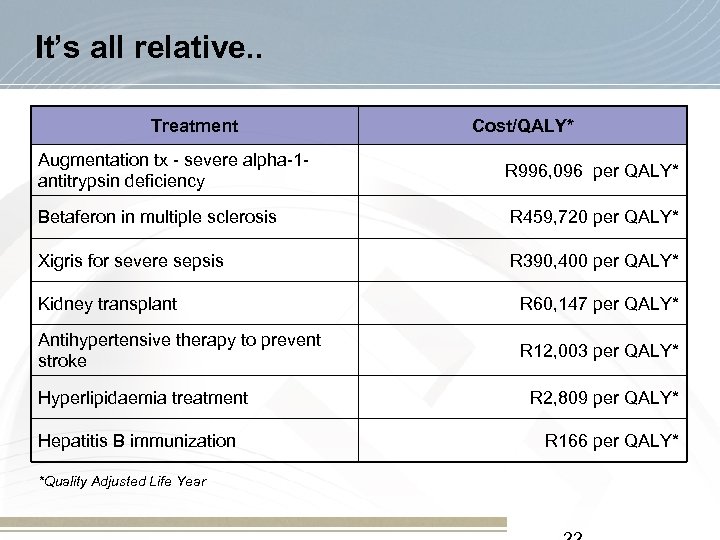 It’s all relative. . Treatment Cost/QALY* Augmentation tx - severe alpha-1 antitrypsin deficiency R 996, 096 per QALY* Betaferon in multiple sclerosis R 459, 720 per QALY* Xigris for severe sepsis R 390, 400 per QALY* Kidney transplant R 60, 147 per QALY* Antihypertensive therapy to prevent stroke R 12, 003 per QALY* Hyperlipidaemia treatment Hepatitis B immunization *Quality Adjusted Life Year R 2, 809 per QALY* R 166 per QALY*
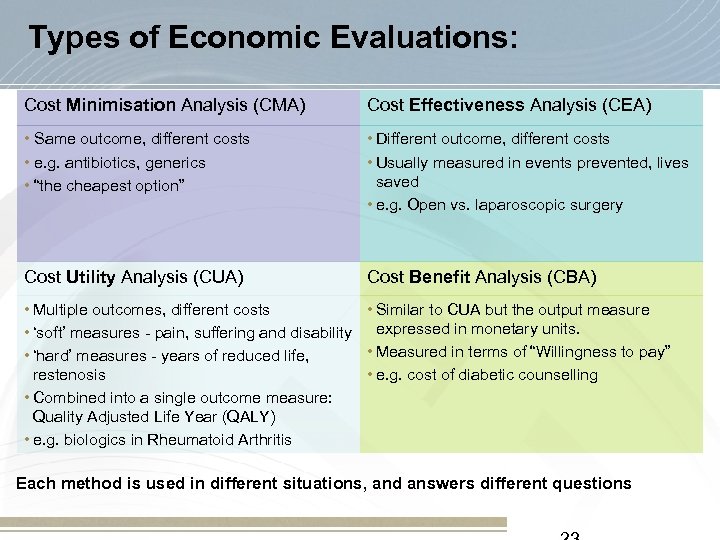 Types of Economic Evaluations: Cost Minimisation Analysis (CMA) Cost Effectiveness Analysis (CEA) • Same outcome, different costs • e. g. antibiotics, generics • “the cheapest option” • Different outcome, different costs • Usually measured in events prevented, lives saved • e. g. Open vs. laparoscopic surgery Cost Utility Analysis (CUA) Cost Benefit Analysis (CBA) • Multiple outcomes, different costs • Similar to CUA but the output measure • ‘soft’ measures - pain, suffering and disability expressed in monetary units. • Measured in terms of “Willingness to pay” • ‘hard’ measures - years of reduced life, restenosis • e. g. cost of diabetic counselling • Combined into a single outcome measure: Quality Adjusted Life Year (QALY) • e. g. biologics in Rheumatoid Arthritis Each method is used in different situations, and answers different questions
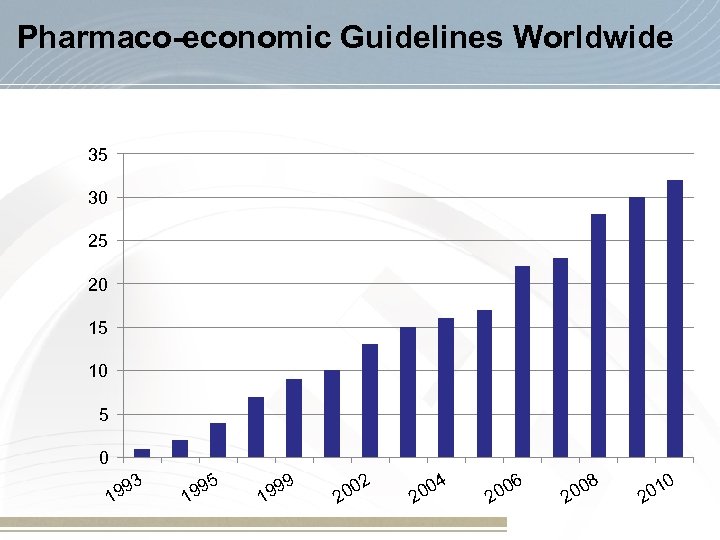 Pharmaco-economic Guidelines Worldwide 35 30 25 20 15 10 5 0 93 19 5 9 19 99 19 02 20 04 20 06 20 08 20 10 20
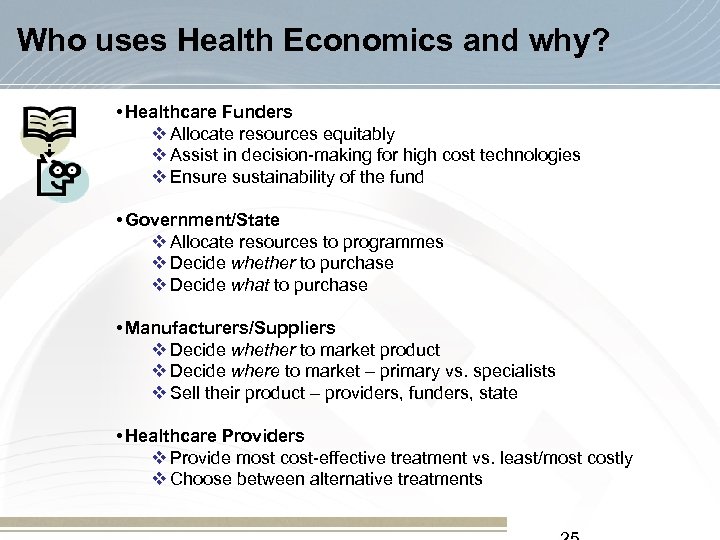 Who uses Health Economics and why? • Healthcare Funders v Allocate resources equitably v Assist in decision-making for high cost technologies v Ensure sustainability of the fund • Government/State v Allocate resources to programmes v Decide whether to purchase v Decide what to purchase • Manufacturers/Suppliers v Decide whether to market product v Decide where to market – primary vs. specialists v Sell their product – providers, funders, state • Healthcare Providers v Provide most cost-effective treatment vs. least/most costly v Choose between alternative treatments
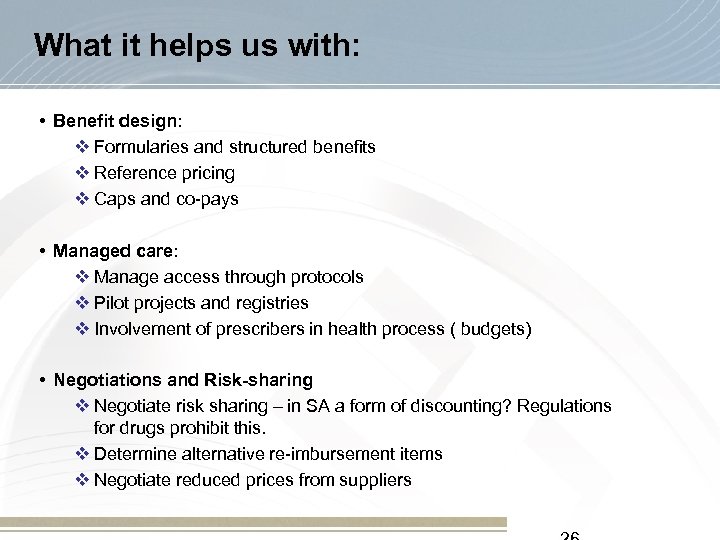 What it helps us with: • Benefit design: v Formularies and structured benefits v Reference pricing v Caps and co-pays • Managed care: v Manage access through protocols v Pilot projects and registries v Involvement of prescribers in health process ( budgets) • Negotiations and Risk-sharing v Negotiate risk sharing – in SA a form of discounting? Regulations for drugs prohibit this. v Determine alternative re-imbursement items v Negotiate reduced prices from suppliers
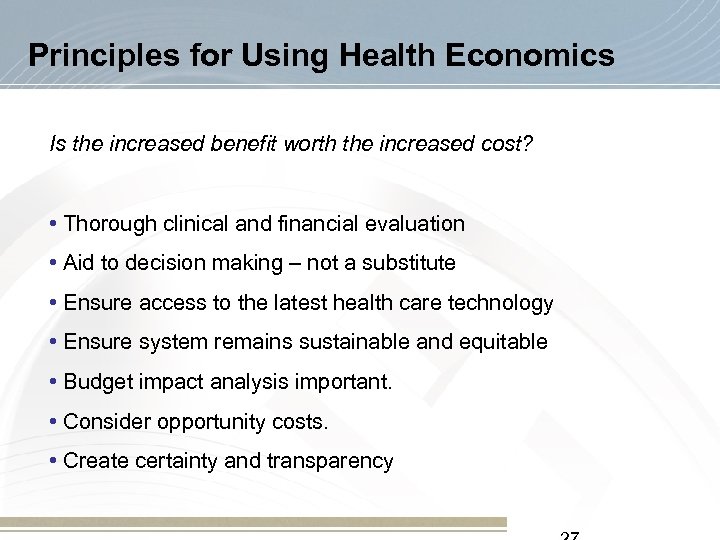 Principles for Using Health Economics Is the increased benefit worth the increased cost? • Thorough clinical and financial evaluation • Aid to decision making – not a substitute • Ensure access to the latest health care technology • Ensure system remains sustainable and equitable • Budget impact analysis important. • Consider opportunity costs. • Create certainty and transparency
 Common Problems • • Use of clinically insignificant outcomes Surrogate outcomes Therapeutic equivalent dosages Duration of trials too short Don’t bother with a pharmacoeconomic evaluation if the clinical evidence is poor!
 Food for thought • ICER thresholds –Are they useful? • Often implies a need for more resources – raising questions of broader resource allocation. Where is the money best spent? Country specific problems, unmet needs, socio-economic structures, political. • Efficiency and implications for opportunity cost. • Consider the sacrifice when substituting a more cost effective treatment for a less cost effective one ( remember incremental cost!)
 Questions?