 Скачать презентацию Hazards and Effects on Respiratory Health of Backyard
2ff5fd56e7208c9ab5c69619c6e832a6.ppt
- Количество слайдов: 24



Hazards and Effects on Respiratory Health of Backyard Burning Theodore W. Marcy, MD MPH Pulmonary Disease and Critical Care Medicine University of Vermont College of Medicine American Lung Association of Vermont
Outline of Discussion • Lung function, anatomy and inhaled toxins • Characteristics of the emissions from backyard burning of trash – Contents – Quantity compared to other emissions • Health Hazards – In normals – In vulnerable populations
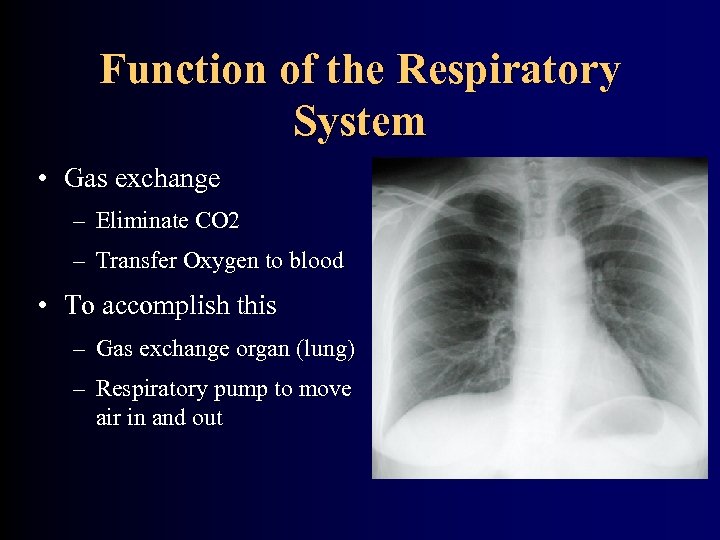
Function of the Respiratory System • Gas exchange – Eliminate CO 2 – Transfer Oxygen to blood • To accomplish this – Gas exchange organ (lung) – Respiratory pump to move air in and out
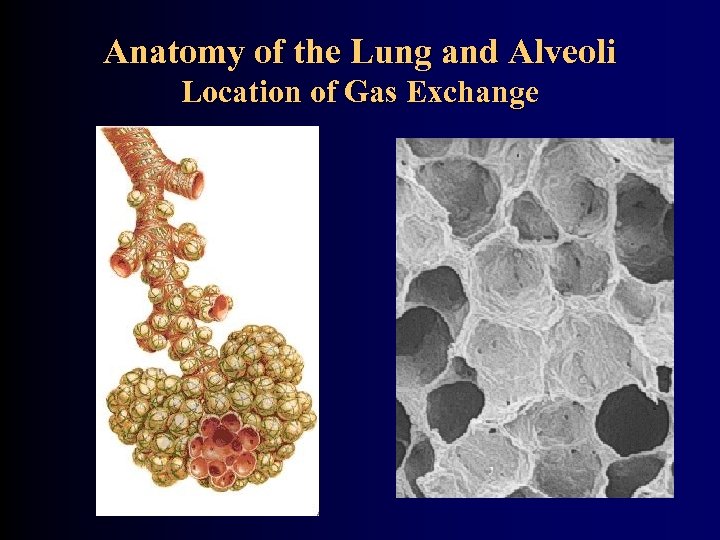
Anatomy of the Lung and Alveoli Location of Gas Exchange
Interaction of Lung with Environment • Volume of air we breath per day = 10, 000 Liters • Surface area of lung = Squash court • Lung defense – Filtering by nose and upper airway – Impact of particles at branching airways – Particles removed by mucociliary escalator and swallowed or coughed out – Other foreign particles cleared by resident cells of the defense system (macrophages)
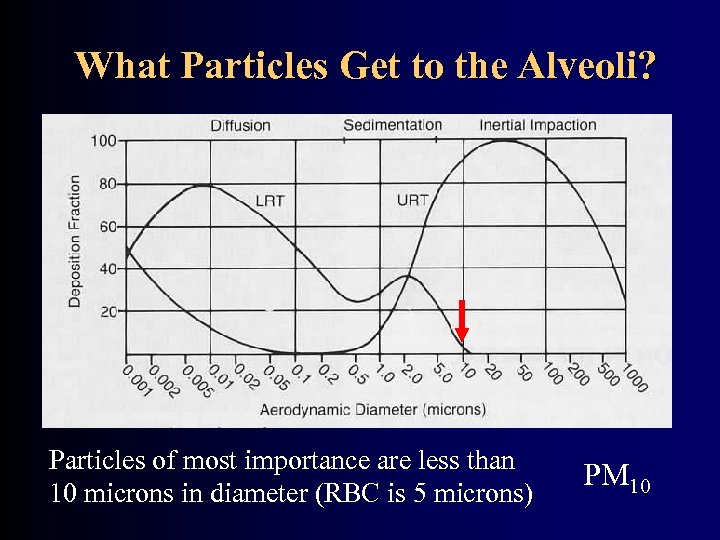
What Particles Get to the Alveoli? Particles of most importance are less than 10 microns in diameter (RBC is 5 microns) PM 10
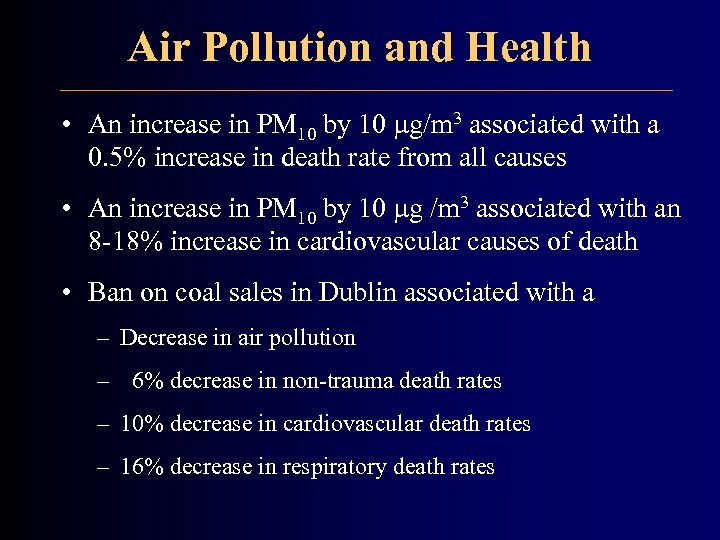
Air Pollution and Health • An increase in PM 10 by 10 g/m 3 associated with a 0. 5% increase in death rate from all causes • An increase in PM 10 by 10 g /m 3 associated with an 8 -18% increase in cardiovascular causes of death • Ban on coal sales in Dublin associated with a – Decrease in air pollution – 6% decrease in non-trauma death rates – 10% decrease in cardiovascular death rates – 16% decrease in respiratory death rates
Wood Burning • Campfires • Woodstoves for home heating • Incineration of cleared brush and trees
Wood Burning 20 lbs of wood puts 1 lb of pollution in the air • 100 different chemicals – Carbon monoxide – Nitrogen dioxide, sulfur dioxide – Polycyclic aromatic hydrocarbons – Large amount of PM 10 particulates • Pollution from 1 home heated by wood for 1 yr equals – 400 homes heated by oil or natural gas – 1 car driving 130, 000 miles
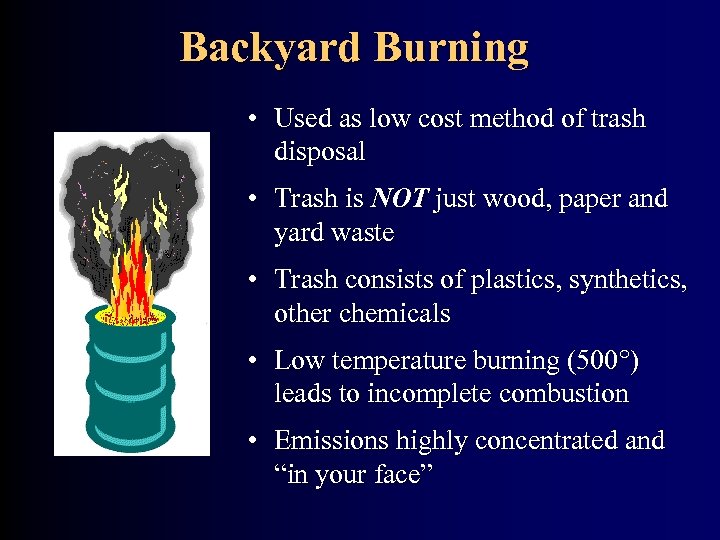
Backyard Burning • Used as low cost method of trash disposal • Trash is NOT just wood, paper and yard waste • Trash consists of plastics, synthetics, other chemicals • Low temperature burning (500 ) leads to incomplete combustion • Emissions highly concentrated and “in your face”
Emissions from Backyard Burning • Fine particulate matter • Lead • Carbon monoxide • Arsenic • Carbon dioxide • Mercury • Sulfur dioxide • Barium • Dioxins and Furans • Chromium • PAHs and PCBs • Cadmium
Comments on Some Emissions • Carbon monoxide – Binds to hemoglobin, reducing oxygen delivery • Volatile Organic Compounds (VOCs) – Contribute to ground level ozone pollution (smog) – Aggravate respiratory and heart conditions – Some (PAHs) are carcinogenic • Hexachlorobenzene – Birth defects – Kidney and liver damage • Benzopyrene – Suspected cause of lung cancer
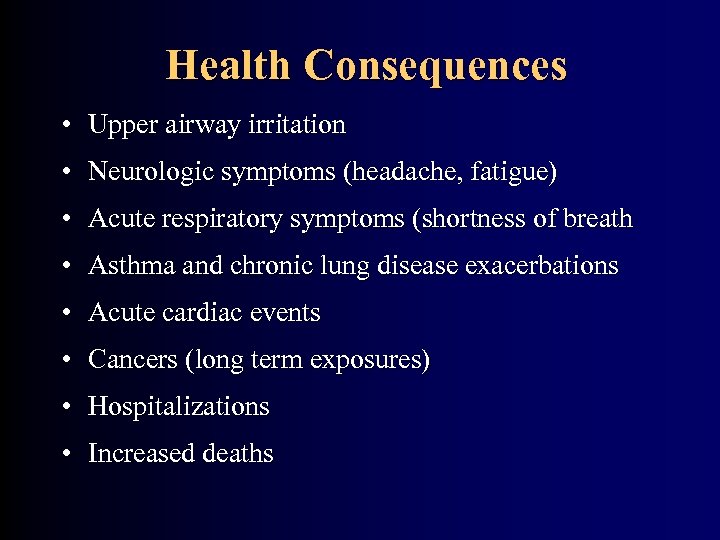
Health Consequences • Upper airway irritation • Neurologic symptoms (headache, fatigue) • Acute respiratory symptoms (shortness of breath • Asthma and chronic lung disease exacerbations • Acute cardiac events • Cancers (long term exposures) • Hospitalizations • Increased deaths
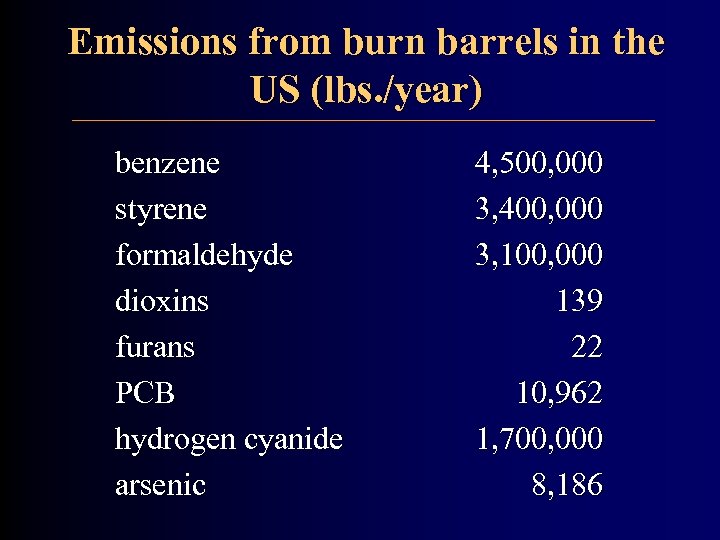
Emissions from burn barrels in the US (lbs. /year) benzene styrene formaldehyde dioxins furans PCB hydrogen cyanide arsenic 4, 500, 000 3, 400, 000 3, 100, 000 139 22 10, 962 1, 700, 000 8, 186
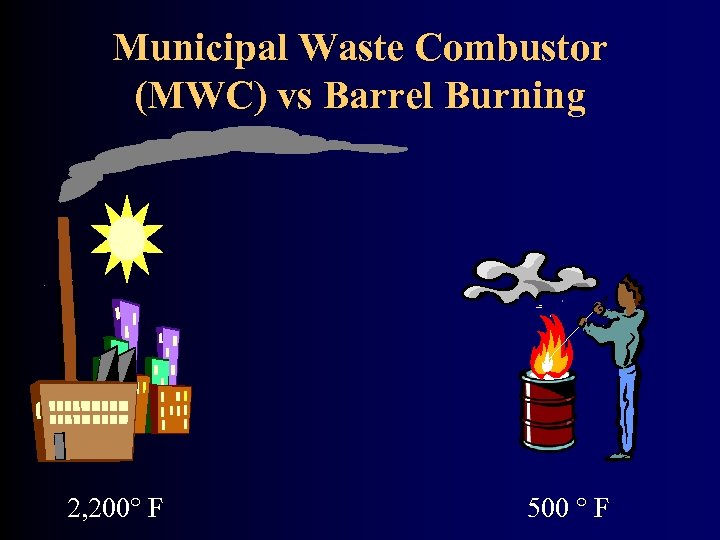
Municipal Waste Combustor (MWC) vs Barrel Burning 2, 200 F 500 F
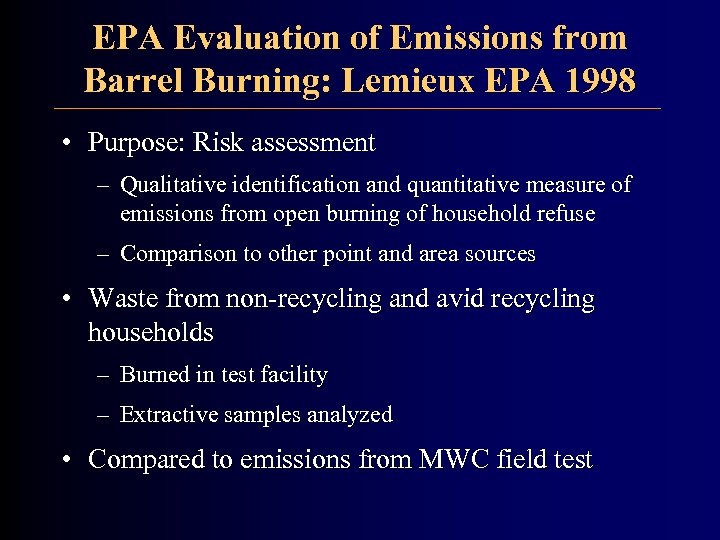
EPA Evaluation of Emissions from Barrel Burning: Lemieux EPA 1998 • Purpose: Risk assessment – Qualitative identification and quantitative measure of emissions from open burning of household refuse – Comparison to other point and area sources • Waste from non-recycling and avid recycling households – Burned in test facility – Extractive samples analyzed • Compared to emissions from MWC field test
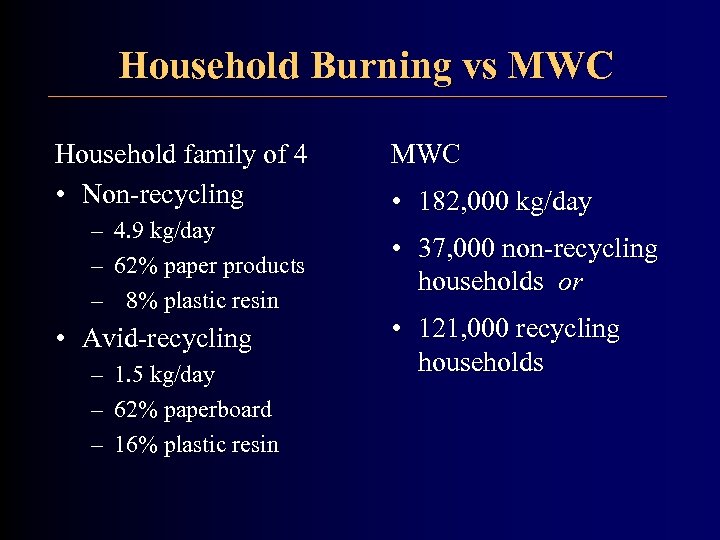
Household Burning vs MWC Household family of 4 • Non-recycling – – – 4. 9 kg/day 62% paper products 8% plastic resin • Avid-recycling – – – 1. 5 kg/day 62% paperboard 16% plastic resin MWC • 182, 000 kg/day • 37, 000 non-recycling households or • 121, 000 recycling households
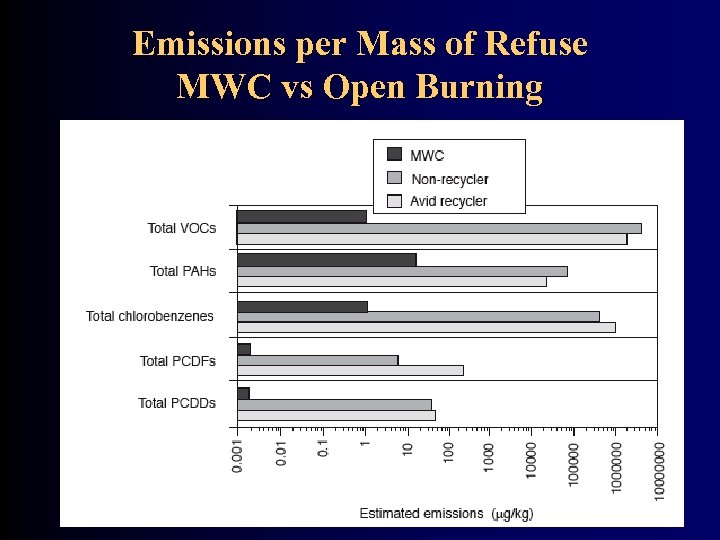
Emissions per Mass of Refuse MWC vs Open Burning
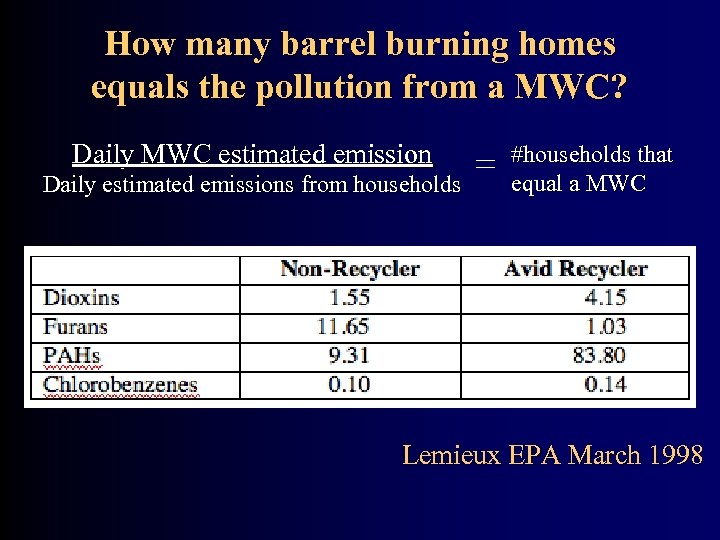
How many barrel burning homes equals the pollution from a MWC? Daily MWC estimated emission Daily estimated emissions from households = #households that equal a MWC Lemieux EPA March 1998
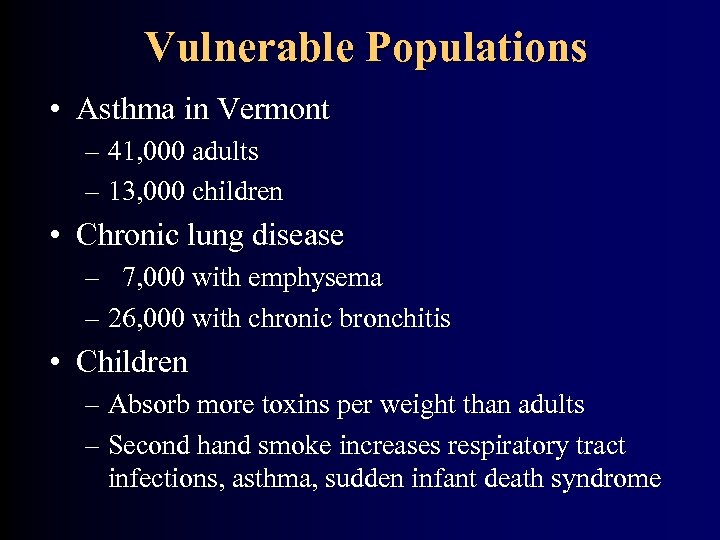
Vulnerable Populations • Asthma in Vermont – 41, 000 adults – 13, 000 children • Chronic lung disease – 7, 000 with emphysema – 26, 000 with chronic bronchitis • Children – Absorb more toxins per weight than adults – Second hand smoke increases respiratory tract infections, asthma, sudden infant death syndrome
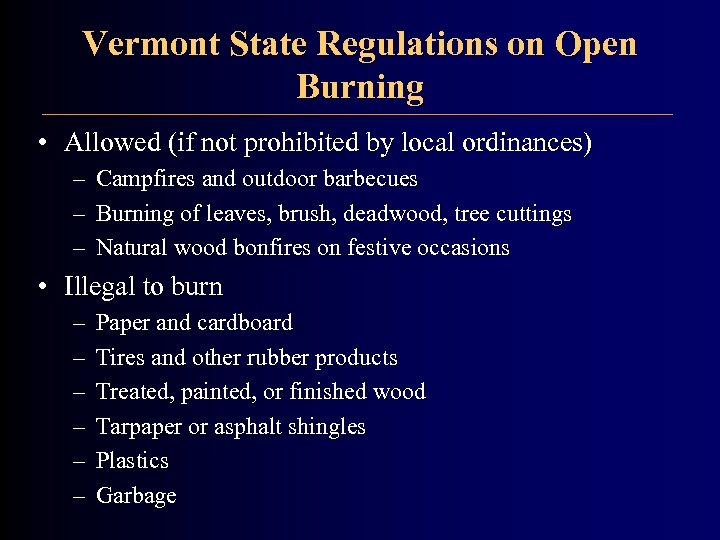
Vermont State Regulations on Open Burning • Allowed (if not prohibited by local ordinances) – – – Campfires and outdoor barbecues Burning of leaves, brush, deadwood, tree cuttings Natural wood bonfires on festive occasions • Illegal to burn – – – Paper and cardboard Tires and other rubber products Treated, painted, or finished wood Tarpaper or asphalt shingles Plastics Garbage
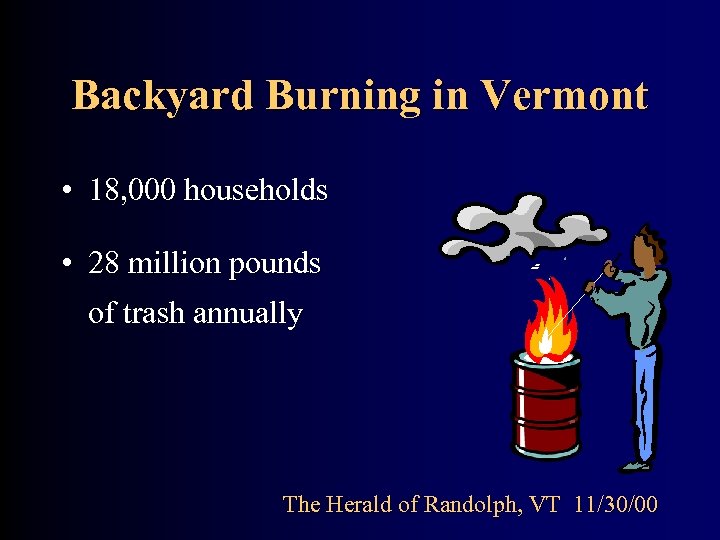
Backyard Burning in Vermont • 18, 000 households • 28 million pounds of trash annually The Herald of Randolph, VT 11/30/00
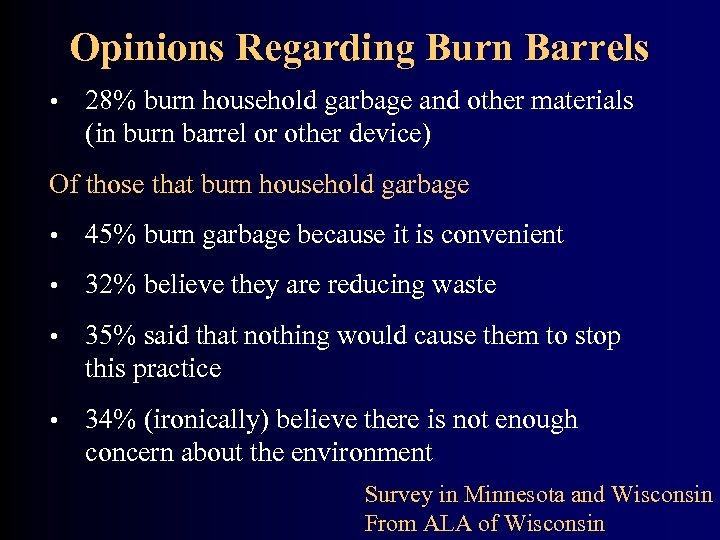
Opinions Regarding Burn Barrels • 28% burn household garbage and other materials (in burn barrel or other device) Of those that burn household garbage • 45% burn garbage because it is convenient • 32% believe they are reducing waste • 35% said that nothing would cause them to stop this practice • 34% (ironically) believe there is not enough concern about the environment Survey in Minnesota and Wisconsin From ALA of Wisconsin
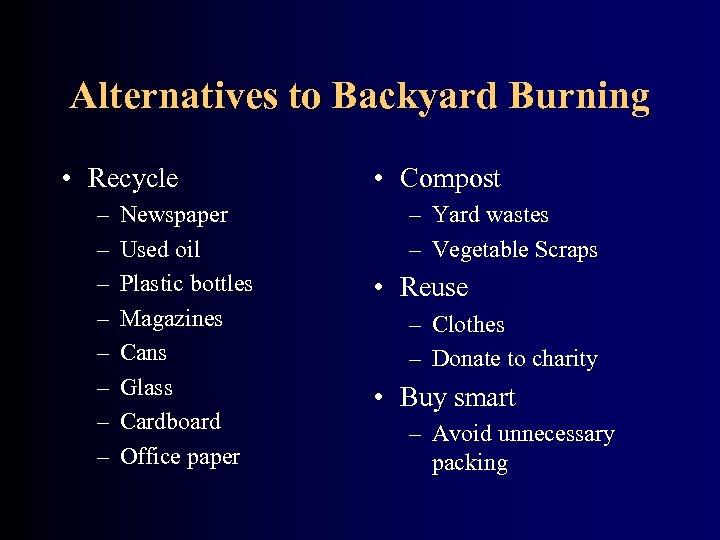
Alternatives to Backyard Burning • Recycle – – – – Newspaper Used oil Plastic bottles Magazines Cans Glass Cardboard Office paper • Compost – Yard wastes – Vegetable Scraps • Reuse – Clothes – Donate to charity • Buy smart – Avoid unnecessary packing
Скачать презентацию Hazards and Effects on Respiratory Health of Backyard
2ff5fd56e7208c9ab5c69619c6e832a6.ppt