Скачать презентацию Hazard Requirements from the Perspective of the CE
1458e99836e8cf54821c5109af32b32e.ppt
- Количество слайдов: 21
 Hazard Requirements from the Perspective of the CE S Disaster Management Support Group Levin Lauritson, NOAA, USA
 Disaster Management Support Group Objective: To support natural and technological disaster management on a worldwide basis, by fostering improved utilization of existing and planned Earth observation satellite data
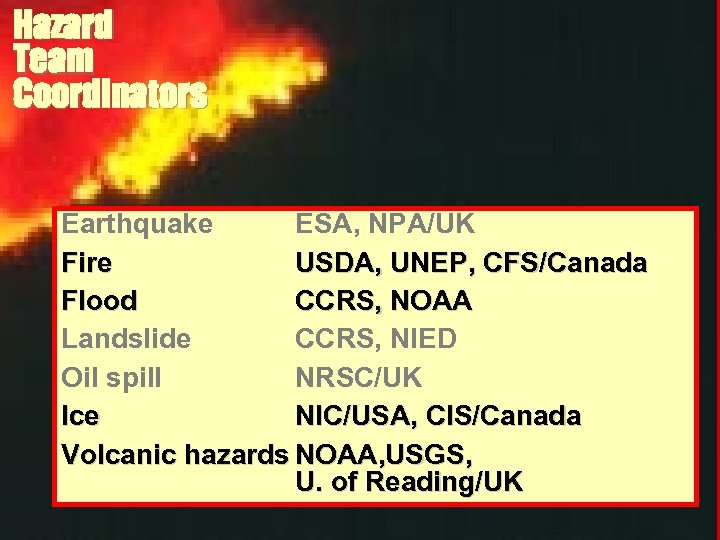 Hazard Team Coordinators Earthquake ESA, NPA/UK Fire USDA, UNEP, CFS/Canada Flood CCRS, NOAA Landslide CCRS, NIED Oil spill NRSC/UK Ice NIC/USA, CIS/Canada Volcanic hazards NOAA, USGS, U. of Reading/UK
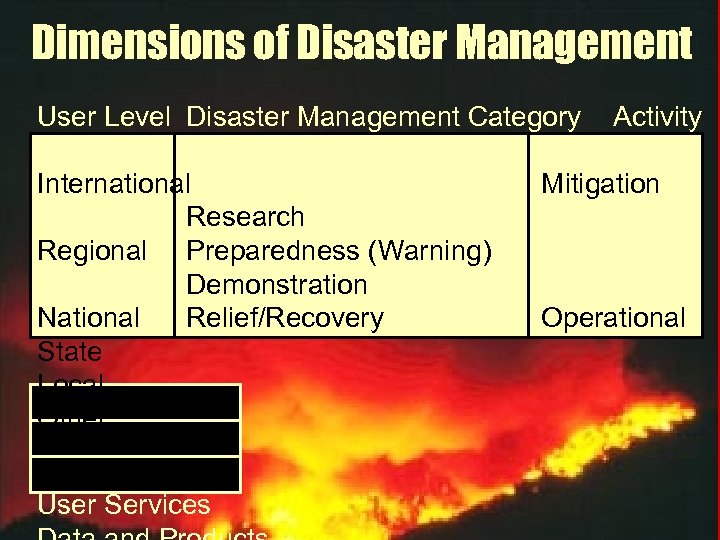 Dimensions of Disaster Management User Level Disaster Management Category Activity Status International Mitigation Research Regional Preparedness (Warning) Demonstration National Relief/Recovery Operational State Local Other User Services
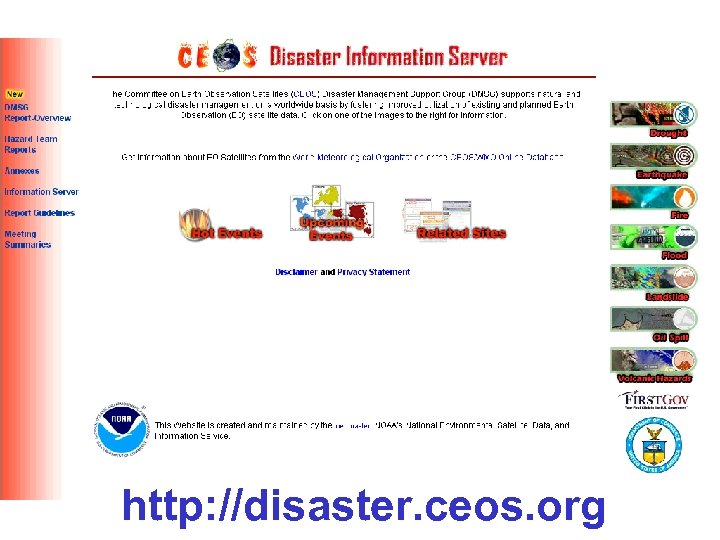 http: //disaster. ceos. org
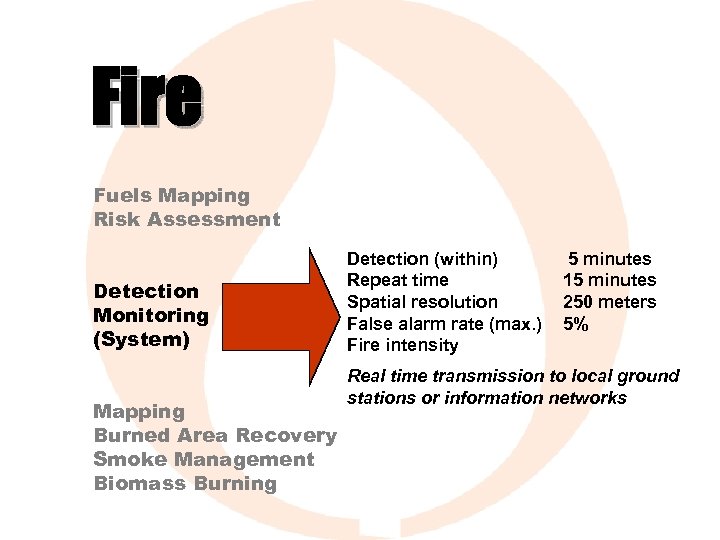 Fire Fuels Mapping Risk Assessment Detection Monitoring (System) Mapping Burned Area Recovery Smoke Management Biomass Burning Detection (within) Repeat time Spatial resolution False alarm rate (max. ) Fire intensity 5 minutes 15 minutes 250 meters 5% Real time transmission to local ground stations or information networks
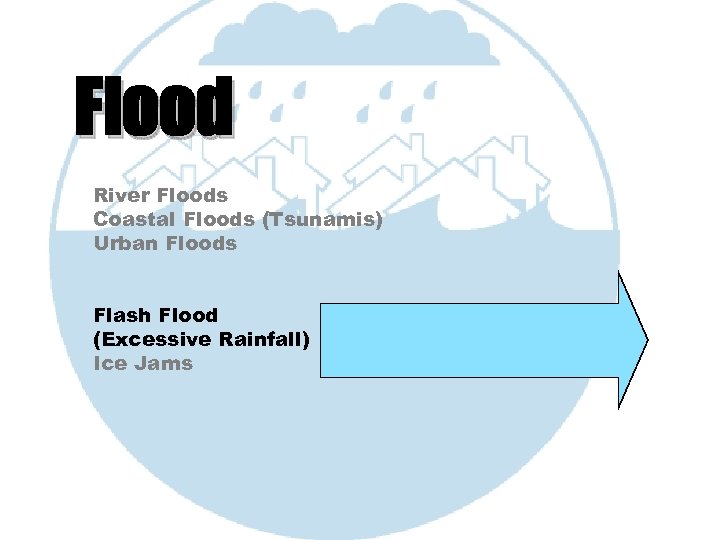 Flood River Floods Coastal Floods (Tsunamis) Urban Floods Flash Flood (Excessive Rainfall) Ice Jams
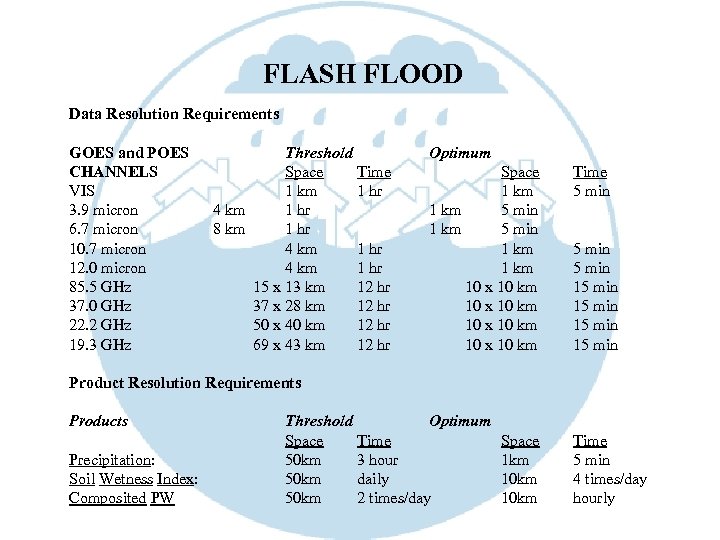 FLASH FLOOD Data Resolution Requirements GOES and POES Threshold Optimum CHANNELS Space Time Space VIS 1 km 1 hr 1 km 3. 9 micron 4 km 1 hr 1 km 5 min 6. 7 micron 8 km 1 hr 1 km 5 min 10. 7 micron 4 km 1 hr 1 km 12. 0 micron 4 km 1 hr 1 km 85. 5 GHz 15 x 13 km 12 hr 10 x 10 km 37. 0 GHz 37 x 28 km 12 hr 10 x 10 km 22. 2 GHz 50 x 40 km 12 hr 10 x 10 km 19. 3 GHz 69 x 43 km 12 hr 10 x 10 km Product Resolution Requirements Products Threshold Optimum Space Time Space Precipitation: 50 km 3 hour 1 km Soil Wetness Index: 50 km daily 10 km Composited PW 50 km 2 times/day 10 km Time 5 min 15 min Time 5 min 4 times/day hourly
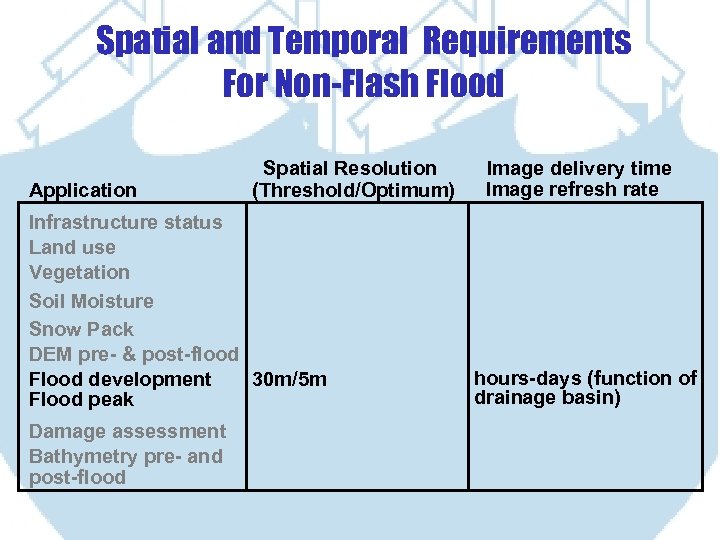 Spatial and Temporal Requirements For Non-Flash Flood Application Spatial Resolution (Threshold/Optimum) Infrastructure status Land use Vegetation Soil Moisture Snow Pack DEM pre- & post-flood Flood development 30 m/5 m Flood peak Damage assessment Bathymetry pre- and post-flood Image delivery time Image refresh rate hours-days (function of drainage basin)
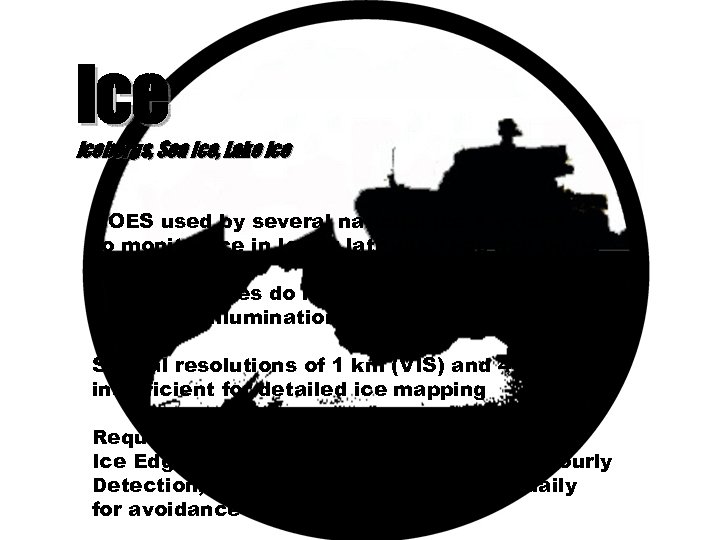 Ice Icebergs, Sea Ice, Lake Ice GOES used by several national ice services to monitor ice in lower latitude seas and lakes Lower latitudes do not suffer from persistent illumination problems Spatial resolutions of 1 km (VIS) and 4 km (IR) insufficient for detailed ice mapping Requirement Ice Edge Detection, for avoidance Threshold Optimum 750 m, daily 100 m, 6 hourly 100 m, daily
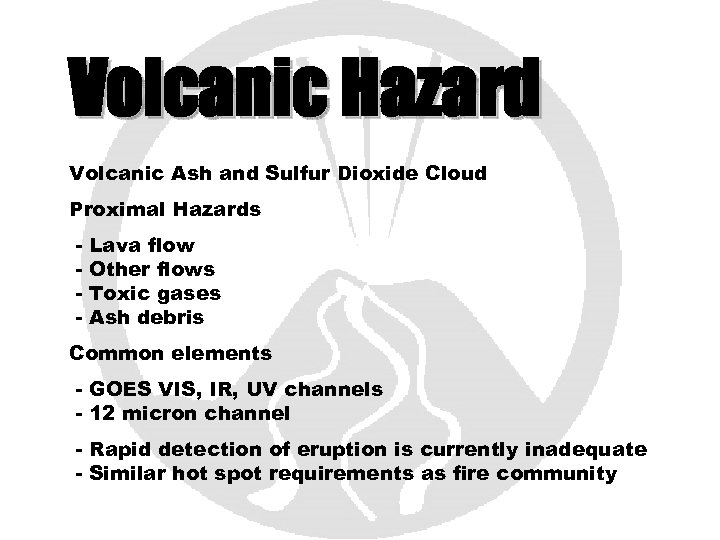 Volcanic Hazard Volcanic Ash and Sulfur Dioxide Cloud Proximal Hazards - Lava flow Other flows Toxic gases Ash debris Common elements - GOES VIS, IR, UV channels - 12 micron channel - Rapid detection of eruption is currently inadequate - Similar hot spot requirements as fire community
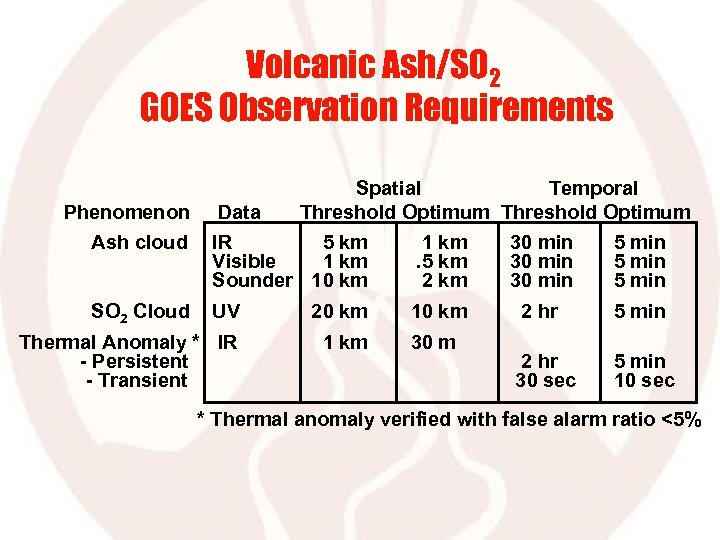 Volcanic Ash/SO 2 GOES Observation Requirements Phenomenon Ash cloud SO 2 Cloud Spatial Temporal Data Threshold Optimum IR 5 km 1 km 30 min 5 min Visible 1 km. 5 km 30 min 5 min Sounder 10 km 2 km 30 min 5 min UV 20 km 10 km Thermal Anomaly * IR - Persistent - Transient 1 km 30 m 2 hr 5 min 2 hr 30 sec 5 min 10 sec * Thermal anomaly verified with false alarm ratio <5%
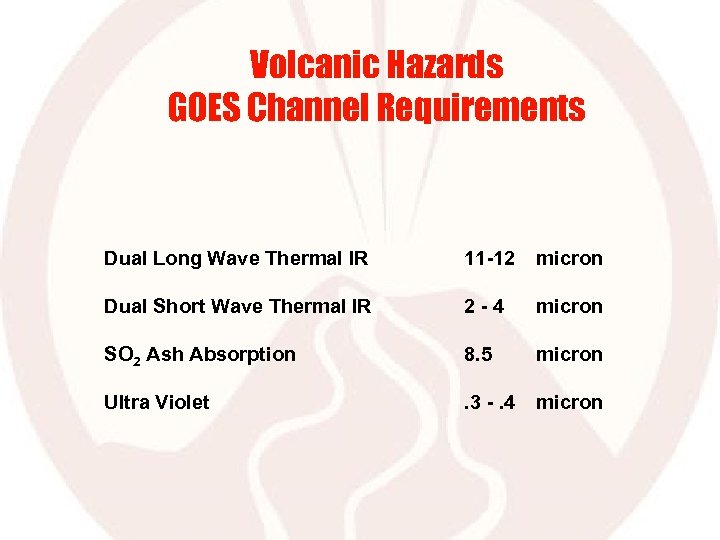 Volcanic Hazards GOES Channel Requirements Dual Long Wave Thermal IR 11 -12 micron Dual Short Wave Thermal IR 2 -4 micron SO 2 Ash Absorption 8. 5 micron Ultra Violet . 3 -. 4 micron
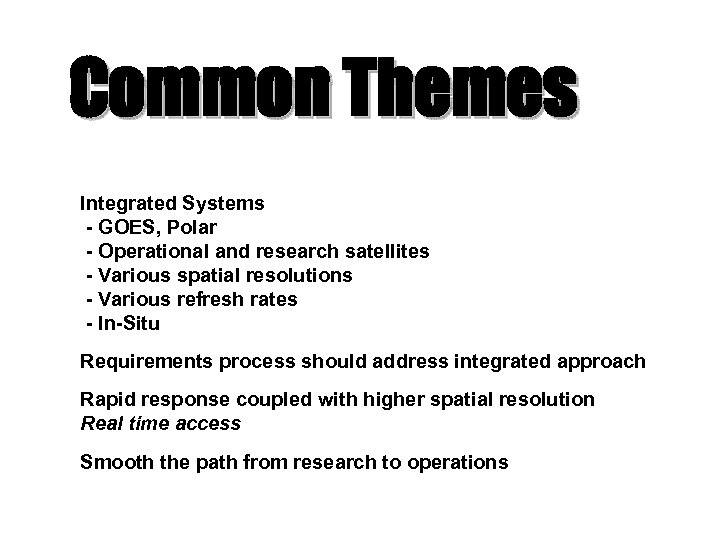 Common Themes Integrated Systems - GOES, Polar - Operational and research satellites - Various spatial resolutions - Various refresh rates - In-Situ Requirements process should address integrated approach Rapid response coupled with higher spatial resolution Real time access Smooth the path from research to operations