


 Скачать презентацию Hawaii Energy Storage Seminar Lanai La Ola Case
64ff3cae76e8d1d3a31e64dcebd2f0b7.ppt
- Количество слайдов: 15
 Hawaii Energy Storage Seminar: Lanai La Ola Case Study Abbas Akhil Sandia National Laboratories Distributed Generation and Energy Storage aaakhil@sandia. gov (505) 844 -7308 June 16, 2010 Sandia is a multi-program laboratory operated by Sandia Corporation, a Lockheed Martin Company, for the United States Department of Energy’s National Nuclear Security Administration under contract DE-AC 04 -94 AL 85000. SAND 2009 -2801 P
 Lanai Grid
 Lanai Grid
 Lanai Grid with La Ola PV
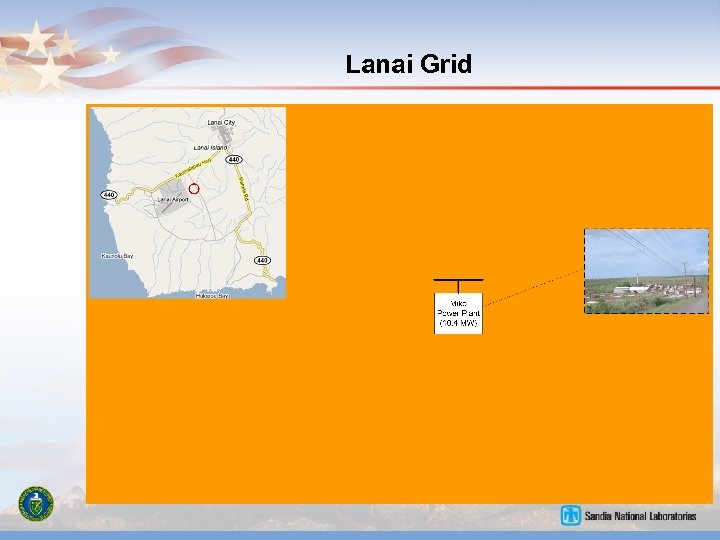
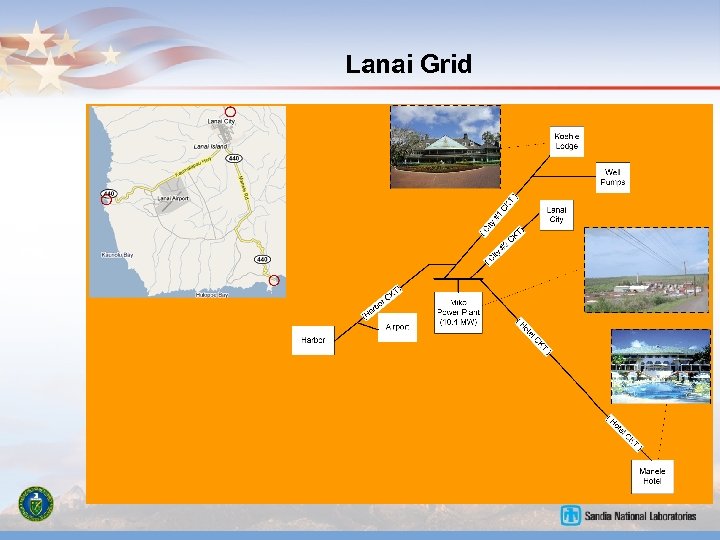
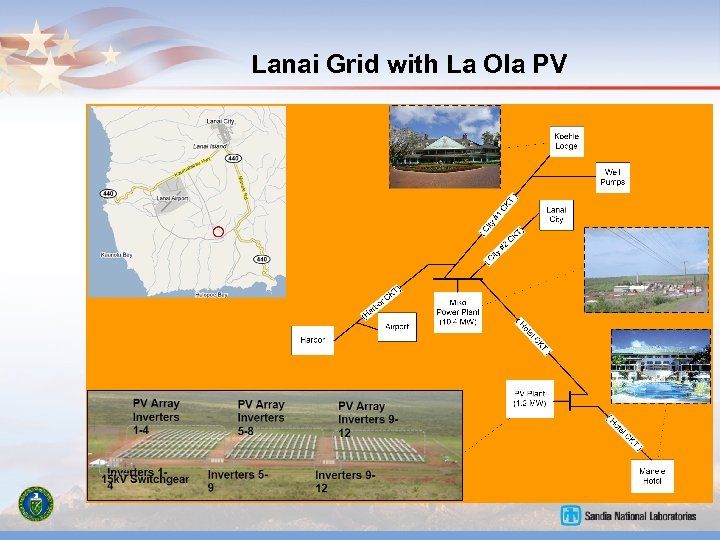
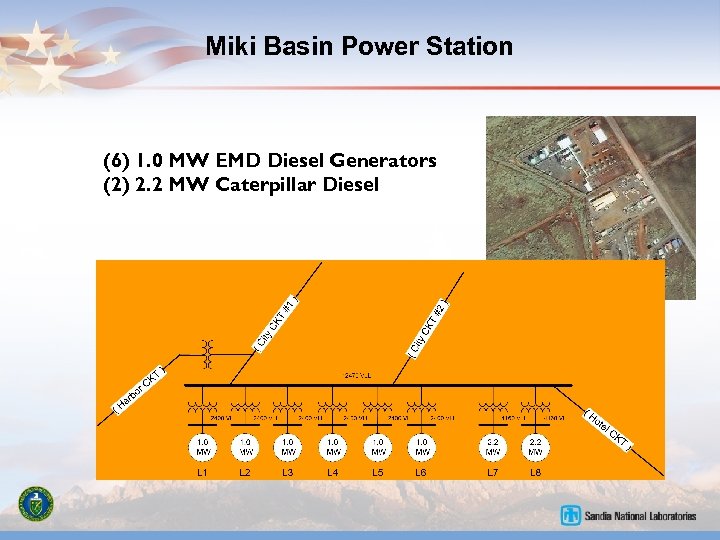 Miki Basin Power Station (6) 1. 0 MW EMD Diesel Generators (2) 2. 2 MW Caterpillar Diesel
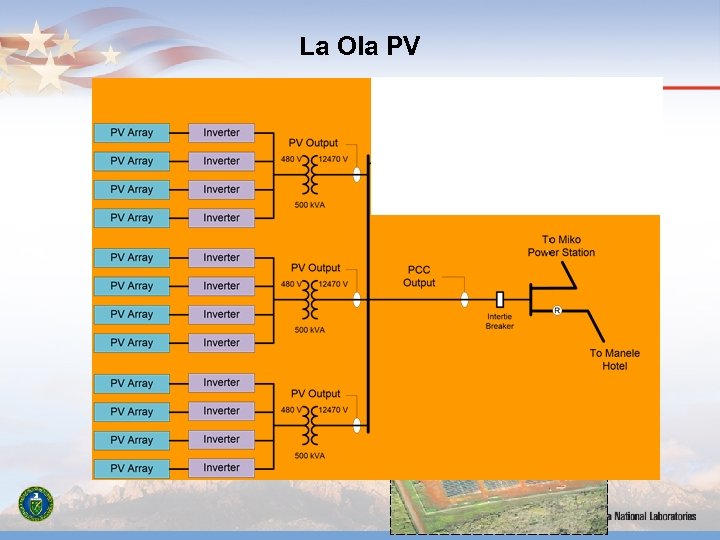 La Ola PV
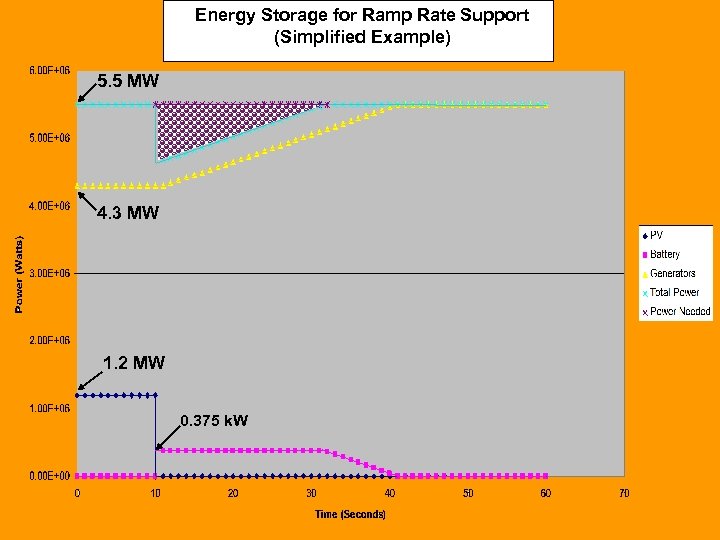 Energy Storage for Ramp Rate Support (Simplified Example) 5. 5 MW 4. 3 MW 1. 2 MW 0. 375 k. W
 La Ola Battery Specification n Battery type and size specified in Power Purchase Agreement n Battery type: Flow battery manufactured by VRB n 250 k. W power with 3 hours of energy storage; 750 k. Wh n PPA required mostly grid support functions
 Evolution of La Ola Battery Design n VRB ceased commercial operations in late 2008 n 3 hours of storage was excessive for ramp rate control • Need power, not energy • Flow batteries are “energy” batteries n La Ola’s return to investor is maximized if every k. Wh generated is sold immediately • Energy storage has a roundtrip efficiency “overhead” • Battery charging energy comes from PV or purchased from MECO
 Transition Concepts n Re-Evaluated battery size: • Need power, not energy • Suitable sizes ranged between 450 k. W – 750 k. W; 1 hour storage n Evaluated other battery technologies: • Lead-acid, Sodium/Sulfur and Lithium Ion n At year end 2008: • Lead-acid battery system • 405 k. W; 1 to 3 hours of storage • Air conditioned building to house battery system • Identified turnkey system supplier and obtained firm price quotations
 In-Depth Analysis n Battery sizing analysis by Sun. Power, Sandia Labs and NREL in early 2010 • 1 second power and irradiance data from similar-sized PV farm • 10 months field-recorded data • Three independent approaches using common input data set n Battery sizing considerations: Ramp rates, duration and frequency of ramps n Challenges: Vast amount of data; random ramp rate pattern; uncertainty that all “events” are captured n Battery size: 450 – 700 k. W; 250 – 500 k. Wh energy required to meet ramp rate support requirements
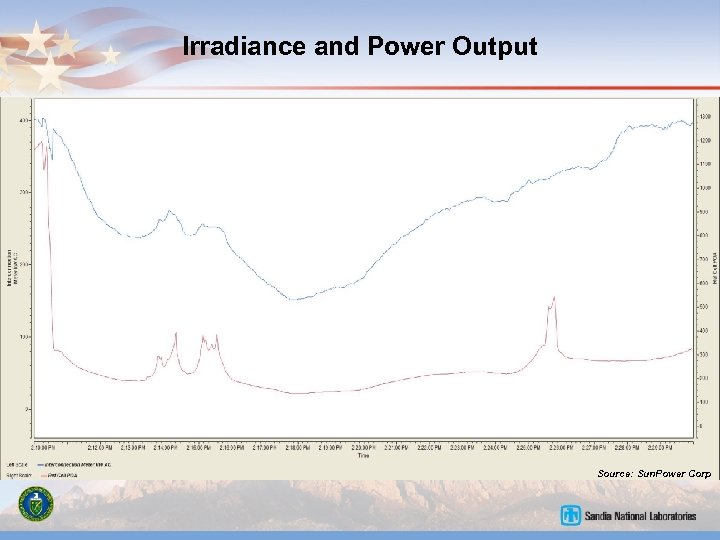 Irradiance and Power Output Source: Sun. Power Corp
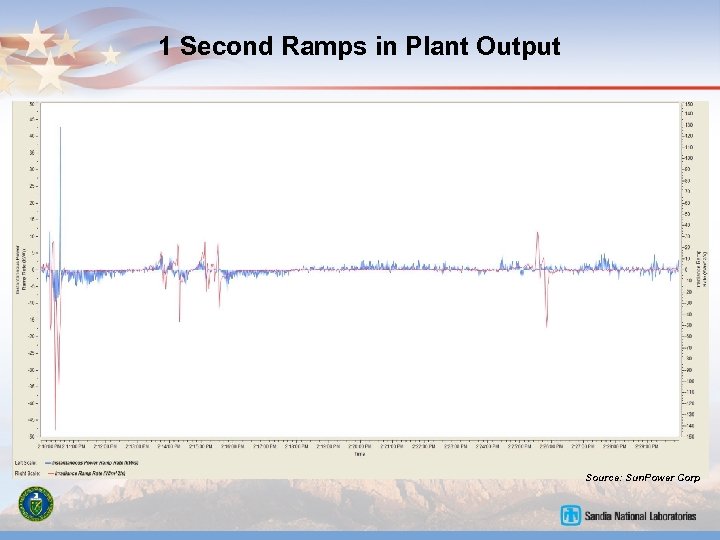 1 Second Ramps in Plant Output Source: Sun. Power Corp
 Final Lanai Battery Outcome n Castle and Cooke selected Xtreme Power: a turnkey battery system supplier • Contract negotiations underway n Battery system size: 1. 125 MW; 500 k. Wh storage capacity
 Need for Energy Storage with Renewables (in Hawaii) Need for energy storage to support renewable penetration: n Ramp rate control n “Time n Store Shift” “spilled” renewable generation Note: Energy storage, not exclusively battery energy storage