 Скачать презентацию Hannover-Kronsberg a housing-area with very far going aspects
aed8cefd85da1ce7bf50f770857aafa3.ppt
- Количество слайдов: 35



Hannover-Kronsberg a housing-area with very far going aspects of sustainability
The presentation: 1. The Kronsberg-Housing-Area an overview 2. Far going aspects of a sustainable development: Waste Energy Rainwater
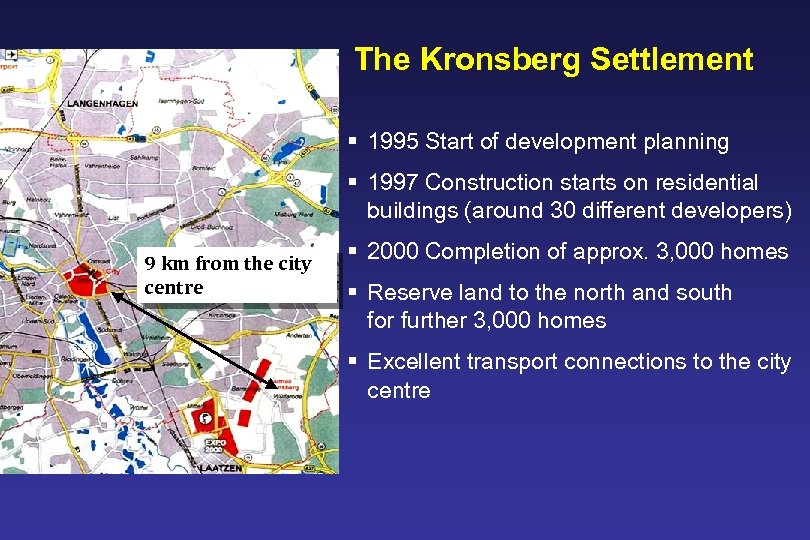
The Kronsberg Settlement § 1995 Start of development planning § 1997 Construction starts on residential buildings (around 30 different developers) 9 km from the city centre § 2000 Completion of approx. 3, 000 homes § Reserve land to the north and south for further 3, 000 homes § Excellent transport connections to the city centre
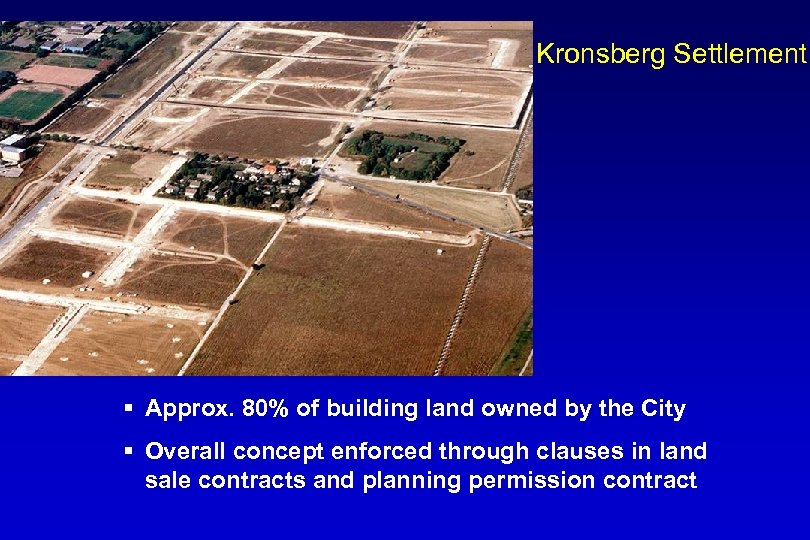
Kronsberg Settlement § Approx. 80% of building land owned by the City § Overall concept enforced through clauses in land sale contracts and planning permission contract
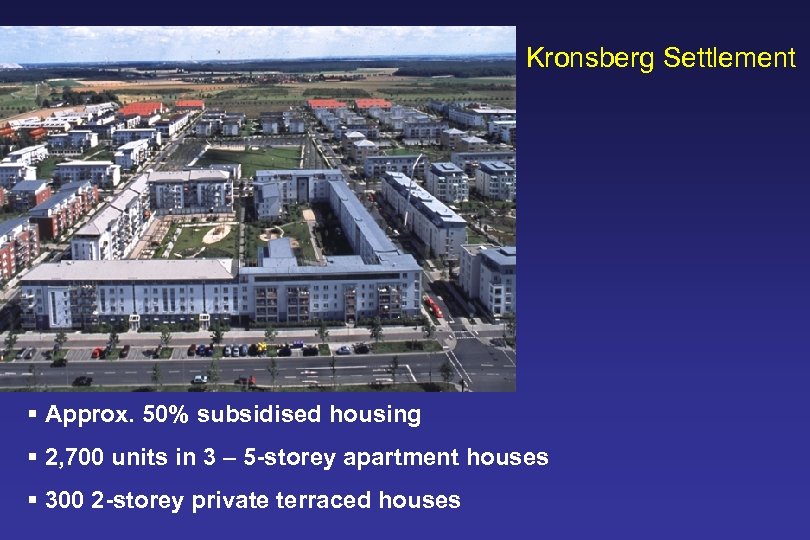
Kronsberg Settlement § Approx. 50% subsidised housing § 2, 700 units in 3 – 5 -storey apartment houses § 300 2 -storey private terraced houses
Waste
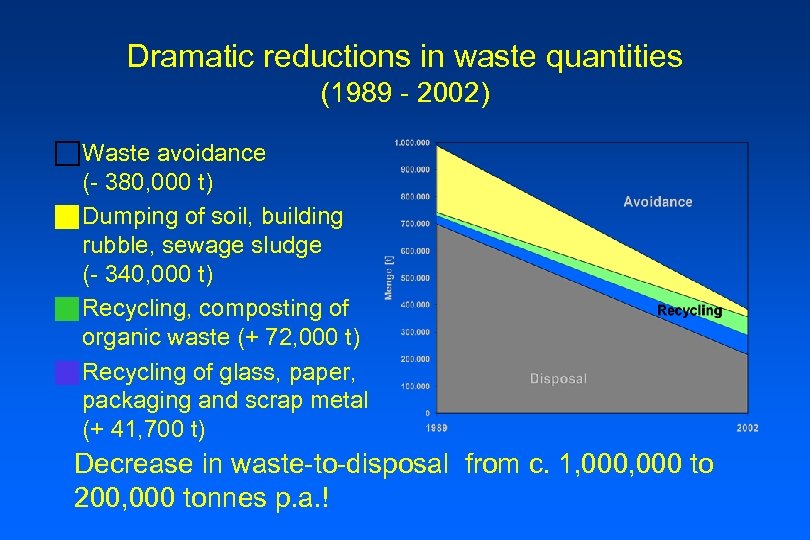
Dramatic reductions in waste quantities (1989 - 2002) c Waste avoidance (- 380, 000 t) g Dumping of soil, building rubble, sewage sludge (- 340, 000 t) g Recycling, composting of organic waste (+ 72, 000 t) g Recycling of glass, paper, packaging and scrap metal (+ 41, 700 t) Decrease in waste-to-disposal from c. 1, 000 to 200, 000 tonnes p. a. !
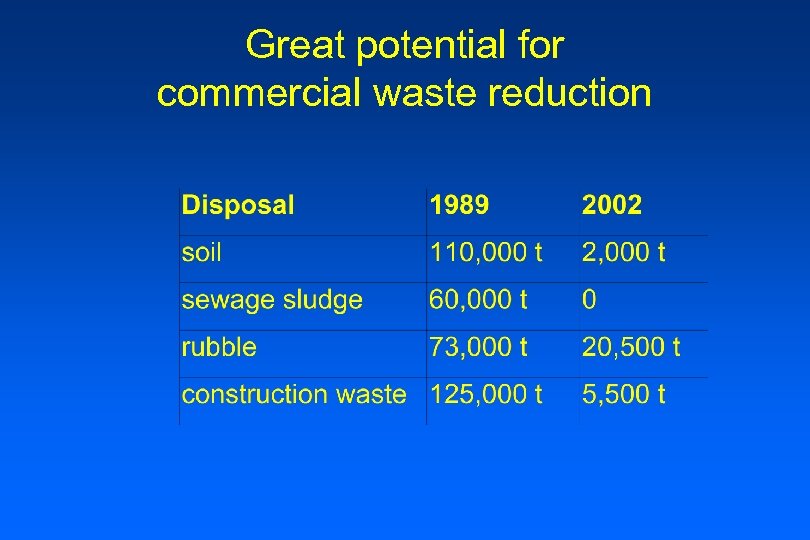
Great potential for commercial waste reduction
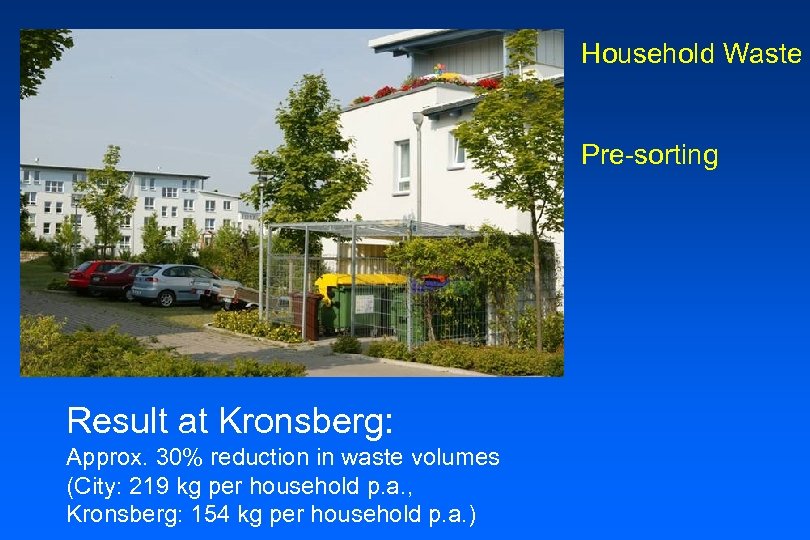
Household Waste Pre-sorting Result at Kronsberg: Approx. 30% reduction in waste volumes (City: 219 kg per household p. a. , Kronsberg: 154 kg per household p. a. )
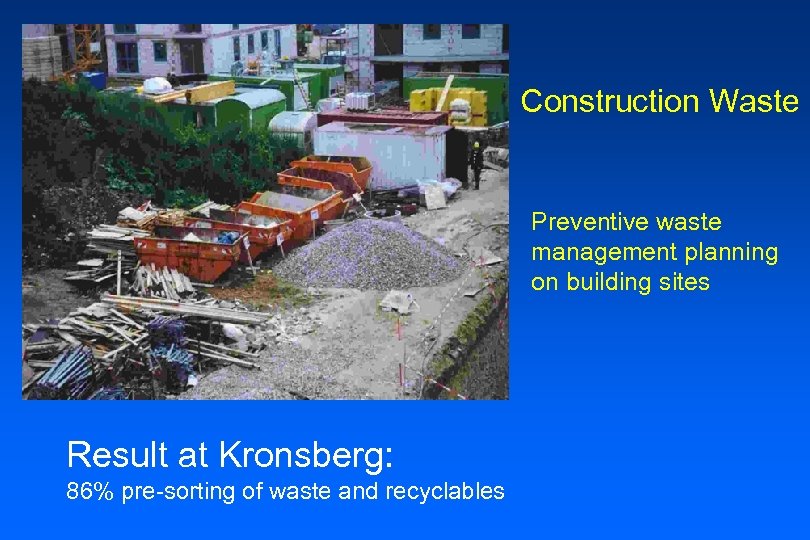
Construction Waste Preventive waste management planning on building sites Result at Kronsberg: 86% pre-sorting of waste and recyclables
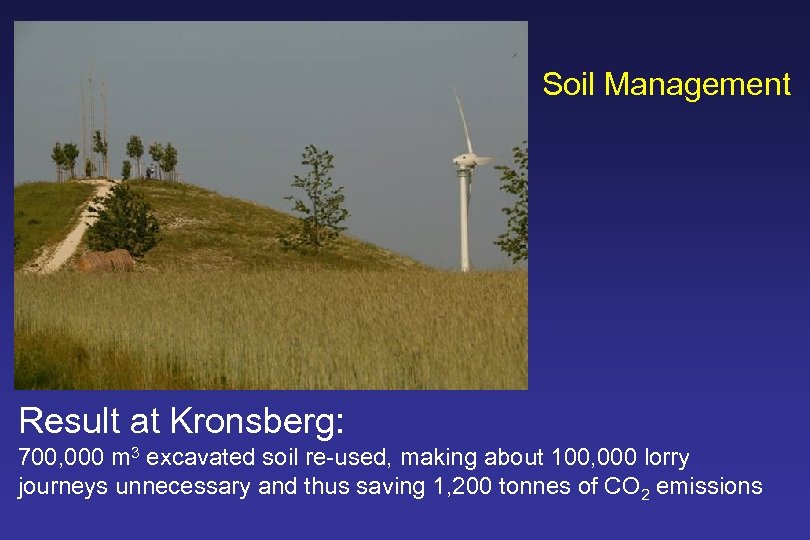
Soil Management Result at Kronsberg: 700, 000 m 3 excavated soil re-used, making about 100, 000 lorry journeys unnecessary and thus saving 1, 200 tonnes of CO 2 emissions
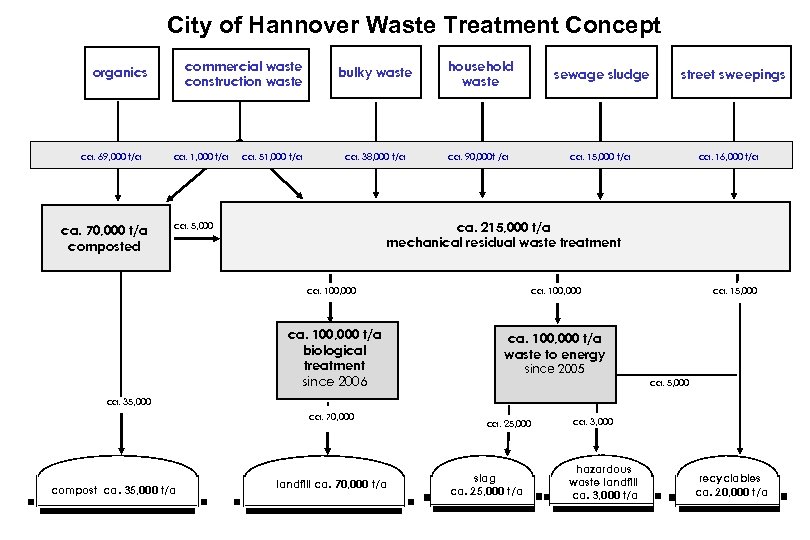
City of Hannover Waste Treatment Concept commercial waste construction waste organics ca. 69, 000 t/a ca. 70, 000 t/a composted ca. 1, 000 t/a ca. 51, 000 t/a bulky waste household waste sewage sludge ca. 38, 000 t/a ca. 90, 000 t /a ca. 15, 000 t/a street sweepings ca. 16, 000 t/a ca. 215, 000 t/a mechanical residual waste treatment ca. 5, 000 ca. 100, 000 t/a biological treatment since 2006 ca. 15, 000 ca. 100, 000 t/a waste to energy since 2005 ca. 5, 000 ca. 35, 000 ca. 70, 000 compost ca. 35, 000 t/a landfill ca. 70, 000 t/a ca. 25, 000 slag ca. 25, 000 t/a ca. 3, 000 hazardous waste landfill ca. 3, 000 t/a recyclables ca. 20, 000 t/a
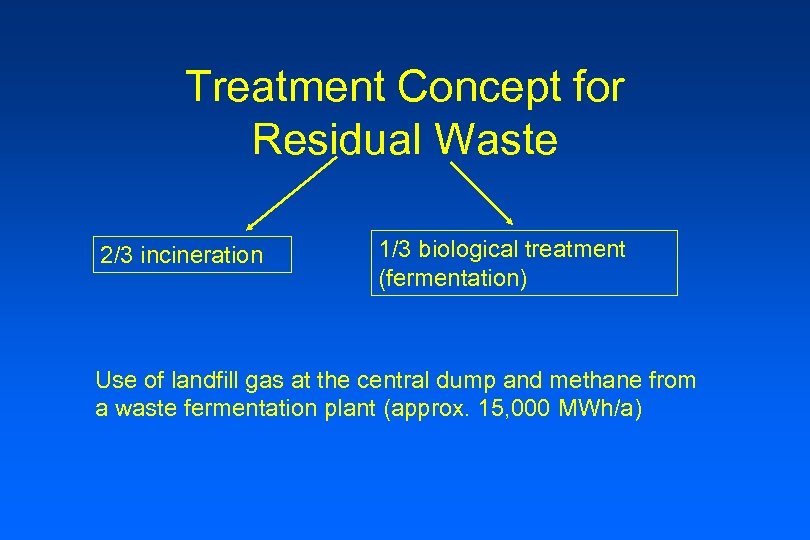
Treatment Concept for Residual Waste 2/3 incineration 1/3 biological treatment (fermentation) Use of landfill gas at the central dump and methane from a waste fermentation plant (approx. 15, 000 MWh/a)
Energy
Hannover Climate Protection Region § Since 1994: municipal climate protection programme, with a specialist unit in the city administration § Since 2000: climate fund run by the municipal energy utility and the city council 5 million € funding programme each year § Since 2001: regional climate protection agency
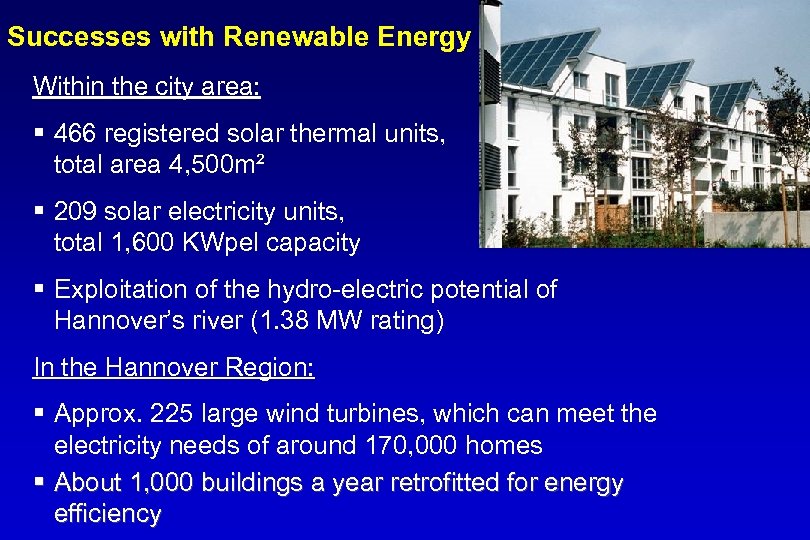
Successes with Renewable Energy Within the city area: § 466 registered solar thermal units, total area 4, 500 m² § 209 solar electricity units, total 1, 600 KWpel capacity § Exploitation of the hydro-electric potential of Hannover’s river (1. 38 MW rating) In the Hannover Region: § Approx. 225 large wind turbines, which can meet the electricity needs of around 170, 000 homes § About 1, 000 buildings a year retrofitted for energy efficiency
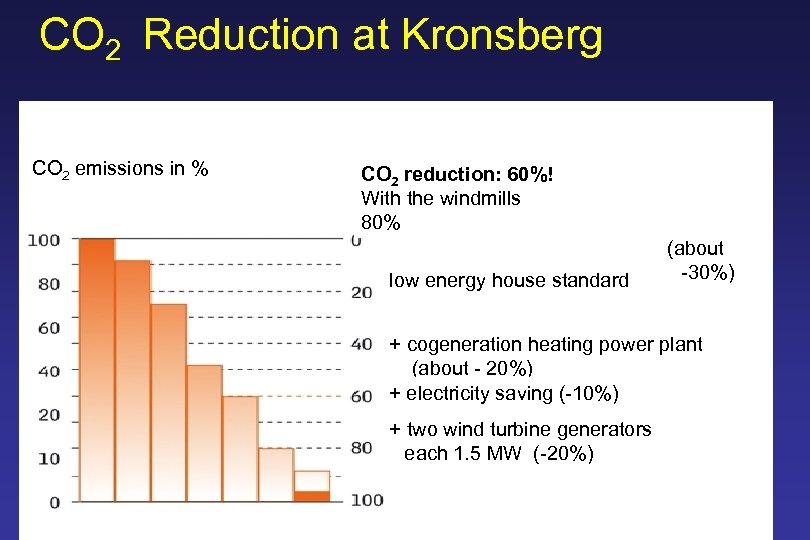
CO 2 Reduction at Kronsberg CO 2 emissions in % CO 2 reduction: 60%! With the windmills 80% low energy house standard (about -30%) + cogeneration heating power plant (about - 20%) + electricity saving (-10%) + two wind turbine generators each 1. 5 MW (-20%)
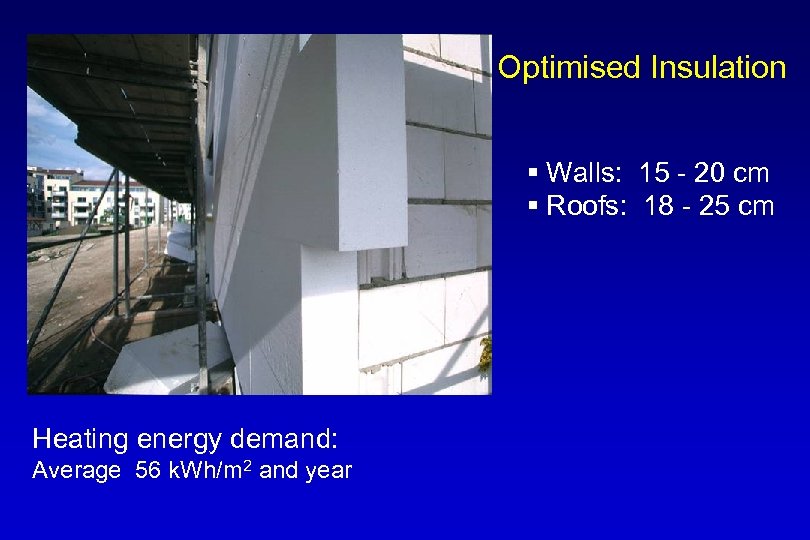
Optimised Insulation § Walls: 15 - 20 cm § Roofs: 18 - 25 cm Heating energy demand: Average 56 k. Wh/m 2 and year
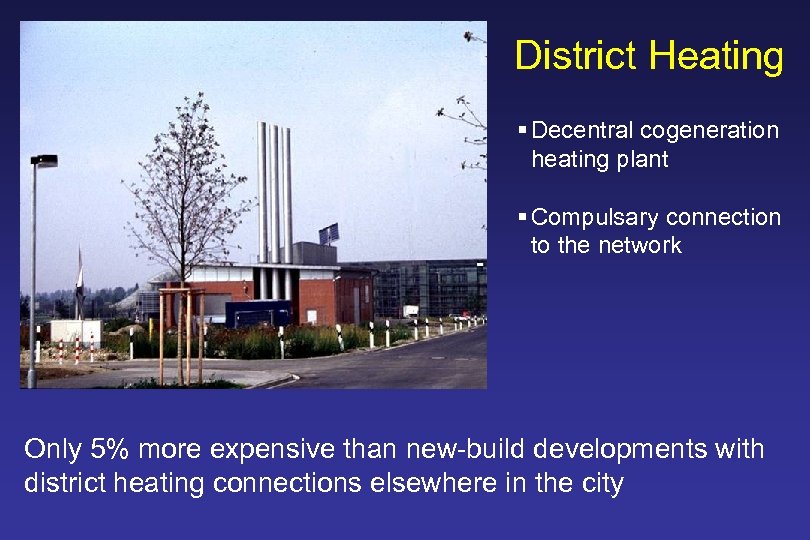
District Heating § Decentral cogeneration heating plant § Compulsary connection to the network Only 5% more expensive than new-build developments with district heating connections elsewhere in the city
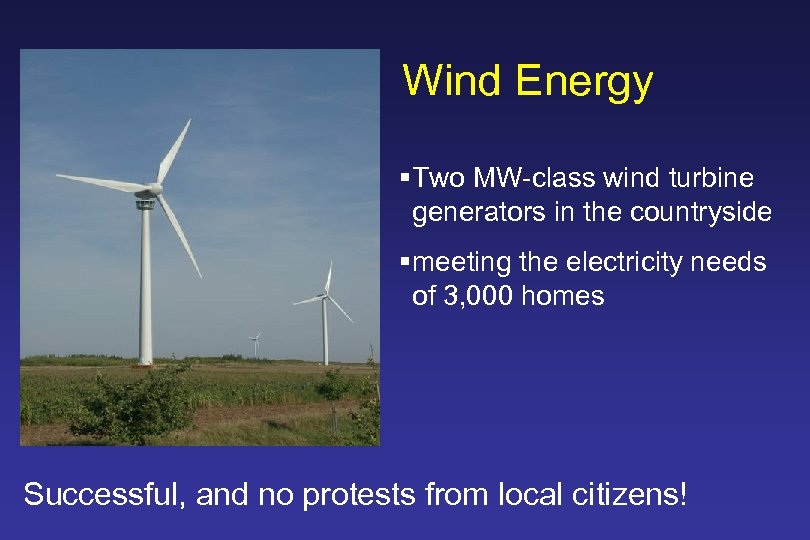
Wind Energy §Two MW-class wind turbine generators in the countryside §meeting the electricity needs of 3, 000 homes Successful, and no protests from local citizens!
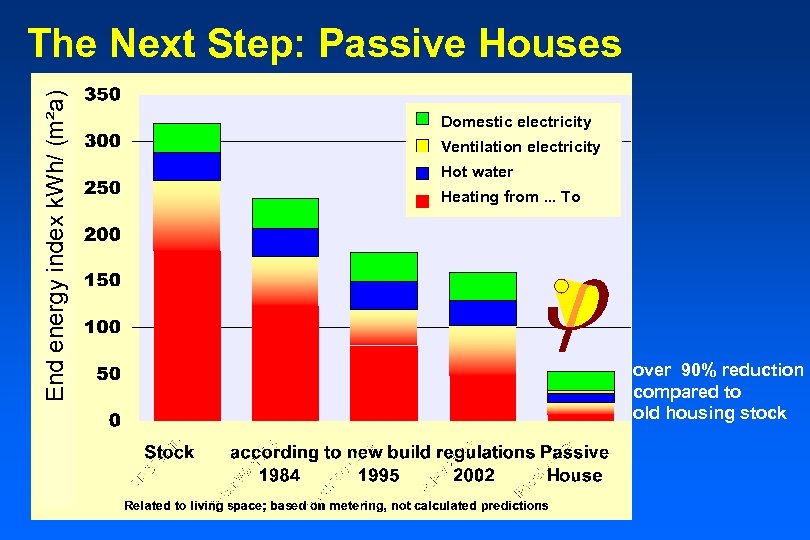
End energy index k. Wh/ (m²a) The Next Step: Passive Houses Domestic electricity Ventilation electricity Hot water Heating from. . . To over 90% reduction compared to old housing stock
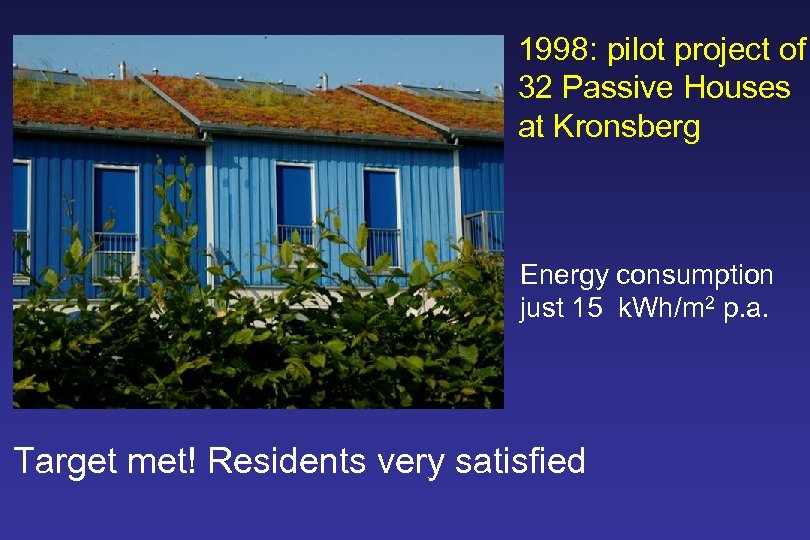
1998: pilot project of 32 Passive Houses at Kronsberg Energy consumption just 15 k. Wh/m 2 p. a. Target met! Residents very satisfied
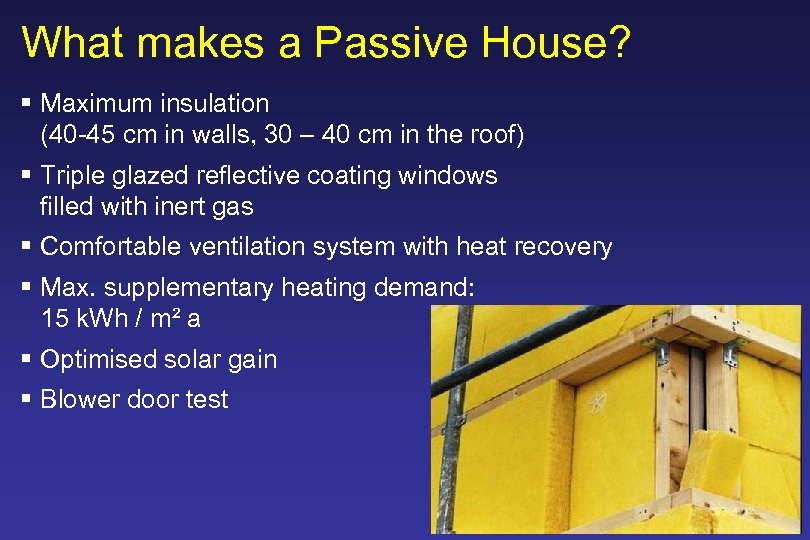
What makes a Passive House? § Maximum insulation (40 -45 cm in walls, 30 – 40 cm in the roof) § Triple glazed reflective coating windows filled with inert gas § Comfortable ventilation system with heat recovery § Max. supplementary heating demand: 15 k. Wh / m² a § Optimised solar gain § Blower door test
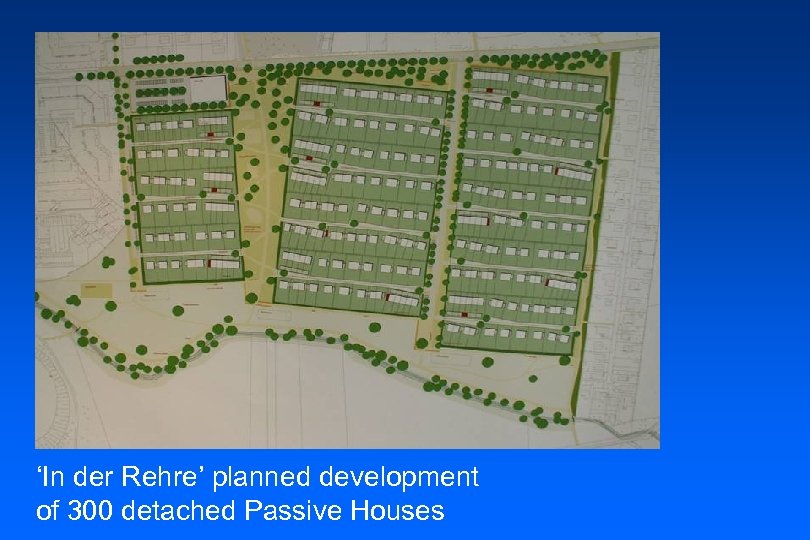
‘In der Rehre’ planned development of 300 detached Passive Houses
Following completion of the new-build Kronsberg settlement, a major new pilot project: ‘Concerto’ Integrated EU project – ‘Energy saving in the building stock and use of renewable energies’
‘Concerto’ Aims § 60 -70% savings on end energy for heating § Use of renewable energies wherever possible. Measures § Energy efficient retrofitting of multi-occupancy houses owned by several Hannover housing associations (dating from 1950 -1970) to a high energy efficiency standard § Use of renewable energy by conversion from coal to biomass for the existing district heating network.
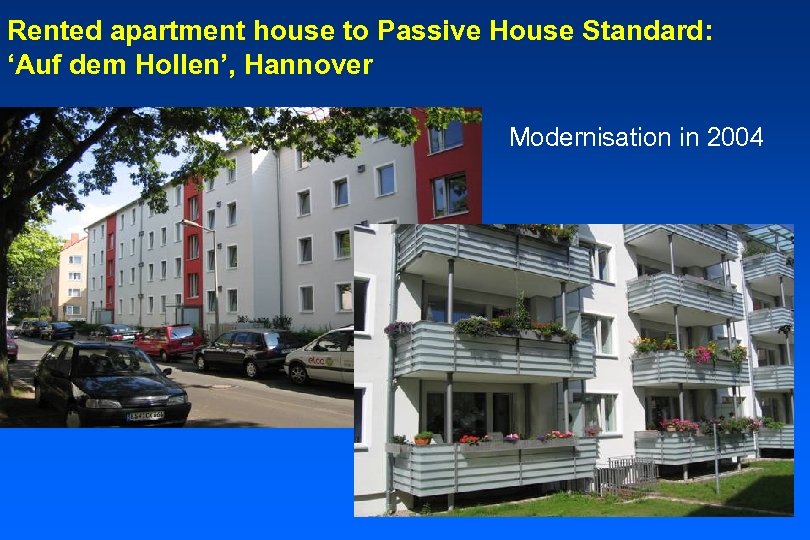
Rented apartment house to Passive House Standard: ‘Auf dem Hollen’, Hannover Modernisation in 2004
Rainwater Management
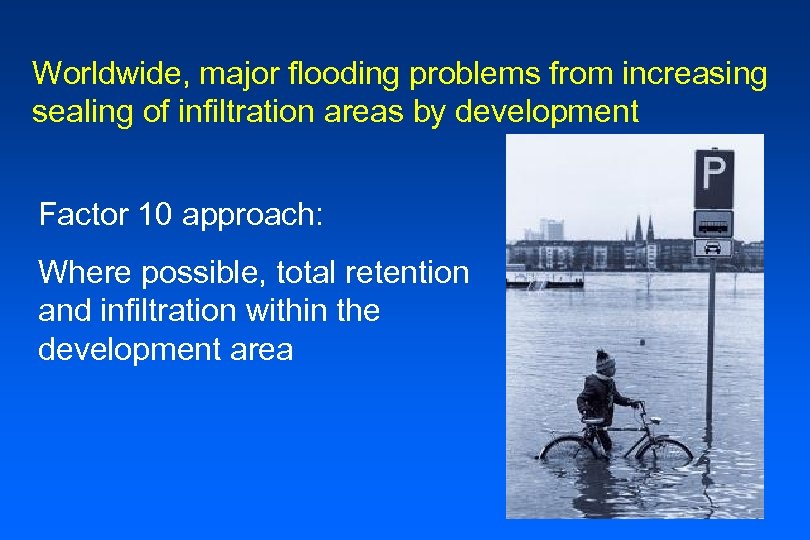
Worldwide, major flooding problems from increasing sealing of infiltration areas by development Factor 10 approach: Where possible, total retention and infiltration within the development area
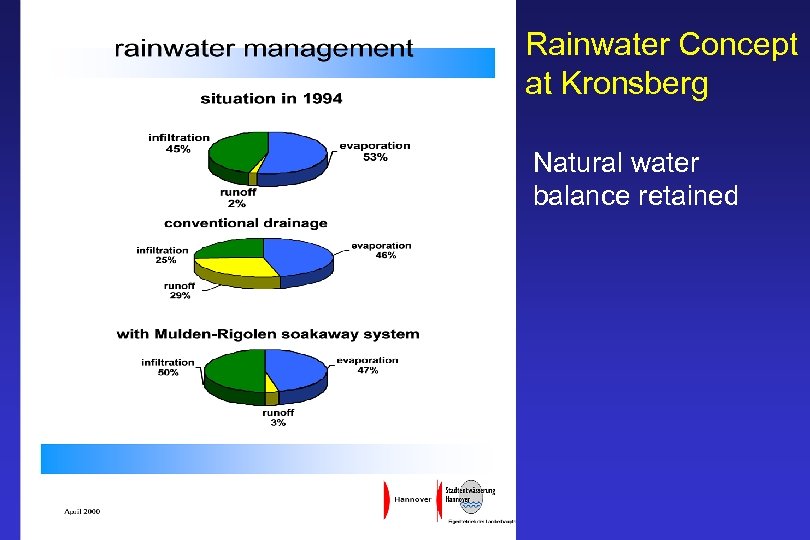
Rainwater Concept at Kronsberg Natural water balance retained
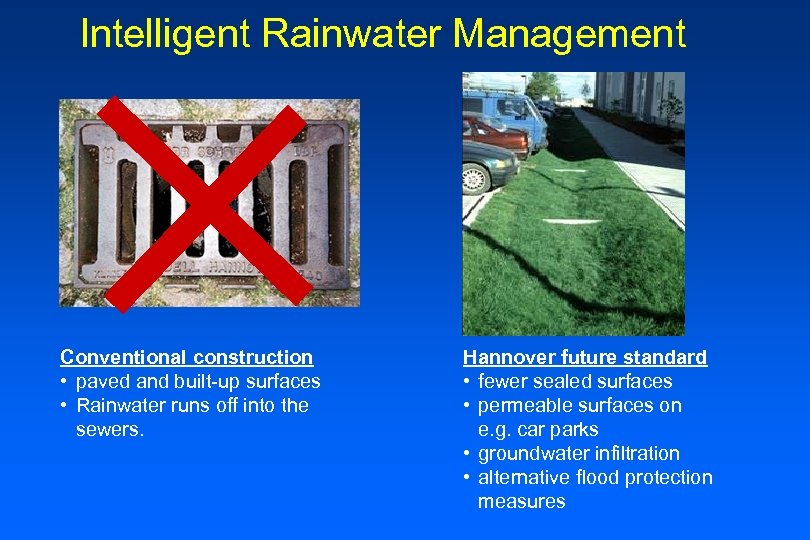
Intelligent Rainwater Management Conventional construction • paved and built-up surfaces • Rainwater runs off into the sewers. Hannover future standard • fewer sealed surfaces • permeable surfaces on e. g. car parks • groundwater infiltration • alternative flood protection measures
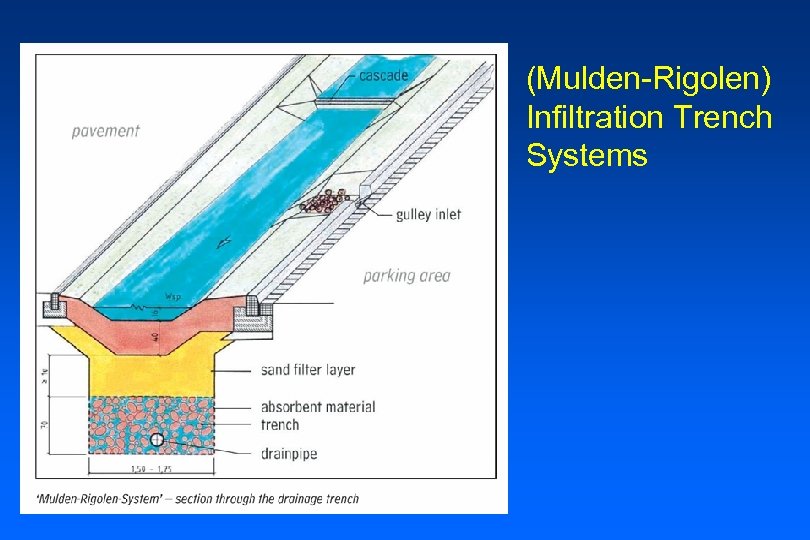
(Mulden-Rigolen) Infiltration Trench Systems
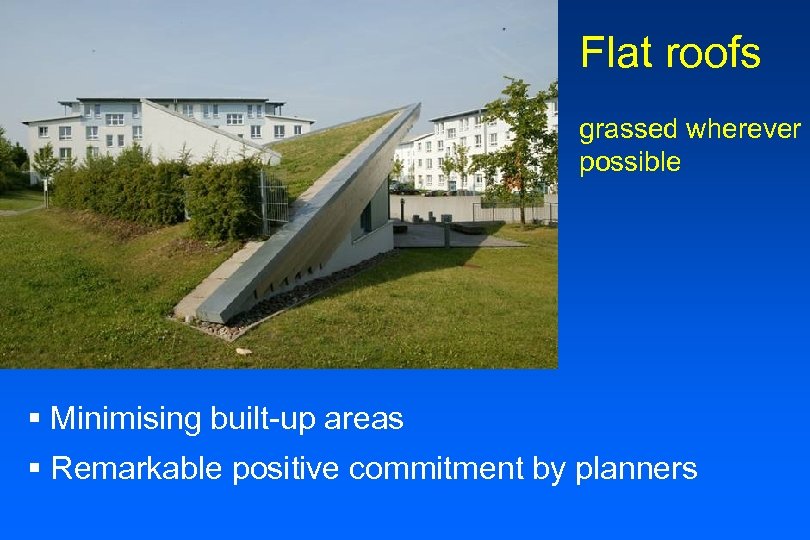
Flat roofs grassed wherever possible § Minimising built-up areas § Remarkable positive commitment by planners
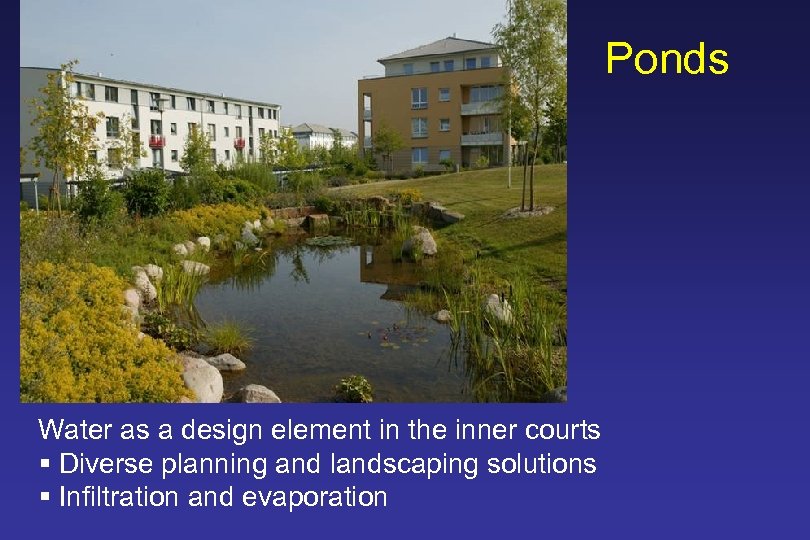
Ponds Water as a design element in the inner courts § Diverse planning and landscaping solutions § Infiltration and evaporation
Thank you! Internet: www. hannover. de www. sibart. org (German, English, French & Spanish) www. hans-moenninghoff. de
Скачать презентацию Hannover-Kronsberg a housing-area with very far going aspects
aed8cefd85da1ce7bf50f770857aafa3.ppt