


 Скачать презентацию Hail to the Chief ARGUMENTS IN FAVOR
96ffab331dada6a3c935cc0a61ab7d02.ppt
- Количество слайдов: 34
 Hail to the Chief
 ARGUMENTS IN FAVOR OF THE ELECTORAL COLLEGE 1. DEMOCRATIC BECAUSE ELECTORS VOTE ACCORDING TO WILL OF MAJORITY 2. FEDERALISM-VOTING EXPRESSED STATE BY STATE 3. GUARANTEE OF AT LEAST 3 ELECTORAL VOTES – COLLECTIVELY BENEFITS SMALL STATES
 ARGUMENTS AGAINST THE ELECTORAL COLLEGE 1. POPULAR VOTE MORE DEMOCRATIC 2. ELECTORS CAN VOTE CONTRARY TO WISHES OF MAJORITY 3. POPULAR THIRD PARTY CANDIDATE--HOUSE OF REPS MAY DECIDE
 • PROPOSALS TO REFORM THE ELECTORAL COLLEGE • Create a proportional system— candidate receives proportional number based on size of popular vote in state. • Abolish the Electoral College and allow election to be determined by popular vote. • Create a limited term of six years—no reelection
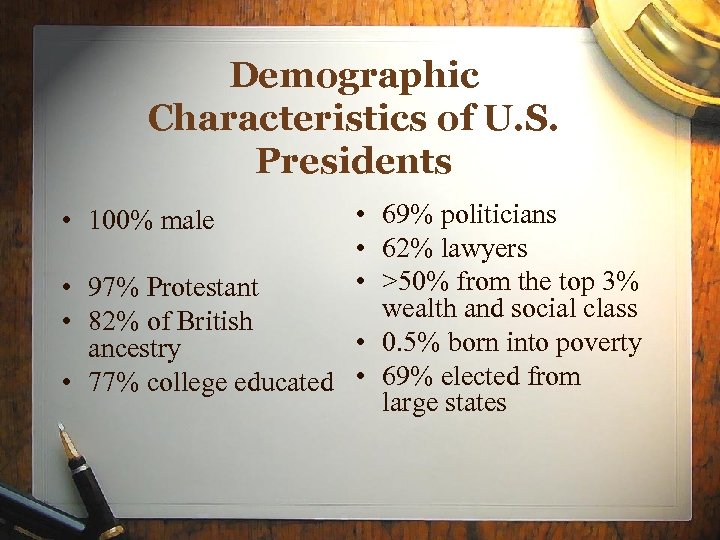 Demographic Characteristics of U. S. Presidents • 69% politicians • 62% lawyers • >50% from the top 3% • 97% Protestant wealth and social class • 82% of British • 0. 5% born into poverty ancestry • 77% college educated • 69% elected from large states • 100% male
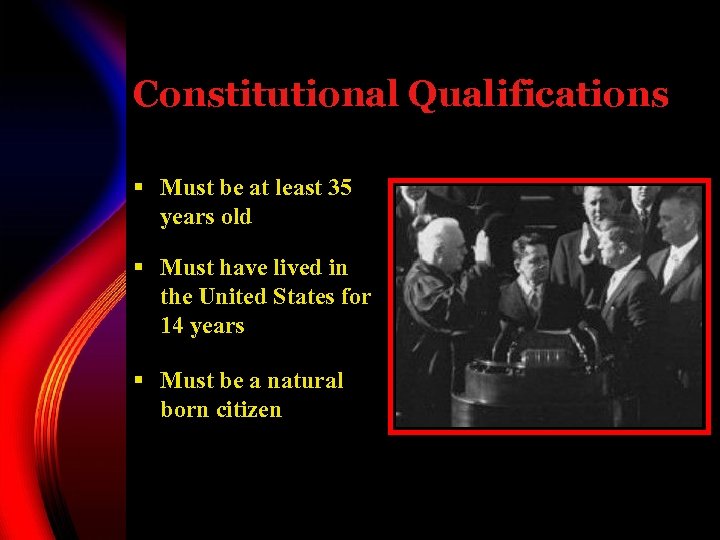 Constitutional Qualifications § Must be at least 35 years old § Must have lived in the United States for 14 years § Must be a natural born citizen
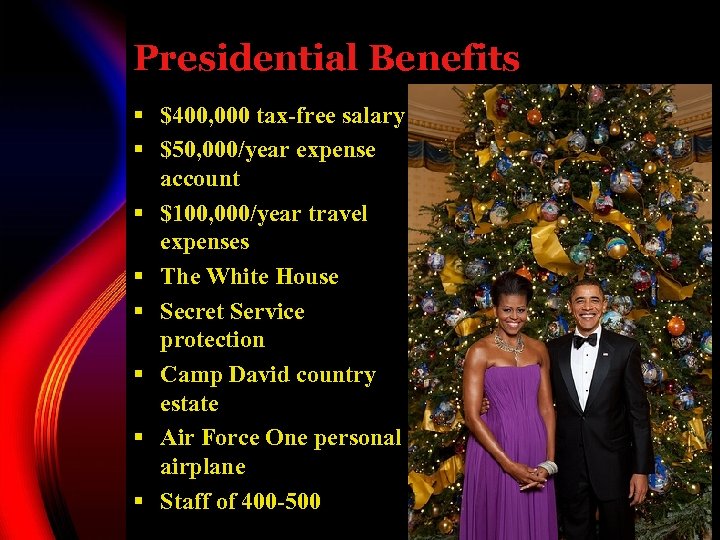 Presidential Benefits § $400, 000 tax-free salary § $50, 000/year expense account § $100, 000/year travel expenses § The White House § Secret Service protection § Camp David country estate § Air Force One personal airplane § Staff of 400 -500 Christmas at the White House, 2004
 Presidential Roles
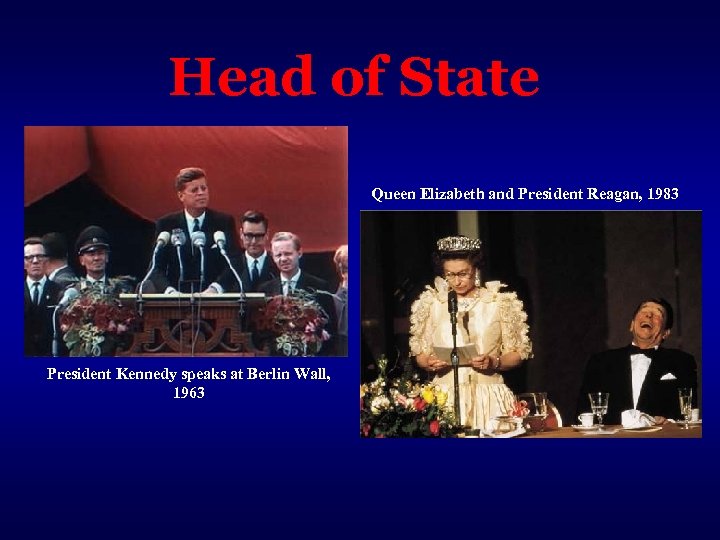 Head of State Queen Elizabeth and President Reagan, 1983 President Kennedy speaks at Berlin Wall, 1963
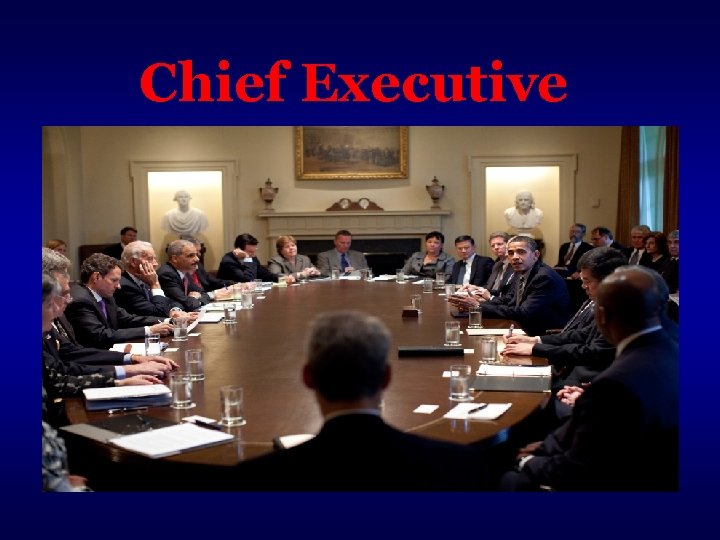 Chief Executive
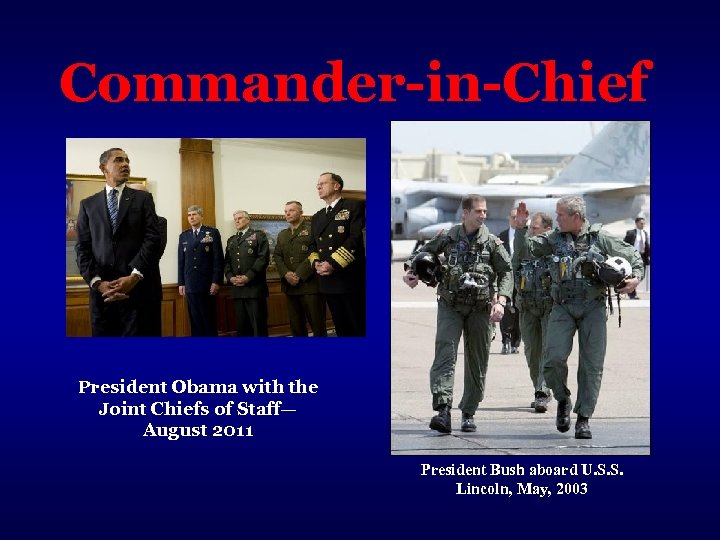 Commander-in-Chief President Obama with the Joint Chiefs of Staff— August 2011 President Bush aboard U. S. S. Lincoln, May, 2003
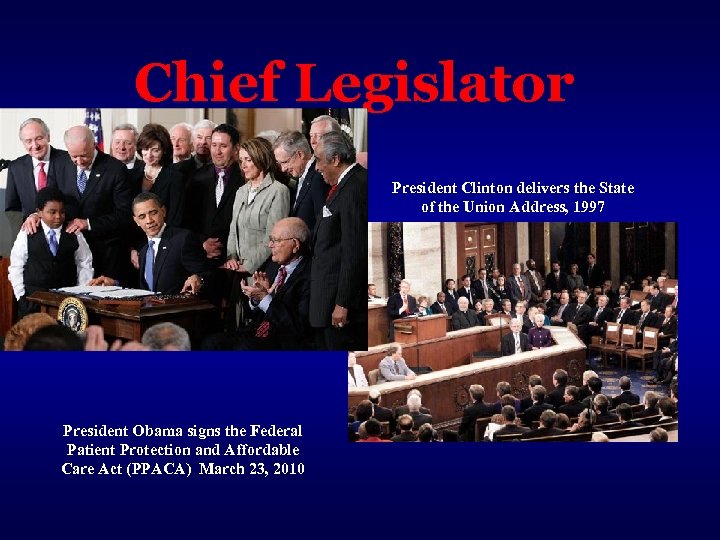 Chief Legislator President Clinton delivers the State of the Union Address, 1997 President Obama signs the Federal Patient Protection and Affordable Care Act (PPACA) March 23, 2010
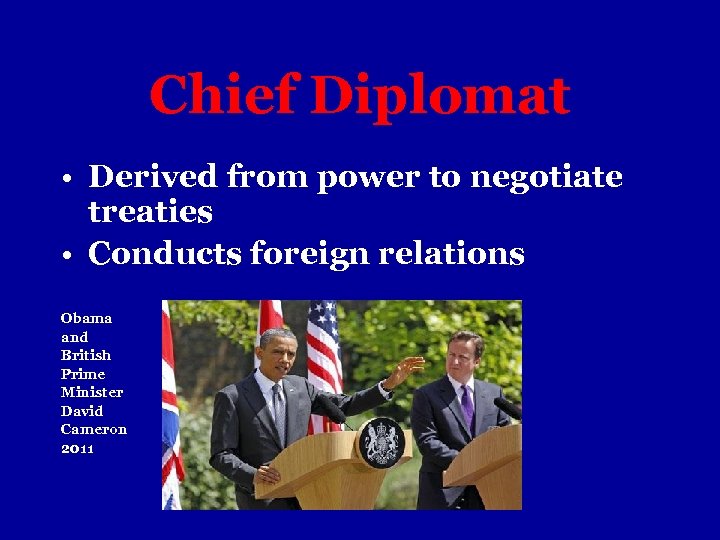 Chief Diplomat • Derived from power to negotiate treaties • Conducts foreign relations Obama and British Prime Minister David Cameron 2011
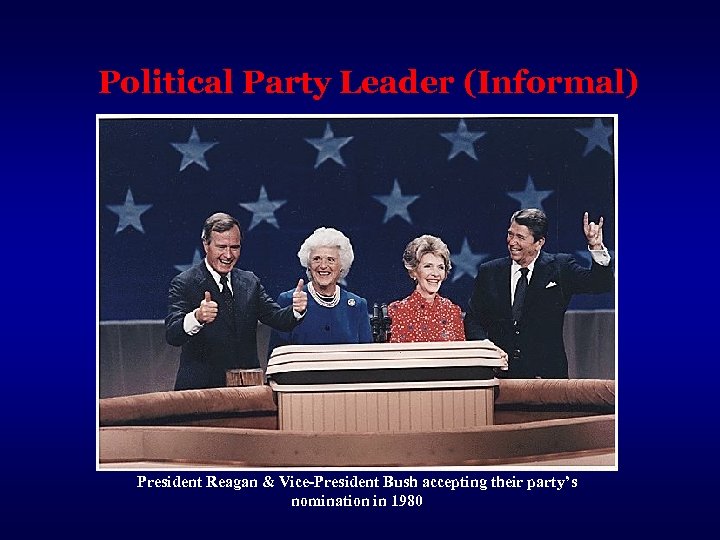 Political Party Leader (Informal) President Reagan & Vice-President Bush accepting their party’s nomination in 1980
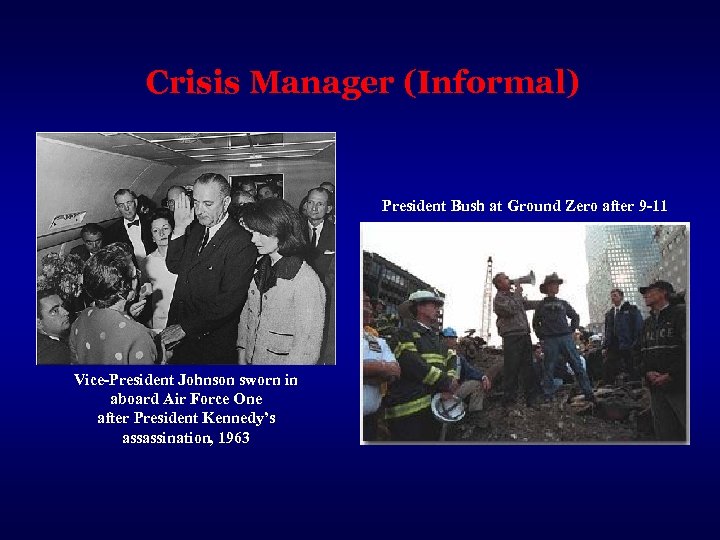 Crisis Manager (Informal) President Bush at Ground Zero after 9 -11 Vice-President Johnson sworn in aboard Air Force One after President Kennedy’s assassination, 1963
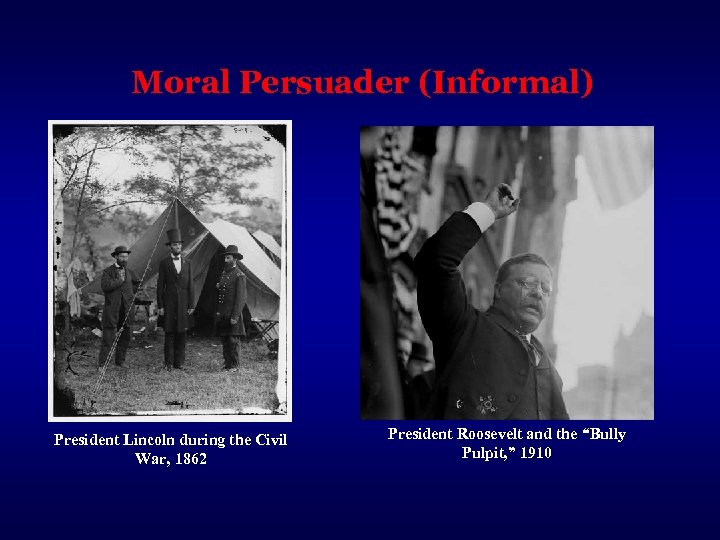 Moral Persuader (Informal) President Lincoln during the Civil War, 1862 President Roosevelt and the “Bully Pulpit, ” 1910
 Formal Powers of the President § Constitutional or enumerated powers of the presidency § Found primarily in Article II of the Constitution
 Formal Powers: Commander-in-Chief § Commander in Chief of the Army & Navy § Commander in Chief of the state militias (now the National Guard) § Commission all officers § Mobilize forces at any time
 Formal Powers: Chief Executive § “Faithfully execute” the laws § Require the opinion of heads of executive departments § Grant pardons for federal offenses except for cases of impeachment § Nominate judges of the Supreme Court and all other officers of the U. S. with consent of the Senate § Fill vacancies that may happen during recess of the Senate
 Formal Powers: Foreign Affairs § Appoint ambassadors, ministers and consuls § Make treaties subject to Senate confirmation § Receive ambassadors
 Formal Powers: Chief Legislator § Give State of the Union address to Congress § Recommend “measures” to the Congress § Upon “extraordinary occasions” convene both houses of Congress
 Formal Powers: Chief Legislator (cont. ) § Presidential Veto § Veto Message within 10 days of passing the House of origin § Pocket Veto - President does not sign within 10 days § Congress can override with 2/3 majority from both Houses § Veto Politics § Congressional override is difficult (only 4%) § Threat of veto can cause Congress to make changes in legislation
 Informal Powers • Those powers not explicitly written in the Constitution • Similar to “necessary and proper” powers of Congress
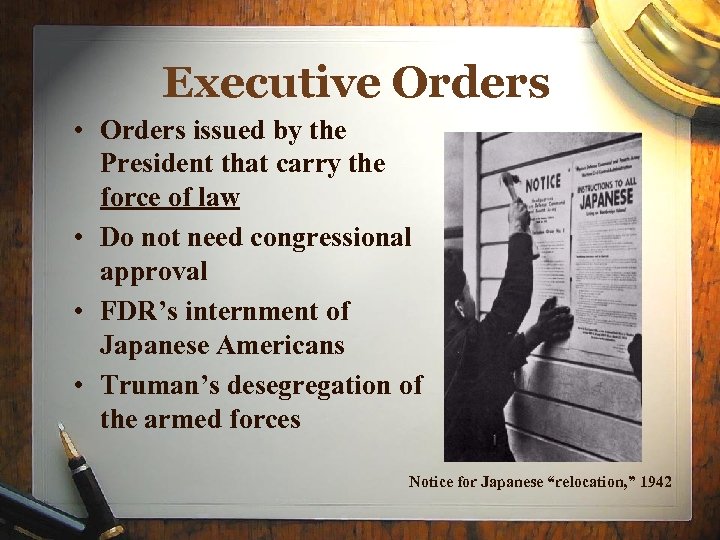 Executive Orders • Orders issued by the President that carry the force of law • Do not need congressional approval • FDR’s internment of Japanese Americans • Truman’s desegregation of the armed forces Notice for Japanese “relocation, ” 1942
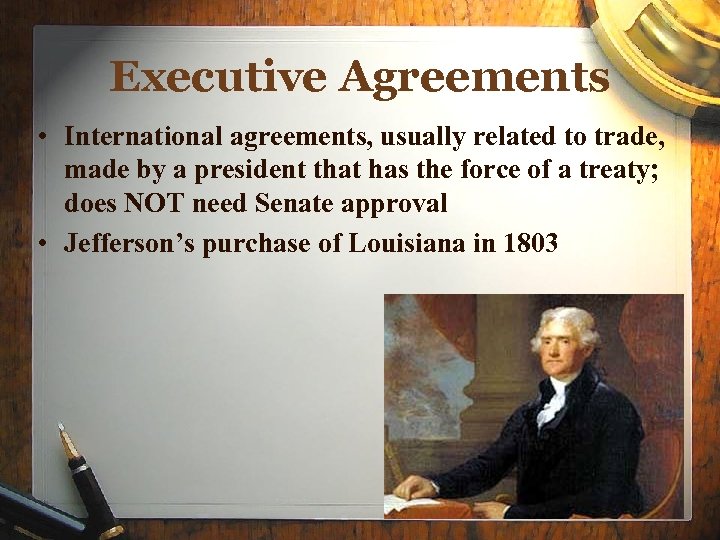 Executive Agreements • International agreements, usually related to trade, made by a president that has the force of a treaty; does NOT need Senate approval • Jefferson’s purchase of Louisiana in 1803
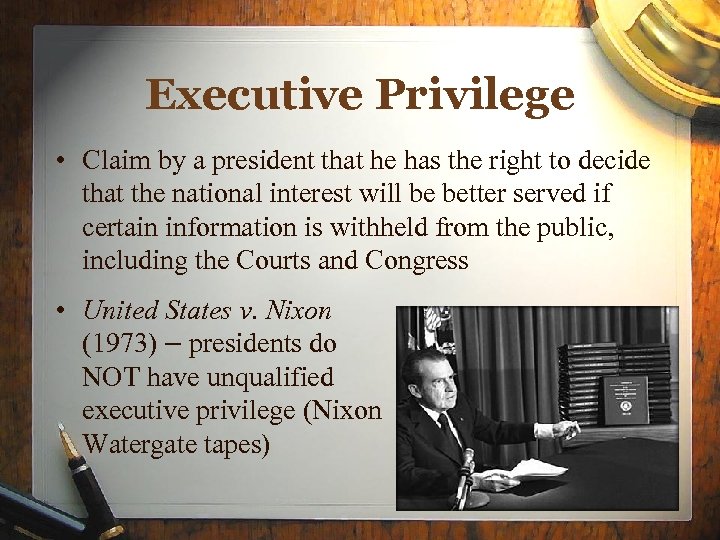 Executive Privilege • Claim by a president that he has the right to decide that the national interest will be better served if certain information is withheld from the public, including the Courts and Congress • United States v. Nixon (1973) – presidents do NOT have unqualified executive privilege (Nixon Watergate tapes)
 Presidential Quotations
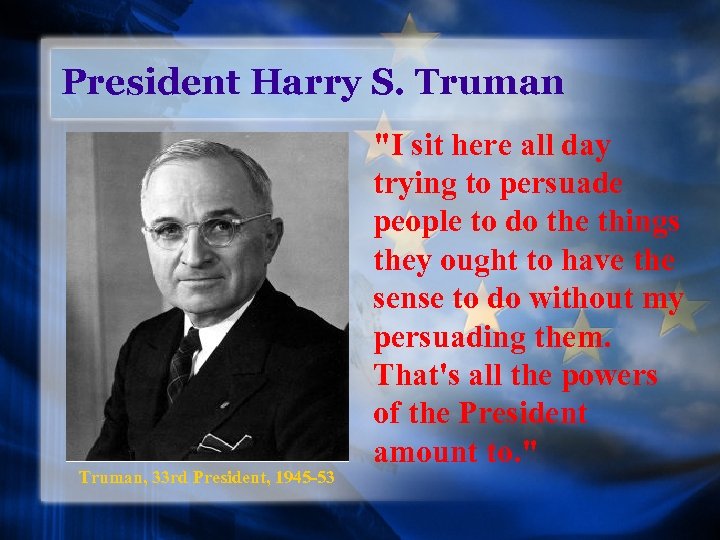 President Harry S. Truman, 33 rd President, 1945 -53 "I sit here all day trying to persuade people to do the things they ought to have the sense to do without my persuading them. That's all the powers of the President amount to. "
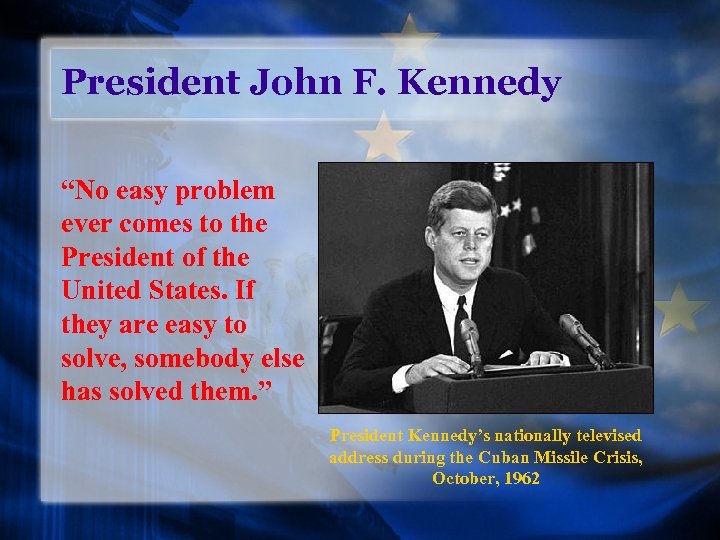 President John F. Kennedy “No easy problem ever comes to the President of the United States. If they are easy to solve, somebody else has solved them. ” President Kennedy’s nationally televised address during the Cuban Missile Crisis, October, 1962
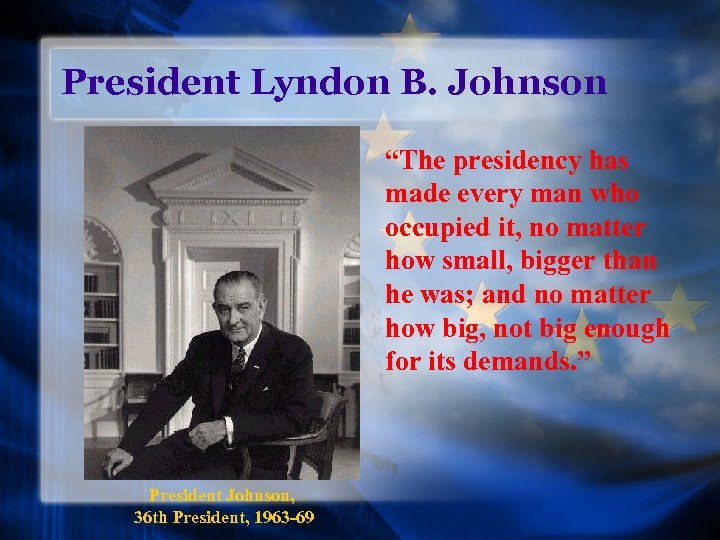 President Lyndon B. Johnson “The presidency has made every man who occupied it, no matter how small, bigger than he was; and no matter how big, not big enough for its demands. ” President Johnson, 36 th President, 1963 -69
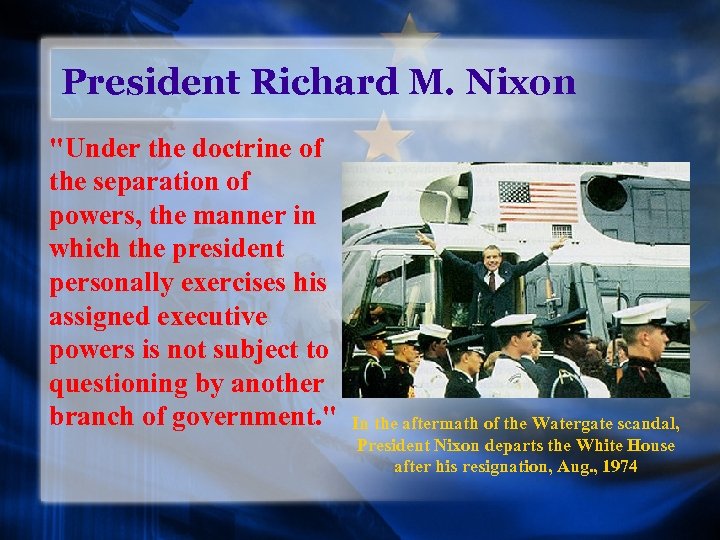 President Richard M. Nixon "Under the doctrine of the separation of powers, the manner in which the president personally exercises his assigned executive powers is not subject to questioning by another branch of government. " In the aftermath of the Watergate scandal, President Nixon departs the White House after his resignation, Aug. , 1974
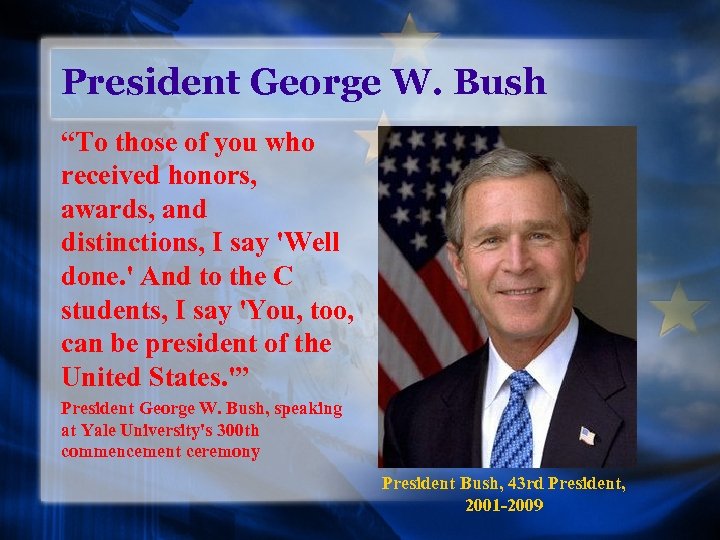 President George W. Bush “To those of you who received honors, awards, and distinctions, I say 'Well done. ' And to the C students, I say 'You, too, can be president of the United States. '” President George W. Bush, speaking at Yale University's 300 th commencement ceremony President Bush, 43 rd President, 2001 -2009
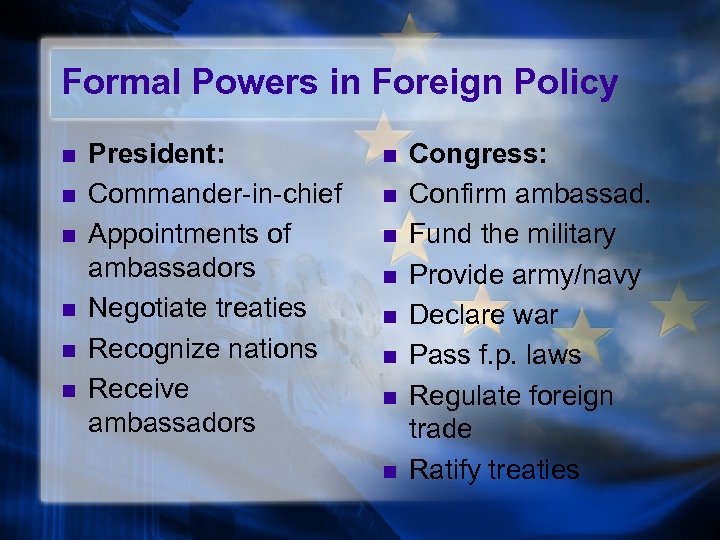 Formal Powers in Foreign Policy n n n President: Commander-in-chief Appointments of ambassadors Negotiate treaties Recognize nations Receive ambassadors n n n n Congress: Confirm ambassad. Fund the military Provide army/navy Declare war Pass f. p. laws Regulate foreign trade Ratify treaties
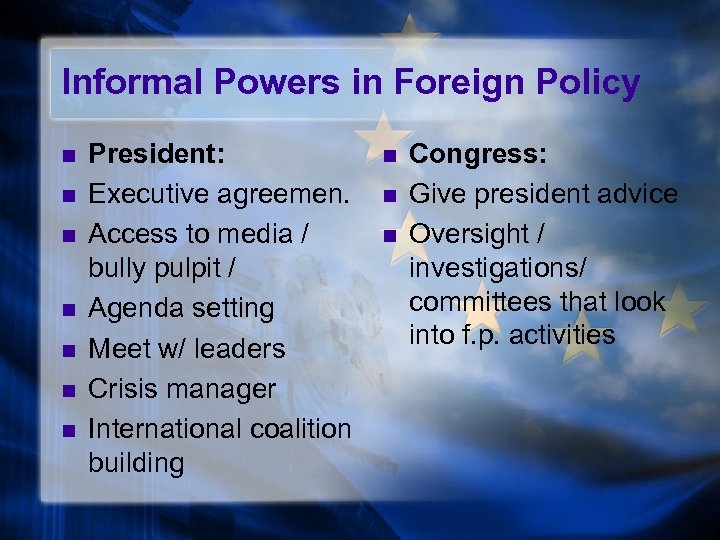 Informal Powers in Foreign Policy n n n n President: Executive agreemen. Access to media / bully pulpit / Agenda setting Meet w/ leaders Crisis manager International coalition building n n n Congress: Give president advice Oversight / investigations/ committees that look into f. p. activities