


 Скачать презентацию Haemodynamic monitoring in shock and implications for management
862e8d02347a0a200b8ba6d708ecf732.ppt
- Количество слайдов: 22
 Haemodynamic monitoring in shock and implications for management Are The Less Invasive Techniques For Monitoring Cardiac Output As Accurate As The Pulmonary Artery Catheter? Dr Andrew Rhodes St George’s Hospital London
 Conflicts of Interest • Consultant for Edwards Lifesciences. • Perform research on Li. DCO, Vigilance and Vigileo haemodynamic monitors. • Member of DSMB for Orion pharma.
 Grade Process for Diagnostic Technologies. 1. Assess the evidence of accuracy for the diagnostic test. 2. Assess the evidence that using the technology influences outcome. R. Jaeschke
 Summary • Description of Technology • Assessment of Evidence for accuracy of technology. • Assessment of evidence that technology can influence outcome. • Recommendations.
 How accurate is the PAC? • 12 -15% for triplicate injection of ice saline – Stetz, 1982 Am Rev Respir Dis – Nilsson 2004 Acta Anesth • But worse if – Old – Obese – Less injections – Continuous technologies
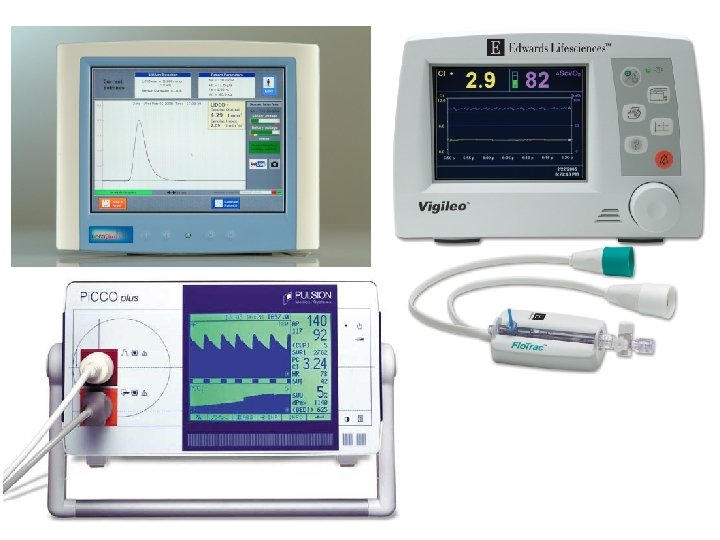
 Arterial Pulse Analysis for the Measurement of Cardiac Output Arterial pulse pressure analysis is a technique of measuring and monitoring stroke volume on a beat to beat basis from the arterial pulse pressure waveform. Advantages • Minimally invasive • No incremental risk to the patient • Beat to beat information
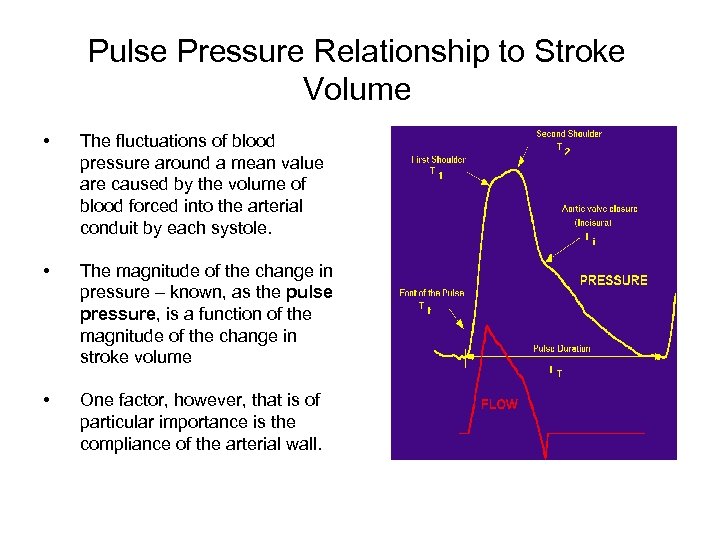 Pulse Pressure Relationship to Stroke Volume • The fluctuations of blood pressure around a mean value are caused by the volume of blood forced into the arterial conduit by each systole. • The magnitude of the change in pressure – known, as the pulse pressure, is a function of the magnitude of the change in stroke volume • One factor, however, that is of particular importance is the compliance of the arterial wall.
 The relationship between Pulse Pressure and Stroke Volume is difficult however…. . • Problems with measurement of Pulse Pressure – Wave reflection • less in an aortic waveform than in a radial waveform – – • Damping – in the measuring apparatus Morphology. Problems with assessing aortic compliance – Non linear relationship, prevents any simple approach to estimate volume from the pressure change
 Compliance • Is altered by – Age – Sex – Disease process – Pharmacology – Etc etc.
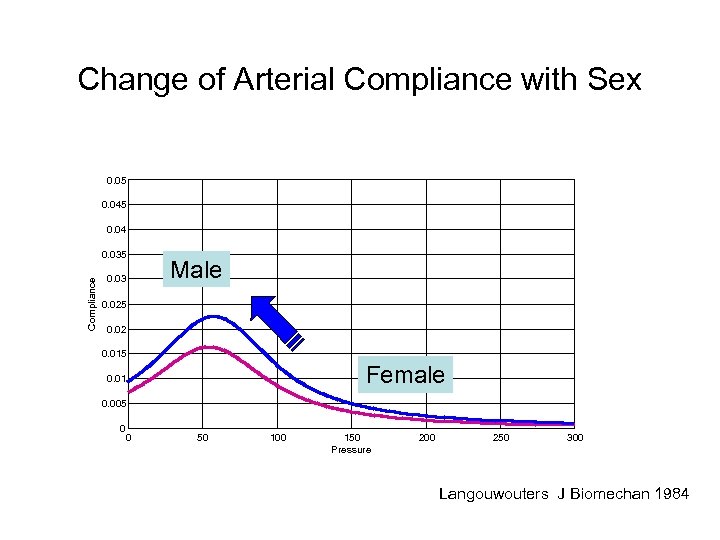 Change of Arterial Compliance with Sex 0. 05 0. 04 Compliance 0. 035 0. 03 Male 0. 025 0. 02 0. 015 Female 0. 01 0. 005 0 0 50 100 150 Pressure 200 250 300 Langouwouters J Biomechan 1984
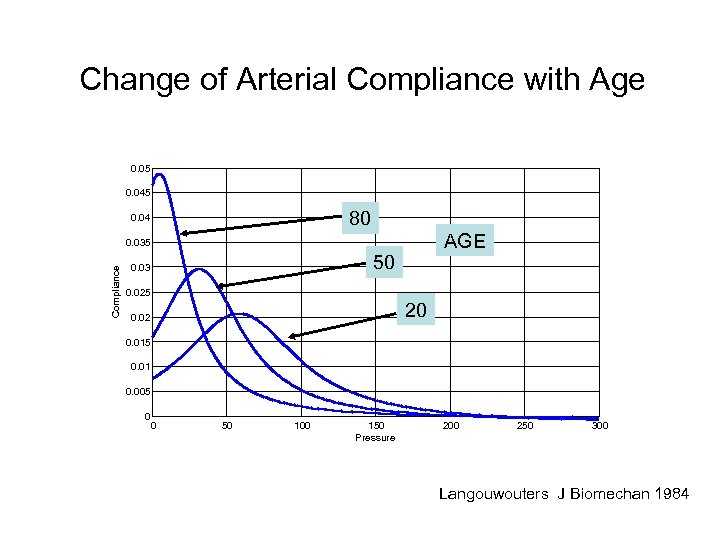 Change of Arterial Compliance with Age 0. 05 0. 045 80 0. 04 AGE Compliance 0. 035 50 0. 03 0. 025 20 0. 02 0. 015 0. 01 0. 005 0 0 50 100 150 Pressure 200 250 300 Langouwouters J Biomechan 1984
 Most companies have concluded that this non-linear compliance relationship implies that some sort of calibration technique is necessary for accurate determination of stroke volume from arterial pressure traces.
 Assessment of Accuracy • Calibration – Very little in shocked or haemodynamically unstable patients. – Study quality limited by design • Stable patients • No gold standard (mostly against PAC) • Pulse contour analysis – Mostly in anaesthetic or post surgical patients.
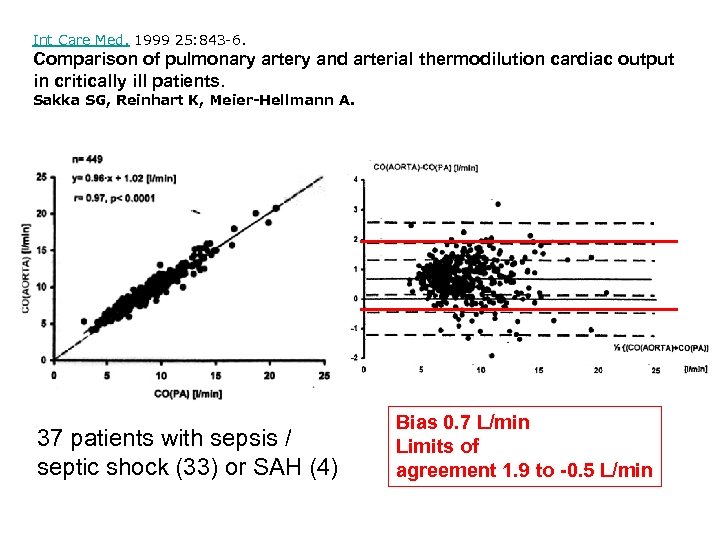 Int Care Med. 1999 25: 843 -6. Comparison of pulmonary artery and arterial thermodilution cardiac output in critically ill patients. Sakka SG, Reinhart K, Meier-Hellmann A. 37 patients with sepsis / septic shock (33) or SAH (4) Bias 0. 7 L/min Limits of agreement 1. 9 to -0. 5 L/min
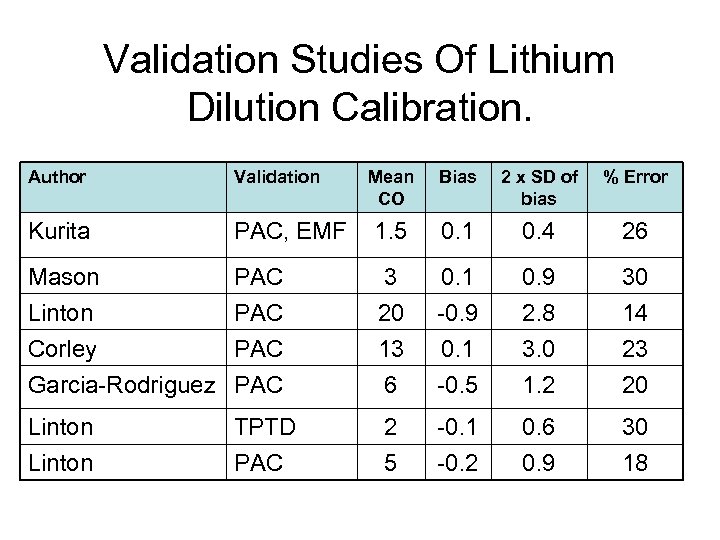 Validation Studies Of Lithium Dilution Calibration. Author Validation Mean CO Bias 2 x SD of bias % Error Kurita PAC, EMF 1. 5 0. 1 0. 4 26 Mason Linton Corley Garcia-Rodriguez PAC PAC 3 20 13 6 0. 1 -0. 9 0. 1 -0. 5 0. 9 2. 8 3. 0 1. 2 30 14 23 20 Linton TPTD PAC 2 5 -0. 1 -0. 2 0. 6 0. 9 30 18
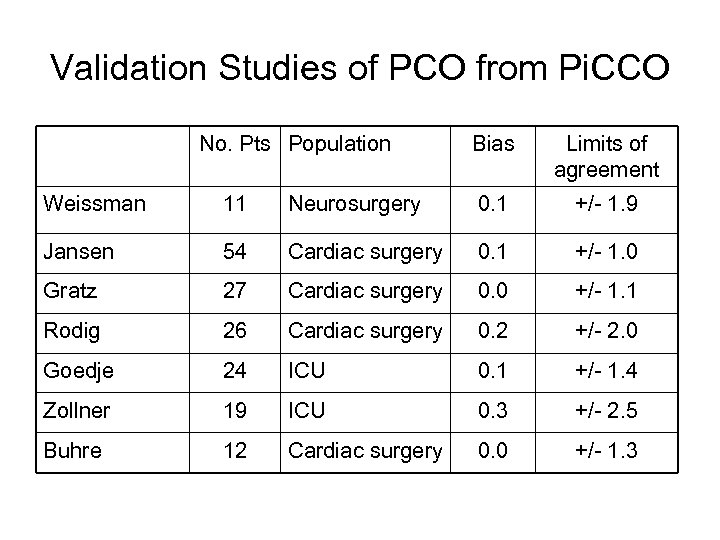 Validation Studies of PCO from Pi. CCO No. Pts Population Bias Limits of agreement Weissman 11 Neurosurgery 0. 1 +/- 1. 9 Jansen 54 Cardiac surgery 0. 1 +/- 1. 0 Gratz 27 Cardiac surgery 0. 0 +/- 1. 1 Rodig 26 Cardiac surgery 0. 2 +/- 2. 0 Goedje 24 ICU 0. 1 +/- 1. 4 Zollner 19 ICU 0. 3 +/- 2. 5 Buhre 12 Cardiac surgery 0. 0 +/- 1. 3
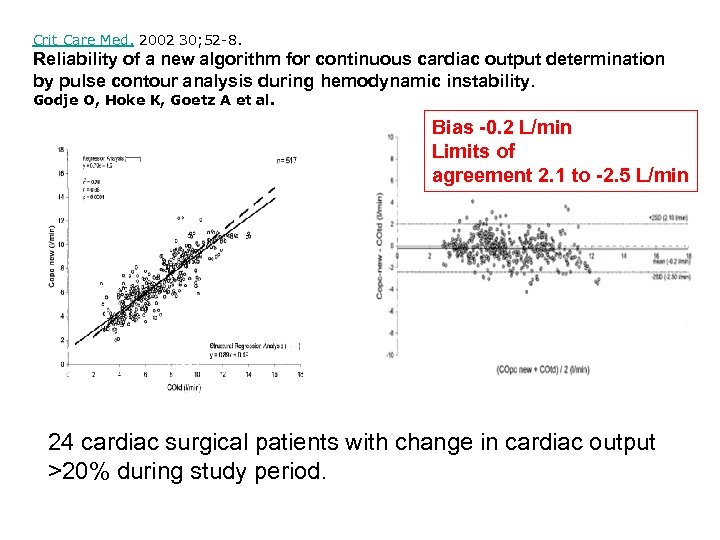 Crit Care Med. 2002 30; 52 -8. Reliability of a new algorithm for continuous cardiac output determination by pulse contour analysis during hemodynamic instability. Godje O, Hoke K, Goetz A et al. Bias -0. 2 L/min Limits of agreement 2. 1 to -2. 5 L/min 24 cardiac surgical patients with change in cardiac output >20% during study period.
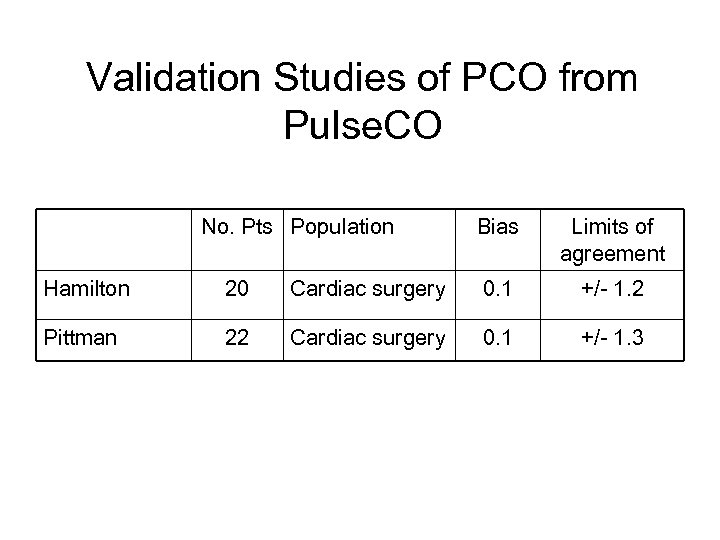 Validation Studies of PCO from Pulse. CO No. Pts Population Bias Limits of agreement Hamilton 20 Cardiac surgery 0. 1 +/- 1. 2 Pittman 22 Cardiac surgery 0. 1 +/- 1. 3
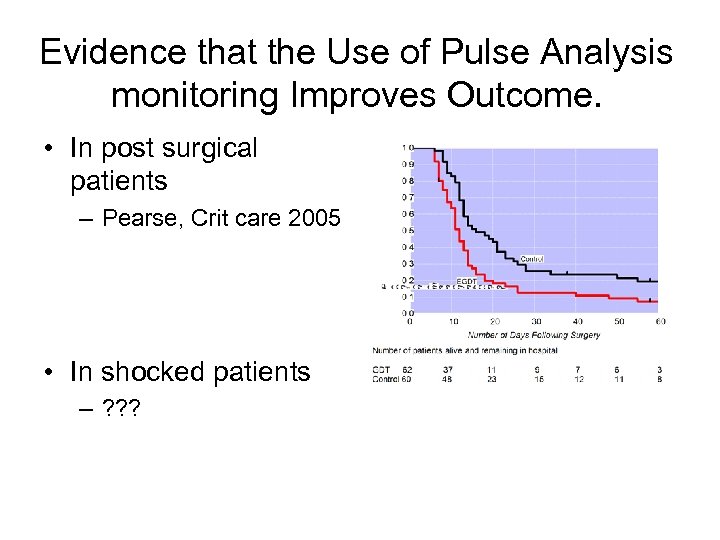 Evidence that the Use of Pulse Analysis monitoring Improves Outcome. • In post surgical patients – Pearse, Crit care 2005 • In shocked patients – ? ? ?
 Are the pulse analysis techniques as accurate as the PAC for monitoring CO? Yes, (level of evidence, C) • but it depends…. – Not all monitors are the same. – In stable patients they perform to a clinically acceptable level and have other advantages. • Continuous data • Less invasive • Offer other variables. – In shocked patients the evidence is less clear.
 Can we recommend this new technology as an alternative to the PAC in shock? • No. – But we should recommend more studies evaluating the performance and efficacy of these monitors in shocked patients.