Скачать презентацию Hackney carriage Саенко Сергей 6 А A
Hackney carriage.pptx
- Количество слайдов: 9
 Hackney carriage Саенко Сергей 6 А
 A hackney or hackney carriage (also called a cab, black cab, hack or London taxi) is a carriage or automobile for hire. [1] A hackney of a more expensive or high class was called a remise. [2] In the United Kingdom, the name hackney carriage today refers to a taxicab licensed by the Public Carriage Office in Greater London or by the local authority (non-metropolitan district councils or unitary authorities) in other parts of Great Britain, or by the Department of the Environment in Northern Ireland. In the United States, the police department of the city of Boston has a Hackney Carriage Unit, analogous to taxicab regulators in other cities, that issues Hackney Carriage medallions to its taxi operators

 "An Ordinance for the Regulation of Hackney-Coachmen in London and the places adjacent" was approved by Parliament in 1654, to remedy what it described as the "many Inconveniences [that] do daily arise by reason of the late increase and great irregularity of Hackney Coaches and Hackney Coachmen in London, Westminster and the places thereabouts". [6] The first hackney-carriage licences date from 1662, and applied literally to horse-drawn carriages, later modernised as hansom cabs (1834), that operated as vehicles for hire. There was a distinction between a general hackney carriage and a hackney coach, a hireable vehicle with specifically four wheels, two horses and six seats, and driven by a Jarvey (also spelled jarvie). In 19 th century London, private carriages were commonly sold off for use as hackney carriages, often displaying painted-over traces of the previous owner's coat of arms on the doors. The growler was a type of four-wheel, enclosed carriage drawn by two horses[7] used as a hackney carriage, that is, as a vehicle for hire with a coachman. It is distinguished from a cab, hansom cab or cabriolet, in that those had only two wheels. It is distinguished from most coaches by being of slightly smaller size, holding nominally four passengers, [8] and being much less ostentatious. [edit]
 Vehicle design
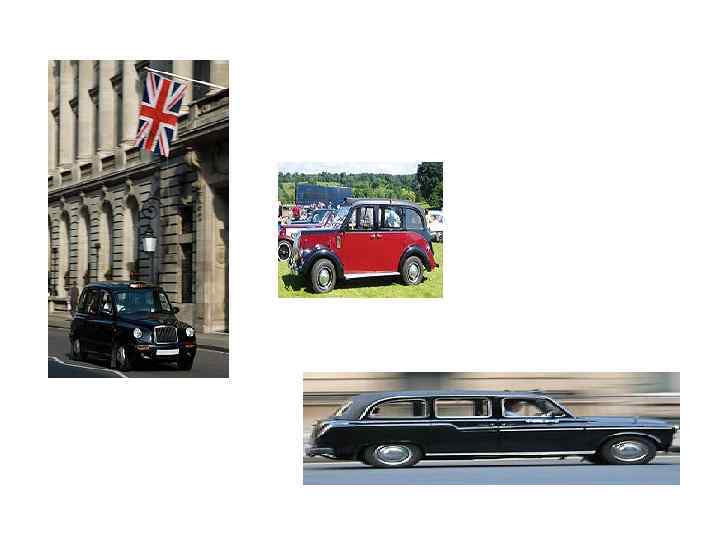
 Historically four-door saloon cars have been highly popular as hackney carriages, but with disability regulations growing in strength and some councils offering free licensing for disabledfriendly vehicles, many operators are now opting for wheelchairadapted taxis such as the LTI. Other models of specialist taxis include the Peugeot E 7 and rivals from Fiat, Volkswagen, Metrocab and Mercedes-Benz. These vehicles normally allow six or seven passengers, although some models can accommodate eight. Some of these 'minibus' taxis include a front passenger seat next to the driver, while others reserve this space solely for luggage. Many black cabs have a turning circle of only 25 ft (8 m). One reason for this is the configuration of the famed Savoy Hotel: The hotel entrance's small roundabout meant that vehicles needed the small turning circle in order to navigate it. That requirement became the legally required turning circles for all London cabs, while the custom of a passenger's sitting on the right, behind the driver, provided a reason for the right-hand traffic in Savoy Court, allowing hotel patrons to board and alight from the driver's side. [10]

 Beardmore Marks I to VII Austin FX 3 Austin/Carbodies/LTI FX 4 and Fairway MCW/Reliant/Hooper Metrocab LTI TX 1, TXII and TX 4