


 Скачать презентацию Hacking the Genome Designer Proteins Elite Organisms and
6a9811387c8442580678712cf5b0ec4d.ppt
- Количество слайдов: 36
 Hacking the Genome Designer Proteins, Elite Organisms, and You 21 st Chaos Communication Congress December 27 th to 29 th, 2004 Berliner Congress Center, Berlin, Germany Russell Hanson Dec 27, 2004 *21 C 3 – Berlin
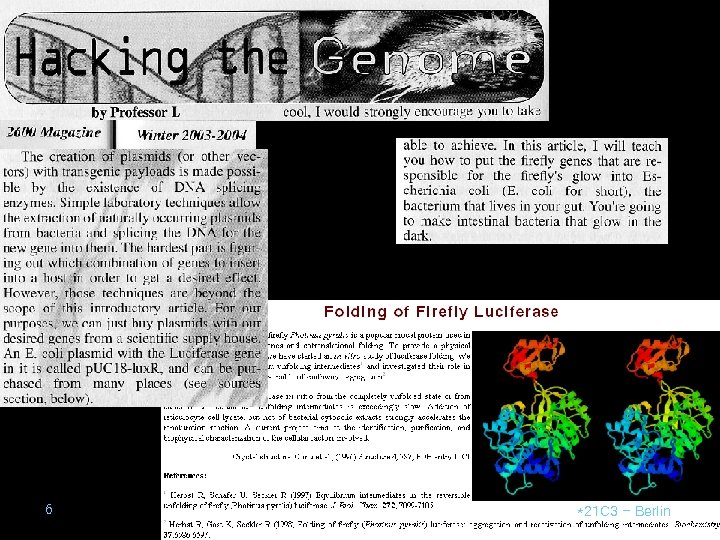
 Outline • • • 2 Analogies – why this talk? 2600 article – transgenes Engineering proteins Computer tools for genome analysis Conclusions *21 C 3 – Berlin
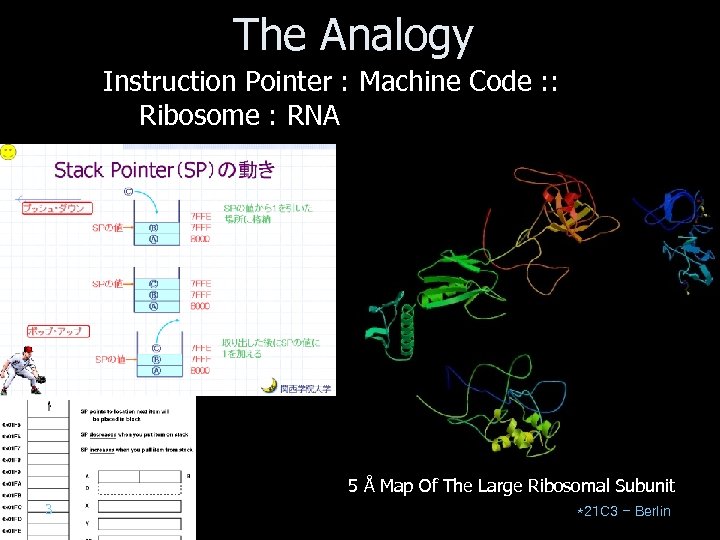 The Analogy Instruction Pointer : Machine Code : : Ribosome : RNA 5 Å Map Of The Large Ribosomal Subunit 3 *21 C 3 – Berlin
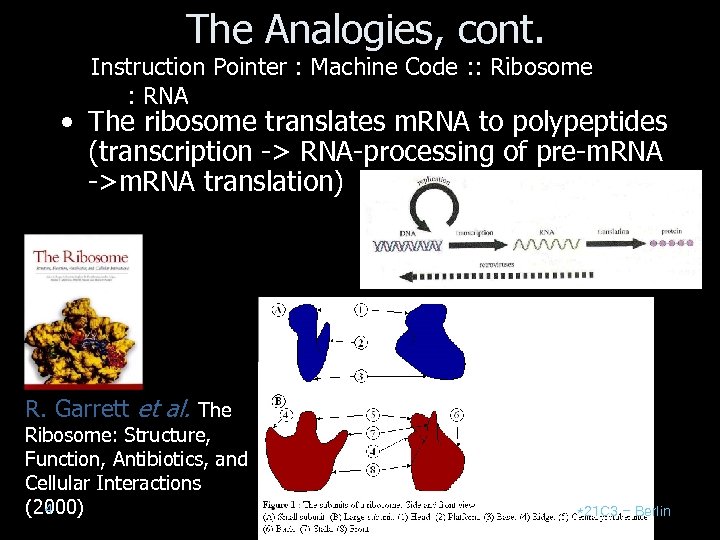 The Analogies, cont. Instruction Pointer : Machine Code : : Ribosome : RNA • The ribosome translates m. RNA to polypeptides (transcription -> RNA-processing of pre-m. RNA ->m. RNA translation) R. Garrett et al. The Ribosome: Structure, Function, Antibiotics, and Cellular Interactions 4 (2000) *21 C 3 – Berlin
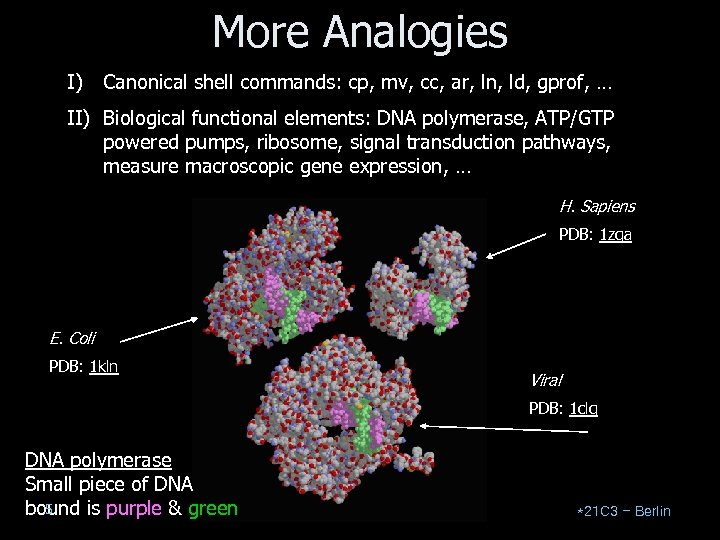 More Analogies I) Canonical shell commands: cp, mv, cc, ar, ln, ld, gprof, … II) Biological functional elements: DNA polymerase, ATP/GTP powered pumps, ribosome, signal transduction pathways, measure macroscopic gene expression, … H. Sapiens PDB: 1 zqa E. Coli PDB: 1 kln Viral PDB: 1 clq DNA polymerase Small piece of DNA 5 bound is purple & green *21 C 3 – Berlin
 6 *21 C 3 – Berlin
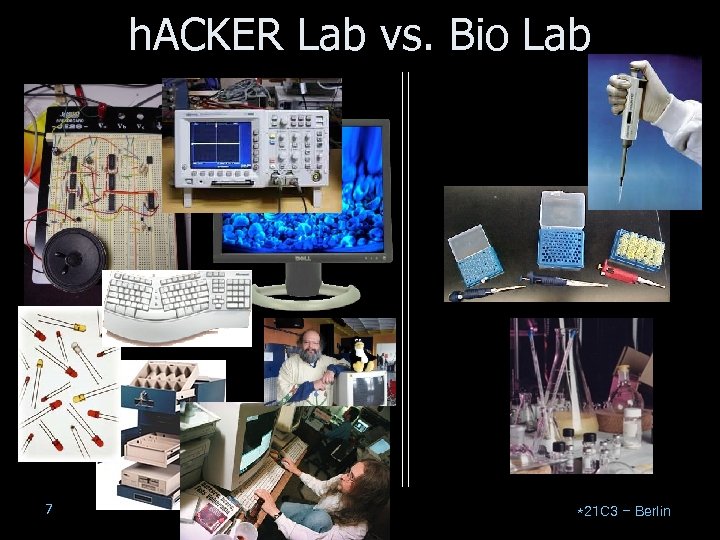 h. ACKER Lab vs. Bio Lab 7 *21 C 3 – Berlin
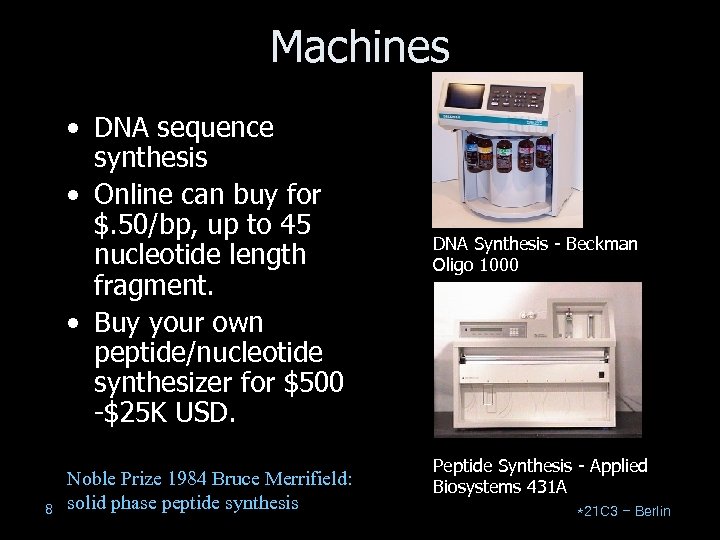 Machines • DNA sequence synthesis • Online can buy for $. 50/bp, up to 45 nucleotide length fragment. • Buy your own peptide/nucleotide synthesizer for $500 -$25 K USD. 8 Noble Prize 1984 Bruce Merrifield: solid phase peptide synthesis DNA Synthesis - Beckman Oligo 1000 Peptide Synthesis - Applied Biosystems 431 A *21 C 3 – Berlin
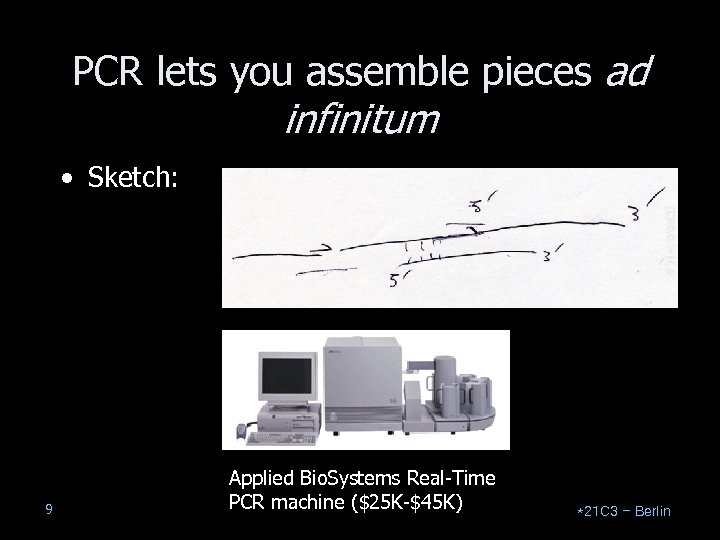 PCR lets you assemble pieces ad infinitum • Sketch: 9 Applied Bio. Systems Real-Time PCR machine ($25 K-$45 K) *21 C 3 – Berlin
 Engineering • Engineer a protein • Engineer an organism …. Why? “There is at present no understanding of this hacker mindset, the joy in engineering for its own sake, in the biological community. ” -Roger Brent (Cell 2000) 10 *21 C 3 – Berlin
 Oh, engineered organisms • • • Corn Tomatoes Citrus fruit (…) And our friend, the fruit fly, Drosophila Melanogaster • Celera, Inc. released information on genomicscale engineering, not available at press time 11 *21 C 3 – Berlin
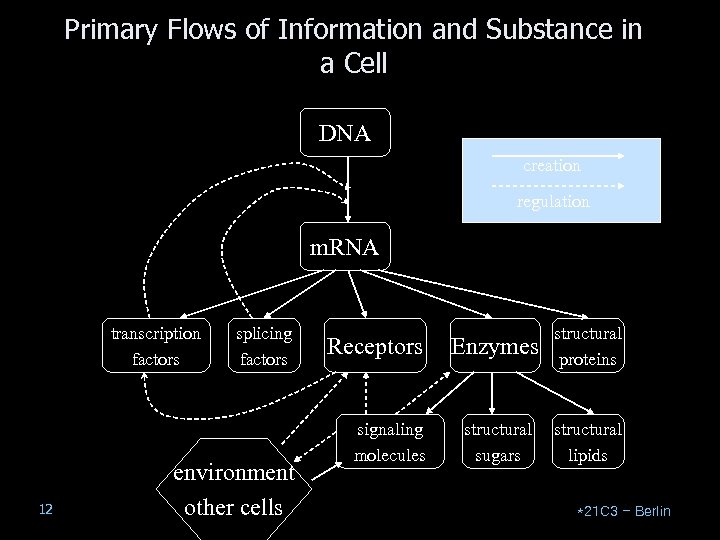 Primary Flows of Information and Substance in a Cell DNA creation regulation m. RNA transcription factors 12 splicing factors environment other cells Receptors signaling molecules Enzymes structural proteins structural sugars structural lipids *21 C 3 – Berlin
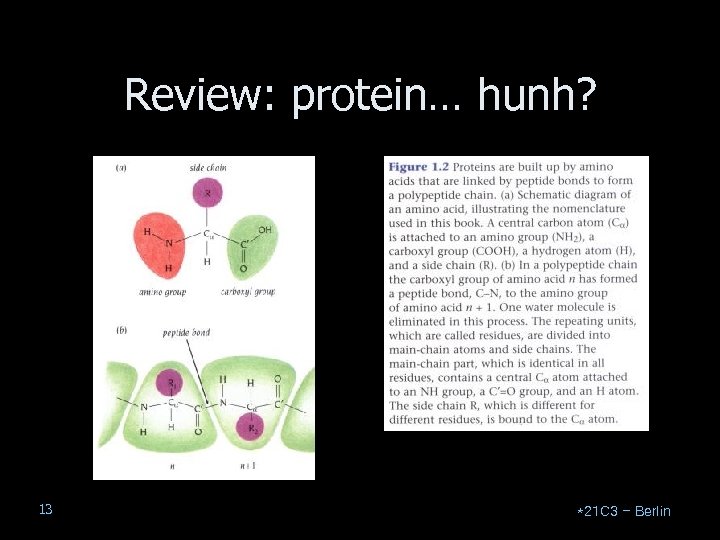 Review: protein… hunh? 13 *21 C 3 – Berlin
 Why engineer proteins? • 1) Engineered macromolecules could have experimental use as experimental tools, or for development and production of therapeutics • 2) During the process of said engineering, new techniques are developed which expand options available to research community as whole • 3) By approaching macromolecule as engineer, better understanding of how native molecules function 14 (Doyle, Chem & Bio, 1998) *21 C 3 – Berlin
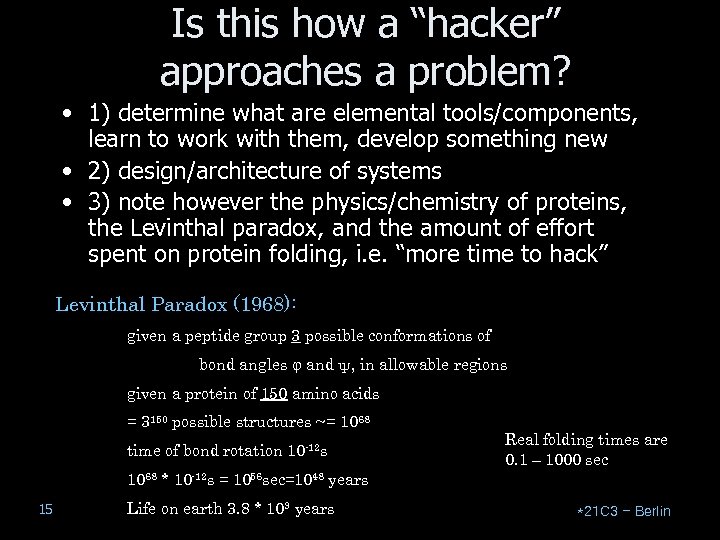 Is this how a “hacker” approaches a problem? • 1) determine what are elemental tools/components, learn to work with them, develop something new • 2) design/architecture of systems • 3) note however the physics/chemistry of proteins, the Levinthal paradox, and the amount of effort spent on protein folding, i. e. “more time to hack” Levinthal Paradox (1968): given a peptide group 3 possible conformations of bond angles φ and ψ, in allowable regions given a protein of 150 amino acids = 3150 possible structures ~= 1068 time of bond rotation 10 -12 s Real folding times are 0. 1 – 1000 sec 1068 * 10 -12 s = 1056 sec=1048 years 15 Life on earth 3. 8 * 109 years *21 C 3 – Berlin
 Methods for de novo protein synthesis Two methods: TASP: Template-assembled synthetic proteins RAFT: Regioselectively addressable functionalized templates “Small proteins or protein domains that are structurally stable and functionally active are especially attractive as models to study protein folding and as starting compounds for drug design, but to select them is a difficult task. … Advances in protein design and engineering, synthesis strategies, and analytical and conformational analysis techniques allowed for the successful realization of a number of folding motifs with tailored functional properties. ” 16 (Tuchscherer, Biopolymers, 1998) *21 C 3 – Berlin
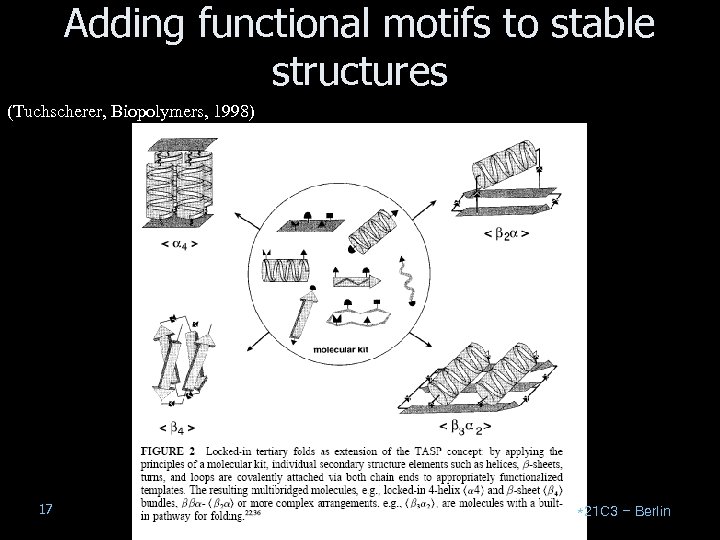 Adding functional motifs to stable structures (Tuchscherer, Biopolymers, 1998) 17 *21 C 3 – Berlin
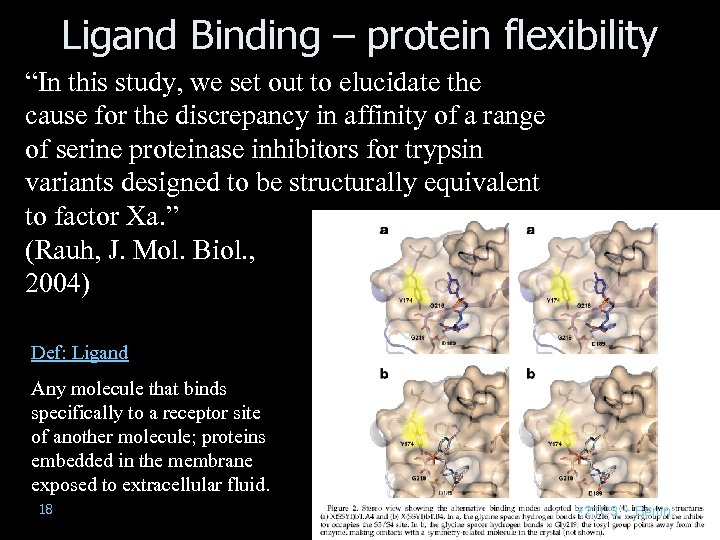 Ligand Binding – protein flexibility “In this study, we set out to elucidate the cause for the discrepancy in affinity of a range of serine proteinase inhibitors for trypsin variants designed to be structurally equivalent to factor Xa. ” (Rauh, J. Mol. Biol. , 2004) Def: Ligand Any molecule that binds specifically to a receptor site of another molecule; proteins embedded in the membrane exposed to extracellular fluid. 18 *21 C 3 – Berlin
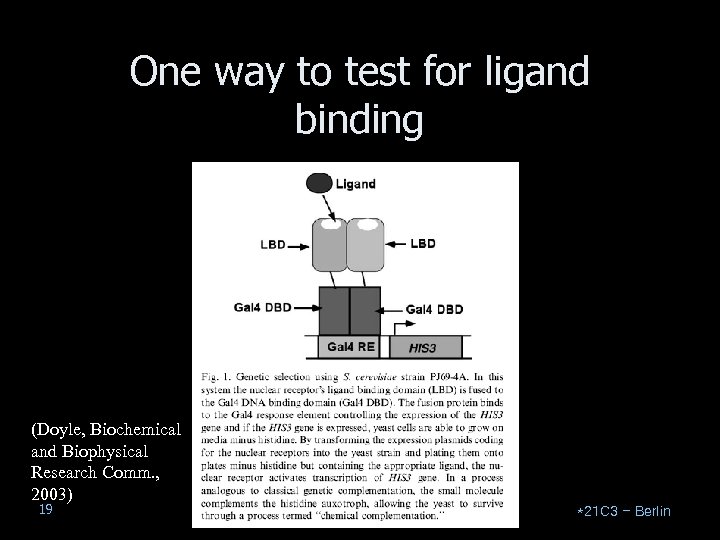 One way to test for ligand binding (Doyle, Biochemical and Biophysical Research Comm. , 2003) 19 *21 C 3 – Berlin
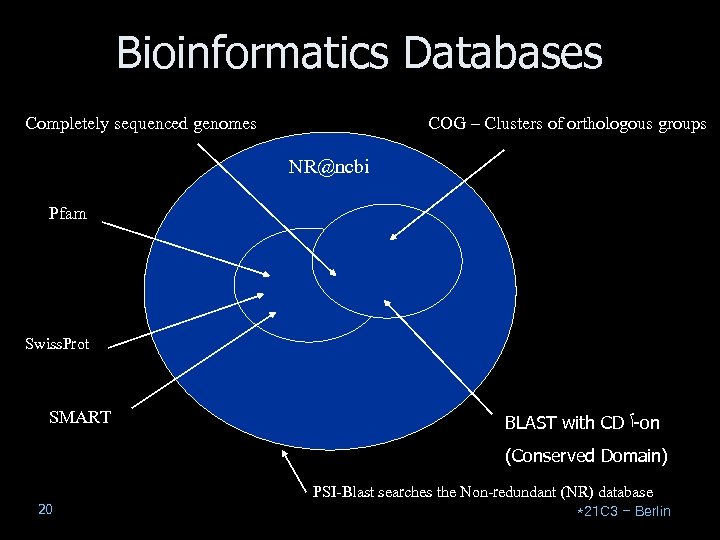 Bioinformatics Databases Completely sequenced genomes COG – Clusters of orthologous groups NR@ncbi Pfam Swiss. Prot SMART BLAST with CD -ٱ on (Conserved Domain) PSI-Blast searches the Non-redundant (NR) database 20 *21 C 3 – Berlin
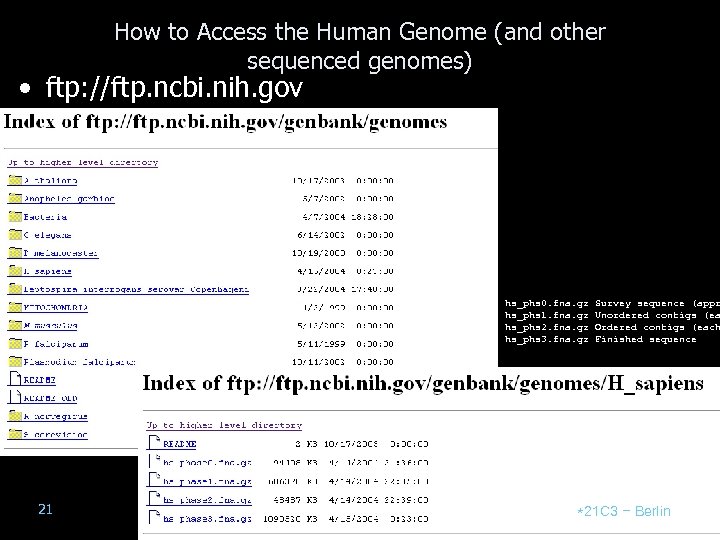 How to Access the Human Genome (and other sequenced genomes) • ftp: //ftp. ncbi. nih. gov hs_phs 0. fna. gz hs_phs 1. fna. gz hs_phs 2. fna. gz hs_phs 3. fna. gz 21 Survey sequence (appr Unordered contigs (ea Ordered contigs (each Finished sequence *21 C 3 – Berlin
 How to analyze a genome, or subsequence (p 1) • 1 st Step: a) Working with unknown protein sequence; Blast. P with CD on; you’re finding similarity to other proteins, similarity of entire AA sequence b) COGnitor, precomputed BLASTs; metabolic pathways annotated; COGnitor more sensitive since 1) found similarities in BLAST, pulled them out 2) works on domain level • 2 nd Step: SEG (filtering of low-complexity segments); run COILS find α-helices; run Signal. P find signal peptides; intrinsic properties of SMART, DAS • 3 rd Step: run PSI-BLAST to convergence; Pfam picks up 60% of known homologs (genes with common ancestor); started with few genomes 22 *21 C 3 – Berlin
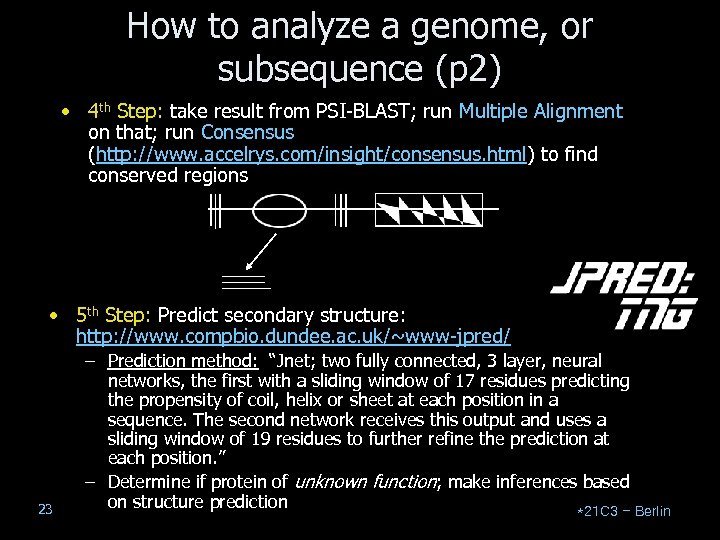 How to analyze a genome, or subsequence (p 2) • 4 th Step: take result from PSI-BLAST; run Multiple Alignment on that; run Consensus (http: //www. accelrys. com/insight/consensus. html) to find conserved regions • 5 th Step: Predict secondary structure: http: //www. compbio. dundee. ac. uk/~www-jpred/ 23 – Prediction method: “Jnet; two fully connected, 3 layer, neural networks, the first with a sliding window of 17 residues predicting the propensity of coil, helix or sheet at each position in a sequence. The second network receives this output and uses a sliding window of 19 residues to further refine the prediction at each position. ” – Determine if protein of unknown function; make inferences based on structure prediction *21 C 3 – Berlin
 PSI-BLAST http: //www. ncbi. nlm. nih. gov/BLAST/ • A normal BLASTP (protein-protein) run is performed. • A position-dependent matrix is built using the most significant matches to the database. • The search is rerun using this profile. • The cycle may be repeated until convergence. • The result is a ‘matrix’ tailored to the query. 24 *21 C 3 – Berlin
 Evolutionary Genomics • From a phylogenetic tree can infer inheritance of proteins, and thereby organisms (conserved vs. non-conserved domains, etc). Definitions: homologs: if two genes/proteins share a common evolutionary history (not nec. same function) analogs: proteins that are not homologs, but perform similar function paralogs: products of gene duplication orthologs: genes that are derived vertically, no guarantee that perform 25 same function *21 C 3 – Berlin
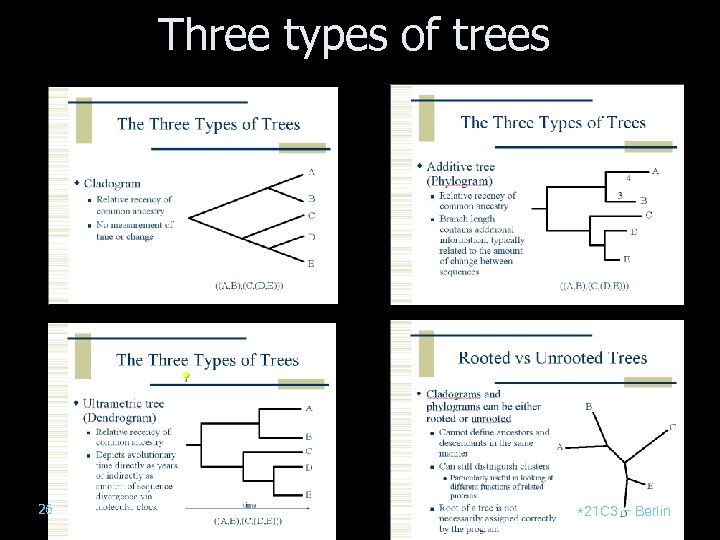 Three types of trees 26 *21 C 3 – Berlin
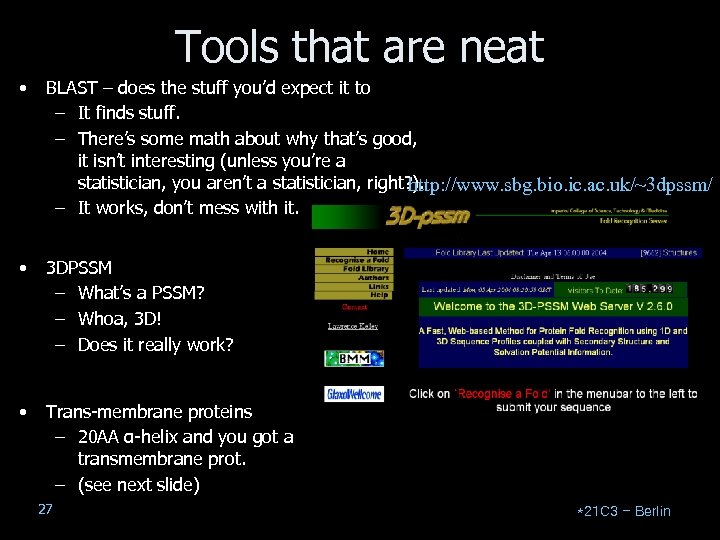 Tools that are neat • BLAST – does the stuff you’d expect it to – It finds stuff. – There’s some math about why that’s good, it isn’t interesting (unless you’re a statistician, you aren’t a statistician, right? ). http: //www. sbg. bio. ic. ac. uk/~3 dpssm/ – It works, don’t mess with it. • 3 DPSSM – What’s a PSSM? – Whoa, 3 D! – Does it really work? • Trans-membrane proteins – 20 AA α-helix and you got a transmembrane prot. – (see next slide) 27 *21 C 3 – Berlin
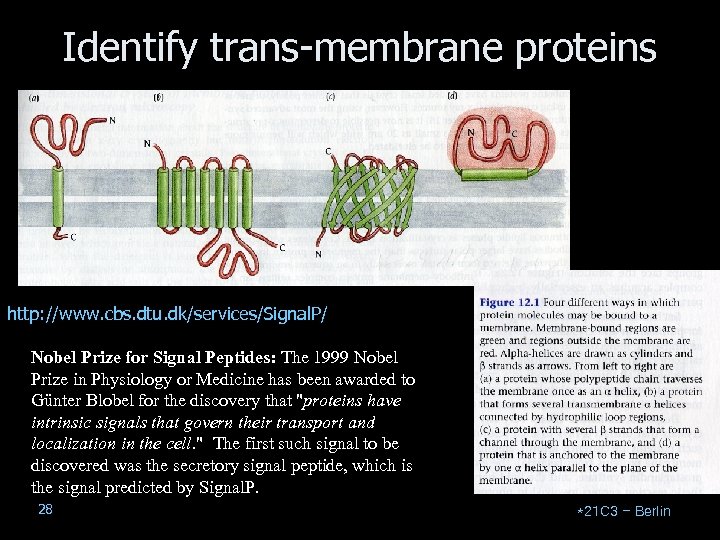 Identify trans-membrane proteins http: //www. cbs. dtu. dk/services/Signal. P/ Nobel Prize for Signal Peptides: The 1999 Nobel Prize in Physiology or Medicine has been awarded to Günter Blobel for the discovery that "proteins have intrinsic signals that govern their transport and localization in the cell. " The first such signal to be discovered was the secretory signal peptide, which is the signal predicted by Signal. P. 28 *21 C 3 – Berlin
 Three Case Studies • Elite Organisms: – Single nucleotide change causes measurable phenotypic change (i. e. a fish can see different wavelengths of light), (Yokoyama et al. 2000, PNAS) • Engineered Biocatalyst Proteins: – Diversa Corp, develops methods for high-throughput biocatalyst “discovery and optimization” (Robertson et al. 2004, Current Opinion in Chemical Biology) • Two protein drugs (FDA approved): – TPA – Tissue Plasminogen Activator (Genentech 1986) – CSF – Colony Stimulating Factor (Amgen 1987) 29 *21 C 3 – Berlin
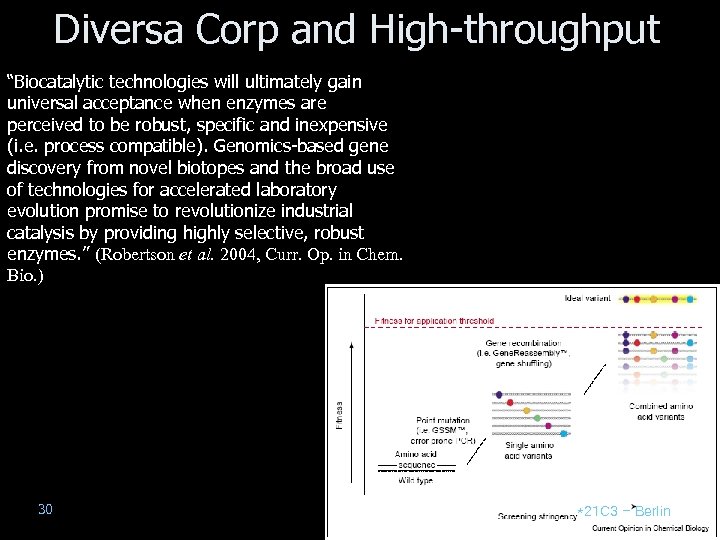 Diversa Corp and High-throughput “Biocatalytic technologies will ultimately gain universal acceptance when enzymes are perceived to be robust, specific and inexpensive (i. e. process compatible). Genomics-based gene discovery from novel biotopes and the broad use of technologies for accelerated laboratory evolution promise to revolutionize industrial catalysis by providing highly selective, robust enzymes. ” (Robertson et al. 2004, Curr. Op. in Chem. Bio. ) 30 *21 C 3 – Berlin
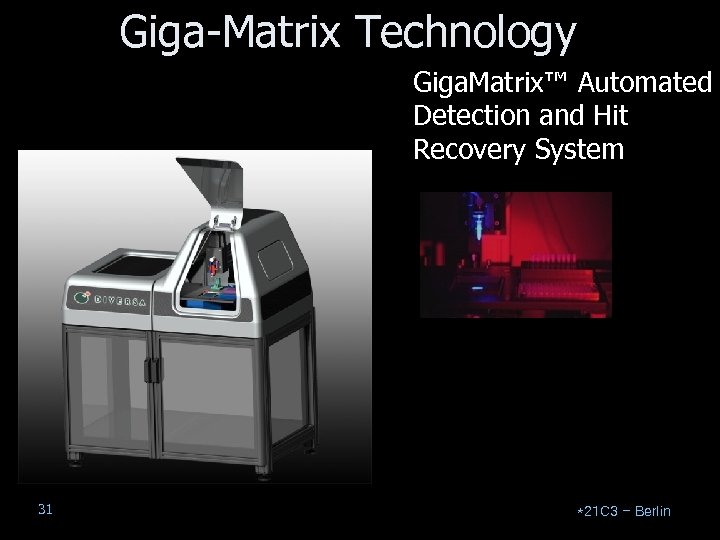 Giga-Matrix Technology Giga. Matrix™ Automated Detection and Hit Recovery System 31 *21 C 3 – Berlin
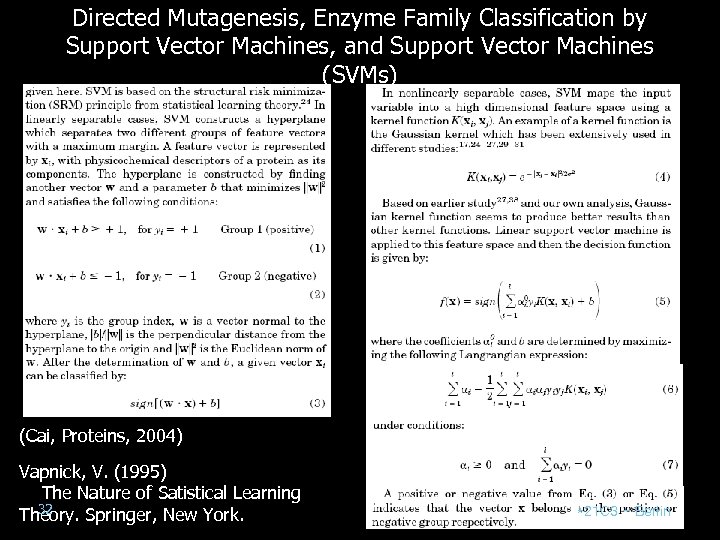 Directed Mutagenesis, Enzyme Family Classification by Support Vector Machines, and Support Vector Machines (SVMs) (Cai, Proteins, 2004) Vapnick, V. (1995) The Nature of Satistical Learning 32 Theory. Springer, New York. *21 C 3 – Berlin
 Legal Problems with Bio. Tech: Why this is a huge enterprise • Approaches to drug patenting: – Composition of Matter – Process Patent (i. e. especially with FDA approval) – Structure Characterization – Use Patent 33 • FDA Approval – Takes years and years – A main reason why it takes so long for a Bio. Tech firms to return on investment (i. e. target buyouts before product) *21 C 3 – Berlin
 Goals • Introduce some current issues • Introduce resources that address some of those issues • “I was a teenage genetic engineer” – On DNA Polymerase: “Because the complexity of polymerization reactions in vitro pales in comparison to the enormous complexity of multiple, highly integrated DNA transactions in cells, the biggest challenge of all may be to use our biochemical understanding of replication fidelity to reveal, and perhaps even predict, biological effects. In this regard, any arrogance about our current level of understanding should be tempered by the realization that the number of template-dependent DNA polymerases encoded by the human genome may be more than twice that suspected only four years ago. ” (Kunkel and Bebenek, Annu. Rev. Biochem. , 2000) 34 *21 C 3 – Berlin
 Reading • Eugene Koonin: • Sequence - Evolution - Function: Computational Approaches in Comparative Genomics (2002) • John Sulston: • The Common Thread: A Story of Science, Politics, Ethics and the Human Genome (2002) • Branden & Tooze: • Introduction to Protein Structure (1999) • Ira Winkler: • Corporate Espionage (1997) • Spies Among Us: The Spies, Hackers, and Criminals Who Cost Corporations Billions (2004) • Presentations from the O’Reilly Bio. Con 2003: $ wget -r -A ppt, pdf http: //conferences. oreillynet. com/cs/bio 2003/view/e_se ss/3516 35 *21 C 3 – Berlin
 Acknowledgements • GIT co-workers: John B, Kristin W, Eric D • O’Reilly Bioinformatics Con 2003 • Some other people. 36 *21 C 3 – Berlin