


 Скачать презентацию H U MINING ENGINEERING DEPARTMENT MAD 256
909b052e1f614c47cb81fab40ac21d26.ppt
- Количество слайдов: 54
 H. U. MINING ENGINEERING DEPARTMENT MAD 256 – SURVEYING LEVELING PROCEDURES
 Equipment • • • Level Tripod Staff Change plate Staff bubble 50 m tape measure (sometimes)
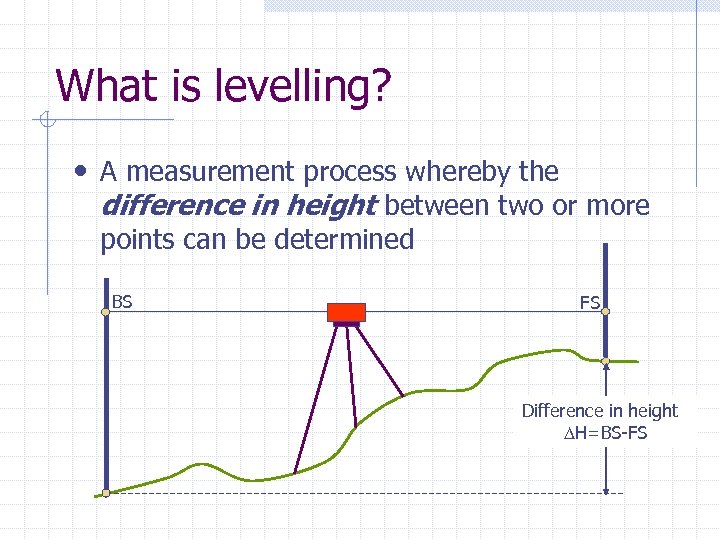 What is levelling? • A measurement process whereby the difference in height between two or more points can be determined BS FS Difference in height H=BS-FS
 When do we level? • Typical examples include : n To establish new vertical control (BM or TBM) n To determine the heights of discrete points n To provide spot heights or contours on a plan n n To provide data for road cross-sections or volumes of earthworks To provide a level or inclined plane in the setting out of construction works
 Definitions • Level surface n n A surface over which water will not flow The direction of gravity is always normal to a level surface • Horizontal surface n n A horizontal surface will be tangent to a level surface Over short distances (<100 m) the horizontal surface and the level surface will coincide
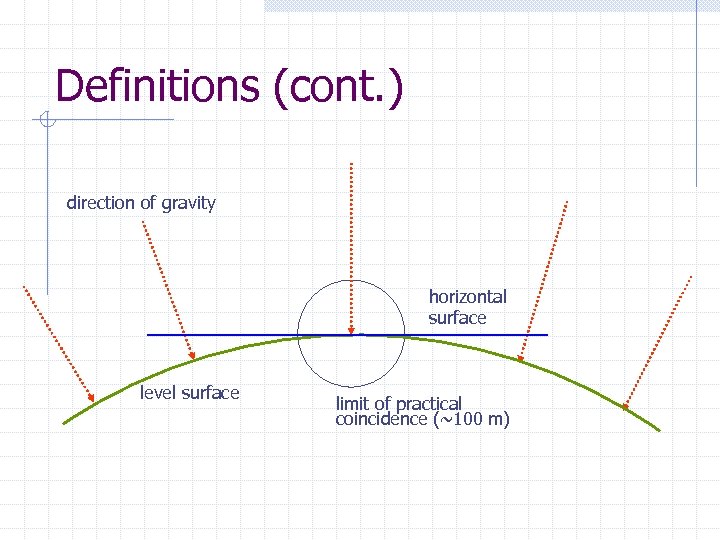 Definitions (cont. ) direction of gravity horizontal surface level surface limit of practical coincidence (~100 m)
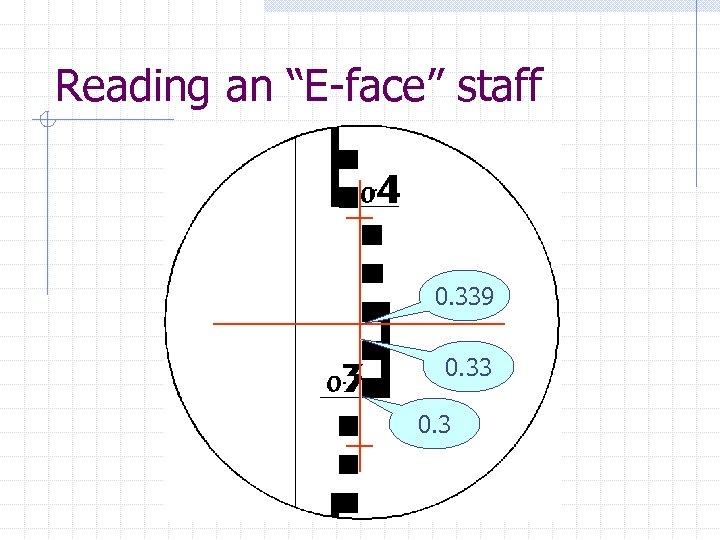 Reading an “E-face” staff 0. 339 0. 33 0. 3
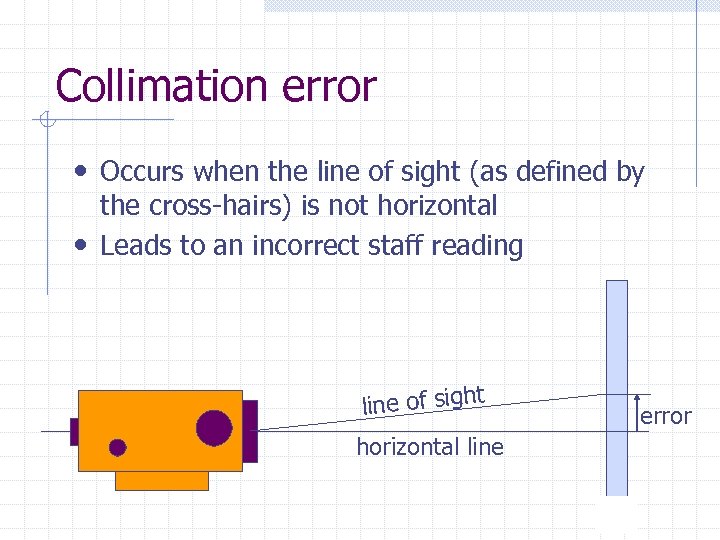 Collimation error • Occurs when the line of sight (as defined by the cross-hairs) is not horizontal • Leads to an incorrect staff reading t line of sigh horizontal line error
 More definitions • Datum n n A reference surface to which the heights of all points in a survey or on a site are referred May be arbitrary or a national height datum In Australia we have the Australian Height Datum (AHD) The surface which defines the AHD is (approximately) Mean Sea Level (MSL)
 More definitions • Reduced Level (RL) n The height of a point above the datum • Benchmark (BM) n n A stable reference point of known RL Usually used as the starting and finishing point when levelling • Temporary Bench Mark (TBM) n A point placed (e. g. peg, nail, spike) to provide a temporary reference point
 More definitions • Backsight (BS) n Always the first reading from a new instrument station • Foresight (FS) n Always the last reading from the current instrument station • Intermediate sight (IS) n Any sighting that is not a backsight or foresight
 More definitions • Change point (CP) n n Location of the staff when the level is moved Change points should be. . . w w Stable Well defined Recoverable e. g. sharp rock, nail, change plate, etc. . .
 Rules for levelling • Always commence and finish a level run on a Benchmark (BM or TBM) • Keep foresight and backsight distances as equal as possible • Keep lines of sight short (normally < 50 m) • Never read below 0. 5 m on a staff (refraction) • Use stable, well defined change points
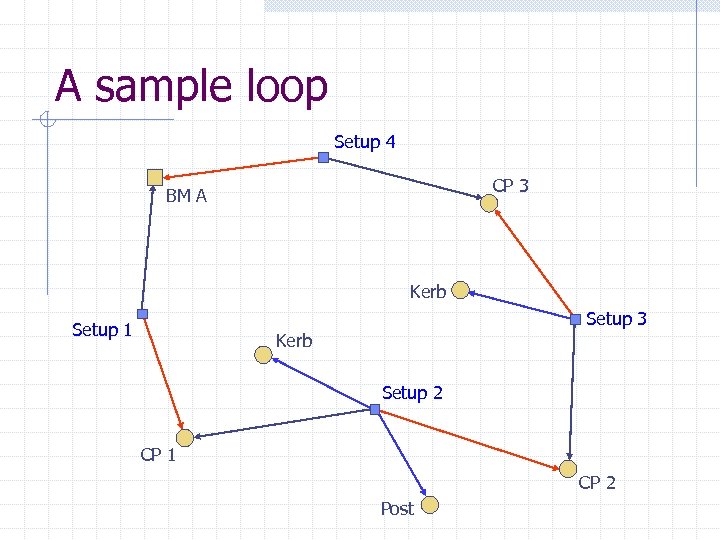 A sample loop Setup 4 CP 3 BM A Kerb Setup 1 Setup 3 Kerb Setup 2 CP 1 CP 2 Post
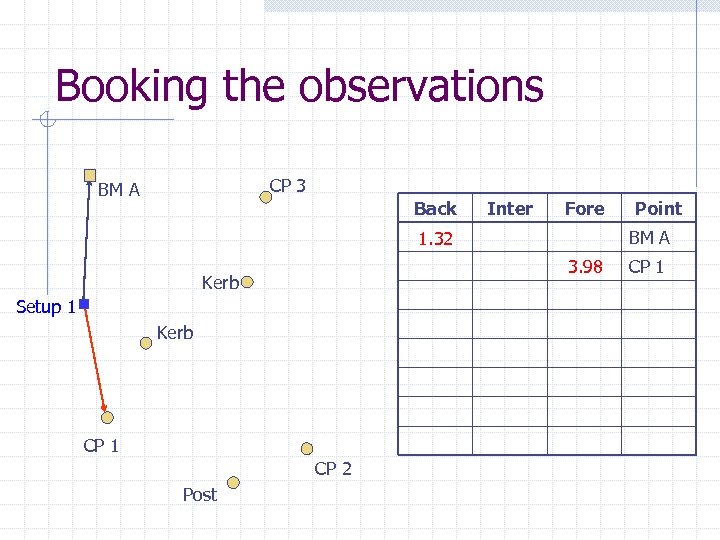 Booking the observations CP 3 BM A Back Inter Fore BM A 1. 32 3. 98 Kerb Setup 1 Kerb CP 1 CP 2 Post Point CP 1
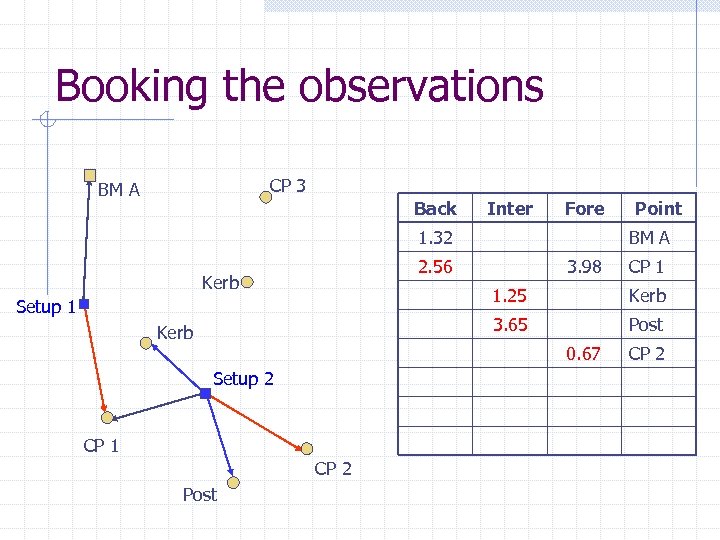 Booking the observations CP 3 BM A Back Inter Fore 1. 32 BM A 3. 98 2. 56 Kerb Point CP 1 1. 25 Kerb 3. 65 Setup 1 Post 0. 67 Setup 2 CP 1 CP 2 Post CP 2
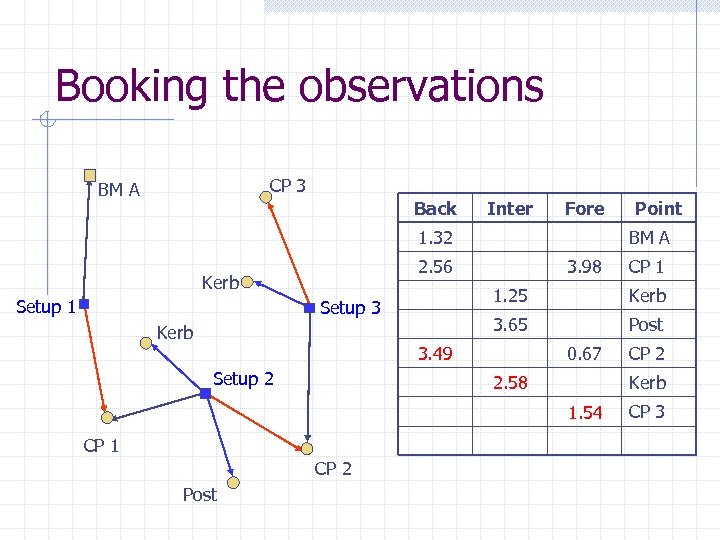 Booking the observations CP 3 BM A Back Inter Fore 1. 32 Setup 1 BM A 2. 56 Kerb 3. 98 Kerb 3. 65 Post 3. 49 Setup 2 0. 67 2. 58 CP 2 Post CP 2 Kerb 1. 54 CP 1 1. 25 Setup 3 Kerb Point CP 3
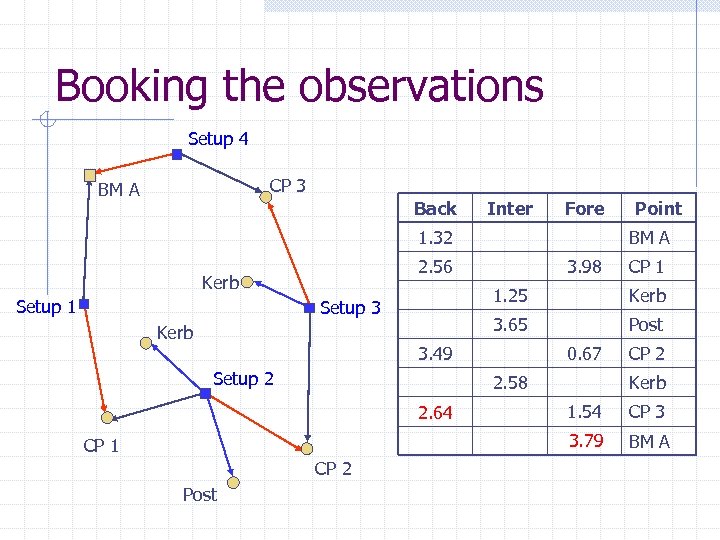 Booking the observations Setup 4 CP 3 BM A Back Inter Fore 1. 32 Setup 1 BM A 2. 56 Kerb 3. 98 CP 1 1. 25 Kerb 3. 65 Setup 3 Kerb Point Post 3. 49 Setup 2 0. 67 2. 58 CP 2 Kerb CP 1 CP 2 Post 1. 54 CP 3 3. 79 2. 64 BM A
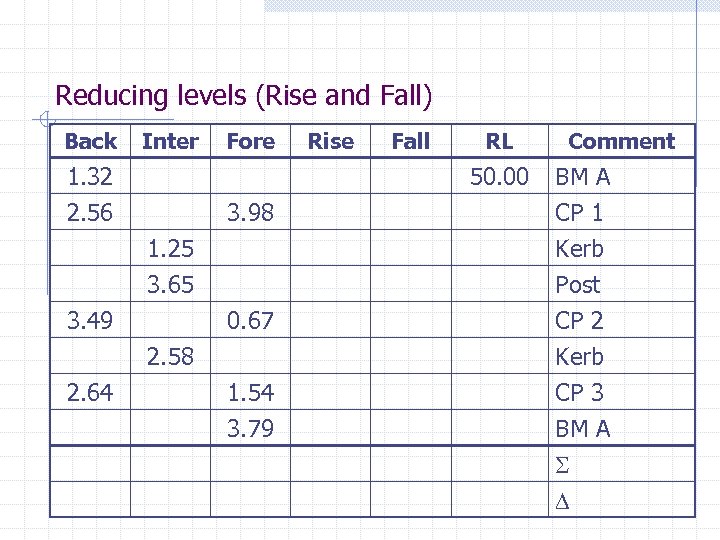 Reducing levels (Rise and Fall) Back Inter 1. 32 2. 56 Fore Fall RL 50. 00 3. 98 1. 25 3. 65 3. 49 0. 67 2. 58 2. 64 Rise 1. 54 3. 79 Comment BM A CP 1 Kerb Post CP 2 Kerb CP 3 BM A
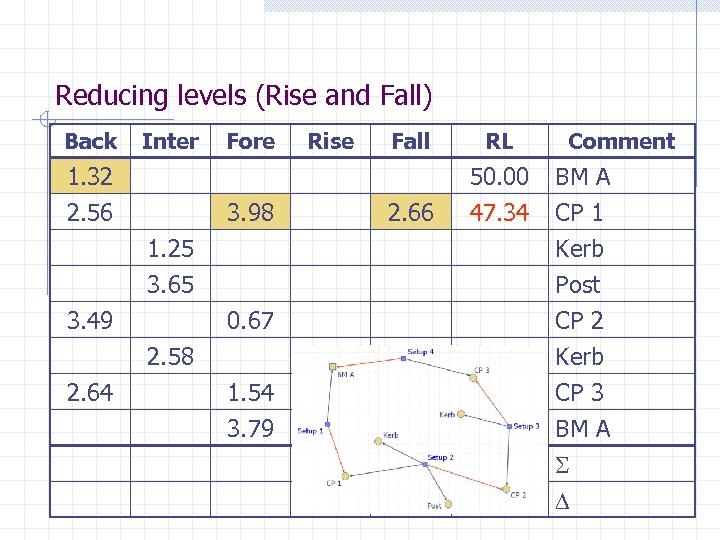 Reducing levels (Rise and Fall) Back Inter 1. 32 2. 56 Fore 3. 98 1. 25 3. 65 3. 49 0. 67 2. 58 2. 64 1. 54 3. 79 Rise Fall RL 2. 66 50. 00 47. 34 Comment BM A CP 1 Kerb Post CP 2 Kerb CP 3 BM A
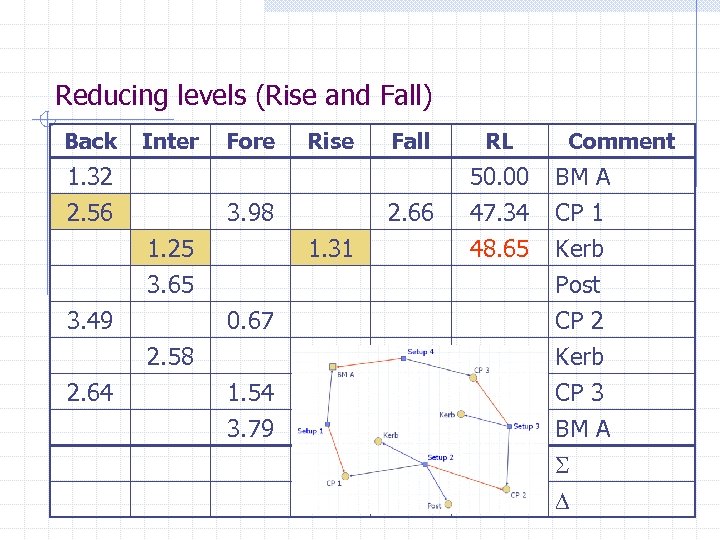 Reducing levels (Rise and Fall) Back Inter 1. 32 2. 56 Fore 1. 31 3. 65 3. 49 0. 67 2. 58 1. 54 3. 79 Fall RL 2. 66 3. 98 1. 25 2. 64 Rise 50. 00 47. 34 48. 65 Comment BM A CP 1 Kerb Post CP 2 Kerb CP 3 BM A
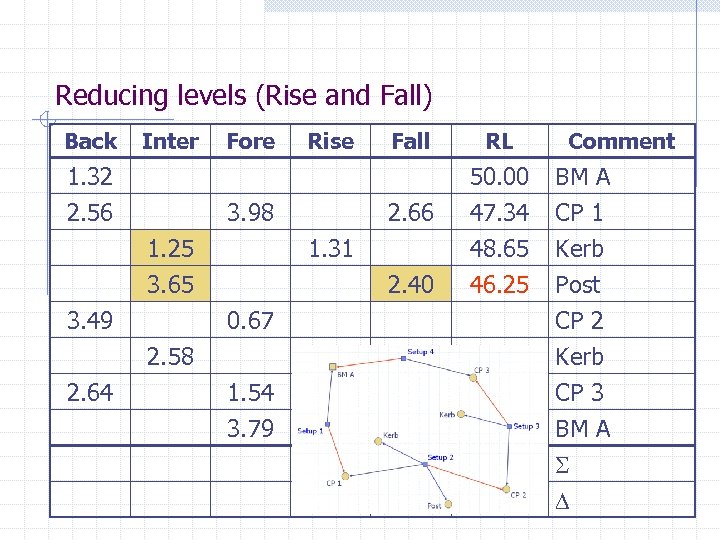 Reducing levels (Rise and Fall) Back Inter 1. 32 2. 56 Fore RL 50. 00 47. 34 48. 65 BM A CP 1 Kerb 2. 40 46. 25 Post CP 2 Kerb CP 3 BM A 1. 31 3. 65 3. 49 Fall 2. 66 3. 98 1. 25 0. 67 2. 58 2. 64 Rise 1. 54 3. 79 Comment
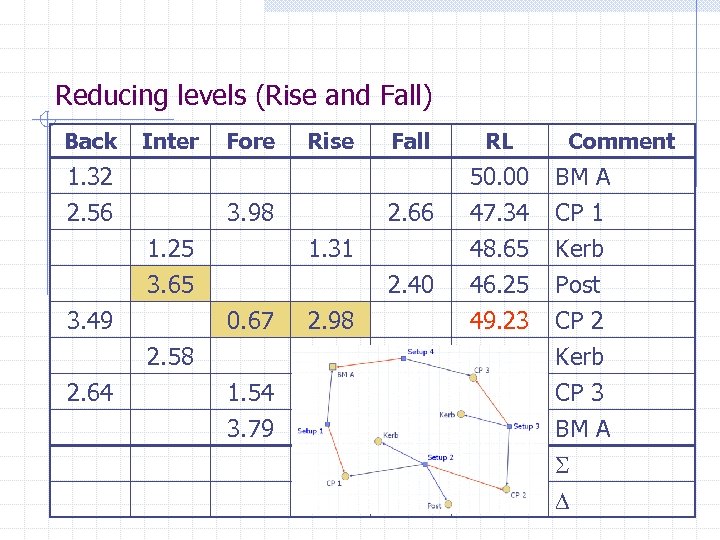 Reducing levels (Rise and Fall) Back Inter 1. 32 2. 56 Fore Rise 1. 25 BM A CP 1 Kerb 46. 25 49. 23 Post CP 2 Kerb CP 3 BM A 2. 40 0. 67 2. 58 2. 64 50. 00 47. 34 48. 65 1. 31 3. 65 3. 49 RL 2. 66 3. 98 Fall 1. 54 3. 79 2. 98 Comment
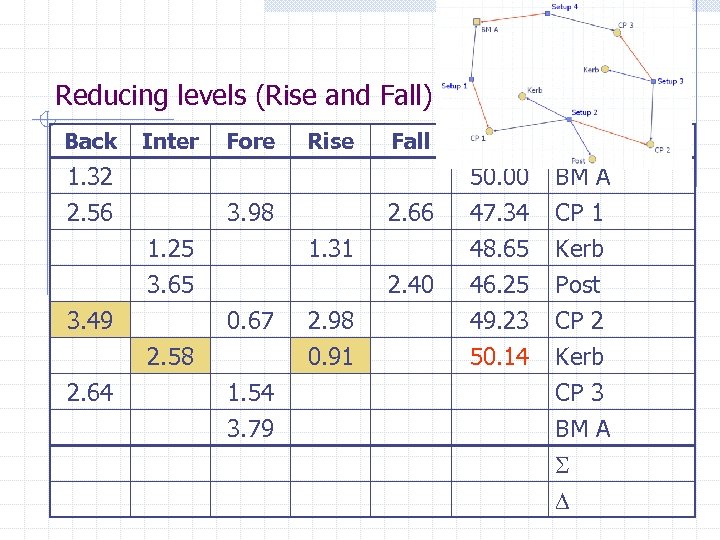 Reducing levels (Rise and Fall) Back Inter 1. 32 2. 56 Fore Rise 1. 25 BM A CP 1 Kerb 46. 25 49. 23 50. 14 Post CP 2 Kerb CP 3 BM A 2. 40 0. 67 2. 58 2. 64 50. 00 47. 34 48. 65 1. 31 3. 65 3. 49 RL 2. 66 3. 98 Fall 1. 54 3. 79 2. 98 0. 91 Comment
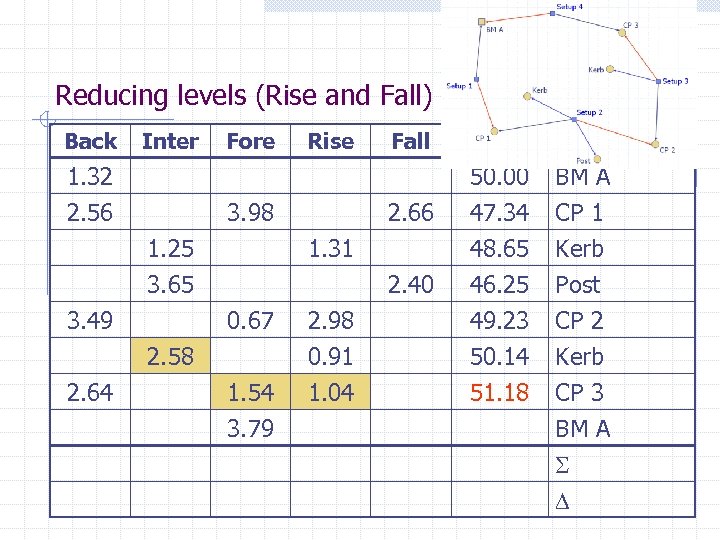 Reducing levels (Rise and Fall) Back Inter 1. 32 2. 56 Fore Rise 1. 25 BM A CP 1 Kerb 46. 25 49. 23 50. 14 51. 18 Post CP 2 Kerb CP 3 BM A 2. 40 0. 67 2. 58 2. 64 50. 00 47. 34 48. 65 1. 31 3. 65 3. 49 RL 2. 66 3. 98 Fall 1. 54 3. 79 2. 98 0. 91 1. 04 Comment
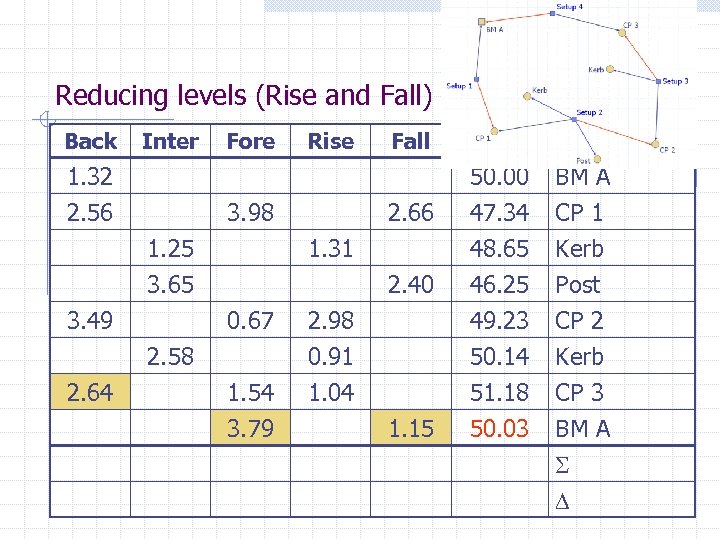 Reducing levels (Rise and Fall) Back Inter 1. 32 2. 56 Fore Rise 1. 25 BM A CP 1 Kerb 46. 25 49. 23 50. 14 51. 18 50. 03 Post CP 2 Kerb CP 3 BM A 2. 40 0. 67 2. 58 2. 64 50. 00 47. 34 48. 65 1. 31 3. 65 3. 49 RL 2. 66 3. 98 Fall 1. 54 3. 79 2. 98 0. 91 1. 04 1. 15 Comment
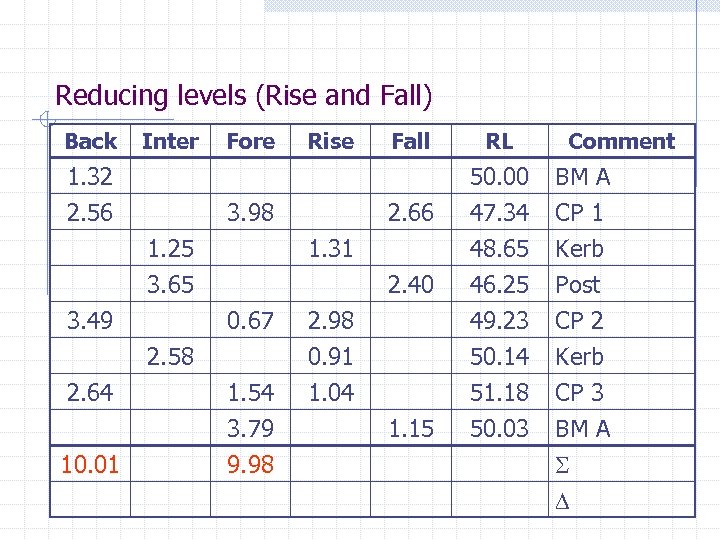 Reducing levels (Rise and Fall) Back Inter 1. 32 2. 56 Fore Rise 1. 25 10. 01 BM A CP 1 Kerb 46. 25 49. 23 50. 14 51. 18 50. 03 Post CP 2 Kerb CP 3 BM A 2. 40 0. 67 2. 58 2. 64 50. 00 47. 34 48. 65 1. 31 3. 65 3. 49 RL 2. 66 3. 98 Fall 1. 54 3. 79 9. 98 2. 98 0. 91 1. 04 1. 15 Comment
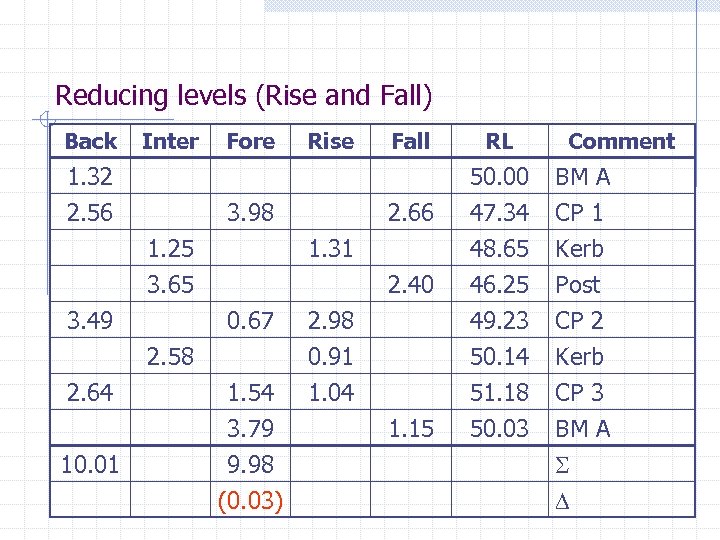 Reducing levels (Rise and Fall) Back Inter 1. 32 2. 56 Fore Rise 1. 25 10. 01 BM A CP 1 Kerb 46. 25 49. 23 50. 14 51. 18 50. 03 Post CP 2 Kerb CP 3 BM A 2. 40 0. 67 2. 58 2. 64 50. 00 47. 34 48. 65 1. 31 3. 65 3. 49 RL 2. 66 3. 98 Fall 1. 54 3. 79 9. 98 (0. 03) 2. 98 0. 91 1. 04 1. 15 Comment
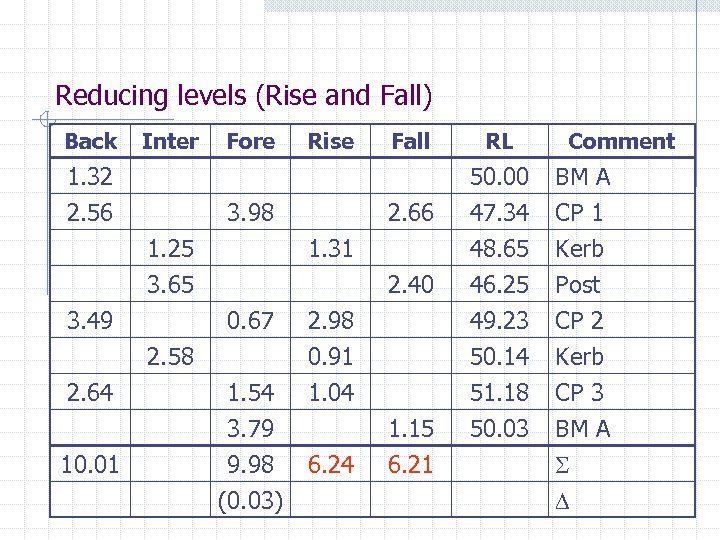 Reducing levels (Rise and Fall) Back Inter 1. 32 2. 56 Fore Rise 1. 25 10. 01 BM A CP 1 Kerb 46. 25 49. 23 50. 14 51. 18 50. 03 Post CP 2 Kerb CP 3 BM A 2. 40 0. 67 2. 58 2. 64 50. 00 47. 34 48. 65 1. 31 3. 65 3. 49 RL 2. 66 3. 98 Fall 1. 54 3. 79 9. 98 (0. 03) 2. 98 0. 91 1. 04 6. 24 1. 15 6. 21 Comment
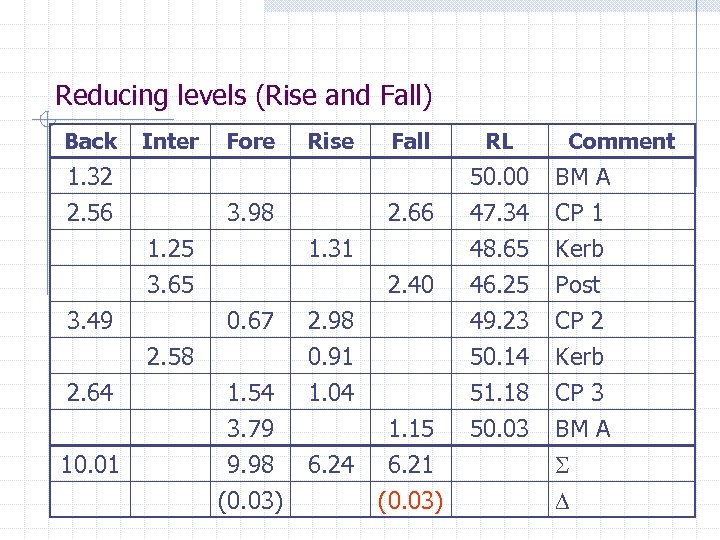 Reducing levels (Rise and Fall) Back Inter 1. 32 2. 56 Fore Rise 1. 25 10. 01 BM A CP 1 Kerb 46. 25 49. 23 50. 14 51. 18 50. 03 Post CP 2 Kerb CP 3 BM A 2. 40 0. 67 2. 58 2. 64 50. 00 47. 34 48. 65 1. 31 3. 65 3. 49 RL 2. 66 3. 98 Fall 1. 54 3. 79 9. 98 (0. 03) 2. 98 0. 91 1. 04 6. 24 1. 15 6. 21 (0. 03) Comment
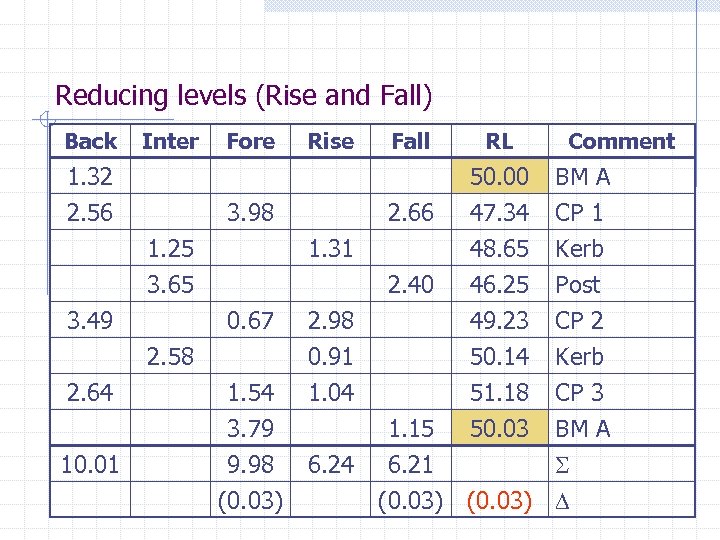 Reducing levels (Rise and Fall) Back Inter 1. 32 2. 56 Fore Rise 1. 25 2. 40 0. 67 2. 58 2. 64 10. 01 50. 00 47. 34 48. 65 1. 31 3. 65 3. 49 RL 2. 66 3. 98 Fall 1. 54 3. 79 9. 98 (0. 03) 2. 98 0. 91 1. 04 6. 24 46. 25 49. 23 50. 14 51. 18 50. 03 Comment BM A CP 1 Kerb Post CP 2 Kerb CP 3 1. 15 BM A 6. 21 (0. 03)
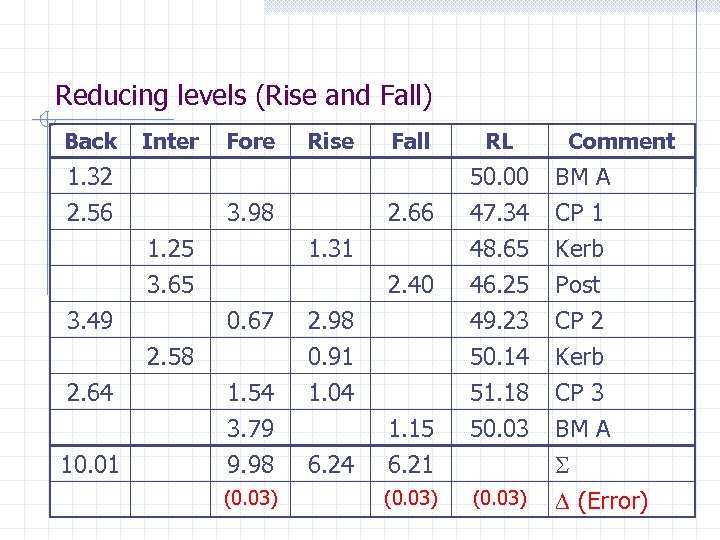 Reducing levels (Rise and Fall) Back Inter 1. 32 2. 56 Fore Rise 1. 25 10. 01 BM A CP 1 Kerb 46. 25 49. 23 50. 14 51. 18 50. 03 Post CP 2 Kerb CP 3 BM A (Error) 2. 40 0. 67 2. 58 2. 64 50. 00 47. 34 48. 65 1. 31 3. 65 3. 49 RL 2. 66 3. 98 Fall 1. 54 3. 79 9. 98 (0. 03) 2. 98 0. 91 1. 04 6. 24 1. 15 6. 21 (0. 03) Comment
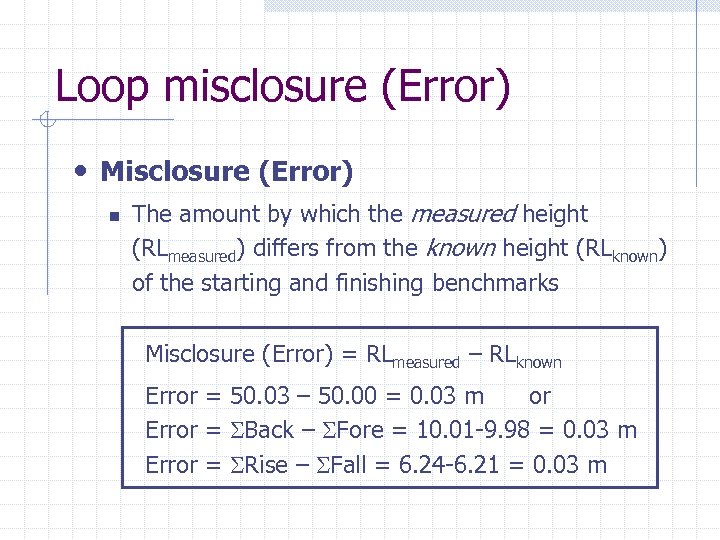 Loop misclosure (Error) • Misclosure (Error) n The amount by which the measured height (RLmeasured) differs from the known height (RLknown) of the starting and finishing benchmarks Misclosure (Error) = RLmeasured – RLknown Error = 50. 03 – 50. 00 = 0. 03 m or Error = Back – Fore = 10. 01 -9. 98 = 0. 03 m Error = Rise – Fall = 6. 24 -6. 21 = 0. 03 m
 An acceptable misclose? • Small misclosures in closed level loops are expected because of the accumulation of errors • If the misclosure is small, it can be adjusted • If the misclosure is large, the loop (or part of it) must be repeated • Misclosures can also result from errors in published BM levels and from BM instability
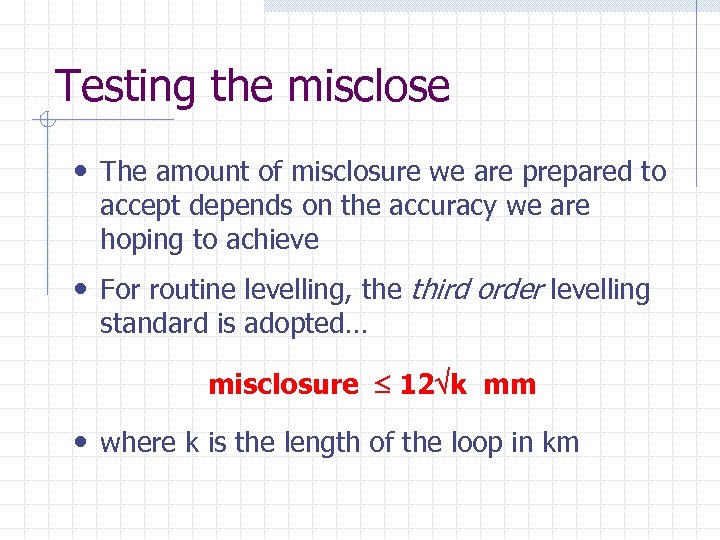 Testing the misclose • The amount of misclosure we are prepared to accept depends on the accuracy we are hoping to achieve • For routine levelling, the third order levelling standard is adopted… misclosure 12 k mm • where k is the length of the loop in km
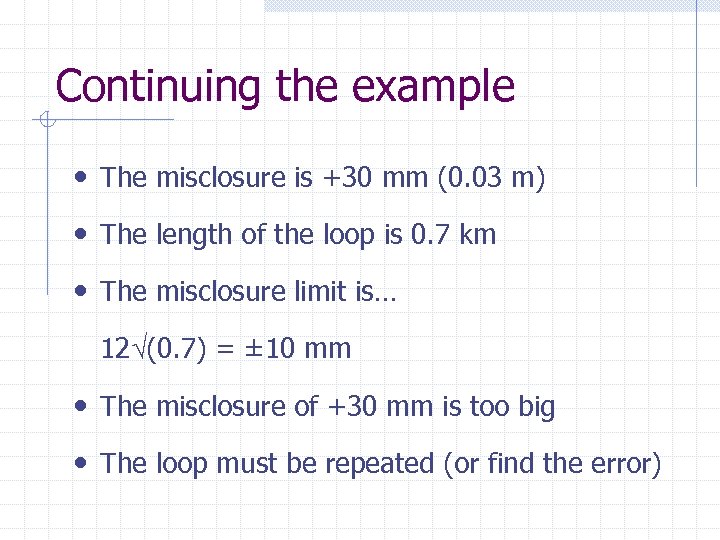 Continuing the example • The misclosure is +30 mm (0. 03 m) • The length of the loop is 0. 7 km • The misclosure limit is… 12 (0. 7) = ± 10 mm • The misclosure of +30 mm is too big • The loop must be repeated (or find the error)
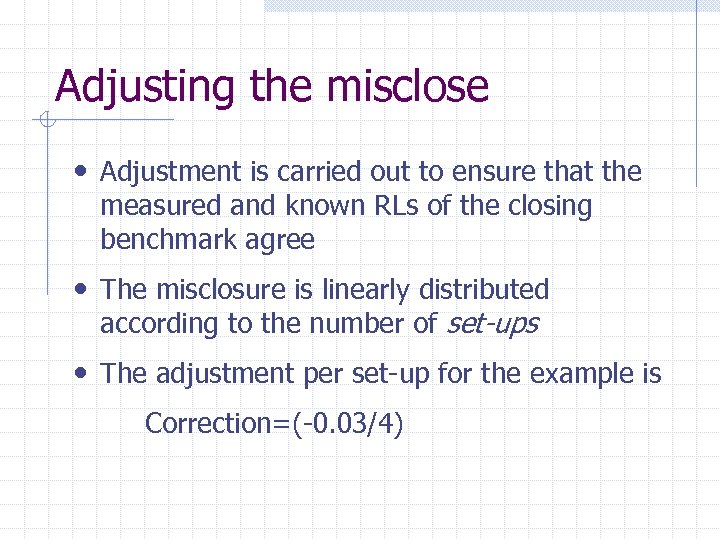 Adjusting the misclose • Adjustment is carried out to ensure that the measured and known RLs of the closing benchmark agree • The misclosure is linearly distributed according to the number of set-ups • The adjustment per set-up for the example is Correction=(-0. 03/4)
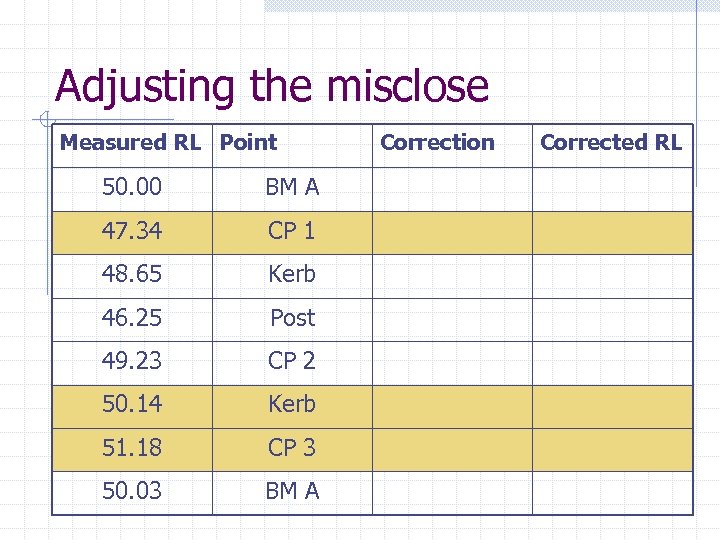 Adjusting the misclose Measured RL Point 50. 00 BM A 47. 34 CP 1 48. 65 Kerb 46. 25 Post 49. 23 CP 2 50. 14 Kerb 51. 18 CP 3 50. 03 BM A Correction Corrected RL
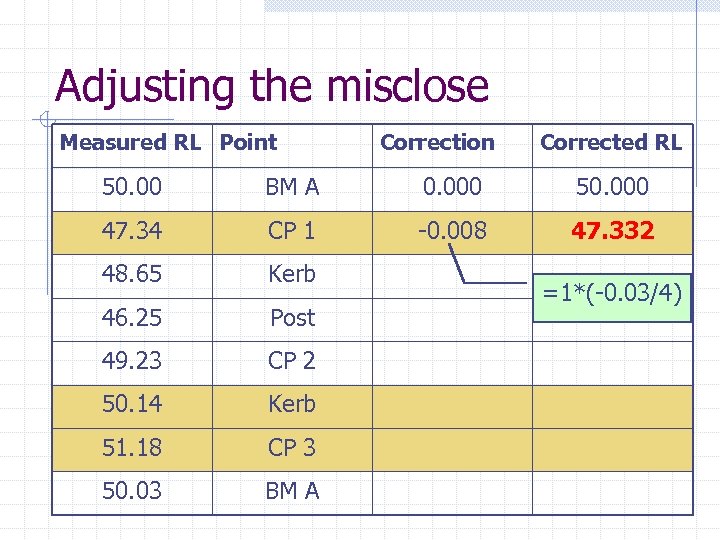 Adjusting the misclose Measured RL Point Correction Corrected RL 50. 00 BM A 0. 000 50. 000 47. 34 CP 1 -0. 008 47. 332 48. 65 Kerb 46. 25 Post 49. 23 CP 2 50. 14 Kerb 51. 18 CP 3 50. 03 BM A =1*(-0. 03/4)
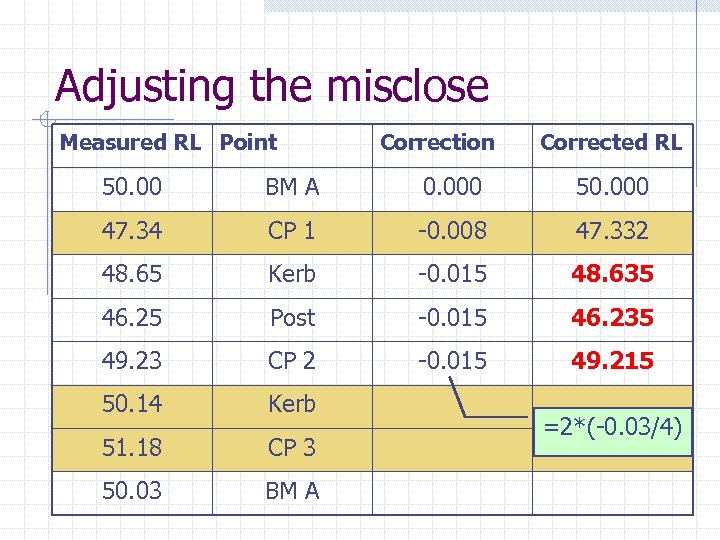 Adjusting the misclose Measured RL Point Correction Corrected RL 50. 00 BM A 0. 000 50. 000 47. 34 CP 1 -0. 008 47. 332 48. 65 Kerb -0. 015 48. 635 46. 25 Post -0. 015 46. 235 49. 23 CP 2 -0. 015 49. 215 50. 14 Kerb 51. 18 CP 3 50. 03 BM A =2*(-0. 03/4)
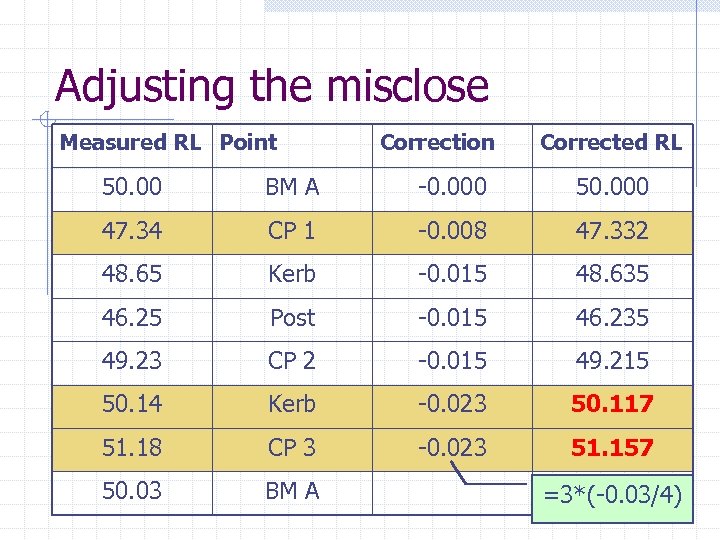 Adjusting the misclose Measured RL Point Correction Corrected RL 50. 00 BM A -0. 000 50. 000 47. 34 CP 1 -0. 008 47. 332 48. 65 Kerb -0. 015 48. 635 46. 25 Post -0. 015 46. 235 49. 23 CP 2 -0. 015 49. 215 50. 14 Kerb -0. 023 50. 117 51. 18 CP 3 -0. 023 51. 157 50. 03 BM A =3*(-0. 03/4)
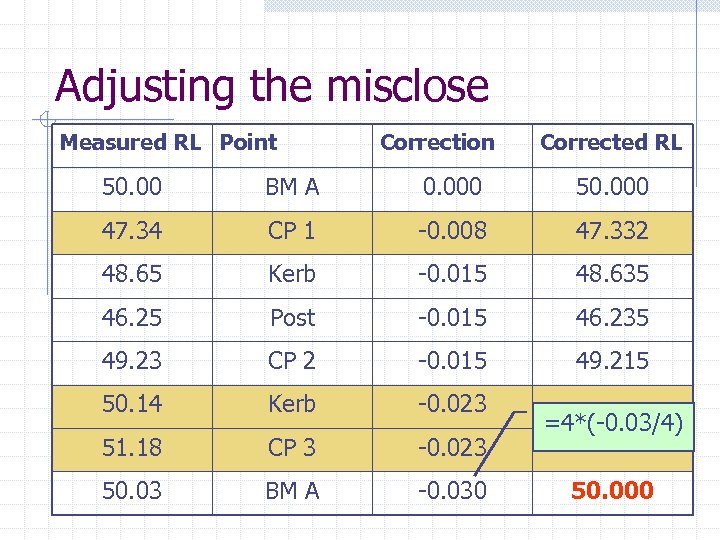 Adjusting the misclose Measured RL Point Correction Corrected RL 50. 00 BM A 0. 000 50. 000 47. 34 CP 1 -0. 008 47. 332 48. 65 Kerb -0. 015 48. 635 46. 25 Post -0. 015 46. 235 49. 23 CP 2 -0. 015 49. 215 50. 14 Kerb -0. 023 51. 18 CP 3 -0. 023 50. 03 BM A -0. 030 =4*(-0. 03/4) 50. 000
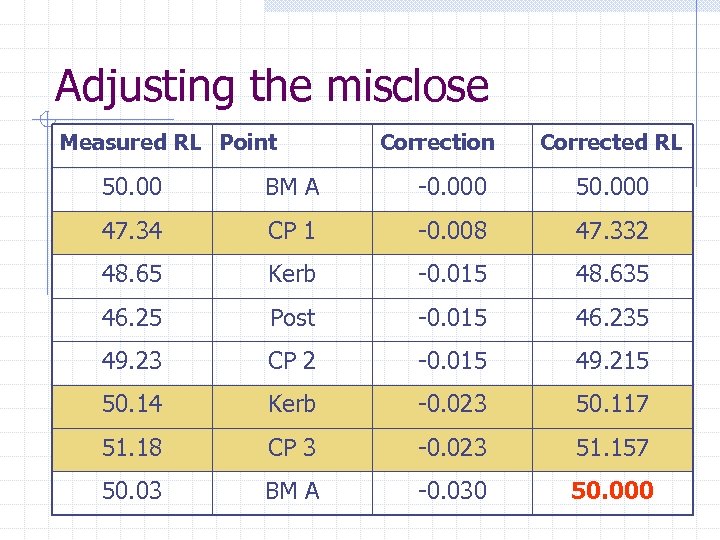 Adjusting the misclose Measured RL Point Correction Corrected RL 50. 00 BM A -0. 000 50. 000 47. 34 CP 1 -0. 008 47. 332 48. 65 Kerb -0. 015 48. 635 46. 25 Post -0. 015 46. 235 49. 23 CP 2 -0. 015 49. 215 50. 14 Kerb -0. 023 50. 117 51. 18 CP 3 -0. 023 51. 157 50. 03 BM A -0. 030 50. 000
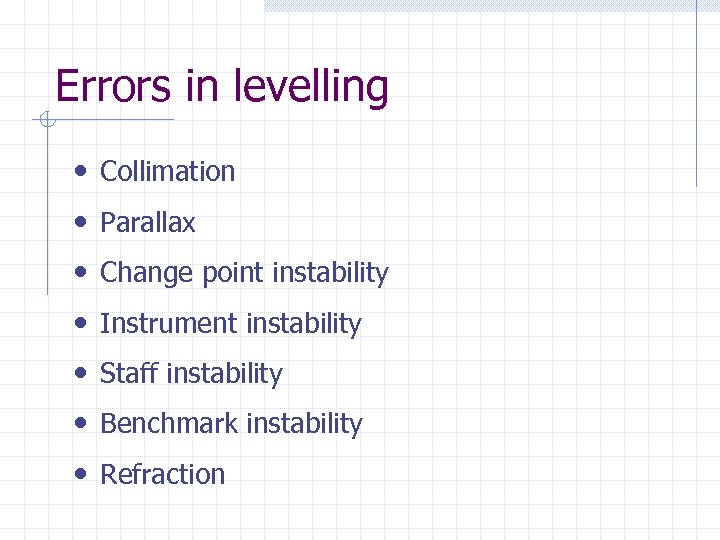 Errors in levelling • Collimation • Parallax • Change point instability • Instrument instability • Staff instability • Benchmark instability • Refraction
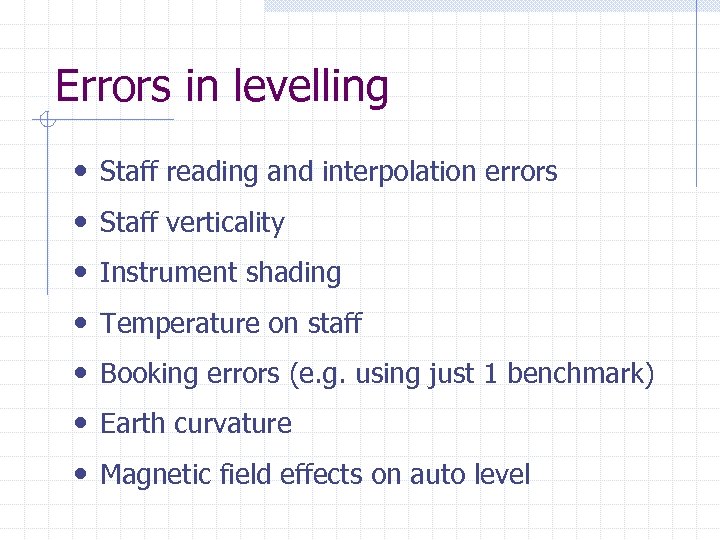 Errors in levelling • Staff reading and interpolation errors • Staff verticality • Instrument shading • Temperature on staff • Booking errors (e. g. using just 1 benchmark) • Earth curvature • Magnetic field effects on auto level
 Applications of levelling • • • Point heights (relative to a datum) Height differences (independent of datum) Longitudinal sections and cross sections Data for volume calculations Contouring Setting out
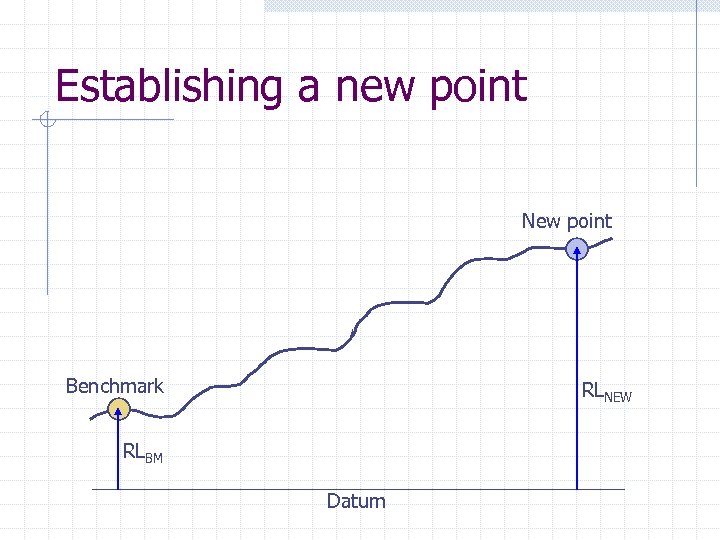 Establishing a new point New point Benchmark RLNEW RLBM Datum
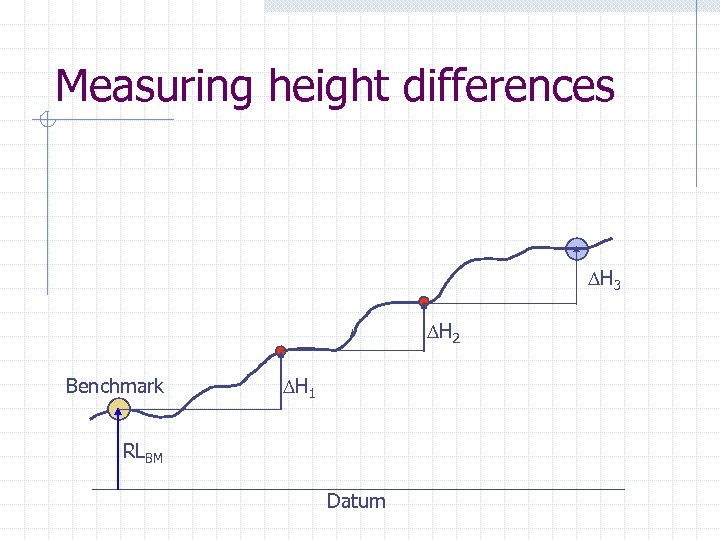 Measuring height differences H 3 H 2 Benchmark H 1 RLBM Datum
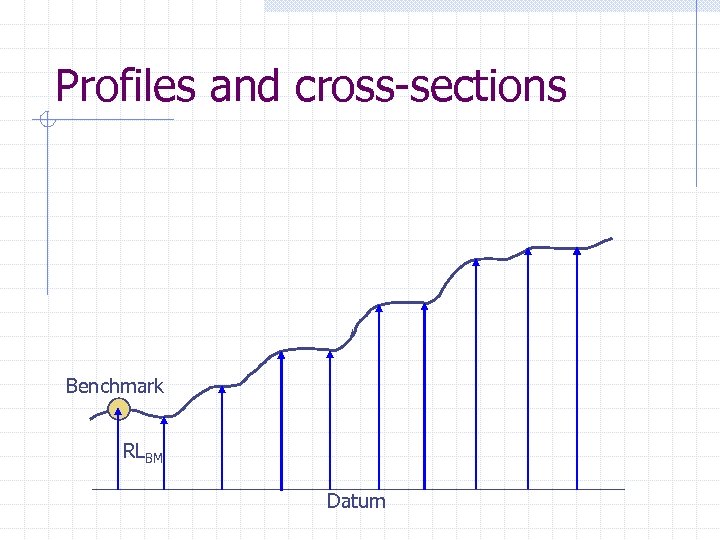 Profiles and cross-sections Benchmark RLBM Datum
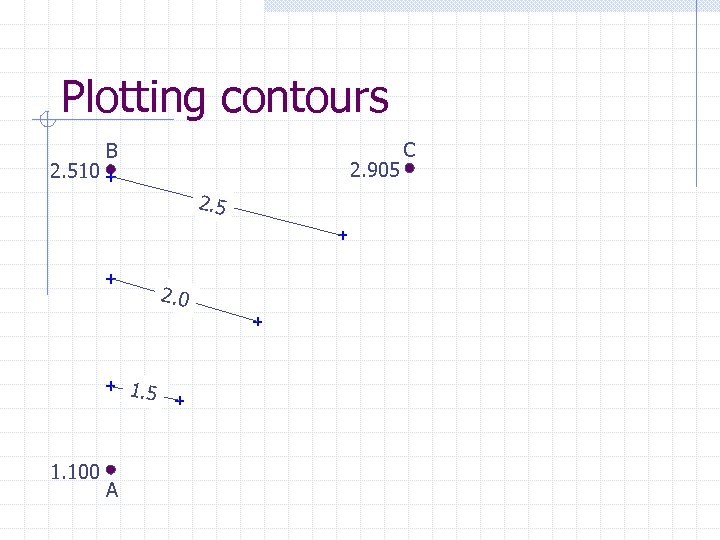
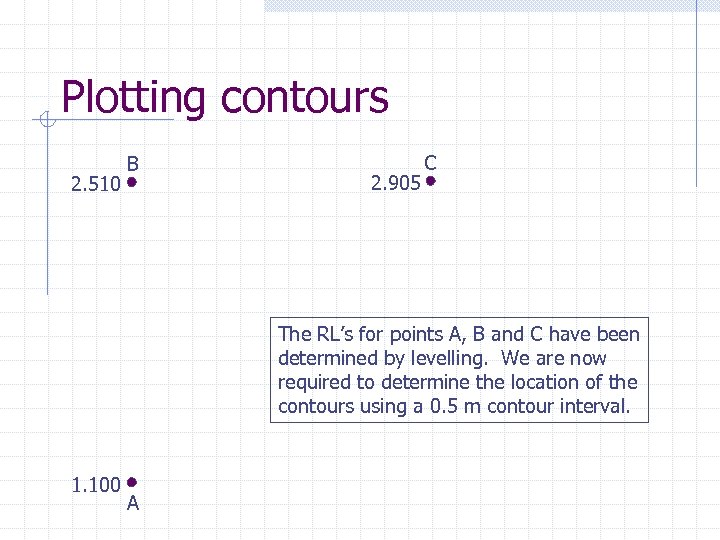 Plotting contours 2. 510 B 2. 905 C The RL’s for points A, B and C have been determined by levelling. We are now required to determine the location of the contours using a 0. 5 m contour interval. 1. 100 A
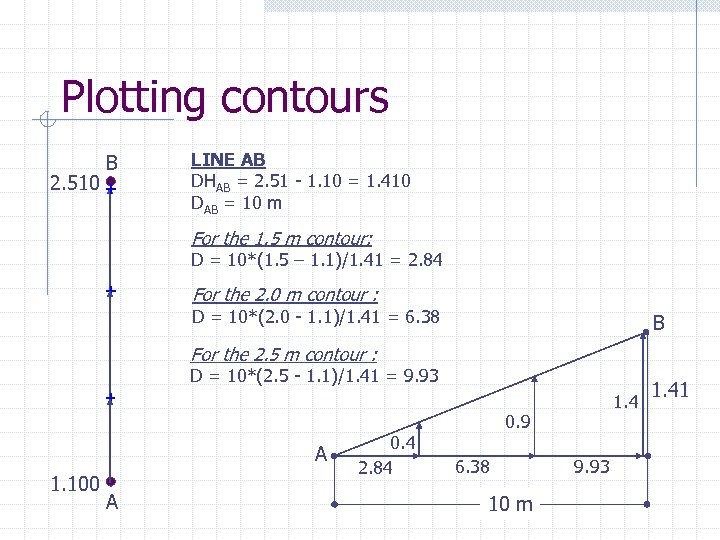 Plotting contours 2. 510 B LINE AB DHAB = 2. 51 - 1. 10 = 1. 410 DAB = 10 m For the 1. 5 m contour: D = 10*(1. 5 – 1. 1)/1. 41 = 2. 84 For the 2. 0 m contour : D = 10*(2. 0 - 1. 1)/1. 41 = 6. 38 B For the 2. 5 m contour : D = 10*(2. 5 - 1. 1)/1. 41 = 9. 93 A 1. 100 A 0. 4 2. 84 1. 4 0. 9 6. 38 10 m 9. 93 1. 41
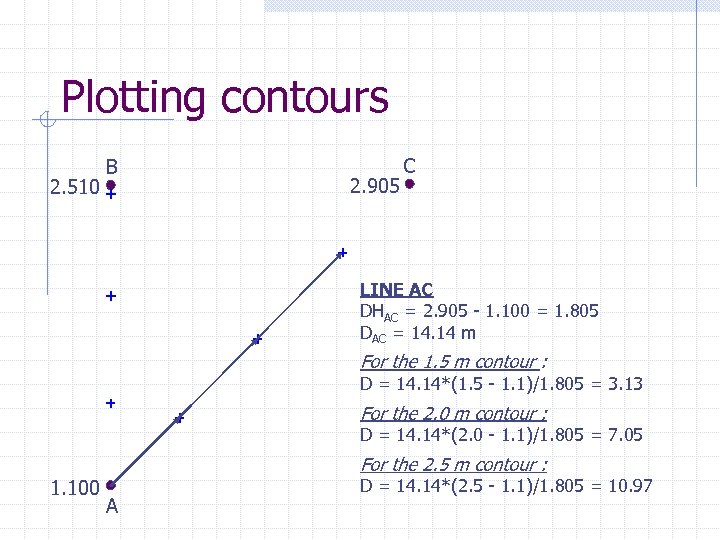 Plotting contours 2. 510 B 2. 905 C LINE AC DHAC = 2. 905 - 1. 100 = 1. 805 DAC = 14. 14 m For the 1. 5 m contour : D = 14. 14*(1. 5 - 1. 1)/1. 805 = 3. 13 For the 2. 0 m contour : D = 14. 14*(2. 0 - 1. 1)/1. 805 = 7. 05 For the 2. 5 m contour : 1. 100 A D = 14. 14*(2. 5 - 1. 1)/1. 805 = 10. 97
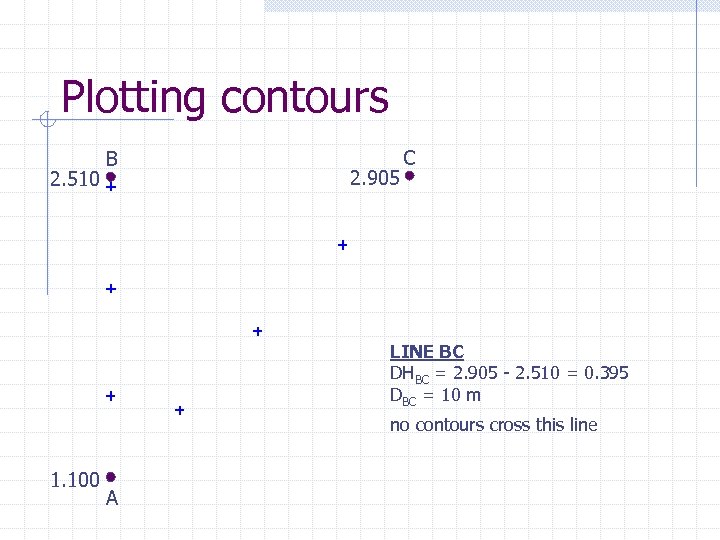 Plotting contours 2. 510 B 2. 905 C LINE BC DHBC = 2. 905 - 2. 510 = 0. 395 DBC = 10 m no contours cross this line 1. 100 A
 Plotting contours 2. 510 B 2. 905 2. 0 1. 5 1. 100 A C