


 Скачать презентацию GY 205 Weather and Climate Lecture 3
52f63358236fb26f3feea3f997cb89e3.ppt
- Количество слайдов: 47
 GY 205 Weather and Climate Lecture 3
 Moisture in the Atmosphere
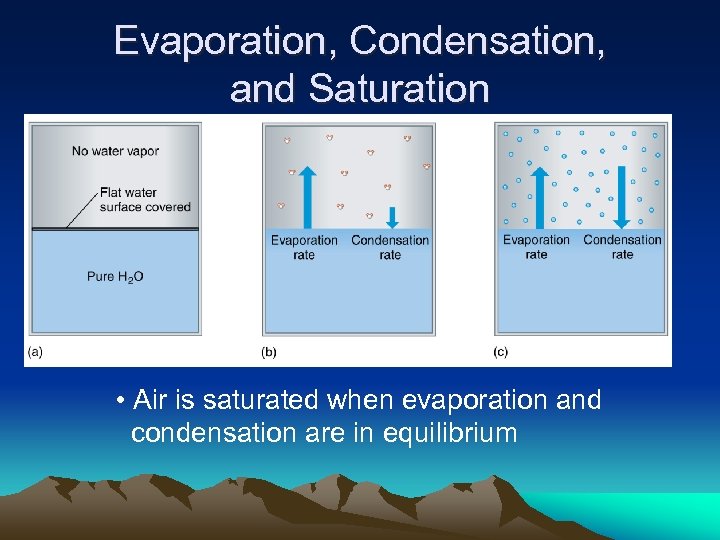 Evaporation, Condensation, and Saturation • Air is saturated when evaporation and condensation are in equilibrium
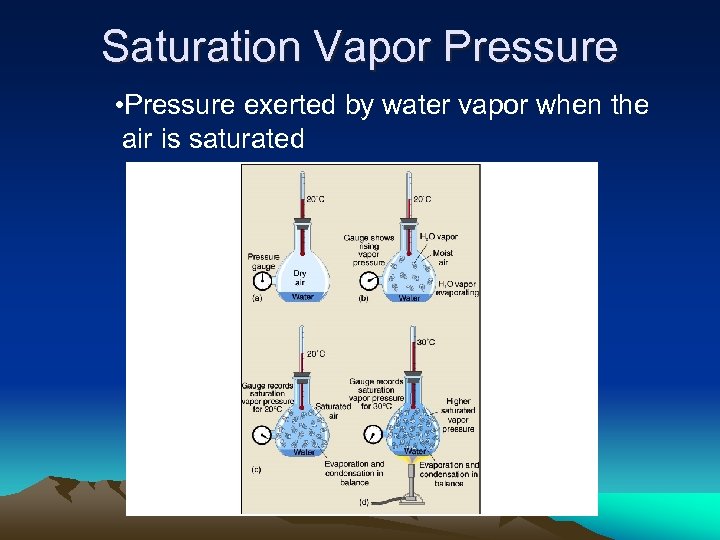 Saturation Vapor Pressure • Pressure exerted by water vapor when the air is saturated
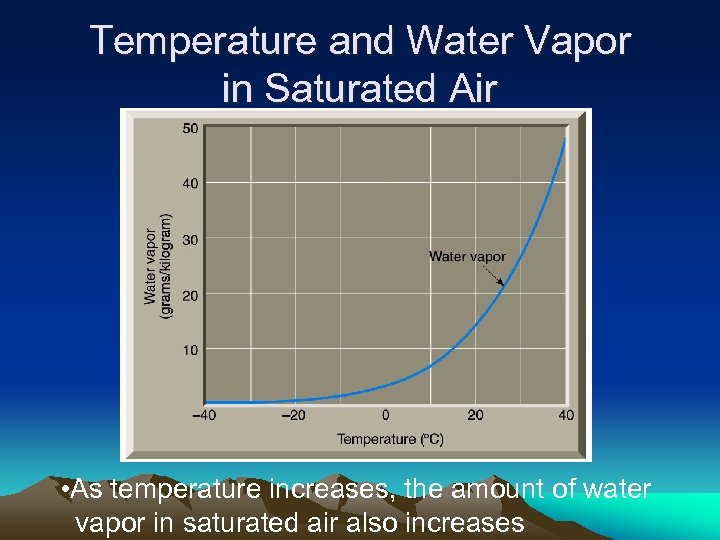 Temperature and Water Vapor in Saturated Air • As temperature increases, the amount of water vapor in saturated air also increases
 Specific Humidity • SH is the mass of water vapor present in a given mass of air • SH is unaffected by temperature
 Relative Humidity • Relative humidity – amount of water vapor present compared to the amount that COULD be present at a given temperature • RH = SH / saturation SH x 100 • RH is expressed as a % • RH tells you how close the air is to being saturated, 100% RH = saturation • To change RH, change temperature and/or quantity of water vapor present
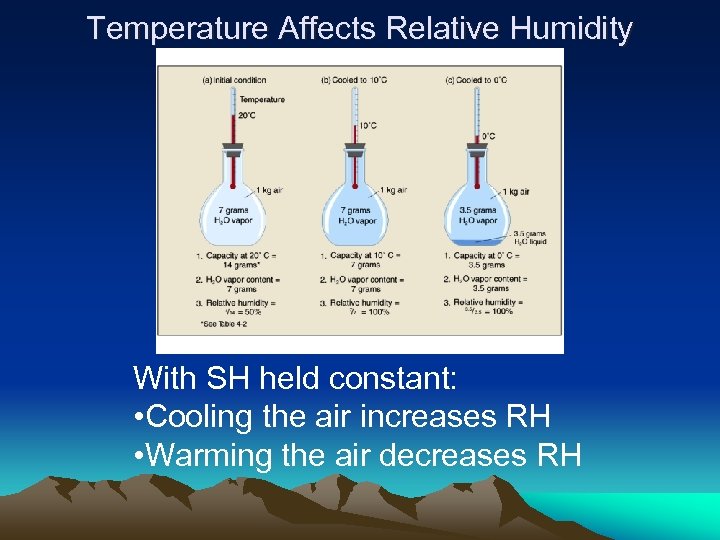 Temperature Affects Relative Humidity With SH held constant: • Cooling the air increases RH • Warming the air decreases RH
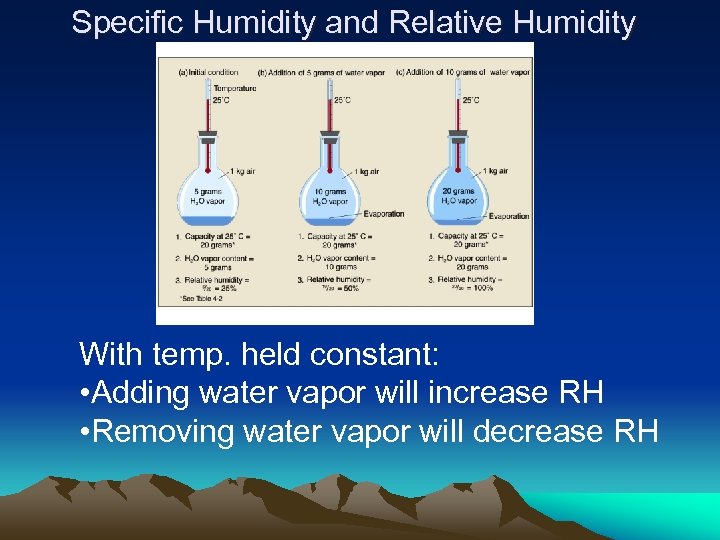 Specific Humidity and Relative Humidity With temp. held constant: • Adding water vapor will increase RH • Removing water vapor will decrease RH
 Humidity and Comfort • In the winter we warm the air, lowering RH indoors and have to use a humidifier or we get dry skin • In the summer, we cool the air, raising RH and the excess moisture is removed by the air conditioner • Basements are often damp because they are cooler and thus have a higher RH than the rest of the house, so we use a dehumidifier to lower RH
 Dew Point Temperature • The dew point is the temp. at which the air will become saturated • Always < or = to air temp. • The closer the air temperature is to the dew point, the closer the air is to saturation, and the higher the RH • Dew point >70°F is muggy; ~50°F is comfortable; <30°F is dry
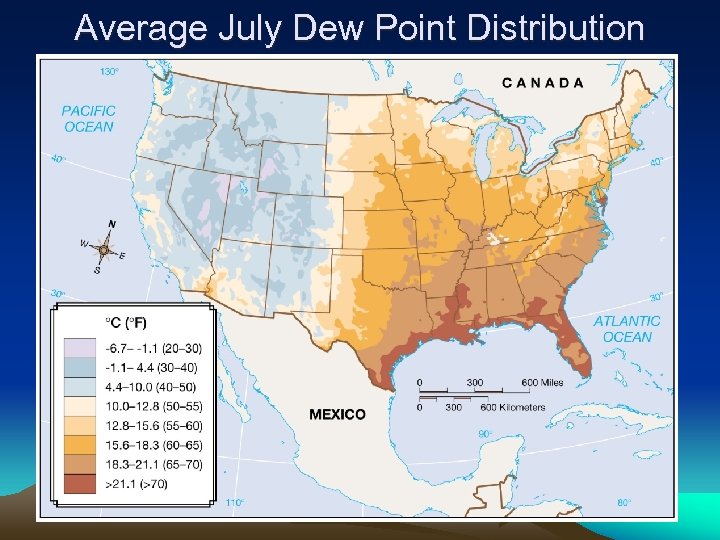 Average July Dew Point Distribution
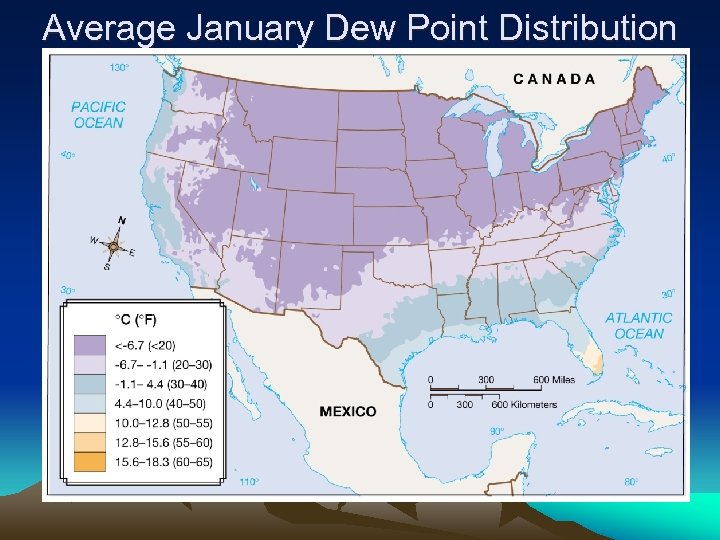 Average January Dew Point Distribution
 If the air cools to the dew point temperature: • RH becomes 100% (the air is saturated) • Condensation will occur on any surface cooled to the dew point of the surrounding air • Dew will form (cold-can, fogged bathroom mirror) • If dew point is <32°F, frost will form by deposition
 Mythbuster • Dew does not “settle” onto a surface, it forms directly on the surface • Frost is not frozen dew, it forms by deposition directly from water vapor
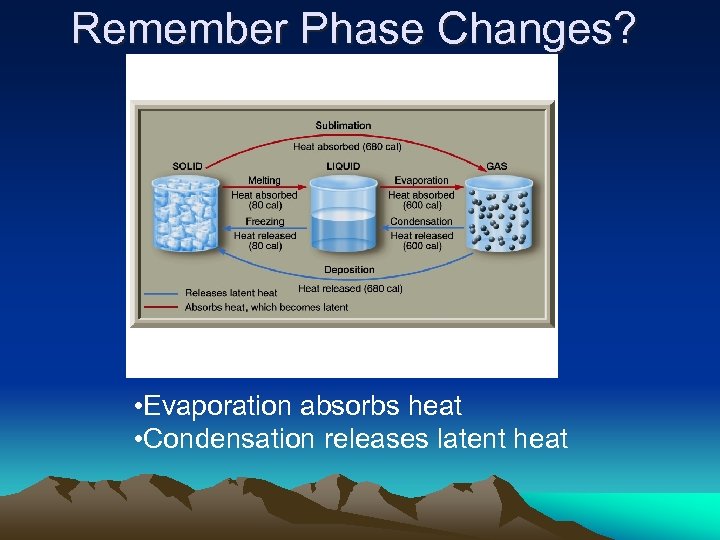 Remember Phase Changes? • Evaporation absorbs heat • Condensation releases latent heat
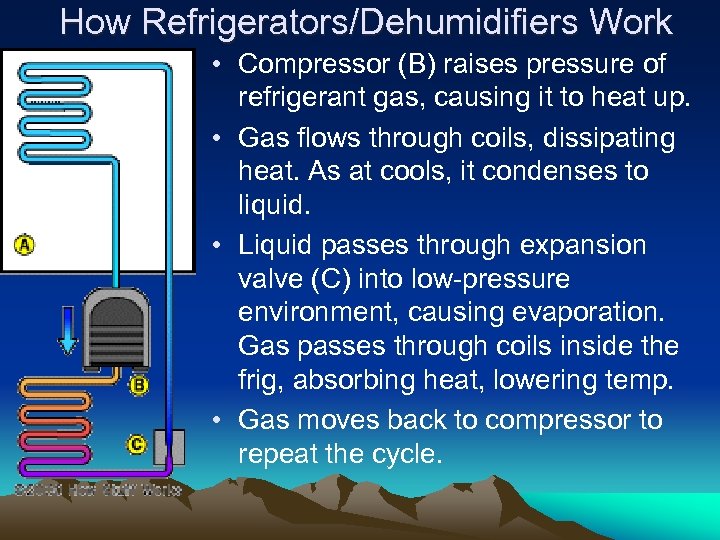 How Refrigerators/Dehumidifiers Work • Compressor (B) raises pressure of refrigerant gas, causing it to heat up. • Gas flows through coils, dissipating heat. As at cools, it condenses to liquid. • Liquid passes through expansion valve (C) into low-pressure environment, causing evaporation. Gas passes through coils inside the frig, absorbing heat, lowering temp. • Gas moves back to compressor to repeat the cycle.
 Processes that Change Air Temp. • Diabatic processes – heat is added to or removed from a system • Adiabatic processes – temperature changes without adding or removing heat • Adiabatic processes occur as a result of the compression or expansion of a gas • Compression increases temp. , expansion lowers temp.
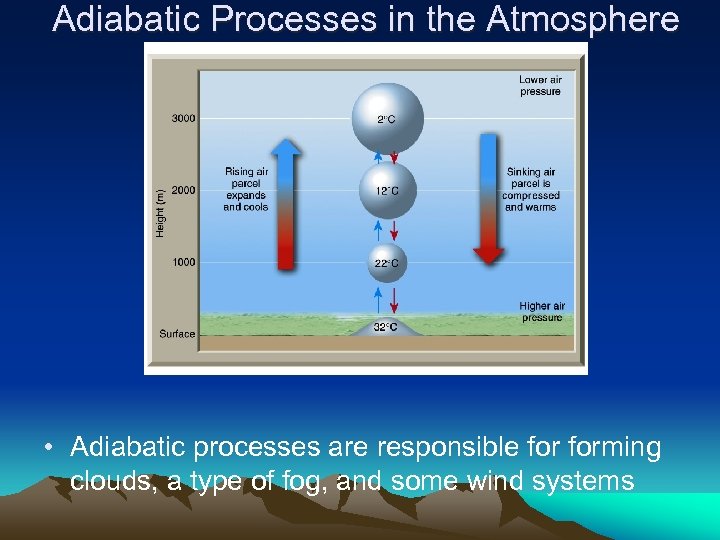 Adiabatic Processes in the Atmosphere • Adiabatic processes are responsible forming clouds, a type of fog, and some wind systems
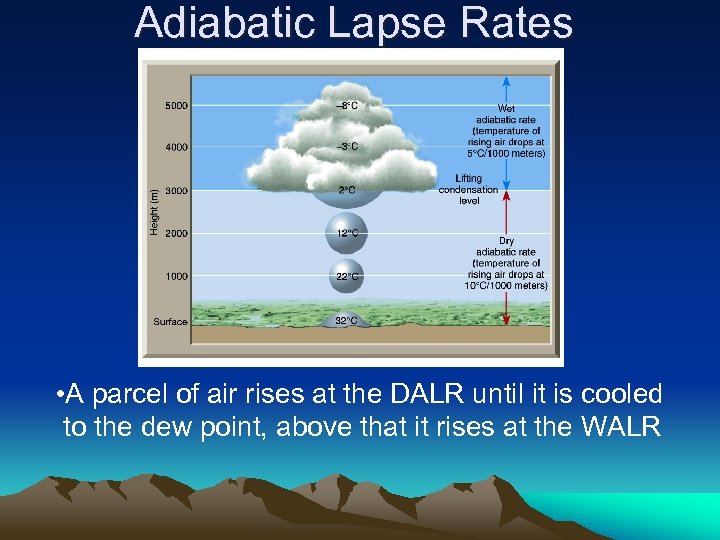 Adiabatic Lapse Rates • A parcel of air rises at the DALR until it is cooled to the dew point, above that it rises at the WALR
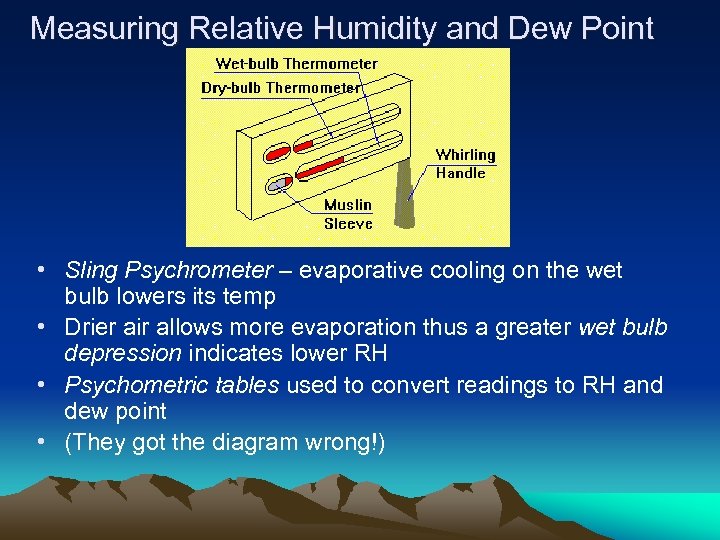 Measuring Relative Humidity and Dew Point • Sling Psychrometer – evaporative cooling on the wet bulb lowers its temp • Drier air allows more evaporation thus a greater wet bulb depression indicates lower RH • Psychometric tables used to convert readings to RH and dew point • (They got the diagram wrong!)
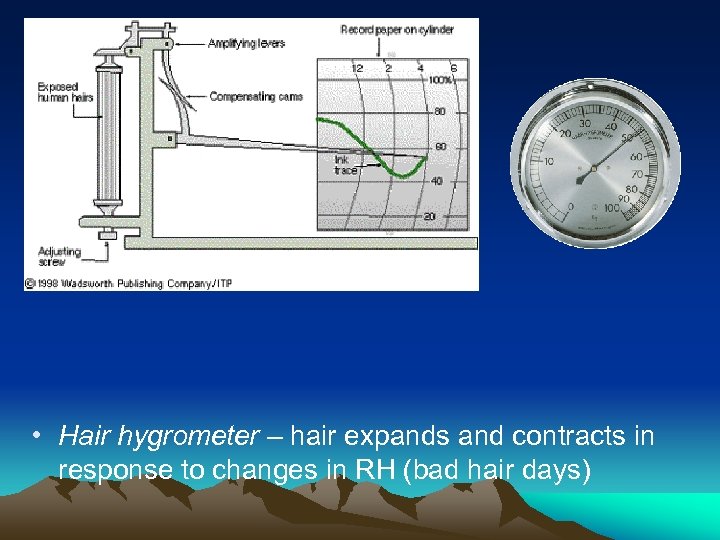 • Hair hygrometer – hair expands and contracts in response to changes in RH (bad hair days)
 Clouds and Fog • Clouds and fog are composed of tiny droplets of water suspended in the air • When air is cooled to the dew point, condensation occurs, and liquid water forms on condensation nuclei • Condensation nuclei are hygroscopic aerosols (natural and anthropogenic) • Condensation nuclei are always abundant
 Mythbuster • Clouds are made of liquid water droplets, NOT water vapor. Water vapor is an invisible gas.
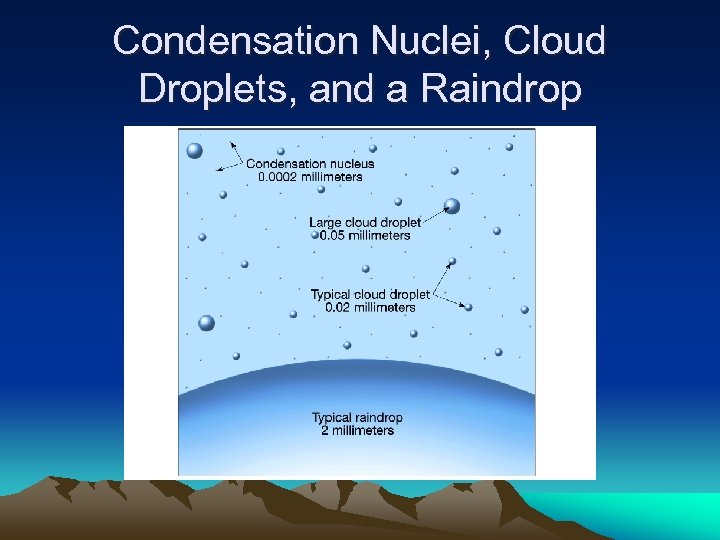 Condensation Nuclei, Cloud Droplets, and a Raindrop
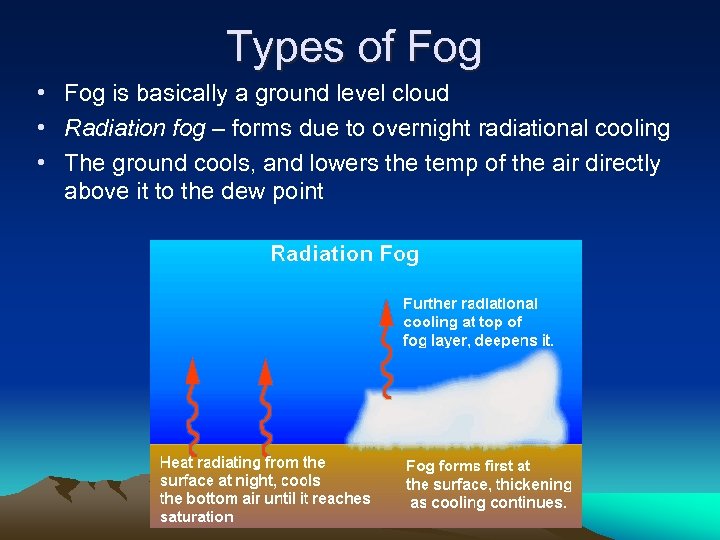 Types of Fog • Fog is basically a ground level cloud • Radiation fog – forms due to overnight radiational cooling • The ground cools, and lowers the temp of the air directly above it to the dew point
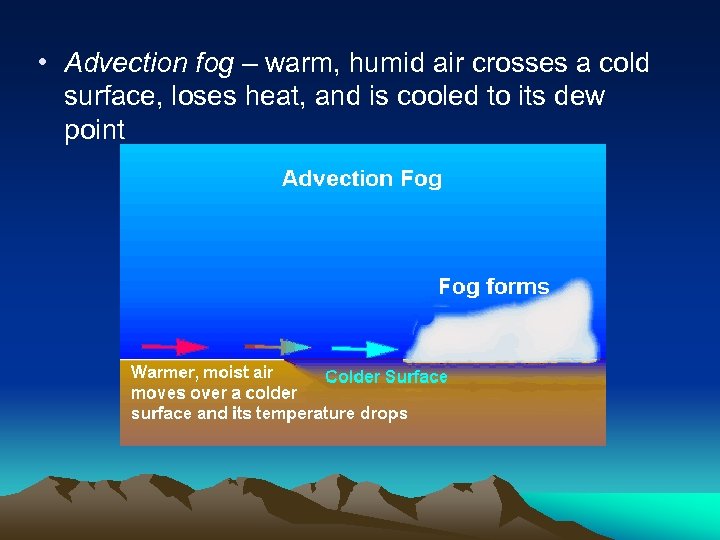 • Advection fog – warm, humid air crosses a cold surface, loses heat, and is cooled to its dew point
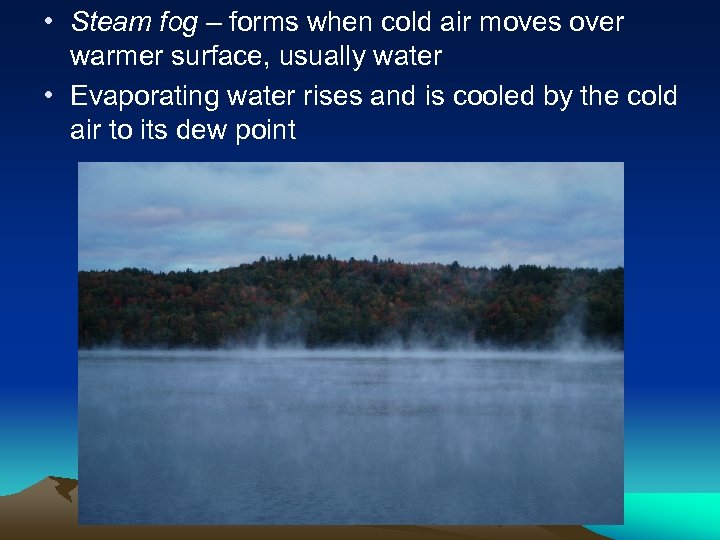 • Steam fog – forms when cold air moves over warmer surface, usually water • Evaporating water rises and is cooled by the cold air to its dew point
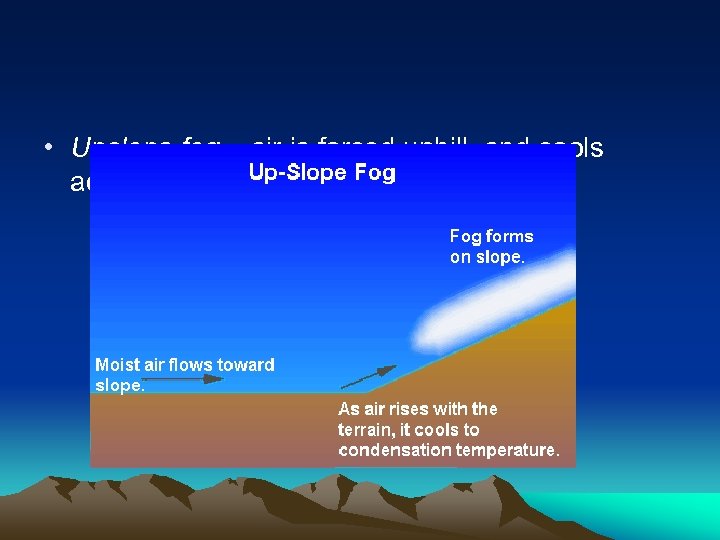 • Upslope fog – air is forced uphill, and cools adiabatically to its dew point
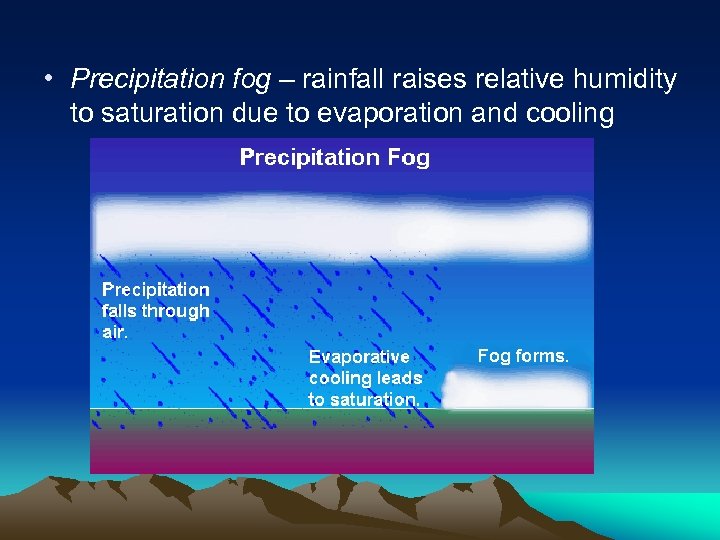 • Precipitation fog – rainfall raises relative humidity to saturation due to evaporation and cooling
 Cloud Formation • Air is lifted and cools adiabatically • When it is cooled to its dew point condensation occurs, forming cloud droplets
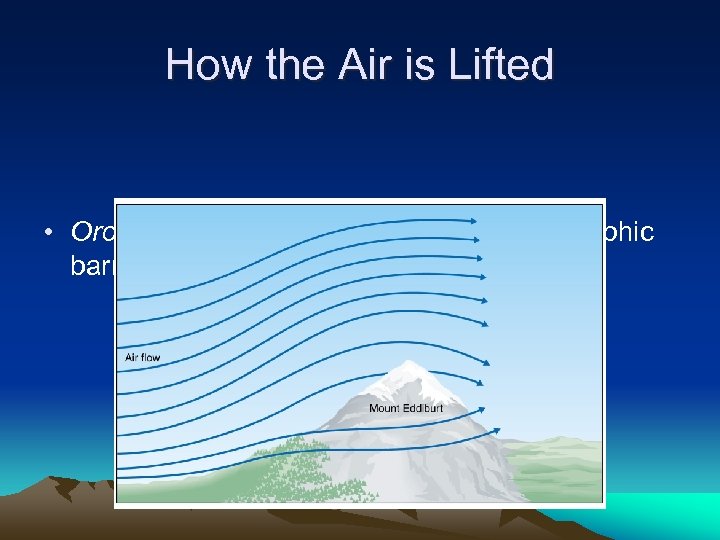 How the Air is Lifted • Orographic lifting – wind rises up a topographic barrier
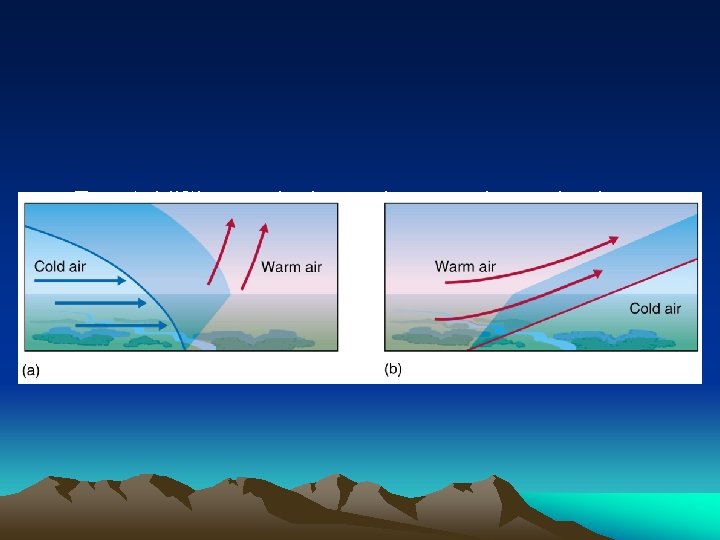 • Frontal lifting – air rises along, or is pushed upward by, a front
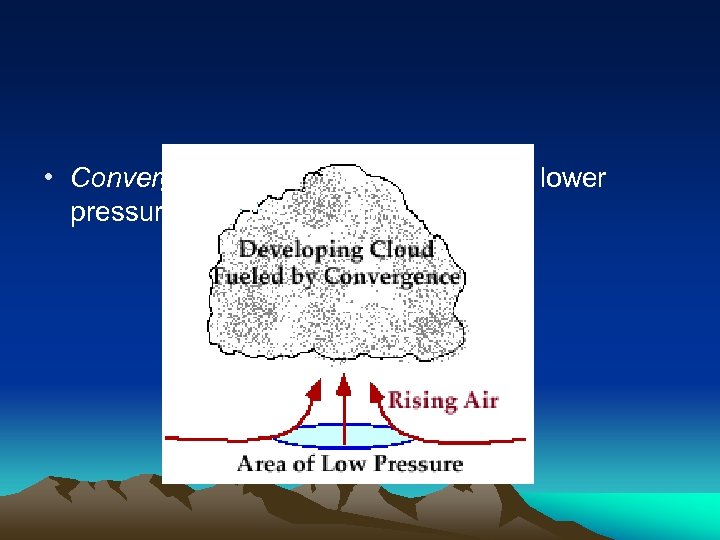 • Convergence – air flows into areas of lower pressure and rises
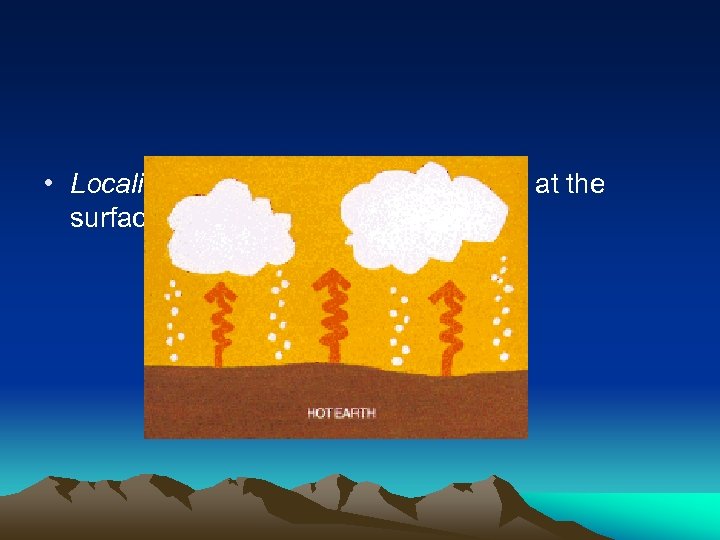 • Localized convection – air is warmed at the surface and rises
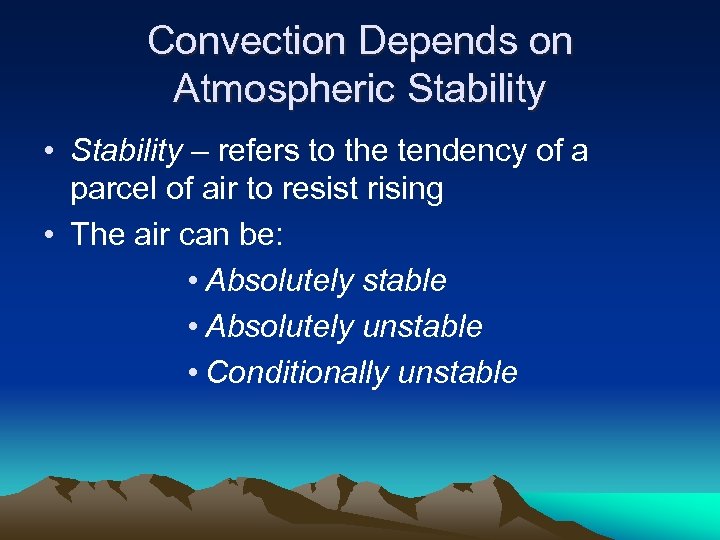 Convection Depends on Atmospheric Stability • Stability – refers to the tendency of a parcel of air to resist rising • The air can be: • Absolutely stable • Absolutely unstable • Conditionally unstable
 Lapse Rates Reviewed • Environmental lapse rate – change in air temperature with height • Dry adiabatic lapse rate – change in the temp of a rising, unsaturated air parcel • Saturated (wet) adiabatic lapse rate – change in the temp a rising, saturated air parcel • SALR
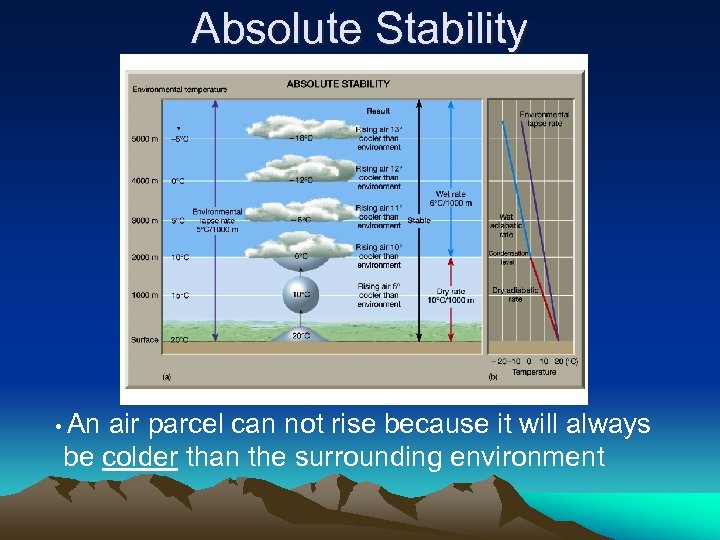 Absolute Stability • An air parcel can not rise because it will always be colder than the surrounding environment
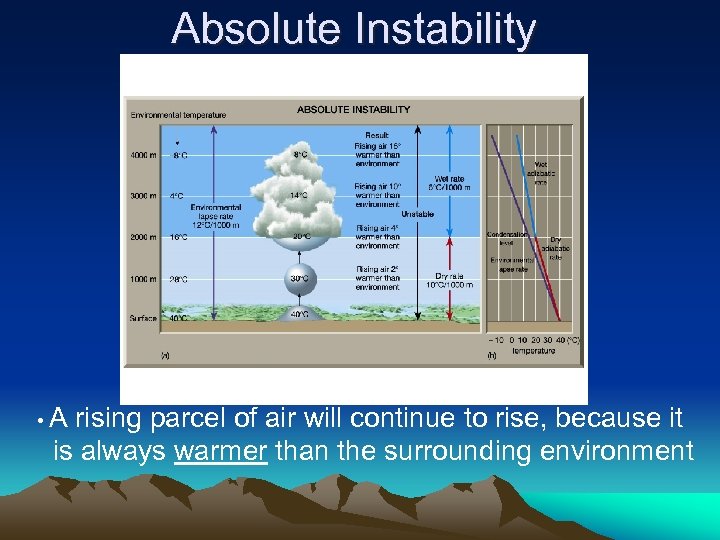 Absolute Instability • A rising parcel of air will continue to rise, because it is always warmer than the surrounding environment
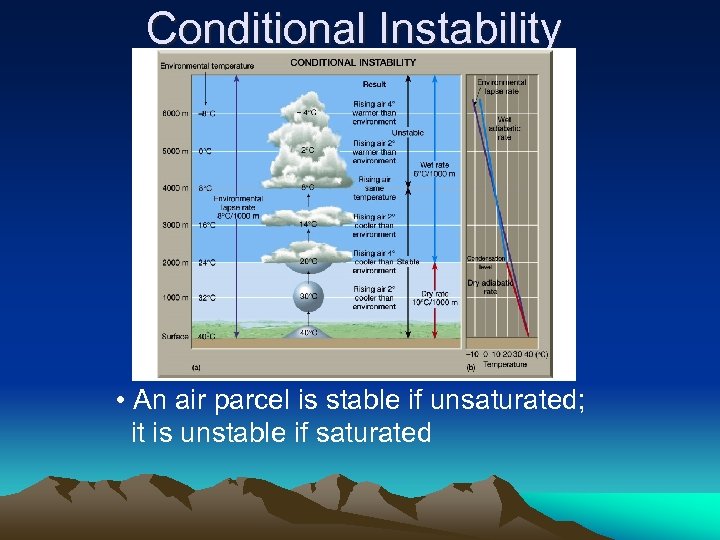 Conditional Instability • An air parcel is stable if unsaturated; it is unstable if saturated
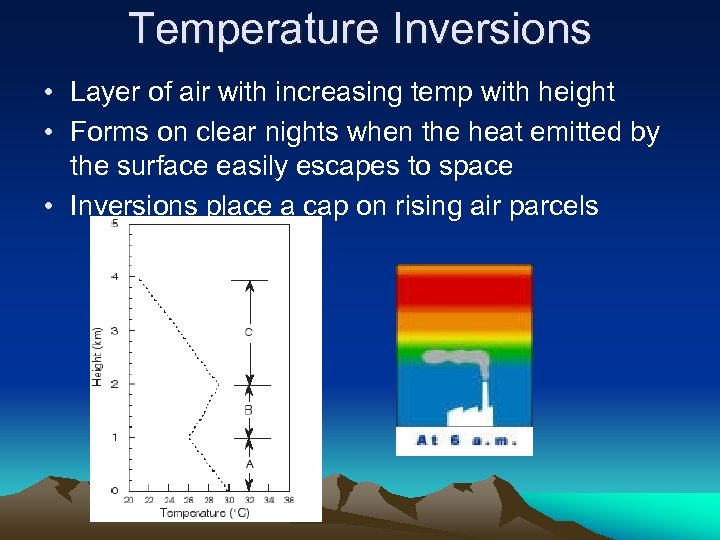 Temperature Inversions • Layer of air with increasing temp with height • Forms on clear nights when the heat emitted by the surface easily escapes to space • Inversions place a cap on rising air parcels
 Cloud Types • Clouds are classified by height and form • Heights: low, middle, high, or vertically developed • Forms: cumulus = puffy; stratus = flat, layered; cirrus = thin, wispy
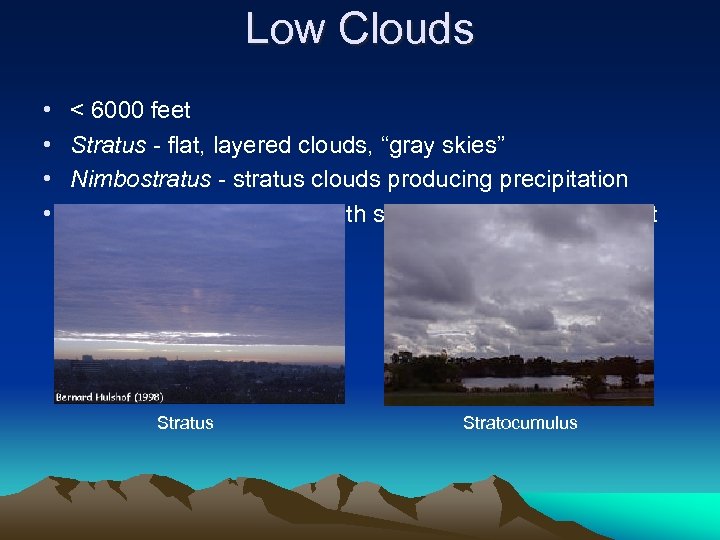 Low Clouds • • < 6000 feet Stratus - flat, layered clouds, “gray skies” Nimbostratus - stratus clouds producing precipitation Stratocumulus - stratus with some vertical development Stratus Stratocumulus
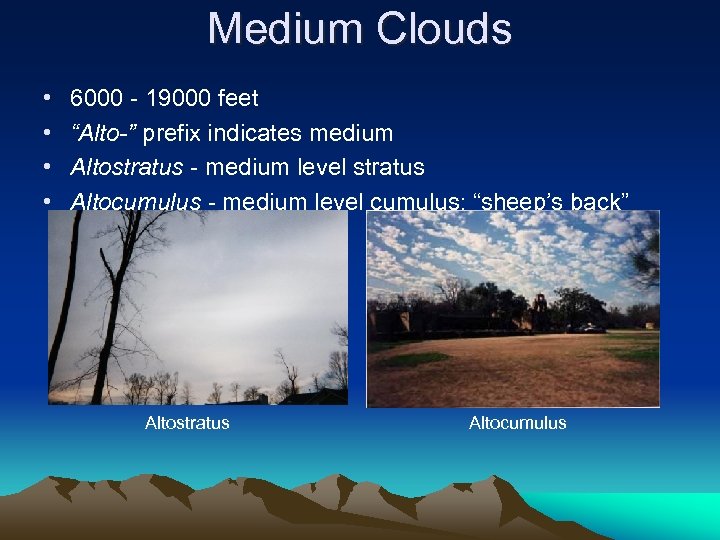 Medium Clouds • • 6000 - 19000 feet “Alto-” prefix indicates medium Altostratus - medium level stratus Altocumulus - medium level cumulus; “sheep’s back” Altostratus Altocumulus
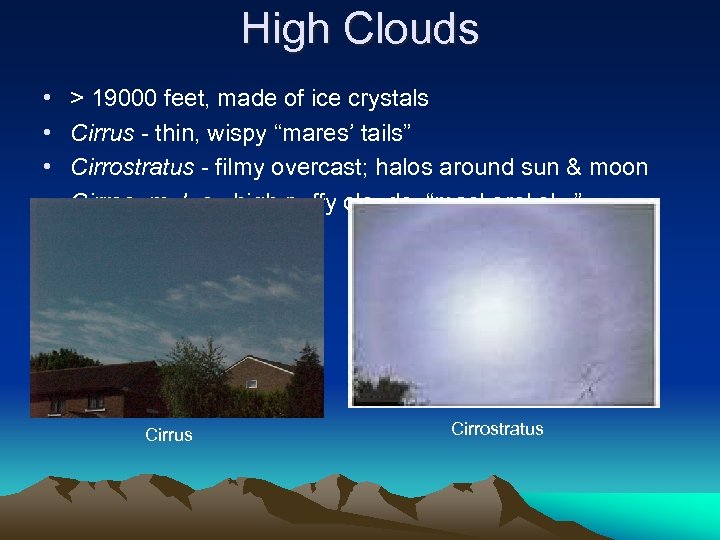 High Clouds • • > 19000 feet, made of ice crystals Cirrus - thin, wispy “mares’ tails” Cirrostratus - filmy overcast; halos around sun & moon Cirrocumulus - high puffy clouds; “mackerel sky” Cirrus Cirrostratus
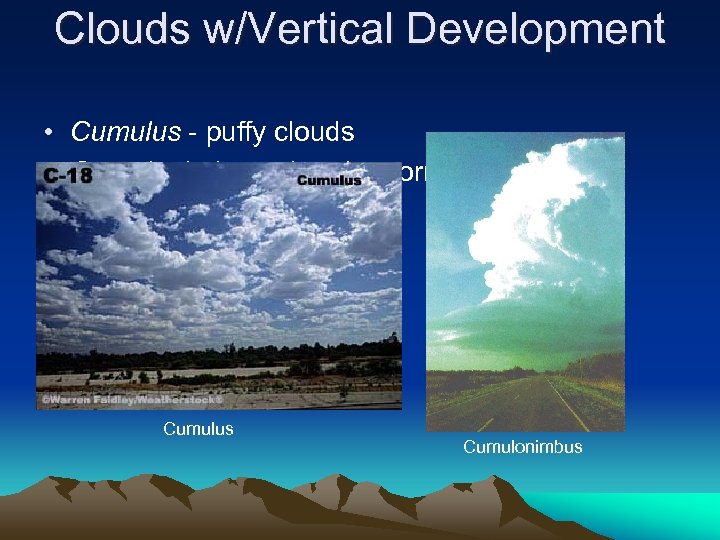 Clouds w/Vertical Development • Cumulus - puffy clouds • Cumulonimbus - thunderstorm clouds, “thunderheads” Cumulus Cumulonimbus
 GY 205 Weather and Climate End of Lecture 3