 Скачать презентацию Guidelines For The Future Sharing Best Practice For
67e4523c8218d76c69d0d55555417732.ppt
- Количество слайдов: 19



Guidelines For The Future Sharing Best Practice For National Bibliographies In The Digital Era Neil Wilson Information Coordinator IFLA Bibliography Section 1
The IFLA Section on Bibliography Key Areas of Interest • The content, arrangement, production, dissemination & preservation of bibliographic information - especially national bibliographic services • Promotion of the importance of the discipline of bibliography to: • • • Library professionals & publishers Distributors & retailers Users 2
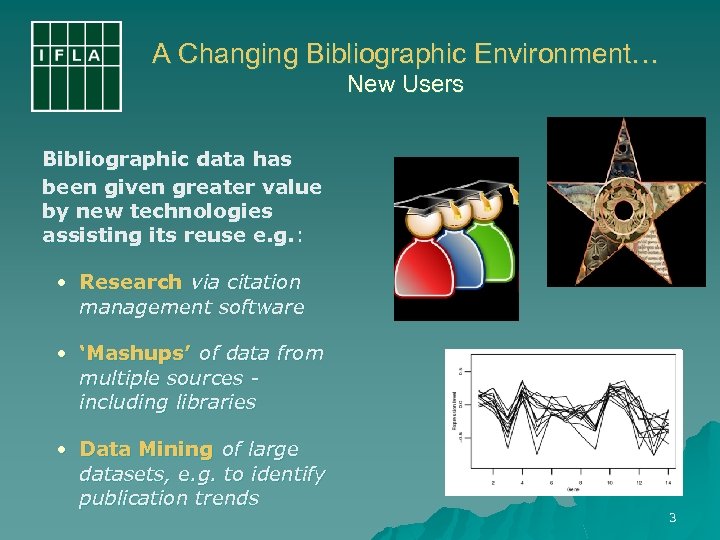
A Changing Bibliographic Environment… New Users Bibliographic data has been given greater value by new technologies assisting its reuse e. g. : • Research via citation management software • ‘Mashups’ of data from multiple sources including libraries • Data Mining of large datasets, e. g. to identify publication trends 3
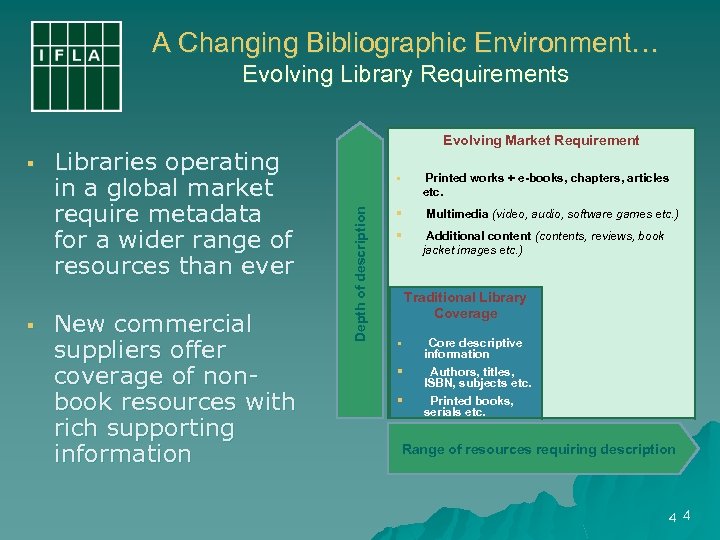
A Changing Bibliographic Environment… Evolving Library Requirements § Libraries operating in a global market require metadata for a wider range of resources than ever New commercial suppliers offer coverage of nonbook resources with rich supporting information Printed works + e-books, chapters, articles etc. § Depth of description § Evolving Market Requirement § Multimedia (video, audio, software games etc. ) § Additional content (contents, reviews, book jacket images etc. ) Traditional Library Coverage § § § Core descriptive information Authors, titles, ISBN, subjects etc. Printed books, serials etc. Range of resources requiring description 4 4
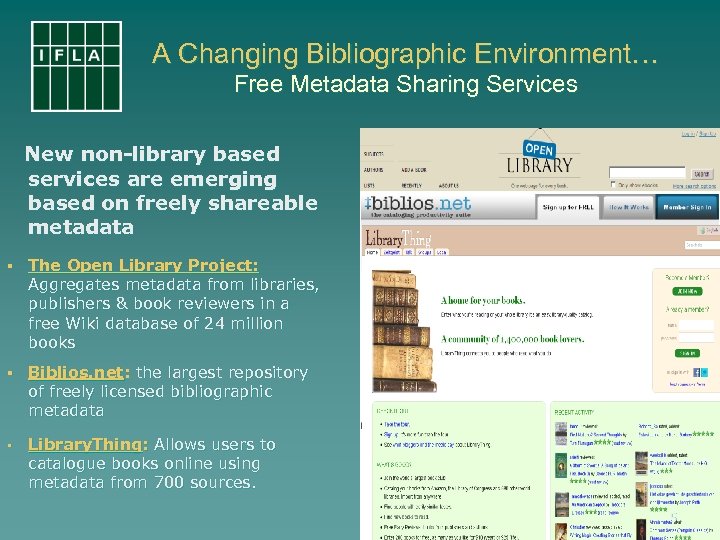
A Changing Bibliographic Environment… Free Metadata Sharing Services New non-library based services are emerging based on freely shareable metadata § The Open Library Project: Aggregates metadata from libraries, publishers & book reviewers in a free Wiki database of 24 million books § Biblios. net: the largest repository of freely licensed bibliographic metadata § Library. Thing: Allows users to catalogue books online using metadata from 700 sources. 5
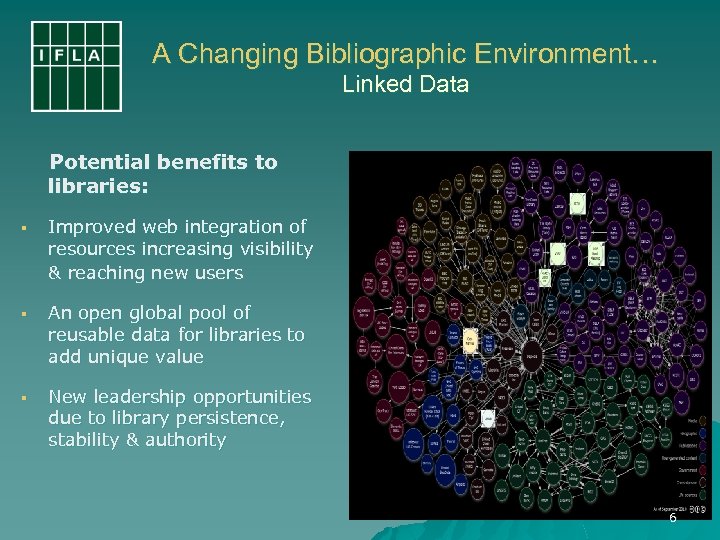
A Changing Bibliographic Environment… Linked Data Potential benefits to libraries: § Improved web integration of resources increasing visibility & reaching new users § An open global pool of reusable data for libraries to add unique value § New leadership opportunities due to library persistence, stability & authority 6
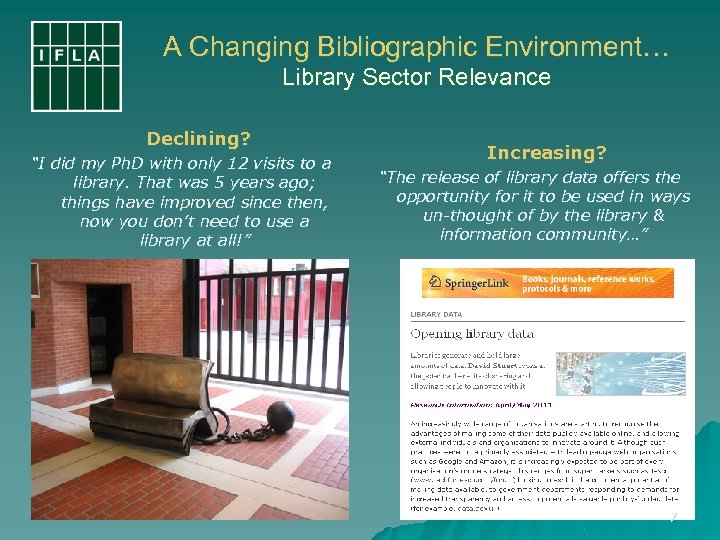
A Changing Bibliographic Environment… Library Sector Relevance Declining? “I did my Ph. D with only 12 visits to a library. That was 5 years ago; things have improved since then, now you don’t need to use a library at all!” Increasing? “The release of library data offers the opportunity for it to be used in ways un-thought of by the library & information community…” 7
Guidance? In an era of disruptive change libraries need open access to bibliographic best practice on: • Service development, delivery & lifecycle • Resource description & standards • Business models & administration • User support And much more… 8
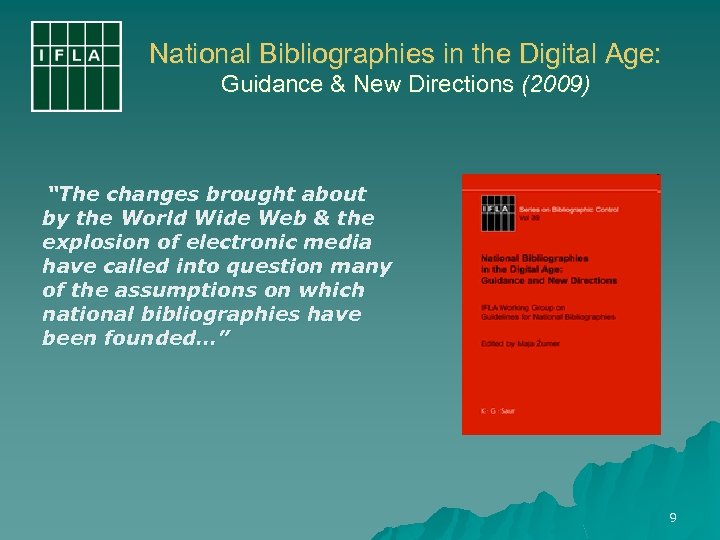
National Bibliographies in the Digital Age: Guidance & New Directions (2009) “The changes brought about by the World Wide Web & the explosion of electronic media have called into question many of the assumptions on which national bibliographies have been founded…” 9
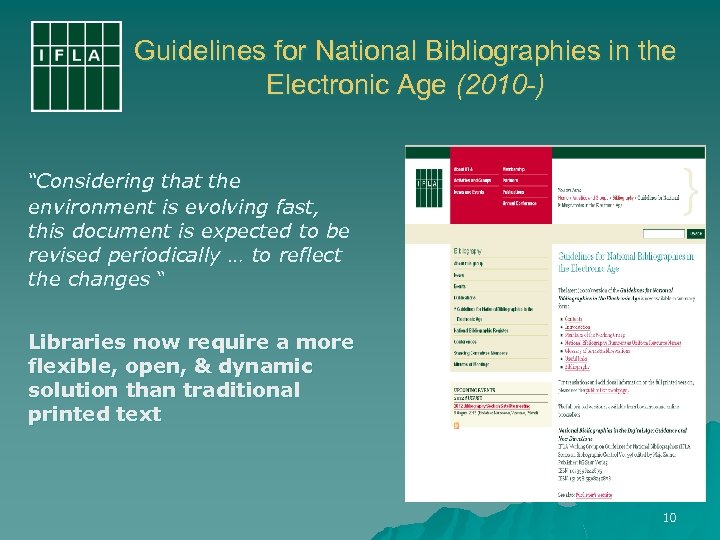
Guidelines for National Bibliographies in the Electronic Age (2010 -) “Considering that the environment is evolving fast, this document is expected to be revised periodically … to reflect the changes “ Libraries now require a more flexible, open, & dynamic solution than traditional printed text 10
2012 Guidelines Proposal • Create a new web resource describing best practice • Organise by theme • Provide links to back up sources to ensure continuing relevance & currency • Supplement with real world examples when possible 11
Proposed Themes 1 Context Site Home Page • Purpose, scope, intended audience etc. The Value of National Bibliographies • The mission of the national bibliography • Users & stakeholders • International recommendations • The changing operational context 12
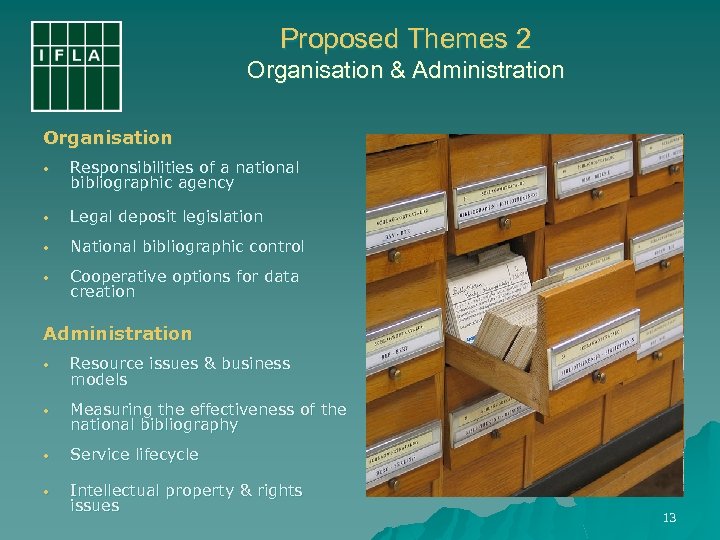
Proposed Themes 2 Organisation & Administration Organisation • Responsibilities of a national bibliographic agency • Legal deposit legislation • National bibliographic control • Cooperative options for data creation Administration • Resource issues & business models • Measuring the effectiveness of the national bibliography • Service lifecycle • Intellectual property & rights issues 13
Proposed Themes 3 Scope, Selection & Standards Scoping & Selection • General selection criteria • Resource format • Exclusions policies Resource Description & Standards • Bibliographic control principles • Bibliographic content standards • Identifiers • Metadata formats • Character encoding standards • Semantic web standards 14
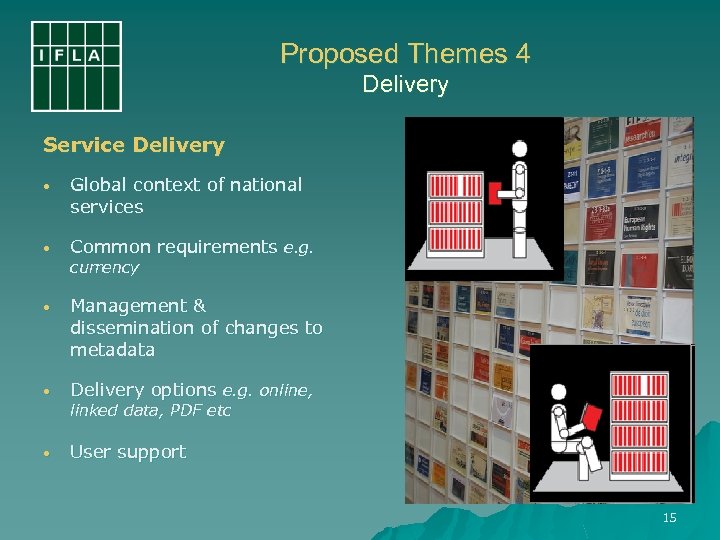
Proposed Themes 4 Delivery Service Delivery • Global context of national services • Common requirements e. g. currency • Management & dissemination of changes to metadata • Delivery options e. g. online, linked data, PDF etc • User support 15
Proposed Timeline 1 At IFLA 2012 SC meetings: • Discuss Conference outcomes • Agree final WG membership & methodology Autumn 2012 – Summer 2013 • Allocate work for site sections & identify expert contributions • Create site structure & begin to populate it • Create text with external links • Offer sample pages for feedback 16
Proposed Timeline 2 At IFLA 2013 SC meetings: • Discuss progress & feedback received • Finalise next steps Autumn 2013 – Spring 2014 • Allocate further work for site sections & invite expert contributions • Create further text with external links • Offer pages for feedback 17
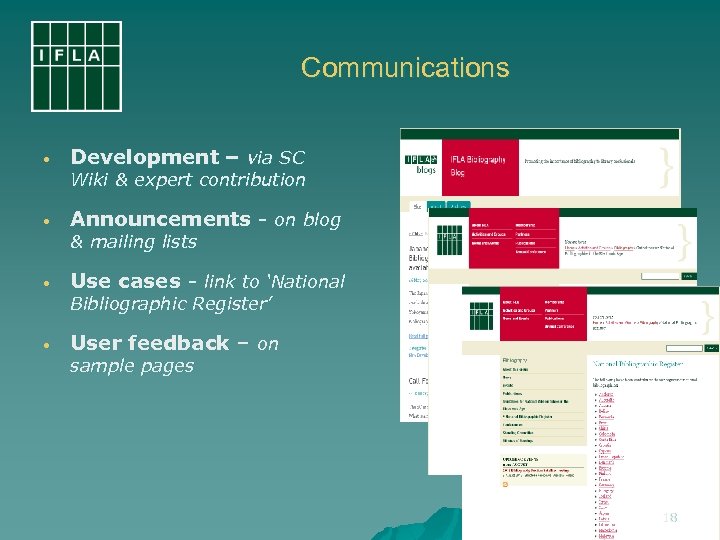
Communications • Development – via SC Wiki & expert contribution • Announcements - on blog & mailing lists • Use cases - link to ‘National Bibliographic Register’ • User feedback – on sample pages 18
The IFLA Section on Bibliography Further Information • Web site: http: //www. ifla. org/en/bibliography • Blog: http: //blogs. ifla. org/bibliography/ 19
Скачать презентацию Guidelines For The Future Sharing Best Practice For
67e4523c8218d76c69d0d55555417732.ppt