 Скачать презентацию Growth of bank credit in central and eastern
a5beb31e44476530227eb427a284d068.ppt
- Количество слайдов: 32



Growth of bank credit in central and eastern Europe: housing markets and the role of foreign-owned banks Dubravko Mihaljek Senior Economist Bank for International Settlements Presentation at the 12 th Dubrovnik Economic Conference Dubrovnik, 29 -30 June 2006 The views expressed are those of the author and not necessarily those of the BIS. 1
Outline 1. Common trends in credit growth 2. Housing markets 3. Foreign-owned banks 4. Policy challenges 2
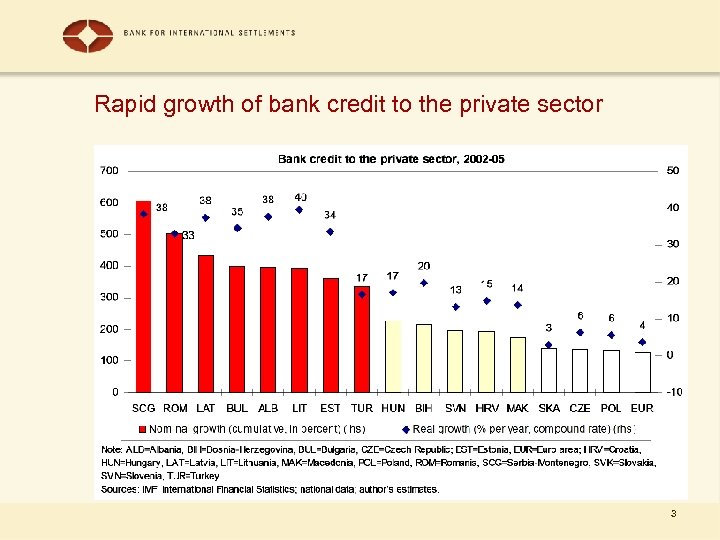
Rapid growth of bank credit to the private sector 3
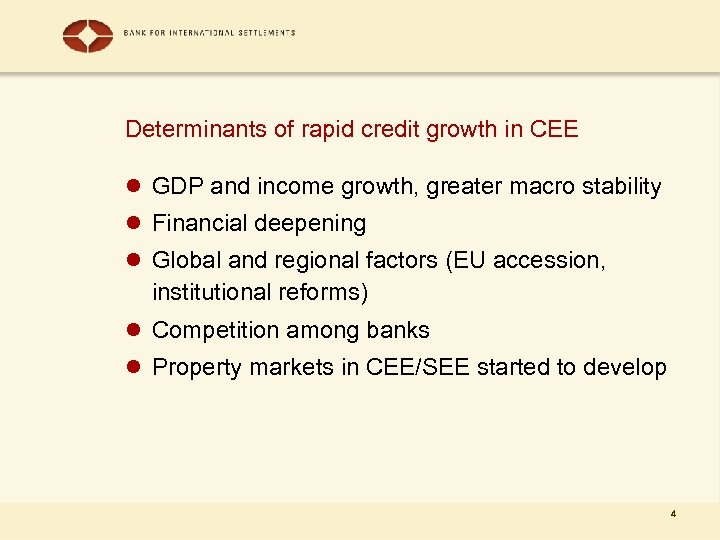
Determinants of rapid credit growth in CEE l GDP and income growth, greater macro stability l Financial deepening l Global and regional factors (EU accession, institutional reforms) l Competition among banks l Property markets in CEE/SEE started to develop 4
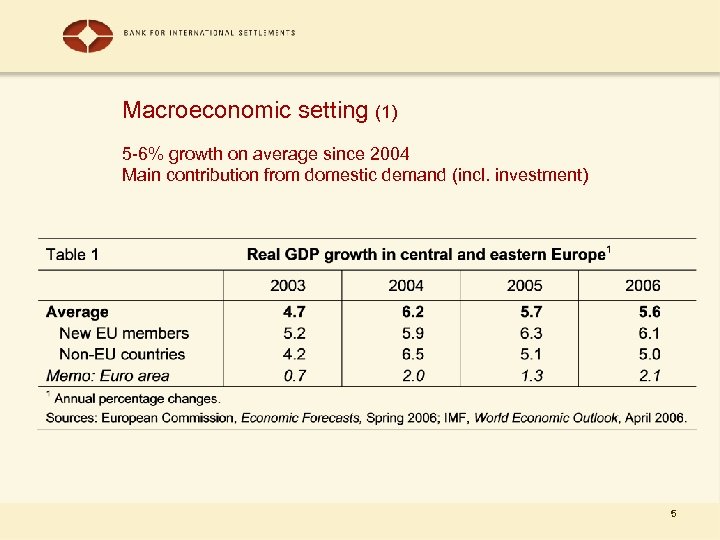
Macroeconomic setting (1) 5 -6% growth on average since 2004 Main contribution from domestic demand (incl. investment) 5
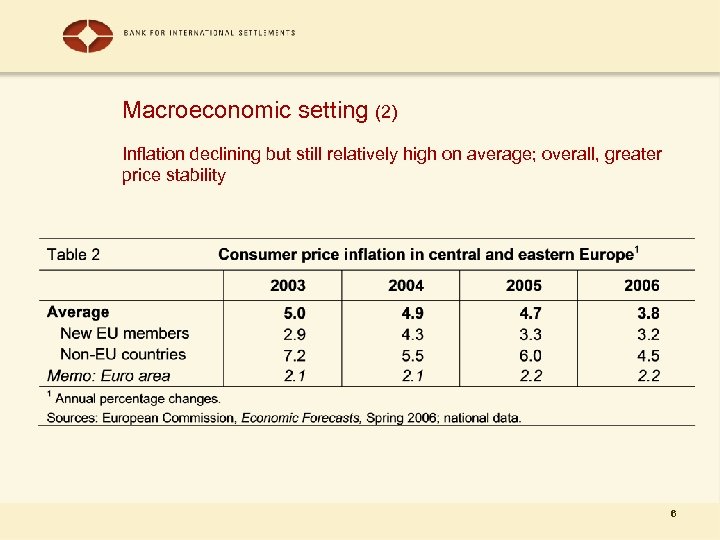
Macroeconomic setting (2) Inflation declining but still relatively high on average; overall, greater price stability 6
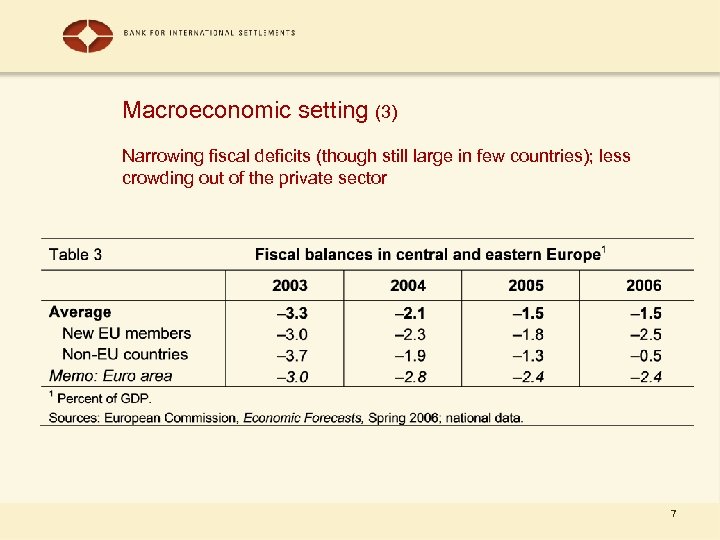
Macroeconomic setting (3) Narrowing fiscal deficits (though still large in few countries); less crowding out of the private sector 7
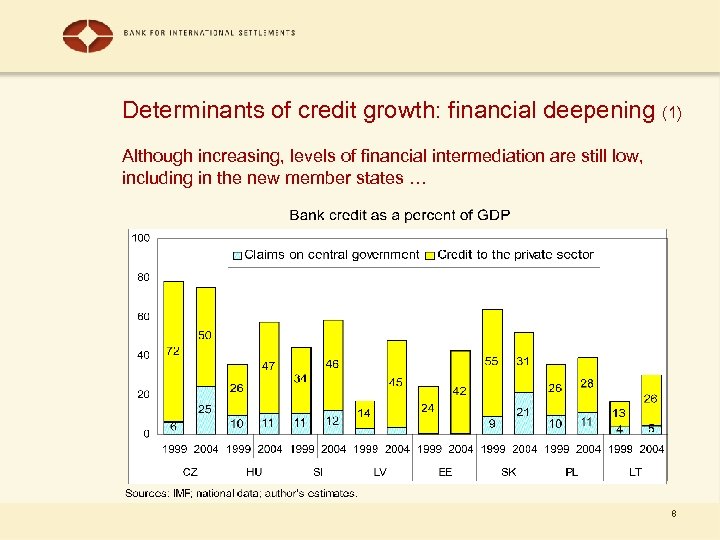
Determinants of credit growth: financial deepening (1) Although increasing, levels of financial intermediation are still low, including in the new member states … 8
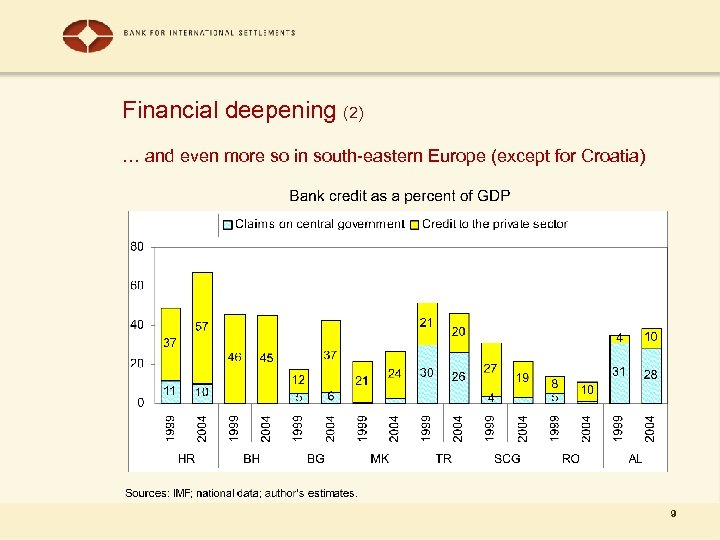
Financial deepening (2) … and even more so in south-eastern Europe (except for Croatia) 9
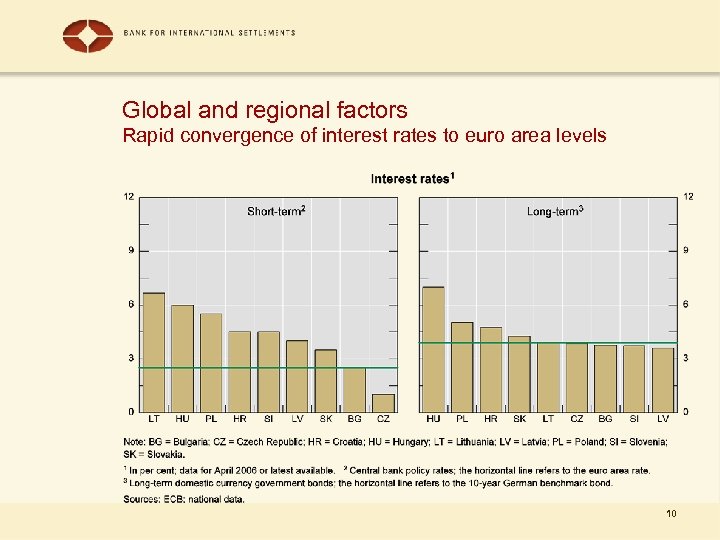
Global and regional factors Rapid convergence of interest rates to euro area levels 10
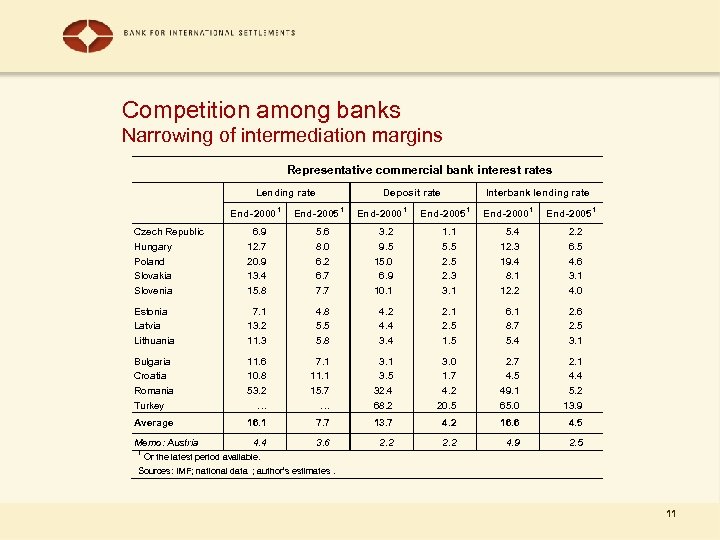
Competition among banks Narrowing of intermediation margins Representative commercial bank interest rates Lending rate End-2000 1 Deposit rate End-2005 1 End-2000 1 Interbank lending rate End-2005 1 End-2000 1 End-2005 1 Czech Republic Hungary Poland Slovakia Slovenia 6. 9 12. 7 20. 9 13. 4 15. 8 5. 6 8. 0 6. 2 6. 7 7. 7 3. 2 9. 5 15. 0 6. 9 10. 1 1. 1 5. 5 2. 3 3. 1 5. 4 12. 3 19. 4 8. 1 12. 2 6. 5 4. 6 3. 1 4. 0 Estonia Latvia Lithuania 7. 1 13. 2 11. 3 4. 8 5. 5 5. 8 4. 2 4. 4 3. 4 2. 1 2. 5 1. 5 6. 1 8. 7 5. 4 2. 6 2. 5 3. 1 Bulgaria Croatia Romania Turkey 11. 6 10. 8 53. 2 … 7. 1 11. 1 15. 7 … 3. 1 3. 5 32. 4 68. 2 3. 0 1. 7 4. 2 20. 5 2. 7 4. 5 49. 1 65. 0 2. 1 4. 4 5. 2 13. 9 Average 16. 1 7. 7 13. 7 4. 2 16. 6 4. 5 4. 4 3. 6 2. 2 4. 9 2. 5 Memo: Austria 1 Or the latest period available. Sources: IMF; national data ; author’s estimates. 11
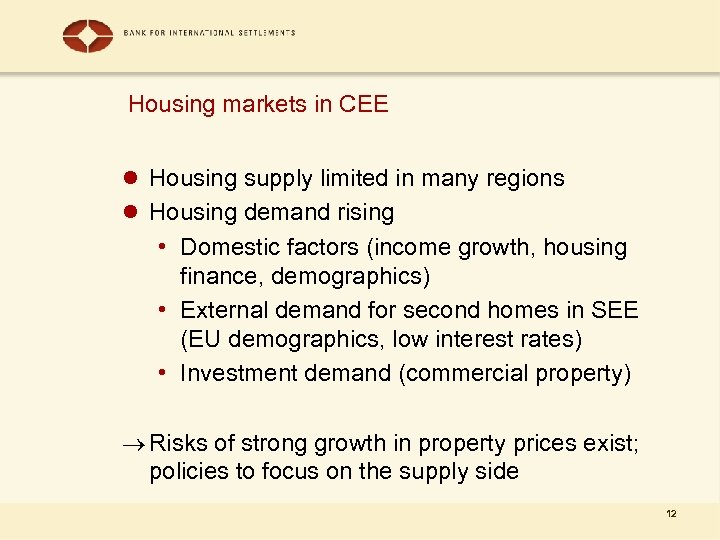
Housing markets in CEE l Housing supply limited in many regions l Housing demand rising • Domestic factors (income growth, housing finance, demographics) • External demand for second homes in SEE (EU demographics, low interest rates) • Investment demand (commercial property) Risks of strong growth in property prices exist; policies to focus on the supply side 12
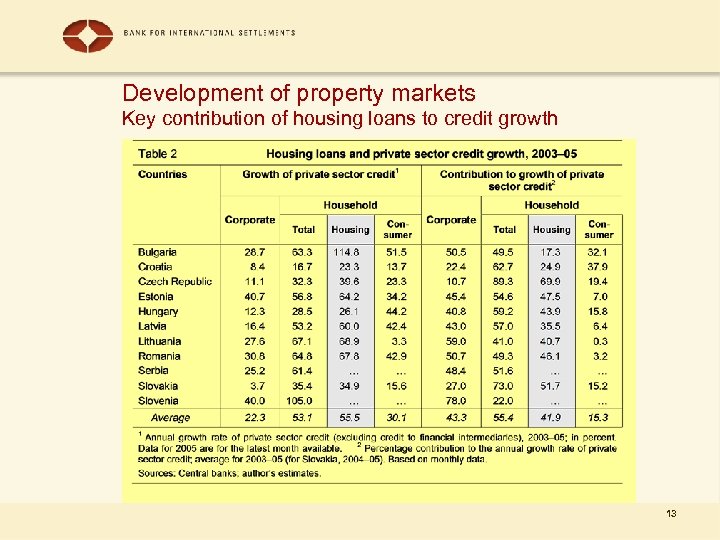
Development of property markets Key contribution of housing loans to credit growth 13
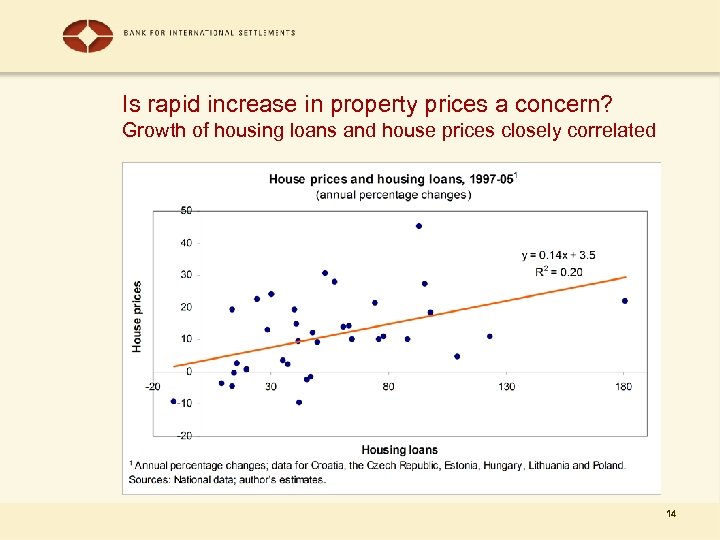
Is rapid increase in property prices a concern? Growth of housing loans and house prices closely correlated 14
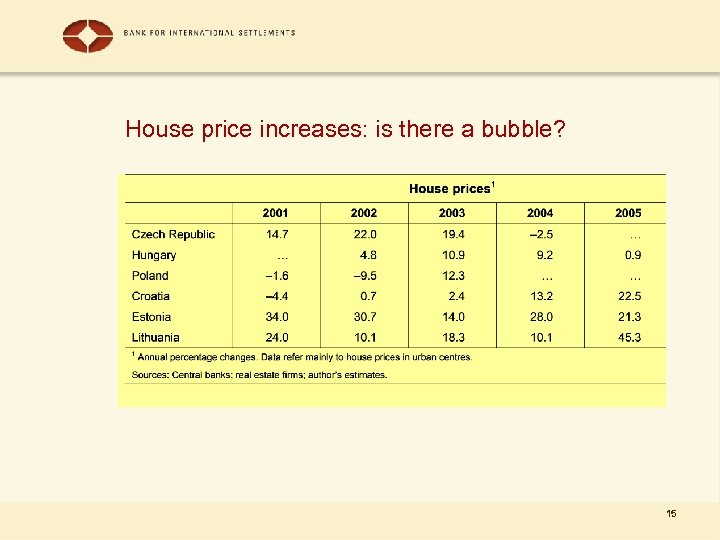
House price increases: is there a bubble? 15
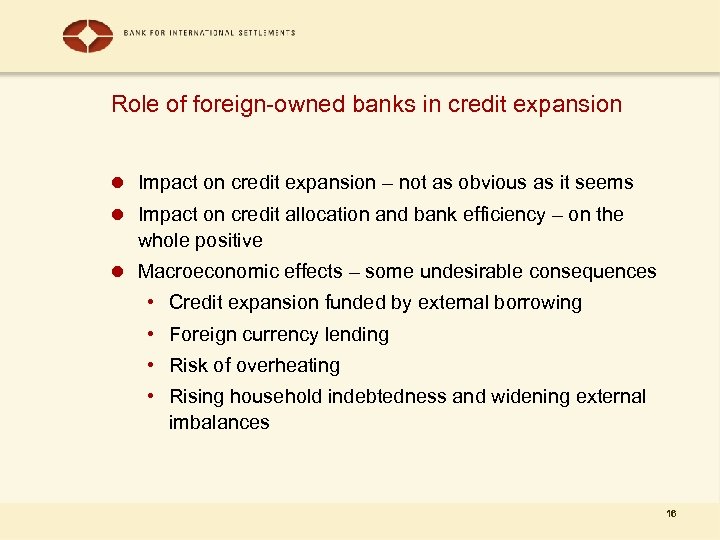
Role of foreign-owned banks in credit expansion l Impact on credit expansion – not as obvious as it seems l Impact on credit allocation and bank efficiency – on the whole positive l Macroeconomic effects – some undesirable consequences • Credit expansion funded by external borrowing • Foreign currency lending • Risk of overheating • Rising household indebtedness and widening external imbalances 16
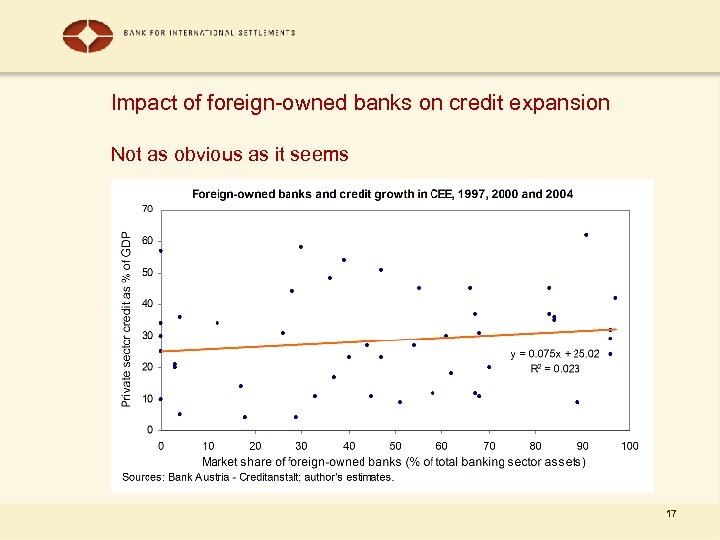
Impact of foreign-owned banks on credit expansion Not as obvious as it seems 17
Impact of foreign-owned banks on credit allocation Composition of bank lending has improved 18
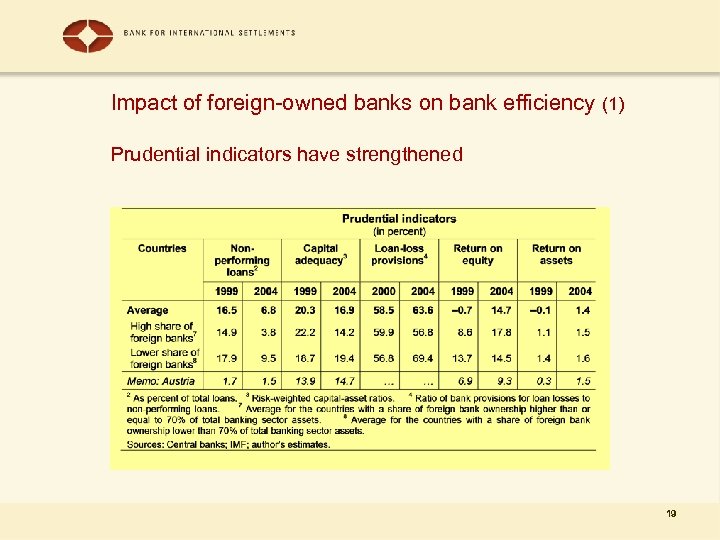
Impact of foreign-owned banks on bank efficiency (1) Prudential indicators have strengthened 19
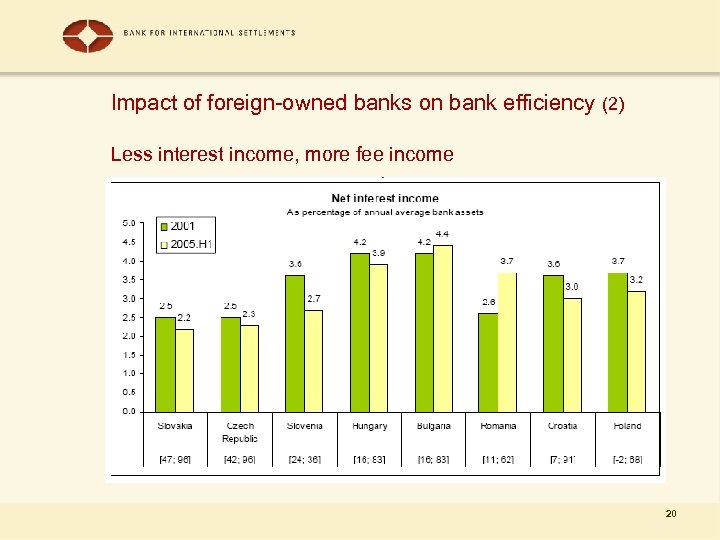
Impact of foreign-owned banks on bank efficiency (2) Less interest income, more fee income 20
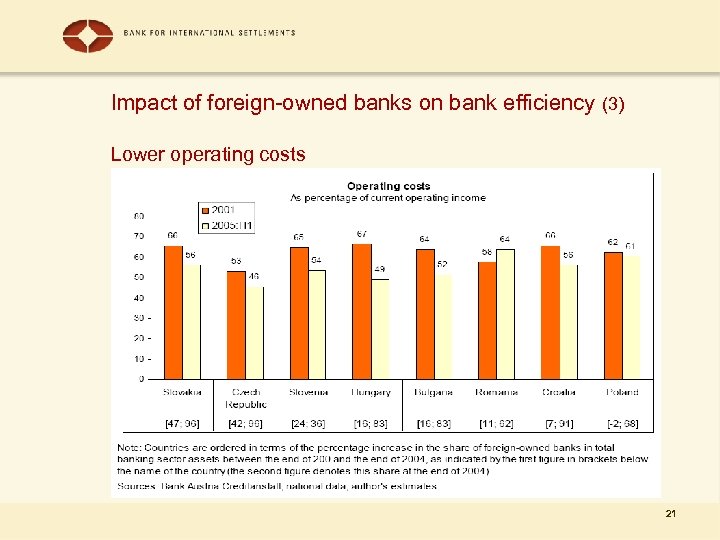
Impact of foreign-owned banks on bank efficiency (3) Lower operating costs 21
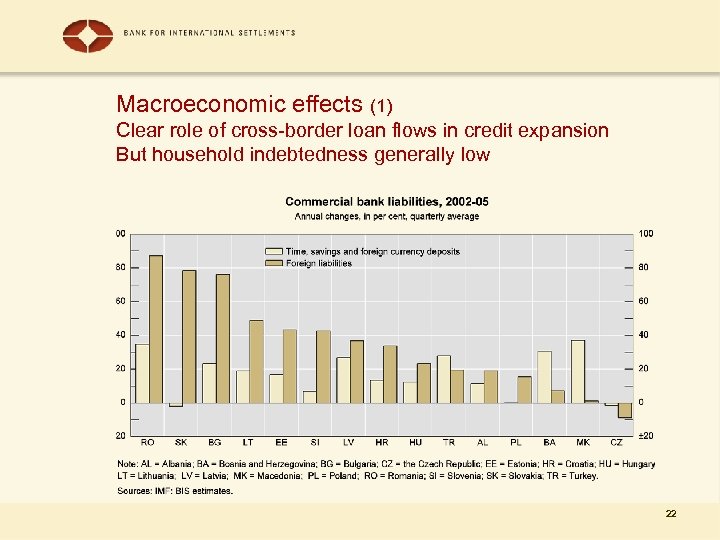
Macroeconomic effects (1) Clear role of cross-border loan flows in credit expansion But household indebtedness generally low 22
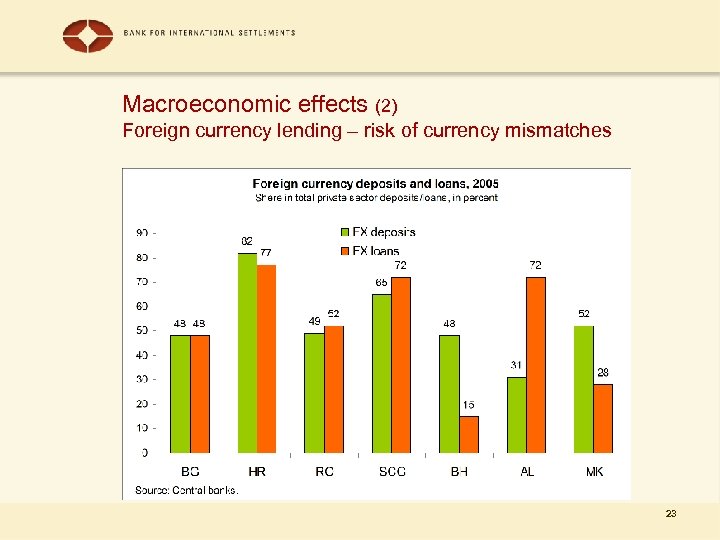
Macroeconomic effects (2) Foreign currency lending – risk of currency mismatches 23
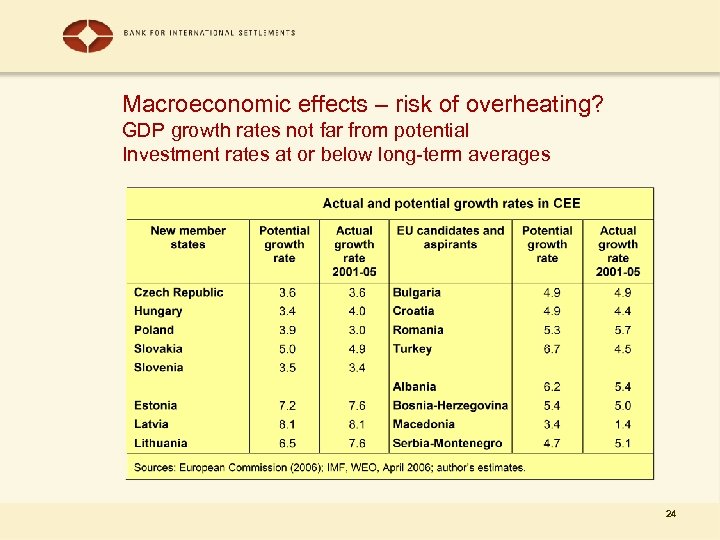
Macroeconomic effects – risk of overheating? GDP growth rates not far from potential Investment rates at or below long-term averages 24
Is the widening of external deficits a concern? l CA deficits in CEE due to factors characteristic for the stage of development (income level, high capital building) l During 2000 -03, the increase in deficits could be entirely explained by higher investment l But during 2004 -05, ¼ of the increase in CA deficits was due to higher consumption (especially SK and RO) 25
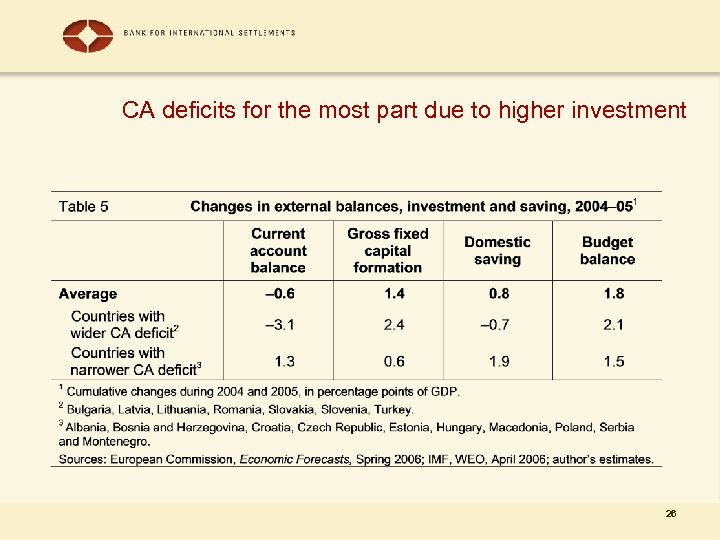
CA deficits for the most part due to higher investment 26
Other mitigating factors l Evidence of quick reversal of CA deficits without major growth slowdown (AL, BG, HR 2003 -04; MK; SK 2002 -03) l Consumer credit booms tend to be self-correcting (build-up of the stock of consumer durables tends to level off) l Purchasing power gains associated with RER appreciation were only used for additional consumption once the gains actually occurred, not in anticipation thereof (Deutsche Bundesbank DP 32/2005) 27
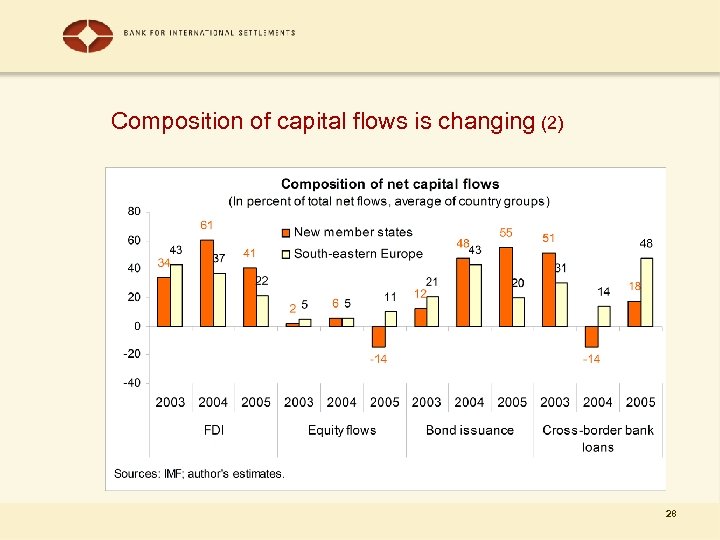
Composition of capital flows is changing (2) 28
Policy challenges l Maintaining financial stability l Avoiding risk of overheating l Preventing property price bubbles l Containing current account deficits 29
Factors complicating policy responses in CEE l Very small, very open economies l Rapidly catching up with the EU (Balassa-Samuelson effect, RER appreciation) l Banking systems mostly foreign-owned l Strong capital inflows, easy global financing conditions 30
Policy responses so far l Raise interest rates – Romania, Slovakia l Tighten prudential regulations – Baltics, Croatia l Strengthen banking supervision – Baltics, Hungary, Slovakia, Slovenia l Moral suasion – Baltics, Croatia, Hungary l Administrative measures (credit ceilings) – Bulgaria 31
Policy responses under consideration l Raise interest rates – there are limits to domestic interest rate policy with low global interest rates, fixed ERs, free capital flows, but global rates are now rising l Retain some capital controls (non-EU countries only) l Allow capital outflows l Clarify existing policies: • focus on disinflation • allow nominal ER to appreciate (managed and floating regimes) l Tighten fiscal policy (already tight in many countries) 32
Скачать презентацию Growth of bank credit in central and eastern
a5beb31e44476530227eb427a284d068.ppt